Archive
10/16/2019 – Ephemeris – The bright planets and another talk I’m giving tonight
Ephemeris for Wednesday, October 16th. Today the Sun will be up for 10 hours and 57 minutes, setting at 6:56, and it will rise tomorrow at 8:00. The Moon, 3 days past full, will rise at 8:44 this evening.
Let’s look at the bright planets for this week. Mars, Venus and Mercury are too close to the Sun to be seen. Venus and Mercury are on the evening or east side of the Sun, Mars is on the west or morning side. Bright Jupiter will be low in the southwestern sky as it gets dark. It will set at 9:46 p.m. Saturn, the ringed planet, will be in the south-southwestern sky in the evening, and set at 11:32 p.m.
Tonight at 7 p.m. I will be giving an illustrated talk Apollo and the Moon Race at the main branch of the Traverse Area District library on Woodmere in Traverse City. It traces the events from Sputnik to the last Apollo mission to the Moon, the tumultuous 15 years of the space race between the United Stares and the Soviet Union.
The times given are for the Traverse City/Interlochen area of Michigan. They may be different for your location.
Addenda
The planets this week
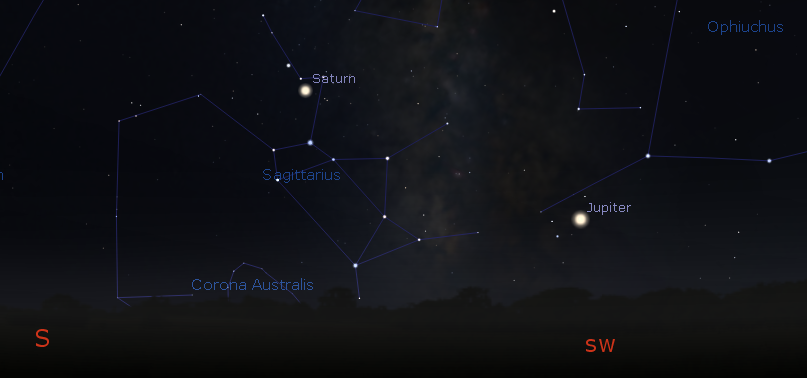
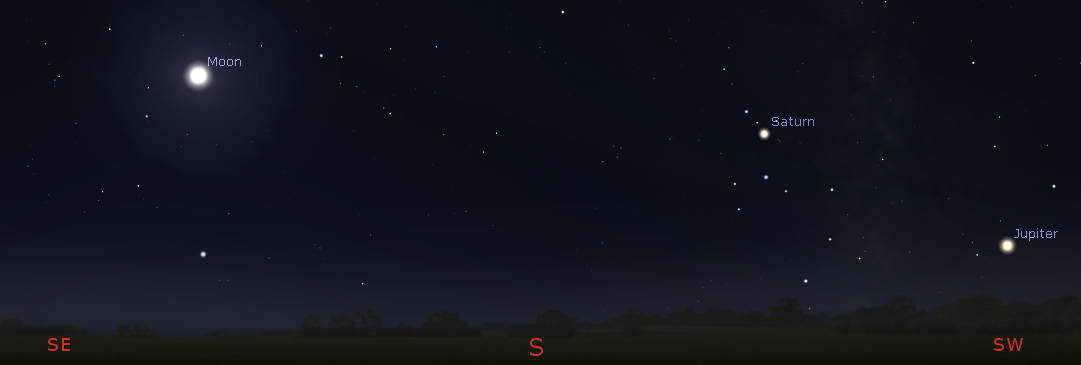
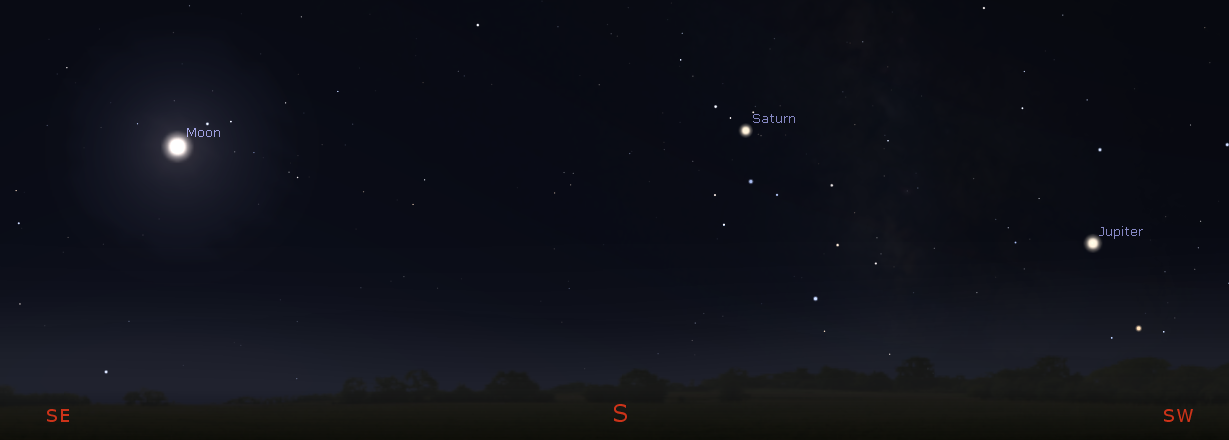
Jupiter, Saturn and the Moon at 8:30 p.m. tonight October 16, 2019. Click on the image to enlarge. Created using Stellarium.
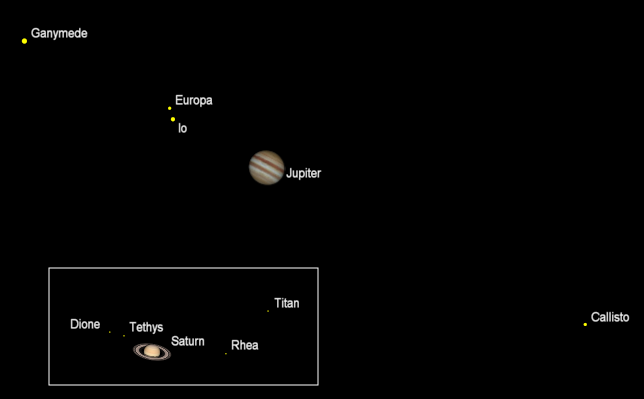
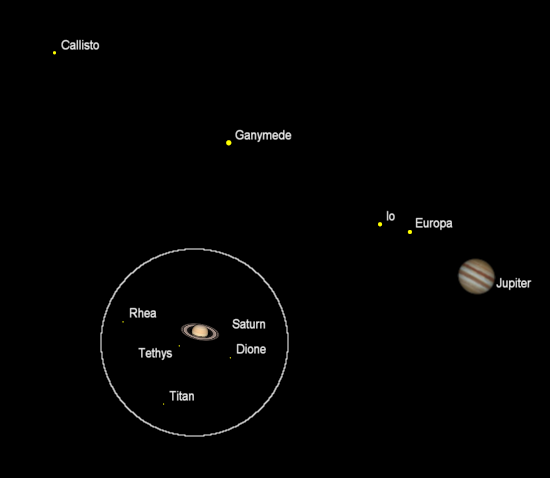
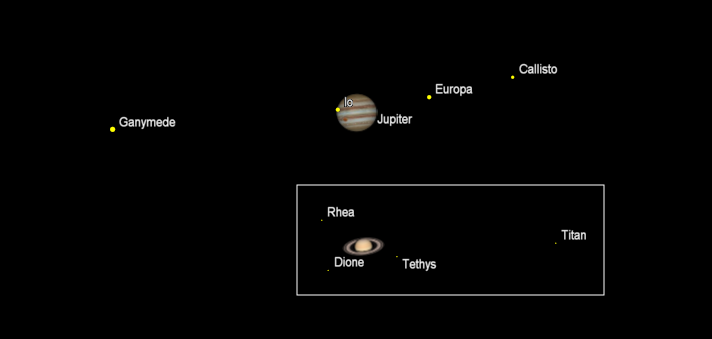
Telescopic views of Jupiter and Saturn with the same magnification at 8:30 p.m. tonight October 16, 2019. Created using Cartes du Ciel (Sky Charts).
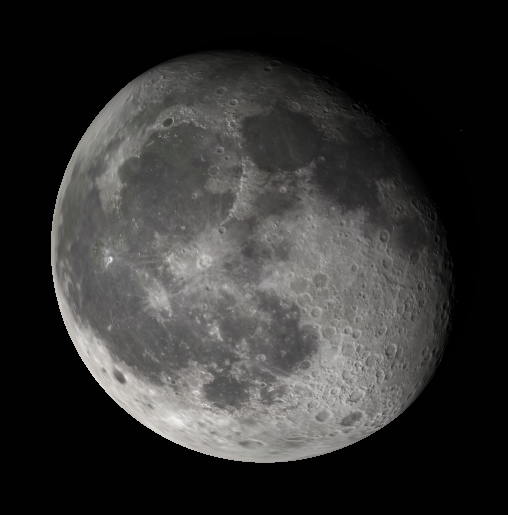
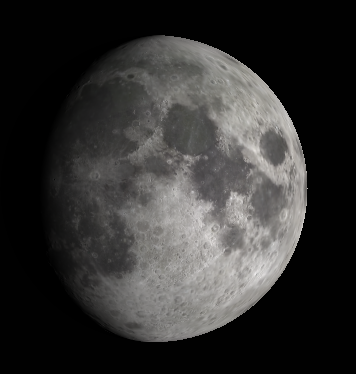
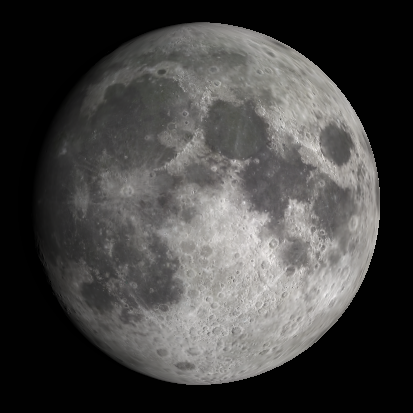
The waning gibbous Moon at 9:30 tonight October 16, 2019. Created using Stellarium.
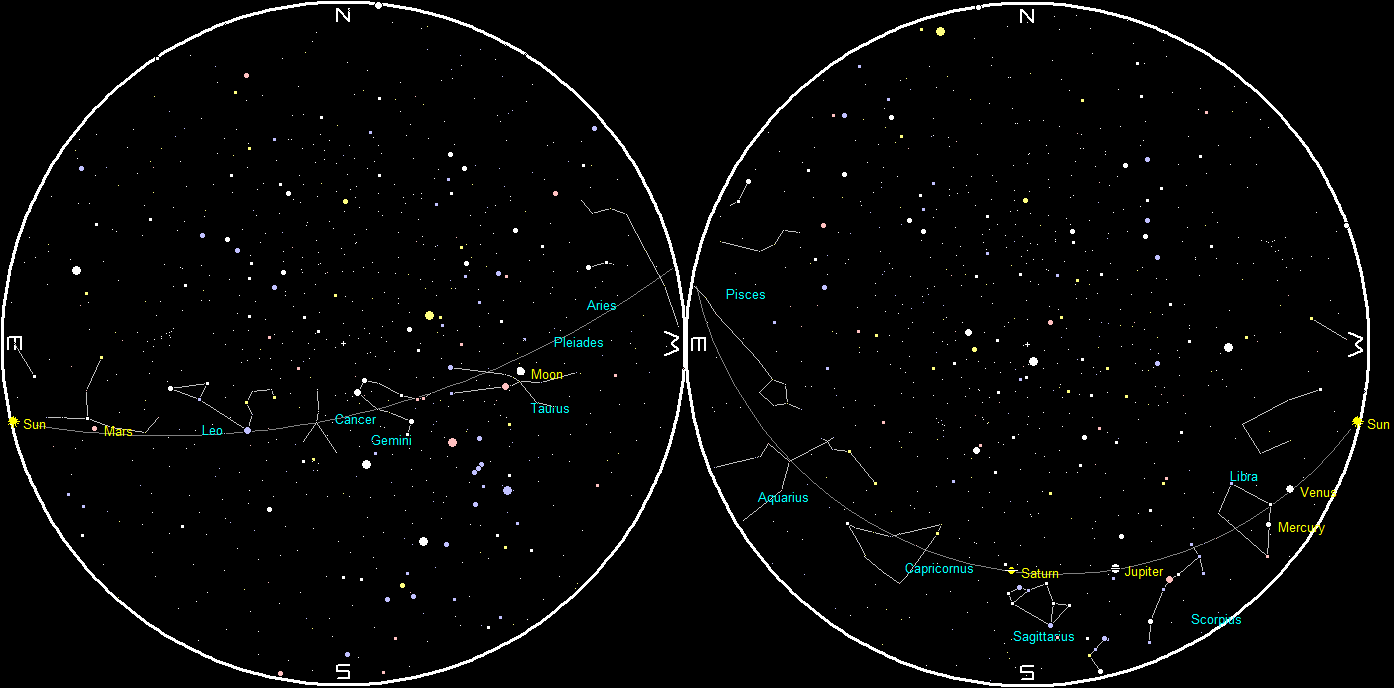
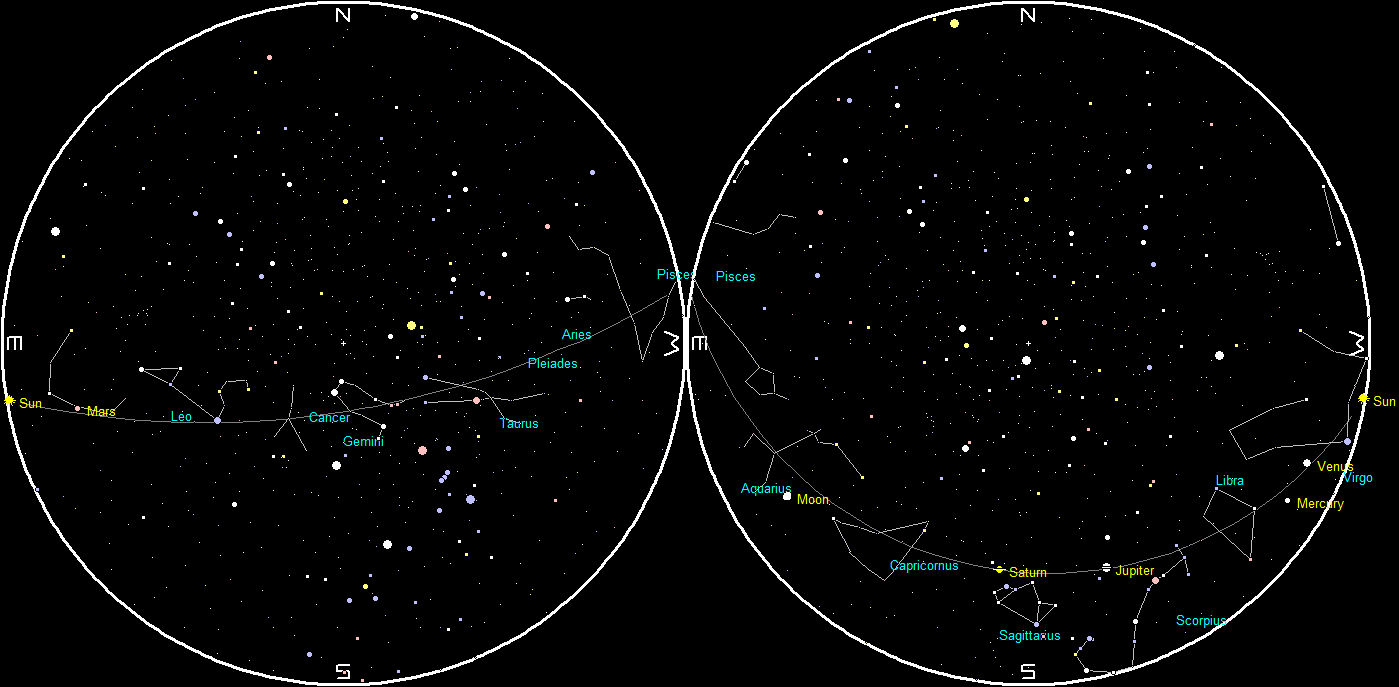
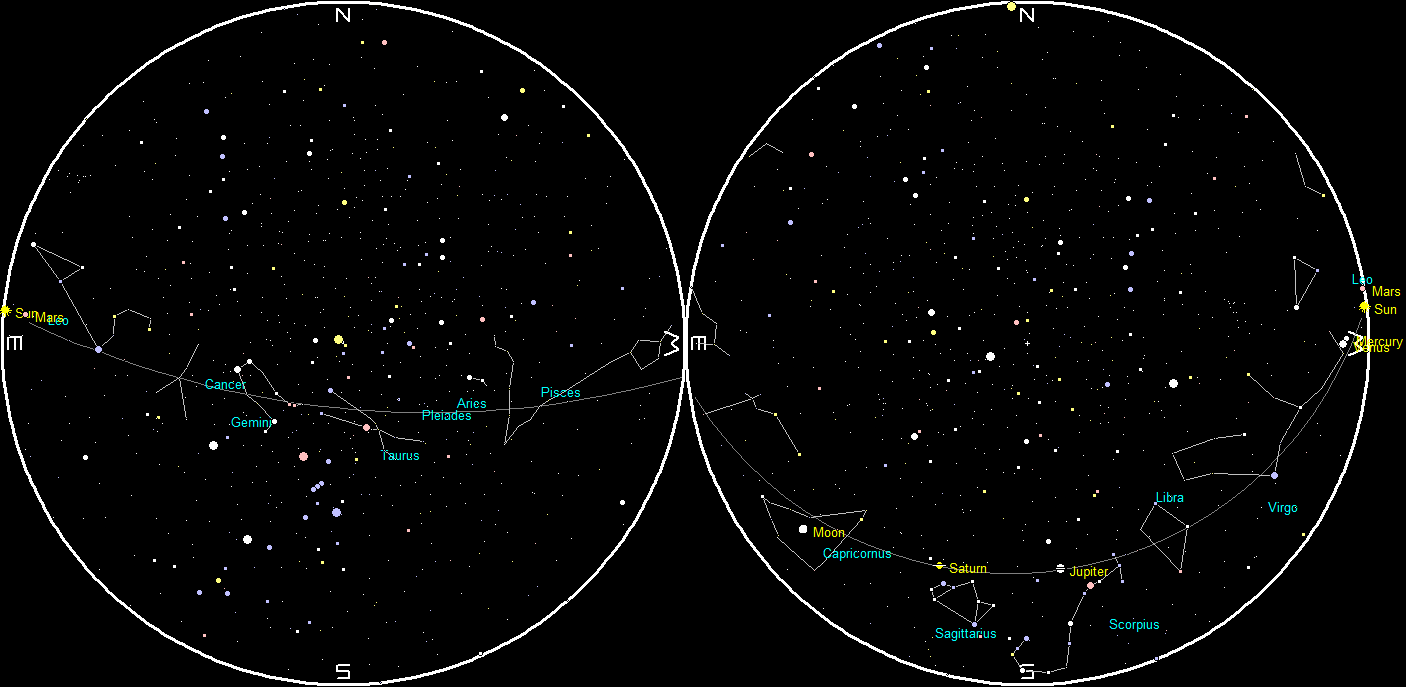
Planets and the Moon at sunset and sunrise of a single night starting with sunset on the right on October 16, 2019. The night ends on the left with sunrise on the 17th. Click on the image to enlarge. Created using my LookingUp program.
Apollo and the Race to the Moon

Apollo and the Race to the Moon Title slide
10/09/2019 – Ephemeris – Where are the bright planets?
Ephemeris for Wednesday, October 9th. Today the Sun will be up for 11 hours and 18 minutes, setting at 7:09, and it will rise tomorrow at 7:51. The Moon, half way from first quarter to full, will set at 4:22 tomorrow morning.
Let’s look at the bright planets for this week. Mars, Venus and Mercury are too close to the Sun to be seen. Venus and Mercury are on the evening or east side of the Sun, Mars is on the west or morning side. Bright Jupiter will be low in the southwestern sky as it gets dark. Jupiter will set at 10:09 p.m. Jupiter is moving at nearly its fastest to the east now and next year will be where Saturn is now. Saturn, the ringed planet, will be in the south-southwestern sky in the evening, and set at 11:58 p.m. Next year it will be a bit farther east. Jupiter is approaching Saturn in our sky. They will cross paths late next year, December 21st, something they do about every 20 years.
The times given are for the Traverse City/Interlochen area of Michigan. They may be different for your location.
Addendum
Jupiter, Saturn and the Moon at 9 p.m. October 9, 2019. Click on the image to enlarge. Created using Stellarium.
The gibbous Moon as it might appear in binoculars at 9 p.m. October 9, 2019. Created using Stellarium.
Telescopic views of Jupiter and Saturn with the same magnification at 9 p.m. October 9, 2019. Created using Cartes du Ciel (Sky Charts).
Planets and the Moon at sunset and sunrise of a single night starting with sunset on the right on October 9, 2019. The night ends on the left with sunrise on the 10th. Click on the image to enlarge. Created using my LookingUp program.
10/02/2019 – Ephemeris – A look at the bright planets for this week
Ephemeris for Wednesday, October 2nd. Today the Sun will be up for 11 hours and 40 minutes, setting at 7:21, and it will rise tomorrow at 7:42. The Moon, 3 days before first
quarter, will set at 10:04 this evening.
Let’s look at the bright planets for this week. Mars, Venus and Mercury are too close to the Sun to be seen. Venus and Mercury are on the evening or east side of the Sun, Mars is on the west or morning side. Bright Jupiter will be low in the southwestern sky as it gets dark. With steadily held binoculars a few of the 4 largest satellites of Jupiter can be seen. All four: Ganymede, Io and Europa on the east and Callisto far to the west of the planet can be easily spotted in telescopes this evening. Jupiter will set at 10:29 p.m. Saturn, the ringed planet, will be in the south-southwestern sky in the evening, and set at 12:24 a.m. Jupiter is approaching Saturn in our sky. They will cross paths late next year, something they do about every 20 years.
The times given are for the Traverse City/Interlochen area of Michigan. They may be different for your location.
Addendum
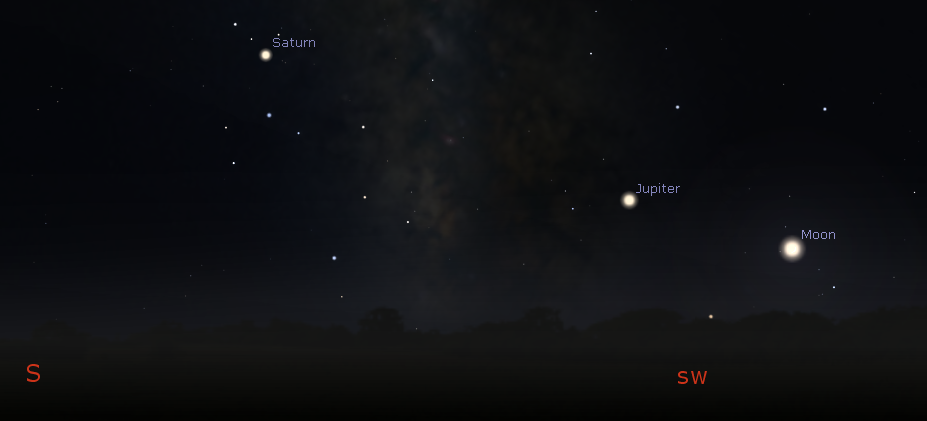
Jupiter, Saturn and the Moon at 9 p.m. October 2, 2019. Created using Stellarium.
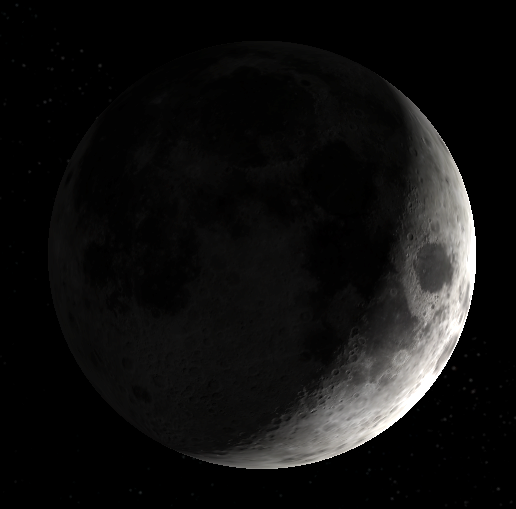
The crescent Moon as it might appear in binoculars or a small telescope tonight at 9 p.m. October 2, 2019. Created using Stellarium.
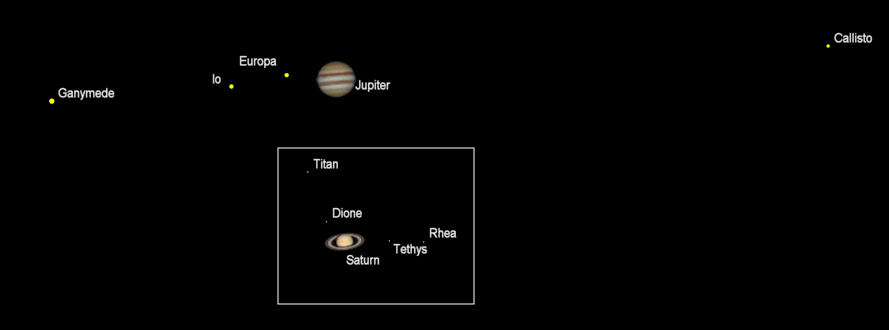
Telescopic views of Jupiter and Saturn with the same magnification at 9 p.m. October 2, 2019. Created using Cartes du Ciel (Sky Charts).
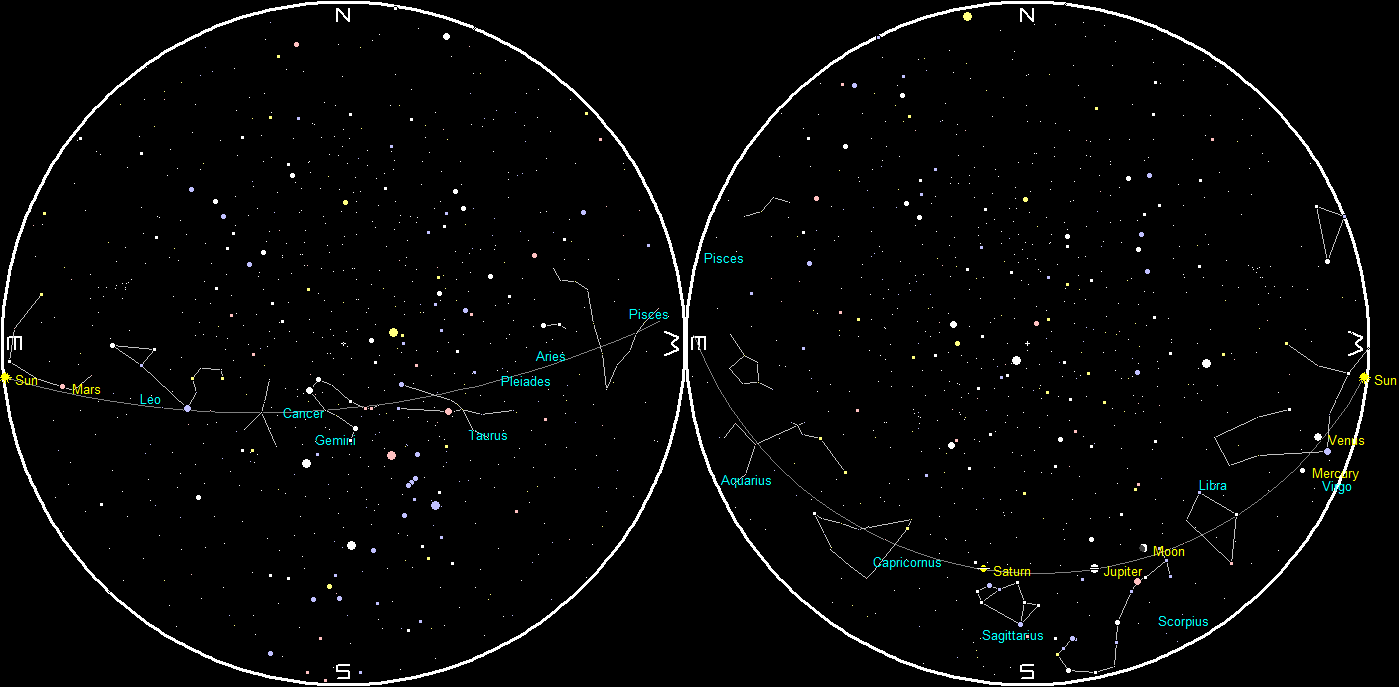
Planets and the Moon at sunset and sunrise of a single night starting with sunset on the right on October 2, 2019. The night ends on the left with sunrise on the 3rd. Click on the image to enlarge. Created using my LookingUp program.
09/25/2019 – Ephemeris – Where are all the bright planets?
Ephemeris for Wednesday, September 25th. Today the Sun will be up for 12 hours and 1 minute, setting at 7:34 p.m., and it will rise tomorrow at 7:34 a.m. The Moon, 3 days before new, will rise at 4:30 tomorrow morning.
Let’s look at the planets for this week. Mars, Venus and Mercury are too close to the Sun to be seen. Venus and Mercury are on the evening or east side of the Sun, Mars is on the west or morning side. Bright Jupiter will be low in the southwestern sky as it gets dark. With steadily held binoculars a few of the 4 largest satellites of Jupiter can be seen. Three of the four Jupiter’s Galilean satellites can be easily spotted in telescopes this evening. The moon Europa will be transiting across the face of the planet. Jupiter will set at 10:53 p.m. Saturn, the ringed planet, will be in the southern sky in the evening. It will pass the meridian, due south at 8:25 p.m. and will set at 12:51 a.m.
The times given are for the Traverse City/Interlochen area of Michigan. They may be different for your location.
Addendum
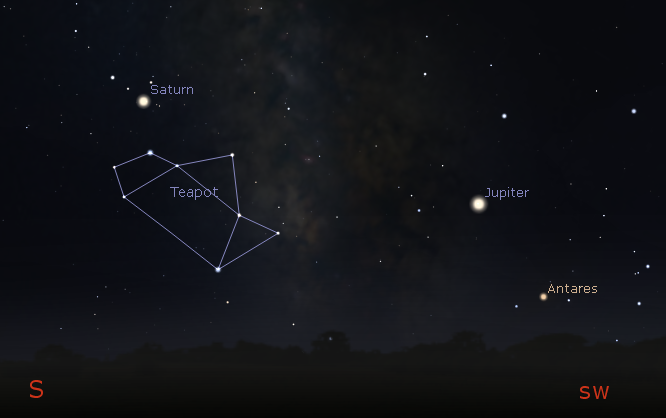
Jupiter and Saturn with the Teapot asterism of Sagittarius of the southern sky at 9 p.m. September 25, 2019. Created using Stellarium.
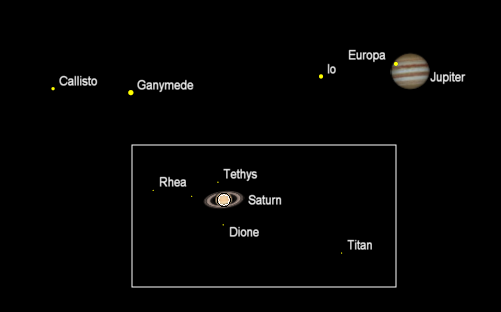
Telescopic views of Jupiter and Saturn with the same magnification at 9 p.m. September 25, 2019. Created using Cartes du Ciel (Sky Charts).
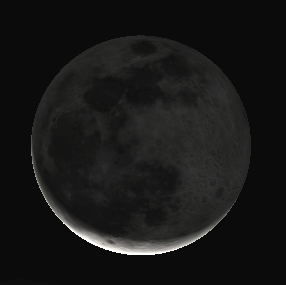
The waning crescent Moon at 6 a.m. September 26, 2019. Created using Stellarium.
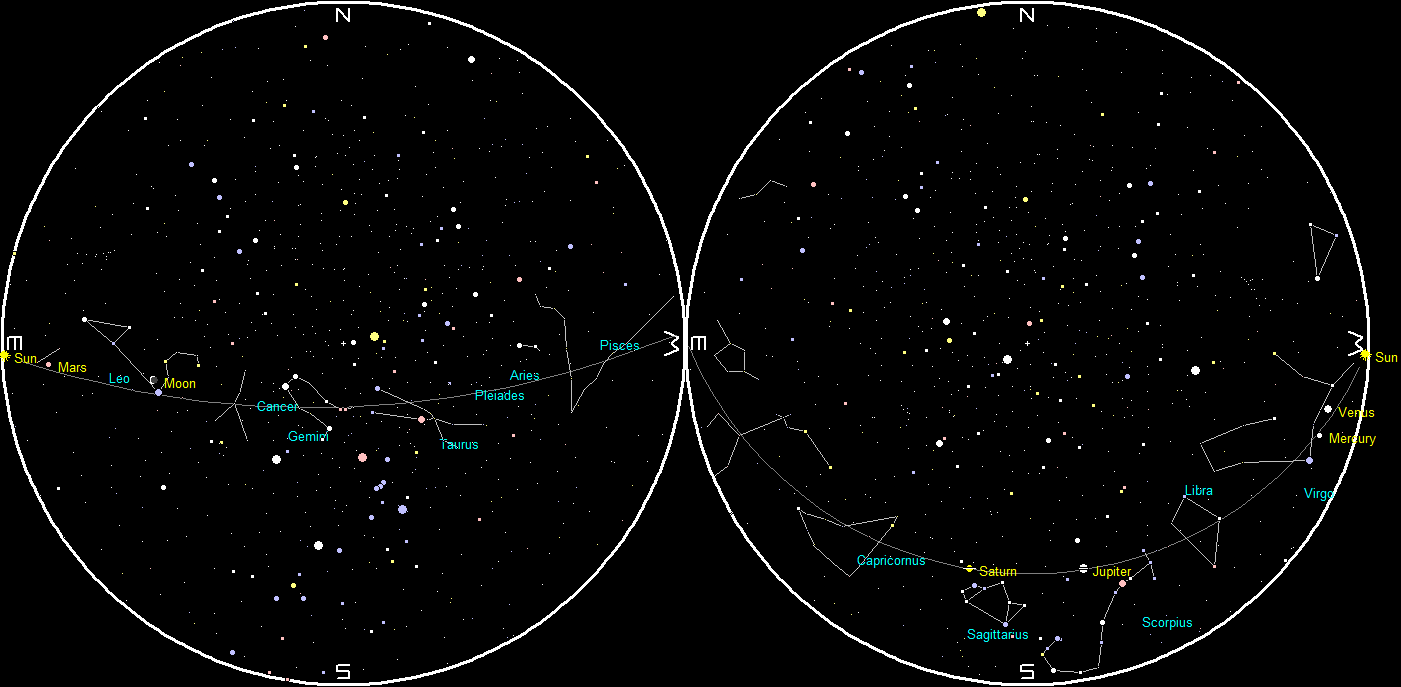
Planets and the Moon at sunset and sunrise of a single night starting with sunset on the right on September 25, 2019. The night ends on the left with sunrise on the 26th. Click on the image to enlarge. Created using my LookingUp program.
09/18/2019 – Ephemeris – Checking out the whereabouts of the bright planets
Ephemeris for Wednesday, September 18th. Today the Sun will be up for 12 hours and 23 minutes, setting at 7:48, and it will rise tomorrow at 7:26. The Moon, 3 days before last quarter, will rise at 10:11 this evening.
Let’s look at the planets for this week. Mars, Venus and Mercury are too close to the Sun to be seen. Venus and Mercury are on the evening or east side of the Sun, Mars is on the west or morning side. Bright Jupiter will be low in the southwestern sky as it gets dark. With steadily held binoculars a few of the 4 largest satellites of Jupiter can be seen. Three of the four Jupiter’s Galilean satellites can be easily spotted in telescopes this evening. The moon Europa will appear very close to the planet. Jupiter will set at 11:21 p.m. Saturn, the ringed planet, will be in the southern sky in the evening. It will pass the meridian, due south at 8:52 p.m. and will set at 1:19 a.m.
The times given are for the Traverse City/Interlochen area of Michigan. They may be different for your location.
Addendum
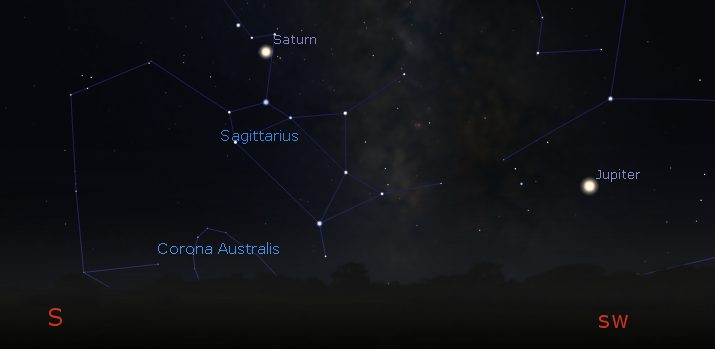
Jupiter and Saturn with the constellations of the southern summer sky at 10 p.m. September 18, 2019. Created using Stellarium.
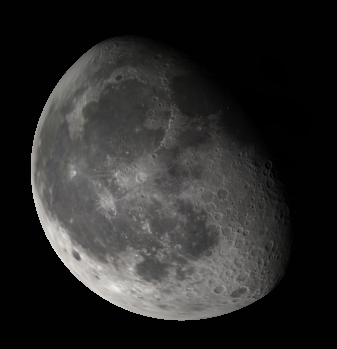
The waning gibbous Moon at 11 p.m. September 18, 2019. Created using Stellarium.
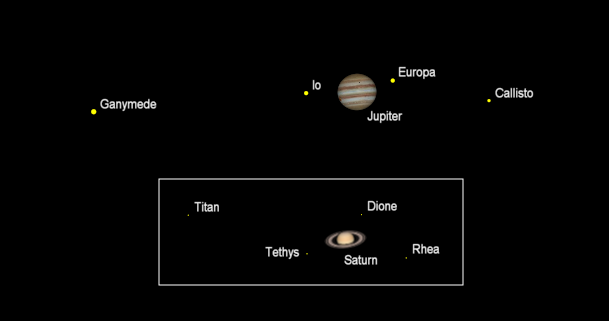
Telescopic views of Jupiter and Saturn with the same magnification at 10 p.m. September 18, 2019. Created using Cartes du Ciel (Sky Charts).
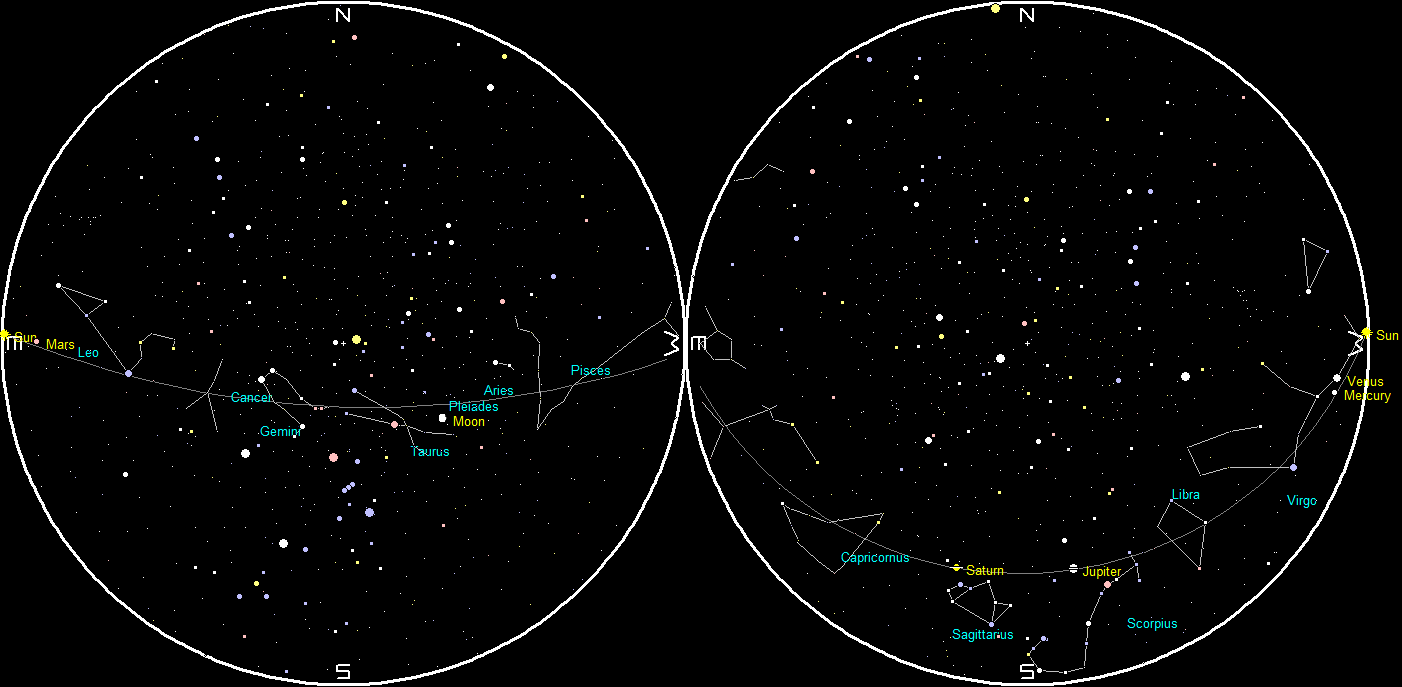
Planets and the Moon at sunset and sunrise of a single night starting with sunset on the right on September 18, 2019. The night ends on the left with sunrise on the 19th. Click on the image to enlarge. Created using my LookingUp program.
09/11/2019 – Ephemeris – Let’s check out the bright planets or this week
Ephemeris for Wednesday, September 11th. Today the Sun will be up for 12 hours and 44 minutes, setting at 8:01, and it will rise tomorrow at 7:17. The Moon, 3 days before full, will set at 5:29 tomorrow morning.
Let’s look at the planets for this week. Mars, Venus and Mercury are too close to the Sun to be seen. Venus and Mercury are on the evening or east side of the Sun, Mars is on the west or morning side. Bright Jupiter will be in the south-southwestern sky as it gets dark. With steadily held binoculars a few of the 4 largest satellites of Jupiter can be seen. All four of Jupiter’s Galilean satellites can be spotted in telescopes before 10 this evening. The innermost moon Io will move in front of the planet until after midnight. Jupiter will set before then at 11:46 p.m. Saturn, the ringed planet, will be in the southern sky in the evening. It will pass the meridian, due south at 9:20 p.m. and will set at 1:46 a.m.
The times given are for the Traverse City/Interlochen area of Michigan. They may be different for your location.
Addendum
Jupiter, Saturn and the Moon with the bright stars of the southern summer sky at 10 p.m. September 11, 2019. Click on the image to enlarge. Created using Stellarium.
The gibbous Moon as it might appear in binoculars at 10 p.m. September 11, 2019. Created using Stellarium.,
Telescopic views of Jupiter and Saturn with the same magnification at 10 p.m. September 11, 2019. Io starts a transit at 9:58 p.m. or 1:58 tomorrow UT. The shadow begins to cross at 11:15 p.m., 03:15 UT. The transit ends at 12:10 a.m., 4:10 UT, after Jupiter sets for observers in the listening area. The moons are much dimmer than what shows here so spotting the moon against the face of Jupiter is difficult. Created using Cartes du Ciel (Sky Charts).
Planets and the Moon at sunset and sunrise of a single night starting with sunset on the right on September 11, 2019. The night ends on the left with sunrise on the 12th. Click on the image to enlarge. Created using my LookingUp program.
09/04/2019 – Ephemeris – Looking for the bright planets this week
Ephemeris for Wednesday, September 4th. Today the Sun will be up for 13 hours and 5 minutes, setting at 8:14, and it will rise tomorrow at 7:09. The Moon, 1 day before first quarter, will set at 11:32 this evening.
Let’s look at the planets for this week. Mars, Venus and Mercury are too close to the Sun to be seen. Venus and Mercury are on the evening or east side of the Sun, Mars is on the west or morning side. Bright Jupiter will be in the south-southwestern sky as it gets dark. With steadily held binoculars a few of the 4 largest satellites of Jupiter can be seen. Three of the four of Jupiter’s Galilean satellites can be spotted in telescopes early this evening tonight. However the innermost moon Io will move from in front of the planet at 10:15 p.m. Jupiter will set at 12:11 a.m. Saturn, the ringed planet, will be in the southern sky in the evening. It will pass the meridian, due south at 9:48 p.m. and will set at 2:14 a.m.
The times given are for the Traverse City/Interlochen area of Michigan. They may be different for your location.
Addendum
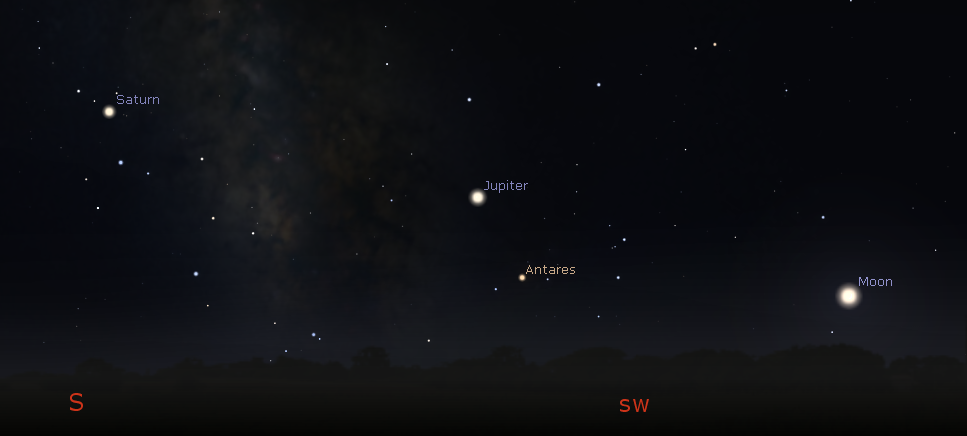
Jupiter, Saturn and the Moon with the bright stars of the southern summer sky at 10 p.m. September 4, 2019. Click on the image to enlarge. Created using Stellarium.
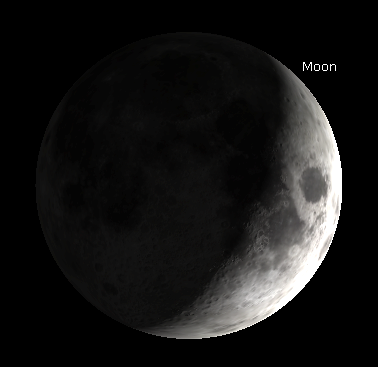
The crescent Moon as it might appear in binoculars or a small telescope tonight at 10 p.m. September 4, 2019. Created using Stellarium.
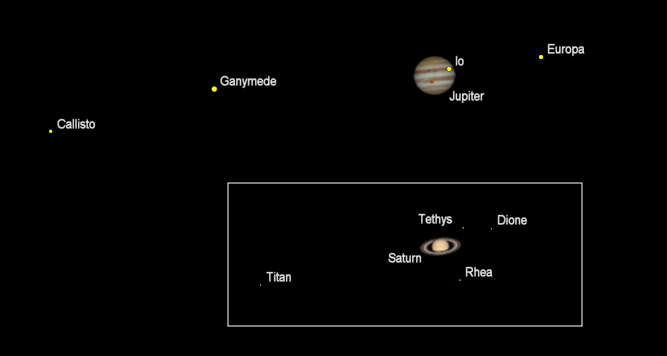
Telescopic views of Jupiter and Saturn with the same magnification at 10 p.m. September 4, 2019. Io started a transit at 8:03 p.m. or 0:03 tomorrow UT, not visible from here. The shadow begins to cross Jupiter at 9:21 p.m., 01:21 UT. The transit ends at 10:15 p.m., 2:15 UT. The shadow leaves the planet at 11:33 p.m., 3:33 UT. The moons are much dimmer than what shows here so spotting the moon and shadow against the face of Jupiter is difficult. The Great Red Spot will cross Jupiter’s central meridian at 10:17 p.m., 2:17 UT. Created using Cartes du Ciel (Sky Charts).
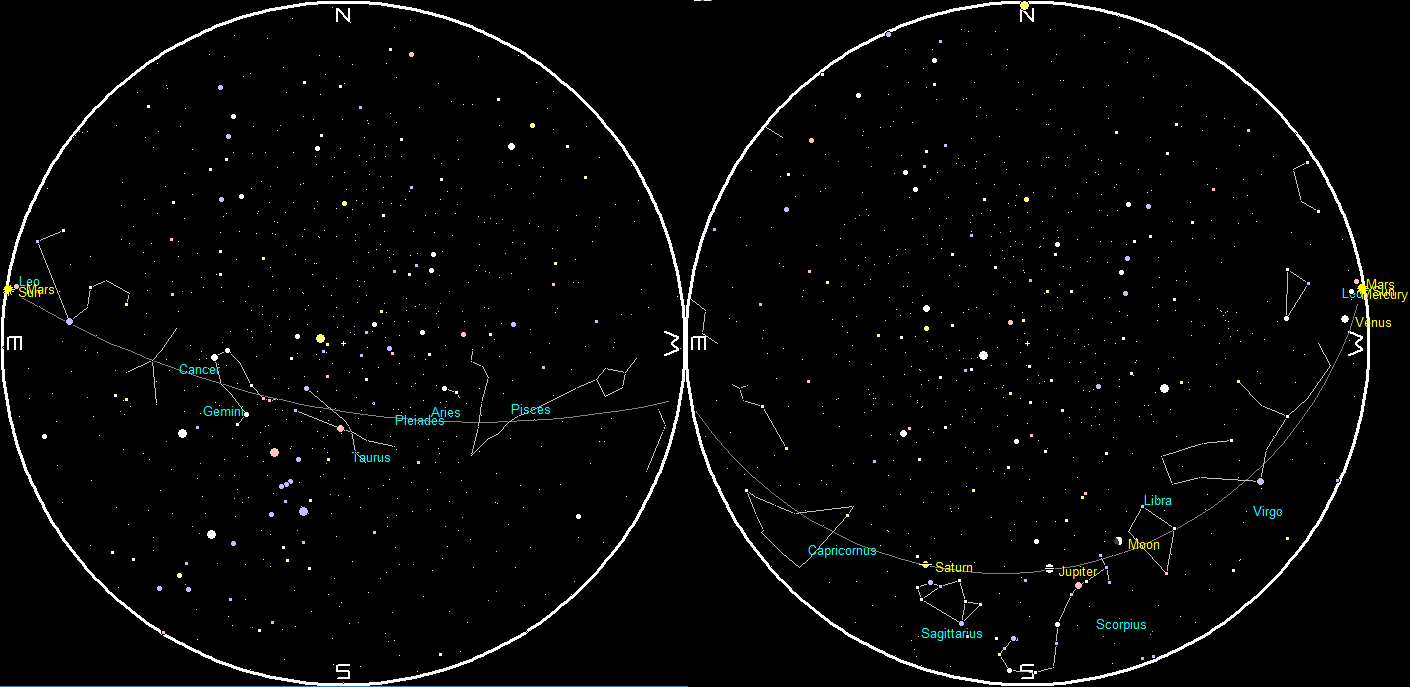
Planets and the Moon at sunset and sunrise of a single night starting with sunset on the right on September 4, 2019. The night ends on the left with sunrise on the 5th. Click on the image to enlarge. Created using my LookingUp program.
08/28/2019 – Ephemeris – Looking at and for the 5 brightest planets
Ephemeris for Wednesday, August 28th. Today the Sun will be up for 13 hours and 26 minutes, setting at 8:27, and it will rise tomorrow at 7:01. The Moon, 2 days before new, will rise at 5:40 tomorrow morning.
Let’s look at the planets for this week. Mars, Venus and Mercury are too close to the Sun to be seen. Venus is on the evening or east side of the Sun, as is Mars which will pass conjunction with the Sun next Monday. Bright Jupiter will be in the south-southwestern sky as it gets dark. With steadily held binoculars a few of the 4 largest satellites of Jupiter can be seen. All four of Jupiter’s Galilean satellites can be spotted in telescopes tonight: one on the east and three west of the planet. Jupiter will set at 12:37 a.m. Saturn, the ringed planet, will be in the southern sky in the evening. It will pass the meridian, due south at 10:17 p.m. and will set at 3:12 a.m. Mercury will enter the evening sky next Tuesday.
The times given are for the Traverse City/Interlochen area of Michigan. They may be different for your location.
Addendum
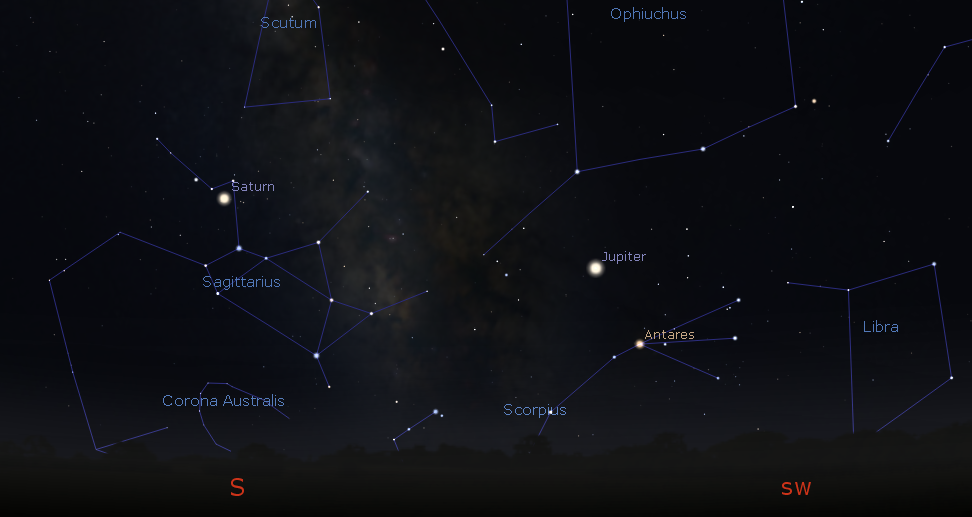
Jupiter and Saturn with the constellations of the southern summer sky at 10 p.m. August 28, 2019. Click on the image to enlarge. Created using Stellarium.
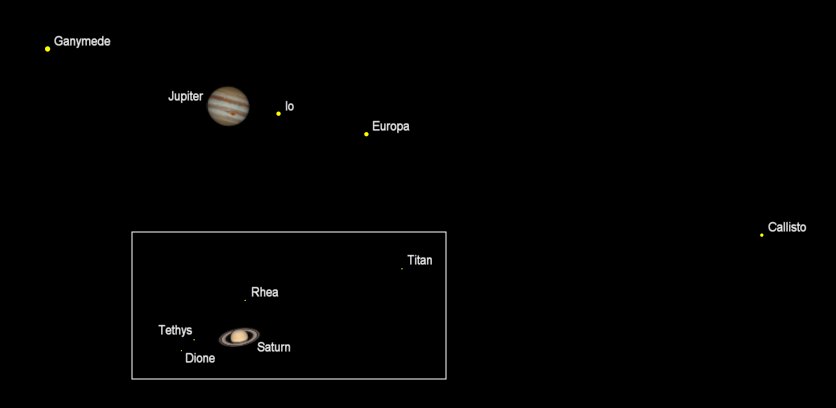
Telescopic views of Jupiter and Saturn with the same magnification at 10 p.m.August 28, 2019. Created using Cartes du Ciel (Sky Charts).
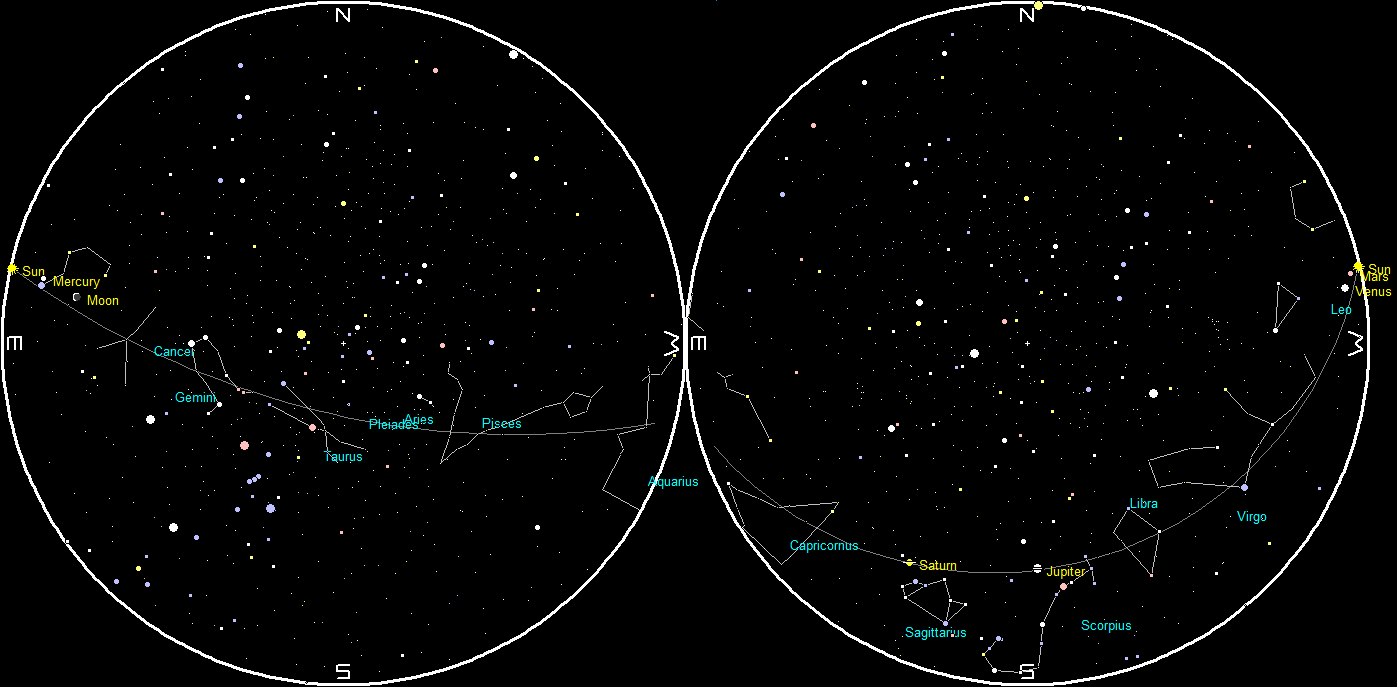
Planets and the Moon at sunset and sunrise of a single night starting with sunset on the right on August 28, 2019. The night ends on the left with sunrise on the 29th. Click on the image to enlarge. Created using my LookingUp program.
08/21/2019 – Ephemeris – Where are all the bright planets?
Ephemeris for Wednesday, August 21st. Today the Sun will be up for 13 hours and 47 minutes, setting at 8:39, and it will rise tomorrow at 6:53. The Moon, 2 days before last quarter, will rise at 11:41 this evening.
Let’s look at the planets for this week. Mars and Venus are too close to the Sun to be seen. Mars is still on the evening or east side of the Sun, as is Venus which passed superior conjunction with the Sun a week ago. Bright Jupiter will be in the southern sky as it gets dark. With steadily held binoculars a few of the 4 largest satellites of Jupiter can be seen. Four of Jupiter’s largest satellites can be spotted in telescopes tonight. Jupiter will set at 1:04 a.m. Saturn, the ringed planet, will be in the southern sky in the evening. It will pass the meridian, due south at 10:45 p.m. and will set at 3:12 a.m. Mercury will rise at 5:44 a.m. in the east-northeast.
The times given are for the Traverse City/Interlochen area of Michigan. They may be different for your location.
Addendum
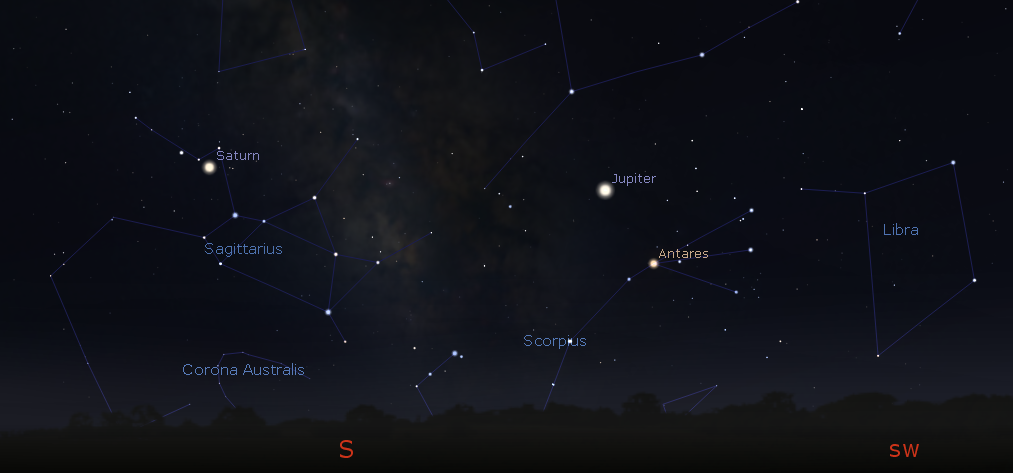
Jupiter, Saturn and the Moon with the bright stars of the southern summer sky at 10 p.m. August 21, 2019. Click on the image to enlarge. Created using Stellarium.
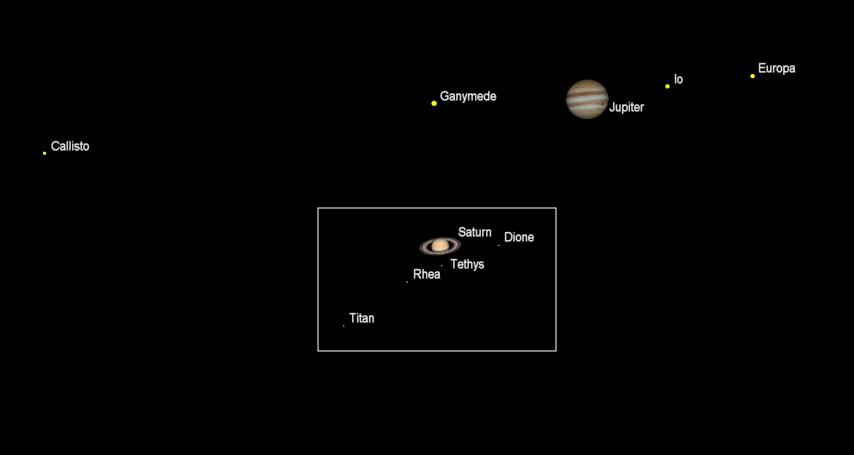
Telescopic views of Jupiter and Saturn with the same magnification at 10 p.m.August 21, 2019. Created using Cartes du Ciel (Sky Charts).
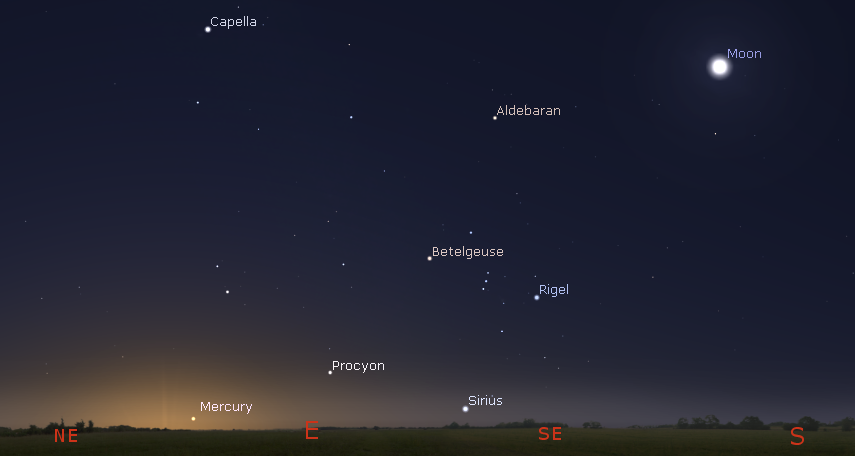
The Moon, Mercury and bright stars in the morning twilight at 6 a.m. August 22, 2019. Created using Stellarium.
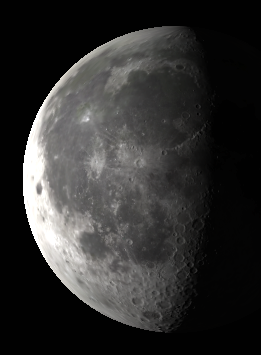
The waning gibbous Moon at 6 a.m. August 22, 2019. Created using Stellarium.
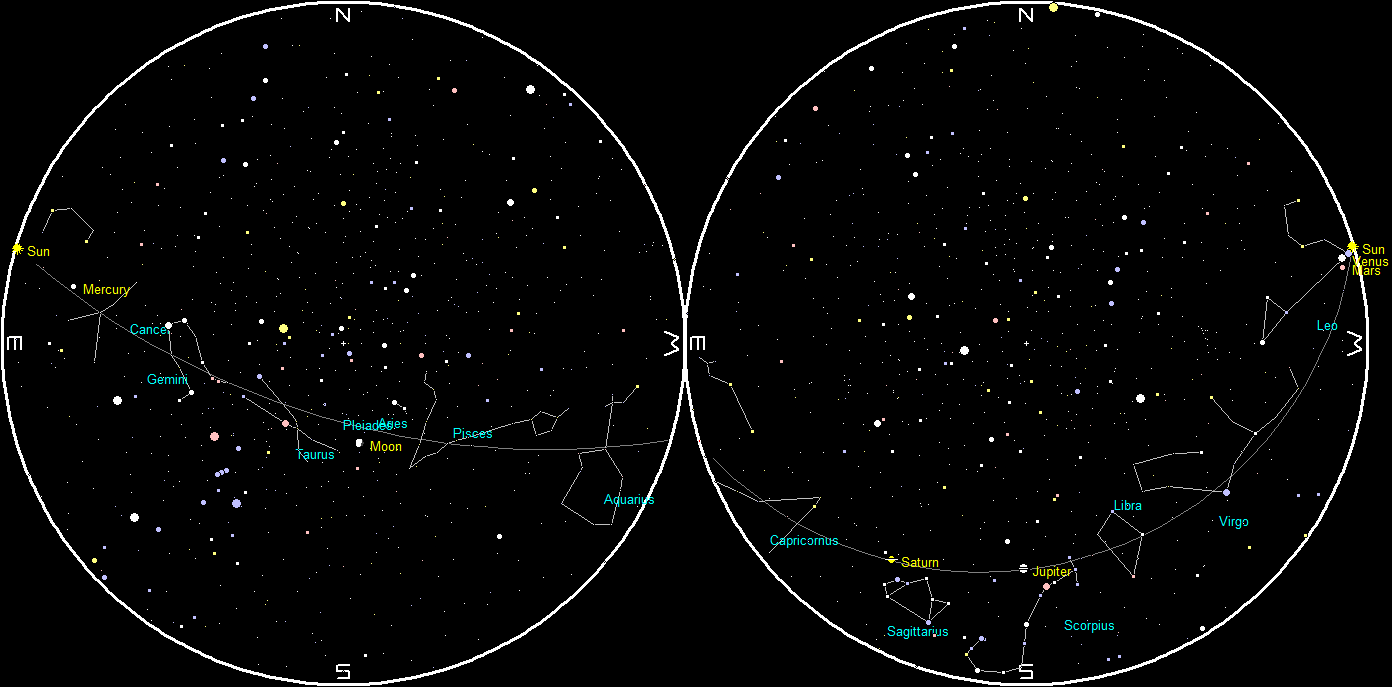
Planets and the Moon at sunset and sunrise of a single night starting with sunset on the right on August 21, 2019. The night ends on the left with sunrise on the 22nd. Click on the image to enlarge. Created using my LookingUp program.
08/14/2019 – Ephemeris – Looking for the bright planets this week
Ephemeris for Wednesday, August 14th. Today the Sun will be up for 14 hours and 6 minutes, setting at 8:50, and it will rise tomorrow at 6:44. The Moon, 1 day before full, will set at 6:36 tomorrow morning.
Let’s look at the planets for This week. Mars, Mercury and Venus are all too close to the Sun to be seen. Mars is still on the evening or east side of the Sun, as is Venus which passed superior conjunction with the Sun a few hours ago. Mercury is on the west or morning side of the Sun. Bright Jupiter will be in the southern sky as it gets dark. It will pass the meridian, due south at 9:03 p.m. With steadily held binoculars a few of the 4 largest satellites of Jupiter can be seen. Four of Jupiter’s largest satellites can be spotted in telescopes tonight. Three, on the west and one east of the planet. Jupiter will set at 1:31 a.m. Saturn, the ringed planet, will be in the south-southeast in the evening. It will set at 3:41 a.m.
The times given are for the Traverse City/Interlochen area of Michigan. They may be different for your location.
Addendum
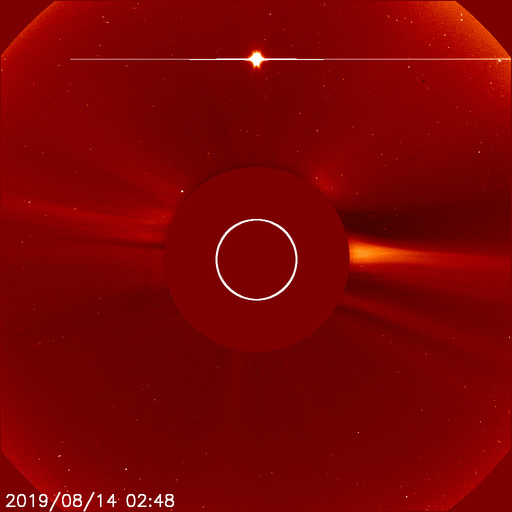
Venus and the Sun’s corona at 10:48 p.m. August 13, 2019 in the LASCO C2 coronagraph on the SOHO satellite stationed a million miles sunward of the Earth. Venus is beyond the Sun in superior conjunction. Credit ESA/NASA.
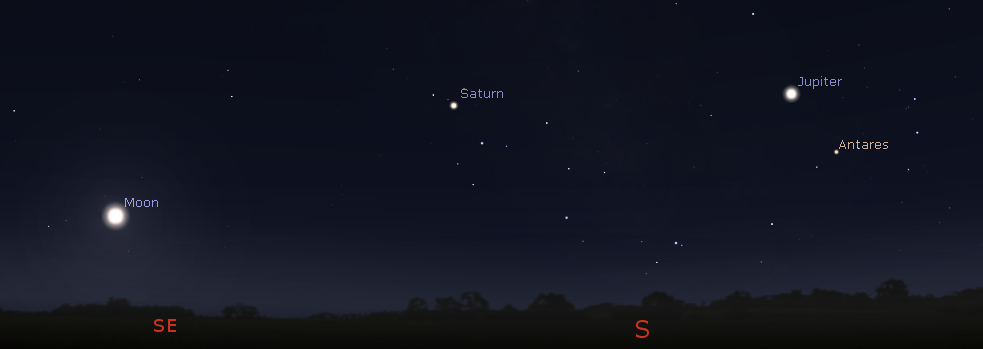
Jupiter, Saturn and the Moon with the bright stars of the southern summer sky at 10 p.m. August 14, 2019. Click on the image to enlarge. Created using Stellarium.
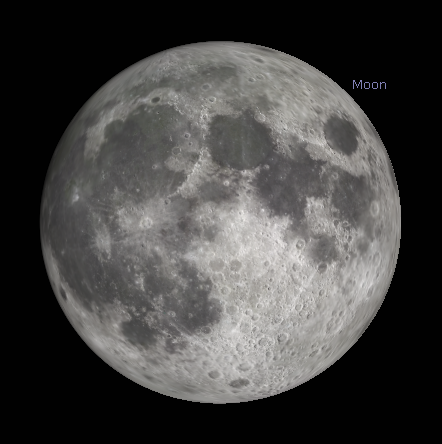
The Moon as it might appear in binoculars about 6 hours before full at 10 p.m. August 14, 2019. Created using Stellarium.
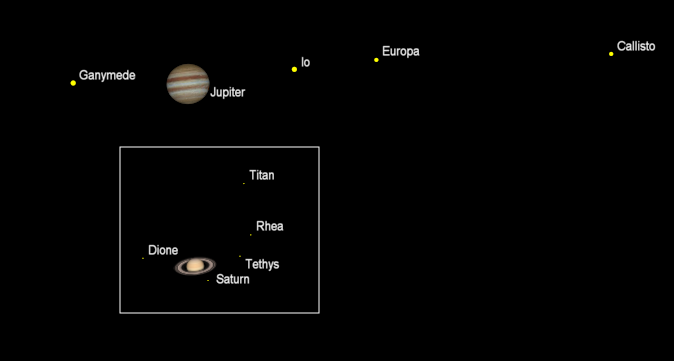
Jupiter and Saturn with the same magnification at 10 p.m. August 14, 2019. Created using Cartes du Ciel (Sky Charts).
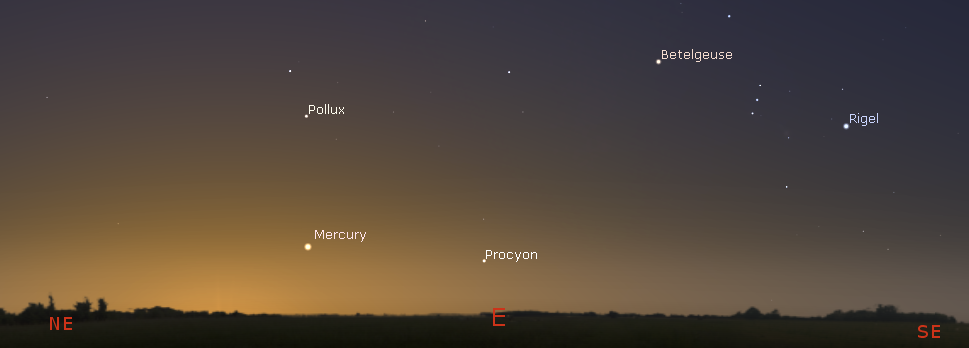
Mercury and bright stars in the morning twilight at 6 a.m. August 15, 2019. Created using Stellarium.
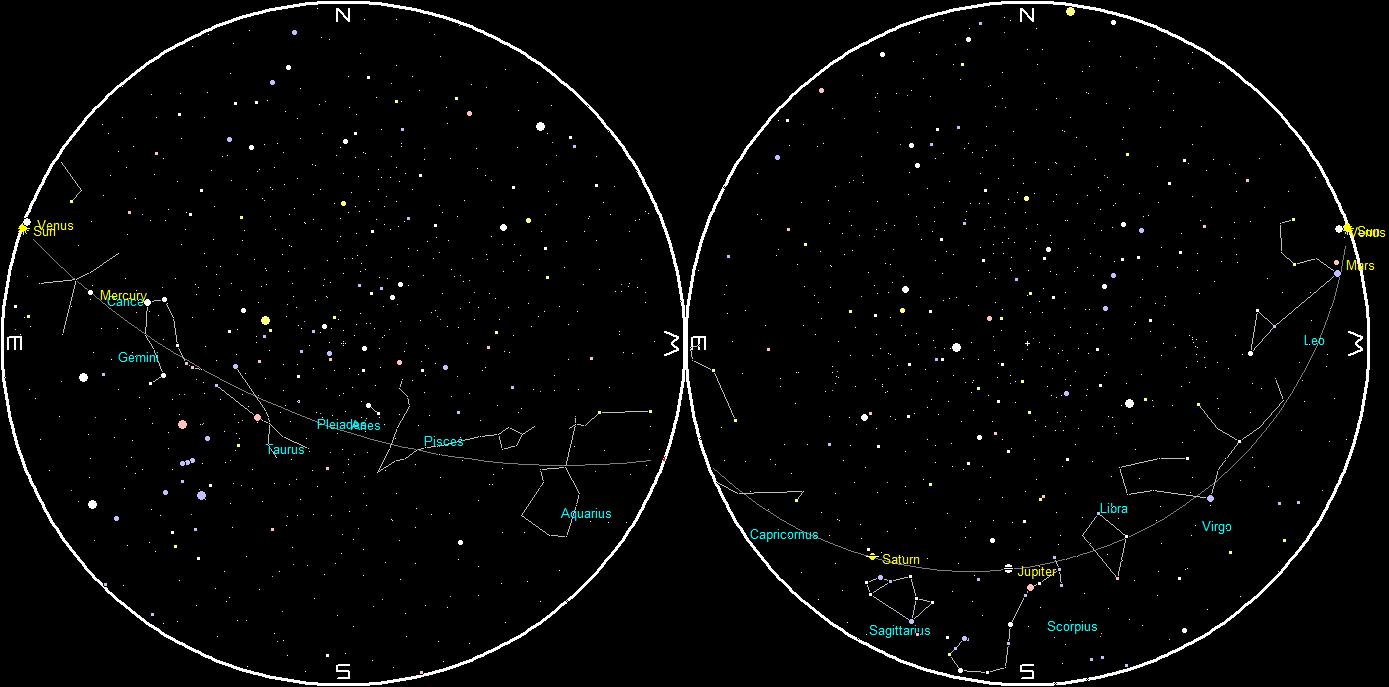
Planets and the Moon at sunset and sunrise of a single night starting with sunset on the right on August 14, 2019. The night ends on the left with sunrise on the 15th. Click on the image to enlarge. Created using my LookingUp program.
 Bob Moler's Ephemeris Blog