Archive
Ephemeris: 01/29/2026 – After Artemis 2 comes Artemis 3 and the landing
This is Ephemeris for Thursday, January 29th. Today the Sun will be up for 9 hours and 42 minutes, setting at 5:47, and it will rise tomorrow at 8:04. The Moon, 3 days before full, will set at 6:44 tomorrow morning.
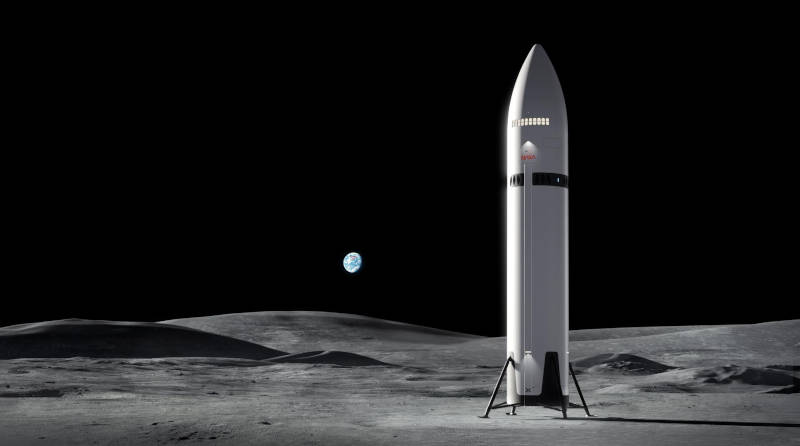
If Artemis 2 is successful in the late winter and early spring of this year, the next mission will be Artemis 3, a mission to land near the South Pole of the Moon. In order for that to happen a lunar Lander will have to be ready and tested. The Starship HLS or human landing system is currently being built by SpaceX. It’s delivery to the Moon, via Superheavy, Starship’s big booster, will require multiple launches and refueling in orbit, which has yet to be tested. There has been some question as to how many refueling trips will be necessary. NASA and SpaceX seem to differ. However, an uncrewed successful landing will have to be made to prove out the system before the Artemis 3 landing will be attempted.
The astronomical event times given in this blog are for the Traverse City/Interlochen area of Michigan (Lat 44.7° N, Long 85.7° W; EST, UT – 5 hours) unless stated otherwise. Times will be different for other locations.
Addendum
Ephemeris: 01/27/2026 – Orion’s heat shield problem
This is Ephemeris for Tuesday, January 27th. Today the Sun will be up for 9 hours and 37 minutes, setting at 5:44, and it will rise tomorrow at 8:06. The Moon, 2 days past first quarter, will set at 4:29 tomorrow morning.
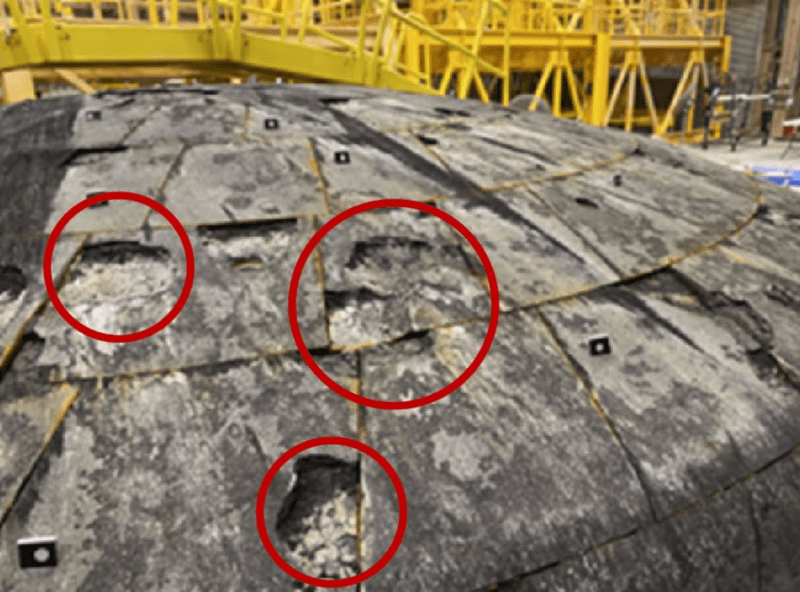
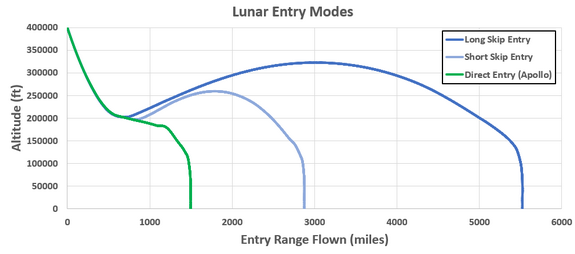
One of the problems that was detected with the reentry of the Artemis 1 mission back in November 2022* was the degradation of the heat shield of the Orion capsule. Chunks of the heat shield actually were breaking off. The technique they use for reentry called the skip reentry was thought to be the culprit. So while they are attempting to redesign the heat shield, Artemis 2 will be using the same type heat shield, but they will not do a skip reentry and come in without a skip off the atmosphere. The reason for using a skip reentry is to lessen the amount of Gs that are pulled by the capsule coming in at 7 miles per second by prolonging the entry and increasing the downrange travel of the capsule. Skip reentry is a proven technique, the Russians have been doing it for decades.
The astronomical event times given in this blog are for the Traverse City/Interlochen area of Michigan (Lat 44.7° N, Long 85.7° W; EST, UT – 5 hours) unless stated otherwise. Times will be different for other locations.
* For the broadcast, I misremembered the date as December 2024. That’s what happens when you’re old.
Addendum
Ephemeris: 01/22/2026 – Artemis II launch window opens up in 15 days
This is Ephemeris for Thursday, January 22nd. Today the Sun will be up for 9 hours and 26 minutes, setting at 5:37, and it will rise tomorrow at 8:10. The Moon, 3 days before first quarter, will set at 10:04 this evening.
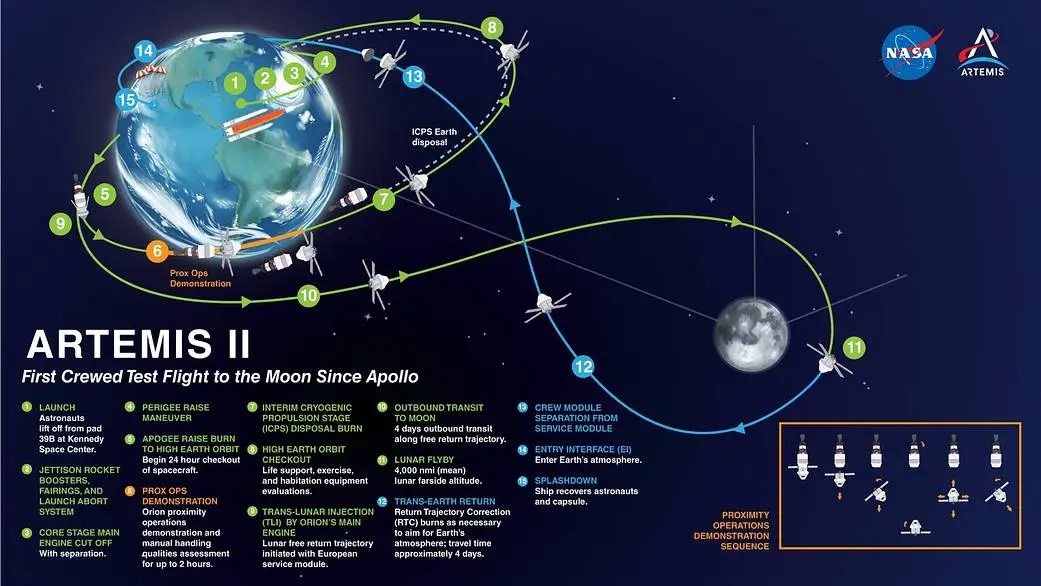
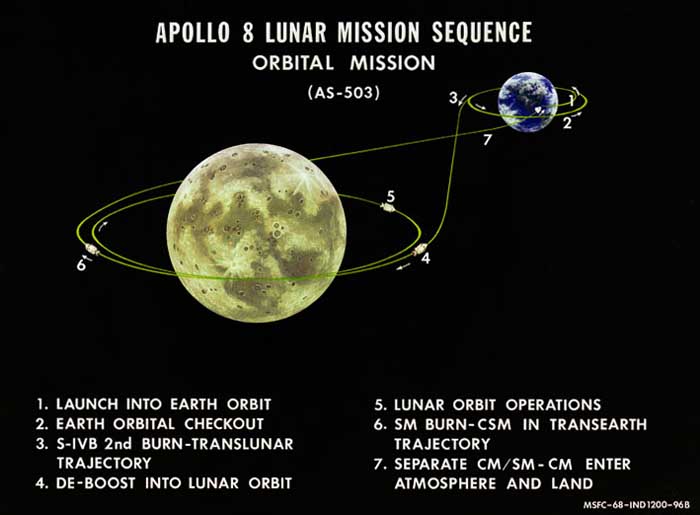
The launch window for the first crewed Artemis mission to the Moon opens up in a bit more than two weeks. It is made-up of 3 approximately 2 week windows containing four or five possible launch dates that extend to April. This mission is a mission to simply loop around the Moon and come back. It is different from the Apollo 8 mission, that actually orbited the Moon 10 times before returning to the Earth. The four astronauts will become the farthest members of humanity to venture from the Earth. One has hoped that NASA has solved the hydrogen leak problem that plagued the Artemis 1 mission a bit more than a year ago. Hydrogen is a small molecule that can leak through just about anything.
The astronomical event times given in this blog are for the Traverse City/Interlochen area of Michigan (Lat 44.7° N, Long 85.7° W; EST, UT – 5 hours) unless stated otherwise. Times will be different for other locations.
Addendum
Ephemeris: 11/18/2024 – How to get two spacecraft to come together gently in space
This is Bob Moler with Ephemeris for Monday, November 18th. Today the Sun will be up for 9 hours and 26 minutes, setting at 5:11, and it will rise tomorrow at 7:45. The Moon, 3 days past full, will rise at 7:22 this evening.
Orbital mechanics is a science of how orbits work around the Earth, Sun, or any other body. Back in the mid 1960s when NASA was starting it’s work to get to the Moon with the Gemini program they had quite a time getting rendezvous and docking right. Buzz Aldrin, the second man to step foot on the Moon, who is still around by the way, figured it all out – before he became an astronaut. It’s counter-intuitive. To speed up you slow down to drop into a lower orbit which is faster. To slow down, speed up and climb into a higher orbit which slows you down. There’s more to it than that, but basically objects in orbit just don’t seem to behave the way you think they ought to. And that’s how things work in space.
The astronomical event times given are for the Traverse City/Interlochen area of Michigan (EST, UT – 5 hours). Times will be different for other locations.
Addendum
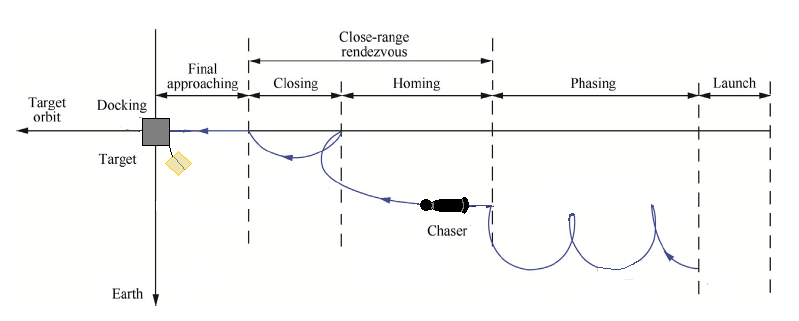
In this diagram time is represented on the horizontal axis from right to left, the altitude of the spacecraft and its target is on the vertical axis. The chaser vehicle is launched as the launch site crosses the plane of the orbit of the target. Changing the plane of an orbit is very expensive, energywise, so it’s best to launch in the same orbital plane. It enters an elliptical orbit, most initial orbits are pretty elliptical and so there’s a low point, or perigee, where the chaser enters orbit, and a high point which is the apogee. This is below the target orbit so that the chasing vehicle can catch up to the target. Lower orbits are faster than higher orbits, this is the phasing part. When the chaser gets pretty close it raises its orbit so that the starting point apogee is the new perigee and the new apogee is the altitude of the orbit of the target. The orbit stays elliptical for a little while so that the chasing spacecraft can slowly catch up to the target. In the final approach the orbits just about match so that the chaser very slowly catches up to the target.
I’ve seen similar diagrams on NASA broadcasts of Crew Dragon launches.
Ephemeris: 08/27/2024 – Space news
Sorry, about posting this late. I was working on our astronomical society article and newsletter. The article will be posted as an Ephemeris Extra in a couple of weeks. For a preview see my August 22nd post.
This is Ephemeris for Tuesday, August 27th. Today the Sun will be up for 13 hours and 27 minutes, setting at 8:27, and it will rise tomorrow at 7:01. The Moon, 1 day past last quarter, will rise at 12:55 tomorrow morning.
Let’s take a look at some space news. Today is the first day of the launch window for the SpaceX commercial mission Polaris Dawn where 4 private astronauts will ride a SpaceX Dragon capsule to the highest point astronauts have been since the Apollo days, some 1400 kilometers or 870 miles above the Earth. They will also perform the first commercial EVA or space walk. Two of the astronauts will take turns poking their body out the hatch capsule for a short period of time. They will not be free floating, but they will be connected to the capsule by foot or hand restraints.
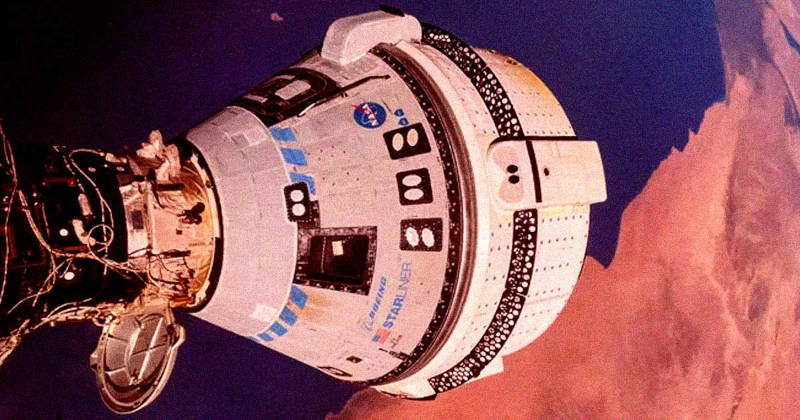
In other news NASA has decided to bring Suni Williams and Butch Wilmore, the Boeing Starliner test astronauts, back to Earth on a Dragon capsule in February due to safety concerns.
The astronomical event times given are for the Traverse City/Interlochen area of Michigan (EDT, UT–4 hours). Times will be different for other locations.
Addendum

Ephemeris: 07/11/2024 – Low energy routes to get to the Moon
This is Ephemeris for Thursday, July 11th. Today the Sun will be up for 15 hours and 19 minutes, setting at 9:27, and it will rise tomorrow at 6:09. The Moon, 2 days before first quarter, will set at 12:26 tomorrow morning.
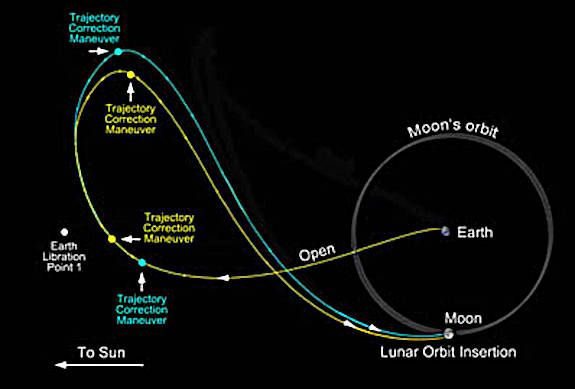
Back in the Apollo days when we sent people to the Moon, the trip out was only three days. The latest generation of unmanned probes to the Moon sent by the United States and other countries can take days, weeks, or even months to reach the Moon, so what’s going on? These are robot probes, needing little power. Humans however are high maintenance. Even when they’re doing nothing they are breathing, eating, and using resources. So when humans are aboard you have got to get there fast. Also, many of these probes are CubeSats, no bigger than a breadbox*. They must get into orbit of the Moon with very little thrust other than that of the rocket that launched them. They can go out as far as a million miles away before falling back to the Moon.
The astronomical event times given are for the Traverse City/Interlochen area of Michigan (EDT, UT–4 hours). They may be different for your location.
* OK, I’m an old guy, the modern size comparison would be a microwave.
Addendum
Ephemeris: 12/28/2023 – Next year in rockets and space
This is Ephemeris for Thursday, December 28th. Today the Sun will be up for 8 hours and 49 minutes, setting at 5:09, and it will rise tomorrow at 8:19. The Moon, 2 days past full, will rise at 6:35 this evening.
Let’s take a look at 2024 in space exploration. The Artemis 2 mission of sending a crew of four around the Moon and back will take place no earlier than November, so it could be pushed back into 2025 if there are any difficulties. SpaceX early next year will attempt the third flight of their gigantic Starship rocket. Hopefully this time it will reach near orbit. Blue Origin, sort of in competition to SpaceX, but have never put anything into orbit yet, is expected to launch their New Glenn rocket, which uses 7 BE4 engines next year. Also United Launch Alliance will be expected to launch their new Vulcan Centaur rocket, perhaps as early as January next year. It uses two Blue Origin BE4 engines as its main engines plus solid rocket boosters.
The astronomical event times given are for the Traverse City/Interlochen area of Michigan (EST, UT –5 hours). They may be different for your location.
Ephemeris: 12/26/2023 Some astronomical/space events of 2023
This is Ephemeris for Tuesday, December 26th. Today the Sun will be up for 8 hours and 48 minutes, setting at 5:07, and it will rise tomorrow at 8:19. The Moon, at full today, will rise at 4:30 this evening.
Looking back at 2023 in astronomy: an important event that was visible locally was the partial eclipse of the Sun on October 14th. For most of us it was mostly cloudy. I happened to be in Thompsonville at the Betsie Valley District Library to talk about eclipses and to view that one. We got about 15 minutes of clear skies to see the Sun near the middle of the eclipse, so it wasn’t a total washout. Of course the big event is next year on April 8th, a total solar eclipse whose path is going to be passing quite close to us. The James Webb Space Telescope astronomers have reported their first year findings, some of which have contradicted previous assumptions, or seem to have. The second of SpaceX’s Starship launches came within 4,000 kilometers an hour of achieving orbit.
The astronomical event times given are for the Traverse City/Interlochen area of Michigan (EST, UT –5 hours). They may be different for your location.
Addendum
05/02/2023 – Ephemeris – SpaceX finally launched its Super Heavy/Starship rocket
This is Ephemeris for Tuesday, May 2nd. Today the Sun will be up for 14 hours and 17 minutes, setting at 8:48, and it will rise tomorrow at 6:30. The Moon, 3 days before full, will set at 5:37 tomorrow morning.
On April 20th SpaceX finally launched their Starship atop the Super Heavy, which is the booster for the Starship for an attempted orbital test flight, from Star Base at Boca Chica, Texas. As we all know, it did not reach orbit. It made it about 36 kilometers up or about 22 miles before it lost control and had to be destroyed, however what it did to the launchpad and its surroundings is rather disheartening Elon Musk thought he could get away with not having a flame diverter underneath the launch mount. The Super heavy, which is undoubtedly the most powerful rocket in the world, dug a hole underneath the launch mount and threw big chunks of concrete all over the place damaging their launch infrastructure, and raining debris on a neighboring town. SpaceX will have to make lots of changes before they can launch again.
The astronomical event times given are for the Traverse City/Interlochen area of Michigan (EDT, UT –4 hours). They may be different for your location.
Addendum

Super Heavy and Starship, beginning to climb amid clouds of dust and debris. Screen grab from Sky News video.
11/28/2022 – Ephemeris – The Artemis Program
This is Ephemeris for Monday, November 28th. Today the Sun will be up for 9 hours and 8 minutes, setting at 5:04, and it will rise tomorrow at 7:57. The Moon, 2 days before first quarter, will set at 10:09 this evening.
Now that the Artemis I mission is ongoing, and the spacecraft is in a large orbit of the Moon, it’s time to look at the rest of the program. In 2024 the SLS or Space Launch System, which is the name for the whole rocket, will send a four-person crew in their Orion Capsule around the Moon and back. From what I’m seeing right now, it will be a simple mission. It doesn’t appear that they will actually orbit the Moon other than a free return trajectory back to the Earth. The mission a year or so after that will be one to attempt to land on one of the few flat sites near the south pole of the Moon. Speaking of the Moon, the planet Saturn will be about eight of the Moon’s diameter’s north or above the Moon tonight.
The astronomical event times given are for the Traverse City/Interlochen area of Michigan (EST, UT –5 hours). They may be different for your location.
Addendum
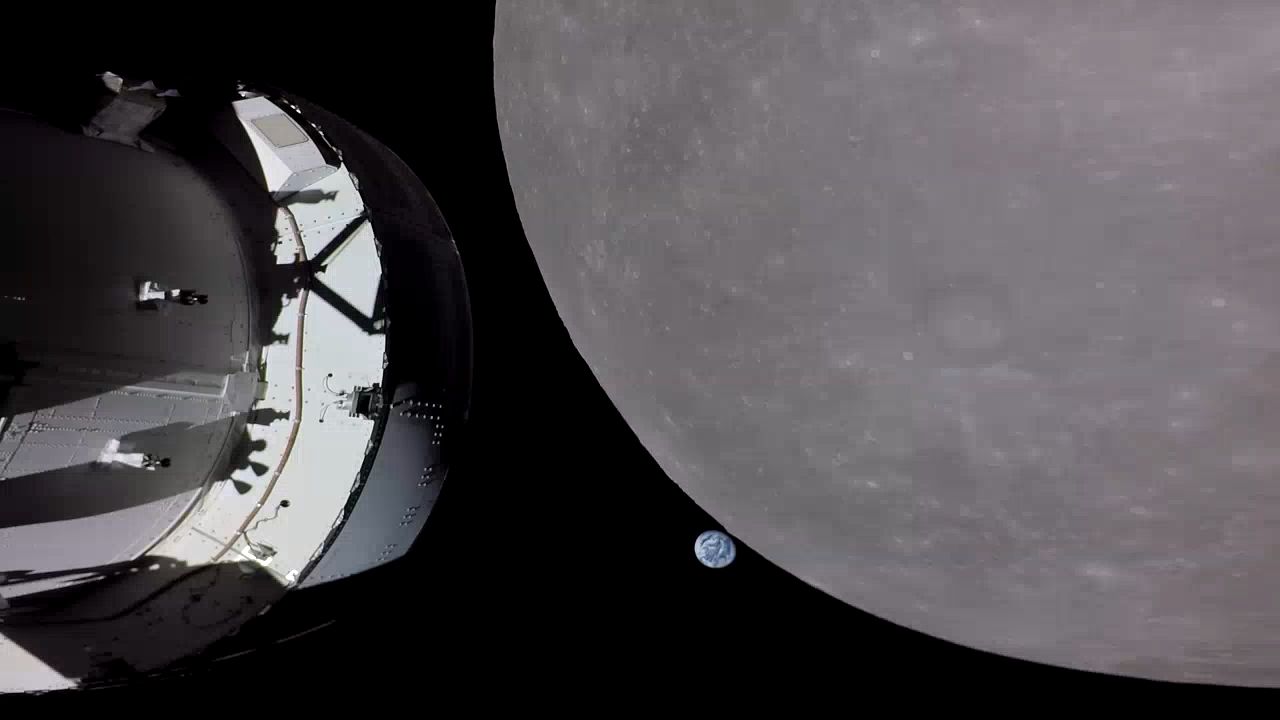
Earthset from Artemis I’s Orion spacecraft, as it moves around to the far side of the Moon. Click on the image to enlarge it. Credit: NASA
 Bob Moler's Ephemeris Blog