Archive
Ephemeris: 03/10/2026 – Finding Cancer the crab
This is Ephemeris for Tuesday, March 10th. Today the Sun will be up for 11 hours and 38 minutes, setting at 7:42, and it will rise tomorrow at 8:02. The Moon, 1 day before last quarter, will rise at 3:50 tomorrow morning.
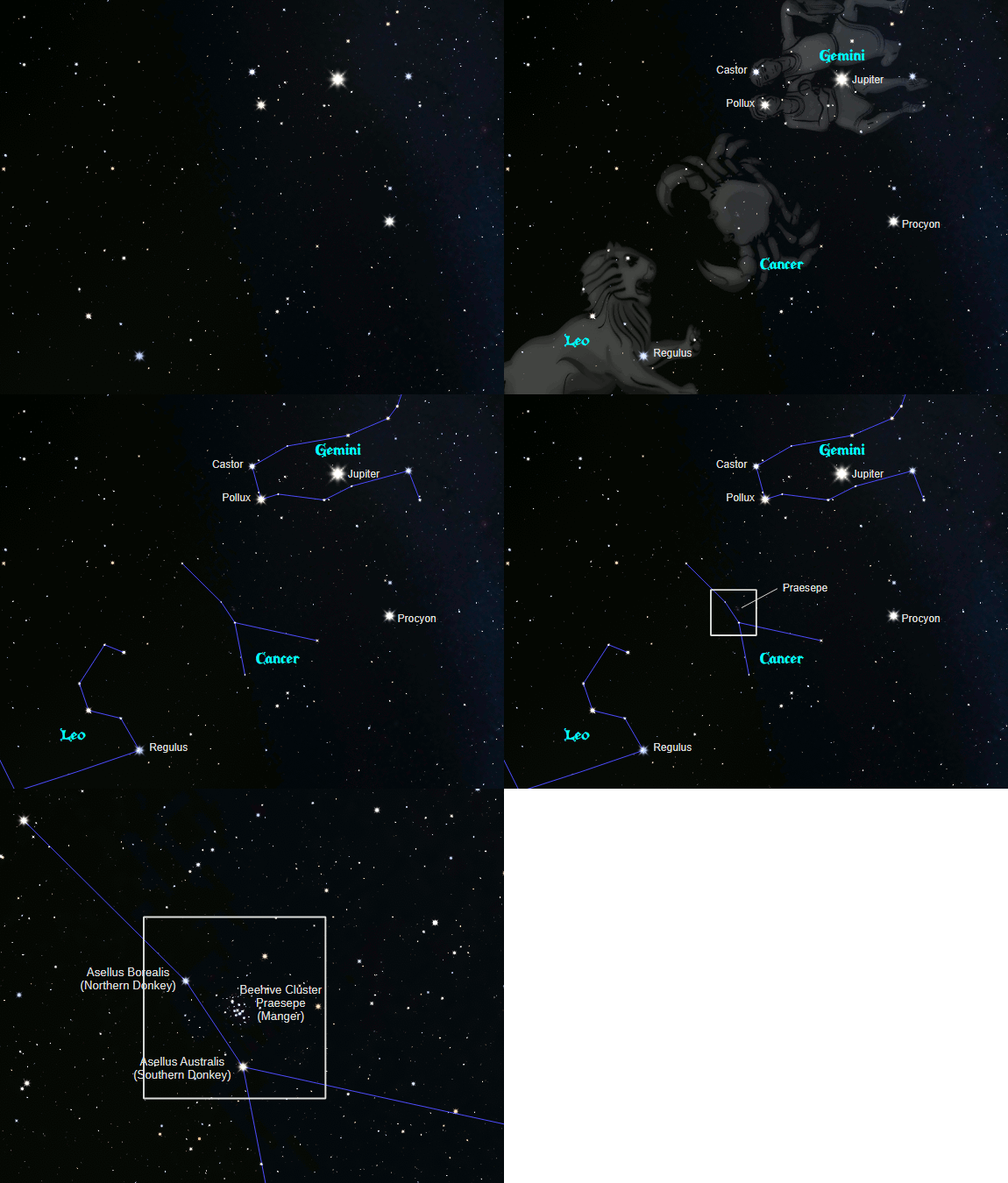
The constellation of Cancer the crab is made of dim stars, which are generally connected, in constellation charts, with lines that make either the letter K or an upside down Y. It lies directly between the star pair Castor and Pollux in Gemini and Regulus in Leo. In the center of the constellation is, what to the naked-eye is a fuzzy spot called Praesepe, or the manger. The two nearby stars, one above left, and one below left are Asellus Borealis, and Asellus Australis, the northern and southern donkey colts feeding out of the manger. Viewing that fuzzy spot with a pair of binoculars will reveal that it’s not fuzzy at all. It resolves into a cluster of stars, which astronomers, over the years, have called the Beehive cluster.
The astronomical event times given in this blog are for the Traverse City/Interlochen area of Michigan (Lat 44.7° N, Long 85.7° W; EST, UT – 5 hours) unless stated otherwise. Times will be different for other locations.
Addendum
06/22/2021 – Ephemeris – Mars is poised to cross in front of the Beehive Star Cluster tonight
This is Bob Moler with Ephemeris for Tuesday, June 22nd. Today the Sun will be up for 15 hours and 34 minutes, setting at 9:32, and it will rise tomorrow at 5:57. The Moon, 2 days before full, will set at 4:41 tomorrow morning.
Tonight, the planet Mars will be at the western edge of the Beehive star cluster. Tomorrow night, Mars will be seen against its stars. Normally, the Beehive star cluster is easily seen in binoculars. The problem is, that both the cluster and Mars will be low in the west-northwestern sky, only six to seven degrees above a sea or lake horizon near the optimal time to spot them of 11 pm. It has been 8 months since Mars was opposite the Sun in our skies, and relatively close to us. Back then it was as bright as Jupiter and relatively close to the Earth. Now, Mars is 221 million miles (356 million kilometers) and 5 times farther aw0ay, about half the distance to Jupiter. It’s tiny in telescopes and very hard to pick out of the dim twilight glow of 11 pm.
The astronomical event times given are for the Traverse City/Interlochen area of Michigan (EDT, UT-4). They may be different for your location.
Addendum
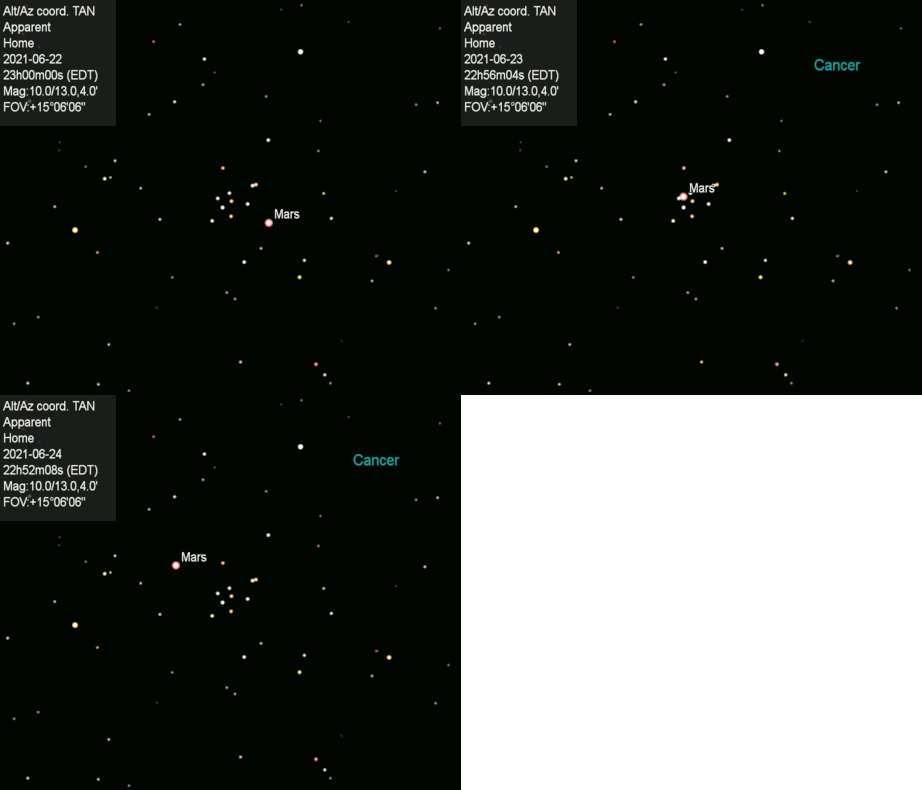
Mars passing in front of M44 as a GIF animation. This is difficult to spot with binoculars low in the west-northwest at 11 pm on the nights of June 22nd, 23rd and 24th. The Beehive star cluster is a relatively close and sparse cluster. On dark nights in early spring, the cluster looks like a fuzzy spot to the naked-eye. It reveals its true nature in binoculars. Created using Cartes du Ciel.
05/17/2021 – Ephemeris – The Moon tonight
This is Ephemeris for Monday, May 17th. Today the Sun will be up for 14 hours and 54 minutes, setting at 9:06, and it will rise tomorrow at 6:11. The Moon, 2 days before first quarter, will set at 2:25 tomorrow morning.
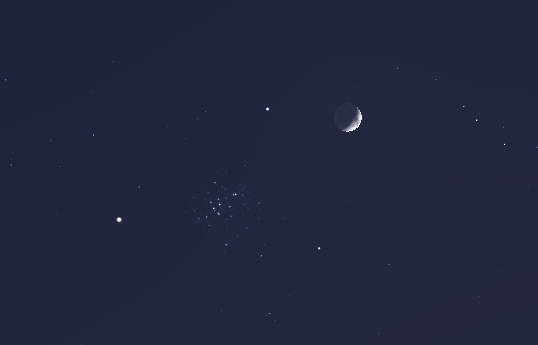
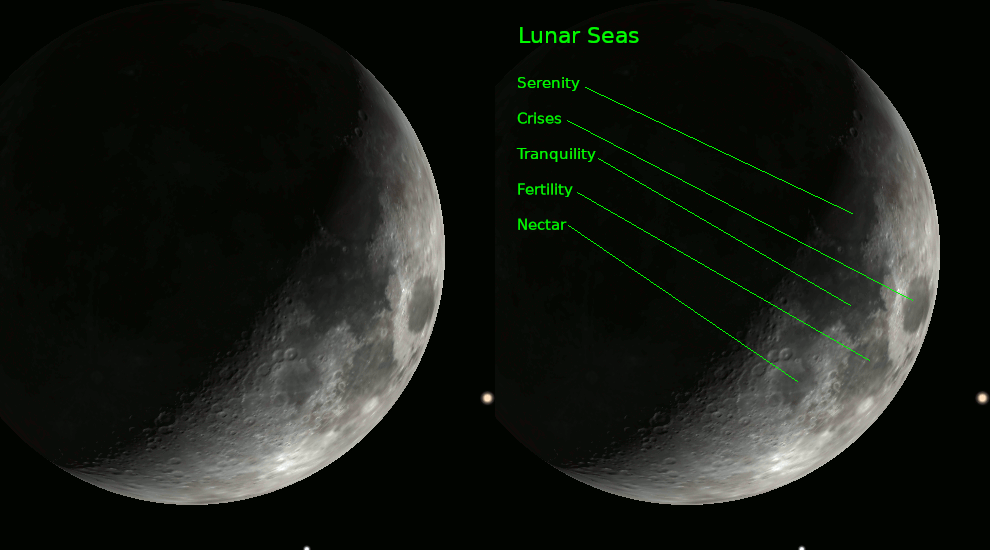
The Moon tonight reveals a bit more territory than it did last night, and will every night until full moon. The Moon’s solar day equals a lunar month of about 29 and a half of our days. As seen in binoculars, below and left of The distinctly oval Sea of Crises, or Mare Crisium, is the Sea of Fertility, or Mare Fecunditatis. To the left of the Sea of Crises, the Sea of Tranquility (Tranquilitatis) where the Apollo 11 crew landed. Above that half of Sea of Serenity has come into daylight. Tonight the Beehive star cluster will be visible below and left of the Moon. It should be easily visible in binoculars and has a vaguely triangular shape. It was known to the ancients as Praesepe, the manger, who saw it as a glowing spot on moonless nights.
The astronomical event times given are for the Traverse City/Interlochen area of Michigan. They may be different for your location.
Addendum
 Bob Moler's Ephemeris Blog