Archive
Ephemeris: 12/15/2023 – Jupiter is seen in Aries this year, also precession
This is Bob Moler with Ephemeris for Friday, December 15th. Today the Sun will be up for 8 hours and 49 minutes, setting at 5:02, and it will rise tomorrow at 8:13. The Moon, 3 days past new, will set at 7:50 this evening.
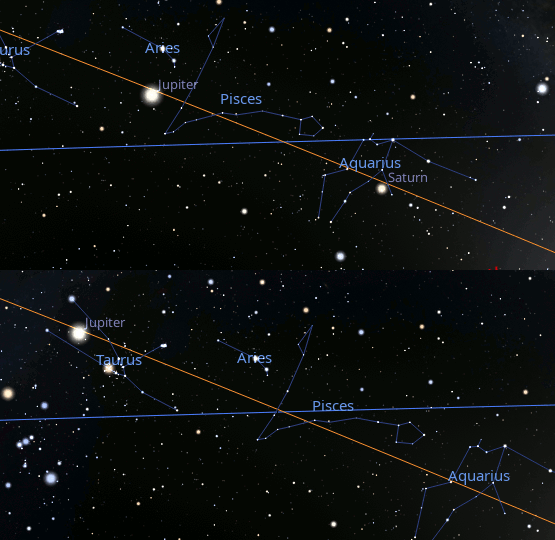
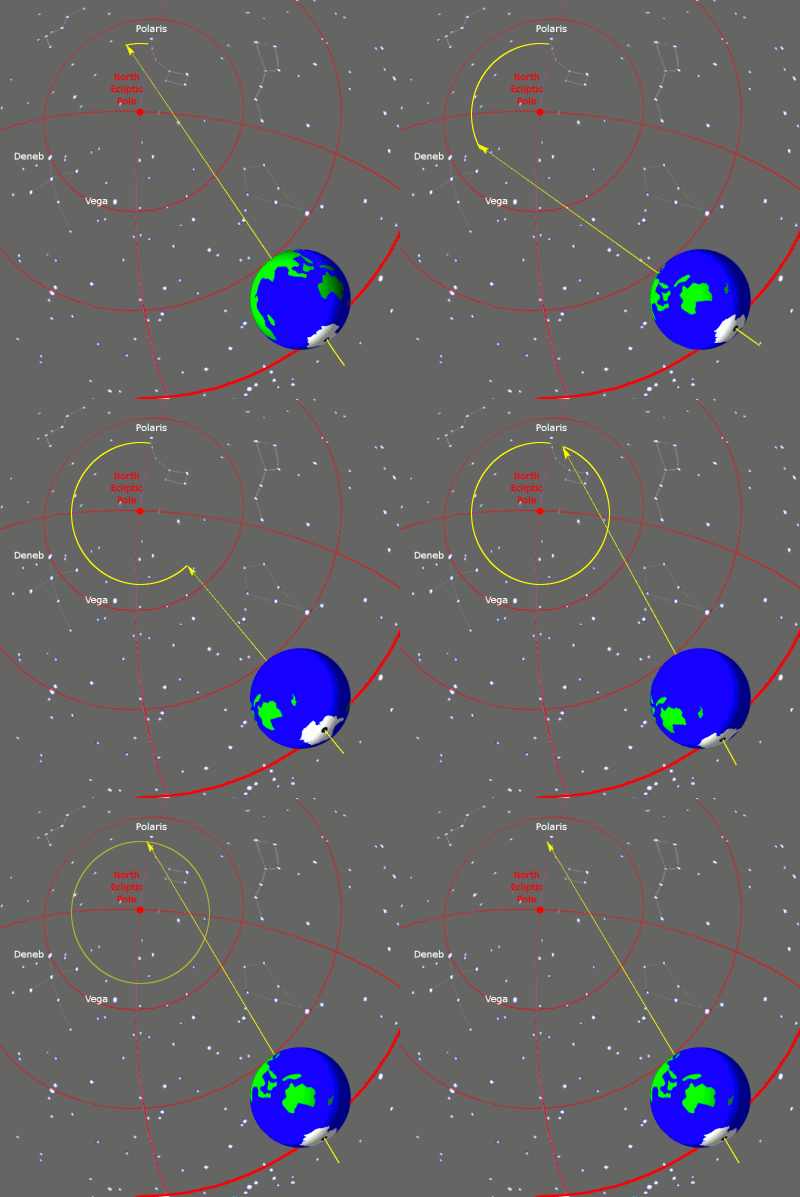
The planet Jupiter is seen against the stars of the constellation Aries the ram this year. The four stars of the constellation are seen above it, two of which are bright enough to be fairly easily seen. The other two are quite dim. The brightest is the star called Hamal. It is as bright as one of the stars of the Big Dipper. Aries used to be the constellation at the beginning of the Zodiac, where the Sun entered on the first day of spring. That honor has now moved westward to the western part of Pisces, the fish. The reason it has changed in the 1900 years since Ptolemy set up the Zodiac in the second century is that the Earth’s axis wobbles and the astrological signs of the Zodiac move with the seasons rather than the stars.
The astronomical event times given are for the Traverse City/Interlochen area of Michigan (EST, UT –5 hours). They may be different for your location.
Addendum
12/15/2015 – Ephemeris – Procyon the star that’s “Before the dog”
Ephemeris for Tuesday, December 15th. The Sun will rise at 8:13. It’ll be up for 8 hours and 49 minutes, setting at 5:02. The Moon, 3 days before first quarter, will set at 9:48 this evening.
Visible low in the east at 9:30 p.m. appears the star Procyon to its lower left is Sirius the brightest night-time star. Procyon is the bright star in the constellation Canis Minor, or lesser dog. I can find only one other star in Canis Minor. Perhaps it’s a hot dog. If Sirius, in Canis major is the Dog Star then Procyon should be the Little Dog Star. However Procyon is an interesting name. It means “Before the dog”, which is an allusion to the fact that Procyon, though east of Sirius actually rises before it. This is due to Procyon’s more northerly position. This effect doesn’t work south of the equator, however. Sirius will rise at about 9 tonight. Procyon is a star much like Sirius but is 32% farther away. It’s 11.4 to Sirius’ 8.6 light years away.
Times are for the Traverse City/Interlochen area of Michigan. They may be different for your location.
Addendum
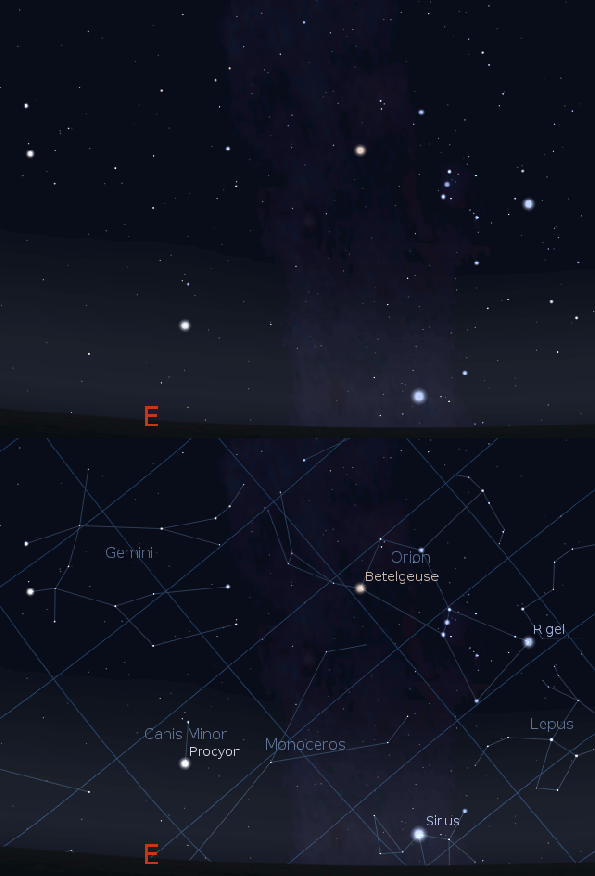
Procyon, Sirius and the stars of winter. Created using Stellarium
In the above chart, beside the constellation lines, we have the grid of right ascension, from lower left to upper right; and declination, from upper left to lower right. right ascension lines are like longitude on the Earth, while declination lines are latitude lines. They are tipped because I don’t live at either the equator or one of the poles. As the Earth rotates the Sun, stars and planets slide westward in the direction of the declination lines. Note that Sirius is closer to the horizon than Procyon. Also that Sirius is west of the 7 hour right ascension line. (Take my word for it.) Procyon is east of that line, thus Sirius is west of Procyon.
Other cool things can be seen in the chart. Note the declination line that touches the horizon at the east compass point and runs just above Orion’s belt. It is 0º declination, or the celestial equator. It extends to the west compass point on the western horizon. The Sun on the equinoxes will rise due east and set due west. The 6 hour right ascension line runs past Betelgeuse in Orion. At 23½º north declination, near Castor’s big toe in Gemini is where the Sun appears on the first day of summer, the summer solstice.
P.S. It was cloudy and rainy the last two days. Didn’t see a Geminid meteor again this year, keeping my record intact.
 Bob Moler's Ephemeris Blog