Archive
Ephemeris: 08/02/2024 – The Northern Cross
This is Ephemeris for Friday, August 2nd. Today the Sun will be up for 14 hours and 35 minutes, setting at 9:06, and it will rise tomorrow at 6:31. The Moon, 2 days before new, will rise at 5:12 tomorrow morning.
The star Deneb is high in the east-northeast. It is the dimmest of the three stars of the Summer Triangle. It is at the head of the Northern Cross, an informal constellation or asterism. The upright extends to the South. The crossbeam can be seen crossing the star just south of Deneb. There’s also a constellation there. It’s actually Cygnus the swan flying southward along the Milky Way with its neck outstretched. The Anishinaabe natives peoples of our area see Ajijaak the crane, also with a long neck flying north, but also long legs trailing to the south, its wings outstretched. In Greek mythology Cygnus was the guise of the god Zeus when he seduced Leda, whose offspring was Pollux, one of the Gemini twins.
The astronomical event times given are for the Traverse City/Interlochen area of Michigan (EDT, UT–4 hours). They may be different for your location.
Addendum
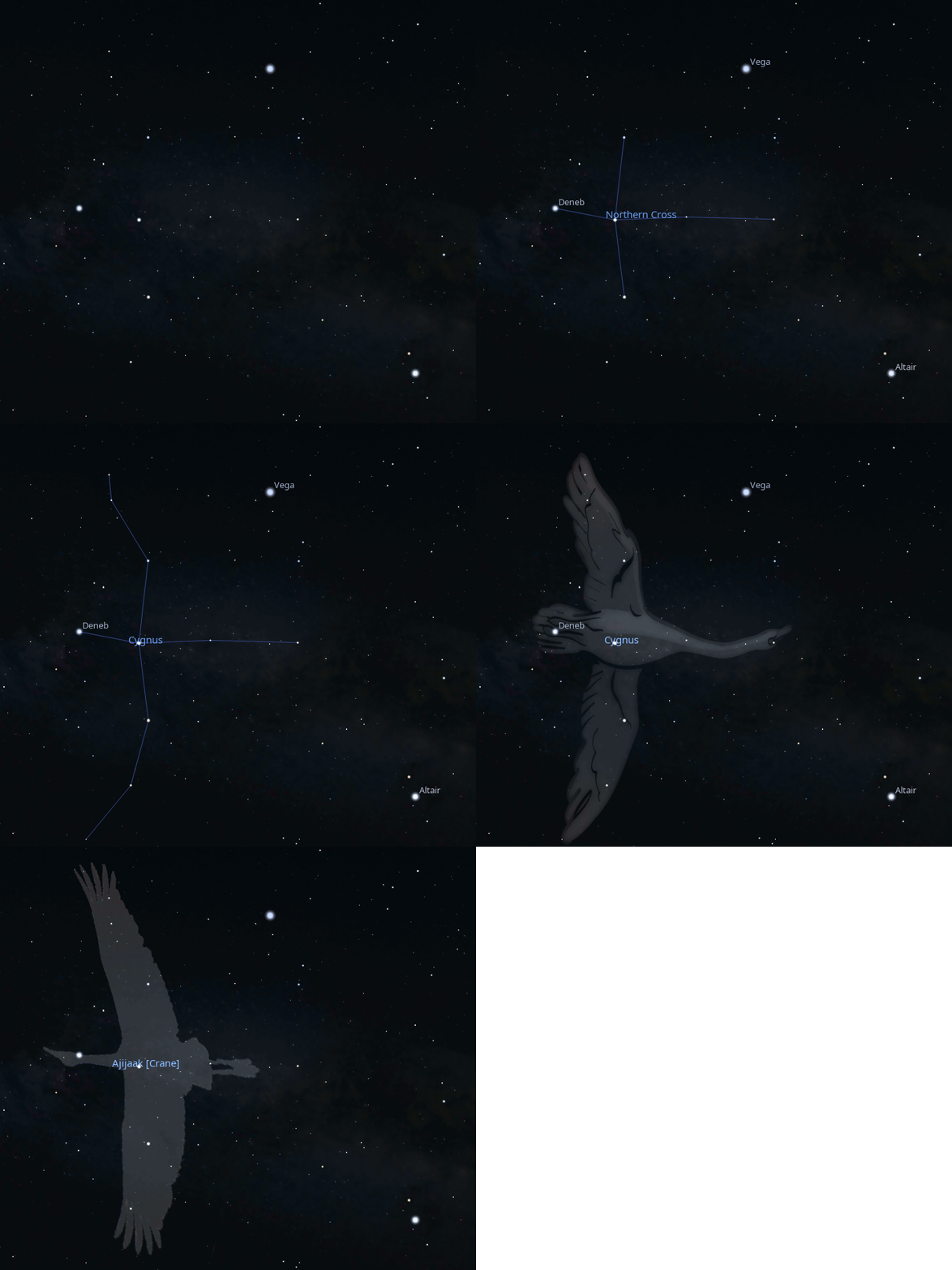
Ephemeris: 09/14/2023 – The stars of Cygnus the swan represent a few different figures
This is Ephemeris for Thursday, September 14th. Today the Sun will be up for 12 hours and 35 minutes, setting at 7:55, and it will rise tomorrow at 7:21. The Moon is new today, and won’t be visible.
Nearly directly overhead in the evening is the bright star Deneb, part of the Summer Triangle of bright stars It’s at the top of the Northern Cross, an informal constellation or asterism. It makes a perfectly proportioned Christian cross. Deneb is also the tail of Cygnus the swan, seen flying southward through the Milky Way with its neck outstretched. Extra stars added to the Northern Cross extend the wings nicely. To the Anishinaabe native peoples of our area the stars here also represent two constellations, both are birds. The first is Ajijaak, the Sand Hill crane, The other is Bineshi Okanin, the Skeleton Bird, so named probably because the stars make a stick figure of a bird rather than an outline of one.
The astronomical event times given are for the Traverse City/Interlochen area of Michigan (EDT, UT –4 hours). They may be different for your location.
Addendum
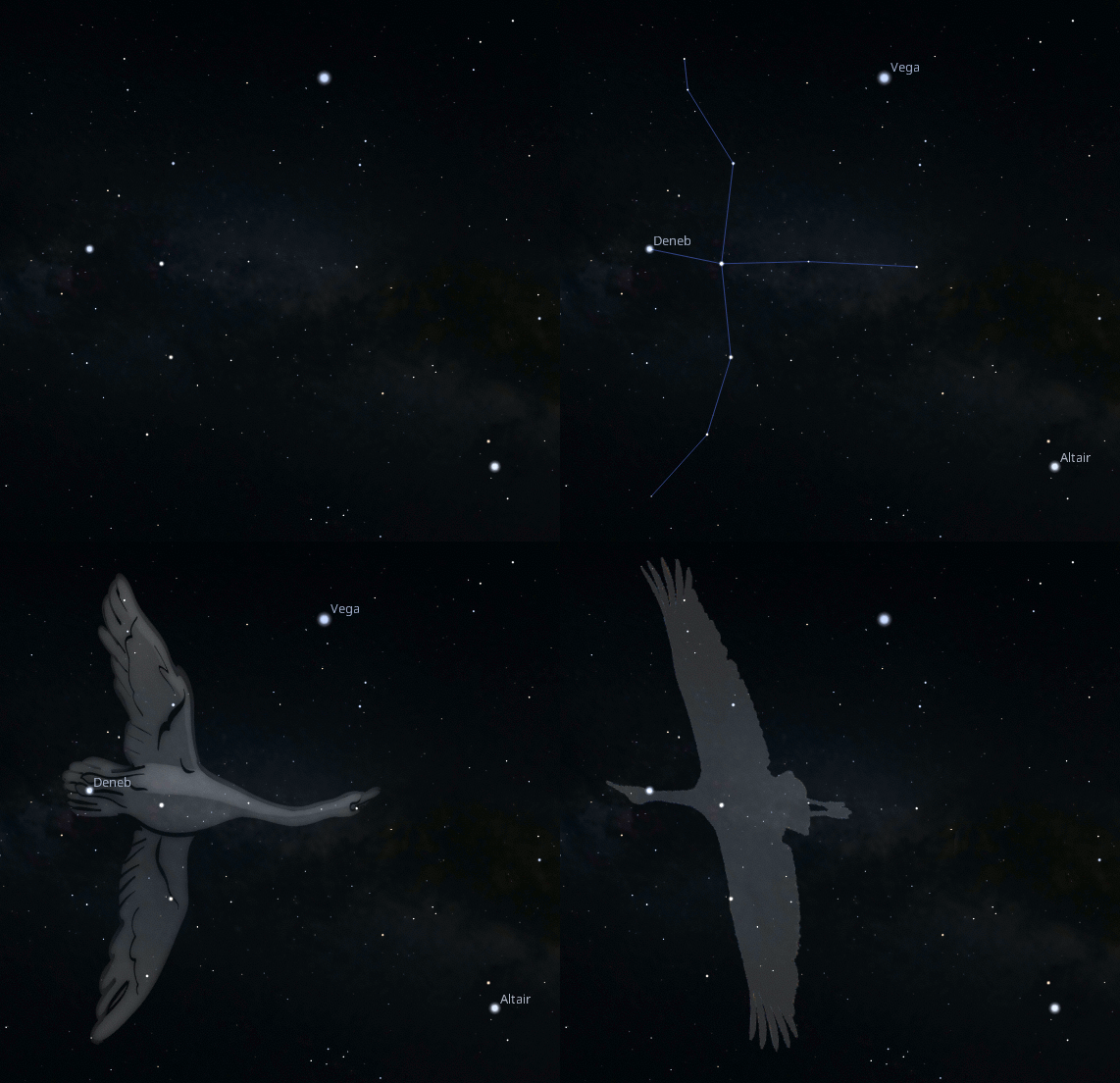
09/27/2021 – Ephemeris – The native peoples constellations of the Crane and the Moose
This is Ephemeris for Monday, September 27th. Today the Sun will be up for 11 hours and 53 minutes, setting at 7:30, and it will rise tomorrow at 7:37. The Moon, 1 day before last quarter, will rise at 11:00 this evening.
The evening sky hosts two more of the constellations of the Anishinaabe native peoples of our area. Overhead, where the official constellation Cygnus the Swan is, or the Northern Cross is Ajijaak, the Sand Hill Crane flying northward through the Milky Way, wings outstretched, with its long legs trailing behind. In the eastern sky where the official constellation of Pegasus the flying horse is climbing the sky upside down is. His body is the Great Square, an informal constellation. To the Anishinaabe, it is the Mooz (Moose), who is upright. His magnificent antlers take up the dim official constellation of Lacerta the lizard between Pegasus and Cygnus. Also in the sky is Ojiig the Fisher, our Big Dipper, whose bloody tail will soon swoop down and paint the trees with their fall colors. (You can search for “Fisher” above right for his story, and his relevant appearances in autumn and late winter.)
The astronomical event times given are for the Traverse City/Interlochen area of Michigan (EDT, UT-4 hours). They may be different for your location.
Addendum
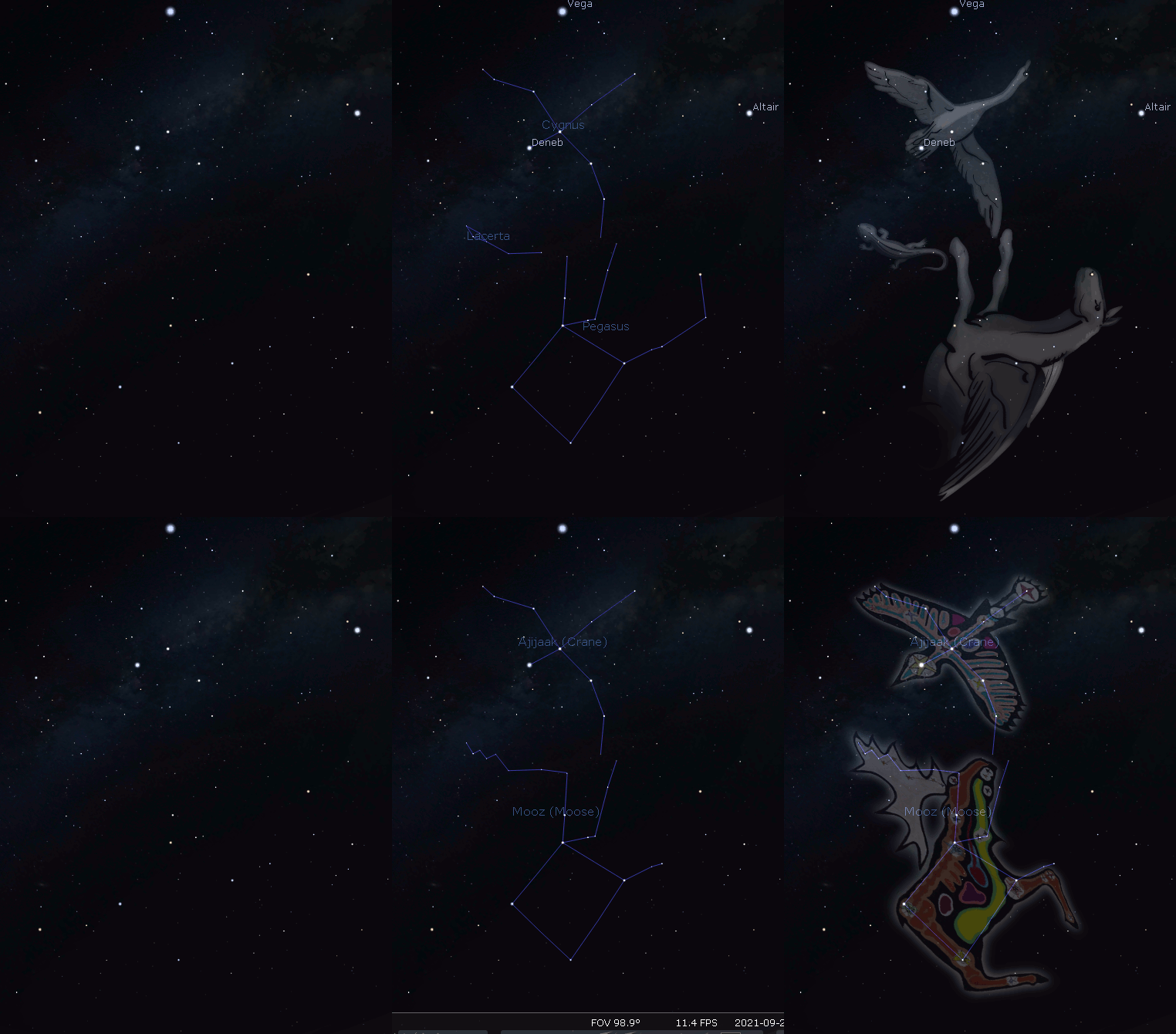
The Anishinaabe constellations of Ajijaak, the Crane and Mooz (Moose) compared to the official International Astronomical Union (IAU) constellations. Created using Stellarium and GIMP.
The Ojibwe constellation art is part of the latest versions of Stellarium. Ojibwe (Anishinaabe) constellation art by Annette S Lee and William Wilson from Ojibwe Sky Star Map Constellation Guide, ISBN 978-0-615-98678-4.
07/12/2021 – Ephemeris – Two cultures look at the star pattern of Cygnus the swan
This is Ephemeris for Monday, July 12th. Today the Sun will be up for 15 hours and 18 minutes, setting at 9:27, and it will rise tomorrow at 6:09. The Moon, 3 days past new, will set at 11:33 this evening.
Last week I looked at the constellation of Cygnus the swan and the informal constellation or asterism made from most of its stars, the Northern Cross. Cygnus is the official International Astronomical Union constellation name. However, the indigenous Anishinaabe people of our area, and the northern Great Lakes, had another bird in mind when seeing these stars, which are now fairly high in the east in the evening: Ajijaak, (pronounced a-ji-jock) a Sand Hill crane. While the swan is flying, neck outstretched to the south through the Milky Way, the crane is flying northward with its long legs trailing behind. The bright star Deneb is at its head. I see more cranes than swans around here in recent years and hear their creaking-door-like calls, and can see a pair foraging, from time to time, in a field south of where I live.
The astronomical event times given are for the Traverse City/Interlochen area of Michigan (EDT, UT – 4 hr). They may be different for your location.
Addendum
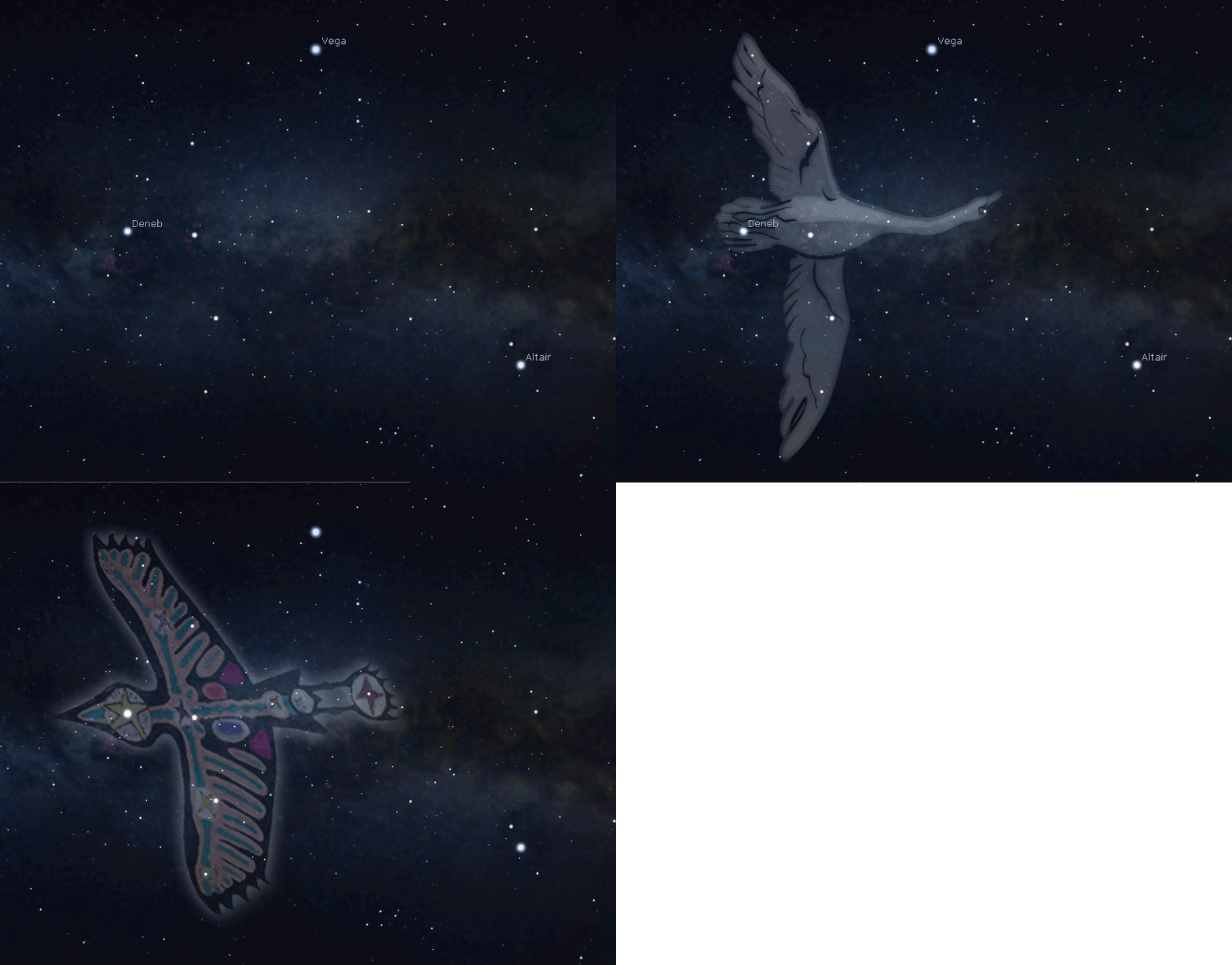
The IAU Cygnus the swan and the Anishinaabe Ajijaak the crane constellations demonstrated via an animated GIF image. Click on the image to enlarge it. Credit Stellarium (both star lore images are embedded in Stellarium). The Anishinaabe image is from Ojibwe Giizhig Anung Masinaaigan – Ojibwe Sky Star Map created by A. Lee, W. Wilson, and C. Gawboy.
07/13/2020 – Ephemeris – The constellation of Ajijaak, the crane
This is Bob Moler with Ephemeris for Monday, July 13th. Today the Sun will be up for 15 hours and 16 minutes, setting at 9:26, and it will rise tomorrow at 6:11. The Moon, 1 day past last quarter, will rise at 1:55 tomorrow morning.
Friday I looked at the constellation of Cygnus the swan and the informal constellation or asterism made from most of its stars the Northern Cross. Cygnus is the official International Astronomical Union constellation name. However the indigenous Anishinaabe people of our area had another bird in mind when seeing these stars, which are now fairly high in the east in the evening: Ajijaak, (pronounced a-ji-jock) a Sand Hill crane. While the swan is flying, neck outstretched to the south through the Milky Way, the crane is flying northward with its long legs trailing behind. The bright star Deneb is at his head. Where I live I see more cranes than swans these days and hear their creaking-door-like calls, and see a pair from time to time in a field south of where I live.
The event times given are for the Traverse City/Interlochen area of Michigan. They may be different for your location.
Addendum
The IAU Cygnus the swan and the Anishinaabe Ajijaak the crane constellations demonstrated via an animated GIF image. Note the bright star of the Summer Triangle. Click on the Image to enlarge it. Created using Stellarium (both star lore images are embedded in Stellarium). The Anishinaabe image is from Ojibwe Giizhig Anung Masinaaigan – Ojibiwe Sky Star Map created by A. Lee, W. Wilson, and C. Gawboy.
 Bob Moler's Ephemeris Blog