Archive
12/25/2019 – Ephemeris – A look at the naked-eye planets for Christmas
Merry Christmas. This is Ephemeris for Christmas Day, Wednesday, December 25th. Today the Sun will be up for 8 hours and 48 minutes, setting at 5:07, and it will rise tomorrow at 8:18. The Moon, 1 day before new, will rise at 8:42 tomorrow morning.
Let’s look at the naked-eye planets for this week. Venus is our Christmas Star low in the southwest in the early evening. It will set at 7:43 p.m. Saturn, the ringed planet, will be in the southwestern sky in the evening, and will set at 6:26 p.m. Tonight Saturn will be about 16 ½ degrees or more than the width of a fist held at arms length right and below the much brighter Venus. Jupiter is lost in twilight. It will pass behind the Sun on the Friday, entering the morning sky.
Mars is in the morning sky and will rise in the east-southeast at 5:07 a.m. It’s not very bright because it’s 206 million (332 million km) miles away, but it’s getting slowly closer to the Earth. Mercury is now too close to the Sun to be seen in the morning.
The times given are for the Traverse City/Interlochen area of Michigan. They may be different for your location.
Addendum
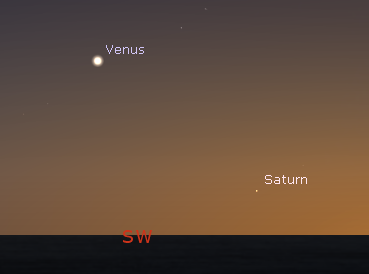
Venus and Saturn low on the southwest tonight at 6 p.m. December25, 2019. Saturn is only 3 1/2 degrees above the Lake Michigan horizon. Created using Stellarium.
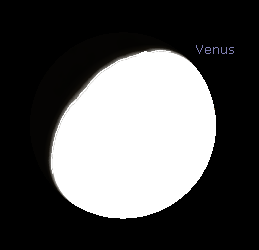
Venus, much larger than it would appear in any telescope to show its gibbous phase, tonight December 25, 2019. Created using Stellarium.
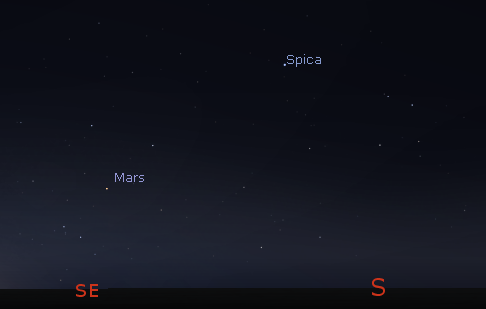
Mars in the morning with the bright stars at 7 a.m. December 26, 2019. Created using Stellarium.
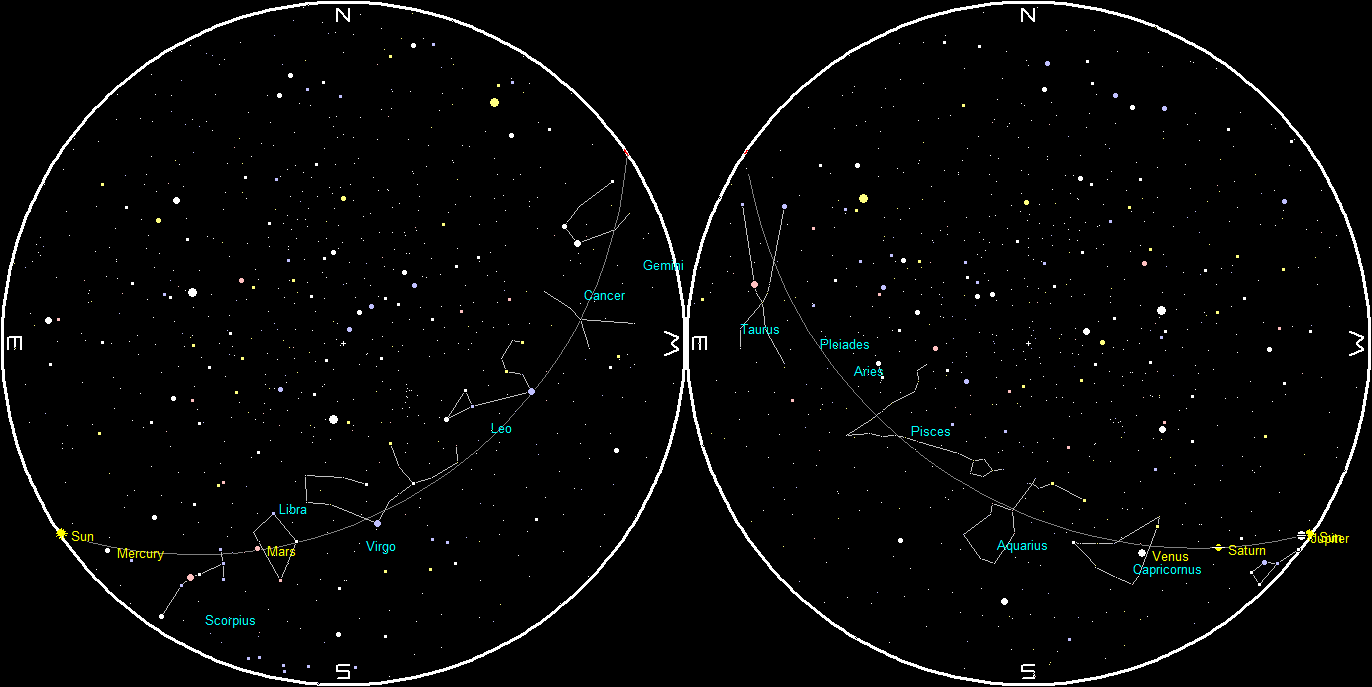
Planets and the Moon at sunset and sunrise of a single night starting with sunset on the right on December 25, 2019. The night ends on the left with sunrise on the 26th. The Moon at the morning hour is south of the Sun having just completing a solar eclipse for Asia. Click on the image to enlarge. Created using my LookingUp program.
12/24/2019 – Ephemeris – Was this the star of Bethlehem?
Ephemeris for Christmas Eve, Tuesday, December 24th. Today the Sun will be up for 8 hours and 48 minutes, setting at 5:06, and it will rise tomorrow at 8:18. The Moon, 2 days before new, will rise at 7:41 tomorrow morning.
Many writers of the 2nd and 3rd centuries AD place Jesus’ birth around 2 BC, which had to be before Herod the Great’s death, which I suggest was in 1 BC marked by to a total lunar eclipse. So the Star of Bethlehem could appear several years later than the triple conjunction of Jupiter and Saturn in 7 BC that’s been popular. In 3 and again in 2 BC there were star-like conjunctions or apparent joinings of the planets Jupiter and Venus against the backdrop of constellation of Leo the Lion. A lion is related to Judah, son of Jacob by a blessing the latter gave his 12 sons in Genesis. The first conjunction occurred in August of 3 BC in the morning sky. In June the next year the two planets got together again, this time in the evening sky, a month or more after Jesus would have been born in the lambing season of spring.
The times given are for the Traverse City/Interlochen area of Michigan. They may be different for your location.
Addendum
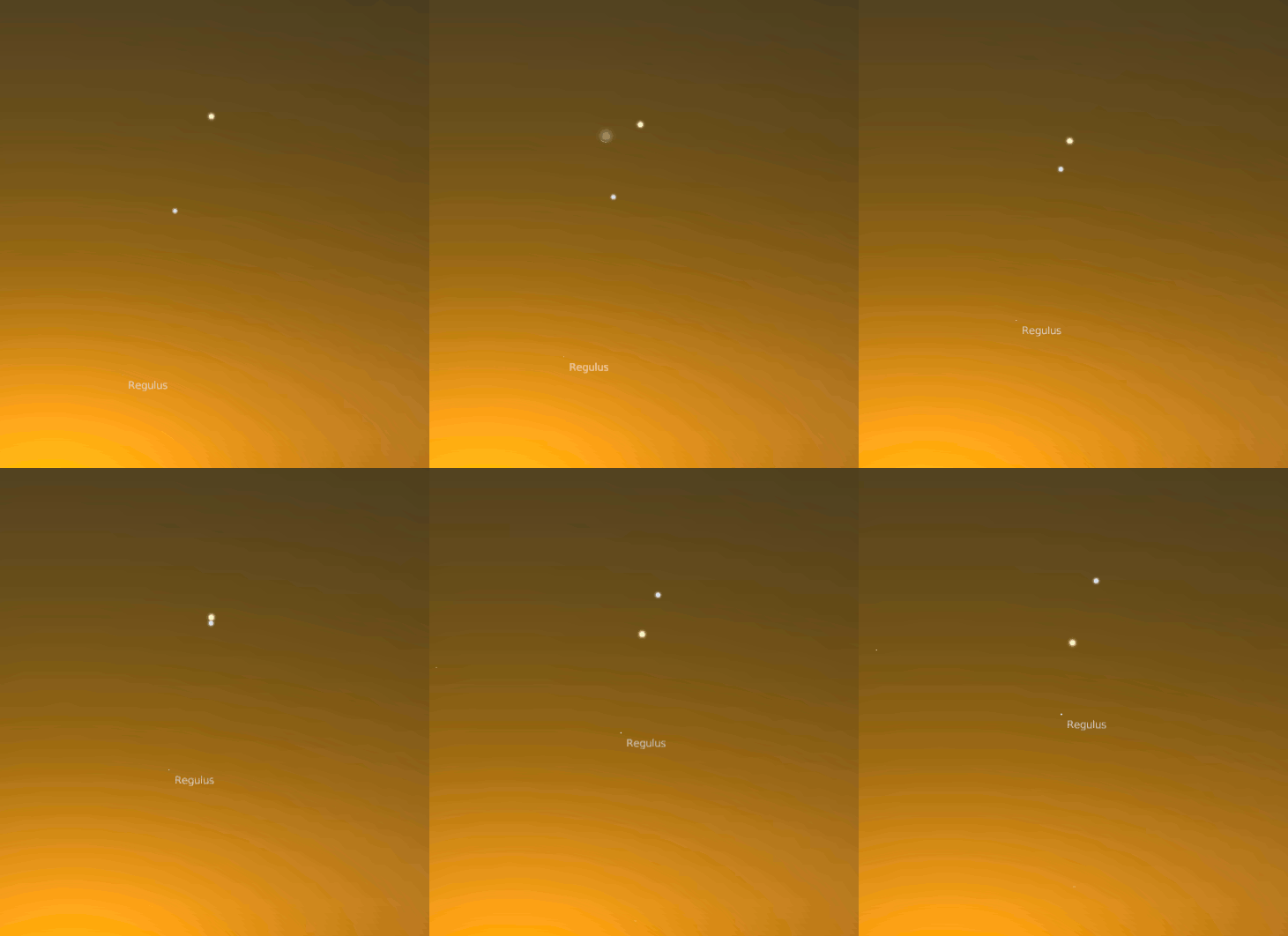
Here is an animation created using Stellarium of Jupiter and Venus, the brighter of the two seeming to coalesce on August 12, 3 BC in the early morning twilight. Created using Stellarium and GIMP.
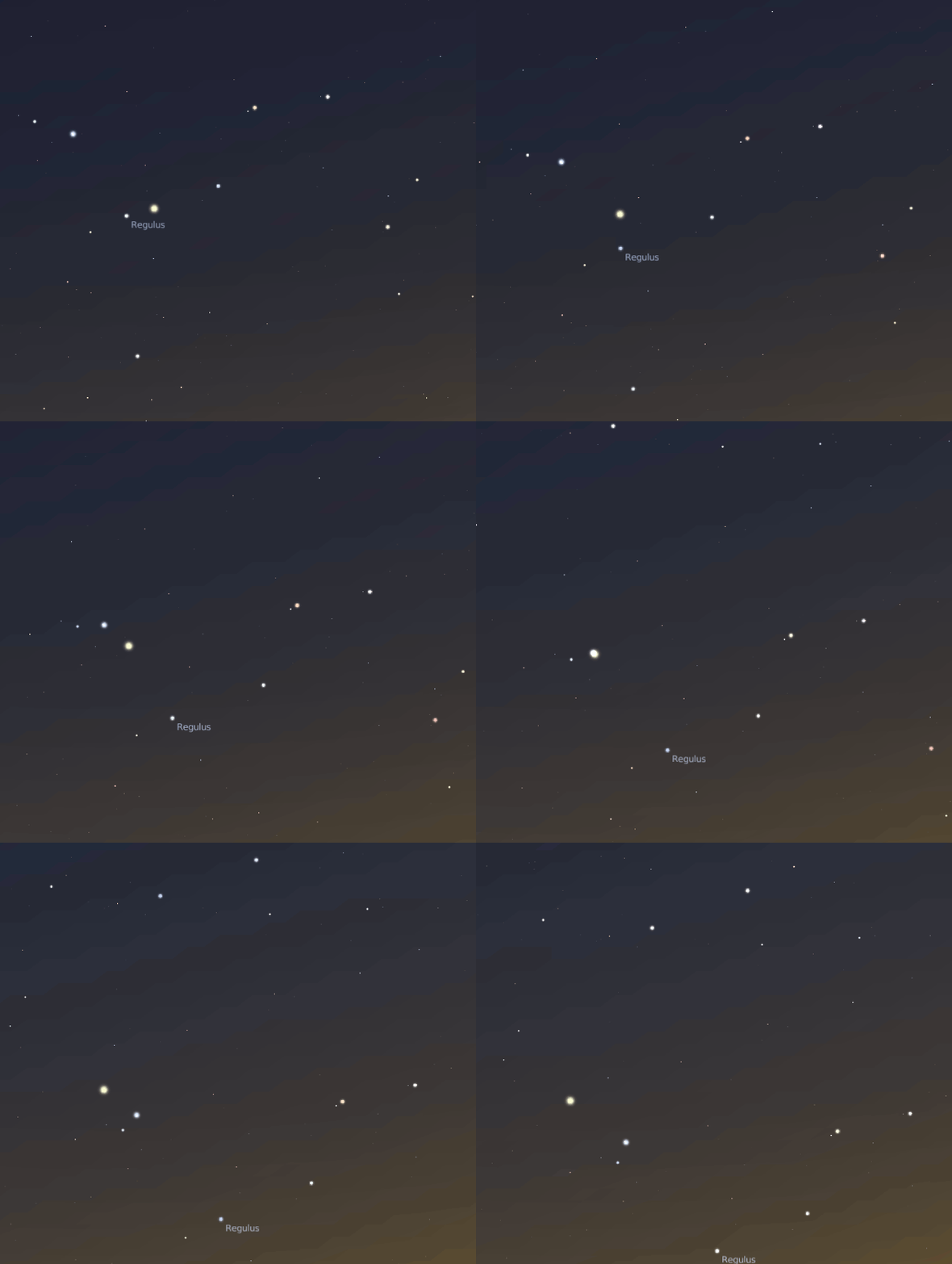
On June 16th 2 BC, this time in the evening, Venus and Jupiter seem to coalesce as one, at least to the naked eye. The first few frames contain the Sickle asterism of Leo the lion’s head and mane. Created using Stellarium and GIMP.
I have much more information on this topic in my December 2, 2016 posting: https://bobmoler.wordpress.com/2016/12/02/12022016-ephemeris-my-talk-about-the-star-of-bethlehem-is-tonight/
12/18/2019 – Ephemeris – Where are the naked-eye planets for this week?
Ephemeris for Wednesday, December 18th. Today the Sun will be up for 8 hours and 48 minutes, setting at 5:03, and it will rise tomorrow at 8:15. The Moon, 1 day before last quarter, will rise at 12:28 tomorrow morning.
Let’s look at the naked-eye planets for this week. Venus will be briefly visible low in the southwest before it sets at 7:25 p.m. Jupiter is lost in twilight. It will pass behind the Sun on the 27th and will enter the morning sky. Saturn, the ringed planet, will be in the southwestern sky in the evening, and will set at 6:46 p.m. Tonight Saturn will be about 8 ½ degrees or Nearly the width of a fist held at arms length right and below the much brighter Venus. Mars is in the morning sky and will rise in the east-southeast at 5:10 a.m. It’s not very bright because it’s 211 million (339million km) miles away, but it’s getting slowly closer to the Earth. Mercury is now too close to the Sun to be seen in the morning.
The times given are for the Traverse City/Interlochen area of Michigan. They may be different for your location.
Addendum
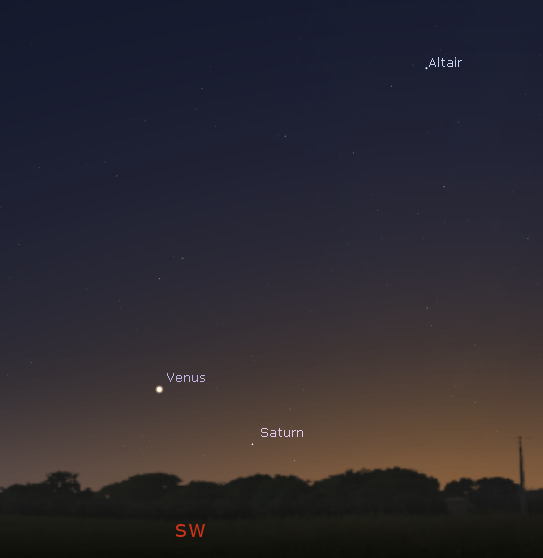
Venus and Saturn low ion the southwest tonight at 6 p.m. December18, 2019. Created using Stellarium.
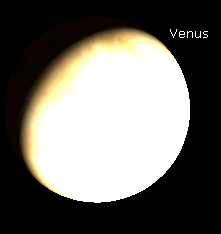
Venus, much larger than it would appear in any telescope to show its gibbous phase, tonight December 18, 2019. Created using Stellarium.
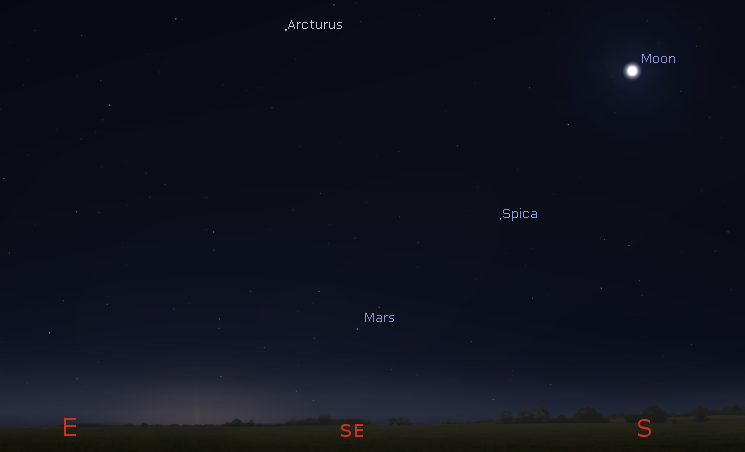
Mars and the Moon in the morning with the bright stars at 7 a.m. December 19, 2019. Created using Stellarium.
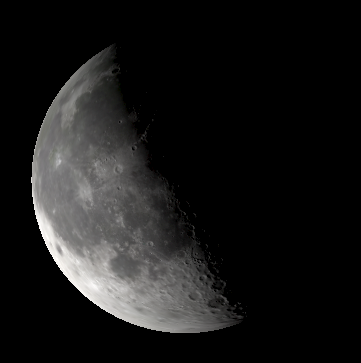
The Moon as it might be seen in binoculars at 7 a.m. tomorrow December 19, 2019. Created using Stellarium.
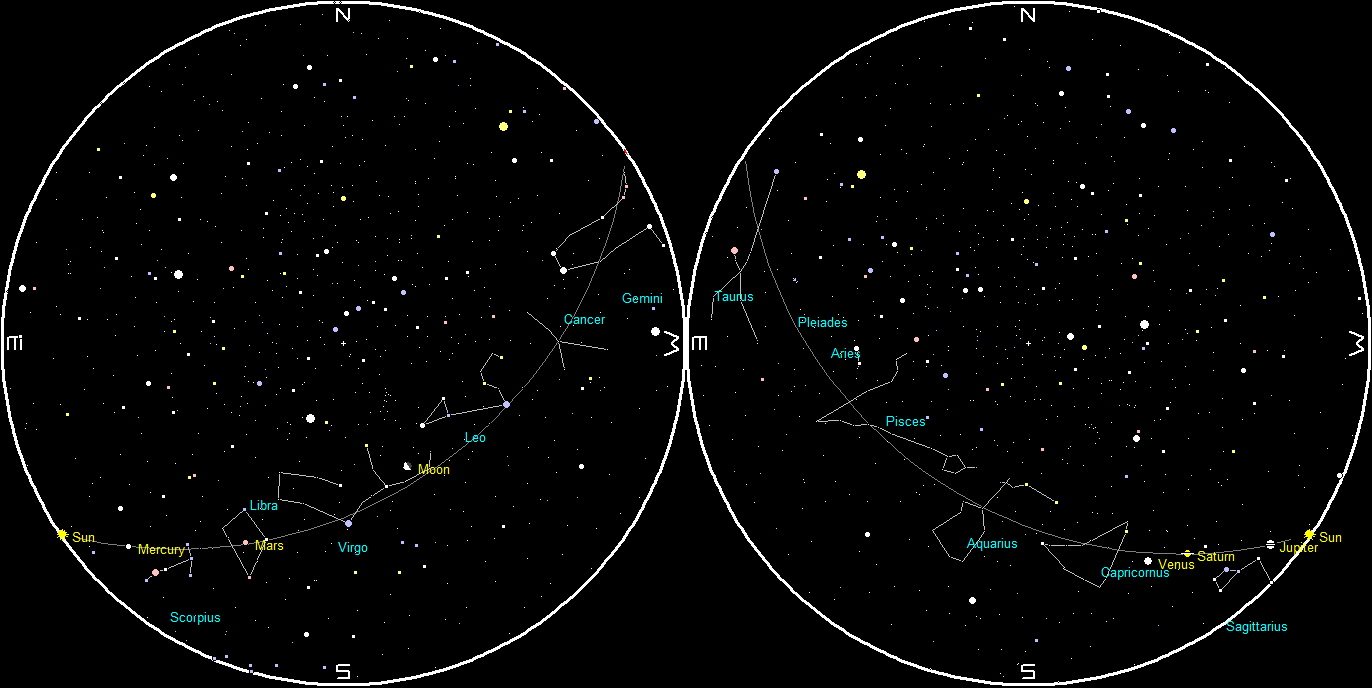
Planets and the Moon at sunset and sunrise of a single night starting with sunset on the right on December 18, 2019. The night ends on the left with sunrise on the 19th. Click on the image to enlarge. Created using my LookingUp program.
12/11/2019 – Ephemeris – Where are the naked-eye planets now
Ephemeris for Wednesday, December 11th. Today the Sun will be up for 8 hours and 52 minutes, setting at 5:02, and it will rise tomorrow at 8:10. The Moon, 1 day before full, will set at 8:28 tomorrow morning.
Let’s look at the naked-eye planets for this week. Venus will be briefly visible low in the southwest before it sets at 7:06 p.m. Jupiter is lost in twilight. It will pass behind the Sun on the 27th and will enter the morning sky. Saturn, the ringed planet, will be in the southwestern sky in the evening, and will set at 7:13 p.m. Tonight Saturn will be about 2 degrees or 4 moon widths to the upper right of the much brighter Venus. Mars is in the morning sky and will rise in the east-southeast at 5:13 a.m. It’s not very bright because it’s 215 million (346 million km) miles away, but it’s getting slowly closer to the Earth. Mercury is now too close to the Sun to be seen in morning twilight.
The times given are for the Traverse City/Interlochen area of Michigan. They may be different for your location.
Addendum
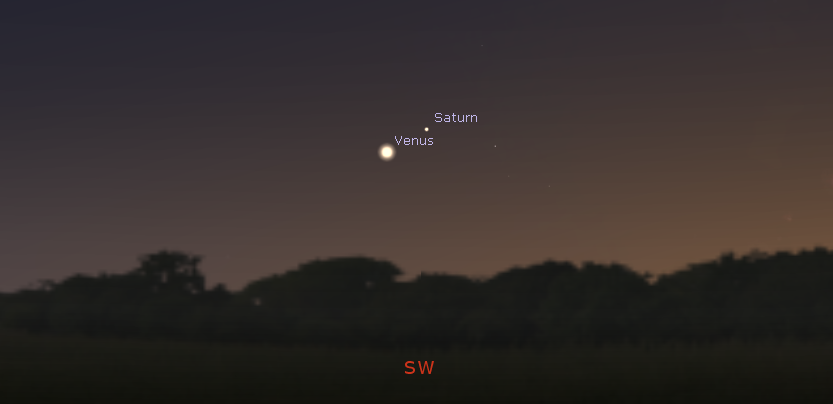
Venus and Saturn low ion the southwest tonight at 6 p.m. December11, 2019. Click on the image to enlarge. Created using Stellarium.
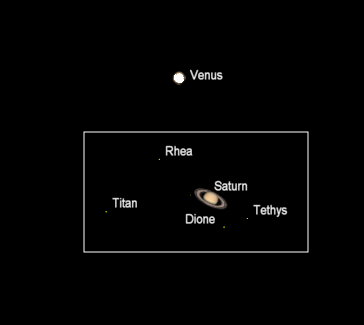
Telescopic views of Venus and Saturn with the same magnification at 6 p.m. tonight December 11, 2019. In the morning, I will show Mars here when it reaches an apparent diameter of 10″ (seconds of arc). It’s currently 4.0″. By the way Venus is 11.8″. Created using Cartes du Ciel (Sky Charts).
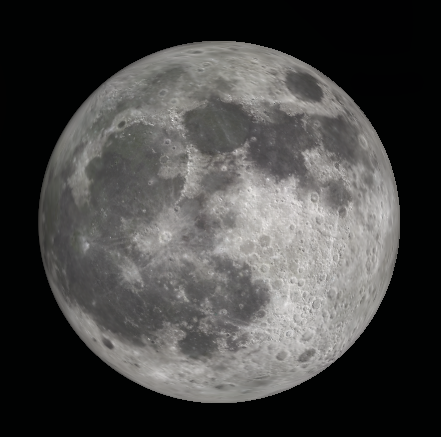
The nearly full Moon at 6 p.m. tonight December 11, 2019. Created using Stellarium.
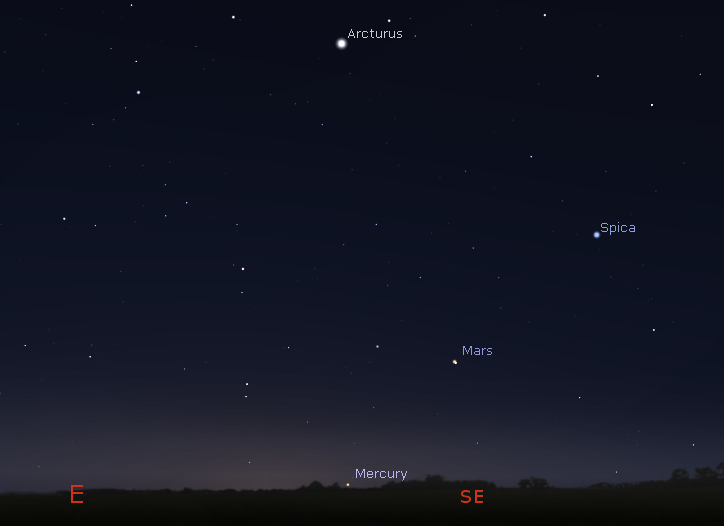
Mars in the morning with the bright stars at 7 a.m. December 12, 2019. Mercury is on the horizon and most likely invisible. Click on the image to enlarge. Created using Stellarium.
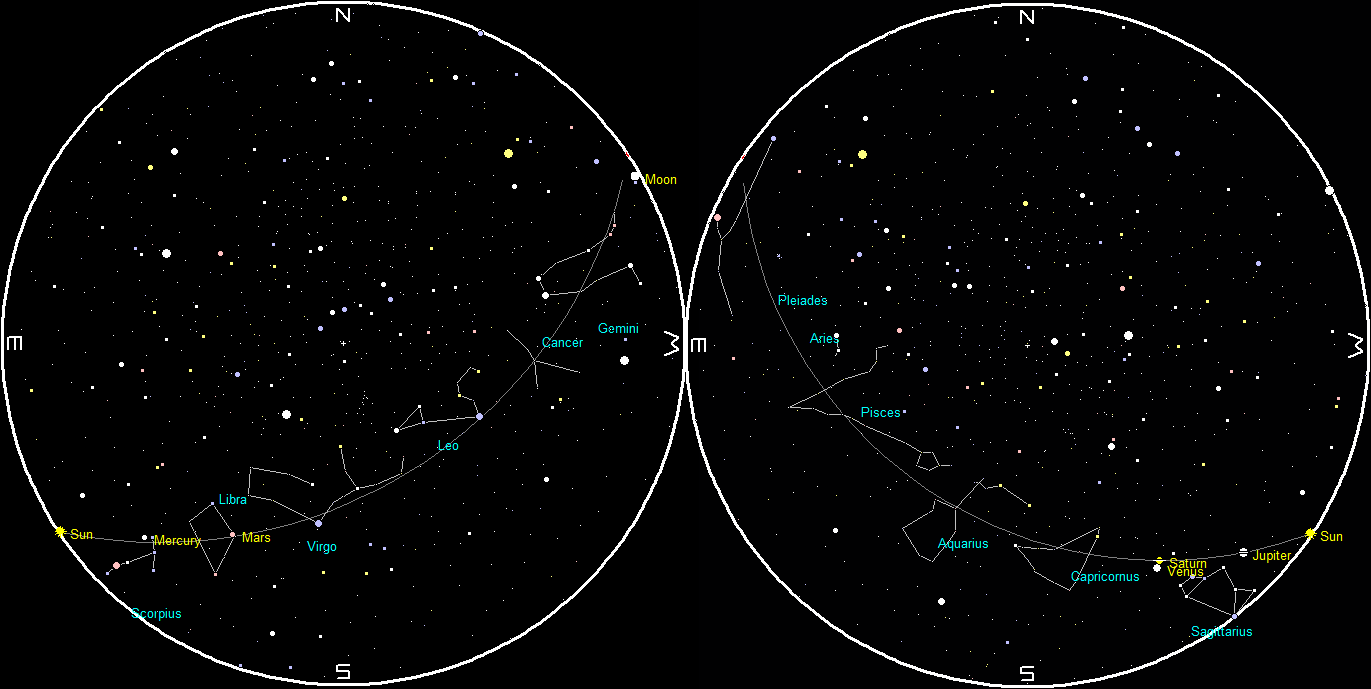
Planets and the Moon at sunset and sunrise of a single night starting with sunset on the right on December 11, 2019. The night ends on the left with sunrise on the 12th. Click on the image to enlarge. Created using my LookingUp program.
12/04/2019 – Ephemeris – Where are the naked-eye planets this week?
Ephemeris for Wednesday, December 4th. Today the Sun will be up for 8 hours and 59 minutes, setting at 5:02, and it will rise tomorrow at 8:04. The Moon, at first quarter today, will set at 1:01 tomorrow morning.
Let’s look at the naked-eye planets for this week. Venus will be briefly visible low in the southwest before it sets at 6:54 p.m. Jupiter will be very difficult to spot below and right of Venus. It will set at 6:13 p.m. Saturn, the ringed planet, will be in the southwestern sky in the evening, and will set at 7:37 p.m. Mars is in the morning sky and will rise in the east-southeast at 5:16 a.m. It’s not very bright because it’s 219 million (353 million km) miles away, but it’s getting slowly closer to the Earth. Mercury can be spotted after it rises in the east at 6:25 a.m. This is pretty much the end of its morning visibility, as the planet is moving around and behind the Sun. These oscillations from one side to the other of the Sun take on average of 116 days.
The times given are for the Traverse City/Interlochen area of Michigan. They may be different for your location.
Addendum
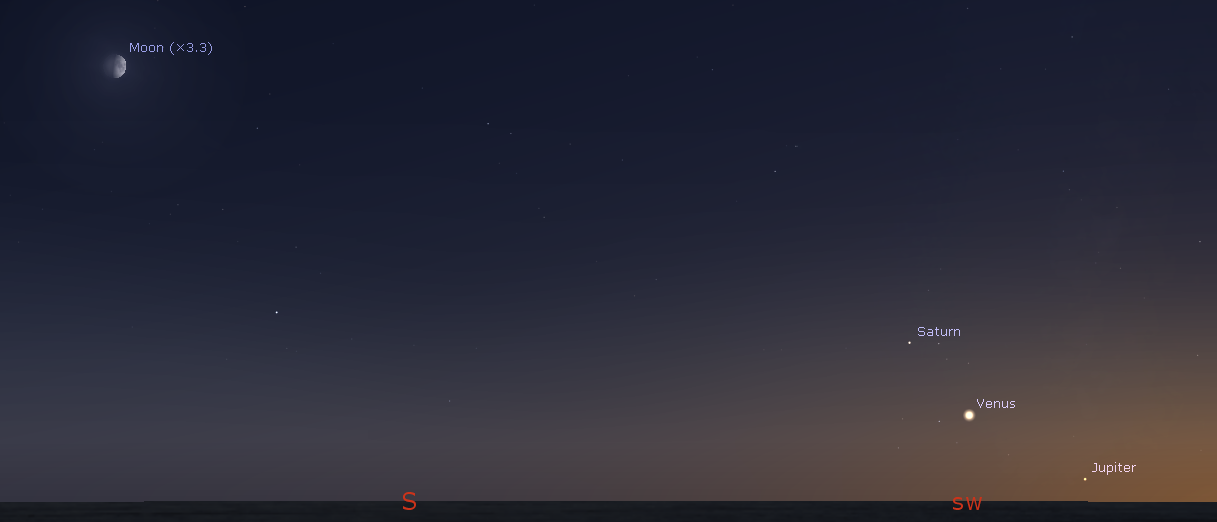
Jupiter, Venus and Saturn against a flat horizon tonight at 6 p.m. December 4, 2019. Click on the image to enlarge. Created using Stellarium.
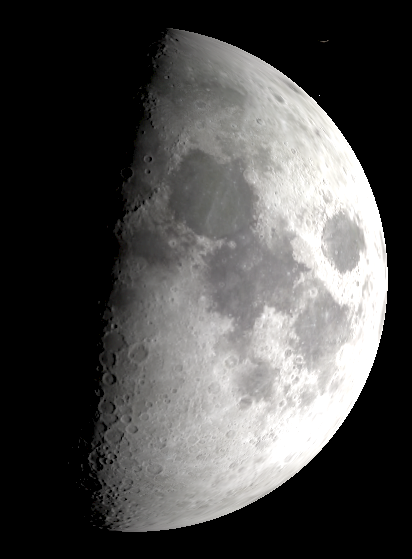
The slightly gibbous Moon as it might appear in binoculars at 6 p.m. December 4, 2019. Created using Stellarium.
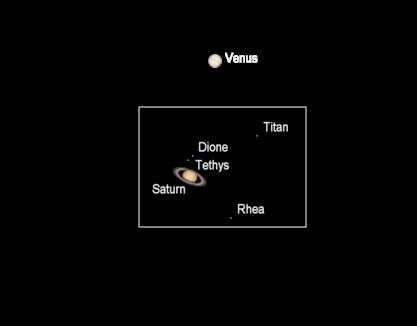
Telescopic views of Venus and Saturn with the same magnification at 6 p.m. tonight December 4, 2019. In the morning, I will show Mars here when it reaches an apparent diameter of 10″ (seconds of arc). It’s currently 4.0″. By the way Venus is 11.8″. Created using Cartes du Ciel (Sky Charts).
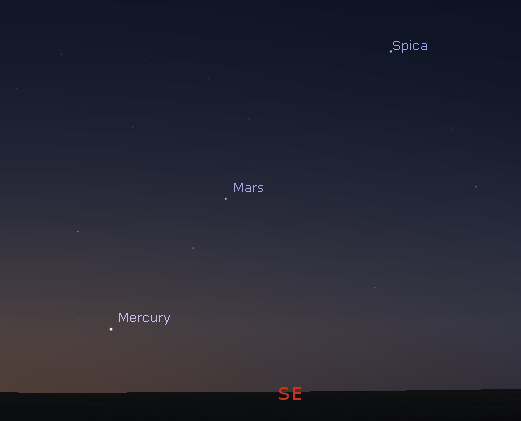
Mars and Mercury in the morning with the star Spica at 7 a.m. December 4, 2019. Created using Stellarium.
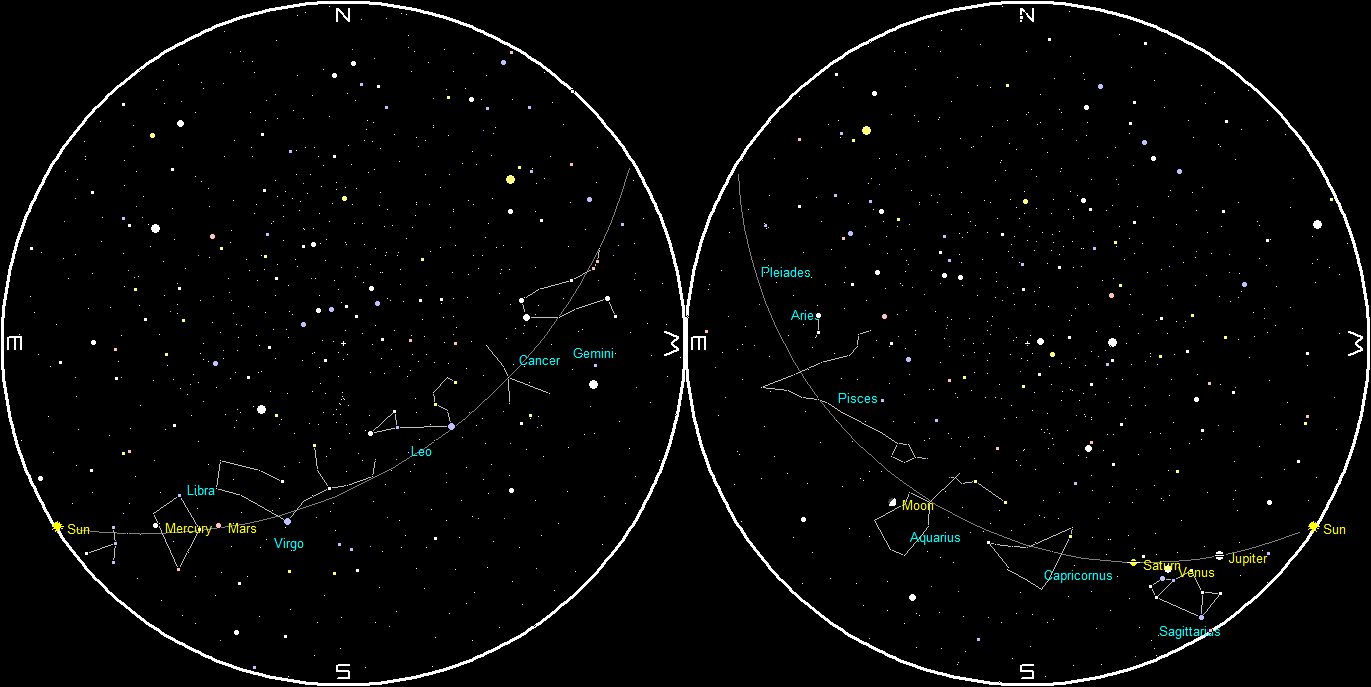
Planets and the Moon at sunset and sunrise of a single night starting with sunset on the right on December 4, 2019. The night ends on the left with sunrise on the 5th. Click on the image to enlarge. Created using my LookingUp program.
78 orbits
11/27/2019 – Ephemeris – Where are all the naked-eye planets?
Ephemeris for Wednesday, November 27th. Today the Sun will be up for 9 hours and 10 minutes, setting at 5:05, and it will rise tomorrow at 7:56. The Moon, 1 day past new, will set at 6:10 this evening.
Let’s look at all the naked-eye planets for this week. Venus will be briefly visible low in the west-southwest before it sets at 6:42 p.m. Jupiter will appear to the right of Venus tonight. It will set at 6:34 p.m. Saturn, the ringed planet, will be in the south-southwestern sky in the evening, and will set at 8:01 p.m. Jupiter is approaching Saturn in our sky, and when we see them again next year they will appear very close. Mars is in the morning sky and will rise in the east-southeast at 5:19 a.m. It’s not very bright because it’s 223 million (359 million km) miles away, but it’s getting slowly closer to the Earth. Mercury can be spotted after it rises in the east at 6:06 a.m. It will be at its greatest separation from the Sun tomorrow morning.
The times given are for the Traverse City/Interlochen area of Michigan. They may be different for your location.
Addendum
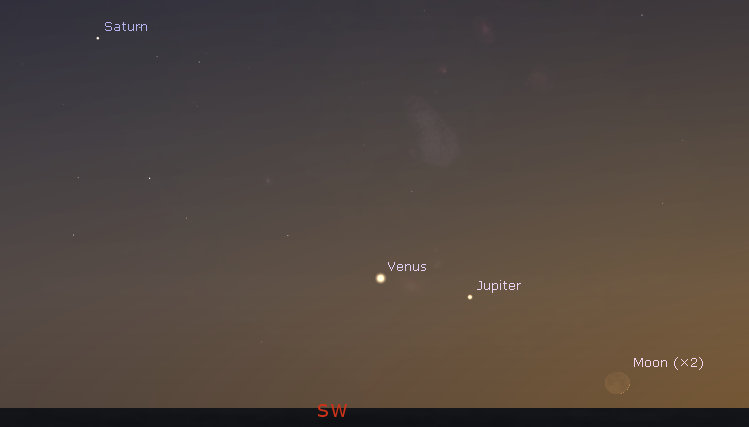
Jupiter, Venus and Saturn against a flat horizon tonight at 6 p.m. November 27, 2019. Created using Stellarium.
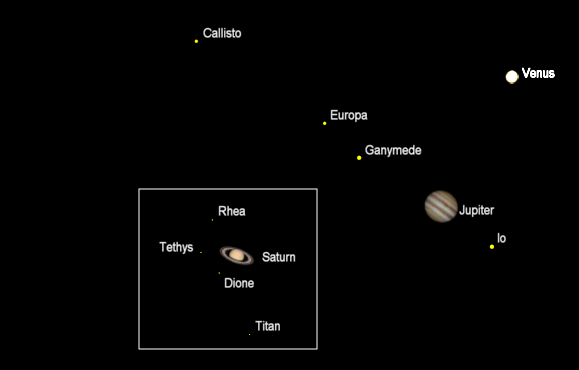
Telescopic views of Venus, Jupiter and Saturn with the same magnification at 6 p.m. tonight November 27, 2019. In the morning, I will show Mars here when it reaches an apparent diameter of 10″ (seconds of arc). It’s currently 3.9″. Created using Cartes du Ciel (Sky Charts).
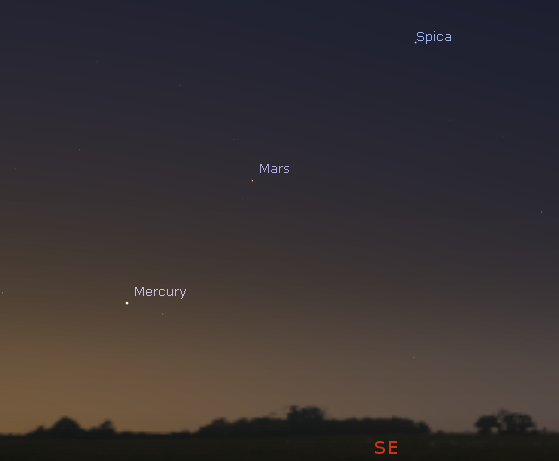
Mars and Mercury in the morning with the star Spica at 7 a.m. November 28, 2019. Created using Stellarium.
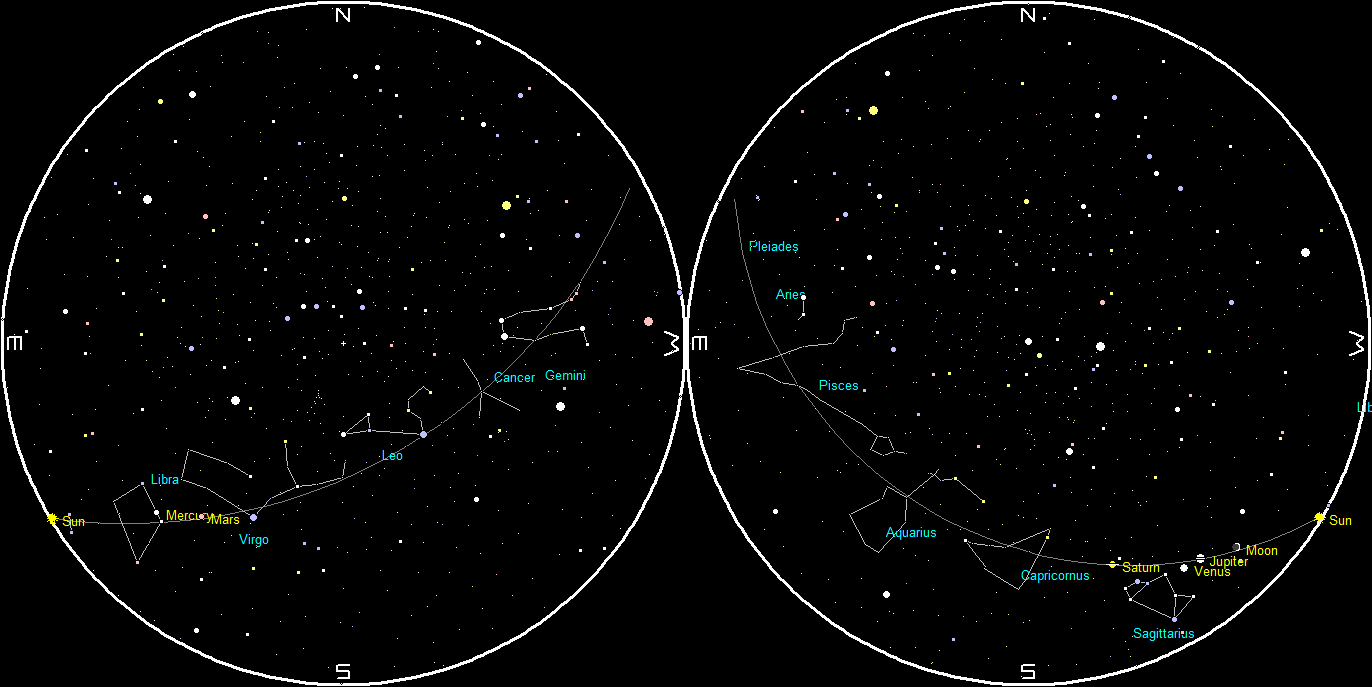
Planets and the Moon at sunset and sunrise of a single night starting with sunset on the right on November 27, 2019. The night ends on the left with sunrise on the 28th. Click on the image to enlarge. Created using my LookingUp program.
11/22/2019 – Ephemeris – Jupiter and Venus will appear to cross paths this weekend
Ephemeris for Friday, November 22nd. Today the Sun will be up for 9 hours and 20 minutes, setting at 5:08, and it will rise tomorrow at 7:49. The Moon, 3 days past last quarter, will rise at 3:55 tomorrow morning.
Tomorrow night the planet Venus will be just below Jupiter low in the southwestern sky not long after sunset. Jupiter is retreating toward the Sun four times faster than Venus is advancing from the Sun. Jupiter will pass in conjunction with the Sun on December 27th and enter the morning sky. Venus after this will pass Saturn on December 11th. It will become Christmas Star this year. Venus will continue moving away from the Sun until March 24th next year. While Venus is hanging around low on the western horizon now, in winter and most of spring it will be high in the western sky after sunset, our Evening Star. Saturn itself will pass into the morning sky January 13th.
The times given are for the Traverse City/Interlochen area of Michigan. They may be different for your location.
Addendum
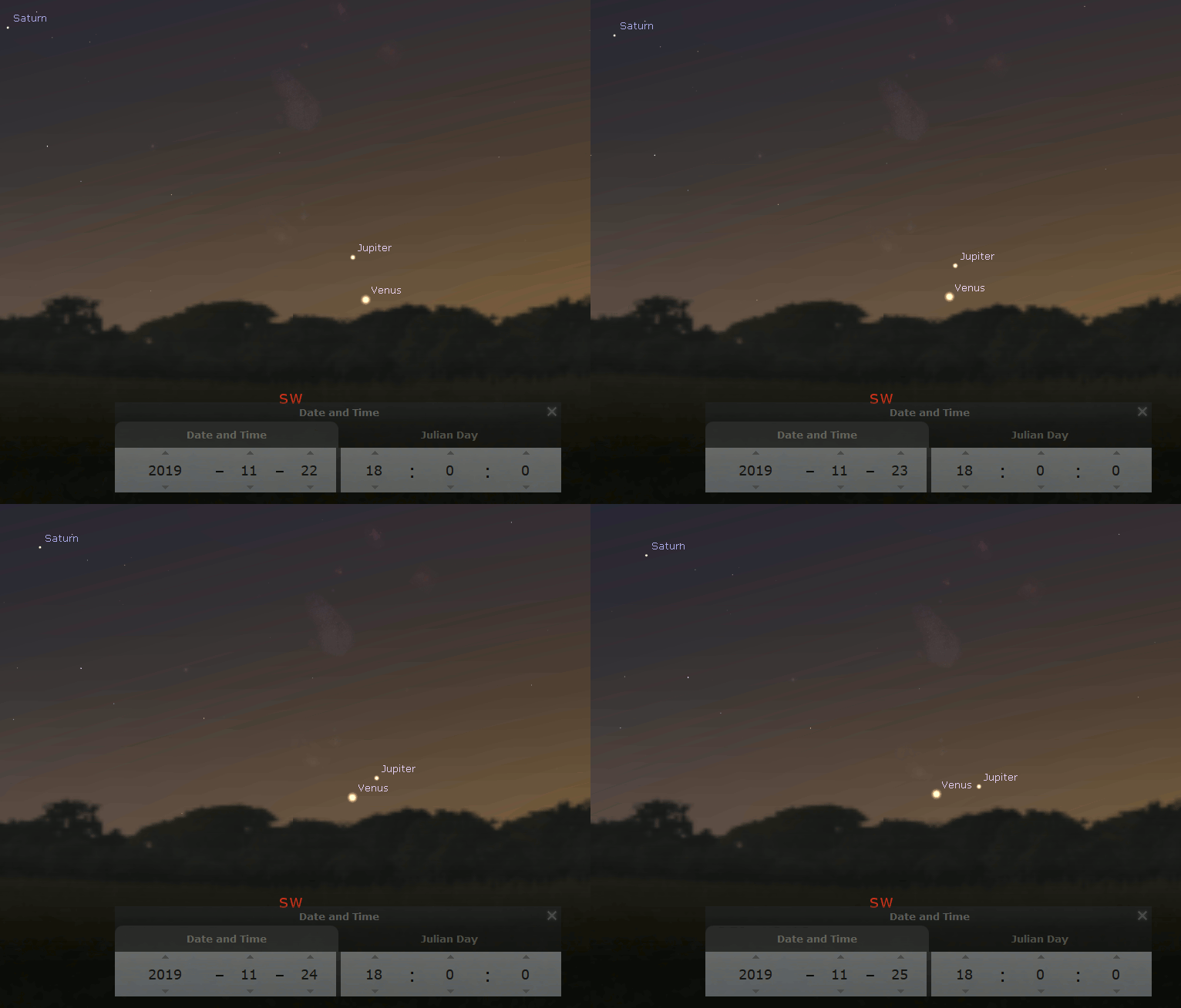
Jupiter-Venus conjunction animation for 6 p.m. from Friday thru Monday November 22-25, 2019. Click on image to enlarge. Created using Stellarium and GIMP.
11/20/2019 – Ephemeris – Where are the naked-eye planets this week
Ephemeris for Wednesday, November 20th. Today the Sun will be up for 9 hours and 24 minutes, setting at 5:10, and it will rise tomorrow at 7:47. The Moon, 1 day past last quarter, will rise at 1:24 tomorrow morning.
Let’s look at the naked-eye planets for this week. Venus is starting to make an evening appearance. It will be briefly visible low in the west-southwest before it sets at 6:33 p.m. Jupiter will be very low in the southwestern sky as it gets dark. It will set at 6:55 p.m. Saturn, the ringed planet, will be in the south-southwestern sky in the evening, and will set at 8:26 p.m. Jupiter is approaching Saturn in our sky. Mars is in the morning sky and will rise in the east-southeast at 5:22 a.m. It’s not very bright because it’s 226 million (365 million km) miles away, but it’s getting slowly closer to the Earth. Mercury can be spotted after it rises in the east at 6:11 a.m. It will be getting brighter over the next two weeks.
The times given are for the Traverse City/Interlochen area of Michigan. They may be different for your location.
Addendum
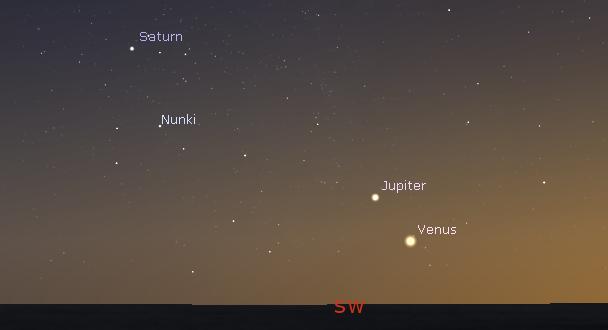
Venus, Jupiter, and Saturn against a lake horizon at 6 p.m. November 20, 2019. Created using Stellarium.
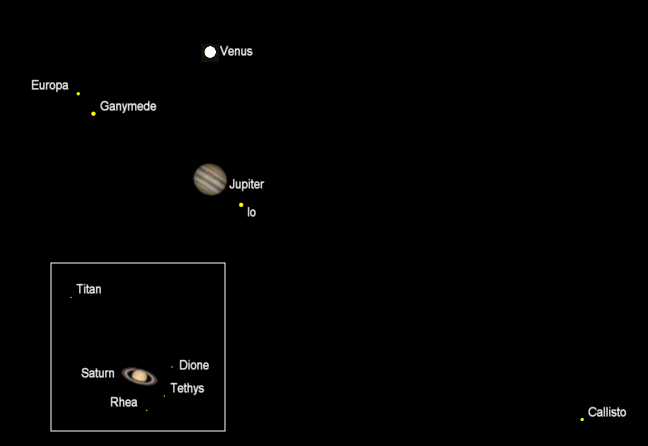
Telescopic views of Venus, Jupiter and Saturn with the same magnification at 6 p.m. tonight November 20, 2019. In the morning, Mars is to tiny. Created using Cartes du Ciel (Sky Charts).
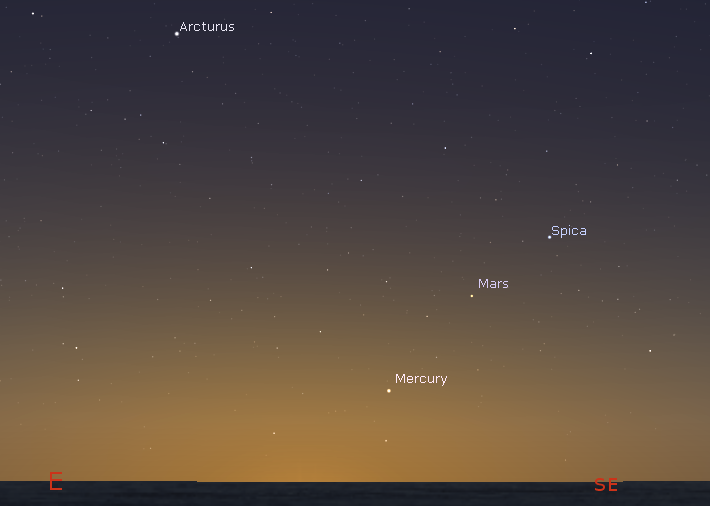
Mars and Mercury in the morning at 7 a.m. November 21, 2019. Created using Stellarium.
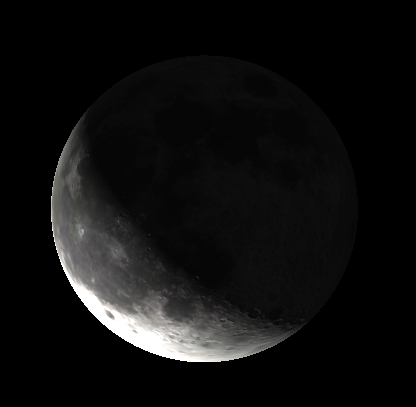
The Moon as it might be seen in binoculars, including earth shine, at 7 a.m. tomorrow November 21, 2019. Created using Stellarium.
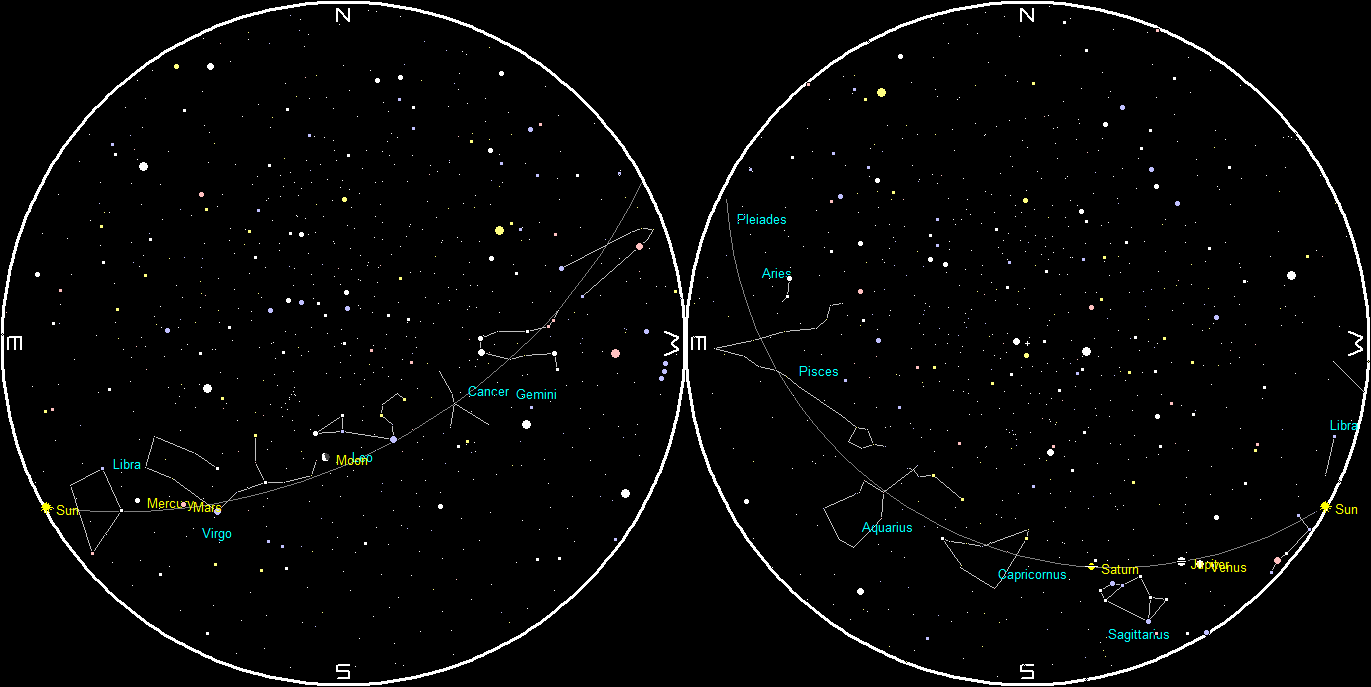
Planets and the Moon at sunset and sunrise of a single night starting with sunset on the right on November 20, 2019. The night ends on the left with sunrise on the 21st. Click on the image to enlarge. Created using my LookingUp program.
11/13/2019 – Ephemeris – Venus is starting to make an appearance in the evening sky
Ephemeris for Wednesday, November 13th. Today the Sun will be up for 9 hours and 40 minutes, setting at 5:16, and it will rise tomorrow at 7:38. The Moon, 1 day past full, will rise at 6:18 this evening.
Let’s look at the bright planets for this week. Venus is starting to make an evening appearance. It will be briefly visible low in the west-southwest before it sets at 6:28 p.m. Jupiter will be very low in the southwestern sky as it gets dark. It will set at 7:17 p.m. Jupiter is moving at nearly its fastest to the east now and next year will be where Saturn is currently. Saturn, the ringed planet, will be in the south-southwestern sky in the evening, and will set at 9:15 p.m. Next year it will be a bit farther east. Jupiter is approaching Saturn in our sky. Mars is in the morning sky and will rise in the east-southeast at 5:25 a.m. It’s not very bright because it’s 230 million (370 million km) miles away, but it’s getting slowly closer to the Earth.
The times given are for the Traverse City/Interlochen area of Michigan. They may be different for your location.
Addendum
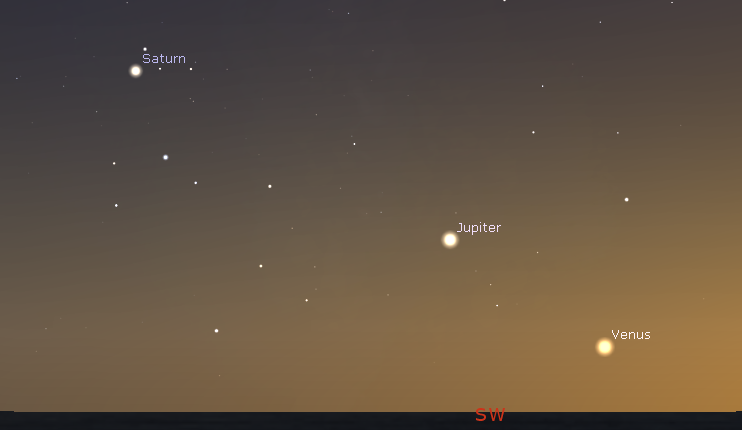
Venus, Jupiter, and Saturn tonight, November 13 at 6 p.m. Created using Stellarium.
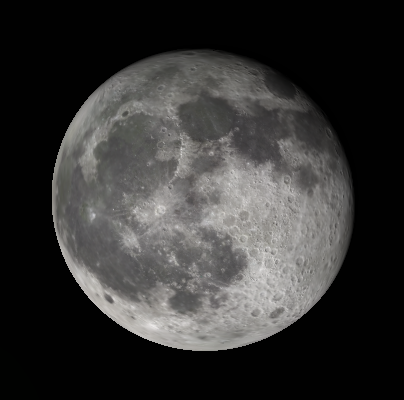
The waning gibbous Moon at 8 p.m. tonight November 13, 2019. Created using Stellarium.
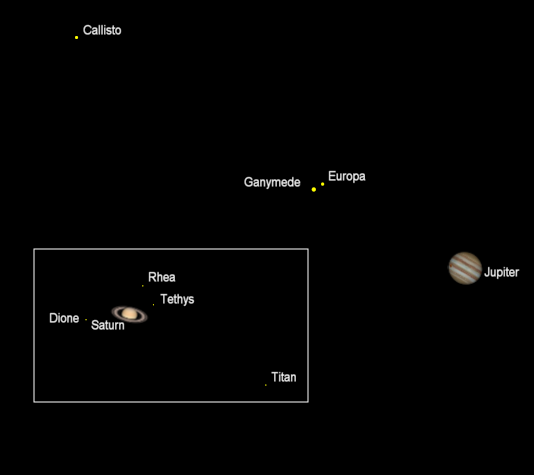
Telescopic views of Jupiter and Saturn with the same magnification at 6 p.m. tonight November 13, 2019. Venus is too close to the horizon to easily see its tiny gibbous shape. In the mrning, Mars is to tiny. Created using Cartes du Ciel (Sky Charts).
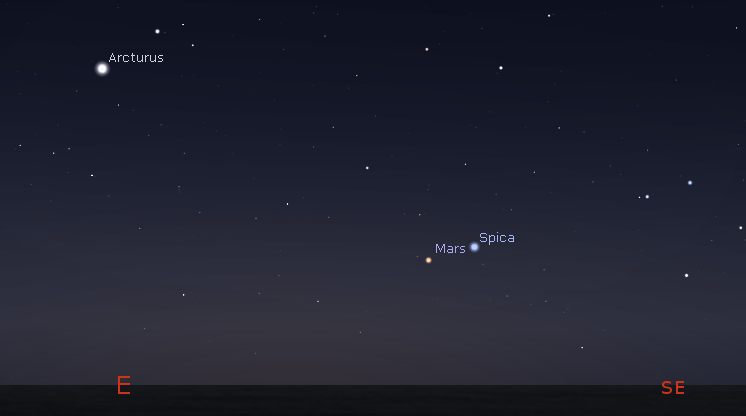
Mars in the morning at 6:30 a.m. November 14, 2019. Created using Stellarium.
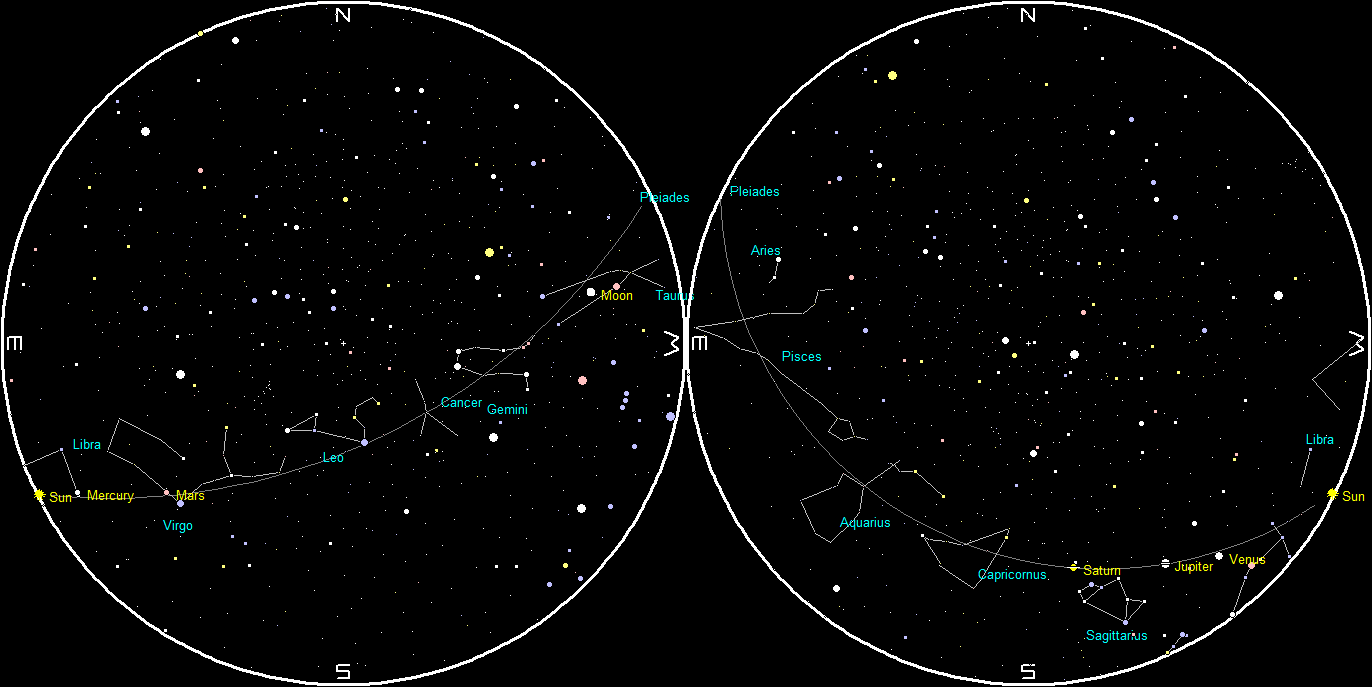
Planets and the Moon at sunset and sunrise of a single night starting with sunset on the right on November 13, 2019. The night ends on the left with sunrise on the 14th. Click on the image to enlarge. Created using my LookingUp program.
11/06/2019 – Ephemeris – Looking for the bright planets
Ephemeris for Wednesday, November 6th. Today the Sun will be up for 9 hours and 57 minutes, setting at 5:25, and it will rise tomorrow at 7:28. The Moon, 2 days past first quarter, will set at 2:13 tomorrow morning.
Let’s look at the bright planets for this week. Venus and Mercury are too close to the Sun to be seen. They are on the evening or east side of the Sun. Jupiter will be very low in the southwestern sky as it gets dark. It will set at 7:38 p.m. Jupiter is moving at nearly its fastest to the east now and next year will be where Saturn is currently. Saturn, the ringed planet, will be in the south-southwestern sky in the evening, and will set at 9:15 p.m. Next year it will be a bit farther east. Jupiter is approaching Saturn in our sky. Mars is in the morning sky and will rise in the east at 5:29 a.m. It’s not very bright because it’s 232 million (375 million km) miles away.
The times given are for the Traverse City/Interlochen area of Michigan. They may be different for your location.
Addendum
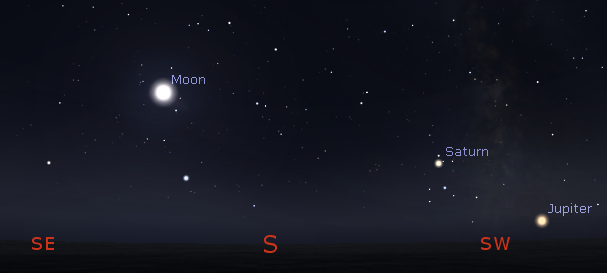
Jupiter, Saturn and the gibbous Moon tonight, November 6 at 7:15 p.m. Created using Stellarium.
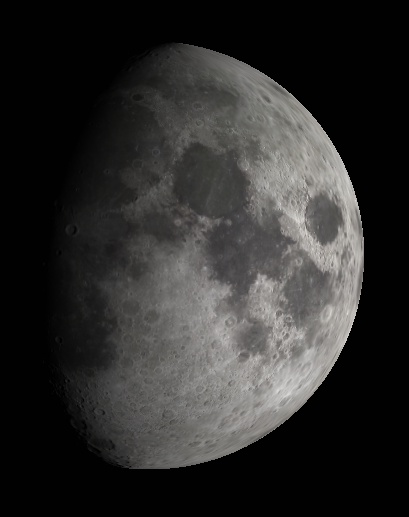
The gibbous Moon as it might appear in binoculars at 7:15 p.m. November 6, 2019. Created using Stellarium.
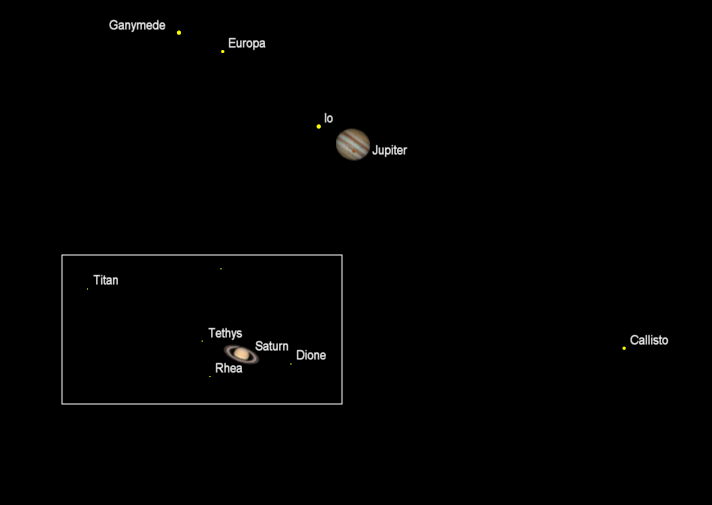
Telescopic views of Jupiter and Saturn with the same magnification at 7:15 p.m. tonight November 6, 2019. Created using Cartes du Ciel (Sky Charts).
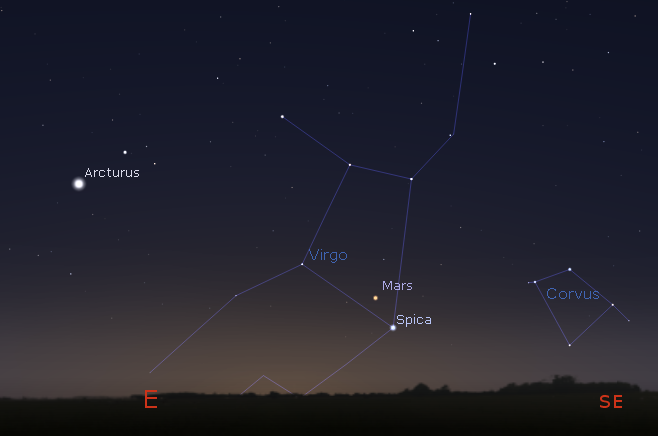
Mars in the morning at 6:30 a.m. November 07, 2019. Created using Stellarium.
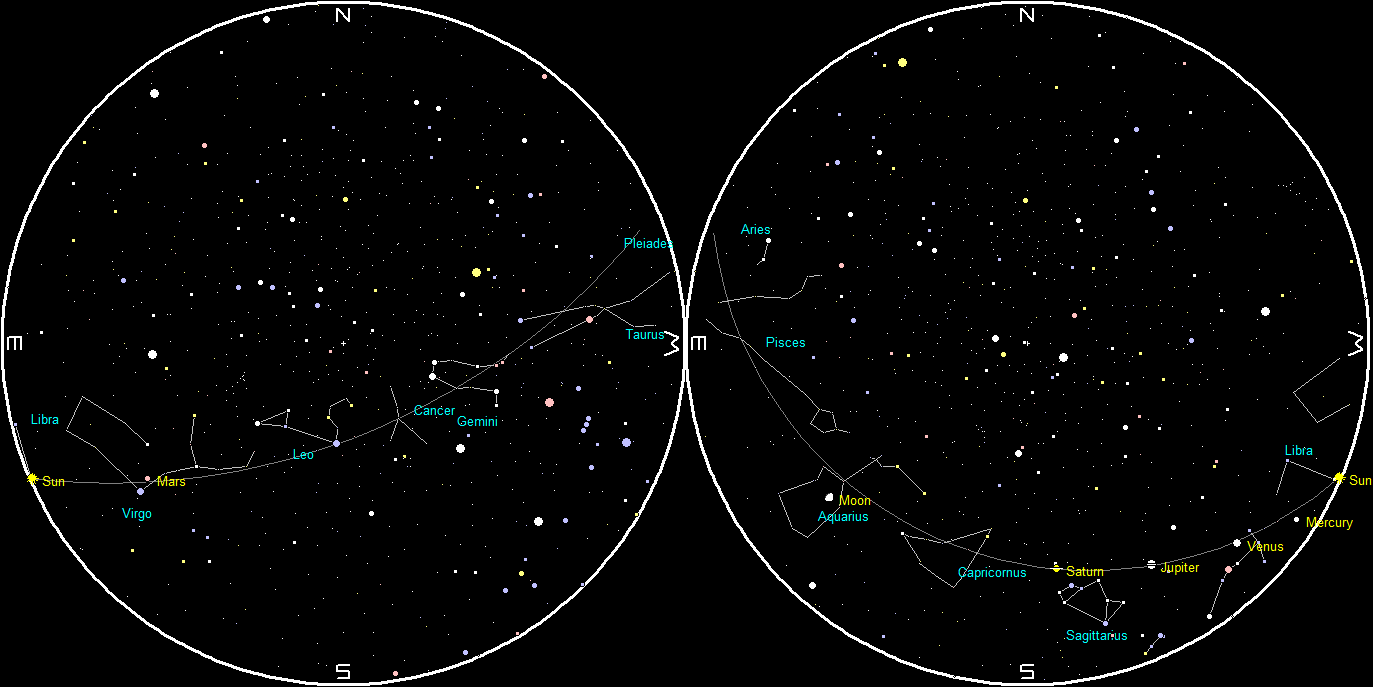
Planets and the Moon at sunset and sunrise of a single night starting with sunset on the right on November 6, 2019. The night ends on the left with sunrise on the 7th. Click on the image to enlarge. Created using my LookingUp program.
 Bob Moler's Ephemeris Blog