Archive
03/11/2020 – Ephemeris – Let’s look at the naked-eye planets for this week
Ephemeris for Wednesday, March 11th. Today the Sun will be up for 11 hours and 42 minutes, setting at 7:44, and it will rise tomorrow at 7:59. The Moon, 2 days past full, will rise at 10:26 this evening.
Let’s look at the naked-eye planets for this week. Venus is our evening star shining brightly in the west for most of the evening. It will set at 11:49 p.m. The rest of the planet action is in the morning sky where there are three planets close together in the southeast. Mars will rise first at 5:11 a.m. It’s getting as bright as a first magnitude star because it’s down to 151 million (243 million km) miles away, as the Earth slowly overtakes it at the rate of about 6 million miles (9 million km) a week. It’s brighter than the star Antares in the southwest. Bright Jupiter will rise at 5:23 a.m. And lastly, Saturn will rise at 5:43 a.m. Mars is catching up to Jupiter and Saturn. It will pass south of Jupiter on the 20th, and Saturn on the 31st. It might be worth getting up for before 7 a.m. to view.
The event times given are for the Traverse City/Interlochen area of Michigan. They may be different for your location.
Addendum
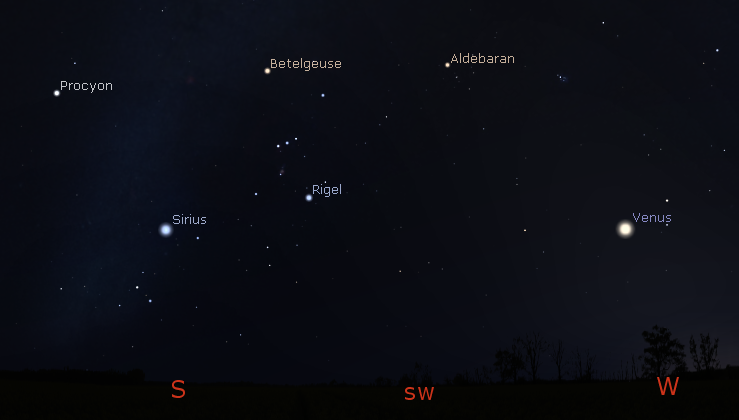
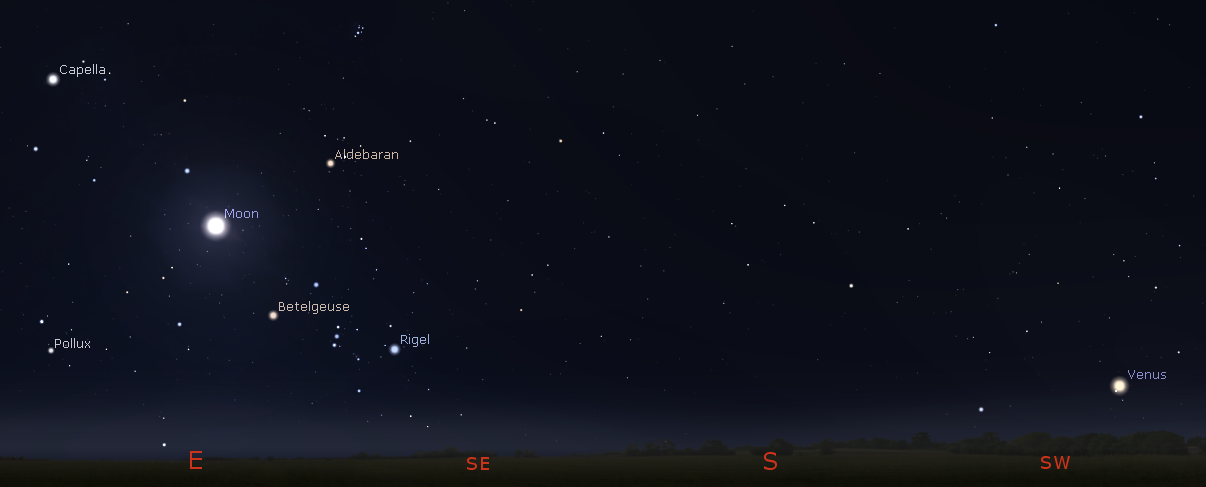
Venus and evening bright stars tonight at 9 p.m., March 11, 2020. Click on the image to enlarge. Created using Stellarium.
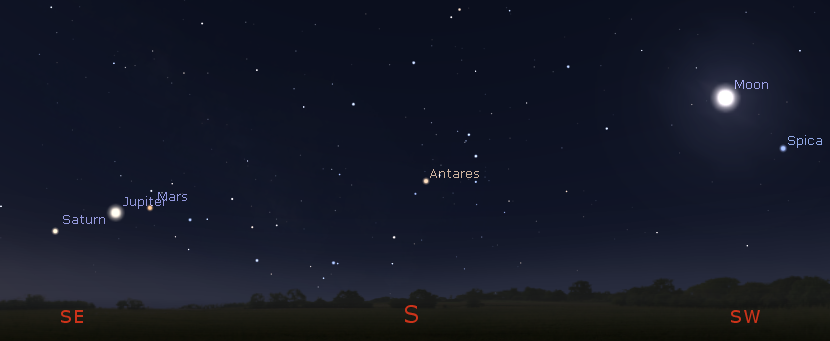
Morning Planets and the Moon at 7 a.m. tomorrow morning March 12, 2020. Click on the image to enlarge. Created using Stellarium.
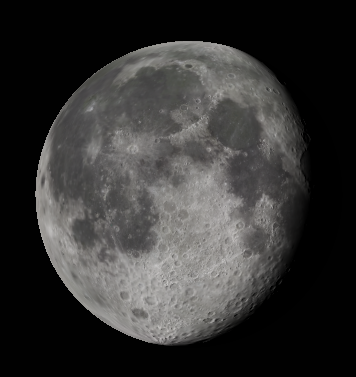
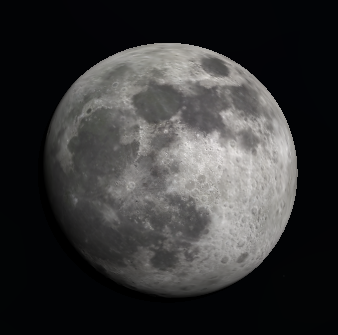
Binocular Moon tomorrow morning at 7 a.m. March 12, 2020. Created using Stellarium.
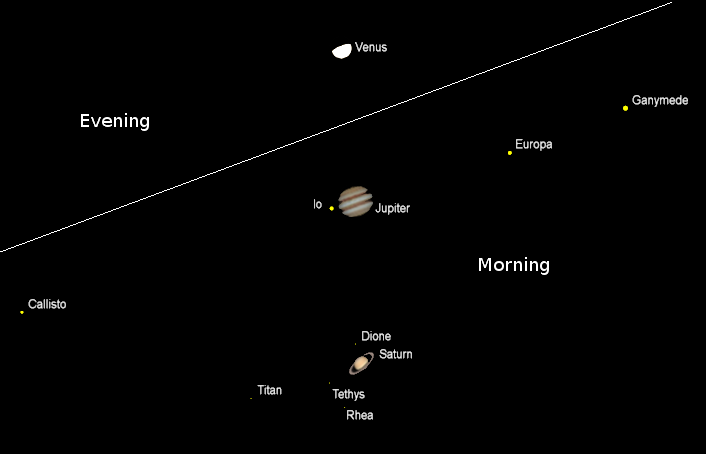
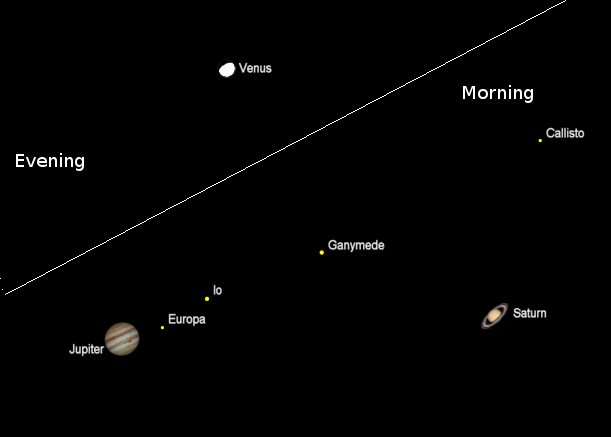
The planets as seen in a telescope with the same magnification. Venus in the evening and Jupiter and Saturn in the morning on the night of March 11/12, 2020. Apparent diameters: Venus, 20.7″; Jupiter, 35.1″; Saturn, 15.7″, rings, 36.6″. Mars at 5.8″ won’t be added until it reaches 10″. The ” symbol means seconds of arc (1/3600th of a degree.) Created using Cartes du Ciel (Sky Charts).
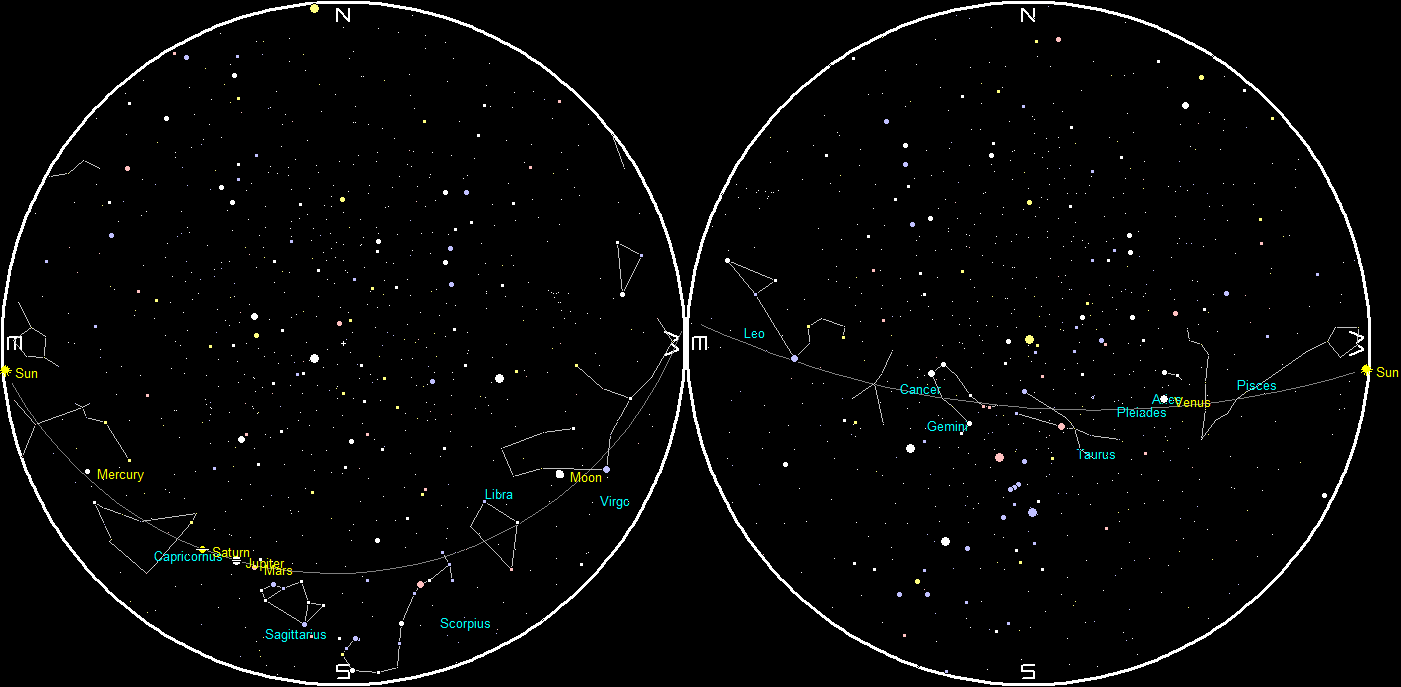
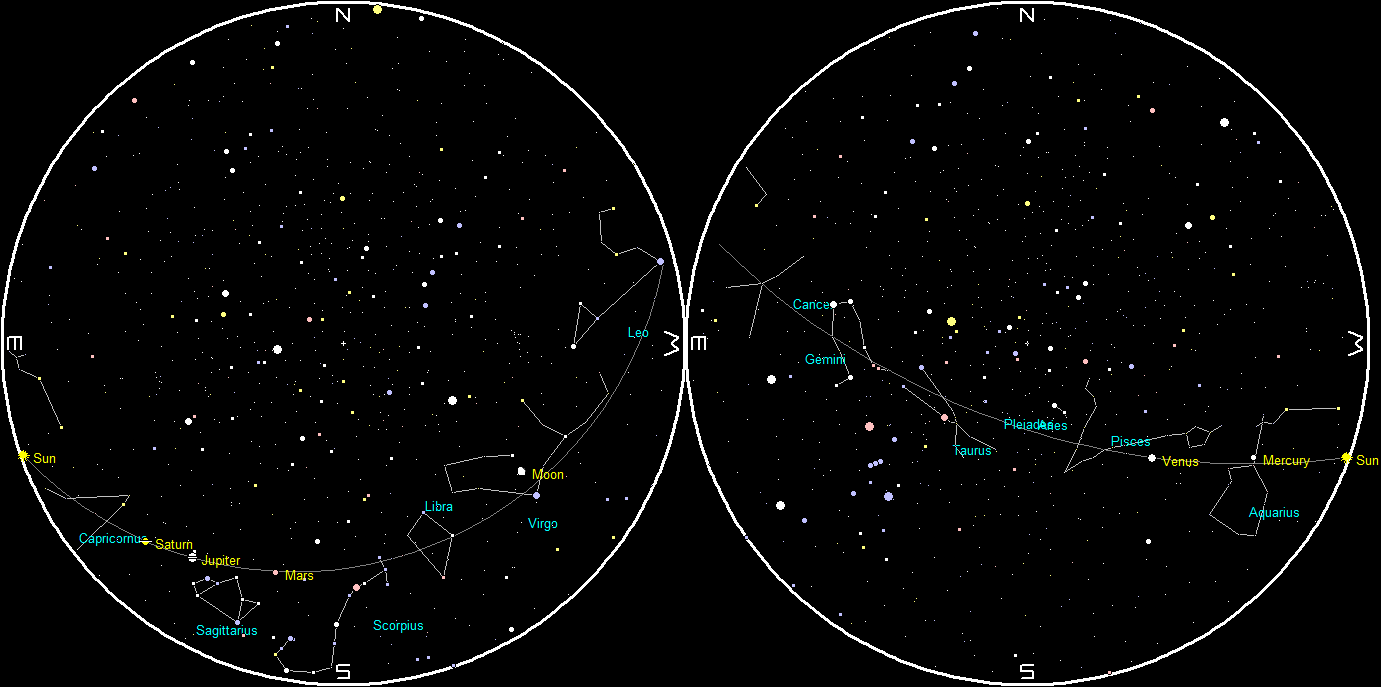
Planets and the Moon at sunset and sunrise of a single night starting with sunset on the right on March 11, 2020. The night ends on the left with sunrise on the 12th. Click on the image to enlarge. Created using my LookingUp program.
03/04/2020 – Ephemeris – Let’s look at the naked-eye planets for this week
Ephemeris for Wednesday, March 4th. Today the Sun will be up for 11 hours and 21 minutes, setting at 6:35, and it will rise tomorrow at 7:12. The Moon, 2 days past first quarter, will set at 4:39 tomorrow morning.
Let’s look at the naked-eye planets for this week. Venus is our evening star shining brightly in the west for most of the evening. It will set at 10:34 p.m. The rest of the planet action is in the morning. Mars will rise in the southeast at 4:19 a.m. It’s getting as bright as a first magnitude star because it’s 157 million (253 million km) miles away, and it’s getting slowly closer to the Earth at the rate of about 6 million miles (9 million km) a week. However it’s brighter than Betelgeuse. Jupiter will rise at 4:46 a.m. Lastly, Saturn will rise at 5:14 tomorrow morning. Mars is catching up to Jupiter and Saturn. It will pass south of Jupiter on the 20th, and Saturn on the 31st. It might be worth getting up for before 6 a.m. to spot.
The times given are for the Traverse City/Interlochen area of Michigan. They may be different for your location.
Addendum
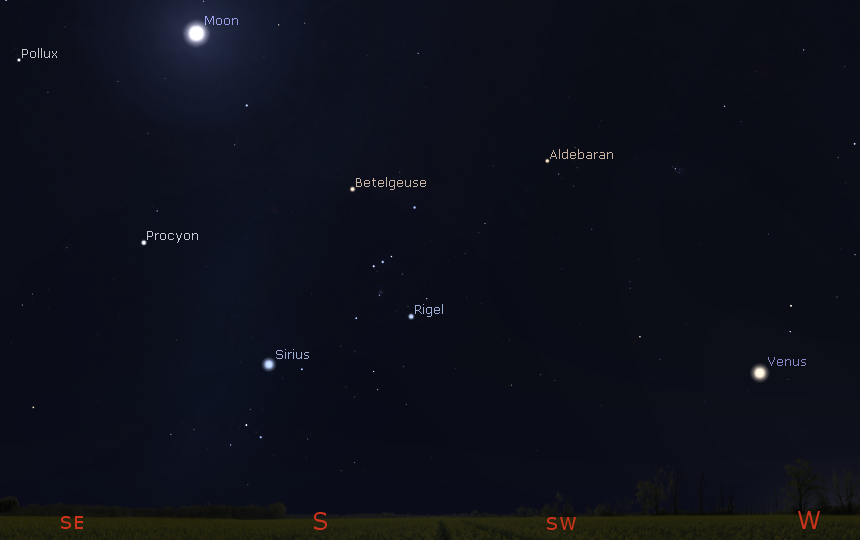
Venus, the bright winter stars and the Moon tonight, 8 p.m. March 4, 2020. Click on the image to enlarge. Created using Stellarium.
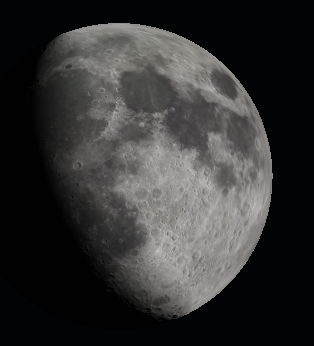
The gibbous Moon as it might appear in binoculars at 8 p.m. March 4, 2020. Created using Stellarium.
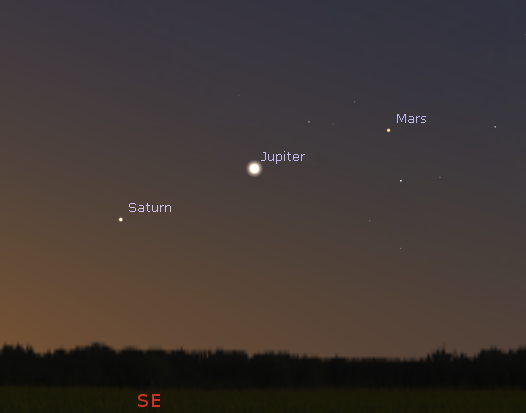
The naked-eye planets visible in the morning at 6:30 a.m. tomorrow, March 5, 2020. Created using Stellarium.
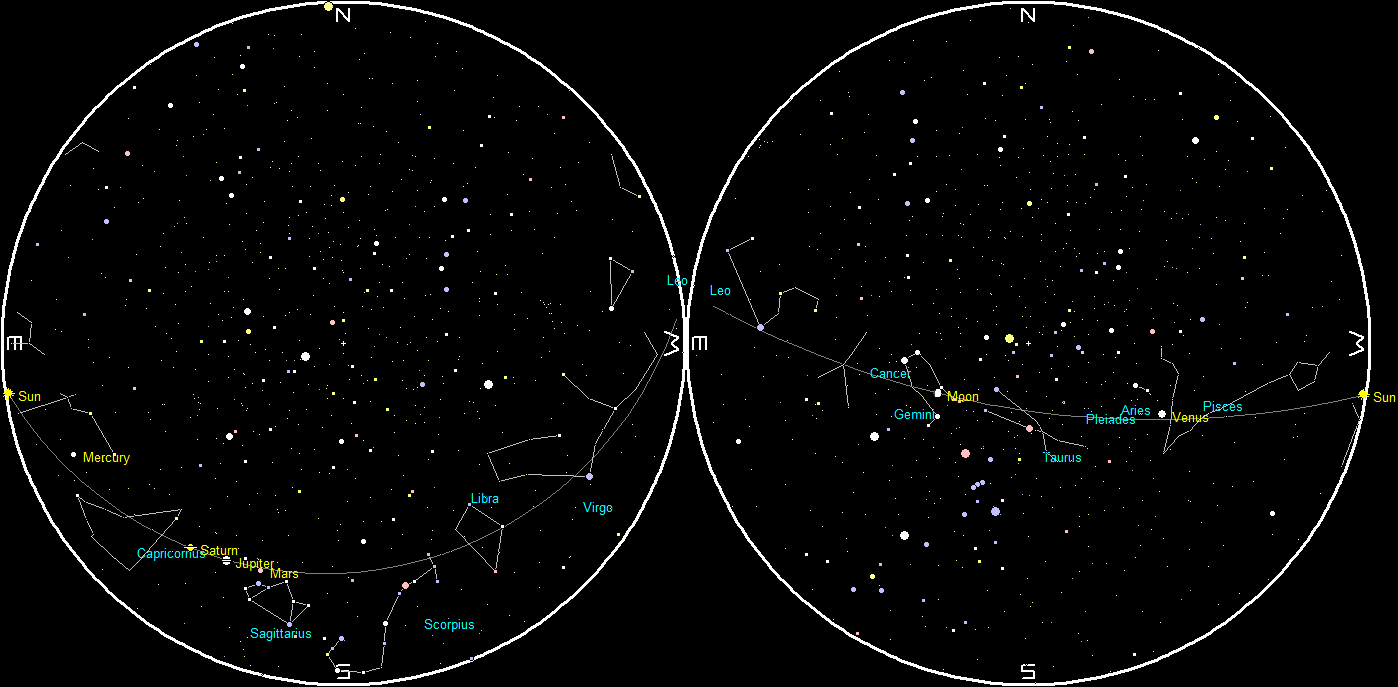
Planets and the Moon at sunset and sunrise of a single night starting with sunset on the right on March 4, 2020. The night ends on the left with sunrise on the 5th. Click on the image to enlarge. Created using my LookingUp program.
02-26-2020 – Ephemeris – Let’s look at the naked-eye planets for this week
Ephemeris for Ash Wednesday, February 26th. Today the Sun will be up for 10 hours and 59 minutes, setting at 6:25, and it will rise tomorrow at 7:24. The Moon, 3 days past new, will set at 9:28 this evening.
Let’s look at the naked-eye planets for this week. Venus is our evening star shining brightly in the southwest in the early evening. It will set at 10:19 p.m. Mars is visible in the morning sky and will rise in the southeast at 4:27 a.m. It’s not very bright because it’s 161 million (260 million km) miles away, but it’s getting slowly closer to the Earth at the rate of about 6 million miles (9 million km) a week. However it’s brighter than Betelgeuse. Jupiter will rise at 5:06 a.m. Lastly, Saturn will rise at 5:39 tomorrow morning. Jupiter is currently about 9 degrees away from Saturn, a bit less than the width of your fist held at arms length. It will continue to approach Saturn until their paths cross on December 21st.
The times given are for the Traverse City/Interlochen area of Michigan. They may be different for your location.
Addendum
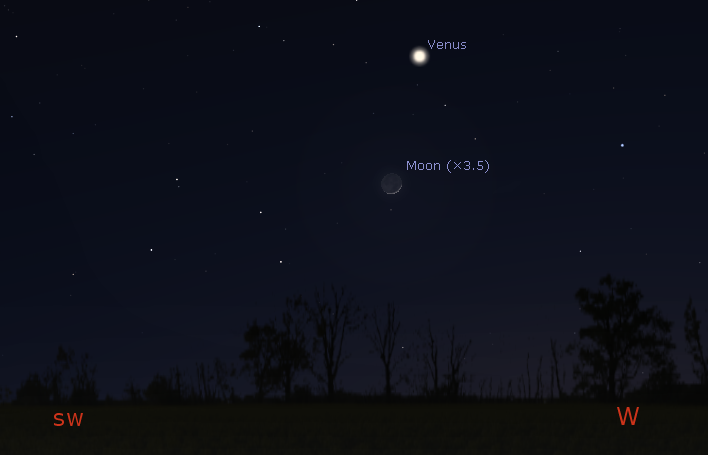
Venus and the Moon in the western sky at 7:30 p.m. or about an hour after sunset. February 26, 2020. Created using Stellarium.
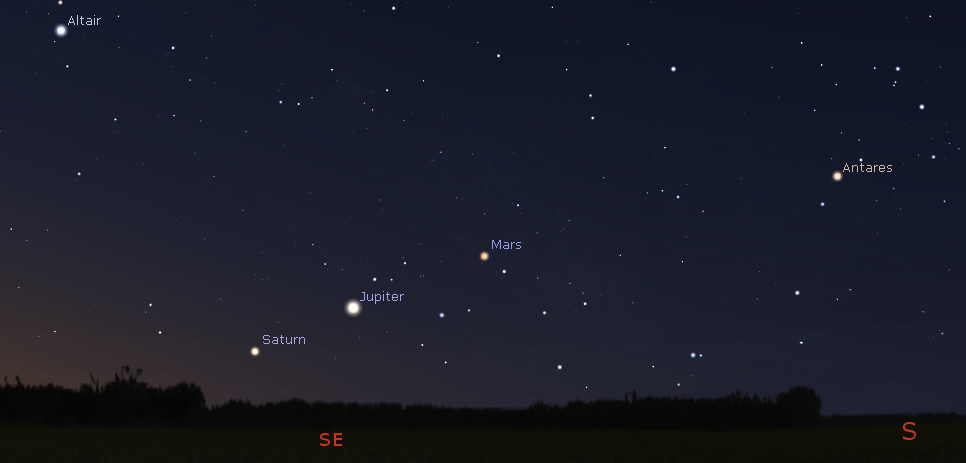
The morning planets and stars visible in the southern sky at 6:30 a.m. tomorrow morning February 37, 2020. The star Antares is in the constellation of Scorpius. Mars sits on top of the lid of the Teapot asterism of the constellation of Sagittarius the archer. Jupiter and Saturn are seen to the lower left. Click on the image to enlarge. Created using Stellarium.
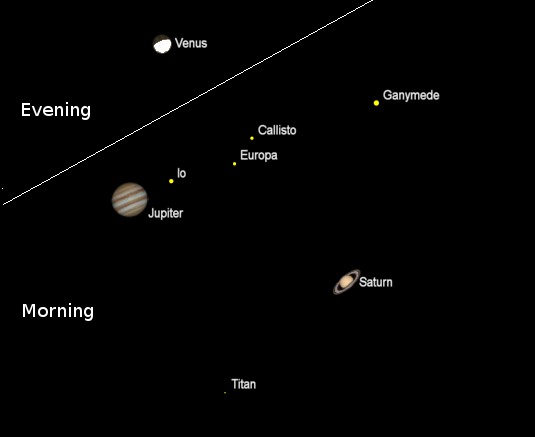
The planets as seen in a telescope with the same magnification. Venus in the evening and Jupiter and Saturn in the morning on the night of February 26/27, 2020. Apparent diameters: Venus, 18.3″; Jupiter, 34.0″; Saturn, 15.4″, rings, 36.0″. Mars at 5.4″ won’t be added until it reaches 10″. The ” symbol means seconds of arc (1/3600th of a degree.) Created using Cartes du Ciel (Sky Charts).
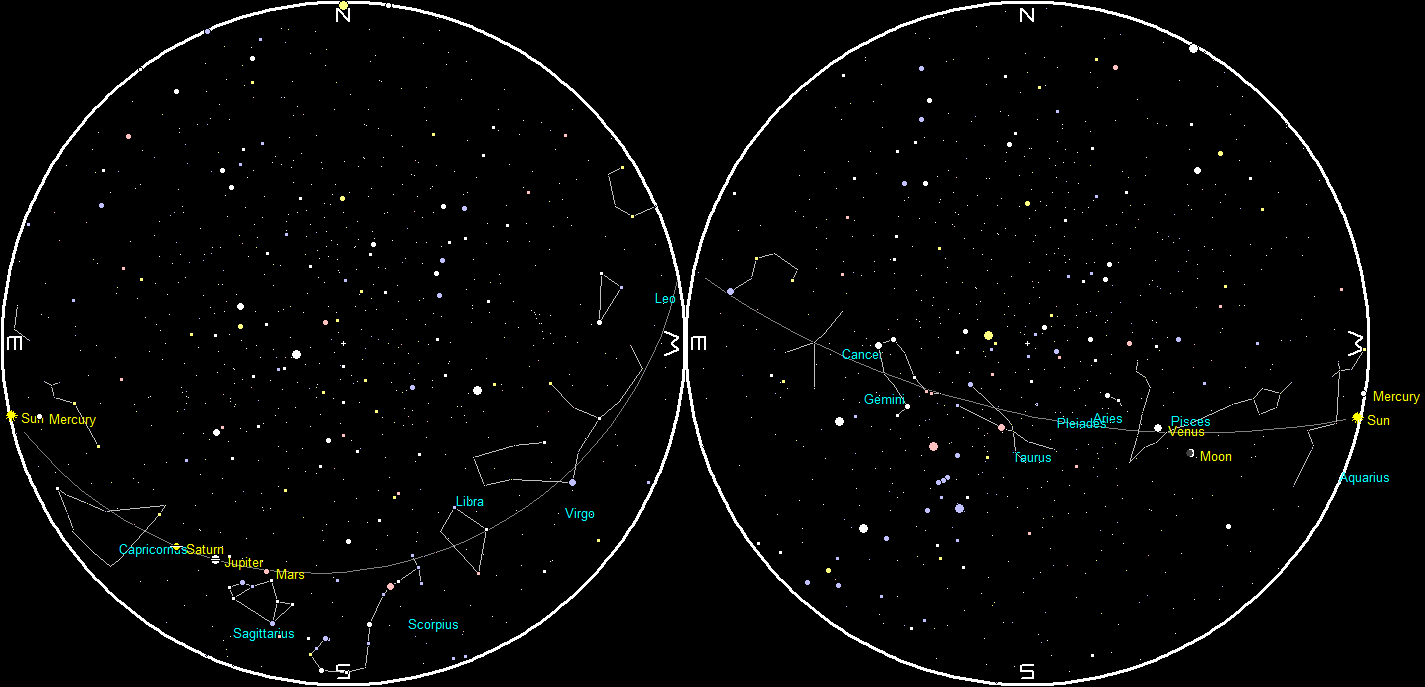
Planets and the Moon at sunset and sunrise of a single night starting with sunset on the right on February 26, 2020. The night ends on the left with sunrise on the 27th. Click on the image to enlarge. Created using my LookingUp program.
02/19/2020 -Ephemeris – Let’s take a look at the bright planets
Ephemeris for Wednesday, February 19th. Today the Sun will be up for 10 hours and 38 minutes, setting at 6:16, and it will rise tomorrow at 7:36. The Moon, half way from last quarter to new, will rise at 6:12 tomorrow morning.
Let’s look at the naked-eye planets for this week. Venus is our evening star shining brightly in the southwest in the early evening. It will set at 10:03 p.m. Mercury is fading and will set only 58 minutes after the Sun. Mars is visible in the morning sky and will rise in the southeast at 4:34 a.m. It’s not very bright because it’s 167 million (268 million km) miles away, but it’s getting slowly closer to the Earth at the rate of about 4 million miles (6 million km) a week. Jupiter will rise at 5:32 a.m. Lastly, Saturn will rise at 6:04 tomorrow morning with the thin crescent Moon underneath it*. Jupiter will continue to approach Saturn throughout this year until their paths cross on December 21st.
The times given are for the Traverse City/Interlochen area of Michigan. They may be different for your location.
* Moon placement in this morning’s program was in error. The Moon is near Jupiter this morning, not tomorrow morning.
Addendum
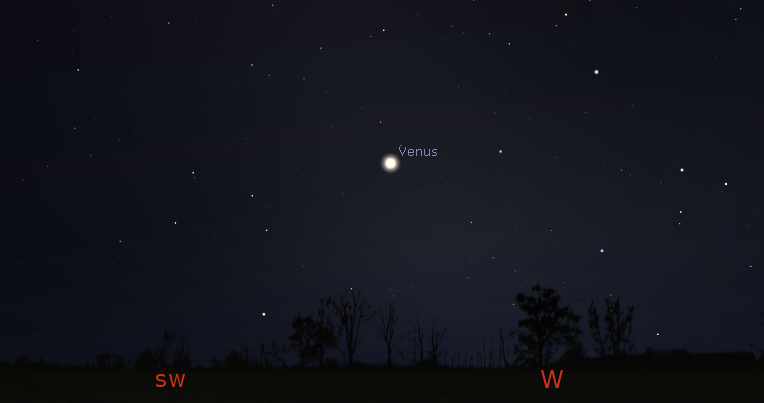
Venus and zodiacal light at 7:30 p.m. this evening February 19, 2020. The zodiacal light will appear more prominent in the next month or so. Here it’s mostly silhouetting the foreground trees. Check my prior posts for zodiacal light. I’ll cover it again in about a month. Created using Stellarium.
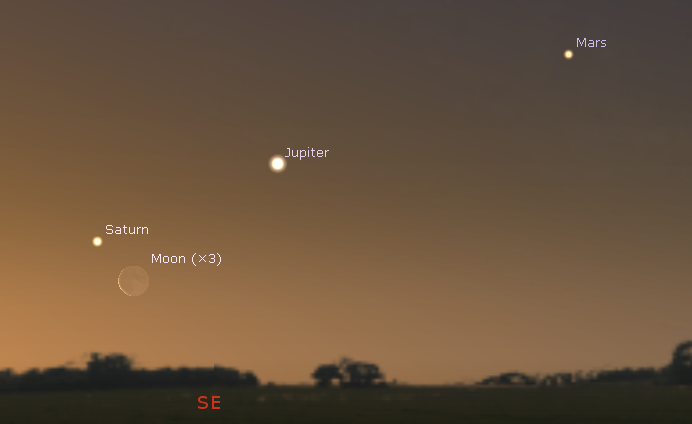
Morning planets and the Moon tomorrow morning at 7 a.m. February 20, 2020. Note that the Moon is 3 times its normal size. Created using Stellarium.
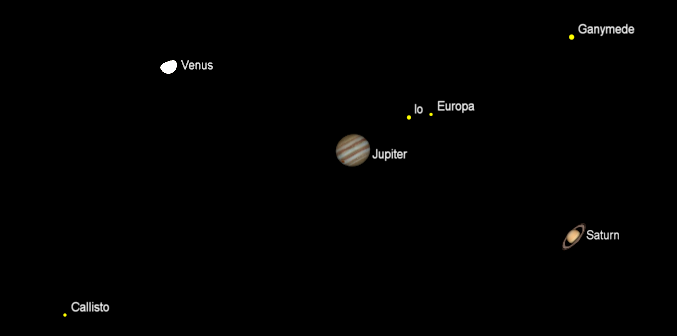
The planets as seen in a telescope with the same magnification. Venus in the evening and Jupiter and Saturn in the morning. Apparent diameters: Venus, 17.5″; Jupiter, 33.5″; Saturn, 15.4″, rings, 35.7″.
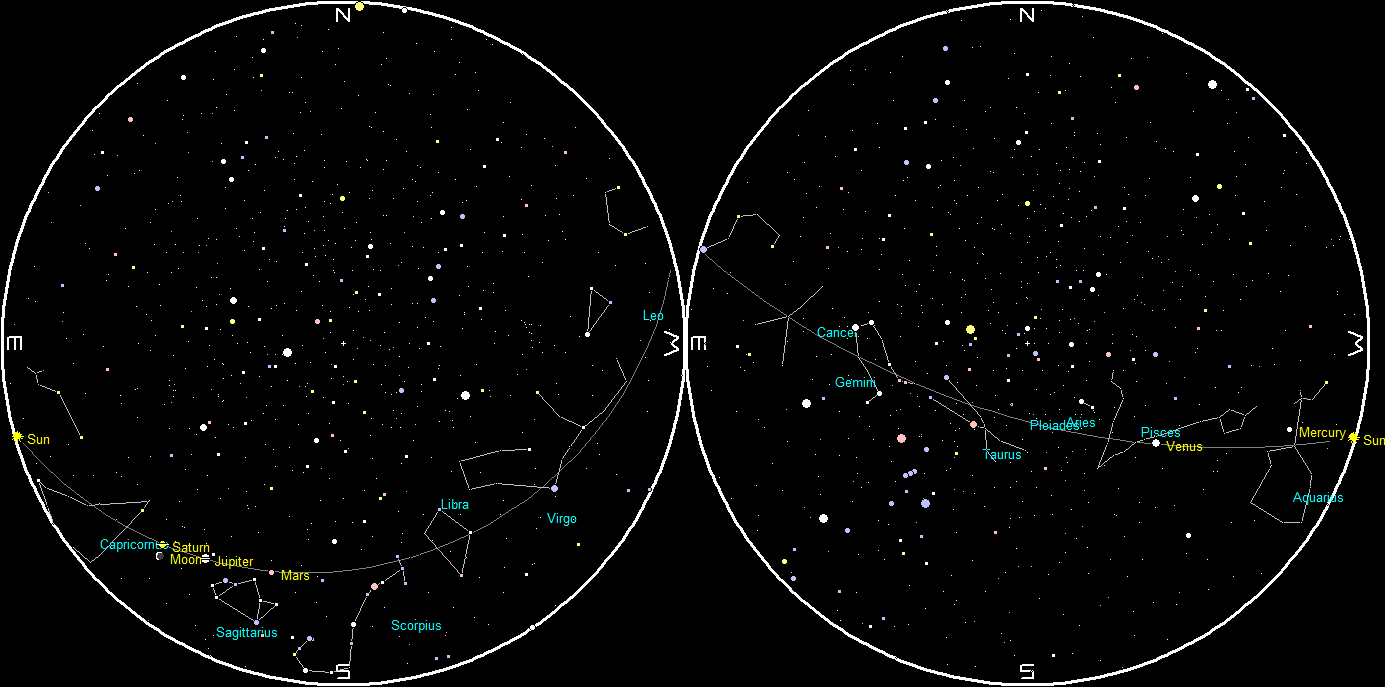
Planets and the Moon at sunset and sunrise of a single night starting with sunset on the right on February 19, 2020. The night ends on the left with sunrise on the 20th. Click on the image to enlarge. Created using my LookingUp program.
02/12/2020 – Ephemeris – A look at the bright planets after a month
Ephemeris for Wednesday, February 12th. Today the Sun will be up for 10 hours and 18 minutes, setting at 6:06, and it will rise tomorrow at 7:46. The Moon, half way from full to last quarter, will rise at 10:32 this evening
It’s been a month since we’ve viewed the bright planets, so let’s have a look. Brilliant Venus is dominating the evening sky in the southwest until it sets at 9:47 p.m. Less noticed is tiny Mercury, below and right of Venus and near the horizon, perhaps best seen in binoculars. It will set at 7:41 p.m. In the morning sky Mars is first to appear and will rise in the east-southeast at 4:40 a.m. It’s brighter than it was last month, it’s 27 million miles closer at 171 million miles. Jupiter will rise at 5:54 a.m. in the east-southeast. This second brightest planet is approaching Saturn in our skies, and will continue until near Christmas. Saturn itself, will rise at 6:30 a.m. in the east-southeast.
The times given are for the Traverse City/Interlochen area of Michigan. They may be different for your location.
Addendum
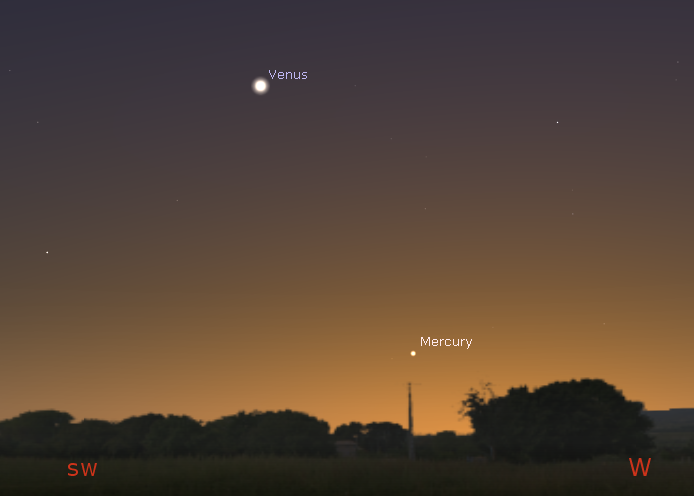
Venus and Mercury in the twilight at 6:45 p.m. Created using Stellarium.
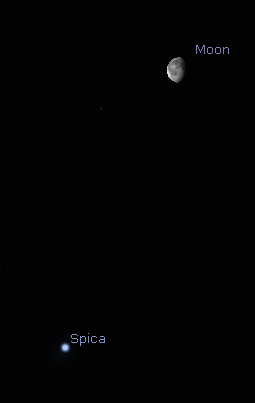
The Moon and Spica at 7 a.m. in the southwest. Created using Stellarium.
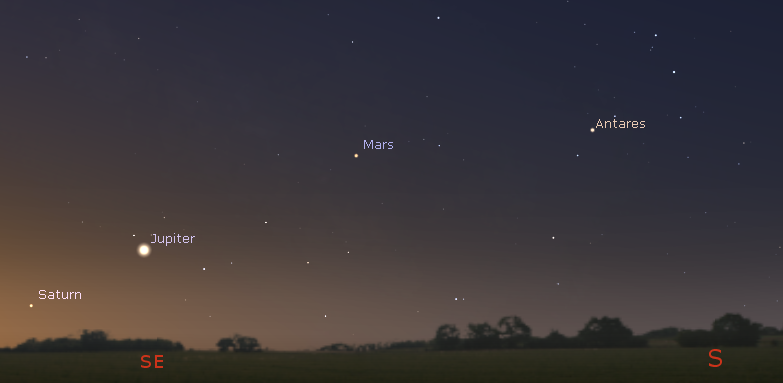
The morning planets at 7 a.m. Created using Stellarium.
Telescopic views of the planets at the same magnification with Venus tonight at 6:45 p.m. February 12, 2020. Mercury is too small to show a disk at this magnification. At 7 a.m. on the 13th Mars is too tiny to show a disk. Twilight is too bright and Saturn is too low to show its moons. But Jupiter’s Great Red Spot is turned toward the Earth. Can you spot it? Created using Cartes du Ciel (Sky Charts).
Planets and the Moon at sunset and sunrise of a single night starting with sunset on the right on February 12, 2020. The night ends on the left with sunrise on the 13th. Click on the image to enlarge. Created using my LookingUp program.
01/08/2020 – Ephemeris – Looking for the naked-eye planets
Ephemeris for Wednesday, January 8th. Today the Sun will be up for 9 hours even, setting at 5:19, and it will rise tomorrow at 8:19. The Moon, 2 days before full, will set at 7:15 tomorrow morning.
Let’s look at the naked-eye planets for this week. Venus is our evening star low in the southwest in the early evening. It will set at 8:20 p.m. Saturn sets only 20 minutes after sunset and is not visible. It will pass behind the Sun on the 13th and will then join Jupiter in the morning sky. Jupiter is too close to the Sun in the morning twilight to be seen. Mars is visible in the morning sky and will rise in the east-southeast at 5:02 a.m. It’s not very bright because it’s 198 million (319 million km) miles away, but it’s getting slowly closer to the Earth at the rate of about 4 million miles (6 million km) a week. Mercury is now too close to the Sun to be seen in the morning, but will move into the evening sky on Friday.
The times given are for the Traverse City/Interlochen area of Michigan. They may be different for your location.
Addendum
Venus and the Gibbous Moon in the evening tonight at 7 p.m. January 8, 2020. Orion is still easily spotted in the moonlight. Click on the image to enlarge. Created using Stellarium.
The gibbous Moon as it might appear in binoculars at 7 p.m. January 8, 2019. Created using Stellarium.
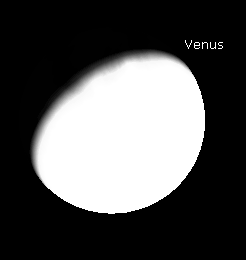
Venus, much larger than it would appear in any telescope to show its gibbous phase, tonight January 8, 2019. Created using Stellarium.
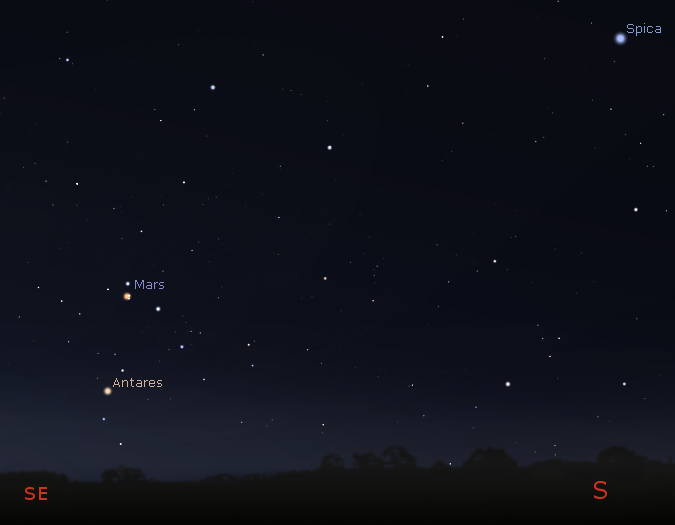
Mars in the morning with the bright stars at 7 a.m. January 9, 2020. Note that Mars is approaching the red giant star Antares. The name Antares means “Rival of Mars” (Ant – anti, Ares -the Greek god of war that the Romans appropriated as Mars). Mars will pass 4.8 degrees north of Antares on the 17th. Created using Stellarium.
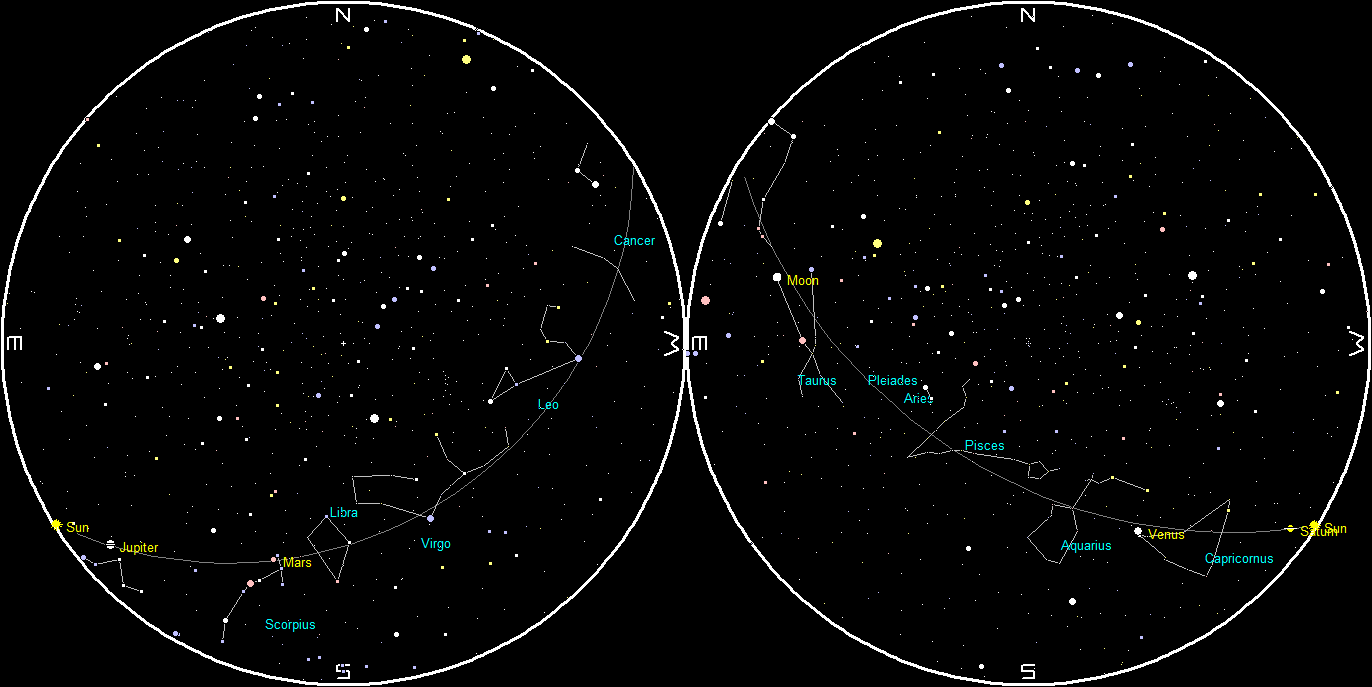
Planets and the Moon at sunset and sunrise of a single night starting with sunset on the right on January 8, 2020. The night ends on the left with sunrise on the 9th. Click on the image to enlarge. Created using my LookingUp program.
01/01/2020 – Ephemeris – A Happy New Year look at the naked-eye planets
Happy New Year, this is Ephemeris for New Years Day, Wednesday, January 1st. 2020. The Sun will rise at 8:20. It’ll be up for 8 hours and 52 minutes, setting at 5:12. The Moon, 1 day before first quarter, will set at 11:48 this evening.
Let’s look at the naked-eye planets for this week. Venus is our evening star low in the southwest in the early evening. It will set at 8:02 p.m. Saturn sets only 50 minutes after sunset and is not visible. It will pass behind the Sun on the 13th and will then join Jupiter in the morning sky. Jupiter is too close to the Sun in the morning twilight to be seen. Mars is visible in the morning sky and will rise in the east-southeast at 5:04 a.m. It’s not very bright because it’s 202 million (326 million km) miles away, but it’s getting slowly closer to the Earth at the rate of about 4 million miles (6 million km) a week. Mercury is now too close to the Sun to be seen in the morning, but will move into the evening sky on the 10th.
The times given are for the Traverse City/Interlochen area of Michigan. They may be different for your location.
Addendum
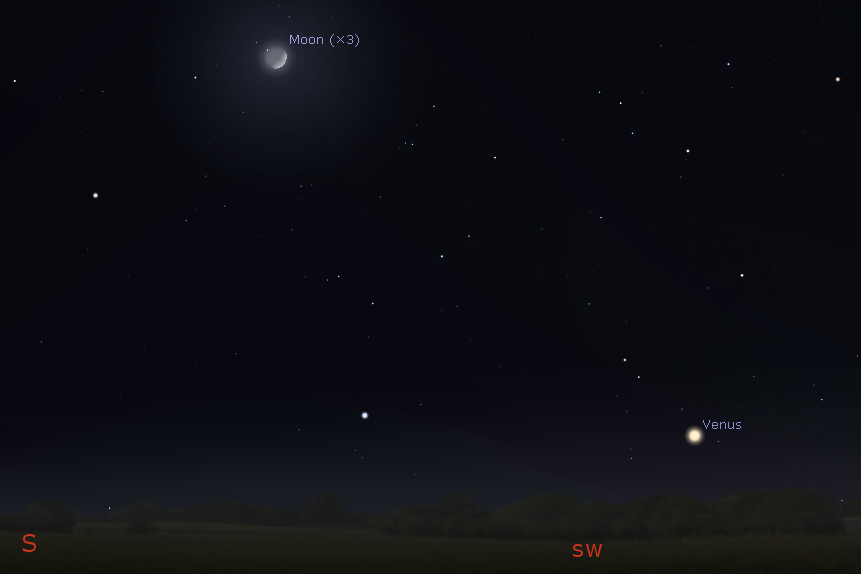
Venus and the Moon in the evening tonight at 7 p.m. January 1, 2020. Click on the image to enlarge. Created using Stellarium.
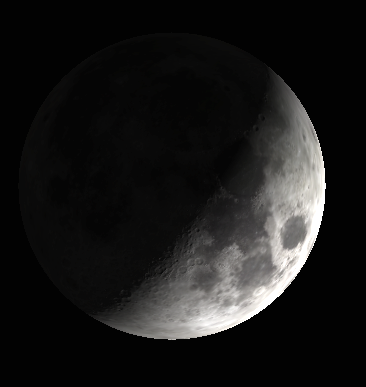
The crescent Moon as it might appear in binoculars or a small telescope tonight at 7 p.m. January 1, 2020. Created using Stellarium.

Venus, much larger than it would appear in any telescope to show its gibbous phase, tonight January 1, 2019. Created using Stellarium.
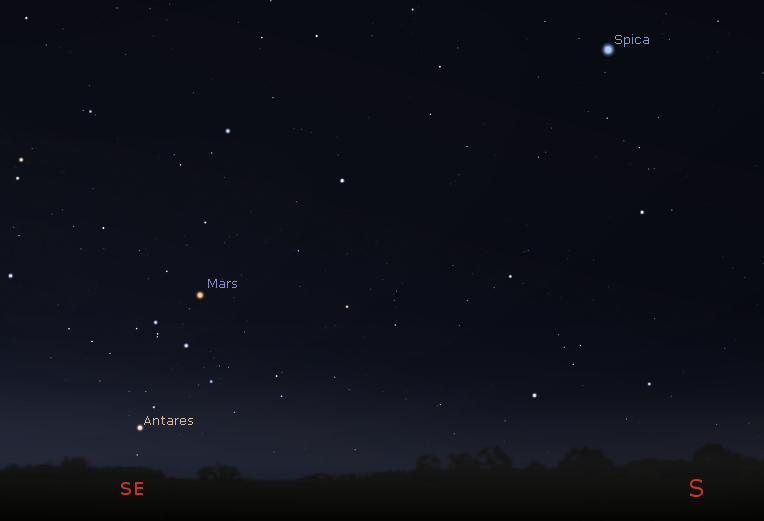
Mars in the morning with the bright stars at 7 a.m. January 1, 2020. Note that Mars is approaching the red giant star Antares. The name Antares means “Rival of Mars” (Ant – anti, Ares -the Greek god of war that the Romans appropriated as Mars). Mars will pass 4.8 degrees north of Antares on the 17th. Click on the image to enlarge. Created using Stellarium.
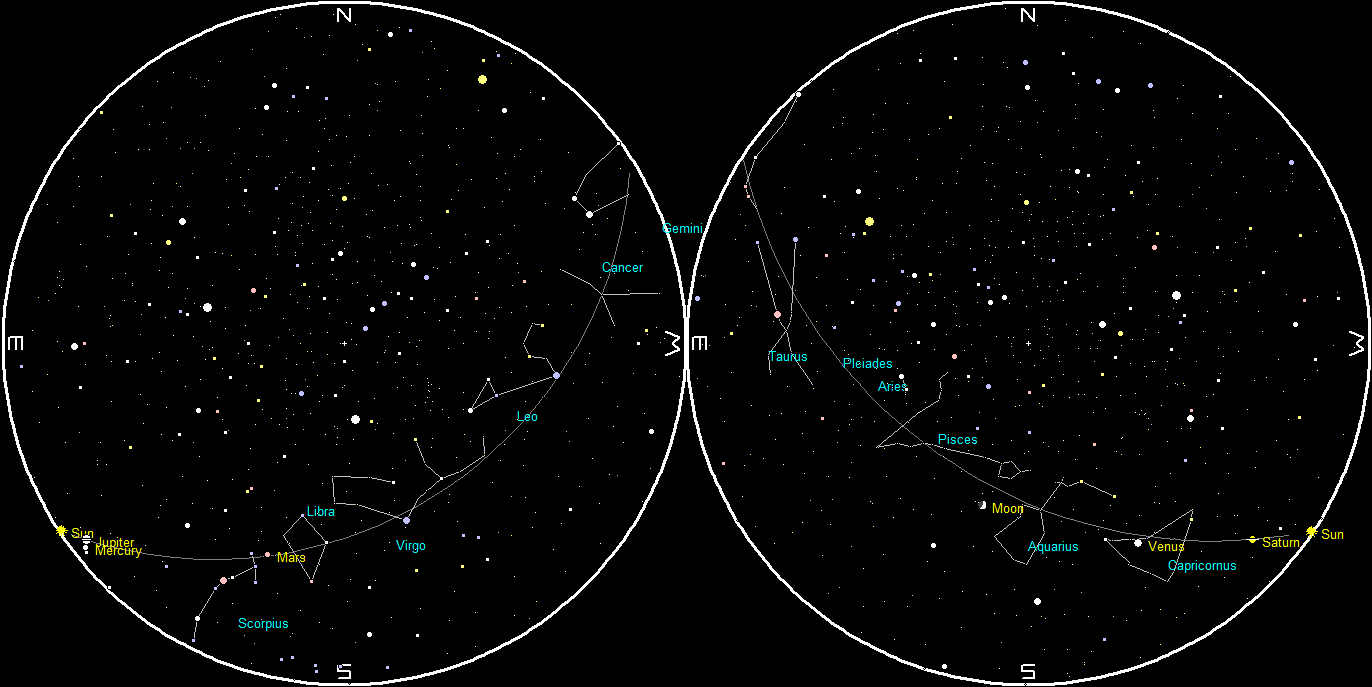
Planets and the Moon at sunset and sunrise of a single night starting with sunset on the right on January 1, 2020. The night ends on the left with sunrise on the 2nd. Click on the image to enlarge. Created using my LookingUp program.
12/25/2019 – Ephemeris – A look at the naked-eye planets for Christmas
Merry Christmas. This is Ephemeris for Christmas Day, Wednesday, December 25th. Today the Sun will be up for 8 hours and 48 minutes, setting at 5:07, and it will rise tomorrow at 8:18. The Moon, 1 day before new, will rise at 8:42 tomorrow morning.
Let’s look at the naked-eye planets for this week. Venus is our Christmas Star low in the southwest in the early evening. It will set at 7:43 p.m. Saturn, the ringed planet, will be in the southwestern sky in the evening, and will set at 6:26 p.m. Tonight Saturn will be about 16 ½ degrees or more than the width of a fist held at arms length right and below the much brighter Venus. Jupiter is lost in twilight. It will pass behind the Sun on the Friday, entering the morning sky.
Mars is in the morning sky and will rise in the east-southeast at 5:07 a.m. It’s not very bright because it’s 206 million (332 million km) miles away, but it’s getting slowly closer to the Earth. Mercury is now too close to the Sun to be seen in the morning.
The times given are for the Traverse City/Interlochen area of Michigan. They may be different for your location.
Addendum
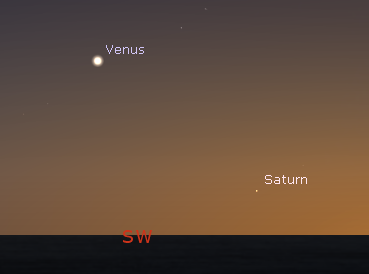
Venus and Saturn low on the southwest tonight at 6 p.m. December25, 2019. Saturn is only 3 1/2 degrees above the Lake Michigan horizon. Created using Stellarium.
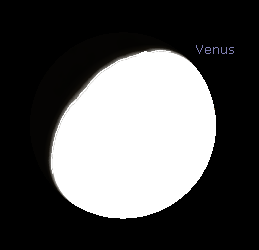
Venus, much larger than it would appear in any telescope to show its gibbous phase, tonight December 25, 2019. Created using Stellarium.
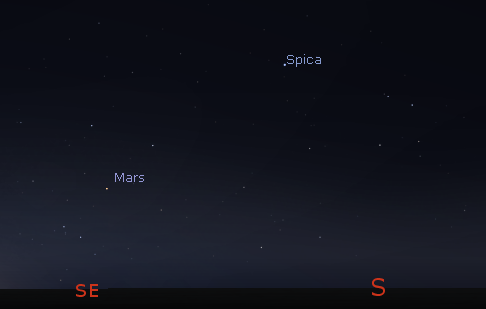
Mars in the morning with the bright stars at 7 a.m. December 26, 2019. Created using Stellarium.
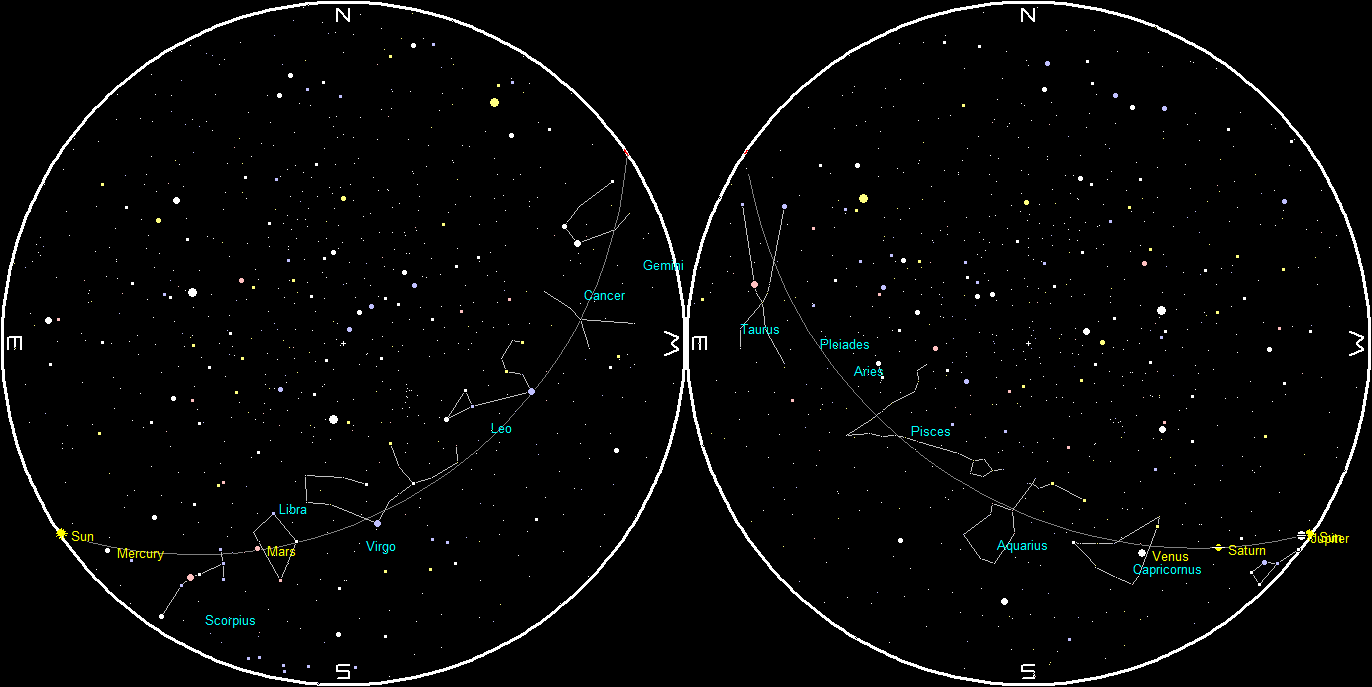
Planets and the Moon at sunset and sunrise of a single night starting with sunset on the right on December 25, 2019. The night ends on the left with sunrise on the 26th. The Moon at the morning hour is south of the Sun having just completing a solar eclipse for Asia. Click on the image to enlarge. Created using my LookingUp program.
12/18/2019 – Ephemeris – Where are the naked-eye planets for this week?
Ephemeris for Wednesday, December 18th. Today the Sun will be up for 8 hours and 48 minutes, setting at 5:03, and it will rise tomorrow at 8:15. The Moon, 1 day before last quarter, will rise at 12:28 tomorrow morning.
Let’s look at the naked-eye planets for this week. Venus will be briefly visible low in the southwest before it sets at 7:25 p.m. Jupiter is lost in twilight. It will pass behind the Sun on the 27th and will enter the morning sky. Saturn, the ringed planet, will be in the southwestern sky in the evening, and will set at 6:46 p.m. Tonight Saturn will be about 8 ½ degrees or Nearly the width of a fist held at arms length right and below the much brighter Venus. Mars is in the morning sky and will rise in the east-southeast at 5:10 a.m. It’s not very bright because it’s 211 million (339million km) miles away, but it’s getting slowly closer to the Earth. Mercury is now too close to the Sun to be seen in the morning.
The times given are for the Traverse City/Interlochen area of Michigan. They may be different for your location.
Addendum
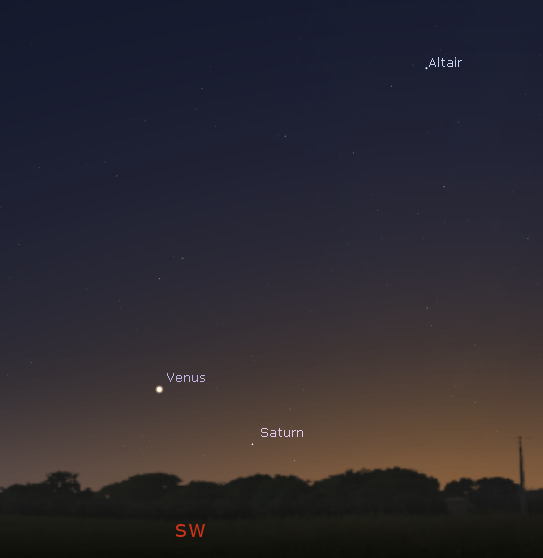
Venus and Saturn low ion the southwest tonight at 6 p.m. December18, 2019. Created using Stellarium.
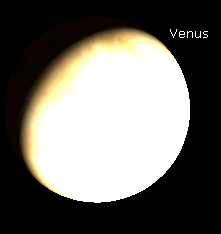
Venus, much larger than it would appear in any telescope to show its gibbous phase, tonight December 18, 2019. Created using Stellarium.
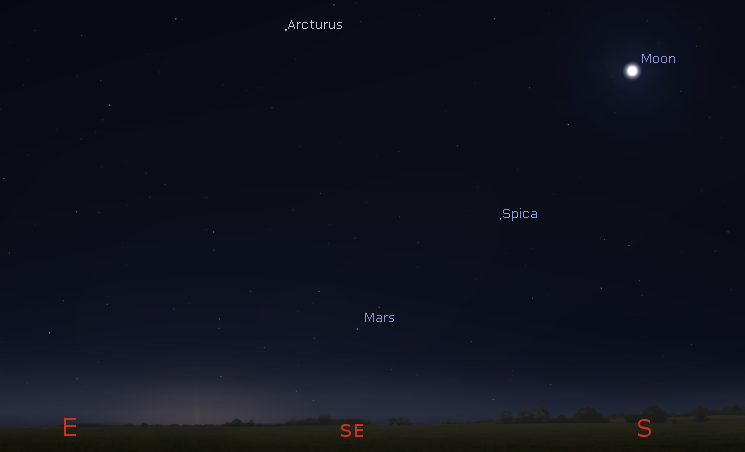
Mars and the Moon in the morning with the bright stars at 7 a.m. December 19, 2019. Created using Stellarium.
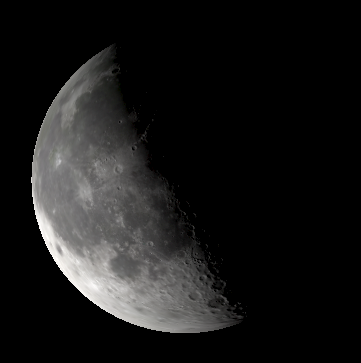
The Moon as it might be seen in binoculars at 7 a.m. tomorrow December 19, 2019. Created using Stellarium.
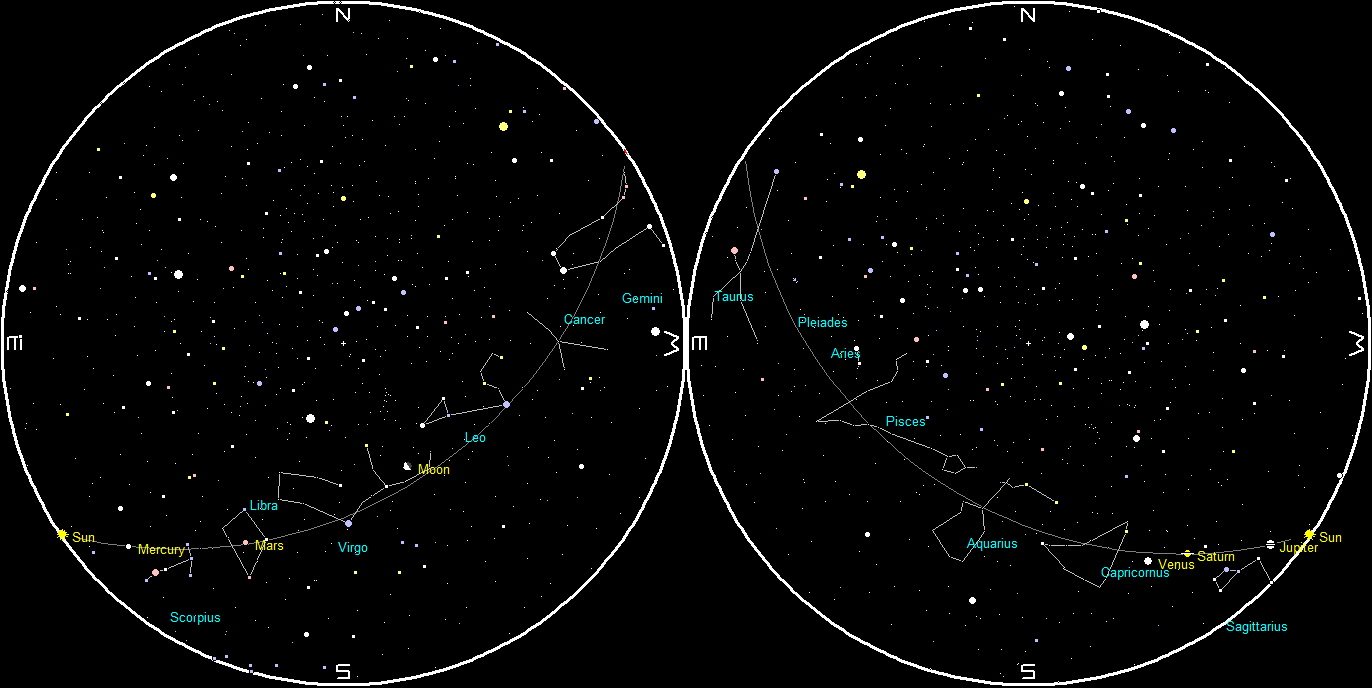
Planets and the Moon at sunset and sunrise of a single night starting with sunset on the right on December 18, 2019. The night ends on the left with sunrise on the 19th. Click on the image to enlarge. Created using my LookingUp program.
12/11/2019 – Ephemeris – Where are the naked-eye planets now
Ephemeris for Wednesday, December 11th. Today the Sun will be up for 8 hours and 52 minutes, setting at 5:02, and it will rise tomorrow at 8:10. The Moon, 1 day before full, will set at 8:28 tomorrow morning.
Let’s look at the naked-eye planets for this week. Venus will be briefly visible low in the southwest before it sets at 7:06 p.m. Jupiter is lost in twilight. It will pass behind the Sun on the 27th and will enter the morning sky. Saturn, the ringed planet, will be in the southwestern sky in the evening, and will set at 7:13 p.m. Tonight Saturn will be about 2 degrees or 4 moon widths to the upper right of the much brighter Venus. Mars is in the morning sky and will rise in the east-southeast at 5:13 a.m. It’s not very bright because it’s 215 million (346 million km) miles away, but it’s getting slowly closer to the Earth. Mercury is now too close to the Sun to be seen in morning twilight.
The times given are for the Traverse City/Interlochen area of Michigan. They may be different for your location.
Addendum
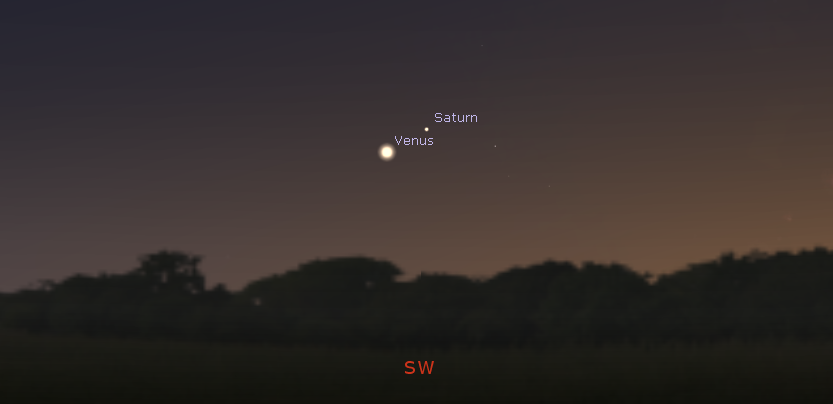
Venus and Saturn low ion the southwest tonight at 6 p.m. December11, 2019. Click on the image to enlarge. Created using Stellarium.
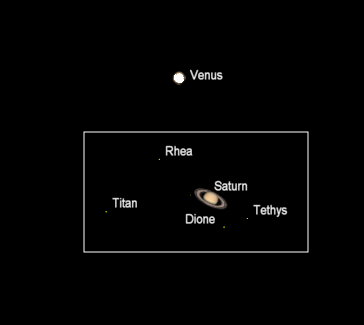
Telescopic views of Venus and Saturn with the same magnification at 6 p.m. tonight December 11, 2019. In the morning, I will show Mars here when it reaches an apparent diameter of 10″ (seconds of arc). It’s currently 4.0″. By the way Venus is 11.8″. Created using Cartes du Ciel (Sky Charts).
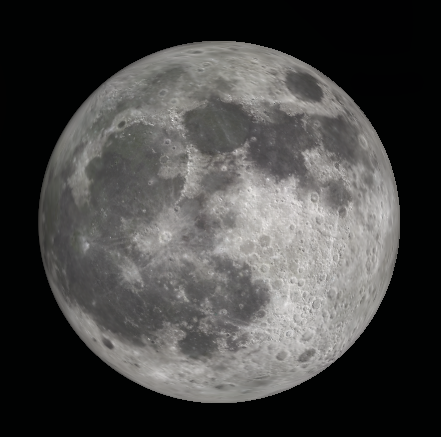
The nearly full Moon at 6 p.m. tonight December 11, 2019. Created using Stellarium.
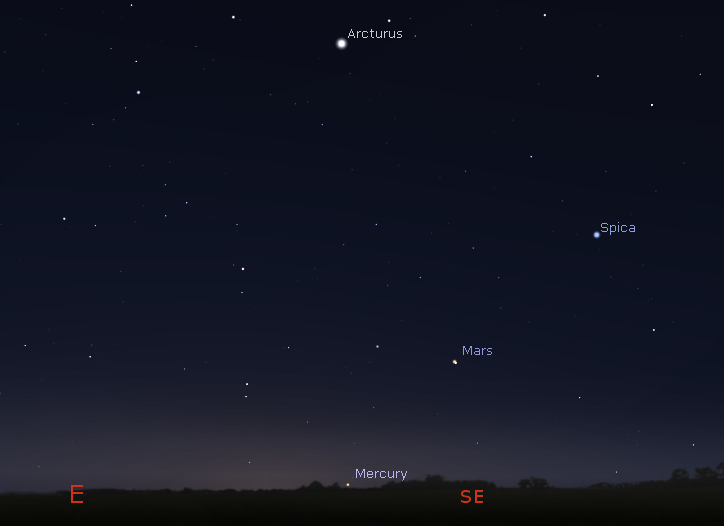
Mars in the morning with the bright stars at 7 a.m. December 12, 2019. Mercury is on the horizon and most likely invisible. Click on the image to enlarge. Created using Stellarium.
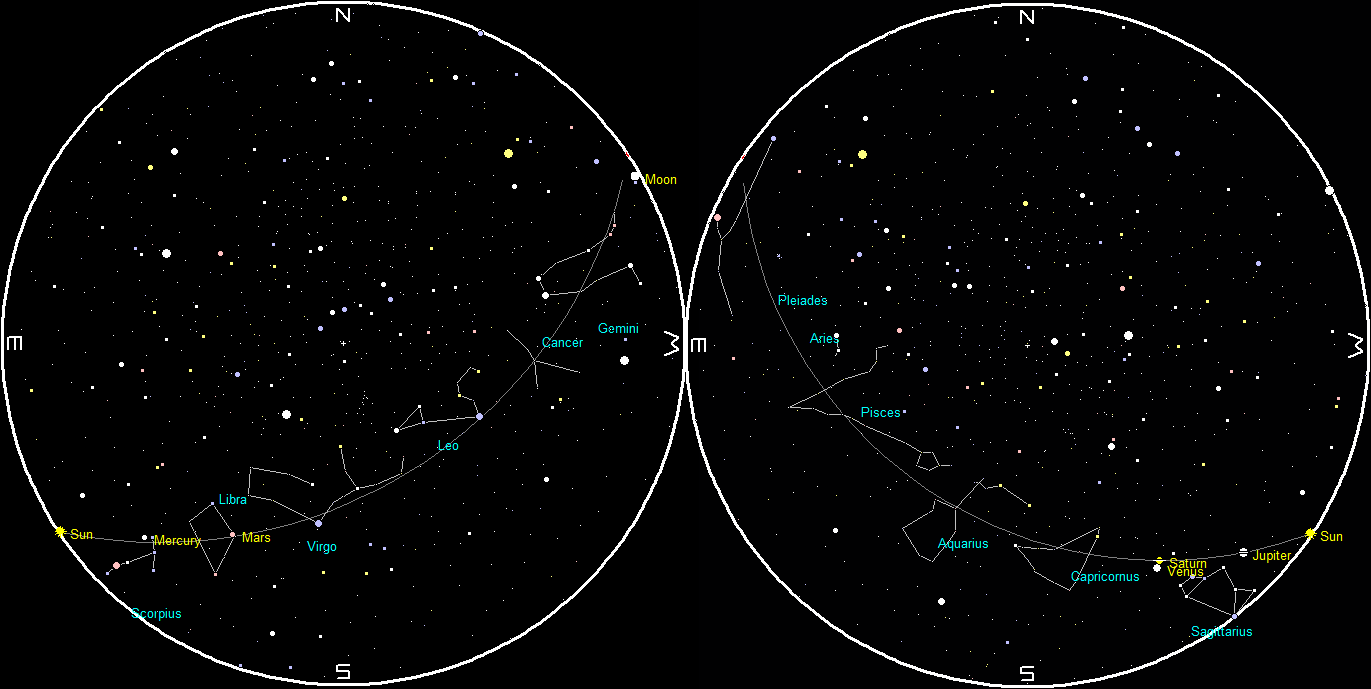
Planets and the Moon at sunset and sunrise of a single night starting with sunset on the right on December 11, 2019. The night ends on the left with sunrise on the 12th. Click on the image to enlarge. Created using my LookingUp program.
 Bob Moler's Ephemeris Blog