Archive
07/24/2019 – Ephemeris – Jupiter and Saturn dominate the evening sky
Ephemeris for Wednesday, July 24th. Today the Sun will be up for 14 hours and 57 minutes, setting at 9:17, and it will rise tomorrow at 6:21. The Moon, at last quarter today, will rise at 1:14 tomorrow morning.
Let’s look at the planets for this week. Mars, Mercury and Venus are all too close to the Sun to be seen. Mars is still on the evening or east side of the Sun. Mercury has crossed over and has joined Venus on the west or morning side of the Sun. Bright Jupiter will be in the southern sky as it gets dark. It will pass the meridian, due south at 10:27 p.m. With steadily held binoculars a few of the 4 largest satellites of Jupiter can be seen. All four of Jupiter’s largest satellites can be spotted in telescopes. Jupiter will set at 2:55 a.m. Saturn, the ringed planet, will be lower down in the southeast in the evening, the brightest star-like object in that direction, but significantly dimmer than Jupiter. It will set at 5:10 a.m.
The times given are for the Traverse City/Interlochen area of Michigan. They may be different for your location.
Addendum
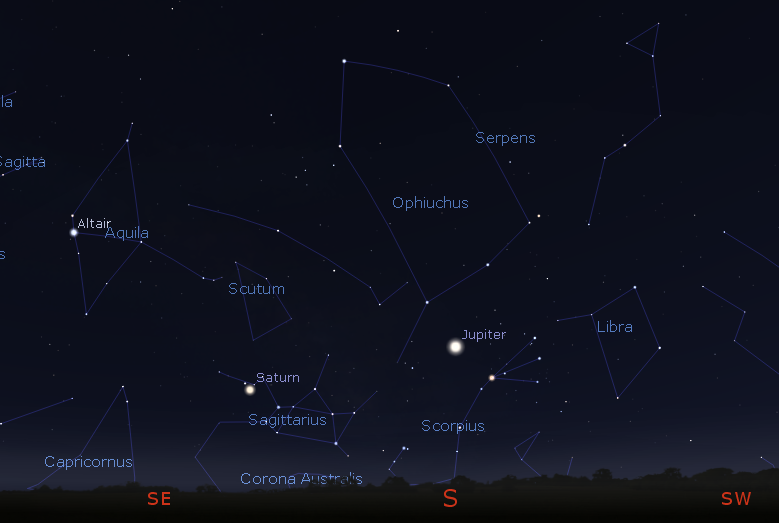
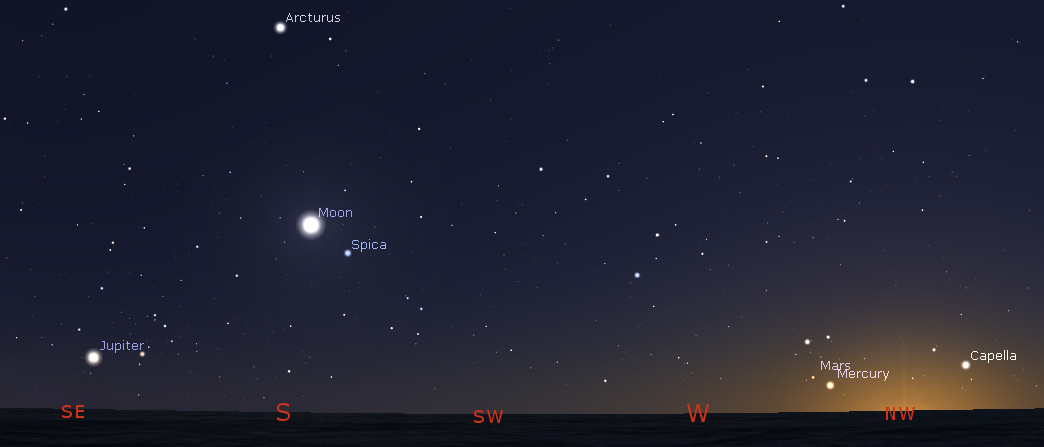
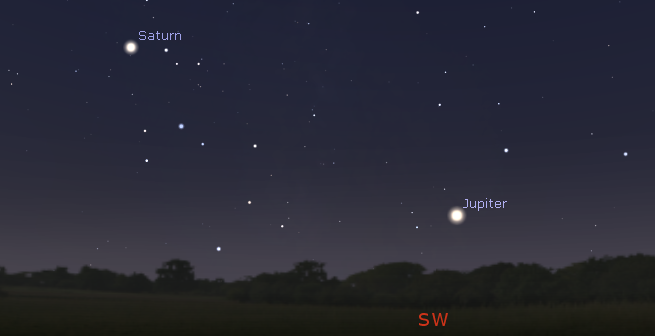
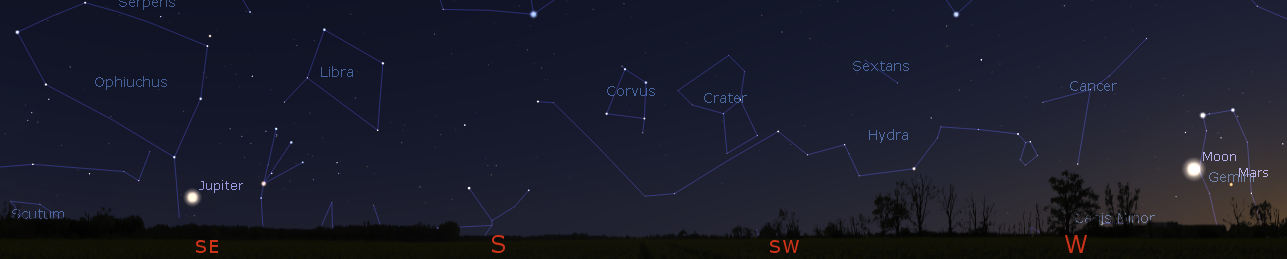
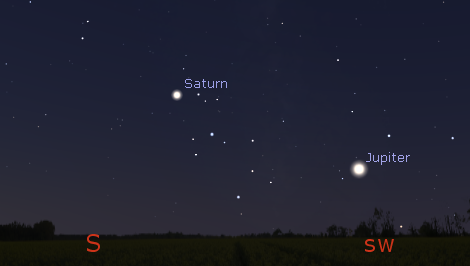
Jupiter and Saturn with the constellations of the southern summer sky at 10:30 p.m. July 24, 2019. Click on the image to enlarge. Created using Stellarium.
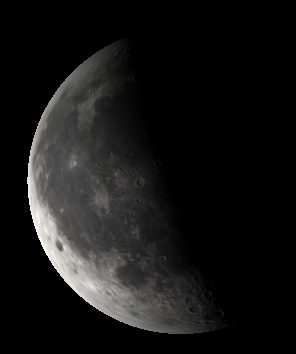
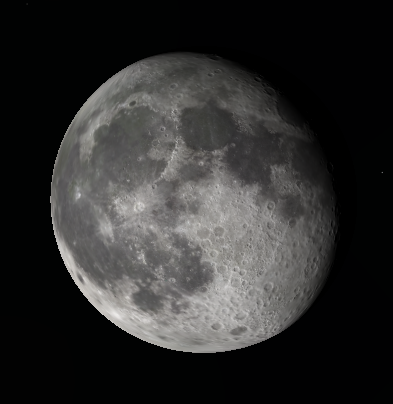
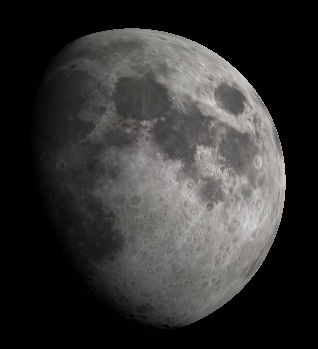
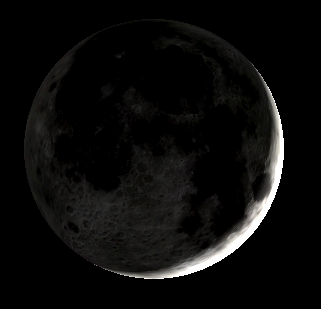
The waning Moon one day past last quarter at 5 a.m. July 25, 2019. Created using Stellarium.
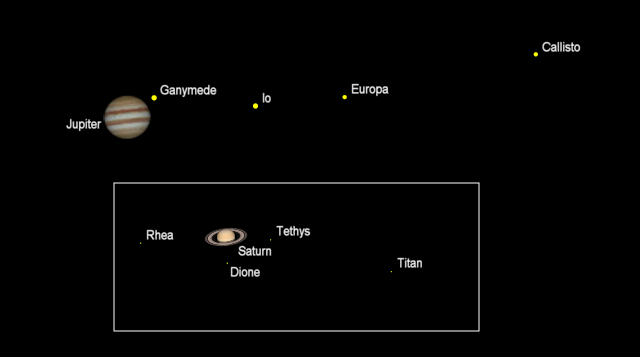
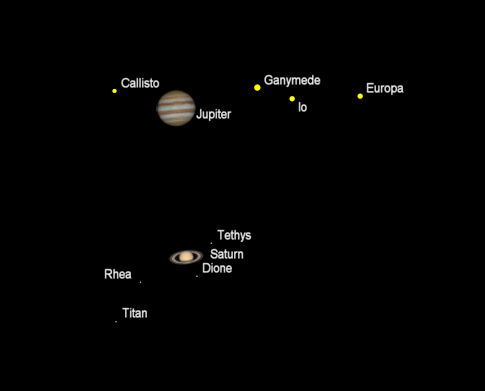
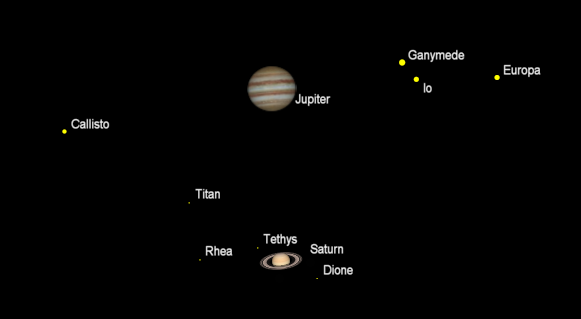
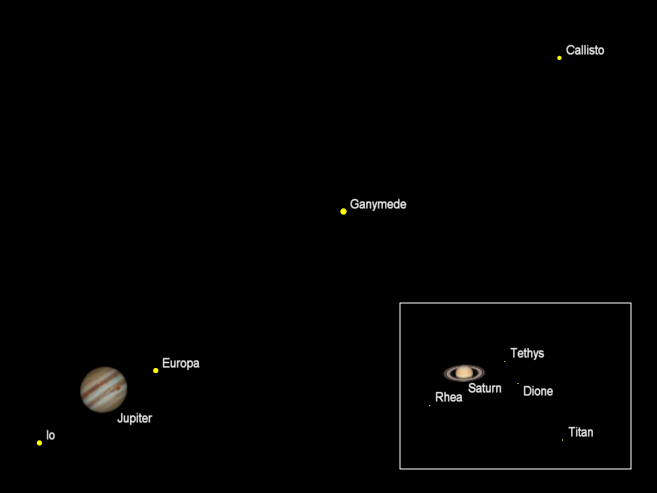
Jupiter and Saturn with the same magnification at 11p.m. July 24, 2019. Jupiter’s moon Ganymede transited the planet earlier in the evening, but its shadow will cross the face of Jupiter from 11:25 p.m. to 1:53 a.m. Created using Cartes du Ciel (Sky Charts).
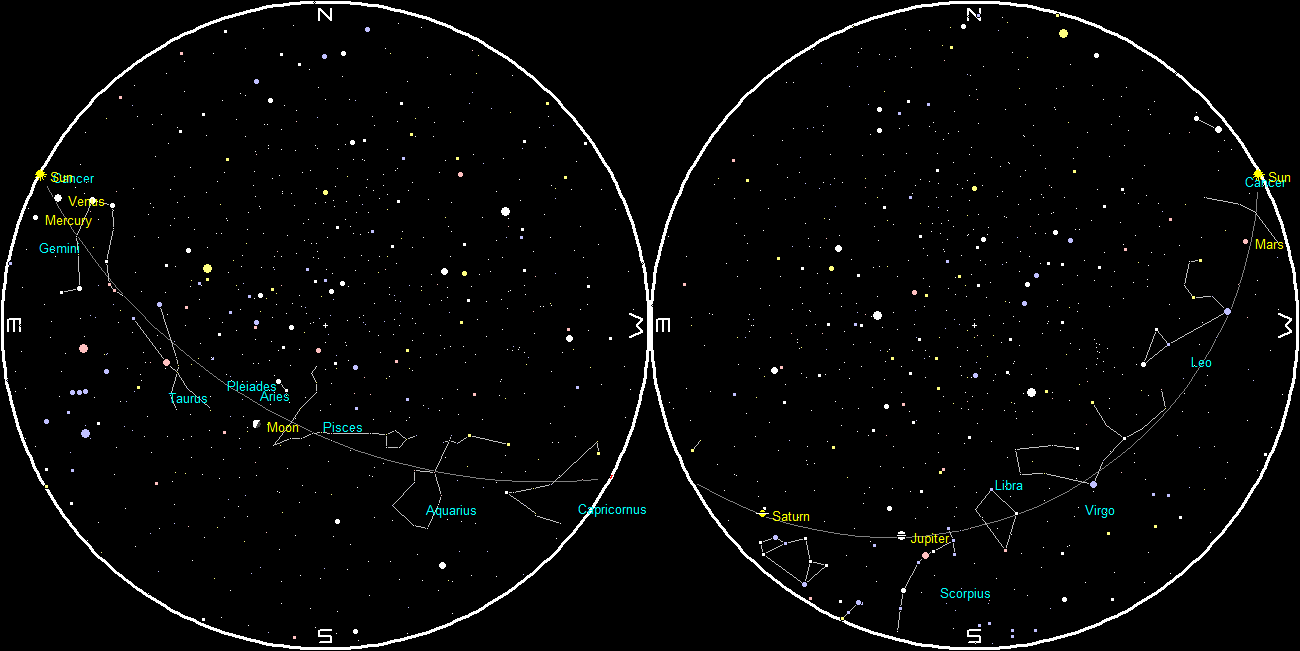
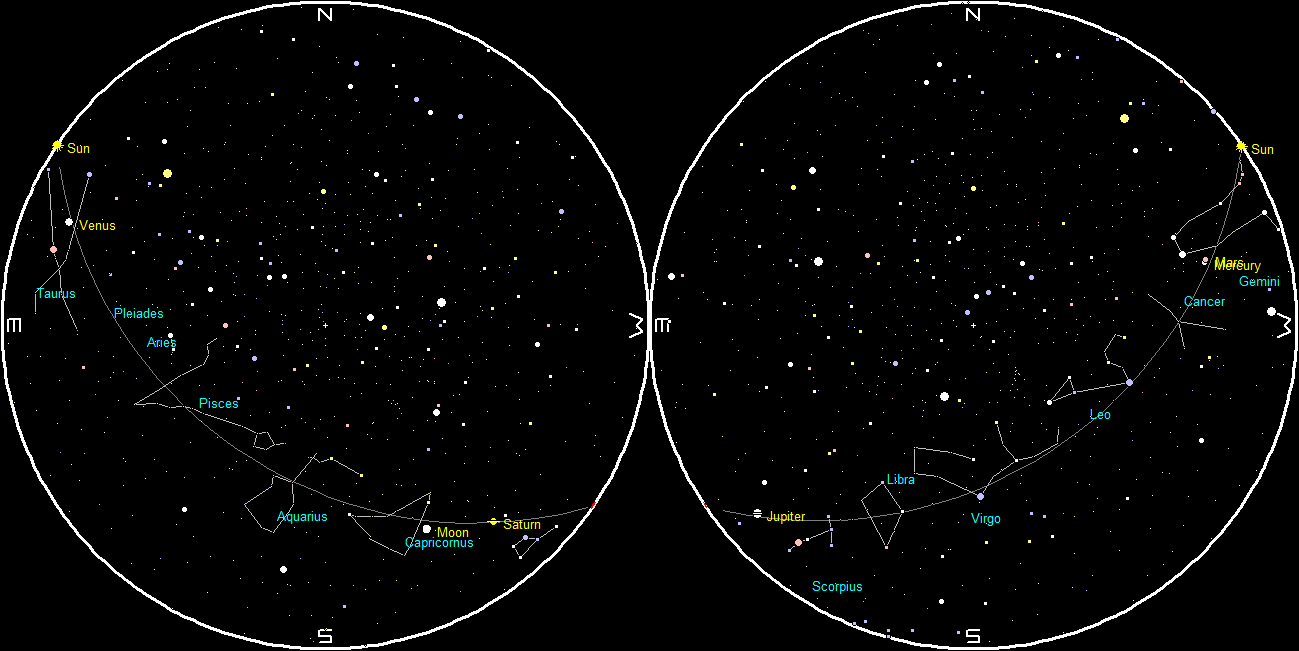
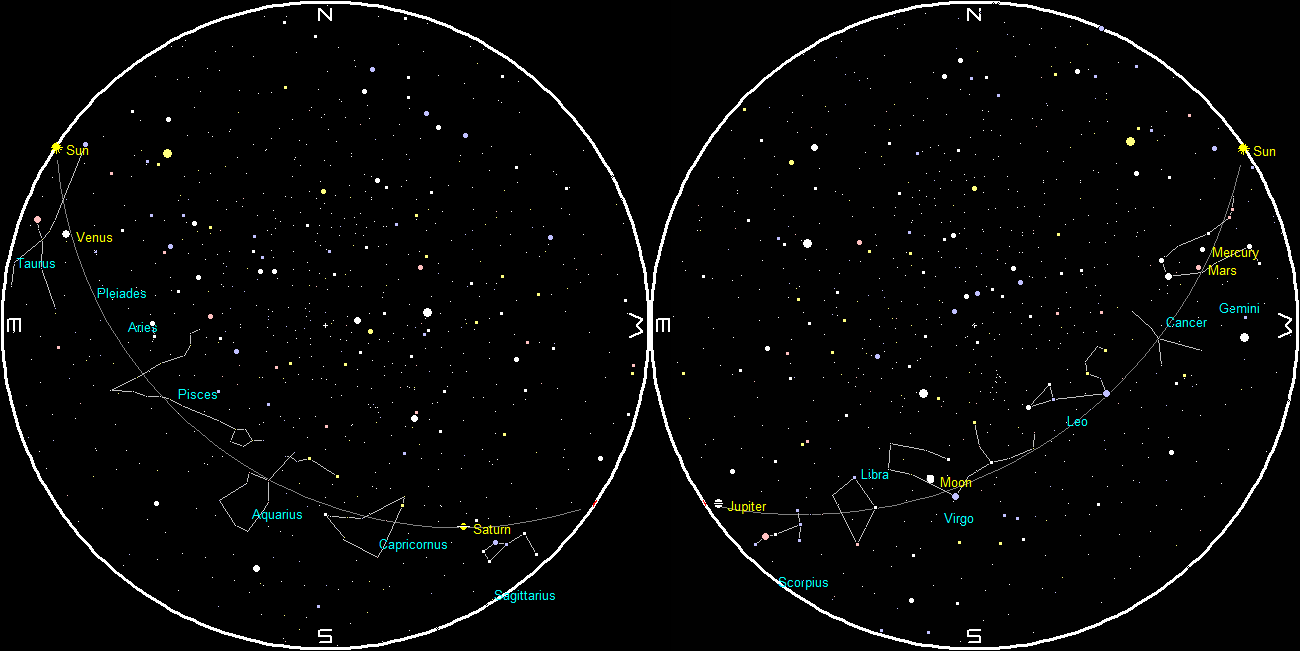
Planets and the Moon at sunset and sunrise of a single night starting with sunset on the right on July 24, 2019. The night ends on the left with sunrise on the 25th. Click on the image to enlarge. Created using my LookingUp program.
07/10/2019 – Ephemeris – A look at the bright planets for this week
Ephemeris for Wednesday, July 10th. Today the Sun will be up for 15 hours and 21 minutes, setting at 9:28, and it will rise tomorrow at 6:07. The Moon, 1 day past first quarter, will set at 2:26 tomorrow morning.
Let’s look at the planets for this week. Mercury is now too close to the Sun to be seen. Mars itself is difficult to spot low in the west-northwest, setting at 10:29 p.m. Bright Jupiter will be in the southern sky by 10:30 p.m. With steadily held binoculars a few of the 4 largest satellites of Jupiter can be seen. All four of Jupiter’s largest satellites can be spotted in telescopes. Tonight they will be all arrayed on one side of the planet. Also at 10:30 Saturn will be lower down in the southeast, the brightest star-like object in that direction, but significantly dimmer than Jupiter. The only bright planet left in the morning sky is Venus, which is too close to the Sun to be spotted.
The times given are for the Traverse City/Interlochen area of Michigan. They may be different for your location.
Addendum
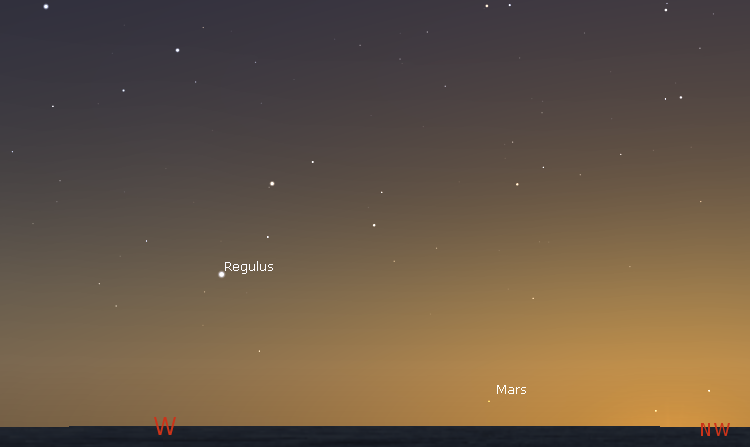
Mars about to set, seen at 10:15 p.m. July 10, 2019. Mars and the stars have been brightened. Created by Stellarium.
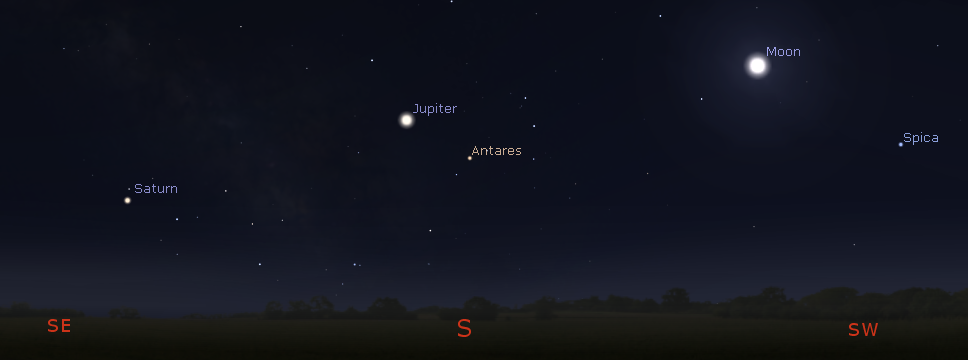
The Moon, Jupiter and Saturn in the southern sky at 11 p.m., July 10, 2019. Click on the image to enlarge. Created using Stellarium.
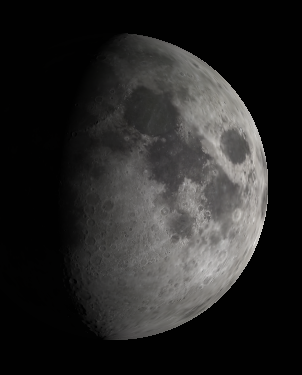
The gibbous Moon as it might appear in binoculars or a small telescope tonight at 11 p.m. July 10, 2019. Created using Stellarium.
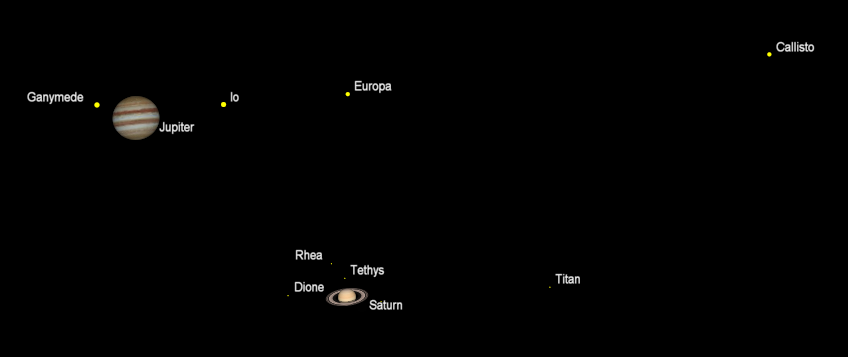
Jupiter and Saturn with the same magnification at 11p.m. July 10, 2019. Created using Cartes du Ciel (Sky Charts).
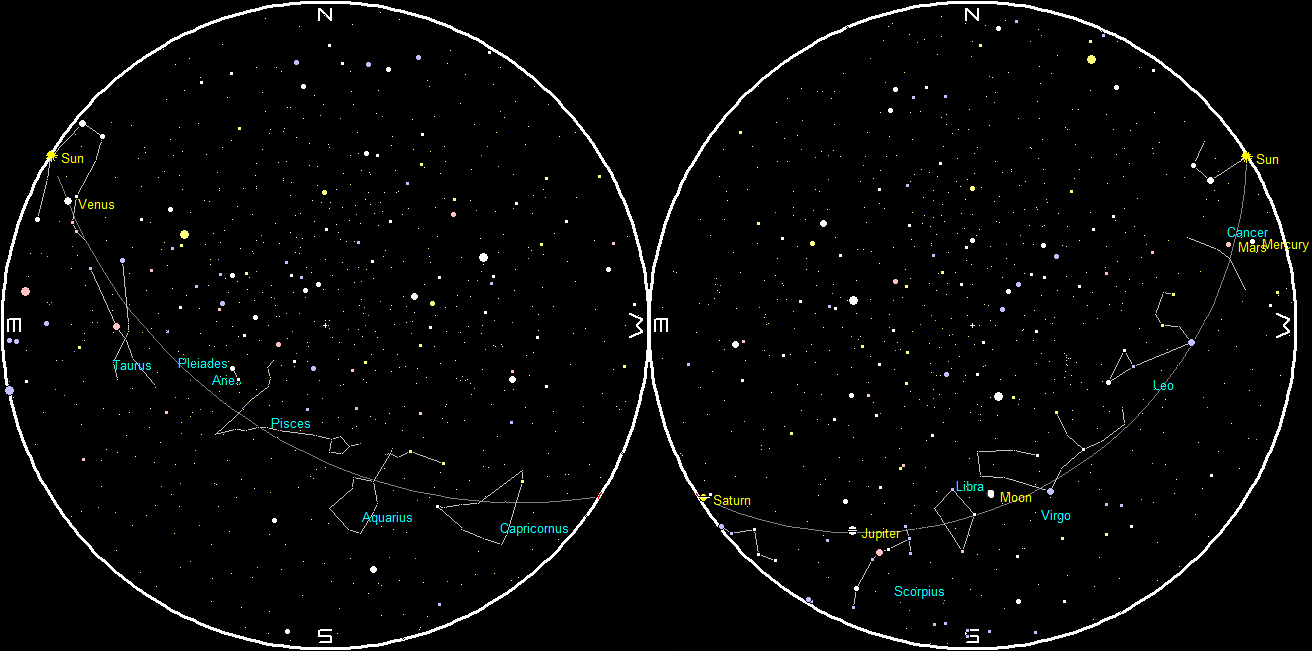
Planets and the Moon at sunset and sunrise of a single night starting with sunset on the right on July 10, 2019. The night ends on the left with sunrise on the 11th. Click on the image to enlarge. Created using my LookingUp program.
07/03/2019 – Ephemeris – Our weekly look at the bright planets
Ephemeris for Wednesday, July 3rd. Today the Sun will be up for 15 hours and 29 minutes, setting at 9:31, and it will rise tomorrow at 6:02. The Moon, 1 day past new, will set at 10:33 this evening.
Let’s look at the planets for this week. Mars, Mercury and the Moon will be low in the west-northwestern sky to the left of the star Pollux. Mercury and Mars are now slightly dimmer than Pollux tonight. Mercury is moving below Mars now. Mercury will set at 10:35 p.m., with Mars following 9 minutes later. Jupiter will start the evening low in the southeast. It’s far brighter than any star and will be visible just about all night, setting at 4:24 a.m. It’s in Ophiuchus the serpent bearer now, just above Scorpius the scorpion. Though still officially a morning planet, Saturn will rise at 9:42 p.m., in the east-southeast. It will be up the rest of the night. It’s in Sagittarius the archer. Venus remains too close to the Sun to be seen.
The times given are for the Traverse City/Interlochen area of Michigan. They may be different for your location.
Addendum
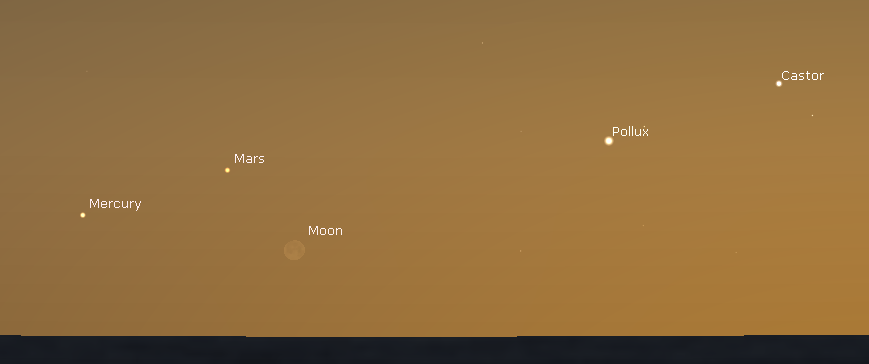
Mars, Mercury and the Moon near the west-northwestern horizon at 10:15 p.m., July 3, 2019. Click on the image to enlarge. Created using Stellarium. Stellarium cannot render the crescent on the day old Moon.
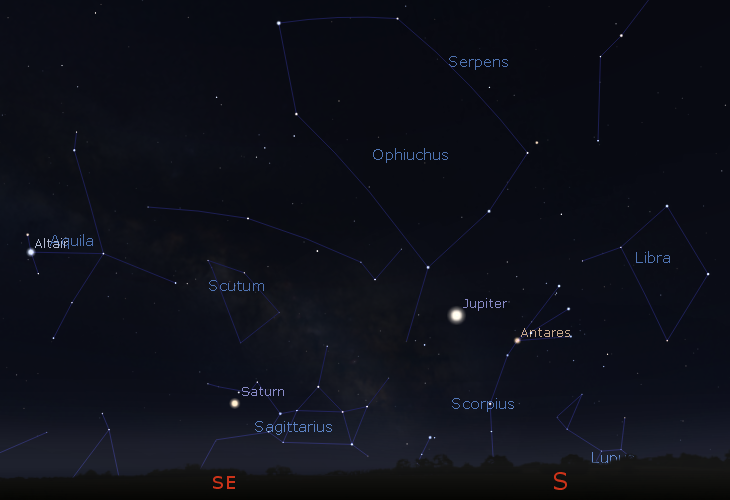
Jupiter Saturn and evening constellations for 11 p.m. July 3, 2019. Created using Stellarium.
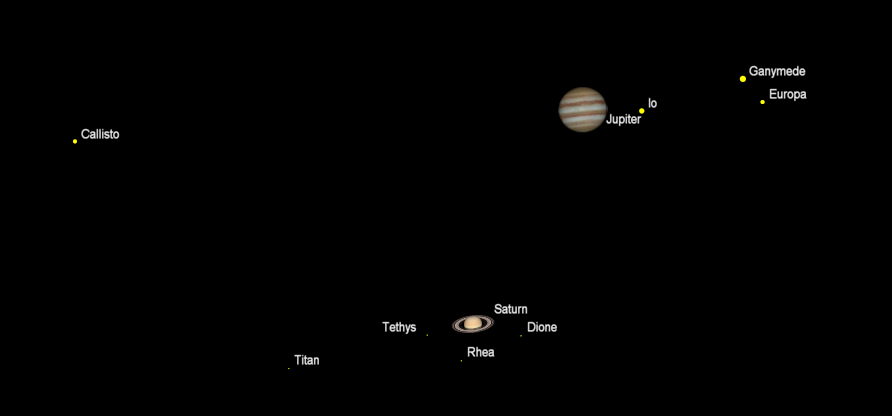
Jupiter and Saturn with the same magnification at 11p.m. (3:00 UT), July 3, 2019. Io will disappear behind Jupiter at 12:42 a.m. (4:42 UT) and will reappear from Jupiter’s shadow on the other side at 3:26 a.m. (7:26 UT). Created using Cartes du Ciel (Sky Charts).
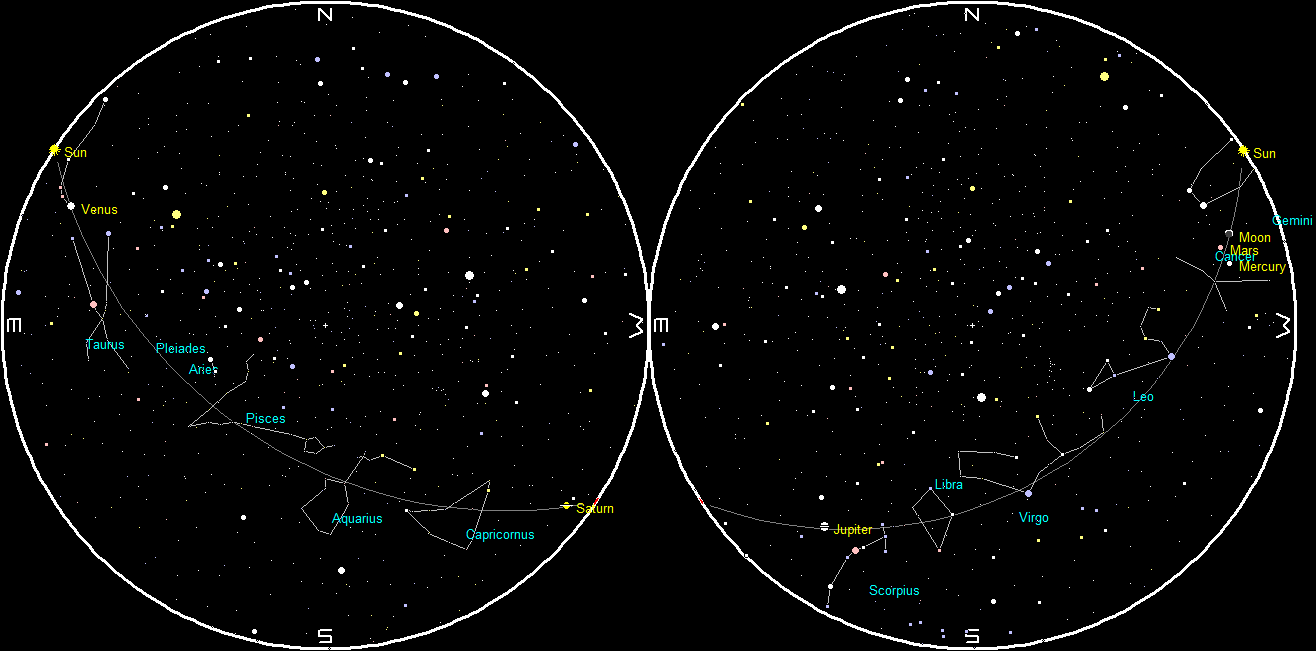
Planets and the Moon at sunset and sunrise of a single night starting with sunset on the right on July 3, 2019. The night ends on the left with sunrise on the 4th. Click on the image to enlarge. Created using my LookingUp program.
06/26/2019 – Ephemeris – Checking out the locations of the bright planets for this week
Ephemeris for Wednesday, June 26th. Today the Sun will be up for 15 hours and 33 minutes, setting at 9:32, latest sunset of the year, and it will rise tomorrow at 5:59. The Moon, 1 day past last quarter, will rise at 2:47 tomorrow morning.
Let’s look at the planets for this week. Mars and Mercury will be low in the west-northwestern sky to the left of the star Pollux. Mercury is somewhat brighter than Pollux tonight with dimmer Mars to the right of Mercury. Mercury is separating from Mars rapidly, It’s not named for the messenger of the gods for nothing. Mercury will set at 11 p.m., three minutes after Mars. Jupiter will start the evening low in the southeast. It’s far brighter than any star and will be visible just about all night, setting at 4:55 a.m. It’s in Ophiuchus the serpent bearer now, just above Scorpius the scorpion. In the morning sky we have Saturn which will rise at 10:11 p.m., in the east-southeast. It’s in Sagittarius the archer. Venus is too close to the Sun to be seen.
The times given are for the Traverse City/Interlochen area of Michigan. They may be different for your location.
Addendum
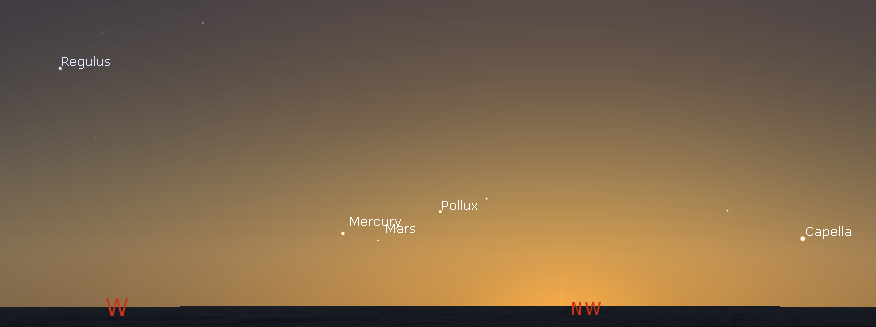
Mercury and Mars with the brighter stars at 10:15 p.m., June 26, 2019. Click on the image to enlarge. Created using Stellarium.
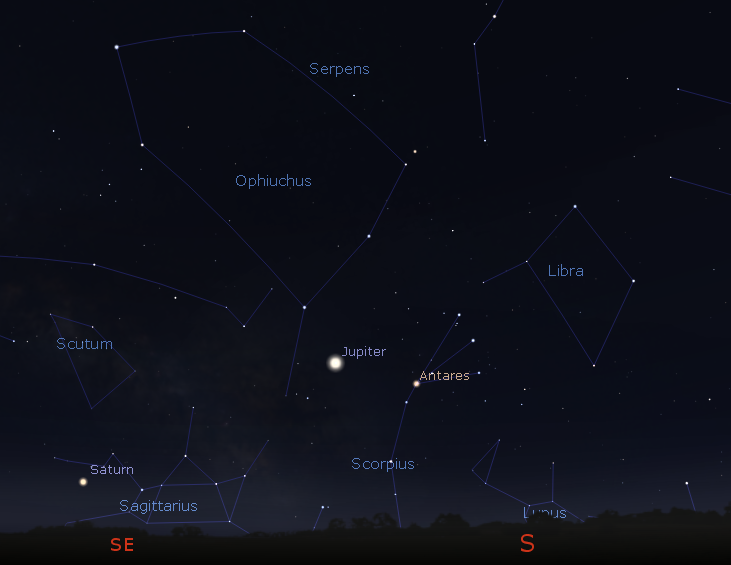
Jupiter and Saturn at 11 p.m. June 26, 2019. Click on the image to enlarge. Created using Stellarium.
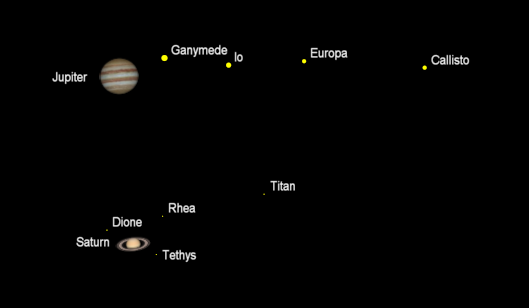
Jupiter and Saturn with the same magnification at 11:30 p.m., June 26, 2019. Created using Cartes du Ciel (Sky Charts).
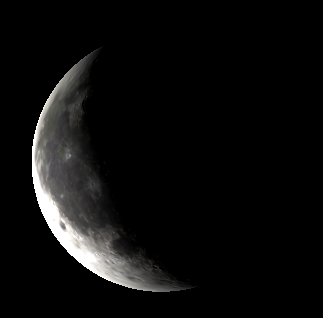
The waning crescent Moon at 4:30 a.m. June 27, 2019. Created using Stellarium.
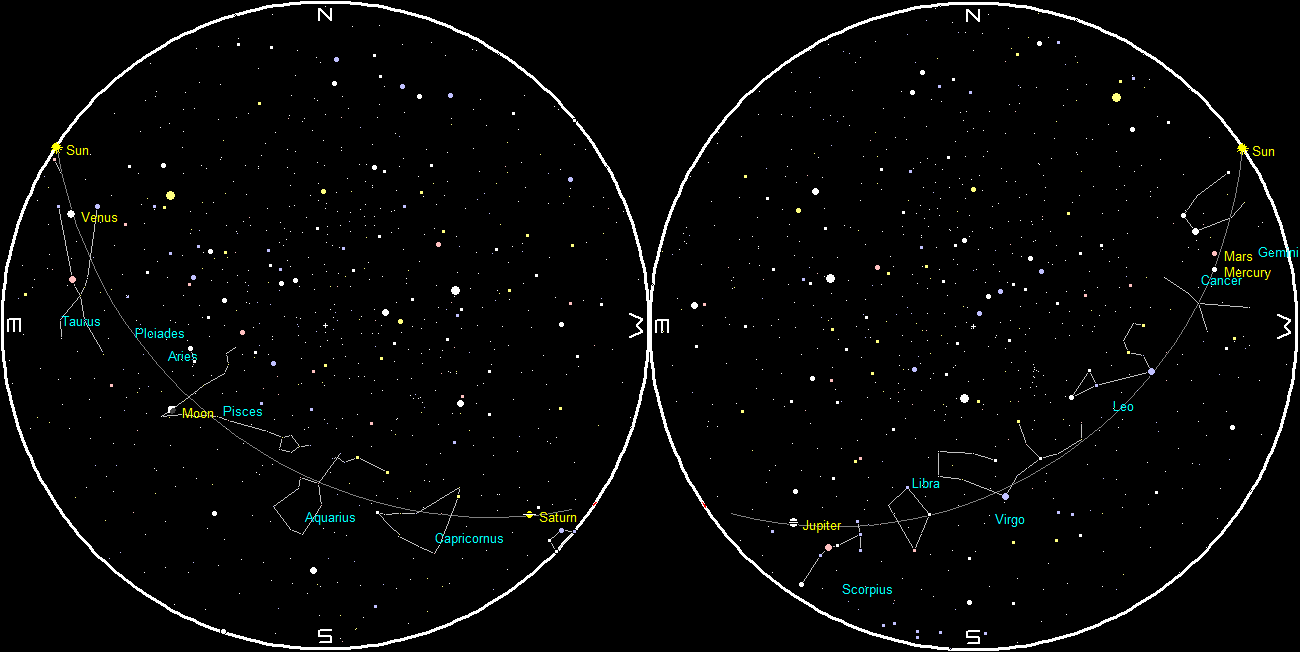
Planets and the Moon at sunset and sunrise of a single night starting with sunset on the right on June 26, 2019. The night ends on the left with sunrise on the 27th. Click on the image to enlarge. Created using my LookingUp program.
06/19/2019 – Ephemeris – Checking out the bright planets for tonight
Ephemeris for Wednesday, June 19th. Today the Sun will be up for 15 hours and 34 minutes, setting at 9:31, and it will rise tomorrow at 5:56. The Moon, 2 days past full, will rise at 11:34 this evening.
Let’s look at the planets for this week. Mars and Mercury will be low in the west-northwestern sky below and left of the star Pollux. Mercury is somewhat brighter than Pollux tonight with dimmer Mars a bit right of and below Mercury. Mercury is separating from Mars rapidly, It not named for the messenger of the gods for nothing. Mercury will set at 11:13 p.m., three minutes after Mars. Jupiter will start the evening low in the southeast. It far brighter than any star and will be visible all night, setting at 5:30 a.m. It’s in Ophiuchus the serpent bearer now, just above Scorpius the scorpion. In the morning sky we have Saturn which will rise at 10:41 p.m., in the east-southeast. It’s in Sagittarius the archer. Venus is too close to the Sun to be seen.
The times given are for the Traverse City/Interlochen area of Michigan. They may be different for your location.
Addendum
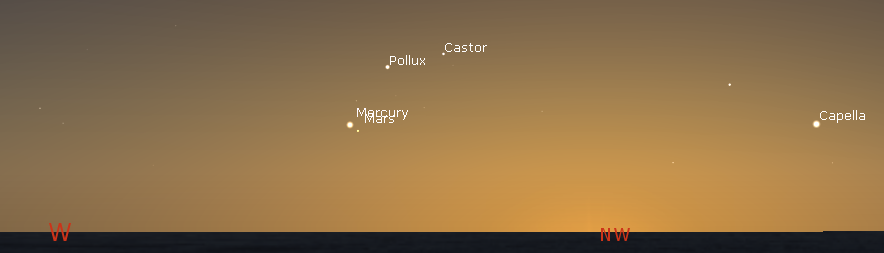
Mercury and Mars with the brighter stars at 10:15 p.m., June 19, 2019. Click on the image to enlarge. Created using Stellarium.
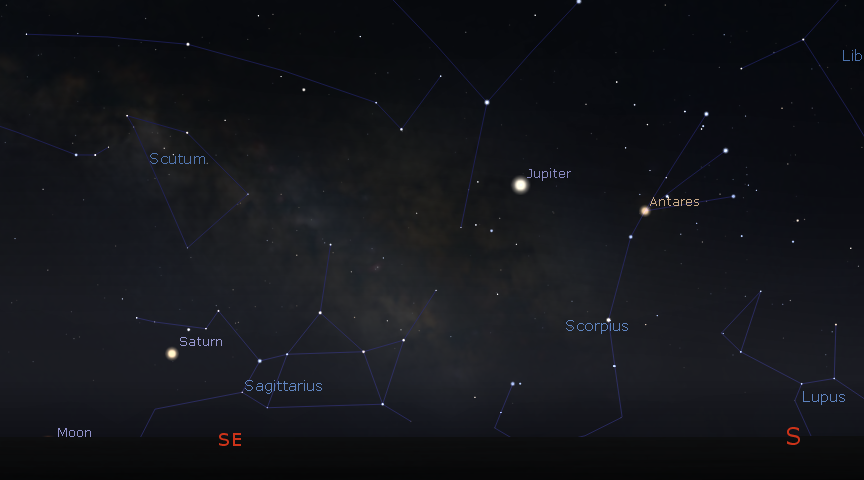
Jupiter and Saturn before moonrise at 11:30 p.m. June 19, 2019. Click on the image to enlarge. Created using Stellarium.
The waning gibbous Moon at midnight as it might be seen in binoculars or a small telescope.. Created using Stellarium.
Jupiter and Saturn with the same magnification at 11:30 p.m., June 19, 2019. Created using Cartes du Ciel (Sky Charts).
Planets and the Moon at sunset and sunrise of a single night starting with sunset on the right on June 19, 2019. The night ends on the left with sunrise on the 20th. Click on the image to enlarge. Created using my LookingUp program.
06/12/2019 – Ephemeris – Let’s look at the bright planets for this week
Ephemeris for Wednesday, June 12th. Today the Sun will be up for 15 hours and 31 minutes, setting at 9:28, and it will rise tomorrow at 5:56. The Moon, 2 days past first quarter, will set at 3:53 tomorrow morning.
Let’s look at the bright planets for this week. Mars and Mercury will be low in the west-northwestern sky under the stars Castor and Pollux, which are nearly horizontally arraigned this evening. Mercury is 5 times brighter than Mars, which is a bit above and left of it. Mercury will set at 11:11 p.m. with Mars setting shortly after. Jupiter will start the evening low in the southeast. It far brighter than any star and will be visible all night, setting shortly before sunrise. It’s in Ophiuchus. In the morning sky we have Saturn which will rise at 11:06 p.m., in the east-southeast. It’s in Sagittarius. Both Jupiter and Saturn are easily visible in the predawn skies for very early risers. Venus is too close to the Sun to be seen.
The times given are for the Traverse City/Interlochen area of Michigan. They may be different for your location.
Addendum
The Moon and the evening planets at 10:30 p.m. June 12, 2019. Click on the image to enlarge. Created using Stellarium.
The gibbous Moon as it might appear in binoculars or a small telescope tonight at 10:30 p.m. June 12, 2019. Created using Stellarium.
Jupiter and Saturn at 4:30 a.m. June 13, 2019. Click on the image to enlarge. Created using Stellarium.
Jupiter and Saturn with the same magnification but at different times. Jupiter at 10:30 p.m. June 12 2019 while Saturn is for tomorrow morning.. Created using Cartes du Ciel (Sky Charts).
Planets and the Moon at sunset and sunrise of a single night starting with sunset on the right on June 12, 2019. The night ends on the left with sunrise on the 13th. Click on the image to enlarge. Created using my LookingUp program.
06/05/2019 – Ephemeris – Where are the bright planets for this week?
Ephemeris for Wednesday, June 5th. Today the Sun will be up for 15 hours and 25 minutes, setting at 9:24, and it will rise tomorrow at 5:58. The Moon, 2 days past new, will set at 11:49 this evening.
Let’s look at the bright planets for this week. Mars will be low in the west-northwestern sky this evening, below and right of the crescent Moon. It will set at 11:33 p.m. In the morning sky we have Jupiter, in Ophiuchus, which will actually rise at 9:35 tonight in the east-southeast. Jupiter will reach opposition from the Sun next Monday and thereafter rise before sunset and officially become an evening planet. Saturn will be next to rise at 11:39 p.m., also in the east-southeast. It’s in Sagittarius. Both planets are easily visible in as morning twilight grows. Mercury will become visible in the evening sky below Mars in a few days. It’s greatest separation from the Sun will be on the 23rd. Venus, is too close to the Sun to be seen.
The times given are for the Traverse City/Interlochen area of Michigan. They may be different for your location.
Addendum
Mars, the Moon, and Jupiter tonight at 10:30 p.m. June 5, 2019. Click on the image to enlarge. Created using Stellarium.
The Moon as it might appear in binoculars or a small telescope tonight at 10:30 p.m. June 5, 2019. Created using Stellarium.
Jupiter and Saturn at 5 a.m. June 6, 2019. Created using Stellarium.
Jupiter and Saturn with the same magnification but at different times. Jupiter at 11 p.m. June 5, 2019 while Saturn is for tomorrow morning.. Created using Cartes du Ciel (Sky Charts).
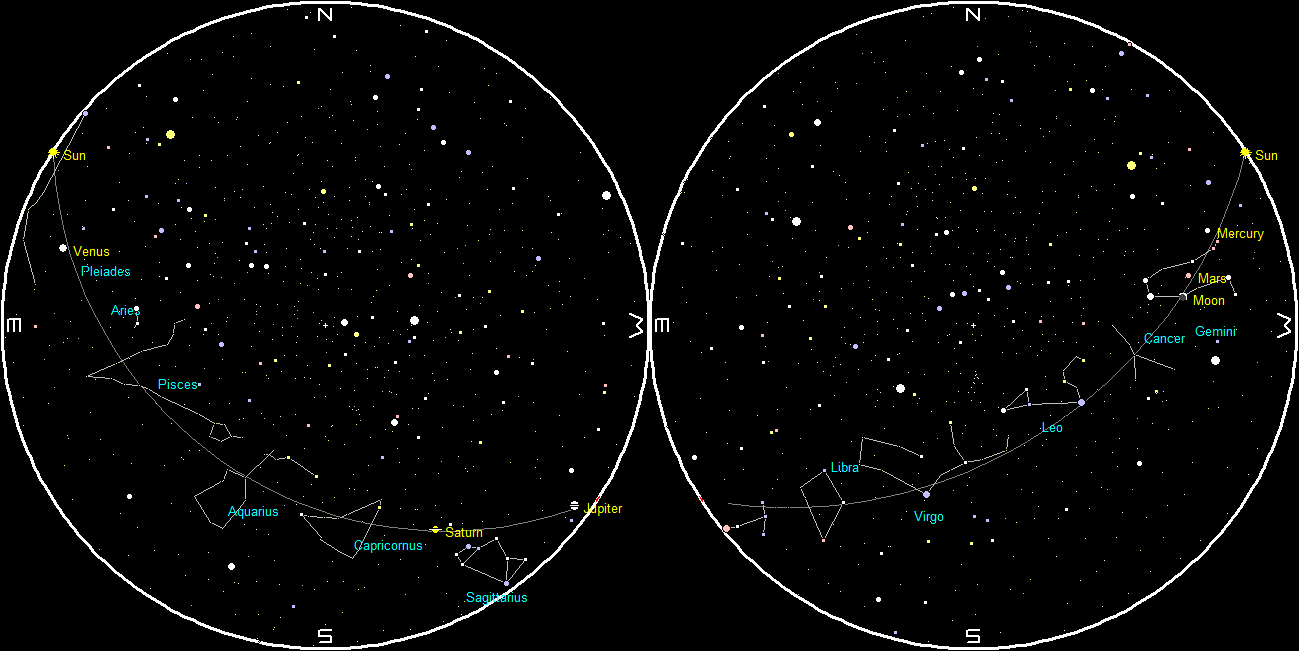
Planets and the Moon at sunset and sunrise of a single night starting with sunset on the right on June 5, 2019. The night ends on the left with sunrise on the 6th. Click on the image to enlarge. Created using my LookingUp program.
05/29/2019 – Ephemeris – Looking at the bright planets tonight
Ephemeris for Wednesday, May 29th. Today the Sun will be up for 15 hours and 16 minutes, setting at 9:18, and it will rise tomorrow at 6:01. The Moon, 3 days past last quarter, will rise at 4:21 tomorrow morning.
Let’s look at the planets for this week. Mars will be low in the west-northwestern sky this evening, in Gemini crawling up Castor’s leg. It will set at 11:42 p.m. In the morning sky we have Jupiter, in Ophiuchus, which will actually rise at 10:02 tonight in the east-southeast. Jupiter won’t be considered an evening planet until it rises before sunset, which will occur after June 10th. Saturn will be next to rise at 12:11 a.m., also in the east-southeast. It’s in Sagittarius. Both planets are easily visible in as morning twilight grows. Venus will rise 53 minutes before the Sun in the east northeast. It will remain in our morning sky, though too close to the rising Sun to be easily glimpsed. In August it will pass behind the Sun to enter the evening sky.
The times given are for the Traverse City/Interlochen area of Michigan. They may be different for your location.
Addendum
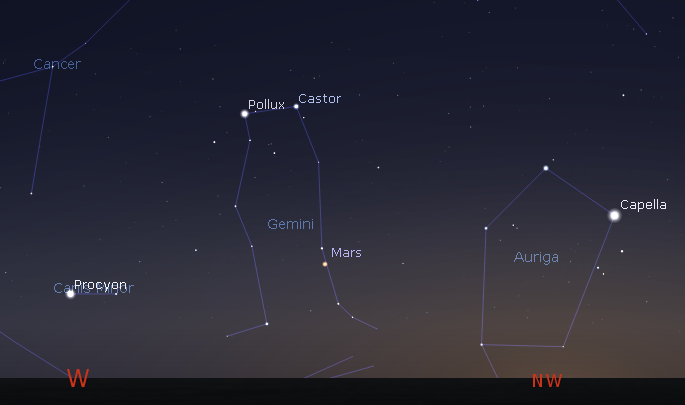
Mars in the evening in Gemini tonight at 10:30 p.m. May 29, 2019. Click on the image to enlarge. Created using Stellarium.
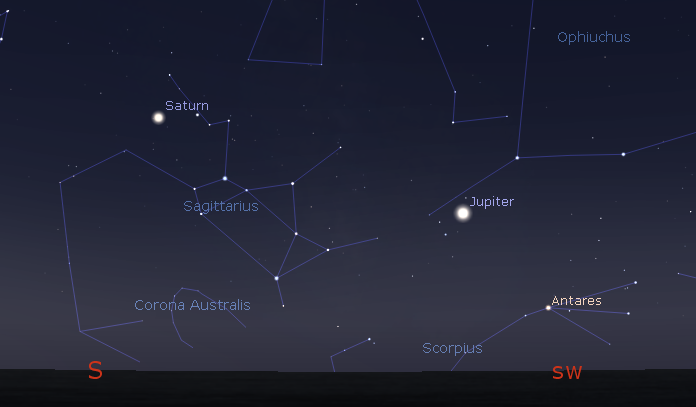
Jupiter and Saturn at 5 a.m. May30, 2019. Click on the image to enlarge. Created using Stellarium.
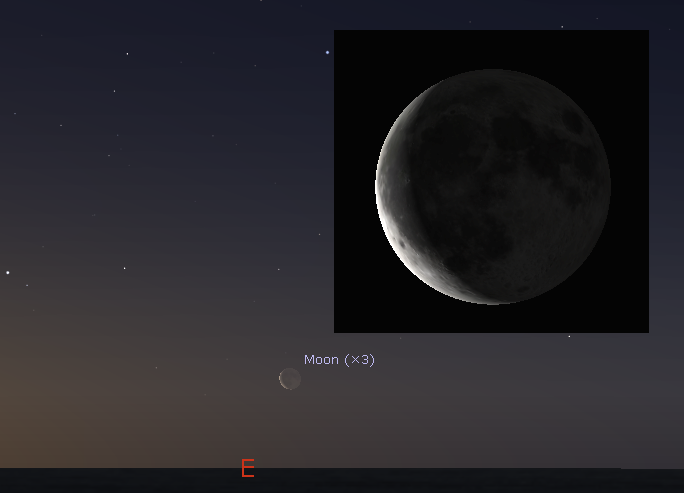
The Moon, enlarged 3 times, is only 6 degrees above the eastern horizon at 5 a.m. on May 30, 2019. The inset is the binocular view. Created using Stellarium.
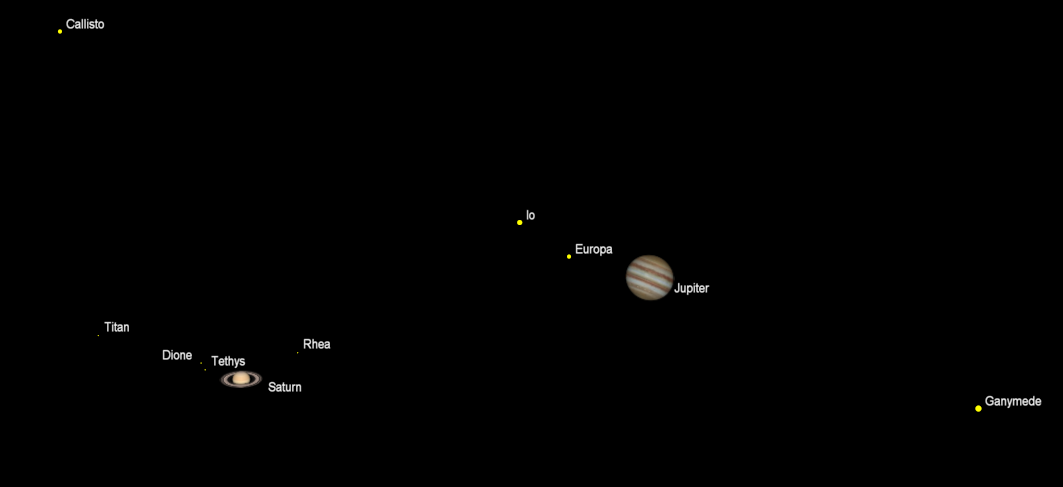
Jupiter and Saturn with the same magnification at 5 a.m. tomorrow morning May 30, 2019. Click on the image to enlarge. Created using Cartes du Ciel (Sky Charts).
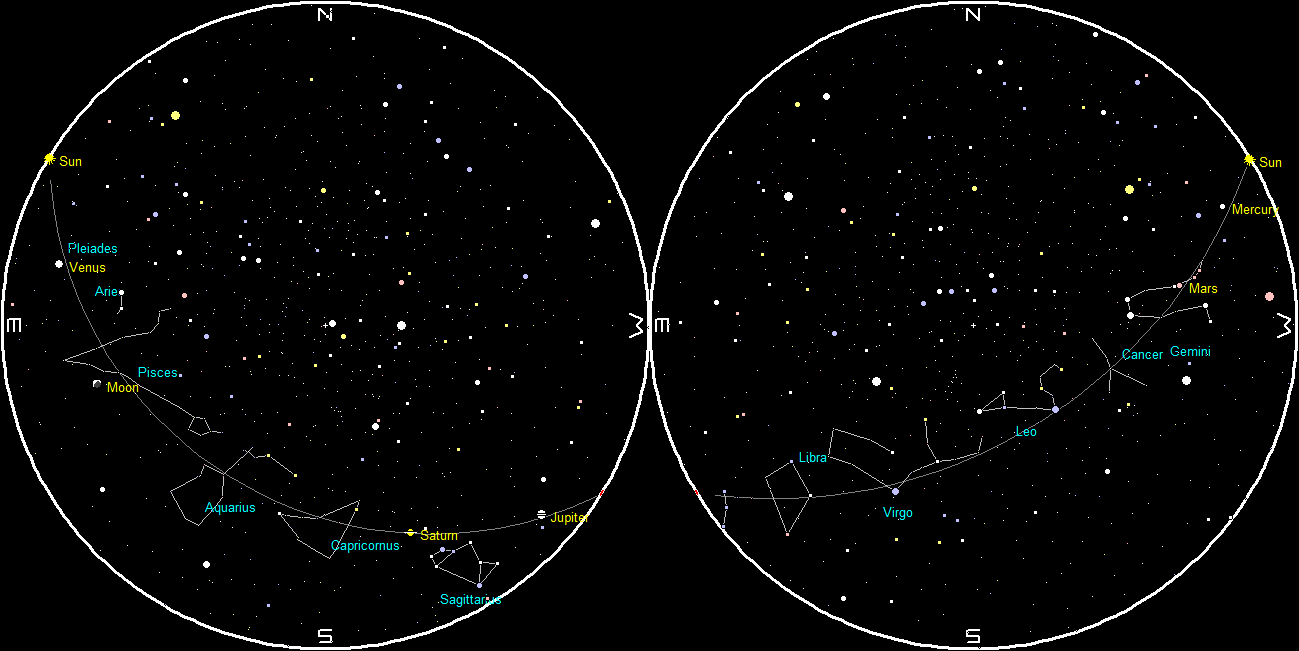
Planets and the Moon at sunset and sunrise of a single night starting with sunset on the right on May 29, 2019. The night ends on the left with sunrise on the 30th. Click on the image to enlarge. Created using my LookingUp program.
05/22/2019 – Ephemeris – Where are the bright planets for this week
Ephemeris for Wednesday, May 22nd. Today the Sun will be up for 15 hours and 3 minutes, setting at 9:11, and it will rise tomorrow at 6:06. The Moon, half way from full to last quarter, will rise at 12:56 tomorrow morning.
Let’s look at the planets for this week. Mars will be low in the west-northwestern sky this evening, entering Gemini near Castor’s foot. It will set at 11:52 p.m. In the morning sky we have Jupiter, in Ophiuchus, which will actually rise at 10:38 tonight in the east-southeast. Jupiter won’t be considered an evening planet until it rises before sunset, which will occur after June 10th. Saturn will be next to rise at 12:40 a.m., also in the east-southeast. It’s in Sagittarius. Both planets are easily visible in as morning twilight grows. Venus will rise 53 minutes before the Sun in the east northeast. It will remain in our morning sky, though too close to the rising Sun to be easily glimpsed. In August it will pass behind the Sun to enter the evening sky.
The times given are for the Traverse City/Interlochen area of Michigan. They may be different for your location.
Addendum
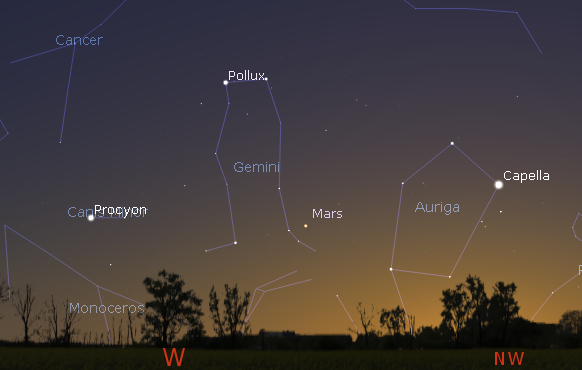
Mars and the setting winter stars tonight at 10 p.m. May 22, 2019. Click on the image to enlarge. Created using Stellarium.
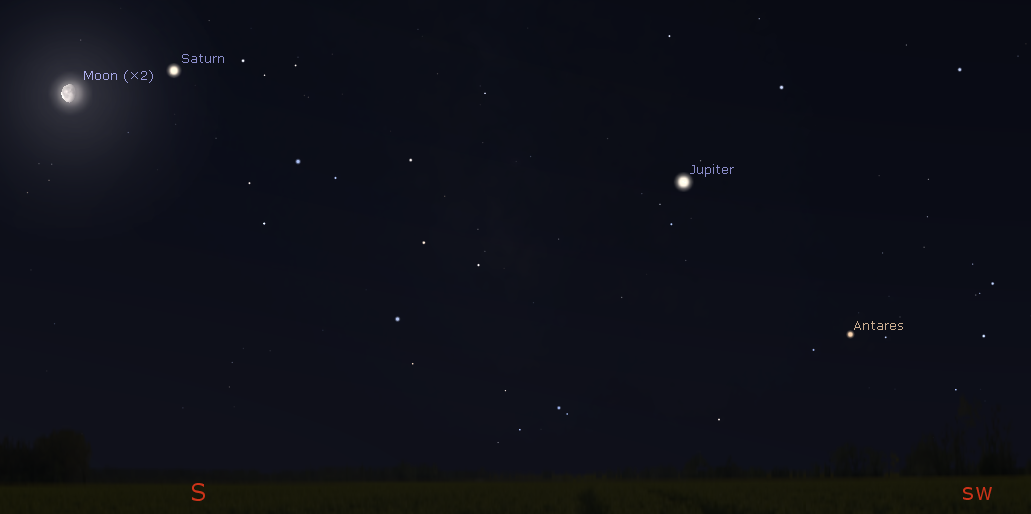
Jupiter, Saturn and the Moon at 5 a.m. May23, 2019. Click on the image to enlarge. Created using Stellarium.
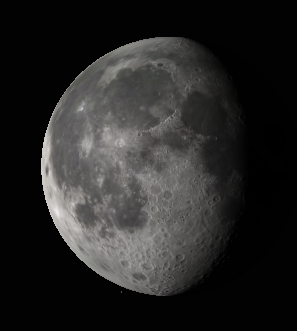
The waning gibbous Moon at 5 a.m. May 23, 2019. Created using Stellarium.
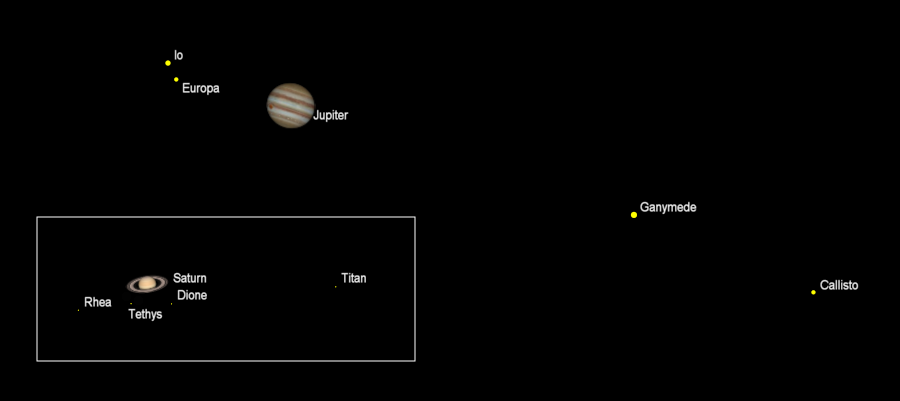
Jupiter and Saturn with the same magnification at 5 a.m. tomorrow morning May 23, 2019. Created using Cartes du Ciel (Sky Charts).
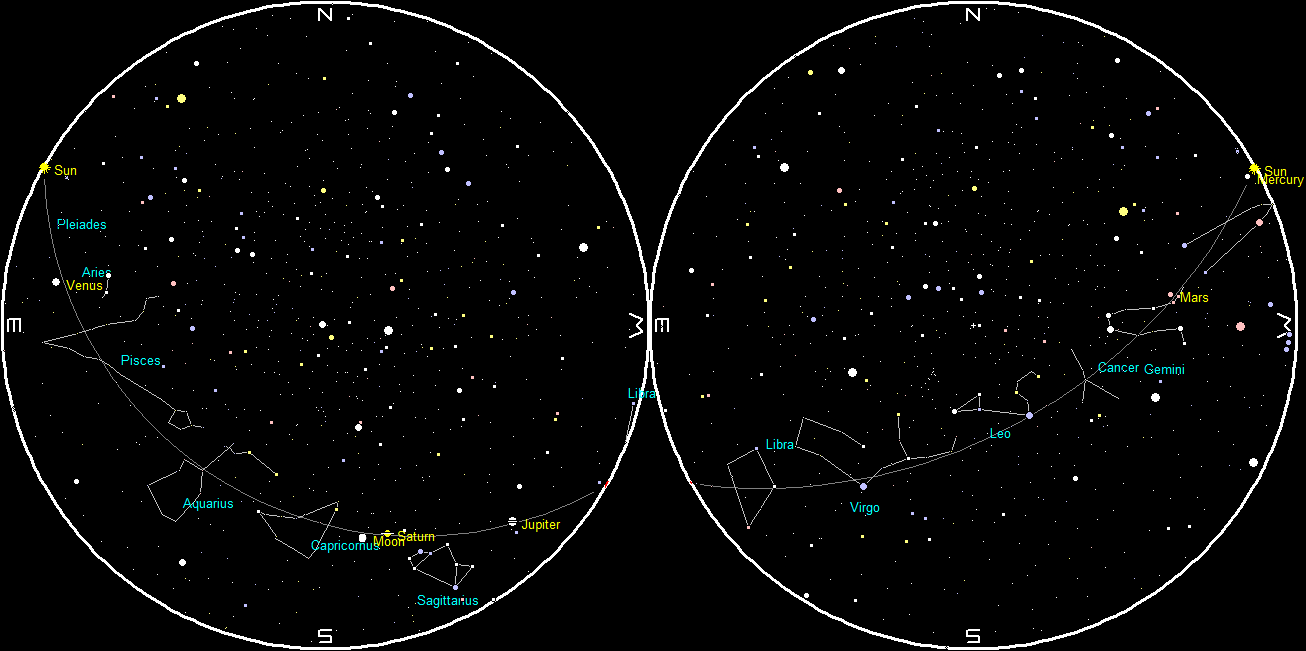
Planets and the Moon at sunset and sunrise of a single night starting with sunset on the right on May 22, 2019. The night ends on the left with sunrise on the 23rd. Click on the image to enlarge. Created using my LookingUp program.
05/15/2019 – Ephemeris – The bright planets this week
Ephemeris for Wednesday, May 15th. Today the Sun will be up for 14 hours and 49 minutes, setting at 9:04, and it will rise tomorrow at 6:13. The Moon, 3 days before full, will set at 5:22 tomorrow morning.
Let’s look at the planets for this week. Mars will be in the western sky this evening, entering Gemini near Castor’s foot. It will set at 12:04 a.m. In the morning sky we have Jupiter, in Ophiuchus, which will actually rise at 11:09 tonight in the east-southeast. Jupiter won’t be considered an evening planet until it rises before sunset, which will occur after June 10th. Saturn will be next to rise at 1:04 a.m., also in the east-southeast. It’s in Sagittarius. Both planets are easily visible in as morning twilight grows. Venus will rise 53 minutes before the Sun in the east. It will remain in our morning sky, though too close to the rising Sun to be easily glimpsed. In August it will pass behind the Sun to enter the evening sky.
The times given are for the Traverse City/Interlochen area of Michigan. They may be different for your location.
Addendum
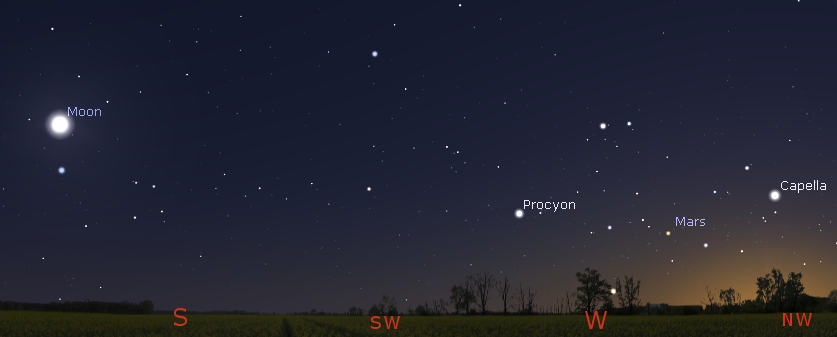
Mars and the Moon tonight at 10 p.m. May 15, 2019. Click on the image to enlarge. Created using Stellarium.
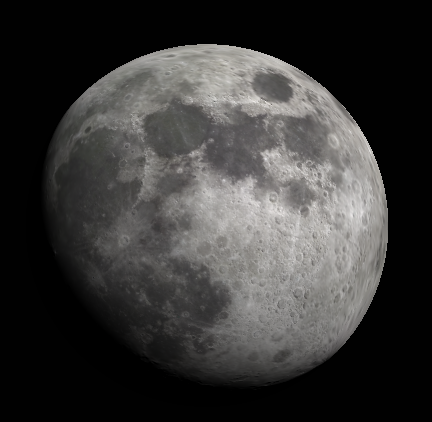
The waxing gibbous nearly full Moon at 10 p.m. May 15, 2019. Created using Stellarium.
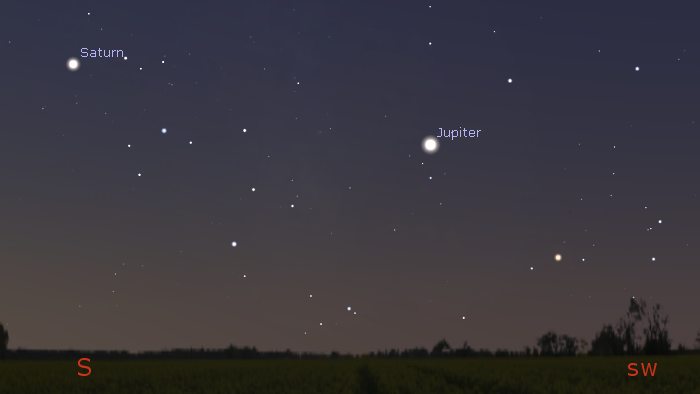
Morning planets at 5:30 a.m. May 16, 2019. Click on the image to enlarge. Created using Stellarium.
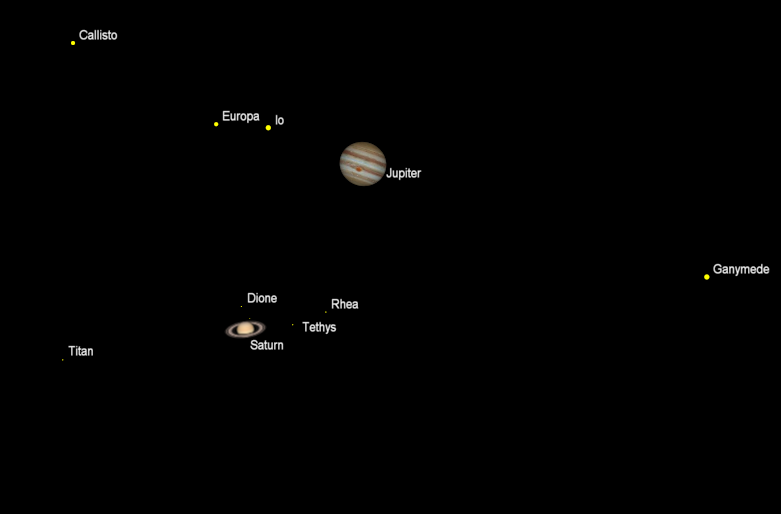
Jupiter and Saturn with the same magnification at 5:30 a.m. tomorrow morning May 16, 2019. Created using Cartes du Ciel (Sky Charts).
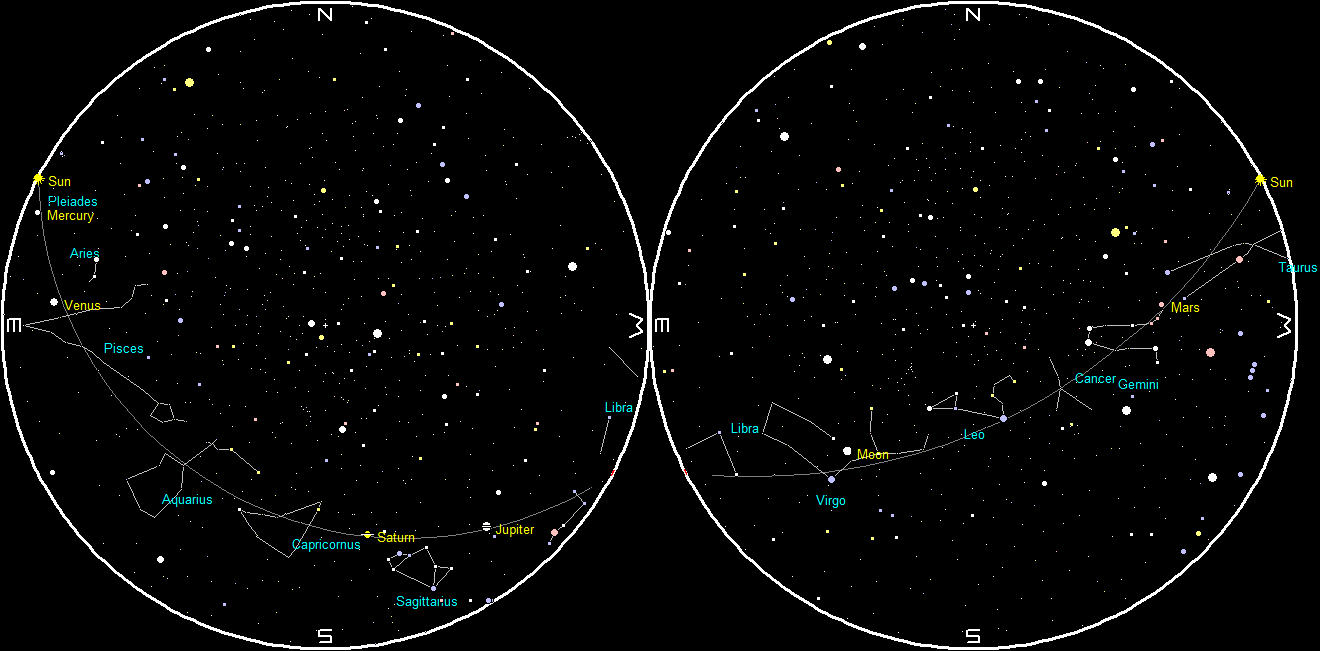
Planets and the Moon at sunset and sunrise of a single night starting with sunset on the right on May 15, 2019. The night ends on the left with sunrise on the 16th. Click on the image to enlarge. Created using my LookingUp program.
 Bob Moler's Ephemeris Blog