Archive
Ephemeris: 11/12/2025 – Taking our weekly look at the whereabouts of the naked-eye planets
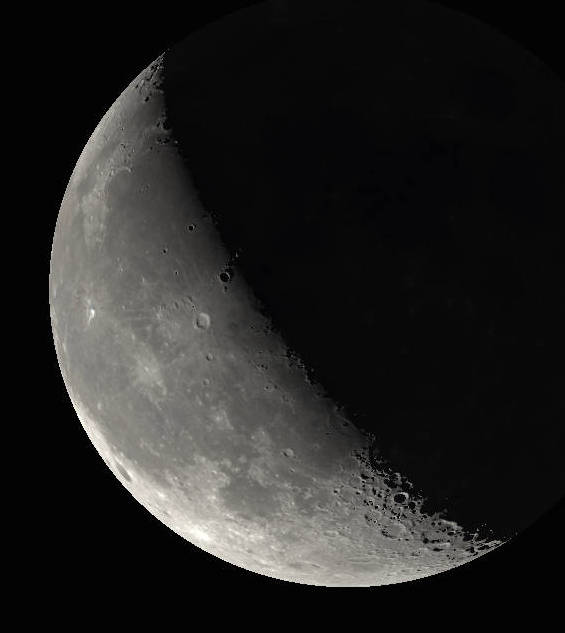
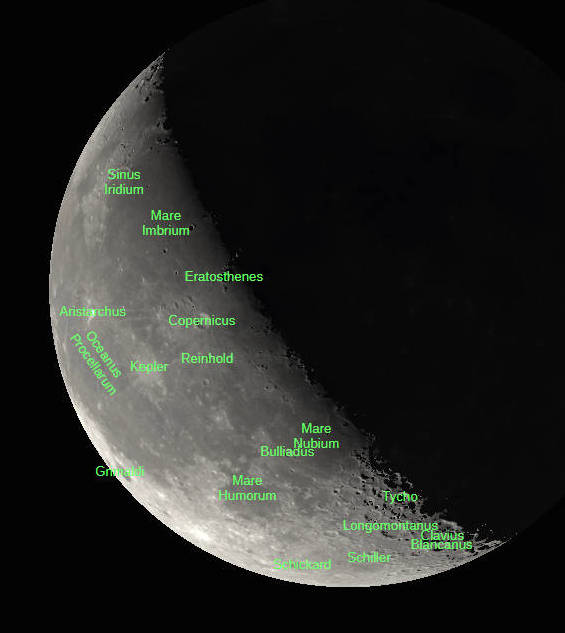
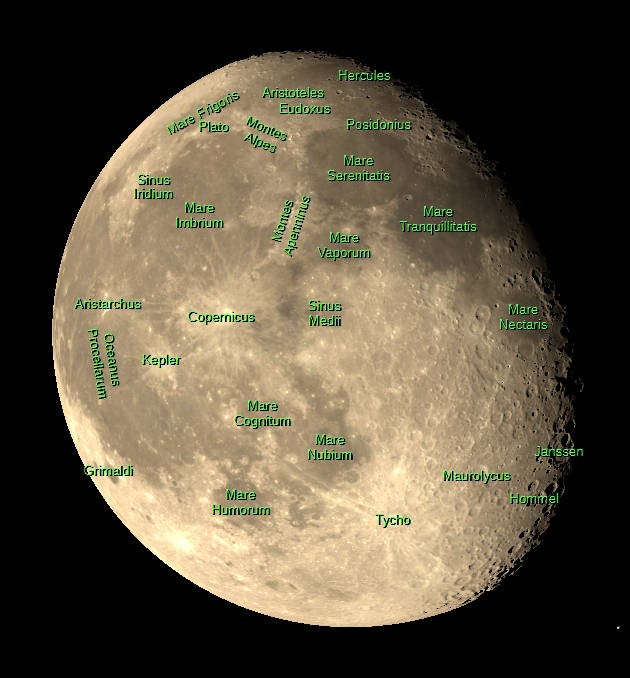
This is Bob Moler with Ephemeris for Wednesday, November 12th. Today the Sun will be up for 9 hours and 41 minutes, setting at 5:17, and it will rise tomorrow at 7:37. The Moon, at last quarter today, will rise at 12:48 tomorrow morning.
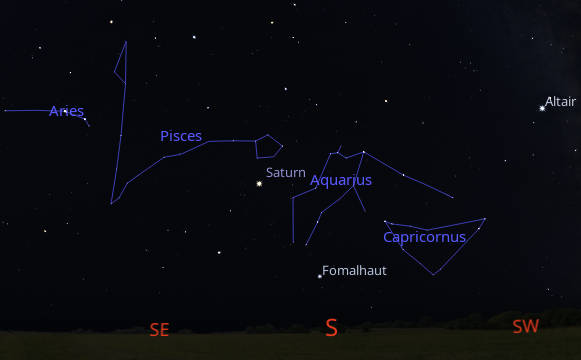
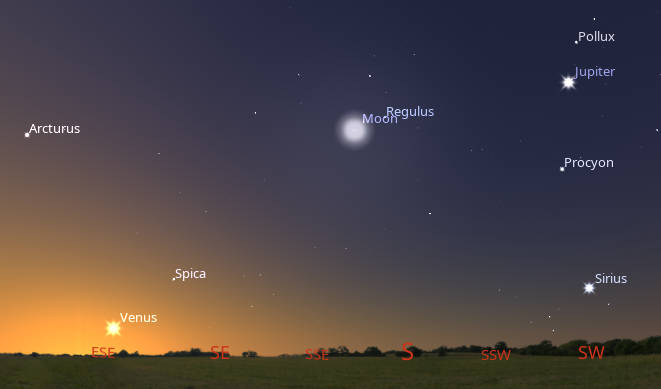
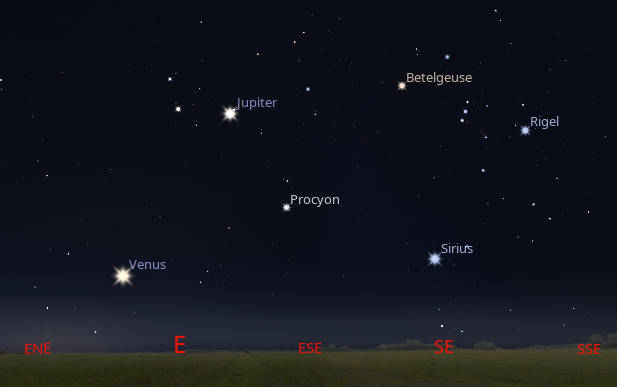
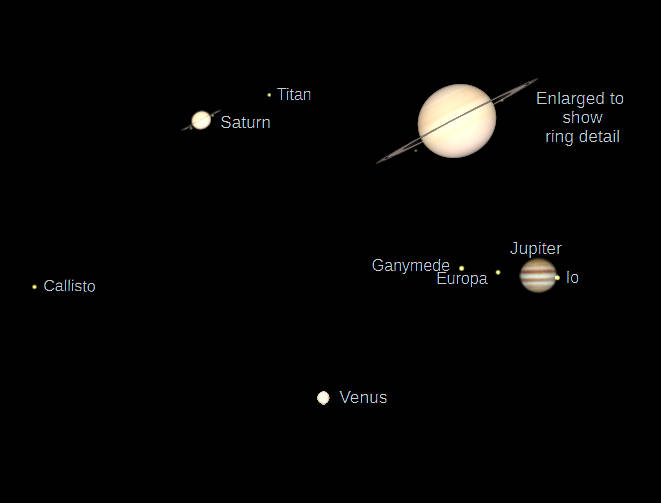
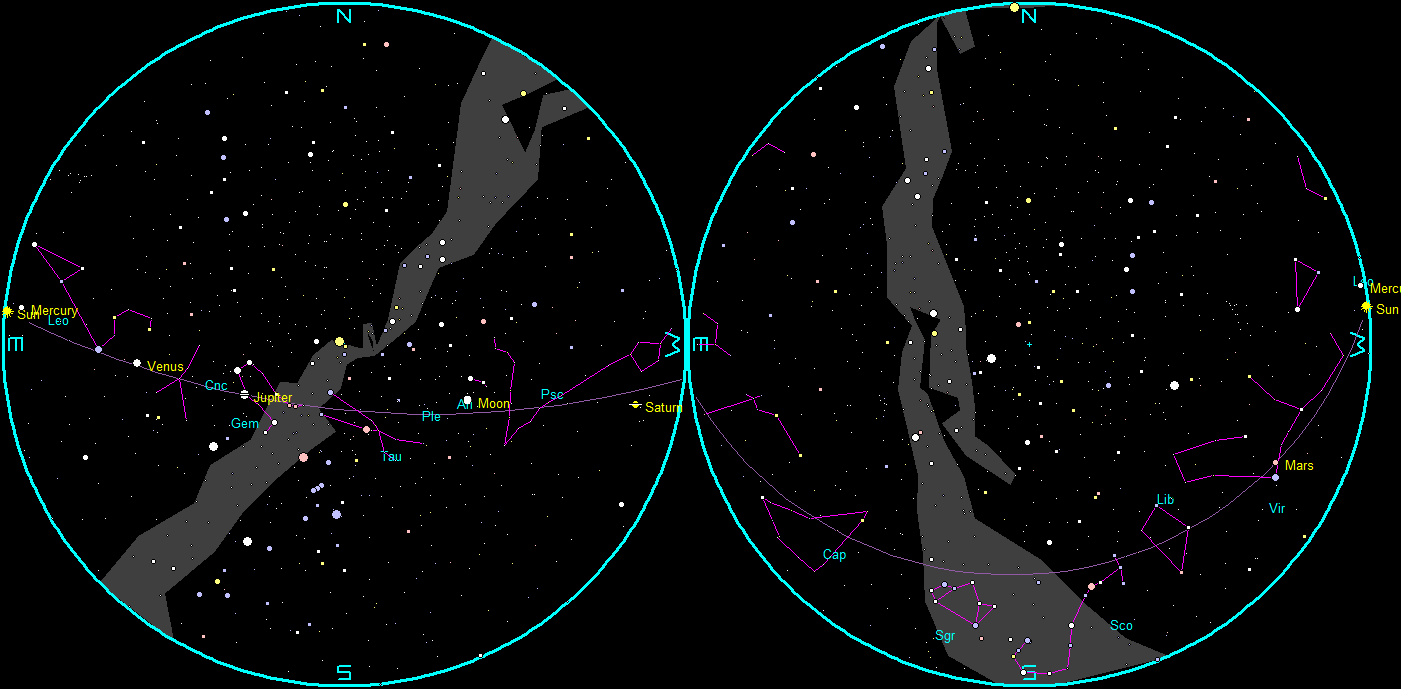
Let’s take our weekly look at the whereabouts of the naked-eye planets. Saturn is the brightest star like object in the east southeastern sky as soon as it gets dark. In a telescope Saturn sports a very thin ring, 4/10ths of a degree from being edge on. Normally, I’d say that Saturn’s rings are easy to see in a telescope. Currently, the rings appear extremely thin and can be difficult to pick up. Jupiter will rise at 9:27 PM in the east-northeast. By 6:30 AM, it will appear high in the southwest, below the stars of Gemini, with Orion and the other bright stars of winter in the southwest. Venus, which will rise at 6:26 AM will be difficult to spot in the morning twilight.
The astronomical event times given in this blog are for the Traverse City/Interlochen area of Michigan (Lat 44.7° N, Long 85.7° W; EDT, UT – 4 hours) unless stated otherwise. Times will be different for other locations.
Addendum
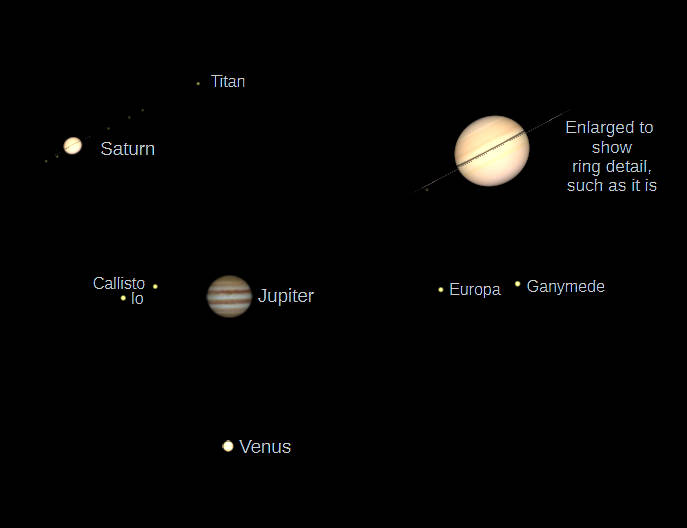
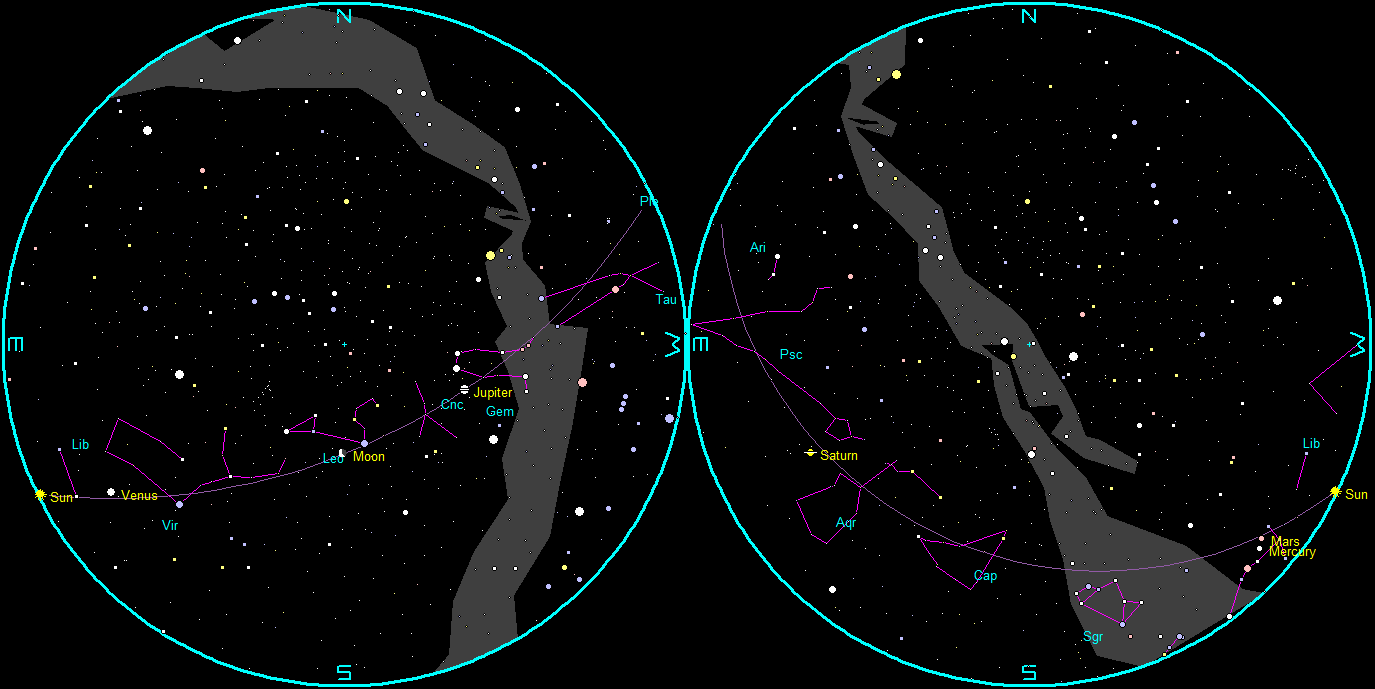
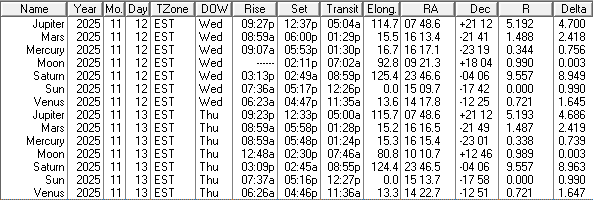
Ephemeris: 11/05/2025 – Taking our weekly look at the whereabouts of the naked-eye planets
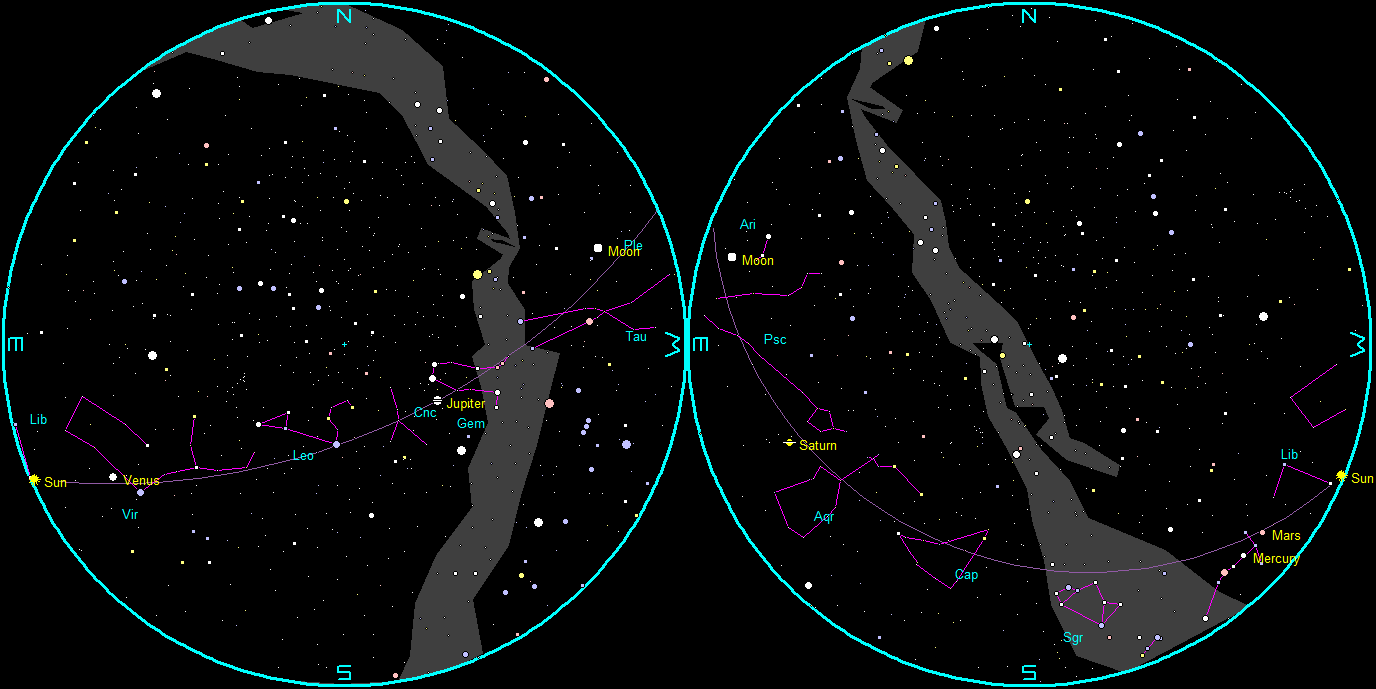
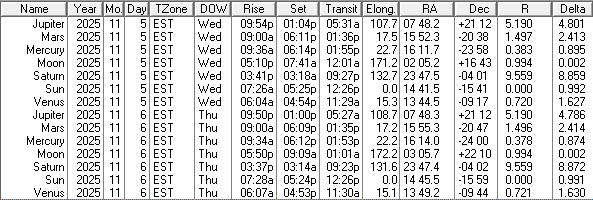
This is Ephemeris for Wednesday, November 5th. Today the Sun will be up for 9 hours and 59 minutes, setting at 5:25, and it will rise tomorrow at 7:28. The Hunter’s Full Moon today, will rise at 5:10 this evening.
Let’s take our weekly look at the whereabouts of the naked-eye planets. Saturn is the brightest star like object in the east southeastern sky as soon as it gets dark. In a telescope Saturn sports a very thin ring, half of a degree from being edge on in telescopes. Many times I’ve been asked whether they can see Saturn’s rings in their telescope. Normally I’d say yes. Currently, the rings appear extremely thin and can be difficult to pick up. Jupiter will rise at 9:58 PM in the east-northeast. By 6:30 AM, it will appear high in the south-southeast, below the stars of Gemini, with Orion and the other bright stars of winter in the southwest. Brilliant Venus, which will rise at 6:04 AM will be very low in the east-southeast at 6:30.
The astronomical event times given in this blog are for the Traverse City/Interlochen area of Michigan (Lat 44.7° N, Long 85.7° W; EDT, UT – 4 hours) unless stated otherwise. Times will be different for other locations.
Addendum
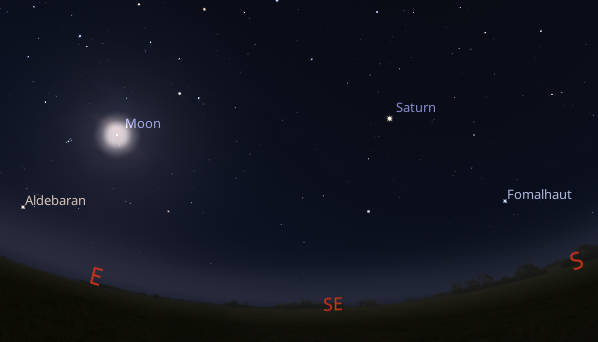
Ephemeris: 10/29/2025 – Looking at the whereabouts of the naked-eye planets for this week
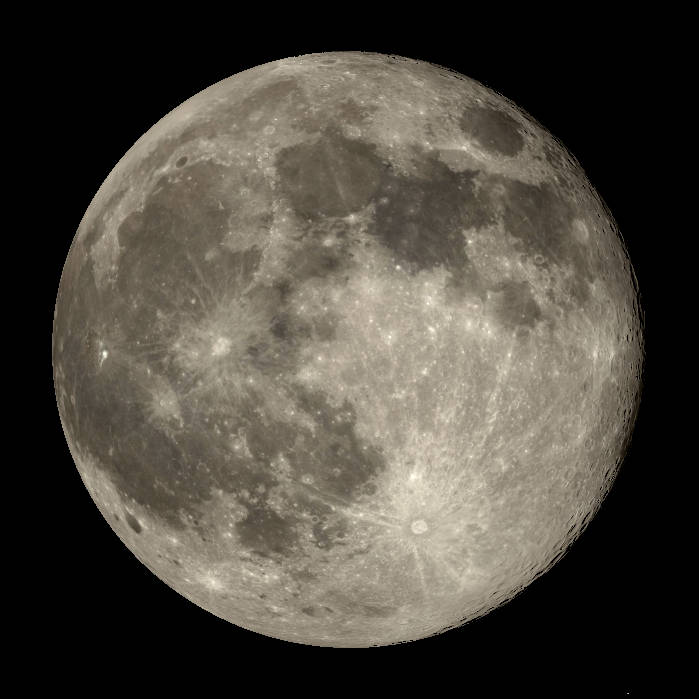
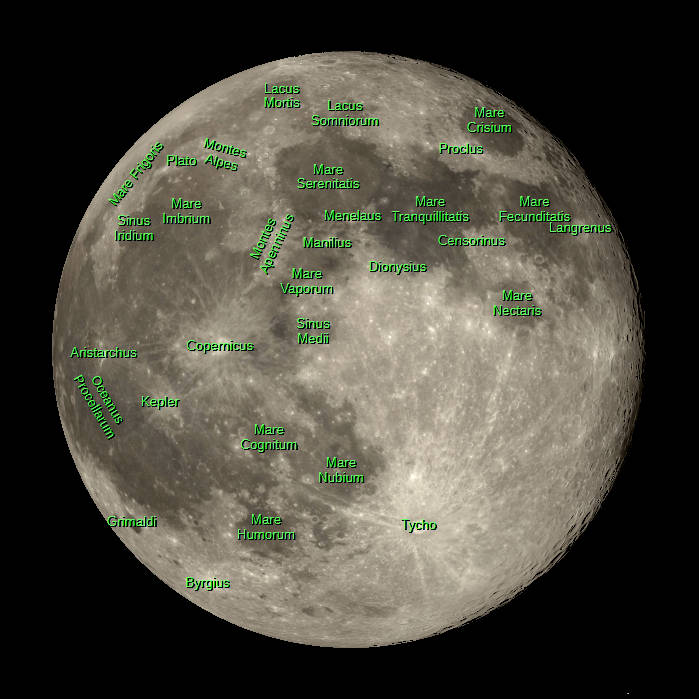
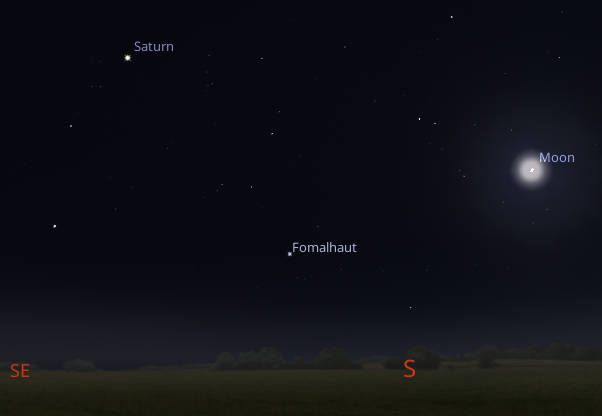
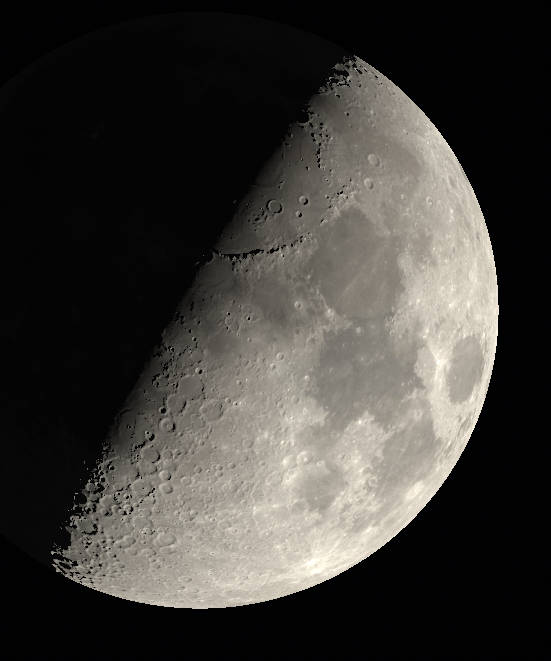
This is Ephemeris for Wednesday, October 29th. Today the Sun will be up for 10 hours and 18 minutes, setting at 6:35, and it will rise tomorrow at 8:18. The Moon, at first quarter today, will set at 12:50 tomorrow morning.
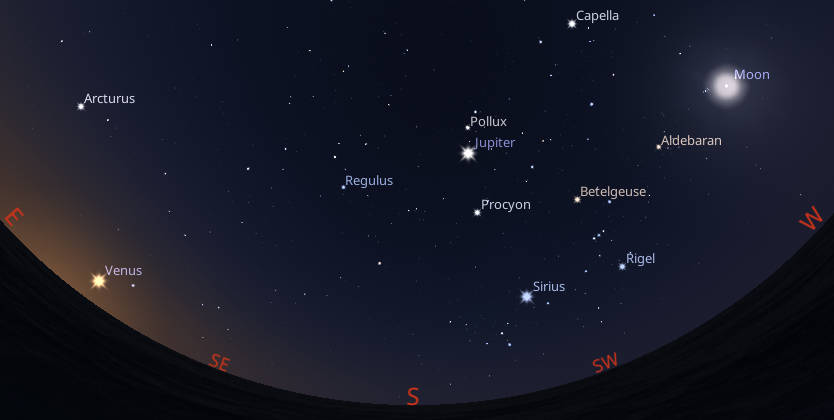
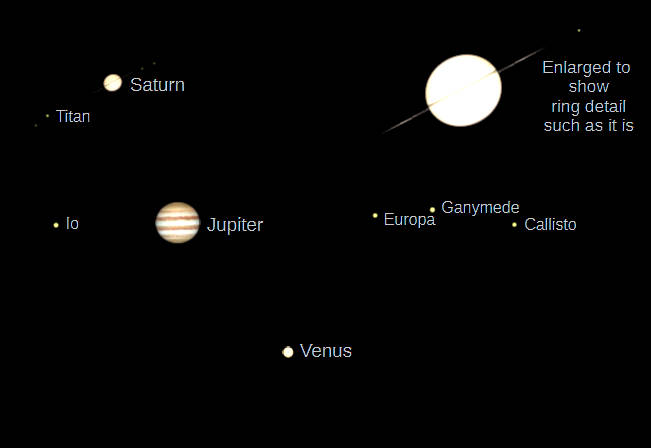
Let’s take our weekly look at the whereabouts of the naked-eye planets. Saturn is the brightest star like object in the east southeastern sky as soon as it gets dark. In a telescope Saturn sports a very thin ring, six tenths of a degree from being edge on in telescopes. Many times I’ve been asked whether they can see Saturn’s rings in their telescope. Normally I’d say yes. Currently, the rings appear extremely thin and can be difficult to pick up. Jupiter will rise before midnight at 11:17 PM. By 7:30 AM, it will appear high in the south-southeast, below the stars of Gemini, with Orion and the other bright stars of winter in the southwest. Brilliant Venus, which will rise at 6:48 AM will be very low in the east-southeast at 7:30 AM.
The astronomical event times given in this blog are for the Traverse City/Interlochen area of Michigan (Lat 44.7° N, Long 85.7° W; EDT, UT – 4 hours) unless stated otherwise. Times will be different for other locations.
Addendum
Ephemeris: 10/22/2025 – Taking our weekly look at the whereabouts of the naked-eye planets
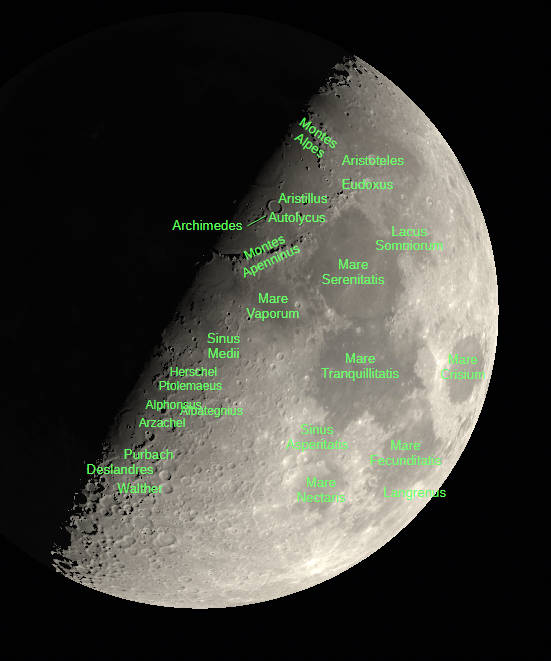
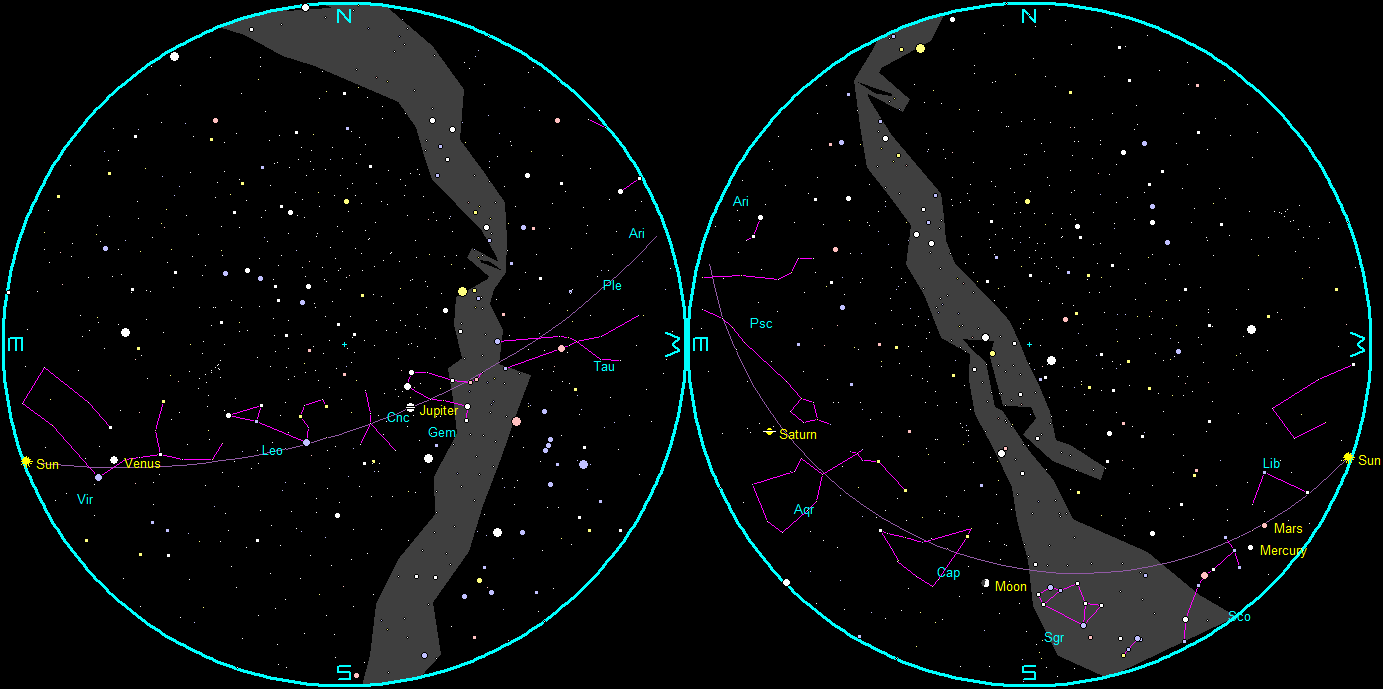
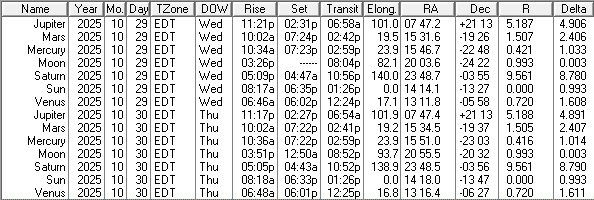
This is Ephemeris for Wednesday, October 22nd. Today the Sun will be up for 10 hours and 38 minutes, setting at 6:45, and it will rise tomorrow at 8:09. The Moon, 1 day past new, will set at 6:54 this evening.
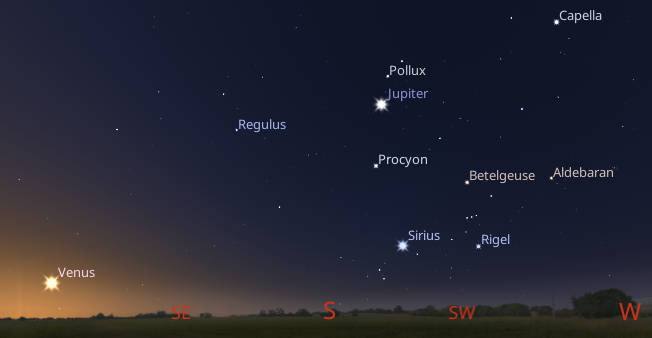
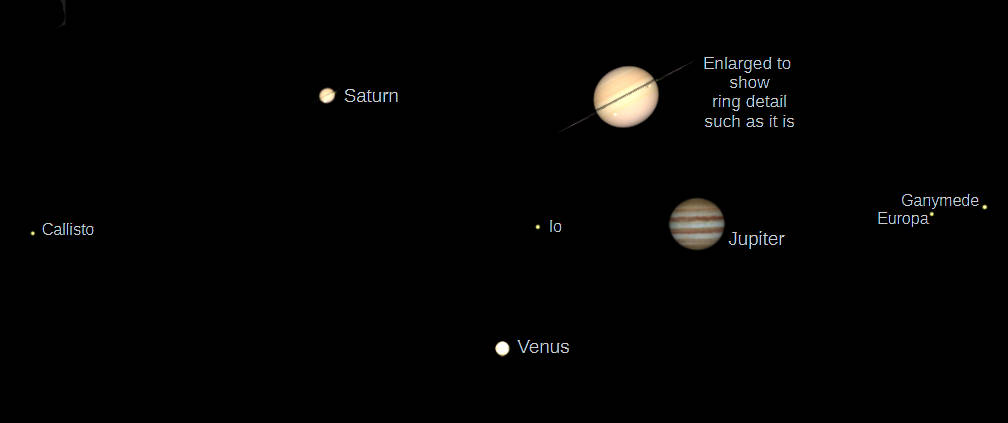
Let’s take our weekly look at the whereabouts of the naked-eye planets. Saturn is the brightest star like object in the east southeastern sky at 8 PM. In a telescope Saturn sports a very thin ring, eight tenths of a degree from being edge on in telescopes. Many times I’ve been asked whether they can see Saturn’s rings in their telescope. Normally I’d say yes. Currently, the rings appear very thin and can be difficult to pick up. Jupiter will finally rise before midnight, barely, at 11:50 PM. By 7 AM, it will appear high in the south-southeast, below the stars of Gemini, with Orion and the other bright stars of winter in the south. Brilliant Venus, which will rise at 6:30 AM will be very low in the east at 7 AM.
The astronomical event times given in this blog are for the Traverse City/Interlochen area of Michigan (Lat 44.7° N, Long 85.7° W; EDT, UT – 4 hours) unless stated otherwise. Times will be different for other locations.
Addendum
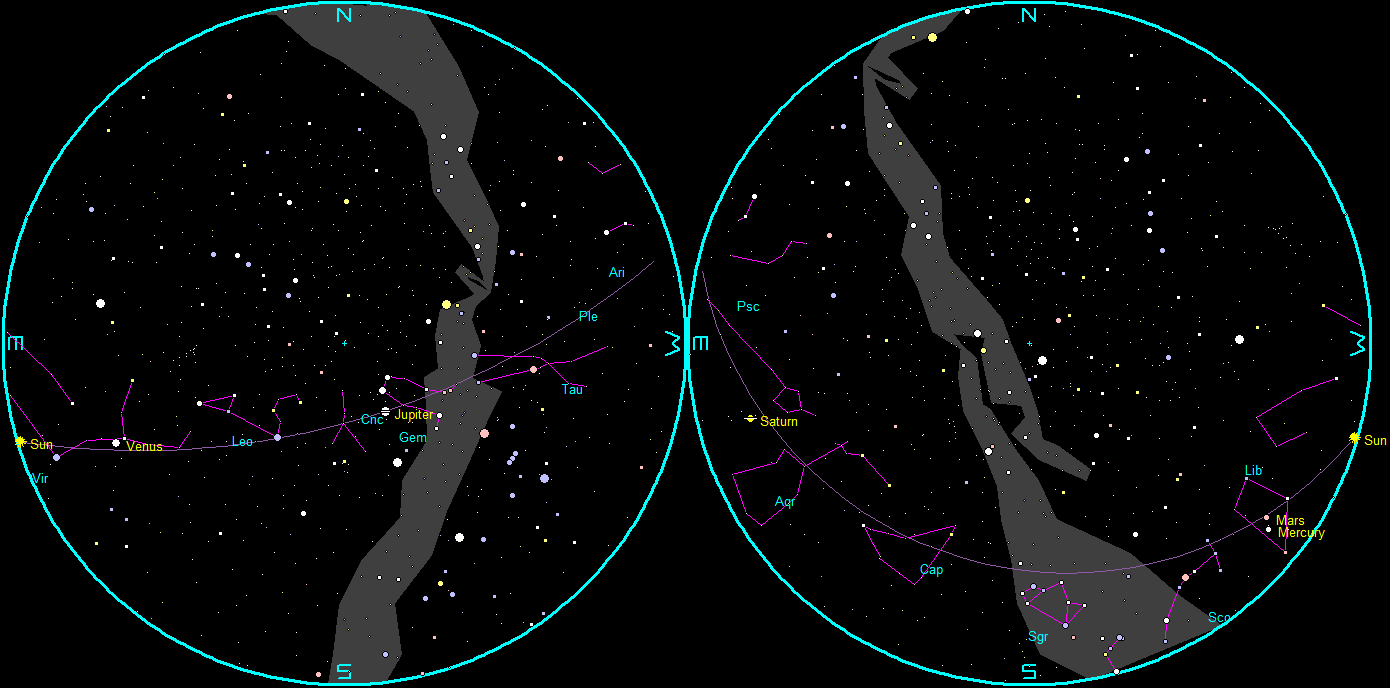
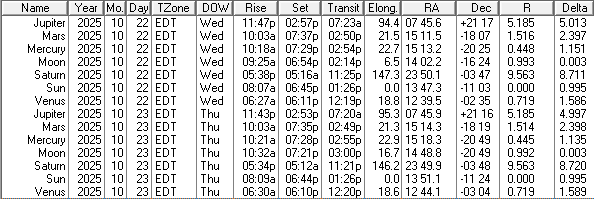
Ephemeris: 10/15/2025 – Taking our weekly look at the whereabouts of the naked-eye planets
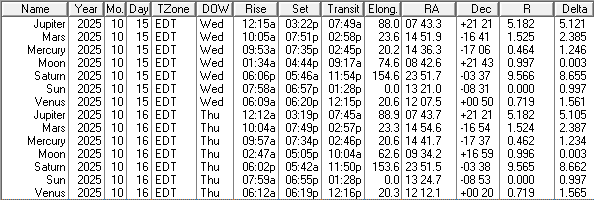
This is Ephemeris for Wednesday, October 15th. Today the Sun will be up for 10 hours and 58 minutes, setting at 6:57, and it will rise tomorrow at 7:59. The Moon, 2 days past last quarter, will rise at 2:47 tomorrow morning.
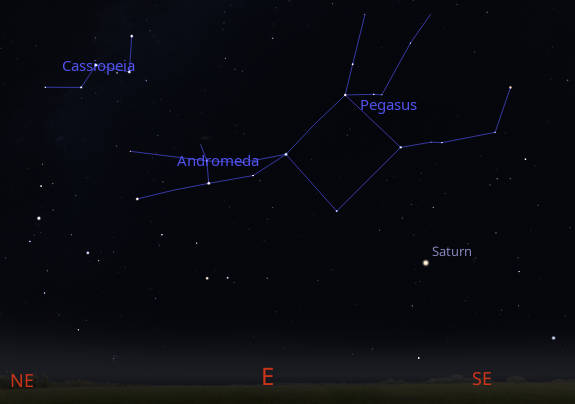
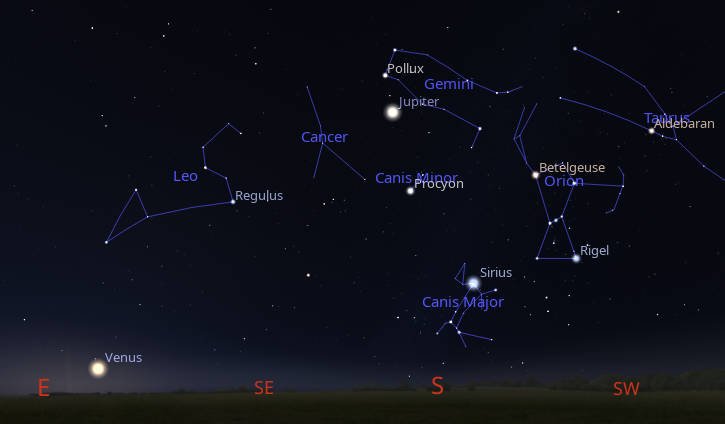
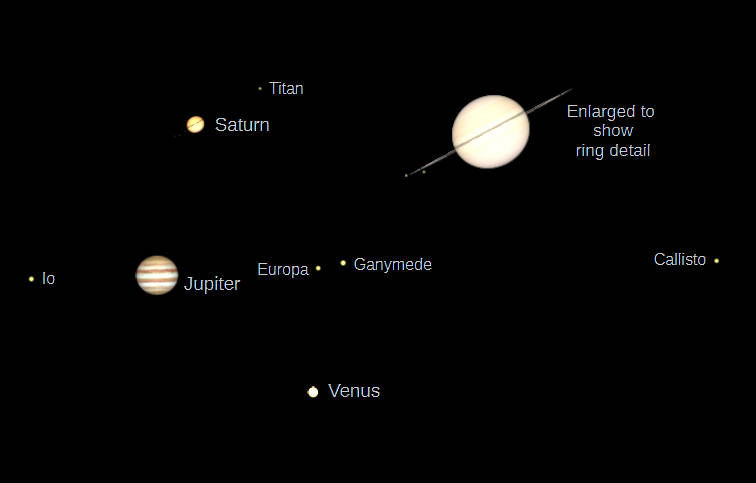
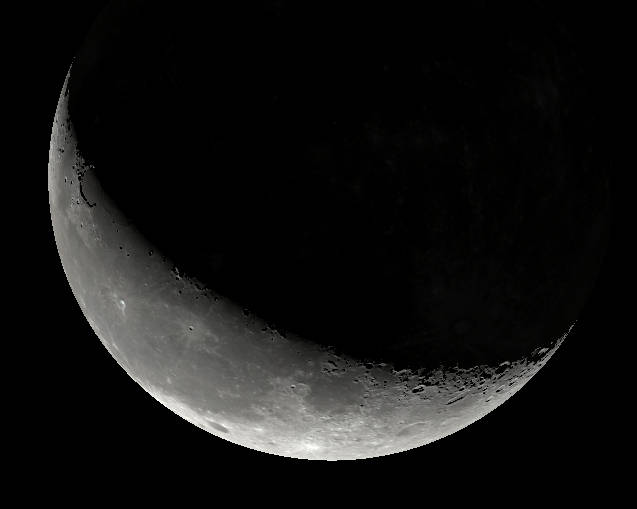
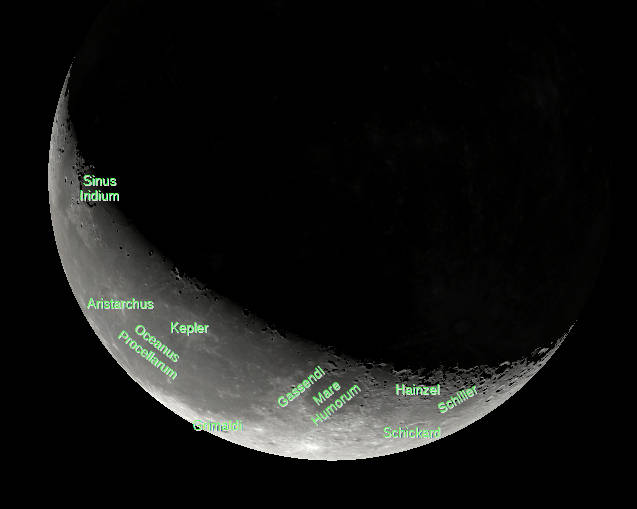
Let’s take our weekly look at the whereabouts of the naked-eye planets. Saturn is the brightest star like object in the east southeastern sky at 8 PM. In a telescope Saturn sports a very thin ring, 1° from being edge on in telescopes. Many times I’ve been asked whether they can see Saturn’s rings in their telescope. Normally I’d say yes. Currently, the rings appear very thin and can be difficult to pick up. Jupiter will rise at 12:11 AM. By 7 AM, it will appear high in the south-southeast, below the stars of Gemini, with Orion and the other bright stars of Winter in the south. Brilliant Venus, which will rise at 6:12 AM will be low in the east at 7 AM. Tomorrow morning the waning crescent of the Moon will appear between the two planets.
The astronomical event times given in this blog are for the Traverse City/Interlochen area of Michigan (Lat 44.7° N, Long 85.7° W; EDT, UT – 4 hours) unless stated otherwise. Times will be different for other locations.
Addendum
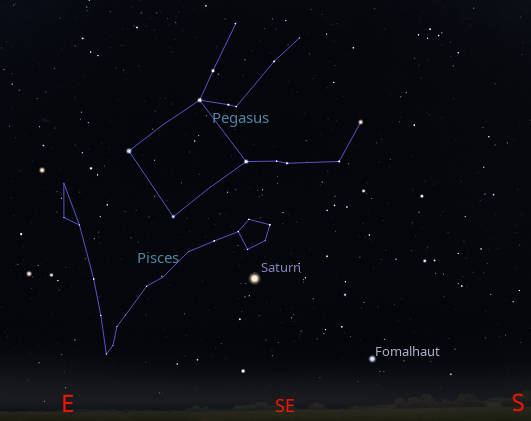
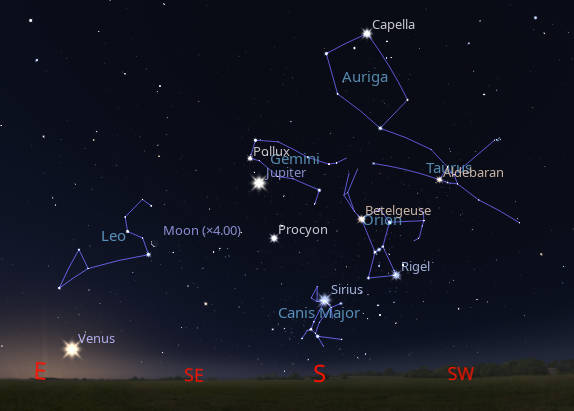
Ephemeris: 10/08/2025 – Weekly look at the whereabouts of the naked-eye planets
This is Ephemeris for Wednesday, October 8th. Today the Sun will be up for 11 hours and 20 minutes, setting at 7:09, and it will rise tomorrow at 7:51. The Moon, 2 days past full, will rise at 7:42 this evening.
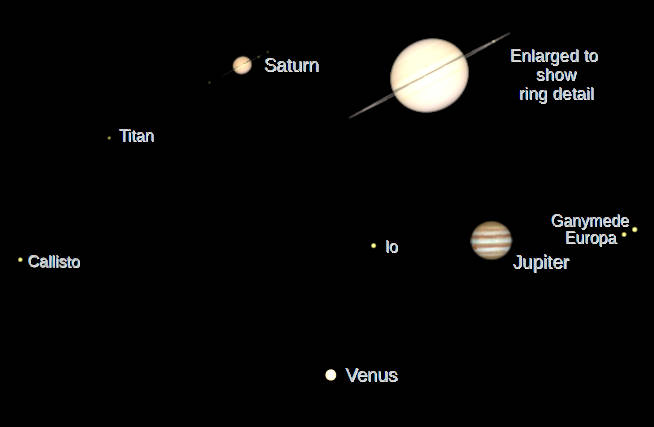
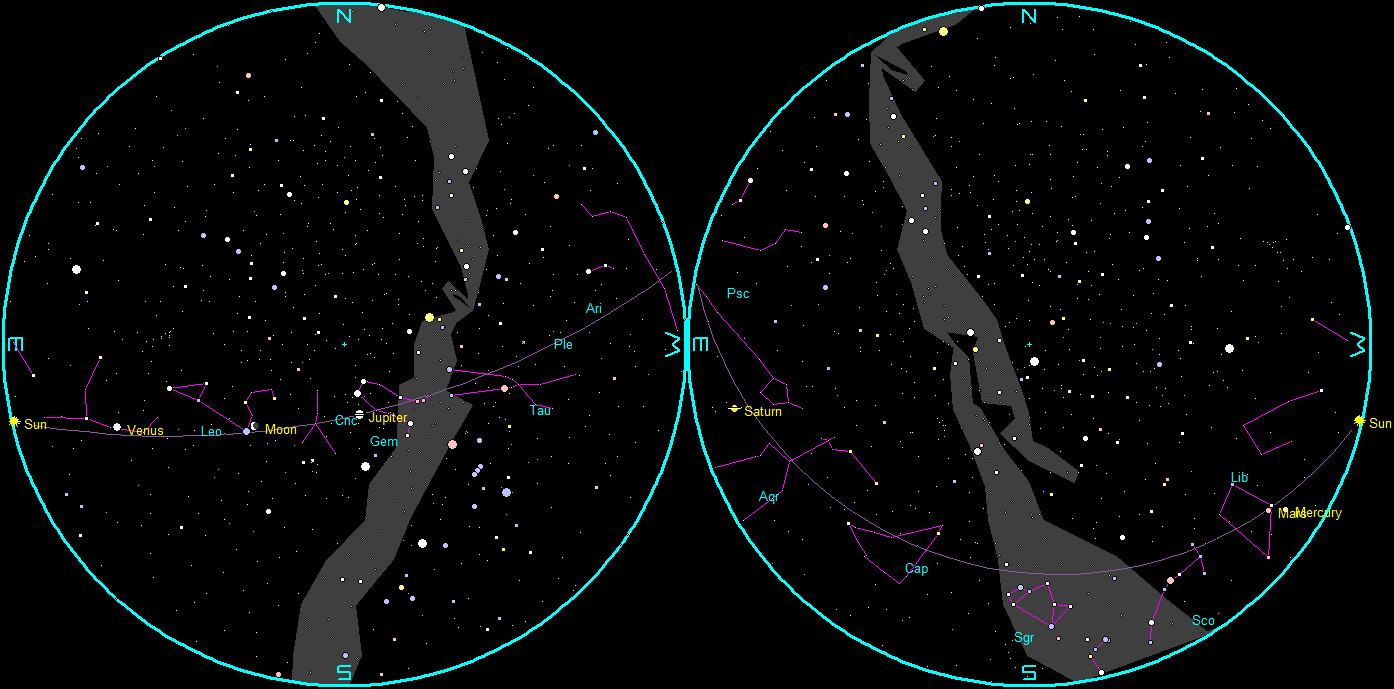
Let’s take our weekly look at the whereabouts of the naked-eye planets. Saturn rises before sunset in the east. It is the brightest star like object in the east southeastern sky at 8 PM not long after the Moon rises. In a telescope Saturn sports a very thin ring, 1.2° from being edge on in telescopes. Saturn has an axial tilt of about 27°, so it has seasons like the Earth and since its rings are over its equator, when they go edge on to the Sun, it is an equinox for it, which happened this past May. Earth, being close to the Sun, sees nearly the same thing. Now the ring angle for us will decrease to about a third of a degree by November 23rd before increasing. By 7 AM, Jupiter will appear high in the southeast, under the stars of Gemini. With brighter Venus low in the east.
The astronomical event times given in this blog are for the Traverse City/Interlochen area of Michigan (Lat 44.7° N, Long 85.7° W; EDT, UT – 4 hours) unless stated otherwise. Times will be different for other locations.
Addendum
Ephemeris: 10/01/2025 – Our weekly look at the whereabouts of the naked-eye planets
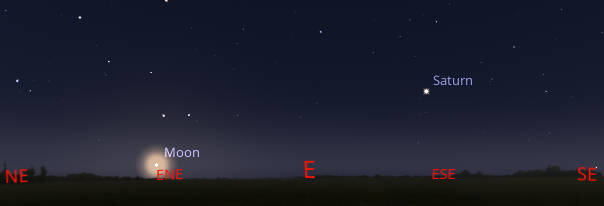
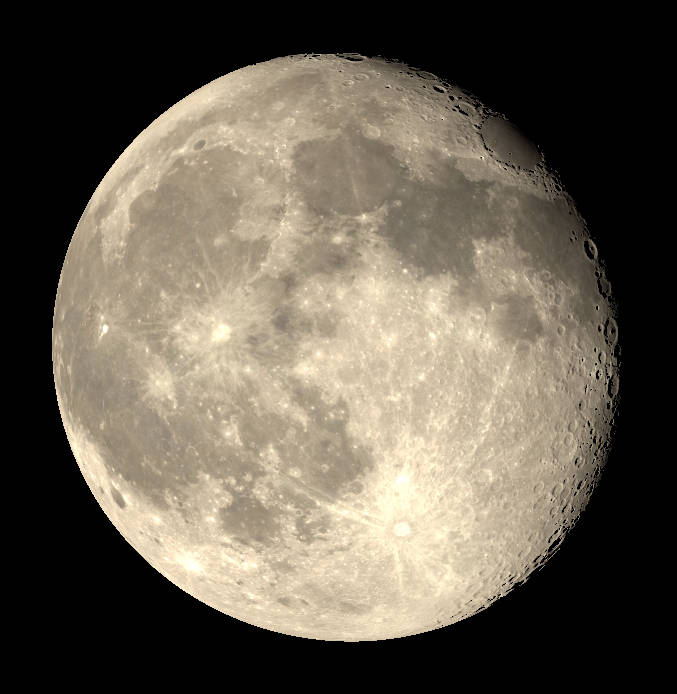
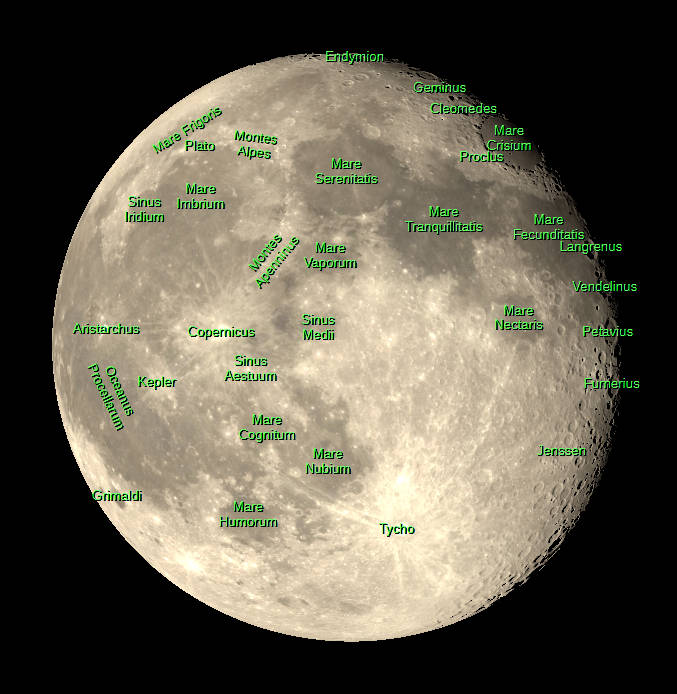
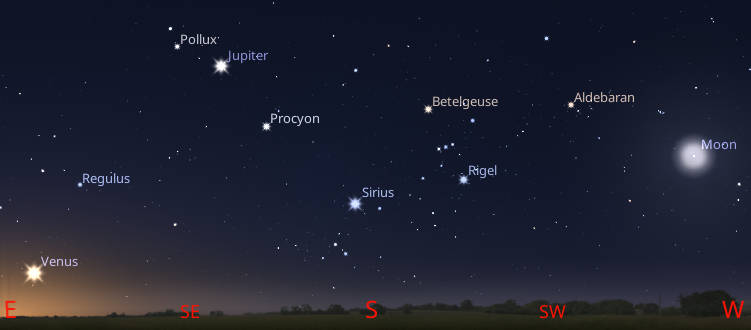
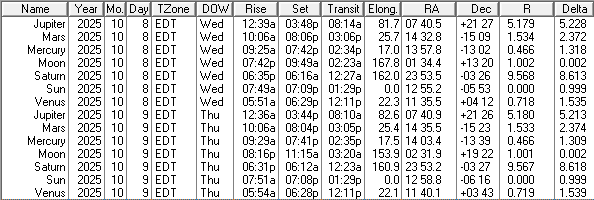
This is Ephemeris for Wednesday, October 1st. Today the Sun will be up for 11 hours and 41 minutes, setting at 7:22, and it will rise tomorrow at 7:42. The Moon, 2 days past first quarter, will set at 1:55 tomorrow morning.
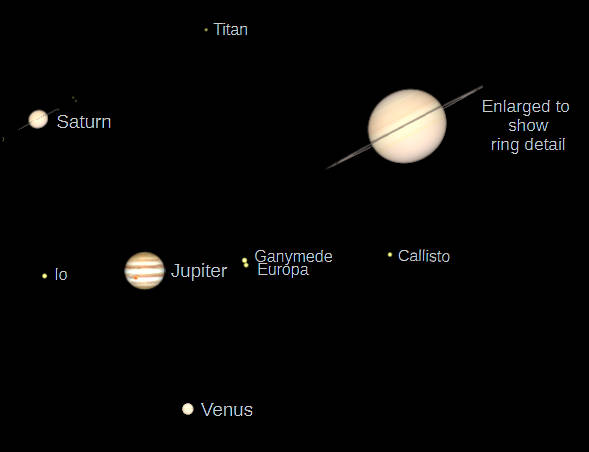
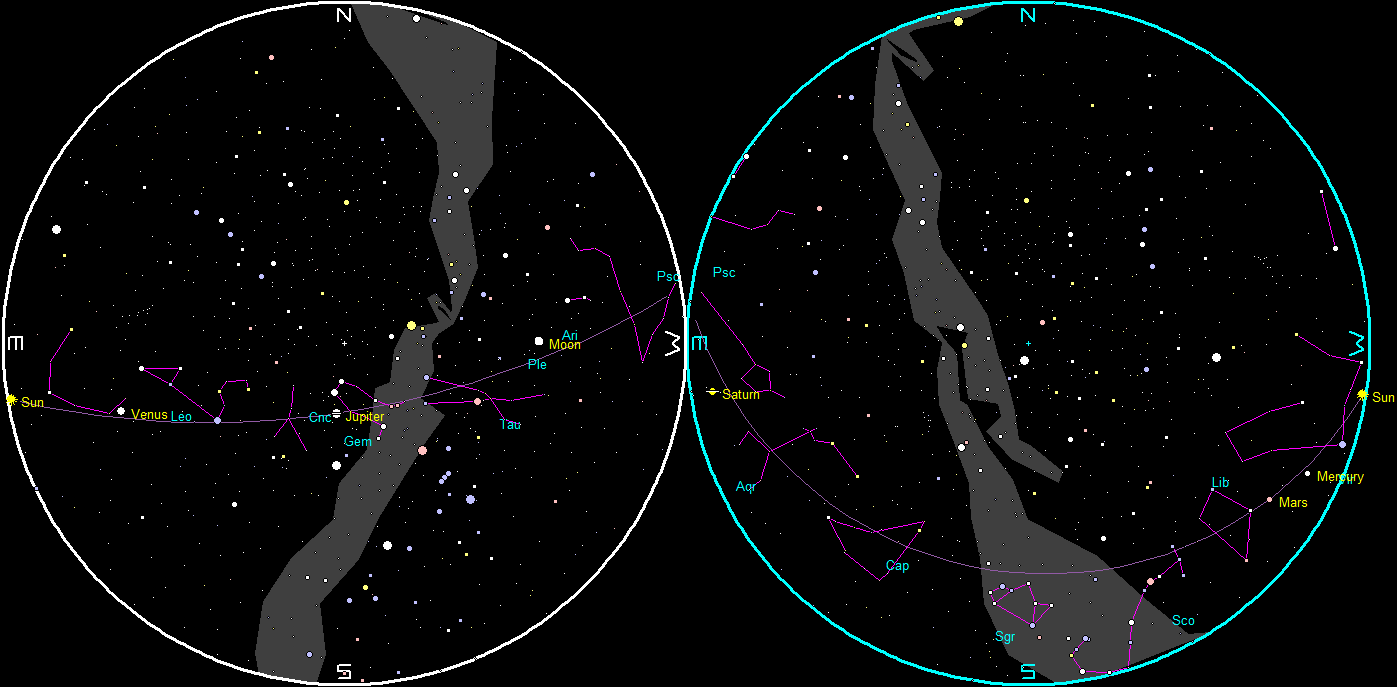
Let’s take our weekly look at the whereabouts of the naked-eye planets. Saturn rises before sunset in the east. It is the brightest star like object in the eastern to southeastern sky in the evening. In a telescope Saturn sports a very thin ring, 1.5° from being edge on. Saturn has an axial tilt of about 27°, so it has seasons like the Earth and since its rings are over its equator, when they go edge on to the Sun, it is an equinox for it, which happened this past May. Earth, being close to the Sun, sees nearly the same thing. Now the ring angle for us will decrease to about a third of a degree by November 23rd before increasing. By 7 AM, Jupiter will appear high in the southeast, under the stars of Gemini. With brighter Venus low in the east.
The astronomical event times given in this blog are for the Traverse City/Interlochen area of Michigan (Lat 44.7° N, Long 85.7° W; EDT, UT – 4 hours) unless stated otherwise. Times will be different for other locations.
Addendum
Ephemeris: 09/24/2025 – Taking our weekly look at the whereabouts of the naked-eye planets
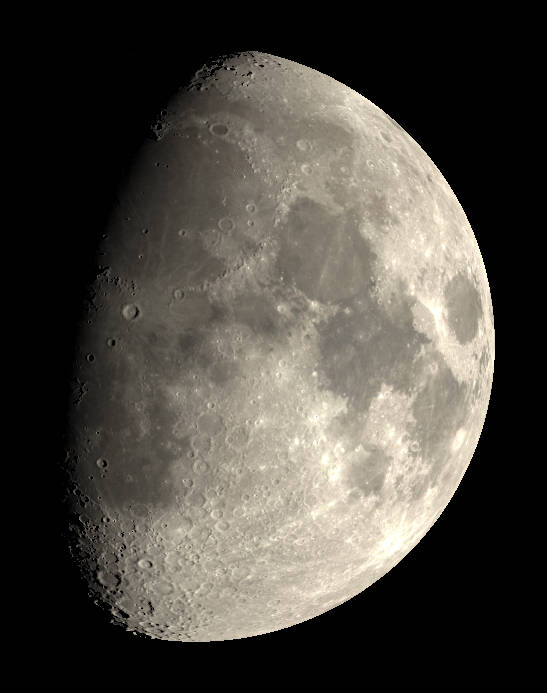
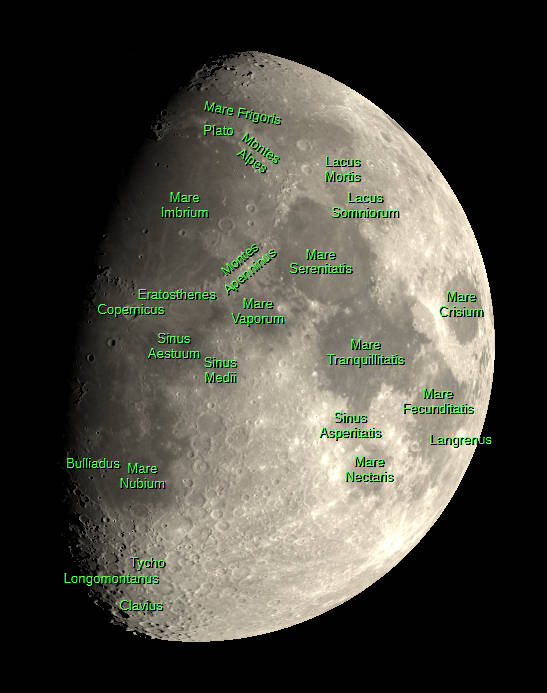
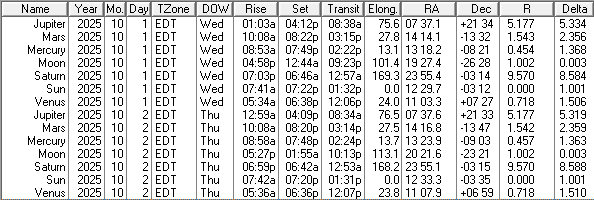
This is Ephemeris for Wednesday, September 24th. Today the Sun will be up for 12 hours and 3 minutes, setting at 7:35, and it will rise tomorrow at 7:33. The Moon, 3 days past new, will set at 8:27 this evening.
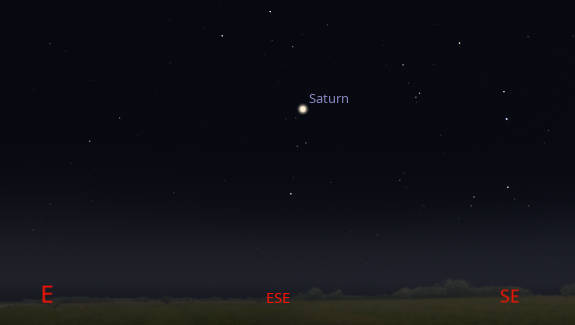
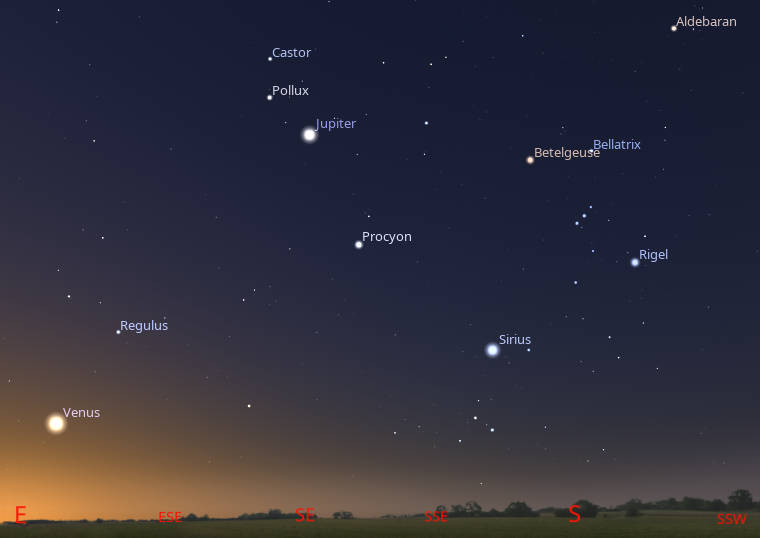
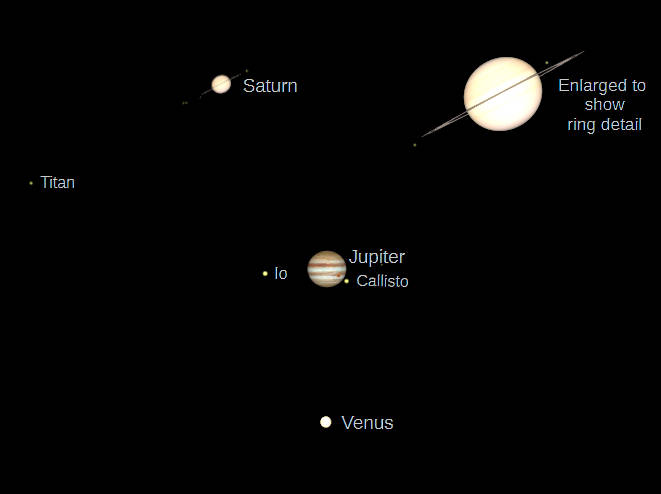
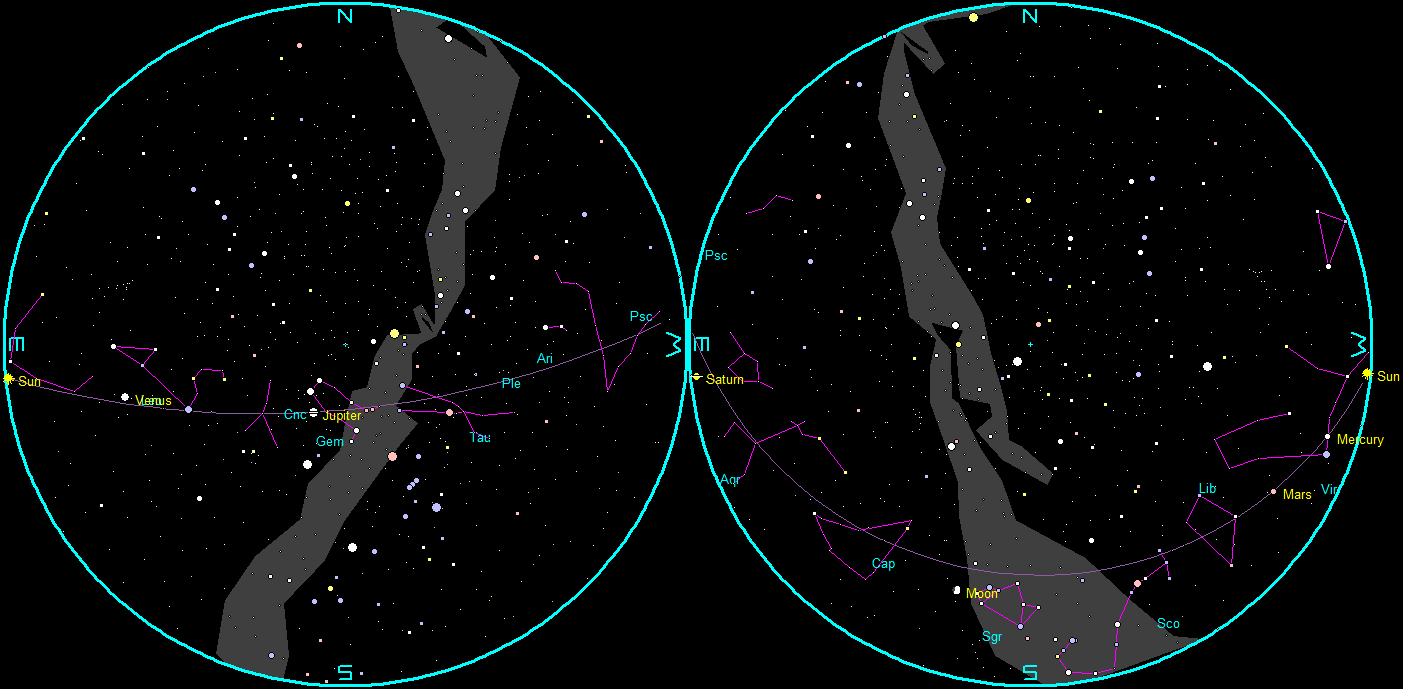
Let’s take our weekly look at the whereabouts of the naked-eye planets. Saturn now rises about sunset in the east. It was in opposition from the Sun last Sunday. In a telescope Saturn sports a very thin ring, 1.7° from being edge on. Saturn has an axial tilt of about 27°, so it has seasons like the Earth and since its rings are over its equator, when they go edge on to the Sun, it is an equinox for it, which happened this past May. Earth, being close to the Sun, see nearly the same thing. Now the ring angle for us will decrease to about a third of a degree by November 23rd before increasing. By 6:30 AM Jupiter will appear high in the east-southeast, under the stars of Gemini. With brighter Venus low in the east below the star Regulus in Leo.
The astronomical event times given in this blog are for the Traverse City/Interlochen area of Michigan (Lat 44.7° N, Long 85.7° W; EDT, UT – 4 hours) unless stated otherwise. Times will be different for other locations.
Addendum
Ephemeris: 09/17/2025 – Taking a look at the whereabouts of the naked-eye planets
This is Ephemeris for Wednesday, September 17th. Today the Sun will be up for 12 hours and 24 minutes, setting at 7:49, and it will rise tomorrow at 7:25. The Moon, 3 days past last quarter, will rise at 3:44 tomorrow morning.
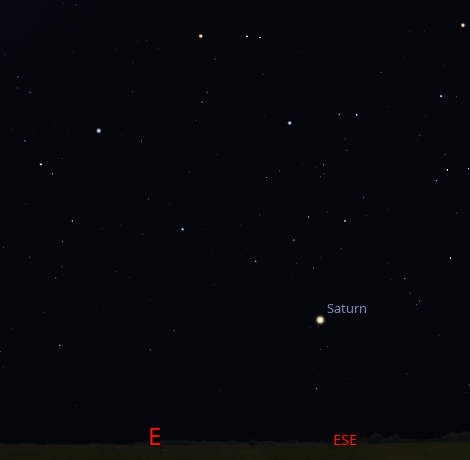
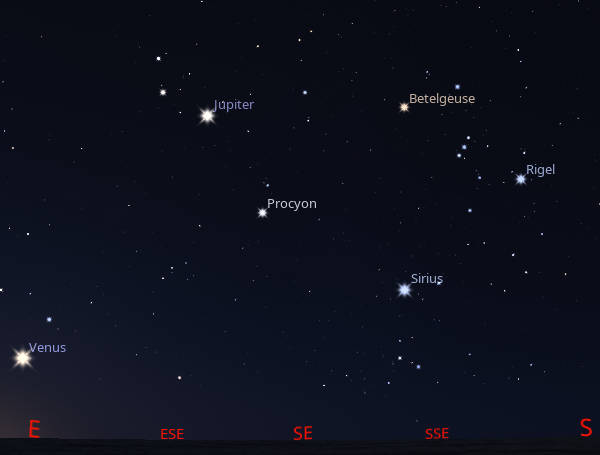
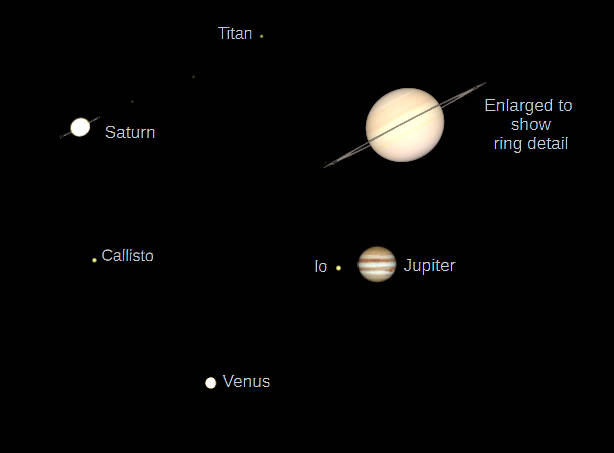
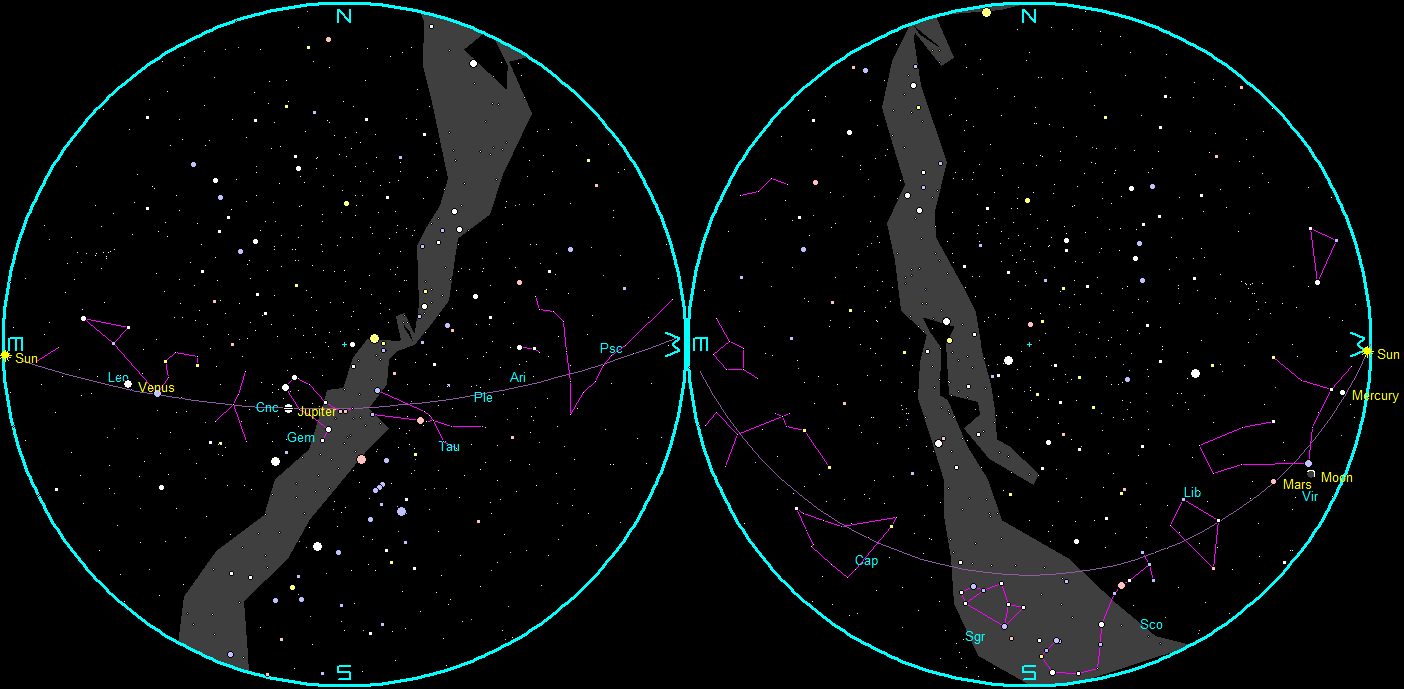
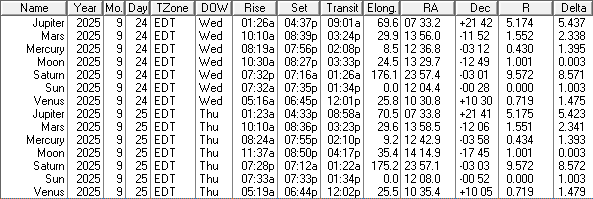
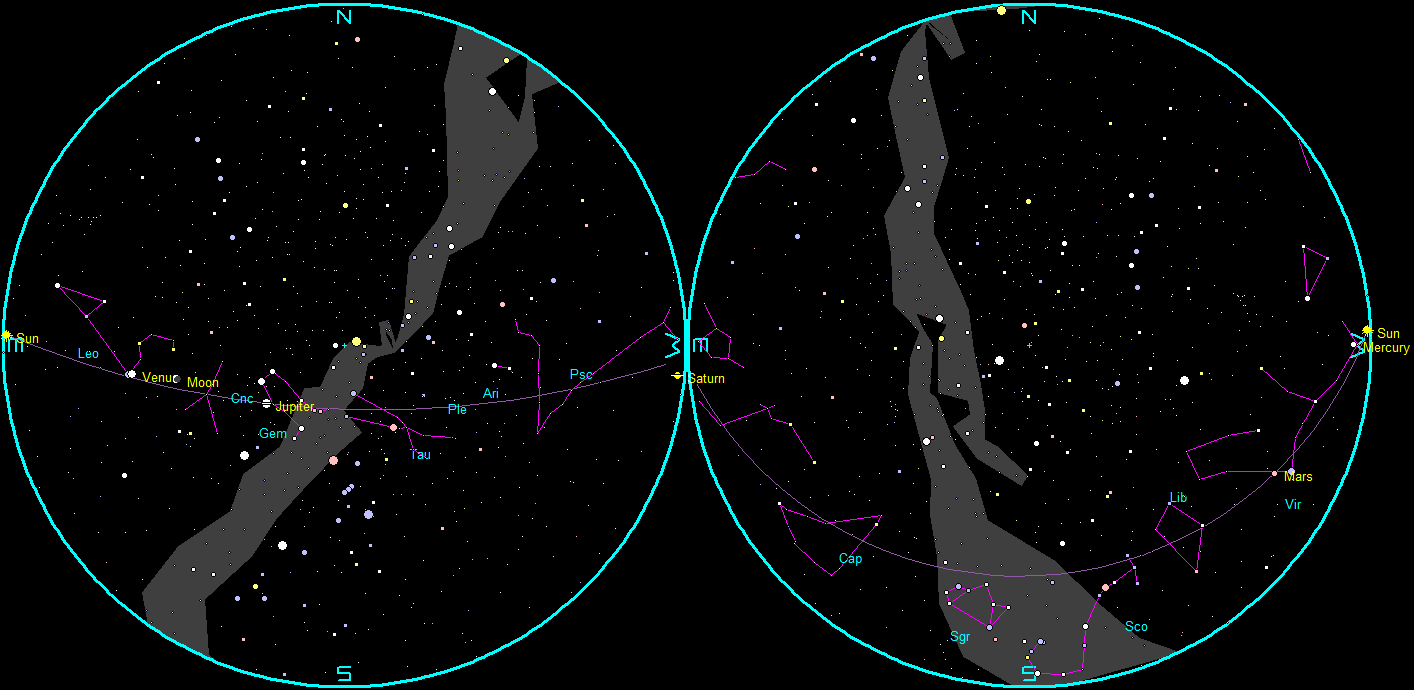
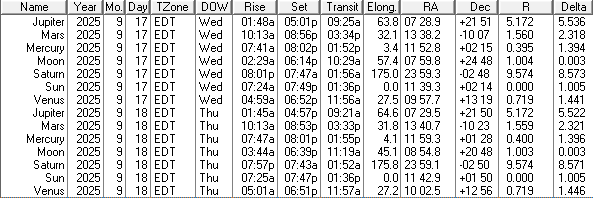
Let’s take our weekly look at the whereabouts of the naked-eye planets. Saturn now rises at 8:01 PM in the east. In a telescope Saturn sports a very thin ring, 2° from being edge on. Saturn has an axial tilt of about 27°, so it has seasons like the Earth and since its rings are over its equator, when they go edge on to the Sun, it is an equinox for it, which happened in May. Earth being close to the Sun and moving, see nearly the same thing. Now the ring angle for us will decrease to about a third of a degree by November 23rd before increasing. By 6 AM Jupiter will appear above the brighter Venus in the Eastern sky and among the stars of Gemini. Venus and Jupiter will have the waning crescent Moon between them tomorrow morning.
The astronomical event times given in this blog are for the Traverse City/Interlochen area of Michigan (Lat 44.7° N, Long 85.7° W; EDT, UT – 4 hours) unless stated otherwise. Times will be different for other locations.
Addendum
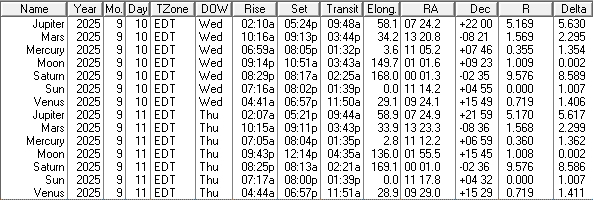
Ephemeris: 09/10/2025 – Our weekly look at the naked-eye planets
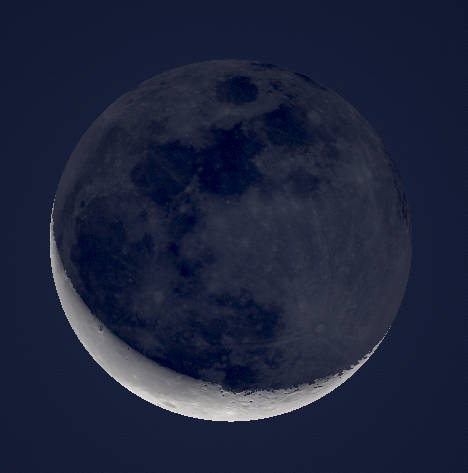
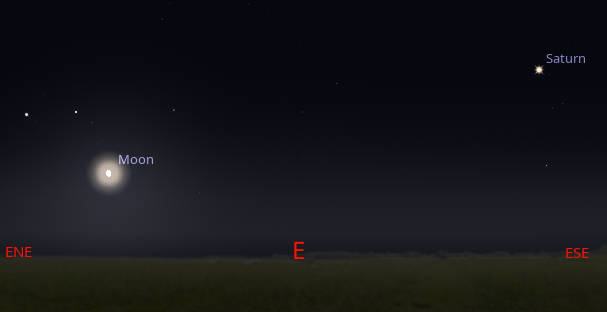
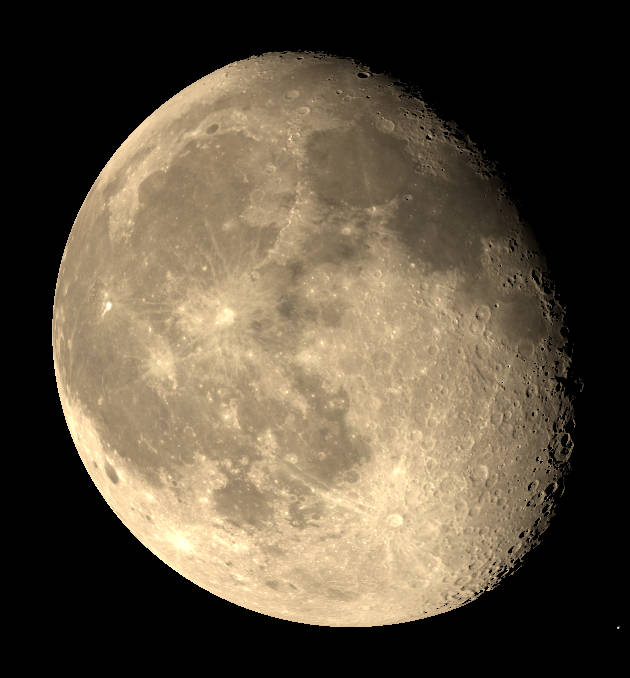
This is Bob Moler with Ephemeris for Wednesday, September 10th. Today the Sun will be up for 12 hours and 46 minutes, setting at 8:02, and it will rise tomorrow at 7:17. The Moon, 3 days past full, will rise at 9:14 this evening.
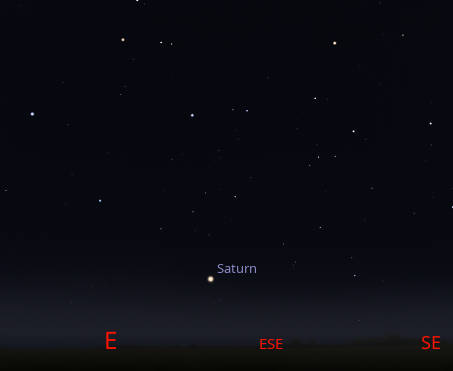
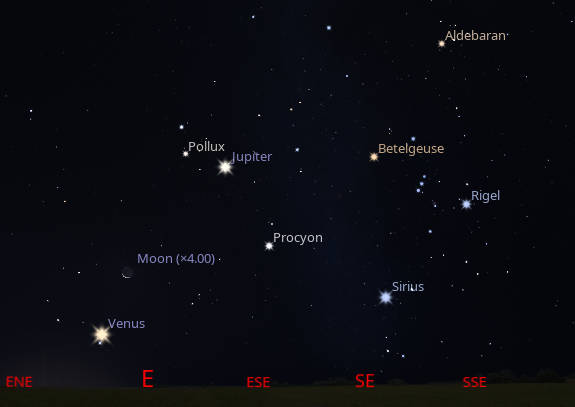
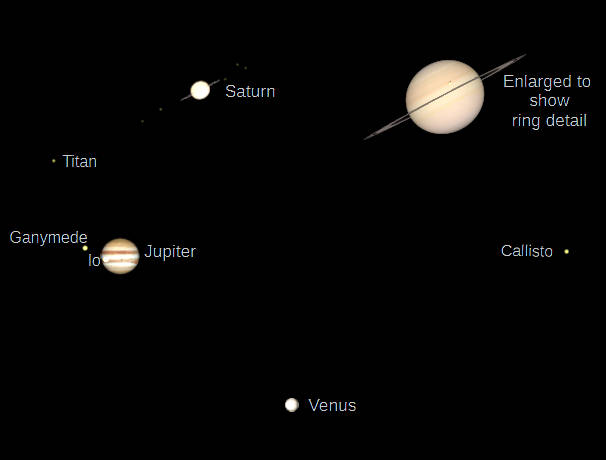
Let’s take our weekly look at the whereabouts of the naked-eye planets. Saturn now rises at 8:30 PM in the east. In a telescope Saturn sports a very thin ring, 2¼° from being edge on. Saturn has an axial tilt of about 27°, so it has seasons like the Earth and since its rings are over its equator, when the go edge on to the Sun, it is an equinox for it, which happened in May. Earth being close to the Sun and moving, see nearly the same thing. Now the ring angle will decrease to about a third of a degree by November 23rd before increasing. By 6 AM Jupiter will appear above the brighter Venus in the eastern sky and among the stars of Gemini. Venus and Jupiter are joining the bright winter stars, a beautiful sight in the morning twilight.
The astronomical event times given in this blog are for the Traverse City/Interlochen area of Michigan (Lat 44.7° N, Long 85.7° W; EDT, UT – 4 hours) unless stated otherwise. Times will be different for other locations.
Addendum
 Bob Moler's Ephemeris Blog