Archive
Ephemeris: 05/13/2025 – Arcturus, extragalactic visitor?
This is Ephemeris for Tuesday, May 13th. Today the Sun will be up for 14 hours and 45 minutes, setting at 9:02, and it will rise tomorrow at 6:15. The Moon, 1 day past full, will rise at 10:39 this evening.
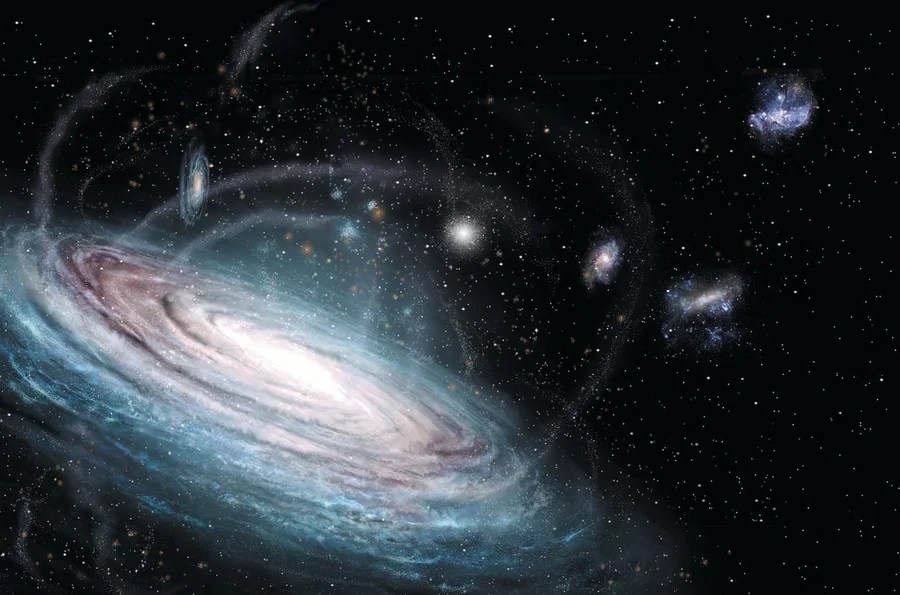
The bright orange star high in the southeast at 10 PM is Arcturus. Remember: Follow the arc of the handle of the Big Dipper to find Arcturus. It is an interesting star in many respects. Arcturus is somewhat more massive than the Sun and a bit older. It is starting its red giant phase having run out of hydrogen in its core and starting to use helium as its heat source, transmuting it into carbon and other elements. It has a very high velocity with respect to the Sun of about 100 kilometers per second. Arcturus is thought to be, by some astronomers, part of the remnants of a dwarf galaxy that collided with the Milky Way, and has now been assimilated. So Arcturus isn’t from around here.
-The astronomical event times given in this blog are for the Traverse City/Interlochen area of Michigan (Lat 44.7° N, Long 85.7° W; EDT, UT – 4 hours) unless stated otherwise. Times will be different for other locations.
Addendum
Ephemeris: 11/09/2023 – The Milky Way will collide with the Great Andromeda Galaxy
This is Bob Moler with Ephemeris for Thursday, November 9th. Today the Sun will be up for 9 hours and 49 minutes, setting at 5:21, and it will rise tomorrow at 7:32. The Moon, halfway from last quarter to new, will rise at 4:31 tomorrow morning.
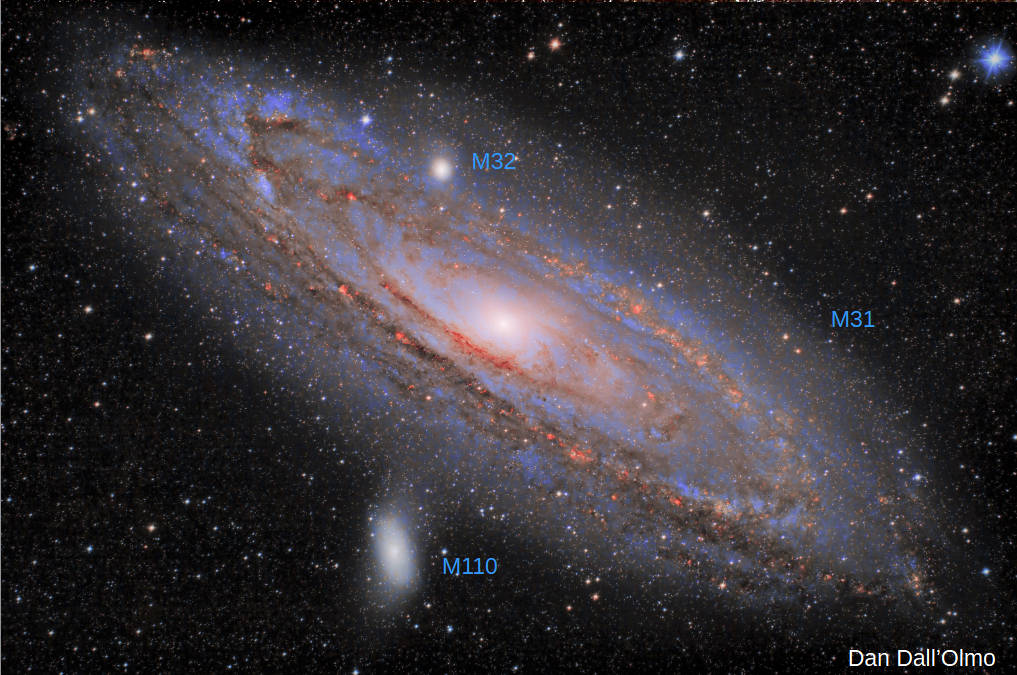
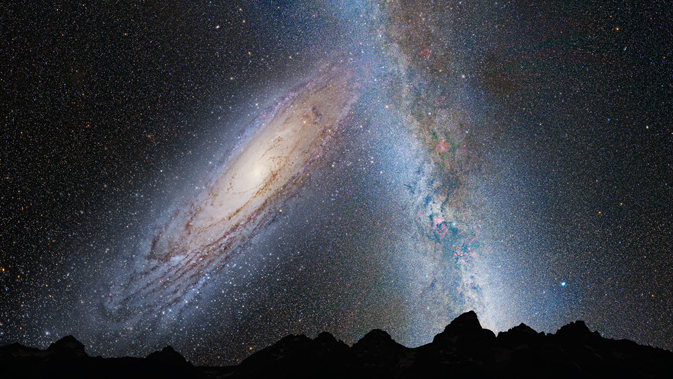
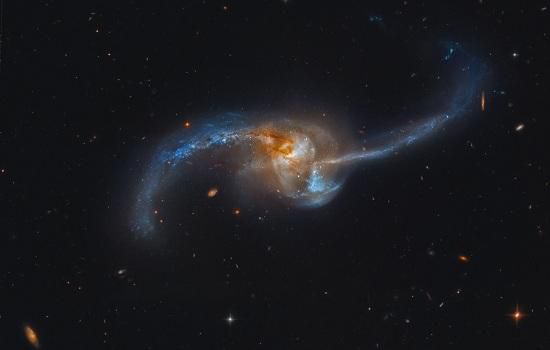
Stars are at extreme distances compared to their sizes, even if one includes their planetary systems. Galaxies in a galaxy cluster are much closer with respect to their size. Astronomers have determined that our Milky Way galaxy will collide with the Great Andromeda Galaxy, some two and a half million light years away, in about four and a half billion years. Don’t worry, it is very unlikely that any stars will collide during the event, though the solar system may be in for a wild ride. As the galaxies approach each other their beautiful spiral structures will begin to distort into tidal tails. Multiple passes of the two will occur before they will coalesce into one large elliptical galaxy. Other galaxies of the Local Group will join in over time.
The astronomical event times given are for the Traverse City/Interlochen area of Michigan (EST, UT –5 hours). They may be different for your location.
Addendum
12/27/2022 – Ephemeris – 2022: We finally saw the black hole at the center of our galaxy
This is Bob Moler with Ephemeris for Tuesday, December 27th. Today the Sun will be up for 8 hours and 49 minutes, setting at 5:08, and it will rise tomorrow at 8:19. The Moon, 2 days before first quarter, will set at 10:30 this evening.
Besides the James Webb Space Telescope coming online in July, beginning, hopefully, twenty plus years of astronomical discovery, the Event Horizon Telescope Collaboration released an image of the black hole at the center of the Milky Way, 26,000 light years away In the direction of the constellation of Sagittarius. The collaboration, which consists of eight radio telescopes spread out from Hawai’i, to Europe, from Greenland to the South Pole, observed the black hole, dubbed Sagittarius A* (Pronounced Sagittarius A Star) for hours at the same time. The signals were recorded on disc drives, synchronized by atomic clocks, and then sent to a central processing center to create the image. The image was released last May of a fuzzy donut of the black hole and its accretion disk.
The astronomical event times given are for the Traverse City/Interlochen area of Michigan (EST, UT –5 hours). They may be different for your location.
Addendum
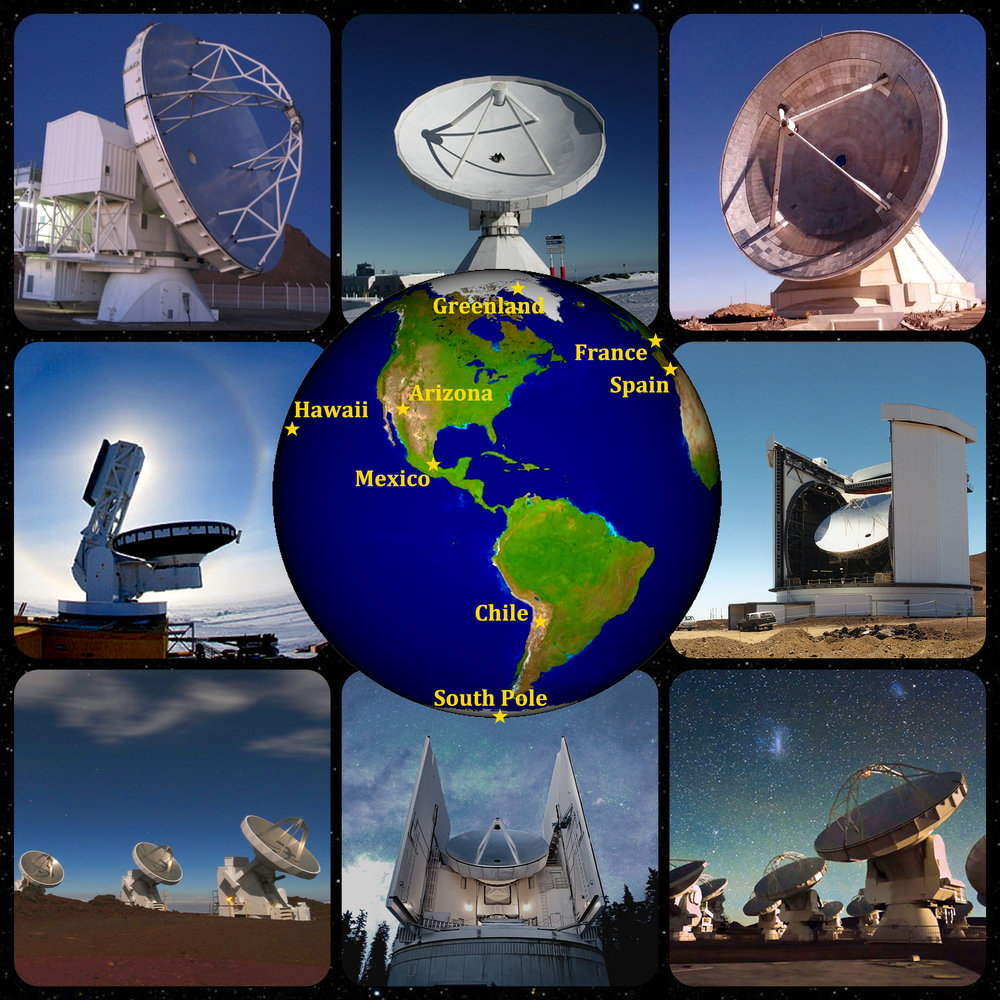
Event Horizon Telescope component radio telescopes. Credits: © APEX, IRAM, G. Narayanan, J. McMahon, JCMT/JAC, S. Hostler, D. Harvey, ESO/C. Malin.
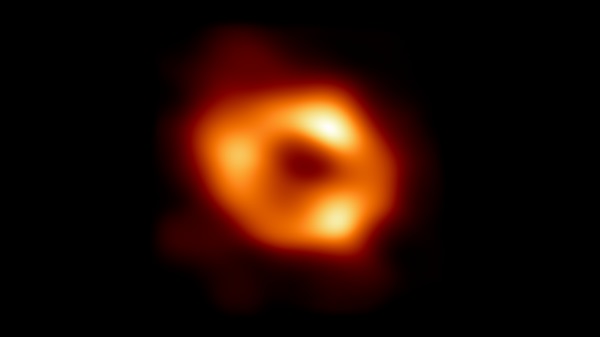
This is the image released May 12, 2022 by the Event Horizon Telescope Collaboration.
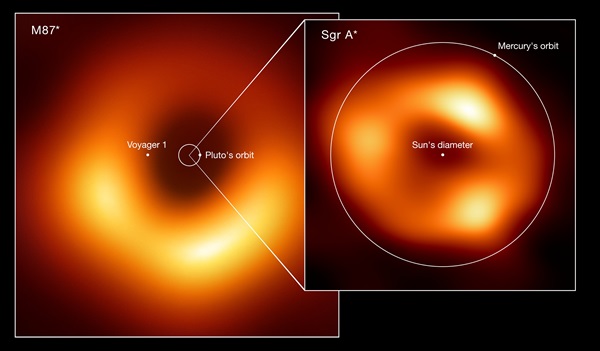
M87* size compared to Sagittarius A*. The size of a black hole is directly related to its mass. M87* has a mass of 6.4 billion times the Sun’s mass. It’s 55 million light years away. The mass of Sagittarius A* is only 4.2 million solar masses, and 26,000 light years away. Image credit: Event Horizon Telescope Collaboration.
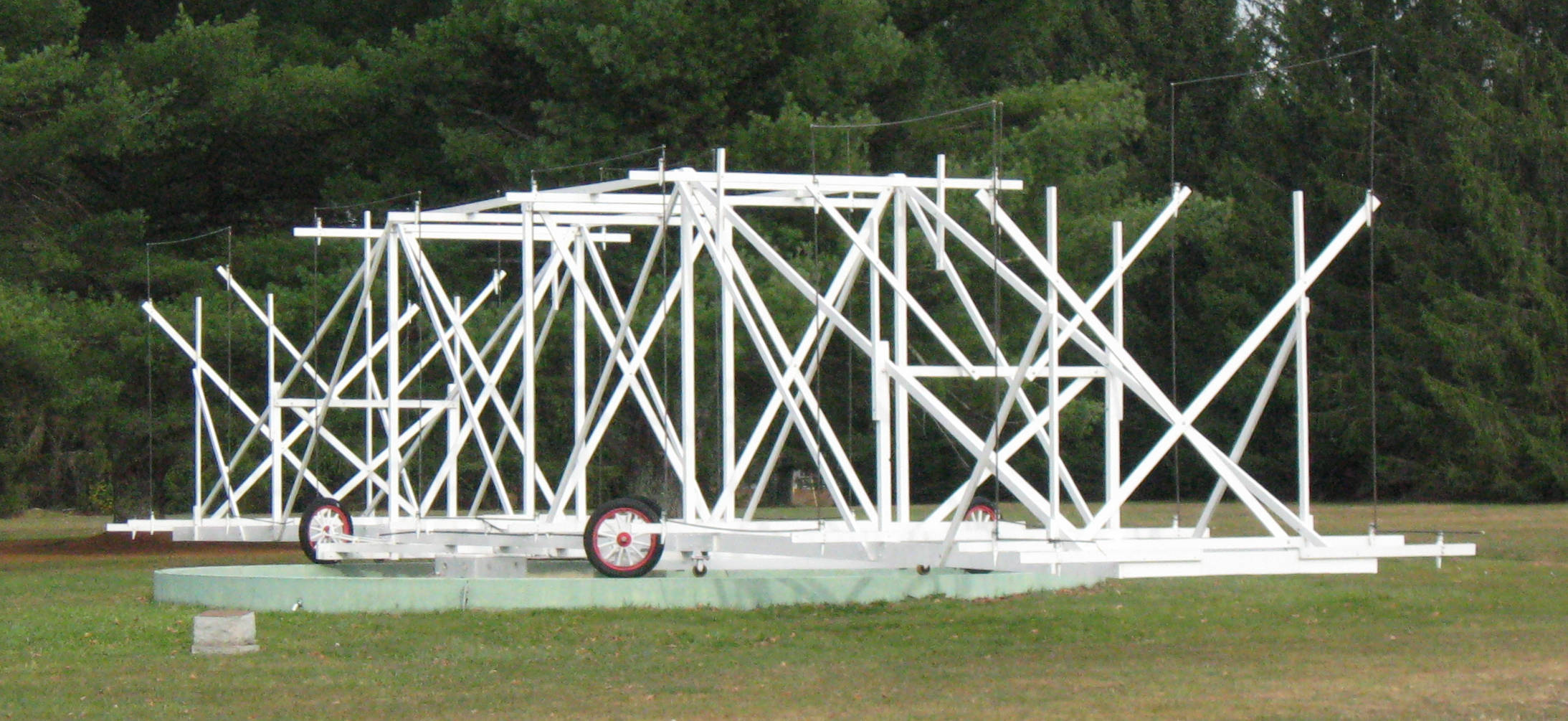
Karl Jansky’s antenna reconstruction at the National Radio Astronomy Observatory, Green Bank, WV. He could rotate the antenna to find the direction of the source. He found that the source rotated with the sky, and the direction was the azimuth of the constellation of Sagittarius the archer. The source was later dubbed Sagittarius A. It is the brightest radio source in the sky. Click on the image to enlarge it. Credit: mine.
When radio astronomy was in its infancy, bright radio sources were labeled with the constellation they were in and a capital letter. Astronomers didn’t know what they really were. Karl Jansky’s discovery of the first celestial radio source in 1933 has been dubbed Sagittarius A, or Sgr A for short. He worked for Bell Labs, and was seeking the source of interference with wireless telephony transmissions. The source was from the general direction of the center of the galaxy, our Milky Way Galaxy, in the direction of the constellation of Sagittarius the archer.
08/25/2020 – Ephemeris – The Great Andromeda Galaxy will collide with the Milky Way someday
This is Ephemeris for Tuesday, August 25th. Today the Sun will be up for 13 hours and 33 minutes, setting at 8:30, and it will rise tomorrow at 6:58. The Moon, at first quarter today, will set at 12:26 tomorrow morning.
Stars are at extreme distances compared to their sizes, even if one includes their planetary systems. Galaxies in a galaxy cluster are much closer with respect to their size. Astronomers have determined that our Milky Way galaxy will collide with the Great Andromeda galaxy, some two and a half million light years away, in about four and a half billion years. Don’t worry, it is very unlikely that any stars will collide during the event, though the solar system may be in for a wild ride. As the galaxies approach each other their beautiful spiral structures will begin to distort into tidal tails. Multiple passes of the two will occur before they will coalesce into one large elliptical galaxy. Other galaxies of the Local Group will join in over time.
The event times given are for the Traverse City/Interlochen area of Michigan. They may be different for your location.
Addendum
Colliding galaxies. Note the tidal tails. Credit: Hubble Legacy Archive, ESA, NASA.
Original caption: This illustration shows a stage in the predicted merger between our Milky Way galaxy and the neighboring Andromeda galaxy, as it will unfold over the next several billion years. In this image, representing Earth’s night sky in 3.75 billion years, Andromeda (left) fills the field of view and begins to distort the Milky Way with tidal pull. (Credit: NASA; ESA; Z. Levay and R. van der Marel, STScI; T. Hallas; and A. Mellinger)
08/20/2020 – Ephemeris – Where are we in the Milky Way Galaxy?
This is Bob Moler with Ephemeris for Thursday, August 20th. Today the Sun will be up for 13 hours and 47 minutes, setting at 8:39, and it will rise tomorrow at 6:52. The Moon, 2 days past new, will set at 9:59 this evening.
If we are in the Milky Way galaxy, where are we, and where’s the center of this vast spiral? Astronomers have found that the Sun is located in an offshoot of a spiral arm called the Orion Spur and the naked eye stars in the sky are also in it. In the winter constellation of Orion we are looking away from the center of the galaxy. This time of year, looking to the south in the evening at the Teapot of stars that is Sagittarius we look toward the center, which we can’t see due to the gas and dust in the way. It’s there, just above the spout of the Teapot. It can be seen, but not in visible light. It was the first thing detected with a radio telescope and it can be seen in the infrared. But there, 27,000 light years away is a 4 million solar mass black hole at the center.
The event times given are for the Traverse City/Interlochen area of Michigan. They may be different for your location.
Addendum
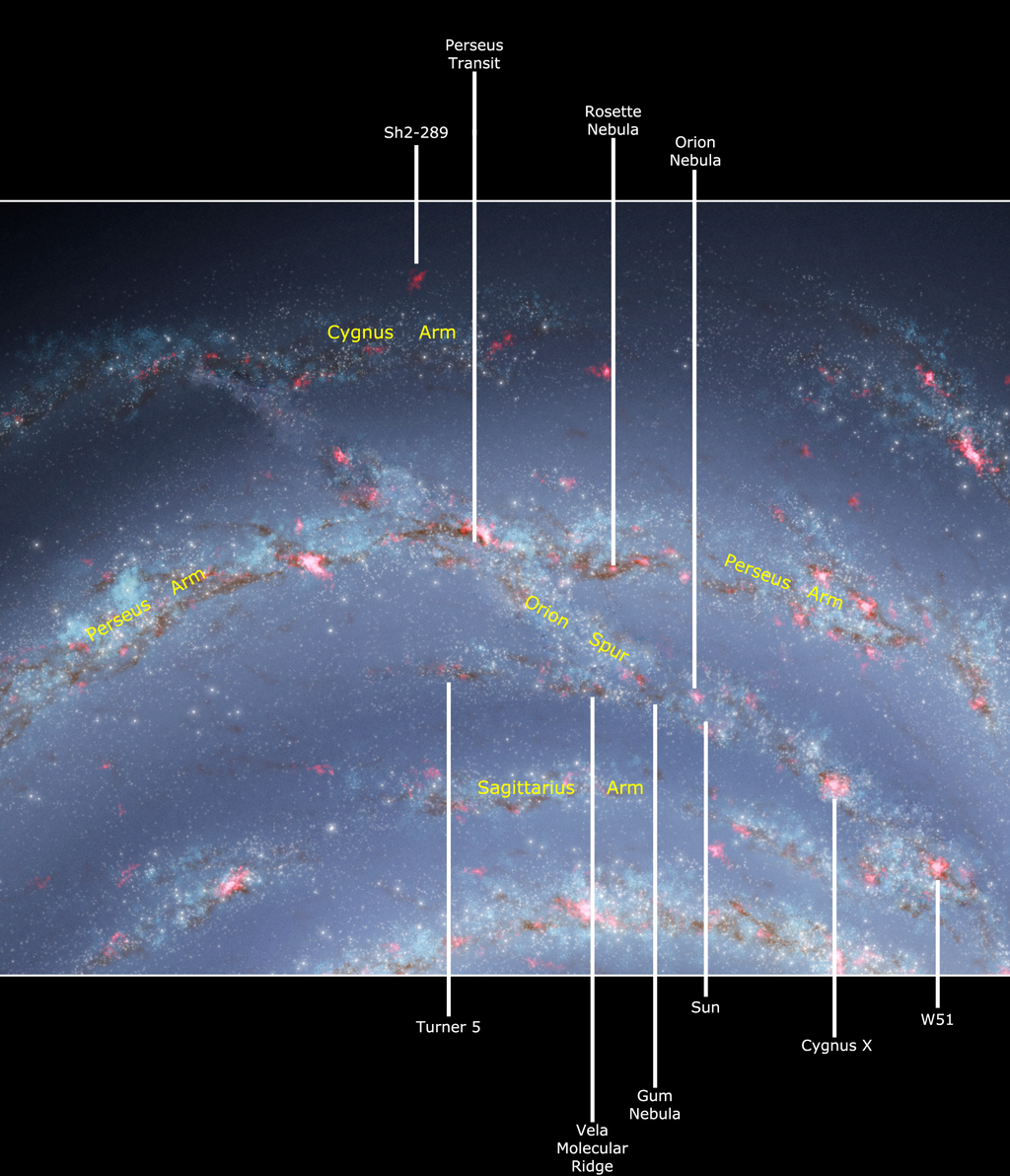
The Sun in the Orion Spur and the nearby spiral arms of the Milky Way Galaxy. The direction to the center of the galaxy is down. Click on the image to enlarge. Public Domain, Wikimedia.
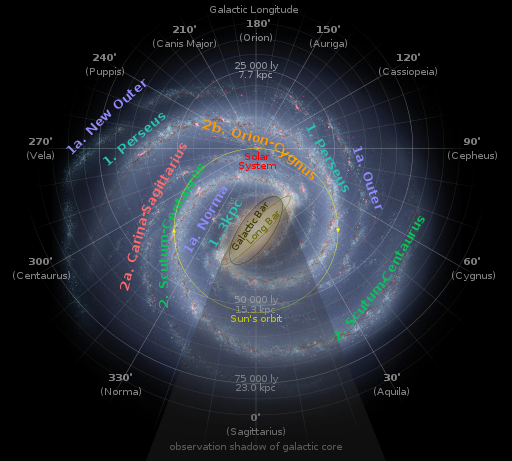
Our place in the Milky Way. Note that we appear to be in a barred spiral galaxy. The arms are numbered and named. 3kpc is the 3 kiloparsec arm. 3kpc = 9,780 light years. The Sun is about 27,000 light years from the center. Credit NASA and Wikimedia Commons, via EarthSky.org.
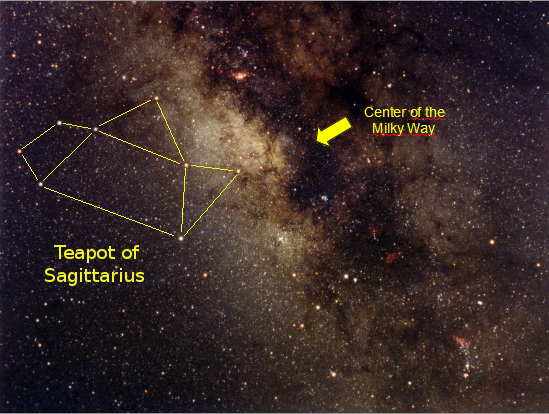
Location of the center of the Milky Way and the Teapot of Sagittarius. It is blocked by gas and dust in visible light.
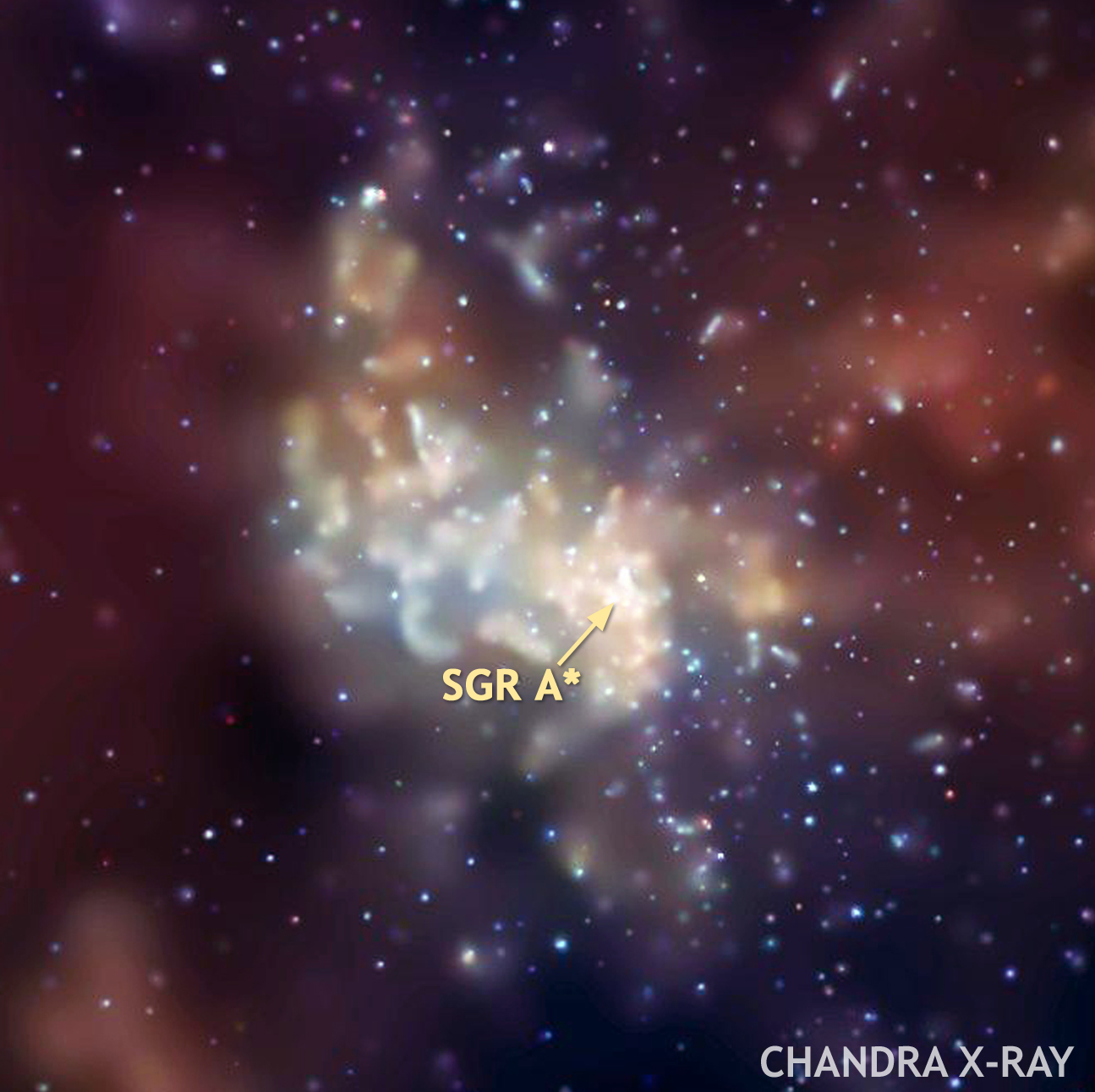
An image from the Chandra X-ray Telescope of the center of the Milky Way. SGR A or Sagittarius A is a radio source. SGR A*, pronounced Sagittarius A Star, is the 4 million solar mass black hole in the center of the Milky Way Galaxy. Credit NASA.
 Bob Moler's Ephemeris Blog