Archive
11/27/2019 – Ephemeris – Where are all the naked-eye planets?
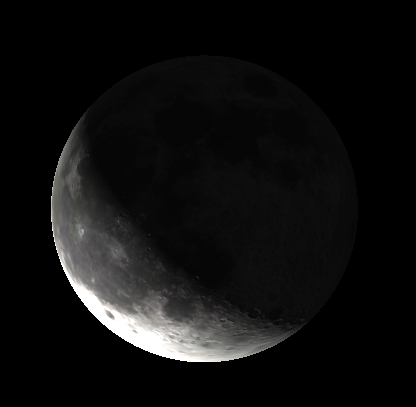
Ephemeris for Wednesday, November 27th. Today the Sun will be up for 9 hours and 10 minutes, setting at 5:05, and it will rise tomorrow at 7:56. The Moon, 1 day past new, will set at 6:10 this evening.
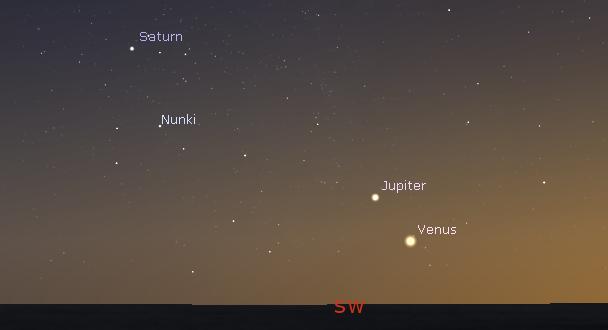
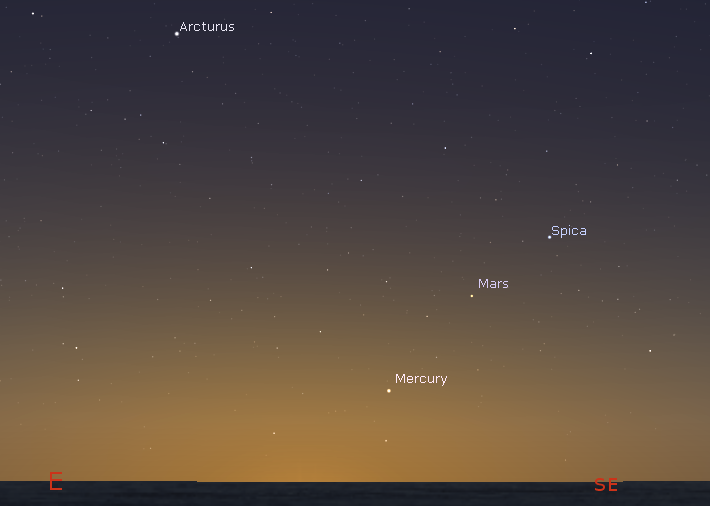
Let’s look at all the naked-eye planets for this week. Venus will be briefly visible low in the west-southwest before it sets at 6:42 p.m. Jupiter will appear to the right of Venus tonight. It will set at 6:34 p.m. Saturn, the ringed planet, will be in the south-southwestern sky in the evening, and will set at 8:01 p.m. Jupiter is approaching Saturn in our sky, and when we see them again next year they will appear very close. Mars is in the morning sky and will rise in the east-southeast at 5:19 a.m. It’s not very bright because it’s 223 million (359 million km) miles away, but it’s getting slowly closer to the Earth. Mercury can be spotted after it rises in the east at 6:06 a.m. It will be at its greatest separation from the Sun tomorrow morning.
The times given are for the Traverse City/Interlochen area of Michigan. They may be different for your location.
Addendum
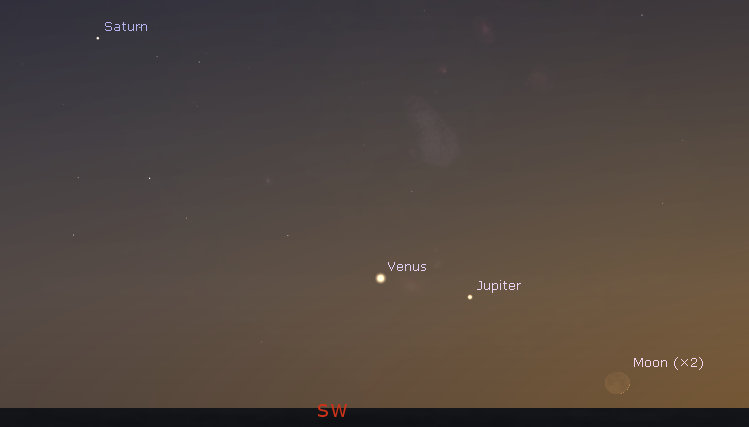
Jupiter, Venus and Saturn against a flat horizon tonight at 6 p.m. November 27, 2019. Created using Stellarium.
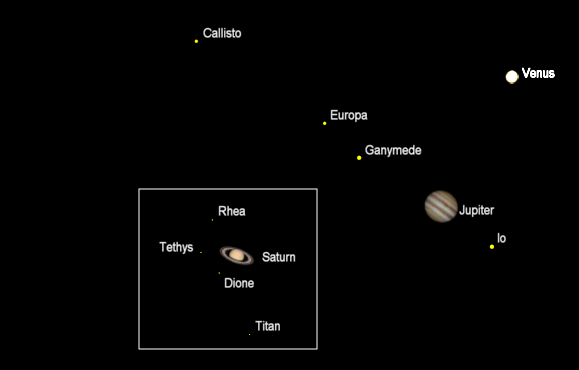
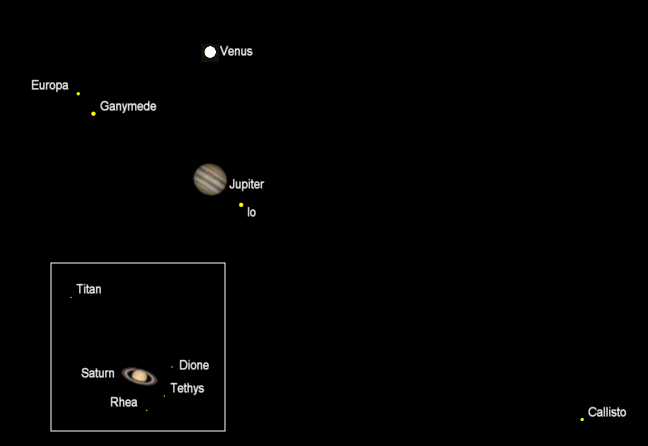
Telescopic views of Venus, Jupiter and Saturn with the same magnification at 6 p.m. tonight November 27, 2019. In the morning, I will show Mars here when it reaches an apparent diameter of 10″ (seconds of arc). It’s currently 3.9″. Created using Cartes du Ciel (Sky Charts).
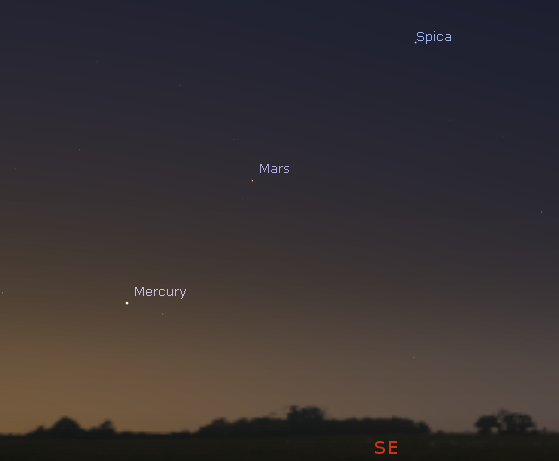
Mars and Mercury in the morning with the star Spica at 7 a.m. November 28, 2019. Created using Stellarium.
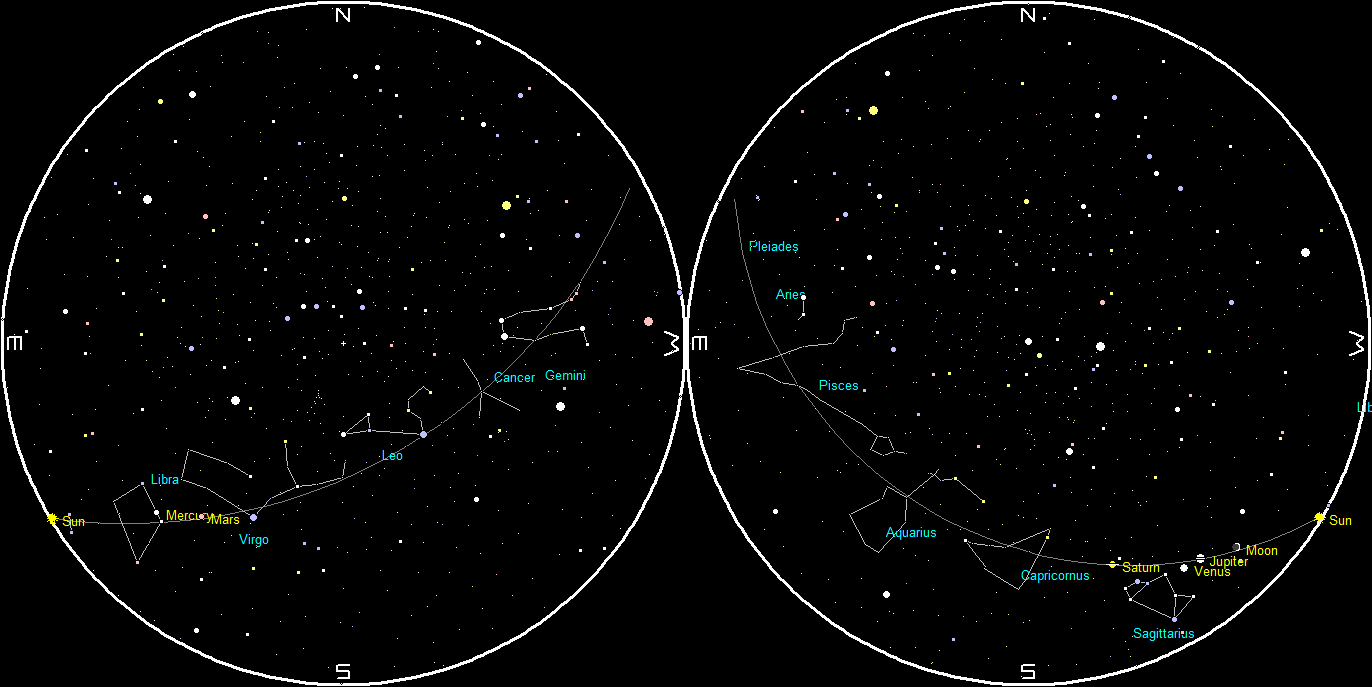
Planets and the Moon at sunset and sunrise of a single night starting with sunset on the right on November 27, 2019. The night ends on the left with sunrise on the 28th. Click on the image to enlarge. Created using my LookingUp program.
11/20/2019 – Ephemeris – Where are the naked-eye planets this week
Ephemeris for Wednesday, November 20th. Today the Sun will be up for 9 hours and 24 minutes, setting at 5:10, and it will rise tomorrow at 7:47. The Moon, 1 day past last quarter, will rise at 1:24 tomorrow morning.
Let’s look at the naked-eye planets for this week. Venus is starting to make an evening appearance. It will be briefly visible low in the west-southwest before it sets at 6:33 p.m. Jupiter will be very low in the southwestern sky as it gets dark. It will set at 6:55 p.m. Saturn, the ringed planet, will be in the south-southwestern sky in the evening, and will set at 8:26 p.m. Jupiter is approaching Saturn in our sky. Mars is in the morning sky and will rise in the east-southeast at 5:22 a.m. It’s not very bright because it’s 226 million (365 million km) miles away, but it’s getting slowly closer to the Earth. Mercury can be spotted after it rises in the east at 6:11 a.m. It will be getting brighter over the next two weeks.
The times given are for the Traverse City/Interlochen area of Michigan. They may be different for your location.
Addendum
Venus, Jupiter, and Saturn against a lake horizon at 6 p.m. November 20, 2019. Created using Stellarium.
Telescopic views of Venus, Jupiter and Saturn with the same magnification at 6 p.m. tonight November 20, 2019. In the morning, Mars is to tiny. Created using Cartes du Ciel (Sky Charts).
Mars and Mercury in the morning at 7 a.m. November 21, 2019. Created using Stellarium.
The Moon as it might be seen in binoculars, including earth shine, at 7 a.m. tomorrow November 21, 2019. Created using Stellarium.
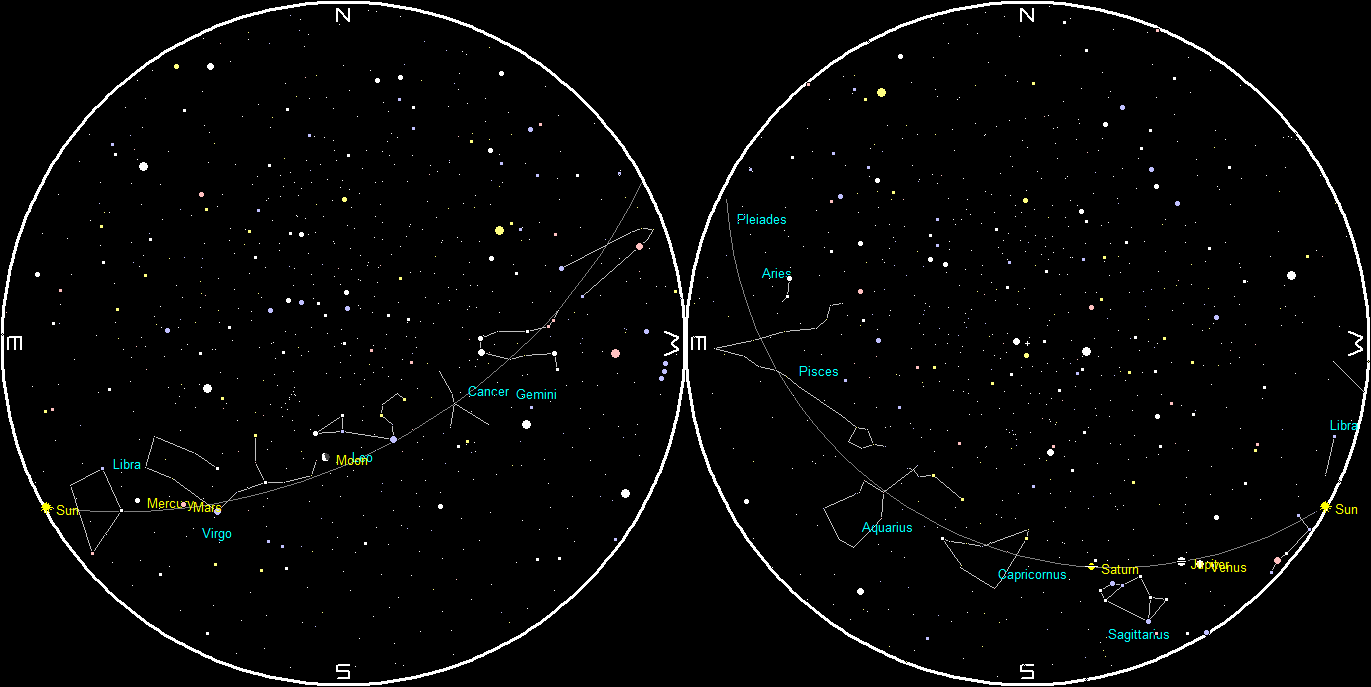
Planets and the Moon at sunset and sunrise of a single night starting with sunset on the right on November 20, 2019. The night ends on the left with sunrise on the 21st. Click on the image to enlarge. Created using my LookingUp program.
11/13/2019 – Ephemeris – Venus is starting to make an appearance in the evening sky
Ephemeris for Wednesday, November 13th. Today the Sun will be up for 9 hours and 40 minutes, setting at 5:16, and it will rise tomorrow at 7:38. The Moon, 1 day past full, will rise at 6:18 this evening.
Let’s look at the bright planets for this week. Venus is starting to make an evening appearance. It will be briefly visible low in the west-southwest before it sets at 6:28 p.m. Jupiter will be very low in the southwestern sky as it gets dark. It will set at 7:17 p.m. Jupiter is moving at nearly its fastest to the east now and next year will be where Saturn is currently. Saturn, the ringed planet, will be in the south-southwestern sky in the evening, and will set at 9:15 p.m. Next year it will be a bit farther east. Jupiter is approaching Saturn in our sky. Mars is in the morning sky and will rise in the east-southeast at 5:25 a.m. It’s not very bright because it’s 230 million (370 million km) miles away, but it’s getting slowly closer to the Earth.
The times given are for the Traverse City/Interlochen area of Michigan. They may be different for your location.
Addendum
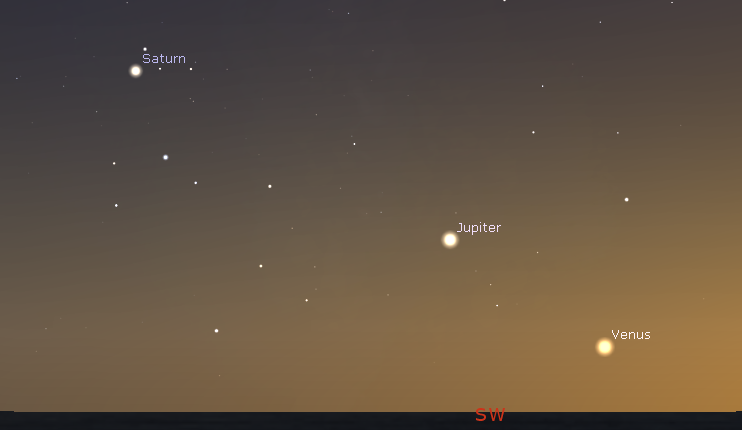
Venus, Jupiter, and Saturn tonight, November 13 at 6 p.m. Created using Stellarium.
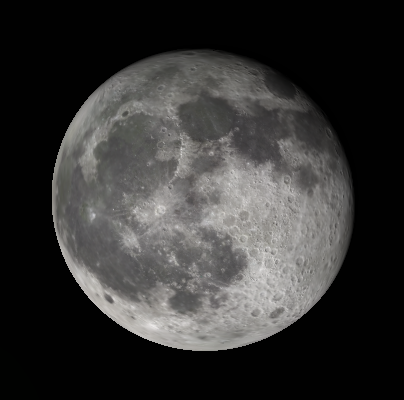
The waning gibbous Moon at 8 p.m. tonight November 13, 2019. Created using Stellarium.
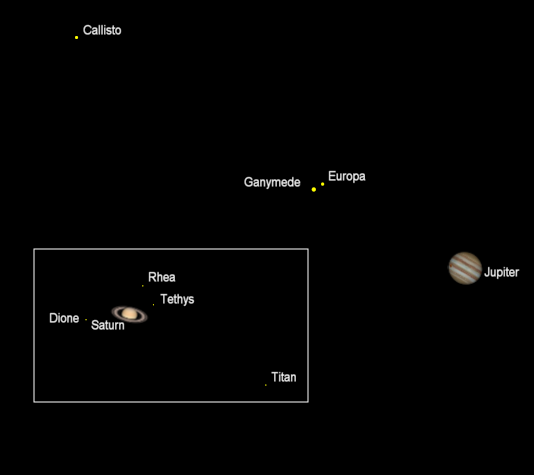
Telescopic views of Jupiter and Saturn with the same magnification at 6 p.m. tonight November 13, 2019. Venus is too close to the horizon to easily see its tiny gibbous shape. In the mrning, Mars is to tiny. Created using Cartes du Ciel (Sky Charts).
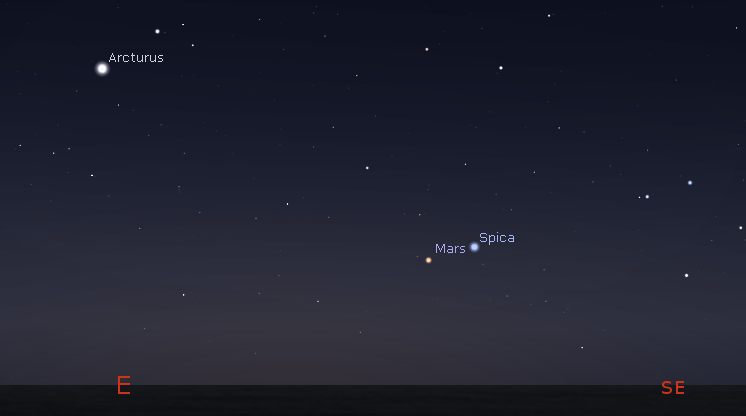
Mars in the morning at 6:30 a.m. November 14, 2019. Created using Stellarium.
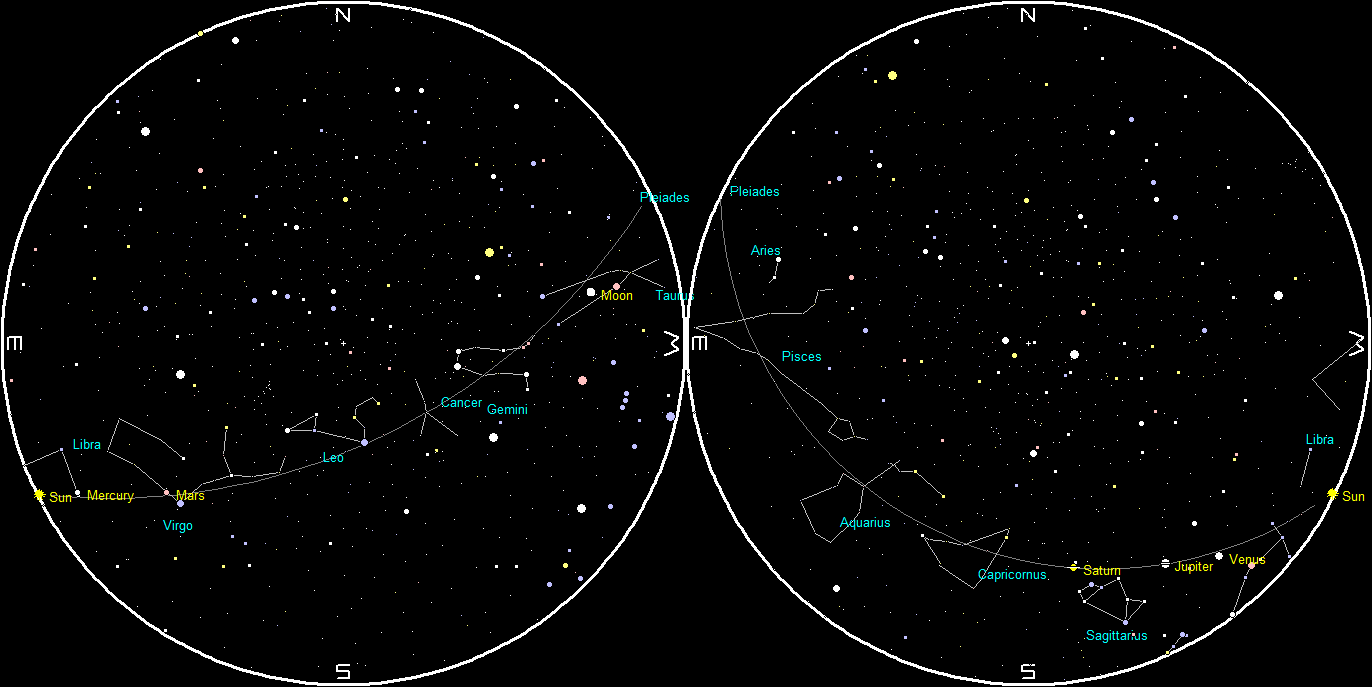
Planets and the Moon at sunset and sunrise of a single night starting with sunset on the right on November 13, 2019. The night ends on the left with sunrise on the 14th. Click on the image to enlarge. Created using my LookingUp program.
11/06/2019 – Ephemeris – Looking for the bright planets
Ephemeris for Wednesday, November 6th. Today the Sun will be up for 9 hours and 57 minutes, setting at 5:25, and it will rise tomorrow at 7:28. The Moon, 2 days past first quarter, will set at 2:13 tomorrow morning.
Let’s look at the bright planets for this week. Venus and Mercury are too close to the Sun to be seen. They are on the evening or east side of the Sun. Jupiter will be very low in the southwestern sky as it gets dark. It will set at 7:38 p.m. Jupiter is moving at nearly its fastest to the east now and next year will be where Saturn is currently. Saturn, the ringed planet, will be in the south-southwestern sky in the evening, and will set at 9:15 p.m. Next year it will be a bit farther east. Jupiter is approaching Saturn in our sky. Mars is in the morning sky and will rise in the east at 5:29 a.m. It’s not very bright because it’s 232 million (375 million km) miles away.
The times given are for the Traverse City/Interlochen area of Michigan. They may be different for your location.
Addendum
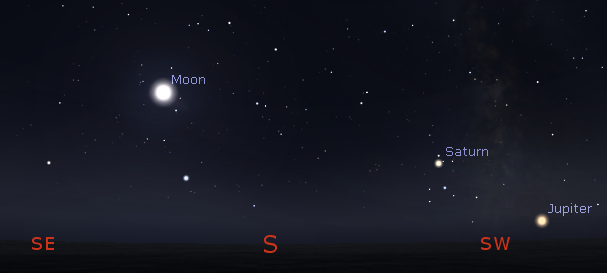
Jupiter, Saturn and the gibbous Moon tonight, November 6 at 7:15 p.m. Created using Stellarium.
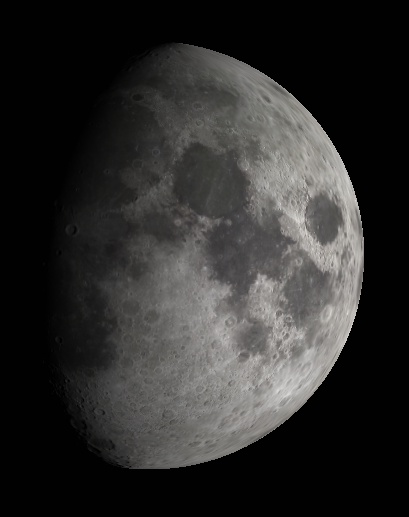
The gibbous Moon as it might appear in binoculars at 7:15 p.m. November 6, 2019. Created using Stellarium.
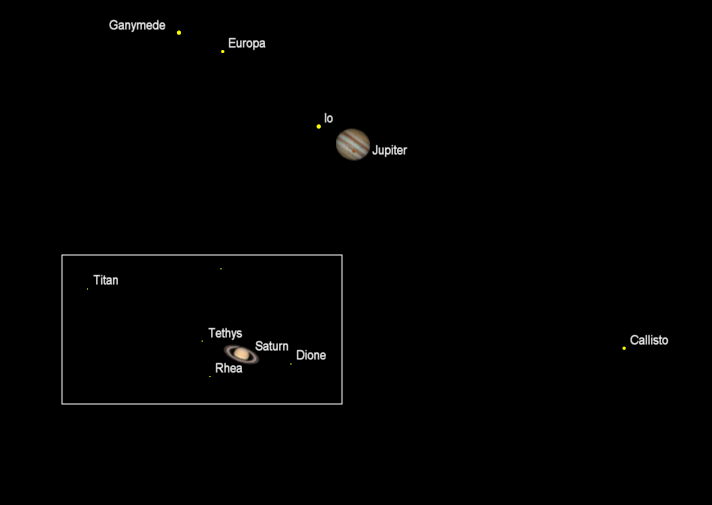
Telescopic views of Jupiter and Saturn with the same magnification at 7:15 p.m. tonight November 6, 2019. Created using Cartes du Ciel (Sky Charts).
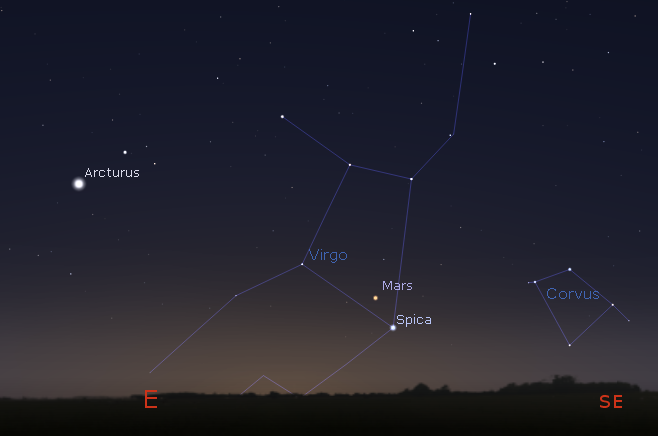
Mars in the morning at 6:30 a.m. November 07, 2019. Created using Stellarium.
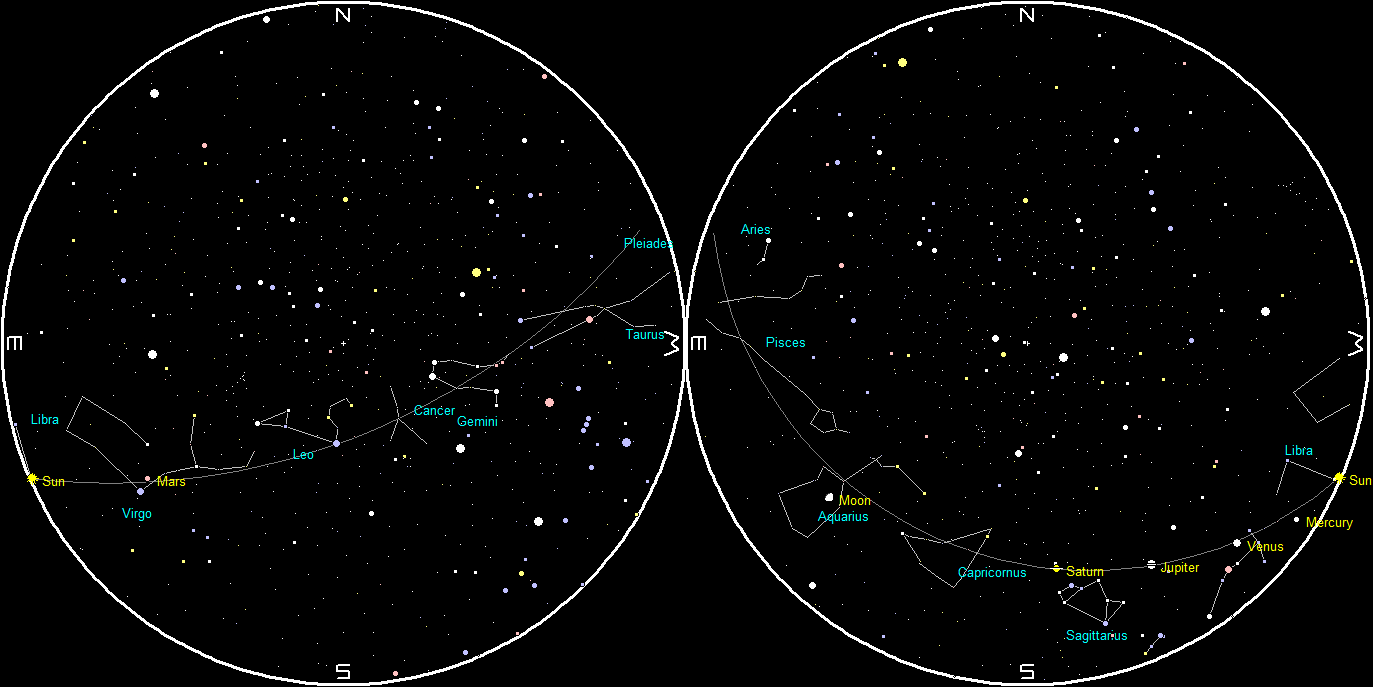
Planets and the Moon at sunset and sunrise of a single night starting with sunset on the right on November 6, 2019. The night ends on the left with sunrise on the 7th. Click on the image to enlarge. Created using my LookingUp program.
10/30/2019 – Ephemeris – Our weekly look at the naked eye planets
Ephemeris for Wednesday, October 30th. Today the Sun will be up for 10 hours and 16 minutes, setting at 6:34, and it will rise tomorrow at 8:19. The Moon, 3 days past new, will set at 8:36 this evening.
Let’s look at the bright planets for this week. Venus and Mercury are too close to the Sun to be seen. They are on the evening or east side of the Sun. Bright Jupiter will be low in the southwestern sky as it gets dark. It will set at 9 p.m. Jupiter is moving at nearly its fastest to the east now and next year will be where Saturn is currently. Saturn, the ringed planet, will be in the south-southwestern sky in the evening, and will set at 10:40 p.m. Next year it will be a bit farther east. Jupiter is approaching Saturn in our sky. They will cross paths late next year on December 21st, something they do about every 20 years. Mars is in the morning sky and will rise in the east at 5:51 a.m. It’s not very bright because it’s 236 million miles (380 million km)
away
The times given are for the Traverse City/Interlochen area of Michigan. They may be different for your location.
Addendum
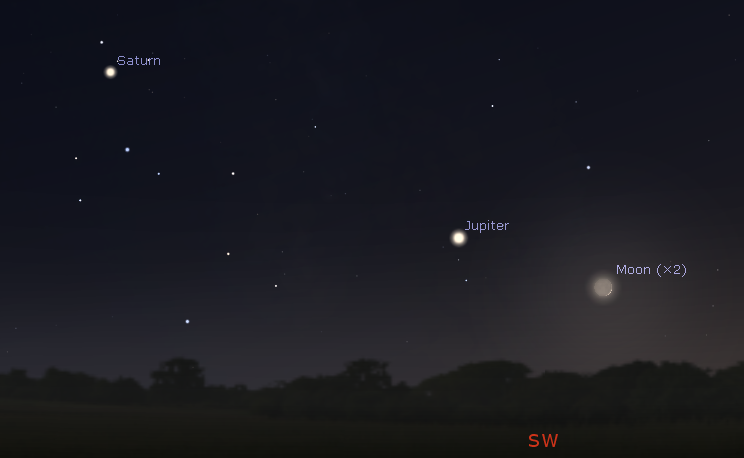
Jupiter, Saturn and the thin crescent Moon shown twice its actual size tonight, October 30 at 7:30 p.m. Created using Stellarium.
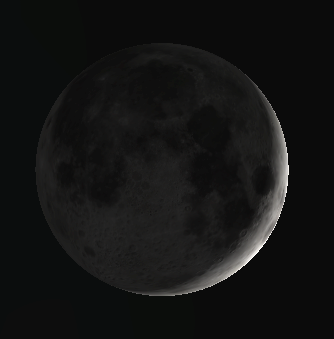
The thin crescent Moon with earthshine as it might appear in binoculars or a small telescope tonight at 7:30 p.m. October 30, 2019. Created using Stellarium.
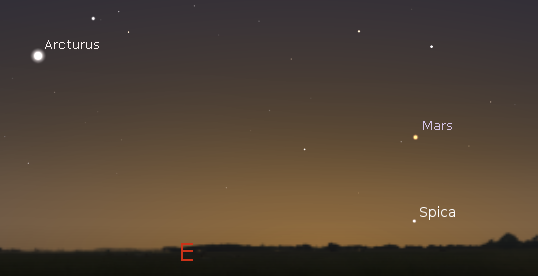
Mars in the morning at 7:30 a.m. October 31, 2019. Created using Stellarium.
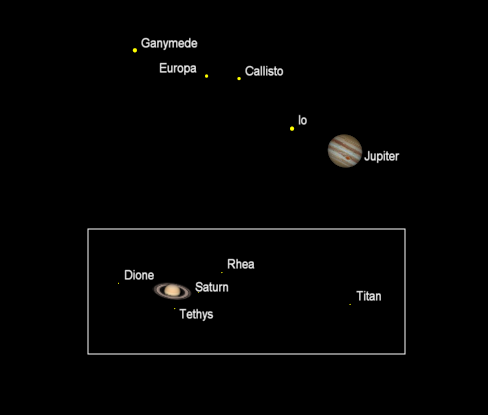
Telescopic views of Jupiter and Saturn with the same magnification at 7:30 p.m. tonight October 30, 2019. Created using Cartes du Ciel (Sky Charts).
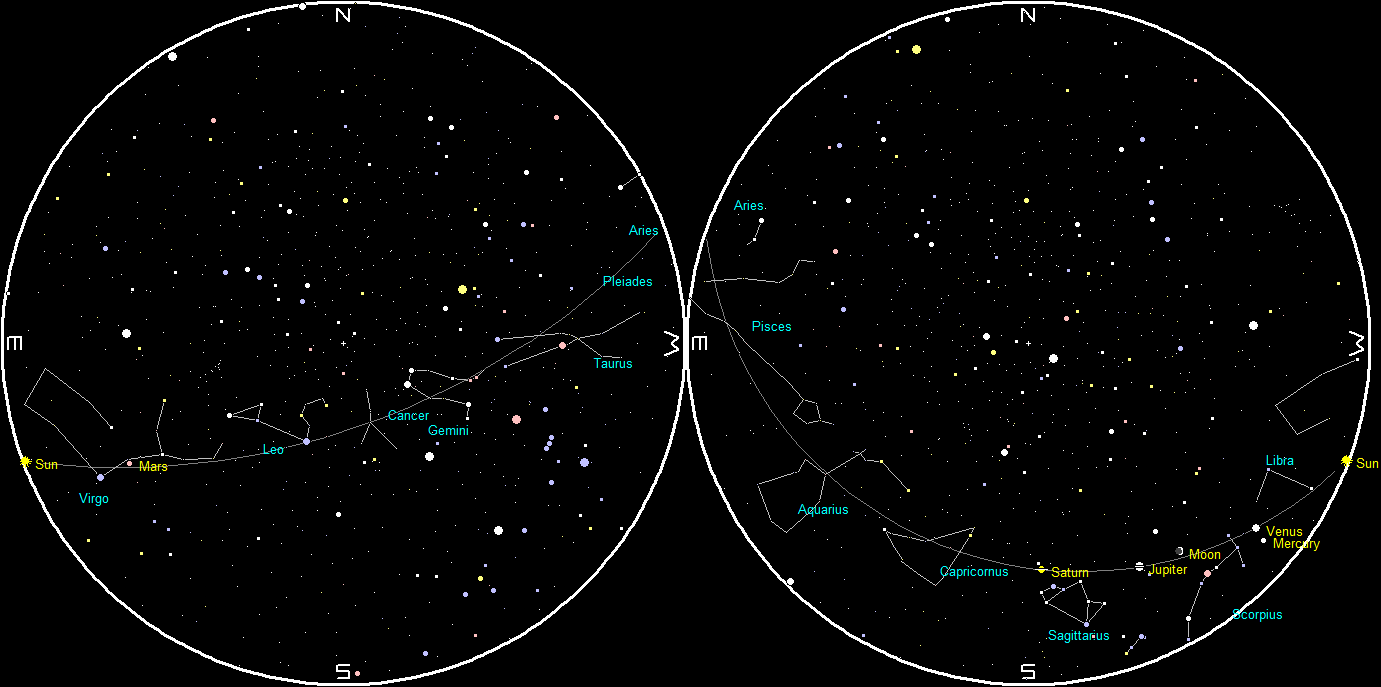
Planets and the Moon at sunset and sunrise of a single night starting with sunset on the right on October 30, 2019. The night ends on the left with sunrise on the 31st. Click on the image to enlarge. Created using my LookingUp program.
10/23/2019 – Ephemeris – Our weekly look at the bright planets
Ephemeris for Wednesday, October 23rd. Today the Sun will be up for 10 hours and 36 minutes, setting at 6:45, and it will rise tomorrow at 8:09. The Moon, 2 days past last quarter, will rise at 3:24 tomorrow morning.
Let’s look at the bright planets for this week. Venus and Mercury are too close to the Sun to be seen. They are on the evening or east side of the Sun. Bright Jupiter will be low in the southwestern sky as it gets dark. It will set at 9:23 p.m. Jupiter is moving at nearly its fastest to the east now and next year will be where Saturn is now. Saturn, the ringed planet, will be in the south-southwestern sky in the evening, and will set at 11:06 p.m. Next year it will be a bit farther east. Jupiter is approaching Saturn in our sky. They will cross paths late next year on December 21st, something they do about every 20 years. Mars will rise in the east at 6:36 a.m.
The times given are for the Traverse City/Interlochen area of Michigan. They may be different for your location.
Addendum
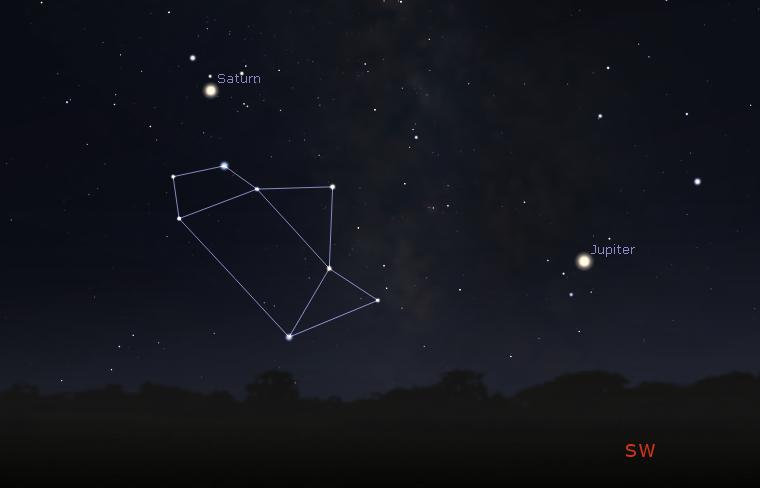
Saturn and JUpiter with the Teapot of Sagittarius in the southwest tonight at 8 p.m. October 23, 2019. Created with Stellarium.
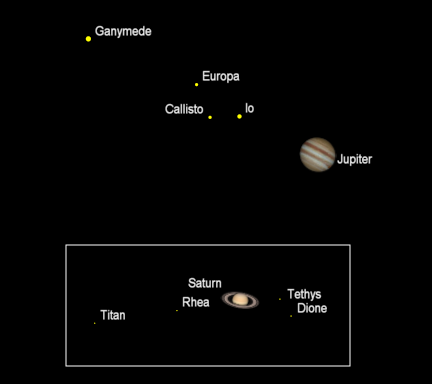
Telescopic views of Jupiter and Saturn with the same magnification at 8 p.m. tonight October 23, 2019. Created using Cartes du Ciel (Sky Charts).
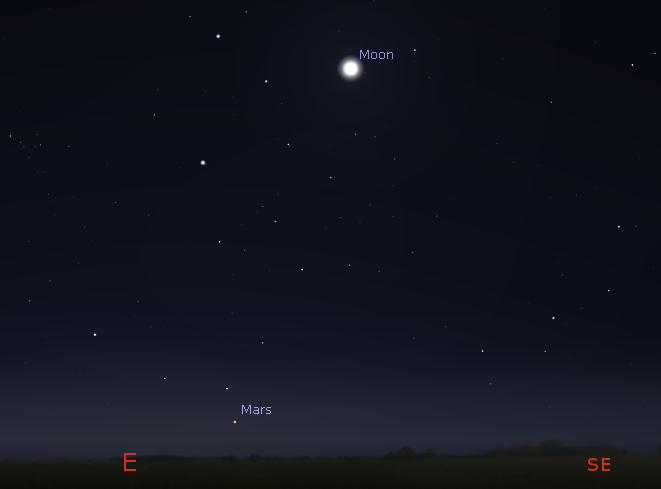
Mars and the Moon at 7 a.m. tomorrow October 24, 2019. At thi scale the program shows the Moon as a blob. Created using Stellarium.
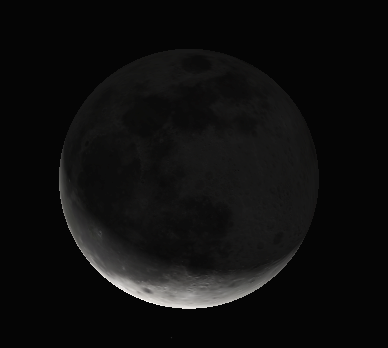
The Moon as it might be seen in binoculars, including earth shine, at 7 a.m. tomorrow October 24, 2019. Created using Stellarium.
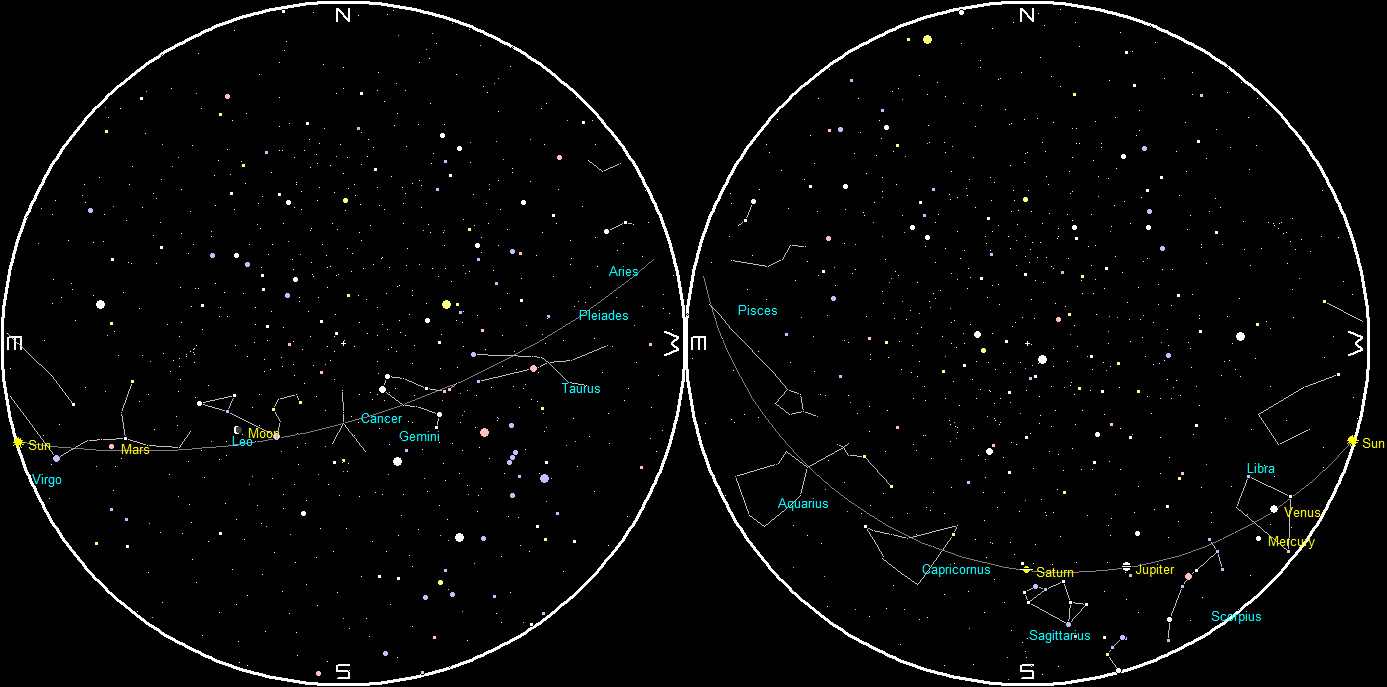
Planets and the Moon at sunset and sunrise of a single night starting with sunset on the right on October 23, 2019. The night ends on the left with sunrise on the 24th. Click on the image to enlarge. Created using my LookingUp program.
10/16/2019 – Ephemeris – The bright planets and another talk I’m giving tonight
Ephemeris for Wednesday, October 16th. Today the Sun will be up for 10 hours and 57 minutes, setting at 6:56, and it will rise tomorrow at 8:00. The Moon, 3 days past full, will rise at 8:44 this evening.
Let’s look at the bright planets for this week. Mars, Venus and Mercury are too close to the Sun to be seen. Venus and Mercury are on the evening or east side of the Sun, Mars is on the west or morning side. Bright Jupiter will be low in the southwestern sky as it gets dark. It will set at 9:46 p.m. Saturn, the ringed planet, will be in the south-southwestern sky in the evening, and set at 11:32 p.m.
Tonight at 7 p.m. I will be giving an illustrated talk Apollo and the Moon Race at the main branch of the Traverse Area District library on Woodmere in Traverse City. It traces the events from Sputnik to the last Apollo mission to the Moon, the tumultuous 15 years of the space race between the United Stares and the Soviet Union.
The times given are for the Traverse City/Interlochen area of Michigan. They may be different for your location.
Addenda
The planets this week
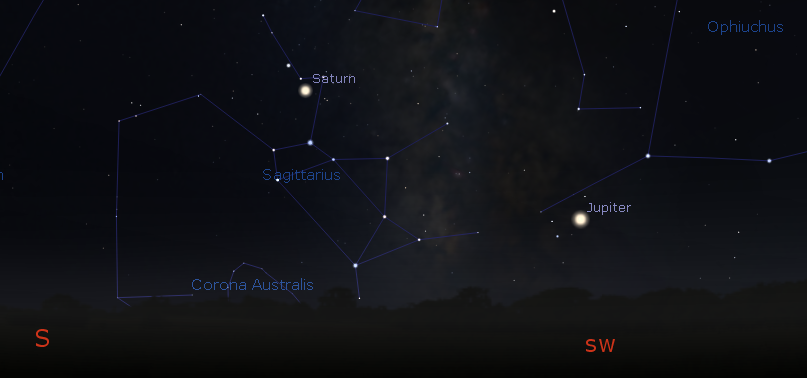
Jupiter, Saturn and the Moon at 8:30 p.m. tonight October 16, 2019. Click on the image to enlarge. Created using Stellarium.
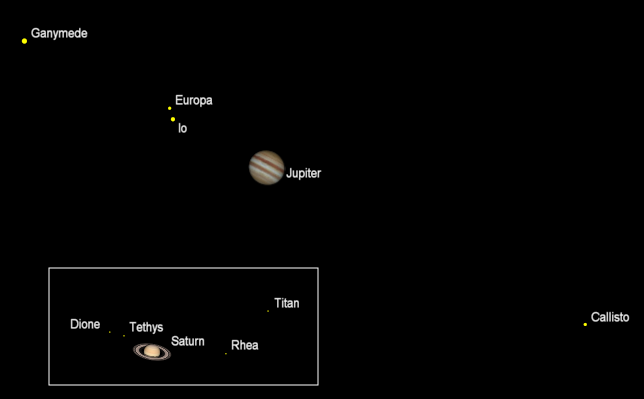
Telescopic views of Jupiter and Saturn with the same magnification at 8:30 p.m. tonight October 16, 2019. Created using Cartes du Ciel (Sky Charts).
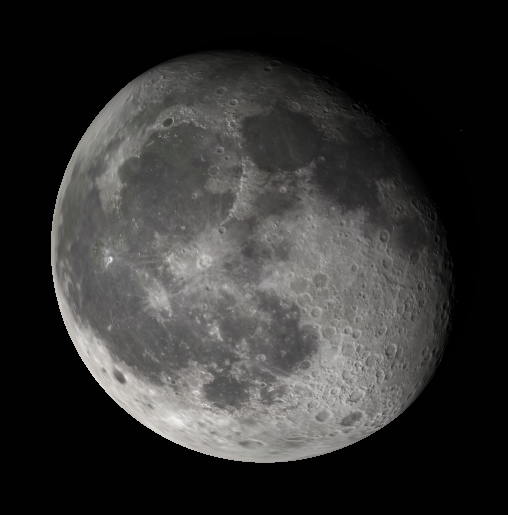
The waning gibbous Moon at 9:30 tonight October 16, 2019. Created using Stellarium.
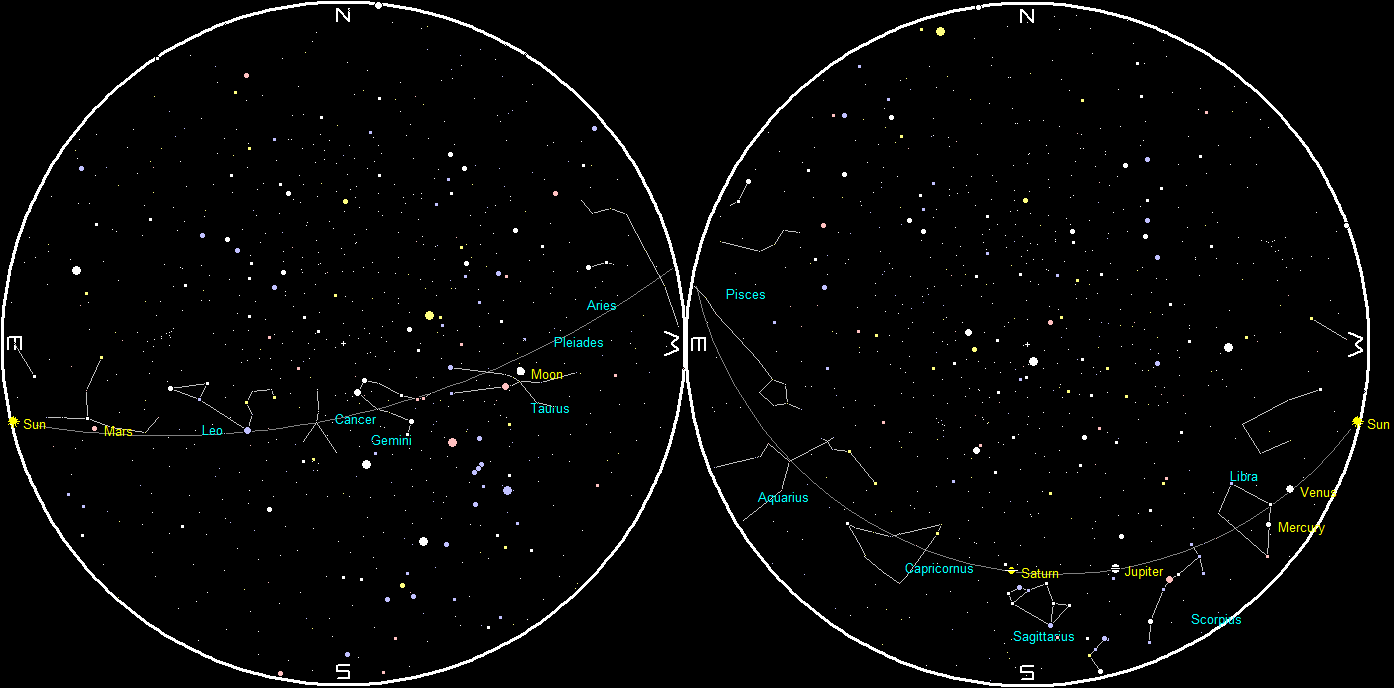
Planets and the Moon at sunset and sunrise of a single night starting with sunset on the right on October 16, 2019. The night ends on the left with sunrise on the 17th. Click on the image to enlarge. Created using my LookingUp program.
Apollo and the Race to the Moon

Apollo and the Race to the Moon Title slide
10/09/2019 – Ephemeris – Where are the bright planets?
Ephemeris for Wednesday, October 9th. Today the Sun will be up for 11 hours and 18 minutes, setting at 7:09, and it will rise tomorrow at 7:51. The Moon, half way from first quarter to full, will set at 4:22 tomorrow morning.
Let’s look at the bright planets for this week. Mars, Venus and Mercury are too close to the Sun to be seen. Venus and Mercury are on the evening or east side of the Sun, Mars is on the west or morning side. Bright Jupiter will be low in the southwestern sky as it gets dark. Jupiter will set at 10:09 p.m. Jupiter is moving at nearly its fastest to the east now and next year will be where Saturn is now. Saturn, the ringed planet, will be in the south-southwestern sky in the evening, and set at 11:58 p.m. Next year it will be a bit farther east. Jupiter is approaching Saturn in our sky. They will cross paths late next year, December 21st, something they do about every 20 years.
The times given are for the Traverse City/Interlochen area of Michigan. They may be different for your location.
Addendum
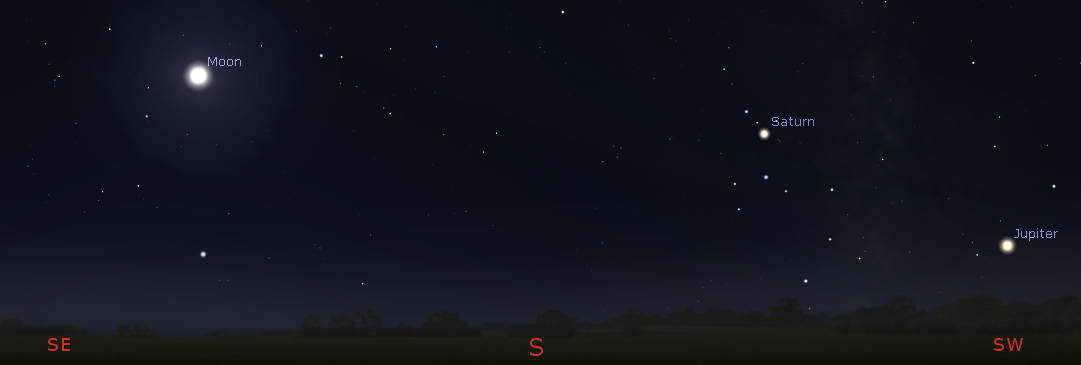
Jupiter, Saturn and the Moon at 9 p.m. October 9, 2019. Click on the image to enlarge. Created using Stellarium.
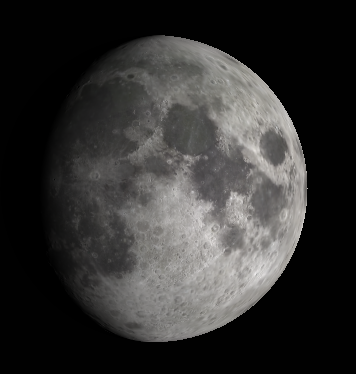
The gibbous Moon as it might appear in binoculars at 9 p.m. October 9, 2019. Created using Stellarium.
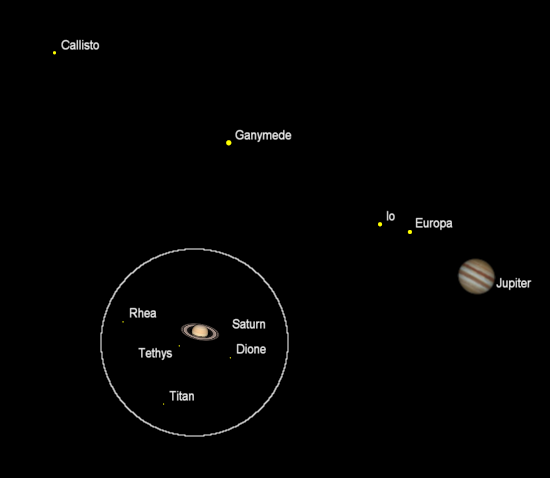
Telescopic views of Jupiter and Saturn with the same magnification at 9 p.m. October 9, 2019. Created using Cartes du Ciel (Sky Charts).
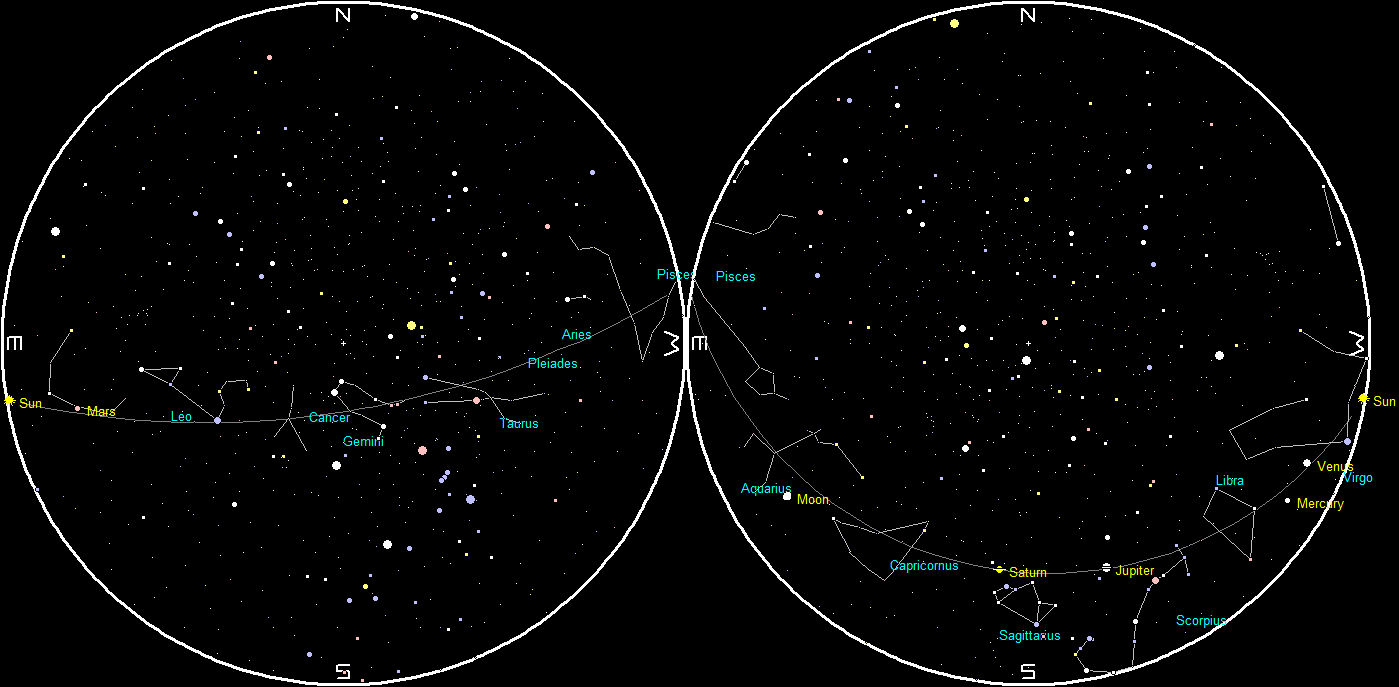
Planets and the Moon at sunset and sunrise of a single night starting with sunset on the right on October 9, 2019. The night ends on the left with sunrise on the 10th. Click on the image to enlarge. Created using my LookingUp program.
10/07/2019 – Ephemeris – Tides on and by the Moon
Ephemeris for Monday, October 7th. Today the Sun will be up for 11 hours and 24 minutes, setting at 7:12, and it will rise tomorrow at 7:49. The Moon, 2 days past first quarter, will set at 2:21 tomorrow morning.
We always see the same face of the Moon turned toward the Earth. This does not mean that the Moon doesn’t rotate. It means that the Moon rotates on its axis in exactly the same time it takes to orbit the Earth. That is no coincidence. The effect of the Earth gravitation across the diameter of the Moon have essentially locked the Moon’s rotation to its revolution period. The crust of the far side of the Moon is thicker than the Earth facing side. The Moon is trying to do the same thing to the Earth. Its pull on the side of the Earth facing it is greater than the pull on the Earth’s opposite side. This stresses the Earth and raises tides in the ocean which actually slow the Earth’s rotation a tiny bit. As a consequence it pushes the Moon away by about 3.8 centimeters a year.
The times given are for the Traverse City/Interlochen area of Michigan. They may be different for your location.
Addendum
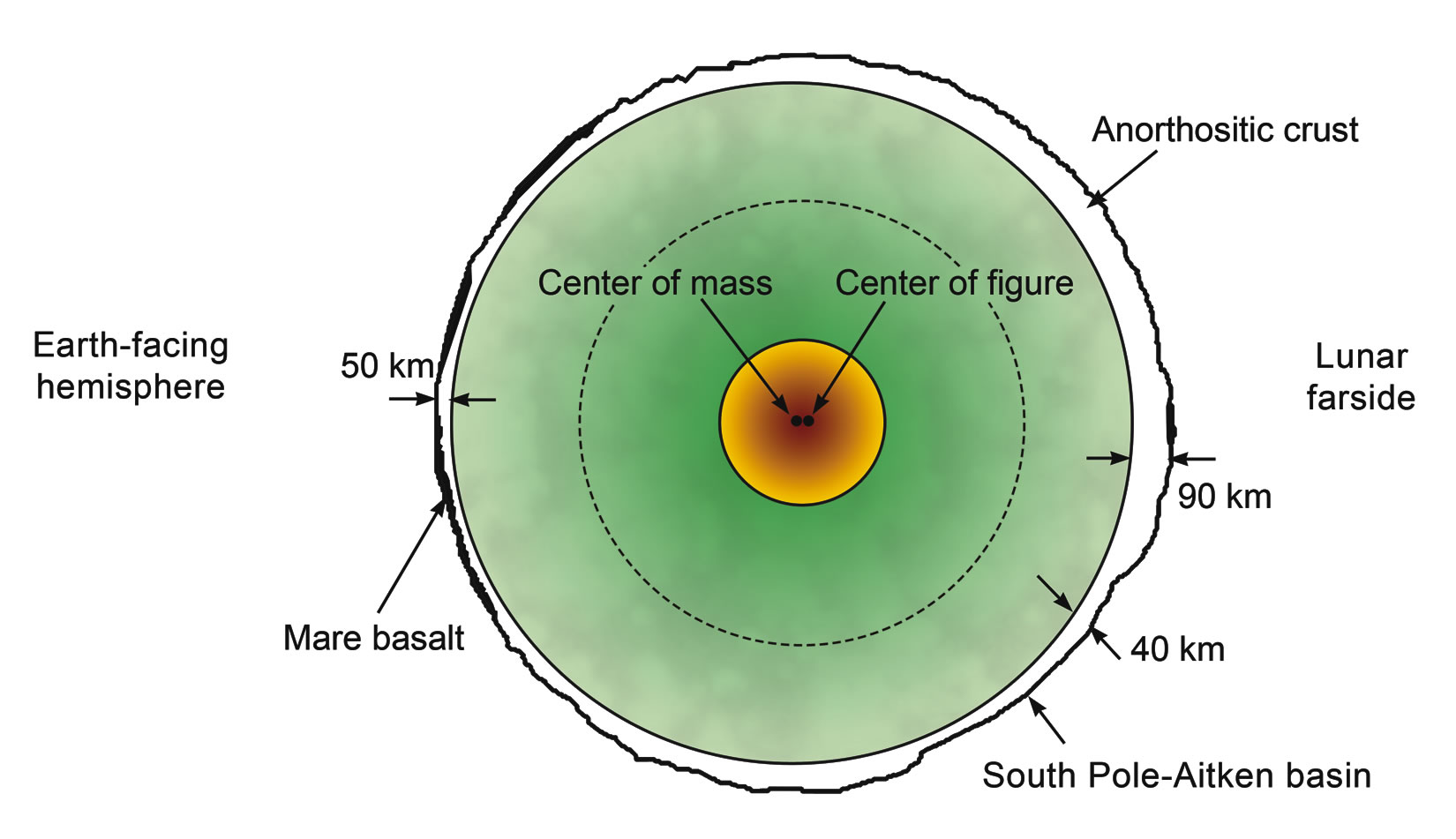
Asymmetry of the crust of the Moon. Credit Lunar and Planetary Institute and Center for Lunar Science and Exploration.
For more information on this illustration: https://www.lpi.usra.edu/exploration/training/illustrations/planetaryInteriors/ 4th illustration.
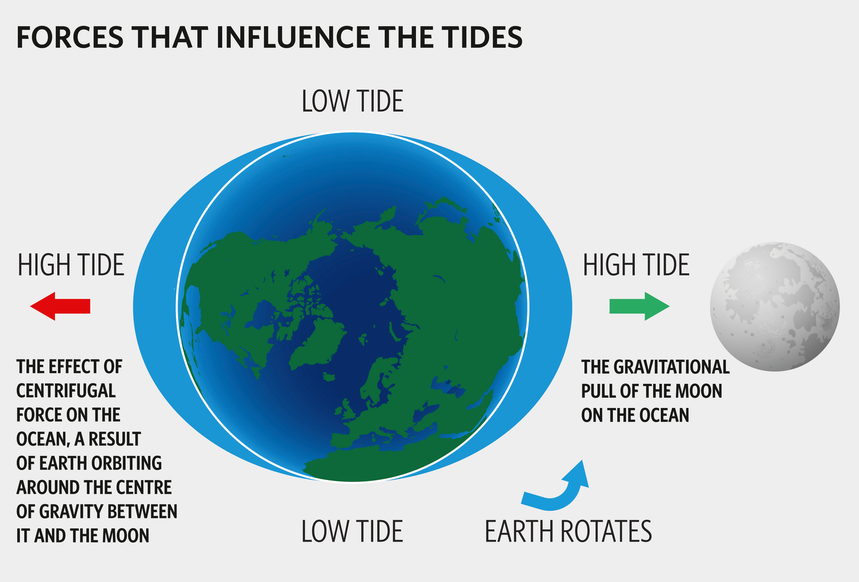
Credit: Cosmosmagazine.com
10/02/2019 – Ephemeris – A look at the bright planets for this week
Ephemeris for Wednesday, October 2nd. Today the Sun will be up for 11 hours and 40 minutes, setting at 7:21, and it will rise tomorrow at 7:42. The Moon, 3 days before first
quarter, will set at 10:04 this evening.
Let’s look at the bright planets for this week. Mars, Venus and Mercury are too close to the Sun to be seen. Venus and Mercury are on the evening or east side of the Sun, Mars is on the west or morning side. Bright Jupiter will be low in the southwestern sky as it gets dark. With steadily held binoculars a few of the 4 largest satellites of Jupiter can be seen. All four: Ganymede, Io and Europa on the east and Callisto far to the west of the planet can be easily spotted in telescopes this evening. Jupiter will set at 10:29 p.m. Saturn, the ringed planet, will be in the south-southwestern sky in the evening, and set at 12:24 a.m. Jupiter is approaching Saturn in our sky. They will cross paths late next year, something they do about every 20 years.
The times given are for the Traverse City/Interlochen area of Michigan. They may be different for your location.
Addendum
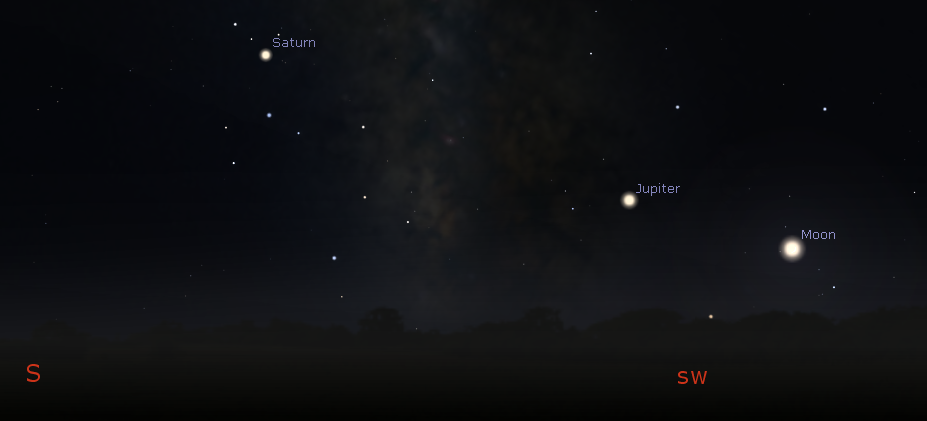
Jupiter, Saturn and the Moon at 9 p.m. October 2, 2019. Created using Stellarium.
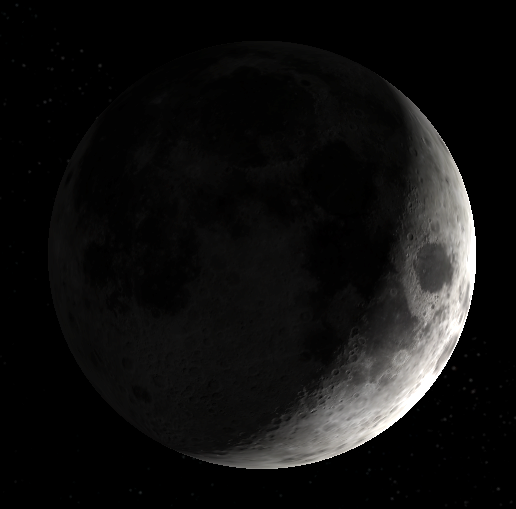
The crescent Moon as it might appear in binoculars or a small telescope tonight at 9 p.m. October 2, 2019. Created using Stellarium.
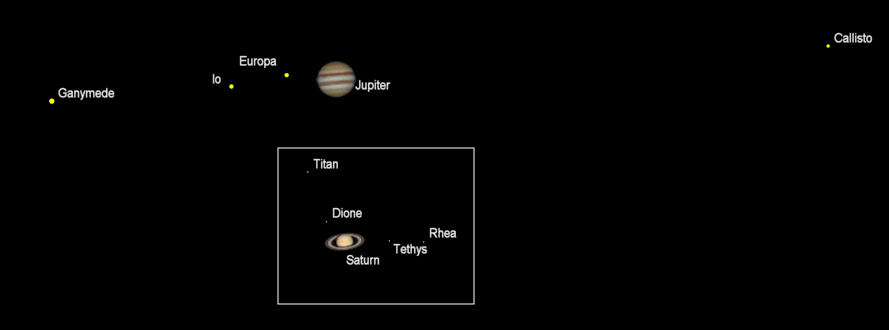
Telescopic views of Jupiter and Saturn with the same magnification at 9 p.m. October 2, 2019. Created using Cartes du Ciel (Sky Charts).
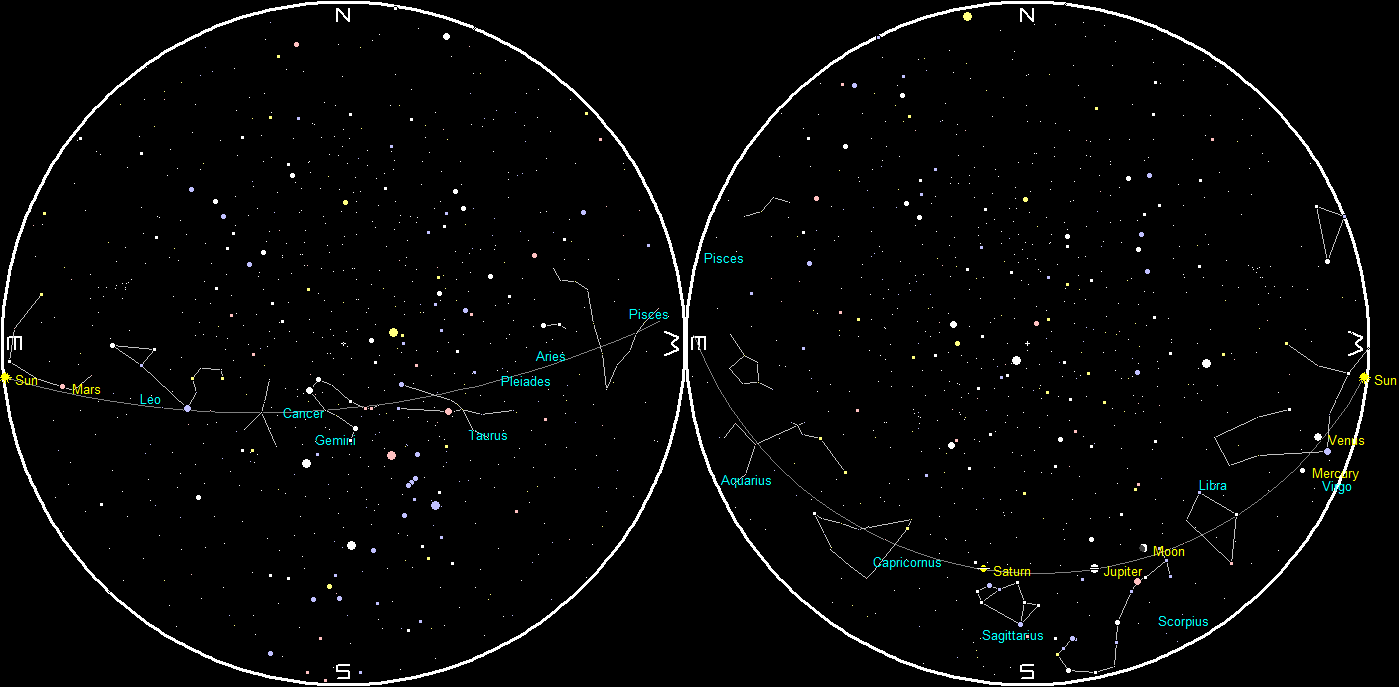
Planets and the Moon at sunset and sunrise of a single night starting with sunset on the right on October 2, 2019. The night ends on the left with sunrise on the 3rd. Click on the image to enlarge. Created using my LookingUp program.
 Bob Moler's Ephemeris Blog