Archive
Ephemeris: 06/29/2026 – Red stars large and small
This is Ephemeris for Monday, June 29th. Today the Sun will be up for 15 hours and 32 minutes, setting at 9:32, and it will rise tomorrow at 6:00. The Moon, at full today, will rise at 9:53 this evening.
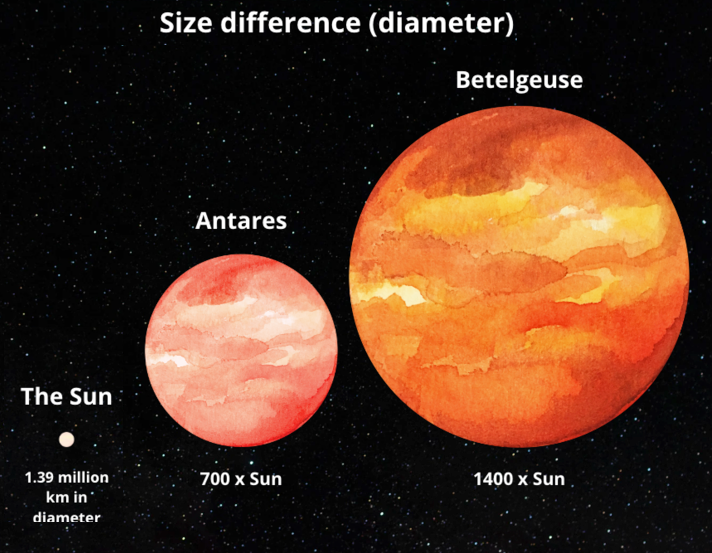
There are two kinds of red stars very bright ones and very dim ones. The bright red ones are very few. One of them in the evening sky now is Antares in the heart of Scorpius the scorpion. Another one is in the winter sky and the most famous red giant of all, Betelgeuse in the shoulder of Orion the hunter. These are giant stars have exhausted the hydrogen in their cores to produce helium and are working on helium or even heavier elements fusing them to still heavier elements at even higher temperatures to keep them alive, but since they are working on the ash of the previous reaction, they won’t last very long, and the star dies, possibly cataclysmically. The higher internal heat bloats the star to be, huge, making its outer layers are actually cooler.
The astronomical event times given in this blog are for the Traverse City/Interlochen area of Michigan (Lat 44.7° N, Long 85.7° W; EDT, UT – 4 hours) unless stated otherwise. Times will be different for other locations.
Addendum