Archive
06/27/2023 – Ephemeris – Preparing to view the upcoming solar eclipses safely
This is Ephemeris for Tuesday, June 27th. Today the Sun will be up for 15 hours and 33 minutes, setting at 9:32, and it will rise tomorrow at 5:59. The Moon, 1 day past first quarter, will set at 2:21 tomorrow morning.
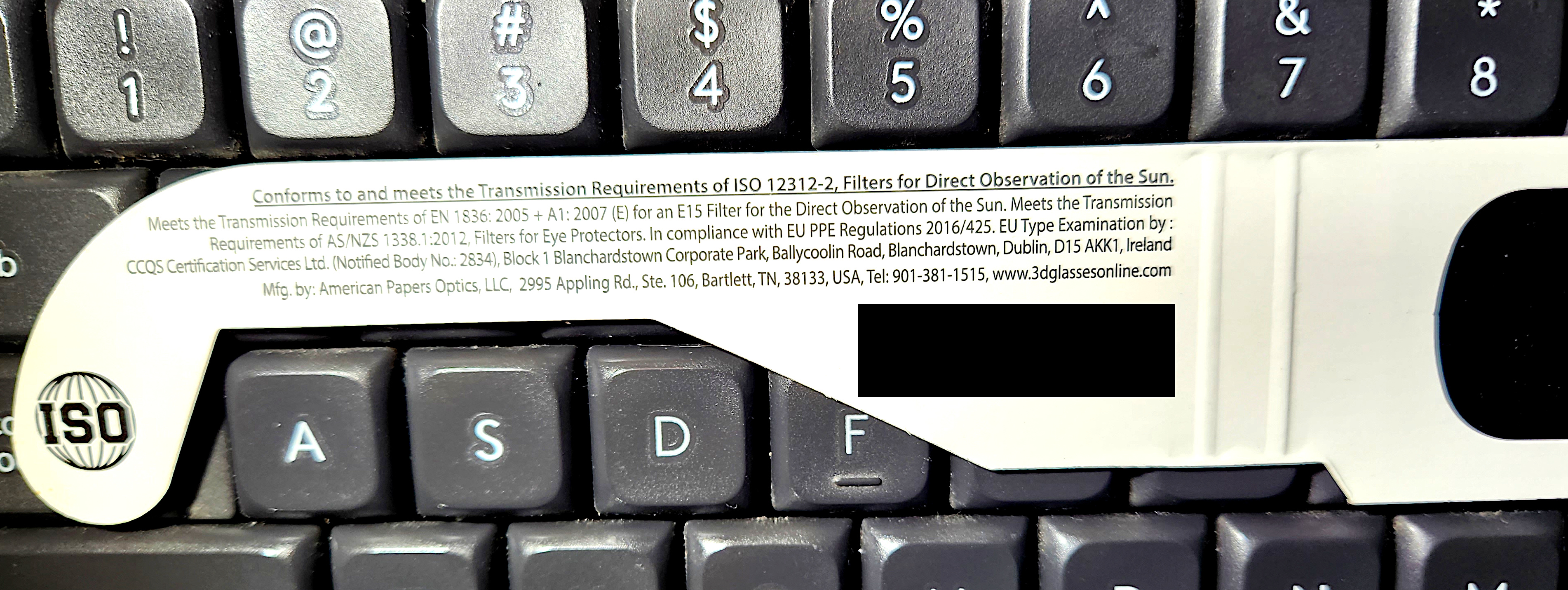
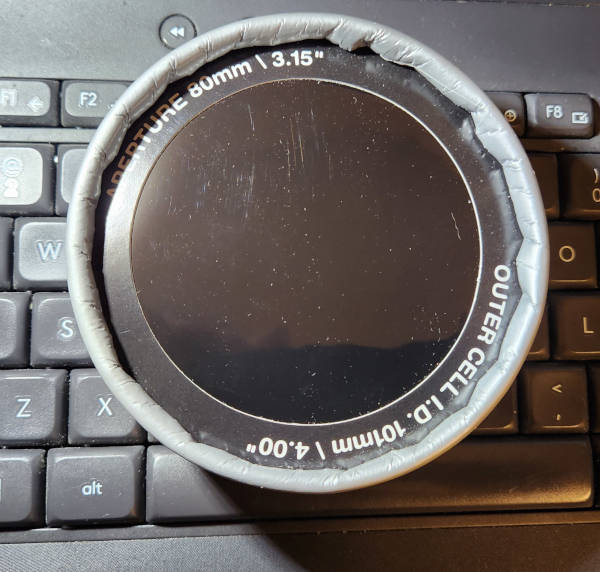
In preparation for the two solar eclipses that will be visible in North America in the next 10 months, I’m going to spend some time describing what the Sun is, and how it appears to us. First point: Never look at the Sun without proper and approved filters. Inexpensive eclipse glasses work fine for the partial phase of a solar eclipse. However, most features, like sunspots, are generally too small to be seen with them. Do not use these glasses with binoculars or a telescope. The plastic filters will melt through in a fraction of a second. Glass filters can shatter from the heat. The only safe solar filter for telescopes is one placed in front of the telescope tube, so it’s only exposed to ambient light and heat. If confused, just ask your local amateur astronomer.
The astronomical event times given are for the Traverse City/Interlochen area of Michigan (EDT, UT –4 hours). They may be different for your location.
Addendum
09/16/2021 – Ephemeris – How safe is the Space Launch System (SLS) compared to the Space Shuttle?
This is Ephemeris for Thursday, September 16th. Today the Sun will be up for 12 hours and 27 minutes, setting at 7:51, and it will rise tomorrow at 7:24. The Moon, 3 days past first quarter, will set at 3:10 tomorrow morning.
Tonight, the planet Saturn will appear above the bright gibbous Moon. It might be a bit hard to spot.
The big NASA moon rocket, the Space Launch System or SLS, borrowed a lot of features from the Space Shuttle. Is it any safer? The answer is yes. The Space Shuttle had no abort system for a catastrophic failure, as we saw with the Challenger accident in 1986. However, even though the SLS uses the same type solid rocket boosters that failed Challenger, the Crew in the Orion capsule is on top of the rocket with an escape system to rocket them away from an exploding core stage. With the Orion capsule, the escape tower will be jettisoned at some point before reaching orbit, possibly making escape impossible in the latter stage of powered flight. Both SpaceX’s Dragon and Boeing’s Starliner have escape rockets built in for the entire flight.
Addendum
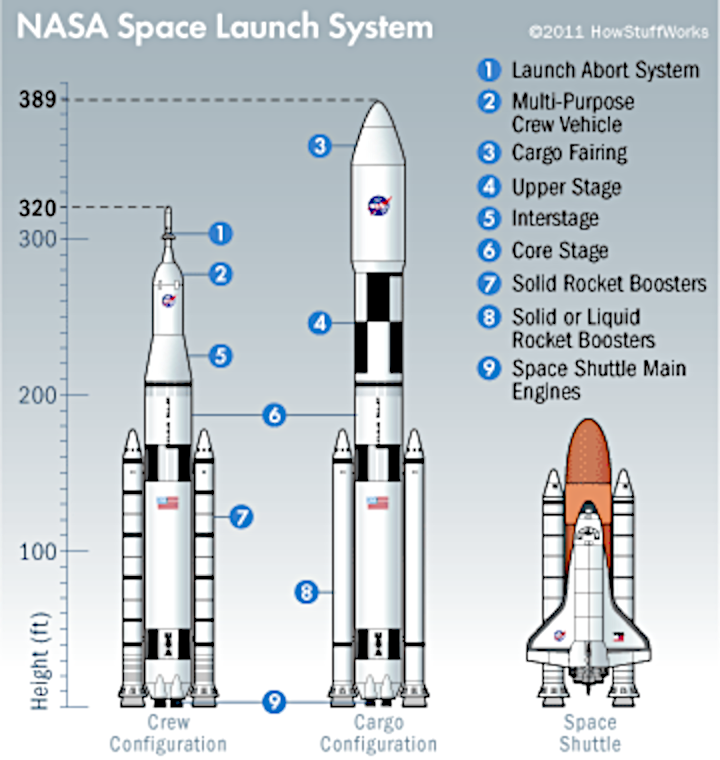
Shuttle-SLS comparisons. Note that this image is 10 years old. The center core stage will, like the external tank on the shuttle, remain unpainted. So far, the cargo version of the is still in the design stage. The Multipurpose Crew Vehicle is now called the Orion Spacecraft. Credit: How Stuff Works.
08/17/2017 – Ephemeris – How do you view the solar eclipse if you don’t have eclipse glasses?
Ephemeris for Thursday, August 17th. The Sun rises at 6:47. It’ll be up for 13 hours and 56 minutes, setting at 8:44. The Moon, 3 days past last quarter, will rise at 3:13 tomorrow morning.
OK here you are 4 days before the solar eclipse and you can’t find any eclipse glasses. What do you do? The answer is project the Sun’s image. I personally do not use eclipse glasses. The projected image is bigger and I don’t get a crick in my neck. The Sun is bright enough to project itself on a screen. A telescope with a low power eyepiece or one side of a pair of binoculars project a wonderful image of the Sun. An envelope with a quarter to half-inch hole holding a mirror, can project the Sun on the side of a building some feet away. If worst come to worst take a colander, and use the holes to project a multitude of Suns. We’ll be at Friday Night Live tomorrow on Front Street in Traverse City to demonstrate these methods. Come between 5:30 and 7:30 p.m. for demonstrations if it’s clear.
The times given are for the Traverse City/Interlochen area of Michigan. They may be different for your location.
Addendum
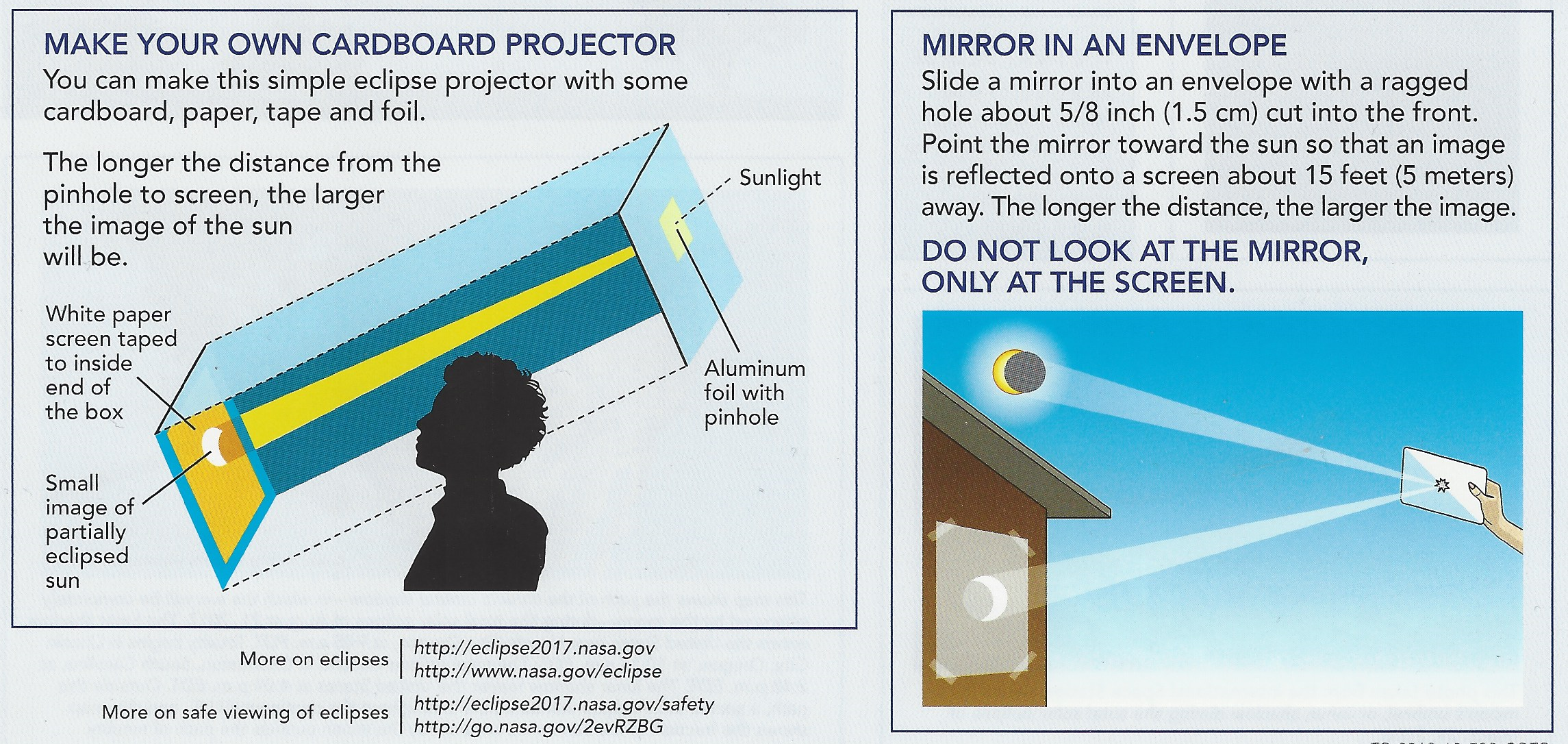
Two pinhole solar projection methods. Credit NASA.
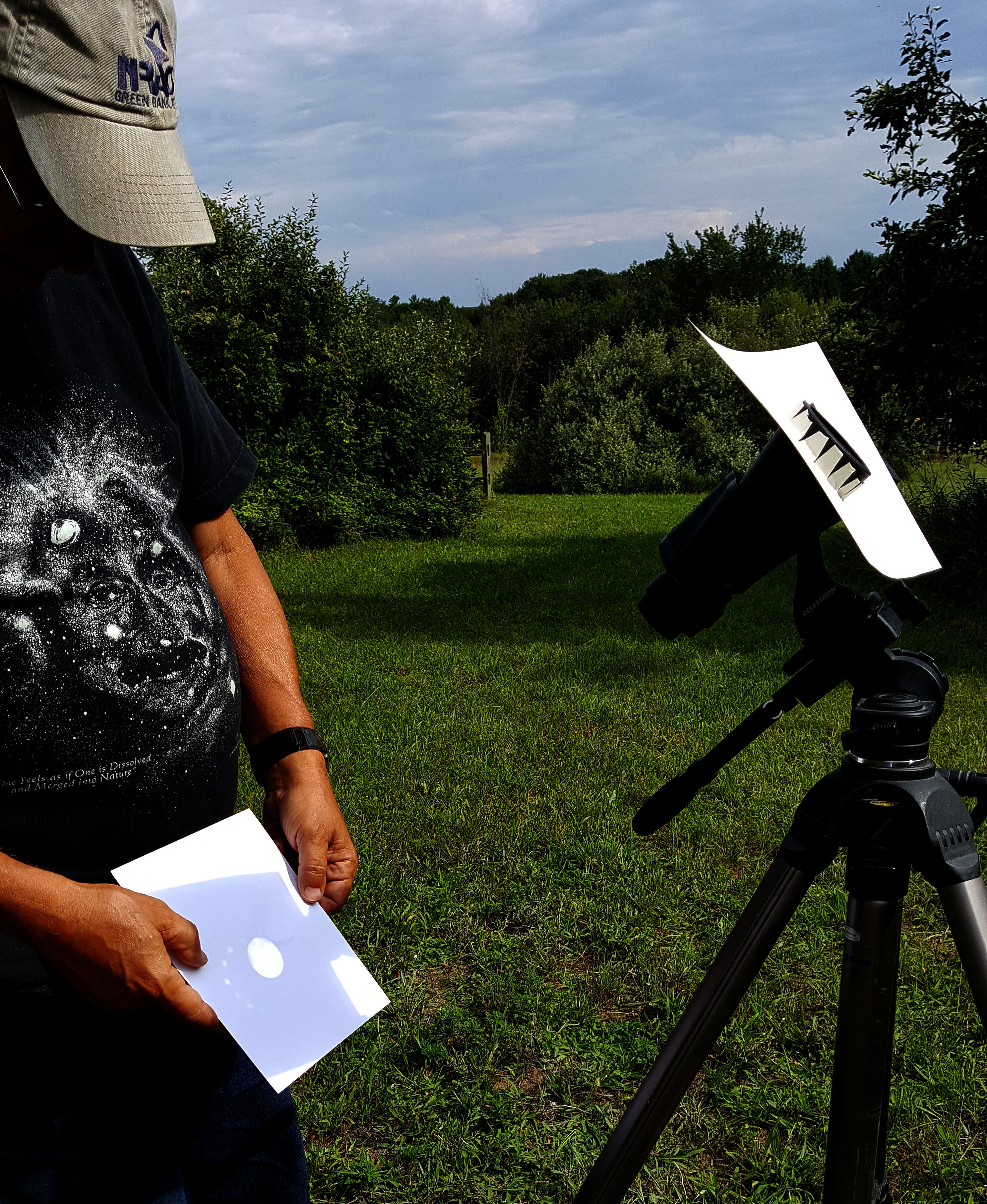
I’m demonstrating using binoculars to project the Sun. The lens cap is on the unused side. The shade in front creates a shadow to project the Sun in. Be careful to not let anyone attempt to look through the projection side. A kid tried to do it when I was demonstrating the technique at the last Sun ‘n Star Party. I had to push him away before he was able to look. Photo by Bea Farrell (granddaughter).
 Bob Moler's Ephemeris Blog