Archive
Ephemeris: 03/12/2026 – Cancer the crab used to welcome summer
This is Ephemeris for Thursday, March 12th. Today the Sun will be up for 11 hours and 44 minutes, setting at 7:45, and it will rise tomorrow at 7:58. The Moon, 1 day past last quarter, will rise at 5:25 tomorrow morning.
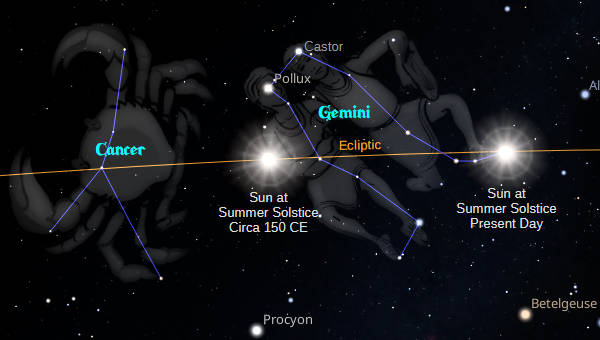
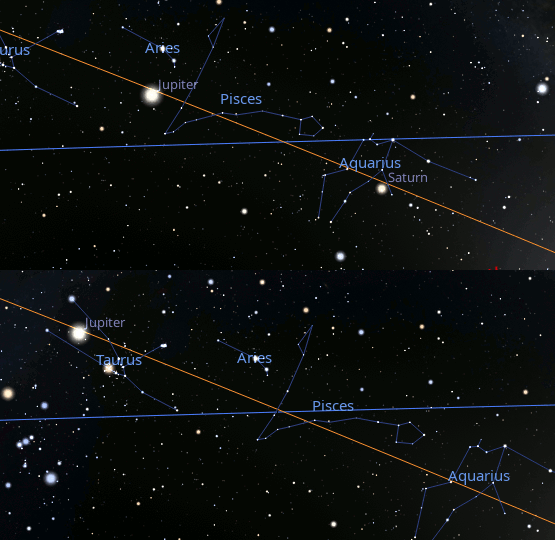
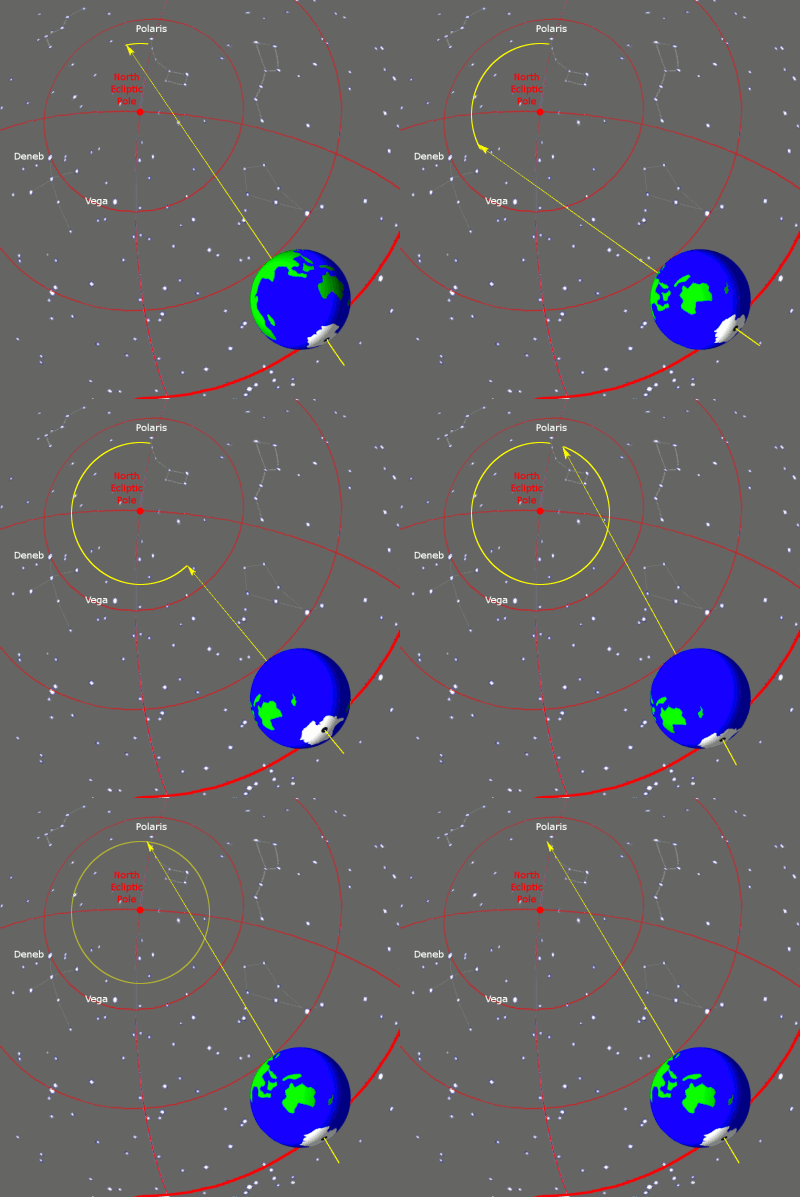
There’s a line on some globes and maps at approximately 23 1/2° north latitude called the Tropic of Cancer. It’s related to the constellation Cancer the crab. However, Cancer no longer fits that role that it was named to a couple of thousand years ago, when the sun entered the constellation of Cancer on the first day of summer. That’s the latitude on the Earth where the Sun was directly overhead on the first day of summer. Now that an honor goes to Gemini. The way we draw the figure of that constellation, the Sun is right near Castor’s big toe on the first day of summer. But I don’t think they’re going to change the name anytime soon. The reason for the change is that the Earth’s axis slowly wobbles like a top or gyroscope as they slow down. The effect is called precession.
The astronomical event times given in this blog are for the Traverse City/Interlochen area of Michigan (Lat 44.7° N, Long 85.7° W; EST, UT – 5 hours) unless stated otherwise. Times will be different for other locations.
Addendum
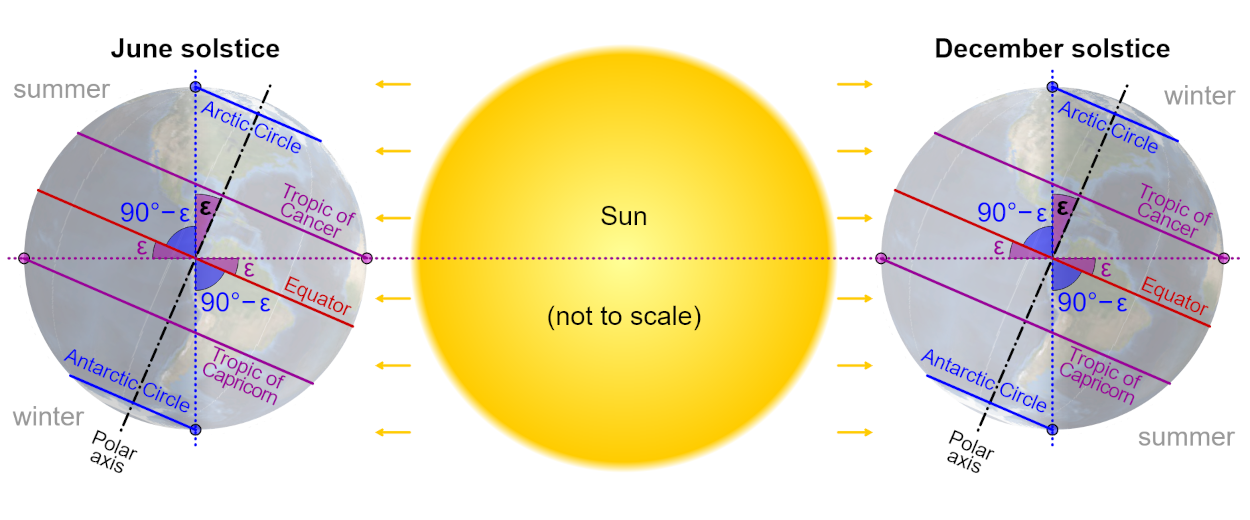
The Greek letter epsilon in the image above represents the tilt of the Earth’s axis of around 23.5°. Astronomers call it the obliquity of the ecliptic, the angle between the ecliptic and the celestial equator as seen in the illustration below.
06/20/2022 – Ephemeris – Here we are at the last full day of spring
This is Ephemeris for Juneteenth, Observed, Monday, June 20th. Today the Sun will be up for 15 hours and 34 minutes, setting at 9:31, and it will rise tomorrow at 5:57. The Moon, at last quarter today, will rise at 2:09 tomorrow morning.
Here we are at the last full day of spring. Summer will begin at 5:14 EDT, or 9:14 UT tomorrow morning, when the Sun reaches its highest point on the celestial sphere, and directly over the northern latitude line called the Tropic of Cancer. At that time, folks at or north of the Arctic Circle at about 66 ½ degrees north latitude won’t see the Sun set. As it is, Interlochen is only about 4 degrees latitude south of the land of the all night twilight. It’s neat, around here in the western part of the Lower Michigan, to go out around midnight and see a bit of the last twilight glow near the north. Remember that around here, local or astronomical midnight occurs around 1:45 am. Ah politicians, aren’t they wonderful. And they’ve just made Daylight Saving Time permanent.
The astronomical event times given are for the Traverse City/Interlochen area of Michigan (EDT, UT – 4 hours). They may be different for your location.
Addendum
The event at 5:14 am EDT or 9:14 UT is called the summer solstice, or in deference to our Southern Hemisphere neighbors, the June solstice, because for them winter is starting. Solstice means “Sun stands still”. It doesn’t, of course. The sun is always moving eastward against the stars. However, if one checks the altitude of the Sun in the south at local noon each day, the Sun would move higher each day since the winter solstice until around June 21st, and go no further. It would slowly begin a retreat, day by day. That pause at the highest point is the solstice.
 Bob Moler's Ephemeris Blog