Archive
03/30/2015 – Ephemeris – The importance of meteorites and asteroids
Ephemeris for Monday, March 30th. The Sun will rise at 7:27. It’ll be up for 12 hours and 39 minutes, setting at 8:07. The Moon, 3 days past first quarter, will set at 5:33 tomorrow morning.
On Friday the 3rd Joe Brooks will be giving a talk at the Grand Traverse Astronomical Society on meteorites. That will be at 8 p.m. at Northwestern Michigan College’s Rogers Observatory. NASA has the Dawn spacecraft now settling into orbit of the largest asteroid Ceres. It is the asteroid belt that is the source of meteorites. Meteorites are either pieces of destroyed protoplanets due to collisions in the asteroid belt or primitive objects like carbonaceous chondrites pristine that date back to 4.567 billion years ago, the formation of the solar system. Meteorites tend to be contaminated by the environment. That’s why samples of asteroids will be so valuable for planetary defense and understanding the origin of the solar system.
Times are for the Traverse City/Interlochen area of Michigan. They may be different for your location.
Addendum
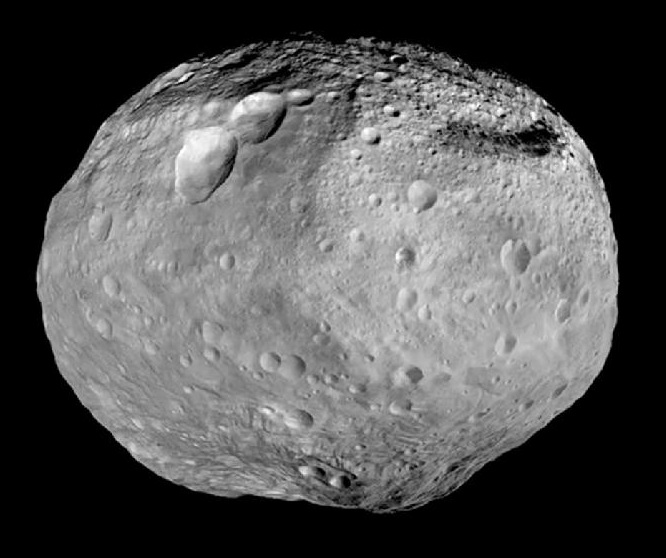
Looking back at Vesta as Dawn headed off to Ceres. Credit: NASA/JPL-Caltech/UCAL/MPS/DLR/IDA
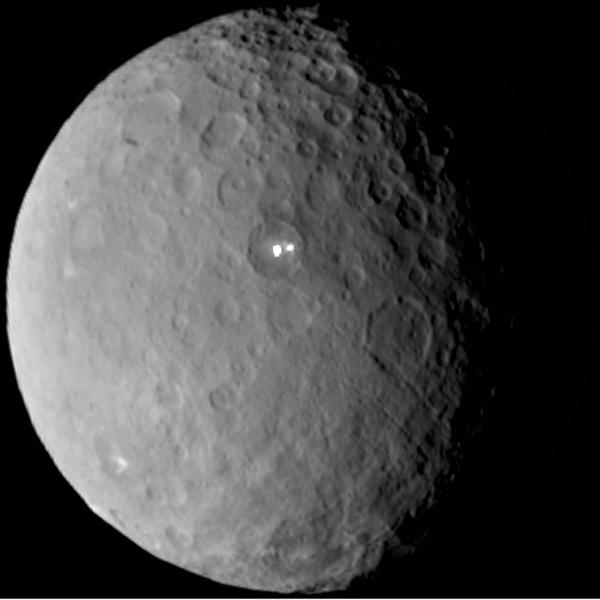
The bright spot is two. Picture taken February 19, 2015 from 29,000 miles (46,700 km). Credit: NASA/JPL-Caltech/UCLA/MPS/DLR/IDA.
03/06/2015 – Ephemeris – Learn about this year’s adventures in exploring the soiar system tonight
Ephemeris for Friday, March 6th. The Sun will rise at 7:12. It’ll be up for 11 hours and 24 minutes, setting at 6:36. The Moon, 1 day past full, will rise at 7:47 this evening.
This evening yours truly will be giving a program at the monthly meeting of the Grand Traverse Astronomical Society at 8 p.m. at Northwestern Michigan College’s Rogers Observatory. It’s entitled Asteroids and Dwarf Planets and Comets, oh my! It’s about the three solar system bodies being visited this year by spacecraft from NASA and the European Space Agency. The asteroid is Ceres, which the Dawn spacecraft entered orbit of today. The dwarf planet is Pluto which is the target of a summer flyby by the New Horizon spacecraft. The comet is 67P/Churyumov–Gerasimenko orbited by ESA’s Rosetta spacecraft. There will be a star party at 9 p.m. following the meeting.
Times are for the Traverse City/Interlochen area of Michigan. They may be different for your location.
Addendum
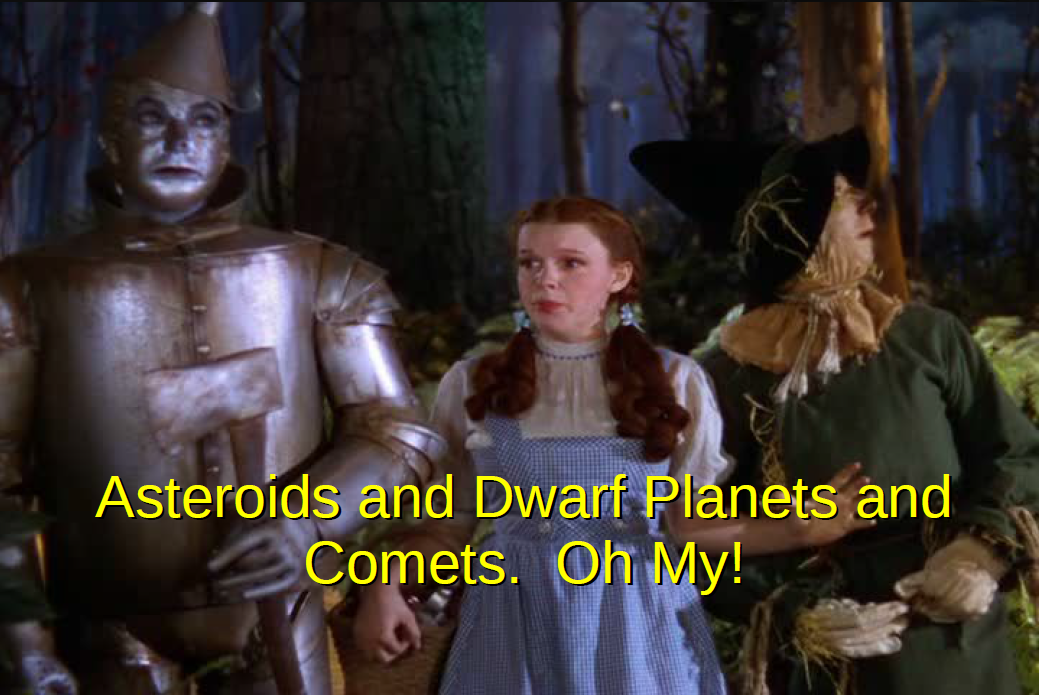
Apologies to MGM.
Looking back at Vesta as Dawn headed off to Ceres. Credit: NASA/JPL-Caltech/UCAL/MPS/DLR/IDA
The bright spot is two. Picture taken February 19, 2015 from 29,000 miles (46,700 km). Credit: NASA/JPL-Caltech/UCLA/MPS/DLR/IDA.
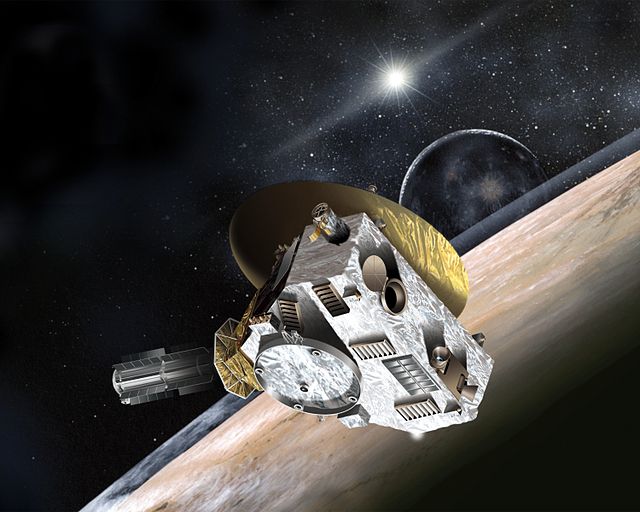
Artist conception of the New Horizons spacecraft at Pluto. Credit: NASA/Johns Hopkins University Applied Physics Laboratory/Southwest Research Institute
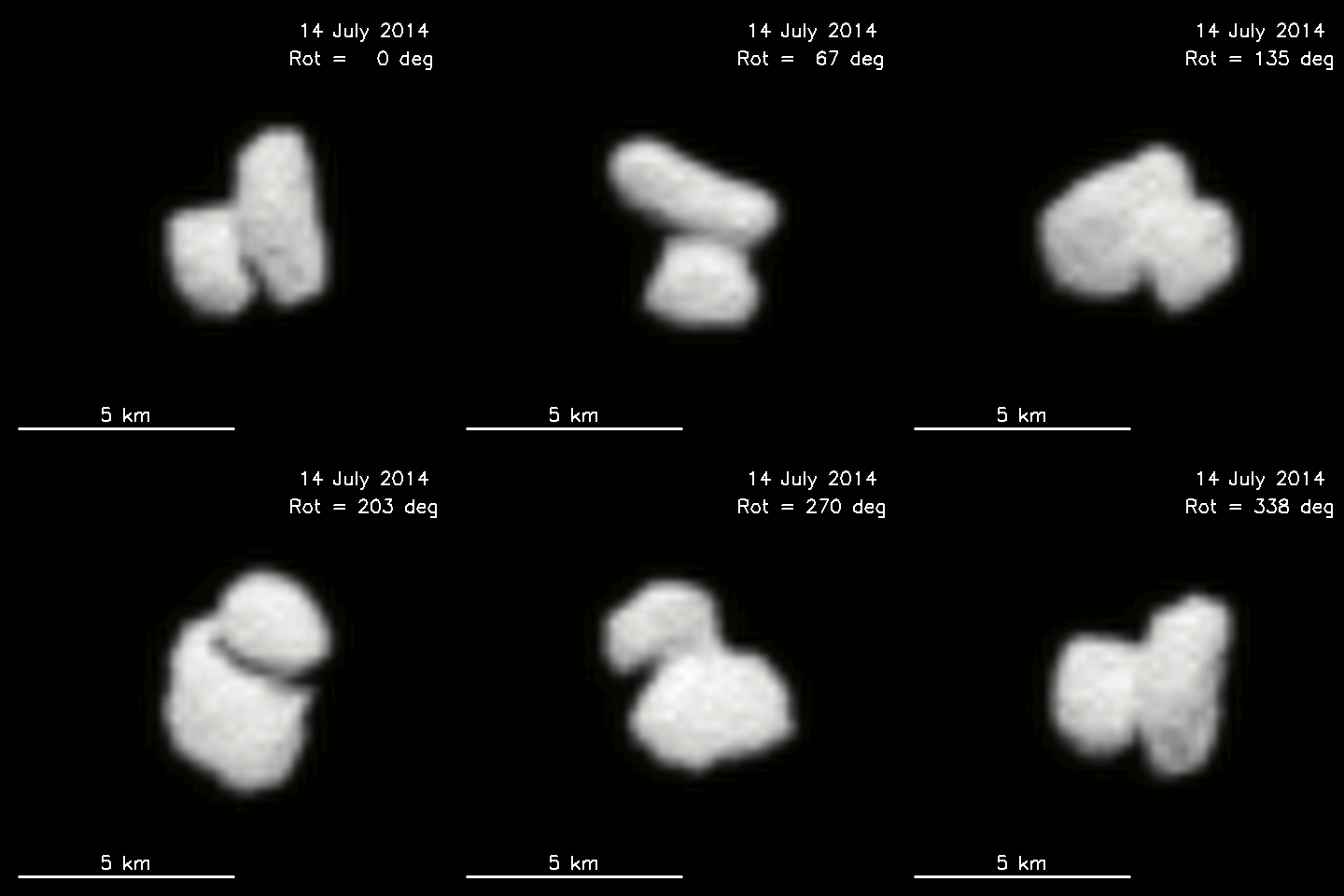
An animation of Comet 67p/Churyumov–Gerasimenko rotation on July 14, 2014. The 30 pixel wide image has been smoothed. The Rotation rate is 1 rotation every 12.4 hours. Credits: ESA/Rosetta/MPS for OSIRIS Team MPS/UPD/LAM/IAA/SSO/INTA/UPM/DASP/IDA
03/02/2015 – Ephemeris – The Dawn spacecraft (The turtle wins the race)
Ephemeris for Monday, March 2nd. The sun will rise at 7:19. It’ll be up for 11 hours and 12 minutes, setting at 6:31. The moon, 3 days before full, will set at 6:00 tomorrow morning.
On Thursday March 5th NASA’s Dawn spacecraft will fall under the gravitational influence of the asteroid, or actually recently promoted dwarf planet Ceres and enter orbit. The journey took 7 years including an intermediate year-long stop at the asteroid Vesta. Dawn uses the latest in ion thrusters, or latest when it was launched. Using power generated by its solar panels it ejects xenon ions from one of its three ion thrusters to produce a thrust comparable to the weight of a piece of paper. It can accelerate the spacecraft from zero to 60 miles per hour in a few days. In the tale of the hare and the tortoise it’s in the tortoise class, at least to start. Ion engines are 10 times as efficient as chemical rockets and they can thrust for years.
Times are for the Traverse City/Interlochen area of Michigan. They may be different for your location.
Addendum
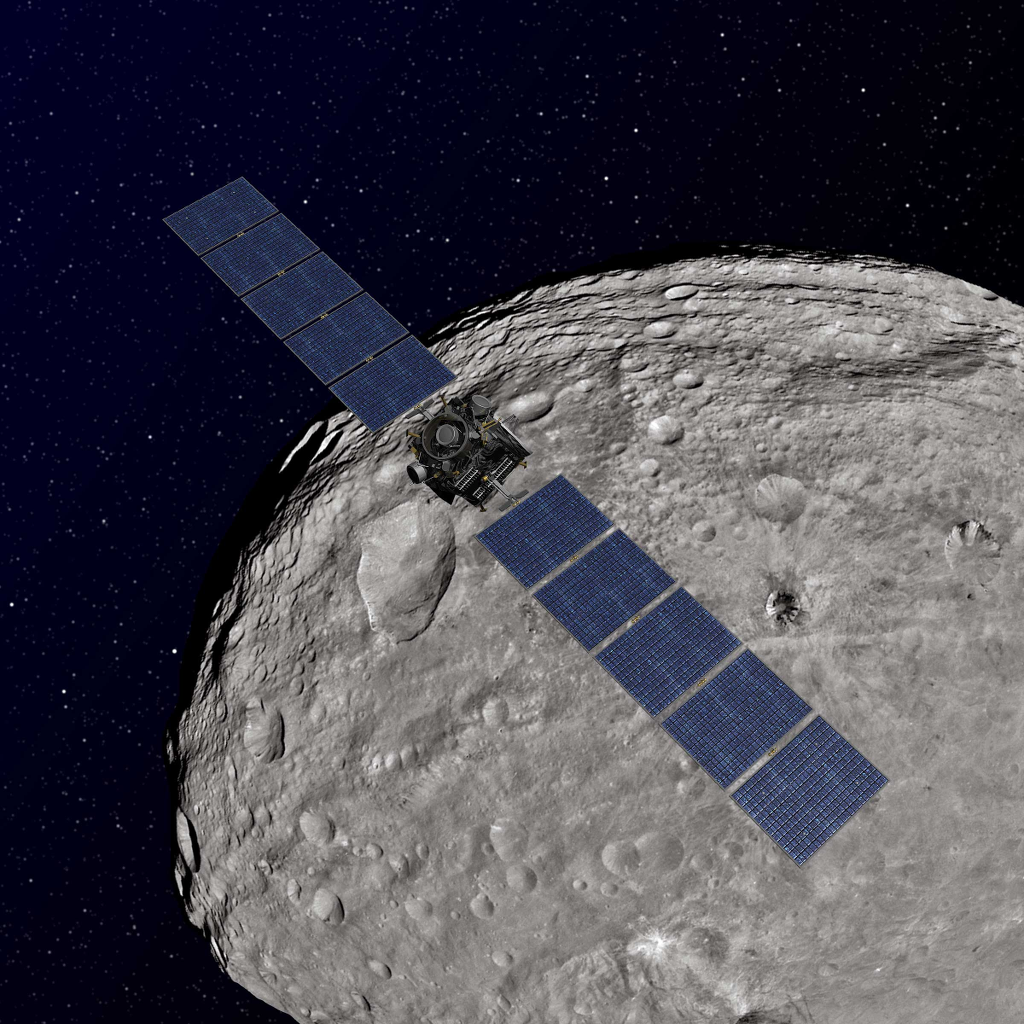
Artist’s rendition of the Dawn spacecraft at Vesta. Credit: NASA/JPL
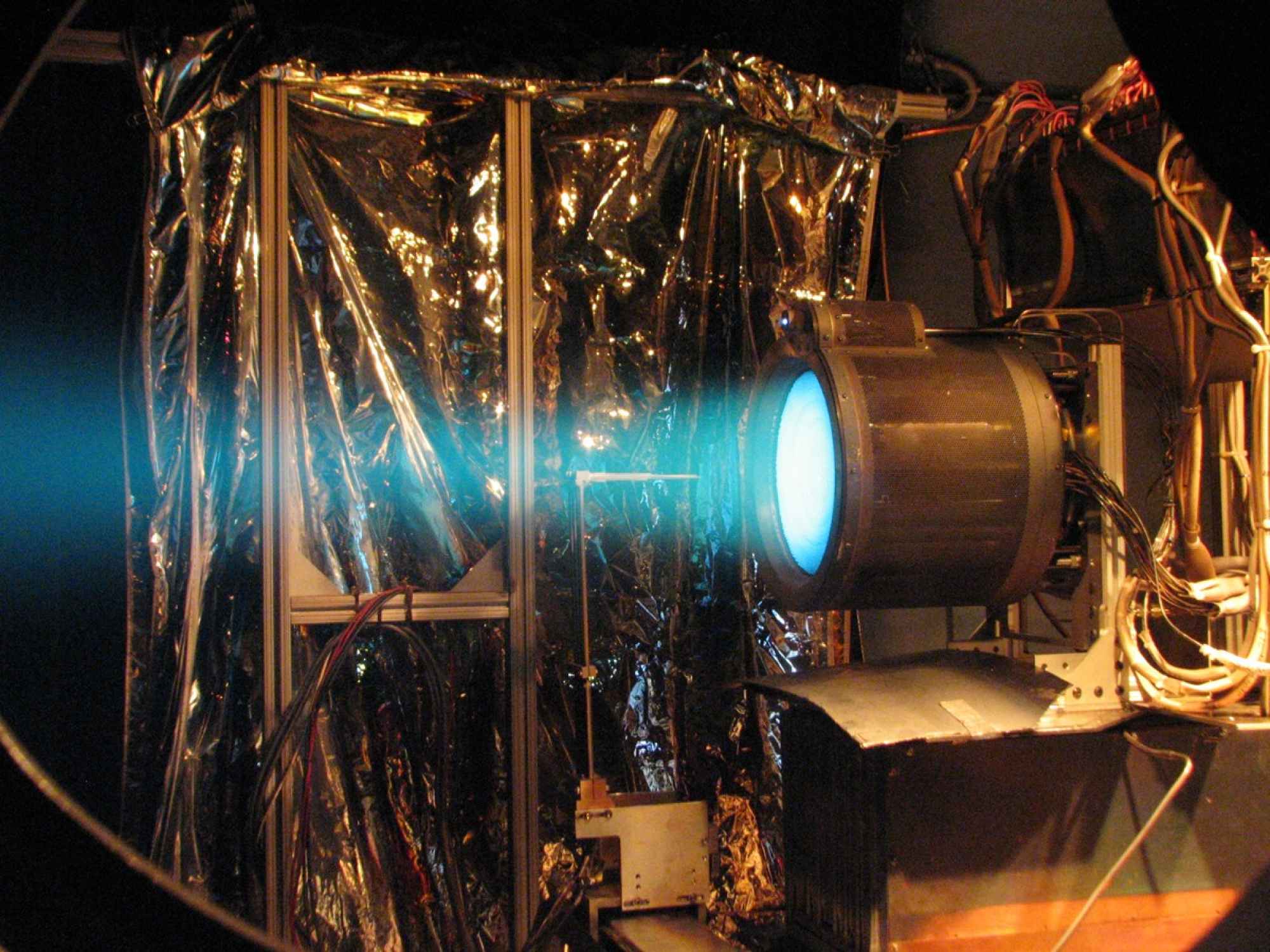
Ion engine test. Xenon ions glow blue. Credit NASA.
02/25/2014 – Ephemeris – Mars starts its retrograde motion this weekend
Ephemeris for Tuesday, February 25th. The sun will rise at 7:26. It’ll be up for 10 hours and 58 minutes, setting at 6:24. The moon, 3 days past last quarter, will rise at 5:15 tomorrow morning.
The planet Mars, which rises about 10:30 p.m. and is near the star Spica, is slowing its eastward motion as the Earth approaches it. Mars will stop and appear to reverse course on Saturday March 1st. It will begin what astronomers call retrograde motion. This westward motion will continue past Mars’ opposition with the sun on April 8th, and its closest approach to the Earth on April 14th. Mars retrograde motion will end on May 21st when Mars will resume its prograde or eastward motion. The ancient Greeks especially had a problem with this because they believed that celestial bodies traveled in uniform circular motion. They added a circle on the planet’s main circle called an epicycle to kind of solve the problem. The problem was solved centuries later by Copernicus who made the earth another planet and Kepler who made the planet orbits elliptical.
Times are for the Traverse City/Interlochen area of Michigan. They may be different for your location.
Addendum
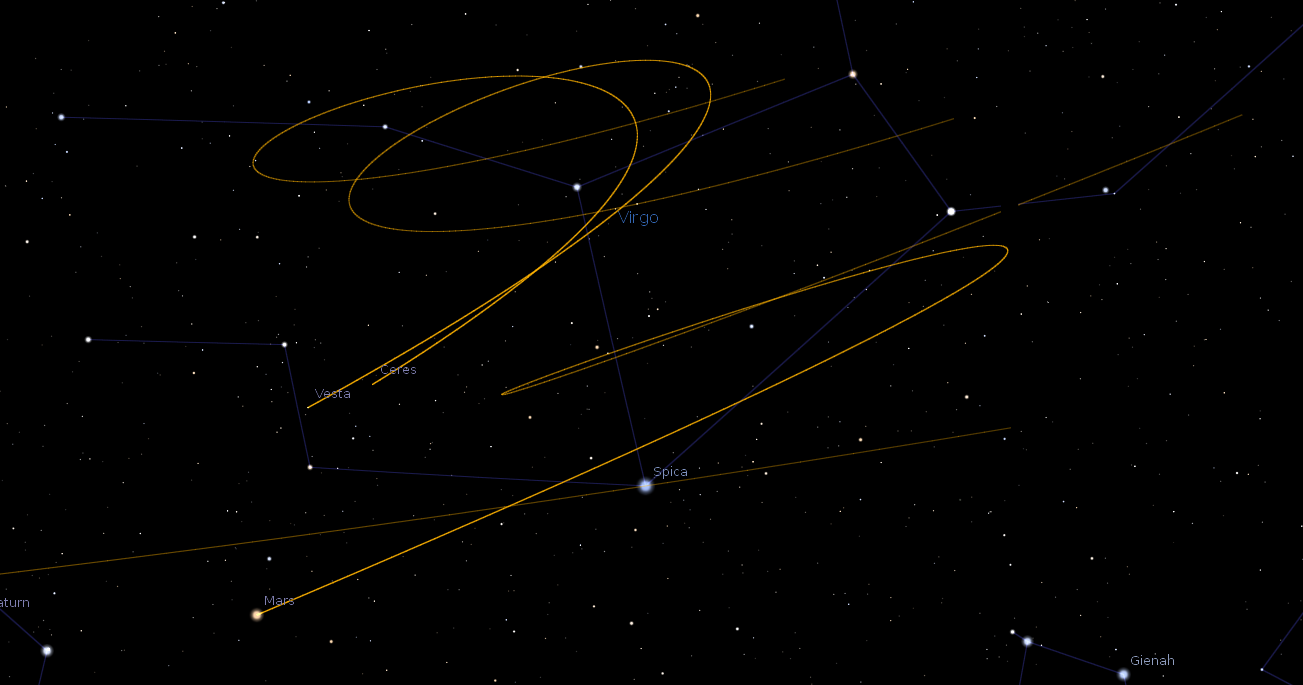
The trails of Mars and three asteroids from December 2013 to August 2014. Created using Stellarium.
Vesta and Ceres are going retrograde at the same time as Mars. The Dawn spacecraft traveling between Vesta to Ceres is about half way in between them. The other trail, not exhibiting retrograde is that of the small asteroid 2012 DA14 whose claim to fame is that it passed inside the ring of geosynchronous satellites on February 15, 2013. It was completely upstaged a few hours earlier by the meteor that exploded over Chelyabinsk, Russia. It looks like the orbital trail shown for 2012 DA14 has not been updated. As the result of the encounter with Earth that day the asteroid’s orbit was altered. 2012 DA14 is a provisional designation based on the year, half month and order of discovery. It’s permanent designation with a name is 367943 Duende. The name of the asteroid is usually up to the discoverer with the approval of the International Astronomical Union (IAU). It is the 367,943rd asteroid whose orbital elements are known. BTW Ceres is 1 Ceres, and Vesta is 4 Vesta. Though the 4th asteroid found, Vesta is the brightest, at the very limit of naked eye visibility.
02/13/2014 – Ephemeris – Dwarf planet Ceres is the next stop for the Dawn spacecraft.
Ephemeris for Thursday, February 13th. The sun will rise at 7:45. It’ll be up for 10 hours and 22 minutes, setting at 6:08. The Moon, 1 day before full, will set at 7:10 tomorrow morning.
The Dawn spacecraft is in the asteroid belt. After spending a year orbiting the asteroid Vesta two years ago, it has set its sights on Ceres, the largest asteroid, which was promoted by the same reasoning that Pluto was demoted, as a dwarf planet. Recently it was announced that Ceres is out-gassing water molecules. Dawn, with its ion engine is slowly approaching Ceres and will enter orbit of the body in April next year, a few months before the new Horizons spacecraft will fly by the dwarf planet Pluto on Bastille Day 2015. Dawn will stay in orbit of Ceres for a year at least. It will take at least several months to download all the images and data from the Pluto encounter from New Horizons, so we will have a very eventful 2015.
Times are for the Traverse City/Interlochen area of Michigan. They may be different for your location.
Addendum
Artist’s rendition of the Dawn spacecraft at Vesta. Credit: NASA/JPL.
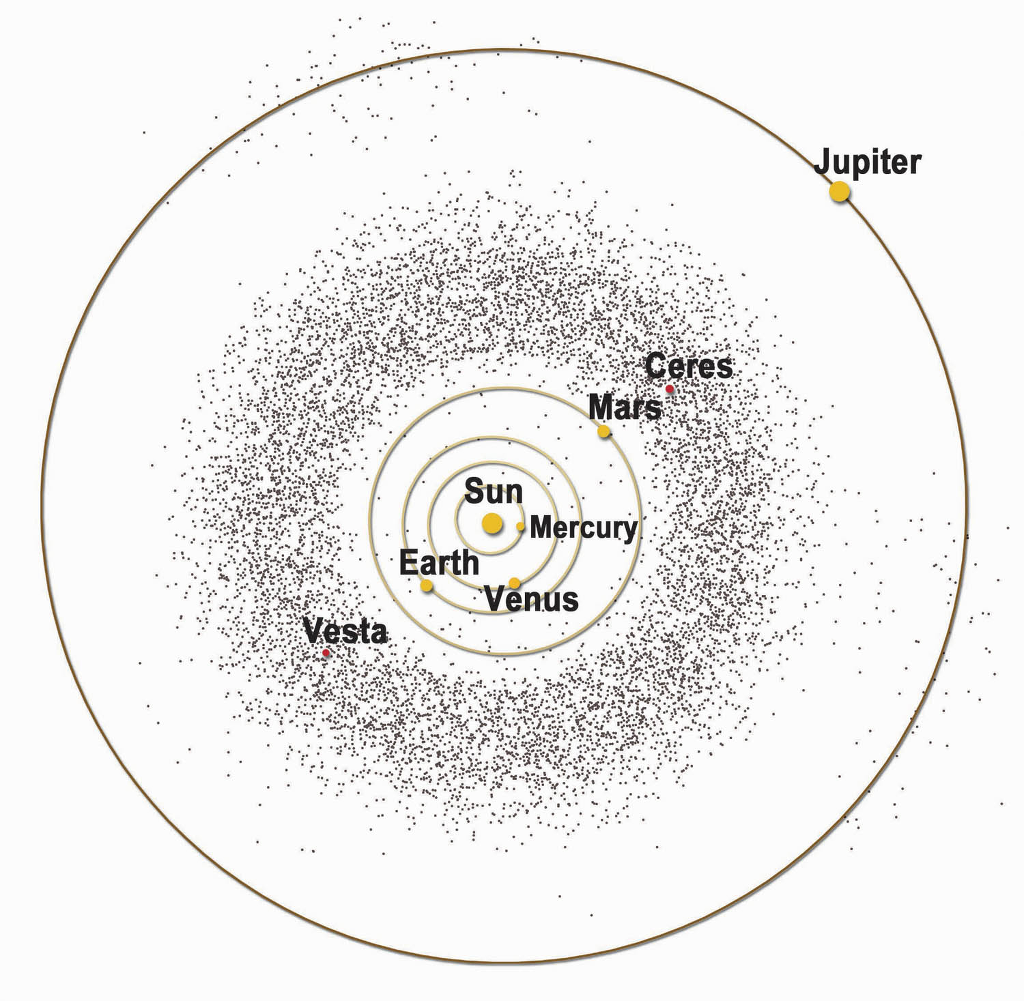
The asteroid belt n the inner solar system. Credit: NASA/JPL.
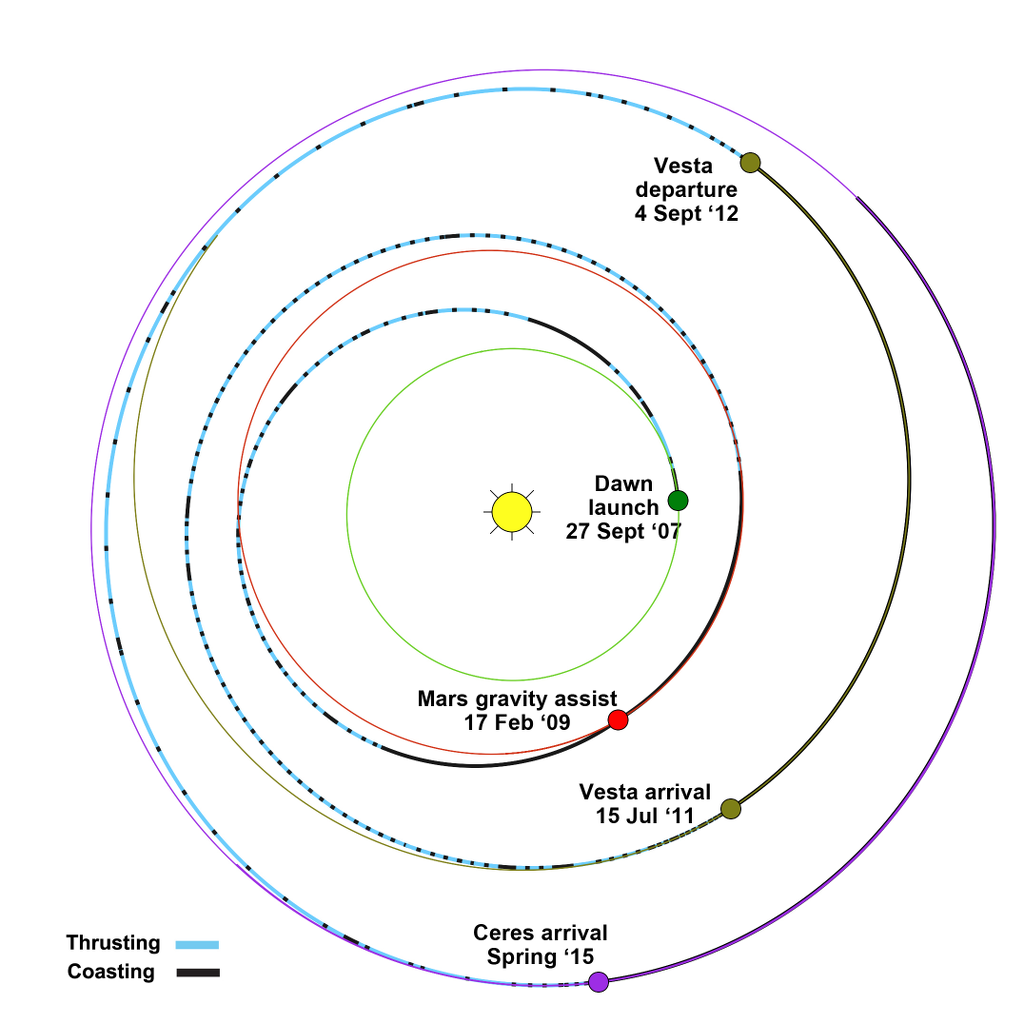
Dawn orbital track past Mars, stopping at Vesta and continuing to Ceres. Credit: NASA/JPL.
The Dawn spacecraft uses ion propulsion, which though 10 times more efficient than chemical fuels, has the thrust comparable to that of the weight of a piece of a piece of paper. Consequently the spacecraft spends most of its time thrusting. Since it’s antenna is bolted on the spacecraft, it cannot thrust and communicate with the earth at the same time, so it has to stop thrusting and turn toward the earth to report back at scheduled intervals before resuming thrusting again.
12/27/2012 – Ephemeris – That was the year that was.
Ephemeris for Thursday, December 27th. The sun will rise at 8:18. It’ll be up for 8 hours and 50 minutes, setting at 5:09. The moon, 1 day before full, will set at 8:10 tomorrow morning.
The end of the year is the perfect time to look back at the astronomical events of the year. There was a partial solar eclipse in May and the rare transit of Venus across the sun in June. You’ll have to wait until 2117 for the next one. In July came news that the Large Hadron Collider had detected something that sure looked like the long sought Higgs Boson. August brought the spectacular landing of the Mars Science laboratory, aka: The Curiosity rover, on Mars to begin an at least one martian year exploration. In September the Dawn spacecraft bid farewell to the asteroid Vesta after a year exploring that remarkable asteroid, cranking up its ion engine for a three year journey to the dwarf planet Ceres. The satellites Ebb and Flow completed their mission to map the moon’s interior.
Times are for the Traverse City/Interlochen area of Michigan. They may be different for your location.
Addendum
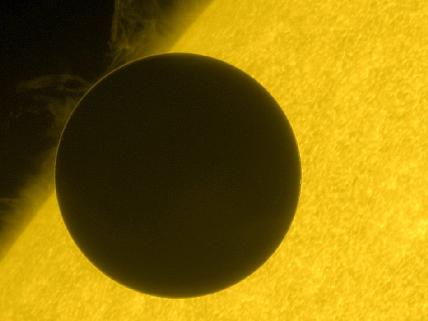
Hinode Views the 2012 Venus Transit. Credit: JAXA/NASA/Lockheed Martin
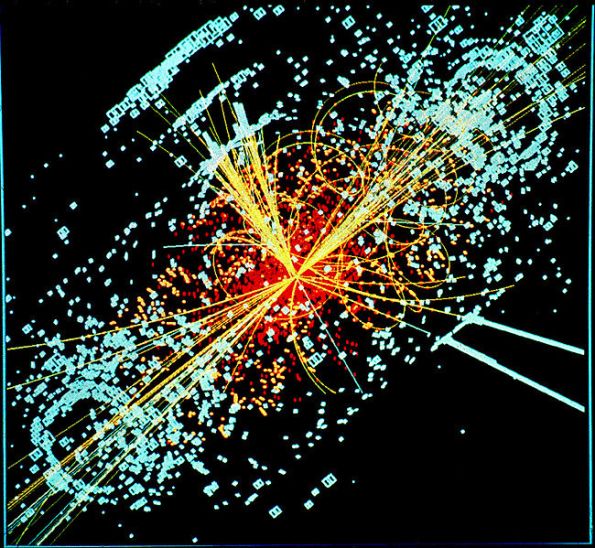
An example of simulated data modeled for the CMS particle detector on the Large Hadron Collider (LHC) at CERN. Here, following a collision of two protons, a Higgs boson is produced which decays into two jets of hadrons and two electrons. The lines represent the possible paths of particles produced by the proton-proton collision in the detector while the energy these particles deposit is shown in blue. Credit CERN.
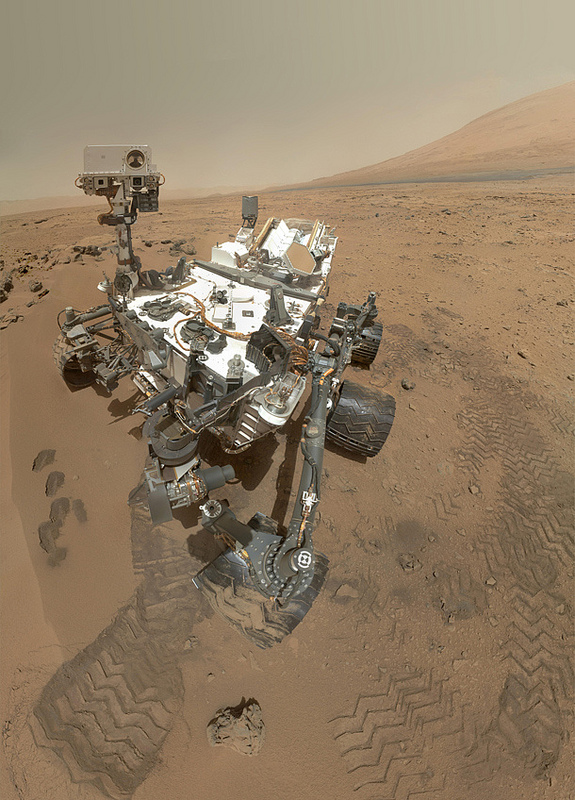
Curiosity rover self portrait. Credit: NASA/JPL-Caltech/Malin Space Science Systems
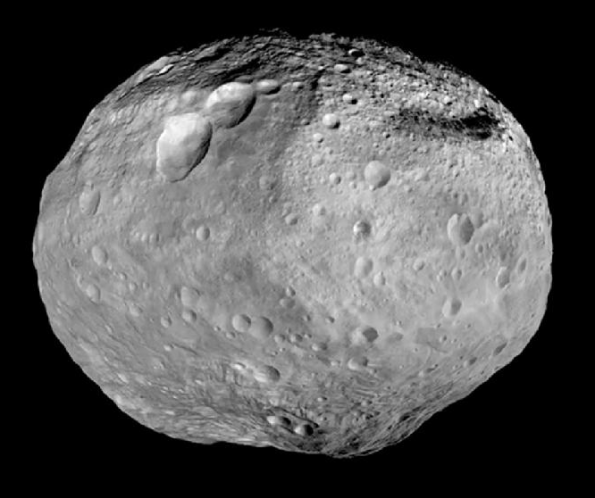
Looking back at Vesta as Dawn headed off to Ceres. Credit: NASA/JPL-Caltech/UCAL/MPS/DLR/IDA
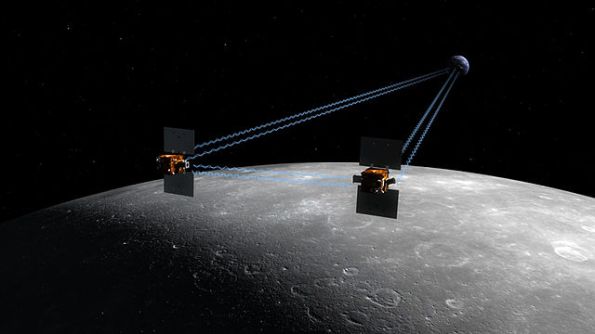
The Grail Spacecraft Ebb and Flow made the most detailed gravitational map of the moon to map its interior; orbiting as close as 15 miles above the surface. They were intentionally crashed into a crater wall on December 17th. Artist conception credit: NASA.
12/29/11 – Ephemeris – Astronomical highlights from 2011
Thursday, December 29th. The sun will rise at 8:18. It’ll be up for 8 hours and 51 minutes, setting at 5:10. The moon, 3 days before first quarter, will set at 11:00 this evening.
Let’s look at the best astronomical events of 2011. To my mind Comet Lovejoy’s survival near the sun is one. The announcements from the Kepler satellite keep coming in. Over 2000 planets in other solar systems suspected including a planet 2.4 times the size of the earth in its star’s habitable zone, two planets of another star about the size of the earth and a planet with two suns. A fourth moon of Pluto was discovered, worrying scientists operating the New Horizons spacecraft that will reach Pluto in 3 and a half years that there may be a debris field around the dwarf planet. This year the MESSENGER satellite gained orbit of the innermost planet Mercury, and the Dawn spacecraft began orbiting the asteroid Vesta. Those are just a sample.
* Times, as always are for the Traverse City/Interlochen area of Michigan.
08/26/11 – Ephemeris – Observing events this weekend
Friday, August 26th. The sun rises at 6:57. It’ll be up for 13 hours and 32 minutes, setting at 8:30. The moon, 2 days before new, will rise at 5:10 tomorrow morning.
We have a couple of events this weekend to view the heavens hosted by the Grand Traverse Astronomical Society. Starting at 9 p.m. tonight the Northwestern Michigan College’s Rogers Observatory will be open for viewing of the wonders of the summer Milky Way. Then Saturday night starting around 9 if it is clear the society will be at the Open Space or near the beach west of there for an asteroid Vesta viewing night. We’ll be hunting for a dark spot probably as far as we can get from lights. We’ll have a banner visible from the Grand View Parkway to the area we’ll be in. We’ll be viewing this asteroid which is currently being orbited by the Dawn spacecraft. It will look like a star in our telescopes, but one of our members has a piece of Vesta which he will exhibit.
* Times are for the Traverse City/Interlochen area of Michigan. They may be different for your location.
08/19/11 – Ephemeris – Lots of viewing opportunities this weekend
Friday, August 19th. The sun rises at 6:49. It’ll be up for 13 hours and 52 minutes, setting at 8:41. The moon, 2 days before last quarter, will rise at 10:53 this evening.
This will be a big weekend of observing the heavens if it’s clear. First the Grand Traverse Astronomical Society will be part of Friday Night Live on Front Street in Traverse City. Starting at 9 p.m. Northwestern Michigan College’s Rogers Observatory will be open for viewing of the skies. Saturday night starting around 9 the society will be at the Open Space for an asteroid Vesta viewing night. This will be repeated on the 27th. We’ll probably be as far as we can get from lights in the area of the old power planet to view this asteroid which is currently being orbited by the dawn spacecraft. It will look like a star in our telescopes, but one of our members has a piece of Vesta which he will exhibit also at the Open Space.
* Times are for the Traverse City/Interlochen area of Michigan. They may be different for your location.
07/18/11 – Ephemeris – Dawn orbits Vesta
Monday, July 18th. Today the sun will be up for 15 hours and 8 minutes, setting at 9:22. The moon, 3 days past full, will rise at 10:49 this evening. Tomorrow the sun will rise at 6:15.
Two days ago the Dawn spacecraft dropped into orbit of the asteroid Vesta. After nearly four years, most of it thrusting its ion engine, Dawn slipped into orbit of this 320 mile diameter asteroid. It will spend the next year photographing, and scanning the chemical composition of this second largest and brightest of the asteroids. It will slowly spiral closer to Vesta for a closer look. Also the change in velocity of the spacecraft as it orbits Vesta will give clues to the asteroid’s internal structure. Also to be closely monitored will be the large crater near Vesta’s south pole. An impact here less than a billion years ago spread debris throughout the inner solar system. Many of the meteorites on the earth have been traced to Vesta.
* Times are for the Traverse City/Interlochen area of Michigan. They may be different for your location.
 Bob Moler's Ephemeris Blog