Archive
01/02/2018 – Ephemeris – Cozying up to the Sun and a major meteor shower
Ephemeris for Tuesday, January 2nd. The Sun will rise at 8:20. It’ll be up for 8 hours and 53 minutes, setting at 5:13. The Moon, 1 day past full, will rise at 6:18 this evening.
Today the Earth will reach its closest distance from the sun, of 91.4 million miles. This point in Earth’s orbit is called perihelion. The Earth varies about 3 million miles from perihelion to aphelion its farthest point from the sun, which usually occurs around July 4th or 5th. Perihelion doesn’t help warm our winters though, but it does make winter the shortest season because the Earth moves its fastest at perihelion. That makes summer the longest season by several days. Tomorrow afternoon will see the peak of the Quadrantid Meteor Shower. This active meteor shower has its radiant north of the kite shape of Boötes and near the handle of the Big Dipper but the bright Moon will interfere both tomorrow and Thursday mornings.
The times given are for the Traverse City/Interlochen area of Michigan. They may be different for your location.
Addendum
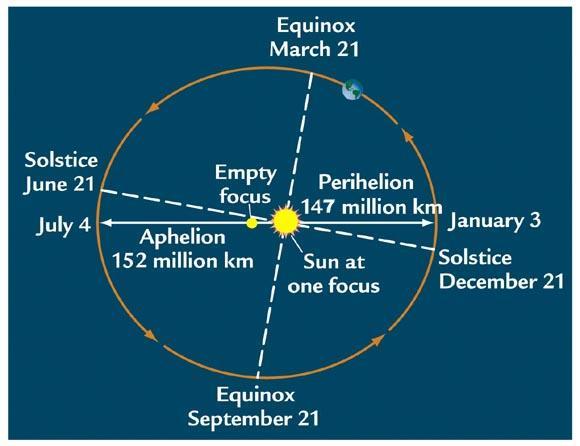
The Earth’s orbit, somewhat exaggerated, showing perihelion and the seasons. Credit “Starts with a Bang” blog by Ethan Siegel.
While a planet’s distance from the Sun modify the seasons somewhat, seasons are always governed by the axial tilt of the planet with respect to the Sun.
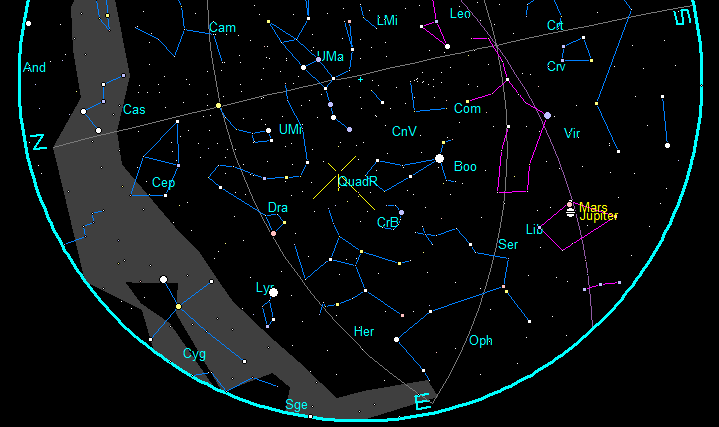
Facing the Quadrantid radiant at 6 a.m. January 3rd. Created using my LookingUp program.
01/01/2018 – Ephemeris – The difference between the winter full moon and the summer one
Happy New Year, this is Bob Moler with Ephemeris for New Years Day, Monday, January 1st. 2018. The Sun will rise at 8:19. It’ll be up for 8 hours and 53 minutes, setting at 5:13. The Moon, at full today, will rise at 5:11 this evening.
The exact time that the Moon will be fill, at least to the nearest minute is 9:24 tonight. Ever notice the placement of the full moon in the sky between winter and summer? The Full moon near the winter solstice moves very high at midnight, while the full moon near the summer solstice is seen quite low in the south. For the Moon to be full, it most be nearly opposite the Sun in the sky, so we see it fully illuminated as the Sun does. The Moon’s orbit is close to the Sun’s apparent path in the sky, the ecliptic, which is the projection of the Earth’s orbit of the Sun. So the Moon now is near where the Sun will be 6 months from now in late June, high in the sky. Next full moon we will see a lunar eclipse.
The times given are for the Traverse City/Interlochen area of Michigan. They may be different for your location.
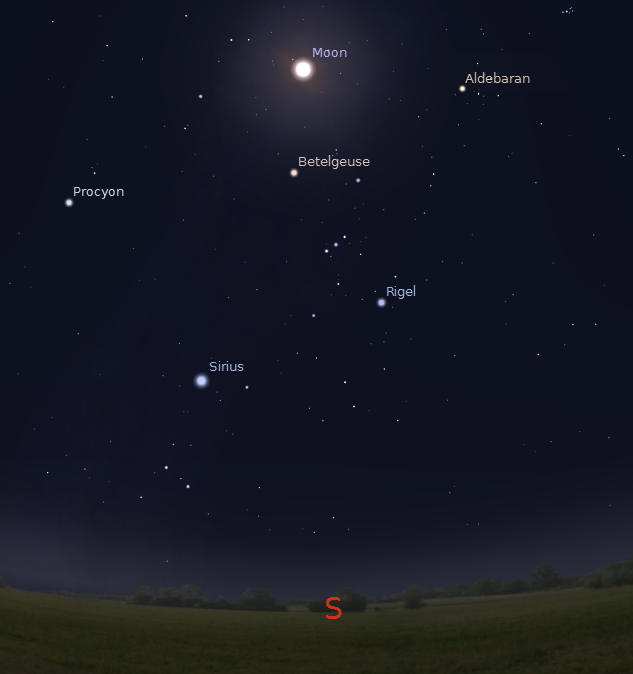
The winter full moon at its highest. Created using Stellarium.
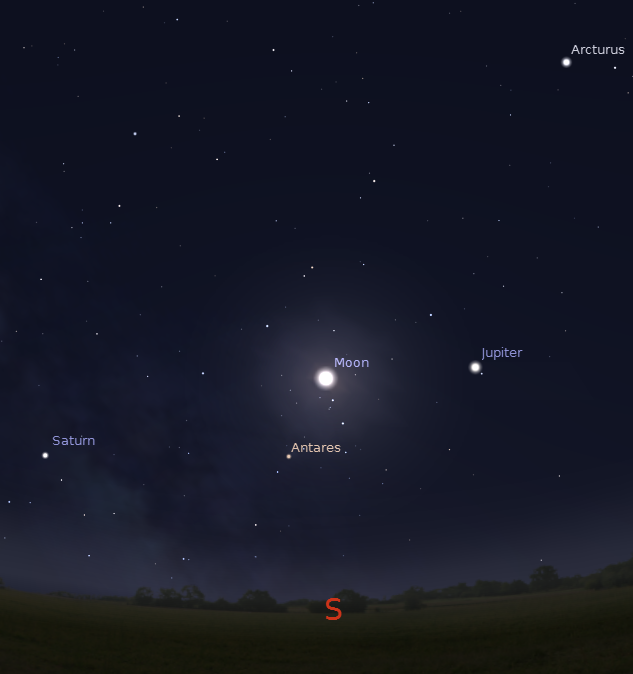
The summer full moon at its lowest. Created using Stellarium.
 Bob Moler's Ephemeris Blog