Archive
Ephemeris: 08/09/2023 – Let’s find out where the naked-eye planets have wandered off to this week
This is Ephemeris for Wednesday, August 9th. Today the Sun will be up for 14 hours and 19 minutes, setting at 8:57, and it will rise tomorrow at 6:39. The Moon, 1 day past last quarter, will rise at 1:04 tomorrow morning.
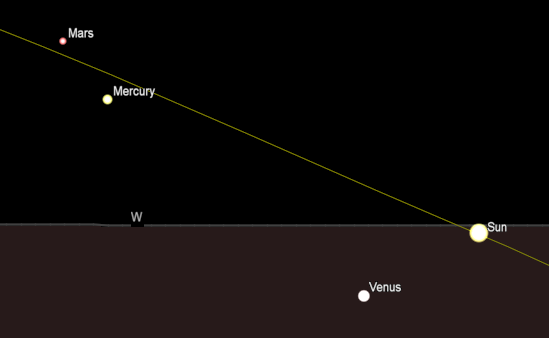
Let’s find out where the naked-eye planets have wandered off to this week. Venus is gone, setting too close to sunset. It will pass between the Earth and the Sun on the 13th, and be visible before sunrise by the end of the month. Mars and Mercury, though technically in the evening sky and like Venus also appear too close to the Sun to be spotted. Mars will pass behind the Sun in November. The other two naked eye planets are in the morning sky. Appearing at 5:45 am, which is roughly 55 minutes before sunrise, tomorrow morning, Jupiter will be high in the southeast, Saturn will be lower in the southwest. And tomorrow morning, the waning crescent Moon will be midway up the sky in the east.
The astronomical event times given are for the Traverse City/Interlochen area of Michigan (EDT, UT –4 hours). They may be different for your location.
Addendum
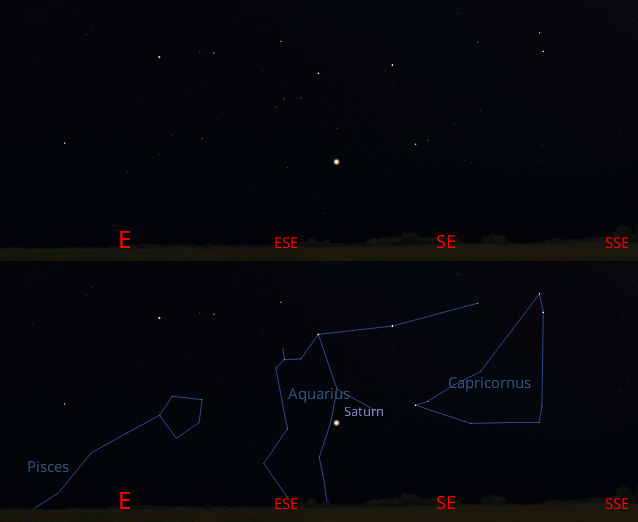
Saturn, low in the east-southeast at 11 pm, or about 2 hours after sunset, along with nearby zodiacal constellations. Click or tap on the image to enlarge it. Created using Stellarium and GIMP.
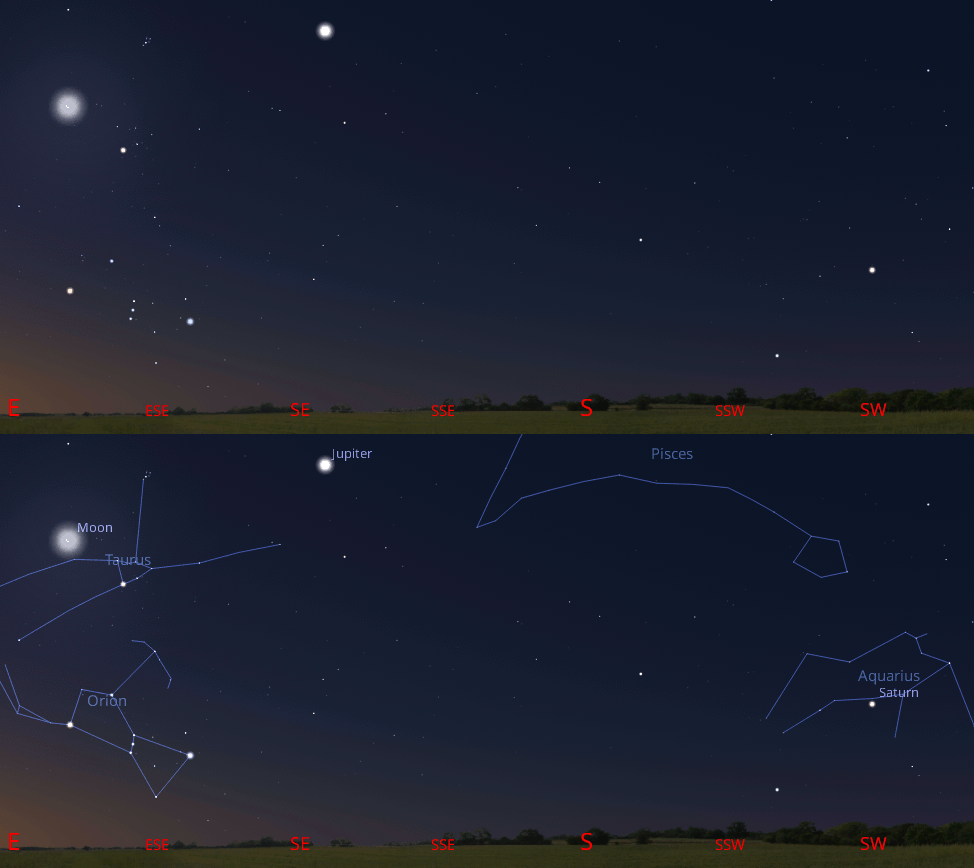
Jupiter Saturn and the Moon are seen at 5:45 tomorrow morning, August 10, 2023, about 55 minutes before sunrise. Also shown are the zodiacal constellations and Orion. The native peoples of our area, the Anishinaabe, called Orion the Winter Maker. So enjoy summer while it lasts, because and relatively few months it’s going to be all over, and Orion will be in the evening sky and winter will be here. Click or tap on the image to enlarge it. Created using Stellarium and GIMP.
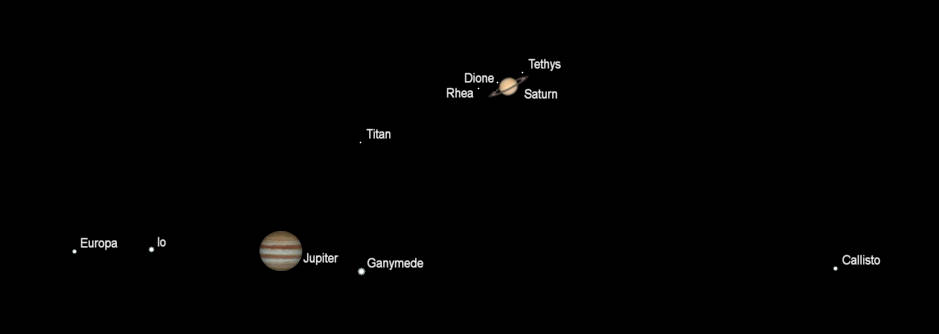
Telescopic Saturn and Jupiter (north up) as they would be seen in a small telescope, with the same magnification, Saturn at 11 pm, the 9th and Jupiter at 5:45 am August 10, 2023. Apparent diameters: Saturn 18.87″, its rings 43.96″; Jupiter 41.02″. Saturn and Jupiter are approaching us, so their apparent diameters are growing. The ” symbol means seconds of arc (1/3600th of a degree). Click or tap on the image to enlarge it. Created using Cartes du Ciel (Sky Charts).
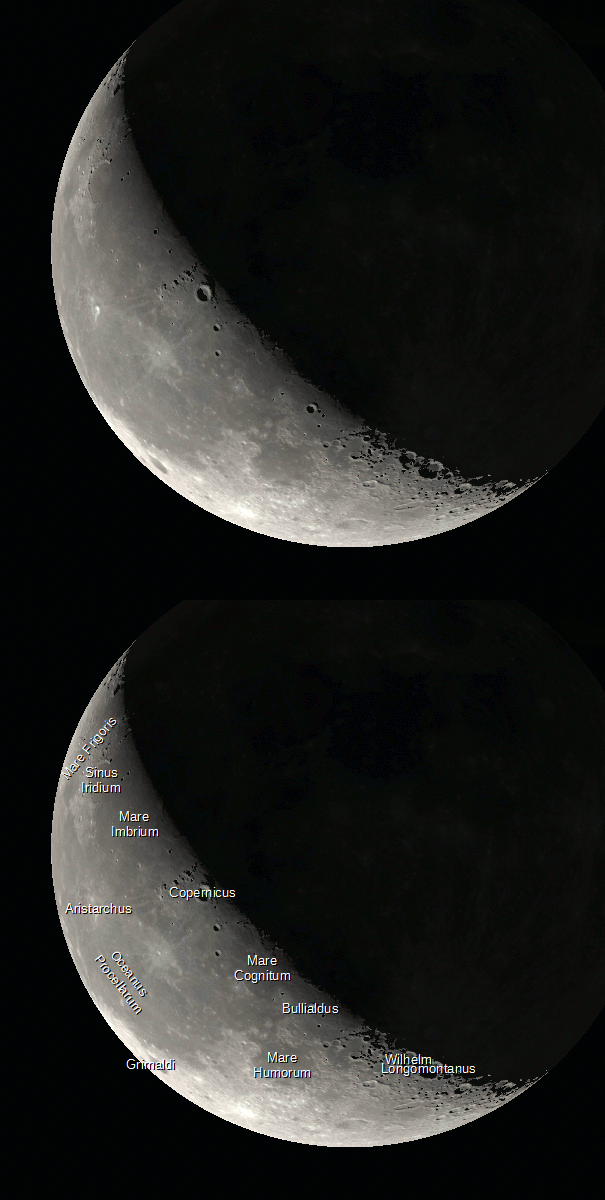
The Moon as it might appear in binoculars or telescope with selected features labeled tomorrow morning, August 10, 2023. Created using Stellarium, LibreOffice Draw for labels, and GIMP for the GIF animation.
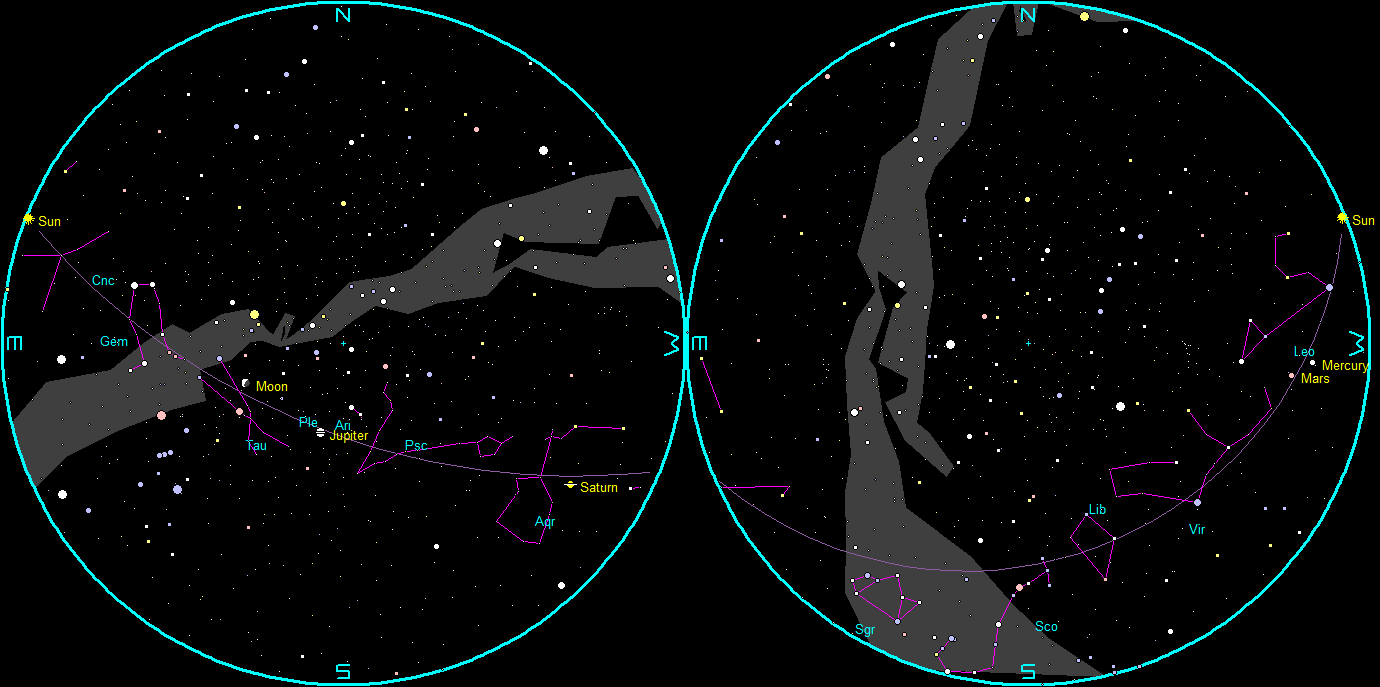
The naked-eye planets and the Moon at sunset and sunrise on a single night, starting with sunset on the right on August 9, 2023. The night ends on the left with sunrise on the 10th. Venus is not in the sky at either sunset or sunrise, being south of the Sun. Large images can be truncated on the right. Click or tap on the image to enlarge and display the complete image. Created using my LookingUp app and GIMP.
 Bob Moler's Ephemeris Blog