Archive
Ephemeris Extra: 07/02/2024 – A closer look at Corona Borealis
Adapted from an article that ran in the Stellar Sentinel, the July 2024 newsletter of the Grand Traverse Astronomical Society.
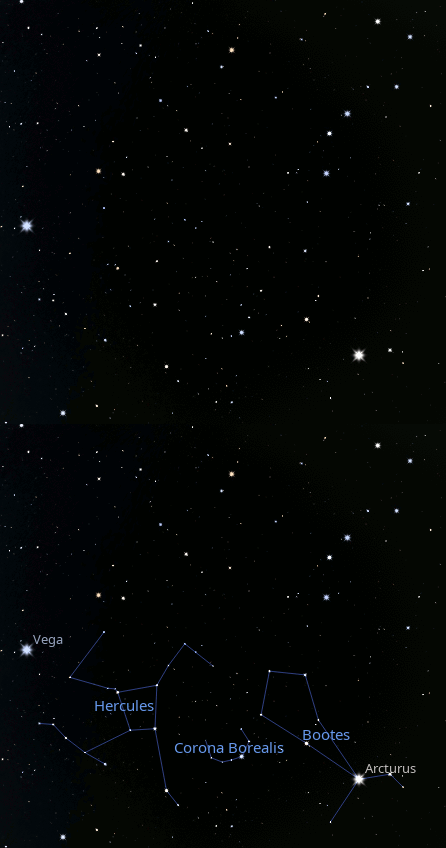
A small constellation is getting a lot of attention this year because we expect a bright nova to appear in it sometime in the next few months. The constellation is Corona Borealis, the Northern Crown. It is a small constellation between the Boötes and the bright star Arcturus and Hercules, and farther off to the east the bright star Vega. Corona Borealis contains seven stars in the 2/3 circle of stars. Its brightest star is the third star from the right. It’s the second magnitude star called Alphecca. In Arabic, it means The Bright Star of the Broken Ring of Stars, which is a pretty good description of it. It is also known as Gemma though it sounds like a gem in a crown, it actually means blossom which would appear in a floral crown.
In Greek mythology the crown was given to the Princess Ariadne. The story goes like this. During the time of the Minoan civilization on Crete, It was ruled by King Minos, whose daughter was Ariadne. The Minoans apparently had defeated Athens in battle and had extracted tribute from them. That yearly tribute being the sacrifice of the young man or maiden to enter the Labyrinth which was home to a monster called the Minotaur. In this story a fellow by the name of Theseus from Athens was sent to Crete to face the Minotaur. He fell in love with Ariadne, but he had to enter the Labyrinth, so she provided him with a spool of thread so he could find his way back out again after he had slain the Minotaur, if he was able to. He entered the Labyrinth and found the Minotaur. Theseus was able to slay the beast, and was able to follow the thread back out. Theseus and Ariadne fled to the Island of Naxos where he married her. However, he soon abandoned her. As consolation, the god Dionysus gave her a crown. She kept the crown until she remarried, and it was placed in the sky where we see it today.
For the Anishinaabe native peoples of our area Corona Borealis becomes the Sweat Lodge. Other indigenous peoples of North America see these stars as circles of maidens, or other circles. To the Aborigines of Australia who see Corona Borealis very low in the north, it’s Woomera, the boomerang.
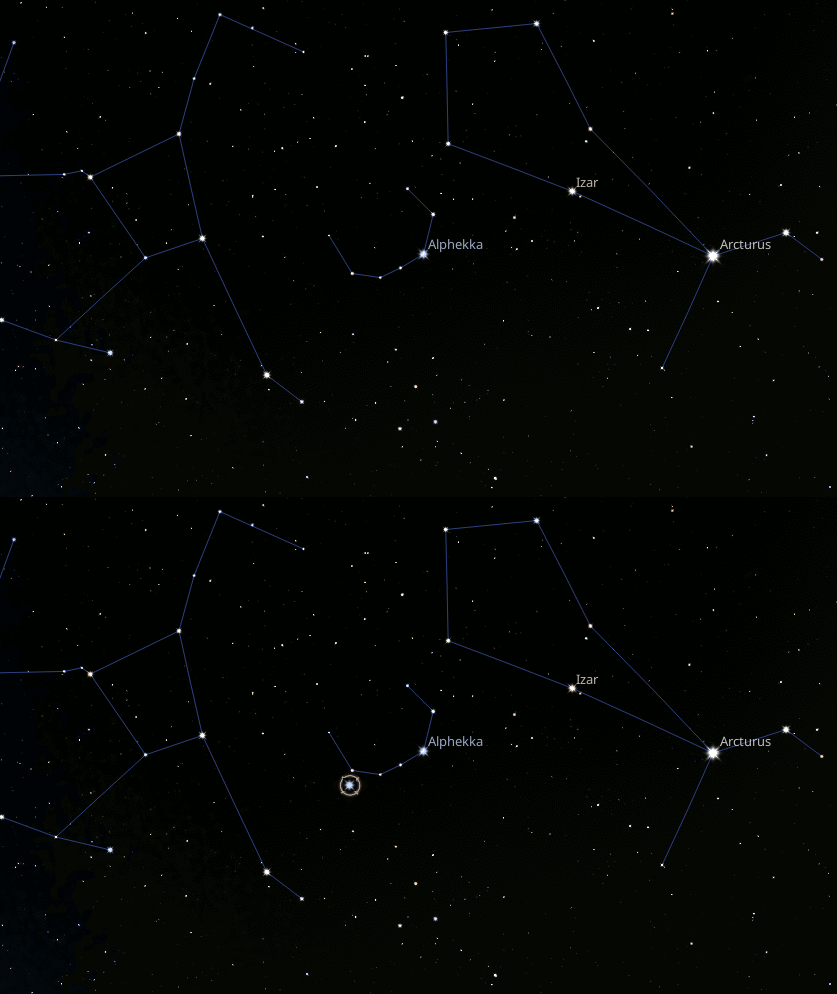
The constellation has two famous variable stars. The one we’re expecting to flare up this year, up to second magnitude as a nova, is T Coronae Borealis (T CrB), sometimes called the Blaze Star. It was recorded in 1866 and at even earlier times, and was naked eye for eight days, dropping a half magnitude per day. It also blazed forth in 1946, making it one of the few known recurrent novas. In 1946 the star, normally 10th magnitude, barely visible in binoculars, underwent a slight dimming about 11 months before it blazed forth as a nova. This has already happened last year, so we are expecting it soon to blaze forth again. It will appear to the lower left, just outside the circle of stars in the crown, and will grow as bright as Alphecca.
Novas, also in the case of T CrB, are close binary stars containing a large star and a white dwarf. A white dwarf is a star at the end of its life, and has run out of hydrogen or other light elements in its core to keep it sustained. So it shrinks down to about the size of the Earth, even though it has the mass of the Sun or a little more. It orbits with the larger star and is basically siphoning off gas from that large star onto its surface, enough gases accumulate on the star for a thermonuclear reaction to occur, and it becomes a nova, brightening thousands of times for a few days. The white dwarf survives to do it all over again in some cases.
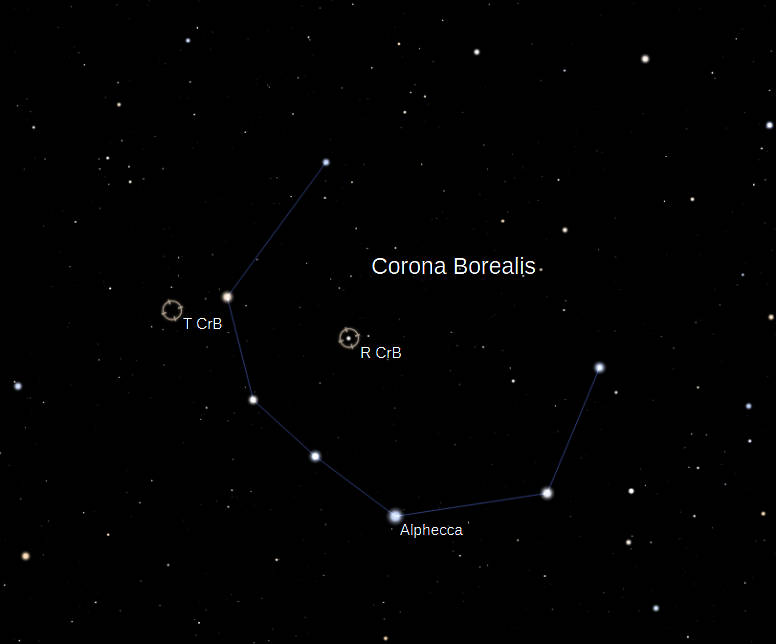
Corona Borealis’ other famous variable star is R Coronae Borealis, a star that’s normally about 6th magnitude that irregularly dips down to 10th or even dimmer. The mechanism for this appears to be that the star is surrounded by clouds of dust that periodically block it from our view.
If you’re interested in observing variable stars, check out the American Association of Variable Star Observers: https://www.aavso.org/
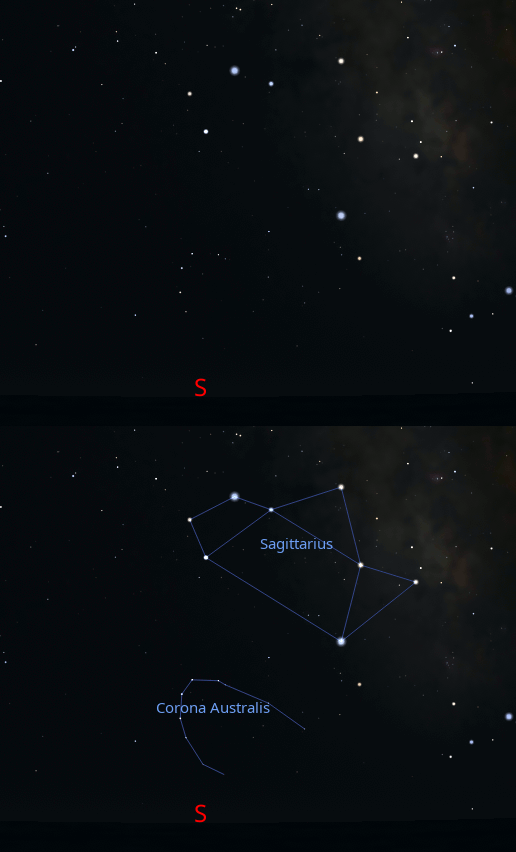
If there’s a Northern Crown, there should be a Southern Crown, and there is. It is Corona Australis made of dim stars, and it is located just below the constellation of Sagittarius, right below the Teapot asterism, which is very low on our southern horizon after midnight this month, but better seen in August.
Ephemeris: 7/02/2024 – Antares and the scorpion
This is Bob Moler with Ephemeris for Tuesday, July 2nd. Today the Sun will be up for 15 hours and 29 minutes, setting at 9:31, and it will rise tomorrow at 6:02. The Moon, 3 days before new, will rise at 3:26 tomorrow morning.
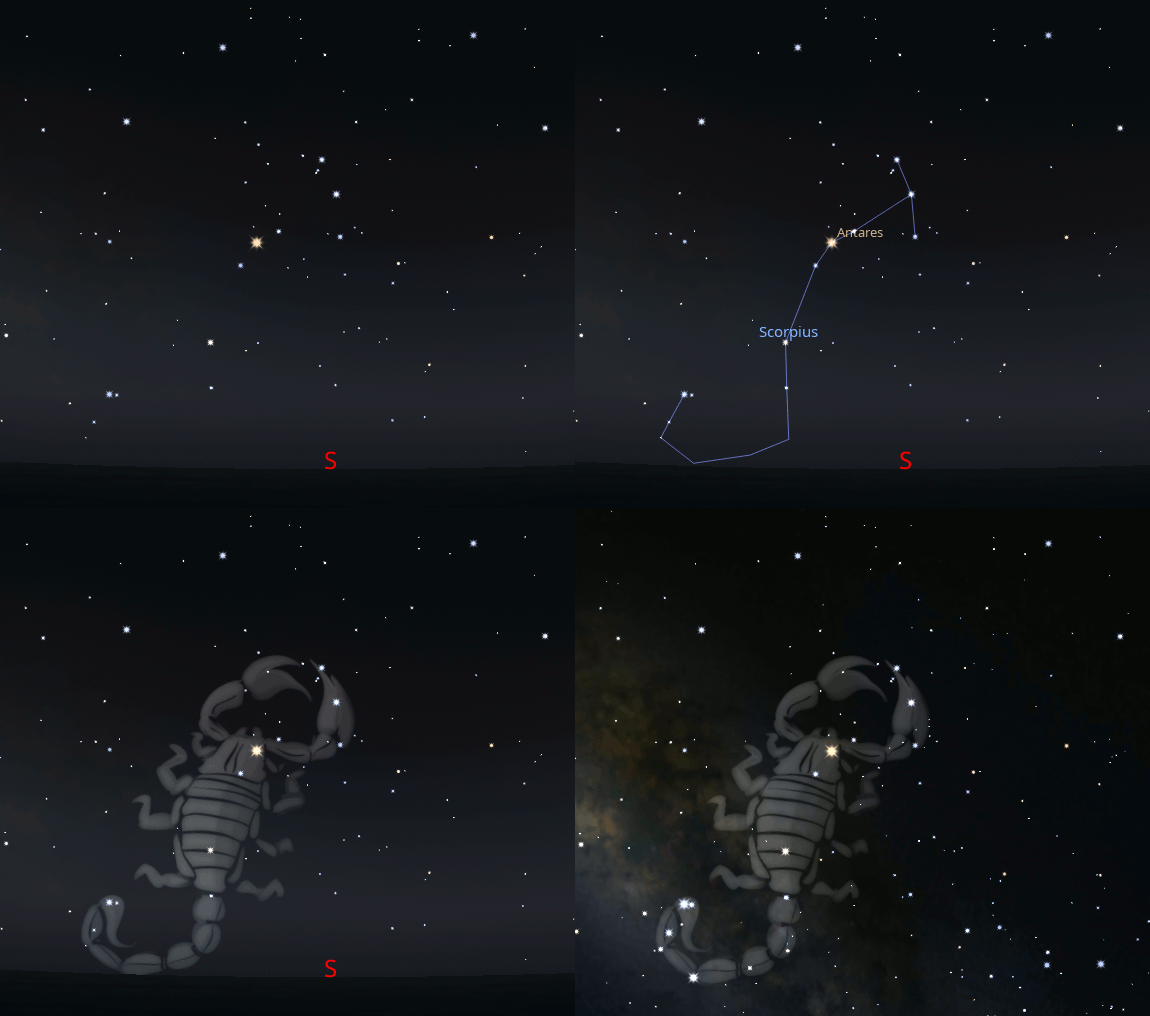
The constellation of Scorpius the scorpion is low in the south at 11 PM these nights. It’s bright star Antares will pass due south at 11:30 this evening. Antares is an interesting star in that it is a red giant star, and its name Antares* means “Rival of Mars” alluding to the fact that it and Mars appears to be the same color. And about every two years Mars passes near Antares, so unless you know your stars and planets you could mistake them for each other. Antares lies at the heart of the scorpion. To its upper right is the front part of its body and claws, and the trail of stars running down the other way, nearly to the horizon, in the south and back up in the south-southeast to the two stars of its stinger make its characteristic tail.
The astronomical event times given are for the Traverse City/Interlochen area of Michigan (EDT, UT–4 hours). They may be different for your location.
*Breaking down Antares: Ant (Anti, against) – Ares (The Greek god of war the Romans called Mars).
Addendum
Note for trivia fans: Zubeneschamali is the longest star name at 14 letters.
 Bob Moler's Ephemeris Blog