Archive
Ephemeris: 07/16/2026 – What the Anishinaabe peoples saw in Scorpius
This is Bob Moler with Ephemeris for Thursday, July 16th. Today the Sun will be up for 15 hours and 12 minutes, setting at 9:24, and it will rise tomorrow at 6:13. The Moon, 2 days past new, will set at 10:59 this evening.
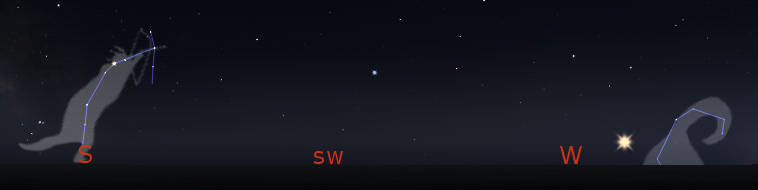
The Anishinaabe native peoples of our area gave another name to the star pattern we call Scorpius the scorpion, which is low in the southern sky these July evenings: Wenaboujou, a.k.a. Nanaboujou. He was an important character from their creation stories. He was a semi-spirit, trickster, and shapeshifter, able to turn himself into a hare. What they saw in the sky and the stars of Scorpius was him with a bow and arrow. The front three stars of the scorpion are a bent line that can look like a bow. He’s shooting an arrow all the way into the western sky at the receding constellation of Curly Tail, or the Great Underwater Panther, an early spring constellation. This month, only his tail remains in evening twilight, which we know as the head Leo the lion.
The astronomical event times given in this blog are for the Traverse City/Interlochen area of Michigan (Lat 44.7° N, Long 85.7° W; EDT, UT – 4 hours) unless stated otherwise. Times will be different for other locations.
Addendum
Ephemeris: 07/14/2026 – What the bright star Antares’ name means
This is Bob Moler with Ephemeris for Tuesday, July 14th. Today the Sun will be up for 15 hours and 15 minutes, setting at 9:26, and it will rise tomorrow at 6:11. The Moon is new today and won’t be visible.
The constellation of Scorpius the scorpion is low in the south at 11 PM these nights. Its bright star Antares will pass due south around 10:30 this evening. Antares is an interesting star in that it is a red giant star, and its name, Antares, means “Rival of Mars,” alluding to the fact that it and Mars appear to be the same color. A little translation is needed here: “Ant” is anti, against, “Ares” is the Greek god of war that the Romans appropriated as Mars. About every two years, Mars passes near Antares, so unless you know your stars and planets, you could mistake them for each other. Antares lies at the heart of the scorpion. To its upper right is the front part of its body and claws, and the trail of stars running down the other way, nearly to the horizon, in the south and back up in the south-southeast to the two stars of its stinger, make up its characteristic tail.
The astronomical event times given in this blog are for the Traverse City/Interlochen area of Michigan (Lat 44.7° N, Long 85.7° W; EDT, UT – 4 hours) unless stated otherwise. Times will be different for other locations.
Addendum
Ephemeris: 07/03/2026 – The celestial scorpion is crawling out on the southern horizon tonight
This is Ephemeris for Friday, July 3rd. Today the Sun will be up for 15 hours and 29 minutes, setting at 9:31, and it will rise tomorrow at 6:02. The Moon, halfway from full to last quarter, will rise at 11:47 this evening.
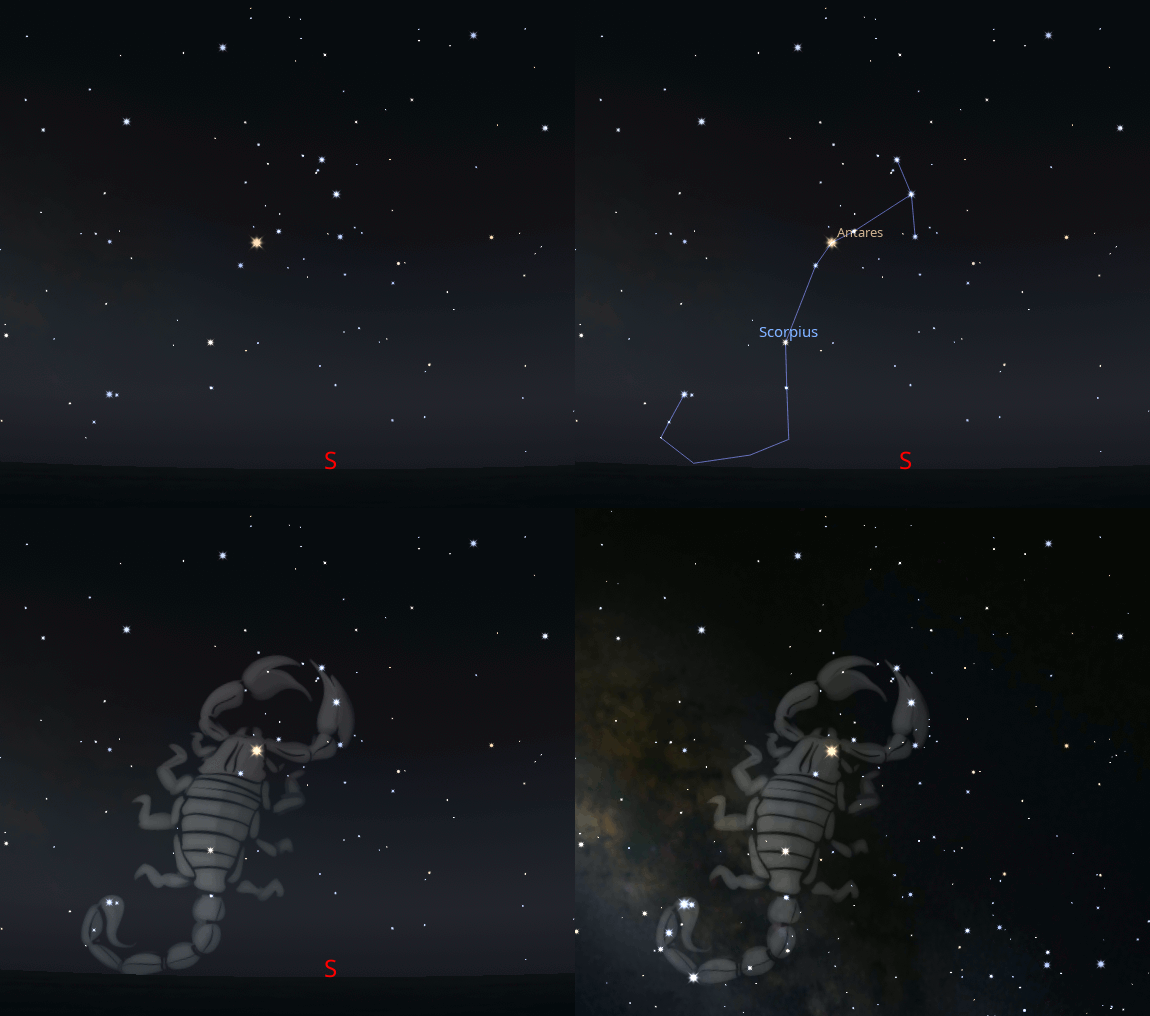
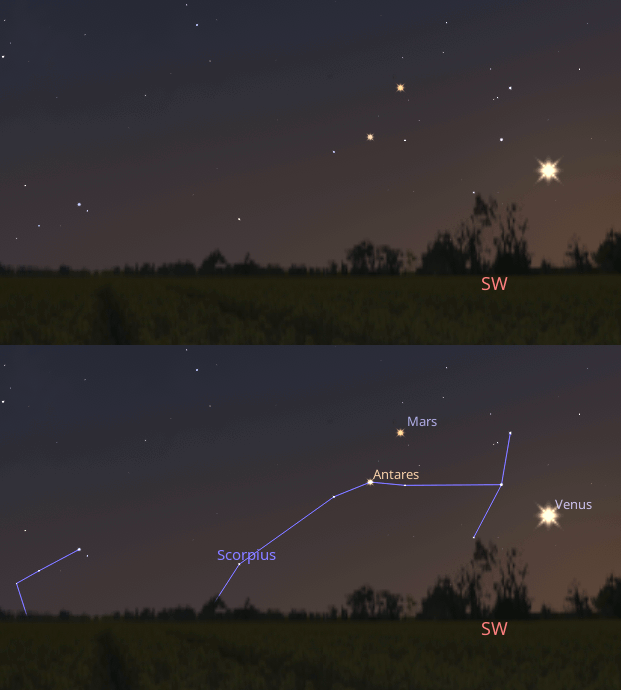
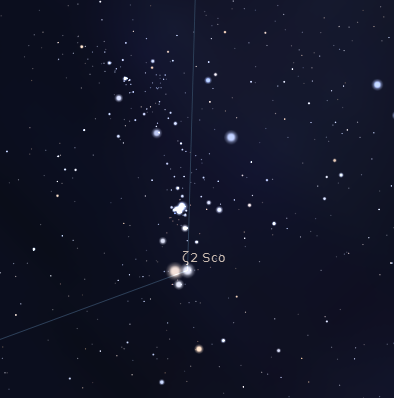
There’s a large constellation located low in the south at about 11 tonight. It’s Scorpius the scorpion. Its brightest star is Antares in its heart, a red giant star, that I’ve gotten calls about it as being a UFO. From Antares to the right is a star, then a vertical arc of three stars that is its head. The Scorpion’s tail is a line of stars running down to the left of Antares, swooping to the horizon before coming back up and ending in a pair of stars that portray his poisonous stinger. There is a beautiful star cluster, NGC 6231, seen in binoculars at that first bend in the tail that is unfortunately too low to appreciate from this far north. I was very impressed with it when spotting it from the Florida Keys when I was down there in 1986 to observe Halley’s Comet.
The astronomical event times given in this blog are for the Traverse City/Interlochen area of Michigan (Lat 44.7° N, Long 85.7° W; EDT, UT – 4 hours) unless stated otherwise. Times will be different for other locations.
Addendum
Ephemeris: 05/15/2026 – Orion flees the evening sky as Scorpius rises
This is Ephemeris for Friday, May 15th. Today the Sun will be up for 14 hours and 49 minutes, setting at 9:04, and it will rise tomorrow at 6:13. The Moon, 1 day before new, will rise at 5:34 tomorrow morning.
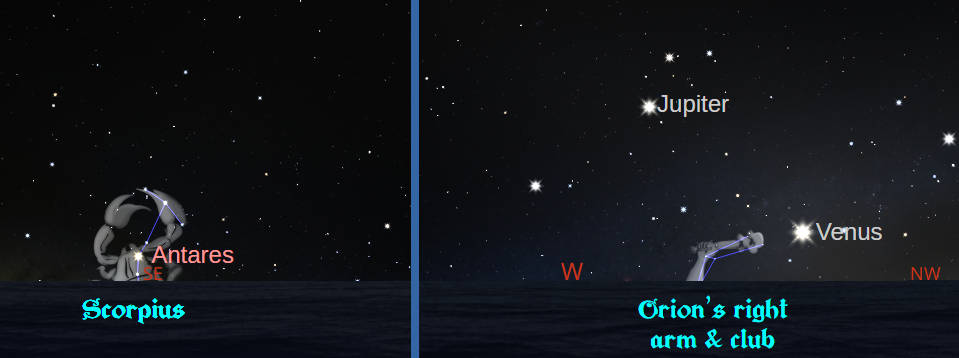
Orion the winter constellation is just about gone from our spring skies. Only the top part of his club is left in the west as evening twilight fades. Rising in the southeast at the same time is his nemesis the constellation Scorpius the scorpion. According to Greek mythology, Orion was killed by a giant scorpion. And that scorpion of course was Scorpius. It was sent by the goddess of the earth Gaia. Orion, the mighty hunter, had boasted that he could kill any creature. So this was his final comeuppance. In that battle he was killed by the sting of that scorpion. And that is why Scorpius and Orion can never be in the sky at the same time. Orion won’t venture into the evening sky until Scorpius is long gone in late autumn.
The astronomical event times given in this blog are for the Traverse City/Interlochen area of Michigan (Lat 44.7° N, Long 85.7° W; EDT, UT – 4 hours) unless stated otherwise. Times will be different for other locations.
Addendum
Ephemeris: 12/18/2025 – Orion and Scorpius
This is Ephemeris for Thursday, December 18th. Today the Sun will be up for 8 hours and 48 minutes, setting at 5:03, and it will rise tomorrow at 8:16. The Moon, 1 day before new, will rise at 8:22 tomorrow morning.
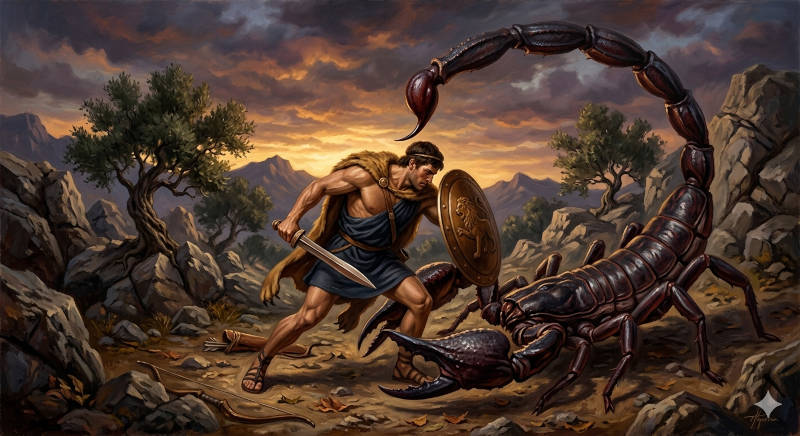
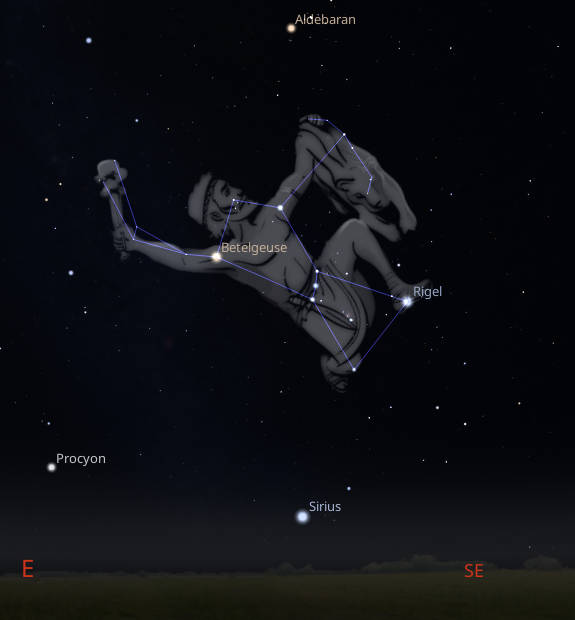
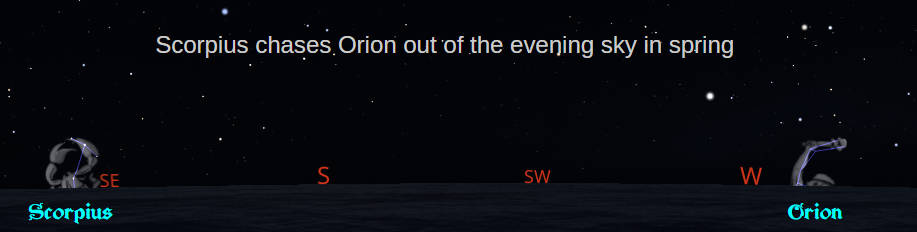
The wonderful constellation of Orion the hard luck hunter is seen rising in the east as twilight fades. According to one Greek myth he was killed by the sting of a giant scorpion, thus he can only rise after the summer constellation of Scorpius the scorpion sets in the southwest, and he must set as the scorpion rises on early spring evenings. By 9 pm, he is located in the southeast. His three belt stars are nearly vertically arranged in a line and equally spaced. They point down to the horizon, at the brightest nighttime star Sirius which rose 13 minutes before. The belt stars lie within a large rectangle of stars tilted to the left. His shoulders and knees. The top left star is the bright red Betelgeuse. The bottom right star is blue-white Rigel.
The astronomical event times given in this blog are for the Traverse City/Interlochen area of Michigan (Lat 44.7° N, Long 85.7° W; EST, UT – 5 hours) unless stated otherwise. Times will be different for other locations.
Addendum
Ephemeris: 05/19/2025 – Finding Libra the scales
This is Ephemeris for Monday, May 19th. Today the Sun will be up for 14 hours and 59 minutes, setting at 9:09, and it will rise tomorrow at 6:09. The Moon, 1 day before last quarter, will rise at 2:51 tomorrow morning.
Libra the scales or balance is a dim constellation which is seen low in the southeast in the evening now. It is one of the constellations of the Zodiac. The term Zodiac means circle of animals, so Libra doesn’t exactly fit. The ancient Babylonians recognized it. Back then it may have represented the equality of day and night because the Sun would have been at the autumnal equinox in Libra at that time. The early Greeks, and possibly the Arabs, did not see Libra as being separate from the constellation of Scorpius the scorpion, which is rising to its lower left. Its two brightest stars have Arabic names meaning north claw and south claw. Scorpions have claws, and last I’ve checked, balances do not.
The astronomical event times given in this blog are for the Traverse City/Interlochen area of Michigan (Lat 44.7° N, Long 85.7° W; EDT, UT – 4 hours) unless stated otherwise. Times will be different for other locations.
Addendum
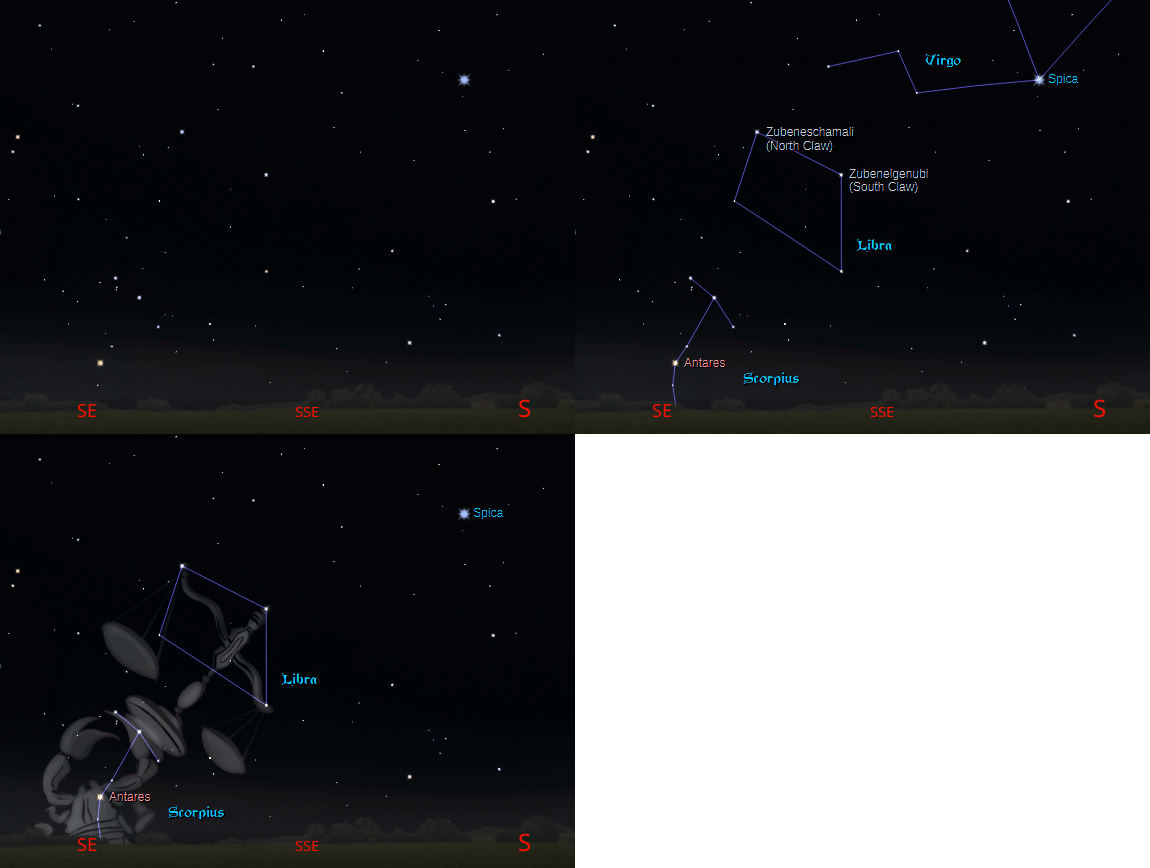
A bit of trivia: At 14 letters Zubeneschamali is the longest star name.
In a previous post I noted that Libra was associated with Virgo which also represents Astraea the goddess of Justice, with Libra, being her Scales of Justice.
Ephemeris: 7/02/2024 – Antares and the scorpion
This is Bob Moler with Ephemeris for Tuesday, July 2nd. Today the Sun will be up for 15 hours and 29 minutes, setting at 9:31, and it will rise tomorrow at 6:02. The Moon, 3 days before new, will rise at 3:26 tomorrow morning.
The constellation of Scorpius the scorpion is low in the south at 11 PM these nights. It’s bright star Antares will pass due south at 11:30 this evening. Antares is an interesting star in that it is a red giant star, and its name Antares* means “Rival of Mars” alluding to the fact that it and Mars appears to be the same color. And about every two years Mars passes near Antares, so unless you know your stars and planets you could mistake them for each other. Antares lies at the heart of the scorpion. To its upper right is the front part of its body and claws, and the trail of stars running down the other way, nearly to the horizon, in the south and back up in the south-southeast to the two stars of its stinger make its characteristic tail.
The astronomical event times given are for the Traverse City/Interlochen area of Michigan (EDT, UT–4 hours). They may be different for your location.
*Breaking down Antares: Ant (Anti, against) – Ares (The Greek god of war the Romans called Mars).
Addendum
Note for trivia fans: Zubeneschamali is the longest star name at 14 letters.
Ephemeris: 05/27/2024 The evening sky is transitioning into summer
This is Bob Moler with Ephemeris for Memorial Day, Monday, May 27th. Today the Sun will be up for 15 hours and 14 minutes, setting at 9:17, and it will rise tomorrow at 6:02. The Moon, 3 days before last quarter, will rise at 1:36 tomorrow morning.
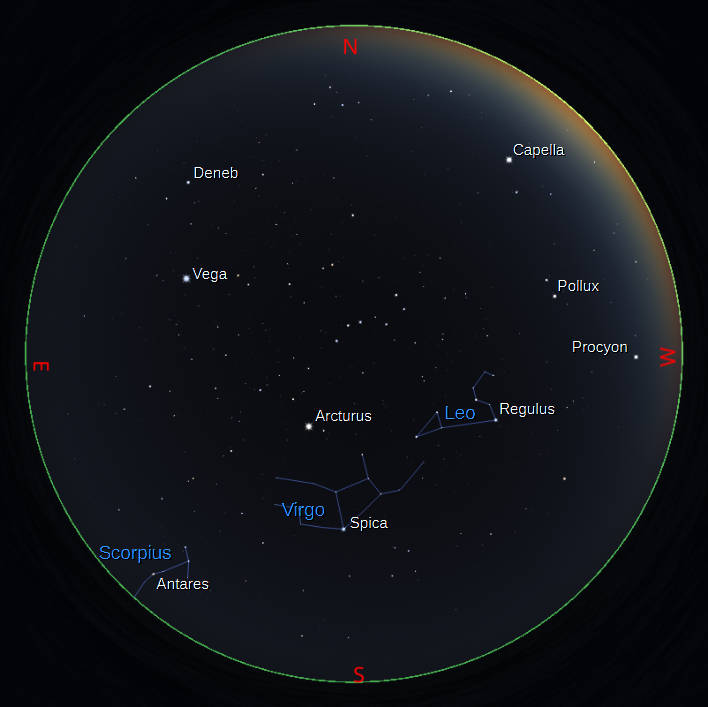
The sky tonight at 10:30 is beginning to show the transition from spring to summer. Antares in Scorpius is very low in the southeast, rising and chasing away Orion who has disappeared in the West. According to Greek mythology, at least in one story, Orion was killed by the sting of a giant scorpion and so neither he nor Scorpius the scorpion can be in the sky at the same time. The bright star Spica in Virgo the virgin is due South at that time, with Leo the lion in the southwest. Very high in the southeast is the star Arcturus. The Big Dipper is overhead. And in the east-northeast high up this is the bright star Vega, one of the stars of the summer triangle. The second star of the triangle Deneb is lower in the northeast. The third star has yet to rise.
The astronomical event times given are for the Traverse City/Interlochen area of Michigan (EDT, UT–4 hours). They may be different for your location.
Addendum
Ephemeris: 08/08/2023 – What the indigenous peoples of the northern Great Lakes thought of Scorpius
This is Ephemeris for Tuesday, August 8th. Today the Sun will be up for 14 hours and 22 minutes, setting at 8:59, and it will rise tomorrow at 6:37. The Moon, at last quarter today, will rise at 12:32 tomorrow morning.
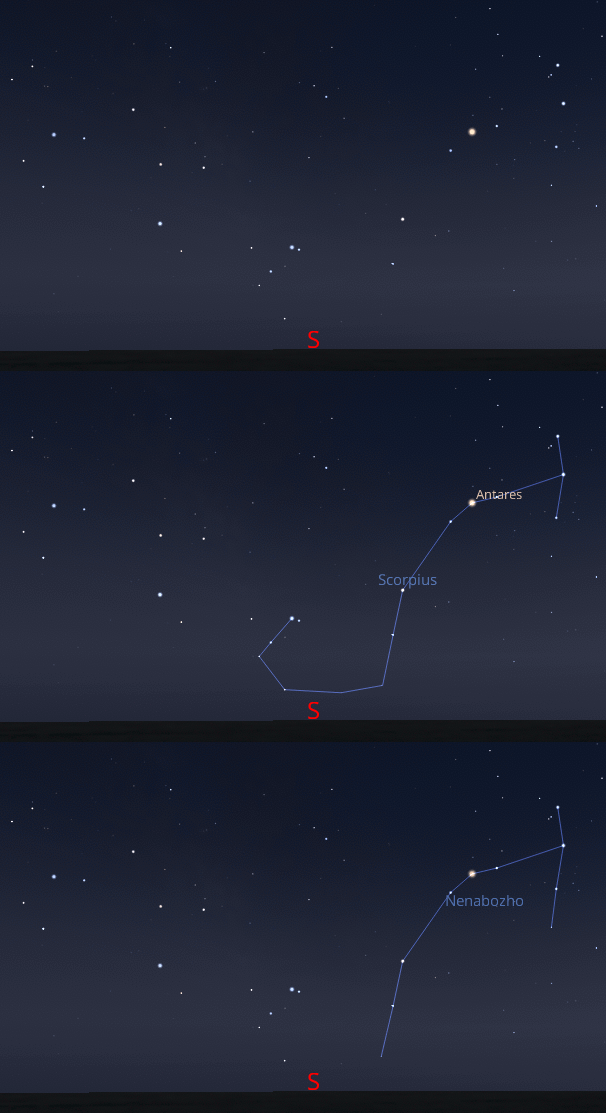
Scorpius the scorpion is now seen low in the southern sky in the at 10 pm. To me, the stars here make a very good scorpion. Scorpius was invented by the people of the Middle East, where scorpions are plentiful. The Anishinaabek native peoples of our area, however, saw here one of their legendary hero figures, Nenabozho. In the sky, the arc of four stars at the front of the scorpion and to the right of the bright star Antares is his bow. He is shooting an arrow toward the receding Great Panther or Curly Tail a constellation of spring whose curl of a tail is the head of the constellation Leo, now lost in the evening twilight in the west. Nenabozho was a hero in their creation stories, and a trickster who was sometimes seen as a rabbit.
The astronomical event times given are for the Traverse City/Interlochen area of Michigan (EDT, UT –4 hours). They may be different for your location.
Ephemeris: 08/07/2023 – Sagittarius, centaur or teapot?
This is Bob Moler with Ephemeris for Monday, August 7th. Today the Sun will be up for 14 hours and 25 minutes, setting at 9:00, and it will rise tomorrow at 6:36. The Moon, 1 day before last quarter, will rise at 12:06 tomorrow morning.
Looking due south and low in the sky at 11 pm, now is one of my favorite asterisms, the Teapot of the constellation Sagittarius. Sagittarius, classically, represents a centaur with a bow and arrow aimed at the heart of the constellation Scorpius to its west. I can find the bow and arrow here, but the half man, half horse figure of the centaur eludes me. However, the stout little teapot of the children’s song is quite obvious, with its base, lid on top, handle to the left and the spout to the right. To make things more realistic, the bright Milky Way seems to rise like steam from its spout. The Teapot is an asterism, an informal constellation. As the night goes on, the Teapot moves westward and appears to tilt, pouring its tea on the southwestern horizon.
The astronomical event times given are for the Traverse City/Interlochen area of Michigan (EDT, UT –4 hours). They may be different for your location.
Addendum
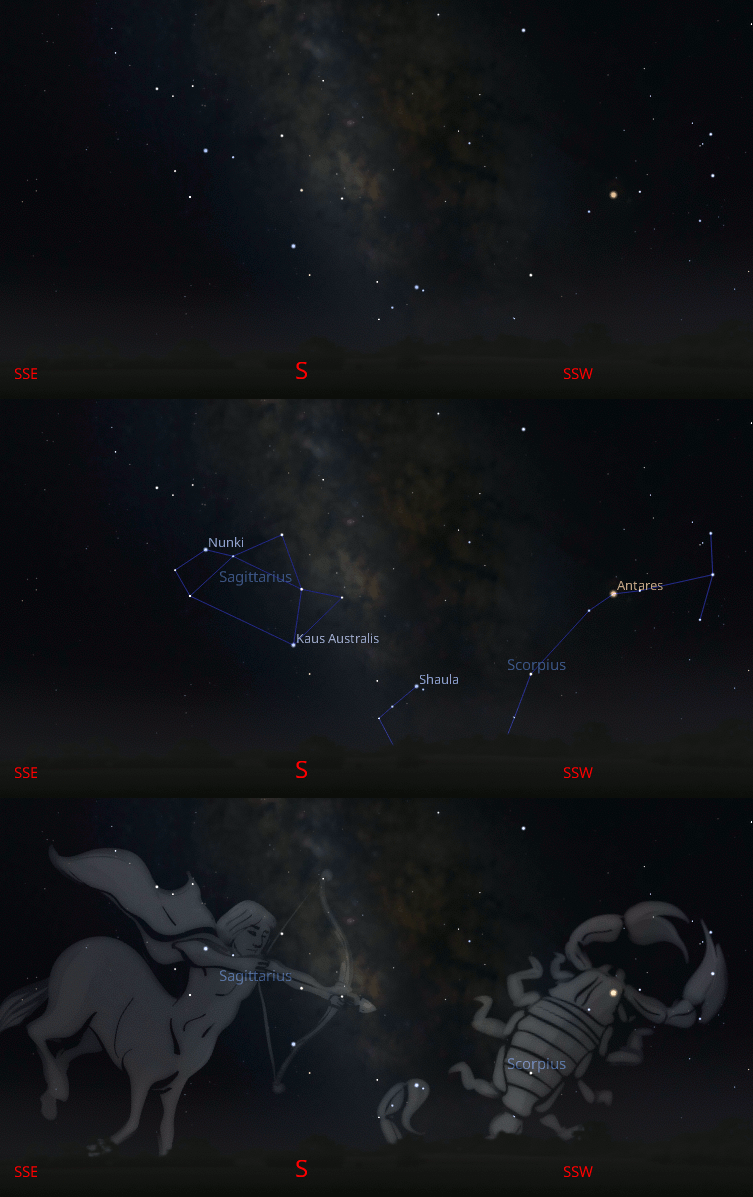
Sagittarius-Teapot finder animation for 11 pm, August 7, 2023. I’ve omitted all the lines in Sagittarius except the teapot stars from Stellarium, so there are more lines connecting the stars, most too far south to really spot easily from our latitude (45 degrees north). Click or tap on the image to enlarge it. Created using Stellarium and GIMP.
Named stars that are shown in the image above are Nunki, from an ancient tablet of thirty stars – The proclaimer of the sea. This is because the next four constellations to the east are water constellations: Capricornus, the sea goat; Aquarius, the water bearer; Pisces the fish; and Piscis Australis, the southern fish. Antares, in Scorpius, is of course the Rival of Mars, due to its reddish hue, and Mars passes Antares regularly on its journey through the Zodiac. An archer has to have his bow. Kaus Australis is the southern bow star. The star above that is Kaus Media, the middle bow star. And the star above and left of that is Kaus Borealis, the northern bow star. The constellation art that comes with Stellarium doesn’t match up with the stars of the bow.
The five stars on the left side of the Teapot is another asterism called the Milk Dipper.
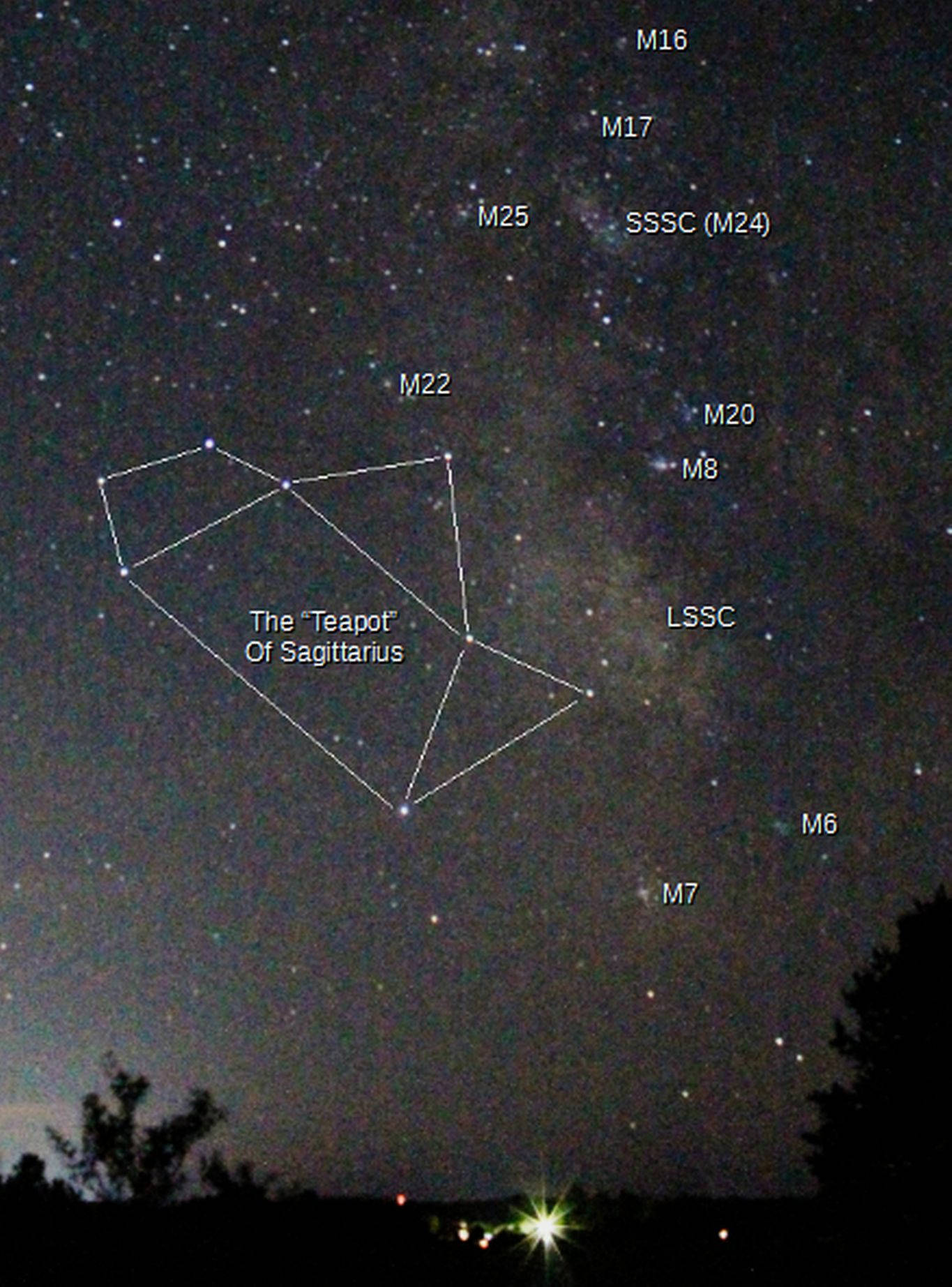
Sagittarius in a short time exposure with added annotations. This would be later in the evening, around midnight. The “M” designations are objects in Charles Messier’s catalog created in the latter half of the 18th century. LSSC is the Large Sagittarius Star Cloud, SSSC is the Small Sagittarius Star Cloud. These will be easily visible in binoculars. Credit Bob Moler.

