Archive
Ephemeris: 06/26/2026 – How do we know so much about those points of lights in the sky?
This is Ephemeris for Friday, June 26th. Today the Sun will be up for 15 hours and 33 minutes, setting at 9:32, and it will rise tomorrow at 5:59. The Moon, 3 days before full, will set at 3:37 tomorrow morning.
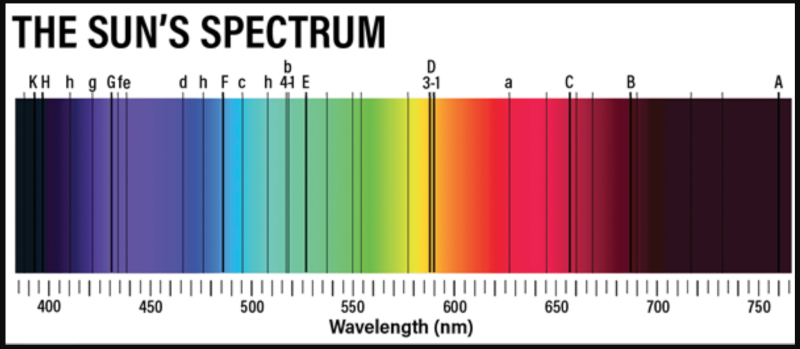
All but a handful of stars are mere points in even our largest telescopes. How do we know so much about them then? The reason is the science of spectroscopy, breaking down light into its constituent colors where color equals frequency or the energy of the light. Isaac Newton was the first to discover that by passing white light through a prism it turned into a rainbow of colors that the colors were actually combined within the white light. Passing sunlight through a vertical slit and smearing the light horizontally with the prism into its constituent colors, many dark vertical lines within that spectrum of colors appear. They turned out to be the fingerprints of the elements within the atmospheres of the stars, and that is just the beginning.
The astronomical event times given in this blog are for the Traverse City/Interlochen area of Michigan (Lat 44.7° N, Long 85.7° W; EDT, UT – 4 hours) unless stated otherwise. Times will be different for other locations.
Addendum