Archive
10/13/2022 – Ephemeris – CAPSTONE satellite stabilized again
This is Ephemeris for Thursday, October 13th. Today the Sun will be up for 11 hours and 5 minutes, setting at 7:01, and it will rise tomorrow at 7:57. The Moon, half way from full to last quarter, will rise at 8:59 this evening.
The CubeSat named CAPSTONE, was launched June 28th to prove out the near rectilinear halo orbit of the Moon that the Lunar Gateway Space Station and Orion Capsule will be located in on missions to the south pole of the Moon. CubeSats are built on a 10 by 10 centimeter or 4 by 4 inch cube. They are relatively inexpensive. CAPSTONE is a 12 unit CubeSat arranged 4 by 3 cubes with a solar panel/antenna attached to one side. Back on September 8th it made a course correction which caused it to tumble. It took almost a month, until last Friday to regain control of the satellite and stop the tumbling. Apparently a stuck propellant valve was the problem. CAPSTONE should enter this halo orbit of the Moon on November 13th.
The astronomical event times given are for the Traverse City/Interlochen area of Michigan (EDT, UT – 4 hours). They may be different for your location.
Addendum
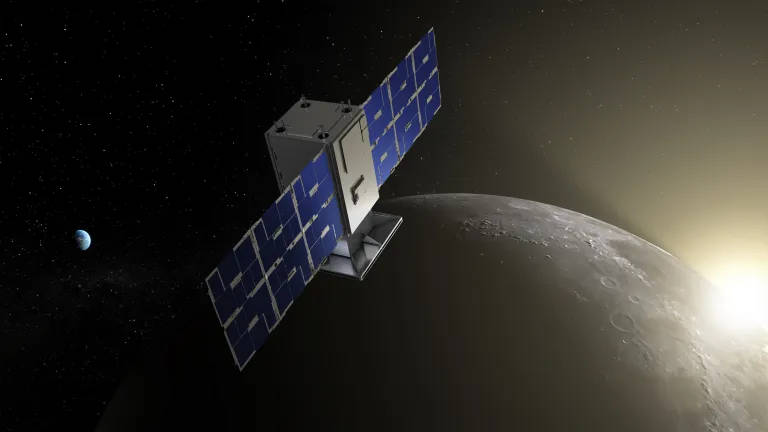
Artist’s impression of the CAPSTONE spacecraft at perilune, the closest point in its orbit, over the north pole of the Moon.
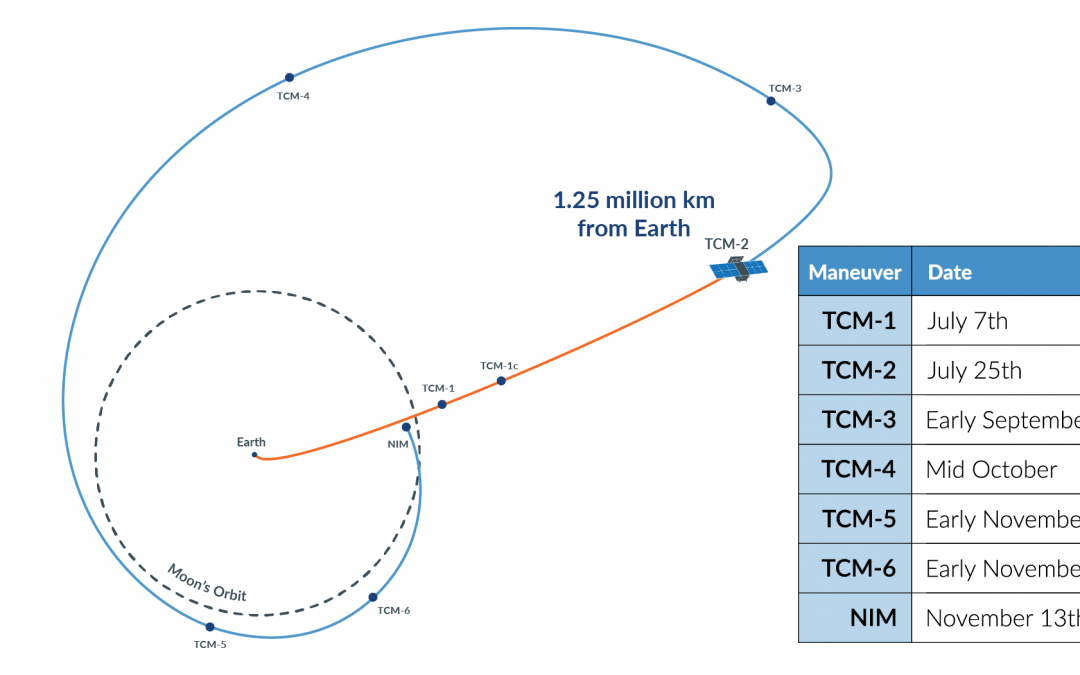
CAPSTONE low-energy trajectory to the Moon. TCM are trajectory Correction Maneuvers (Thruster firings). Click on the image to enlarge it. Credit: Advanced Space, builder of the CAPSTONE CubeSat.
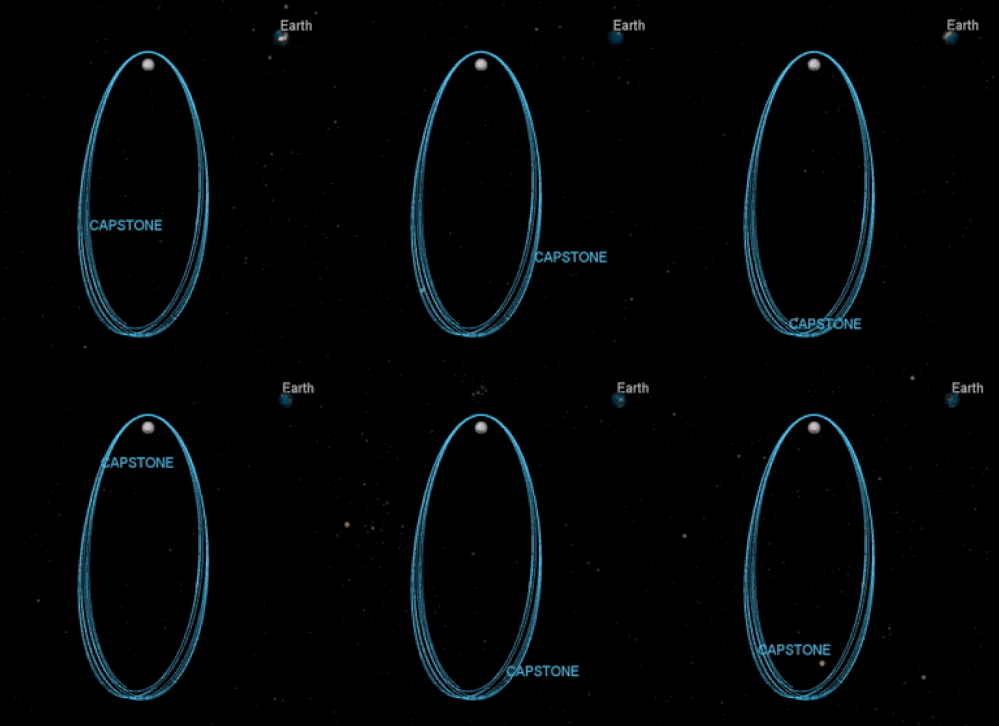
NASA CAPSTONE pathfinder for gateway orbit to prove out the near rectilinear halo orbit for the Lunar Gateway.
10/06/2022 – Ephemeris – Artemis I rescheduled
This is Ephemeris for Thursday, October 6th. Today the Sun will be up for 11 hours and 27 minutes, setting at 7:14, and it will rise tomorrow at 7:48. The Moon, 3 days before full, will set at 4:52 tomorrow morning.
Artemis 1 was going to launch on September 27th, But Hurricane Ian had other plans, so the rocket was trundled back to the Vertical Assembly Building. There, a battery or components of the auto destruct mechanism had to be swapped out before they attempted to launch again. All rockets launched from the US are required to be equipped with a destruct package to blow up the rocket if it veers off course, to not endanger lives on the ground. There are other tweaks, including charging or replacing batteries in all the CubeSats that are on board. The next possible launch period runs from November 12th to the 27th, with four blackout dates within that period. The weather should be better, being the tail end of hurricane season.
The astronomical event times given are for the Traverse City/Interlochen area of Michigan (EDT, UT – 4 hours). They may be different for your location.
Addendum
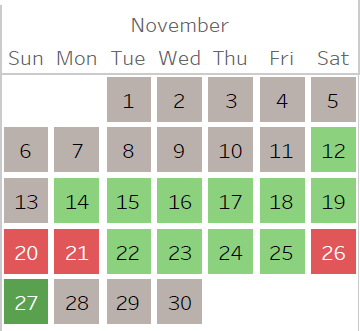
Artemis I November launch calendar. Dates in green are possible launch dates. I’m not sure, but red dates are also forbidden because the Orion Capsule will experience more than 90 minutes in shadow at a time. It’s powered by solar panels. Light green dates allow a long mission of 1 1/2 orbits of the Moon in the distant retrograde orbit (DRO). The dark green dates can only have 1/2 a DRO. Source: NASA.
09/26/2022 – Ephemeris – The DART spacecraft will attempt to deflect an asteroid tonight, Artemis I launch postponed
This is Ephemeris for Monday, September 26th. Today the Sun will be up for 11 hours and 57 minutes, setting at 7:32, and it will rise tomorrow at 7:35. The Moon, 1 day past new, will set at 8:07 this evening.
Tonight at 7:14 pm EDT (23:14 UTC), NASA’s DART spacecraft will collide with the tiny asteroid Dimorphos, which is orbiting the somewhat larger asteroid Didymos. They are potentially hazardous asteroids. The idea is to see what effect the collision has on the orbit of Dimorphos as it orbits Didymos at four tenths of a mile an hour. Trailing DART is an Italian CubeSat LiciaCube (pronounced LEE-cha-cube), which was launched from DART more 15 days ago to witness the collision. DART is an acronym for Double Asteroid Redirection Test, part of the Planetary Defense Program. Earth based radio and optical telescopes will assess if and how much the collision alters the orbit of Dimorphos. LICIAcube will return images of the collision, crater and the other side of Dimorphos. NASA will air it live on their channels.
The astronomical event times given are for the Traverse City/Interlochen area of Michigan (EDT, UT – 4 hours). They may be different for your location.
Addendum
Unlike the Artemis I launch, this event cannot be postponed. It will either hit Dimorphos at 7:14 pm or miss forever.
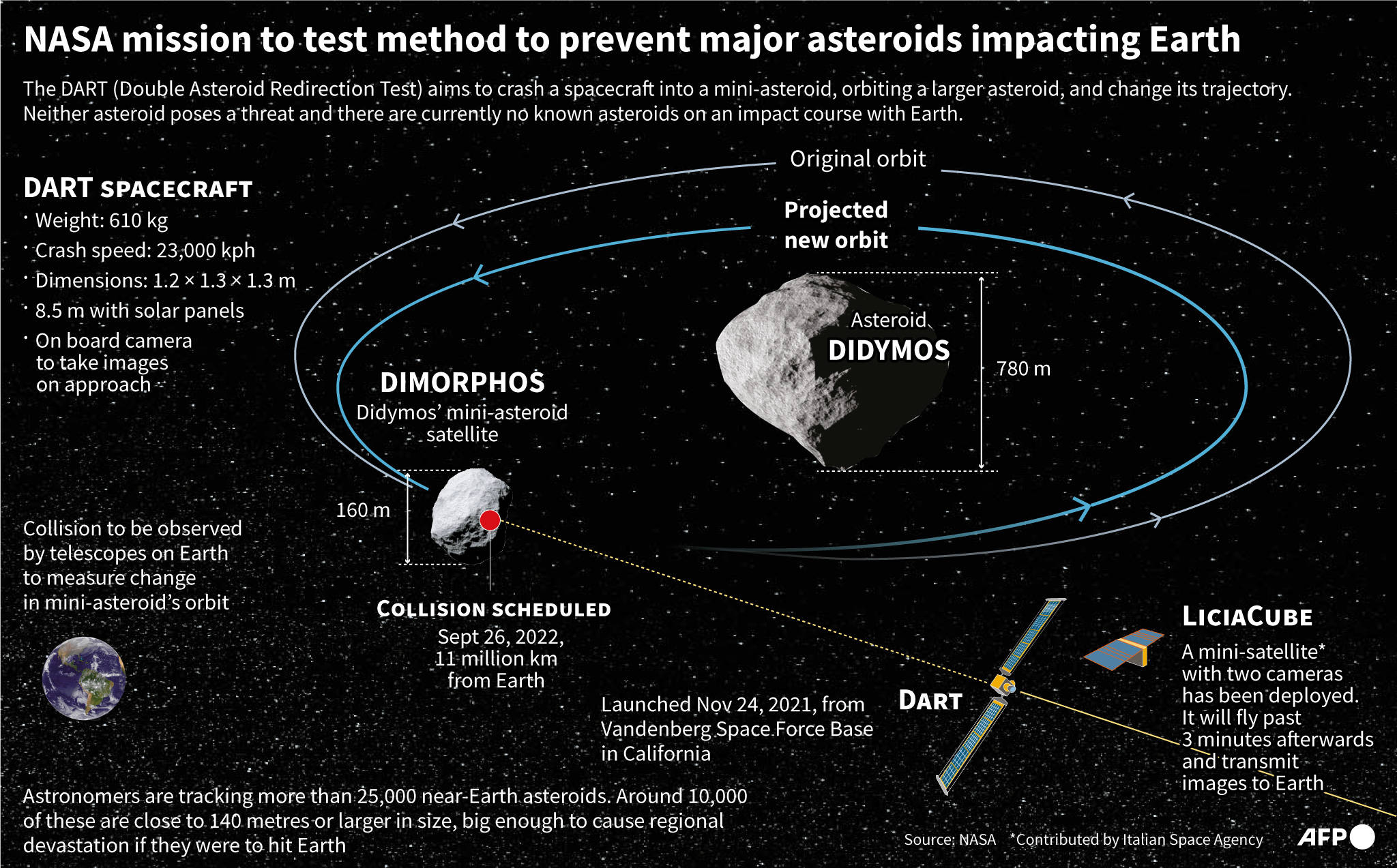
Graphic on NASA’s DART mission to crash a small spacecraft into a mini-asteroid to change its trajectory as a test for any potentially dangerous asteroids in the future. Click on the image to enlarge it. Credit: AFP / AFP (Agence France-Presse)
A Note from EarthSky.org:
If you want to watch the event live, coverage begins at 6 p.m. EDT (22 UTC) on September 26, 2022, on NASA’s website. You can also watch it via Facebook, Twitter and YouTube.
Artemis I news
The Artemis I launch, scheduled for Tuesday, September 27, has been postponed due to the threat from tropical storm Ian.
09/06/2022 – Ephemeris – Ongoing NASA Missions
This is Ephemeris for Tuesday, September 6th. Today the Sun will be up for 12 hours and 59 minutes, setting at 8:10, and it will rise tomorrow at 7:12. The Moon, 3 days past first quarter, will set at 3:11 tomorrow morning.
The Artemis I launch has been postponed until later this month. The next try will come no sooner than the 25th, or next month. Another launch that is delayed is the Psyche mission to the asteroid Psyche that was supposed to be launched last month on a Falcon Heavy rocket. The problem this time isn’t the rocket, but the satellite. There is a delay with delivery and testing of the software for the satellite. The launch this year would have used a Mars flyby for a gravitational assist to shorten the flight time. A launch next year would not have that advantage and would increase the flight time. On the 26th of this month the DART satellite will impact the tiny asteroid Dimorphos, that’s orbiting a larger asteroid Didymos, to test that method of planetary defense.
The astronomical event times given are for the Traverse City/Interlochen area of Michigan (EDT, UT – 4 hours). They may be different for your location.
Addendum
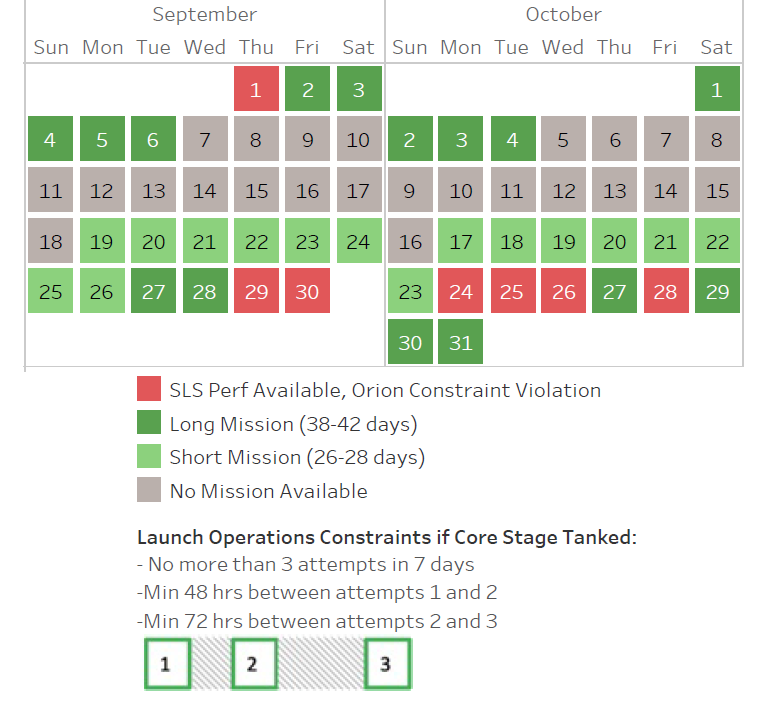
Artemis I availability dates for September and October 2022. As I understand it, launches on red dates would cause the Orion capsule to be in the Earth’s shadow for longer than 90 minutes. Gray dates would have the Orion Capsule land at night. Credit NASA. A cut & paste from Artemis I Mission Availability 2022-2023 (EST/EDT) pdf.
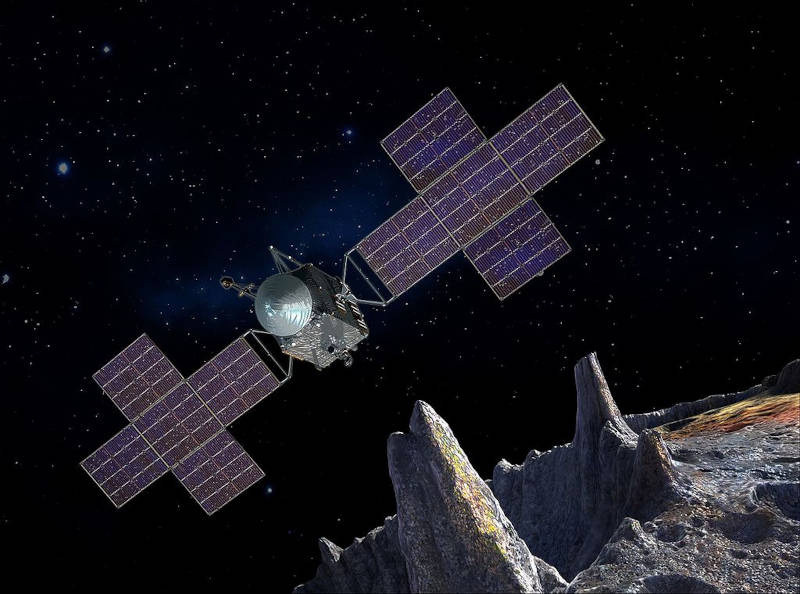
An artist’s rendition of the Psyche spacecraft at the metal-rich asteroid Psyche. Credit: NASA.
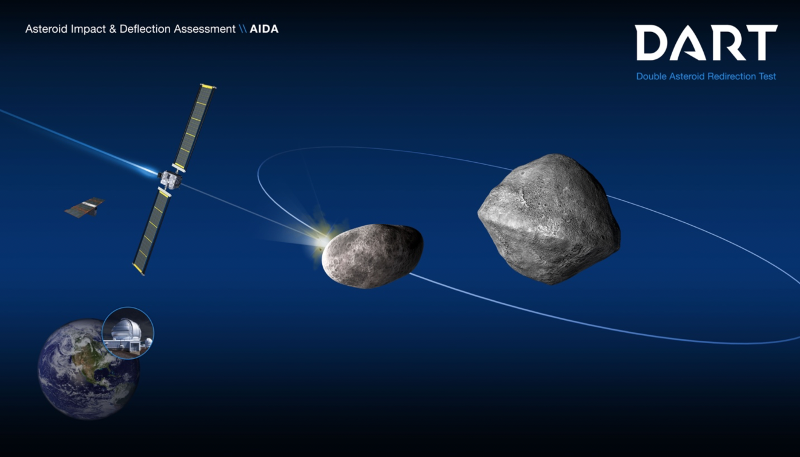
Schematic of the DART mission shows the impact on the moonlet of asteroid (65803) Didymos. Post-impact observations from Earth-based optical telescopes and planetary radar would, in turn, measure the change in the moonlet’s orbit about the parent body.
Credits: NASA/Johns Hopkins Applied Physics Lab.
08/30/2022 – Ephemeris – The Space Launch System (SLS) will evolve over time
This is Ephemeris for Tuesday, August 30th. Today the Sun will be up for 13 hours and 20 minutes, setting at 8:22, and it will rise tomorrow at 7:04. The Moon, 3 days past new, will set at 10:02 this evening.
The Space Launch System or SLS rocket that’s used for Artemis I is not the final configuration of the rocket to be flown. For Artemis I and II, which will take astronauts around the Moon and back, the SLS is in its Block 1 configuration with an Interim Cryogenic Propulsion Stage, or ICPS as the upper stage. After the Moon landing by Artemis III, the upper stage will be replaced by the Exploration Upper Stage with nearly four times the thrust of the other. That’s Block 1B. After Artemis VIII, or the eighth launch of the SLS, NASA will have run out of solid booster segments left over from the Shuttle program and will have them replaced with more powerful boosters, making it Block 2. With Block 1 the ICPS needs the core stage to get into a highly elliptical orbit, to send the Orion capsule to the Moon. The ICPS cannot do it by itself.
The astronomical event times given are for the Traverse City/Interlochen area of Michigan (EDT, UT – 4 hours). They may be different for your location.
Addendum
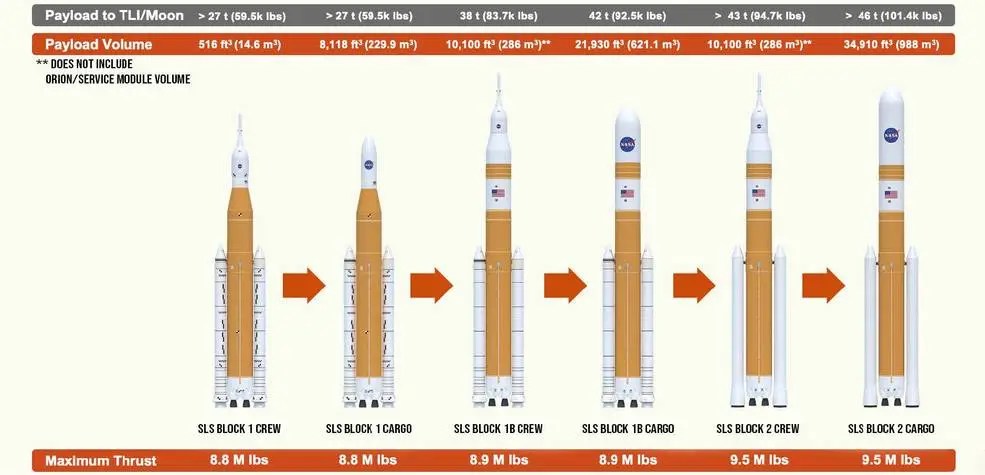
Diagram comparing SLS variants. The chart also shows the cargo variant, one of which was supposed to launch the Europa Clipper mission to Jupiter’s icy moon Europa. That launch has since been reassigned to a SpaceX Falcon Heavy rocket, due to SLS delays. The Falcon Heavy is not as powerful as the SLS, so the Europa Clipper spacecraft will take longer to reach Jupiter’s vicinity (6 vs. 3 years), but will save $2 billion in launch costs. Click on the image to enlarge it. Credit: NASA.
08/29/2022 – Ephemeris – On the day of the first Artemis I launch opportunity, a look at possible landing sites for Artemis III
As usual, the Ephemeris radio programs are recorded prior to them being aired. Monday’s programs have the longest lead times, being written and recorded eight days earlier, Sunday of the previous week. This blog post was created on the 28th. So I have no idea if Artemis I launches today or not. All three times this program will be sent out on-air will be before the scheduled launch.
This is Bob Moler with Ephemeris for Monday, August 29th. Today the Sun will be up for 13 hours and 23 minutes, setting at 8:24, and it will rise tomorrow at 7:02. The Moon, 2 days past new, will set at 9:43 this evening.
Earlier this month, NASA announced the selection of 13 possible landing areas near the South Pole of the Moon. The South Pole of the Moon was selected as the Artemis target since ice was found at the bottom of some of the craters there. Back in the Apollo days, landing sites were selected by being smooth, and the first were in the broad lava plains called lunar seas. The Moon’s South Pole is the opposite. It’s in the rugged lunar highlands. The landing areas turn out to be crater rims and ridges or small plateaus that catch the Sun, just above the lunar horizon. NASA is developing autonomous landing systems that can cope with landing on such difficult terrain, with deep shadows illuminated by a very low Sun. These are not ideal landing conditions.
The astronomical event times given are for the Traverse City/Interlochen area of Michigan (EDT, UT – 4 hours). They may be different for your location.
Addendum
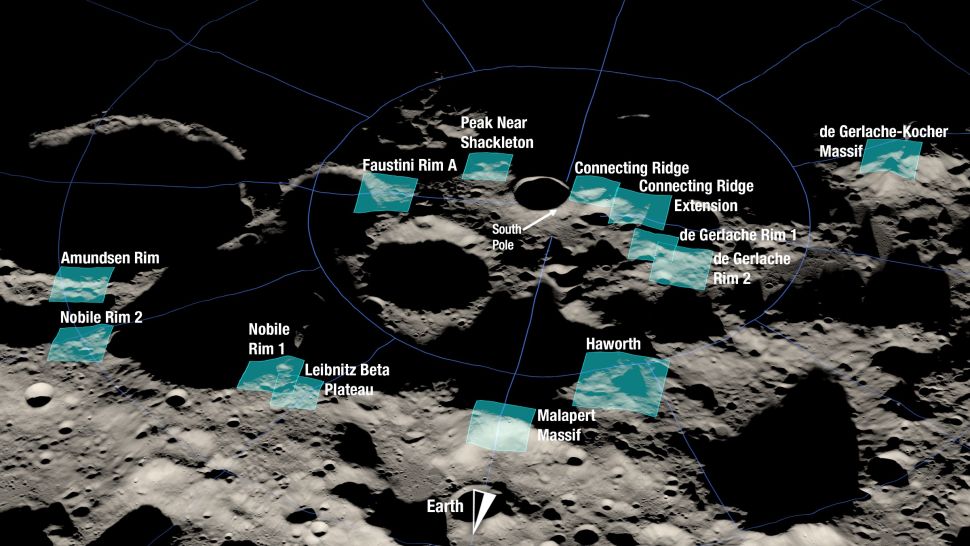
On August 19, 2022, NASA released the candidate lunar landing sites for Artemis III near the Moon’s South Pole. Click on the image to enlarge it. Credit: NASA, Lunar Reconnaissance Orbiter.
08/26/2022 – Ephemeris – Monday the launch window opens up for Artemis I
This is Bob Moler with Ephemeris for Friday, August 26th. Today the Sun will be up for 13 hours and 31 minutes, setting at 8:30, and it will rise tomorrow at 6:59. The Moon, 1 day before new, will rise at 7:00 tomorrow morning.
The first day of the Artemis I launch window is Monday morning. NASA will have three attempts to launch between August 29th and September 5th. There is also a daily launch window of up to two hours. If a launch is scrubbed one day, it will be at least two days before they can try again. Artemis I is an uncrewed mission, that will enter a large orbit of the Moon, and go around it one half or one and a half times before returning to the Earth. Major investigations that will take place in the Orion capsule are how well it would protect the astronauts from the Sun’s radiation and cosmic rays outside the Earth’s protective magnetosphere. The first launch window opens up at 8:33 am Eastern Daylight Time, August 29, 2022.
The astronomical event times given are for the Traverse City/Interlochen area of Michigan (EDT, UT – 4 hours). They may be different for your location.
Addendum
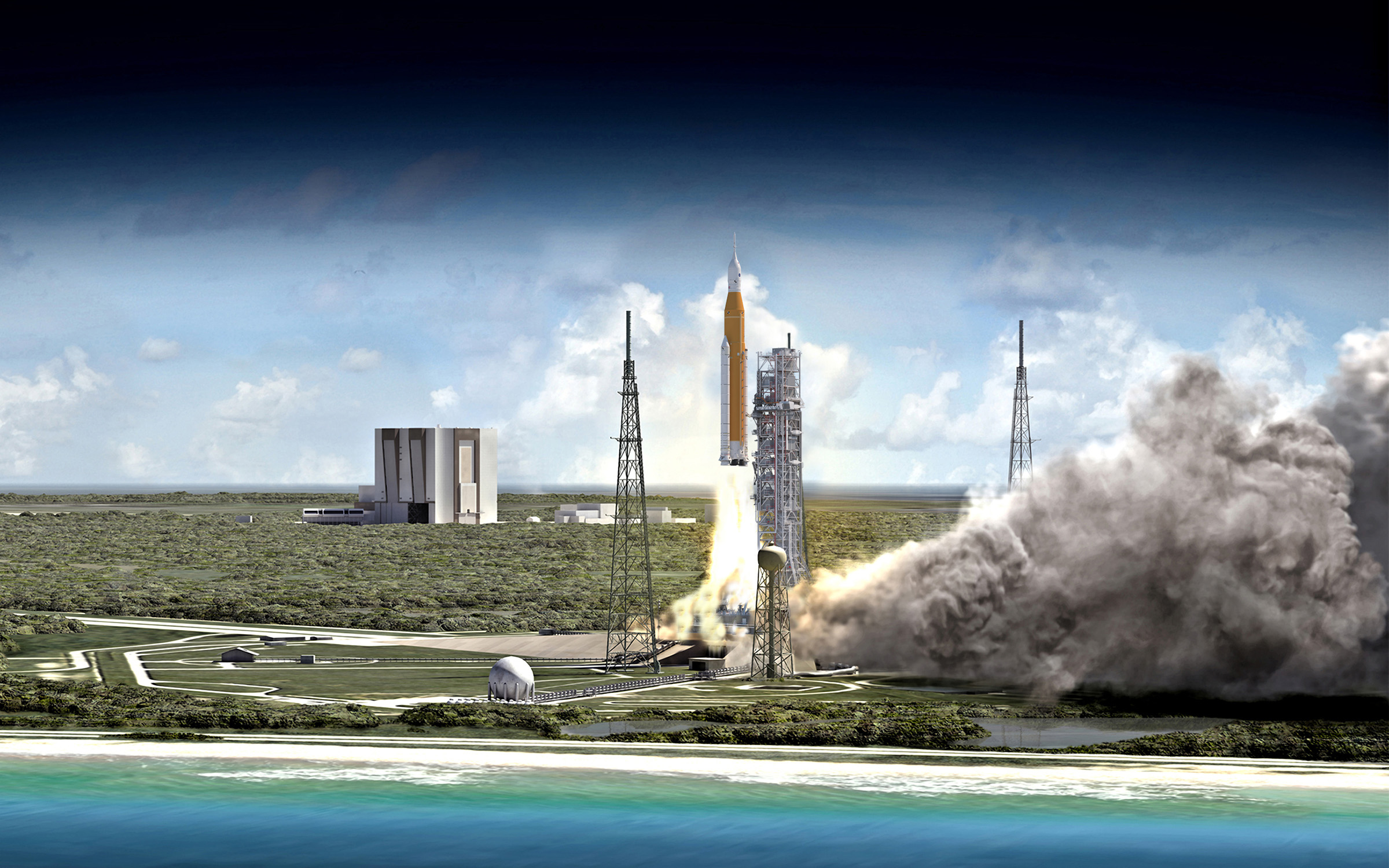
Artist’s rendering of the Artemis launch from Launch Pad 39B as it would be seen from offshore. Click on the image to enlarge it. Credit NASA.
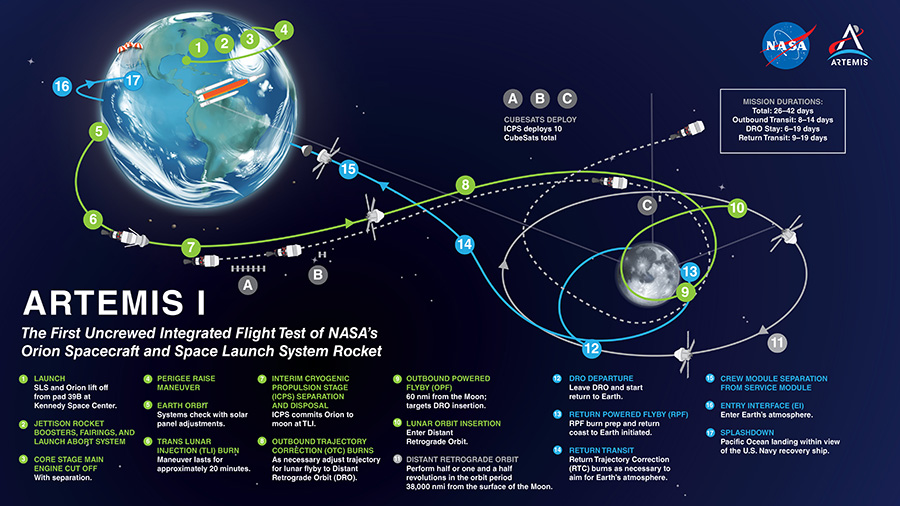
Major mission milestones. Click on the image to enlarge it. Credit: NASA
08/11/2022 – Ephemeris – Another lunar mission in support of Artemis
This is Ephemeris for Thursday, August 11th. Today the Sun will be up for 14 hours and 14 minutes, setting at 8:54, and it will rise tomorrow at 6:41. The Moon, at full today, the full Sturgeon Moon, and a supermoon to boot, will rise at 9:18 this evening.
As we await the opening of the Artemis 1 launch window in two and a half weeks, and a successful mission, Artemis 2 may launch as early as May of next year with a crew of four for a loop around the Moon on a free return trajectory back to the Earth. They will not stay in orbit of the Moon. South Korea’s Pathfinder Lunar Orbiter was launched a week ago on a long trajectory to reach the Moon in December. Among other things, it has a NASA supplied camera to photograph the floors of the permanently shadowed craters at the Moon’s South Pole, a prime target for the Artemis missions. The pace of lunar missions by NASA’s partners is increasing, looking to a crewed landing, possibly as early as 2025 or 2026.
The astronomical event times given are for the Traverse City/Interlochen area of Michigan (EDT, UT – 4 hours). They may be different for your location.
Addendum
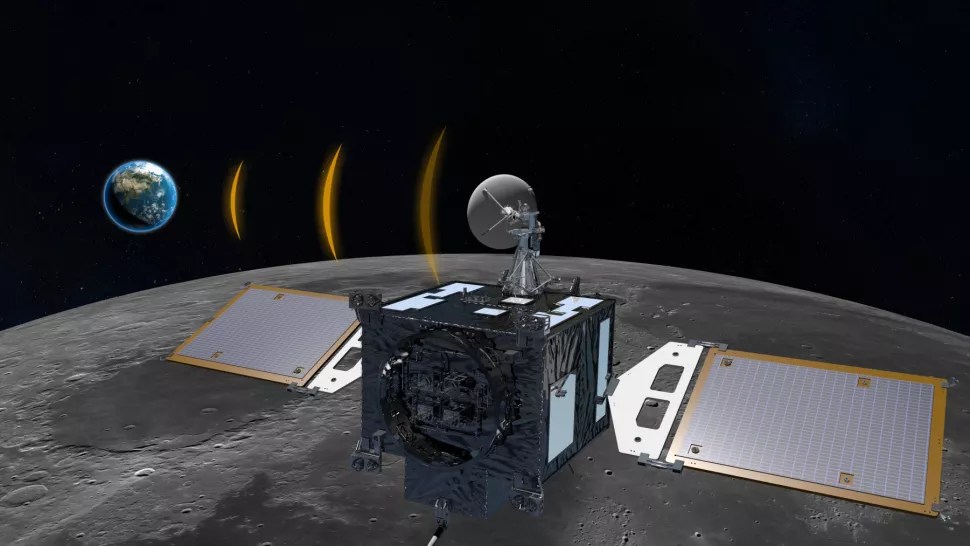
Artist’s vision of the Korea Pathfinder Lunar Orbiter “Danuri” communicating from the Moon. It has instruments to photograph the Moon, and otherwise detect resources. It also contains a NASA supplied ShadowCam. Credit: KARI, Korea Aerospace Research Institute.
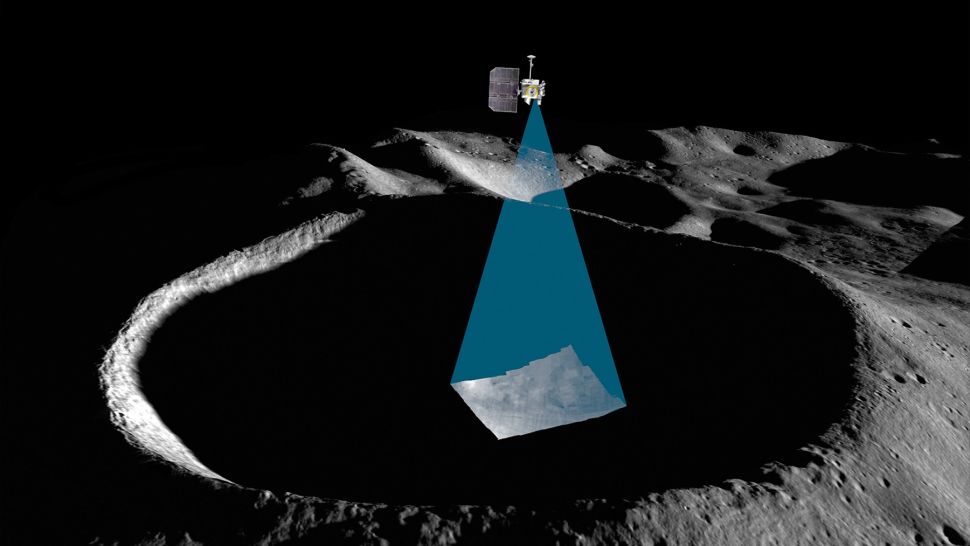
ShadowCam operation imaging the floors of permanently shadowed craters. The camera is 800 times more sensitive than those on the Lunar Reconnaissance Orbiter. Credit NASA.
06/13/2022 – Ephemeris – What’s a near rectilinear halo orbit?
Since I wrote and recorded this program on June 5th, the launch date has been postponed from June 13th. No new launch date has, been selected, though the launch window extends through the 22nd for this month’s attempt.
This is Ephemeris for Monday, June 13th. Today the Sun will be up for 15 hours and 32 minutes, setting at 9:29, and it will rise tomorrow at 5:56. The Moon, 1 day before full, will set at 5:41 tomorrow morning.
Last Friday I talked about the CAPSTONE mission to a near rectilinear halo orbit of the Moon, which, when I recorded this, could launch as soon as today. Anyway, what is a near rectilinear halo orbit? And why is it so special? It is a long looping orbit that comes quite close to the Moon over its North Pole, and very far away over the South Pole of the Moon. Instead of going behind the Moon from the Earth’s perspective, the orbit will always be face-on to the Earth. It will require occasional tweaks to keep it that way, just like the James Webb Space Telescope needs occasional tweaks to keep it in orbit of the Earth-Sun L2 point. That way a lander, or base at the South Pole of the Moon, can keep in communication with the Lunar Gateway for all but a couple of hours each week. Why the South Pole? That’s where the water ice is!
The astronomical event times given are for the Traverse City/Interlochen area of Michigan (EDT, UT – 4 hours). They may be different for your location.
Addendum
NASA CAPSTONE* pathfinder for gateway orbit is to be launched this year by Rocket Lab to prove out the near rectilinear orbit for the Lunar Gateway.
The orbit will pass 1,900 miles (3,000 km) above the Moon’s North Pole and out to 43,000 miles (70,000 km) above the South Pole. The period of such an orbit is about 6.5 days. Landing attempts at the South Pole of the Moon will begin as the lander departs the Orion spacecraft or the Lunar Gateway space station and begins its descent over the North Pole.
06/10/2022 – Ephemeris – The first Artemis mission: CAPSTONE
This is Bob Moler with Ephemeris for Friday, June 10th. Today the Sun will be up for 15 hours and 30 minutes, setting at 9:27, and it will rise tomorrow at 5:56. The Moon, 3 days past first quarter, will set at 3:52 tomorrow morning.
Launching, perhaps, as soon a Monday is the CAPSTONE Mission, which is part of the Artemis program to send the next man and first woman to the Moon. The Capstone mission is to check out the special near rectilinear halo orbit the Lunar Gateway space station, and the Human Landing Craft will be in when the Orion spacecraft arrives before landing. CAPSTONE is, of course, an acronym that explains its purpose, to achieve and navigate itself into this near rectilinear halo orbit. CAPSTONE is basically a CubeSat made of 12 4 by 4 inch (12 100 mm by 100 mm) cubes. It will be launched by Rocket Lab from New Zealand on their Electron rocket with their Proton upper stage. It will take 3 months to reach the Moon.
The astronomical event times given are for the Traverse City/Interlochen area of Michigan (EDT, UT – 4 hours). They may be different for your location.
Addendum
Artist’s impression of the CAPSTONE spacecraft at perilune, the closest point in its orbit, over the north pole of the Moon.
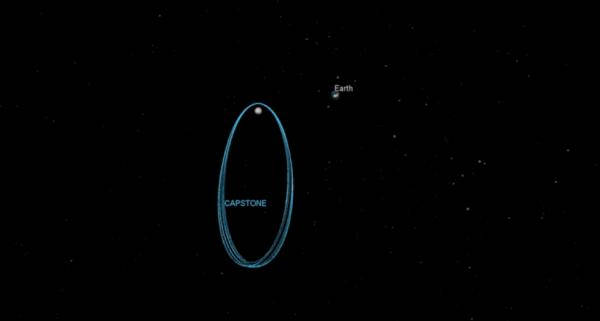
CAPSTONE’s near rectilinear halo orbit of the Moon, which precesses to keep face on to the Earth during the lunar orbit of the Earth.
 Bob Moler's Ephemeris Blog