Archive
Ephemeris: 05/09/2024 – How the Great Bear got her long tail
This is Ephemeris for Thursday, May 9th. Today the Sun will be up for 14 hours and 37 minutes, setting at 8:58, and it will rise tomorrow at 6:19. The Moon, 2 days past new, will set at 11:30 this evening.
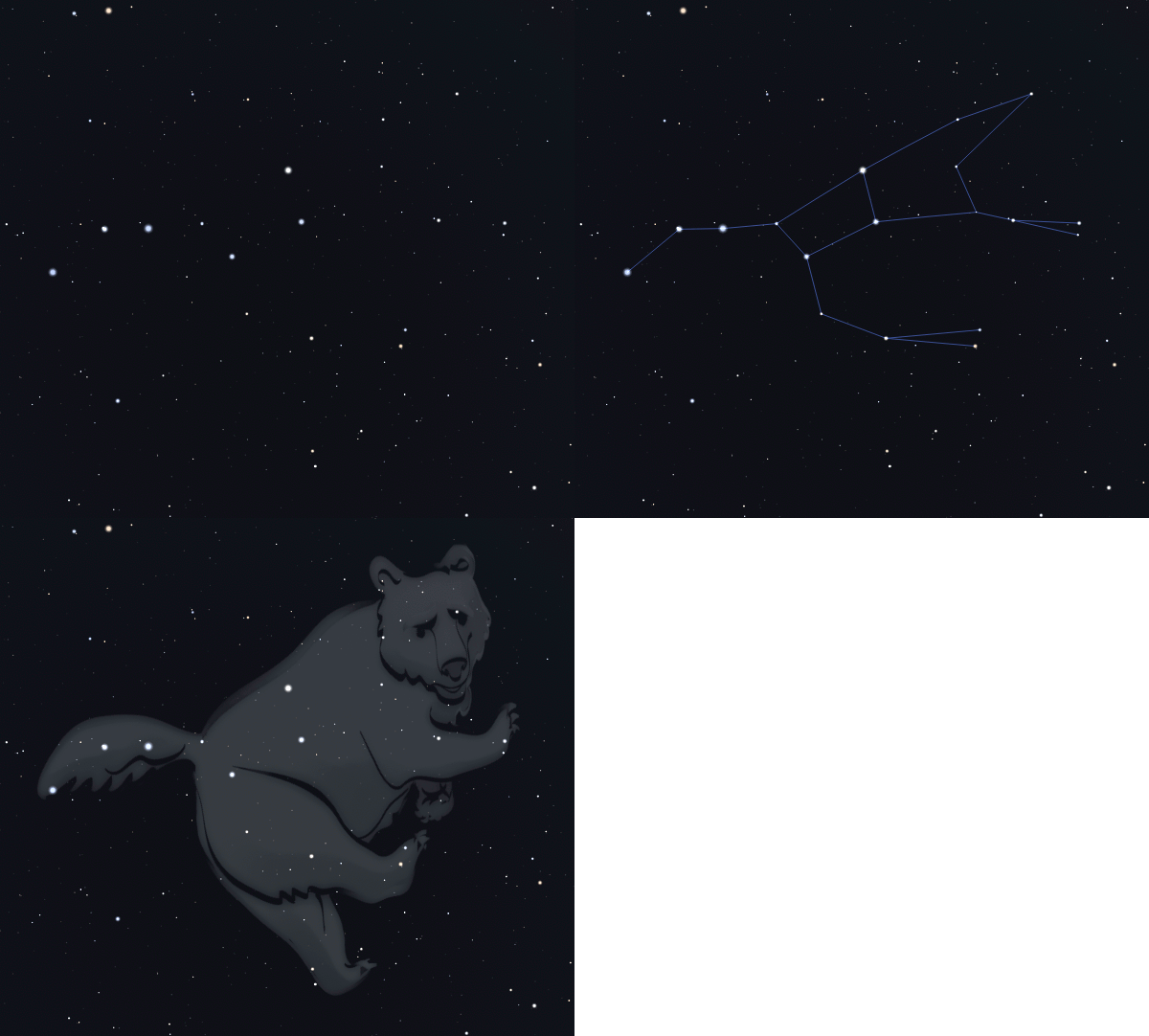
As we see the Great Bear, Ursa Major in the sky with the Big Dipper as its hind end and tail, it seems apparent that the bear is unusual, because bears don’t have long tails. The peoples of the old world, Greeks and others, had a story of how the bear got his long tail. The God Zeus was responsible for the predicament that caused a young lady to be turned into the bear and placed her in the sky out of harm. Some question how he did this. To throw her into the sky, he probably didn’t want to grab the end with the teeth, so he grabbed the bear’s stubby tail whirled the bear around his head and threw her up into the sky where we see her today. Of course the tail was stretched. Some Native Americans did see a bear here too. But the three stars of the dipper’s handle were 3 hunters following the bear.
The astronomical event times given are for the Traverse City/Interlochen area of Michigan (EDT, UT–4 hours). They may be different for your location.
Addendum
For the story of why the young lady, Callisto, was turned into a bear, check out this post of a week ago: https://bobmoler.wordpress.com/2024/05/02/…
Ephemeris: 05/02/2024 – All about the constellation of Boötes and Ursa Major
This is Ephemeris for Thursday, May 2nd. Today the Sun will be up for 14 hours and 19 minutes, setting at 8:49, and it will rise tomorrow at 6:29. The Moon, 1 day past last quarter, will rise at 4:27 tomorrow morning.
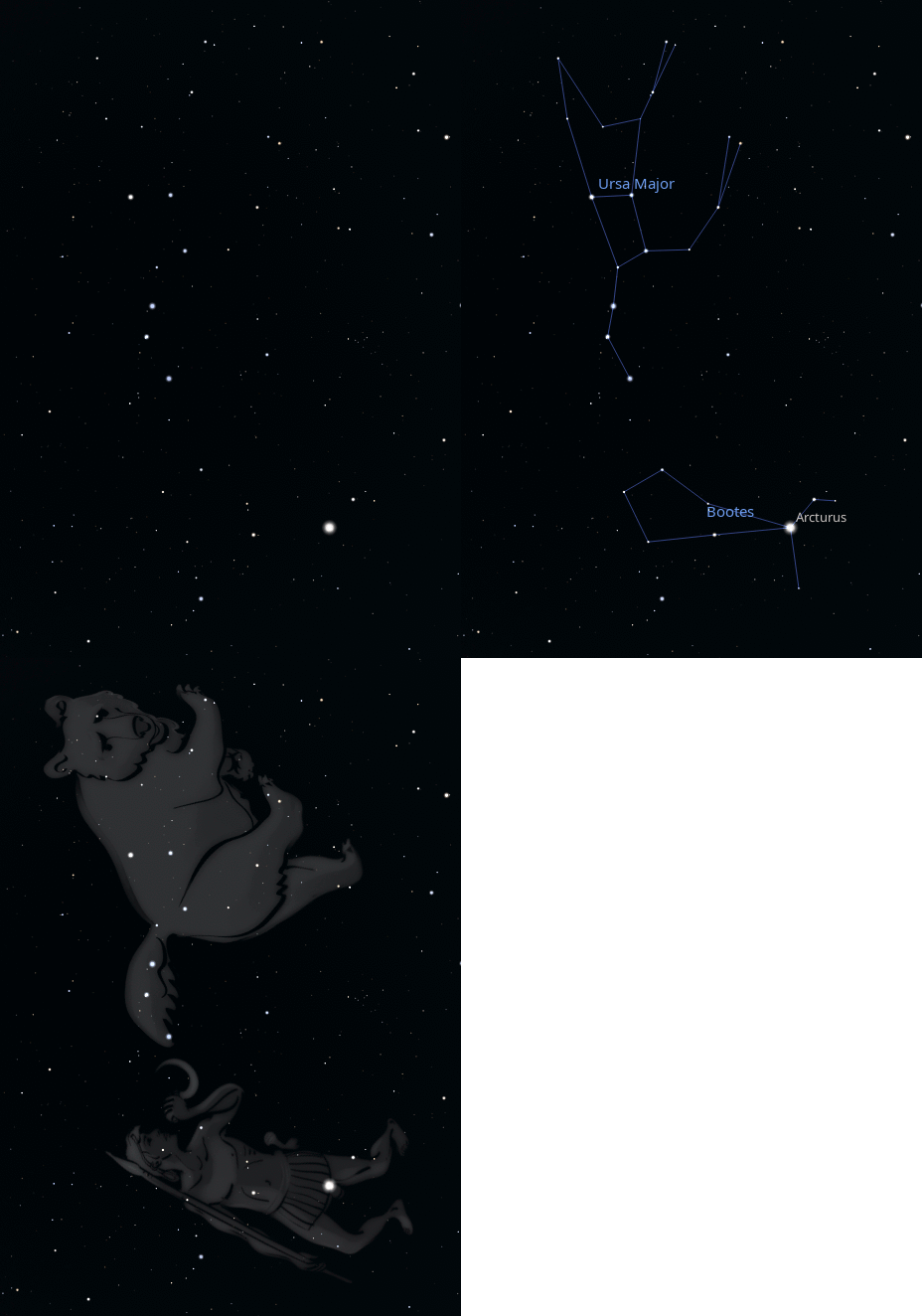
Seen in the east at 10:30 p.m. tonight is the kite shaped constellation of Boötes the herdsman. The bright star Arcturus is at the bottom of the kite to the right. It is pointed to by the arc of the handle of the Big Dipper, higher in the east. Boötes represents a young hunter named Arcas, son of Callisto, a beautiful young lady who had the misfortune of being loved by Zeus the chief of the Greek gods. Zeus’ wife Hera, found out about it, and since she couldn’t punish Zeus, turned the poor woman into a bear. Arcas, many years later, unaware of the events surrounding his mother’s disappearance was about to kill the bear when Zeus intervened and placed them both in the sky to save her, as Arcas still pursues her across the sky nightly.
The astronomical event times given are for the Traverse City/Interlochen area of Michigan (EDT, UT–4 hours). They may be different for your location.
Addendum

Ephemeris: 03/12/24 – The story of the twins of Gemini
This is Bob Moler with Ephemeris for Tuesday, March 12th. Today the Sun will be up for 11 hours and 46 minutes, setting at 7:45, and it will rise tomorrow at 7:57. The Moon, 2 days past new, will set at 11:07 this evening.
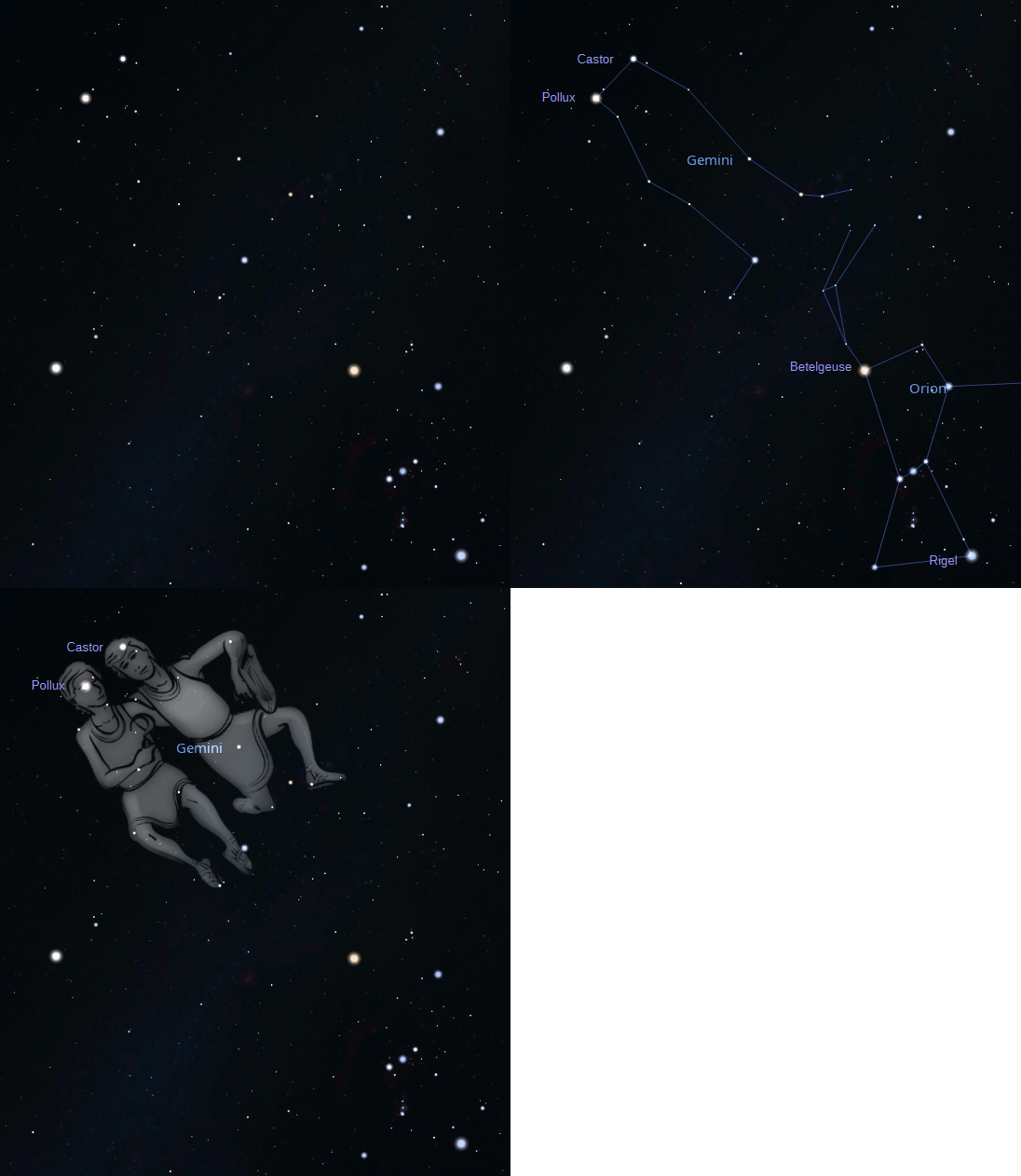
A week ago I talked about how to find the constellation of Gemini the twins above and to the left of the constellation Orion. Today I’ll talk about their story. Gemini the twins are fraternal twins, Castor and Pollux. Their namesake stars are the brightest in Gemini, with Castor above and the brighter Pollux below and left. Pollux was fathered by the god Zeus who raped his mother in the Leda and the Swan incident, while Castor was fathered by a mortal. They both went on the quest for the Golden Fleece with Jason and the Argonauts. Unfortunately Castor was killed. Pollux loved his brother so much he petitioned Zeus for him to die also and join Castor in the underworld. Instead, Zeus placed them both in the sky where we see them as Gemini.
The astronomical event times given are for the Traverse City/Interlochen area of Michigan (EDT, UT–4 hours). They may be different for your location.
Addendum

Ephemeris: 02/23/2024 – The rabbit in the Moon
This is Bob Moler with Ephemeris for Friday, February 23rd. Today the Sun will be up for 10 hours and 50 minutes, setting at 6:21, and it will rise tomorrow at 7:29. The Moon, 1 day before full, will set at 7:52 tomorrow morning.
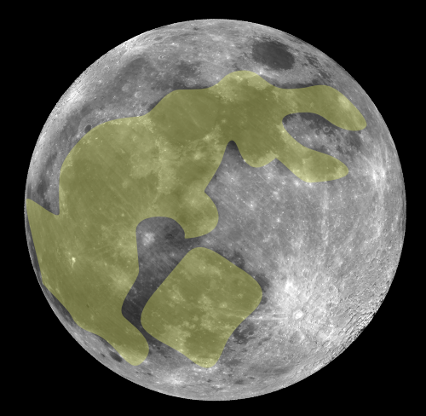
Even though it is a day before full the moon, will be full at 7:30 tomorrow morning. So tonight will be the closest that we’ll see the full moon this lunation. If one looks at the Moon most of us can see the face of the Man in the Moon. A rabbit, can also be seen. To the Chinese the rabbit here was named Yutu also known as the Jade Rabbit, the pet of the moon goddess Chang’e. To them, it was a rabbit pounding medicine with a mortar and pestle. At 8 o’clock tonight it resides along the left side of the Moon. Its head and body are seen in the dark areas of the Moon we call seas. Its ears are near the top of the moon at 8:00 with his head and body bent down on the left. Near the bottom of The moon is the mortar and pestle with which he’s pounding medicine.
The astronomical event times given are for the Traverse City/Interlochen area of Michigan (EST, UT –5 hours). They may be different for your location.
Addendum:
Ephemeris: 02/08/2024 – Up the river
This is Ephemeris for Thursday, February 8th. Today the Sun will be up for 10 hours and 7 minutes, setting at 6:00, and it will rise tomorrow at 7:52. The Moon, 1 day before new, will rise at 8:09 tomorrow morning.
One of the more obscure constellations around is Eridanus, which depicts a river. The river starts near the lower right corner of Orion, near the bright star Rigel and flows to the right then down near the southwestern horizon, then it meanders along the horizon to the south before turning below the horizon. One has to travel to the far south to see the southern terminus of the river, the bright star Achernar. Writers over the ages have seen here the Nile and the Earth circling river Ocean of the flat earth days. Achernar is actually two stars, the brightest was discovered to be the flattest star known, due to its rapid spin. The dimensions of Achernar A has been determined to be twice as wide across its equator than from pole to pole. It’s 139 light years away.
The astronomical event times given are for the Traverse City/Interlochen area of Michigan (EST, UT –5 hours). They may be different for your location.
Addendum
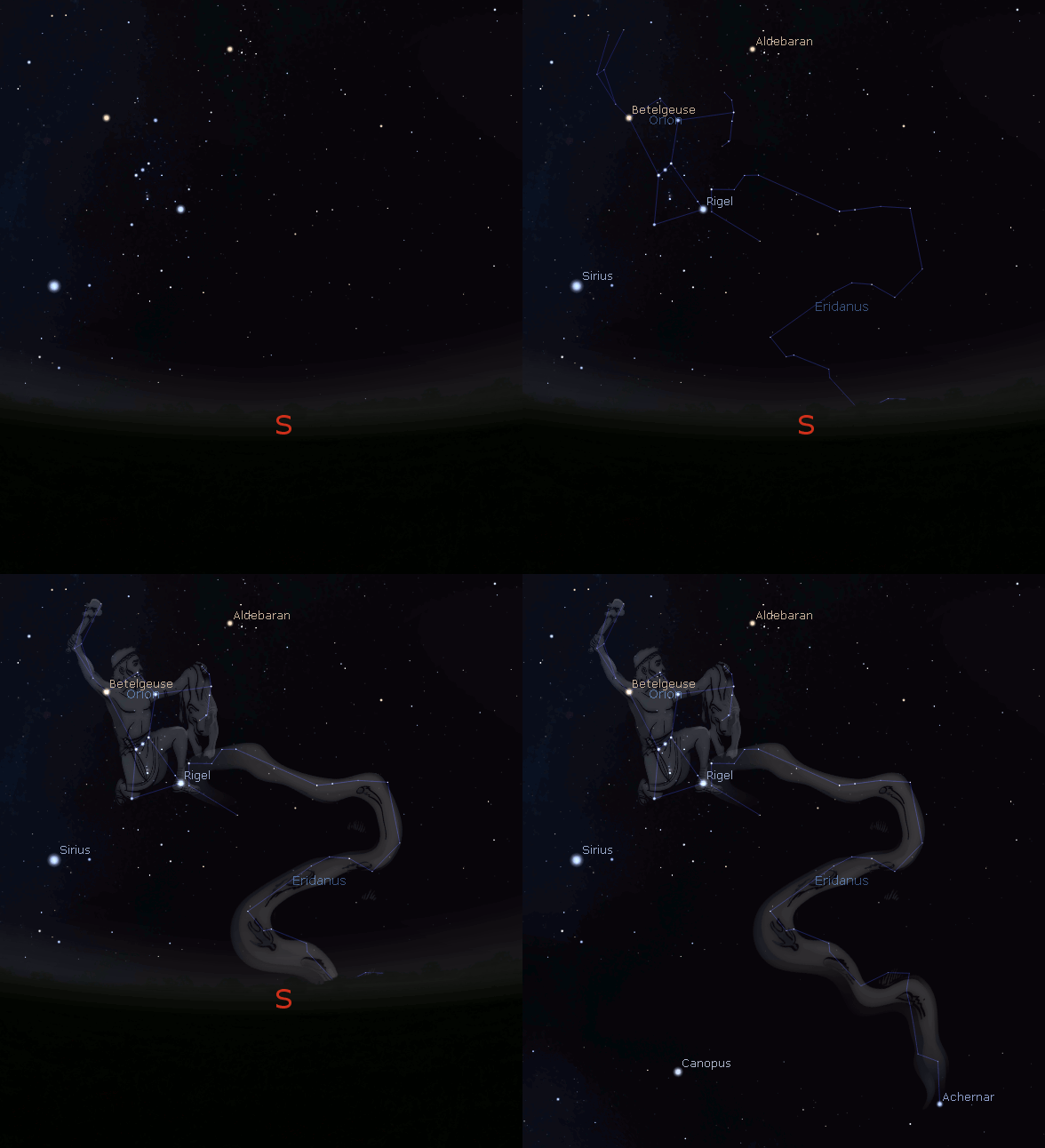
Ephemeris: 02/04/2024 – The rabbit at the feet of Orion
This is Ephemeris for Tuesday, February 6th. Today the Sun will be up for 10 hours and 1 minute, setting at 5:57, and it will rise tomorrow at 7:55. The Moon, 3 days before new, will rise at 6:44 tomorrow morning.
The constellation of Orion the hunter is in the south in the evening, and he seems to be preoccupied with the charge of Taurus the bull to his upper right. Unnoticed by him and below him is a small constellation called Lepus the hare, made of very dim stars. Good luck trying to make a rabbit out of those stars. In the constellation art that comes with the free application Stellarium. It displays the sky like a planetarium. The artistic constellation of the figure of Canis Major, Orion’s large hunting dog seems to be taking notice of Lepus and is beginning to chase it Lepus the hare is a nice addition to the tableau presented in the winter sky. Stellarium-web.org is a web based version of Stellarium that doesn’t have to be installed on your device.
The astronomical event times given are for the Traverse City/Interlochen area of Michigan (EST, UT –5 hours). They may be different for your location.
Addendum
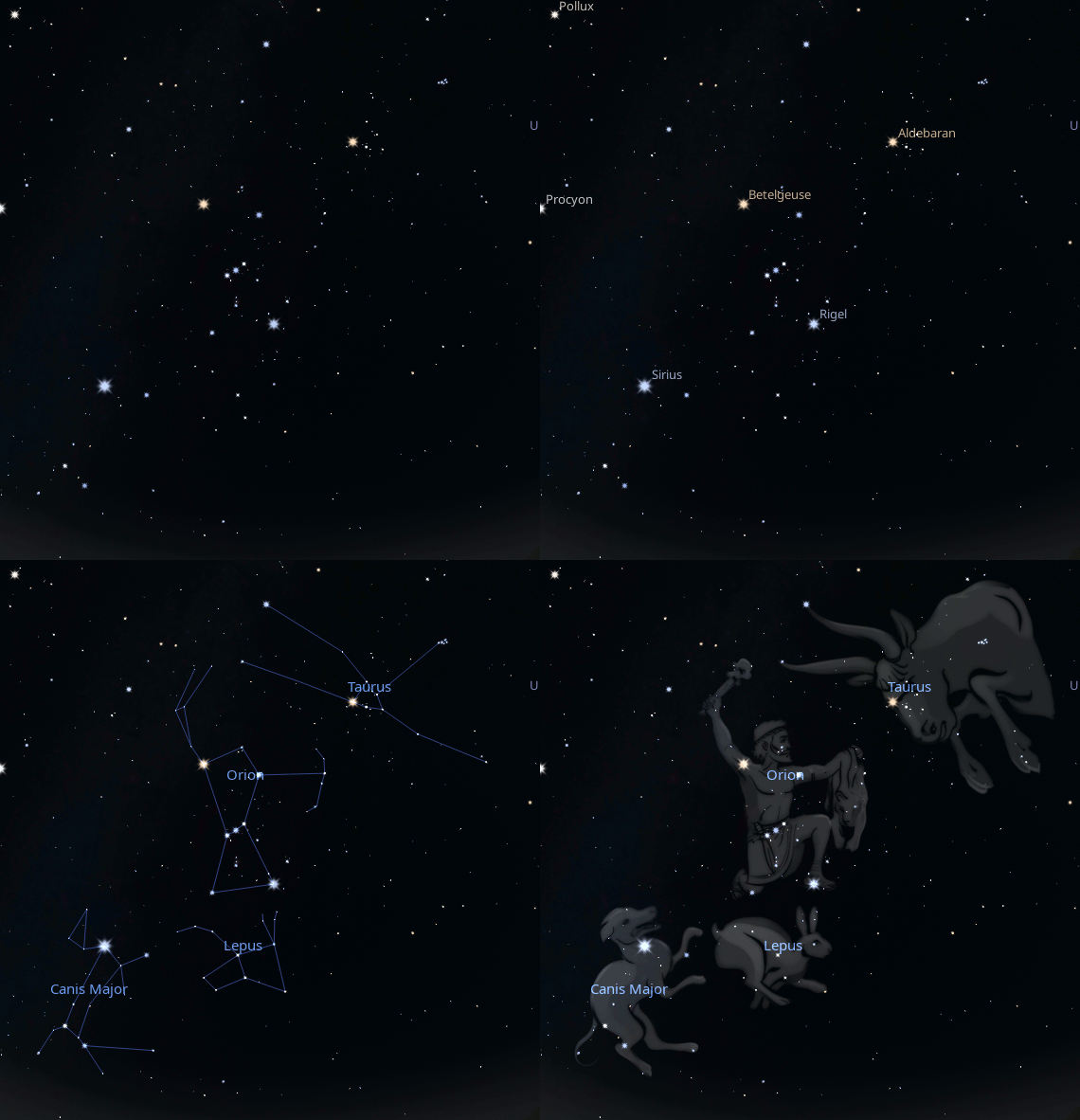
Ephemeris: 01/29/2024 – Canis Major, Orion’s larger hunting dog
This is Ephemeris for Monday, January 29th. Today the Sun will be up for 9 hours and 41 minutes, setting at 5:46, and it will rise tomorrow at 8:04. The Moon, halfway from full to last quarter, will rise at 9:50 this evening.
The great winter constellation or star group, Orion the hunter, is located in the south-southeastern sky at 9 p.m. His elongated rectangle of a torso is nearly vertical. In the center of the rectangle are three stars in a line that make his belt. As a hunter, especially one of old, he has two hunting dogs. The larger, Canis Major, can be found by following the three belt stars of Orion down and to the left. They point to Sirius, the brightest nighttime star, also known as the Dog Star. It’s in the heart of a stick figure dog low in the southeast facing Orion that appears to be begging. There’s a fine star cluster, called Messier 41, or M41, the Little Beehive Cluster, at the 5 o’clock position from Sirius. It’s easily visible in binoculars or a small telescope.
The astronomical event times given are for the Traverse City/Interlochen area of Michigan (EST, UT –5 hours). They may be different for your location.
Addendum
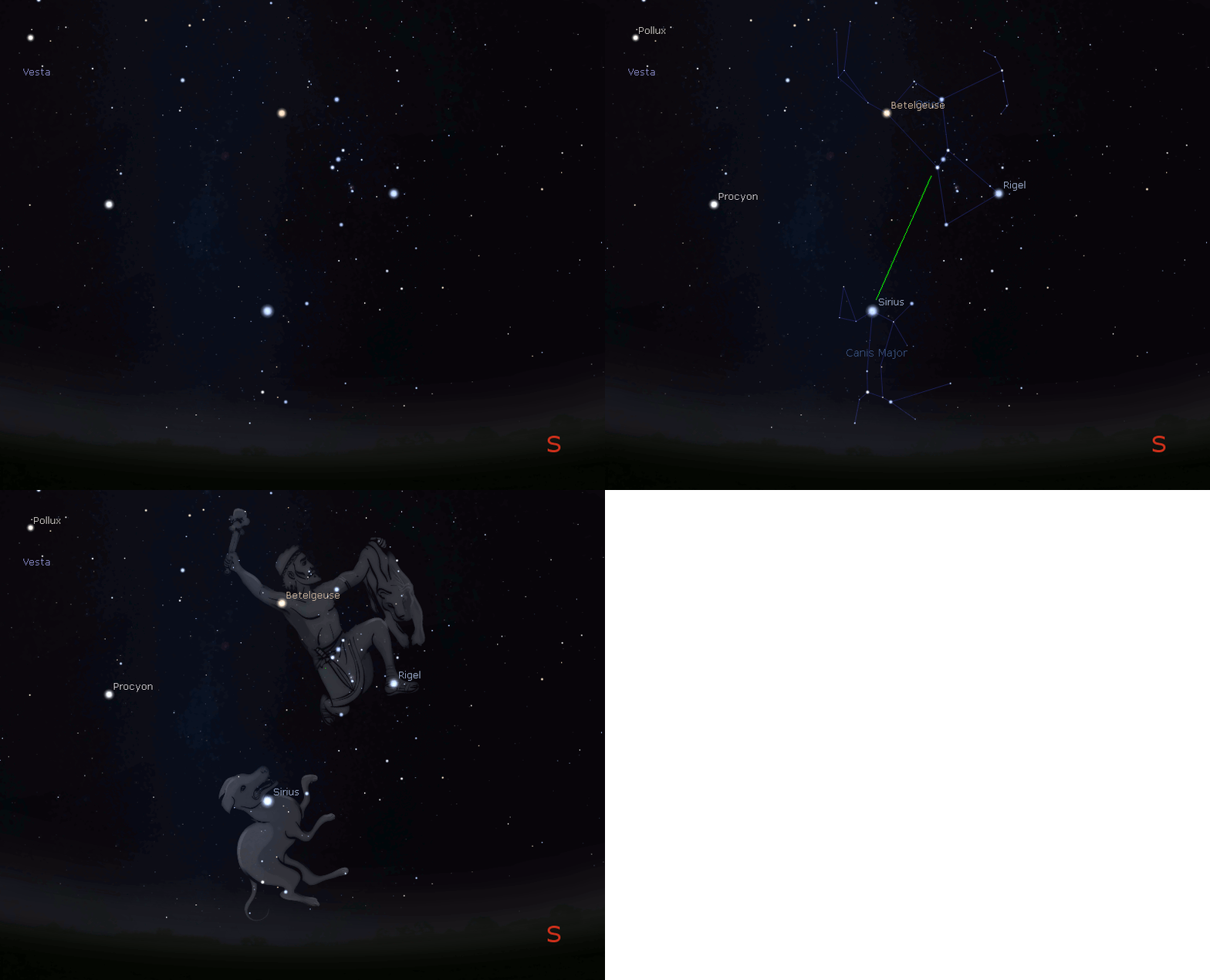
Ephemeris: 01/08/2024 – Orion vs Taurus: conflict for the ages
This is Ephemeris for Monday, January 8th. Today the Sun will be up for 9 hours even, setting at 5:19, and it will rise tomorrow at 8:19. The Moon, 3 days before new, will rise at 6:58 tomorrow morning.
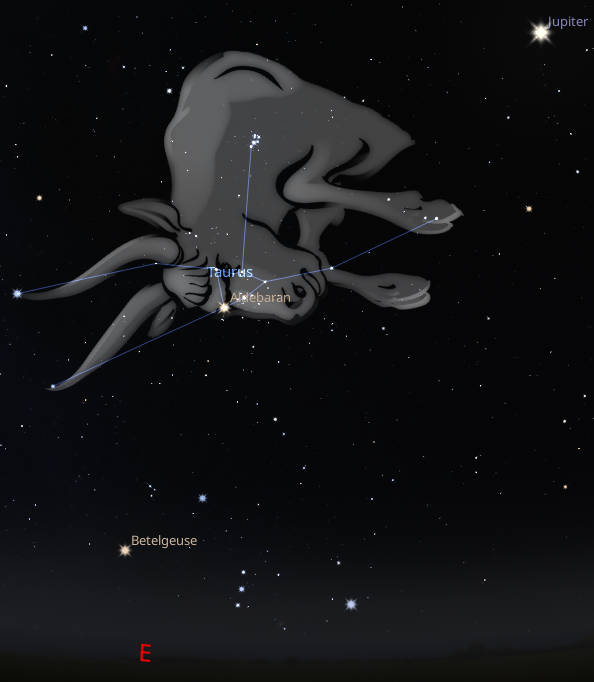
There are several instances in the Greek heavens where constellations appear to interact with one another. This is true with Orion the hunter and Taurus the bull. Taurus, whose face is the letter V of stars with orangish Aldebaran as his angry bloodshot eye is charging down on Orion, who has raised a lion skin shield on one arm and an upraised club in the other, ready to strike. They have been frozen in this pose for millennia. Stars below and right of the letter V of the Bull’s face suggest the front part of his body and his front legs charging at Orion. Orion also has two hunting dogs, Canis Major and Canis Minor. Canis Major with its dazzling star Sirius will rise around 7:30 on a line extended down from Orion’s belt.
The astronomical event times given are for the Traverse City/Interlochen area of Michigan (EST, UT –5 hours). They may be different for your location.
Addendum
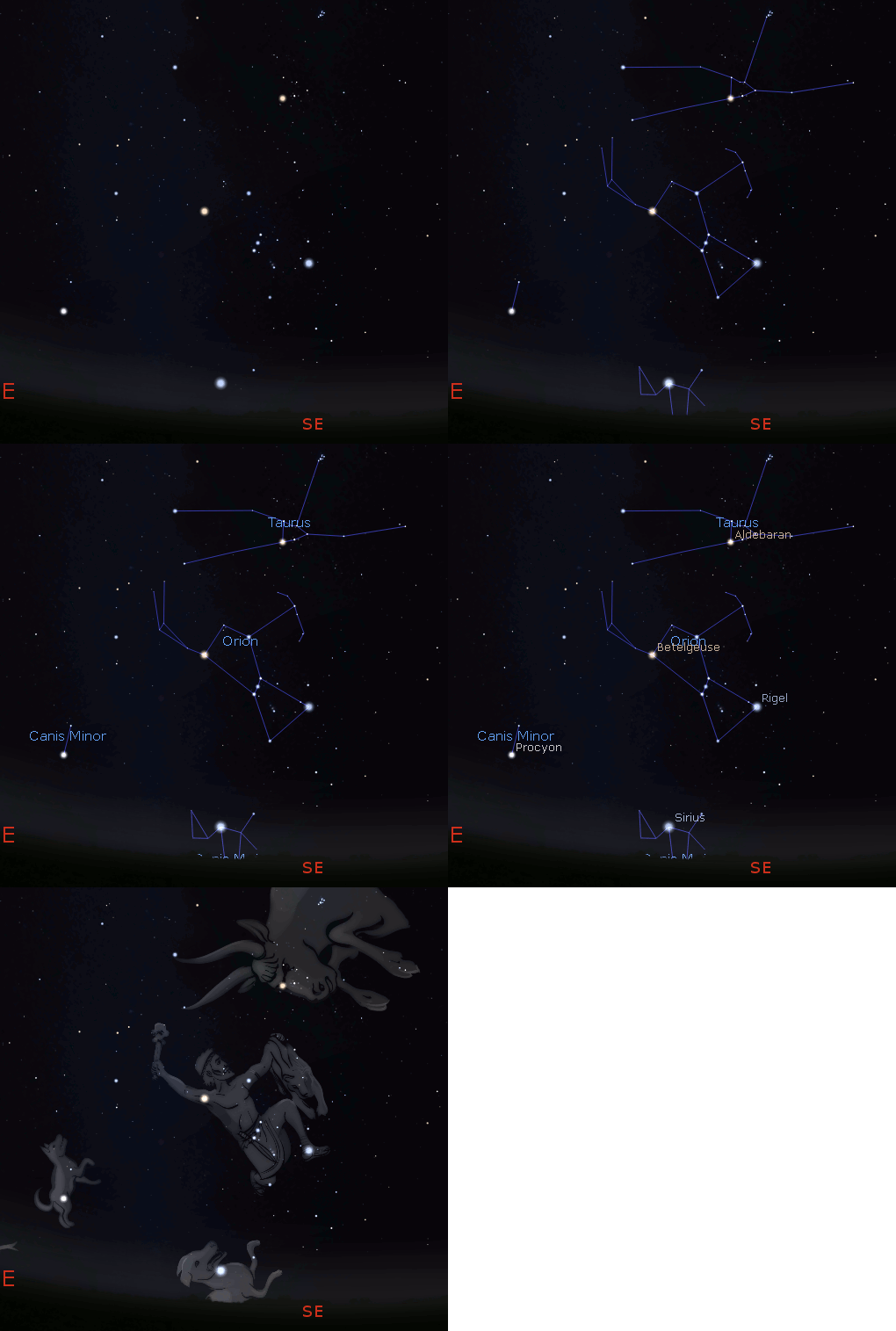
Ephemeris Extra: Taurus and its two bright star clusters
Based on an article published in the November 2023 issue of the Stellar Sentinel the newsletter of the Grand Traverse Astronomical Society.
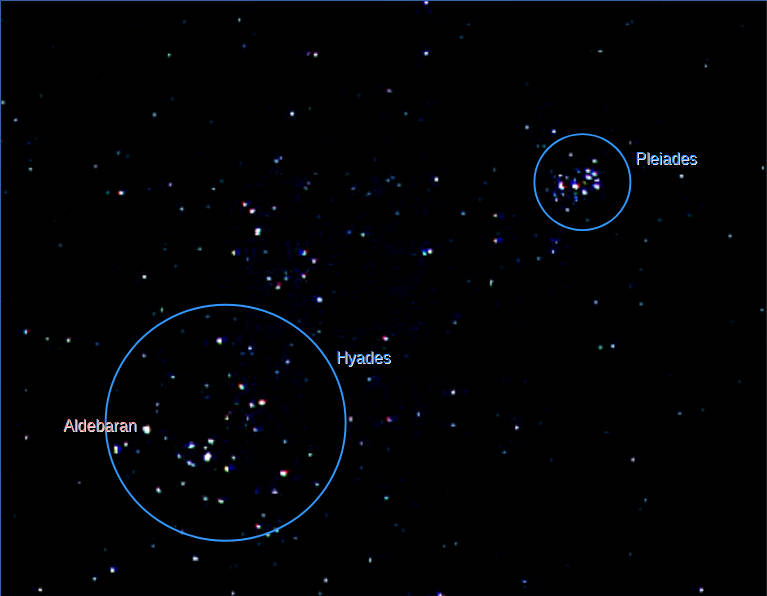
In my October presentation to the society I talked about the stars of autumn, moving generally from the constellations close to summer and ending pretty much against the constellations of winter ending with the constellation of Taurus and with the wonderful Pleiades or Seven Sisters. In this article I’ll take a little bit closer look at the Pleiades and especially the Hyades, the face of Taurus the bull.
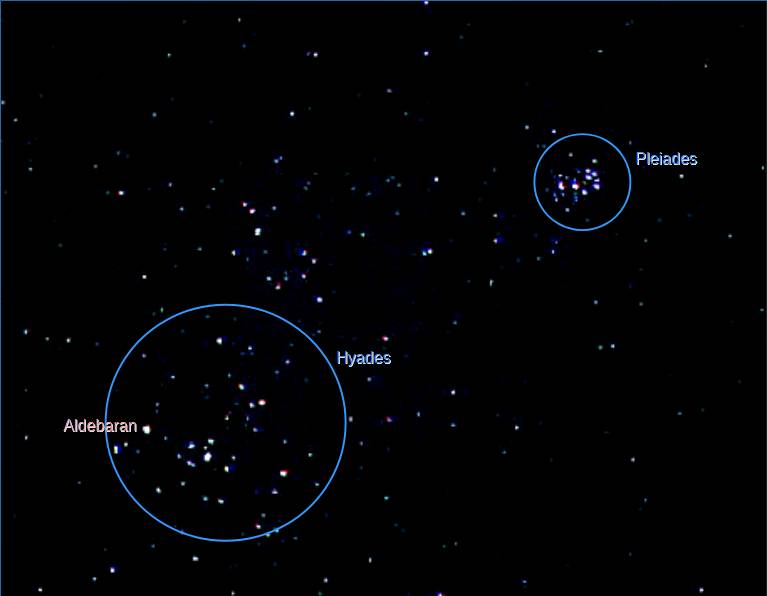
On the previous page is a family portrait of the Pleiades and Hyades. Yes, family portrait. In Greek mythology, the Hyades are the half sisters of the Pleiades. The god Atlas is their father, Pleione seems to be the mother of the Pleiades, and Aethra is the mother of the Hyades. In astronomical terms the Hyades would then be the older sisters of the Pleiades.
The Hyades is a star cluster that is 153 light years away. It is the closest star cluster to us and somewhat over 6 times the age of the Pleiades. The younger and splashier Pleiades are around 444 light years away, and only 100 million years old. Whereas the Hyades are over 600 million years old. The Pleiades still contain hot blue-white stars which have died out by the time of the age of the Hyades. The brightest star of the letter V of stars is Aldebaran, Taurus’ angry bloodshot eye. It doesn’t belong to the Hyades, being about half the distance.
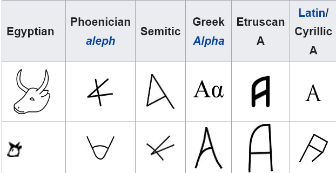
While the Hyades is not as splashy as the Pleiades are and has less of a role in mythology. However, it did play an important part in history when Taurus was the first constellation of the Zodiac some 4,000 years ago, due to precession of the equinoxes. This is because the letter A, the first letter of our alphabet is taken from the stars of the face of Taurus the bull in what looks to us like a V. But it was turned around to be the A we have today. Back then it was called Aleph the first letter of the alphabet for middle eastern cultures.
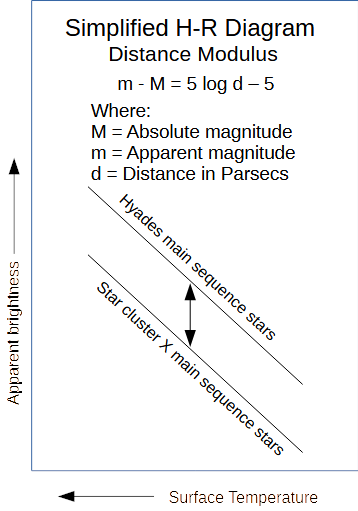
The Hyades is also important in astronomical history in that it helps us measure distances to more distant star clusters. The Hyades was the only star cluster close enough to measure its distance by the parallax method before the advent of the European Space Agency’s Hipparcos and Gaia satellites. If one matches stars on the Hertzsprung-Russell diagram of intrinsic brightness versus surface temperature with other star clusters the stars of the main sequence, where stars spend most of their lives burning hydrogen. The difference in the brightness of the main sequence stars gives the measure of how other star clusters measure up as far as distance since the main sequence is a relatively narrow distribution of stars. This works only with star clusters because there are many stars at the same distance which happen to be about the same age. And enough stars to establish the main sequence since stars at later stages of life may have the same temperature, but vastly different brightnesses.
The Pleiades are so large that most telescopes will not allow one to see all the brighter stars at once, so binoculars are the best way to view them. At a dunes star party a few years ago, before COVID, I used my 11-inch (279 mm) Newtonian telescope, which has a 55 inch (1,397 mm) focal length, with a 40 millimeter eyepiece to view the Pleiades. A 40 millimeter eyepiece in that scope gives too low a magnification to use the entire diameter of the primary mirror. All the light doesn’t make it into the eye. That eyepiece gave me about 35 times magnification, so the main stars of the cluster fit into the field of view. The photograph above is nice and all that, but looking with the eye visually at the Pleiades, even with binoculars, you’ll notice something quite different from the photographs. In photographs to make a star brighter you make it bigger. But the eye has a much greater dynamic range. The stars are incredibly brilliant blue white-points of light in the case of the Pleiades. Absolutely beautiful, much more beautiful than any photograph. Not to disparage photographs, but photographs can do what the eye cannot. That is, store light to bring out very faint objects and details. So, let’s take a final look at the Pleiades in a photograph by GTAS member Dan Dall’Olmo.

Ephemeris: 12/05/2023 – The Hyades, face of Taurus and an important star cluster
This is Bob Moler with Ephemeris for Tuesday, December 5th. Today the Sun will be up for 8 hours and 58 minutes, setting at 5:02, and it will rise tomorrow at 8:05. The Moon, at last quarter today, will rise at 1:11 tomorrow morning.
At 8 o’clock this evening the constellation of Orion the hunter is still in the act of rising with one leg still stuck in the snow. What is up above him is the constellation of Taurus the bull. His face is a letter V of stars or as a letter A, as I mentioned yesterday, is the star cluster called the Hyades. In Greek myth the stars are the half sisters of the Pleiades, which are right above them. The Hyades star cluster is very special. They don’t look as splashy as the Pleiades which are younger and still have their hot blue white stars. However, the Hyades are much closer in fact they’re close enough to be measured by trigonometry using the earth’s orbit as the base of a triangle, like surveyors would do on Earth.
The astronomical event times given are for the Traverse City/Interlochen area of Michigan (EST, UT –5 hours). They may be different for your location.
Addendum
 Bob Moler's Ephemeris Blog