Archive
10/29/2018 – Ephemeris – Perseus the hero
Ephemeris for Monday, October 29th. The Sun will rise at 8:16. It’ll be up for 10 hours and 18 minutes, setting at 6:35. The Moon, 2 days before last quarter, will rise at 10:48 this evening.
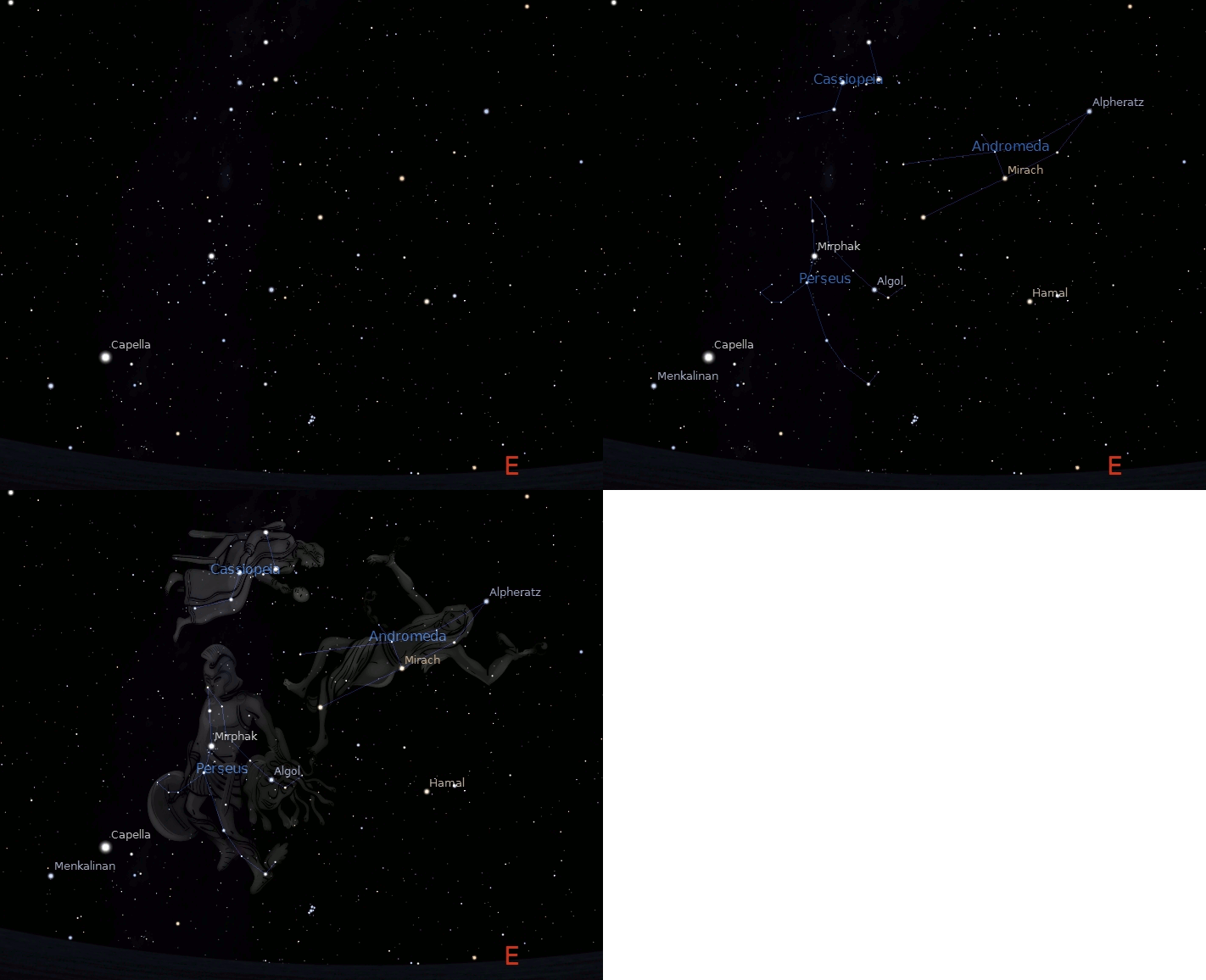
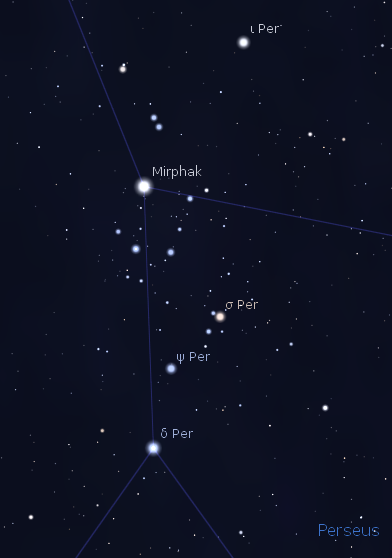
bout a third the way from the east northeastern horizon to the zenith at 9 p.m. and below the letter W shaped constellation of Cassiopeia the queen is Perseus the hero. It’s kind of a odd shape for a hero, To me it looks like the cartoon roadrunner. To those who’s imagination doesn’t run to cartoons, its shape is also like the Greek letter pi. It’s two brightest stars are Mirfak and Algol the demon star. Look at the area around Mirfak with binoculars and you will see a large group of stars just below naked eye visibility. It’s called the Alpha Persei association. That because Mirfak is Alpha Persei. The group is about 560 light years away, which means, though close, are farther away than the Pleiades, below and right of them.
The times given are for the Traverse City/Interlochen area of Michigan. They may be different for your location.
Addendum
10/11/2018 – Ephemeris – Pegasus the aerobatic horse
Ephemeris for International Day of the Girl, Thursday, October 11th. The Sun will rise at 7:53. It’ll be up for 11 hours and 11 minutes, setting at 7:05. The Moon, 3 days past new, will set at 8:56 this evening.
Rising ever higher in the east at as it gets dark around 9 p.m. can be found one of the great autumn constellations: Pegasus the flying horse of Greek myth. Its most visible feature is a large square of four stars, now standing on one corner. This feature, called the Great Square of Pegasus, represents the front part of the horse’s body. The horse is quite aerobatic because it is seen flying upside down. Remembering that fact, the neck and head is a bent line of stars extending from the right corner star of the square. Its front legs can be seen in a gallop extending to the upper right from the top star of the square. From the left star extend, not hind legs but the constellation of Andromeda, an important constellation in its own right. The Anishinaabek peoples native to this region saw ab upright Moose (Mooz) here.
The times given are for the Traverse City/Interlochen area of Michigan. They may be different for your location.
Addendum
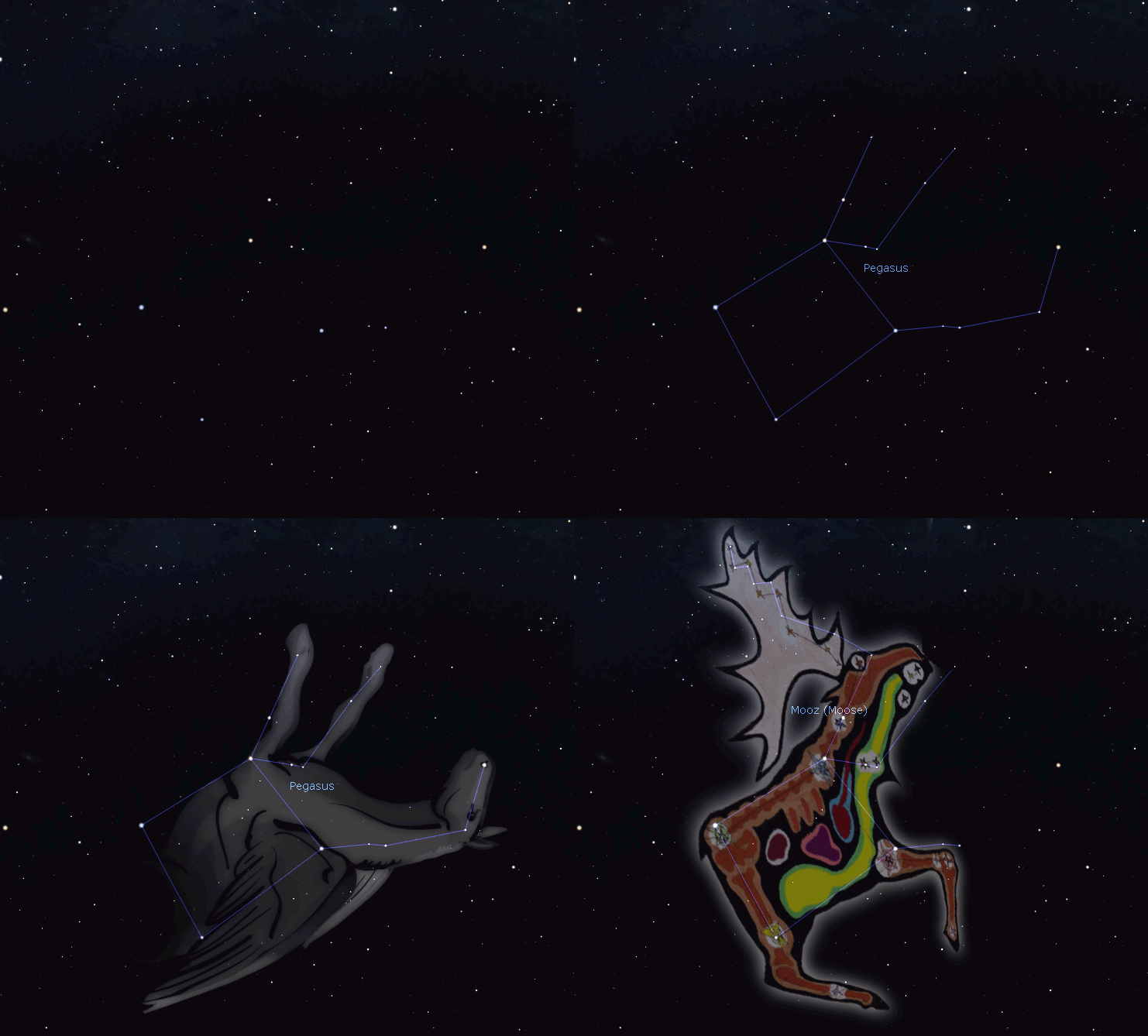
The constellation art is part of the latest versions of Stellarium. Ojibwe (Anishinaabek) constellation art by Annette S Lee and William Wilson from Ojibwe Sky Star Map Constellation Guide, ISBN 978-0-615-98678-4.
10/04/2018 – Ephemeris – Capricornus the sea-goat
Ephemeris for Thursday, October 4th. The Sun will rise at 7:44. It’ll be up for 11 hours and 33 minutes, setting at 7:17. The Moon, 2 days past last quarter, will rise at 3:14 tomorrow morning.
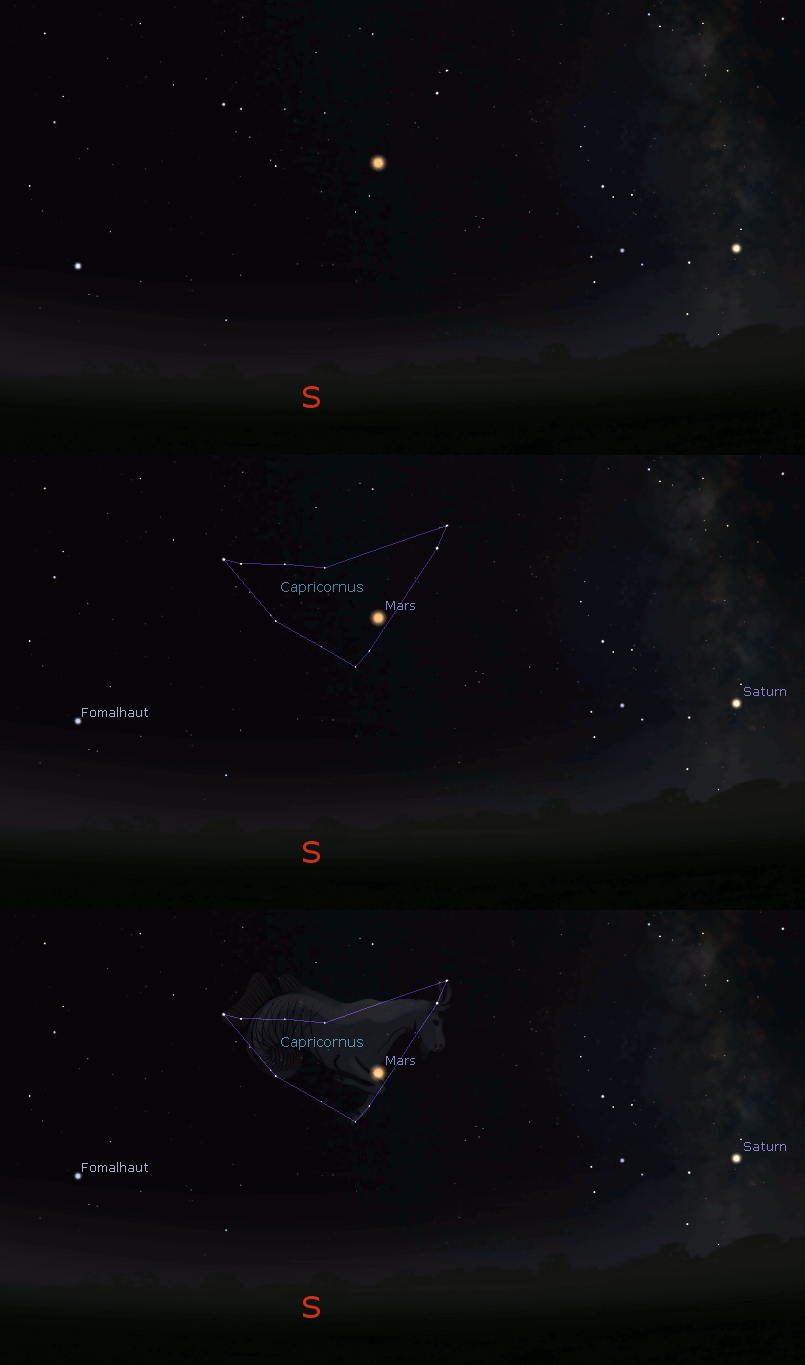
Two thousand years ago the southernmost of the constellations of the zodiac was Capricornus the water goat. That’s why the latitude on the earth where the sun is overhead on the winter solstice is called the Tropic of Capricorn. Not anymore, Sagittarius, one constellation west, has that honor today. Actually, Capricornus does need the press. It’s large but made up of dim stars. To me, it looks like a 45-degree isosceles triangle, long side up, but which all the sides are sagging. The constellation is found low in the south at 10 p.m. with Mars on its western edge. The image that is supposed to be represented by the stars is that of a goat whose hindquarters are replaced by a fish’s tail, not a mermaid but a mer-goat.
The times given are for the Traverse City/Interlochen area of Michigan. They may be different for your location.
Addendum
09/06/2018 – Ephemeris – The constellations of Delphinus and Sagitta
Ephemeris for Thursday, September 6th. The Sun will rise at 7:11. It’ll be up for 12 hours and 59 minutes, setting at 8:10. The Moon, 3 days before new, will rise at 4:19 tomorrow morning.
Located below the eastern edge of the Summer Triangle of three of the brightest stars in the sky, which is nearly overhead in our sky at 10 p.m., is the tiny constellation of Delphinus the dolphin. Delphinus’ 6 stars in a small parallelogram with a tail, really does look like a dolphin leaping out of the water. The parallelogram itself has the name Job’s Coffin. The origin of this asterism or informal constellation is unknown. Of the dolphin itself: the ancient Greeks appreciated this aquatic mammal as we do, and told stories of dolphins rescuing shipwrecked sailors. There’s another tiny constellation to the right of Delphinus, Sagitta the arrow a small thin group of 5 stars, which represents Cupid’s dart.
The times given are for the Traverse City/Interlochen area of Michigan. They may be different for your location.
Addendum
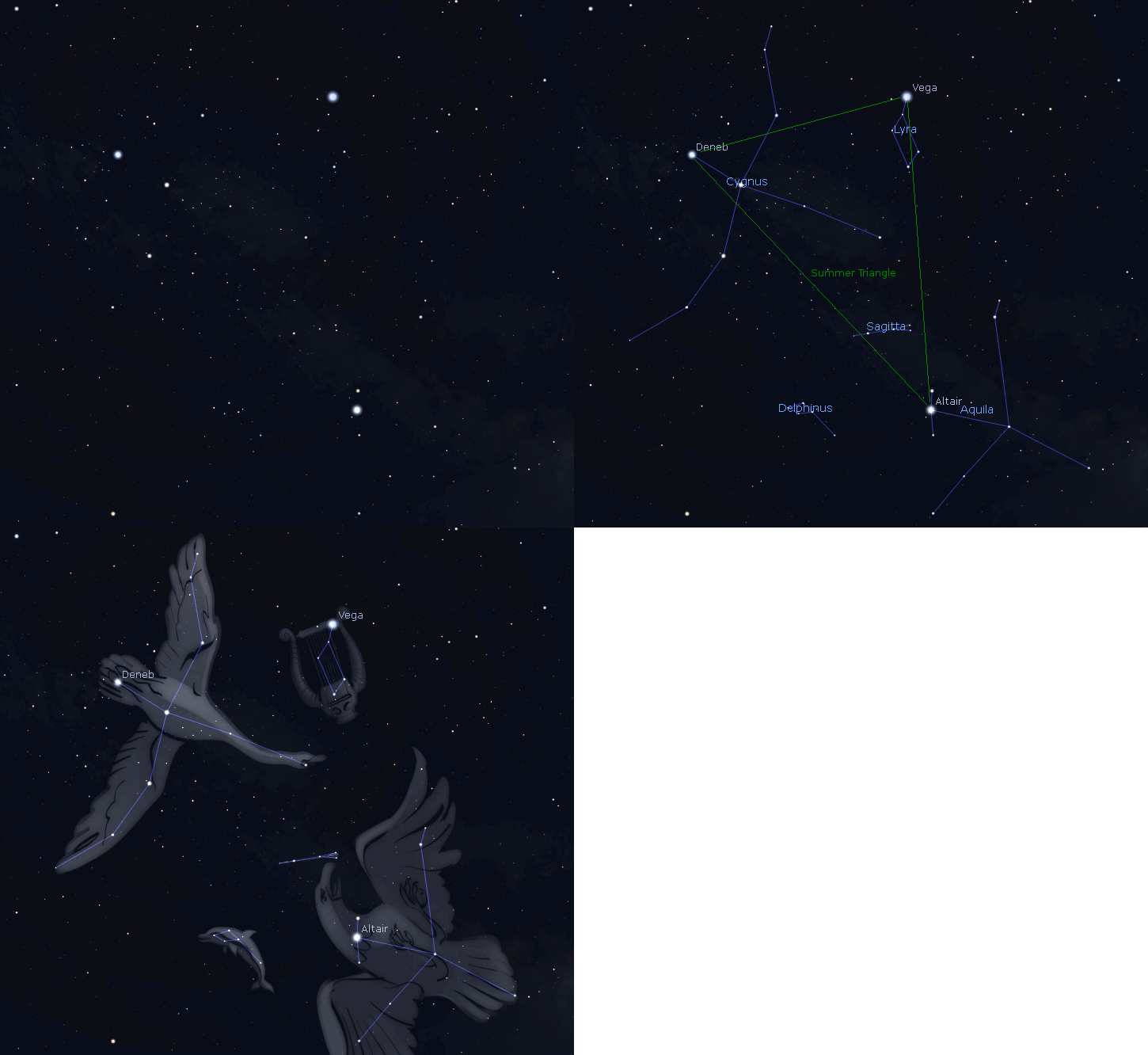
Delphinus and Sagitta finder animation. Click on image to enlarge. Created using Stellarium and GIMP.
09/03/2018 – Ephemeris – Looking for Sagittarius, Centaur or Teapot
Ephemeris for Labor Day, Monday, September 3rd. The Sun will rise at 7:07. It’ll be up for 13 hours and 8 minutes, setting at 8:15. The Moon, 1 day past last quarter, will rise at 1:08 tomorrow morning.
The Milky Way runs from northeast to south through the heavens at 10 p.m. The Milky Way is brighter and broader just above the horizon in the south. In that glow in the south is a star pattern that looks like a stout little teapot, with a bright stream of the Milky Way rising from the spout, which faces the west. This pattern of stars is the major part of the constellation called Sagittarius. This year the planet Saturn appears right above it. According to Greek mythology Sagittarius is a centaur with a bow and arrow poised to shoot Scorpius the scorpion setting in the southwest. This centaur is Chiron, the most learned of the breed, centaurs usually being a rowdy bunch. The center of the pin wheel of our Milky Way galaxy lies hidden beyond the stars above the spout of the teapot.
The times given are for the Traverse City/Interlochen area of Michigan. They may be different for your location.
Addendum
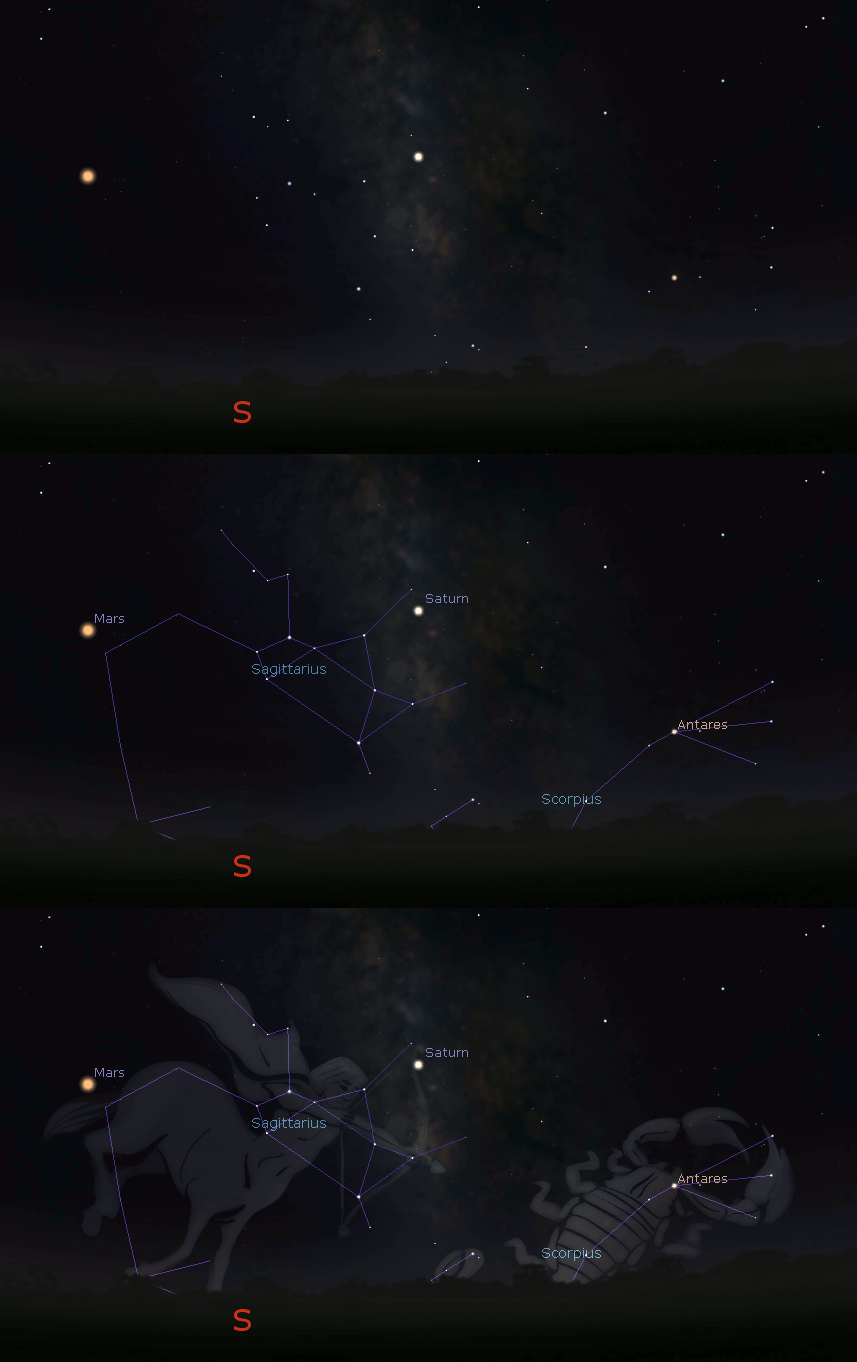
Sagittarius Finder animation for 10 p.m. September 3, 2018. Created using Stellarium and GIMP.
08/14/2018 – Ephemeris – the constellation of Aquila the eagle
Ephemeris for Tuesday, August 14th. The Sun rises at 6:44. It’ll be up for 14 hours and 6 minutes, setting at 8:50. The Moon, 3 days past new, will set at 11:00 this evening.
Aquila the eagle is a constellation that lies in the Milky Way. It’s in the southeastern sky as it gets dark. Its brightest star, Altair is one of the stars of the Summer Triangle, a group of three bright stars dominating the eastern sky in the evening now. Altair, in the head of the eagle, is flanked by two slightly dimmer stars, the shoulders of the eagle. The eagle is flying northeastward through the Milky Way. Its wings are seen in its wing tip stars. A curved group of stars to the lower right of Altair is its tail. Within Aquila the Milky Way shows many dark clouds as part of the Great Rift that splits it here. The other summer bird is Cygnus the swan above and left of Aquila, flying in the opposite direction. ……
The times given are for the Traverse City/Interlochen area of Michigan. They may be different for your location.
Addendum
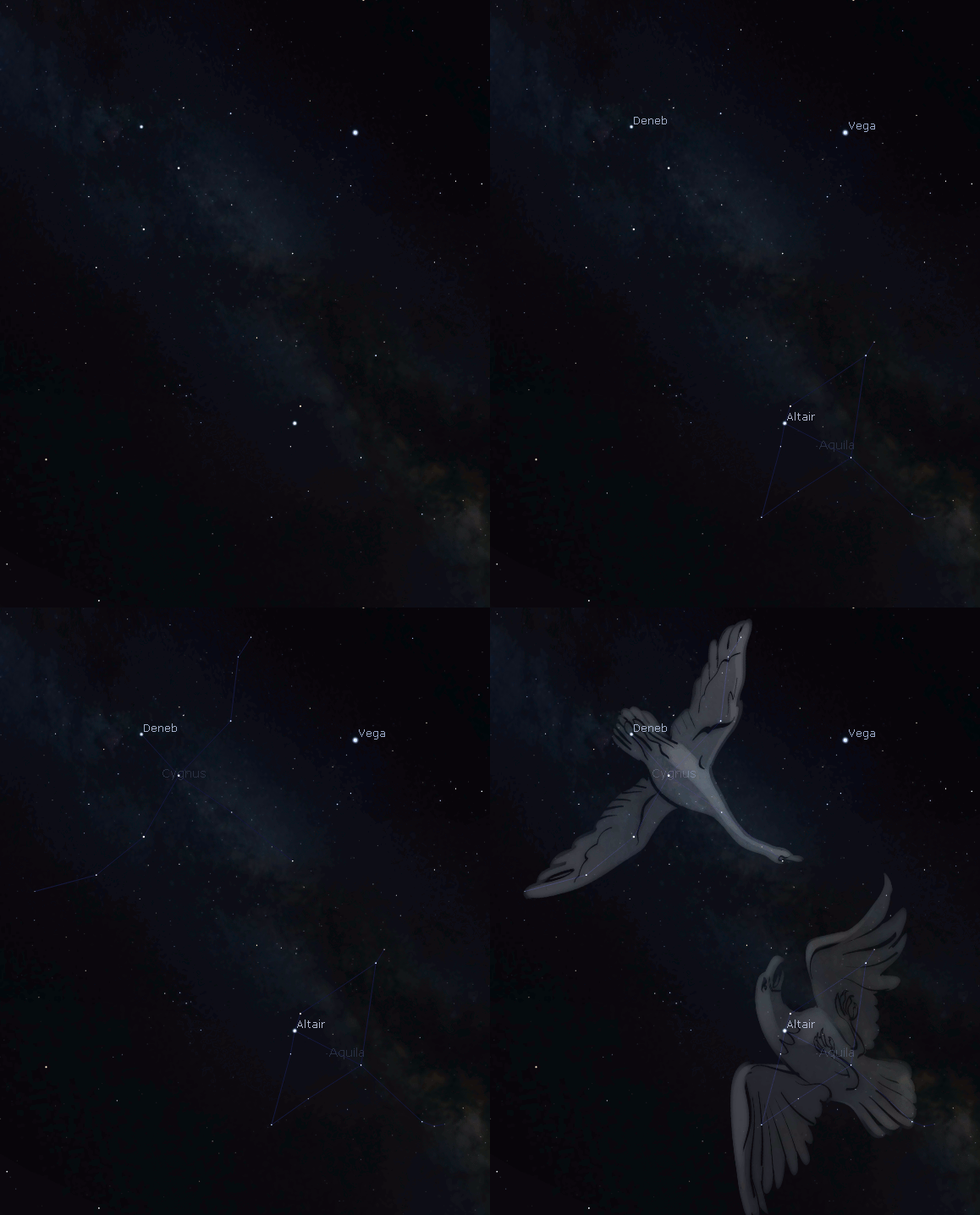
Animated Aquila finder chart. Created using Stellarium.
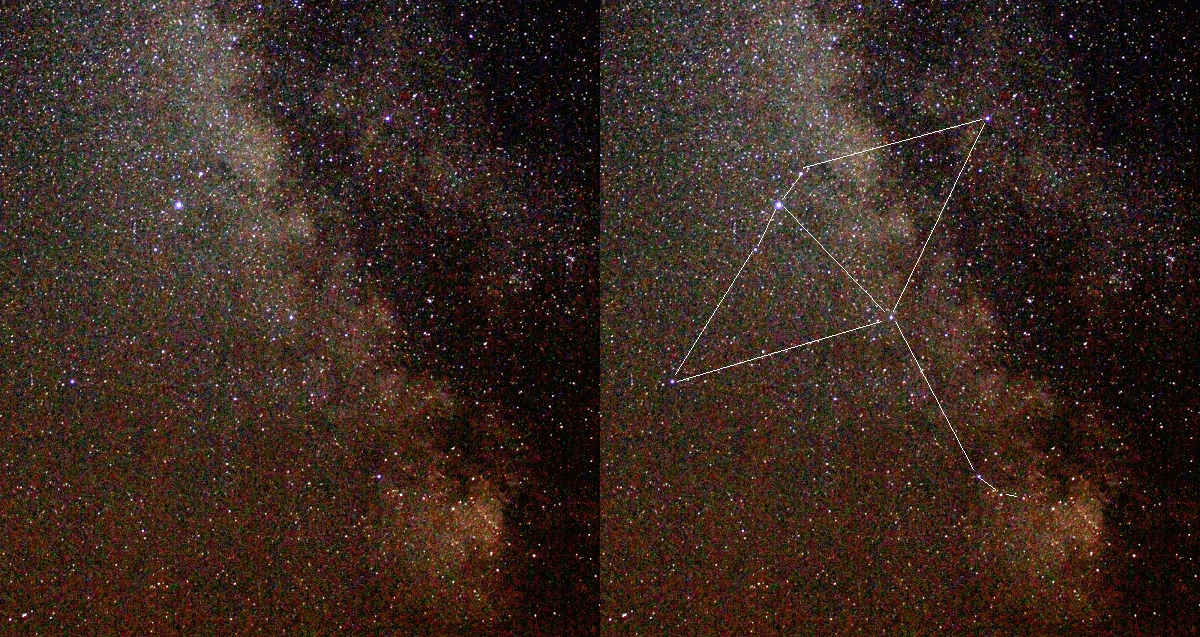
Annotated and animated photograph taken of Aquila August 13, 2018 during the Perseid meteor shower. Alas, no Perseids in this photograph. Taken by me and processed using Registax and GIMP.
Further notes on the Perseid meteor shower
I spent a good chunk of the Perseid peak night (August 12/13) at the Sleeping Bear Dunes National Lakeshore at the Dune Climb observing the Perseids. Though clear there was a great amount of haze in the air, part of which was smoke from the fires out west, and the barometric high we’ve been under for the past few days getting stagnant, The blue sky the day before was decidedly milky. Though the Milky Way overhead was visible, the teapot of Sagittarius below Saturn wasn’t.
A casual inspection of my photographs show only 2 Perseid meteors.
07/17/2018 – Ephemeris – Finding Cygnus the swan
Ephemeris for Tuesday, July 17th. Today the Sun will be up for 15 hours and 10 minutes, setting at 9:24, and it will rise tomorrow at 6:14. The Moon, 2 days before first quarter, will set at 12:32 tomorrow morning
High in the east northeast as it gets dark flies the constellation of Cygnus the swan. This constellation is also known as the Northern Cross. The cross is seen lying on its side with the bright star Deneb at the head of the cross to the left. The rest of the cross is delineated in the stars to the right. As a swan, Deneb is the tail, the stars of the crosspiece of the cross are the leading edges of wings as Cygnus flies south through the Milky Way. There are faint stars that also define the tips and trailing edges of its wings. It is a very good portrayal of a flying swan, like the mute swans we see on the wing. In Cygnus we are looking in the direction that the Sun and the Earth are traveling as we orbit the center of the Milky Way.
The times given are for the Traverse City/Interlochen area of Michigan. They may be different for your location.
Addendum
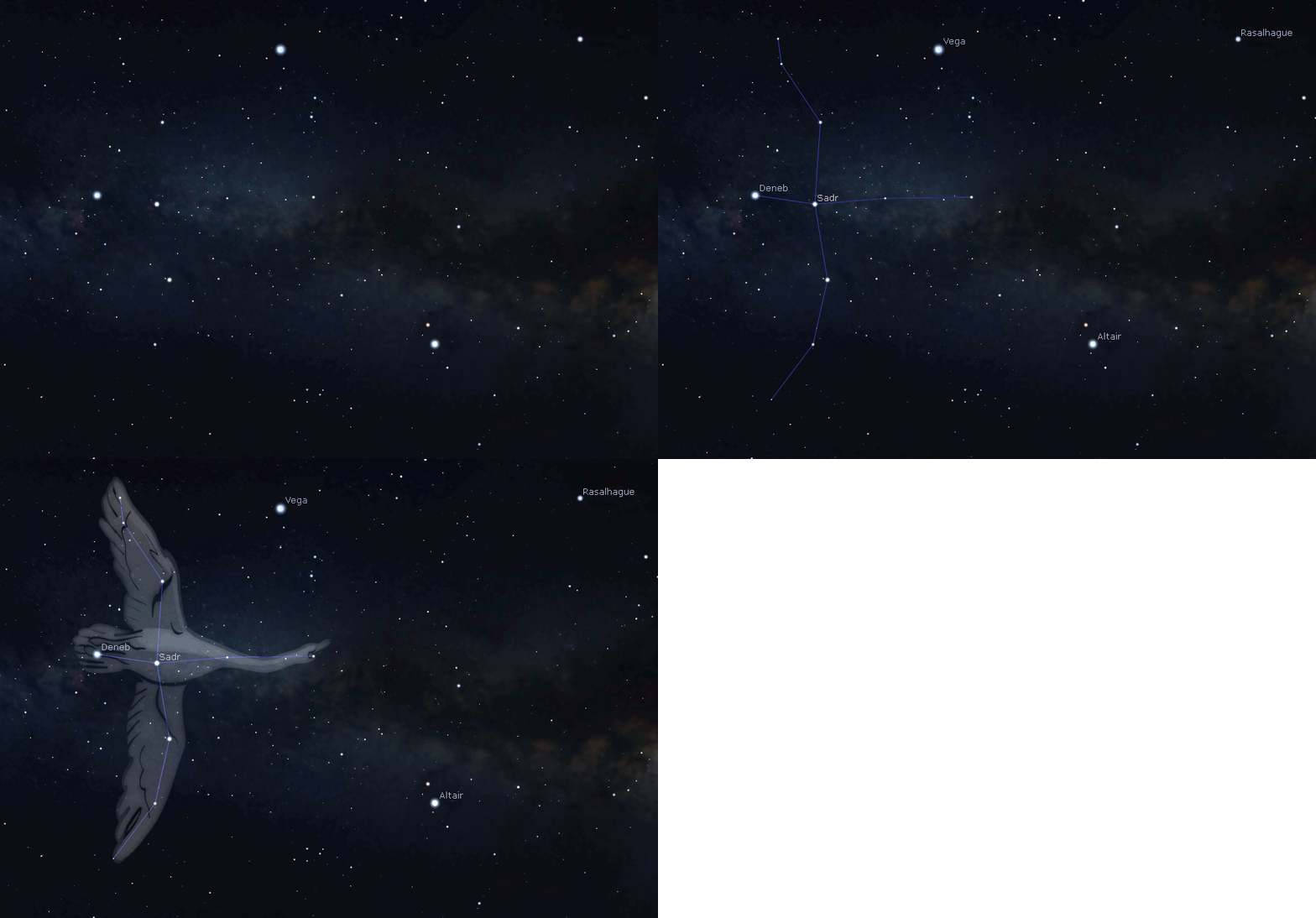
Animated Cygnus finder chart. Included also are, beside Deneb, the other stars of the Summer Triangle: Vega and Altair and their constellations Lyra the harp and Aquila. See if you can find them. Created using Stellarium.
07/16/2018 – Ephemeris – Lyra the harp, Hermes’ invention
Ephemeris for Monday, July 16th. Today the Sun will be up for 15 hours and 12 minutes, setting at 9:24, and it will rise tomorrow at 6:13. The Moon, 3 days before first quarter, will set at 12:02 tomorrow morning.
Very high up in the eastern sky at 11 p.m. can be found a bright star just north of a small, narrow, but very distinctive parallelogram of stars. They are the stars of the constellation Lyra the harp. The bright star is Vega, one of the twenty one brightest first magnitude stars. Vega is actually the 5th brightest night-time star. The harp, according to Greek mythology, was invented by the god Hermes. The form of the harp in the sky, is as he had invented it: by stretching strings across a tortoise shell. Hermes gave it to his half-brother Apollo, who in turn gave it to the great musician Orpheus. The Sun has a motion with respect to most stars around it. Its direction is towards the vicinity of Lyra.
The times given are for the Traverse City/Interlochen area of Michigan. They may be different for your location.
Addenda
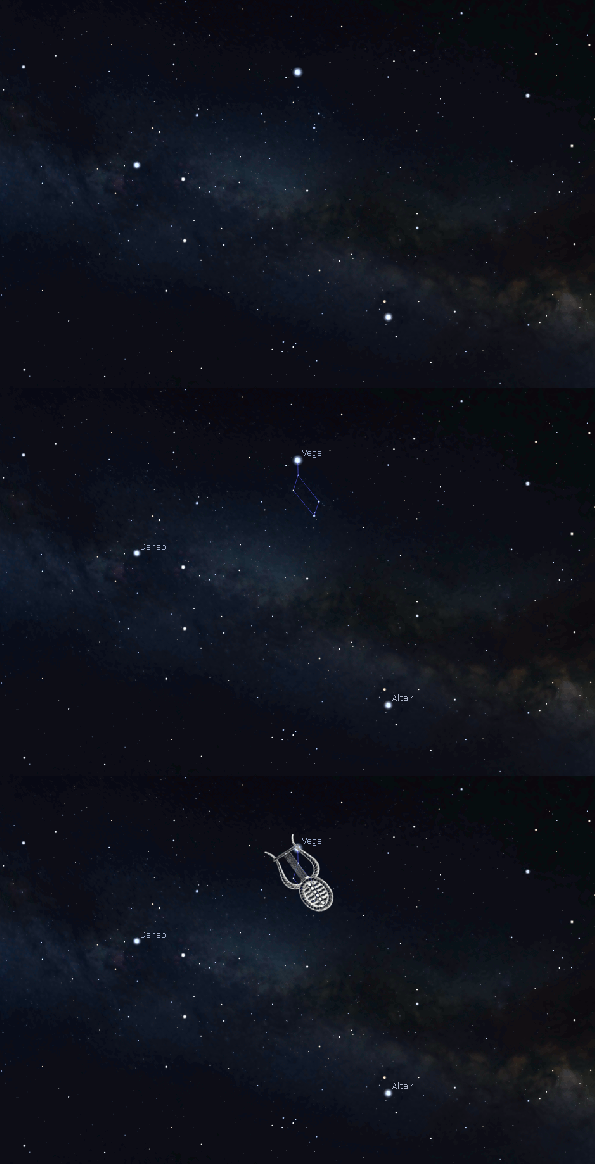
Animated Lyra finder chart. with Vega and the other named stars of the Summer Triangle. The lyre image not supplied by Stellarium but is from The World’s Earliest Music by Hermann Smith, Figure 60, A Project Gutenberg Ebook, and captioned “The Chelys or Greek Tortoiseshell Lyre”. Click on the image to enlarge Created using Stellarium and GIMP.
Last Saturday night’s wild Sun ‘n Star Party
Last Saturday night the Grand Traverse Astronomical Society, myself included, and the rangers and volunteers of the Sleeping Bear Dunes National Lakeshore held our Sun ‘n Star Party at the Dune Climb. I live 20 miles southeast of the Dune Climb, and about half way between Traverse City and Interlochen. It’s also the location for which the Ephemeris sunrise and sunset times are calculated for. We rely on the GOES East satellite imagery to show us the cloud patterns and movement. Saturday morning was pretty overcast and hot. GOES East showed that a big clearing was heading for us. At 1 p.m. I emailed our members that the event was a GO, and began to pack up the car with my two telescopes, and assorted items. Meanwhile some raindrops were showing up on the windshield. A check with weather radar on my phone confirmed that some rainstorms were popping up between my location and Lake Michigan. This is rather normal when it’s hot and humid in the afternoon, and wouldn’t affect the Dune area close to the lake. In driving to the Dune Climb I drove through some rain showers, but the skies cleared by the time I got within 5 miles from the lake.
The solar observing from 4 to 6 p.m.was great, except for no sunspots. We had 2 solar telescopes that did reveal some prominences. The sky was clear. The storm clouds were receding to the east. Of course we couldn’t see much to the west because the dune was in the way. Its angular altitude averaged 12 degrees. Some of us stayed there and ate our dinner. By 7:30 the wind came up from the southwest. A check of the GOES East satellite showed us a large, roughly square cloud the width of the lake slowly moving northward that was just south of us. Just after 8 p.m. we noticed clouds looming from the south, then fog was overtaking the tops of the dunes to the southwest. Shortly thereafter we were socked in. At a little after 9 p.m. Marie Scott the ranger in charge of this event gave introductions, and handed the microphone to me, who introduced our members and went over what we were supposed to see that night. We couldn’t track this cloud anymore by satellite because it was between the daytime color imagery and the nighttime infrared imagery. However around 10 p.m. someone spotted Vega, nearly overhead. And while I was swinging my 11″ Dobsonian towards it, someone else called out Jupiter. Looking around the fog was lifting. The night was salvaged. We stayed over an hour after the official 11 p.m. to watch Mars rise near the end of the star party, and finally view some of the wonders of the dark summer sky.
This was the fourth of seven monthly star parties scheduled at the Dunes this year. It was the first we didn’t cancel due to weather. We generally cancel one or two of then a year, but to start the year with three was depressing.
07/10/2018 – Ephemeris – The celestial scorpion
Ephemeris for Tuesday, July 10th. Today the Sun will be up for 15 hours and 21 minutes, setting at 9:28, and it will rise tomorrow at 6:08. The Moon, 2 days before new, will rise at 4:38 tomorrow morning.
For most of the year I’ve been referencing the constellation of Scorpius the scorpion in passing. Let’s take a good look at this creature. There are no scorpions in Michigan, unless someone imported some. However the one celestial scorpion now seen in the south near 11 p.m. is a beautiful example of one. His heart is the red giant star Antares. Another to the upper right leads to a trio of stars in a bit of a vertical bow. It’s claws extend into the next constellation over, Libra and the stars Zubenelgenubi, near Jupiter and Zubeneschamali, the south and north claws. From Antares the body droops down and curves just at the horizon, before making that distinctive curved tail with two stars at the stinger.
The times given are for the Traverse City/Interlochen area of Michigan. They may be different for your location.
Addendum
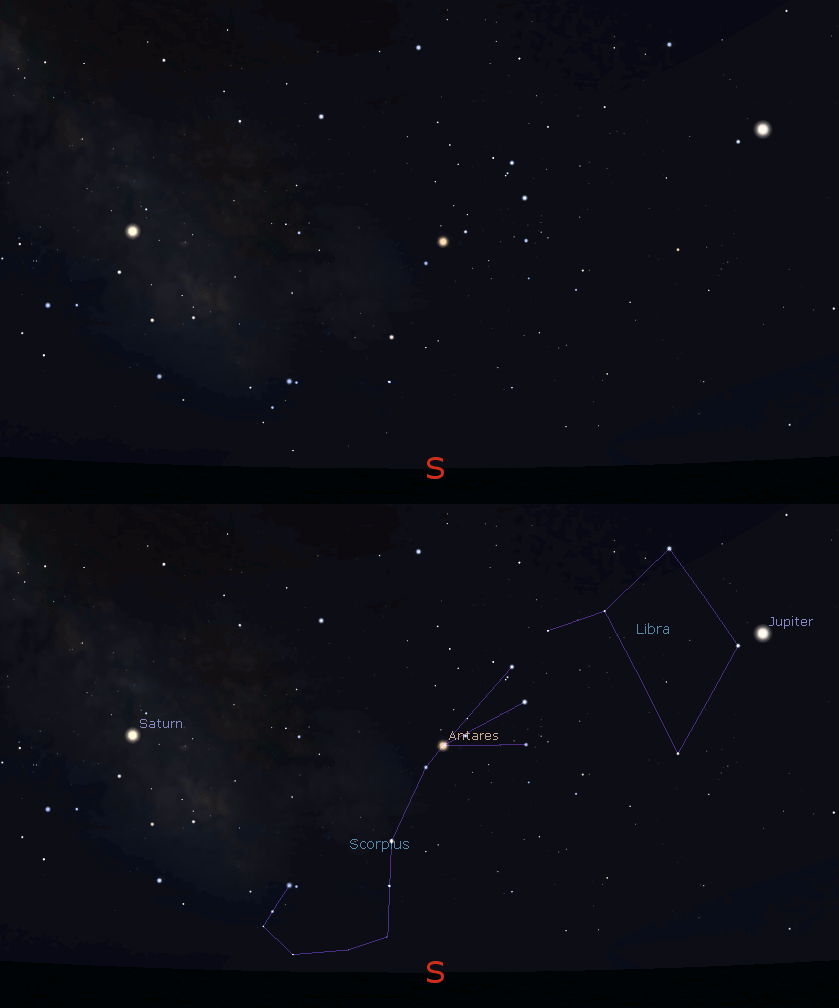
Scorpius finder animation. I’m leaving the artwork to another image, since I really don’t see the scorpion as Stellarium’s artist sees it. Animation created using Stellarium and GIMP.
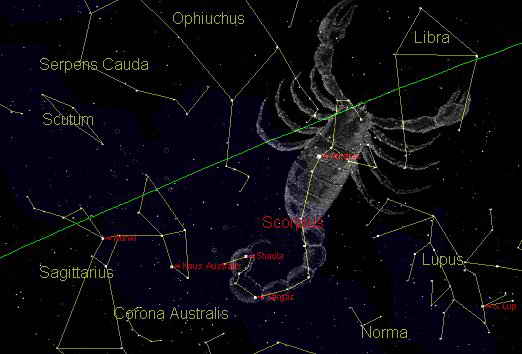
Scorpius artwork closer to how I see it with the claws extending into Libra. I was able to find the image using a Google search, but was unable to find the original source.
07/09/2018 – Ephemeris – Ophiuchus. the serpent bearer in the sky
Ephemeris for Monday, July 9th. Today the Sun will be up for 15 hours and 22 minutes, setting at 9:29, and it will rise tomorrow at 6:07. The Moon, half way from last quarter to new, will rise at 3:50 tomorrow morning.
The red star Antares shines in the south at 11 p.m. In the constellation of Scorpius. In the area of sky above and a little to the left lies a large constellation of faint stars called Ophiuchus, the serpent bearer. The constellation shape is like a large bell, which reminds me of the head, shoulders and arms of a fellow that’s holding the snake-like a weight lifter pulling up a heavy barbell. The serpent he’s holding is Serpens, the only two-part constellation in the heavens. The head rises to Ophiuchus’ right and the tail extends up to the left. In Greek legend Ophiuchus was a great physician, educated by the god Apollo, and the centaur Chiron, also found in the stars as Sagittarius, now rising below and left of him.
The times given are for the Traverse City/Interlochen area of Michigan. They may be different for your location.
Addendum
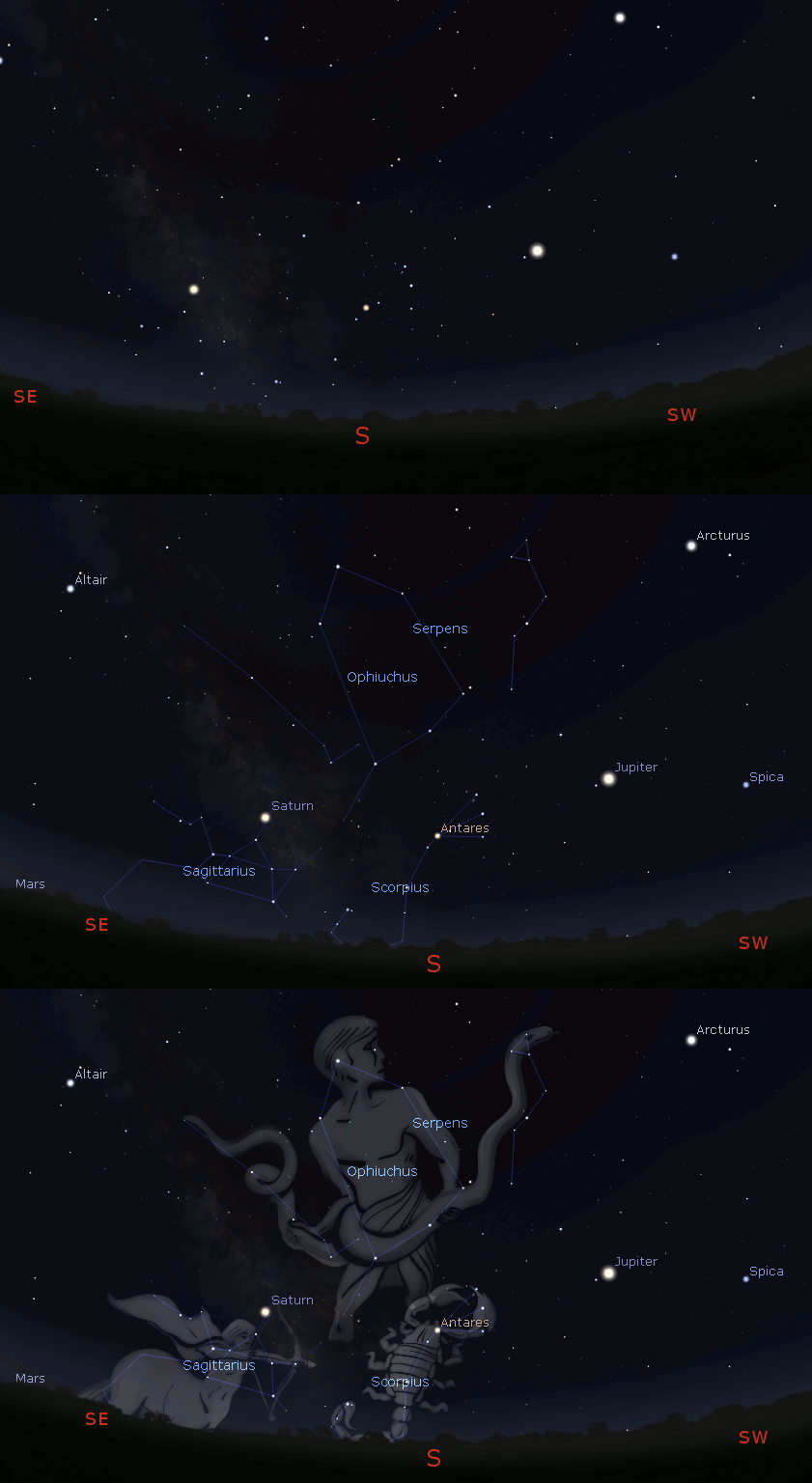
Ophiuchus finder animation plus constellations discussed. Created using Stellarium and GIMP.
 Bob Moler's Ephemeris Blog