Archive
Ephemeris: 04/10/2024 – Where have the naked-eye planets wandered off to?
This post was updated due to it being uploaded late, and without illustrations. This was due to my recovery from the mad dash eclipse trip Sunday through Tuesday. By the way it was glorious! I shall recount it soon in an Ephemeris Extra post.
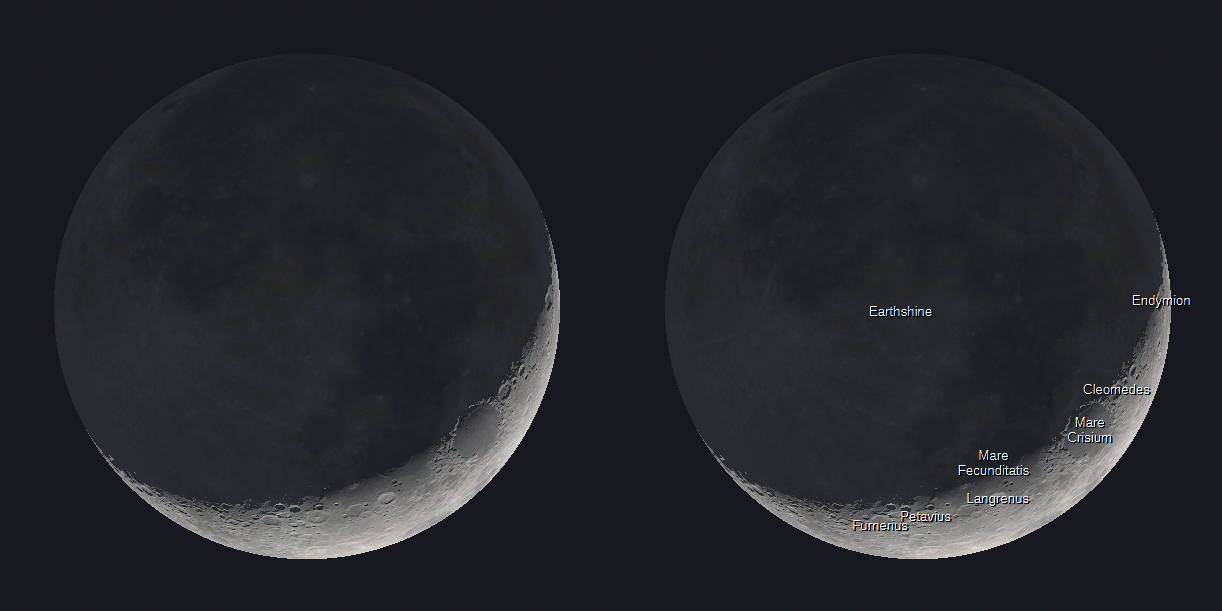
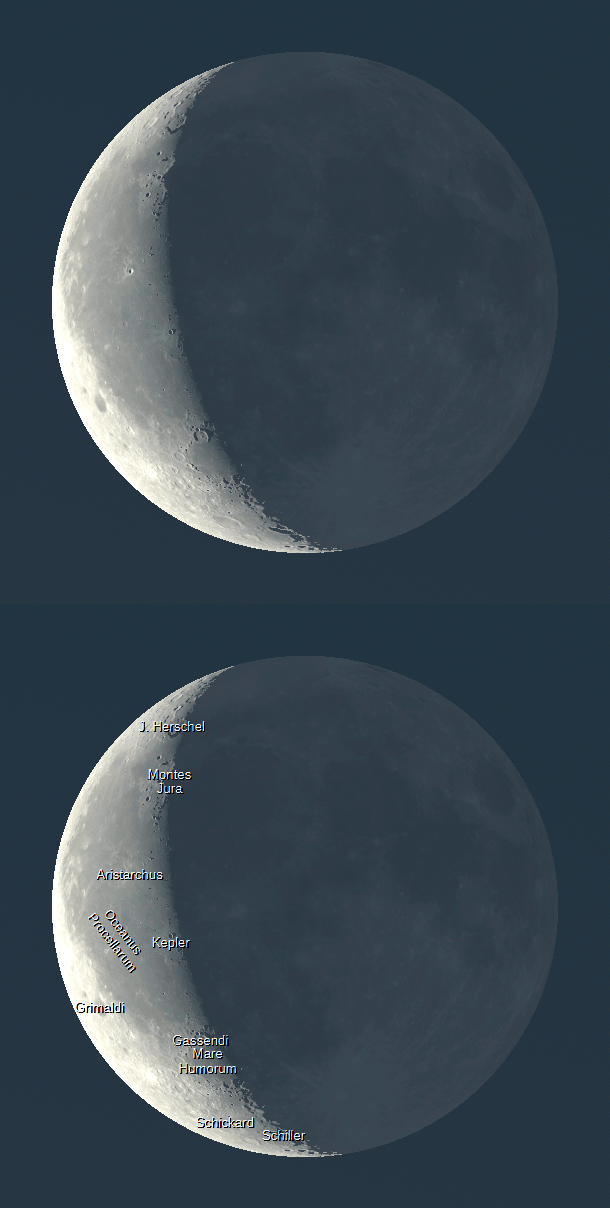
This is Ephemeris for Wednesday, April 10th. Today the Sun will be up for 13 hours and 16 minutes, setting at 8:22, and it will rise tomorrow at 7:04. The Moon, 2 days past new, will set at 11:21 this evening.
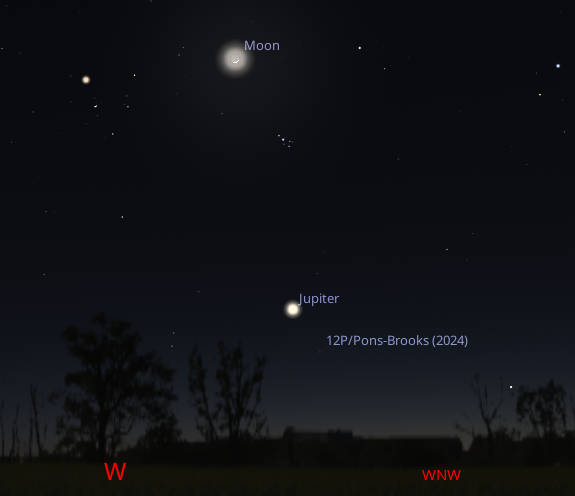
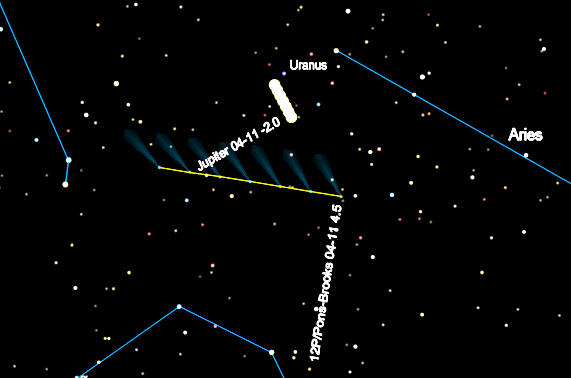
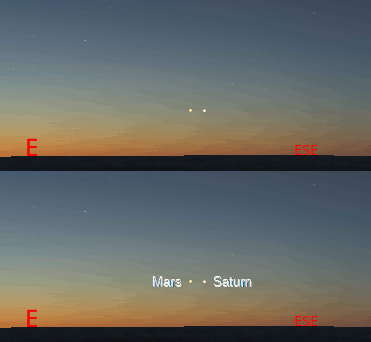
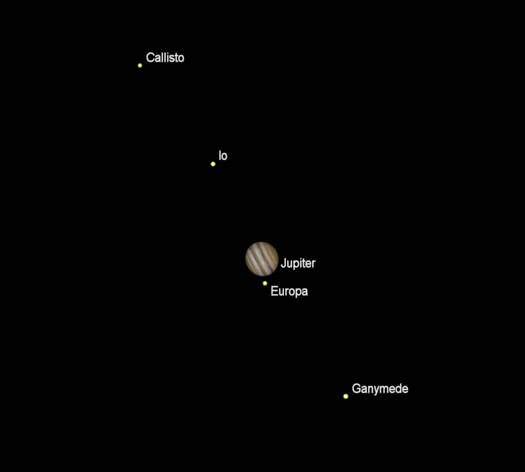
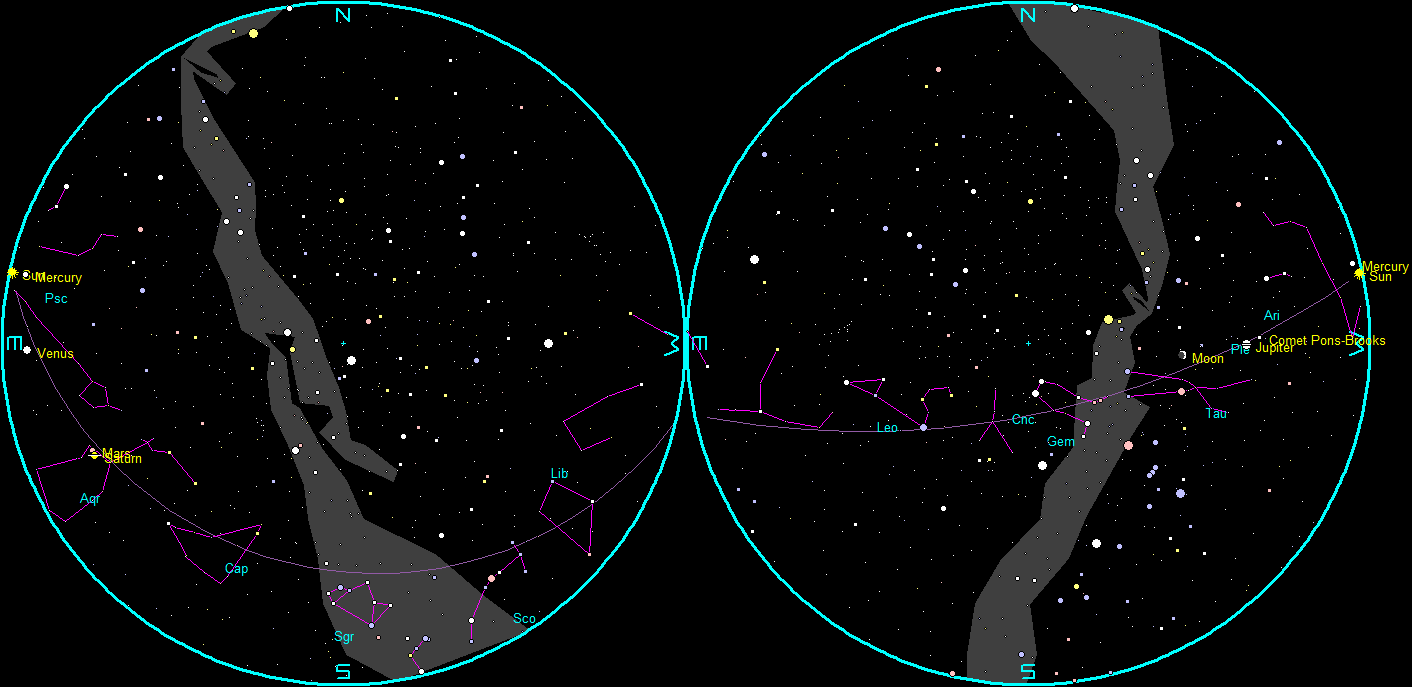
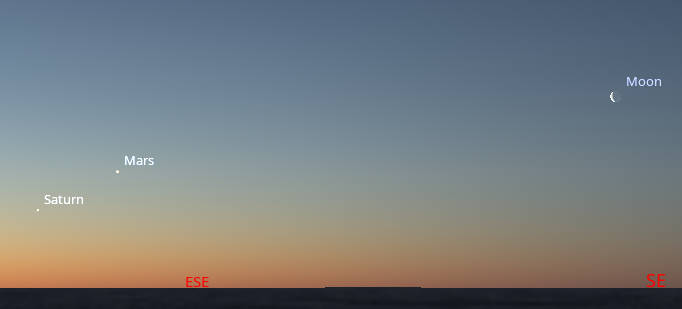
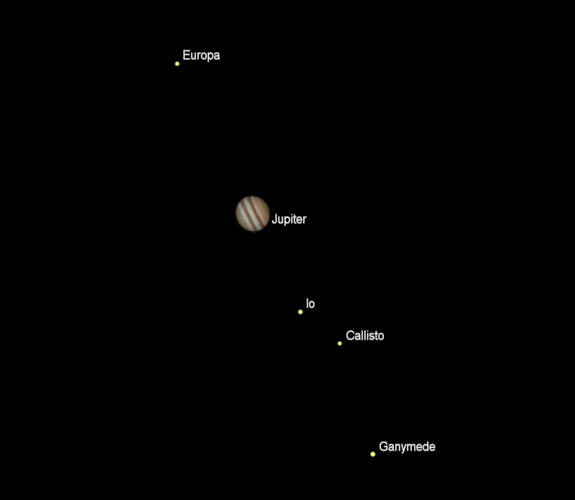
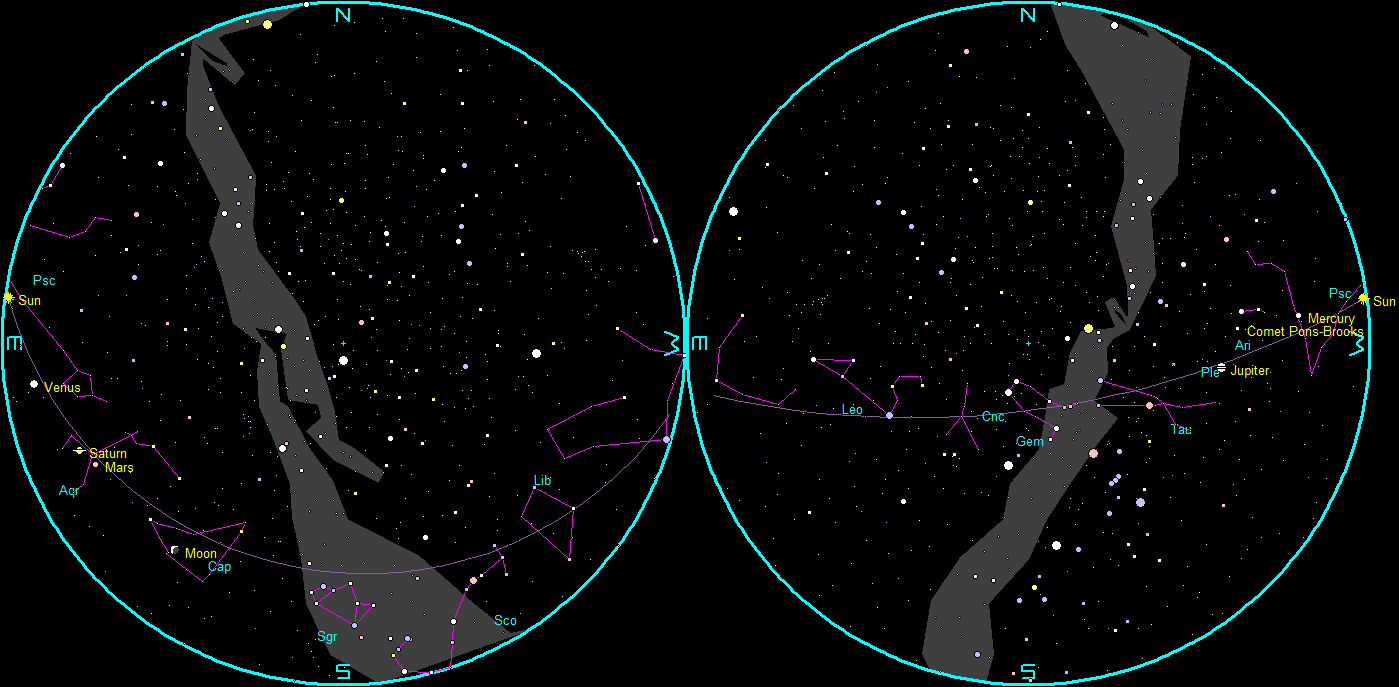
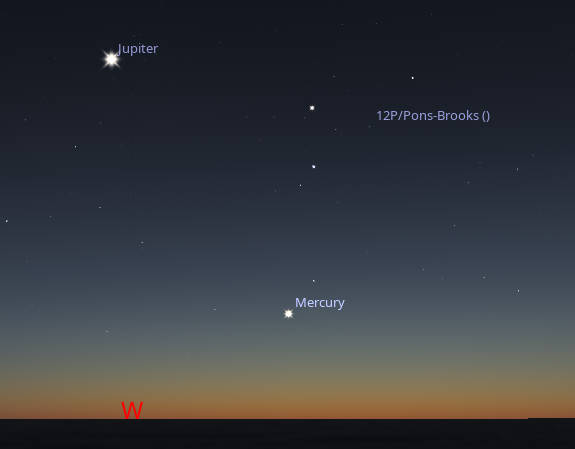
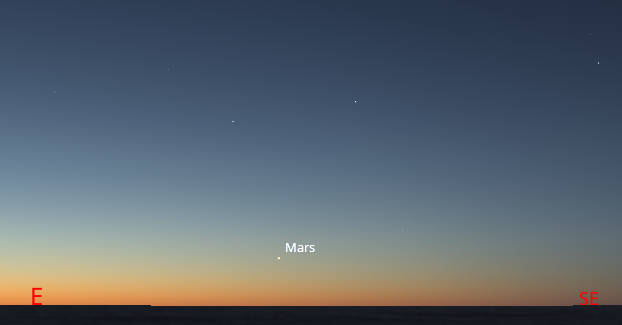
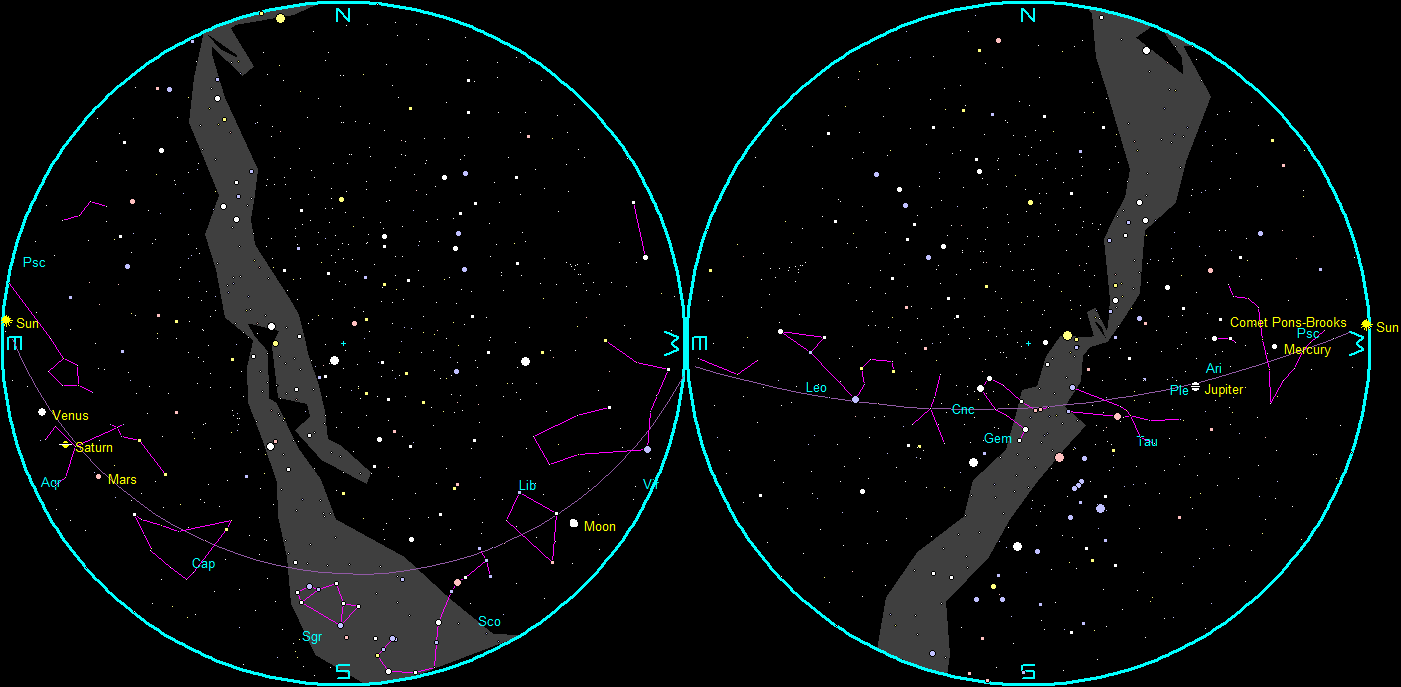
Let’s find out where the naked-eye planets have wandered off to this week, and see what planets are left. Bright Jupiter is low and in the west, and tonight only can be seen below the crescent Moon. It will set at 10:25 pm. We are getting close to losing Jupiter in the evening sky. Comet 12P/Pons-Brooks is just below-right of it. Though officially naked-eye brightness, one has to have very good eyes, binoculars or telescope to spot it. In my Wednesday blog posts at bobmoler.wordpress.com I have finder charts. In the morning Mars, and Saturn will be very close together in the east southeastern sky at 6:30. They will be fighting the bright morning twilight and low altitude then.
The astronomical event times given are for the Traverse City/Interlochen area of Michigan (EDT, UT–4 hours). They may be different for your location.
Addendum
Ephemeris: 04/09/24 – When is the next solar eclipse?
This is Ephemeris for Tuesday, April 9th. Today the Sun will be up for 13 hours and 13 minutes, setting at 8:21, and it will rise tomorrow at 7:06. The Moon, 1 day past new, will set at 9:58 this evening.
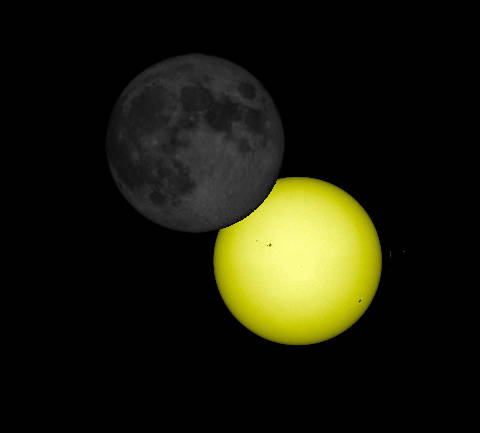
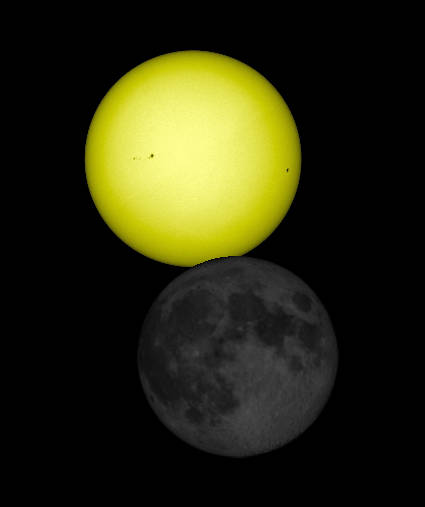
I hope you’ve had a good eclipse and were able to view it. I don’t know if you saw the eclipse or if I saw the eclipse since this is being recorded before the events. However, it’s time to look at the next time you might be able to see a solar eclipse. Our next Great American Eclipse isn’t for 21 years on August 12th 2045, which I won’t make, guaranteed. But we have some other minor solar eclipses visible in our area before that eclipse. Our next eclipse will be about 11% eclipse that’ll occur August 12th of 2026, just two years away. It’s not much compared to the 89% yesterday for our area. There will be an even tinier eclipse on January 26th of 2028. Just 2.5% of the Sun’s diameter will be covered. The best of the next three eclipses occurs on January 14th 2029, when the Moon encroaches on 69% of the Sun’s diameter. There are five more partial eclipses visible before 2045.
The astronomical event times given are for the Traverse City/Interlochen area of Michigan (EDT, UT–4 hours). They may be different for your location.
Addendum
Ephemeris: 04/05/2024 – A ready-made eclipse projector
This is Ephemeris for Friday, April 5th. Today the Sun will be up for 13 hours, setting at 8:16, and it will rise tomorrow at 7:13. The Moon, 3 days before new, will rise at 6:24 tomorrow morning.
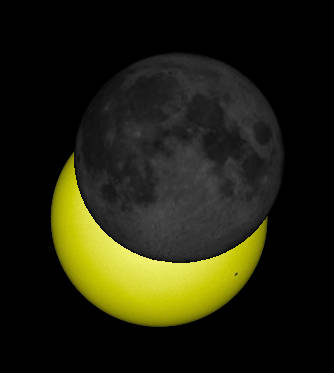
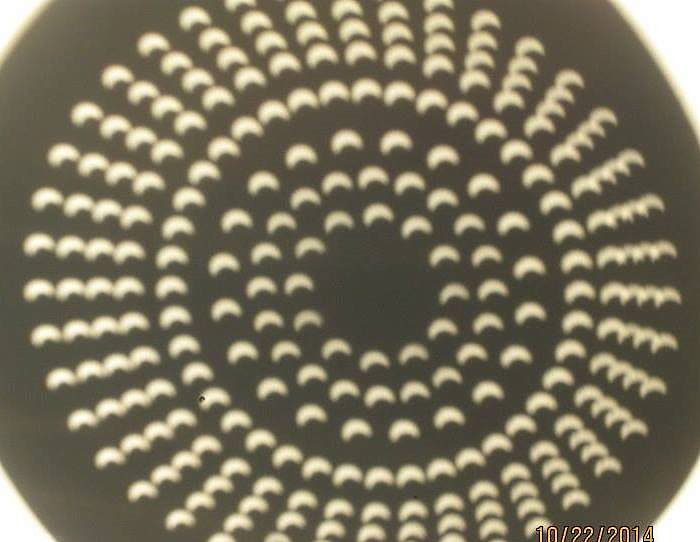
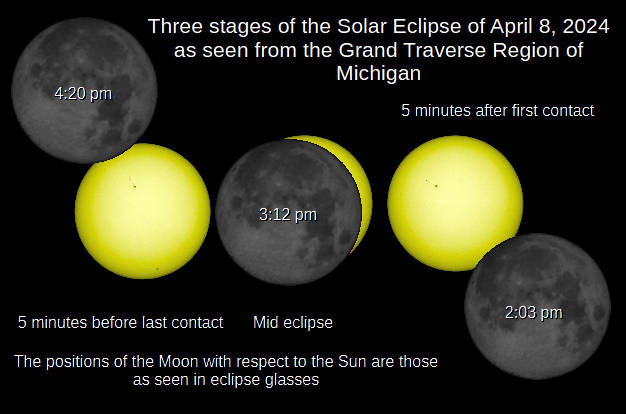
One quick and easy way to view next Monday’s eclipse via projection will be to use a calendar. All those little drain holes are actually pinholes, and will allow you to see multiple images of the eclipsed Sun. Multiple suns will be projected on whatever its shadow falls on. So that’s a quick and easy way of doing it. You may want to plug up some of the holes though, or the images might overlap. The eclipse will start for IPR listening area at 1:58 pm give or take a minute or two, mid-eclipse will be around 3:12 pm and the eclipse will end at 4:25 pm. If you’re wearing eclipse glasses the moon will move from lower right to upper left. If you’re using the pinhole projection method the moon will move from the upper right to lower left.
The astronomical event times given are for the Traverse City/Interlochen area of Michigan (EDT, UT–4 hours). They may be different for your location.
Addendum
Ephemeris: 04/04/2024 – Viewing the eclipse with pinhole projection.
This is Bob Moler with Ephemeris for Thursday, April 4th. Today the Sun will be up for 12 hours and 57 minutes, setting at 8:14, and it will rise tomorrow at 7:15. The Moon, 3 days past last quarter, will rise at 6:01 tomorrow morning.
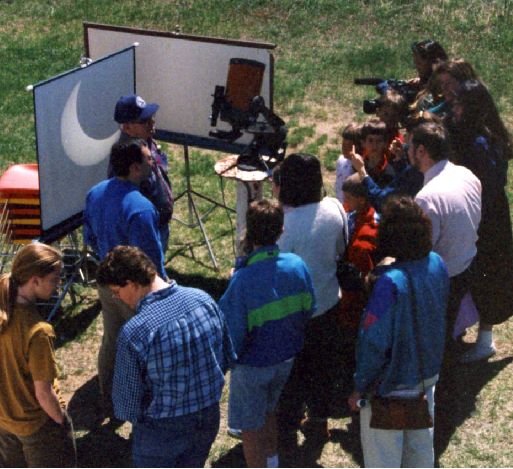
If you have eclipse glasses and even if you don’t a good way perhaps the best way to view the solar eclipse is to use projection specifically pinhole projection the pinhole can act like a lens and with something as bright as the sun can cast a good visible image of the sun. Probably the best way to do it is to find a long box and cut a hole in one end. Have one long side open or partially open to view the Sun’s projected image. Cover the hole with aluminum foil and then make pinholes of various sizes, about half inch apart. The bigger the pinhole the brighter the Sun’s image but also the fuzzier it will be. The smaller the hole the sharper and dimmer the sun will be. For the IPR listening area the eclipse will start around 1:58 pm, and end around 4:25 pm.
The astronomical event times given are for the Traverse City/Interlochen area of Michigan (EDT, UT–4 hours). They may be different for your location.
Addendum
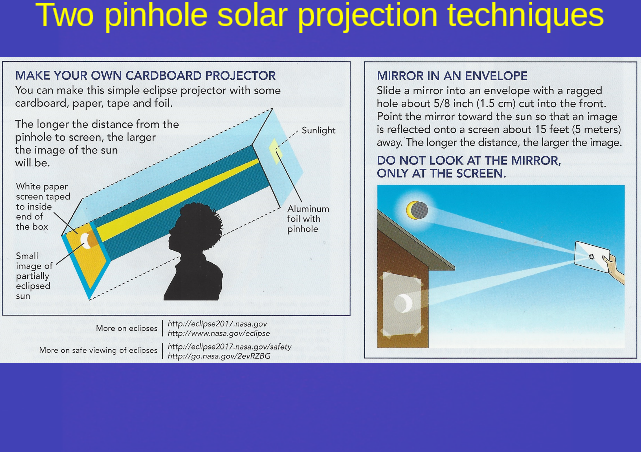
A long box can be used to project the image inside. The diameter of the pin hole is a compromise between sharpness and brightness of the image.
…The farther the image is projected the larger it is.
The throw of the image can be increased by using a mirror masked with a quarter of a inch or larger hole and sending the image 10 or more feet away.
Ephemeris: 04/03/2024 – Where have the naked-eye planets wandered off to this week?
This is Ephemeris for Wednesday, April 3rd. Today the Sun will be up for 12 hours and 54 minutes, setting at 8:13, and it will rise tomorrow at 7:17. The Moon, 2 days past last quarter, will rise at 5:33 tomorrow morning.
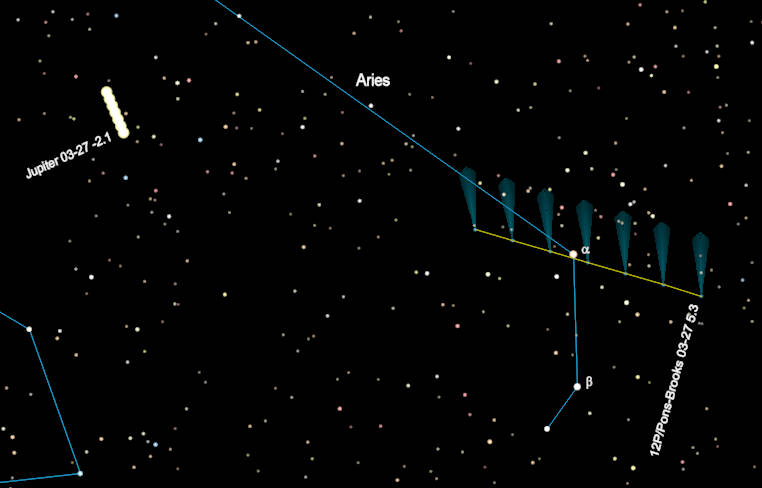
Let’s find out where the naked-eye planets have wandered off to this week, and see what planets are left. Mercury is now too close to the Sun to be spotted. Bright Jupiter is due west at 8:45 pm or a half hour after sunset. It will set at 11:05 pm. We are getting close to losing Jupiter in the evening sky. Comet 12P/Pons-Brooks is right of and a bit below Jupiter in the evening. Though officially naked-eye brightness, one has to have very good eyes, binoculars or telescope to spot it. In my Wednesday blog posts at bobmoler.wordpress.com I have finder charts. In the morning Mars, and especially Venus and Saturn may be impossible to spot, in the east-southeast in the bright twilight. Mars will rise at 6:10, and will be very low in the east-southeast at 6:45 am.
The astronomical event times given are for the Traverse City/Interlochen area of Michigan (EDT, UT–4 hours). They may be different for your location.
Addendum
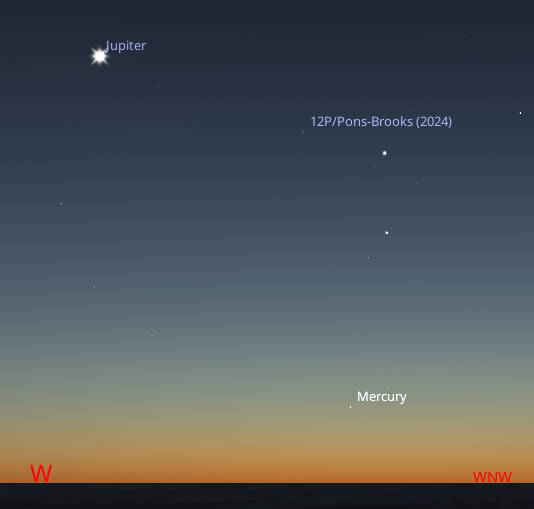
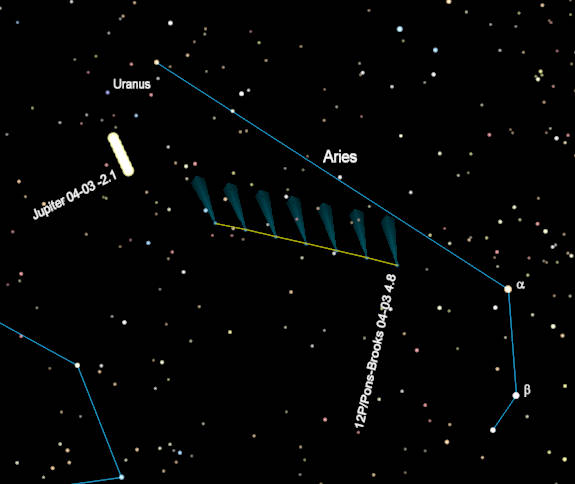
During the solar eclipse on the 8th, during totality, the comet will be located around the 2nd to the last position of its track. However, unless it is obviously noticeable, totality time is too short to use trying to find it. Enjoy the glory of the sun’s corona for the brief time you have.
Ephemeris: 04/02/2024 – Availability of and checking out eclipse glasses
This is Ephemeris for Tuesday, April 2nd. Today the Sun will be up for 12 hours and 51 minutes, setting at 8:12, and it will rise tomorrow at 7:18. The Moon, 1 day past last quarter, will rise at 4:59 tomorrow morning.
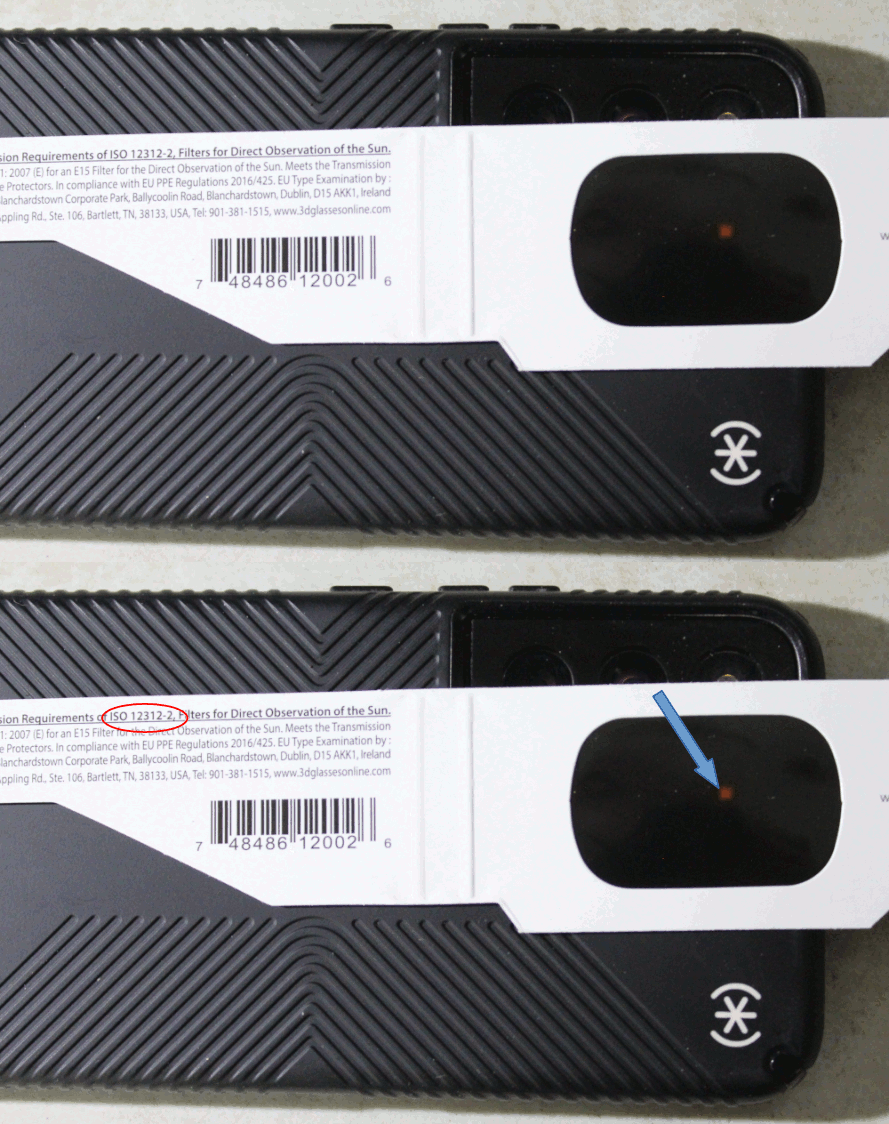
In six days there will be a total solar eclipse, if you’re right place. Northern Michigan is not the right place. We get a pretty good chunk of the Sun being covered by the Moon, about nearly 90% around here. This means that you will still need protection if you want to view the eclipse. My daughter reports that there are places around Traverse City that you can get solar eclipse glasses. However, to make sure that they are the proper eclipse glasses they will have a globe symbol with ISO in it for the International Organization for Standardization. Also, they must state that they conform to and meet the transmission requirements of ISO 12312-2, filters for direct observation of the sun. That doesn’t keep someone from making counterfeit ones. A way to check is with laying one lens onto a smartphone flashlight, which should be barely visible through it.
The astronomical event times given are for the Traverse City/Interlochen area of Michigan (EDT, UT–4 hours). They may be different for your location.
Addendum
Ephemeris: 04/01/2024 – Previewing April Skies
This is Ephemeris for April Fools’ Day, Monday, April 1st. Today the Sun will be up for 12 hours and 48 minutes, setting at 8:11, and it will rise tomorrow at 7:20. The Moon, at last quarter today, will rise at 4:15 tomorrow morning.
Wow! We’re already in the second quarter of 2024. Daylight hours in the Interlochen/Traverse City area and will increase from 12 hours and 48 minutes today to 14 hours 13 minutes on the 30th. The altitude, or angle, of the Sun above the southern horizon at local noon will be 50 degrees today and will ascend to 60 degrees on the 30th. The altitude of the Sun in the Straits area will be a degree lower. The actual time of local apparent noon this month for the Interlochen/Traverse City area, when the Sun passes due south, will be about 1:43 p.m. The big event of this month and this year will be the total solar eclipse one week from today. I will be talking about it, and how to observe the eclipse safely most of this week.
The astronomical event times given are for the Traverse City/Interlochen area of Michigan (EDT, UT–4 hours). They may be different for your location.
Addendum
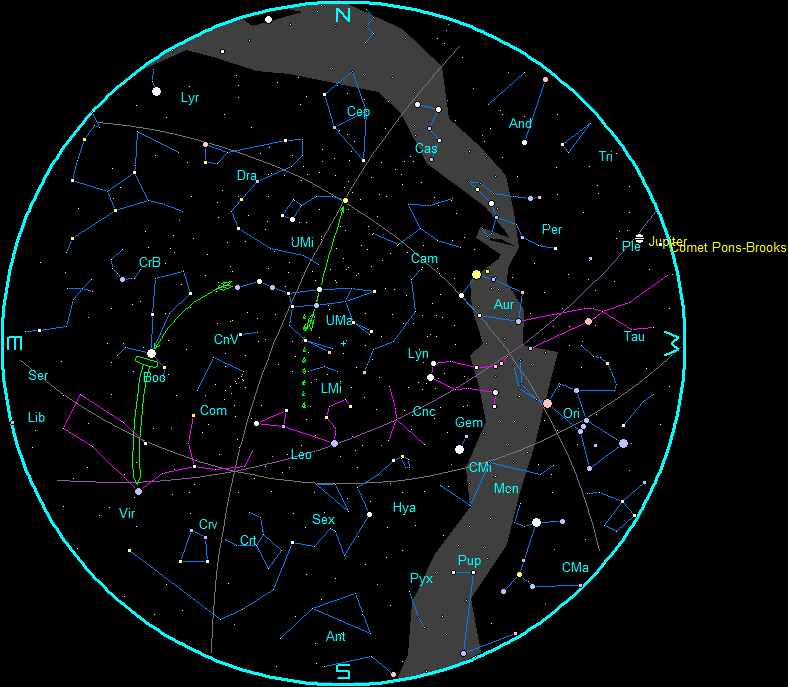
April Evening Star Chart
April Morning Star Chart
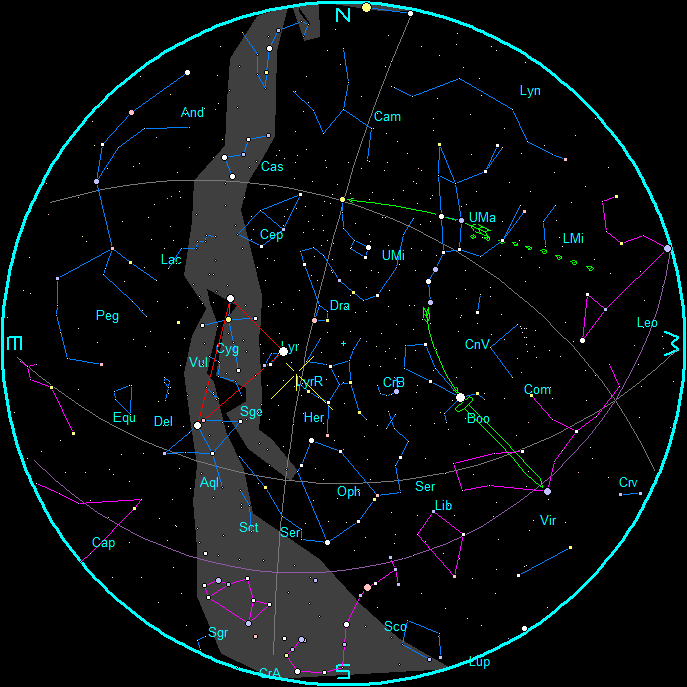
For a list of constellation names to go with the abbreviations, click here.
- Pointer stars at the front of the bowl of the Big Dipper point to Polaris, the North Star.
- The leaky bowl of the Big Dipper drips on Leo.
- Follow the arc of the handle of the Big Dipper to the star Arcturus, then
- Follow the spike to Spica.
- The Summer Triangle appears in red.
- LyrR is the radiant of the Lyrid meteor shower, which will reach peak on the morning of the 22nd.
Twilight Limits, Nautical and Astronomical
| EDT | |||||||
| Morning | Twilight | Evening | Twilight | Dark | Night | Moon | |
| Date | Astro. | Nautical | Nautical | Astro. | Start | End | Illum. |
| 2024-04-01 | 5h42m | 6h18m | 21h18m | 21h55m | 21h55m | 3h22m | 0.49 |
| 2024-04-02 | 5h40m | 6h16m | 21h19m | 21h56m | 21h56m | 4h16m | 0.38 |
| 2024-04-03 | 5h38m | 6h14m | 21h21m | 21h58m | 21h58m | 4h59m | 0.28 |
| 2024-04-04 | 5h35m | 6h12m | 21h22m | 21h59m | 21h59m | 5h33m | 0.18 |
| 2024-04-05 | 5h33m | 6h11m | 21h24m | 22h01m | 22h01m | 5h33m | 0.09 |
| 2024-04-06 | 5h31m | 6h09m | 21h25m | 22h03m | 22h03m | 5h31m | 0.04 |
| 2024-04-07 | 5h29m | 6h07m | 21h27m | 22h04m | 22h04m | 5h29m | 0.00 |
| 2024-04-08 | 5h27m | 6h05m | 21h28m | 22h06m | 22h06m | 5h27m | 0.00 |
| 2024-04-09 | 5h24m | 6h03m | 21h30m | 22h08m | 22h08m | 5h24m | 0.03 |
| 2024-04-10 | 5h22m | 6h01m | 21h31m | 22h09m | 23h21m | 5h22m | 0.08 |
| 2024-04-11 | 5h20m | 5h59m | 21h32m | 22h11m | – | 5h20m | 0.16 |
| 2024-04-12 | 5h18m | 5h57m | 21h34m | 22h13m | 0h41m | 5h18m | 0.25 |
| 2024-04-13 | 5h16m | 5h55m | 21h35m | 22h14m | 1h53m | 5h16m | 0.34 |
| 2024-04-14 | 5h13m | 5h53m | 21h37m | 22h16m | 2h53m | 5h13m | 0.44 |
| 2024-04-15 | 5h11m | 5h51m | 21h38m | 22h18m | 3h39m | 5h11m | 0.54 |
| 2024-04-16 | 5h09m | 5h49m | 21h40m | 22h20m | 4h15m | 5h09m | 0.64 |
| 2024-04-17 | 5h07m | 5h47m | 21h41m | 22h21m | 4h43m | 5h07m | 0.73 |
| 2024-04-18 | 5h04m | 5h45m | 21h43m | 22h23m | – | – | 0.81 |
| 2024-04-19 | 5h02m | 5h43m | 21h44m | 22h25m | – | – | 0.87 |
| 2024-04-20 | 5h00m | 5h41m | 21h46m | 22h27m | – | – | 0.93 |
| 2024-04-21 | 4h58m | 5h39m | 21h47m | 22h29m | – | – | 0.97 |
| 2024-04-22 | 4h56m | 5h37m | 21h49m | 22h30m | – | – | 0.99 |
| 2024-04-23 | 4h53m | 5h35m | 21h50m | 22h32m | – | – | 1.00 |
| 2024-04-24 | 4h51m | 5h33m | 21h52m | 22h34m | – | – | 0.99 |
| 2024-04-25 | 4h49m | 5h31m | 21h54m | 22h36m | 22h36m | 23h00m | 0.95 |
| 2024-04-26 | 4h47m | 5h30m | 21h55m | 22h38m | 22h38m | – | 0.90 |
| 2024-04-27 | 4h45m | 5h28m | 21h57m | 22h40m | 22h40m | 0h10m | 0.83 |
| 2024-04-28 | 4h42m | 5h26m | 21h58m | 22h42m | 22h42m | 1h15m | 0.74 |
| 2024-04-29 | 4h40m | 5h24m | 22h00m | 22h44m | 22h44m | 2h12m | 0.64 |
| 2024-04-30 | 4h38m | 5h22m | 22h01m | 22h46m | 22h46m | 2h58m | 0.53 |
Twilight calendar was generated using Cartes du Ciel (Sky Charts).
See my blog post: Twilight Zone for the definitions of the different periods of twilight here: https://bobmoler.wordpress.com/2018/09/27/.
NASA Calendar of Planetary Events
Apr  1  Mo            Venus: 16.8° W
     1  Mo   4:58 am  Moon South Dec.: 28.6° S
     1  Mo  11:15 pm  Last Quarter
     5  Fr  11:51 pm  Moon-Mars: 2° N
     6  Sa   5:20 am  Moon-Saturn: 1.2° N
     7  Su  12:39 pm  Moon-Venus:  .4° S
     7  Su   1:53 pm  Moon Perigee: 358800 km
     8  Mo   8:20 am  Moon Ascending Node
     8  Mo   2:18 pm  Total Solar Eclipse
     8  Mo   2:21 pm  New Moon
    10  We   2:46 pm  Mars-Saturn:  .4° N
    10  We   5:08 pm  Moon-Jupiter: 4° S
    11  Th   8:38 am  Moon-Pleiades:  .4° N
    11  Th   6:53 pm  Mercury Inferior Conj.
    13  Sa   6:36 pm  Moon North Dec.: 28.6° N
    15  Mo   9:47 am  Moon-Pollux: 1.6° N
    15  Mo   3:13 pm  First Quarter
    16  Tu  10:45 am  Moon-Beehive: 3.8° S
    19  Fr  10:09 pm  Moon Apogee: 405600 km
    22  Mo   2:44 am  Lyrid Shower: ZHR = 20
    22  Mo   6:45 am  Moon Descending Node
    22  Mo  10:02 pm  Moon-Spica: 1.6° S
    23  Tu   7:49 pm  Full Pink Moon
    26  Fr   4:00 pm  Moon-Antares:  .3° S
    28  Su  10:28 am  Moon South Dec.: 28.5° S
May  1  We            Venus: 9.2° W
Sky Events Calendar by Fred Espenak and Sumit Dutta (NASA’s GSFC),
http://eclipse.gsfc.nasa.gov/SKYCAL/SKYCAL.html.
Sun and Moon Rising and Setting Events
LU              Ephemeris of Sky Events for Interlochen/TC
April, 2024    Local time zone: EDT
+-----------------------------------------------------------------------+
| DATE |  SUN     SUN  DAYLIGHT|   TWILIGHT*    |MOON  RISE OR    ILLUM |
|      |  RISE    SET    HOURS |  END    START  |PHASE SET** TIME FRACTN|
+=======================================================================+
|Mon  1| 07:22a  08:11p  12:48 | 09:16p  06:17a |L Qtr Rise 04:15a   51%|
|Tue  2| 07:20a  08:12p  12:51 | 09:17p  06:15a |      Rise 04:59a   41%|
|Wed  3| 07:18a  08:13p  12:54 | 09:18p  06:13a |      Rise 05:33a   30%|
|Thu  4| 07:17a  08:14p  12:57 | 09:20p  06:11a |      Rise 06:01a   20%|
|Fri  5| 07:15a  08:16p  13:00 | 09:21p  06:09a |      Rise 06:24a   11%|
|Sat  6| 07:13a  08:17p  13:03 | 09:23p  06:07a |      Rise 06:45a    5%|
+------+-----------------------+----------------+-----------------------+
|Sun  7| 07:11a  08:18p  13:06 | 09:24p  06:05a |      Rise 07:06a    1%|
|Mon  8| 07:09a  08:19p  13:10 | 09:26p  06:03a |New   Set  08:34p    0%|
|Tue  9| 07:08a  08:21p  13:13 | 09:27p  06:02a |      Set  09:58p    2%|
|Wed 10| 07:06a  08:22p  13:16 | 09:28p  06:00a |      Set  11:21p    7%|
|Thu 11| 07:04a  08:23p  13:19 | 09:30p  05:58a |      Set  12:40a   14%|
|Fri 12| 07:02a  08:24p  13:22 | 09:31p  05:56a |      Set  01:52a   23%|
|Sat 13| 07:01a  08:26p  13:25 | 09:33p  05:54a |      Set  02:52a   32%|
+------+-----------------------+----------------+-----------------------+
|Sun 14| 06:59a  08:27p  13:28 | 09:34p  05:52a |      Set  03:39a   42%|
|Mon 15| 06:57a  08:28p  13:31 | 09:36p  05:50a |F Qtr Set  04:15a   52%|
|Tue 16| 06:55a  08:29p  13:34 | 09:37p  05:48a |      Set  04:42a   62%|
|Wed 17| 06:54a  08:31p  13:36 | 09:39p  05:46a |      Set  05:04a   71%|
|Thu 18| 06:52a  08:32p  13:39 | 09:40p  05:44a |      Set  05:23a   79%|
|Fri 19| 06:50a  08:33p  13:42 | 09:42p  05:42a |      Set  05:39a   86%|
|Sat 20| 06:49a  08:34p  13:45 | 09:43p  05:40a |      Set  05:55a   92%|
+------+-----------------------+----------------+-----------------------+
|Sun 21| 06:47a  08:36p  13:48 | 09:45p  05:38a |      Set  06:11a   96%|
|Mon 22| 06:45a  08:37p  13:51 | 09:46p  05:36a |      Set  06:28a   99%|
|Tue 23| 06:44a  08:38p  13:54 | 09:48p  05:34a |Full  Rise 08:40p  100%|
|Wed 24| 06:42a  08:39p  13:57 | 09:50p  05:32a |      Rise 09:49p   99%|
|Thu 25| 06:41a  08:41p  14:00 | 09:51p  05:30a |      Rise 11:00p   96%|
|Fri 26| 06:39a  08:42p  14:02 | 09:53p  05:28a |      Rise 12:10a   91%|
|Sat 27| 06:37a  08:43p  14:05 | 09:54p  05:27a |      Rise 01:15a   84%|
+------+-----------------------+----------------+-----------------------+
|Sun 28| 06:36a  08:44p  14:08 | 09:56p  05:25a |      Rise 02:12a   76%|
|Mon 29| 06:34a  08:46p  14:11 | 09:57p  05:23a |      Rise 02:58a   66%|
|Tue 30| 06:33a  08:47p  14:13 | 09:59p  05:21a |      Rise 03:34a   55%|
+-----------------------------------------------------------------------+
* Nautical Twilight
** Moonrise or moonset, whichever occurs between sunset and sunrise
Generated using my LookingUp for DOS program.
Ephemeris: 03/29/2024 – Calculating the date of Easter
This is Ephemeris for Good Friday, March 29th. Today the Sun will be up for 12 hours and 39 minutes, setting at 8:07, and it will rise tomorrow at 7:26. The Moon, 3 days before last quarter, will rise at 1:09 tomorrow morning.
Easter will be celebrated by Western Christian churches this Sunday. Easter is a movable feast in that it falls on a different date each year following the first full moon of spring. It was an attempt to follow the Jewish Passover, which starts on the 15th of the month of Nisan. The Jewish calendar being a lunar calendar, the 15th is generally the night of the full moon, sometimes called the Paschal Full Moon. And since the Last Supper was a Seder, according to at least one Gospel, the Christian church wanted to link Easter with Passover as closely as possible using the Roman solar based (Julian) calendar. That’s not always the case, especially with our current Gregorian Calendar. Passover this year begins at sunset April 22nd because the Jewish lunar calendar is tied to the Julian Calendar.
The astronomical event times given are for the Traverse City/Interlochen area of Michigan (EDT, UT–4 hours). They may be different for your location.
Addendum

Ephemeris: 03/28/2024 Comet Pons-Brooks can be seen near Jupiter with binoculars
This is Ephemeris for Thursday, March 28th. Today the Sun will be up for 12 hours and 36 minutes, setting at 8:06, and it will rise tomorrow at 7:28. The Moon, 3 days past full, will rise at 11:59 this evening.
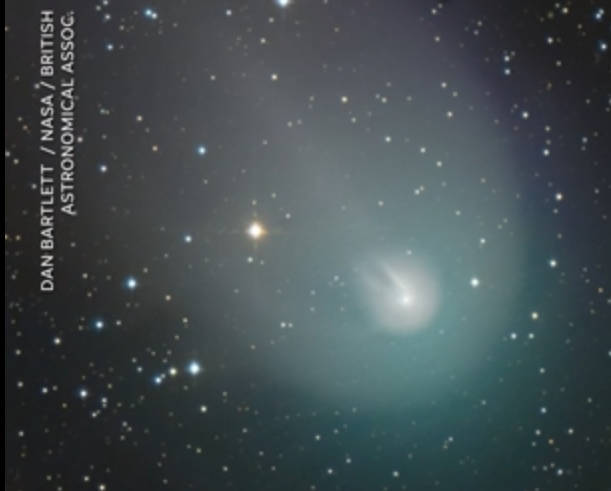
A dim naked eye comet is gracing our evening skies now. It’s called 12P/Pons Brooks. The 12P designation means it was the 12th periodic comet discovered. It was discovered in 1812 by French astronomer Jean-Louis Pons and rediscovered 71 years later on its return by William Brooks. Last July it had an outburst and gained about 100 times increase in brightness. It has held on to most of that. However, right now it’s 5th magnitude which makes it very difficult to spot even in binoculars. Comets always appear to be much dimmer than their magnitude suggests. It was last seen in 1954 and has a 71-year orbit of the Sun that takes it out to Neptune’s orbit. It currently appears below-right of Jupiter.
The astronomical event times given are for the Traverse City/Interlochen area of Michigan (EDT, UT–4 hours). They may be different for your location.
Addendum
Ephemeris: 03/27/2024 – Let’s find out where the naked-eye planets have wandered off to this week
This is Ephemeris for Wednesday, March 27th. Today the Sun will be up for 12 hours and 33 minutes, setting at 8:04, and it will rise tomorrow at 7:30. The Moon, 2 days past full, will rise at 10:50 this evening.
Let’s find out where the naked-eye planets have wandered off to this week, and see what planets are left. Mercury is visible in the evening sky shortly after sunset appearing very low in the west. It will be visible for the next few days or so, slowly heading back toward the Sun since this past Sunday. Higher up in the sky is bright Jupiter in the west southwest. It will set at 11:25 pm. Jupiter will be visible in the evening for only about another month or so. In the morning Mars, and especially Venus and Saturn may be impossible to spot, in the east-southeast in the bright twilight. Mars will rise at 6:28, and will be very low in the east-southeast. Comet 12P/Pons-Brooks is below-right of Jupiter in the evening. I’ll have more about it tomorrow.
The astronomical event times given are for the Traverse City/Interlochen area of Michigan (EDT, UT–4 hours). They may be different for your location.
Addendum
 Bob Moler's Ephemeris Blog