Archive
Ephemeris: 09/13/2024 – International Observe the Moon Night tomorrow
This is Ephemeris for Friday, September 13th. Today the Sun will be up for 12 hours and 36 minutes, setting at 7:56, and it will rise tomorrow at 7:21. The Moon, 2 days past first quarter, will set at 2:25 tomorrow morning.
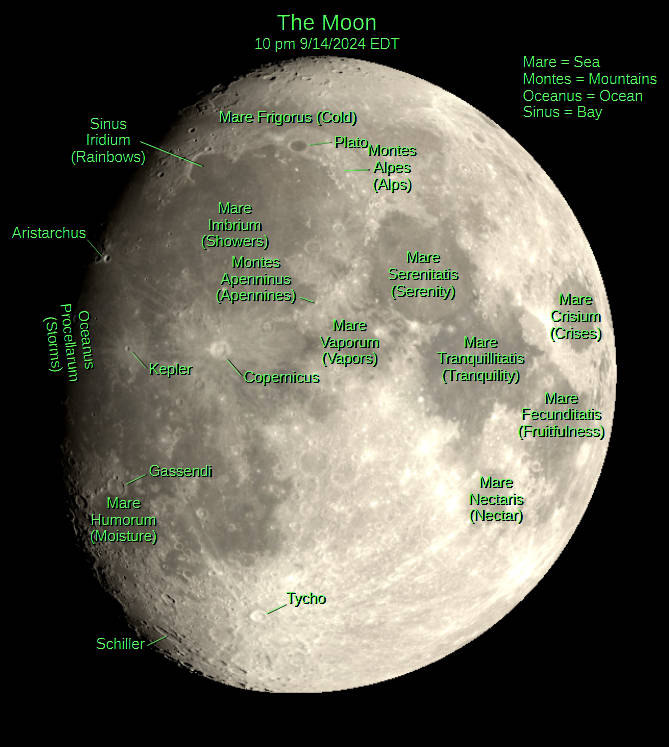
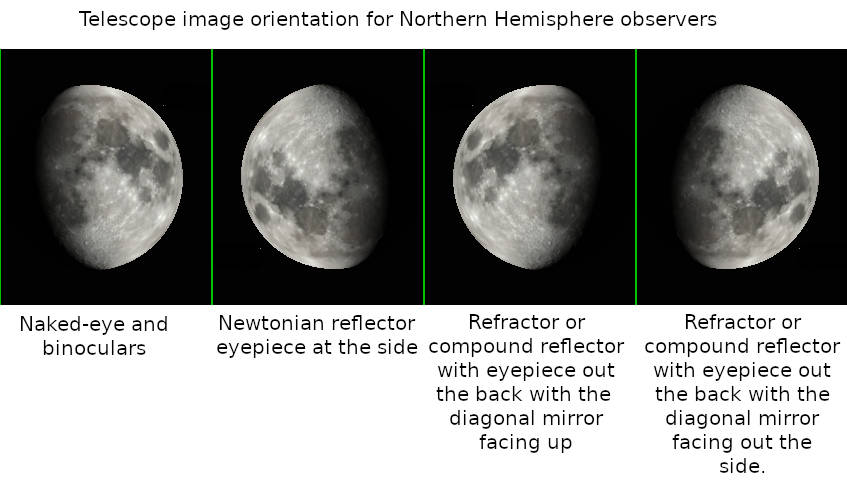
Tomorrow night, if it’s clear, will be the last star party of the year at the Sleeping Bear Dunes National Lakeshore starting at 9 PM if it is clear. It coincides with the International Observe the Moon Night, which is held annually in September or October near the first quarter moon, give or take a few days. Hosting the event will be the Park Rangers and the Grand Traverse Astronomical Society. Also featured will be the planet Saturn which is exhibiting some very thin rings this year. The 2020s appears to be the decade of the Moon with the United States and its European and Canadian partners, China, Russia, and even India interested in landing instruments and people on the Moon. So far this decade only China and India have had completely successful landings of spacecraft on the Moon.
The astronomical event times given are for the Traverse City/Interlochen area of Michigan (EDT, UT – 4 hours). Times will be different for other locations.
Ephemeris: 09/06/2024 – Grand Traverse Astronomical Meeting Tonight
This is Bob Moler with Ephemeris for Friday, September 6th. Today the Sun will be up for 12 hours and 57 minutes, setting at 8:09, and it will rise tomorrow at 7:12. The Moon, 4 days past new, will set at 9:26 this evening.
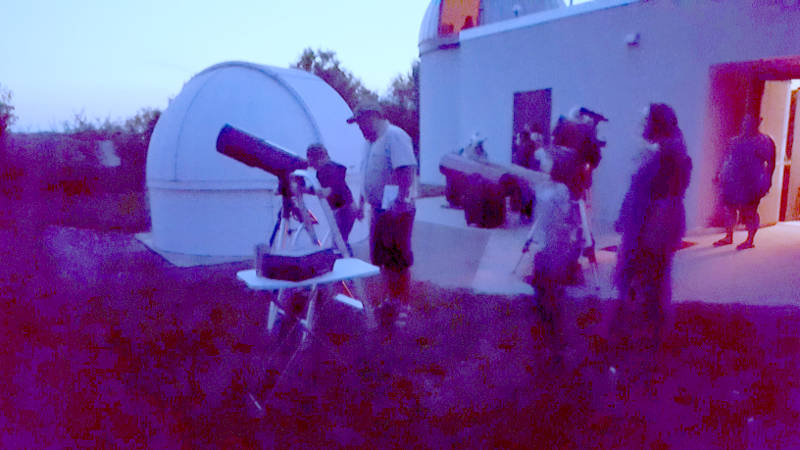
The Grand Traverse Astronomical Society will host its September meeting tonight at 8:00 PM at Northwestern Michigan College’s Joseph H Rogers Observatory, which is located on Birmley Rd. South of Traverse City between Garfield and Keystone roads. The program topic will be a surprise, at least to me. After the meeting about 9:00 PM if it’s clear there will be viewing of the heavens through the observatory’s telescopes, featuring possibly the Moon and Saturn, the first of which may be too low or be obstructed, and when it’s darker the wonders of the Milky Way will be visible including nebulae, open star clusters, and my favorite globular star clusters, spherical masses of hundreds of thousands of stars, as old as the Milky Way itself.
The astronomical event times given are for the Traverse City/Interlochen area of Michigan (EDT, UT–4 hours). Times will be different for other locations.
Addendum
Ephemeris: 08/30/2024 – Star party tomorrow night
This is Ephemeris for Friday, August 30th. Today the Sun will be up for 13 hours and 18 minutes, setting at 8:22, and it will rise tomorrow at 7:04. The Moon, 3 days before new, will rise at 4:11 tomorrow morning.
Weather permitting, a Star Party will be held tomorrow night at the Sleeping Bear Dunes National Lakeshore at the Dune Climb. The viewing will start at 9 pm. These events will be hosted by the park rangers and the Grand Traverse Astronomical Society, who will bring their telescopes to view the heavens, including the planet Saturn and the wonders of the summer Milky Way. The telescopes will be setup in the parking area closest to the dune. While twilight fades Saturn will be about the only object to view in the east-southeast. As it gets darker more and more wonders of the Milky Way will be seen. They include star clusters and nebulae, clouds of gas and dust that lie in abundance in the Milky Way.
The astronomical event times given are for the Traverse City/Interlochen area of Michigan (EDT, UT–4 hours). Times will be different for other locations.
Addendum
Ephemeris: 08/09/2024 – Star Party tomorrow night!
This is Ephemeris for Friday, August 9th. Today the Sun will be up for 14 hours and 17 minutes, setting at 8:56, and it will rise tomorrow at 6:40. The Moon, 3 days before first quarter, will set at 11:03 this evening.
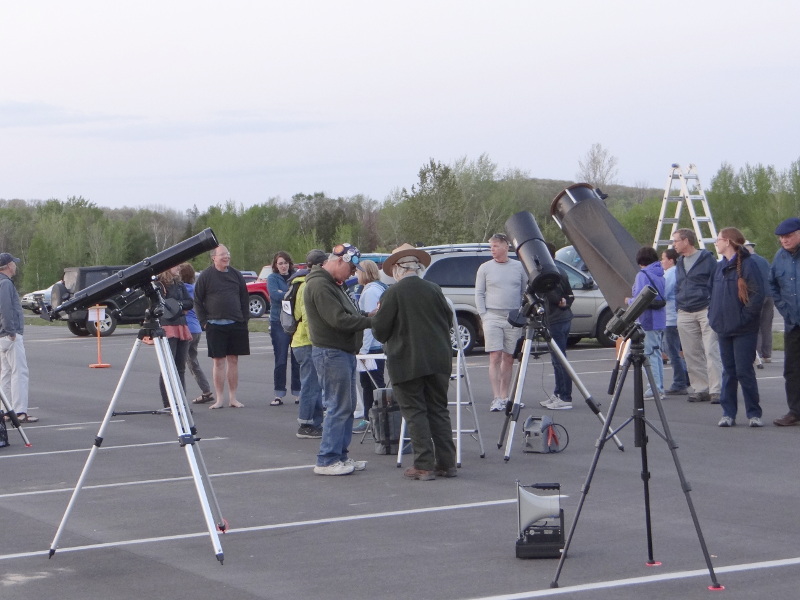
Tomorrow The Grand Traverse Astronomical Society will be part of the Port Oneida Rural Arts and Culture Fair, an event sponsored by the Sleeping Bear Dunes National Lakeshore. The society will bring their telescopes to the Thoreson Farm on South Thoreson Road off M22 North of Glen Arbor for a Star Party beginning at 9 p.m. South Thoreson Road is a loop off M22. On tap will be the fat waxing crescent Moon and some of the brighter wonders of the summer sky. Even though the moonlit skies will be bright, there are plenty of wonders still visible in the telescopes. We might have a shot at Saturn later in the evening along with a few bright Perseid meteors to wow the viewer. The peak of the Perseid meteor shower will be Monday morning after the Moon sets.
The astronomical event times given are for the Traverse City/Interlochen area of Michigan (EDT, UT–4 hours). Times will be different for other locations.
Addendum
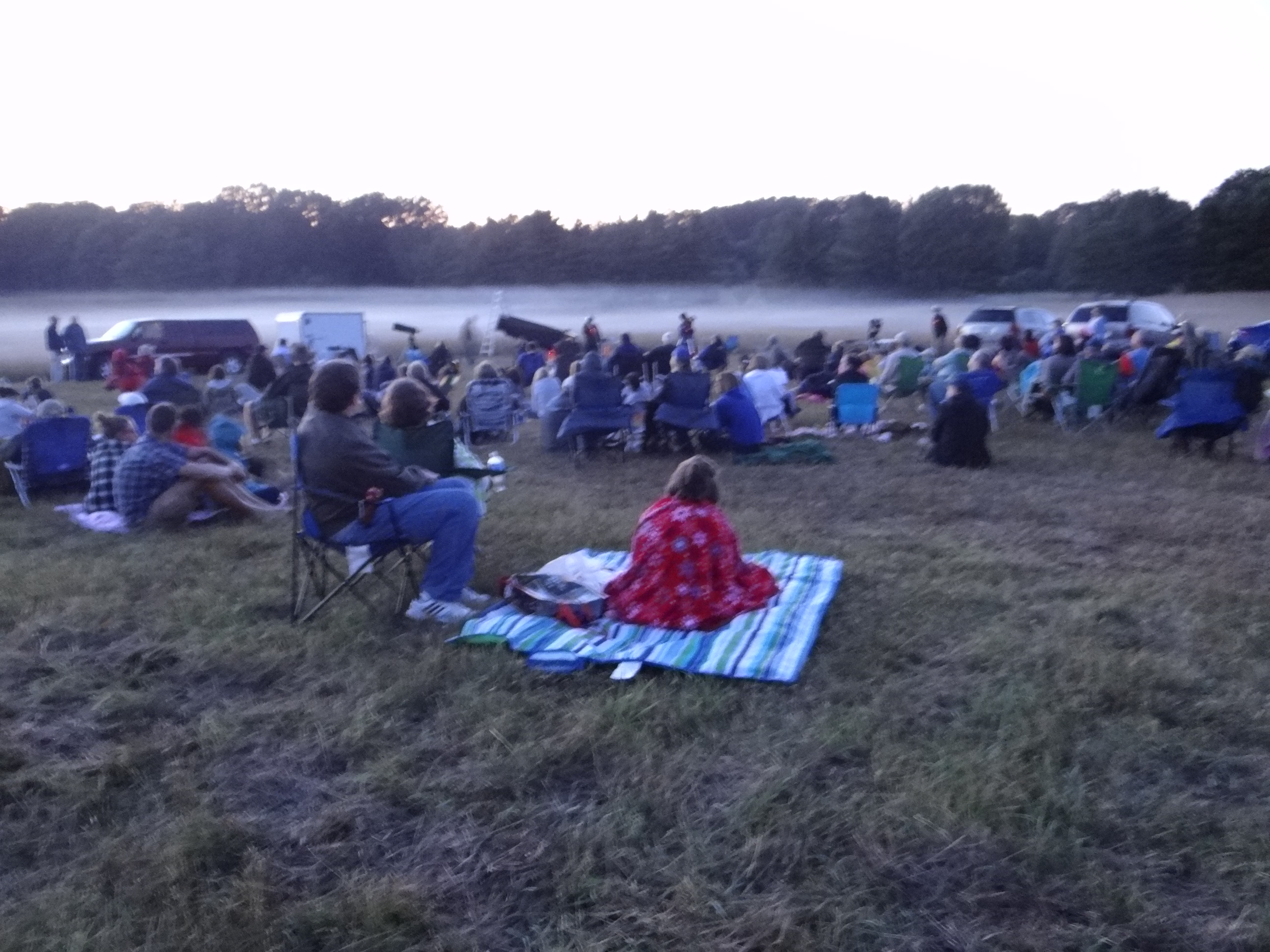
Ephemeris: 07/26/2024 – View the Sun from the Sleeping Bear Dunes tomorrow
Sorry, I’ve posted this a bit late.
This is Ephemeris for Friday, July 26th. Today the Sun will be up for 14 hours and 51 minutes, setting at 9:14, and it will rise tomorrow at 6:24. The Moon, 1 day before last quarter, will rise at 12:03 tomorrow morning.
Tomorrow, Saturday, July 27th there will be solar viewing at the Sleeping Bear Dunes National Lakeshore, at the Dune Climb from 3 to 6 PM. Park Rangers will be joined by members of the Grand Traverse Astronomical Society with their specially filtered telescopes to view the sun safely. This is a period of great solar activity. Remember the Northern Lights of last month? Solar filtered telescopes will safely view the surface of the sun, called the photosphere and sunspots, while the society also has two special solar telescopes with which to view the layer of gas above the surface called the chromosphere and prominences which look like flames coming off the chromosphere. This is the last of the two solar observing opportunities this summer.
The astronomical event times given are for the Traverse City/Interlochen area of Michigan (EDT, UT–4 hours). They may be different for your location.
Addendum
Ephemeris: 07/12/2024 – Star Party tomorrow night at Sleeping Bear Dunes National Lakeshore
This is Bob Moler with Ephemeris for Friday, July 12th. Today the Sun will be up for 15 hours and 17 minutes, setting at 9:27, and it will rise tomorrow at 6:10. The Moon, 1 day before first quarter, will set at 12:42 tomorrow morning.
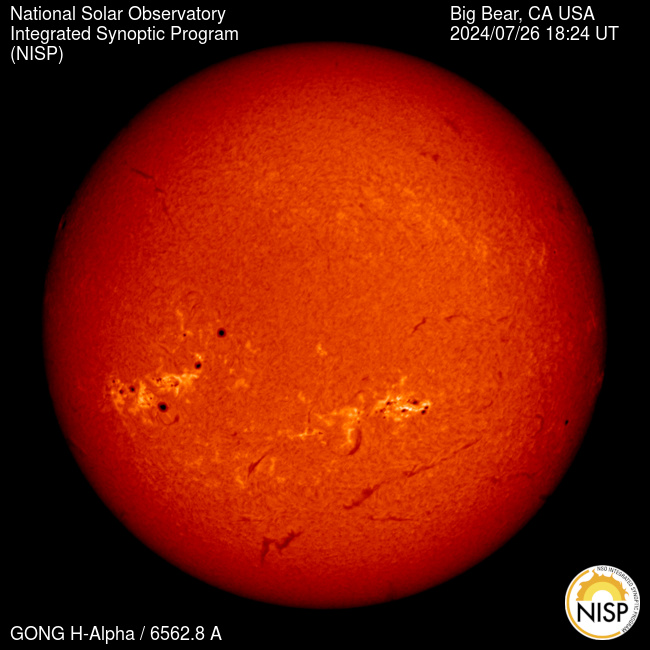
Tomorrow night, Saturday, July 13th, the Sleeping Bear Dunes National Lakeshore will team up with the Grand Traverse Astronomical Society to host a star party at the Dune Climb from 9 to 11 PM or later. It won’t be a star party only, because the featured attraction will be the first quarter Moon. To my mind, this is the best time to view the Moon, showing its craters with deep shadows near the terminator or sunrise line which crosses the Moon slowly over the month. There are no planets out in the evening, but we do have some interesting stars to look at besides the Moon. And the bright International Space Station will be seen moving from west to northeast, passing through the bowl of the Big Dipper around 10:28 pm.
The astronomical event times given are for the Traverse City/Interlochen area of Michigan (EDT, UT–4 hours). They may be different for your location.
Addendum
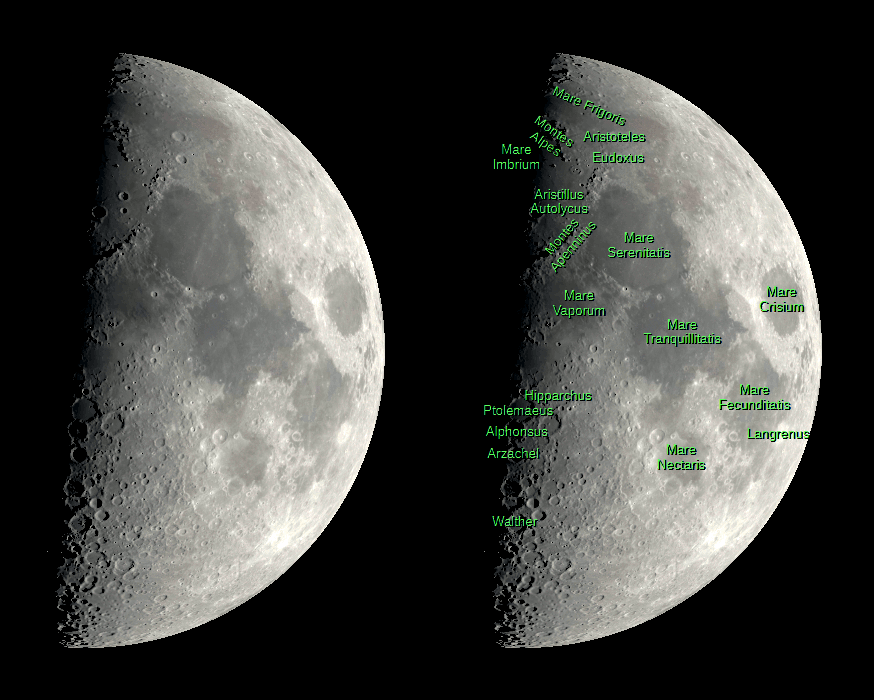
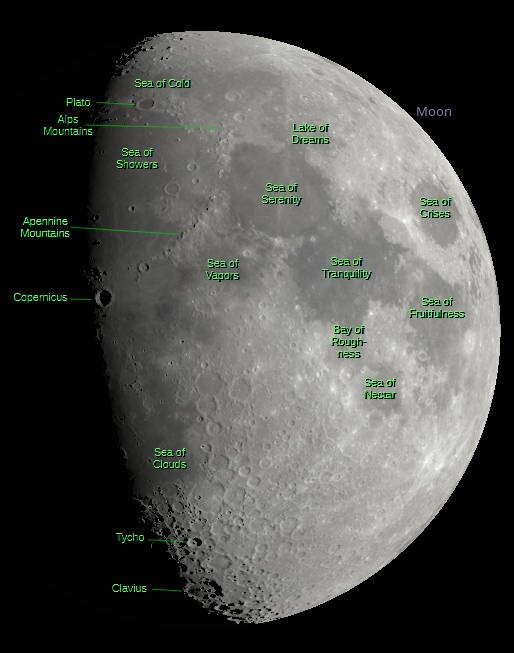
Translations of some lunar feature names according to Virtual Moon Atlas
Mare Crisium – Sea of Crises
Mare Fecunditatis – Sea of Fruitfulness
Mare Frigoris – Sea of Cold
Mare Imbrium – Sea of Showers
Mare Nectaris – Sea of Nectar
Mare Serenitatis – Sea of Serenity
Mare Tranquillitatis – Sea of Tranquility
Mare Vaporum – Sea of Vapors
Montes Alpes – Alps Mountains
Montes Apenninus – Apennines Mountains
Craters are named for persons, real or otherwise.
Ephemeris: 07/05/2024 – GTAS meeting: processing astrophotographs
This is Ephemeris for Friday, July 5th. Today the Sun will be up for 15 hours and 26 minutes, setting at 9:30, and it will rise tomorrow at 6:04. The Moon is new today, and won’t be visible.
Tonight’s meeting of the Grand Traverse Astronomical Society at Northwestern Michigan College’s Rogers observatory, which starts at 9 PM tonight, will feature a talk by Dan Dall’Olmo, one of our successful astrophotographers in the society. He will discuss image processing. Taking the picture is only the beginning. He will show how to bring out and sharpen images taken with digital cameras. Back in my day processing photographs involved chemicals in the darkroom. “I love the smell of Hypo in the morning”. Now it involves computers and software. Afterward if it’s, clear we’ll be viewing the sky. Note the later start time for the meeting. We follow the later sunsets this time of year, so viewing starts after sunset. The observatory is located south of Traverse City on Birmley Rd. Between Garfield and Keystone roads.
The astronomical event times given are for the Traverse City/Interlochen area of Michigan (EDT, UT–4 hours). They may be different for your location.
Addendum
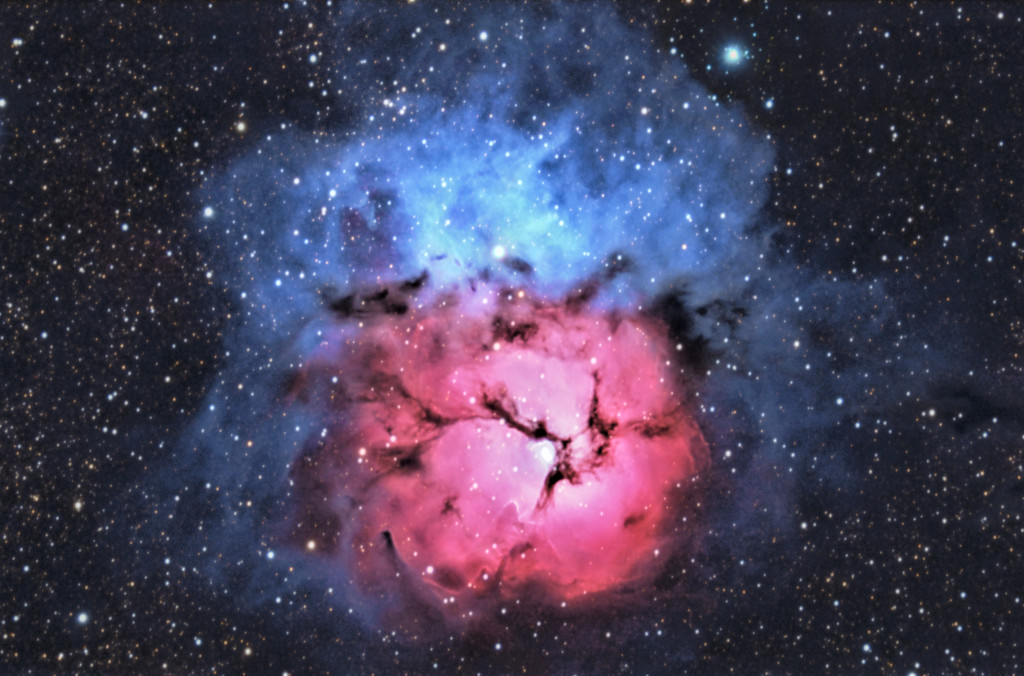
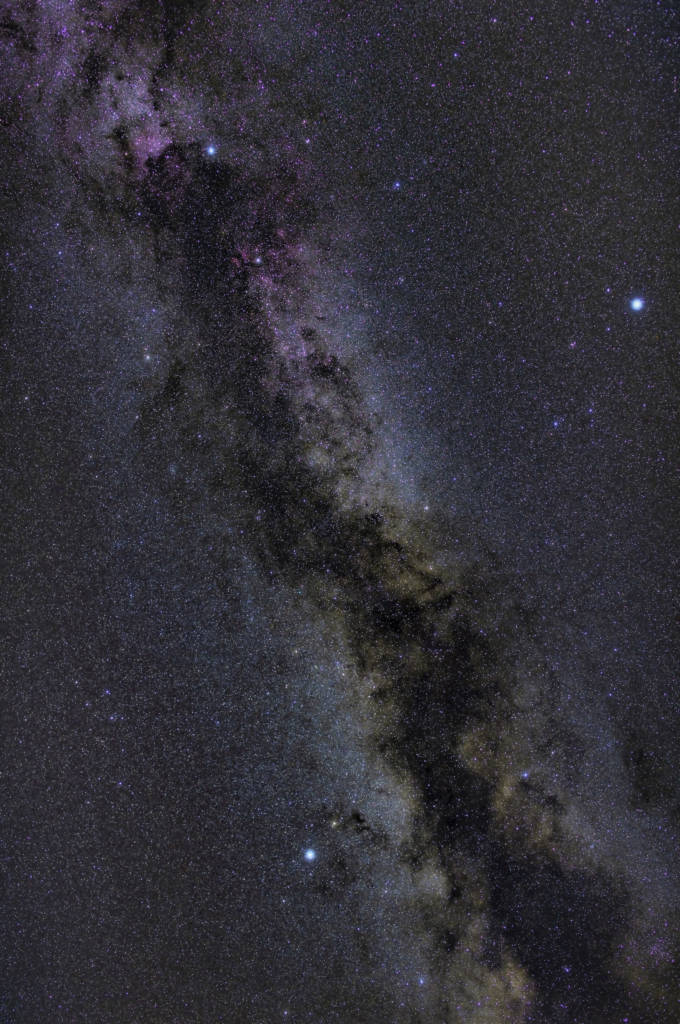
Here are a couple of Dan’s photographs of celestial objects visible this time of year. The eaw images do not look this good, hence the image processing to bring out the image brightness and detail.
Ephemeris: 06/28/2024 – Solar viewing at Sleeping Bear Dunes tomorrow
This is Ephemeris for Friday, June 28th. Today the Sun will be up for 15 hours and 32 minutes, setting at 9:32, and it will rise tomorrow at 6:00. The Moon, at last quarter today, will rise at 1:37 tomorrow morning.
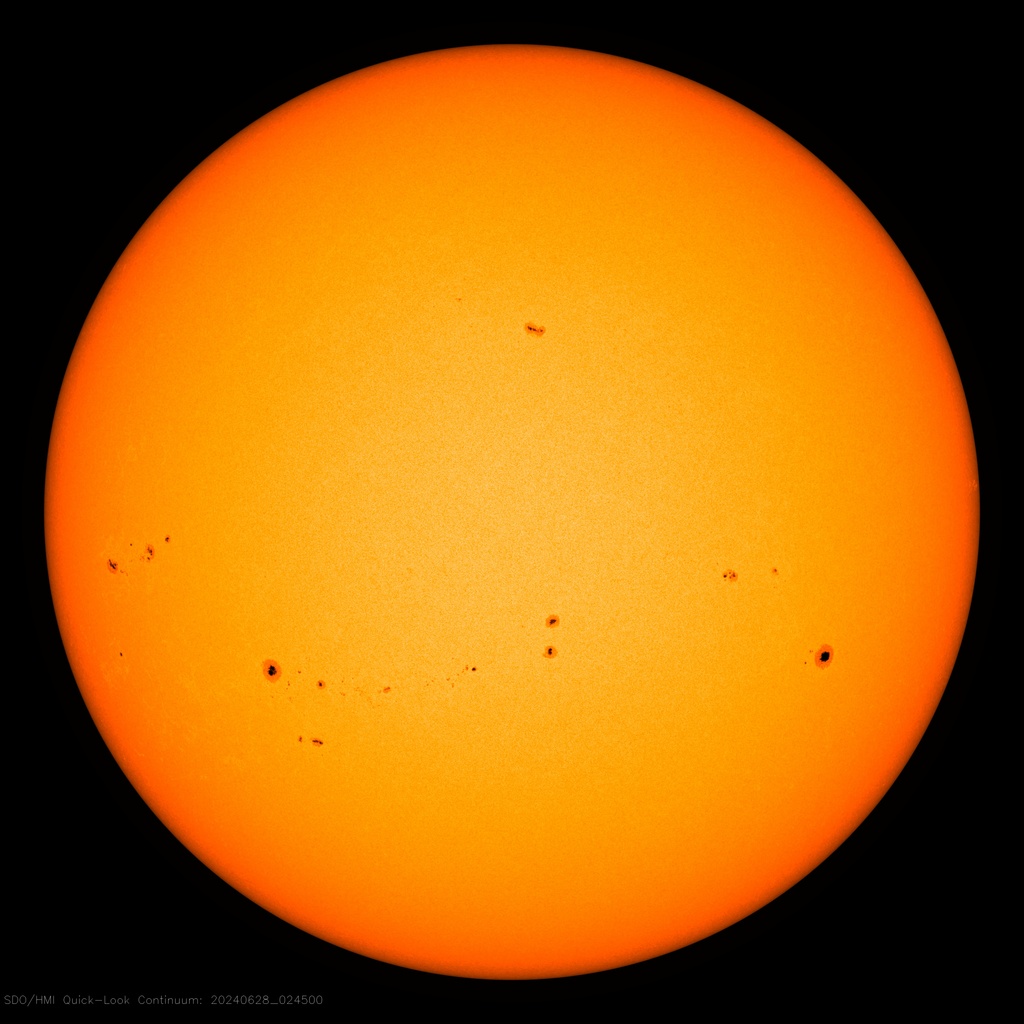
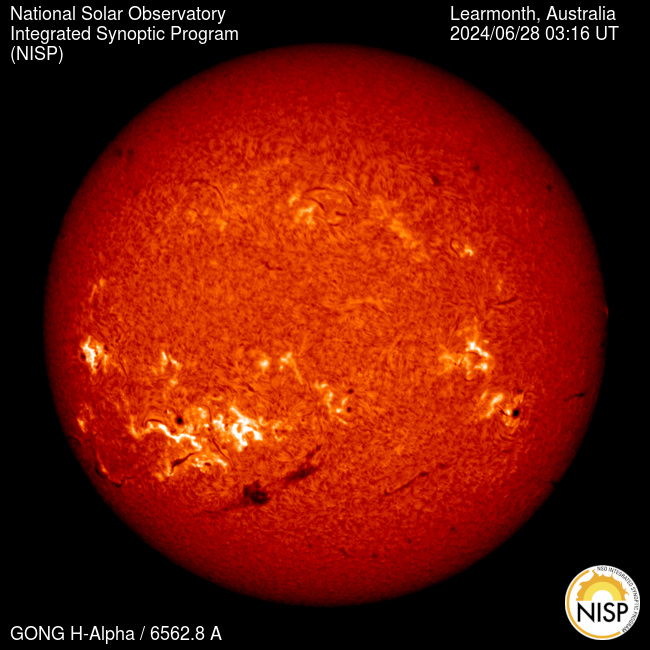
Tomorrow, Saturday, June 29th there will be solar viewing at the Sleeping Bear Dunes National Lakeshore, at the Dune Climb from 3 to 6 PM. Park Rangers will be joined by members of the Grand Traverse Astronomical Society with their specially filtered telescopes to view the Sun safely. This is a period of great solar activity. Remember the Aurora Borealis of a few weeks ago. Solar filtered telescopes will safely view the surface of the sun, called the photosphere and sunspots, while the society also has two special solar telescopes with which to view the layer of gas above the surface called the chromosphere and prominences which look like flames coming off the chromosphere. This is one of two solar observing opportunities this summer.
The astronomical event times given are for the Traverse City/Interlochen area of Michigan (EDT, UT–4 hours). They may be different for your location.
Addendum
Ephemeris: 06/14/2024 – Star Party at the Sleeping Bear Dunes tomorrow night*
* if it’s clear or mostly clear.
This is Bob Moler with Ephemeris for Flag Day, Friday, June 14th. Today the Sun will be up for 15 hours and 33 minutes, setting at 9:30, and it will rise tomorrow at 5:56. The Moon, at first quarter today, will set at 2:22 tomorrow morning.
Tomorrow night, Saturday, June 15th, the Sleeping Bear Dunes National Lakeshore will team up with the Grand Traverse Astronomical Society to host a star party at the Dune Climb from 9 to 11 PM. It won’t be a star party exactly, because the featured attraction will be the Moon, nearly two days after first quarter. To my mind, this is about the best time to view the Moon showing its craters with deep shadows near the terminator or sunrise line which crosses the moon slowly over the month. There are no planets out in the evening, but we do have some interesting stars to look at besides the Moon. The fairly bright Chinese Tiangong Space Station will pass below the position of the Moon at 10:22 that evening.**
The astronomical event times given are for the Traverse City/Interlochen area of Michigan (EDT, UT–4 hours). They may be different for your location.
Addendum
** The information of the Tiangong space station pass came from heavens-above.com. The space station was also displayed in Stellarium when set to the proper time. Tiangong was predicted to be first magnitude by both sources, but Heavens-Above predicted a magnitude twice as bright as Stellarium.
Ephemeris: 06/07/2024 – GTAS hears from NASA engineer tonight
This is Ephemeris for Friday, June 7th. Today the Sun will be up for 15 hours and 28 minutes, setting at 9:26, and it will rise tomorrow at 5:57. The Moon, 1 day past new, will set at 11:19 this evening.
Tonight’s meeting of the Grand Traverse Astronomical Society will start at 9 pm, at Northwestern Michigan College’s Rogers Observatory. The later start time in June and July will allow the following star party, which will start at the end of the meeting, around 10 pm, to start after sunset. The sky will still be in bright twilight. We are pleased to have Joe Gibson, Principal Flight Software Engineer, from NASA’s Goddard Space Flight Center to speak to us. After the program, at about 10 pm, if it’s clear will be viewing of the skies as it gets dark. The public is always welcome. This meeting also marks the Society’s 42nd anniversary. The observatory is located south of Traverse City on Birmley Road between Garfield and Keystone roads.
The astronomical event times given are for the Traverse City/Interlochen area of Michigan (EDT, UT–4 hours). They may be different for your location.
Addendum

 Bob Moler's Ephemeris Blog