Archive
Ephemeris: 09/01/2023 – GTAS meeting tonight – Dr. Jerry Dobek goes over to the dark side
This is Ephemeris for Friday, September 1st. Today the Sun will be up for 13 hours and 14 minutes, setting at 8:19, and it will rise tomorrow at 7:06. The Moon, 2 days past full, will rise at 9:24 this evening.
Tonight at 8 p.m. at the meeting of the Grand Traverse Astronomical Society at Northwestern Michigan College’s Rogers Observatory, and on Zoom. Observatory Director Dr. Jerry Dobek will be giving a talk on what he calls dark material. This is from a new book he collaborated on: The Barnard Objects – Then and Now, a look at dark nebulae, comparing E. E. Barnard’s Black and White photographic plates to modern color digital photography. Dark nebulae are clouds of gas and dust seen in the summer Milky Way. After the meeting, at 9 p.m. the society will host a star party to view a rather bright night sky including Saturn. The observatory is located south of Traverse City on Birmley Road between Garfield and Keystone roads. Zoom instructions will be at gtastro (dot) org.
The astronomical event times given are for the Traverse City/Interlochen area of Michigan (EDT, UT –4 hours). They may be different for your location.
Addendum

Ephemeris: 08/18/2023 – There will be a Sun & Star Party tomorrow at the Sleeping Bear Dunes National Lakeshore
This is Ephemeris for Friday, August 18th. Today the Sun will be up for 13 hours and 55 minutes, setting at 8:44, and it will rise tomorrow at 6:49. The Moon, 2 days past new, will set at 9:57 this evening.
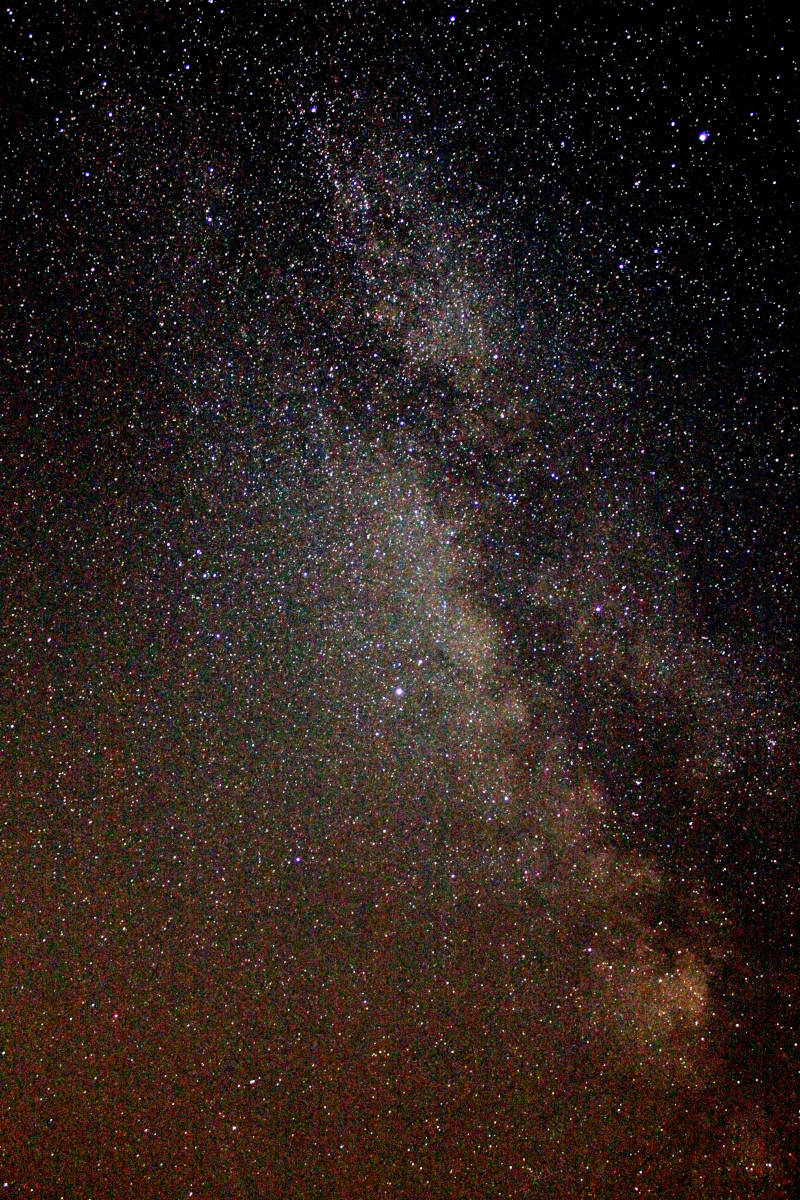
Weather permitting, a Sun and Star Party will be held tomorrow night at the Sleeping Bear Dunes National Lakeshore at the Dune Climb. The solar part will start at 5 pm, while the evening viewing will start at 9 pm. These events will be hosted by the park rangers and the Grand Traverse Astronomical Society, who will bring their telescopes to view the heavens, including the planet Saturn and the wonders of the summer Milky Way. The telescopes will be setup in the parking area closest to the dune. While as twilight fades Saturn will be about the only object to view, as it gets darker more and more wonders of the Milky Way will be seen. They include star clusters and nebulae, clouds of gas and dust.
The astronomical event times given are for the Traverse City/Interlochen area of Michigan (EDT, UT –4 hours). They may be different for your location.
Addendum
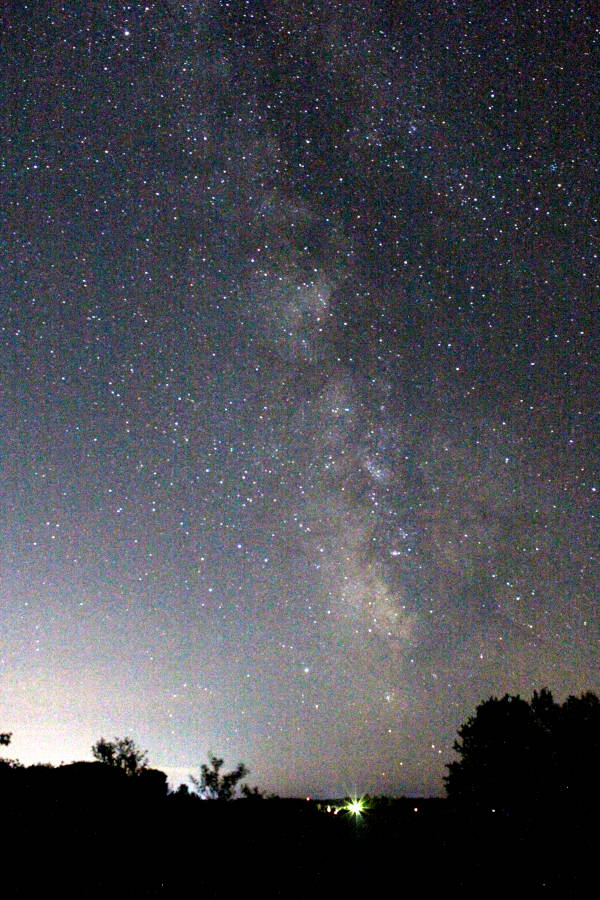
Ephemeris: 08/04/2023 – Star party tonight if it’s clear
This is Ephemeris for Friday, August 4th. Today the Sun will be up for 14 hours and 32 minutes, setting at 9:04, and it will rise tomorrow at 6:33. The Moon, 3 days past full, will rise at 11:02 this evening.
The Grand Traverse Astronomical Society will be hosting a star party tonight at Northwestern Michigan College’s Joseph Rogers observatory from 10:00 and midnight. If it’s clear, there will be at least a good solid hour of relatively dark sky to view the wonders beyond the solar system between 10 and 11 pm tonight before the bright moon rises. Saturn should be spotted by 11 pm. Low in the east southeast. Though Saturn will be fuzzy due to all the Earth’s atmosphere we have to look through to see it, it will still be a great sight. Astronomers don’t consider Saturn to be an evening planet yet. To be an evening planet, it must rise before sunset. The observatory is located south of Traverse City, MI on Birmley Road between Keystone and Garfield roads.
The astronomical event times given are for the Traverse City/Interlochen area of Michigan (EDT, UT –4 hours). They may be different for your location.
Addendum
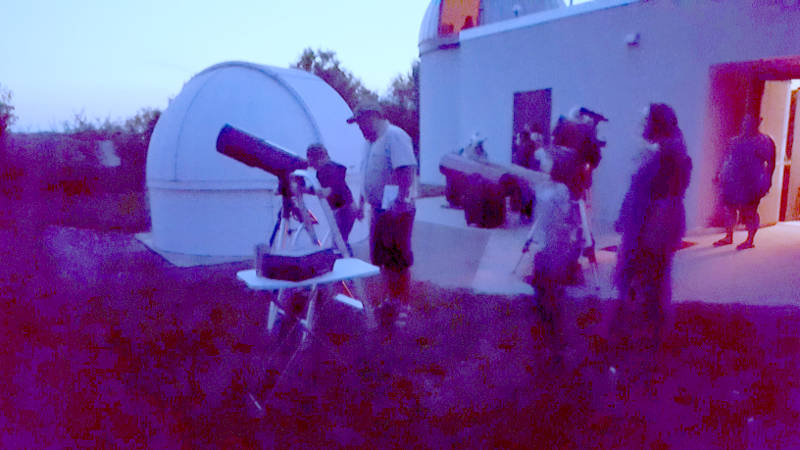
Some of the GTAS members’ telescopes set up behind the observatory for the star party. There’s a 16-inch telescope in the dome above. The dome at ground level is set up for to transmit images for a Zoom connection with a 14-inch telescope. When Saturn and the Moon rise, they will only be visible from the 16-inch telescope in the big dome.
Ephemeris: 07/28/2023 – Sun and Star Party scheduled for tomorrow at the Sleeping Bear Dunes
This is Ephemeris for Friday, July 28th. Today the Sun will be up for 14 hours and 49 minutes, setting at 9:13, and it will rise tomorrow at 6:25. The Moon, 3 days past first quarter, will set at 2:19 tomorrow morning.
Tomorrow, the Sleeping Bear Dunes National Lakeshore and the Grand Traverse Astronomical Society will host a Sun and Star Party at the Dune Climb area of the park. There will be a solar viewing period from 5 pm to about 7 pm. The society has two hydrogen alpha solar telescopes to view the Sun’s chromosphere and prominences. Plus, some members also have solar scopes and white light filtered telescopes to view sunspots on the face of the Sun. Night viewing will start at 9 pm with the Moon featured, along with the brighter telescopic wonders of summer. The park rangers will leave at 11 pm, but society members will stay later to get a good view of Saturn as it moves higher in the sky. All this will happen only if clouds permit.
The astronomical event times given are for the Traverse City/Interlochen area of Michigan (EDT, UT –4 hours). They may be different for your location.
Addendum
There will be a pass of the International Space Station starting in the WNW at 9:48 pm, reaching maximum altitude at 9:52 pm of 63o in the SW, entering the Earth’s shadow at 9:55 pm. Note, these are specific times to the nearest minute for the Dune Climb, but close for the Grand Traverse area of Michigan. For other locations, go to: heavens-above.com.
07/07/223 – Ephemeris – GTAS meeting and presentation: Observing the summer skies with the naked-eye
This is Ephemeris for Friday, July 7th. Today the Sun will be up for 15 hours and 25 minutes, setting at 9:30, and it will rise tomorrow at 6:05. The Moon, 2 days before last quarter, will rise at 12:38 tomorrow morning.
Viewing Summer skies with just your Eyes will be the presentation by Robert Carroll at tonight’s meeting of the Grand Traverse Astronomical Society at Northwestern Michigan College’s Rogers Observatory at 9 pm. Bob is one of the charter members of the society. He will show artist’s interpretation of the heavens. Then, focusing on Hercules, the Summer Triangle, and the Milky Way. Hopefully, he “will inspire young parents, and their children, to go OUTSIDE, leave the screens and tablets behind, and LOOK UP to see the night sky.” There are two ways to attend: In person at the observatory, south of Traverse City on Birmley Road, or via Zoom with a link provided by the society’s website gtastro.org just prior to the meeting.
The astronomical event times given are for the Traverse City/Interlochen area of Michigan (EDT, UT –4 hours). They may be different for your location.
Addendum
06/23/2023 – Ephemeris – Sun and Star Party scheduled for tomorrow at the Sleeping Bear Dunes
This is Ephemeris for Friday, June 23rd. Today the Sun will be up for 15 hours and 34 minutes, setting at 9:32, and it will rise tomorrow at 5:57. The Moon, 3 days before first quarter, will set at 1:11 tomorrow morning.
Tomorrow the Sleeping Bear Dunes National Lakeshore and the Grand Traverse Astronomical Society will host a Sun and Star Party at the Dune Climb area of the park. There will be a solar viewing period from 6 pm to 8 pm. The society has two hydrogen alpha solar telescopes to view the Sun’s chromosphere and prominences. Plus some members also have solar scopes also white light filtered telescopes to view sunspots on the face of the Sun. Night viewing will start at 10 pm with the Moon and Venus featured, along with the brighter telescopic wonders of early summer. The park rangers will leave at midnight, but society members can stay later to view the fainter wonders in the darkened sky. All this will happen only if clouds permit.
The astronomical event times given are for the Traverse City/Interlochen area of Michigan (EDT, UT –4 hours). They may be different for your location.
Addendum
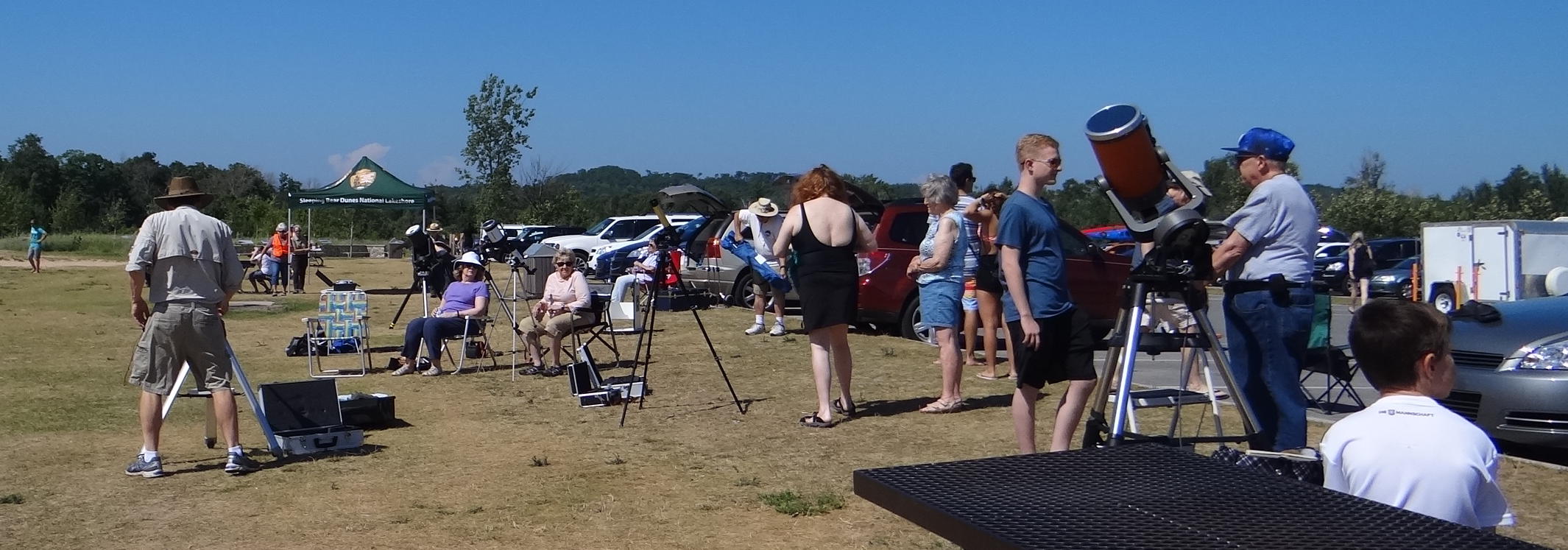
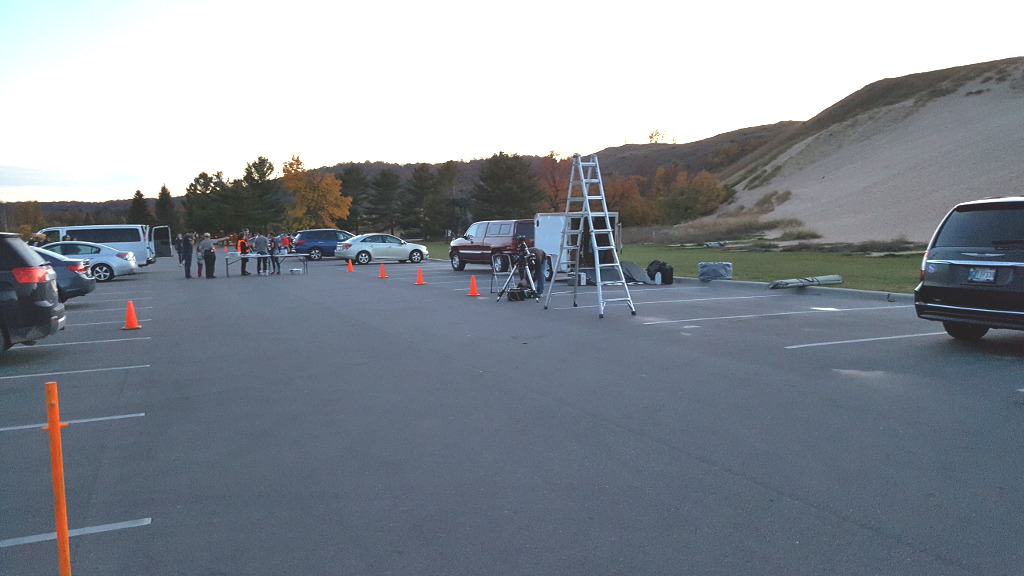
The Dune Climb is not the place to view the spectacular sunset. The best place is from the Lake Michigan Overlook stop on Pierce Stocking Scenic Drive.
06/02/2023 – Ephemeris – A South Pole adventure and a comet collision presentation – Tonight!
This is Bob Moler with Ephemeris for Friday, June 2nd. Today the Sun will be up for 15 hours and 22 minutes, setting at 9:22, and it will rise tomorrow at 5:59. The Moon, 1 day before full, will set at 5:14 tomorrow morning.
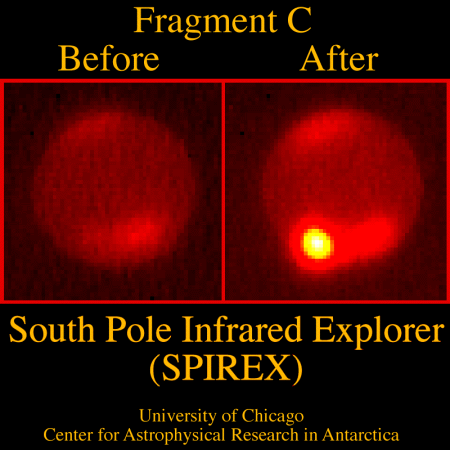
An Antarctic Odyssey: Winter-Over at South Pole Station will be the presentation by John W. Briggs, via Zoom, at tonight’s meeting of the Grand Traverse Astronomical Society at Northwestern Michigan College’s Rogers Observatory at 9 pm. John was a team member building a 24-inch infrared telescope and related experiments that were set up at the South Pole in time for him and colleagues to observe the July 1994, explosive crash of fragmented comet Shoemaker-Levy 9 into the planet Jupiter. There are two ways to attend: In person at the observatory, south of Traverse City on Birmley Road, or via Zoom with a link provided by the society’s website gtastro.org just prior to the meeting.
The astronomical event times given are for the Traverse City/Interlochen area of Michigan (EDT, UT –4 hours). They may be different for your location.
Addendum
About the Program
An Antarctic Odyssey: Winter-Over at South Pole Station
A presentation via Zoom by John W. Briggs
Abstract:
In a lavishly illustrated presentation, John W. Briggs of New Mexico will describe his year-long experience living at the Geographic South Pole while working for the Center for Astrophysical Research in Antarctica. In preparation for this at Yerkes Observatory of the University of Chicago, John was a team member building a 24-inch infrared telescope and related experiments that were set up at the Pole in time for him and colleagues to observe the July 1994, explosive crash of fragmented comet Shoemaker-Levy 9 into the planet Jupiter.
John weathered the “winter-over” with 26 other members of the U.S. Antarctic Program in an experience that many believe approximates what life will be like someday at a lunar or Martian outpost. Once begun, South Pole winter-over is an irreversible commitment, since the Program’s special LC-130 ski planes can’t land in the winter temperatures — in 1994, sometimes as low as 107 degrees F. below zero (with windchill, as low as -180 degrees). John will delight the audience with his perspective on the total South Pole experience — the strange natural environment, the odd social atmosphere, and the challenging, ongoing science.
05/26/2023 – Ephemeris – Sun & Star Party tomorrow at the Sleeping Bear Dunes National Lakeshore
This is Bob Moler with Ephemeris for Friday, May 26th. Today the Sun will be up for 15 hours and 11 minutes, setting at 9:15, and it will rise tomorrow at 6:03. The Moon, 1 day before first quarter, will set at 2:48 tomorrow morning.
Tomorrow, the Sleeping Bear Dunes National Lakeshore and the Grand Traverse Astronomical Society will host a Sun and Star Party at the Dune Climb area of the park. There will be a solar viewing period from 5 pm to about 7 pm. The society has two hydrogen alpha solar telescopes to view the Sun’s chromosphere and prominences. Plus, some members also have solar scopes and white light filtered telescopes to view sunspots on the face of the Sun. Night viewing will start at 9 pm, with the Moon and Venus featured, along with the brighter telescopic wonders of late spring. There will be a pass of the International Space Station from 10:11 to 10:18 pm. The rangers will have an alternate program if it’s cloudy.
The astronomical event times given are for the Traverse City/Interlochen area of Michigan (EDT, UT –4 hours). They may be different for your location.
Addendum
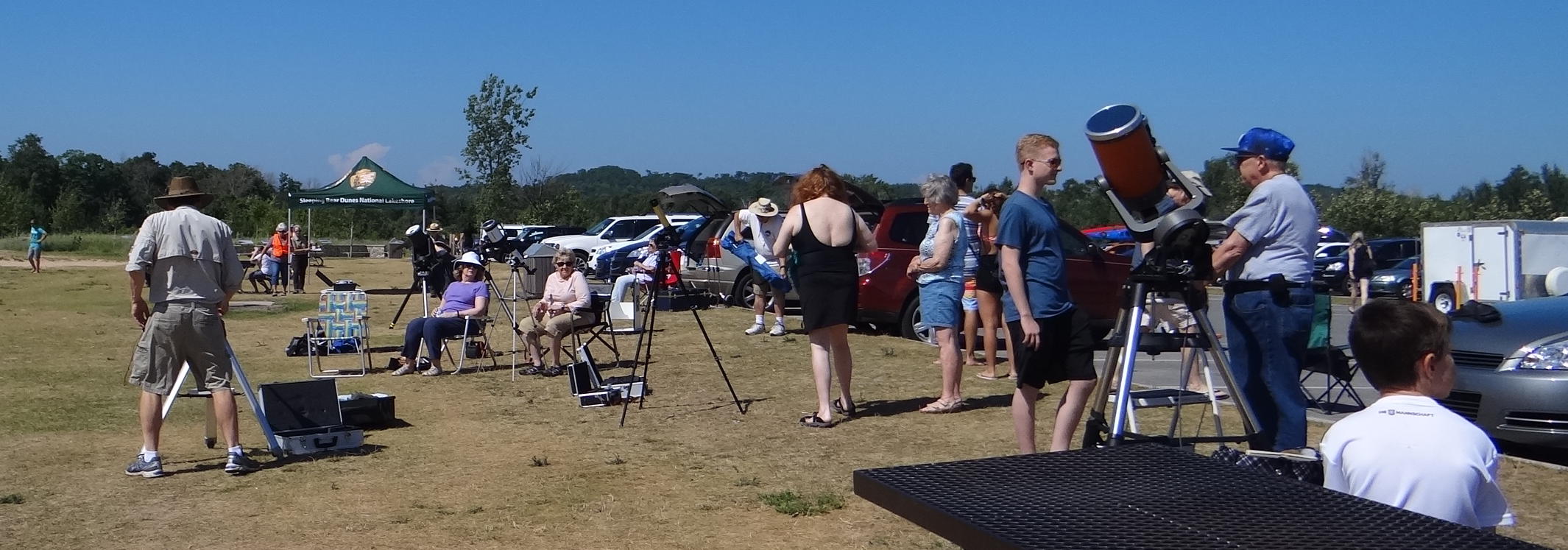
A Sun Party at the Dune Climb. Credit: Eileen Carlisle.
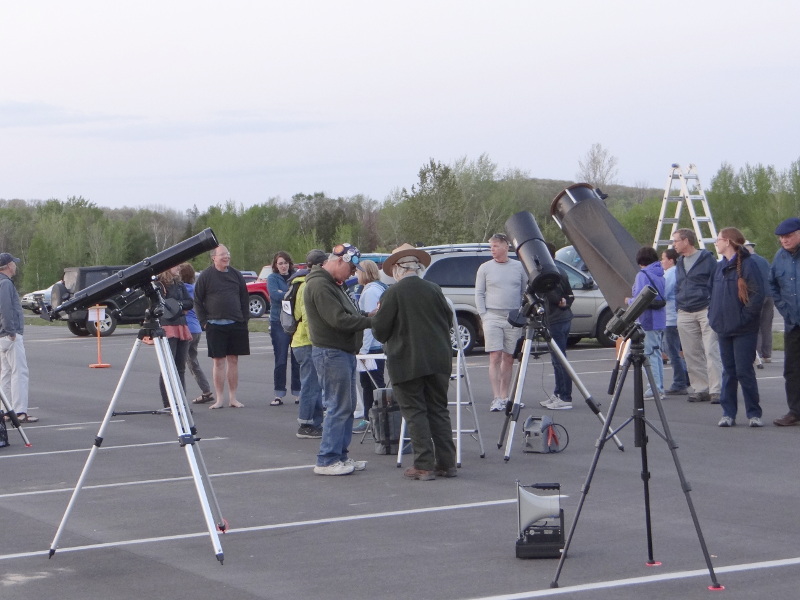
Preparing to start the May star party, several years ago at the Dune Climb. A few of the telescopes are visible, including the GTAS 25″ “Emmettron” telescope at the far right background. Credit: Eileen Carlisle.
05/05/2023 – Ephemeris – Learn about the upcoming total solar eclipse tonight
This is Ephemeris for Cinco de Mayo, Friday, May 5th. Today the Sun will be up for 14 hours and 25 minutes, setting at 8:52, and it will rise tomorrow at 6:25. The Moon, at full today, will rise at 9:13 this evening.
Eleven months is not too early to plan for a total solar eclipse. On April 8th next year there will be such an eclipse whose path of totality clips the southeastern corner of Michigan. Indianapolis, Toledo and Cleveland also lie in the path of totality. The path runs from Texas to Maine. Member Dan Dall’Olmo will have all the particulars at this month’s meeting of the Grand Traverse Astronomical Society, starting at 8 pm tonight at Northwestern Michigan College’s Joseph H. Rogers Observatory. For those staying home, the Sun for this eclipse will be a bit more covered by the Moon than the 2017 August solar eclipse. We’ll also have another partial solar eclipse to practice on this October 14th.
The astronomical event times given are for the Traverse City/Interlochen area of Michigan (EDT, UT –4 hours). They may be different for your location.
Addendum
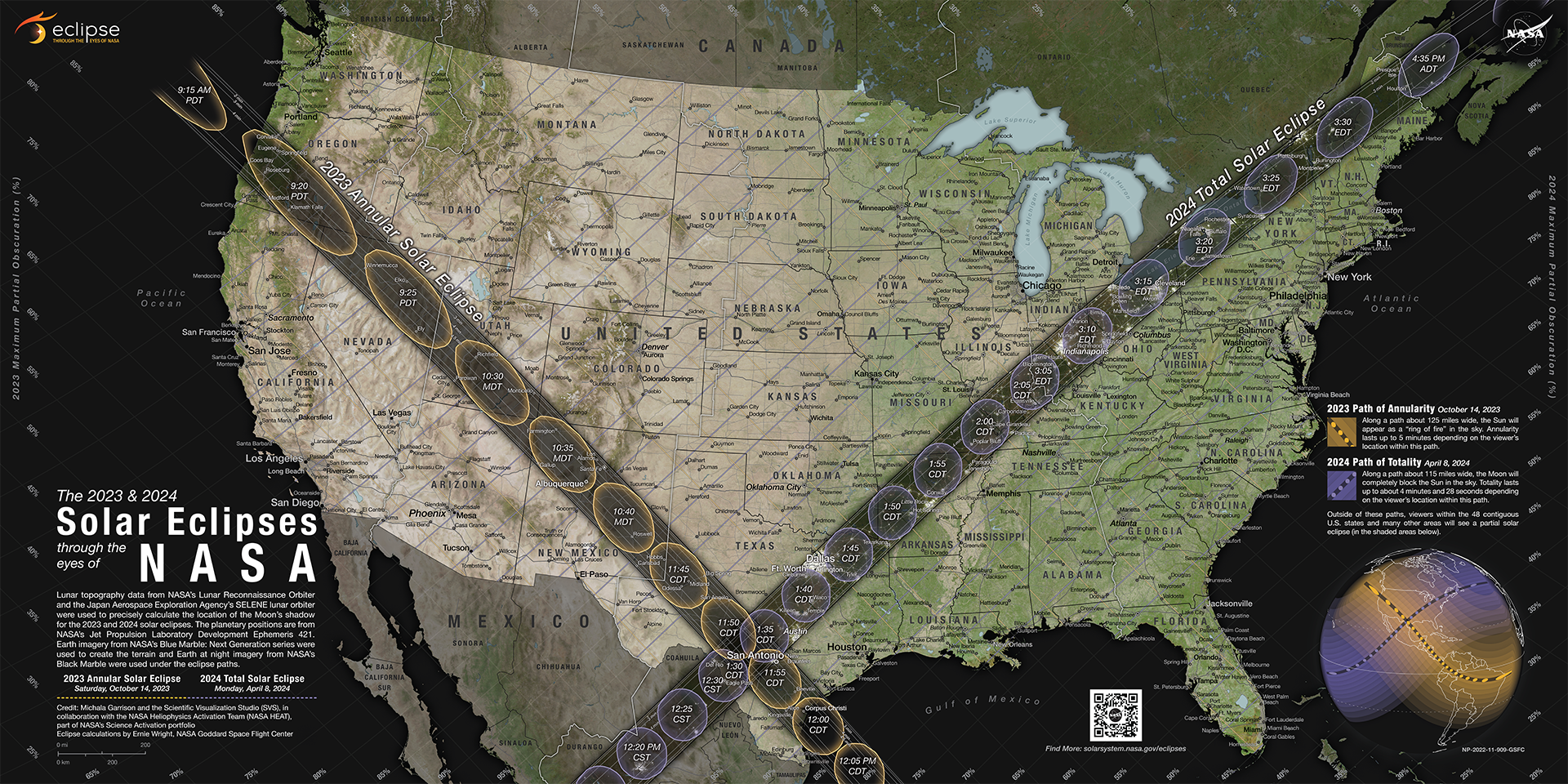
The paths of maximum eclipse of the October 14, 2023, and April 8, 2024. Click or tap on the image to enlarge it. Credit: NASA/Scientific Visualization Studio/Michala Garrison; eclipse calculations by Ernie Wright, NASA Goddard Space Flight Center.
04/28/2023 – Ephemeris – International Astronomy Day is tomorrow
This is Bob Moler with Ephemeris for Arbor Day, Friday, April 28th. Today the Sun will be up for 14 hours and 6 minutes, setting at 8:43, and it will rise tomorrow at 6:36. The Moon, 1 day past first quarter, will set at 4:23 tomorrow morning.
Tomorrow is International Astronomy Day. The Grand Traverse Astronomical Society (GTAS) will celebrate the event with a Sun and Star Party at the Dune Climb area of the Sleeping Bear Dunes National Lakeshore. There will be a solar viewing period from 6 pm to about 7:30 pm or so, when the Sun will set over the dune. The society has two hydrogen alpha solar telescopes, and members have another two, to view the Sun’s chromosphere and prominences. Plus, other members have white light filtered telescopes to view sunspots on the face of the Sun. Night viewing will start at 9 pm with the Moon and Venus featured, along with the brighter telescopic wonders of spring. But only if the skies are clear or mostly clear.
The next GTAS event at the Sleeping Bear Dunes will be Saturday, May 27th, with a program like this Saturday’s. What we call a Sun ‘n Star Party.
The astronomical event times given are for the Traverse City/Interlochen area of Michigan (EST, UT –4 hours). They may be different for your location.
Addendum
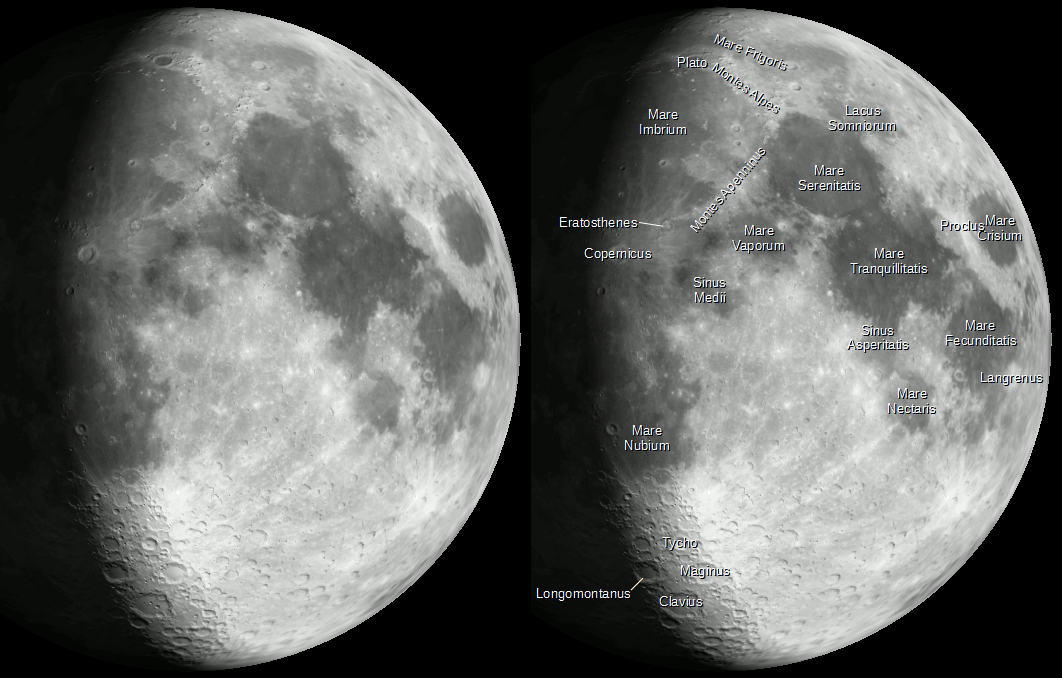
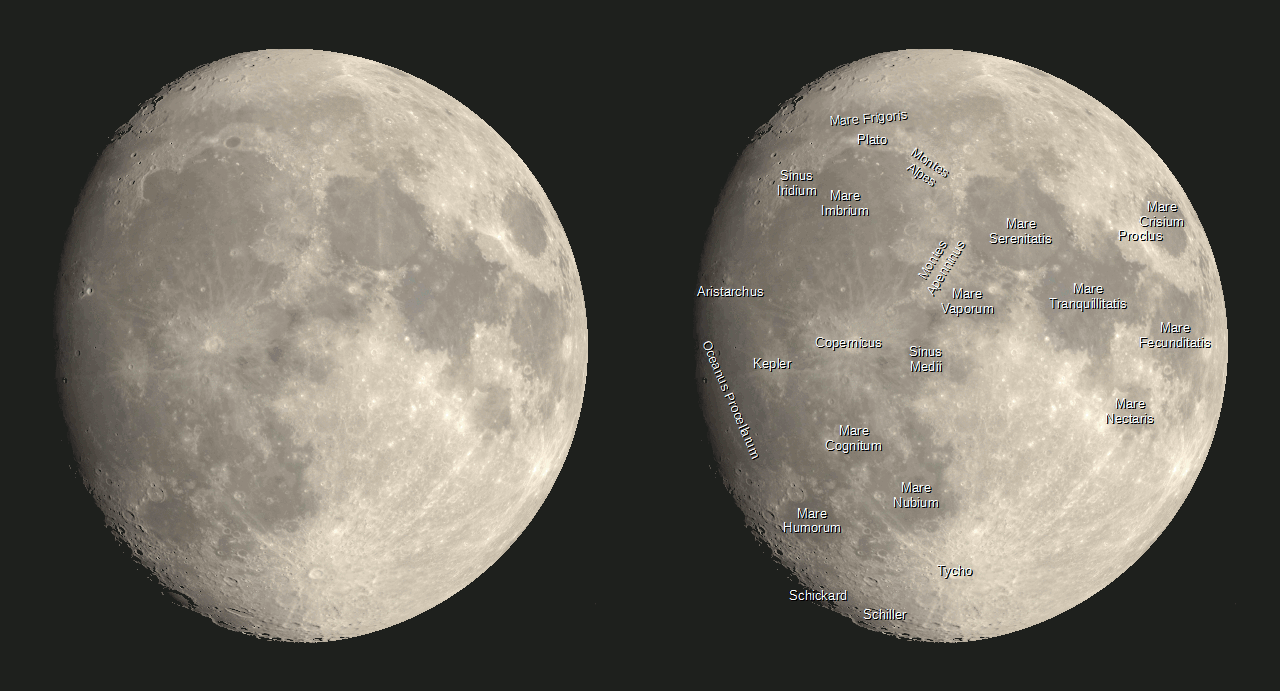
The Moon for Astronomy Day, 2023, two days after first quarter or 9 days old. Some of the more prominent features labeled. Created using Virtual Moon Atlas, GIMP and LibreOffice Draw.
 Bob Moler's Ephemeris Blog