Archive
Ephemeris: 08/06/2026 – Looking for Sagittarius
This is Ephemeris for Thursday, August 6th. Today the Sun will be up for 14 hours and 26 minutes, setting at 9:01, and it will rise tomorrow at 6:35. The Moon, 1 day past last quarter, will rise at 12:32 tomorrow morning.
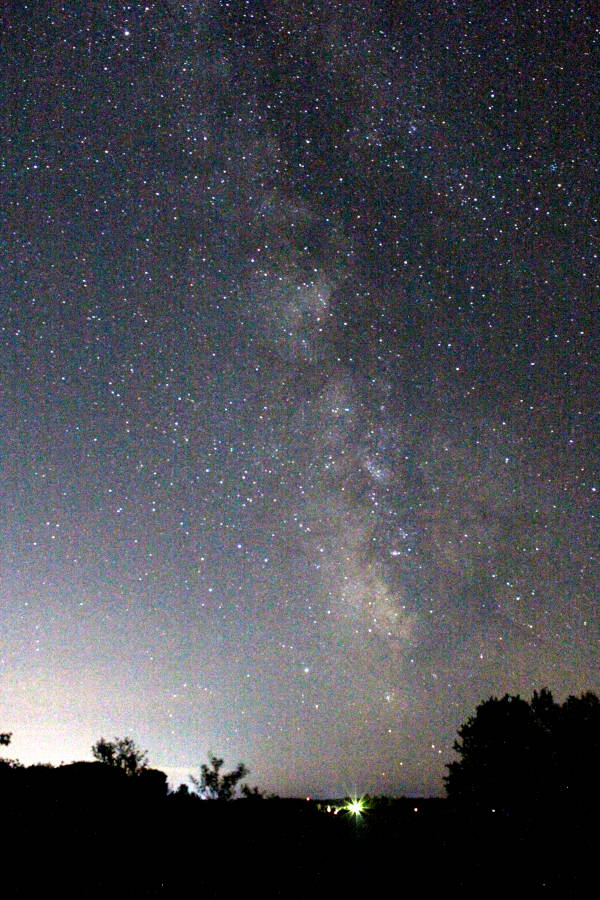
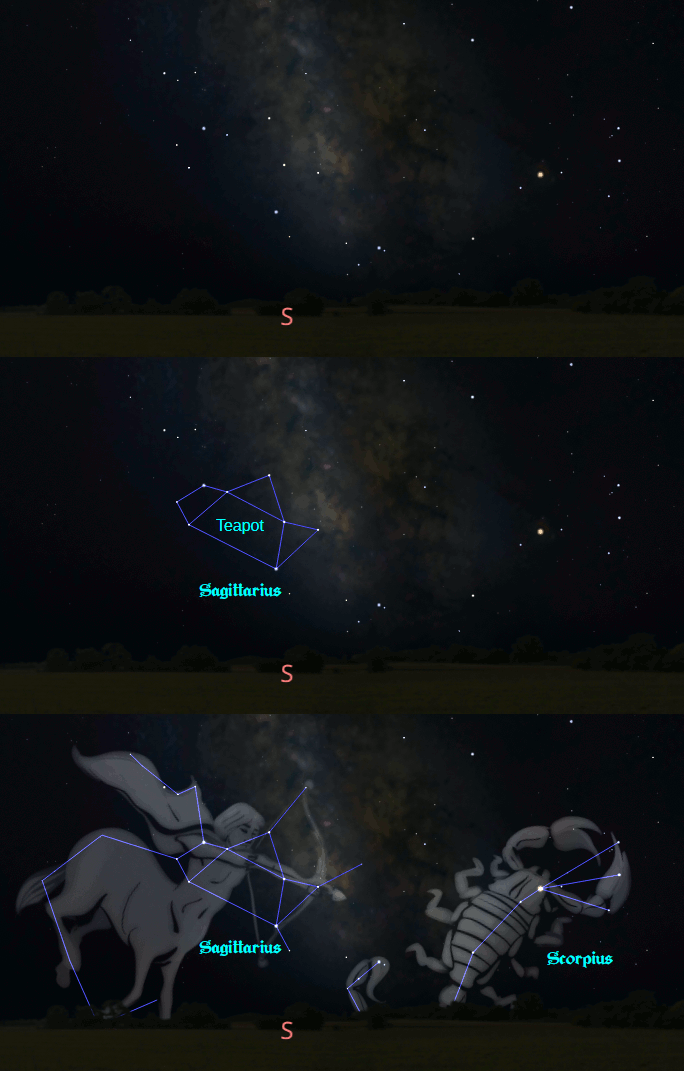
With the Moon out of the sky we get a look at the summer Milky Way in the evening. By 11 PM the Milky Way will stretch from the north-northeast, passing high in the east to the southern horizon. The asterism of the stout little Teapot in Sagittarius, low to the south, is near the bottom end of the Milky Way. The milky stream appears as steam rising out of its spout. With more stars there, one might be able to see the Centaur with a bow and arrow. The front part of the teapot is the bow. The bottom left, and the far right star are the back and the tip of the arrow which is pointing at the heart of Scorpius the scorpion in the south-southwest. We’ll be exploring the wonders of the summer Milky Way this month and next.
The astronomical event times given in this blog are for the Traverse City/Interlochen area of Michigan (Lat 44.7° N, Long 85.7° W; EDT, UT – 4 hours) unless stated otherwise. Times will be different for other locations.
Addendum
Ephemeris: 08/04/2026 – The Milky Way dominates the evening sky in August
This is Ephemeris for Primary Election Day in Michigan: Tuesday, August 4th. Today the Sun will be up for 14 hours and 32 minutes, setting at 9:04, and it will rise tomorrow at 6:33. The Moon, 1 day before last quarter, will rise at 11:29 this evening.
Now is the time the summer Milky Way is displayed to its fullest to the southern horizon. We have a week and a half before the Moon begins to encroach on our dark skies after 10 pm. City folk come to our area and are sometimes fooled by the brightness and expanse of the Milky Way and think it’s a cloud. Yes, those are clouds indeed, but they are clouds of stars. Binoculars will begin to show them to be millions of stars, each too faint to be seen individually to the eye, but whose combined glow give the impression of a luminous cloud. Binoculars are the ideal tool to explore the Milky Way. Objects still too fuzzy can be checked out with a telescope to reveal their true nature. The dark nights of August and September are my favorites.
The astronomical event times given in this blog are for the Traverse City/Interlochen area of Michigan (Lat 44.7° N, Long 85.7° W; EDT, UT – 4 hours) unless stated otherwise. Times will be different for other locations.
Addendum
Ephemeris: 07/07/2026: Finding the Celestial Swan
This is Ephemeris for Tuesday, July 7th. Today the Sun will be up for 15 hours and 25 minutes, setting at 9:30, and it will rise tomorrow at 6:05. The Moon, at last quarter today, will rise at 1:02 tomorrow morning.
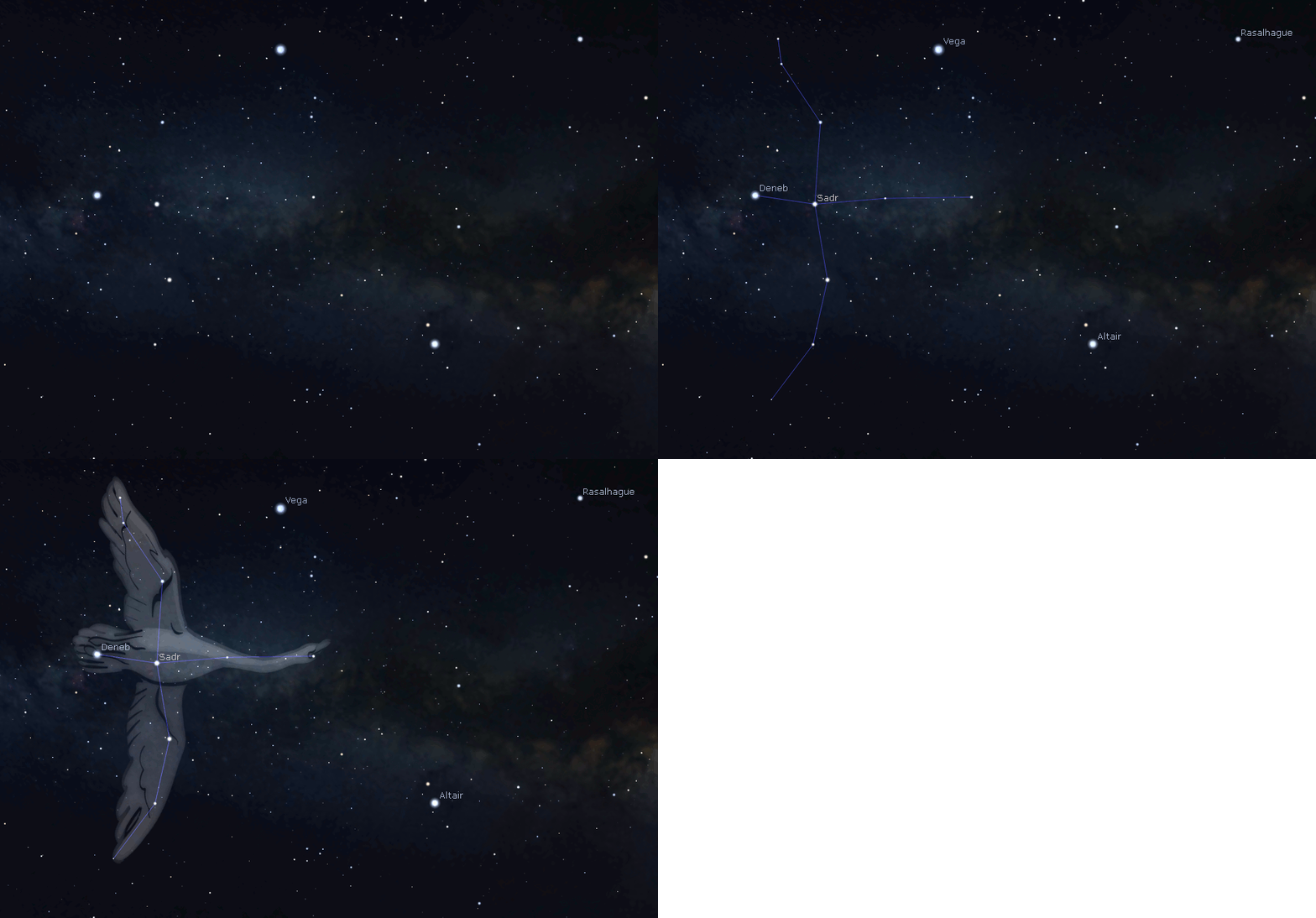
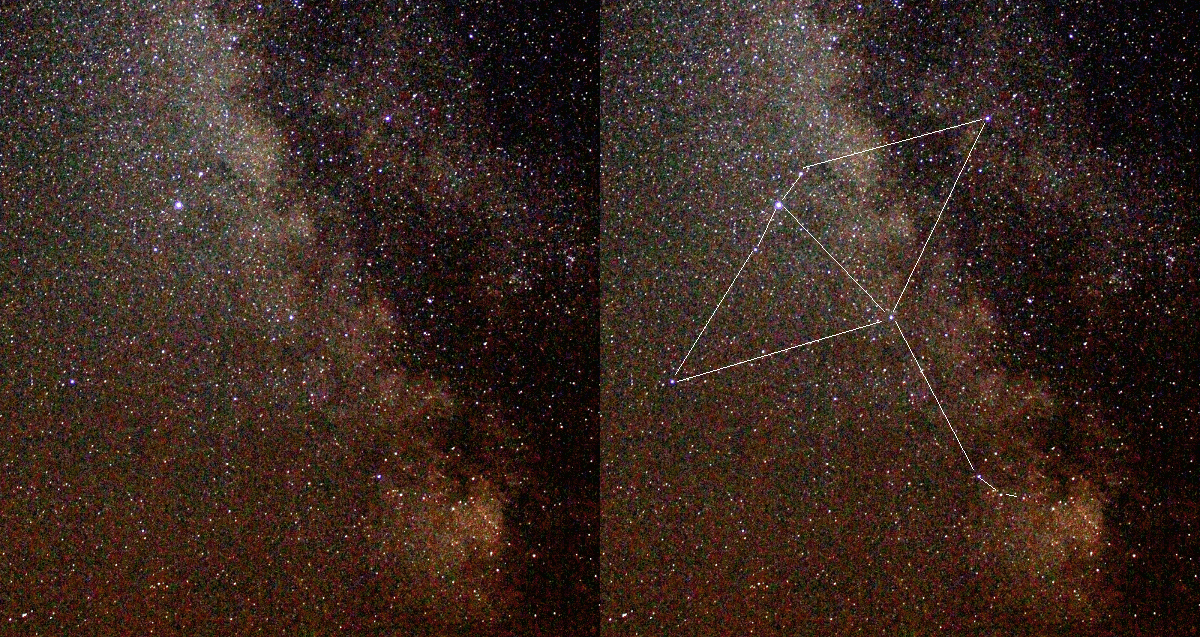
Located halfway to the zenith in the east at 11 p.m. is the constellation of Cygnus the swan, flying south through the Milky Way. It is also called the Northern Cross. At the left, the tail of the swan or the head of the cross is the bright star Deneb, one of the stars of the Summer Triangle. The next star right is at the intersection of the body and the wings of the swan seen in flight, or the intersection of the two pieces of the cross. There are two or three stars farther to the right that delineate the swan’s long neck or upright of the cross, that ends with the star Alberio in the beak of the swan or foot of the cross. The crosspiece of the cross extends to the stars on either side of the intersection star Sadr, while the swan’s wings extend to a couple more stars each.
The astronomical event times given in this blog are for the Traverse City/Interlochen area of Michigan (Lat 44.7° N, Long 85.7° W; EDT, UT – 4 hours) unless stated otherwise. Times will be different for other locations.
Addendum
Ephemeris: 08/15/2025 – The Milky Way on August evenings
This is Ephemeris for Friday, August 15th. Today the Sun will be up for 14 hours and 2 minutes, setting at 8:48, and it will rise tomorrow at 6:46. The Moon, 1 day before last quarter, will rise at 11:41 this evening.
August is the best time to see the most southern part of the Milky Way. The constellation of Sagittarius the Archer or for us moderns a Teapot is due South at 10:30 this evening . The Milky Way runs up from the South moving high in the east and ends up in the northeast and the constellation of Cassiopeia the queen which looks like the letter W. We will have to wait several months or stay up for several hours tonight to see the Milky Way cross overhead, but by then the southern part of the Milky Way will have begun to set in the southwest. So this is the time to enjoy looking towards the center our Galaxy which is located right above the tip of the spout of Sagittarius, but behind a cloud of dust.
The astronomical event times given in this blog are for the Traverse City/Interlochen area of Michigan (Lat 44.7° N, Long 85.7° W; EDT, UT – 4 hours) unless stated otherwise. Times will be different for other locations.
Addendum
Ephemeris: 07/18/2025 – The summer Milky Way is beginning to make itself seen
This is Ephemeris for Friday, July 18th. Today the Sun will be up for 15 hours and 8 minutes, setting at 9:23, and it will rise tomorrow at 6:15. The Moon, 1 day past last quarter, will rise at 1:07 tomorrow morning.
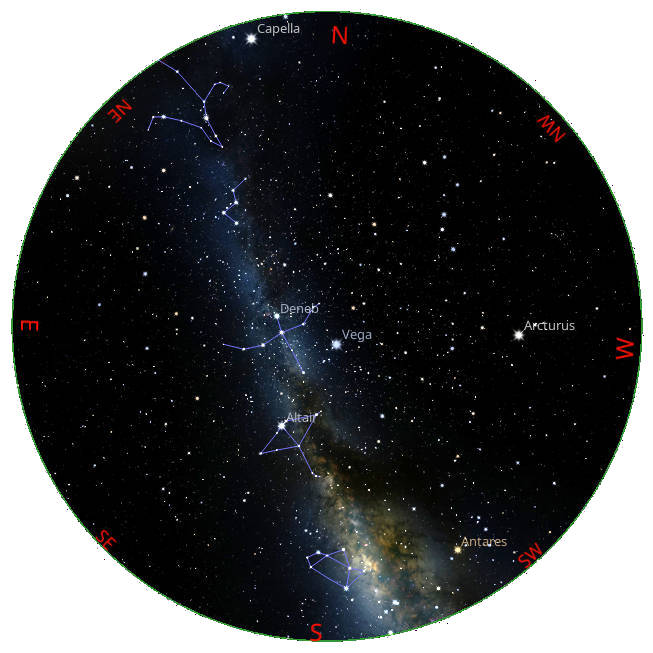
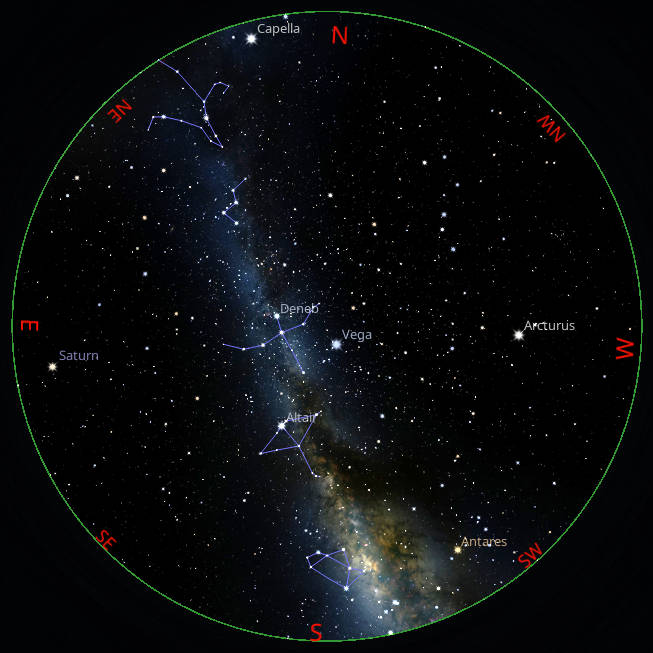
The summer Milky Way is beginning to make itself seen. It runs from the north northeast through the sky in the east, and through the stars Deneb and Altair of the Summer Triangle down to the south-southeastern horizon. One has to stay up to 11 PM or later to actually enjoy it. Another prerequisite is that one has to be away from the city lights. Here in Northern Michigan we have a lot of dark skies and only small towns, so it is easy to get away from city lights. To the ancients and relatively primitive cultures without the curse of the electric illumination, it was a wonder. In Greece, Rome and Egypt it was a milky stream, from which we get the term Milky Way. Some cultures considered it the path that souls took after death on their journey to the hereafter.
The astronomical event times given in this blog are for the Traverse City/Interlochen area of Michigan (Lat 44.7° N, Long 85.7° W; EDT, UT – 4 hours) unless stated otherwise. Times will be different for other locations.
Addendum
Ephemeris: 07/17/2025 – Finding the celestial eagle, Aquila
This is Ephemeris for Thursday, July 17th. Today the Sun will be up for 15 hours and 10 minutes, setting at 9:23, and it will rise tomorrow at 6:14. The Moon, at last quarter today, will rise at 12:42 tomorrow morning.
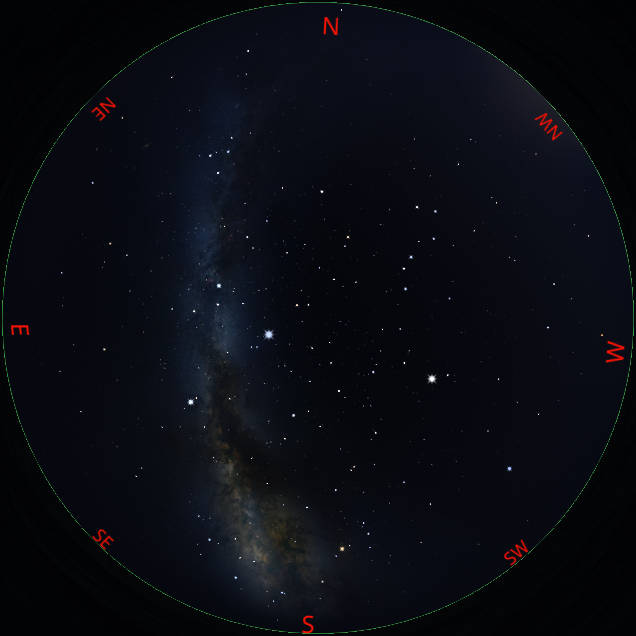
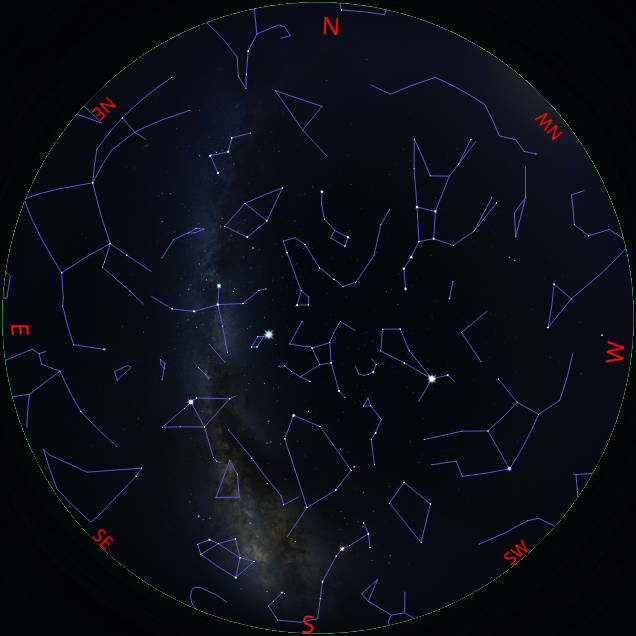
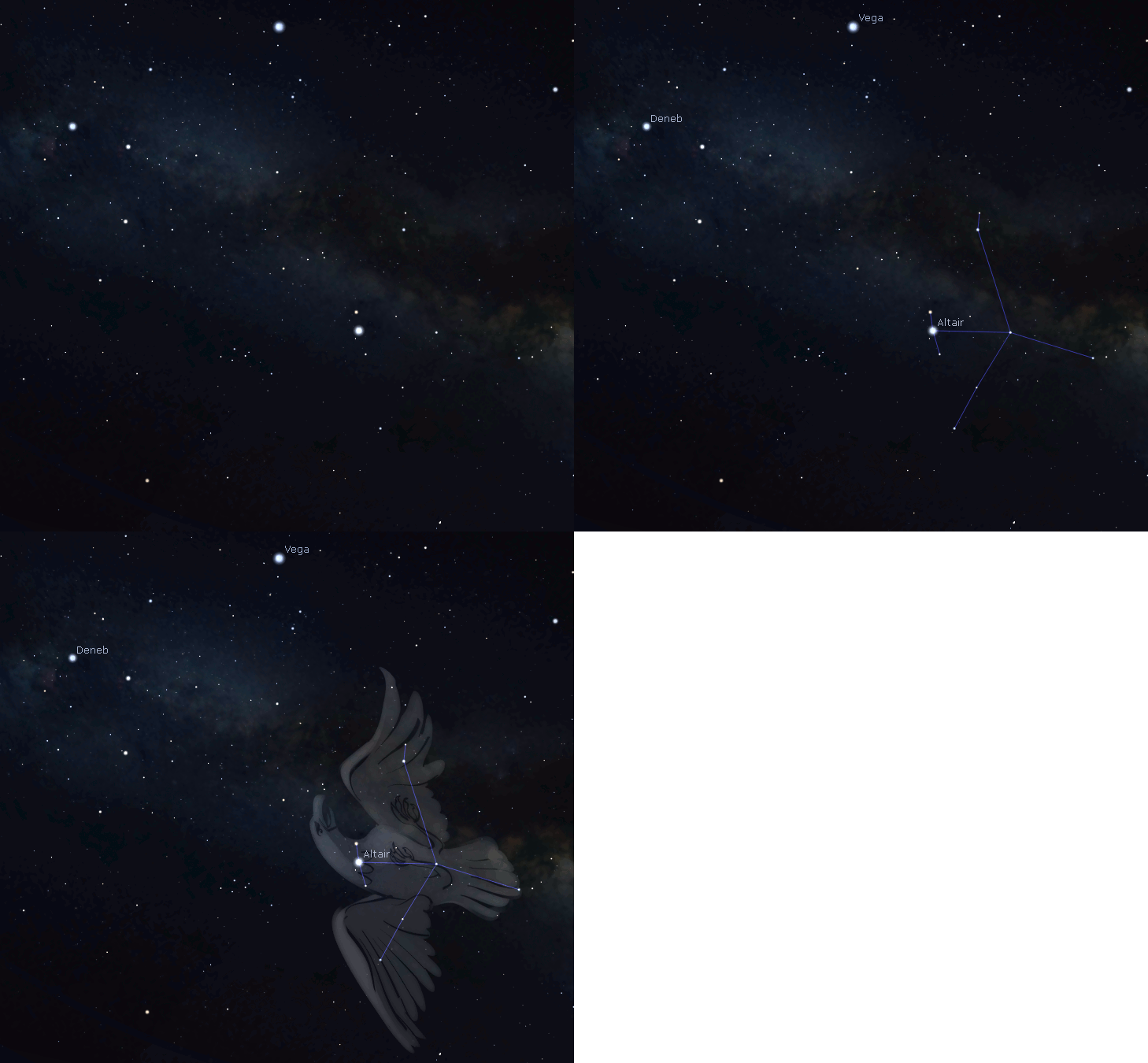
Aquila the eagle is a constellation that lies in the Milky Way. It’s in the southeastern sky as it gets dark. Its brightest star, Altair, is one of the stars of the Summer Triangle, a group of three bright stars dominating the eastern sky in the evening now. Altair, in the head of the eagle, is flanked by two slightly dimmer stars, the shoulders of the eagle. The eagle is flying northeastward through the Milky Way. Its wings are seen in the wing tip stars. A curved group of stars to the lower right of Altair is its tail. Within Aquila, the Milky Way shows many dark clouds as part of the Great Rift that splits it here. The other summer bird is Cygnus the swan above and left of Aquila, flying in the opposite direction. It was said this was the eagle that attended the god Jupiter.
The astronomical event times given in this blog are for the Traverse City/Interlochen area of Michigan (Lat 44.7° N, Long 85.7° W; EDT, UT – 4 hours) unless stated otherwise. Times will be different for other locations.
Addendum
Ephemeris: 08/29/2024 – Centaur or Teapot, you decide!
This is Bob Moler with Ephemeris for Thursday, August 29th. Today the Sun will be up for 13 hours and 21 minutes, setting at 8:23, and it will rise tomorrow at 7:03. The Moon, 3 days past last quarter, will rise at 3:02 tomorrow morning.
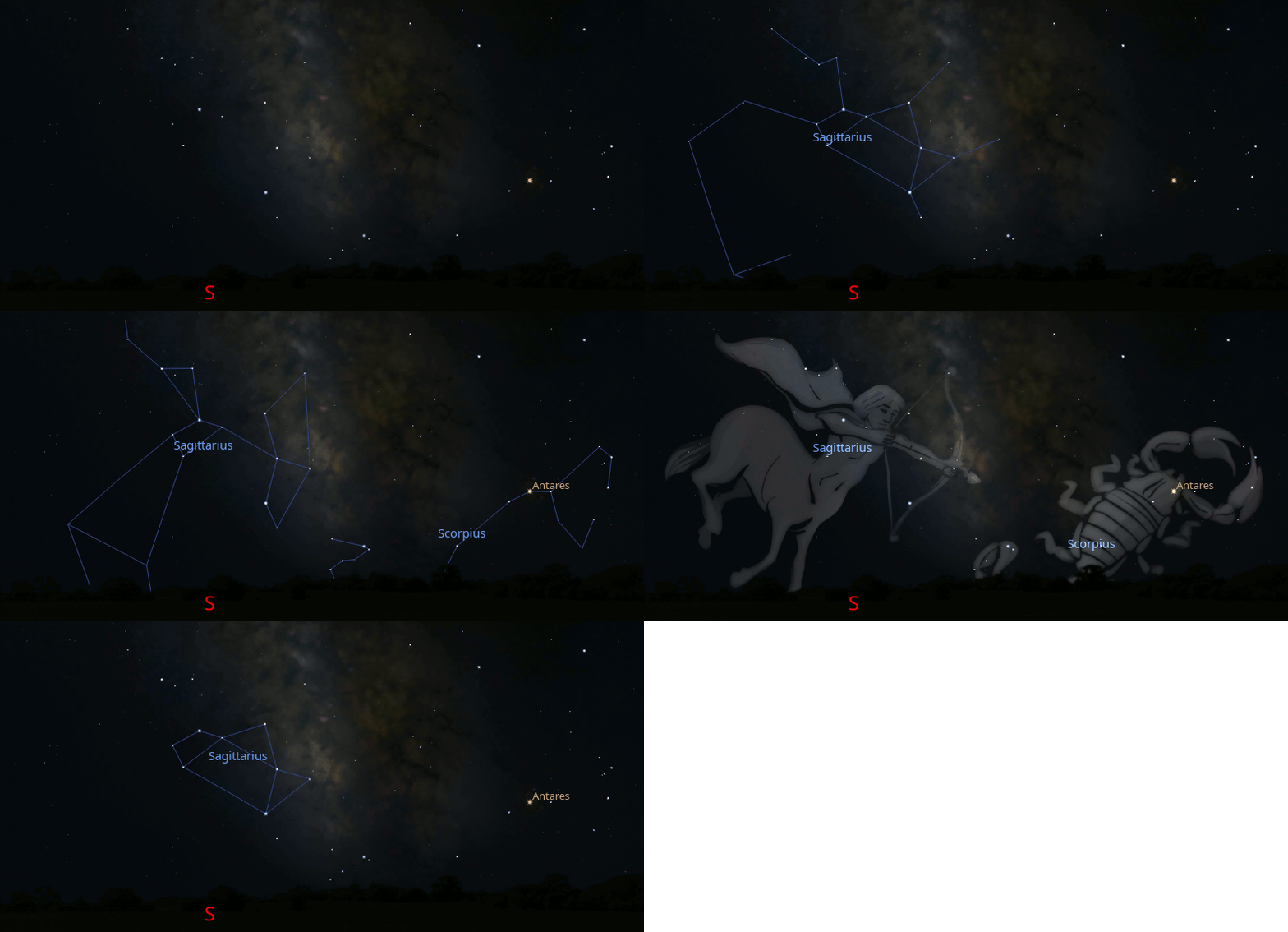
Low in the south at 10 PM shines the heart of summer Milky Way. The constellation that’s seen there is Sagittarius which is supposed to be a centaur with a bow and arrow. We modern folk haven’t seen a centaur outside a Harry Potter movie, so we see its stars looking like a teapot, a short and stout little teapot like in the children’s song. It is tipped to the West with the Milky Way like steam rising from its spout, which is about to pour its tea on the southwestern horizon later tonight. Sagittarius is just begging to be explored with binoculars or a very low power telescope to see its myriad of stars, star clusters and nebulae. As fabulous as all this appears, we cannot see into the heart of the Milky Way for all the clouds of dust and gas in the way.
The astronomical event times given are for the Traverse City/Interlochen area of Michigan (EDT, UT–4 hours). Times will be different for other locations.
Addendum
My first guide to the constellations was Stars by Zim and Baker, a Golden Guide. I checked, it has been revised and is still available. H. A. Rey’s book is also still available.
Ephemeris: 08/26/2024 – Scanning the Milky Way with binoculars
This is Ephemeris for Monday, August 26th. Today the Sun will be up for 13 hours and 30 minutes, setting at 8:29, and it will rise tomorrow at 6:59. The Moon, at last quarter today, will rise at 12:06 tomorrow morning.
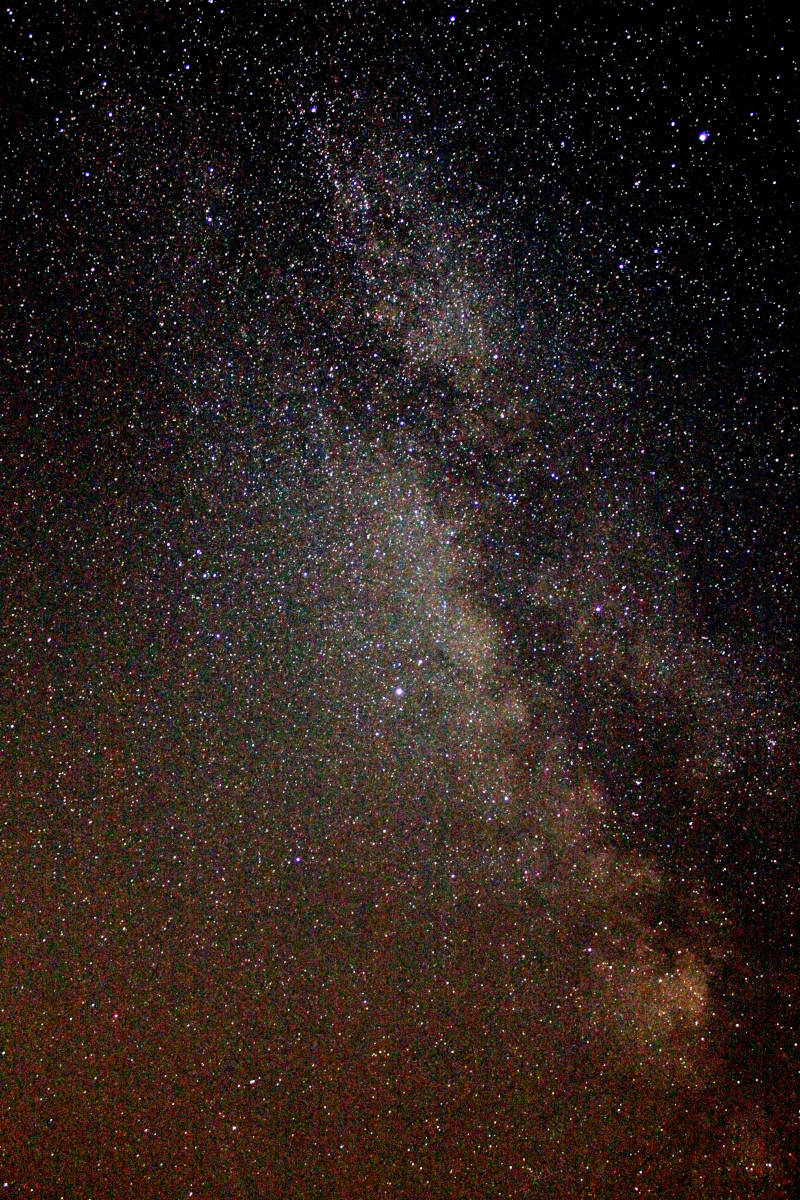
Now that the Moon has left the evening sky the Milky Way dominates the sky from northeast to south-southwest. The best way to appreciate the Milky Way is with binoculars and just scan through the Milky Way as Galileo did with this primitive telescope. What he found was that the glow of the Milky Way resolved itself into individual stars, thousands upon thousands of stars, each too faint to be perceived with the naked eye. At many places in the Milky Way there are fuzzy spots. These could be nebulae, clouds of gas lit up by the stars within them, or clusters of stars not quite resolvable by binoculars, that can be studied in more detail with a larger telescope. Wandering through the Milky Way with binoculars can give hours of enjoyment.
The astronomical event times given are for the Traverse City/Interlochen area of Michigan (EDT, UT–4 hours). Times will be different for other locations.
Addendum
Ephemeris: 09/15/2023 – Rare Friday star party at the Sleeping Bear Dunes
This is Ephemeris for Friday, September 15th. Today the Sun will be up for 12 hours and 32 minutes, setting at 7:53, and it will rise tomorrow at 7:22. The Moon, 1 day past new, will set at 8:20 this evening.
Weather permitting, a sun and star party will be held tonight at the Sleeping Bear Dunes National Lakeshore at the Dune Climb. The solar part will start at 5 pm, while the evening viewing will start around 8:30 pm. These events will be hosted by the park rangers and the Grand Traverse Astronomical Society, who will bring their telescopes to view the heavens, including the planet Saturn and the wonders of the summer Milky Way. The telescopes will be setup in the parking area closest to the dune. As twilight fades Saturn will be about the only object to view, as it gets darker more and more wonders of the Milky Way will be seen. They include star clusters and nebulae, clouds of gas and dust. And maybe we’ll get a peek at the galaxy next door, the Great Andromeda Galaxy.
The astronomical event times given are for the Traverse City/Interlochen area of Michigan (EDT, UT –4 hours). They may be different for your location.
Ephemeris: 08/18/2023 – There will be a Sun & Star Party tomorrow at the Sleeping Bear Dunes National Lakeshore
This is Ephemeris for Friday, August 18th. Today the Sun will be up for 13 hours and 55 minutes, setting at 8:44, and it will rise tomorrow at 6:49. The Moon, 2 days past new, will set at 9:57 this evening.
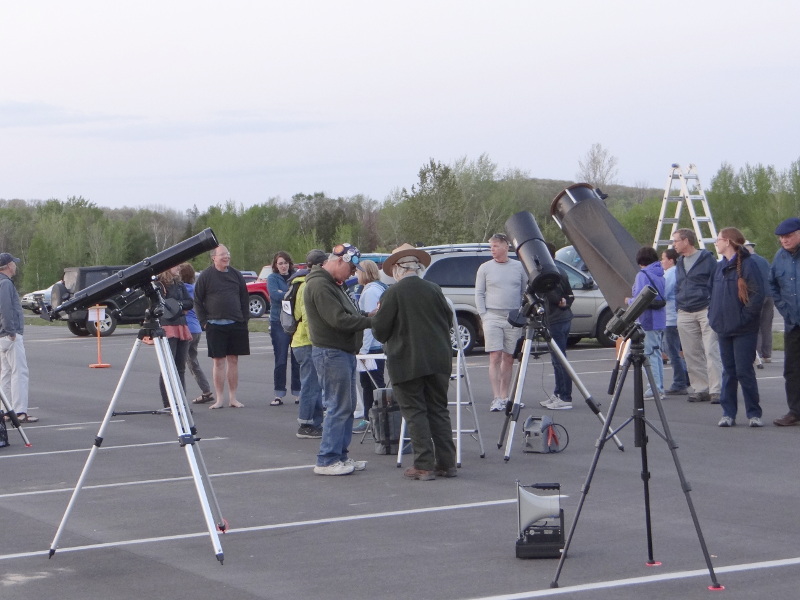
Weather permitting, a Sun and Star Party will be held tomorrow night at the Sleeping Bear Dunes National Lakeshore at the Dune Climb. The solar part will start at 5 pm, while the evening viewing will start at 9 pm. These events will be hosted by the park rangers and the Grand Traverse Astronomical Society, who will bring their telescopes to view the heavens, including the planet Saturn and the wonders of the summer Milky Way. The telescopes will be setup in the parking area closest to the dune. While as twilight fades Saturn will be about the only object to view, as it gets darker more and more wonders of the Milky Way will be seen. They include star clusters and nebulae, clouds of gas and dust.
The astronomical event times given are for the Traverse City/Interlochen area of Michigan (EDT, UT –4 hours). They may be different for your location.
Addendum