Archive
03/29/2018 – Ephemeris – The Easter date is set by the first full moon of spring and a developing conjunction
Ephemeris for Thursday, March 29th. The Sun will rise at 7:29. It’ll be up for 12 hours and 37 minutes, setting at 8:06. The Moon, 2 days before full, will set at 7:21 tomorrow morning.
This Sunday, April 1st will be Easter for western churches. Because it falls on the first Sunday after the first full moon since March 21st. The Full Moon is Saturday the 31st. It happens that Passover begins at sundown the 31st. Orthodox churches will celebrate Easter on April 8th, a week later. It’s going to be a somewhat busy weekend in the sky also. Sunday Mercury will pass from the evening sky to the morning sky in an event called an inferior conjunction of the Sun. It is not visible, but folks in the southern hemisphere will easily spot Mercury late in April. In the morning sky Mars will pass below Saturn between the mornings of the 2nd and 3rd. They are close to the same brightness, but Mars is distinctly redder.
The times given are for the Traverse City/Interlochen area of Michigan. They may be different for your location.
Addendum
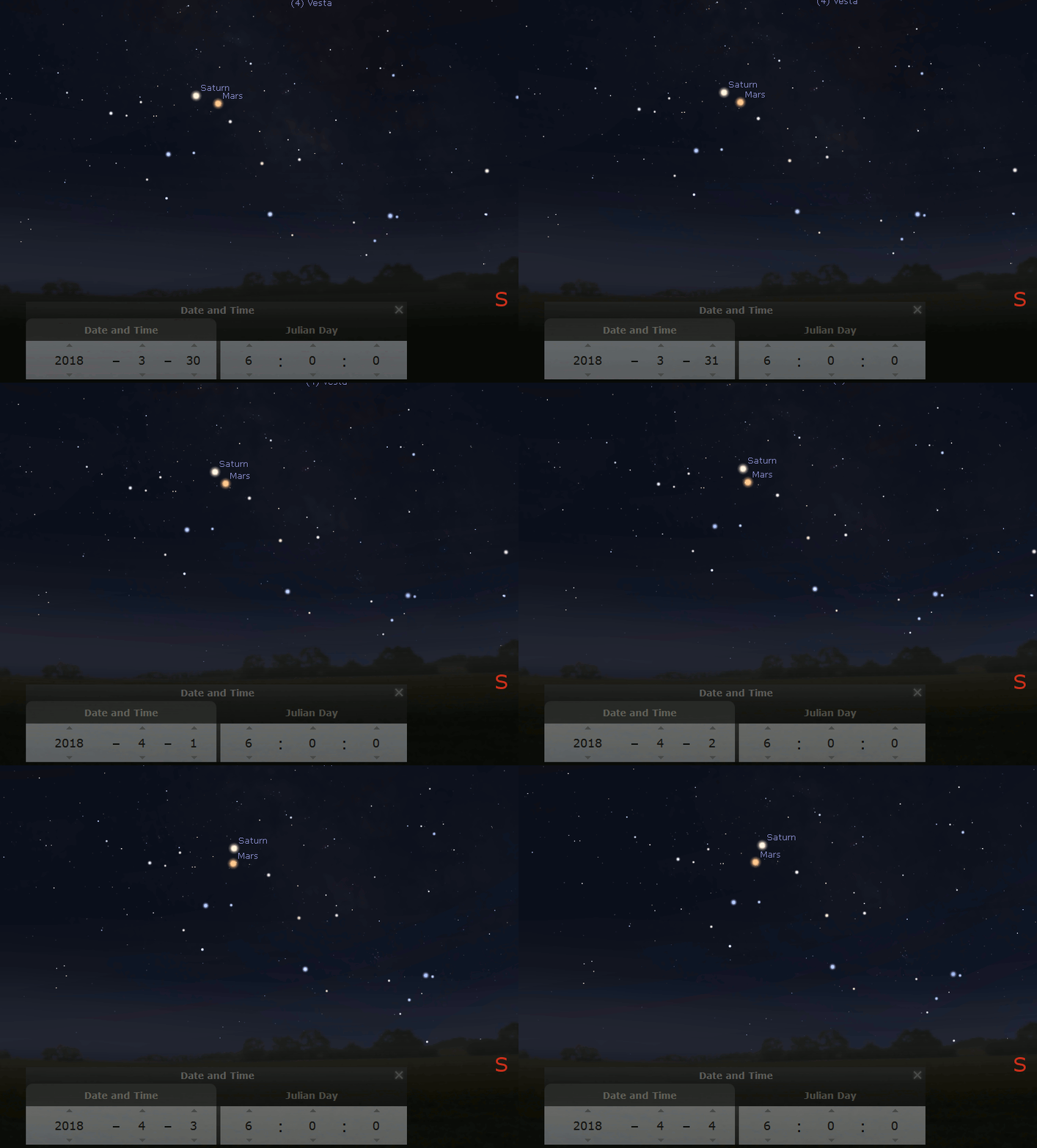
Conjunction animation of Mars passing Saturn at daily intervals at 6 a.m. for March 30 to April 4, 2018. This will occur above the Teapot asterism of the constellation of Sagittarius. Created using Stellarium ans GIMP.
02/09/2018 – Ephemeris – Morning planet high jinx
Ephemeris for Friday, February 9th. The Sun will rise at 7:51. It’ll be up for 10 hours and 11 minutes, setting at 6:02. The Moon, 2 days past last quarter, will rise at 4:05 tomorrow morning.
This past Wednesday morning the Moon passed Jupiter, Earlier this morning the Moon passed north of Mars, and on Sunday morning Saturn will appear south of The Moon. There is a once in about 2 year event, that is red Mars passing Antares, the red giant star in Scorpius, one of the easiest constellations to spot because it actually resembles a scorpion. The name Antares means “Rival of Mars” because they have the same color: Ant meaning anti and Ares is the Greek god of war and counterpart of the Roman god Mars. Mars will pass Antares on average of
every 22 ½ months, its period around the Sun. Since we are viewing it from a moving Earth, it varies. Mars will pass Antares next on January 19th, 2020.
The times given are for the Traverse City/Interlochen area of Michigan. They may be different for your location.
Addendum
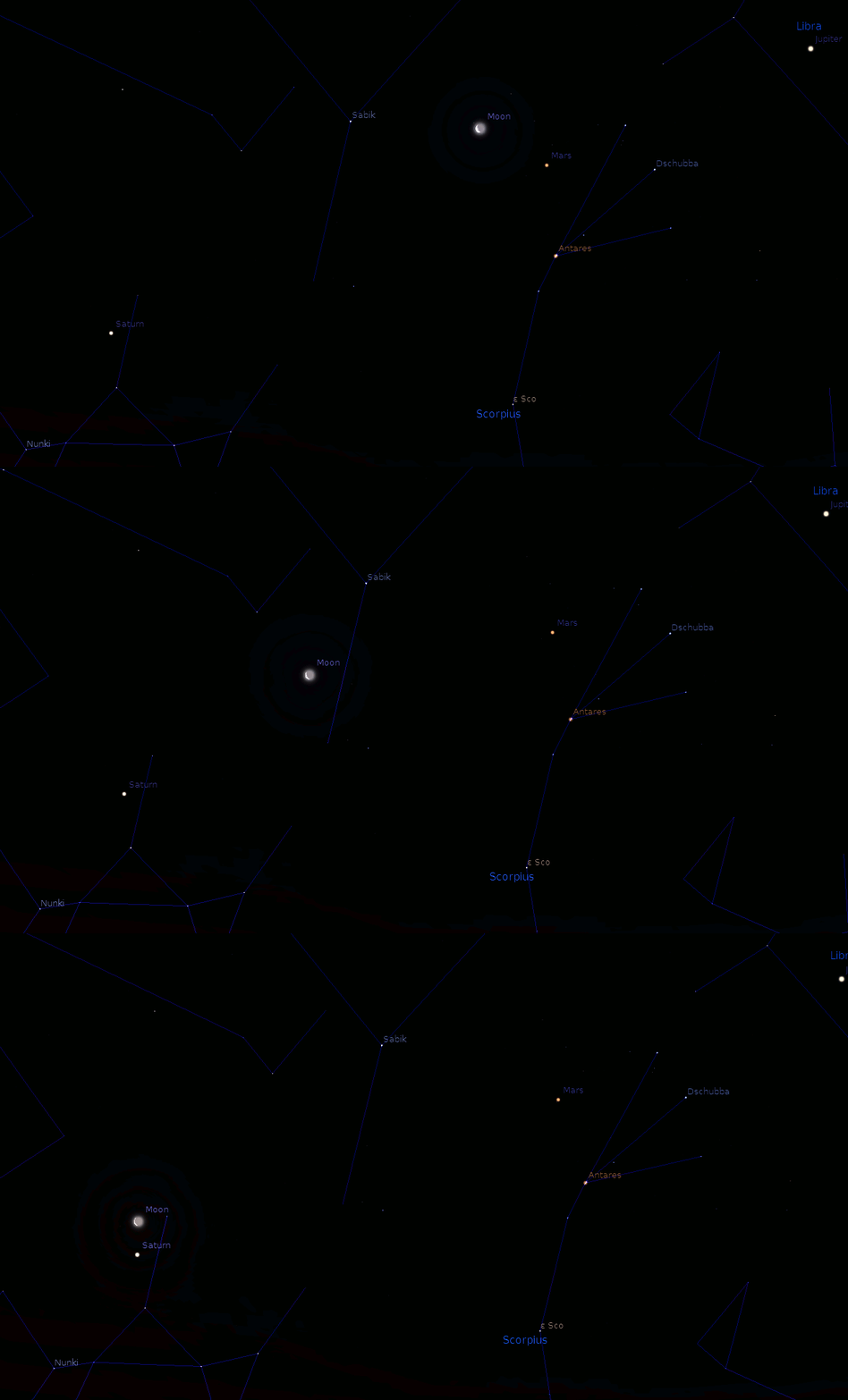
Morning planets and the Moon at 7 a.m. on the mornings of February 9, 10 and 11, 2018. See Mars changing position compared to Antares. Click on image to enlarge. Created using Stellarium and GIMP.
01/11/2018 – Ephemeris – This morning the Moon passes Jupiter and Mars
Jan 11. This is Bob Moler with Ephemeris for Thursday, January 11th. The Sun will rise at 8:18. It’ll be up for 9 hours and 5 minutes, setting at 5:23. The Moon, 3 days past last quarter, will rise at 4:19 tomorrow morning.
This morning the thin crescent Moon will be poised over Jupiter and Mars in the east southeast at 7 a.m. It will make a pretty sight for the eye and camera. I follow many amateur astronomers on Twitter with clearer skies than ours who take many great pictures of planetary conjunctions, the Moon and other wonders of the heavens.
There is space mission orbiting Jupiter right now. It doesn’t make great discoveries that shake up the astronomical world enough to make the national news. The Juno mission skims close and then away from Jupiter in order to ferret out its internal structure. It does contain a camera for the public that reveals the spectacular cloud formations of Jupiter’s polar cloudscapes.
The times given are for the Traverse City/Interlochen area of Michigan. They may be different for your location.
Addendum
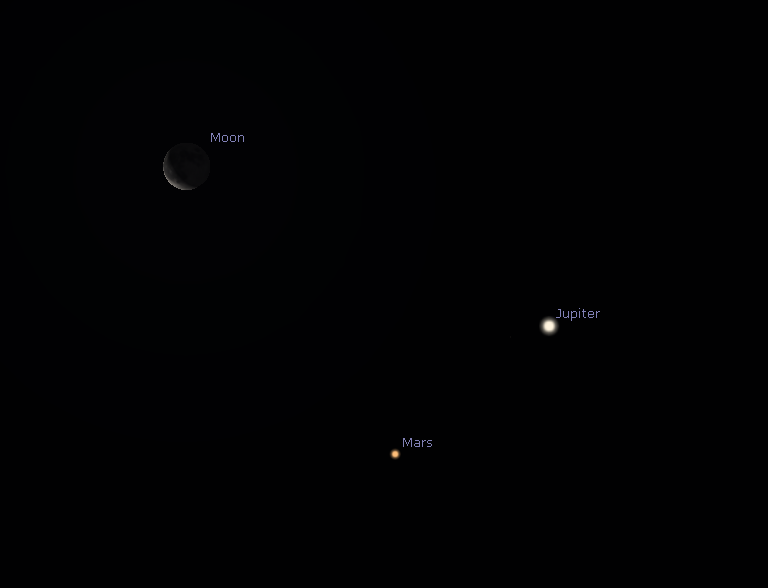
The Moon with Jupiter and Mars this morning January 11, 2018 at 7 a.m. Created using Stellarium.
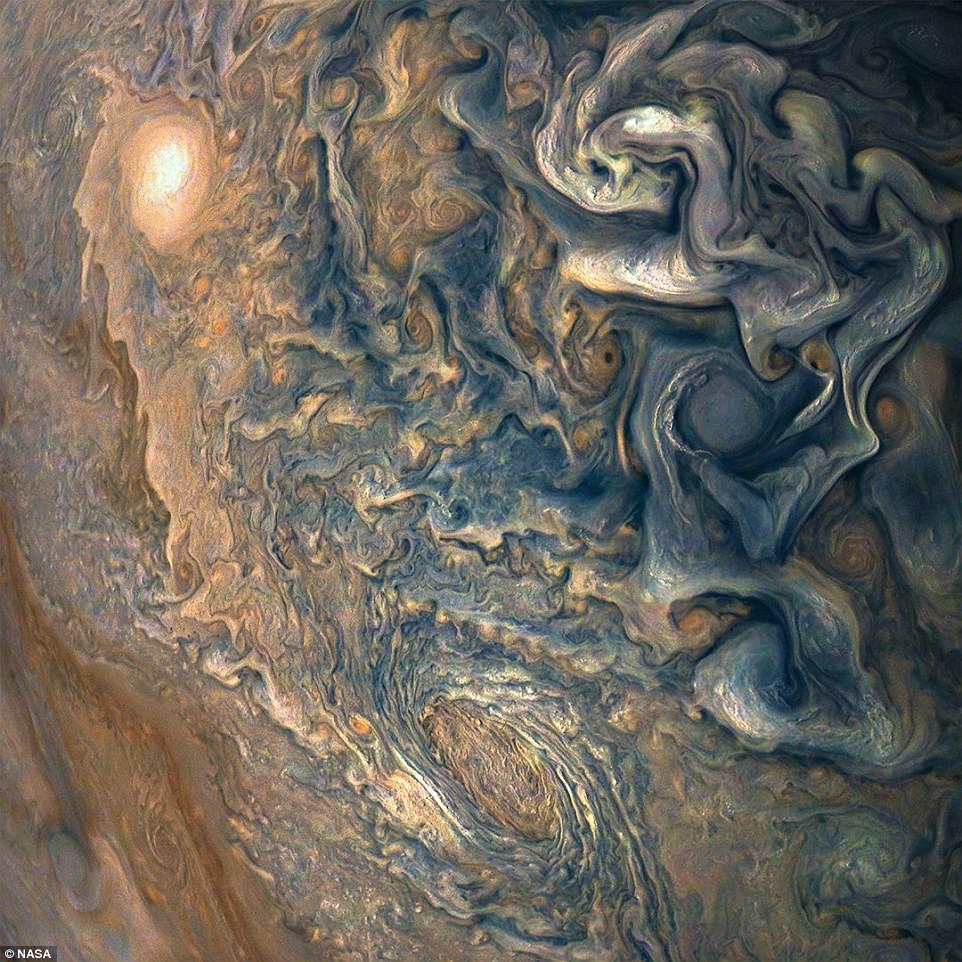
Some of Jupiter’s clouds photographed by NASA’s Juno spacecraft.
Ride along with Juno on its 6th close encounter (perijove 6) with Jupiter. Jove is another Roman name for Jupiter, by Jove!
Jupiter: Juno Perijove 06 from Seán Doran on Vimeo.
01/04/2018 – Ephemeris – Mars will pass Jupiter in the morning sky this weekend
Ephemeris for Thursday, January 4th. The Sun will rise at 8:20. It’ll be up for 8 hours and 55 minutes, setting at 5:15. The Moon, 3 days past full, will rise at 8:44 this evening.
We have, weather permitting, been watching Mars and Jupiter getting closer together day by day in the morning sky. Their paths will cross Saturday evening as Mars slips under Jupiter. However at that time they will be below our horizon. So Saturday morning the 6th Mars will be just to the lower right of the brighter Jupiter by a bit less than he diameter of the Moon and Sunday morning the 7th Mars will be left and below Jupiter by about the same amount. After that they will continue to separate. Jupiter will stay in the constellation of Libra and enter the evening sky in early May. The Earth will catch up to Mars at the end of July. Then it will be closer to the Earth than any time since 2003. It will come as close as 35.8 million miles (57.9 million km) from the Earth.
The times given are for the Traverse City/Interlochen area of Michigan. They may be different for your location.
Addendum
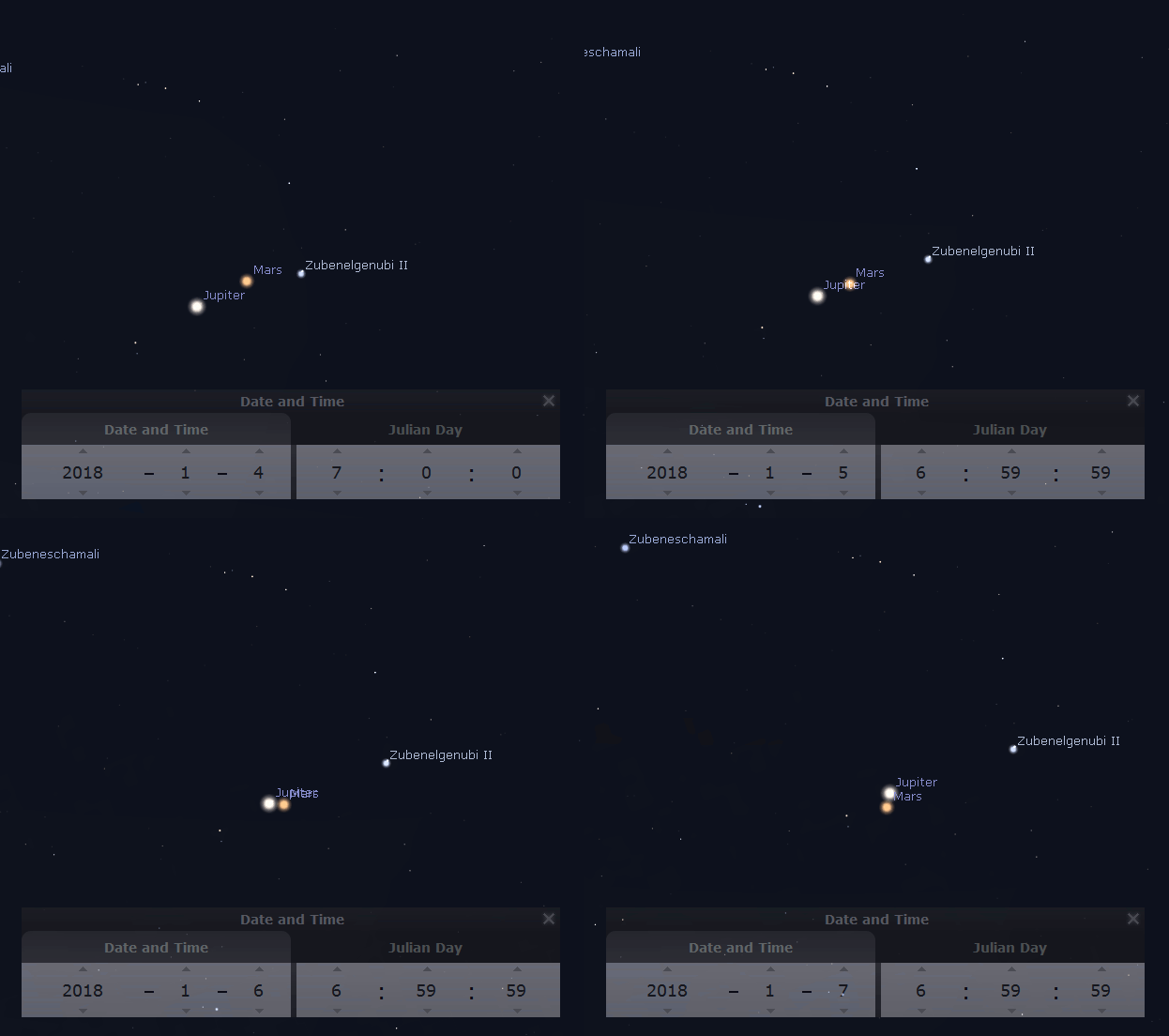
An animation of the Mars-Jupiter conjunction from January 4th thru 7th at 7 a.m.. The two named stars seen Zubenelgenubi and Zubeneschamali, stars in the constellation Libra, meaning south claw and north claw respectively. Claws of Scorpius, the constellation rising to the east. Created using Stellarium and GIMP.
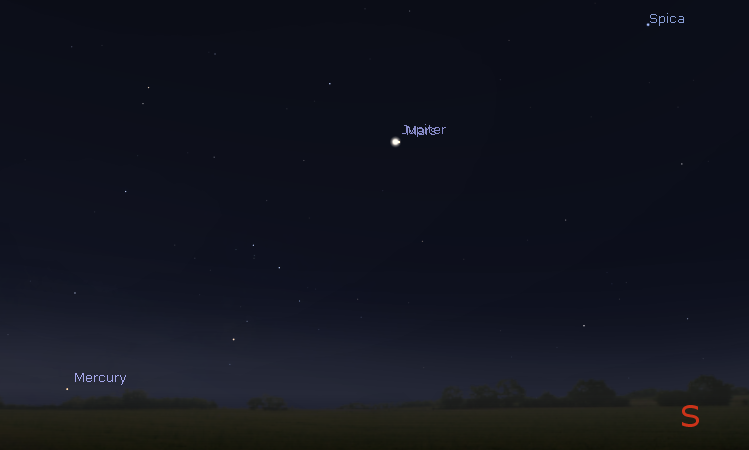
Morning planets at 7 a.m. January 6th, 2018. Mars and Jupiter labels are superimposed. Created with Stellarium.
10/17/2016 – Ephemeris – Europe’s ExoMars satellite and lander will reach Mars Tomorrow
Ephemeris for Tuesday, October 18th. The Sun will rise at 8:02. It’ll be up for 10 hours and 49 minutes, setting at 6:52. The Moon, 2 days past full, will rise at 9:07 this evening.
You’ve probably haven’t heard of the ExoMars mission before or even recently. That’s the way Mars missions go, due to their long cruise phase. It was launched by the Europeans and Russians back in March. ExoMars is an orbiter with an attached lander. The lander named Schiaparelli after the famed 19th century astronomer, separated from the Trace Gas Orbiter two days ago to land on Mars. A few hours later the orbiter made a thruster burn to miss Mars and not follow the lander into Mars’ atmosphere. The lander will hit Mars’ atmosphere at about 10:52 a.m. tomorrow, with landing 5 minutes later. The Schiaparelli lander will operate on batteries only with a lifetime of a few days. It will take a few images as it lands, but will not take images from the surface.
Times are for the Traverse City/Interlochen area of Michigan. They may be different for your location.
Addendum
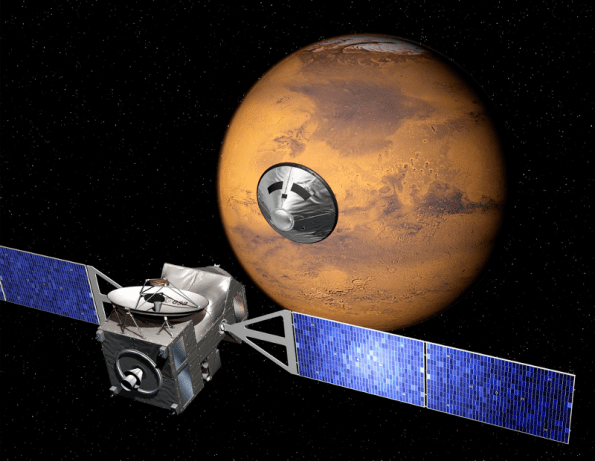
Artist’s visualization of releasing the Schiaparelli lander. Credit ESA.
Planetary Society’s Emily Lakdawalla’s blog post showing the ExoMars Mars arrival timeline: http://www.planetary.org/blogs/emily-lakdawalla/2016/10140937-exomars-timeline.html
10/17/2016 – Ephemeris – Elon Musk’s vision of how he’ll colonize Mars
Ephemeris for Monday, October 17th. The Sun will rise at 8:01. It’ll be up for 10 hours and 52 minutes, setting at 6:53. The Moon, 1 day past full, will rise at 8:21 this evening.
On September 27th Elon Musk announced his plans to send people to Mars, hopefully by 2024. He explained in detail how he would do it. He made an hour-long presentation at the International Astronautical Congress meeting in Mexico, which can be seen on the Internet at spacex.com. Also there is a shorter animation of how he expects to do it. He expects to send hundreds of people at a time into Earth orbit. The booster would return to the launch pad and another second stage with fuel loaded on top of it to be launched again on the next orbit to refuel the manned stage before sending it to Mars. Robotic missions would be sent before to set up the infrastructure for the Mars Base. I’m somewhat skeptical, but all great adventures start with a dream.
Times are for the Traverse City/Interlochen area of Michigan. They may be different for your location.
Addendum

New colonists looking out at the Martian landscape. Credit: Screen cap from SpaceX video.
Short 5 minute video: https://youtu.be/0agVZwux1Hs
Full address to the International Astronautical Congress meeting: https://youtu.be/IAZ-Xbn5hr0
08/02/2016 – Ephemeris – The Scorpion has visitors this year
Ephemeris for Tuesday, August 2nd. The Sun rises at 6:30. It’ll be up for 14 hours and 35 minutes, setting at 9:06. The Moon is new today, and won’t be visible.
There’s a large constellation located low in the south as it gets dark about 10:30 tonight It’s Scorpius the scorpion. Its brightest star is Antares in its heart, a red giant star whose name means “Rival of Mars”. From Antares to the right is a star then a vertical arc of three stars that is its head. The Scorpion’s tail is a line of stars running down to the left of Antares swooping near the horizon before coming back up and ending in a pair of stars that portray his poisonous stinger. This year the planet Saturn appears almost directly above Antares. Tonight Mars is right of Antares. On the 23rd of this month Mars will pass just above
Antares, between it and Saturn, making line of three bright objects. Mars is currently brighter than Antares.
Times are for the Traverse City/Interlochen area of Michigan. They may be different for your location.
Addendum
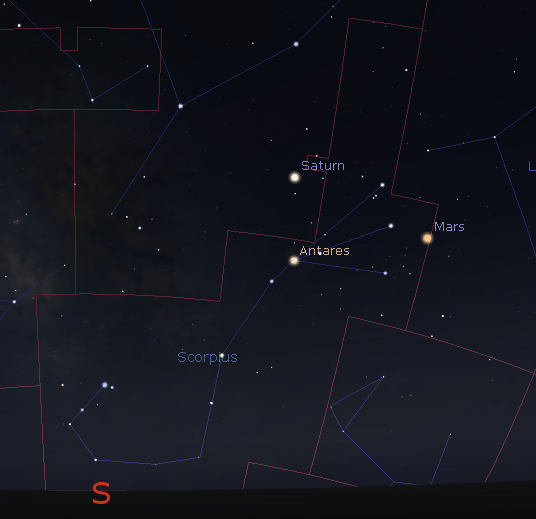
Scorpius with Mars and Saturn at 10:30 p.m. August 2, 2016. Created using Stellarium.
The red lines are the official constellation boundaries by the International Astronomical Union. From the look of some of the boundaries, astronomers apparently gerrymander as well as our politicians.
For those unfamiliar with gerrymandering put “gerrymander” in your favorite search engine or Wikipedia.
05/30/2016 – Ephemeris – Mars is closest to the Earth of this go around today
Ephemeris for Memorial Day, Monday, May 30th. Today the Sun will be up for 15 hours and 18 minutes, setting at 9:20, and will rise tomorrow at 6:00. The Moon, 1 day past last quarter, will rise at 3:21 tomorrow morning.
Mars is the closest it gets to the Earth in this go-around today. Mars is the next planet out from the Sun. Earth is number 3 and Mars is number 4. Mars has a much more eccentric orbit than the Earth and varies from 128 million miles (207 million km) at its closest to the Sun, called perihelion to 155 million miles (249 million km) at aphelion. So at closest approach of Mars to the Earth the nearest distance can vary by nearly 30 million miles (42 million km). Mars moves slower in its orbit than does the Earth, taking 687 Earth days to orbit the Sun. That’s about 1 year, 10 ½ months. We catch up to Mars every 26 months or so, in a different part of its orbit. This time it will close to 46.7 million miles (75.2 million km) today.
Times are for the Traverse City/Interlochen area of Michigan. They may be different for your location.
Addendum
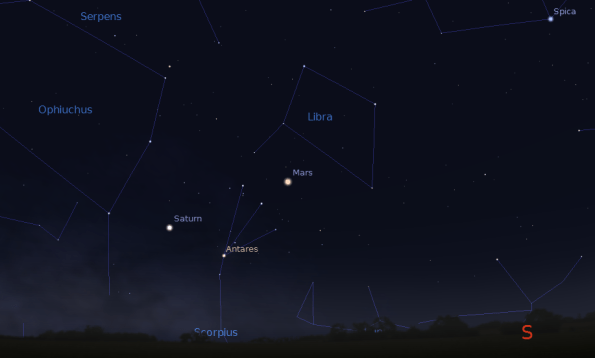
Mars finder chart for 11 p.m. May 30, 2016. Created using Stellarium.
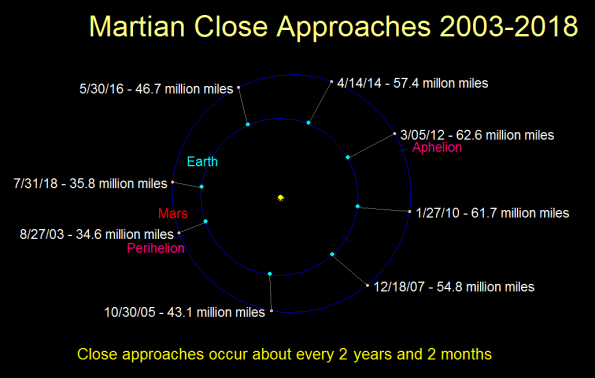
Mars closest approaches from 2003 to 2017. Created by my LookingUp program.
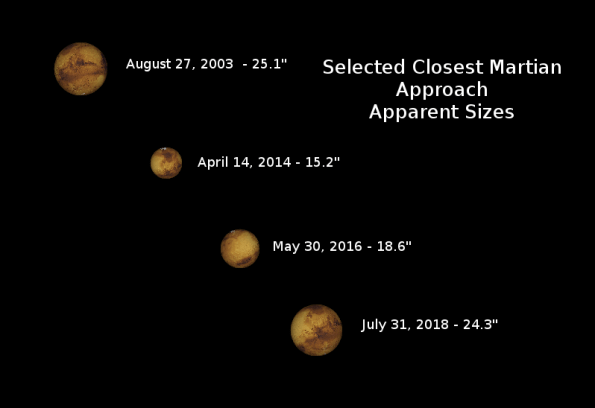
Selected Martian Closest Approaches Apparent sizes from 2003 to 2018. Created using Cartes du Ciel (Sky Charts).
05/23/2016 – Ephemeris – Mars was at opposition yesterday and will be closest next Monday
Ephemeris for Monday, May 23rd. Today the Sun will be up for 15 hours and 7 minutes, setting at 9:13. The Moon, 2 days past full, will rise at 10:45 this evening. Tomorrow the Sun will rise at 6:05.
Yesterday the planet Mars passed a point where it was opposite in the sky from the Sun. Astronomers call it opposition. This is a time when a planet is normally its closest to the Earth, since the Earth is more of less directly between the planet and the Sun. But due to Mars’ quite elliptical orbit, it is still approaching the Sun, and though the Earth is nudging ahead of it a bit, Mars won’t be closest to the Earth until next Monday, the 30th, 8 days after opposition. On that day it will be about 650 thousand miles (1 million, 46 thousand km) closer to the Earth than it was yesterday. On the 30th that will be 46.7 million miles (76.2 million km) away. The next closest approach in 26 months will be a bit closer yet.
Times are for the Traverse City/Interlochen area of Michigan. They may be different for your location.
Addendum
Mars closest approaches from 2003 to 2018. Created by my LookingUp program.
Selected Martian Closest Approaches Apparent Sizes from 2003 to 2018. Created using Cartes du Ciel (Sky Charts). Note that ” is seconds of arc. 1″ = 1/3600 of a degree. The Moon and Sun are about 1,800 seconds of arc in diameter.
Also note that at the star party last Saturday night Mars looked great, even though it was low in the sky.
05/06/2016 – Ephemeris – Learn about Monday’s transit of Mercury tonight
Ephemeris for Friday, May 6th. The Sun rises at 6:25. It’ll be up for 14 hours and 29 minutes, setting at 8:54. The Moon is new today, and won’t be visible.
Learn more about next Monday’s transit of Mercury across the Sun at tonight’s meeting of the Grand Traverse Astronomical Society at 8 p.m. at the Northwestern Michigan College’s Rogers Observatory, on Birmley Road, South of Traverse City. Afterward at 9 p.m., there will be another program and weather permitting there will be viewing of Jupiter, and later Mars. On Monday the Society will host transit viewing at two locations. The transit runs 6 ½ hours from 7:12 a.m. to 2:42 p.m. The Rogers Observatory will be open for that period. Also telescopes with be stationed at the Dune Climb at the Sleeping Bear Dunes National Lakeshore by yours truly to view the transit. The event is not visible to the naked eye and dangerous to even attempt it.
The program will also preview the coming opposition of Mars and closest approach since 2003 on the 30th.
Times are for the Traverse City/Interlochen area of Michigan. They may be different for your location.
Addendum
I posted these yesterday, but here they are again:
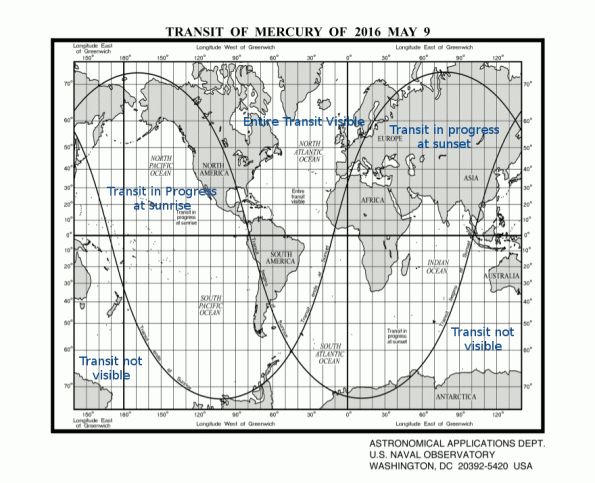
Transit visibility map with added captions to make it more readable. Credit United States Naval Observatory, The Astronomical Almanac Online.
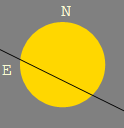
The track of Mercury across the face of the Sun. Mercury will travel from upper left to lower right. Mercury will not be visible until it impinges upon the disk of the Sun. Credit IOTA’s program Occult4.
From IOTA’s Occult4 program
Transit of Mercury on 2016 May 9 (TT)
   {'+' => next day; '-' => previous day }
                                           Overhead at
     Geocentric Event      UTC         P.A.  Long  Lat
                         h  m  s       o      o    o
[1]  Exterior Ingress   11 12 16     83.1     11   17
[2]  Minimum Separation 14 57 38             -45   18
[3]  Exterior Egress    18 42 23    224.4   -102   18

Minimum sepn 318.5";  Radii - Sun 950.4", Mercury 6.0"
delta T =  68.2 secs,  Ephemeris = DE0
Note: These timings are geocentric. Occult4 has timings for various cities of the world. Occult4.0.2 can be downloaded here. They can vary by several minutes for different cities due to parallax.
I will post more information on the transit in an Ephemeris Extra tomorrow.
 Bob Moler's Ephemeris Blog