Archive
07/31/2018 – Ephemeris – Previewing August skies
Ephemeris for Tuesday, July 31st. The Sun rises at 6:27. It’ll be up for 14 hours and 41 minutes, setting at 9:09. The Moon, half way from full to last quarter, will rise at 11:17 this evening.
Let’s look ahead at the month of August in the skies. Daylight hours will decrease from 14 hours and 39 minutes tomorrow to 13 hours 17 minutes on the 31st. The altitude of the sun at local noon, that is degrees of angle above the horizon will decrease from 63 degrees tomorrow to just over 53 degrees on the 31st. Straits area listeners can subtract one more degree from those angles. Local noon, when the Sun is due south, is about 1:43 p.m. The Perseid meteor shower will reach its peak all night on the 12th. It will be a dark night with the one day old moon setting at 10 p.m. The radiant point, where the meteors will seem to come from, will be rising higher in the northeastern sky all night. On the 17th Venus will reach ts greatest separation from the Sun in the evening sky.
The times given are for the Traverse City/Interlochen area of Michigan. They may be different for your location.
Addendum
August Evening Star Chart
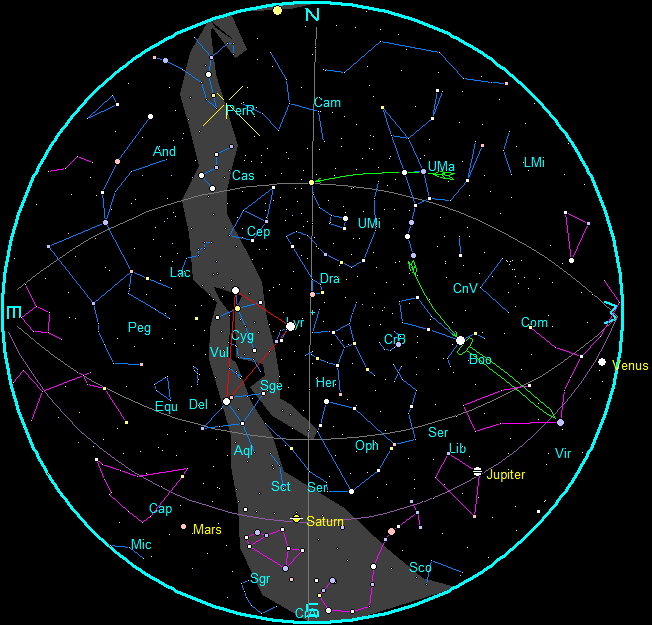
Star Chart for August 2018 (10 p.m. EDT August 15, 2018). Created using my LookingUp program. Click on image to enlarge.
The planets and stars are plotted for the 15th at 10 p.m. EDT in the evening and 4:30 a.m. for the morning chart. These are the chart times. Note that Traverse City is located approximately 45 minutes behind our time meridian. (An hour 45 minutes behind our daylight saving time meridian during EDT). To duplicate the star positions on a planisphere you may have to set it to 1 hour 45 minutes earlier than the current time.
Note the chart times of 10 p.m. and 4:30 a.m. are for the 15th. For each week before the 15th add ½ hour (28 minutes if you’re picky). For each week after the 15th subtract ½ hour. The planet positions are updated each Wednesday on this blog. For planet positions on dates other than the 15th, check the Wednesday planet posts on this blog.
August Morning Star Chart
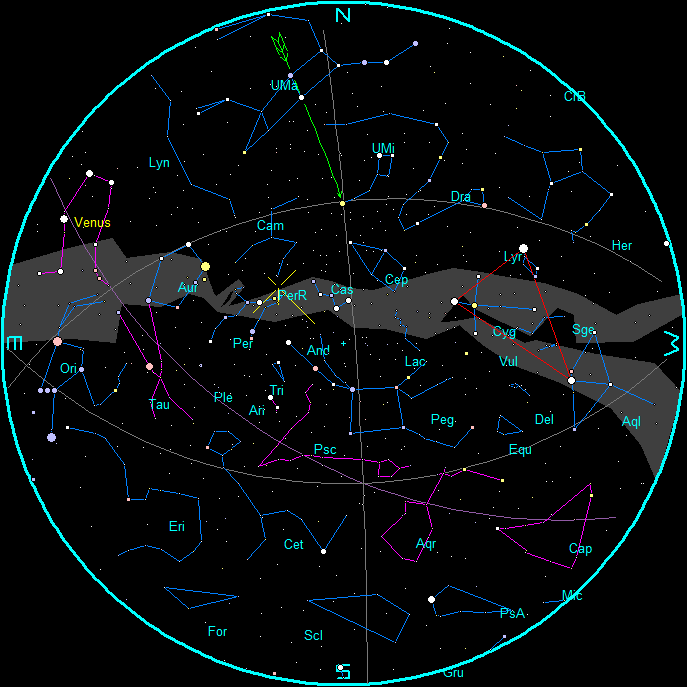
Star Chart for August 2018 mornings based on 4:30 a.m. August 15th. Created using my LookingUp program. Click on image to enlarge.
For a list of constellation names to go with the abbreviations click here.
- Pointer stars at the front of the bowl of the Big Dipper point to Polaris the North Star.
- Leaky Big Dipper drips on Leo.
- Follow the arc of the handle of the Big Dipper to the star Arcturus and
- Continue with a spike to Spica.
- The Summer Triangle is in red.
- PerR – Perseid meteor shower radiant
Twilight
| Morning | Twilight | Evening | Twilight | Dark | Night | Moon | |
| Date | Astronomical | Nautical | Nautical | Astronomical | Start | End | Illum. |
| 2018-07-31 | 4h28m | 5h17m | 22h28m | 23h17m | 23h17m | 23h17m | 0.89 |
| 2018-08-01 | 4h30m | 5h18m | 22h27m | 23h15m | 23h15m | 23h43m | 0.82 |
| 2018-08-02 | 4h32m | 5h20m | 22h25m | 23h13m | 23h13m | – | 0.74 |
| 2018-08-03 | 4h34m | 5h21m | 22h24m | 23h11m | 23h11m | 0h09m | 0.64 |
| 2018-08-04 | 4h36m | 5h23m | 22h22m | 23h09m | 23h09m | 0h37m | 0.53 |
| 2018-08-05 | 4h38m | 5h24m | 22h20m | 23h07m | 23h07m | 1h08m | 0.42 |
| 2018-08-06 | 4h40m | 5h26m | 22h18m | 23h05m | 23h05m | 1h44m | 0.31 |
| 2018-08-07 | 4h42m | 5h27m | 22h17m | 23h03m | 23h03m | 2h26m | 0.20 |
| 2018-08-08 | 4h43m | 5h29m | 22h15m | 23h00m | 23h00m | 3h18m | 0.11 |
| 2018-08-09 | 4h45m | 5h30m | 22h13m | 22h58m | 22h58m | 4h19m | 0.05 |
| 2018-08-10 | 4h47m | 5h32m | 22h11m | 22h56m | 22h56m | 4h47m | 0.01 |
| 2018-08-11 | 4h49m | 5h33m | 22h10m | 22h54m | 22h54m | 4h49m | 0.00 |
| 2018-08-12 | 4h51m | 5h35m | 22h08m | 22h52m | 22h52m | 4h51m | 0.03 |
| 2018-08-13 | 4h53m | 5h36m | 22h06m | 22h49m | 22h49m | 4h53m | 0.08 |
| 2018-08-14 | 4h55m | 5h38m | 22h04m | 22h47m | 23h01m | 4h55m | 0.16 |
| 2018-08-15 | 4h56m | 5h39m | 22h02m | 22h45m | 23h29m | 4h56m | 0.26 |
| 2018-08-16 | 4h58m | 5h41m | 22h00m | 22h43m | 23h59m | 4h58m | 0.36 |
| 2018-08-17 | 5h00m | 5h42m | 21h58m | 22h41m | – | 5h00m | 0.47 |
| 2018-08-18 | 5h02m | 5h44m | 21h56m | 22h38m | 0h30m | 5h02m | 0.57 |
| 2018-08-19 | 5h04m | 5h45m | 21h54m | 22h36m | 1h03m | 5h04m | 0.67 |
| 2018-08-20 | 5h05m | 5h47m | 21h53m | 22h34m | 1h40m | 5h05m | 0.76 |
| 2018-08-21 | 5h07m | 5h48m | 21h51m | 22h32m | 2h22m | 5h07m | 0.84 |
| 2018-08-22 | 5h09m | 5h50m | 21h49m | 22h29m | 3h09m | 5h09m | 0.90 |
| 2018-08-23 | 5h11m | 5h51m | 21h47m | 22h27m | 4h00m | 5h11m | 0.90 |
| 2018-08-24 | 5h12m | 5h53m | 21h45m | 22h25m | 4h56m | 5h12m | 0.95 |
| 2018-08-25 | 5h14m | 5h54m | 21h43m | 22h23m | – | – | 0.99 |
| 2018-08-26 | 5h16m | 5h55m | 21h41m | 22h20m | – | – | 1.00 |
| 2018-08-27 | 5h17m | 5h57m | 21h39m | 22h18m | – | – | 0.99 |
| 2018-08-28 | 5h19m | 5h58m | 21h37m | 22h16m | – | – | 0.97 |
| 2018-08-29 | 5h21m | 6h00m | 21h35m | 22h14m | – | – | 0.92 |
| 2018-08-30 | 5h22m | 6h01m | 21h33m | 22h11m | 22h11m | 22h40m | 0.86 |
| 2018-08-31 | 5h24m | 6h02m | 21h31m | 22h09m | 22h09m | 23h09m | 0.78 |
Twilight calendar was generated in Cartes du Ciel.
NASA Calendar of Planetary Events
Date        Time    Event
Aug 01  We          Venus: 45.1° E
    04  Sa  2:18 pm Last Quarter
    06  Mo  2:35 pm Moon-Aldebaran: 1.1° S
    08  We  6:33 pm Moon North Dec.: 20.8° N
    08  We  9:59 pm Mercury Inferior Conj.
    10  Fr  9:40 am Moon Ascending Node
    10  Fr  2:05 pm Moon Perigee: 358100 km
    11  Sa  5:47 am Partial Solar Eclipse (NE Canada to Asia)
    11  Sa  5:58 am New Moon
    12  Su  8:44 pm Perseid Meteor Shower: ZHR = 90
    14  Tu  9:35 am Moon-Venus: 6.4° S
    17  Fr  6:38 am Moon-Jupiter: 4.8° S
    17  Fr 11:59 am Venus Greatest Elongation: 45.9° E
    18  Sa  3:49 am First Quarter
    20  Mo 10:07 pm Mercury-Beehive: 5.9° S
    21  Tu  5:55 am Moon-Saturn: 2.4° S
    21  Tu 10:58 pm Moon South Dec.: 20.8° S
    23  Th  7:23 am Moon Apogee: 405700 km
    24  Fr 12:51 am Moon Descending Node
    26  Su  7:56 am Full Moon
    26  Su  3:59 pm Mercury Greatest Elongation: 18.3° W
Sep 01  Sa          Venus: 45° E
Sky Events Calendar by Fred Espenak and Sumit Dutta (NASA’s GSFC),
http://eclipse.gsfc.nasa.gov/SKYCAL/SKYCAL.html
If you go to the above site you can print out a list like the above for the entire year
or calendar pages for your time zone.
Sun and Moon Rising and Setting Events
     LU              Ephemeris of Sky Events for Interlochen/TC
     August, 2018    Local time zone: EDT
     +-----------------------------------------------------------------------+
     | DATE |  SUN     SUN  DAYLIGHT|   TWILIGHT*    |MOON  RISE OR    ILLUM |
     |      |  RISE    SET    HOURS |  END    START  |PHASE SET** TIME FRACTN|
     +=======================================================================+
     |Wed  1| 06:29a  09:08p  14:39 | 10:23p  05:13a |      Rise 11:43p   77%|
     |Thu  2| 06:30a  09:07p  14:37 | 10:22p  05:14a |      Rise 12:09a   68%|
     |Fri  3| 06:31a  09:05p  14:34 | 10:20p  05:16a |      Rise 12:37a   58%|
     |Sat  4| 06:32a  09:04p  14:32 | 10:18p  05:17a |L Qtr Rise 01:08a   47%|
     +------+-----------------------+----------------+-----------------------+
     |Sun  5| 06:33a  09:03p  14:29 | 10:17p  05:19a |      Rise 01:44a   37%|
     |Mon  6| 06:34a  09:01p  14:27 | 10:15p  05:20a |      Rise 02:27a   26%|
     |Tue  7| 06:35a  09:00p  14:24 | 10:13p  05:22a |      Rise 03:18a   17%|
     |Wed  8| 06:37a  08:59p  14:22 | 10:11p  05:23a |      Rise 04:20a    9%|
     |Thu  9| 06:38a  08:57p  14:19 | 10:10p  05:25a |      Rise 05:30a    3%|
     |Fri 10| 06:39a  08:56p  14:16 | 10:08p  05:26a |      Rise 06:45a    0%|
     |Sat 11| 06:40a  08:54p  14:14 | 10:06p  05:28a |New   Set  09:21p    1%|
     +------+-----------------------+----------------+-----------------------+
     |Sun 12| 06:41a  08:53p  14:11 | 10:04p  05:29a |      Set  09:58p    4%|
     |Mon 13| 06:42a  08:51p  14:08 | 10:02p  05:31a |      Set  10:30p   10%|
     |Tue 14| 06:44a  08:50p  14:06 | 10:00p  05:32a |      Set  11:00p   17%|
     |Wed 15| 06:45a  08:48p  14:03 | 09:59p  05:34a |      Set  11:29p   27%|
     |Thu 16| 06:46a  08:46p  14:00 | 09:57p  05:35a |      Set  11:59p   36%|
     |Fri 17| 06:47a  08:45p  13:57 | 09:55p  05:37a |      Set  12:29a   47%|
     |Sat 18| 06:48a  08:43p  13:54 | 09:53p  05:38a |F Qtr Set  01:03a   57%|
     +------+-----------------------+----------------+-----------------------+
     |Sun 19| 06:49a  08:42p  13:52 | 09:51p  05:40a |      Set  01:40a   66%|
     |Mon 20| 06:51a  08:40p  13:49 | 09:49p  05:41a |      Set  02:22a   75%|
     |Tue 21| 06:52a  08:38p  13:46 | 09:47p  05:43a |      Set  03:09a   83%|
     |Wed 22| 06:53a  08:37p  13:43 | 09:45p  05:44a |      Set  04:00a   89%|
     |Thu 23| 06:54a  08:35p  13:40 | 09:43p  05:46a |      Set  04:56a   94%|
     |Fri 24| 06:55a  08:33p  13:37 | 09:41p  05:47a |      Set  05:54a   98%|
     |Sat 25| 06:56a  08:31p  13:34 | 09:39p  05:48a |      Set  06:54a  100%|
     +------+-----------------------+----------------+-----------------------+
     |Sun 26| 06:58a  08:30p  13:31 | 09:37p  05:50a |Full  Rise 08:54p  100%|
     |Mon 27| 06:59a  08:28p  13:29 | 09:35p  05:51a |      Rise 09:21p   98%|
     |Tue 28| 07:00a  08:26p  13:26 | 09:33p  05:53a |      Rise 09:47p   94%|
     |Wed 29| 07:01a  08:24p  13:23 | 09:31p  05:54a |      Rise 10:13p   88%|
     |Thu 30| 07:02a  08:23p  13:20 | 09:29p  05:56a |      Rise 10:40p   81%|
     |Fri 31| 07:04a  08:21p  13:17 | 09:27p  05:57a |      Rise 11:09p   72%|
     +-----------------------------------------------------------------------+
     * Nautical Twilight
     ** Moon rise or moon set, whichever occurs between sunrise and sunset
Ephemeris of Sky Events is created with my DOS version LookingUp program.
05/03/2018 – Ephemeris – The Eta Aquariid meteor shower is coming
Ephemeris for Thursday, May 3rd. The Sun rises at 6:29. It’ll be up for 14 hours and 20 minutes, setting at 8:50. The Moon, half way from full to last quarter, will rise at 12:26 tomorrow morning.
Saturday morning at about 3 a.m. is the predicted peak of the Eta Aquariid Meteor Shower. The bright Moon will interfere with all but the brightest, however something interesting is afoot. I download the International Meteor Organization Meteor Calendar every year. An Internet search for the name will get you to it. It seems that the Maya had recorded the shower’s appearance along with other meteor showers. There are other peaks to this shower on the mornings possibly through the 6th. Meteors of this shower, are caused by particles released by Halley’s Comet on past swings through the inner solar system. The meteors will appear to come from low in the southeastern sky. They will be seen after 3:30 a.m.
The times given are for the Traverse City/Interlochen area of Michigan. They may be different for your location.
Addendum
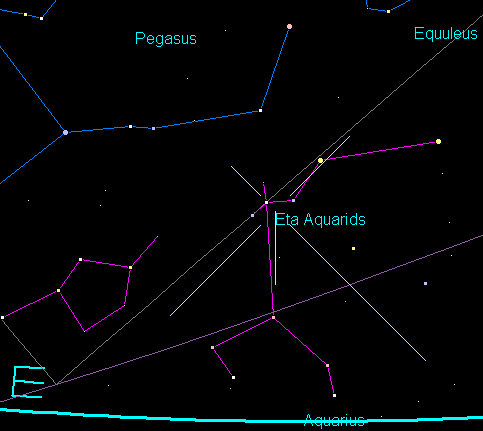
The Eta Aquariid radiant at the peak of the shower. The radiant moves slowly to the east with time. Credit: Bob Moler’s LookingUp program.
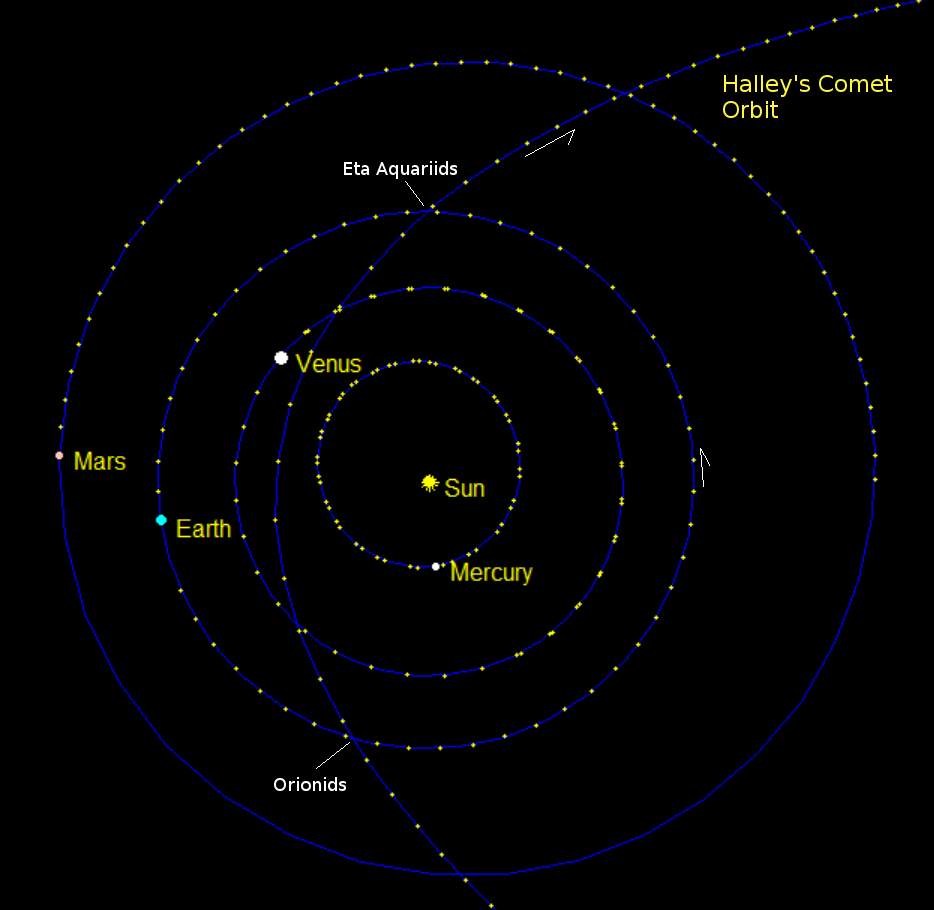
We get two meteor showers from Halley’s Comet. The Orionids, when Halley is approaching the inner solar system, and the Eta Aquariids when it’s leaving. Credit my LookingUp program.
04/20/2018 – Ephemeris – Astronomy Day and the Lyrid meteor shower this weekend
Ephemeris for Friday, April 20th. The Sun rises at 6:50. It’ll be up for 13 hours and 44 minutes, setting at 8:34. The Moon, 2 days before first quarter, will set at 1:50 tomorrow morning.
Tomorrow is Astronomy Day. The Grand Traverse Astronomical Society will celebrate with a star party at Northwestern Michigan College’s Rogers Observatory. Tomorrow April 21st, from 9 p.m. to 11 p.m. There will also be activities inside the observatory, so clear or cloudy there will be something to see or do for all ages. The Lyrid Meteor Shower will be active this weekend and reach a peak Sunday. The meteors from this shower will seem to come from near the constellation of Lyra the harp, a small and narrow parallelogram of stars with the bright star Vega near it. The best viewing will be for a few hours in the wee morning hours after the Moon sets Sunday or Monday mornings.
The times given are for the Traverse City/Interlochen area of Michigan. They may be different for your location.
Addendum
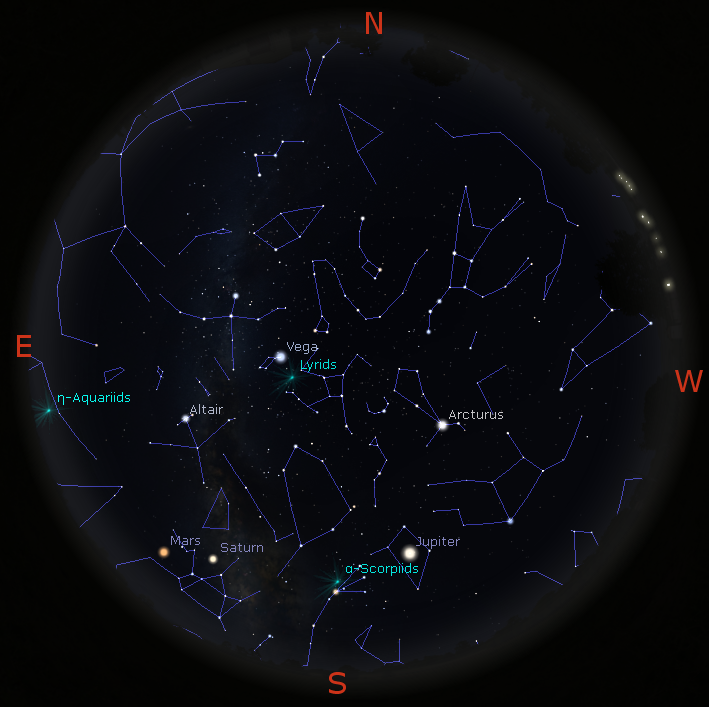
All sky view at 4 a.m. Sunday or Monday morning with the Lyrid radiant. Created using Stellarium.
The additional radiants showing in the image above are the (sigma) σ-Scorpids which will reach peak on April 28th, a minor shower and (eta) η-Auqariids which will reach peak on May 6th. Both these meteor showers have severe interference by the Moon.
01/02/2018 – Ephemeris – Cozying up to the Sun and a major meteor shower
Ephemeris for Tuesday, January 2nd. The Sun will rise at 8:20. It’ll be up for 8 hours and 53 minutes, setting at 5:13. The Moon, 1 day past full, will rise at 6:18 this evening.
Today the Earth will reach its closest distance from the sun, of 91.4 million miles. This point in Earth’s orbit is called perihelion. The Earth varies about 3 million miles from perihelion to aphelion its farthest point from the sun, which usually occurs around July 4th or 5th. Perihelion doesn’t help warm our winters though, but it does make winter the shortest season because the Earth moves its fastest at perihelion. That makes summer the longest season by several days. Tomorrow afternoon will see the peak of the Quadrantid Meteor Shower. This active meteor shower has its radiant north of the kite shape of Boötes and near the handle of the Big Dipper but the bright Moon will interfere both tomorrow and Thursday mornings.
The times given are for the Traverse City/Interlochen area of Michigan. They may be different for your location.
Addendum
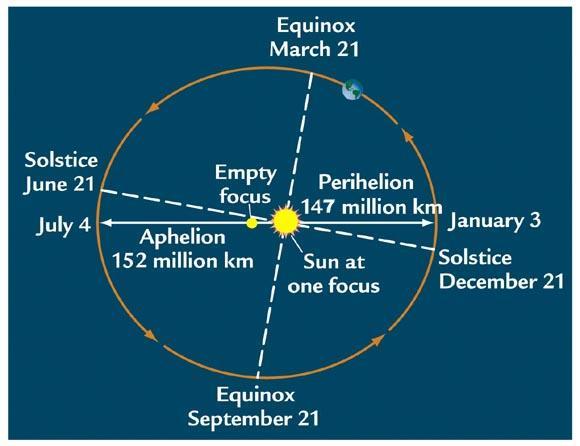
The Earth’s orbit, somewhat exaggerated, showing perihelion and the seasons. Credit “Starts with a Bang” blog by Ethan Siegel.
While a planet’s distance from the Sun modify the seasons somewhat, seasons are always governed by the axial tilt of the planet with respect to the Sun.
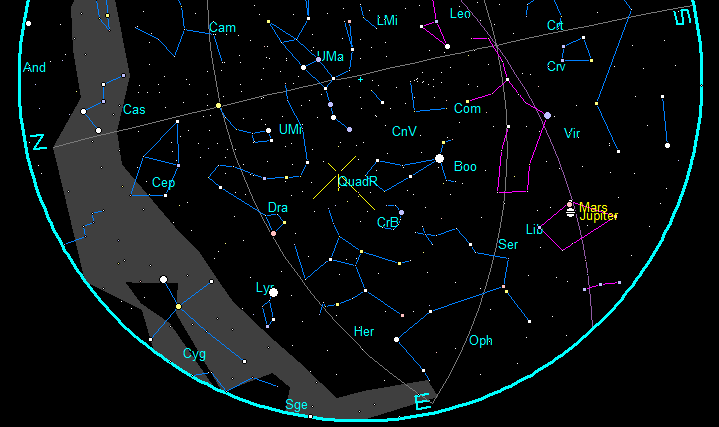
Facing the Quadrantid radiant at 6 a.m. January 3rd. Created using my LookingUp program.
12/31/2017 – Ephemeris Extra – January 2018 preview
This isn’t going to be recorded as an actual program. I’m not sure how much information one could retain at 6 or 7 New Years Day morning.
Year end is a busy time astronomically with Earth’s perihelion and the Quadrantid meteor shower following rapidly on New Years day
Let’s look ahead at January 2018. Tuesday the 2nd is the date of the latest sunrise. The Sun is already beginning to head north, as can be seen in the sunset time on the 1st, 11 minutes later than at its earliest three weeks ago. Both sunrise and sunset will be moving in January with sunrise time at 8:20 a.m. and sunset time at 5:12 p.m. on the 1st moving to 8:02 a.m. and 5:50 p.m. at month’s end. The sun’s altitude at noon will increase from 22 degrees on the 1st to nearly 28 degrees by the 31st. The Earth will reach its closest to the Sun in its orbit, called perihelion, on the 2nd at 91.4 million miles (147.1 million km).
We’ll have a full moon on the 1st and the 31st, the so-called blue moon. Both those moons will be super moons, occurring at or near perigee. On top of all that the full moon on the 31st will be totally eclipsed. We in Michigan will see nearly the first half of the eclipse before the Moon sets at 8:04 in the grand Traverse area. Folks farther west will see more, if not all of the eclipse. February will have no full moons, so March again will have two full moons.
The Quadrantid meteor shower will reach peak on the 3rd, in the afternoon. The radiant is circumpolar here, being off the handle of the Big Dipper. Mercury will reach its greatest western elongation on the 1st and be visible shortly before sunrise for the next week rising after 6:30, but brightening a bit each day. It’s not a particularly favorable elongation, now that winter is here. The next evening elongation in March will be a lot better. Venus will be in superior conjunction with the Sun on the 9th and will enter the evening sky, but don’t look for it this month. Mars and Jupiter will have a close conjunction on the 6th. It will look about equally OK on the morning of the 6th or 7th around here because it occurs on the evening of the 6th, when they are not up.
Addenda
January Evening Sky Chart
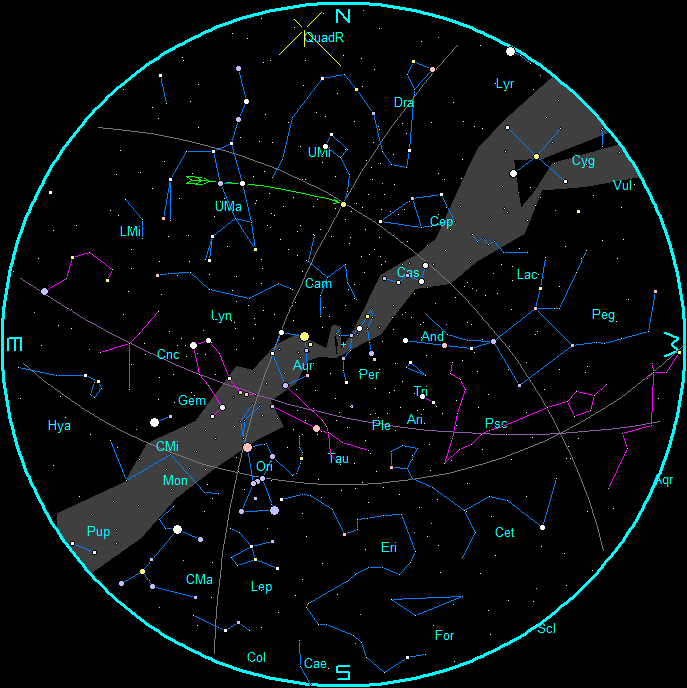
Star Chart for January 2018 (9 p.m. January 15, 2018). Created using my LookingUp program. Click on image to enlarge.
The planets and stars are plotted for the 15th at 9 p.m. EST in the evening and 6 a.m. for the morning chart. These are the chart times. Note that Traverse City is located approximately 45 minutes behind our time meridian. (An hour 45 minutes behind our daylight saving time meridian. during EDT and 45 minutes behind our daylight standard time meridian. during EST). To duplicate the star positions on a planisphere you may have to set it to 1 hour 45 minutes (Daylight Time) or 45 minutes (Standard Time) earlier than the current time if you are near your time meridian.
Note the chart times of 9 p.m. and 6 a.m. are for the 15th. For each week before the 15th add ½ hour. For each week after the 15th subtract ½ hour. The planet positions are updated each Wednesday on this blog. For planet positions on dates other than the 15th, check the Wednesday planet posts on this blog.
January Morning Star Chart
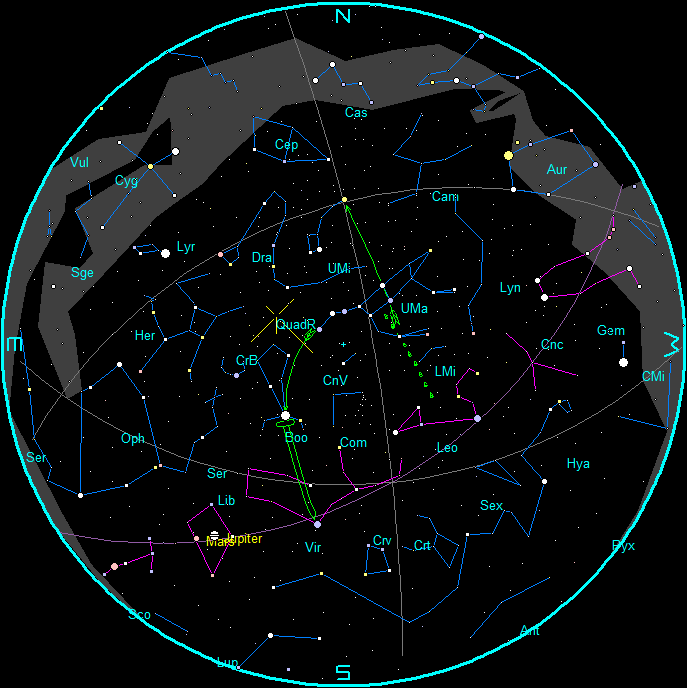
Star Chart for January 2018 mornings based on 6 a.m. January 15th. Created using my LookingUp program. Click on image to enlarge.
For a list of constellation names to go with the abbreviations click here.
- Pointer stars at the front of the bowl of the Big Dipper point to Polaris the North Star.
- Leaky Big Dipper drips on Leo.
- Follow the arc of the handle of the Big Dipper to the star Arcturus.
- The Summer Triangle is in red
- QuadR is the Quadrantid meteor shower radiant. Peaks on January 2nd, but the almost full moon will interfere this year.
Twilight
Evening nautical twilight ends at 6:22 p.m. EST on the 1st, increasing to 6:55 p.m. EST on the 31st.
Evening astronomical twilight ends at 6:57 p.m. EST on the 1st, increasing to 7:29 p.m. EST on the 31st.
Morning astronomical twilight starts at 6:35 a.m. EST on the 1st, and decreasing to 6:23 a.m. EST on the 31st.
Morning nautical twilight starts at 7:10 a.m. EST on the 1st, and decreasing to 6:57 a.m. EST on the 31st.
NASA Calendar of Planetary Events
    Date    Time    Event
Jan 01  Mo          Venus: 1.9° W
    01  Mo  2:59 pm Mercury Elongation: 22.7° W
    01  Mo  4:54 pm Moon Perigee: 356600 km
    01  Mo  7:01 pm Moon North Dec.: 20.1° N
    01  Mo  9:24 pm Full Moon
    02  Tu  9:59 pm Perihelion: 0.9833 AU
    03  We  2:50 pm Moon-Beehive: 2.3° N
    03  We  3:19 pm Quadrantid Meteor Shower: ZHR = 120
    04  Th  2:48 am Moon Ascending Node
    05  Fr  2:24 am Moon-Regulus: 0.9° S
    06  Sa  7:39 pm Mars-Jupiter: 0.2° N
    08  Mo  5:25 pm Last Quarter
    09  Tu  1:16 am Venus Superior Conjunction w/Sun
    11  Th 12:59 am Moon-Jupiter: 4.7° S
    13  Sa  2:58 am Mercury-Saturn: 0.7° N
    14  Su  9:09 pm Moon Apogee: 406500 km
    14  Su  9:13 pm Moon-Saturn: 2.9° S
    15  Mo 11:28 am Moon South Dec.: 20° S
    16  Tu  9:17 pm New Moon
    18  Th  9:28 am Moon Descending Node
    24  We  5:20 pm First Quarter
    27  Sa  5:09 am Moon-Aldebaran: 0.7° S
    29  Mo  6:32 am Moon North Dec.: 20° N
    30  Tu  4:54 am Moon Perigee: 359000 km
    31  We  2:19 am Moon-Beehive: 2.3° N
    31  We  8:27 am Full Moon
    31  We  8:30 am Total Lunar Eclipse (See Below)
    31  We  1:46 pm Moon Ascending Node
Feb 01  Th          Venus: 5.7° E
Sky Events Calendar by Fred Espenak and Sumit Dutta (NASA’s GSFC),
http://eclipse.gsfc.nasa.gov/SKYCAL/SKYCAL.html
If you go to the above site you can print out a list like the above for the entire year
or calendar pages for your time zone.
Sun and Moon Rising and Setting Events
     LU                  Ephemeris of Sky Events for Interlochen/TC
     January, 2018    Local time zone: EST
     +-----------------------------------------------------------------------+
     | DATE |  SUN     SUN  DAYLIGHT|   TWILIGHT*    |MOON  RISE OR    ILLUM |
     |      |  RISE    SET    HOURS |  END    START  |PHASE SET** TIME FRACTN|
     +=======================================================================+
     |Mon  1| 08:20a  05:13p  08:52 | 06:23p  07:09a |Full  Rise 05:11p  100%|
     |Tue  2| 08:20a  05:13p  08:53 | 06:24p  07:09a |      Rise 06:18p   99%|
     |Wed  3| 08:20a  05:14p  08:54 | 06:25p  07:10a |      Rise 07:30p   95%|
     |Thu  4| 08:20a  05:15p  08:55 | 06:25p  07:10a |      Rise 08:44p   88%|
     |Fri  5| 08:19a  05:16p  08:56 | 06:26p  07:10a |      Rise 09:56p   80%|
     |Sat  6| 08:19a  05:17p  08:58 | 06:27p  07:09a |      Rise 11:05p   70%|
     +------+-----------------------+----------------+-----------------------+
     |Sun  7| 08:19a  05:19p  08:59 | 06:28p  07:09a |      Rise 12:12a   60%|
     |Mon  8| 08:19a  05:20p  09:00 | 06:29p  07:09a |L Qtr Rise 01:17a   49%|
     |Tue  9| 08:19a  05:21p  09:02 | 06:30p  07:09a |      Rise 02:19a   39%|
     |Wed 10| 08:18a  05:22p  09:03 | 06:31p  07:09a |      Rise 03:20a   30%|
     |Thu 11| 08:18a  05:23p  09:05 | 06:32p  07:09a |      Rise 04:19a   22%|
     |Fri 12| 08:18a  05:24p  09:06 | 06:33p  07:08a |      Rise 05:16a   14%|
     |Sat 13| 08:17a  05:25p  09:08 | 06:34p  07:08a |      Rise 06:11a    8%|
     +------+-----------------------+----------------+-----------------------+
     |Sun 14| 08:17a  05:27p  09:10 | 06:36p  07:08a |      Rise 07:02a    4%|
     |Mon 15| 08:16a  05:28p  09:11 | 06:37p  07:07a |      Rise 07:49a    1%|
     |Tue 16| 08:15a  05:29p  09:13 | 06:38p  07:07a |New   Set  05:21p    0%|
     |Wed 17| 08:15a  05:31p  09:15 | 06:39p  07:06a |      Set  06:17p    1%|
     |Thu 18| 08:14a  05:32p  09:17 | 06:40p  07:06a |      Set  07:15p    3%|
     |Fri 19| 08:14a  05:33p  09:19 | 06:41p  07:05a |      Set  08:15p    8%|
     |Sat 20| 08:13a  05:34p  09:21 | 06:42p  07:05a |      Set  09:17p   14%|
     +------+-----------------------+----------------+-----------------------+
     |Sun 21| 08:12a  05:36p  09:23 | 06:44p  07:04a |      Set  10:20p   21%|
     |Mon 22| 08:11a  05:37p  09:25 | 06:45p  07:04a |      Set  11:24p   30%|
     |Tue 23| 08:10a  05:38p  09:28 | 06:46p  07:03a |      Set  12:30a   40%|
     |Wed 24| 08:10a  05:40p  09:30 | 06:47p  07:02a |F Qtr Set  01:38a   51%|
     |Thu 25| 08:09a  05:41p  09:32 | 06:48p  07:01a |      Set  02:48a   62%|
     |Fri 26| 08:08a  05:43p  09:34 | 06:50p  07:01a |      Set  03:59a   72%|
     |Sat 27| 08:07a  05:44p  09:37 | 06:51p  07:00a |      Set  05:09a   82%|
     +------+-----------------------+----------------+-----------------------+
     |Sun 28| 08:06a  05:45p  09:39 | 06:52p  06:59a |      Set  06:14a   90%|
     |Mon 29| 08:05a  05:47p  09:42 | 06:53p  06:58a |      Set  07:13a   96%|
     |Tue 30| 08:04a  05:48p  09:44 | 06:55p  06:57a |      Set  08:04a  100%|
     |Wed 31| 08:02a  05:50p  09:47 | 06:56p  06:56a |Full  Rise 06:15p  100%|
     +-----------------------------------------------------------------------+
     * Nautical Twilight
     ** Moonrise or moonset, whichever occurs between sunrise and sunset
Total Lunar Eclipse January 31, 2018
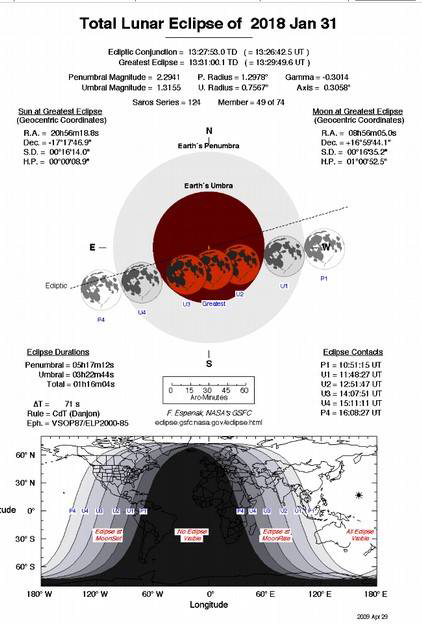
I’ll have more on this toward the end of the month. Credit NASA.
The original page for this graphic is: https://eclipse.gsfc.nasa.gov/LEplot/LEplot2001/LE2018Jan31T.pdf
    Total Lunar Eclipse January 31
Event               Time EST   Time UT
                    GT Area
Enter penumbra      5:51 a.m.  10:51   Unseen
Begin partial phase 6:48 a.m.  11:48
Totality begins     7:51 a.m.  12:51
Moon sets           8:04 a.m.
Mid eclipse                    13:28
Totality ends                  14:07
End partial phase              15:11
Leave penumbra                 16:08   Unseen

The shading of the penumbra is generally seen within 1/2
hour before and after the partial begins and ends.
Update
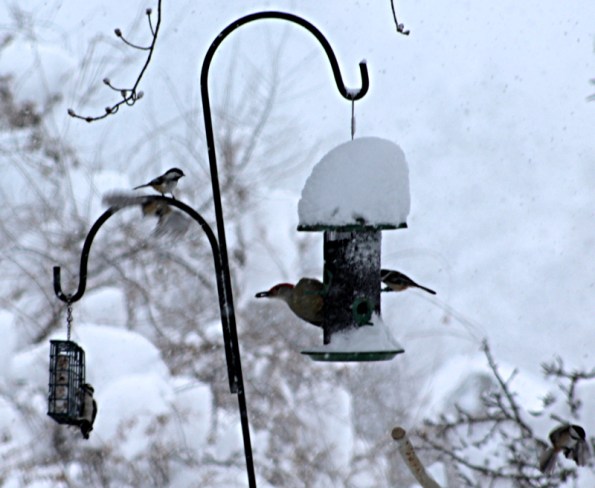
Our bird feeder at about 2 p.m. It was cleaned off and filled 6 hours before. Dining are a downy woodpecker, behind the suet block; a flicker with a seed in its beak and three chickadees. Can you spot the third?
While I was writing this post on the afternoon of the 30th, we were getting a rather intense lake effect snow storm, at about an inch an hour. By nightfall the snow on top of the feeder just about reached the hook. We also get cardinals, blue jays, sparrows. Poor juncos. They seem to feed on the ground, and the snow came too fast and covered the seed that had dropped, so they were looking in vain.
I really love the chickadees, they’re fearless. When I’m filling the bird feeder the other birds scatter, but the chickadees sit in the tree, a couple of feet over my head and wait patiently until I hang it back up.
12/12/2017 – Ephemeris – The Geminids are coming!
Ephemeris for Tuesday, December 12th. The Sun will rise at 8:10. It’ll be up for 8 hours and 52 minutes, setting at 5:02. The Moon, 2 days past last quarter, will rise at 3:25 tomorrow morning.
Tomorrow evening through Thursday morning we will have the chance to see the peak of the Geminid meteor shower. Some of its members can be seen tonight, but the meteors will be most numerous on the morning of Thursday the 14th. This shower is currently besting the Perseid meteor shower of August with a predicted 120 meteors per hour Thursday morning. The problems for us in viewing this fabulous shower are the cold temperatures and usually cloudy skies. However the Moon won’t be a problem. The source of the Geminids was discovered in 1983. It is a burnt out comet with the asteroid designation 3200 Phaethon which swoops down to only 13 million miles of the Sun, but will is near Earth this time around. The Geminids were first seen in 1862
The times given are for the Traverse City/Interlochen area of Michigan. They may be different for your location.
Addendum
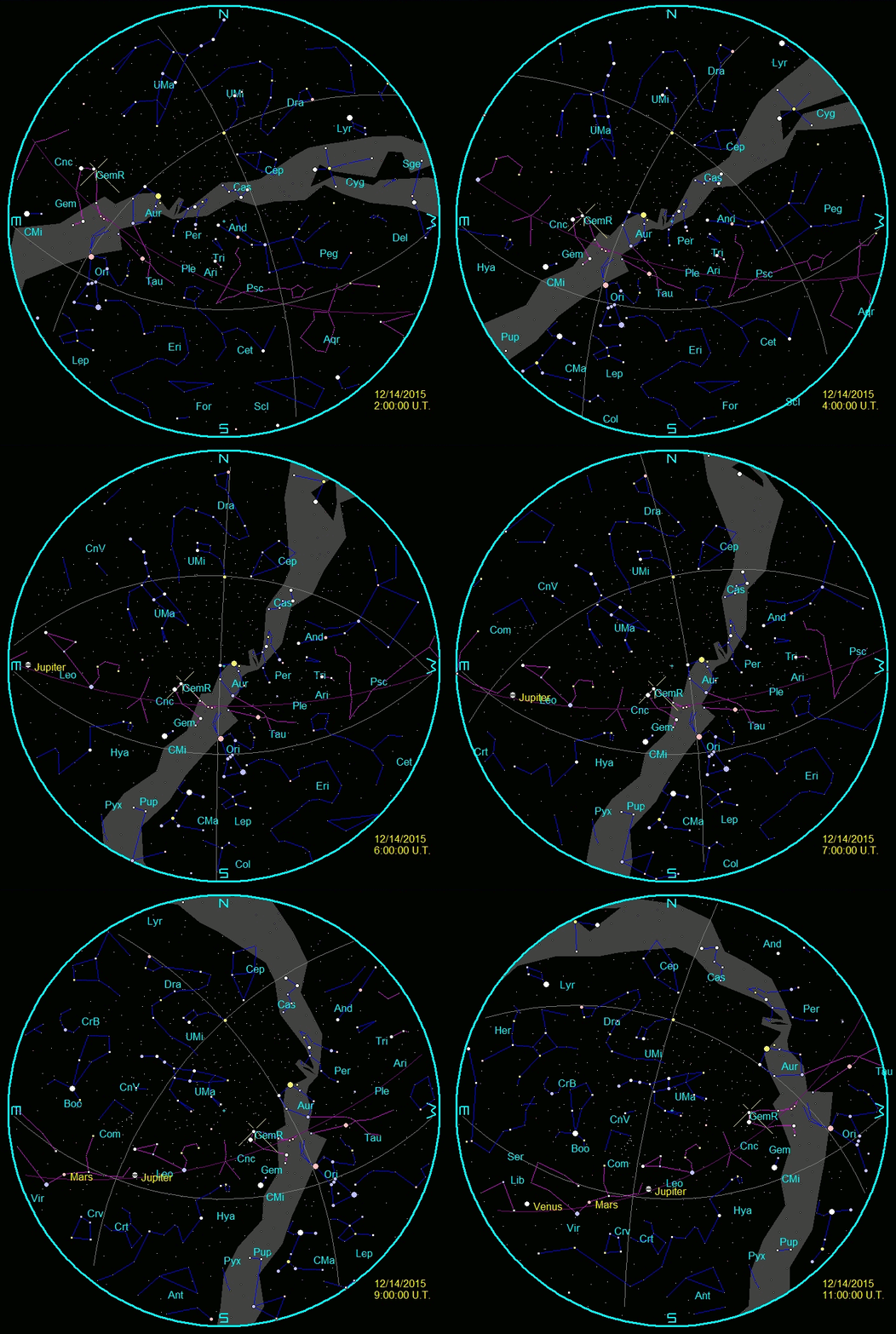
All sky view one hour intervals for The Geminid meteor shower the night of December 13-14, 2015.. Note the radiant “GemR”. Created with my LookingUp program and GIMP.
This is an animation from two years ago, so ignore the planet positions. Times are in Universal time for the Grand Traverse Region and Eastern Time. So subtract 5 hours from UT. The sequence starts at 9 p.m. EST and ends at 6 a.m.
11/16/2017 – Ephemeris – The Leonid meteors will reach their peak numbers tonight and tomorrow
Ephemeris for Thursday, November 16th. The Sun will rise at 7:40. It’ll be up for 9 hours and 32 minutes, setting at 5:13. The Moon, 2 days before new, will rise at 6:33 tomorrow morning.
The Famous Leonid meteor shower, which has had spectacular displays about every 33 years is forecast to reach two peaks this year, near noon our time, today and tomorrow. So the numbers of meteors, forecast during those peaks, of about 10 per hour near dawn our time probably won’t pan out, but you never know. None of these meteors will be seen before midnight. The last great 33 year peak was in 1998, so we’re a ways away from the next one. The responsible body for these meteors is the comet Tempel-Tuttle. Every time the comet passes through the inner solar system the sun’s heat liberates gas, dust and small grains of rock. These small grains end up in close orbits to the comet, and like the comet, return again and again.
The times given are for the Traverse City/Interlochen area of Michigan. They may be different for your location.
Addendum
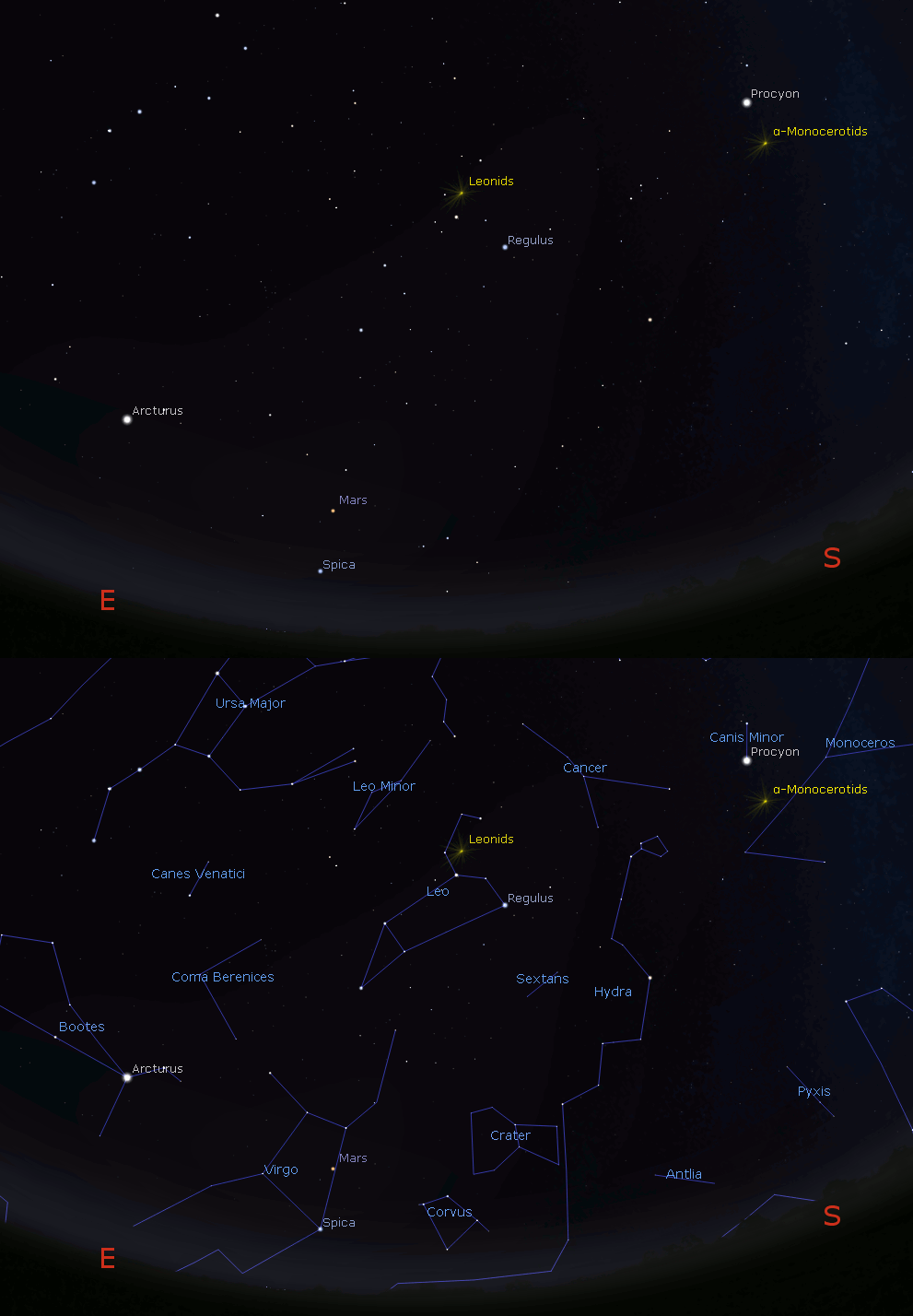
Leonid Meteor Shower Radiant finder chart fir 6 a.m., November 17, 2017. Click on image to enlarge. Created using Stellarium ans GIMP.
Note that there is another meteor shower radiant in the image, below the star Procyon. It’s the Alpha Monocerotids. It will reach its peak on the 21st. with an expected zenithal hourly rate (ZHR) of only 5 meteors an hour. By the way the zenithal hourly rate is the expected rate if the radiant was directly overhead, at the zenith. In 1995 this shower had for five minutes an estimated ZHR of 460, which was within a 30 minute outburst. The next big outburst isn’t expected until 2043, but not very much is known about this meteor shower. So keep an eye out, it could surprise us.
The radiant point wasn’t well known before the 1995 outburst, when it was thought to be closer to α Monocerotis, the unnamed bottom star in Monoceros the unicorn. There was a meteor shower called the Monocerotids listed before this shower was identified. So even though the radiant is actually in Canis Minor we are stuck with its name.
Much of the above information comes from the International Meteor Organization 2017 Meteor Shower Calendar. This and next years calendars are located at https://www.imo.net/resources/calendar/.
11/10/2017 – Ephemeris – The North Taurid Meteors are reaching peak this weekend
Ephemeris for Friday, November 10th. The Sun will rise at 7:32. It’ll be up for 9 hours and 46 minutes, setting at 5:19. The Moon, at last quarter today, will rise at 12:07 tomorrow morning.
One of the little known meteor showers for most of us are the North and South Taurid meteor showers. The shower that will reach peak this weekend is the North Taurids. They may show only 5 an hour when their radiants are overhead, but they are reported to be very bright. The radiant, the place where the meteors will appear to come from is just south of the Pleiades, will be up just about all night. Saturday night the Moon will rise at 1:15 a.m. Sunday night it will rise at 2:21 a.m. Both Taurid meteor showers are thought to be related to Encke’s Comet, the periodic comet with a period of only 3.3 years, the shortest known. A posting on Space.com about this years shower talked about the possibility that one of these meteorites might reach the ground.
Space.com has an excellent article about the Taurid meteor showers: https://www.space.com/34587-taurid-meteor-shower-guide.html
The times given are for the Traverse City/Interlochen area of Michigan. They may be different for your location.
Addendum
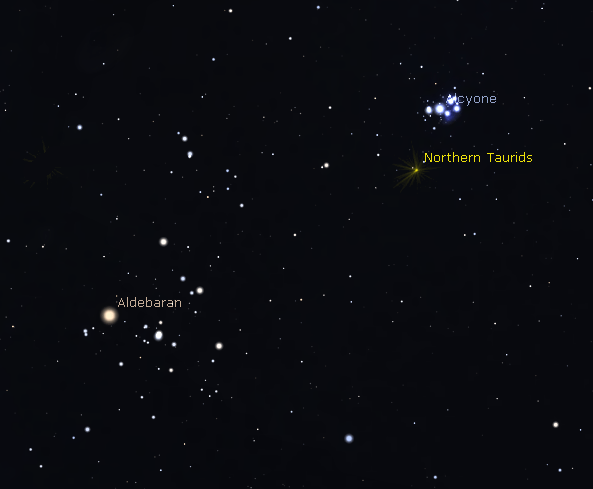
Northern Taurid meteor radiant near the Pleiades in Taurus the bull. Note the face of Taurus, the letter V or stars and Aldebaran. The stars in the face without Aldebaran is a star cluster called the Hyades. Created using Stellarium.
10/19/2017 – Ephemeris – Bits of Halley’s Comet will rain down on Earth this weekend
Ephemeris for Thursday, October 19th. The Sun will rise at 8:03. It’ll be up for 10 hours and 47 minutes, setting at 6:50. The Moon is new today, and won’t be visible.
The Orionid meteor shower is ramping up. This is the second of two visits of bits of Halley’s* comet this year, and every year, really. These are particles shed by the comet in past visits to the inner solar system. They are pretty much evenly strewn out along its orbit. The comet itself is now out past Neptune, and will reach aphelion, its farthest distance from the Sun around 2024, poised to head back to the inner solar system in 2061. It was last spotted in 2003 when it was just inside Neptune’s orbit. Anyway the Orionid meteors will appear to come from above the left side of constellation of Orion, about where the tip of his club is. They are best seen this weekend, in the early morning sky, with a possible 20 per hour visible.
Orionid meteor shower Saturday a.m.
The times given are for the Traverse City/Interlochen area of Michigan. They may be different for your location
* A contemporary of Edmund Halley, Samuel Pepys, spelled his name Hawley. We presume he pronounced it that way.
Addendum
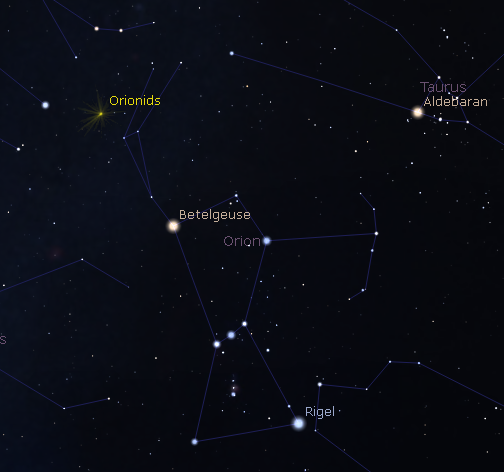
The Orionid meteor shower radiant at 5 a.m. October 21, 2017. The radiant rises at 11 p.m., so the meteors will be visible from then into morning twilight. Dispite the lication of the radiant, the meteors will b e seen all over the sky. However true Orionids can be traced back to the radiant point. Created using Stellarium.
08/08/2017 – Ephemeris – The Harvest Moon effect starts showing up 2 months early
Ephemeris for Tuesday, August 8th. The Sun rises at 6:37. It’ll be up for 14 hours and 20 minutes, setting at 8:58. The Moon, 1 day past full, will rise at 9:34 this evening.
The Harvest moon is nearly 2 months away, but some of its effects are starting to be felt now. I call it the Harvest Moon Effect. The Harvest Moon is a bit late this year, October 5th. It’s defined as the nearest full moon to the autumnal equinox. However from August to October the rising times of the full Moon and nights after for the next week don’t advance very fast. On average the Moon rises 50 minutes later each night. Between tonight and tomorrow night the interval will be 32 minutes. This is kind of a bummer this weekend when the Perseid meteor shower reaches peak. As with most meteor showers, the most meteors seen are after midnight. Saturday night’s Perseid peak has the Moon, six days after full rising at 11:36 p.m.
The times given are for the Traverse City/Interlochen area of Michigan. They may be different for your location.
Addendum
Moonrise time intervals for the rest of this week:
| Date | Moonrise | Difference |
| 08/08/17 | 9:34 p.m. | |
| 32 minutes | ||
| 08/09/17 | 10:06 p.m. | |
| 30 minutes | ||
| 08/10/17 | 10:36 p.m. | |
| 30 minutes | ||
| 08/11/17 | 11:06 p.m. | |
| 30 minutes | ||
| 08/12/17 | 11:36 p.m. | |
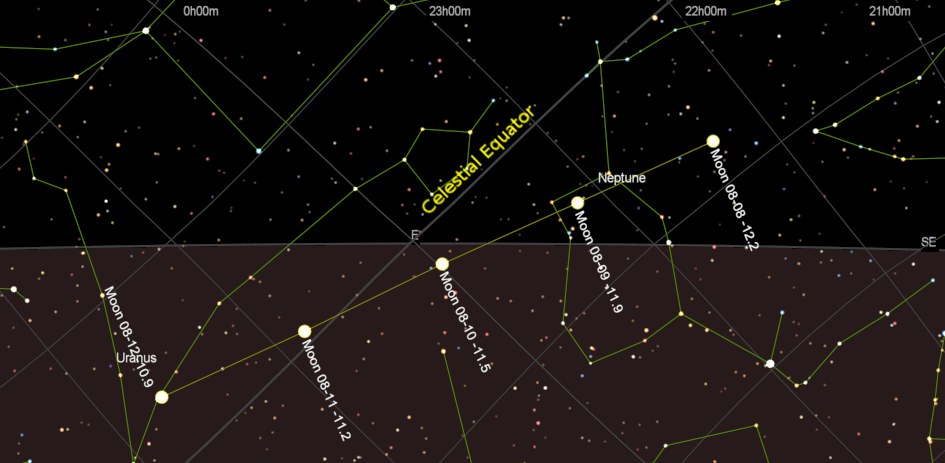
Harvest Moon Effect for this week. Note how shallow the path of the Moon is in relation to the eastern horizon. I’ve made the earth transparent so we can see the Moon below the horizon. As the Earth rotates the Moon will rise in a direction parallel to the celestial equator. In contrast the Moon’s path around March is steeper than average, so the interval in consecutive lunar rise times is much longer than the 50 minute average. Created using Cartes du Ciel (Sky Charts).
 Bob Moler's Ephemeris Blog