Archive

Archive for the ‘Naked-eye planets’ Category

Ephemeris: 03/06/2024 – Where have the naked-eye planets wandered off to this week?

March 6, 2024 Comments off

This is Ephemeris for Wednesday, March 6th. Today the Sun will be up for 11 hours and 27 minutes, setting at 6:37, and it will rise tomorrow at 7:08. The Moon, 3 days past last quarter, will rise at 6:03 tomorrow morning.

Let’s find out where the naked-eye planets have wandered off to this week, and see what planets are left. Saturn, and Mercury are gone, too close to the Sun to be seen. Jupiter will be in the west-southwest at 8 this evening. It will set at 11:25 pm in the west. Jupiter will be visible in the evening for only about another month or so. Venus, the morning star, will rise in the east-southeast at 6:23 am, but its brilliance is diminished by the bright twilight and its low position in the sky. It will be very low in the east-southeast at 6:45 am. Mars might be impossible to spot, being a bit to the right and above Venus. A pair of binoculars, at least, will be needed to spot it. It is about the width of the field of binoculars from Venus.

The astronomical event times given are for the Traverse City/Interlochen area of Michigan (EST, UT –5 hours). They may be different for your location.

Addendum
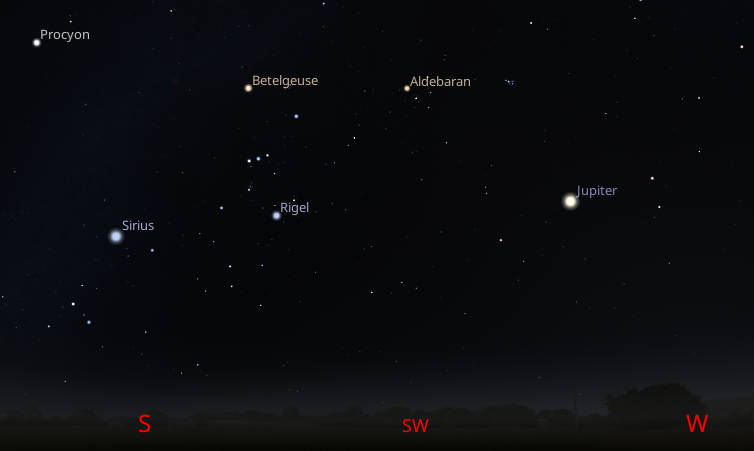
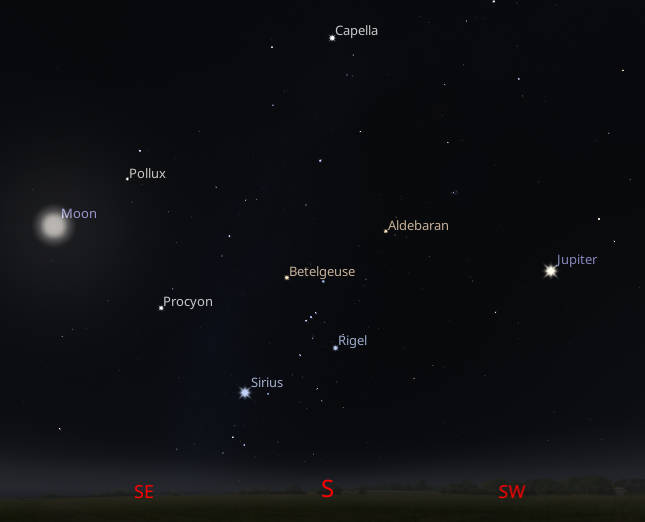
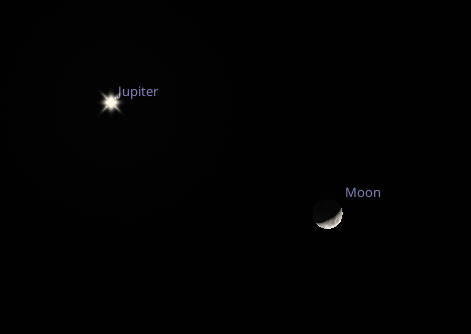
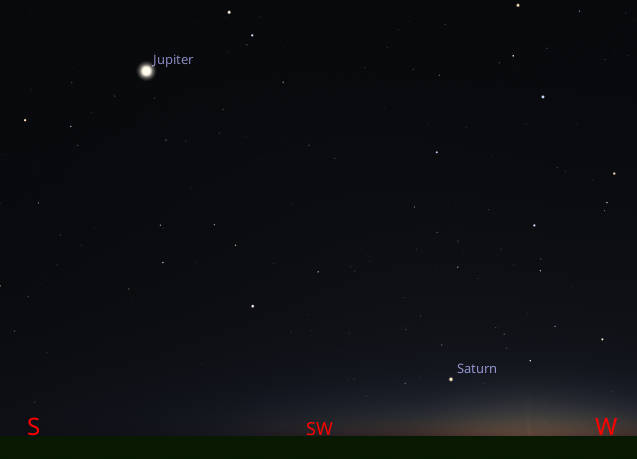
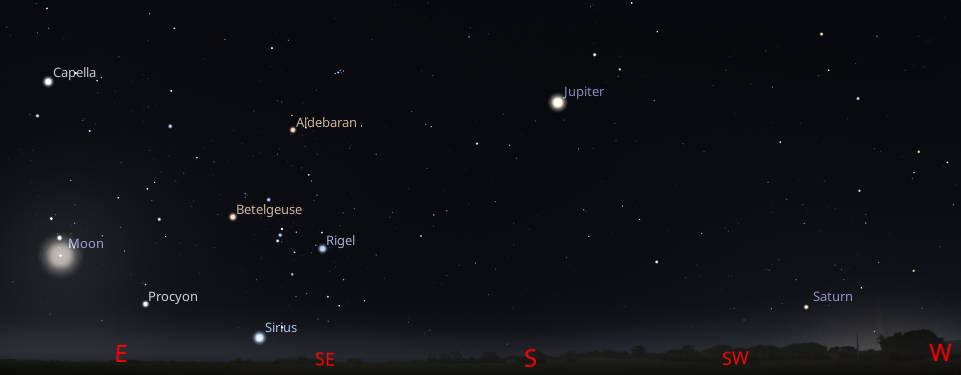
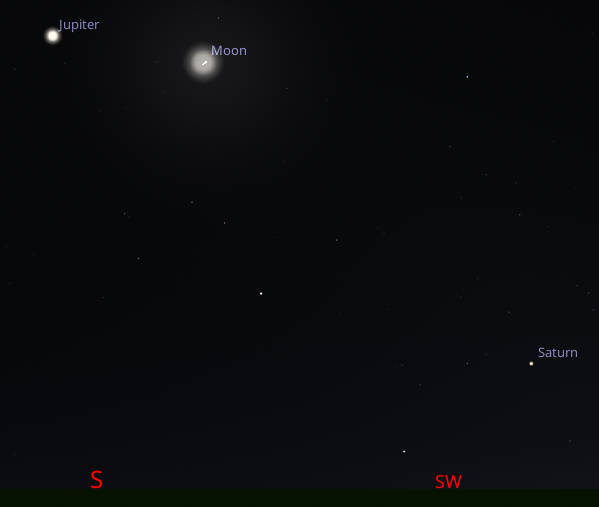
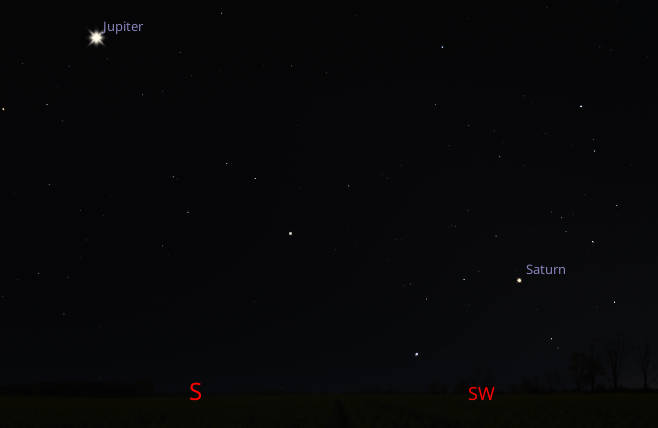
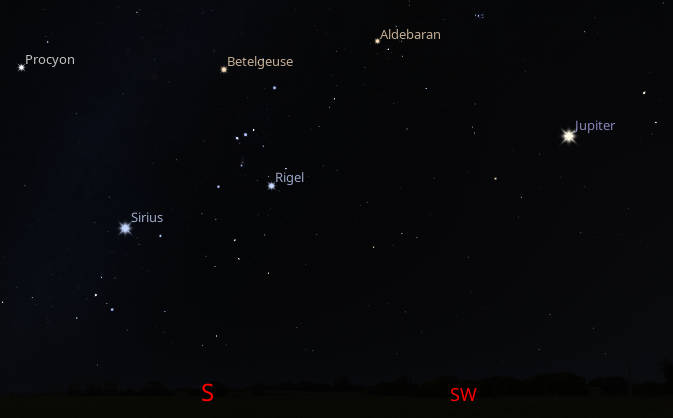
Jupiter seen with the bright stars of winter in the southwestern sky at 8 pm tonight, March 6th 2024
Jupiter seen with the bright stars of winter in the southwestern sky at 8 pm tonight, March 6th 2024. Currently, it is to the right of the stars of winter. But by the end of this year when it appears again in the evening sky Jupiter will be among the stars of winter, actually to the east of Aldebaran. Click or tap on the image to enlarge it. Created using Stellarium.
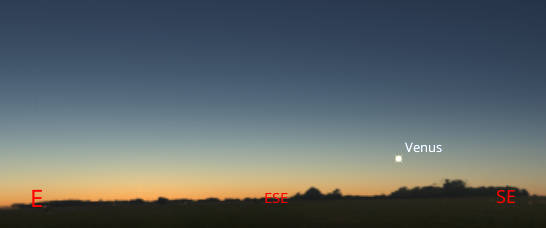
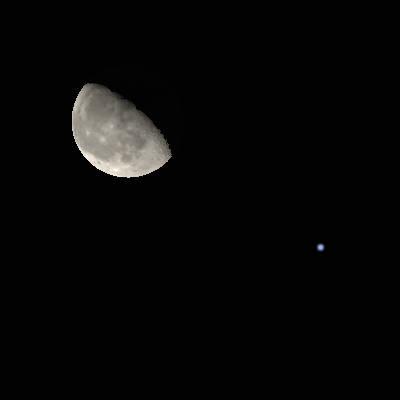
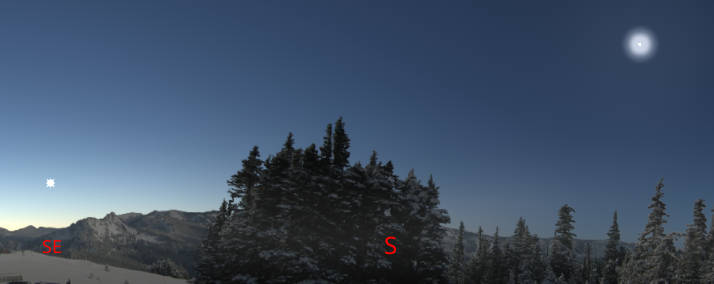
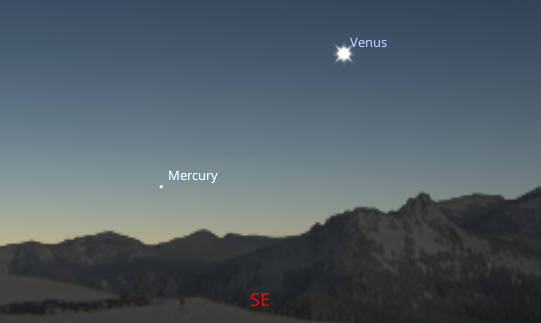
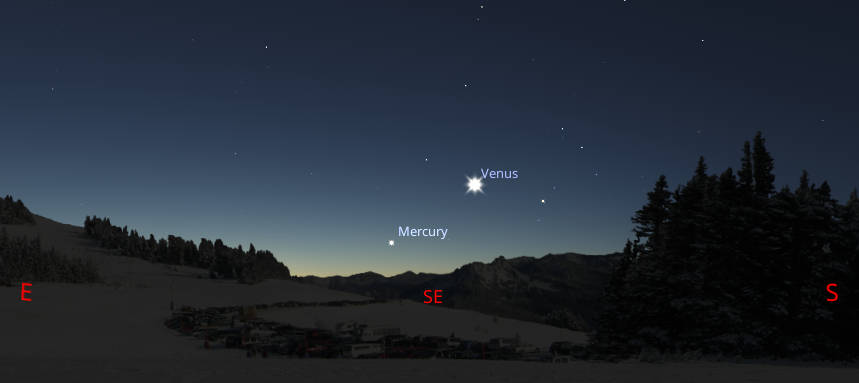
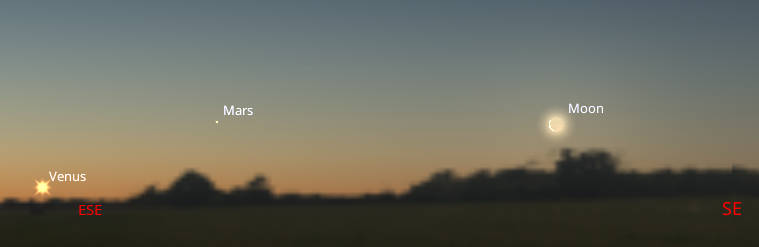
Venus, Mars and the Moon as they will be positioned at 6:30 am or about 40 minutes before sunrise. Tomorrow morning March 7th 2024
Venus, Mars and the Moon as they will be positioned at 6:30 am or about 40 minutes before sunrise. Tomorrow morning March 7th 2024. They will probably not be visible from our latitude of 45° north. However, the farther south one is the higher they will appear in the sky and the angle between Venus and the Moon will be steeper. Click or tap on the image to enlarge it. Created using Stellarium.
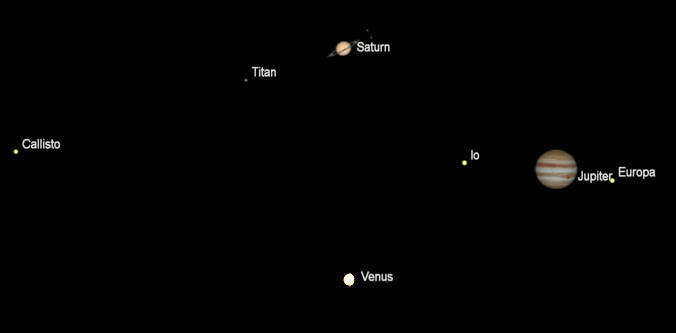
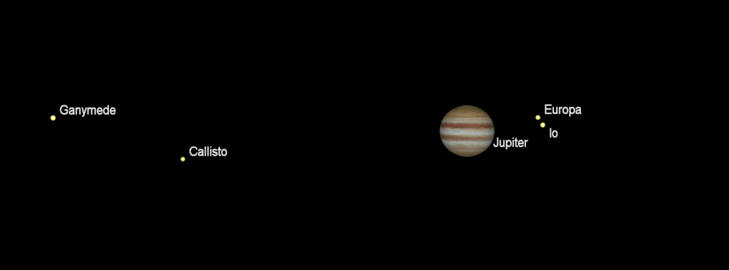
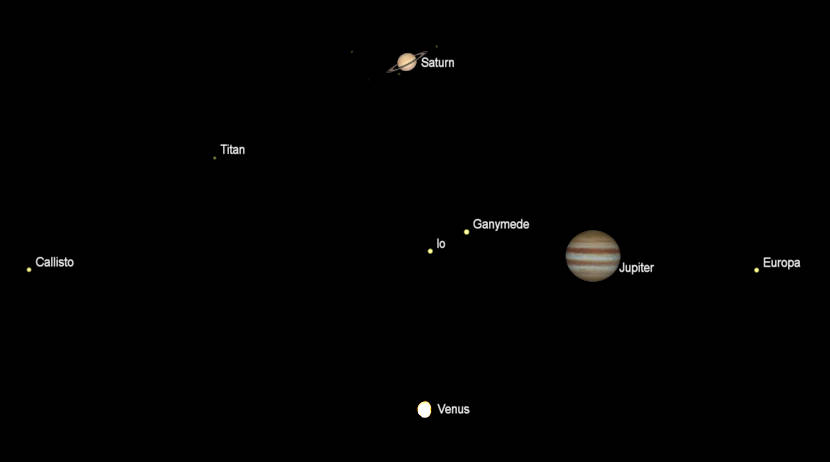
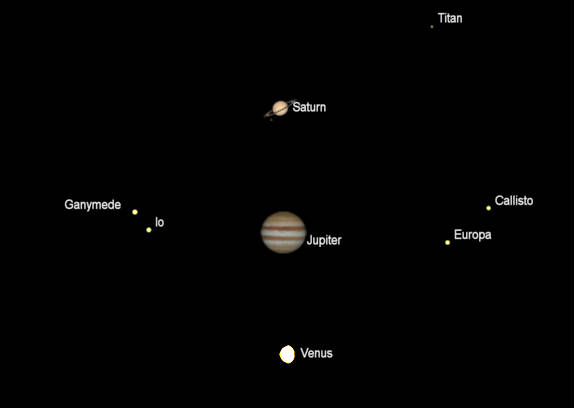
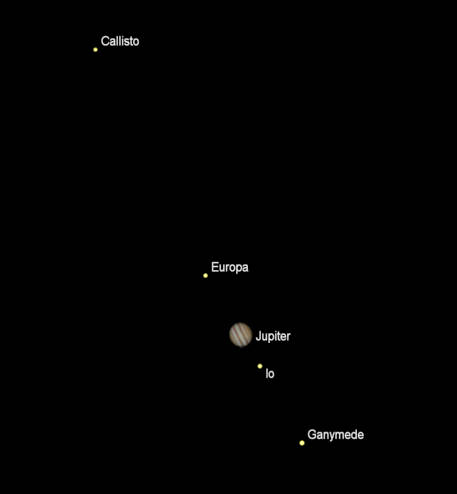
Jupiter and moons at 8 pm
We are down to one naked eye planet worth looking at in a telescope, and that is Jupiter. This is Jupiter and its moons as they would appear at 8 pm tonight, March 6th 2024. Jupiter and its moons are tilted at an angle as they would appear in the sky due to the angle of the ecliptic to the western horizon. In previous views, where I’ve looked at more than multiple planets at a time, I’ve shown them in relationship to the ecliptic or plane of the Earth’s orbit. Jupiter’s apparent diameter is 35.8 seconds of arc. Created using Cartes du Ciel (Sky Charts).
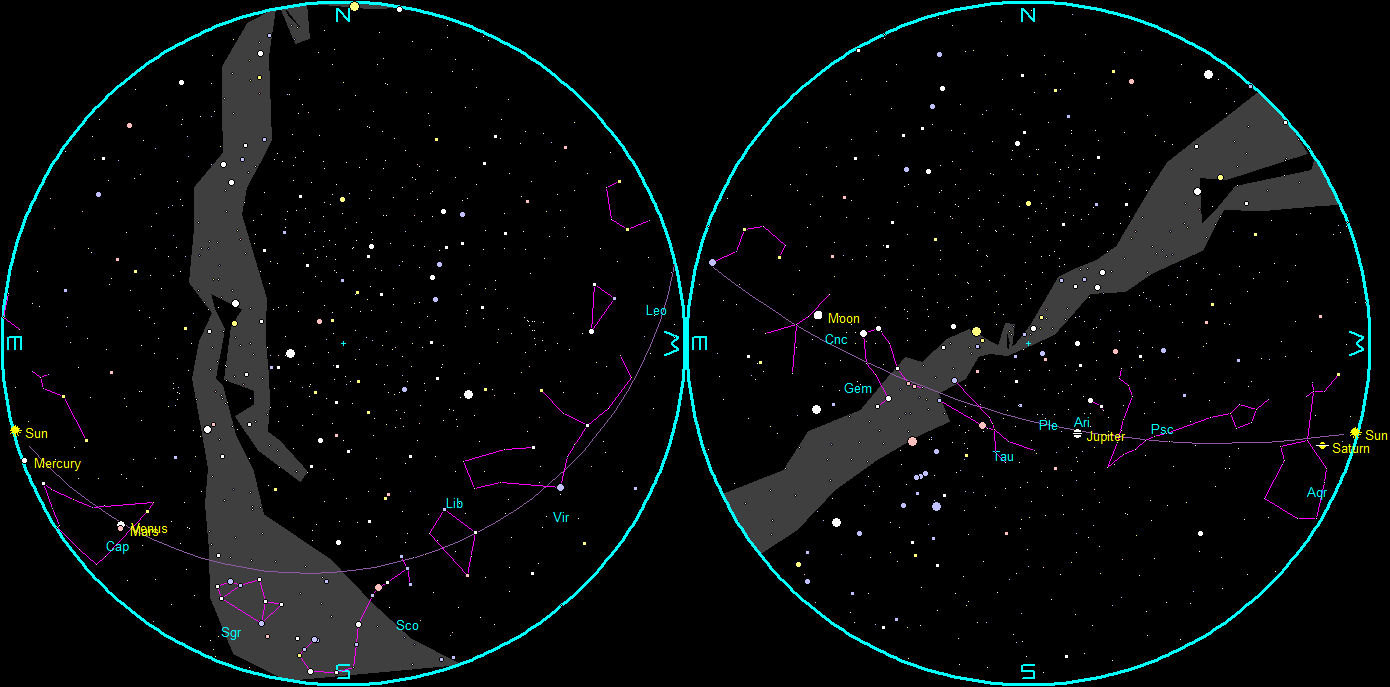
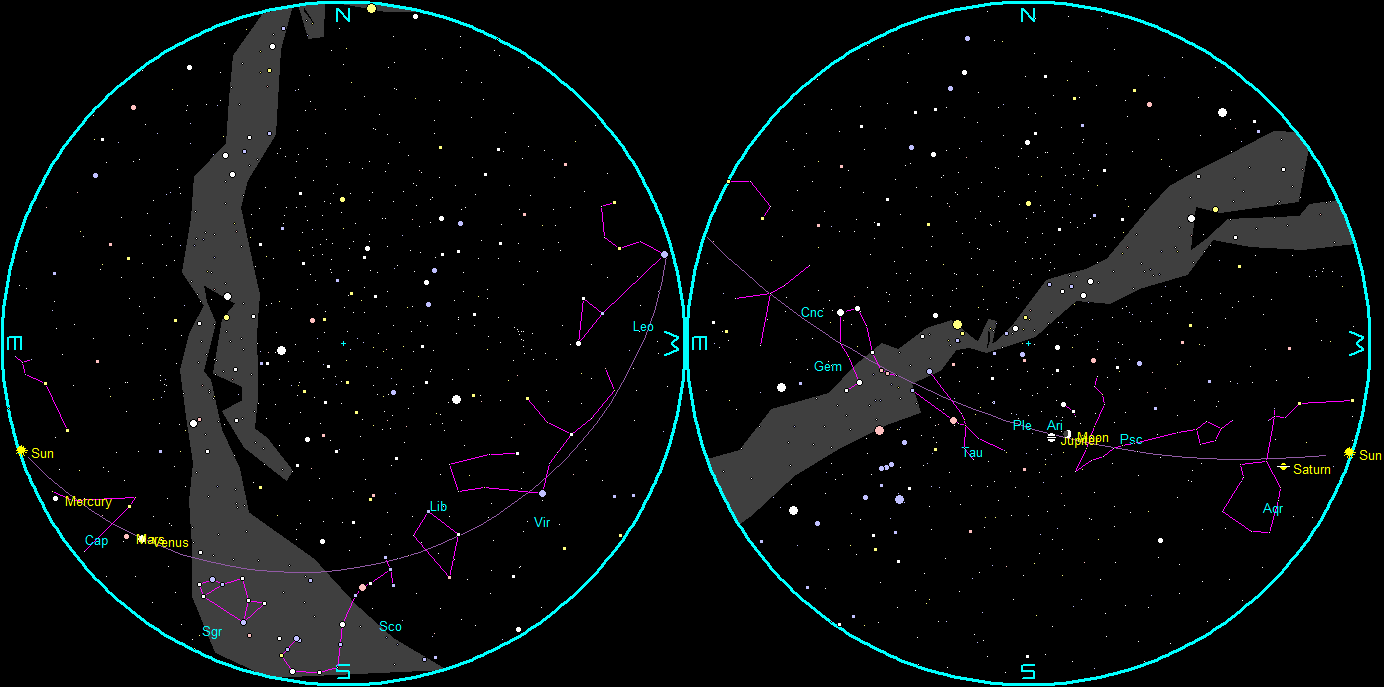
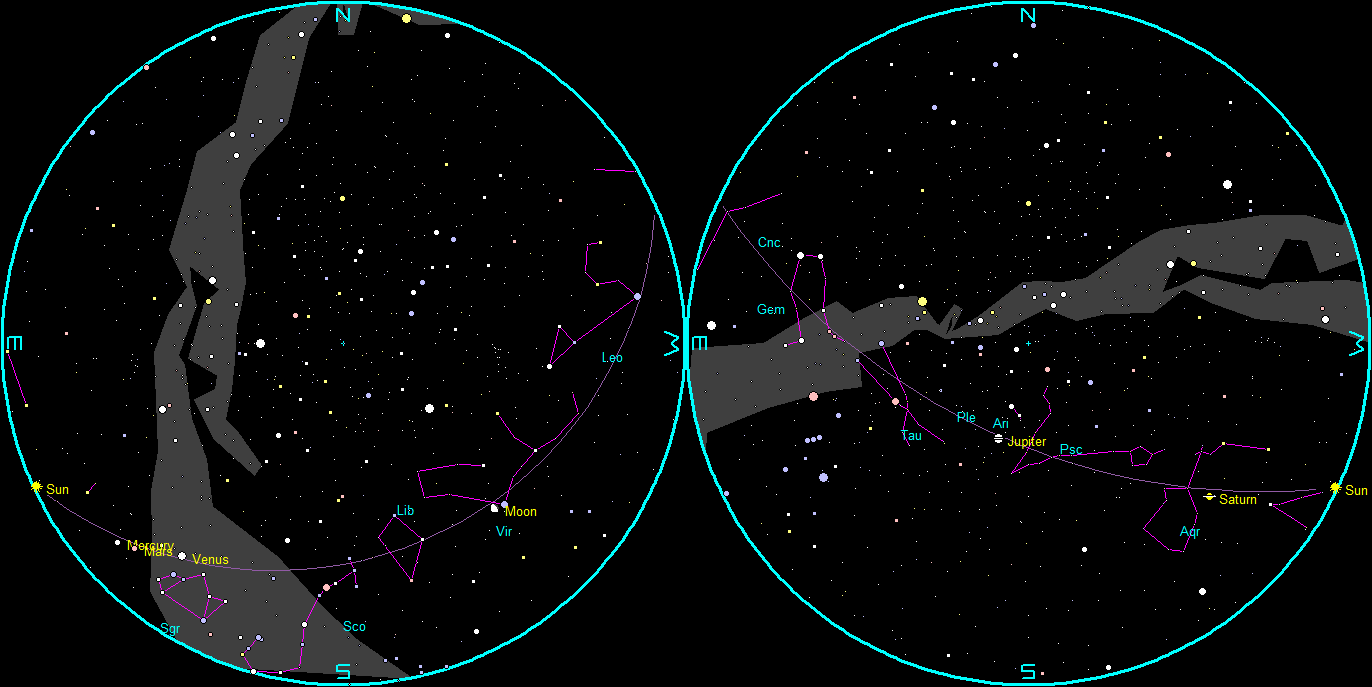
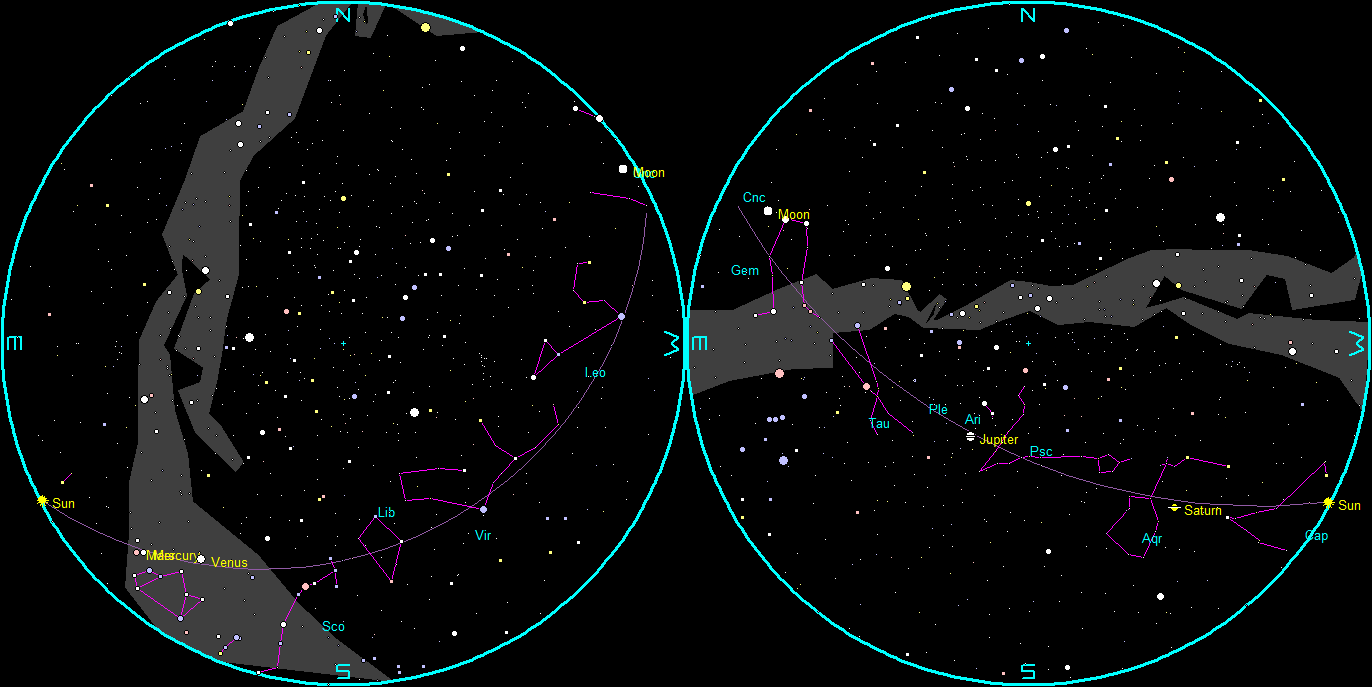
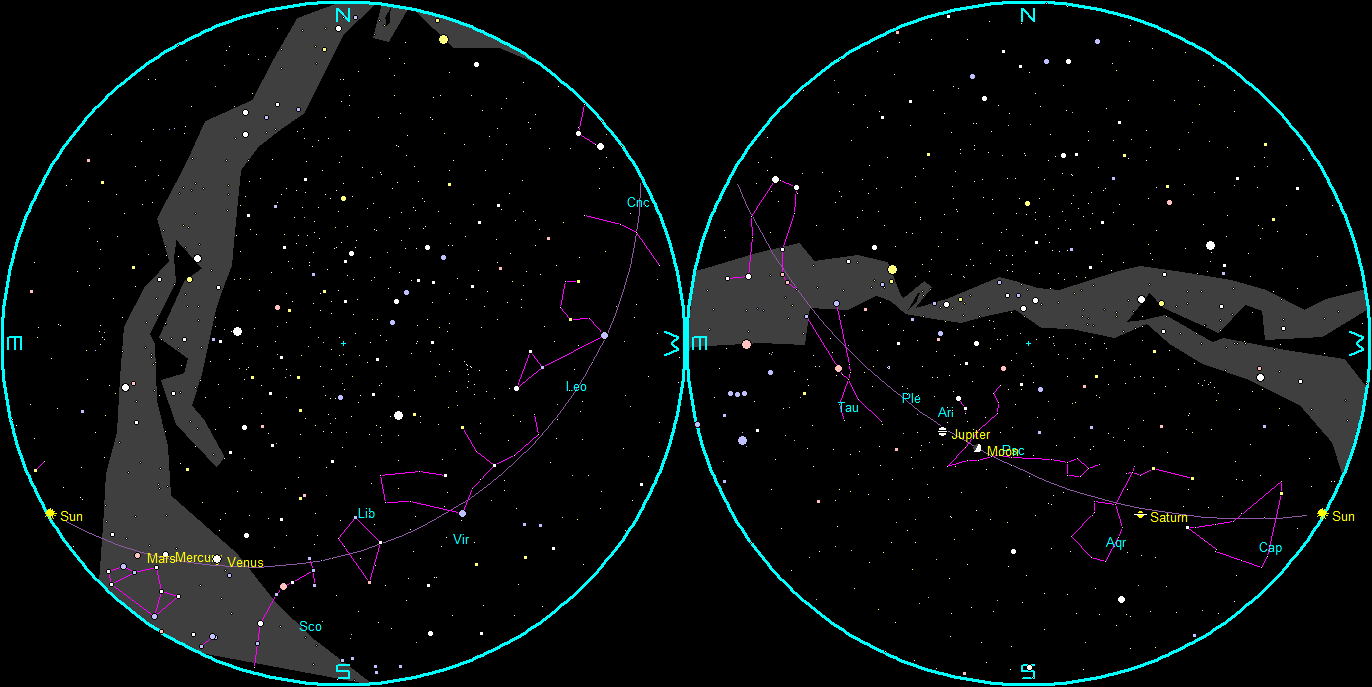
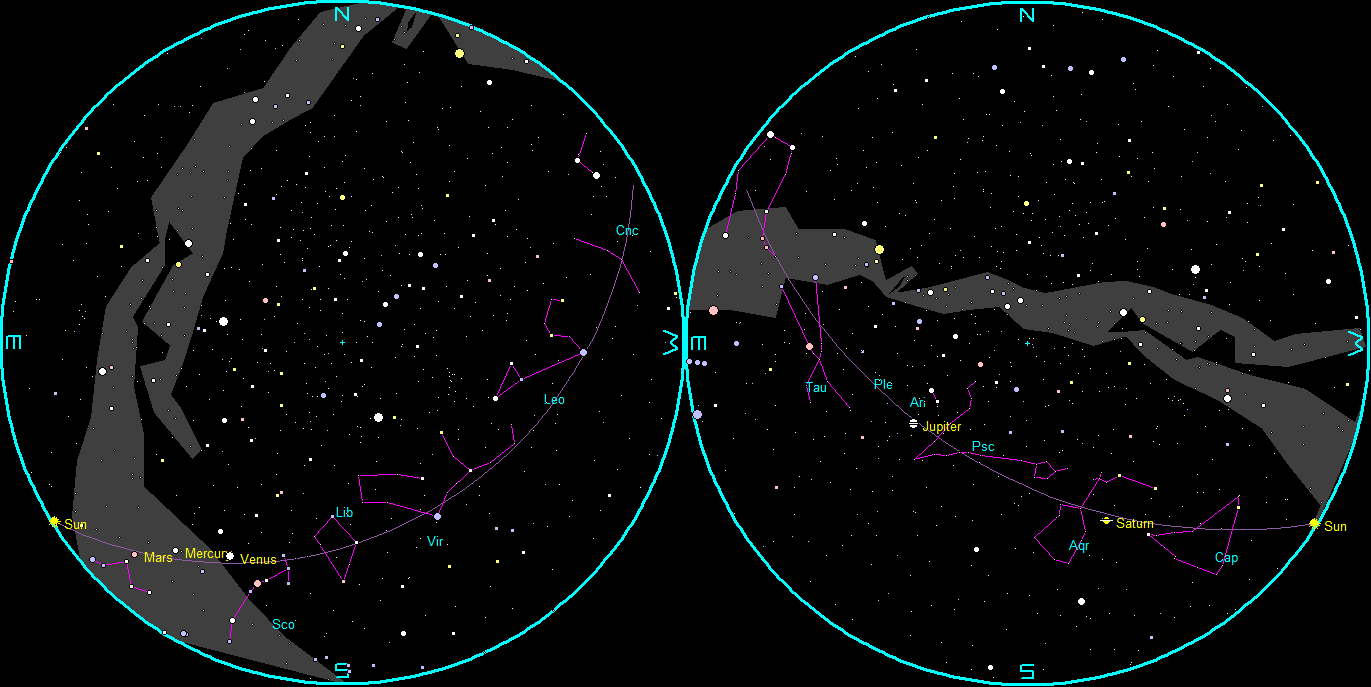
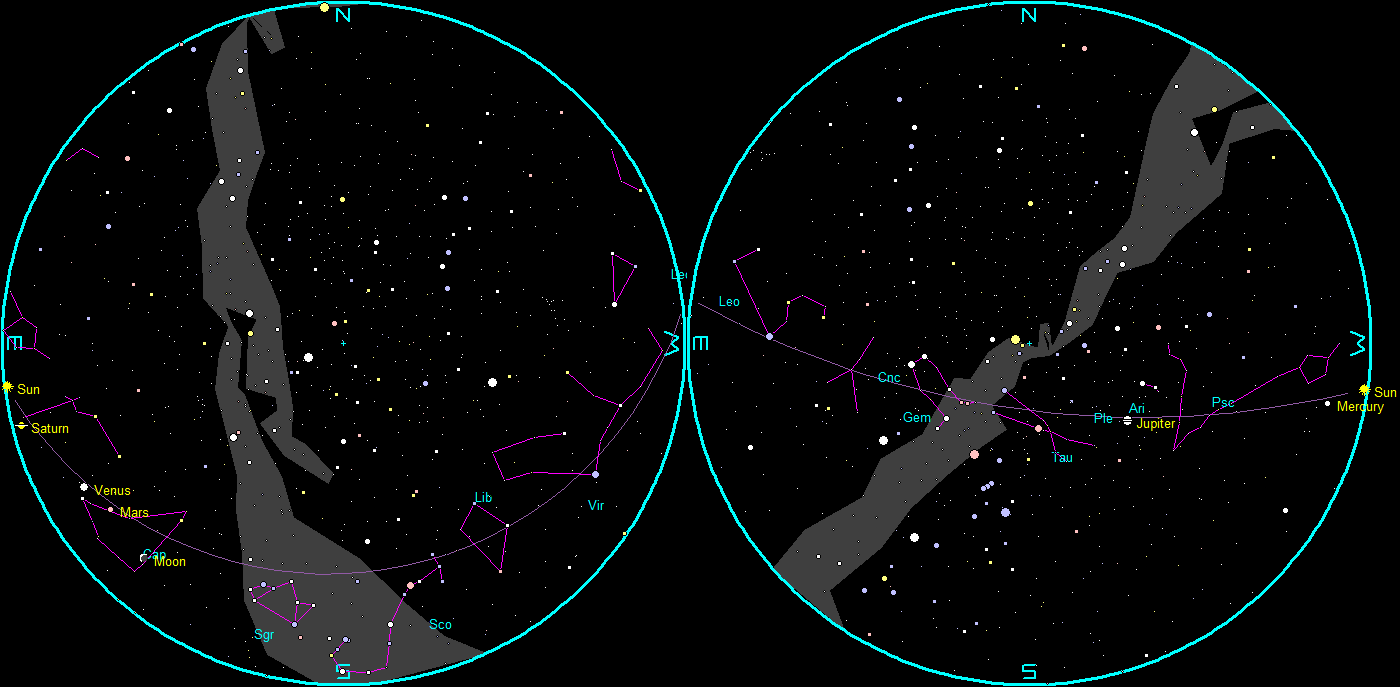
The naked-eye planets and the Moon at sunset and sunrise on a single night
The naked-eye planets and the Moon at sunset and sunrise on a single night, starting with sunset on the right on March 6, 2024. The night ends on the left with sunrise on the 6th. Click or tap on the image to enlarge it. Created using my LookingUp app and GIMP.

Ephemeris: 02/28/2024 – Where have the naked-eye planets wandered off to this week?

February 28, 2024 Comments off

This is Ephemeris for Wednesday, February 28th. Today the Sun will be up for 11 hours and 5 minutes, setting at 6:28, and it will rise tomorrow at 7:21. The Moon, halfway from full to last quarter, will rise at 10:52 this evening.

Let’s find out where the naked-eye planets have wandered off to this week, and see what planets are left to see. Saturn, and Mercury are gone, both actually in conjunction with the Sun today. Jupiter will be in the west-southwest at 8 this evening. It will set at 11:47 pm in the west. Jupiter will be visible in the evening for only about two more months. Venus, the morning star, will rise in the east-southeast at 6:27 am, but its brilliance is diminished by the bright twilight and its low position in the sky. It will be very low in the east-southeast at 7 am. Mars might be impossible to spot, being a bit to the right and above Venus. A pair of binoculars, at least, will be needed to spot it in the morning twilight.

The astronomical event times given are for the Traverse City/Interlochen area of Michigan (EST, UT –5 hours). They may be different for your location.

Addendum
Jupiter and the bright stars of winter as they might appear about 8 pm
Jupiter and the bright stars of winter as they might appear about 8 pm tonight, February 28th 2024. Created using Stellarium.
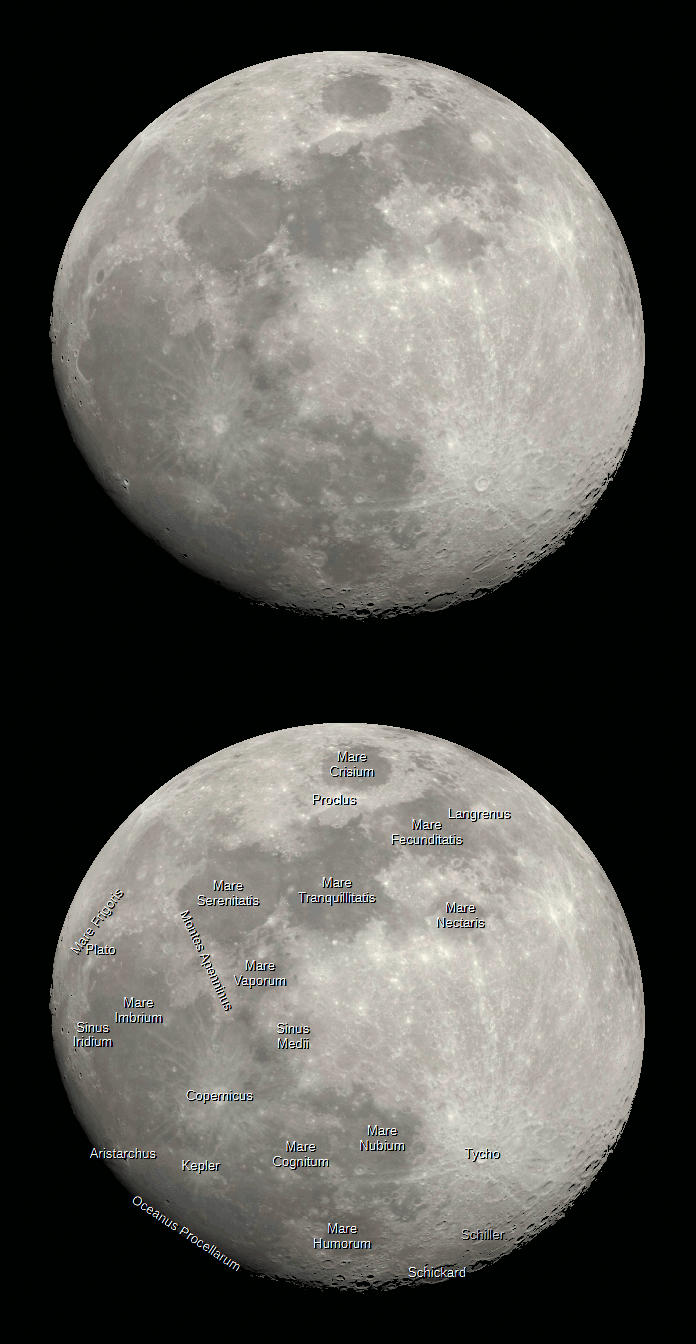
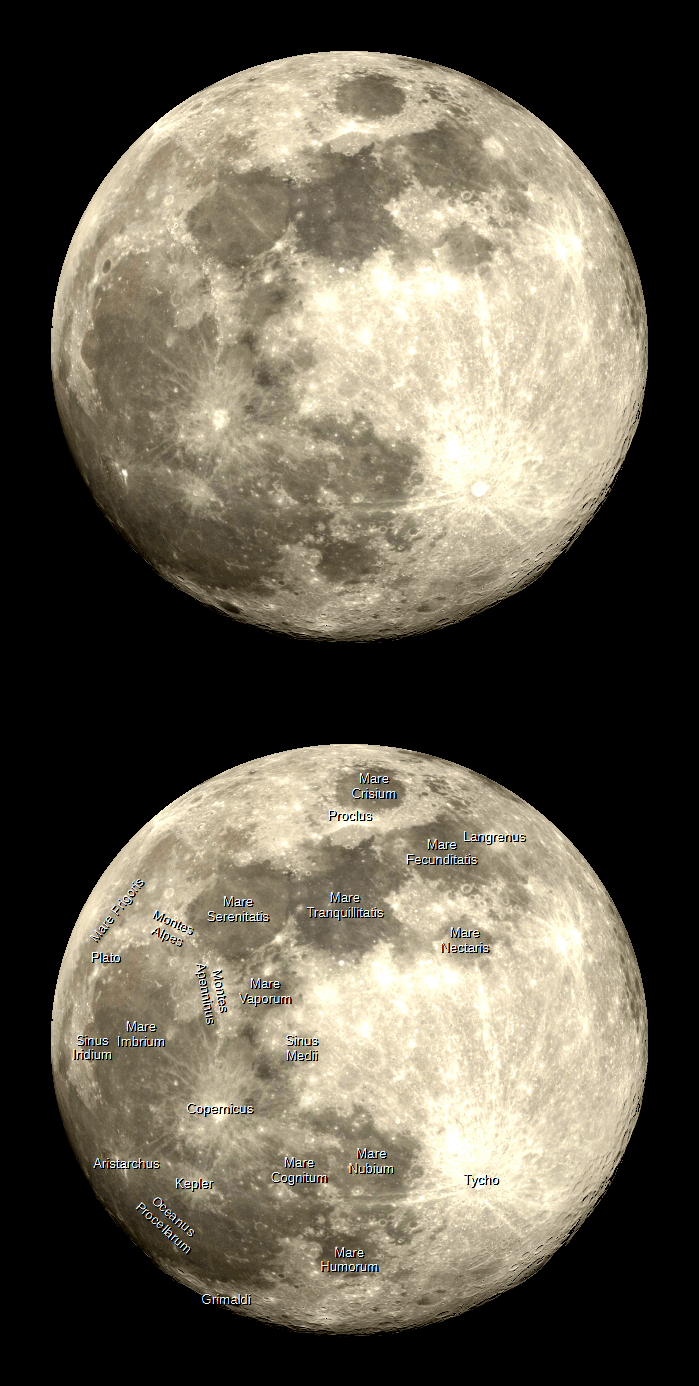
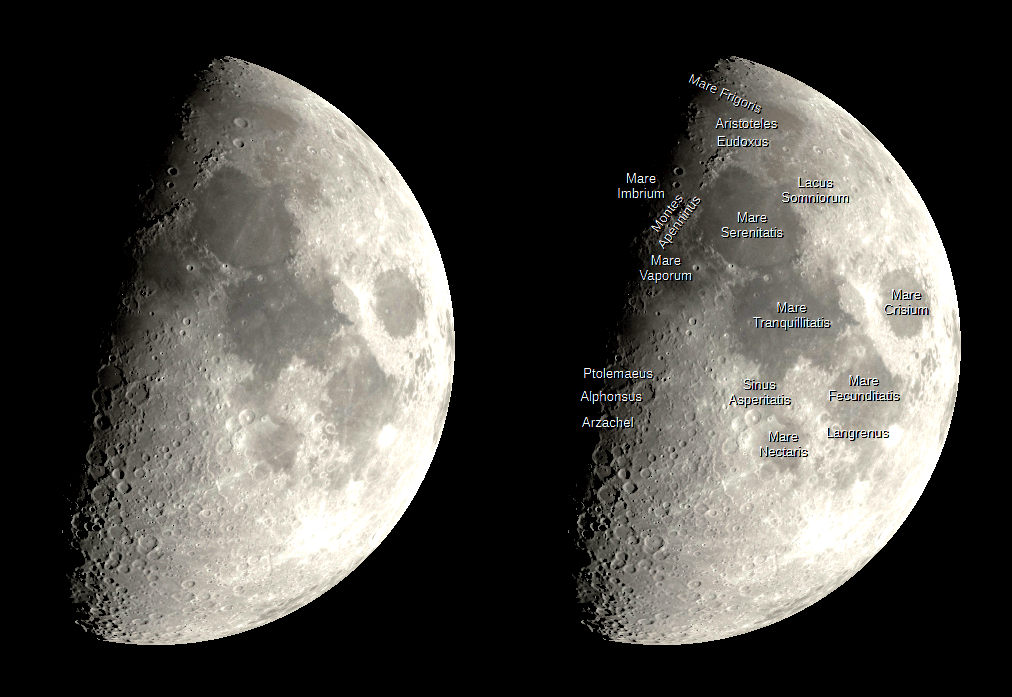
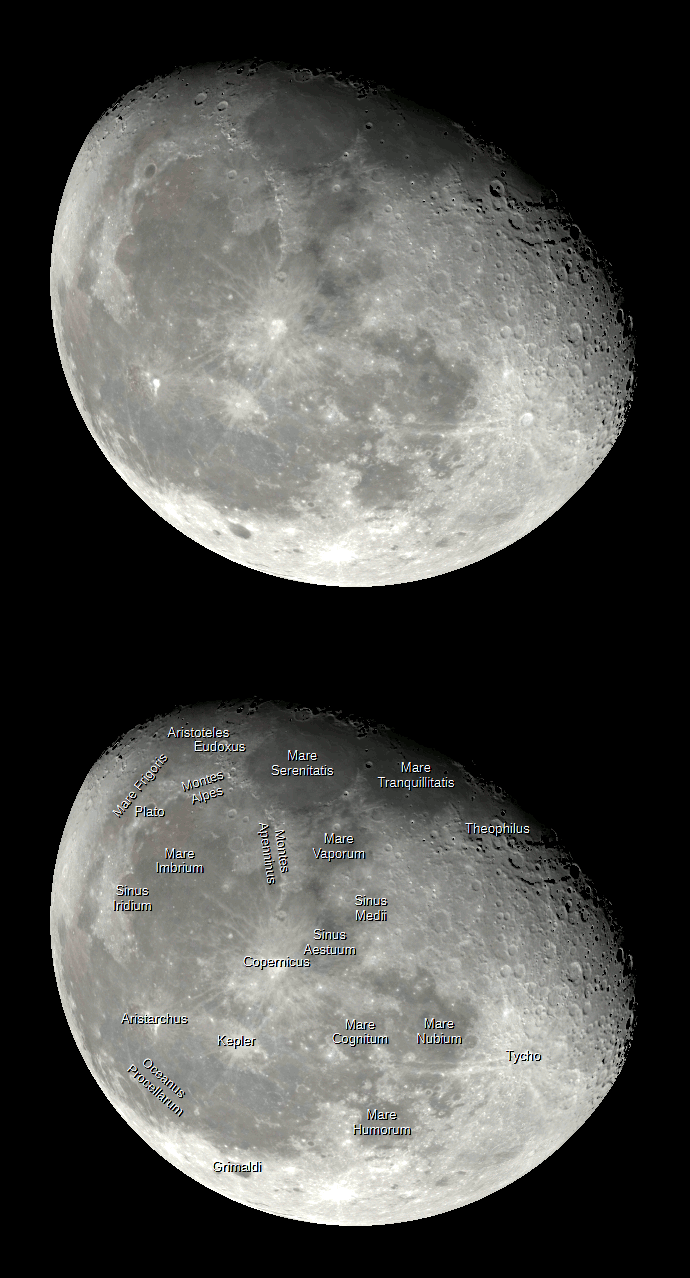
Annotated waning gibbous Moon
The moon is it might appear tonight at midnight a little over an hour after it rises. Selected features are labeled. Click or tap on the image to enlarge it. Created using Stellarium , LibreOffice Draw, and GIMP.
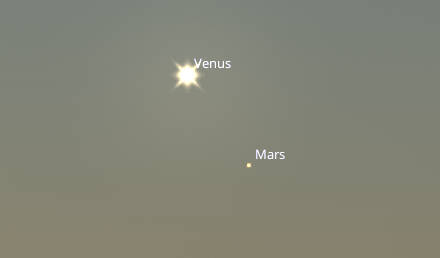
Venus and Mars as they might appear in a pair of binoculars
Venus and Mars as they might appear in a pair of binoculars low in the southeast at 7 am or a bit before, tomorrow morning, February 29th 2024. The planets are about 3° apart, which works out to be six widths of the moon or maybe half the width of the binocular field of view. Created using Stellarium.
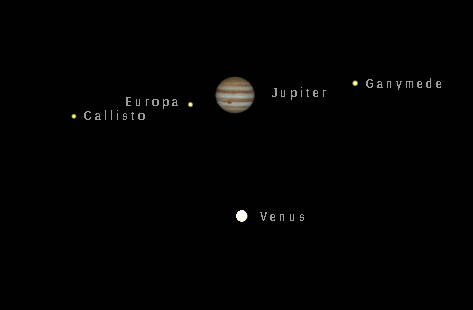
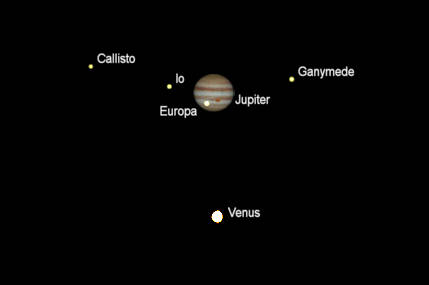
Telescopic Jupiter and Venus
Telescopic Jupiter and Venus (north up) as they would be seen in a small telescope, with the same magnification. At 8 pm EST February 28, 2024, for Jupiter, and 7 am on the 29th for Venus. Apparent diameters: Jupiter 36.53″; and Venus 11.11″, 91.2% illuminated.
Jupiter’s moon Io will pass behind (be occulted by) the planet at 8:17 pm EST. It will reappear at 11:39 pm away from the planet because until then it’ll still be in Jupiter’s shadow.
The ” symbol means seconds of arc (1/3600th of a degree). Created using Cartes du Ciel (Sky Charts) and GIMP.
The naked-eye planets and the Moon at sunset and sunrise on a single night
The naked-eye planets and the Moon at sunset and sunrise on a single night, starting with sunset on the right on February 28, 2024. The night ends on the left with sunrise on February 29th. Saturn is not shown because, at solar conjunction it happens to be below the horizon in both views. Click or tap on the image to enlarge it. Created using my LookingUp app and GIMP.

Ephemeris: 02/21/2024 – Where have the naked-eye planets wandered off to this week?

February 21, 2024 Comments off

This is Ephemeris for Wednesday, February 21st. Today the Sun will be up for 10 hours and 44 minutes, setting at 6:19, and it will rise tomorrow at 7:32. The Moon, 3 days before full, will set at 7:09 tomorrow morning.

Let’s find out where the naked-eye planets have wandered off to this week, and see what planets are left. Saturn, and Mercury are gone, being too close to the Sun to be visible. Jupiter will be in the west-southwest at 8 this evening. It will set at 12:11 am in the west. Jupiter will be visible in the evening for only about two more months. Venus, the morning star, will rise in the east-southeast at 6:33 am, but its brilliance is diminished by the bright twilight and its low position in the sky. It will be very low in the southeast at 7 am. This might be our first chance to spot Mars in the morning sky because tomorrow morning it will be just below Venus by about 1 1/2 moon diameters. A pair of binoculars may be needed to spot it.

The astronomical event times given are for the Traverse City/Interlochen area of Michigan (EST, UT –5 hours). They may be different for your location.

Addendum
Jupiter, the Moon and the bright stars of winter as they might appear about 8:00 pm tonight
Jupiter, the Moon and the bright stars of winter as they might appear about 8:00 pm tonight, February 21st 2024. Created using Stellarium.
The moon is it might appear at 8:00 pm tonight
The moon is it might appear at 8:00 pm tonight February 21st 2024. Selected features are labeled. Created using Stellarium, LibreOffice Draw, and GIMP.
Venus and Mars as they might appear in a pair of binoculars low in the southeast at about 7 a
Venus and Mars as they might appear in a pair of binoculars low in the southeast at about 7 am, or about a half hour before sunrise, tomorrow morning, February 22nd 2024. The planets are about the width of the Moon apart and Mars will be very difficult to spot. In fact both will be very low in the sky and any amount of obscured horizon may prevent them from being visible. Created using Stellarium.
Telescopic Jupiter and Venus
(north up) as they would be seen in a small telescope, with the same magnification. At 8 pm EST February 21, 2024, for Jupiter, and 7 am on the 22nd, for Venus. Apparent diameters: Jupiter 37.23″; and Venus 11.35″, 99.0% illuminated.
Jupiter’s missing moon is Io, which is behind the planet. It will reappear at 9:43 pm away from the planet because until then it’ll still be in Jupiter’s shadow. At 10:02 pm Europa will begin to transit across the face of the planet.
The ” symbol means seconds of arc (1/3600th of a degree). Created using Cartes du Ciel (Sky Charts) and GIMP.
The naked-eye planets and the Moon at sunset and sunrise on a single night
The naked-eye planets and the Moon at sunset and sunrise on a single night, starting with sunset on the right on February 21, 2024. The night ends on the left with sunrise on February 22nd. The label for Mars overlays the image of Venus. Click or tap on the image to enlarge it. Created using my LookingUp app and GIMP.

Ephemeris: 02/14/2024 – A Valentine’s Day look at the bright planets

February 14, 2024 Comments off

This is Ephemeris for Valentine’s Day and Ash Wednesday, Wednesday, February 14th. Today the Sun will be up for 10 hours and 24 minutes, setting at 6:09, and it will rise tomorrow at 7:43. The Moon, 2 days before first quarter, will set at 12:31 tomorrow morning.

Let’s find out where the naked -eyed planets have wandered off to this week, and see what planets are left. Saturn, for all practical purposes, is gone, setting an hour after the sun. Jupiter will be in the southwest at 7:30 this evening, above and left to the crescent moon. It will move to the low west -northwest by midnight and will set at 12:30 am. Venus, the morning star, will rise into the east-southeast at 6:30 am, but its brilliance is diminished by the bright twilight and its low position in the sky. It will be very low in the southeast at seven am. Being Ash Wednesday, Easter is 46 days away. But Lent has 40 days. The six Sundays in Lent don’t count.

The astronomical event times given are for the Traverse City/Interlochen area of Michigan (EST, UT –5 hours). They may be different for your location.

Addendum
The planet Jupiter and the Moon at 8 pm tonight, February 14th 2024. Created using Stellarium.
The Moon tonight about 8 pm this evening, February 14, 2024, as it might appear in binoculars or a small telescope
The Moon tonight about 8 pm this evening, February 14, 2024, as it might appear in binoculars or a small telescope, with selected features labeled. Created using Stellarium, LibreOffice Draw, and GIMP.
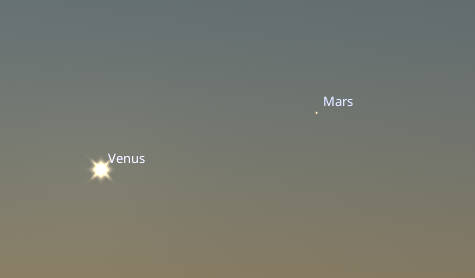
Venus will be seen low in the southeast at 7 am tomorrow, February 15th 2024. Mars is low and left of it, but is too faint and is overpowered by the bright twilight at that hour. Created using Stellarium.
Telescopic Jupiter and Venus (north up) as they would be seen in a small telescope, with the same magnification. At 8 pm EST February 14, 2024, for Jupiter, and 7 am on the 15th, for Venus. Apparent diameters: Jupiter 37.99″; and Venus 11.62″, 88.7% illuminated. Europa will be transiting the face of Jupiter at 8 pm. It starts across at7:20 pm. Satellites are hard to observe when transiting. Europa will end its transit at 9:43 pm. A short time later, at 9:54 its shadow will start to cross the face of Jupiter. The ” symbol means seconds of arc (1/3600th of a degree). Click or tap on the image to enlarge it. Created using Cartes du Ciel (Sky Charts) and GIMP.
The naked-eye planets and the Moon at sunset and sunrise on a single night, starting with sunset on the right on February 14, 2024. The night ends on the left with sunrise on February 15th. The label for Mars overlays the image of Venus. Click or tap on the image to enlarge it. Created using my LookingUp app and GIMP.

Ephemeris: 01/31/2024 – Where have the naked-eye planets wandered* off to this week?

January 31, 2024 Comments off

This is Ephemeris for Wednesday, January 31st. Today the Sun will be up for 9 hours and 46 minutes, setting at 5:49, and it will rise tomorrow at 8:02. The Moon, 2 days before last quarter, will rise at 11:56 this evening.

Let’s find out where the naked-eye planets have wandered off to this week. Three of those five planets are now visible. Saturn and Jupiter are the evening planets. Saturn is getting harder to spot low in the west-southwest, nearly succumbing to evening twilight, setting at 7:59 pm. Jupiter will move from high in the south to low in the west by midnight, and will set in the west-northwest at 1:20 am. Venus, the brilliant morning star, will rise in the east-southeast at 6:18 am, and be a brilliant beacon in the morning, shining in the southeast before the bright morning twilight claims it around 7:45 am. As we advance through winter into spring Venus is going to be harder to spot before sunrise.

The astronomical event times given are for the Traverse City/Interlochen area of Michigan (EST, UT –5 hours). They may be different for your location.

Addendum
Jupiter and Saturn as they would appear in the southwestern quadrant of the sky around 7 pm or about an hour and a quarter after sunset. Saturn will set an hour later, while Jupiter will last past midnight. Created using Stellarium.
The Moon and the star Spica as they might appear in binoculars or a very low power telescope at 3 am EST (8:00 UT) tomorrow morning, February 1st 2024. The exact position of the Moon with respect to Spica may be different for your longitude as compared to about 86° west longitude where I am. Created using Stellarium.
The Morning Star Venus, left, and the last quarter Moon, right, as they might appear about 7:30 am or about half an hour before sunrise February 1st 2024. Created using Stellarium.

Telescopic Saturn, Jupiter and Venus (north up) as they would be seen in a small telescope, with the same magnification. At 7 pm January 31, 2024, for Saturn and Jupiter, and 7:30 am on February 1st, for Venus. Apparent diameters: Saturn 15.66″, its rings 36.48″; Jupiter 39.69″; and Venus 12.22″, 85.8% illuminated. There are some Jovian satellite events this evening. At about 7:40 pm Ganymede will appear from behind Jupiter. The image shows the Ganymede label. However, the moon will be hidden at 7:00 pm. Then at 11:12 this evening Ganymede will enter Jupiter’s shadow, and stay hidden until 12:54 am tomorrow morning. The ” symbol means seconds of arc (1/3600th of a degree). Click or tap on the image to enlarge it. Created using Cartes du Ciel (Sky Charts) and GIMP.
The naked-eye planets and the Moon at sunset and sunrise on a single night, starting with sunset on the right on January 31, 2024. The night ends on the left with sunrise on February 1st. The labels for Mars and Mercury overlap. Click or tap on the image to enlarge it. Created using my LookingUp app and GIMP.

* The Greeks called the moving objects in the sky Planetes meaning Wanderers, from which we get the name Planet. In reality the planets do not wander, or move aimlessly, but move in orbits, discovered by Johannes Kepler, in accordance with the laws of gravitation discovered by Isaac Newton and Albert Einstein. The ancients considered the Sun and Moon planets, because they also moved against the “fixed” stars in the sky. This made seven, adding to the five naked eye planets we know today. These seven objects became the names of the days of the week in many countries. We have retained three of them: Sun’s day, Moon’s day, and Saturn’s day. The rest are named for Norse gods and a goddess.

Ephemeris: 01/24/2024 – Where have the planets wandered off to this week?

January 24, 2024 Comments off

This is Ephemeris for Wednesday, January 24th. Today the Sun will be up for 9 hours and 29 minutes, setting at 5:39, and it will rise tomorrow at 8:09. The Moon, 1 day before full, will set at 8:36 tomorrow morning.

Let’s find out where the naked-eye planets have wandered off to this week. Three of those five planets are now easily visible. Saturn and Jupiter are the evening planets. Saturn is getting harder to spot low in the west-southwest, setting at 8:19 pm. Jupiter will move from high in the south to low in the west by midnight, and will set in the west-northwest at 1:40 am. Venus, the brilliant morning star, will rise in the east-southeast at 6:09 am, and be a brilliant beacon in the morning, shining in the southeast before the bright morning twilight claims it around 8 am. Mercury, which rises by 7:03 am might just be visible below and left of Venus by 7:30 am.

The astronomical event times given are for the Traverse City/Interlochen area of Michigan (EST, UT –5 hours). They may be different for your location.

Addendum
A panorama of the evening sky
A panorama of the evening sky at 7 pm tonight, January 24, 2024, looking from the east northeast through south to the west to view the Moon, the bright winter stars, Jupiter, in the south, and Saturn, which is close to setting. Click or tap on the image to enlarge it. Created using Stellarium.
The nearly full moon visible in binoculars or small telescopes
The nearly full moon visible in binoculars or small telescopes at 7 this evening, January 24, 2024, showing very little shadow detail. The Moon being fully lit by the Sun and Earth is looking at the Moon from that the same direction. This allows crater rays to be quite visible. The best example of this is the crater Tycho, to the lower right. Rays are thought to be shallow craters caused by the debris kicked out when the impact of the body that created the crater occurred. They show better at full moon because there are no shadows. Otherwise, there would be shadows in these tiny craters, making the rays less visible. Shadows help us see the bigger craters, but only when there are no shadows do these little ejecta craters show up bright. Click or tap on the image to enlarge it. Created using Stellarium, LibreOffice Draw, and GIMP.
Venus and Mercury as seen about 40 minutes before sunrise
Here are Venus and Mercury as seen about 40 minutes before sunrise. That’s about 7:30 am in the Grand Traverse area of Michigan. There’s a good chance that Mercury will be invisible because it’s seen very low in the growing twilight. Mars, just below and left of Mercury, will pass it this weekend, as Mercury moves towards the Sun and Mars moves away. Venus of course is moving towards the Sun also and Mars will pass it about a month from now. Click or tap on the image to enlarge it. Created using Stellarium.
Telescopic Saturn, Jupiter and Venus (north up) as they would be seen in a small telescope, with the same magnification. At 7 pm January 24, 2024, for Saturn and Jupiter, and 7:30 am on the 25th, for Venus. Apparent diameters: Saturn 15.74″, its rings 36.66″; Jupiter 40.61″; and Venus 12.58″, 84.2% illuminated. Mercury appears too small to be shown here, but its apparent diameter is 5.52″ and is 82.5% illuminated. Jupiter's moon Ganymede will be eclipsed by Jupiter's shadow and disappear at 7:10 pm, and will emerge from the shadow at 8:53 pm. The ” symbol means seconds of arc (1/3600th of a degree). Click or tap on the image to enlarge it. Created using Cartes du Ciel (Sky Charts) and GIMP.
Telescopic Saturn, Jupiter and Venus (north up) as they would be seen in a small telescope, with the same magnification. At 7 pm January 24, 2024, for Saturn and Jupiter, and 7:30 am on the 25th, for Venus. Apparent diameters: Saturn 15.74″, its rings 36.66″; Jupiter 40.61″; and Venus 12.58″, 84.2% illuminated. Mercury appears too small to be shown here, but its apparent diameter is 5.52″ and is 82.5% illuminated. Jupiter’s moon Ganymede will be eclipsed by Jupiter’s shadow and disappear at 7:10 pm, and will emerge from the shadow at 8:53 pm. The ” symbol means seconds of arc (1/3600th of a degree). Click or tap on the image to enlarge it. Created using Cartes du Ciel (Sky Charts) and GIMP.
The naked-eye planets and the Moon at sunset and sunrise on a single night
The naked-eye planets and the Moon at sunset and sunrise on a single night, starting with sunset on the right on January 24, 2024. The night ends on the left with sunrise on the 25th. The labels for Mars and Mercury overlap, though the planets do not. Mars is the reddish one. Click or tap on the image to enlarge it. Created using my LookingUp app and GIMP.

Ephemeris: 01/18/2024 – A quick guide to Jupiter for the small telescope

January 18, 2024 Comments off

This is Ephemeris for Thursday, January 18th. Today the Sun will be up for 9 hours and 16 minutes, setting at 5:31, and it will rise tomorrow at 8:14. The Moon, 1 day past first quarter, will set at 2:43 tomorrow morning.

Jupiter is the largest planets and is generally the largest appearing planet in a telescope. Venus appears a bit larger than Jupiter only for about four months when it’s the closest it gets to us. There’s always something going on with Jupiter and its 4 Galilean moons which appear to shuffle back and forth from one side to the other of the planet. Jupiter has cloud bands which run parallel to its equator and to the plane of the moon’s orbits. And it has the Great Red Spot, but that spot is not easily visible in small telescopes. Back in the 1950s it was big and brick red. It is since lost a great deal of its redness and size. The moons can hide behind Jupiter or in its shadow or cross in front of the planet. Tonight Jupiter will appear below and right of the Moon.

The astronomical event times given are for the Traverse City/Interlochen area of Michigan (EST, UT –5 hours). They may be different for your location.

Addendum
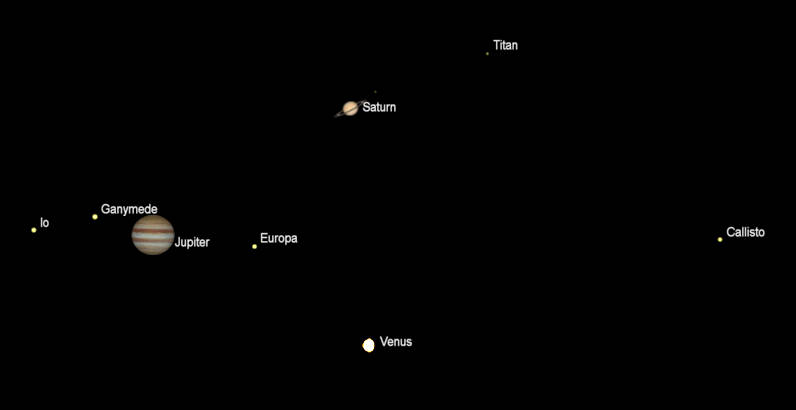
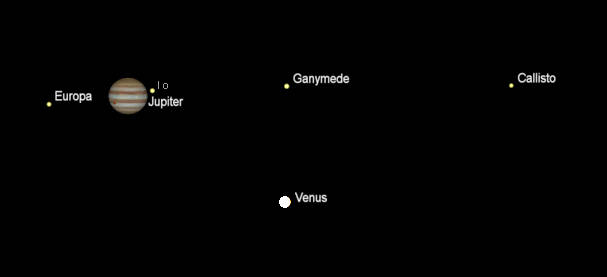
Over this evening (January 18, 2024) Europa and Io will be approaching Jupiter and Io will pass Europa to duck behind Jupiter in occultation just before Jupiter sets for us. Callisto will be moving towards Jupiter also, but slowly. Ganymede will be moving a little bit away, being near the furthest extension of its orbit. Created using Cartes du Ciel (Sky Charts).

Ephemeris: 01/17/2024 – Where have the naked-eye planets wandered off to this week?

January 17, 2024 Comments off

This is Ephemeris for Wednesday, January 17th. Today the Sun will be up for 9 hours and 14 minutes, setting at 5:30, and it will rise tomorrow at 8:15. The Moon, at first quarter today, will set at 1:28 tomorrow morning.

Let’s find out where the naked-eye planets have wandered off to this week. Four of those five planets are now visible. Saturn and Jupiter are the evening planets. Saturn can be seen moving from low in the southwest to setting in the west-southwest at 8:42 pm. Jupiter, left of the Moon tonight will move from high in the south to set in the west-northwest at 2:05 am. Venus, the brilliant morning star, will rise in the east-southeast at 5:58 am, and be a brilliant beacon in the morning, shining in the southeast before the bright morning twilight claims it around 8 am. Mercury will also be visible below and left of Venus, and should be visible by 7:30 am. Mars is below left of Mercury, but really is too dim to be seen.

The astronomical event times given are for the Traverse City/Interlochen area of Michigan (EST, UT –5 hours). They may be different for your location.

Addendum
Jupiter, Saturn and the Moon around 7 this evening, January 17, 2024. Jupiter appears brighter and bigger than the Moon, but isn’t. The blooming of the image of stellar type objects is to make them look brighter. The Moon though brighter is shown at its actual apparent size. They look much nicer in the real sky. Created using Stellarium.
The moon tonight about 7 pm this evening, January 17, 2024, as it might appear in binoculars or a small telescope, with selected features labeled. Created using Stellarium, LibreOffice Draw, and GIMP.
Venus and Mercury as they might appear about 7:30 tomorrow morning, January 18th 2024, in the growing twilight. Created using Stellarium.
Telescopic Saturn, Jupiter and Venus (north up) as they would be seen in a small telescope, with the same magnification. At 7 pm January 17, 2024, for Saturn and Jupiter, and 7:30 am on the 18th, for Venus. Apparent diameters: Saturn 15.84″, its rings 36.89″; Jupiter 41.57″; and Venus 12.96″, 82.6% illuminated. Mercury appears too small to be shown here, but its apparent diameter is 6.02″ and is 74.2% illuminated. The ” symbol means seconds of arc (1/3600th of a degree). Click or tap on the image to enlarge it. Created using Cartes du Ciel (Sky Charts) and GIMP.
The naked-eye planets and the Moon at sunset and sunrise on a single night, starting with sunset on the right on January 170, 2024. The night ends on the left with sunrise on the 18th. Click or tap on the image to enlarge it. Created using my LookingUp app and GIMP.

Ephemeris: 01/12/2024 – Mercury is at greatest western elongation from the Sun today

January 12, 2024 Comments off

This is Ephemeris for Friday, January 12th. Today the Sun will be up for 9 hours and 6 minutes, setting at 5:24, and it will rise tomorrow at 8:17. The Moon, 1 day past new, will set at 6:49 this evening.

The planet Mercury is reaching its greatest western elongation or separation west of the Sun today at a 23.5 degrees angle, which is pretty good actually, although the angle above the horizon where we see Mercury at this point in the year is not the best. However, Venus can be used to spot Mercury because Mercury will be to the lower left of Venus. Binoculars are always helpful in spotting Mercury for the first time. From now until about a week from now Mercury will not move very much in relationship to Venus, but it will be getting somewhat brighter as its phase goes from half illuminated to more gibbous towards full. Early in the spring it will be seen in the evening sky, at a little bit better angle above the horizon, although it will be it will not be as far away from the Sun. Created using Stellarium and GIMP.

The astronomical event times given are for the Traverse City/Interlochen area of Michigan (EST, UT –5 hours). They may be different for your location.

Addendum

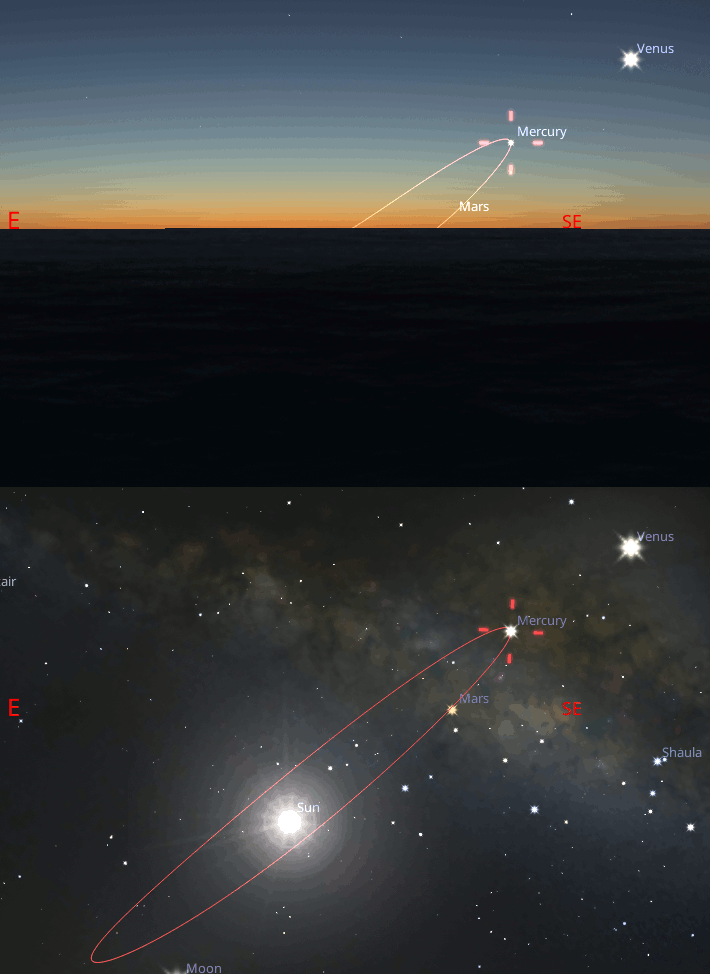
Venus, Mercury and Mars at 7:30 this morning
Here we have an image of Venus, Mercury and Mars at 7:30 this morning, the 12th of January 2024 with the atmosphere and the horizon and then showing Mercury’s orbit as seen without the ground or atmosphere getting in the way, showing the complete orbit of Mercury. Note that the Sun does not appear in the center of Mercury’s orbit when we can see the whole thing. Mercury’s orbit is quite elliptical. Mercury is quite far away from the Sun compared to the opposite end of the orbit. We are going to see Mercury at the opposite end of the orbit on March 24th when it is visible in the evening, at it’s greatest eastern elongation. It will appear much closer to the Sun then, at 18.7 degrees which is part of the problem we have in the Northern Hemisphere viewing Mercury compared to folks in the Southern Hemisphere.

Ephemeris: 01/10/2024 – Where have the naked-eye planets wandered off to this week?

January 10, 2024 Comments off

This is Ephemeris for Wednesday, January 10th. Today the Sun will be up for 9 hours and 2 minutes, setting at 5:21, and it will rise tomorrow at 8:18. The Moon, 1 day before new, will rise at 8:59 tomorrow morning.

Let’s find out where the naked-eye planets have wandered off to this week. Four of those five planets are now visible. Mars will rise too close to sunrise to be seen, however. Saturn and Jupiter are the evening planets. Saturn can be seen moving from low in the southwest to setting in the west-southwest at 9:06 pm. Jupiter will be moving from high in the south to the west by midnight and will set at 2:31 am. Venus, the brilliant morning star, will rise in the east-southeast at 5:44 am, and be a brilliant beacon in the morning, shining in the southeast before the bright morning twilight claims it around 8 am. Mercury will also be visible below and left of Venus, and should be visible by 7:30 am.

The astronomical event times given are for the Traverse City/Interlochen area of Michigan (EST, UT –5 hours). They may be different for your location.

Addendum

Jupiter and Saturn as they might appear tonight at 7:00 PM January 10th, 2024. Click on or tap on the image to enlarge it . Created using Stellarium.
Venus and Mercury as they might appear at 7:30 tomorrow morning January 11th, 2024. The bright star to the right of Venus is the reddish star Antares in Scorpius, one of the first of the southern summer stars to appear in the morning sky. Click or tap on the image to enlarge it. Created using Stellarium.
Telescopic Saturn, Jupiter and Venus (north up) as they would be seen in a small telescope, with the same magnification. At 7 pm January 10, 2024, for Saturn and Jupiter, and 7:30 am on the 4th, for Venus. Apparent diameters: Saturn 15.95″, its rings 37.16″; Jupiter 42.56″; and Venus 13.39″, 80.8% illuminated. Mercury appears too small to be shown here, but its apparent diameter is 6.78″ and is 61.2% illuminated. The ” symbol means seconds of arc (1/3600th of a degree). Created using Cartes du Ciel (Sky Charts) and GIMP.
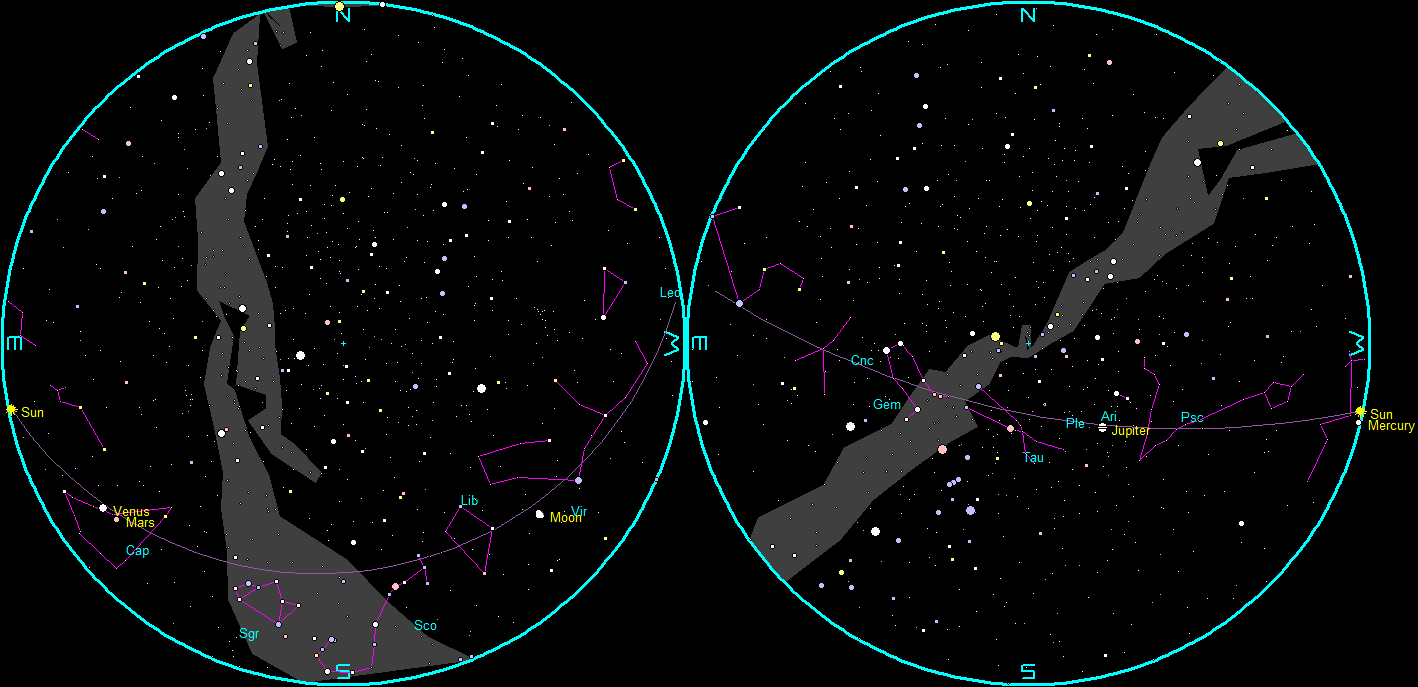
The naked-eye planets and the Moon at sunset and sunrise on a single night, starting with sunset on the right on January 10, 2024. The night ends on the left with sunrise on the 11th. Click or tap on the image to enlarge it. Created using my LookingUp app and GIMP.