Archive
05/04/2022 – Ephemeris – Let’s search for the naked-eye planets for this week
This is Ephemeris for Wednesday, May 4th. Today the Sun will be up for 14 hours and 23 minutes, setting at 8:51, and it will rise tomorrow at 6:27. The Moon, halfway from new to first quarter, will set at 1:03 tomorrow morning.
Let’s search for the naked-eye planets for this week. There is one bright planet in the evening sky. Mercury may be spotted around and after 10 this evening very low in the west-northwest and be visible for the next half hour or so before it sets at 10:40 pm. After that, the planet action shifts to the morning sky. The other 4 naked-eye planets are there. By 5:30 or 5:45 am, the planets will be spread out low from the east to southeast with brilliant Venus lowest in the east, higher and right is Jupiter. Dim Mars will be farther to the right and a bit above Jupiter, while brighter Saturn will be even farther right and above Mars. All four will have risen by 5 am, but it will take a very low eastern horizon to pick them all up at that time.
The astronomical event times given are for the Traverse City/Interlochen area of Michigan (EDT, UT – 4 hours). They may be different for your location.
Addendum
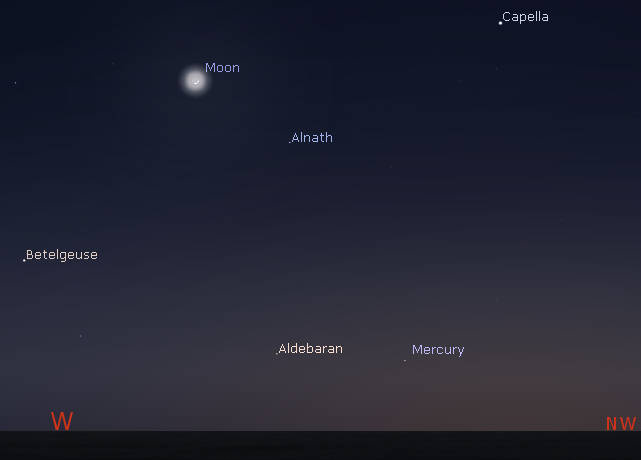
Mercury in evening twilight, with competition from bright winter stars and the Moon at 10 pm, or about an hour after sunset. It might take a pair of binoculars to pick Mercury out of twilight.
Created using Stellarium.
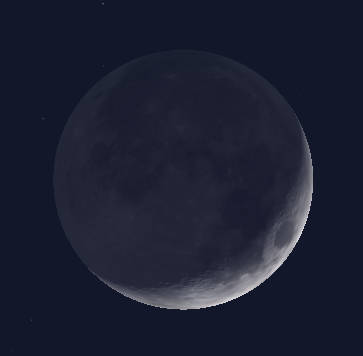
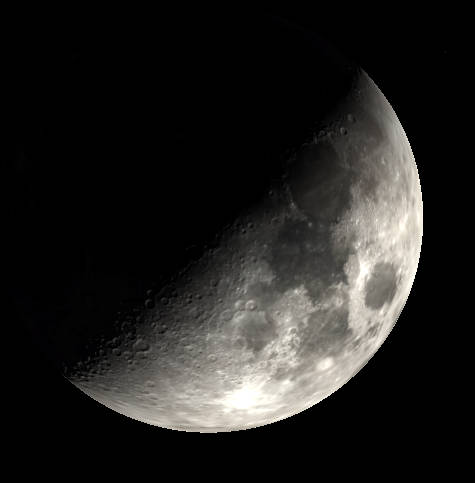
The Moon as it might appear in binoculars tonight, showing earth shine. May 4, 2022. Created using Stellarium.
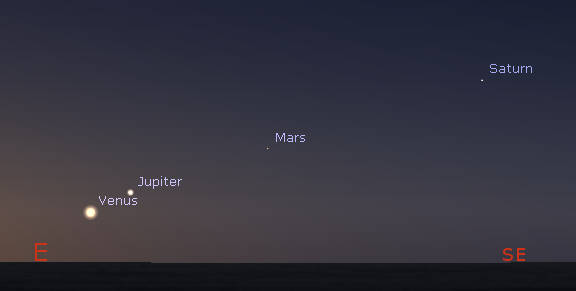
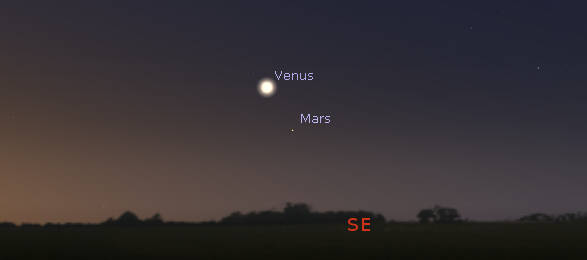
The morning planet parade is widening as Venus is moving away from Jupiter, and Mars is approaching the giant planet. These are shown at 5:30 am, or about an hour before sunrise. Created using Stellarium.
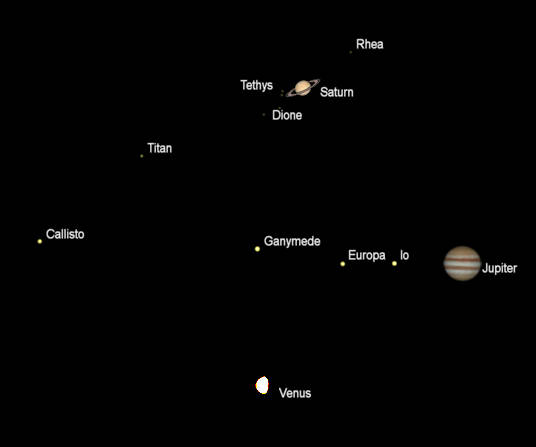
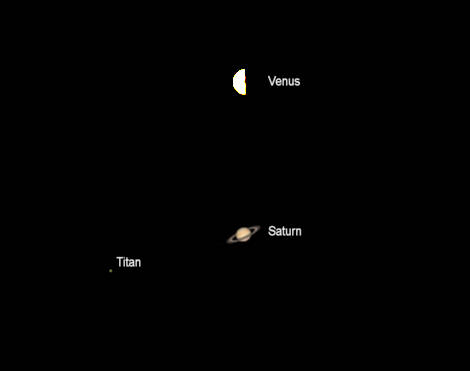
Views of Venus, Jupiter, and Saturn (north up) as they would be seen in a small telescope, with the same magnification, tomorrow morning at 5:30 am, May 5, 2022. I do not show planets less than 10 seconds of arc in diameter. Apparent diameters: Venus 16.33″, 68.7% illuminated; Saturn 16.60″, its rings 38.67″; Jupiter 35.09″. Mars is not shown, its apparent diameter is 5.84″ and is 89.1% illuminated. Mercury, in the evening, has an apparent diameter of 9.21″, and it’s 22.2% illuminated. The ” symbol means seconds of arc (1/3600th of a degree.) Created using Cartes du Ciel (Sky Charts).
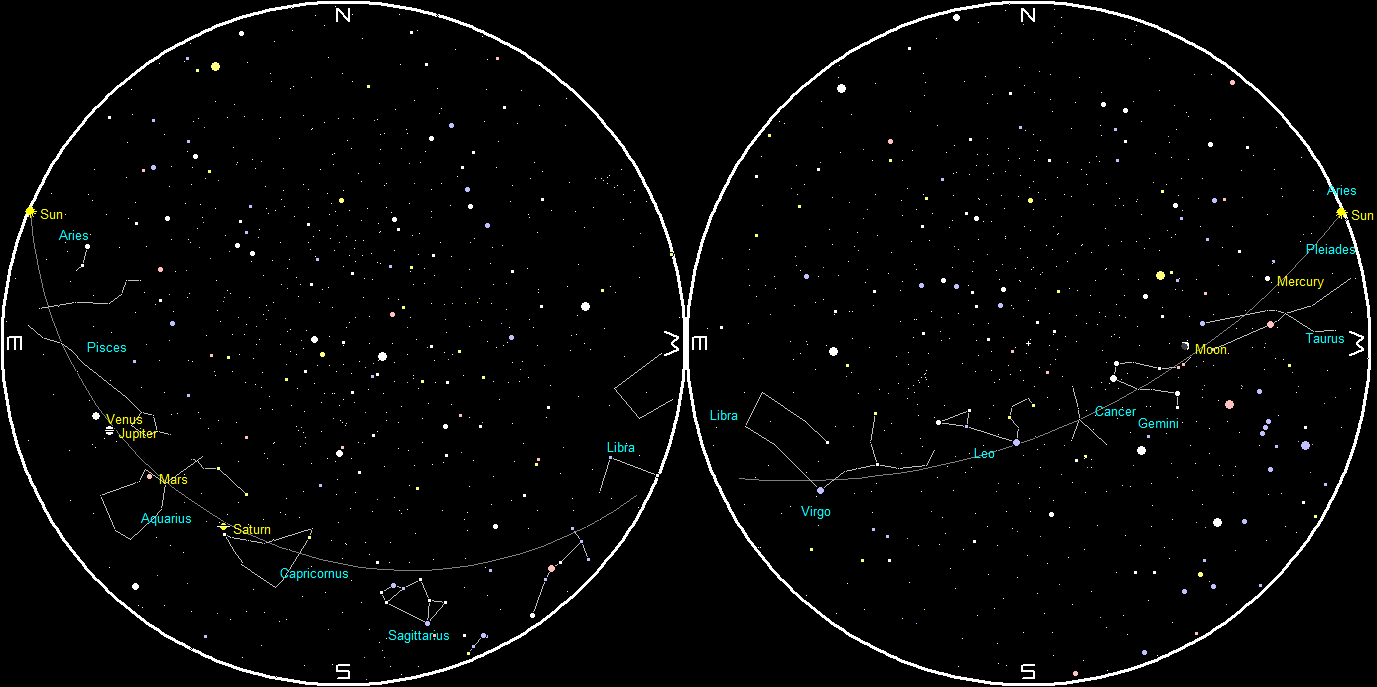
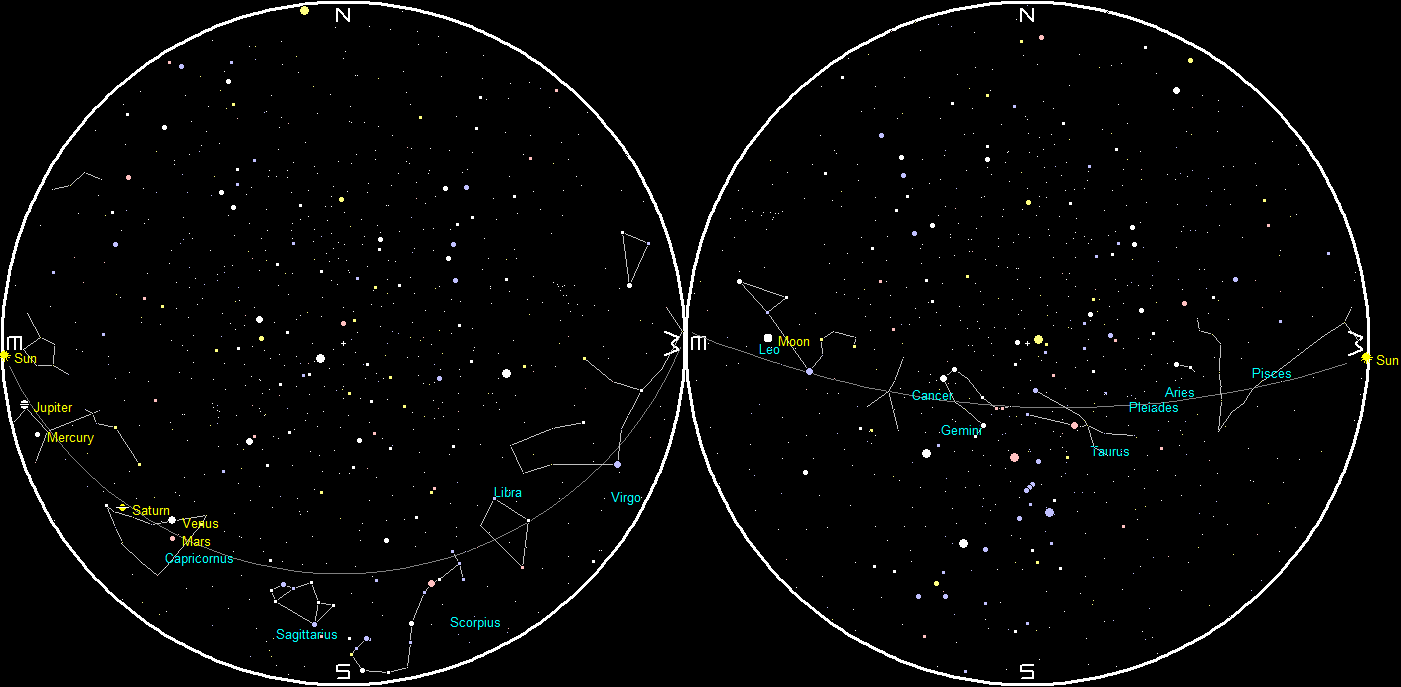
The naked-eye planets and the Moon at sunset and sunrise on a single night, starting with sunset on the right on May 4, 2022. The night ends on the left with sunrise on the 5th. Notice that all the naked-eye planets except Mercury are in the morning sky now. Click on the image to enlarge it. Created using my LookingUp program.
04/27/2022 – Ephemeris – Let’s search for the naked-eye planets for this week
This is Bob Moler with Ephemeris for Wednesday, April 27th. Today the Sun will be up for 14 hours and 4 minutes, setting at 8:42, and it will rise tomorrow at 6:37. The Moon, 3 days before new, will rise at 5:56 tomorrow morning.
Let’s search for the naked-eye planets for this week. There is one bright planet in the evening sky. Mercury may be spotted around and after 9:30 this evening very low in the west-northwest and be visible for the next hour or so before it sets at 10:43 pm. After that, the planet action shifts to the morning sky. The other 4 naked-eye planets are there. By 5:45 am, the planets will be spread out low from the east to southeast with brilliant Venus closer than ever to Jupiter, lowest in the east. Dim Mars will be to the right and a bit above Venus, while brighter Saturn will be right and above Mars. Saturn will rise tomorrow at 4 am, with Mars following at 4:40. Venus will rise at 5:10 tomorrow morning, followed by Jupiter four minutes later.
The astronomical event times given are for the Traverse City/Interlochen area of Michigan (EDT, UT – 4 hours). They may be different for your location.
Addendum
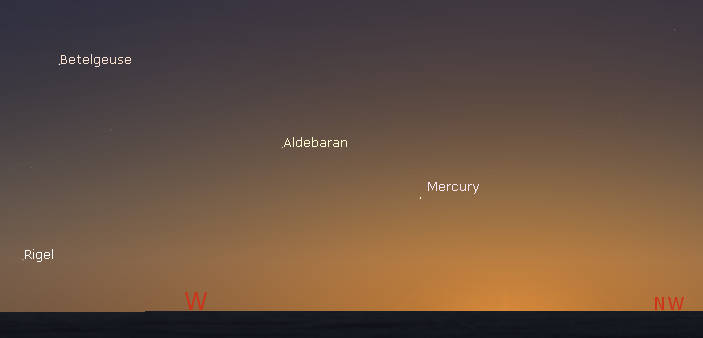
Mercury and bright winter stars in evening twilight at 9:30 tonight, or about 45 minutes after sunset tonight, April 27, 2022. It might take binoculars to spot the stars of Orion and Taurus, and Mercury itself, which is fading, becoming a crescent. Click on the image to enlarge it. Created using Stellarium.
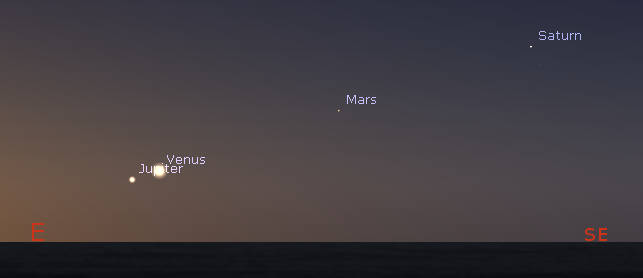
The morning planet parade at 5:45 am or about 50 minutes before sunrise tomorrow, April 28, 2022. Venus will overtake Jupiter during the day, Saturday the 30th. Created using Stellarium.
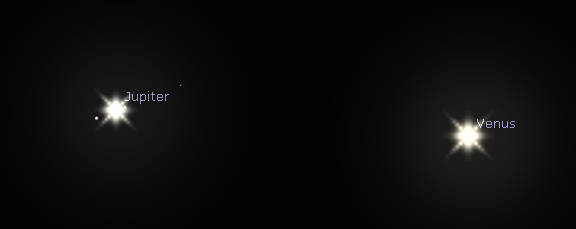
Jupiter and Venus in as they might be seen in binoculars, Saturday morning, April 30, 2022. The difference in brightness of Venus compared to Jupiter will be much greater than seen here. The planets will be about a half a degree apart, or about the width of the Moon. The image shows two satellites of Jupiter, Ganymede to the lower left of Jupiter and Callisto to the upper right. A third satellite, Io, is close to the upper right, within the enlarged Jupiter image. Europa is either behind the planet or in its shadow. Sunday morning, Jupiter will be on the other side of Venus, and a bit farther away. Created using Stellarium.
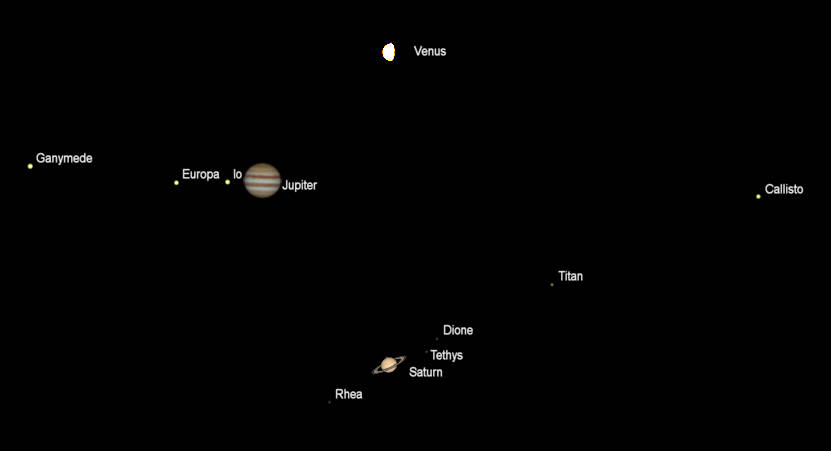
Views of Venus, Jupiter, and Saturn (north up) as they would be seen in a small telescope, with the same magnification, tomorrow morning at 5:45 am, April 28, 2022. I do not show planets less than 10 seconds of arc in diameter. Apparent diameters: Venus 16.78″, 67.4% illuminated; Saturn 16.47″, its rings 38.35″; Jupiter 34.76″. Mars is not shown, its apparent diameter is 5.74″ and is 89.5% illuminated. Mercury, in the evening, has an apparent diameter of 8.05″, and it’s 35.6% illuminated. The ” symbol means seconds of arc (1/3600th of a degree.) Created using Cartes du Ciel (Sky Charts).
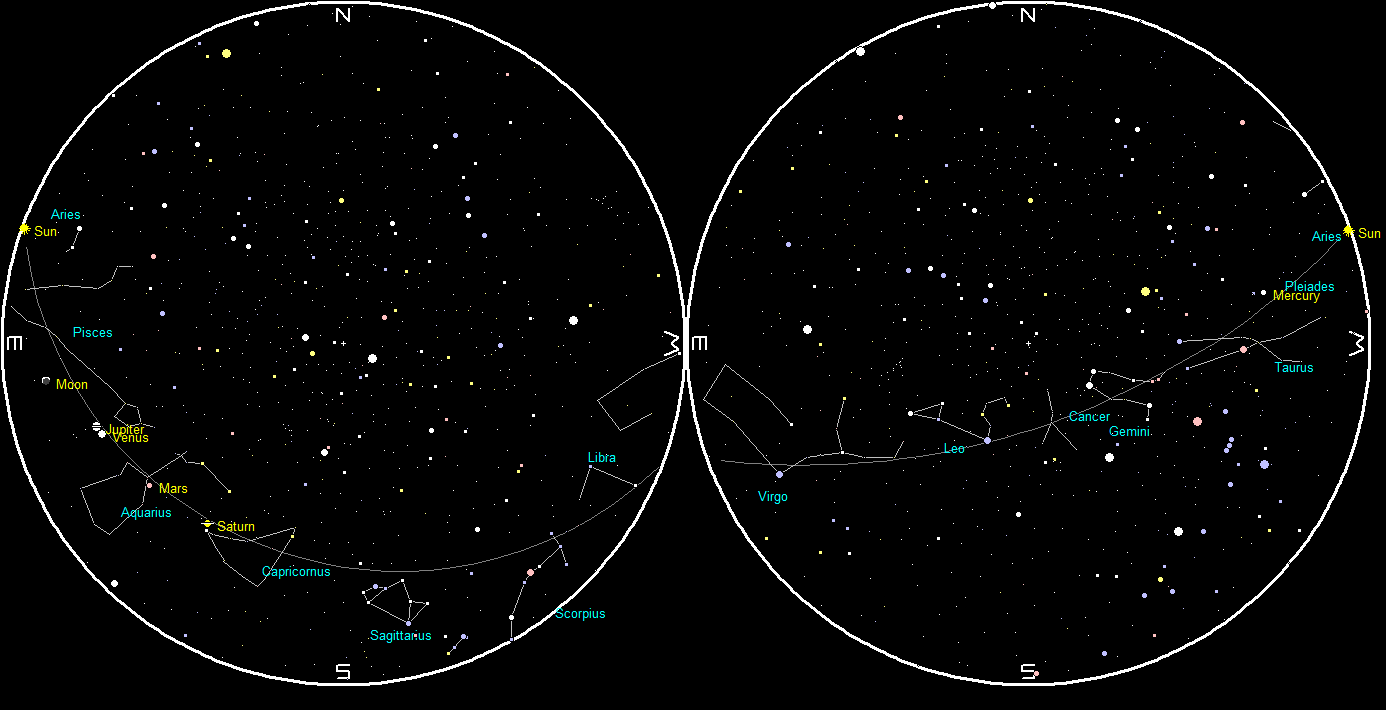
The naked-eye planets and the Moon at sunset and sunrise on a single night, starting with sunset on the right on April 27, 2022. The night ends on the left with sunrise on the 28th. Notice that all the naked-eye planets except Mercury are in the morning sky now. Click on the image to enlarge it. Created using my LookingUp program.
04/20/2022 – Ephemeris – Let’s search for the naked-eye planets for this week
This is Ephemeris for Wednesday, April 20th. Today the Sun will be up for 13 hours and 44 minutes, setting at 8:34, and it will rise tomorrow at 6:48. The Moon, 3 days before last quarter, will rise at 1:51 tomorrow morning.
Let’s search for the naked-eye planets for this week. There is one bright planet in the evening sky. Mercury may be spotted around and after 9:15 this evening very low in the west-northwest and be visible for the next half hour or so. After that, the planet action shifts to the morning sky. The other 4 naked-eye planets are there. By 6 am, the planets will be spread out low from the east to southeast with brilliant Venus moving closer to Jupiter, lowest in the east. Dim Mars will be to the right and a bit above Venus, while brighter Saturn will be right and above Mars. Saturn will rise tomorrow at 4:27 am, with Mars following at 4:55. Venus will rise at 5:19 tomorrow morning, followed by Jupiter at 5:39 am. The Moon will be in the south at 6 am.
The astronomical event times given are for the Traverse City/Interlochen area of Michigan (EDT, UT – 4 hours). They may be different for your location.
Addendum
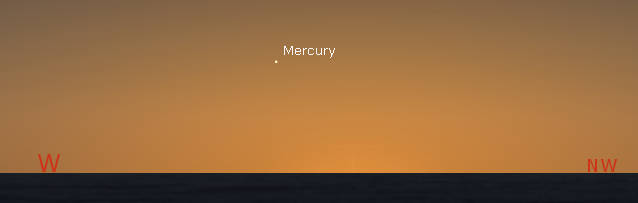
Mercury in the evening at 9:15, or about 40 minutes after sunset tonight, April 20, 2022. Created using Stellarium.
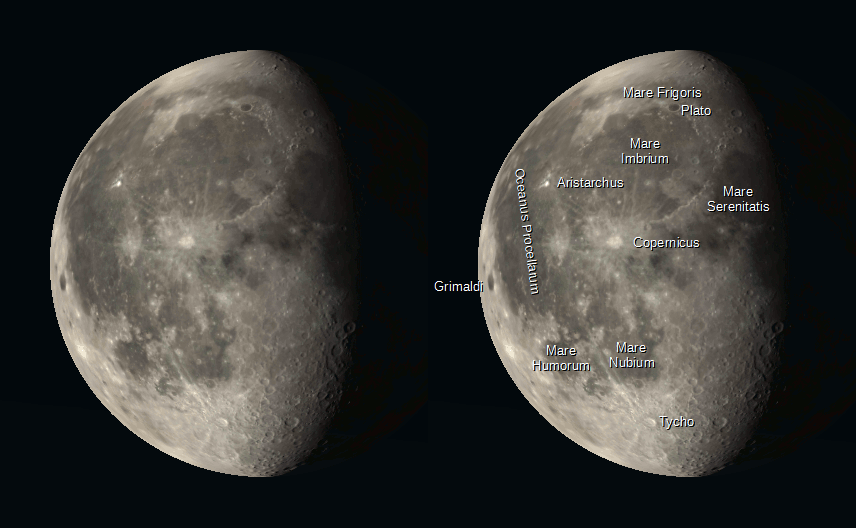
Annotated Binocular Moon. What the Moon might look like tomorrow morning, April 21, 2022. Created using Stellarium, GIMP and LibreOffice.
Translations
Mare Frigoris – Sea of Cold
Mare Humorum – Sea of Moisture
Mare Imbrium – Sea of Showers
Mare Nubium – Sea of Clouds
Mare Serenitatis – Sea of Serenity
Oceanus Procellarum – Ocean of Storms
Note that Mare is pronounced Mar-é
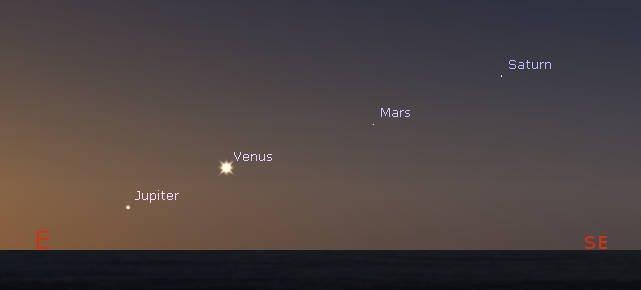
Parade of the morning planets at 6 am or about 45 minutes before sunrise tomorrow, April 21, 2022. Created using Stellarium.
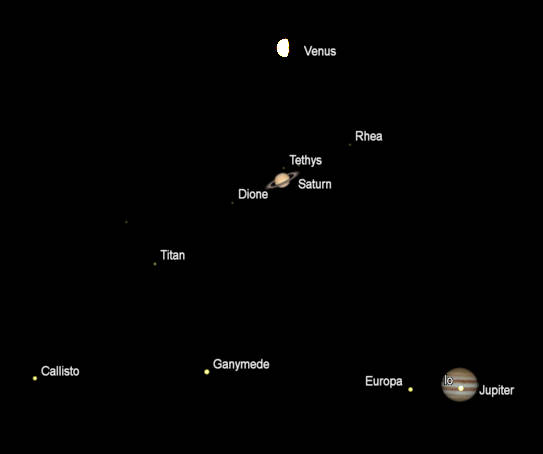
Views of Venus, Saturn, and Jupiter (north up) as they would be seen in a small telescope, with the same magnification, tomorrow morning at 6:00 am, April 21, 2022. I do not show planets less than 10 seconds of arc in diameter. Apparent diameters: Venus 18.01″, 64.0% illuminated; Saturn 16.24″, its rings 37.82″; Jupiter 34.24″. Mars is not shown, its apparent diameter is 5.56″ and is 90.2% illuminated. The moons of Jupiter and Saturn may not be visible in twilight. Io transiting the face of Jupiter definitely will not be visible. Jupiter is shown here much dimmer compared to its moons than it actually is. The ” symbol means seconds of arc (1/3600th of a degree.) Created using Cartes du Ciel (Sky Charts).
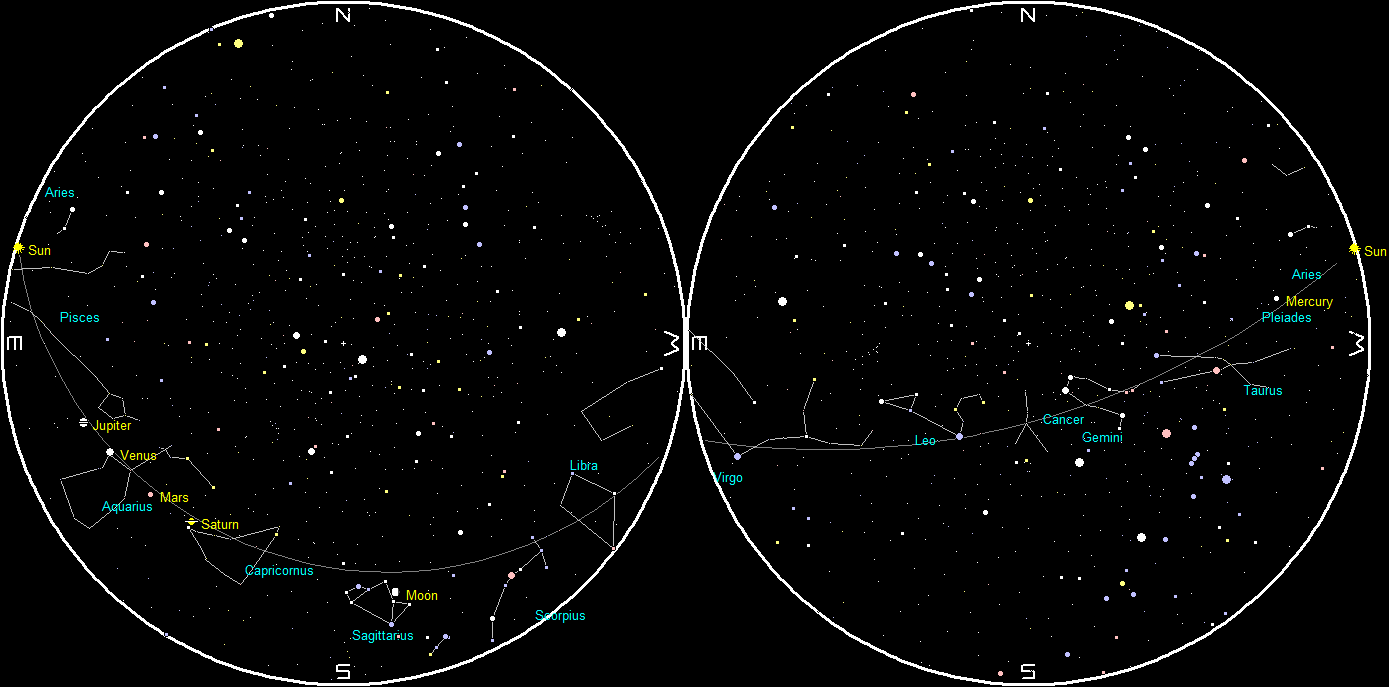
The naked-eye planets and the Moon at sunset and sunrise on a single night, starting with sunset on the right on April 20, 2022. The night ends on the left with sunrise on the 21st. Notice that all the naked-eye planets are in the morning sky now, with the Moon still hanging out in the evening sky. Click on the image to enlarge it. Created using my LookingUp program.
04/13/2022 – Ephemeris – Let’s search for the naked-eye planets for this week
This is Ephemeris for Wednesday, April 13th. Today the Sun will be up for 13 hours and 23 minutes, setting at 8:25, and it will rise tomorrow at 7:00. The Moon, 3 days before full, will set at 6:22 tomorrow morning.
Let’s search for the naked-eye planets for this week. There is one bright planet in the evening sky, but too close to the Sun to be seen. Mercury passed behind the Sun eleven days ago and will be visible later this month, so the planet action still shifts to the morning sky. The other 4 naked-eye planets are there, though Jupiter may be too low in the sky to be seen. By 6:15, the planets will be spread out low in the east-southeast to southeast, with brilliant Venus near the center of the four. Dim Mars will be to the right and a bit above Venus. Brighter Saturn will be right and above Mars. Jupiter will be near the horizon and left of Venus. Jupiter can be still spotted by 6:30 along with Venus and followed even closer to sunrise.
The astronomical event times given are for the Traverse City/Interlochen area of Michigan (EDT, UT – 4 hours). They may be different for your location.
Addendum
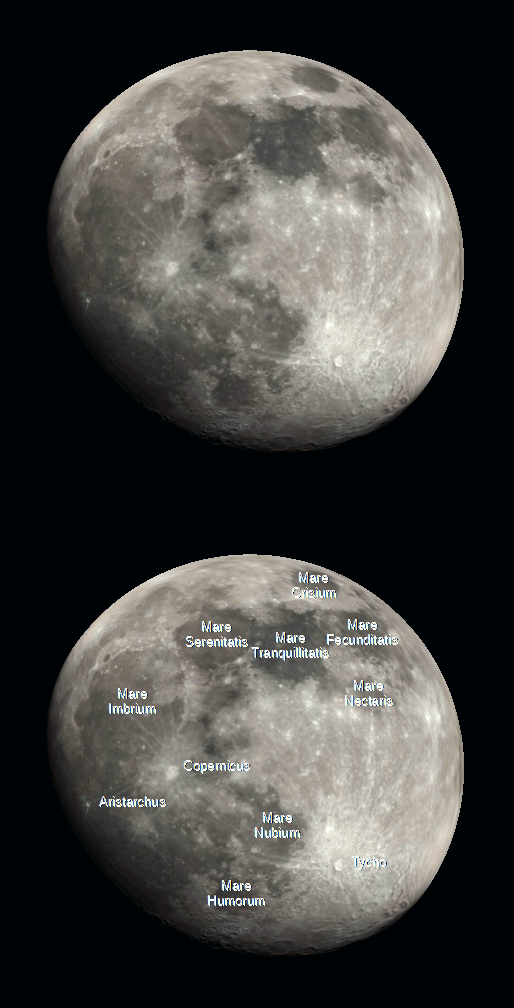
Tonight’s Moon annotated, for 10 pm, April 13, 2022, showing major formations visible in binoculars or a small telescope. Created using Stellarium.
Translations
Mare Crisium – Sea of Crises
Mare Fecunditatis – Sea of Fertility
Mare Humorum – Sea of Moisture
Mare Imbrium – Sea of Showers
Mare Nectaris – Sea of Nectar
Mare Nubium – Sea of Clouds
Mare Serenitatis – Sea of Serenity
Mare Tranquillitatis – Sea of Tranquility
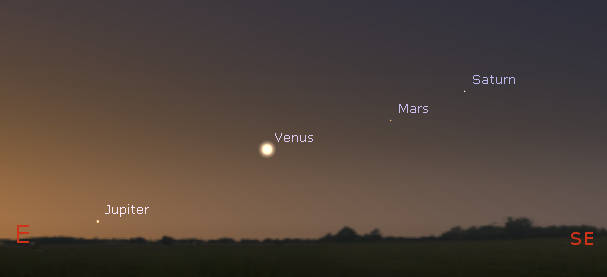
The lineup of morning planets at 6:15 am, about 45 minutes before sunrise tomorrow morning, April 14, 2022. Created using Stellarium.
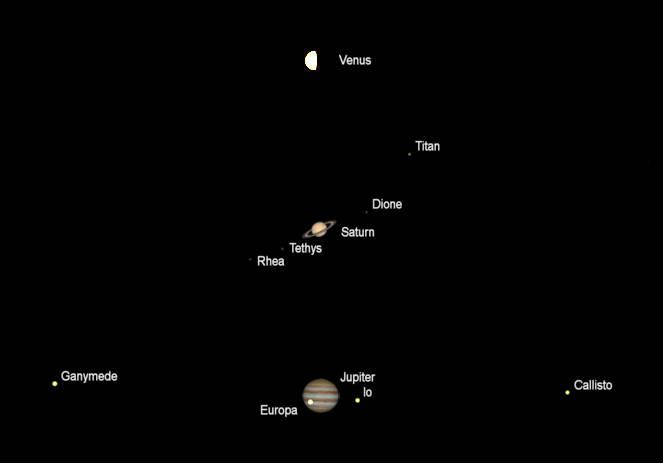
Views of Venus, Saturn, and Jupiter (north up) as they would be seen in a small telescope, with the same magnification, tomorrow morning at 6:15 am, April 14, 2022. I do not show planets less than 10 seconds of arc in diameter. Apparent diameters: Venus 19.12″, 61.2% illuminated; Saturn 16.07″, its rings 37.44″; Jupiter 33.90″. Mars is not shown, its apparent diameter is 5.43″ and is 90.7% illuminated. The moons of Jupiter and Saturn may not be visible in twilight. The ” symbol means seconds of arc (1/3600th of a degree.) Created using Cartes du Ciel (Sky Charts).
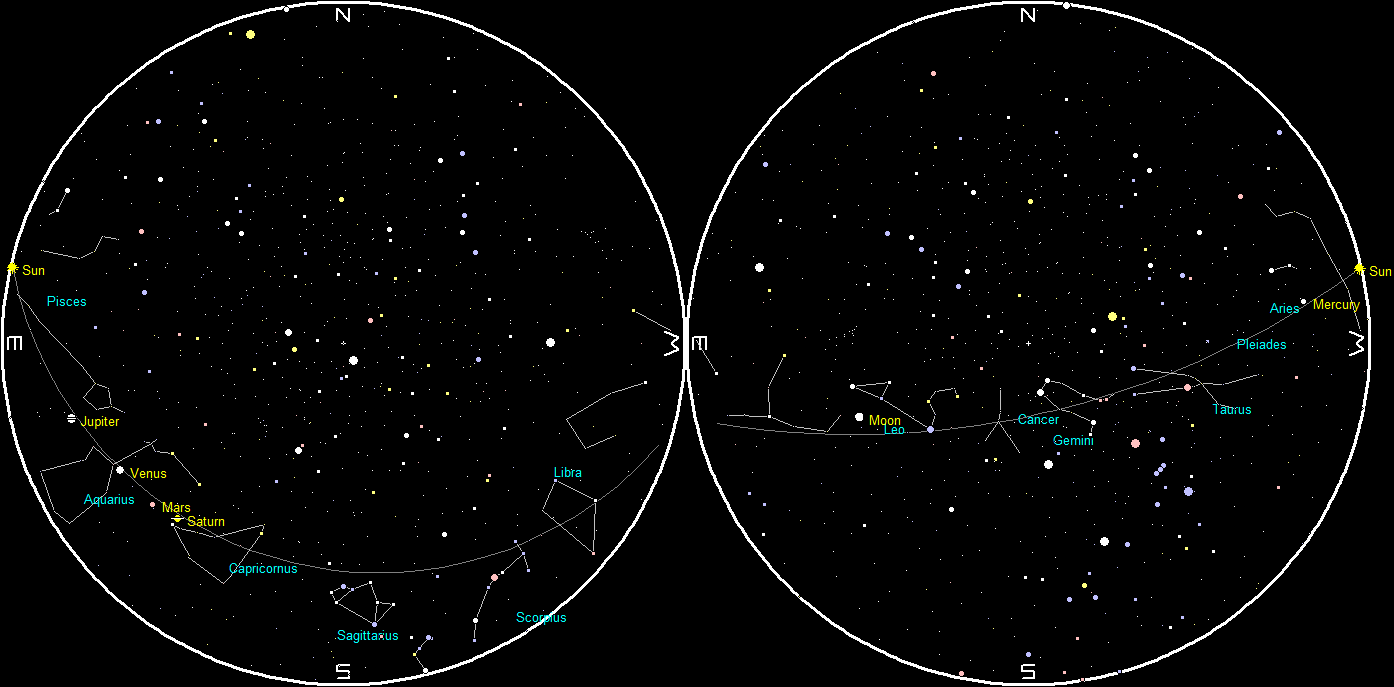
The naked-eye planets and the Moon at sunset and sunrise on a single night, starting with sunset on the right on April 13, 2022. The night ends on the left with sunrise on the 14th. Click on the image to enlarge it. Created using my LookingUp program.
04/06/2022 – Ephemeris – Let’s search for the naked-eye planets for this week
This is Bob Moler with Ephemeris for Wednesday, April 6th. Today the Sun will be up for 13 hours and 2 minutes, setting at 8:16, and it will rise tomorrow at 7:12. The Moon, 3 days before first quarter, will set at 2:16 tomorrow morning.
Let’s search for the naked-eye planets for this week. There is one bright planet in the evening sky, but too close to the Sun to be seen. Mercury passed behind the Sun last Saturday and will be visible later this month, so the planet action still shifts to the morning sky. The other 4 naked-eye planets are there, though Jupiter is too close to the Sun to be seen. Late winter and early spring mornings aren’t the best for spotting planets close to the Sun, since they tend to lie low in the southeastern sky. Venus, Mars, and Saturn will rise within 16 minutes of each other by 5:35. By 6:30, they will be low in the east-southeast with dim Saturn to the right and a bit above Venus, and much dimmer Mars to the left and below Saturn.
The astronomical event times given are for the Traverse City/Interlochen area of Michigan (EDT, UT – 4 hours). They may be different for your location.
Addendum
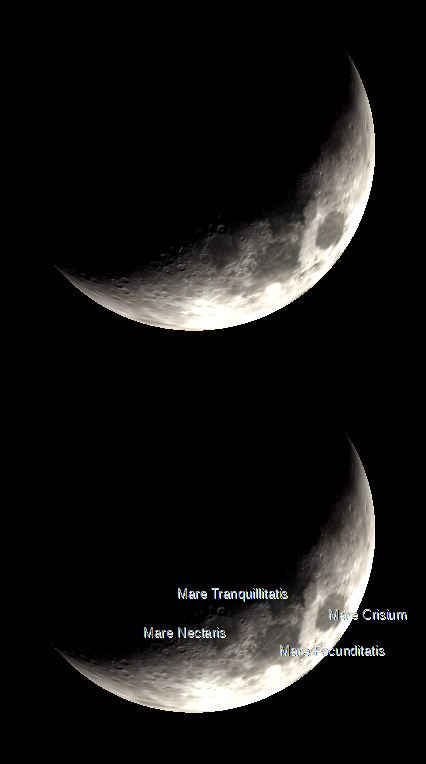
Annotated crescent Moon animation of the Moon tonight, April 6, 2022. The annotations are the official names in Latin of the seas of Tranquility, Crises, Nectar, and Fertility. Created using Stellarium.
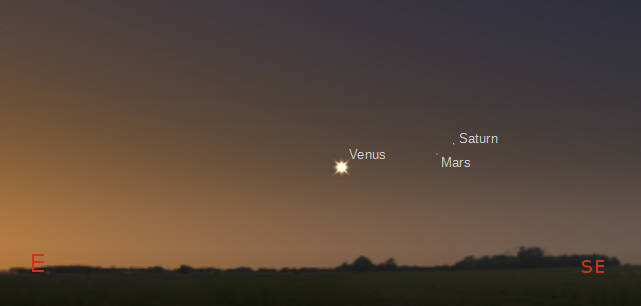
Venus, Mars and Saturn as they might be seen around 6:30 tomorrow morning, April 7, 2022. Created using Stellarium.
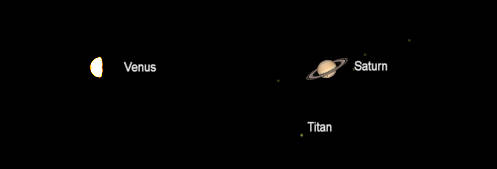
Views of Venus and Saturn (north up) as they would be seen in a small telescope, with the same magnification, tomorrow morning at 6:30 am, April 7, 2022. I do not show planets less than 10 seconds of arc in diameter. Apparent diameters: Venus 20.38″, 58.2% illuminated; Saturn 15.92″, its rings 37.08″. Mars is not shown, its apparent diameter is 5.30″ and is 91.2% illuminated. The ” symbol means seconds of arc (1/3600th of a degree.) Created using Cartes du Ciel (Sky Charts).
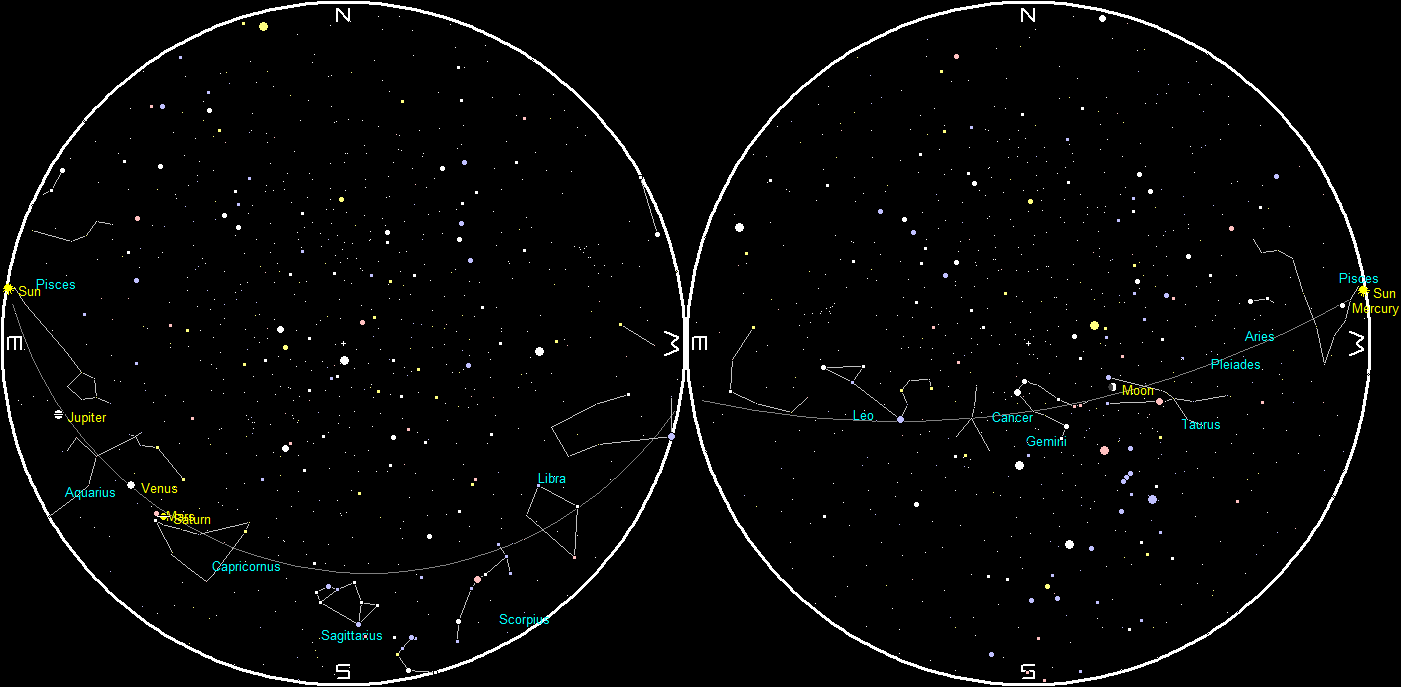
The naked-eye planets and the Moon at sunset and sunrise on a single night, starting with sunset on the right on April 6, 2022. The night ends on the left with sunrise on the 7th. Notice that all the naked-eye planets are in the morning sky now, with the Moon still hanging out in the evening sky. Click on the image to enlarge it. Created using my LookingUp program.
03/30/2022 – Ephemeris – Let’s search for the naked-eye planets for this week
This is Ephemeris for Wednesday, March 30th. Today the Sun will be up for 12 hours and 40 minutes, setting at 8:07, and it will rise tomorrow at 7:25. The Moon, 2 days before new, will rise at 7:31 tomorrow morning.
Let’s search for the naked-eye planets for this week. There are no bright planets in the evening sky, so the planet action shifts to the morning sky. All five naked-eye planets are there, though Jupiter and Mercury are too close to the Sun to be seen. Late winter and early spring mornings aren’t the best for spotting planets close to the Sun, since they tend to lie low in the southeastern sky. Venus, Mars, and Saturn will rise within 6 minutes of each other by 5:46. By 6:30, they will be low in the east-southeast with much dimmer Mars to the left of Venus, with Saturn between and a bit below them. Monday, April 4th Mars will appear closest to Saturn, scooting below the ringed planet that evening, so they will appear close together both Monday and Tuesday mornings.
The astronomical event times given are for the Traverse City/Interlochen area of Michigan (EDT, UT – 4 hours). They may be different for your location.
Addendum
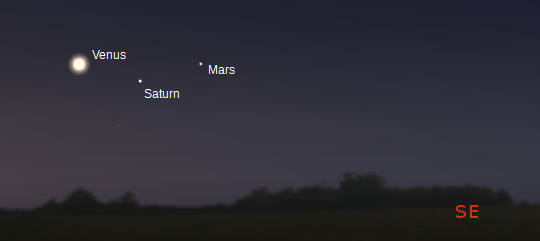
What the morning planets might appear as at 6:30 tomorrow morning, March 31, 2022. They may be brighter than they actually appear. Created using Stellarium.
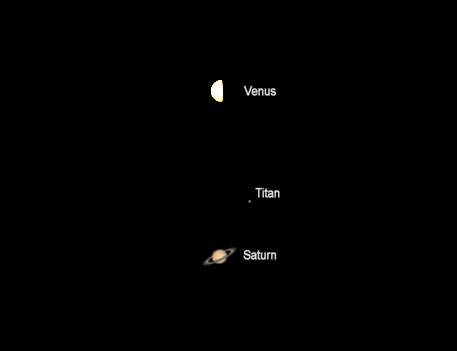
Telescopic views of the Venus and Saturn (north up) as they would be seen in a small telescope, with the same magnification, tomorrow morning at 6:30 am, March 31, 2022. I do not show planets less than 10 seconds of arc in diameter. Apparent diameters: Venus 23.52″, 55.0% illuminated; Saturn 15.78″, its rings 36.76″. Mars is not shown, its apparent diameter is 5.18″ and is 91.7% illuminated. The ” symbol means seconds of arc (1/3600th of a degree.) Created using Cartes du Ciel (Sky Charts).
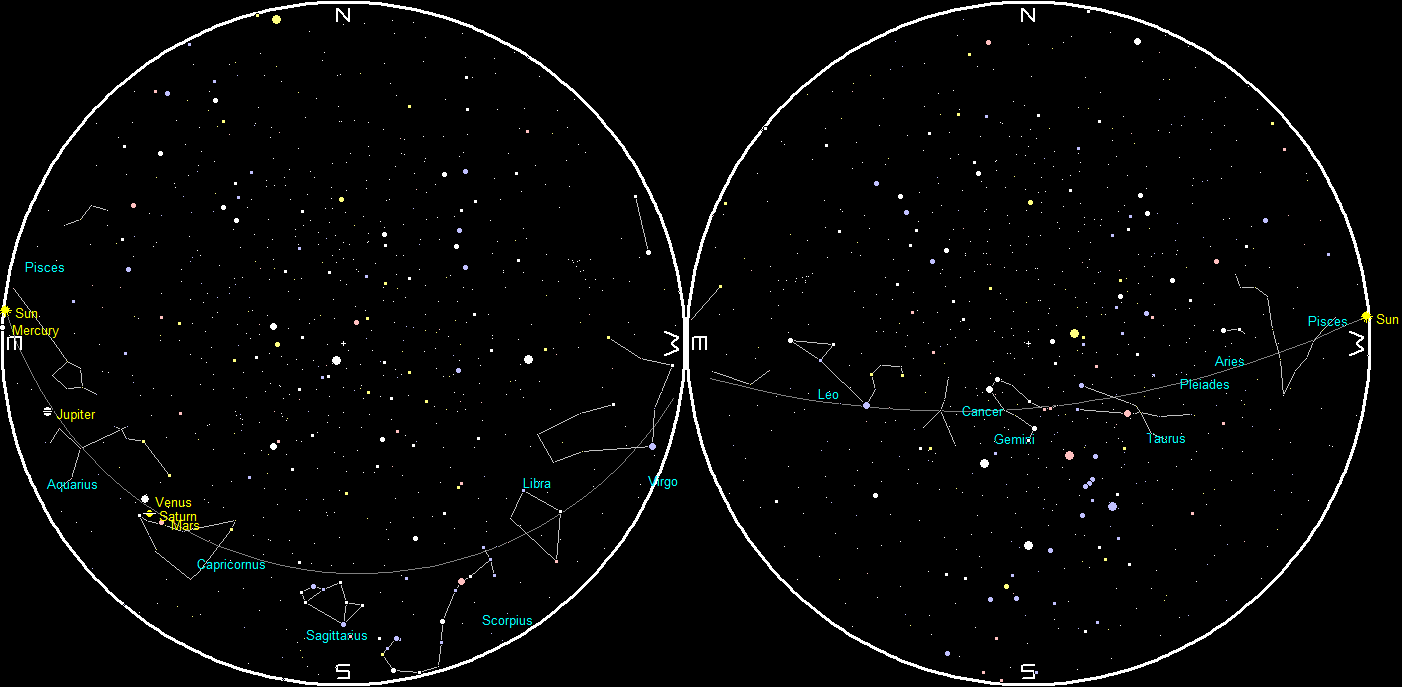
The naked-eye planets and the Moon at sunset and sunrise on a single night, starting with sunset on the right on March 30, 2022. The night ends on the left with sunrise on the 31st. Notice that all the naked-eye planets are in the morning sky now, with the Moon still hanging out in the evening sky. Click on the image to enlarge it. Created using my LookingUp program.
03/23/2022 – Ephemeris – The search for the naked-eye planets moves to the morning sky
This is Bob Moler with Ephemeris for Wednesday, March 23rd. Today the Sun will be up for 12 hours and 18 minutes, setting at 7:59, and it will rise tomorrow at 7:38. The Moon, 2 days before last quarter, will rise at 2:50 tomorrow morning.
Let’s search for the naked-eye planets for this week. There are no bright planets in the evening sky. The planet action shifts to the morning sky. All five naked-eye planets are there, though Jupiter and Mercury are too close to the Sun to be seen. Late winter and early spring mornings aren’t the best for spotting planets close to the Sun, since they tend to lie low in the southeastern sky. Venus will rise at 5:46 tomorrow morning, Mars will rise at 5:51, and Saturn will rise at 6:10. By 7 am, they will be low in the southeast with much dimmer Mars at the 4 o’clock position below Venus, with Saturn lower, and at between the 7 and 8 o’clock position. Jupiter is just rising at that time.
The astronomical event times given are for the Traverse City/Interlochen area of Michigan (EDT, UT – 4 hours). They may be different for your location.
Addendum
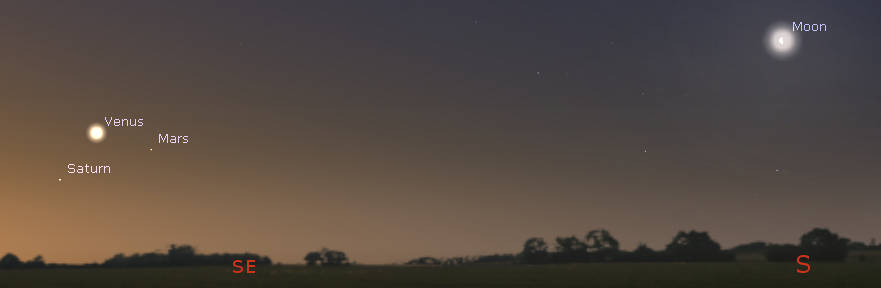
Morning planets and Moon at 7 am tomorrow morning, March 24, 2022. At that time Mars and Saturn may require binoculars to spot, however a quarter or a half an hour earlier they should be visible to the naked-eye.
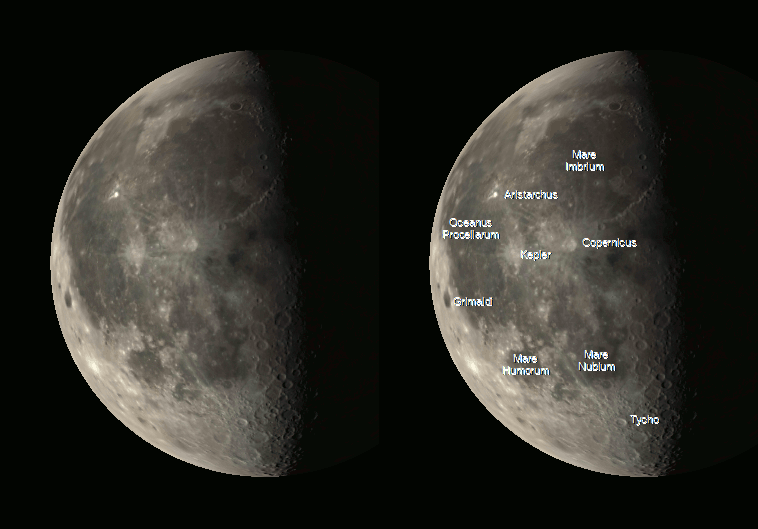
Waning gibbous Moon with animated labels. The Moon as it might appear in binoculars or a small telescope, with prominent lunar seas and craters labeled. I’ve retained the sea’s Latin names. Click on the image to enlarge it. Created using Stellarium, GIMP and LibreOffice.
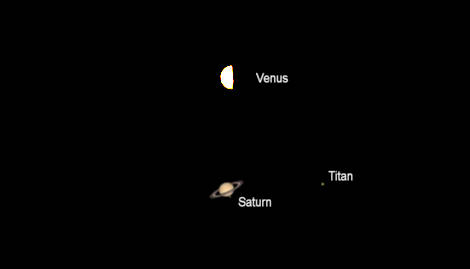
Telescopic views of the Venus and Saturn (north up) as they would be seen in a small telescope, with the same magnification, tomorrow morning at 7 am, March 24, 2022. I do not show planets less than 10 seconds of arc in diameter. Apparent diameters: Venus 23.52″, 51.6% illuminated; Saturn 15.66″, its rings 36.47″. Mars is not shown, its apparent diameter is 5.06″ and is 92.3% illuminated. The ” symbol means seconds of arc (1/3600th of a degree.) Created using Cartes du Ciel (Sky Charts).
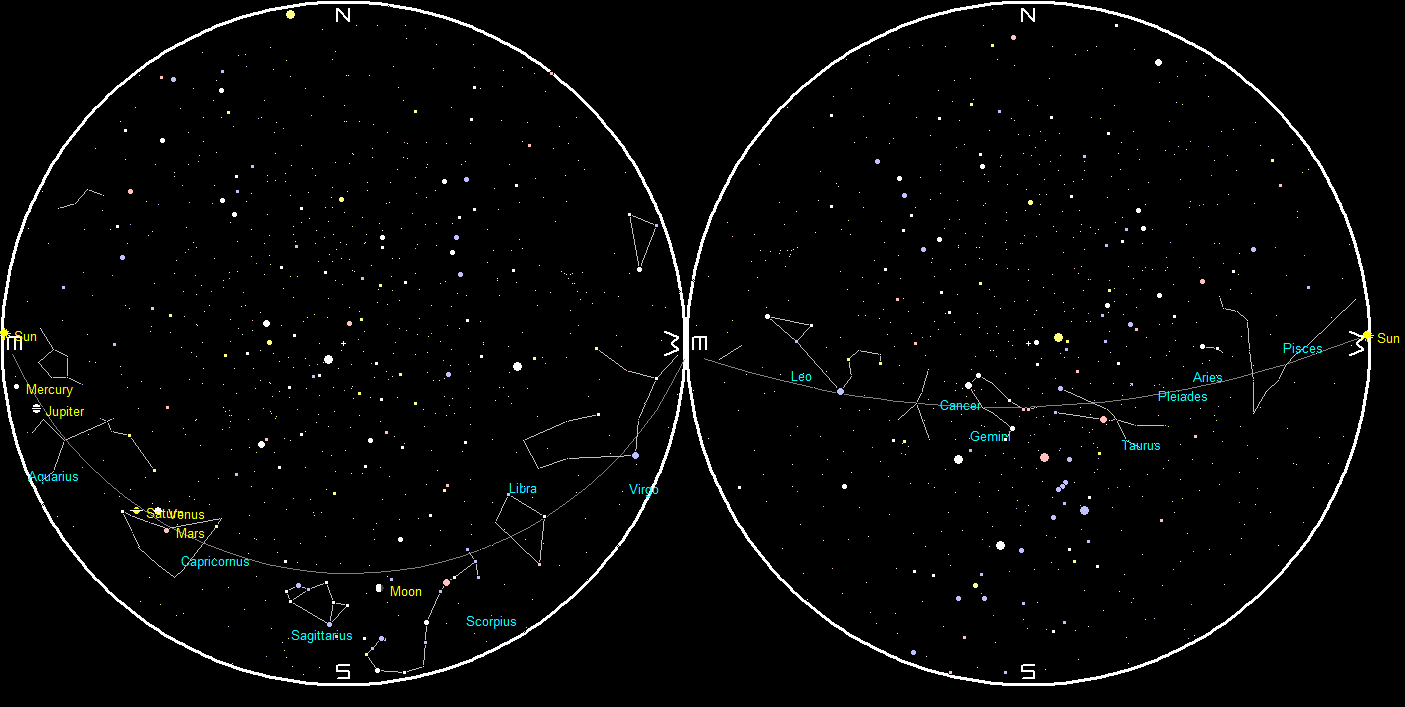
The naked-eye planets and the Moon at sunset and sunrise on a single night, starting with sunset on the right on March 23, 2022. The night ends on the left with sunrise on the 24th. Notice that all the naked-eye planets and the Moon are in the morning sky now. The labels for Saturn and Venus overlap. Click on the image to enlarge it. Created using my LookingUp program.
03/16/2022 – Ephemeris – Let’s search for the naked-eye planets for this week
This is Ephemeris for Wednesday, March 16th. Today the Sun will be up for 11 hours and 57 minutes, setting at 7:50, and it will rise tomorrow at 7:51. The Moon, 2 days before full, will set at 7:59 tomorrow morning.
Let’s search for the naked-eye planets for this week. There are no bright planets in the evening sky. Jupiter, the last to leave, will stay too close to the direction of the Sun to be visible in the morning sky for at least a month. So that’s where the action shifts to. Jupiter joins Mercury, Saturn, Venus and Mars. Late winter and early spring mornings aren’t the best for spotting planets close to the Sun, since they tend to lie low in the southeastern sky. Venus will rise at 5:51 tomorrow morning and Mars will rise at 6:04. Saturn will rise at 6:40. By 7:15, they will be low in the southeast with much dimmer Mars at the 5 o’clock position below Venus, with Saturn much lower at the 8 o’clock position.
The astronomical event times given are for the Traverse City/Interlochen area of Michigan (EDT, UT – 4 hours). They may be different for your location.
Addendum
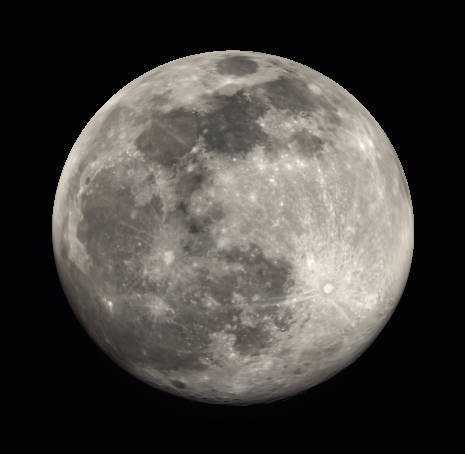
The Moon 2 days before full as it might appear in binoculars or small telescope, tonight, at 9 pm, March 16, 2022. Created using Stellarium.
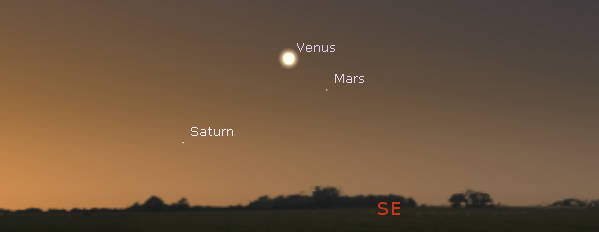
Morning planets Venus, Saturn and Mars at 7:15 am, or about 36 minutes before sunrise tomorrow, March 17, 2022. Binoculars may help in spotting Mars and Saturn. Over the week, these planets will continue to move away from the rising Sun. Well, all except Venus which will reach its greatest elongation, meaning separation from the Sun on Sunday, before beginning to slip back toward the Sun. Created using Stellarium.
Telescopic views of the Venus and Saturn (north up) as they would be seen in a small telescope, with the same magnification, tomorrow morning at 7 15 am, March 17, 2022. I do not show planets less than 10 seconds of arc in diameter. Apparent diameters: Venus 25.49″, 48.0% illuminated; Saturn 15.55″, its rings 36.22″. Mars is not shown, its apparent diameter is 4.94″ and is 92.8% illuminated. The ” symbol means seconds of arc (1/3600th of a degree.) Created using Cartes du Ciel (Sky Charts).
The naked-eye planets and the Moon at sunset and sunrise on a single night, starting with sunset on the right on March 16, 2022. The night ends on the left with sunrise on the 17th. Notice that all the naked-eye planets are in the morning sky now, with the Moon still hanging out in the evening sky. Click on the image to enlarge it. Created using my LookingUp program.
03/09/2022 – Ephemeris – Let’s search for the naked-eye planets for this week
This is Ephemeris for Wednesday, March 9th. Today the Sun will be up for 11 hours and 35 minutes, setting at 6:41, and it will rise tomorrow at 7:04. The Moon, 1 day before first quarter, will set at 2:28 tomorrow morning.
Let’s search for the naked-eye planets for this week. There are no bright planets in the evening sky. Jupiter, the last to leave, will stay too close to the direction of the Sun to be visible in the morning sky for at least a month. So that’s where the action shifts. Jupiter joins Mercury, Saturn, Venus and Mars. Late winter and early spring mornings aren’t the best for spotting planets close to the Sun, since they tend to lie low in the southeastern sky. Saturn and Mercury are also too close to the direction of the Sun to be spotted now. Venus will rise at 4:55 tomorrow morning and Mars will rise at 5:16. By 6:15, they will be low in the southeast, with much dimmer Mars at the 5 o’clock position below Venus.
The astronomical event times given are for the Traverse City/Interlochen area of Michigan (EST, UT – 5 hours). They may be different for your location.
Addendum
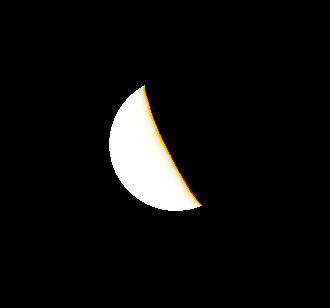
The waxing crescent Moon at 8 pm or an hour or so after sunset tonight, March 9, 2022. It is shown as it might be seen in binoculars or a small telescope. Created using Stellarium.
Morning planets Venus and Mars at 6:15 am, or about 45 minutes before sunrise tomorrow, March 10, 2022. Created using Stellarium.
Venus through a telescope as it would appear before sunrise tomorrow morning, March 10, 2022. It’s shown larger than usual, since it’s the only planet that looks like anything in a small telescope now. Its apparent diameter is 27.78″, and it is 44.0% illuminated by the Sun. Mars has an apparent diameter of 4.83″, and is slightly gibbous at 93.3% illuminated. (” means seconds of arc. 1″ is 1/3600th of a degree). Created using Stellarium, which is also the source for the apparent diameters and the illuminated fraction of Venus and Mars.
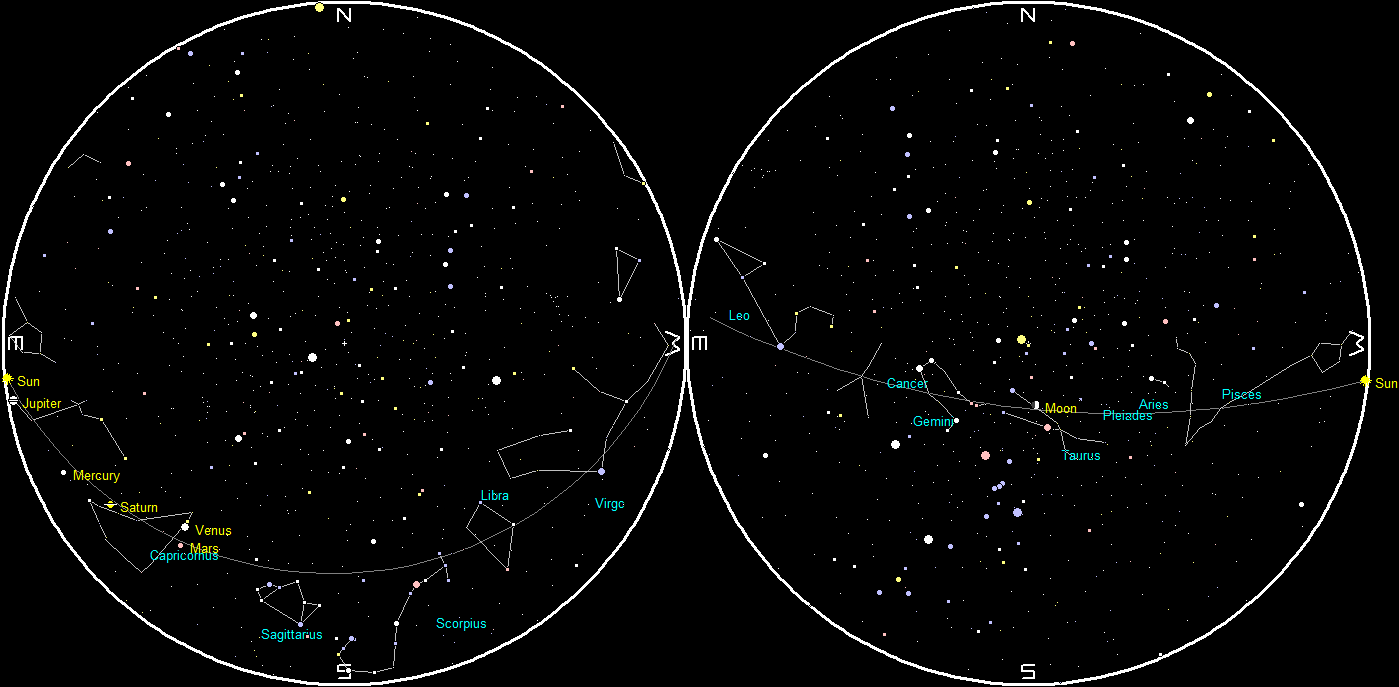
The naked-eye planets and the Moon at sunset and sunrise on a single night, starting with sunset on the right on March 9, 2022. The night ends on the left with sunrise on the 10th. Notice that all the naked-eye planets are in the morning sky now. Click on the image to enlarge it. Created using my LookingUp program.
03/02/2023 – Ephemeris – Let’s search for the naked-eye planets for this week
This is Ephemeris for Ash Wednesday, March 2nd. Today the Sun will be up for 11 hours and 13 minutes, setting at 6:31, and it will rise tomorrow at 7:16. The Moon is new today, and won’t be visible.
Let’s search for the naked-eye planets for this week. The last evening planet, Jupiter, will pass behind the Sun this Saturday and enter the morning sky. So the action shifts to the morning sky, where Saturn, Mercury, Venus and Mars reside. Saturn and Mercury are too close to the direction of the Sun to be spotted now. Mercury is heading back toward the Sun. Saturn should be able to be spotted in morning twilight in a few weeks as it joins Venus, our brilliant morning star, and Mars in the southeast about half an hour to 45 minutes before sunrise. Tomorrow morning Mars will be below, and right of bright Venus, which will rise at 5 am, with Mars following at 5:26.
The astronomical event times given are for the Traverse City/Interlochen area of Michigan (EST, UT – 5 hours). They may be different for your location.
Addendum
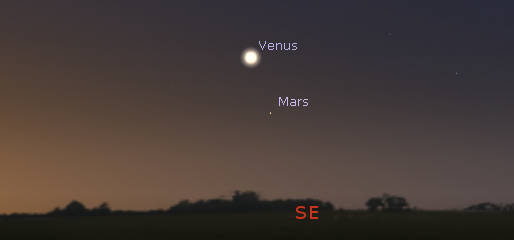
Venus and Mars in the morning as they might appear at 6:30 am, about 45 minutes before sunrise, Thursday, March 3, 2022. Created using Stellarium.
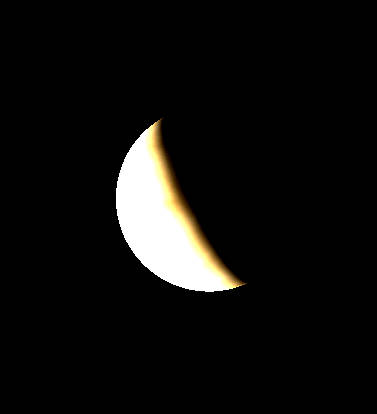
Venus through a telescope as it would appear before sunrise tomorrow morning, March 3, 2022. It’s shown larger than usual, since it’s the only planet that looks like anything in a small telescope now. Its apparent diameter is 30.49″, and it is 39.7% illuminated by the Sun. Mars has an apparent diameter of 4.73″.
(” means seconds of arc. 1″ is 1/3600th of a degree). Created using Stellarium, which is also the source for the apparent diameters and the illuminated fraction of Venus.
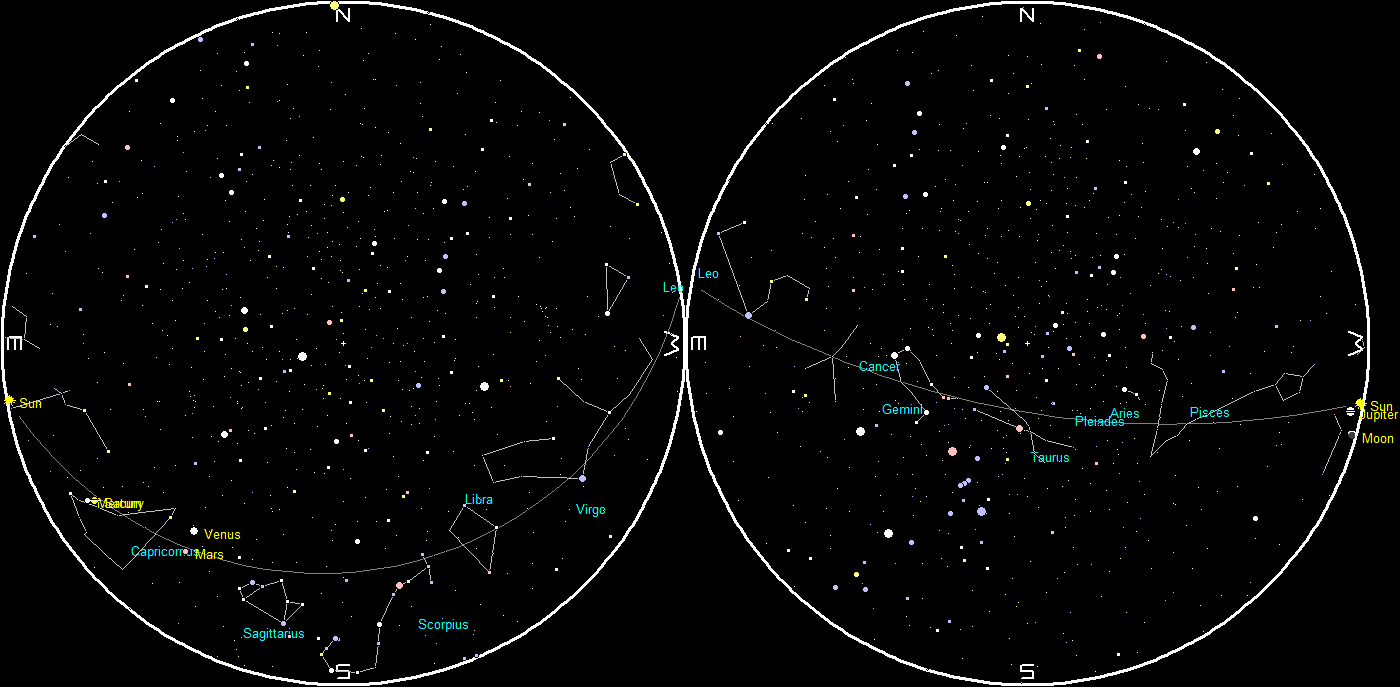
The naked-eye planets and the Moon at sunset and sunrise on a single night, starting with sunset on the right on March 2, 2022. The night ends on the left with sunrise on the 3rd. There’s a label pile up in the sunrise panel where the Labels for Saturn and Mercury overlay each other. Click on the image to enlarge it. Created using my LookingUp program.
 Bob Moler's Ephemeris Blog