Archive
Ephemeris: 11/17/2025 – More about the Pleiades
This is Bob Moler with Ephemeris for Monday, November 17th. Today the Sun will be up for 9 hours and 29 minutes, setting at 5:12, and it will rise tomorrow at 7:44. The Moon, 3 days before new, will rise at 6:16 tomorrow morning.
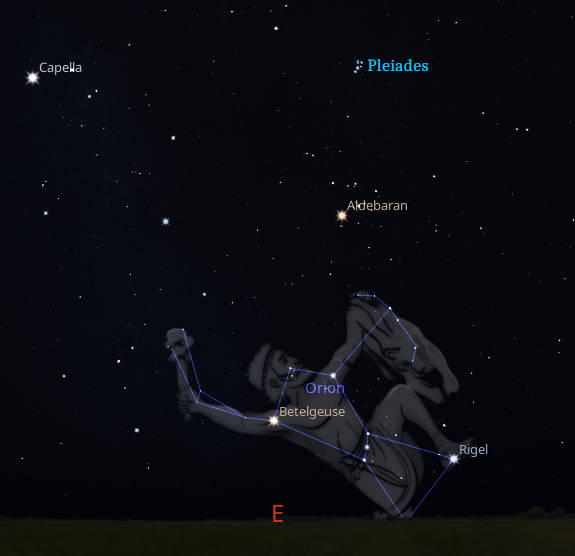
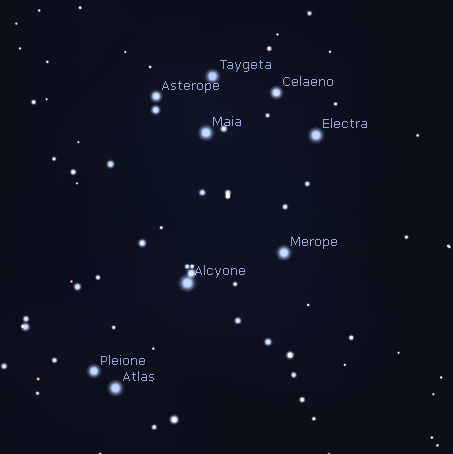
Around 8 in the evening the marvelous small star group called the Pleiades, or Seven Sisters will be in the eastern sky. Most people can see six stars, but they’re called the Seven Sisters, so the story has come up about the Lost Pleiad. It was said that her star was dimmed because she married a mere mortal. In Greek mythology the Pleiades were the daughters of the god Atlas and Pleione. By 9 PM the hunter Orion is rising in the east to chase the Pleiades across the sky until dawn. The word Pleiades is related to the Greek word for sail, and in ancient times the sailing season in the Mediterranean Sea started with the heliacal * rising of the Pleiades at dawn in mid-spring.
The astronomical event times given in this blog are for the Traverse City/Interlochen area of Michigan (Lat 44.7° N, Long 85.7° W; EDT, UT – 4 hours) unless stated otherwise. Times will be different for other locations.
* Heliacal Rising – The first appearance in the morning of a celestial body after disappearing in evening twilight.
Addendum
Ephemeris: 11/13/2025 – Looking at the Pleiades or Seven Sisters
This is Ephemeris for Thursday, November 13th. Today the Sun will be up for 9 hours and 38 minutes, setting at 5:16, and it will rise tomorrow at 7:38. The Moon, 1 day past last quarter, will rise at 1:56 tomorrow morning.
A marvelous member of the autumn skies can be found low in the east around 8 in the evening. It is the famous star cluster called the Pleiades or the Seven Sisters. I might also add the ‘Tiny Dipper’. Many people can spot a tiny dipper shape in its six or seven stars, and mistake it for the Little Dipper. With binoculars, one can see over a hundred stars that appear, along with the dipper shape of the brightest. In photographs, the Pleiades actually illuminate wisps of the dust that surround them. In Greek mythology, the sisters were daughters of the god Atlas and Pleione. The most people can only see is six stars. The reason, according to mythology, is that one of the sisters married a mortal, dimming her star.
The astronomical event times given in this blog are for the Traverse City/Interlochen area of Michigan (Lat 44.7° N, Long 85.7° W; EDT, UT – 4 hours) unless stated otherwise. Times will be different for other locations.
Addendum
Ephemeris: 05/26/2025 – About globular star clusters
This is Ephemeris for Memorial Day, Monday, May 26th. Today the Sun will be up for 15 hours and 12 minutes, setting at 9:16, and it will rise tomorrow at 6:03. The Moon is new today, and won’t be visible.
The constellation Hercules, out in the evening sky now, contains the brightest globular star cluster in the northern sky. A globular star cluster, about 25 thousand light years away. It’s an ancient assemblage of hundreds of thousands to millions of stars in a big ball. About 150 of these star clusters, that we know of, exist in the Milky Way. They form a spherical distribution around the Milky Way concentrated towards the center. The ages of these clusters runs to over 10 billion years. It is thought that they formed first out of the gas of the Milky Way and so did not participate in the collapse of the gas into the disk of the Milky Way we know today from which later stars were formed. We see them in other galaxies.
The astronomical event times given in this blog are for the Traverse City/Interlochen area of Michigan (Lat 44.7° N, Long 85.7° W; EDT, UT – 4 hours) unless stated otherwise. Times will be different for other locations.
Addendum
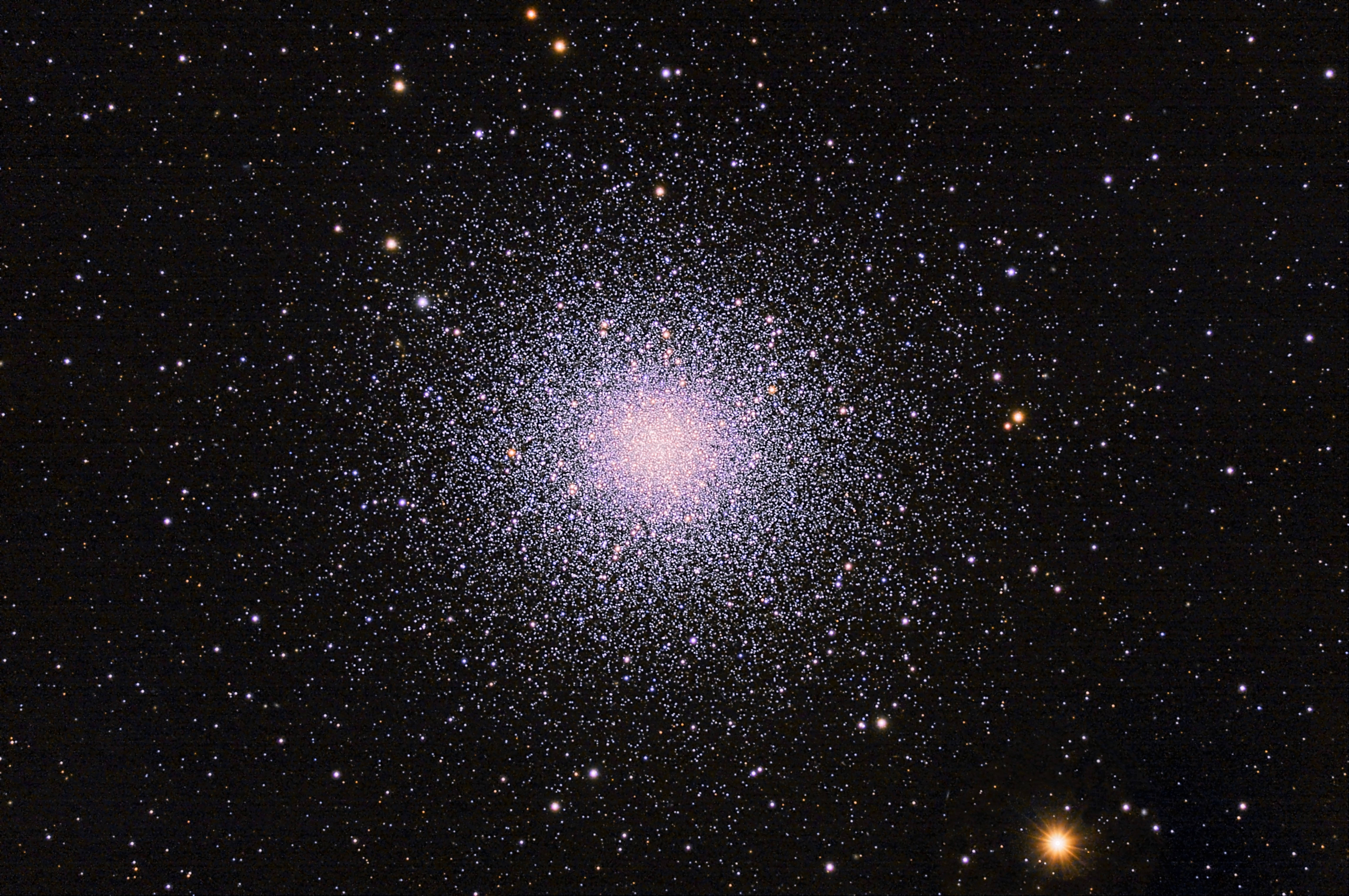
Ephemeris: 05/23/2025 – M13, The Great Hercules Star Cluster
This is Ephemeris for Friday, May 23rd. Today the Sun will be up for 15 hours and 6 minutes, setting at 9:13, and it will rise tomorrow at 6:05. The Moon, halfway from last quarter to new, will rise at 4:13 tomorrow morning.
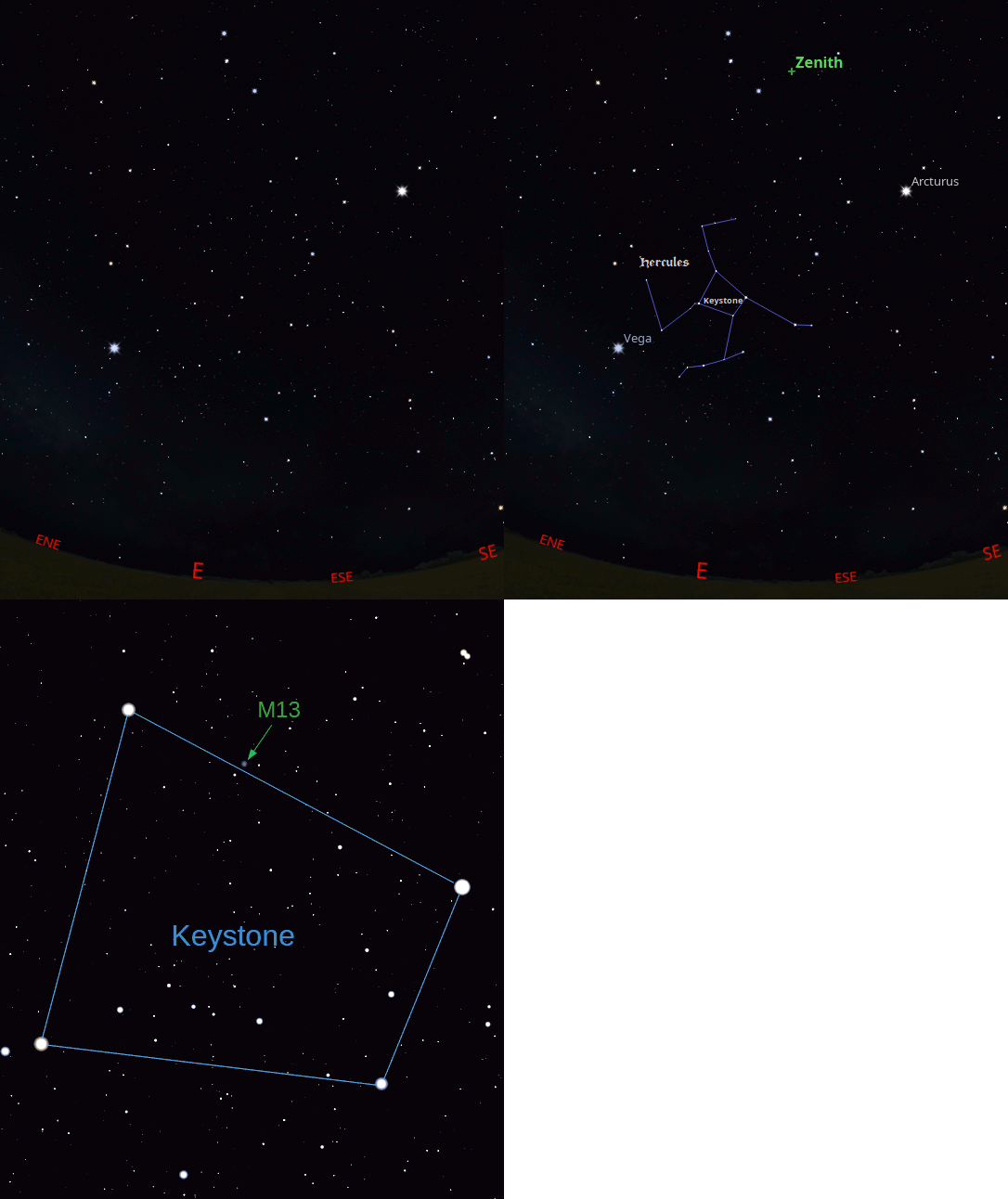
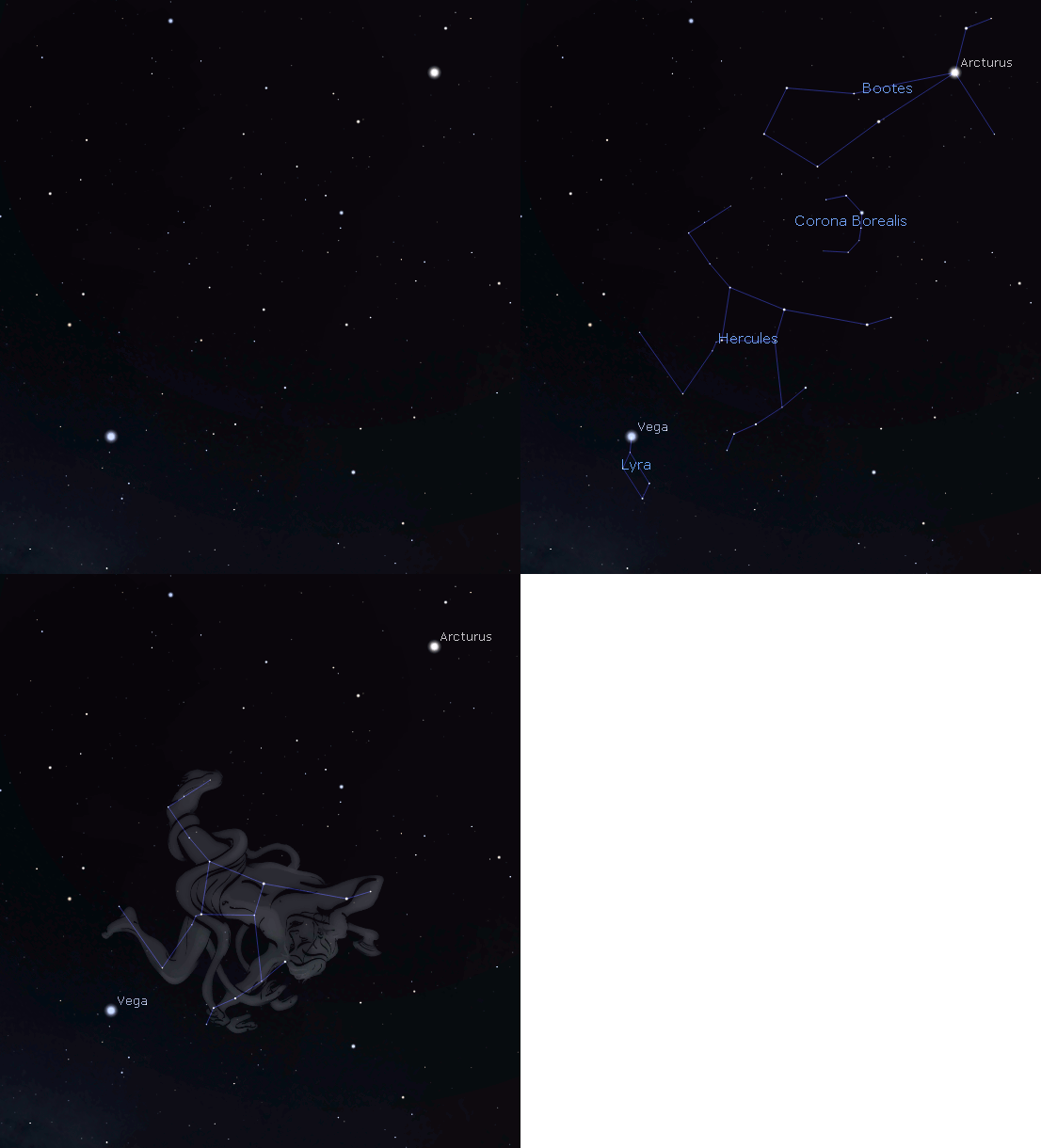
The constellation Hercules the hero can be found between the bright stars Vega which is fairly low in the east northeast and Arcturus high in the southeast. It’s about 1/3 of the way from Vega to Arcturus. His most distinctive feature is the keystone a box of four stars wider at the top than the bottom. Along the western edge of the keystone can be seen, sometimes with the naked eye, but better with binoculars as a small spot about 1/3 of the way down from the top star to the bottom star. It looks like a fuzzy spot. In telescopes smaller than 8 inch diameter, at least with my eyes, it stays fuzzy, but in larger telescopes it begins to crystallize out into a myriad of stars. It is the Great Hercules Globular Star Cluster. Number 13 on late 18th century astronomer Charles Messier’s catalog of fuzzy objects that weren’t the comets he was looking for. We know it as Messier 13, or M13.
The astronomical event times given in this blog are for the Traverse City/Interlochen area of Michigan (Lat 44.7° N, Long 85.7° W; EDT, UT – 4 hours) unless stated otherwise. Times will be different for other locations.
Addendum
Ephemeris: 10/25/2024 – Finding the Pleiades or Seven Sisters
This is Ephemeris for Friday, October 25th. Today the Sun will be up for 10 hours and 28 minutes, setting at 6:40, and it will rise tomorrow at 8:13. The Moon, 1 day past last quarter, will rise at 2:09 tomorrow morning.
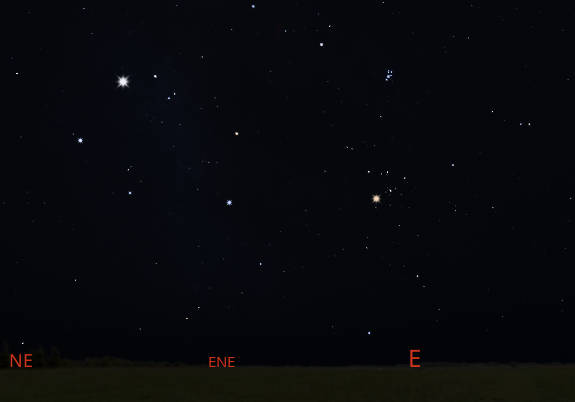
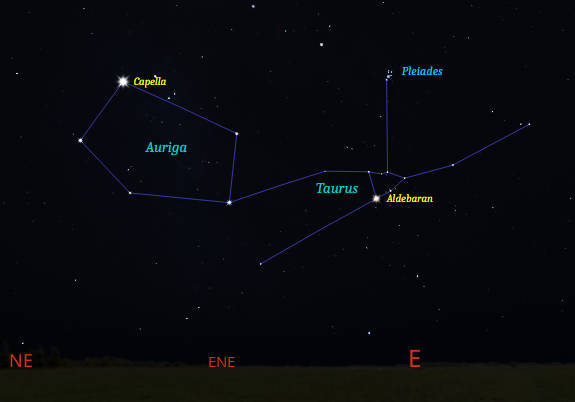
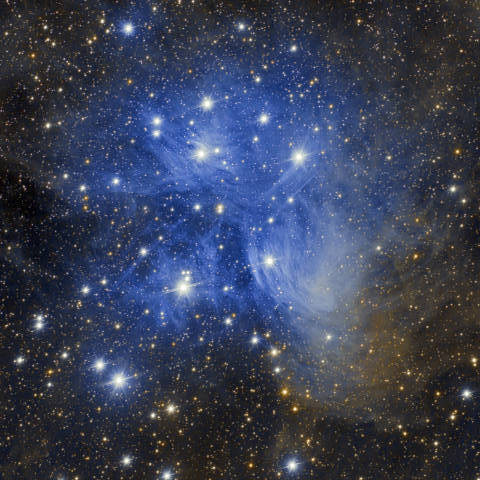
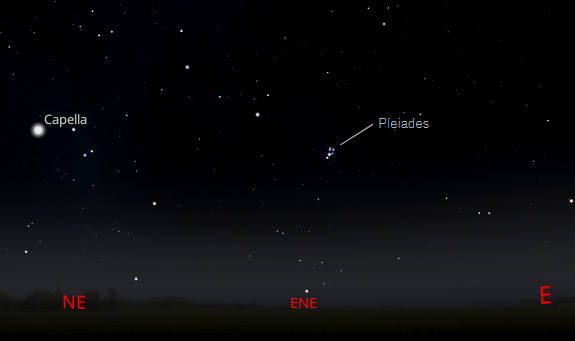
A marvelous member of the autumn skies can be found low in the east northeast after 9 in the evening. It is the famous star cluster called the Pleiades or the Seven Sisters. I might also add the ‘Tiny Dipper’. Many people can spot a tiny dipper shape in its six or seven stars, and mistake it for the Little Dipper. With binoculars, one can see over a hundred stars that appear, along with the dipper shape of the brightest. In photographs, the Pleiades actually contain wisps of the dust they are currently passing through. In Greek mythology, the sisters were daughters of the god Atlas and Pleione. The most people can see is six stars. The reason, according to mythology, is that one of the sisters married a mortal, dimming her star.
The astronomical event times given are for the Traverse City/Interlochen area of Michigan (EDT, UT – 4 hours). Times will be different for other locations.
Addendum
Ephemeris: 03/26/2024 – The dimmest constellation of the Zodiac is Cancer the crab
This is Ephemeris for Tuesday, March 26th. Today the Sun will be up for 12 hours and 29 minutes, setting at 8:03, and it will rise tomorrow at 7:31. The Moon, 1 day past full, will rise at 9:44 this evening.
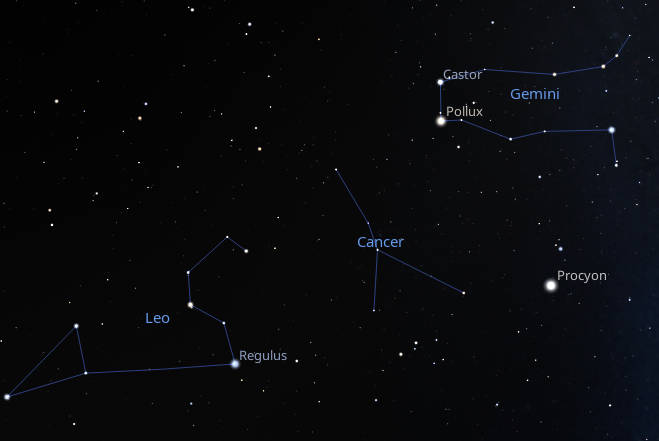
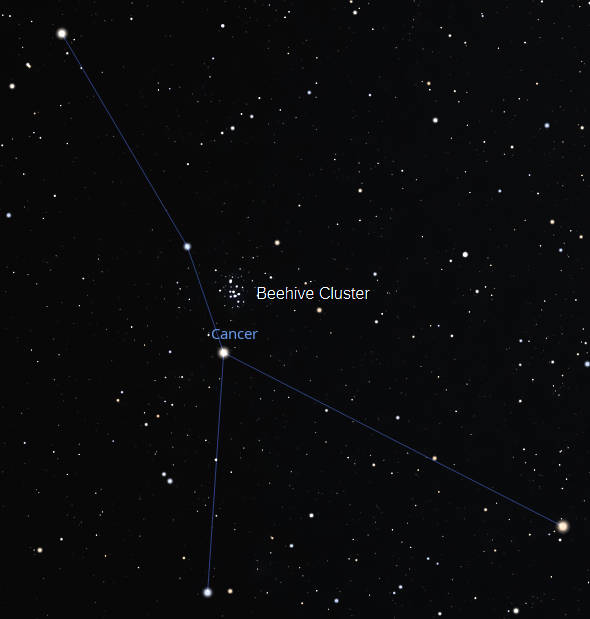
The dimmest constellation of the Zodiac is Cancer the crab. It is located high in the southeast at 9 PM between the backwards question mark that is the front of Leo the lion towards the lower left and Castor and Pollux of Gemini to the upper right. Its claim to more modern astronomical fame is the star cluster within it called the Beehive Cluster also known in ancient times as Praesepe the manger which looks like a fuzzy spot to the naked eye. In binoculars or a small telescope it shows up as a rather sparse open cluster of stars and to me the whole cluster appears somewhat triangular like an old-fashioned beehive. The Beehive cluster is relatively close to us at about 610 light years away.
The astronomical event times given are for the Traverse City/Interlochen area of Michigan (EDT, UT–4 hours). They may be different for your location.
Addendum
Ephemeris: 12/05/2023 – The Hyades, face of Taurus and an important star cluster
This is Bob Moler with Ephemeris for Tuesday, December 5th. Today the Sun will be up for 8 hours and 58 minutes, setting at 5:02, and it will rise tomorrow at 8:05. The Moon, at last quarter today, will rise at 1:11 tomorrow morning.
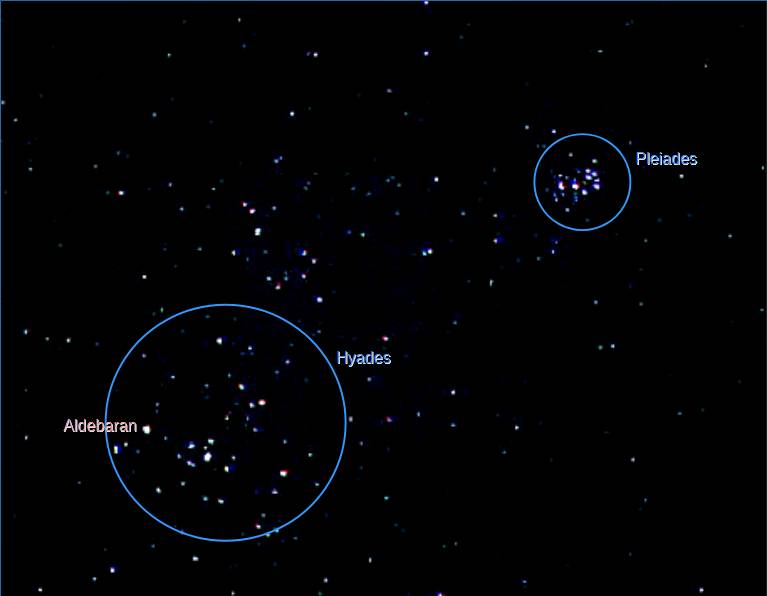
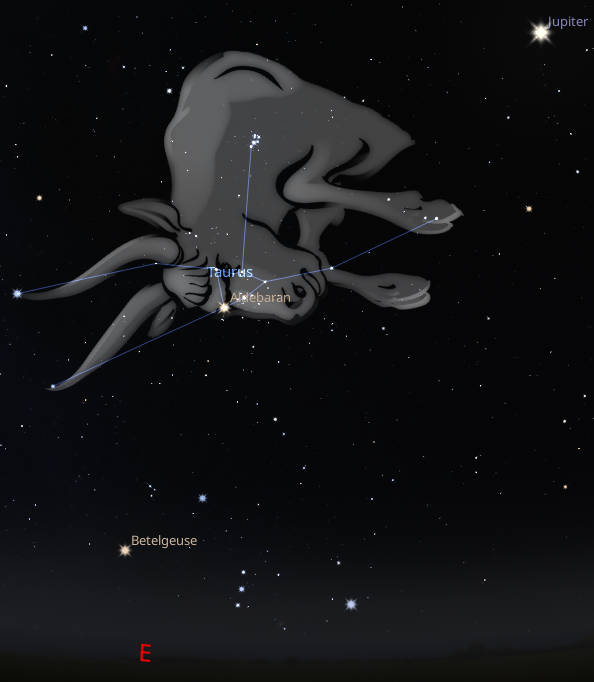
At 8 o’clock this evening the constellation of Orion the hunter is still in the act of rising with one leg still stuck in the snow. What is up above him is the constellation of Taurus the bull. His face is a letter V of stars or as a letter A, as I mentioned yesterday, is the star cluster called the Hyades. In Greek myth the stars are the half sisters of the Pleiades, which are right above them. The Hyades star cluster is very special. They don’t look as splashy as the Pleiades which are younger and still have their hot blue white stars. However, the Hyades are much closer in fact they’re close enough to be measured by trigonometry using the earth’s orbit as the base of a triangle, like surveyors would do on Earth.
The astronomical event times given are for the Traverse City/Interlochen area of Michigan (EST, UT –5 hours). They may be different for your location.
Addendum
06/13/2023 – Ephemeris – Messier 13, the Great star cluster in Hercules
This is Bob Moler with Ephemeris for Tuesday, June 13th. Today the Sun will be up for 15 hours and 32 minutes, setting at 9:29, and it will rise tomorrow at 5:56. The Moon, 3 days past last quarter, will rise at 3:34 tomorrow morning.
About a third of the way between the bright stars Vega which is high in the east and Arcturus, high in the south, can be found the Keystone of Hercules, a four-star box wider at the top than at the bottom. Along the right edge, a third of the way down is what looks like a faint star to someone with really good vision. In binoculars the star becomes fuzzy. One needs a larger telescope probably six or eight inches in diameter to begin to see some stars among the fuzziness. That is a globular star cluster containing hundreds of thousands of stars. This is the Great Hercules Globular Star Cluster. It’s beautiful if seen in a large telescope, such as the one brought out to the star parties at the Sleeping Bear Dunes, especially in August and September.
The astronomical event times given are for the Traverse City/Interlochen area of Michigan (EDT, UT –4 hours). They may be different for your location.
Addendum
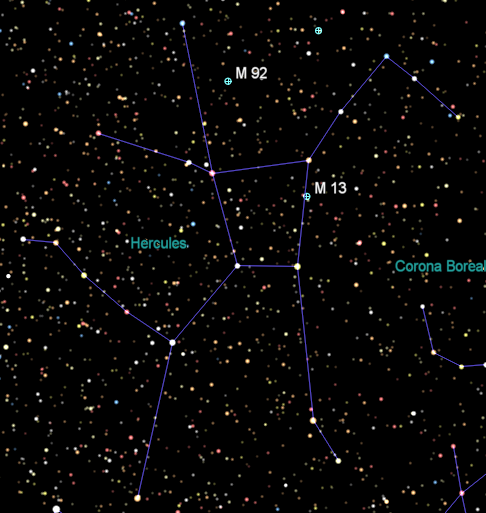
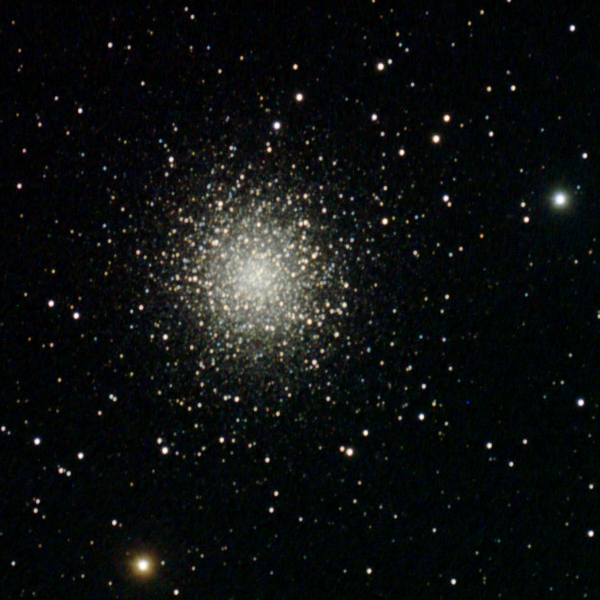
Dan’s image is rotated from Scott’s. The bright star at the lower left of Scott’s image is the same as the one at the lower left of Dan’s.
Globular star clusters are uniformly very old. M 13 is estimated to be between 11 and 12 billion years old, more than twice as old as our Sun and the solar system. As I say in my talks: “They don’t make them like that any more.” Globular clusters form a spherical distribution around the Milky Way galaxy with an increasing concentration toward the center. Do they reveal the original spherical shape of the galaxy before the gas and dust collapsed into the disk of the galaxy we see today? The star clusters that form today lie in the disk, and contain a few hundreds or a thousand stars. They are called open or galactic star clusters. The Pleiades is the most famous example of this type of star cluster.
06/12/2023 – Ephemeris -Finding Hercules among the stars
This is Ephemeris for Monday, June 12th. Today the Sun will be up for 15 hours and 31 minutes, setting at 9:28, and it will rise tomorrow at 5:56. The Moon, 2 days past last quarter, will rise at 3:13 tomorrow morning.
Orion, the hard luck mythical Greek hunter, gets a splashy constellation in the winter sky, but the greatest hero of all, Hercules, gets a dim group of stars on the border between the spring and summer stars. At 11 p.m. Hercules is high in the east-southeast. It is located above and right of the bright star Vega, in the east. Hercules’ central feature is a keystone shaped box of stars, called, of course, the Keystone of Hercules tilted to the left, which represents the old boy’s shorts. From the top and left corner stars extend lines of stars that are his legs, from the bottom and right stars, the rest of his torso and arms extend. So in one final indignity, he’s upside down in our sky. For those with a telescope, Hercules contains the beautiful globular star cluster Messier 13.
The astronomical event times given are for the Traverse City/Interlochen area of Michigan (EDT, UT –4 hours). They may be different for your location.
Addendum

12/15/2022 – Ephemeris – Stories of the Pleiades from many lands
This is Ephemeris for Thursday, December 15th. Today the Sun will be up for 8 hours and 49 minutes, setting at 5:02, and it will rise tomorrow at 8:13. The Moon, 1 day before last quarter, will rise at 12:16 tomorrow morning.
Let’s look at how some ancient cultures saw the Pleiades, the star cluster that is seen high in the eastern sky these evenings. To the Anishinaabe native peoples around here, the Pleiades is the “Hole in the Sky” or the seven stones that are heated for the sweat lodge ceremony. To the Kiowa, these were sister stars that had been whisked into the sky from the top of Devil’s Tower in Wyoming, where they were threatened by a huge bear. In Norse mythology, these were the goddess Freya’s* hens. The name we know them by has rather misty origins. Some think the Greek name is from the mother of the seven sisters, Pleione. The Greek word for sail is similar to Pleiades, and the appearance of the Pleiades in the morning sky saw the best sailing weather in the Mediterranean.
The astronomical event times given are for the Traverse City/Interlochen area of Michigan (EST, UT –5 hours). They may be different for your location.
* Freya is the Norse goddess from which we get the name of the day of the week Friday from. In Latin, the day is named after the goddess Venus.
Addendum
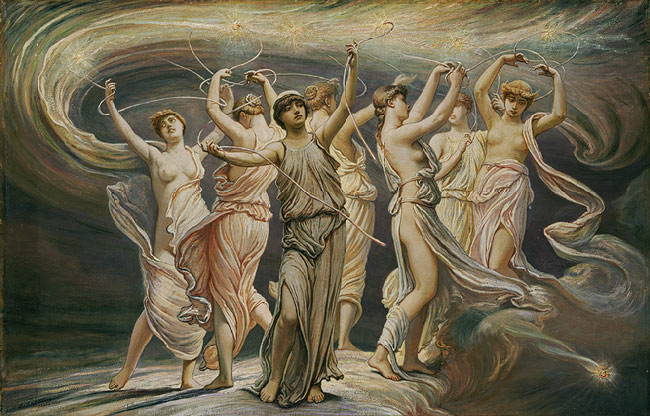
The Greek Pleiades, a painting by Elihu Vedder in the Metropolitan Museum of Art, New York City. Public Domain.

Seven maidens being attacked by a giant bear, having fled to the top of Devil’s Tower in Wyoming. Painting by Herbert Collins, http://www.nps.gov/deto

They are also the Seven Daughters of the Moon and Sun. They loved to dance and play, and when their father, the Moon was low in the sky, would descend to the Earth in a basket to do their thing. On one of their trips to the earth, one of them was captured by a human, and she ended up falling in love with him, and married him. When father Moon found out, he permanently dimmed her star, so now most people now only can spot 6 of the stars. This last bit seems to parallel the Greek story of the lost Pleiad.
 Bob Moler's Ephemeris Blog