Archive
Ephemeris: 04/29/2025 – Using the Sun as a telescope
This is Ephemeris for Tuesday, April 29th. Today the Sun will be up for 14 hours and 10 minutes, setting at 8:45, and it will rise tomorrow at 6:33. The Moon, 2 days past new, will set at 11:56 this evening.
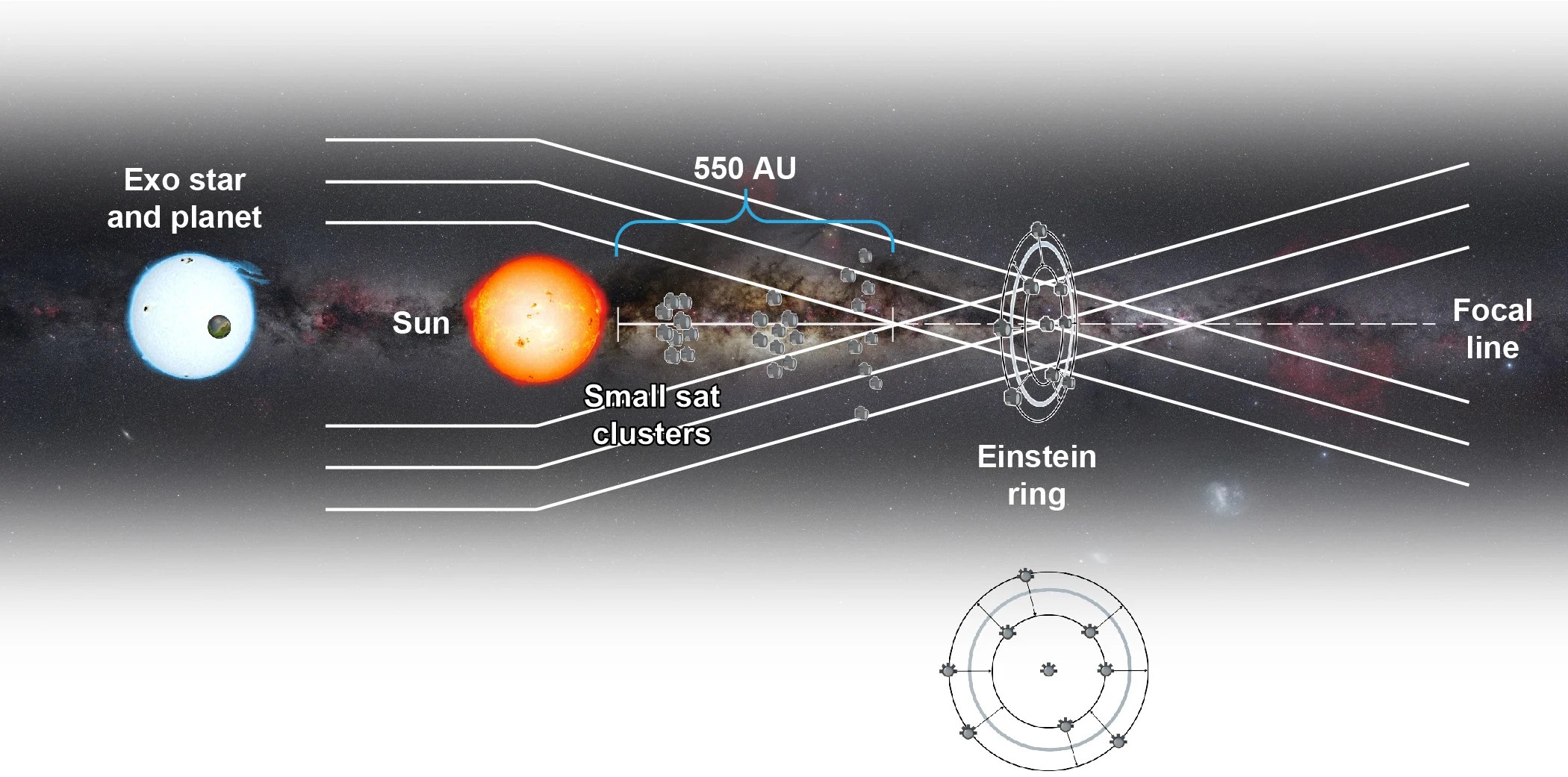
One idea of a telescope I find very fantastic. This is a telescope that uses the Sun and its mass curving spacetime to alter the path of light from a distant object to act like a lens in a telescope. This is called gravitational lensing. The length of this telescope would have to be about 542 times the earth’s distance from the Sun, 542 astronomical units. In the 48 years since Voyager 1 was launched it has achieved only about 1/3 of that distance. What would be the use of this telescope would be to image exoplanets. So far exoplanets, if they are visible at all, don’t even cover a single pixel in even our largest telescopes. The problems are huge, starting with gravitational lenses don’t bend light the same way as optical ones do.
The astronomical event times given in this blog are for the Traverse City/Interlochen area of Michigan (Lat 44.7° N, Long 85.7° W; EDT, UT – 4 hours) unless stated otherwise. Times will be different for other locations.
Addendum
Here are some sources of additional information on this topic:
https://www.universetoday.com/articles/how-can-the-sun-become-a-telescope
https://www.livescience.com/space/the-sun/could-we-turn-the-sun-into-a-gigantic-telescope
https://nasaspacenews.com/2025/04/see-alien-planets-in-4k-the-suns-gravitational-lens-explained/
https://news.stanford.edu/stories/2022/05/gravity-telescope-image-exoplanets
https://www.space.com/sun-gravity-could-help-observe-exoplanets-in-detail
Ephemeris: 03/17/2025 – When the largest telescope in the world was in Ireland
This is Ephemeris for St. Patrick’s Day, Monday, March 17th. Today the Sun will be up for 12 hours and 1 minute, setting at 7:51, and it will rise tomorrow at 7:49. The Moon, 3 days past full, will rise at 11:40 this evening.
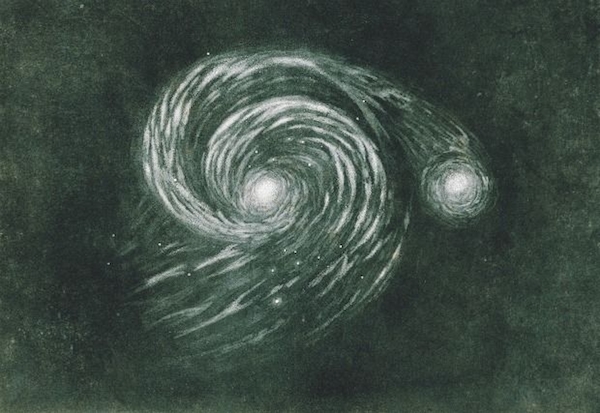
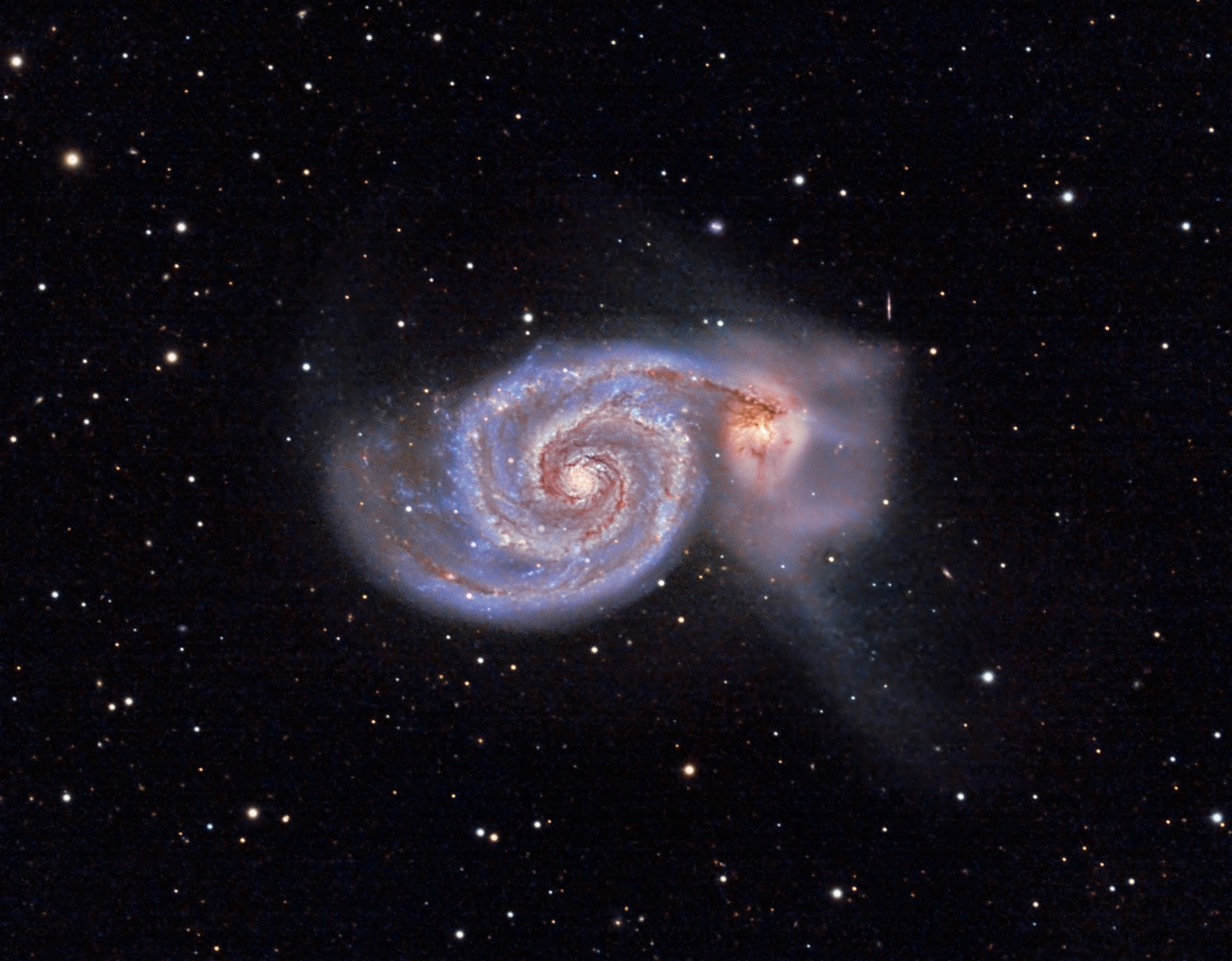
In the 19th century Ireland laid claim to having the largest telescope in the world. It was a reflecting telescope with a mirror diameter of 72 inches. It was built by William Parsons the Third Earl of Rosse. The base of the telescope tube rested in a pit between two massive walls and could only look to either side of a north-south direction. It saw first usage in 1847. The telescope was called the Leviathan of Parsonstown, and was in use until 1890. Mirrors in those days were made of a silvery alloy called speculum. Two mirrors were used alternately because speculum tarnished. The mirror not in use would have to be re-polished and swapped in from time to time. It was the largest telescope until the 100 inch at Mt. Wilson was put in service in 1917.
The astronomical event times given are for the Traverse City/Interlochen area of Michigan (EST, UT – 5 hours). Times will be different for other locations.
Addendum

Ephemeris: 11/20/2023 – Observing the Moon tonight
This is Ephemeris for Monday, November 20th. Today the Sun will be up for 9 hours and 24 minutes, setting at 5:10, and it will rise tomorrow at 7:47. The Moon, at first quarter today, will set at 12:42 tomorrow morning.
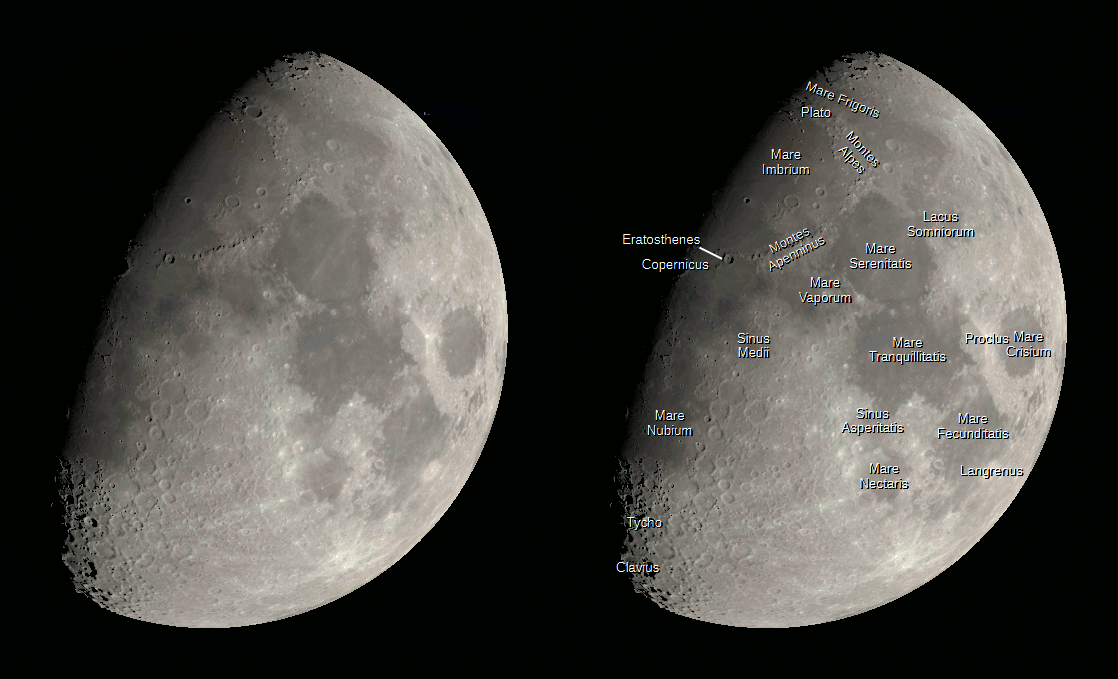
The moon was exactly first quarter at 5:50 this morning. By this evening it will be slightly gibbous. If I want to see the most detail on the Moon of any kind, the best time to observe it is within a few days of first quarter. More craters are visible, and other features are easier to see then. The southern part of the Moon or the bottom part, as we see it, is littered with craters. It’s called the lunar highlands, and they are really higher than the darker and flatter regions, which are called seas. There is no water in them but if the Moon did have water, that’s where it would be. There are a couple of mountain ranges which are actually the edges of a sea called Mare Imbrium that are just coming into view. They show up nicely with their shadows. It’s shadows that make the detail on the moon stand out, because the Moon basically is darker gray on lighter gray, so the only contrast is with shadows. That’s why I find the full moon to be so disappointing. No shadows.
The astronomical event times given are for the Traverse City/Interlochen area of Michigan (EST, UT –5 hours). They may be different for your location.
01/24/2022 – Ephemeris – The Great Orion Nebula
This is Ephemeris for Monday, January 24th. Today the Sun will be up for 9 hours and 30 minutes, setting at 5:40, and it will rise tomorrow at 8:09. The Moon, 1 day before last quarter, will rise at 1:03 tomorrow morning.
The closest star nursery to us, places where stars are being born, is the Great Orion Nebula, 1,300 light years away. A light year is about 6 trillion miles, if you want to pace it out. It’s located in the constellation Orion’s sword that hangs below his belt. In as little as a pair of binoculars, it shines by emission and reflection of the light of a tiny clutch of four stars at its heart, which astronomers have called the Trapezium. These extremely hot young massive stars are not destined to live long. Unlike the Sun’s 10 billion year lifetime, these stars lifespans will be measured in millions of years. Yet do not mourn for them, even now stars are forming within their dusty cocoons in the nebula. The Trapezium stars’ deaths will provide heavy elements for new stars and planets.
The astronomical event times given are for the Traverse City/Interlochen area of Michigan (EST, UT – 5 hours). They may be different for your location.
Addendum
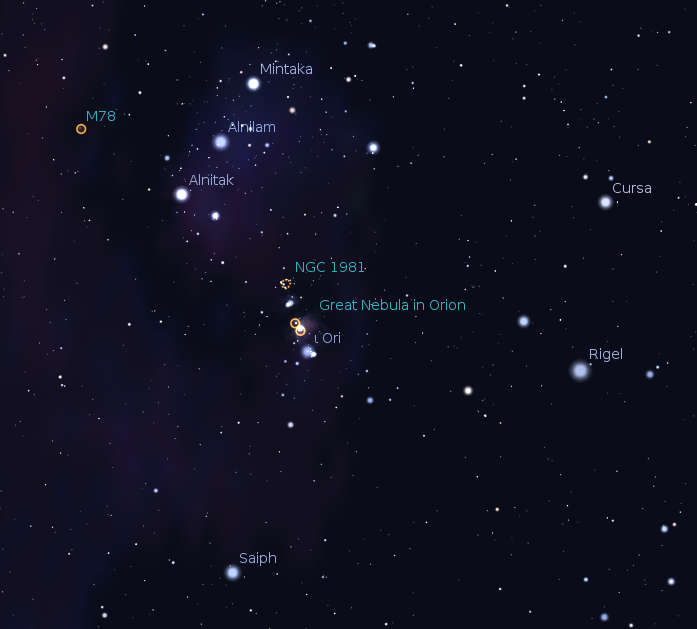
The lower part of Orion, with the Great Orion Nebula. Created using Stellarium.
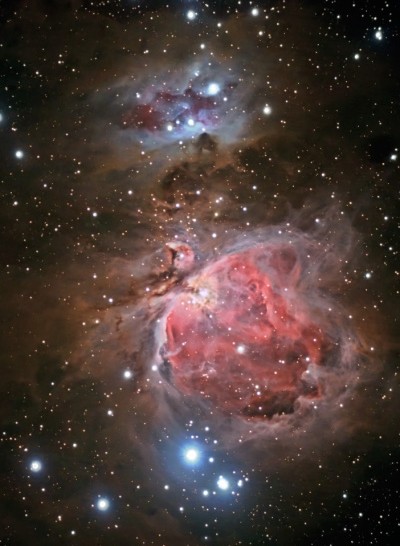
The Great Orion Nebula (M42) long exposure photograph by Scott Anttila. Includes all the sword stars.
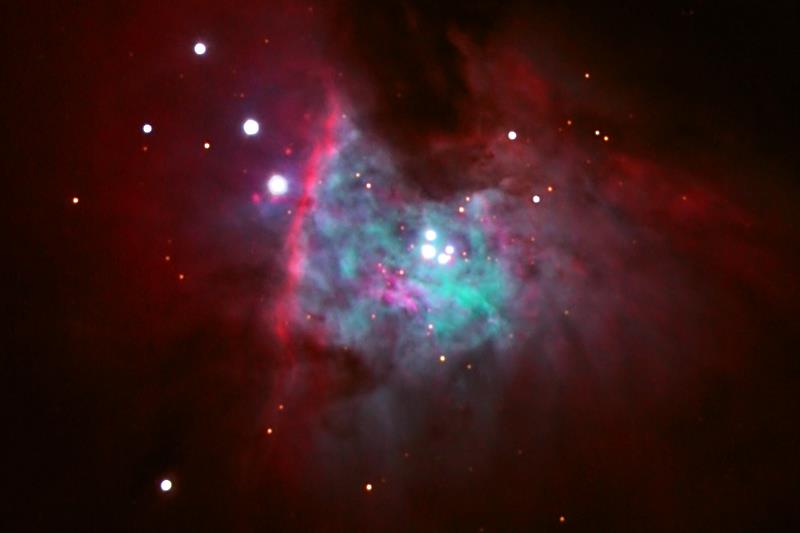
The inner and brightest part of the Great Orion Nebula. Also, visible are the four stars of the Trapezium, whose ultraviolet emissions light up the nebula. This is pretty much one’s perception of the nebula as seen in a small telescope, except it would appear colorless. In larger telescopes, one would perceive a greenish color. The red color of hydrogen is outside our night adapted visual range. The green emission is due to mainly doubly ionized oxygen and the green emission of hydrogen. Image by Scott Anttila.
 Bob Moler's Ephemeris Blog