Archive
09/24/2020 – Ephemeris – Phosphine found in Venus’ atmosphere
This is Ephemeris for Thursday, September 24th. Today the Sun will be up for 12 hours and 2 minutes, setting at 7:35, and it will rise tomorrow at 7:34. The Moon, 1 day past first quarter, will set at 12:49 tomorrow morning.
Three years ago astronomers began to discover phosphine in the atmosphere of Venus. The chemical phosphine is related to ammonia in that it has three hydrogen atoms. They are tied to phosphorus rather than to nitrogen as is ammonia. It can also be created biologically, as it is almost entirely created on the Earth. It also is produced by volcanoes, and Venus has evidence of volcanic action. After three years of observation and looking for and ruling out non biological origins of phosphine they made public the announcement last week Monday. The detection was made in the millimeter wavelengths of the electromagnetic spectrum between microwave and the infrared. Is life responsible? A space probe or many to Venus will be needed to find out to help solve the mystery.
The event times given are for the Traverse City/Interlochen area of Michigan. They may be different for your location.
Addendum

Clouds on the night side of Venus as seen in the infrared from the Japanese spacecraft Akatsuki, the only active spacecraft currently orbiting Venus. Credit JAXA / ISAS / DARTS / Damia Bouic
Some links for more information:
Original article – https://www.nature.com/articles/s41550-020-1174-4,
From Phil Plait’s Bad Astronomy: https://www.syfy.com/syfywire/so-astronomers-may-have-found-evidence-of-life-on-venus
03/24/2020 – Ephemeris – Venus reaches greatest eastern elongation from the Sun today
Ephemeris for Tuesday, March 24th. Today the Sun will be up for 12 hours and 23 minutes, setting at 8:01, and it will rise tomorrow at 7:35. The Moon is new today, and won’t be visible.
Today, around 6 p.m. the planet Venus will reach its greatest eastern elongation from the Sun. That means Venus will appear as far east of the Sun that it can get at an angle of 46.1 degrees. Venus, like Mercury orbits the Sun inside the Earth’s orbit, so is always seen close to the Sun. In telescopes Venus will look like a tiny first quarter Moon. That’s for the same reason. The Sun is illuminating half of the side we can see. Venus is moving directly toward us now, at a distance of 66.5 million miles (117 million km). As Venus approaches us, it will grow in size in telescopes, becoming larger in appearance than Jupiter the largest planet and a thinner and thinner crescent. It will leave the evening sky, passing between the Earth and the Sun, only 27 million miles (43 million km) away on June 3rd.
The event times given are for the Traverse City/Interlochen area of Michigan. They may be different for your location.
Addendum
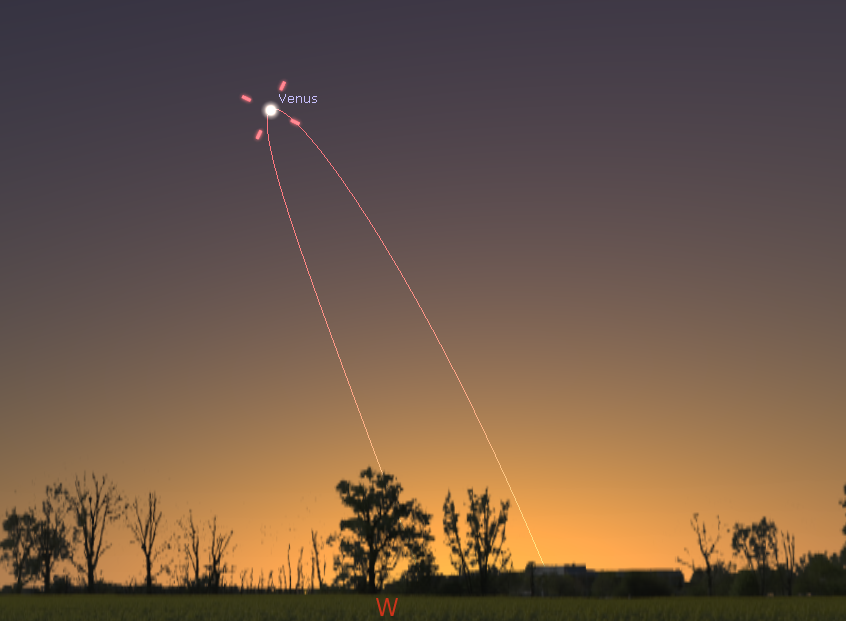
Venus at greatest eastern elongation seen tonight at 8:20 p.m. The red line its orbit if we could see it tonight. Venus will be moving to the right and down in the coming days. Created using Stellarium.
01/21/2019 – Ephemeris – Venus and Jupiter will pass each other tomorrow morning
Ephemeris for Martin Luther King Jr. Day, Monday, January 21st. Today the Sun will be up for 9 hours and 23 minutes, setting at 5:35, and it will rise tomorrow at 8:11. The Moon, at full today, will rise at 6:23 this evening.
I hope you’ve been noticing the bright planets Venus and Jupiter in the morning this month on the few mornings that have been clear. Jupiter and Venus have been drawing together. And tomorrow morning they will pass each other. The event is called a conjunction. To astronomers it’s a cool looking event, where the planets happen to be along the same line of sight. They are nowhere near each other in actuality. Venus is 76 million miles (120 million km) away, while Jupiter is 555 million miles (894 million km) away. It doesn’t affect anything on the Earth. It’s just cool looking. After this, Jupiter will move farther and farther from the Sun, while Venus will appear to fall back towards the Sun, even though they both are traveling eastward against the stars.
The times given are for the Traverse City/Interlochen area of Michigan. They may be different for your location.
Addendum
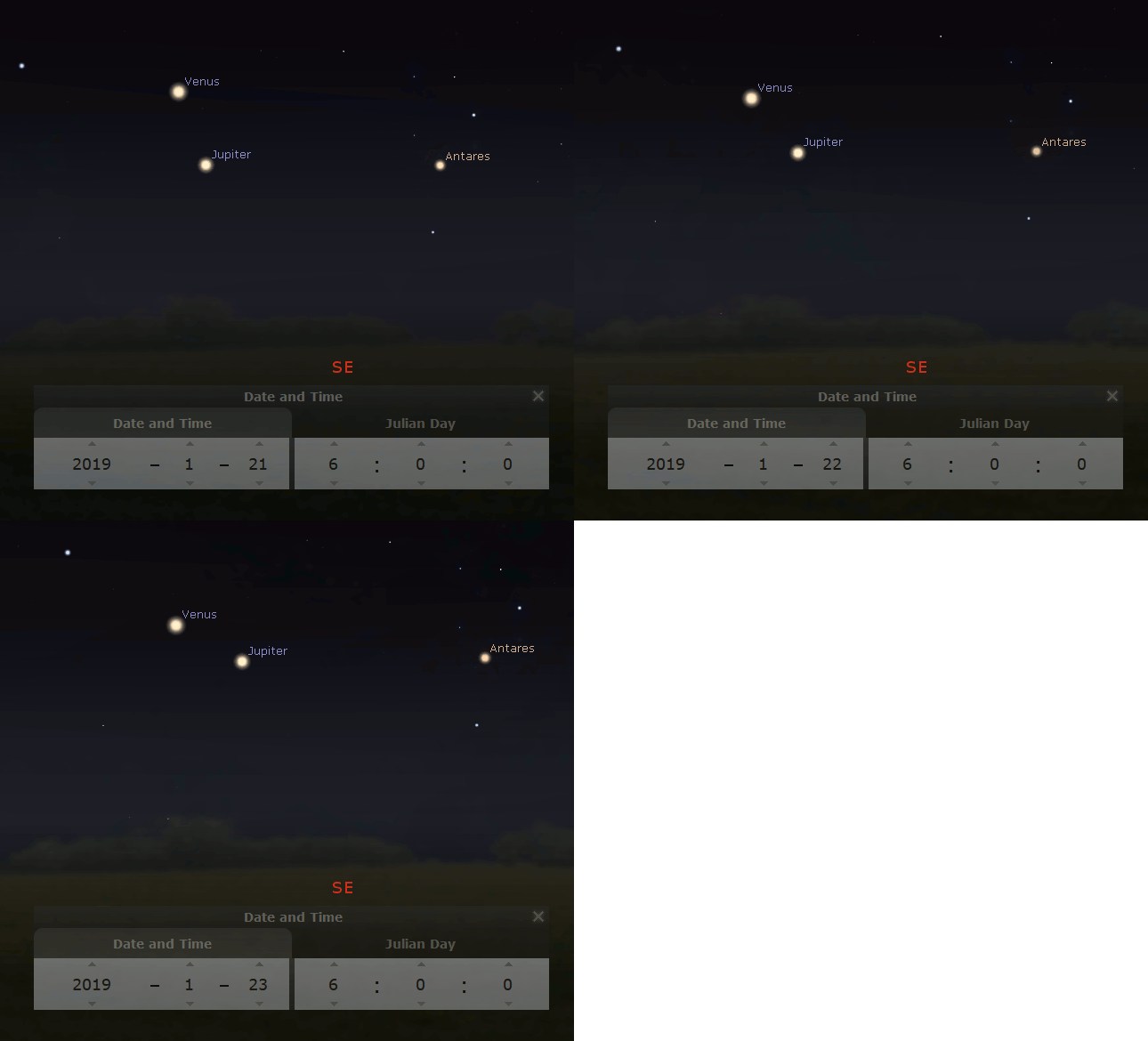
Three day animation of Venus and Jupiter on the 21st, 22nd, and 23rd of January 2019. Created using Stellarium and GIMP.
10/26/2018 – Ephemeris – Venus passes inferior conjunction with the Sun today
Ephemeris for Friday, October 26th. The Sun will rise at 8:12. It’ll be up for 10 hours and 27 minutes, setting at 6:40. The Moon, 2 days past full, will rise at 8:19 this evening.
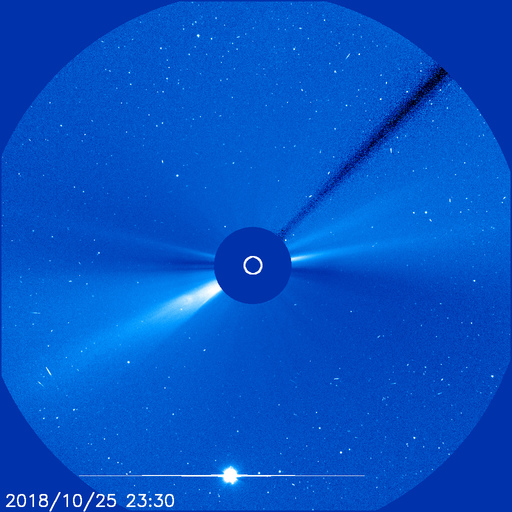
Later this morning the planet Venus will pass in inferior conjunction with the Sun, moving officially from the evening sky to the morning sky. Inferior conjunctions are when Venus is between the Earth and the Sun. We haven’t seen Venus for over a month, it setting too soon after the Sun to be spotted. It’s appearance in the morning sky will be much more sudden. On fall mornings the ecliptic, the path of the Sun and most planets is more vertical in the sky, opposite that of the evning sky, so that Venus will suddenly appear. Being south of the Sun, it will take 3 days, next Monday morning to rise with the Sun, but after that Venus will rise 8 minutes earlier each morning for a while. It should be easily visible in two weeks as the bright Morning Star
The times given are for the Traverse City/Interlochen area of Michigan. They may be different for your location.
09/11/2018 – Ephemeris – Earth shine on the Moon
Ephemeris for Tuesday, September 11th. The Sun will rise at 7:16. It’ll be up for 12 hours and 43 minutes, setting at 8:00. The Moon, 2 days past new, will set at 9:27 this evening.
At around 8:30 this evening Venus will be in the southwest only 9 degrees above the horizon, about the width of a fist held at arm’s length. While viewing Venus the Moon will be to the right and above our evening star. It will be a thin sliver of a crescent and in the twilight there will be the suggestion that there is more than the thin sliver of the Moon visible. Binoculars will confirm that the entire disk of the Moon will be visible. The effect is called earth shine. The nearly full Earth is illuminating the Moon to a much greater degree than the full Moon illuminates the Earth. The Earth is about 4 times the Moons diameter and its surface is about twice as bright and the Moon’s. The ancients called it: “The old Moon in the new Moon’s arms.”
The times given are for the Traverse City/Interlochen area of Michigan. They may be different for your location.
Addendum
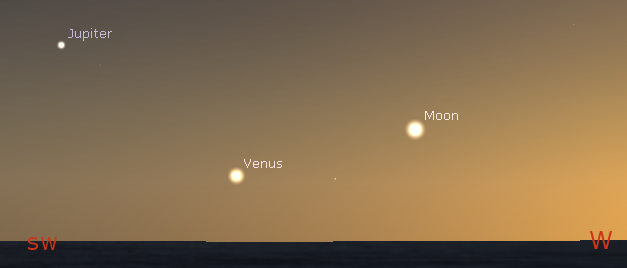
Venus, the Moon and Jupiter at 8:30 p.m. September 11, 2018. Created using Stellarium.
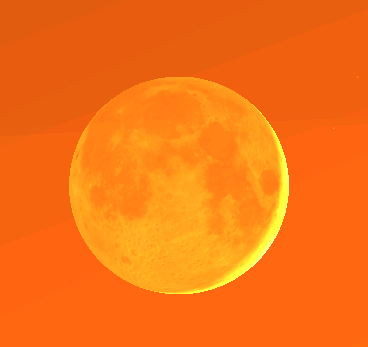
An overly colored Moon to bring out Earth shine on thye evening of September 11, 2018. Created by Stellarium. Overly processed in GIMP.
08/21/2018 – Ephemeris – How will the Parker Solar Probe get near to the Sun?
Ephemeris for Tuesday, August 21st. The Sun rises at 6:52. It’ll be up for 13 hours and 46 minutes, setting at 8:38. The Moon, 3 days past first quarter, will set at 3:09 tomorrow morning.
I introduced the Parker Solar Probe yesterday. It’s on its way to Venus to have some of its velocity stolen by that planet as to drop to nearly 15 million miles (24 million km) of the Sun at its first perihelion, before heading almost all the way out to the Earth’s orbit. Its next encounter with Venus will steal even more velocity from the probe to drop even closer to the Sun. It will take nearly 7 years to reach as close as 3.9 million miles (6.2 million km) from he center of the Sun of 3.8 million miles (6.1 million km) from what looks like its surface, the photosphere, the bright ball we see of the Sun. The probe has a huge heat shield that will handle the over two thousand degree heat from the Sun. Even though the corona is several million degrees in temperature, it’s not dense enough to heat the probe.
The times given are for the Traverse City/Interlochen area of Michigan. They may be different for your location.
Addendum
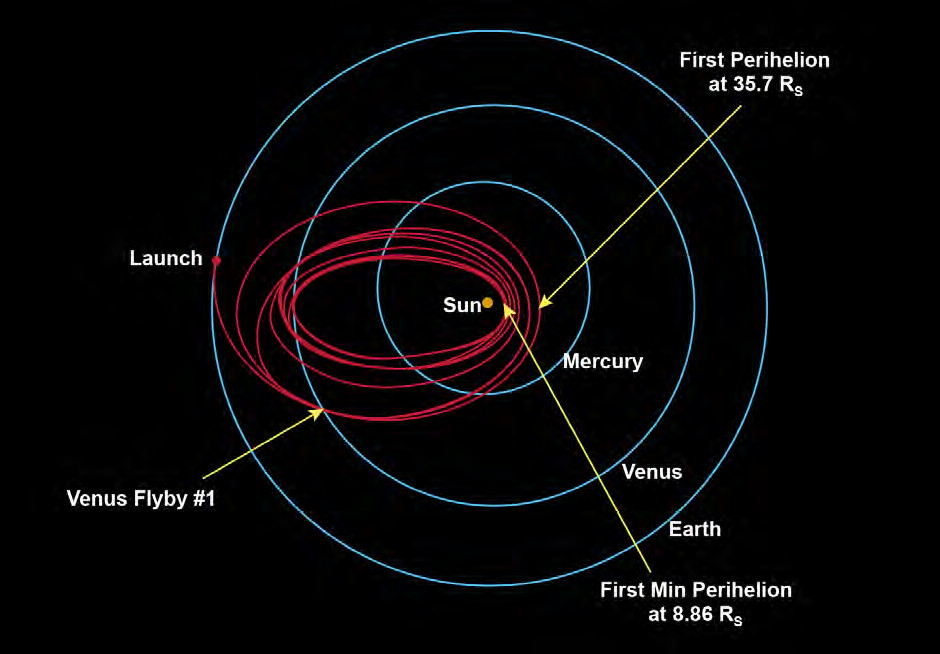
The planned orbits of the Parker Solar Probe. First flyby of Venus will occur on October 3rd 2018. The first perihelion passage a bit more than a month later on November 6th. Credit: NASA
A close look at the Sun
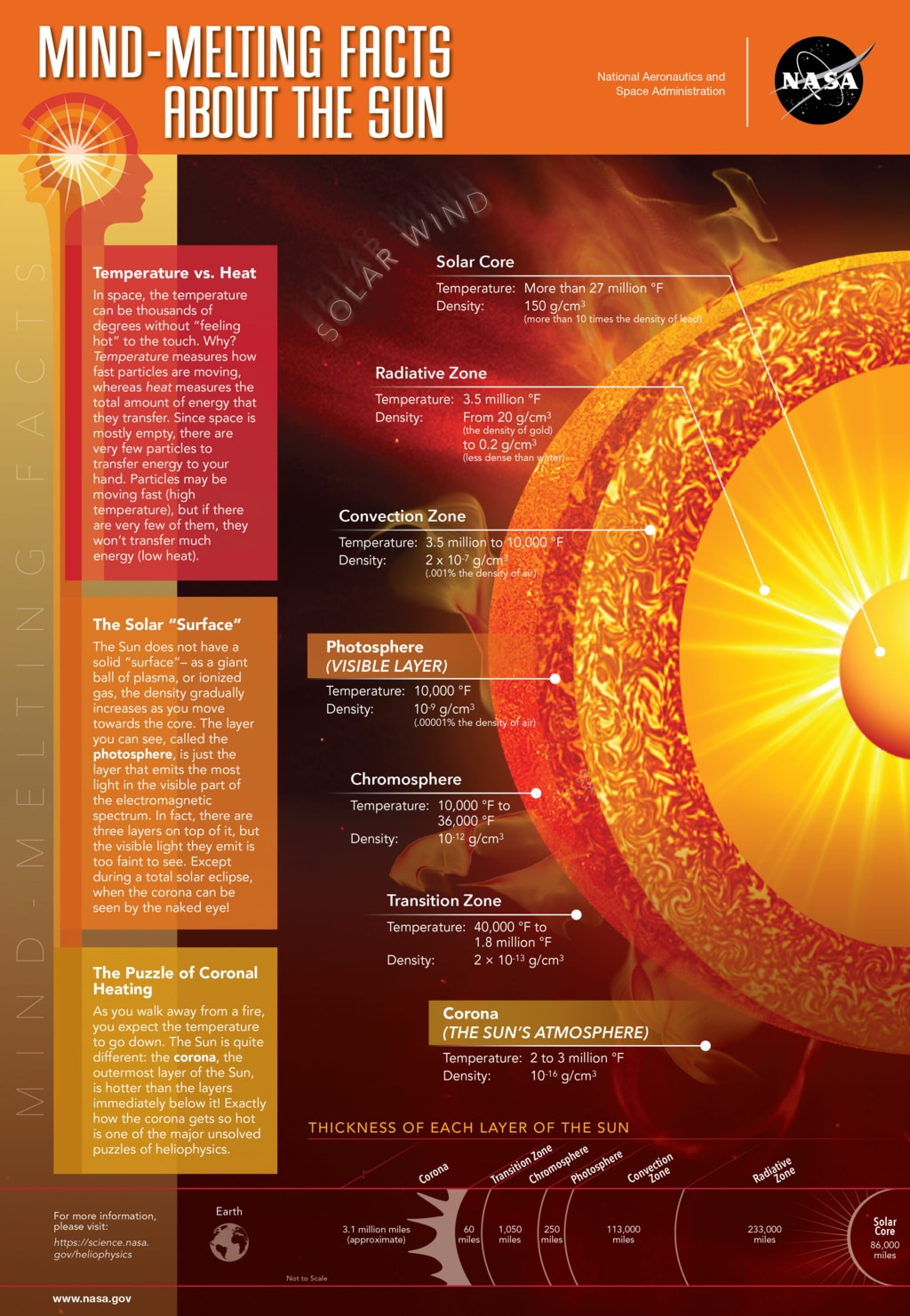
Click on image to enlarge. Credit NASA.
06/07/2018 – Ephemeris- Venus passes Pollux tonight
Ephemeris for Thursday, June 7th. Today the Sun will be up for 15 hours and 28 minutes, setting at 9:25, and it will rise tomorrow at 5:57. The Moon, 1 day past last quarter, will rise at 3:10 tomorrow morning.
The planet Venus will be passing the last of the bright winter stars tonight. That star is Pollux in Gemini the twins, which will appear below and to the left of the much brighter Venus. As Venus moves about the Sun in our evening sky it will pass other bright first magnitude stars that are near the ecliptic, the path of the Sun and also near the paths of the Moon and planets. On July 9th it will pass Regulus in Leo the Lion. Then on September 1st it will pass Spica in Virgo the Virgin. That will be the last of the first magnitude stars it will pass during its evening appearance this year. Venus will pass between the Earth and the Sun on October 26th, leaving the evening sky and entering the morning sky.
The times given are for the Traverse City/Interlochen area of Michigan. They may be different for your location.
Addendum
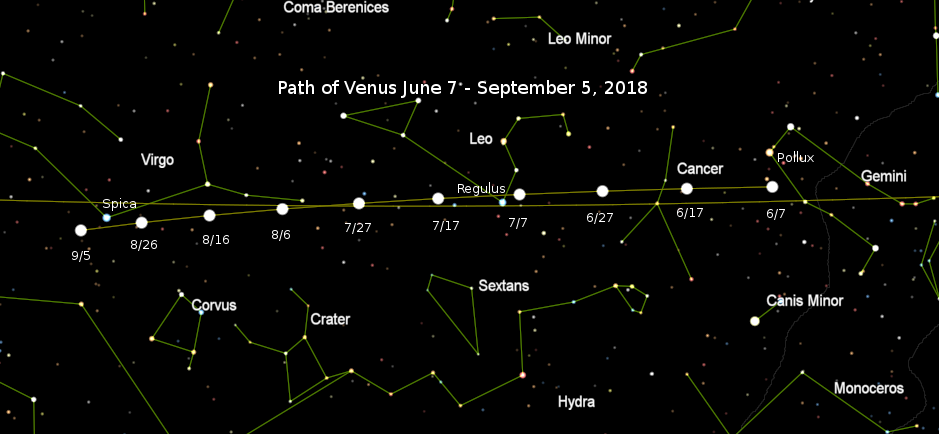
The path of Venus against the stars and constellations. This image ignores the Sun, Moon and other planets. Click on image to enlarge. Created using Cartes du Ciel (Sky Charts).
05/17/2018 – Ephemeris – Venus and the Moon tonight and viewing Venus in the daytime
Ephemeris for Thursday, May 17th. Today the Sun will be up for 14 hours and 54 minutes, setting at 9:06, and it will rise tomorrow at 6:11. The Moon, 2 days past new, will set at 11:40 this evening.
This afternoon at 2:11 the Moon will appear to pass Venus. This will be impossible to see since the Moon is going to be much dimmer than Venus. Venus can indeed be seen in the daylight. I’ve seen it many times with binoculars or a telescope, but only once with the naked eye. The latter time was not long before sunset. It is essential that to spot Venus in the daytime by any of these means that one is in the shade, by putting the Sun behind a building, and knowing where Venus is supposed to be using a program on a smart phone. By tonight the Moon will have moved eastward past Venus by up to 13 of its diameters and will also be displaying earthshine, the reflection of the Earth off its night side.
The times given are for the Traverse City/Interlochen area of Michigan. They may be different for your location.
Addendum
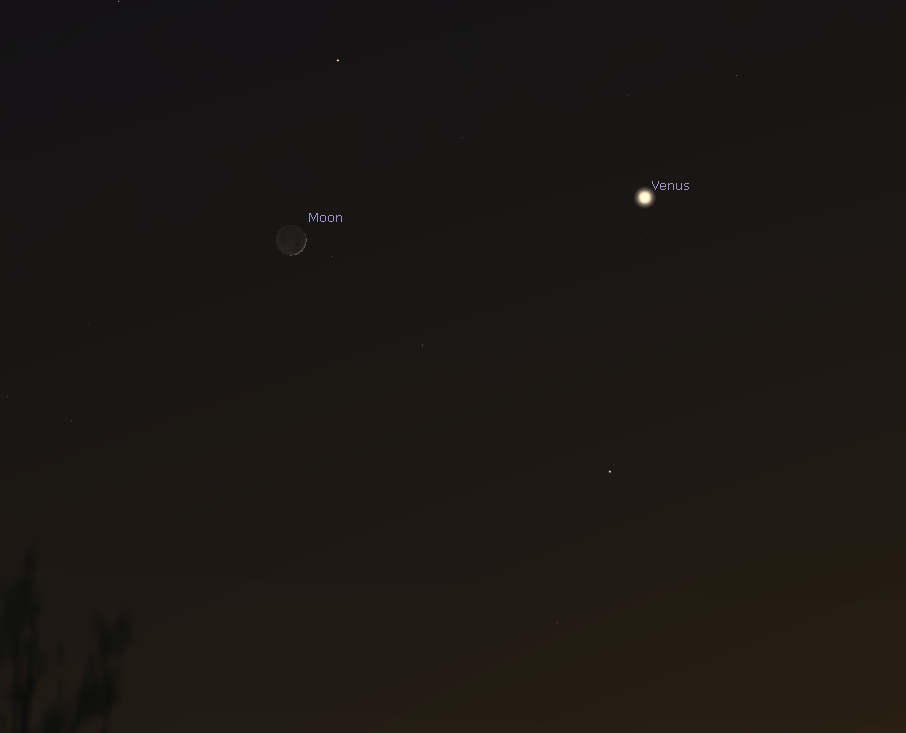
Venus and the Moon at 10 p.m. May 17, 2018. Created using Stellarium.
05/04/2018 – Ephemeris – Tonight I present Venus from the mists of time to today
Ephemeris for Friday, May 4th. The Sun rises at 6:28. It’ll be up for 14 hours and 23 minutes, setting at 8:51. The Moon, 3 days before last quarter, will rise at 1:15 tomorrow morning.
The planet Venus is our evening star now. I’ve been talking about it on this program lately. Want to hear and see more? Tonight at 8 p.m. at the May meeting of the Grand Traverse Astronomical Society at Northwestern Michigan College’s Rogers Observatory, I will be giving an illustrated talk: Venus from the mists of time to today. To the early Greeks it was two planets. To the Maya it was a calendar. In the 18th century it was a way to measure the size of the solar system. Today, it could be what our future looks like. After the meeting, at 9 p.m. the society will host a star party to view the planets Venus and Jupiter. The observatory is located south of Traverse City on Birmley Road between Garfield and Keystone roads.
The times given are for the Traverse City/Interlochen area of Michigan. They may be different for your location.
Addendum

5 Pages of the Dresden Codex produced by the Maya tracking Venus’ appearances in the skies over the Yucatan. for 104 years. The Dresden Codex is one of only 4 surviving Mayan Codices.
04/30/2018 – Ephemeris – Venus-Earth resonances, and Jupiter & the Moon tonight
Ephemeris for Monday, April 30th. The Sun rises at 6:34. It’ll be up for 14 hours and 12 minutes, setting at 8:46. The Moon, 1 day past full, will rise at 9:30 this evening.
Jupiter will be near the moon tonight. The gravitational force between the planets produces some interesting resonances in their orbital periods. Venus has three different kinds with the Earth. First, Venus orbits the Sun 13 times in the same time it takes the Earth to orbit the Sun 8 times. This is a 13 to 8 resonance. This sets up the 5 Venus Cycles equaling 8 years resonance the Mayan’s discovered. A Venus cycle of 584 days takes Venus to go from Morning Star to Evening Star and back again. The next one wasn’t discovered until we started to bounce radar signals off Venus. We found it rotates backwards, and very slowly at that. Its rotation with respect to the stars is longer than its year. And it so happens that every passage near the Earth the same side of Venus is facing us.
The times given are for the Traverse City/Interlochen area of Michigan. They may be different for your location.
Addendum
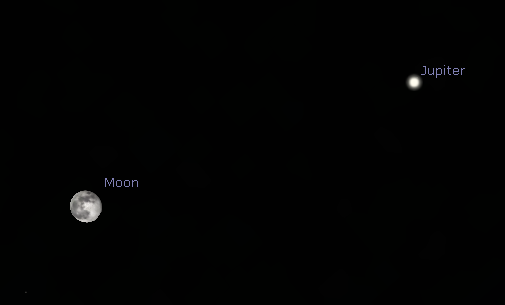
The Moon and Jupiter at 10 p.m. tonight, April 30, 2018. Created using Stellarium.
 Bob Moler's Ephemeris Blog