Archive
Ephemeris: 07/21/2025 – When our knowledge of the size of the universe expanded
This is Ephemeris for Monday, July 21st. Today the Sun will be up for 15 hours and 2 minutes, setting at 9:20, and it will rise tomorrow at 6:18. The Moon, 3 days before new, will rise at 3:18 tomorrow morning.
A little over 100 years ago astronomers the Milky Way and the surrounding stars were thought to be the entire universe. A universe which was, apparently, disc shaped. Astronomers photographed examples of objects they called spiral nebulae, which they thought belonged to the Milky Way. Then Edwin Hubble photographed stars in the Andromeda spiral nebula. One star changed brightness in a way like some of the stars we know in our Milky Way. These stars are called Cepheid Variables and the rate of variation in brightness is related to their true brightness. This star that Hubble found was much too dim and much too far away to be in the confines of the Milky Way. Soon we found that we are in a spiral nebula or galaxy, like billions of others.
The astronomical event times given in this blog are for the Traverse City/Interlochen area of Michigan (Lat 44.7° N, Long 85.7° W; EDT, UT – 4 hours) unless stated otherwise. Times will be different for other locations.
Addendum
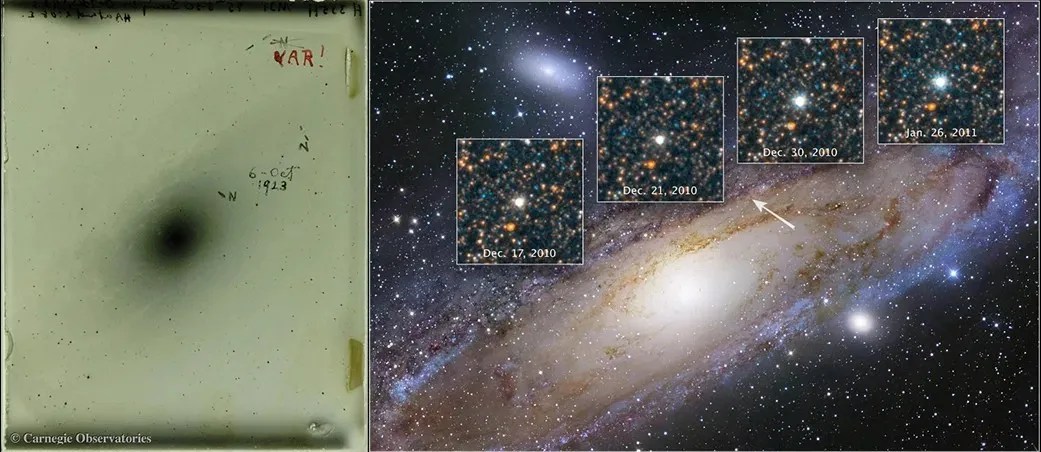
Left: Carnegie Observatories. Right: NASA, ESA, and the Hubble Heritage Team (STScI/AURA); Acknowledgment: R. Gendler
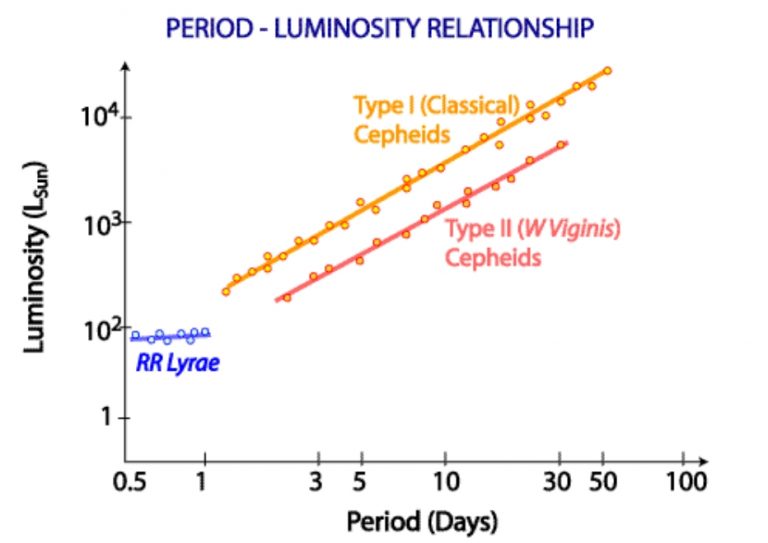
The universe “expanded” again, when astronomers found out there were two types of Cepheids, one 4 times brighter than the other. Using the brighter Type I Cepheids, the measurement doubled the estimated distance*. This was about the time in the early 1950s when I was getting interested in astronomy, so the quoted distance to Andromeda and all the other galaxies doubled from older astronomy books to the newer ones.
* Inverse square law: brightness drops with the square of the distance. Double the distance and the brightness drops by 22 or 4.
09/19/2022 – Ephemeris – Finding the constellation Cepheus
This is Ephemeris for Monday, September 19th. Today the Sun will be up for 12 hours and 19 minutes, setting at 7:45, and it will rise tomorrow at 7:27. The Moon, 2 days past last quarter, will rise at 1:30 tomorrow morning.
There’s a faint constellation in the northeast above the W shaped constellation of Cassiopeia. It’s a nearly upside down church steeple of a constellation called Cepheus the king, and husband of queen Cassiopeia. Cepheus’ claim to modern astronomical fame is that one of its stars, Delta (δ) Cephei, is the archetype for the important Cepheid variable stars. Delta is the bottom most of a trio of stars at the right corner of the constellation. In the early 20th century, Henrietta Leavitt discovered that Cepheids in the nearby galaxy the Large Magellanic Cloud varied in brightness with a period that was related to their average brightness. This meant that Cepheids could be used as standard candles to measure the great distances to other galaxies.
The astronomical event times given are for the Traverse City/Interlochen area of Michigan (EDT, UT – 4 hours). They may be different for your location.
Addendum
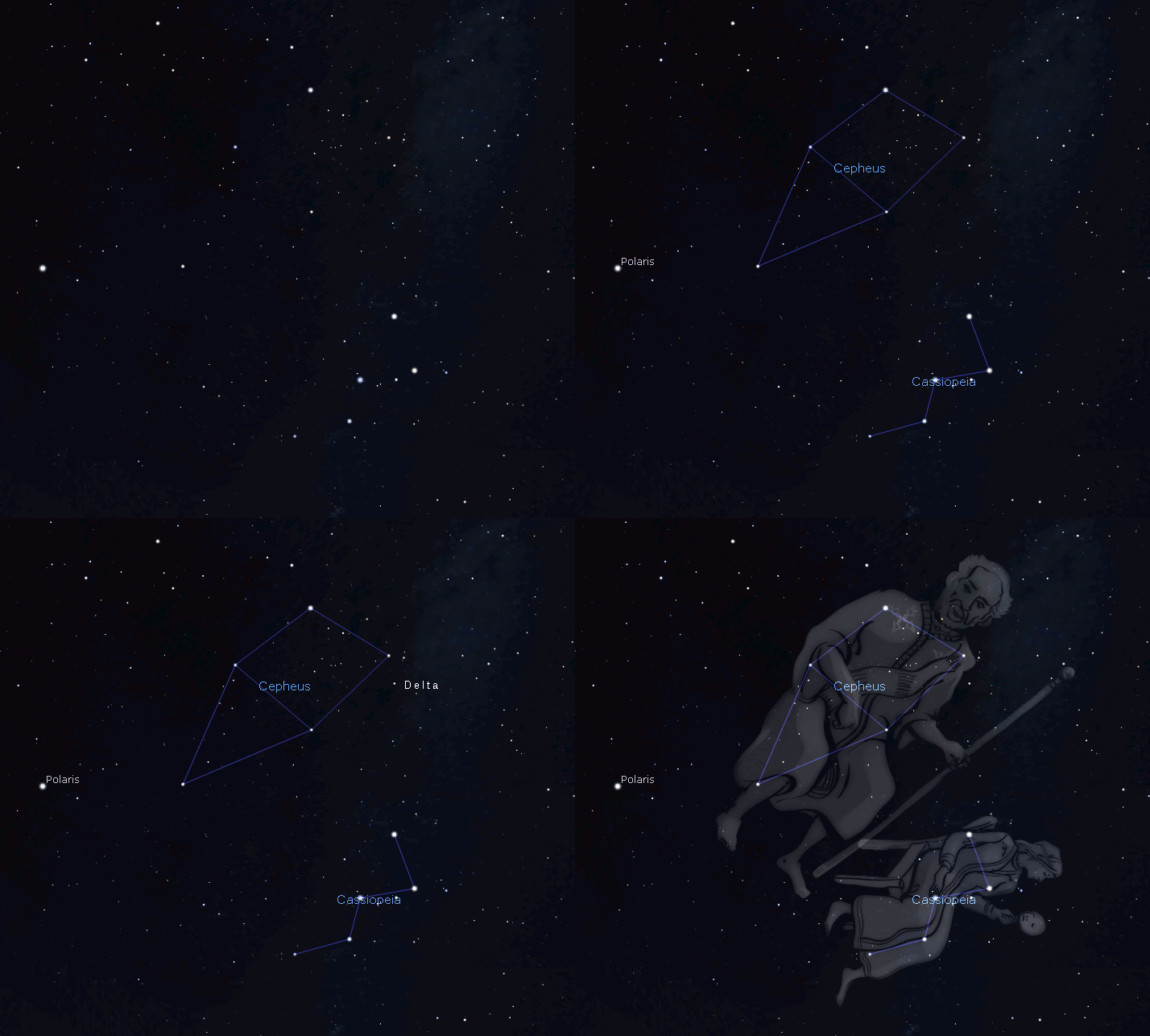
Cassiopeia and Cepheus finder animation looking in the northeast at 9 pm or about an hour after sunset in mid-September. Also labeled is Delta (δ) Cephei. Created using Stellarium and GIMP.
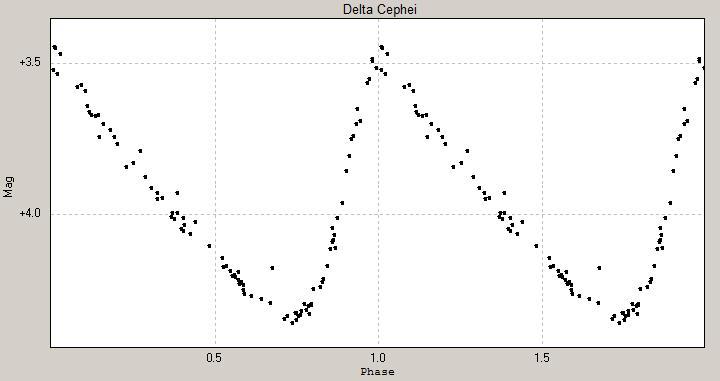
Light Curve of Delta Cephei. The pulsation period is 5.367 days. Note the Magnitude vertical axis, the lower the magnitude the brighter the star is. Blame that on the Greek astronomer Hipparchus, 2nd century BC. It’s like golf scores; the lower the score, the better the golfer, and for magnitudes, the brighter the star. Credit: Thomas K Vbg – Own work, CC BY-SA 3.0, https://commons.wikimedia.org/w/index.php?curid=13887639.
09/07/2021 – Ephemeris – The constellation of Cepheus the king
This is Bob Moler with Ephemeris for Tuesday, September 7th. Today the Sun will be up for 12 hours and 55 minutes, setting at 8:07, and it will rise tomorrow at 7:13. The Moon, 1 day past new, will set at 8:53 this evening.
There’s a faint constellation in the northeast above the W shaped constellation of Cassiopeia. It’s a nearly upside down church steeple of a constellation called Cepheus the king, and husband of queen Cassiopeia. Cepheus’ claim to modern astronomical fame is that one of its stars, Delta (δ) Cephei, is the archetype for the important Cepheid variable stars. Delta is the bottom most of a trio of stars at the right corner of the constellation. In the early 20th century, Henrietta Leavitt discovered that Cepheids in the nearby galaxy the Large Magellanic Cloud varied in brightness with a period that was related to their average brightness. This meant that Cepheids could be used as standard candles to measure the great distances to other galaxies.
The astronomical event times given are for the Traverse City/Interlochen area of Michigan (EDT, UT – 4 hr). They may be different for your location.
Addendum
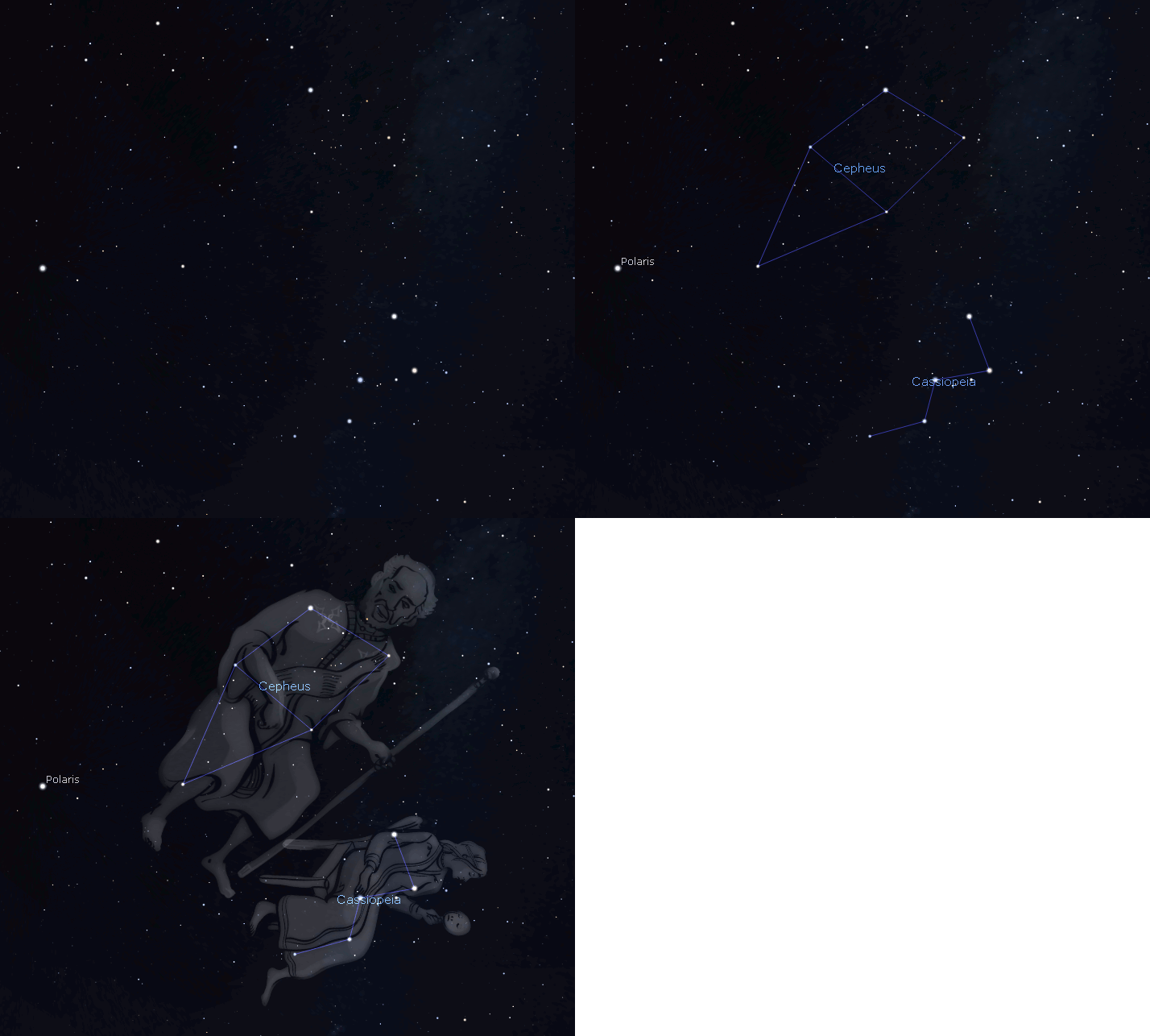
Cassiopeia and Cepheus finder animation looking in the northeast at 9-10 pm or about an hour after sunset. Created using Stellarium and GIMP.
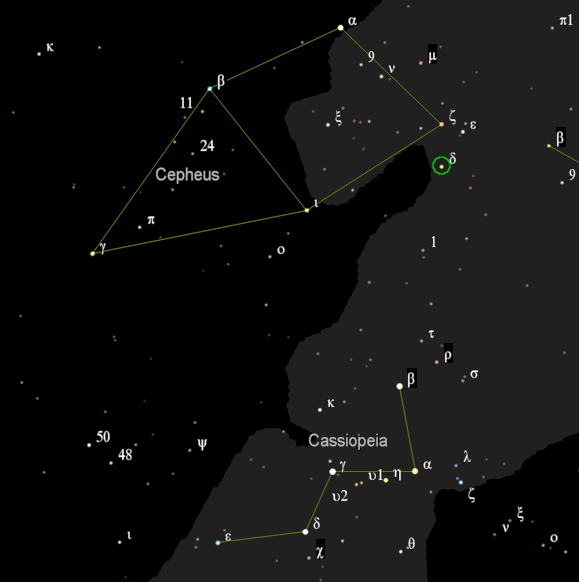
Delta Cephei finder for September at 9-10 pm, looking northeast. Created using Cartes du Ciel (Sky Chart).
Light Curve of Delta Cephei. The pulsation period is 5.367 days. Note the Magnitude vertical axis, the lower the magnitude the brighter the star is. Blame that on the Greek astronomer Hipparchus, 2nd century BC. It’s like golf scores, the lower the score, the better the golfer. Credit: Thomas K Vbg – Own work, CC BY-SA 3.0, https://commons.wikimedia.org/w/index.php?curid=13887639.
09/18/2020 – Ephemeris – A closer look at Cepheus the king’s most famous star
This is Ephemeris for Friday, September 18th. Today the Sun will be up for 12 hours and 20 minutes, setting at 7:46, and it will rise tomorrow at 7:27. The Moon, 1 day past new, will set at 8:52 this evening.
There’s a faint constellation in the northeast above the W shaped constellation of Cassiopeia. It’s a nearly upside down church steeple of a constellation called Cepheus the king, and husband of queen Cassiopeia. Cepheus’ claim to astronomical fame is that one of its stars, Delta (δ) Cephei, is the archetype for the important Cepheid variable stars. Delta is the bottom most of a trio of stars at the right corner of the constellation. In the early 20th century Henrietta Leavitt discovered that Cepheids in the nearby galaxy the Large Magellanic Cloud varied in brightness with a period that was related to their average brightness. This meant that Cepheids could be used as standard candles to measure the great distances to other galaxies.
The event times given are for the Traverse City/Interlochen area of Michigan. They may be different for your location.
Addendum
Cassiopeia and Cepheus finder animation looking in the northeast at 9 pm or about an hour after sunset in mid-September. Created using Stellarium and GIMP.
Delta Cephei (circled) finder for mid-September at 9 pm or about an hour after sunset looking northeast. The brighter stars are marked by their Bayer Greek letters. Numerical designations are Flamsteed numbers. Created using Cartes du Ciel (Sky Chart).
Light Curve of Delta Cephei. The pulsation period is 5.367 days. Credit: ThomasK Vbg – Own work, CC BY-SA 3.0, https://commons.wikimedia.org/w/index.php?curid=13887639
1122/2016 – Cepheus the king and its one really important star
Ephemeris for Tuesday, November 22nd. The Sun will rise at 7:49. It’ll be up for 9 hours and 18 minutes, setting at 5:08. The Moon, 1 day past last quarter, will rise at 1:56 tomorrow morning. | There’s a faint constellation in the north above Polaris. It’s a nearly upside down church steeple of a constellation called Cepheus the king, and husband of queen Cassiopeia the W shaped constellation right of it. Cepheus’ claim to astronomical fame is that one of its stars, Delta (δ) Cephei, is the archetype for the important Cepheid variable stars. Delta is in a trio of stars at the top corner of the constellation, and the one on the right. In the early 20th century Henrietta Leavitt discovered that Cepheids in the nearby galaxy the Large Magellanic Cloud varied in brightness with a period that was related to their average brightness. This meant that Cepheids could be used as standard candles to measure great distances to other galaxies.
Times are for the Traverse City/Interlochen area of Michigan. They may be different for your location.
Addendum
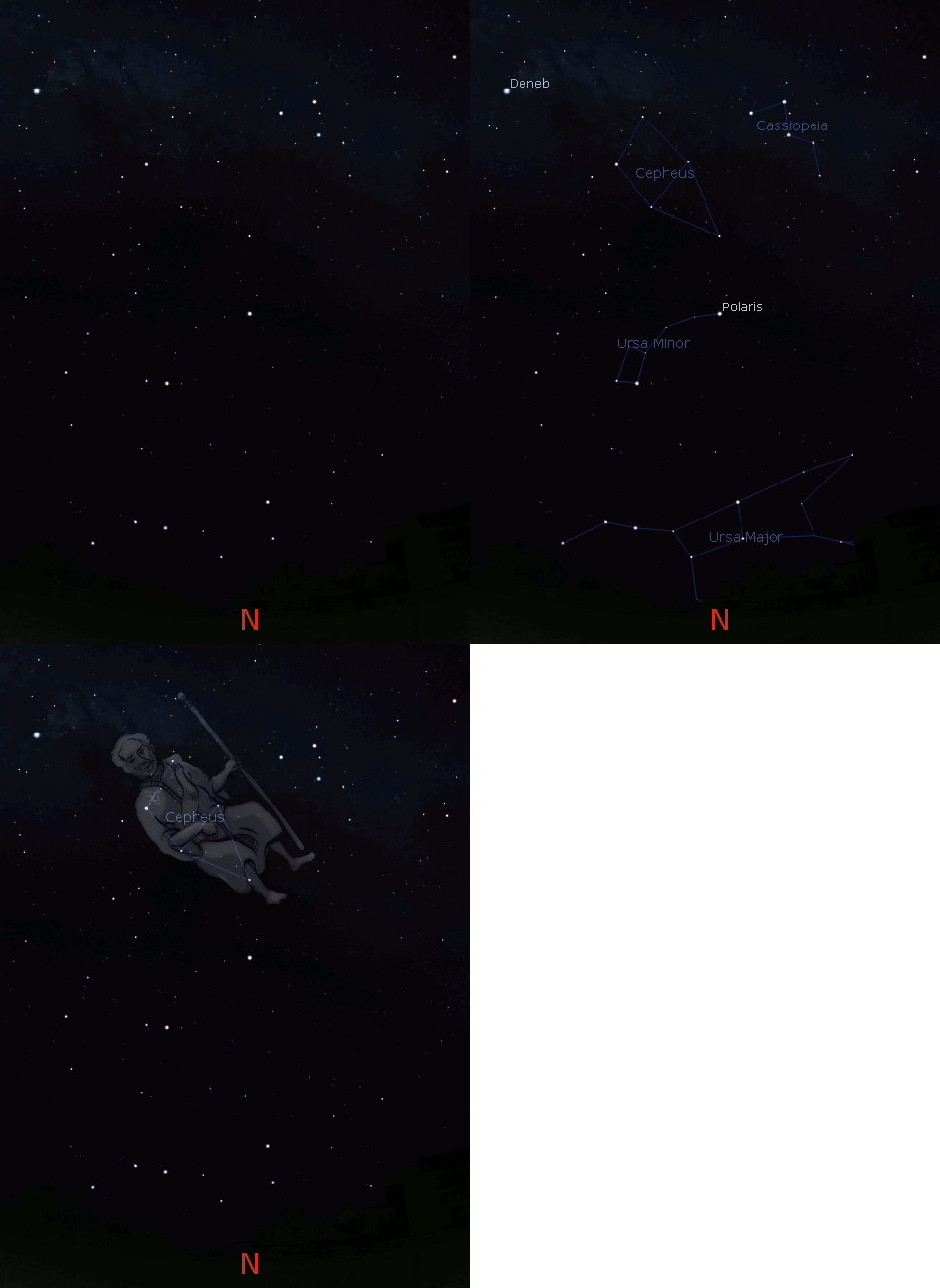
Cepheus animated finder chart for 8 p.m. November 22, 2016. Created using Stellarium and GIMP.
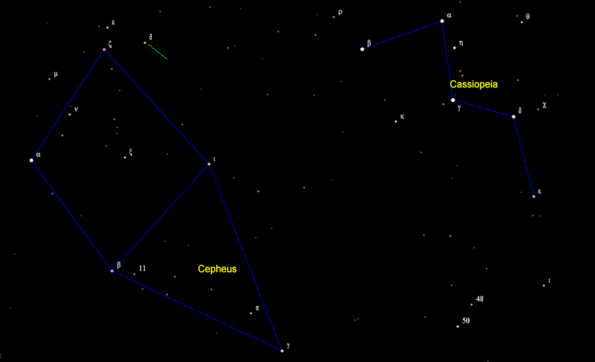
Delta Cephei finder chart. This is the same orientation as the chart above, but created using Cartes du Ciel (Sky Charts). A green line points to Delta (δ) Cephei.
A word about star designations in the chart above. In general only the brightest stars have proper names. And those usually come from antiquity, and most of those are Arabic. Star designations which are Greek lower case letters come from Johann Bayer’s Uranometria star atlas from 1603. He designated the stars by order of brightness. In constellations with a lot of stars he moved to the Latin alphabet after running out of Greek letters. These were, of course, naked eye stars; the atlas being produced a few years before the invention of the telescope. Stars with numbers are Flamsteed designations from John Flamsteed’s 1725 star catalog. He numbered his stars from west to east in a particular constellation, but only those stars that could be seen from Great Britain. A single star can have many catalog designations. For instance the bright star Vega in Lyra the harp is Alpha (α) Lyrae, Bayer designation; 3 Lyrae, Flamsteed designation; HD 172167, Henry Draper catalog; BD +38 3238, Bonner Durchmusterung, a German catalog; HIP 91262, Hipparcos catalog, and so on.
 Bob Moler's Ephemeris Blog