Archive
Ephemeris: 10/22/2026 – Saturn’s weird moons
This is Ephemeris for Thursday, October 22nd. Today the Sun will be up for 10 hours and 38 minutes, setting at 6:46, and it will rise tomorrow at 8:08. The Moon, half way from first quarter to full, will set at 5:07 tomorrow morning.
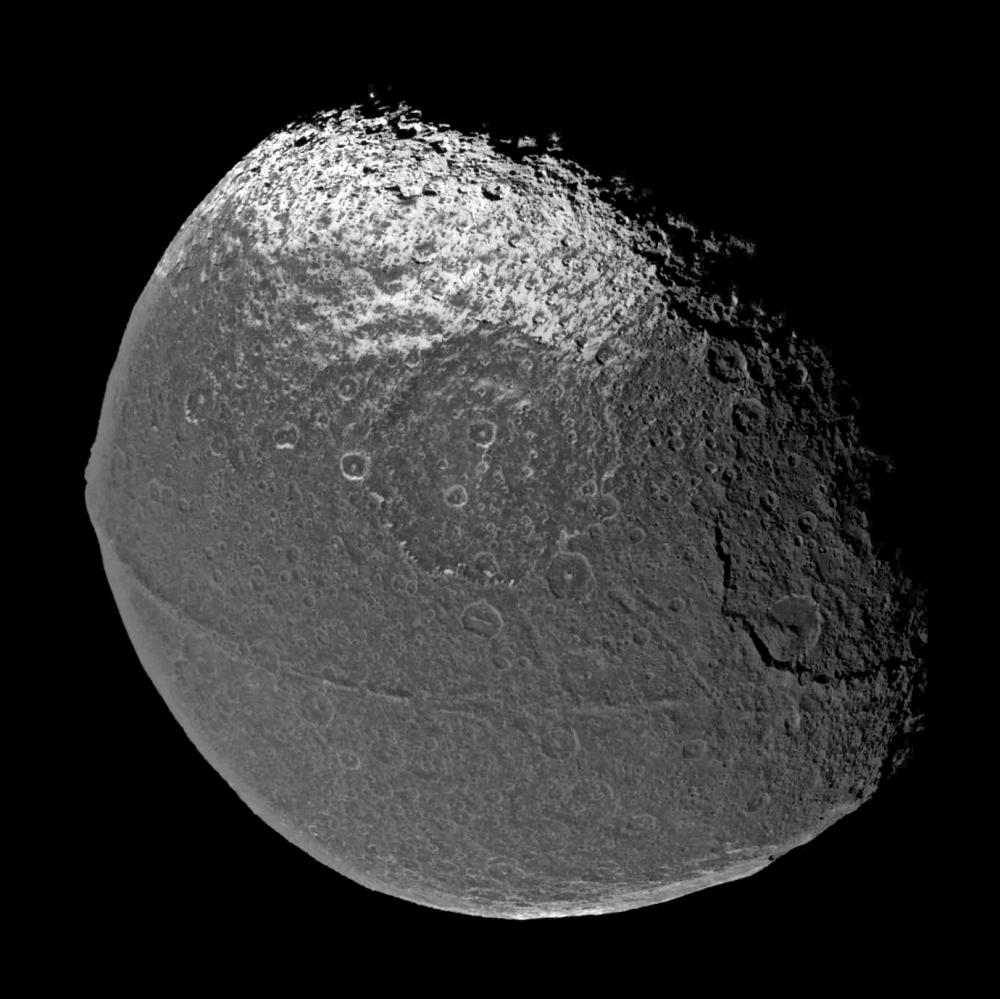
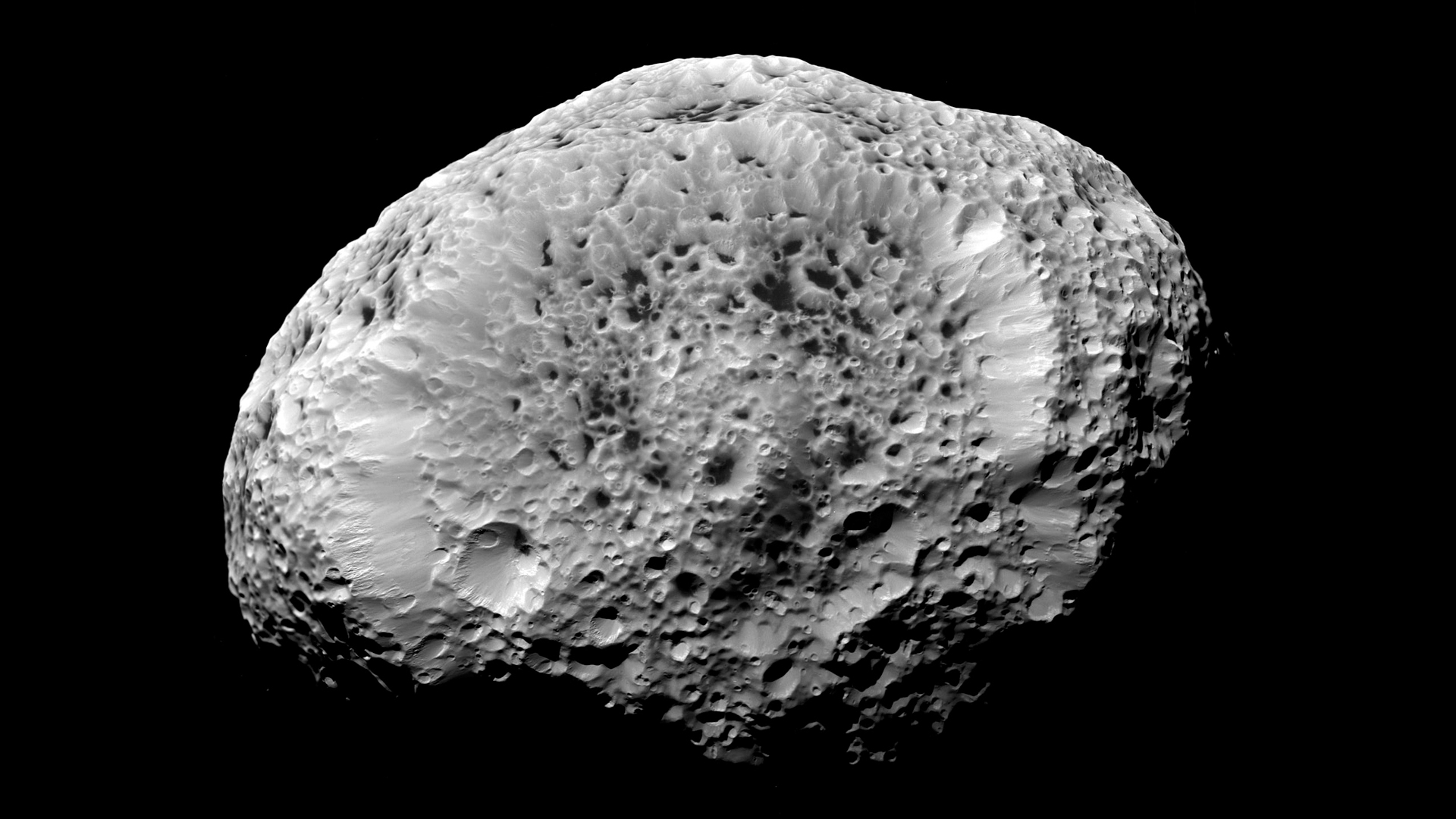
Saturn’s got some pretty weird moons. I’ve talked about Enceladus with its water ice geysers, and Titan with its atmosphere. We also have Iapetus, a moon which has two faces. Its leading face, as it orbits Saturn, is dark, almost black. While his trailing face is white like the other moons. It also has a ridge around its equator, that, reminds me of a walnut.. Another strange moon is Hyperion, a moon that looks like a sponge. Its density, though made of ice, is half the density of ice. It even looks like a sponge. Then there’s Phoebe. A dark moon that takes over a year to orbit Saturn, backwards from all the other satellites. It’s probably a captured Kuiper Belt Object, and has a dark surface. And that isn’t all of them.
The astronomical event times given in this blog are for the Traverse City/Interlochen area of Michigan (Lat 44.7° N, Long 85.7° W; EDT, UT – 4 hours) unless stated otherwise. Times will be different for other locations.
Addendum
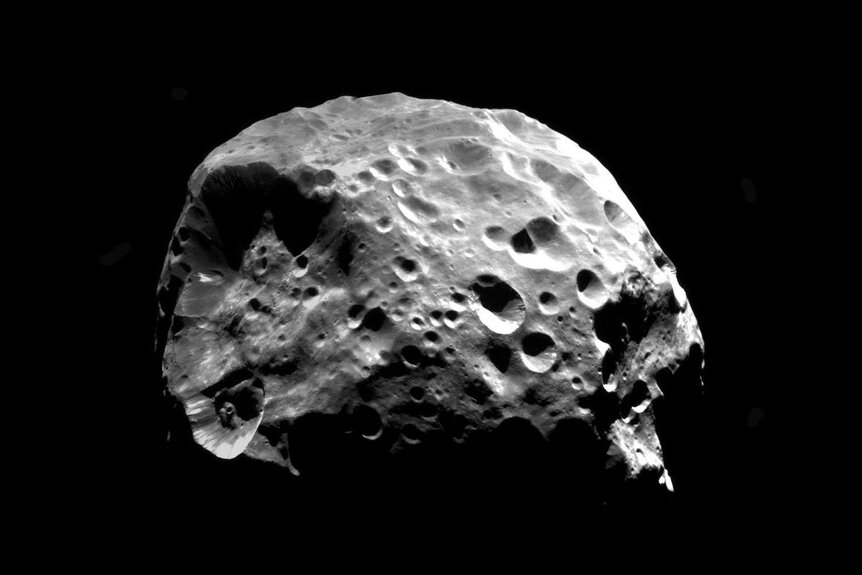
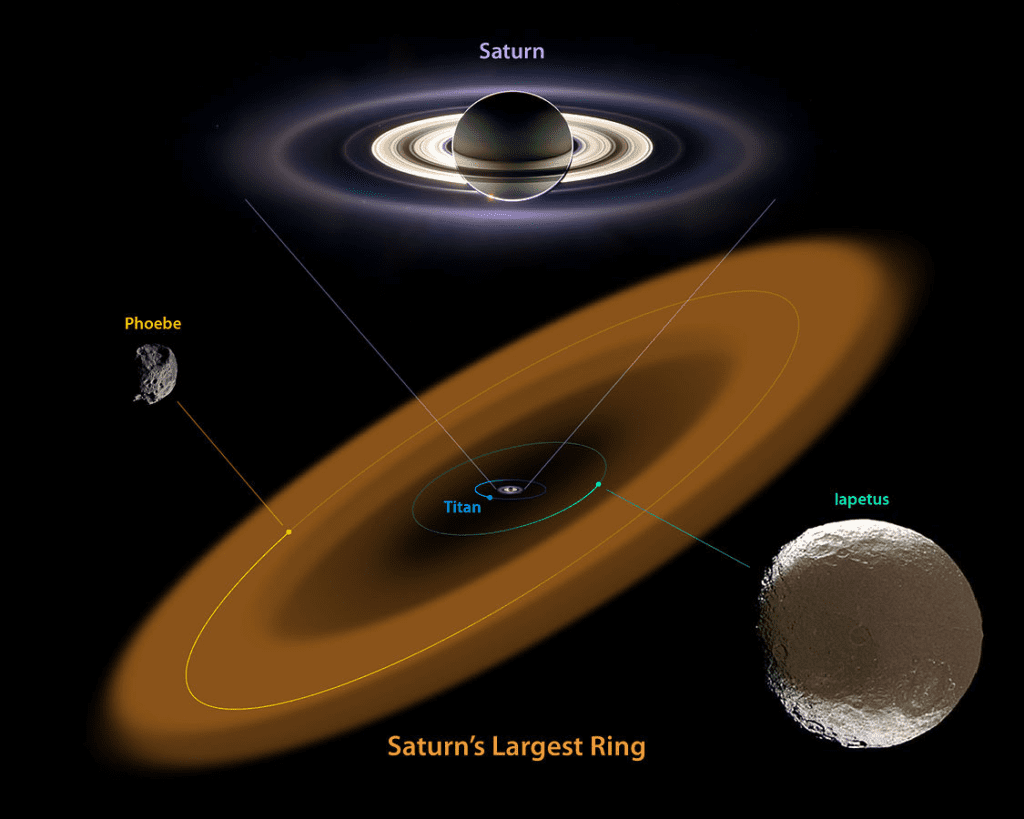
I didn’t have time in the program, but Phoebe and Iapetus have a connection that explains Iapetus’ dark side.
05/28/2015 – Ephemeris – Saturn’s satellites
Thursday, May 28th. Today the Sun will be up for 15 hours and 14 minutes, setting at 9:17. The Moon, 3 days past first quarter, will set at 3:56 tomorrow morning and tomorrow the Sun will rise at 6:02.
Saturn has a lot of moons, even if you don’t count the billions of ring particles circling the planet. The count is up to 62, five short of Jupiter’s 67 at last count. The largest is Titan which is larger than Mercury, a world with a thick nitrogen atmosphere and liquid filled lakes. At its distance from the Sun, some 10 times Earth’s and receiving only one percent the heat we get the lakes are filled with methane and ethane while the surface rocks are water ice. The small moon Enceladus spews salty water geysers at its south pole. The more distant moon Iapetus is half black and half white and has an equatorial mountain range that rings it like a walnut. Another moon Hyperion appears like it’s honeycombed.
Times are for the Traverse City/Interlochen area of Michigan. They may be different for your location.
Addendum
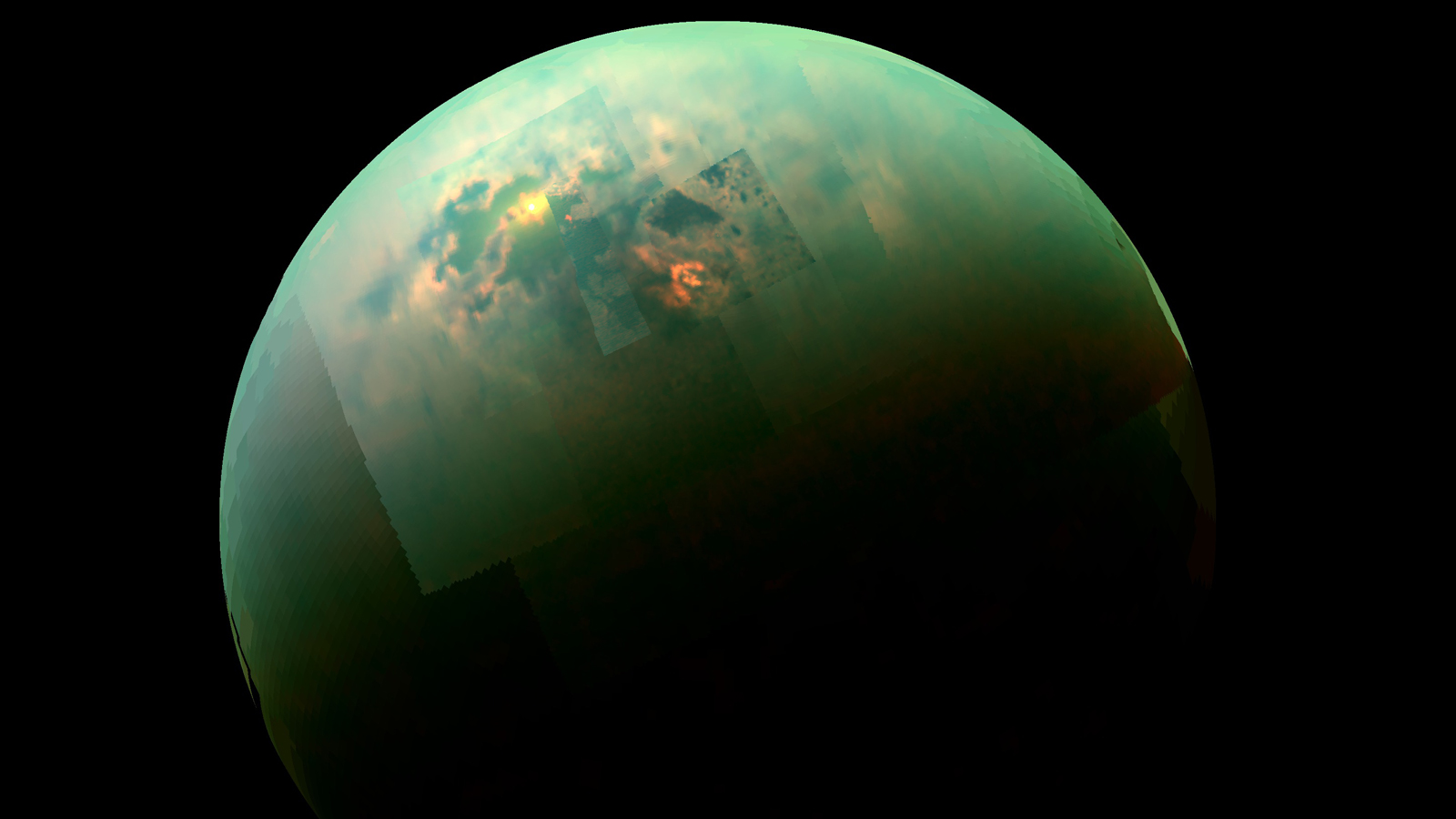
Titan in a false color near infrared view, showing the Sun’s light glinting off a north polar sea. Credit: NASA/JPL.
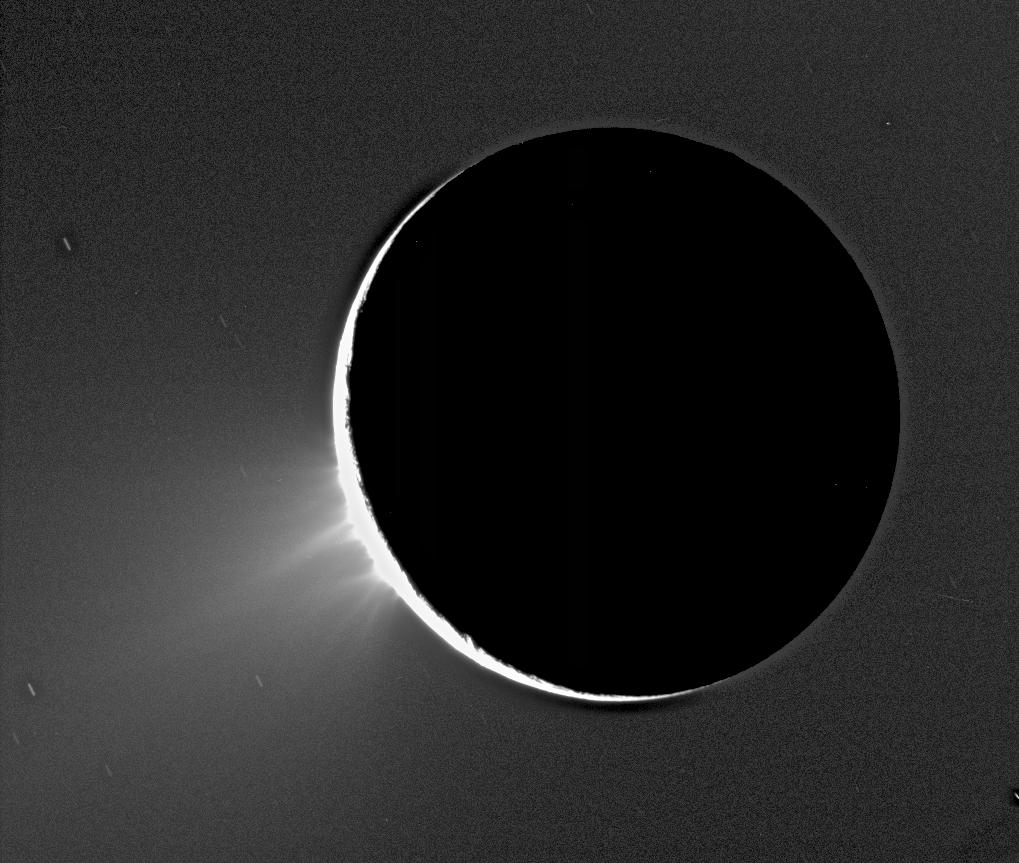
Enceladus’ south polar geysers create the E ring. Credit: NASA/JPL.
Iapetus showing mostly its dark side and equatorial mountain ridge. Credit: NASA/JPL.
The weird moon Hyperion. It’s half as dense as ice. Credit: NASA/JPL:

