Archive
Ephemeris: 05/15/2024 – Where have naked-eye planets wandered off to this week?
This is Ephemeris for Wednesday, May 15th. Today the Sun will be up for 14 hours and 51 minutes, setting at 9:05, and it will rise tomorrow at 6:12. The Moon, at first quarter today, will set at 3:28 tomorrow morning.
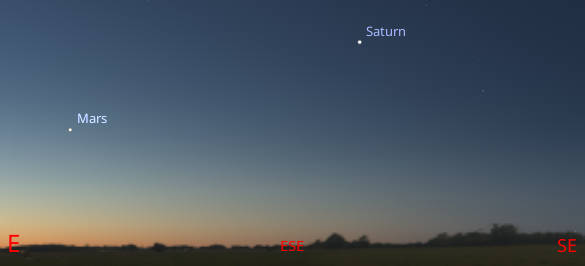
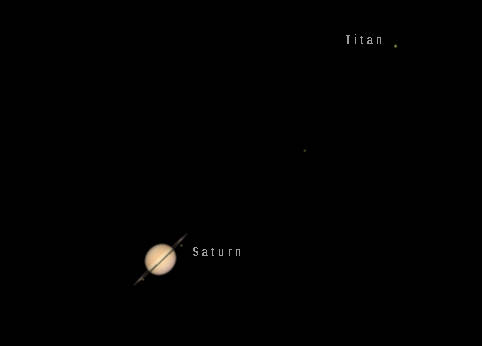
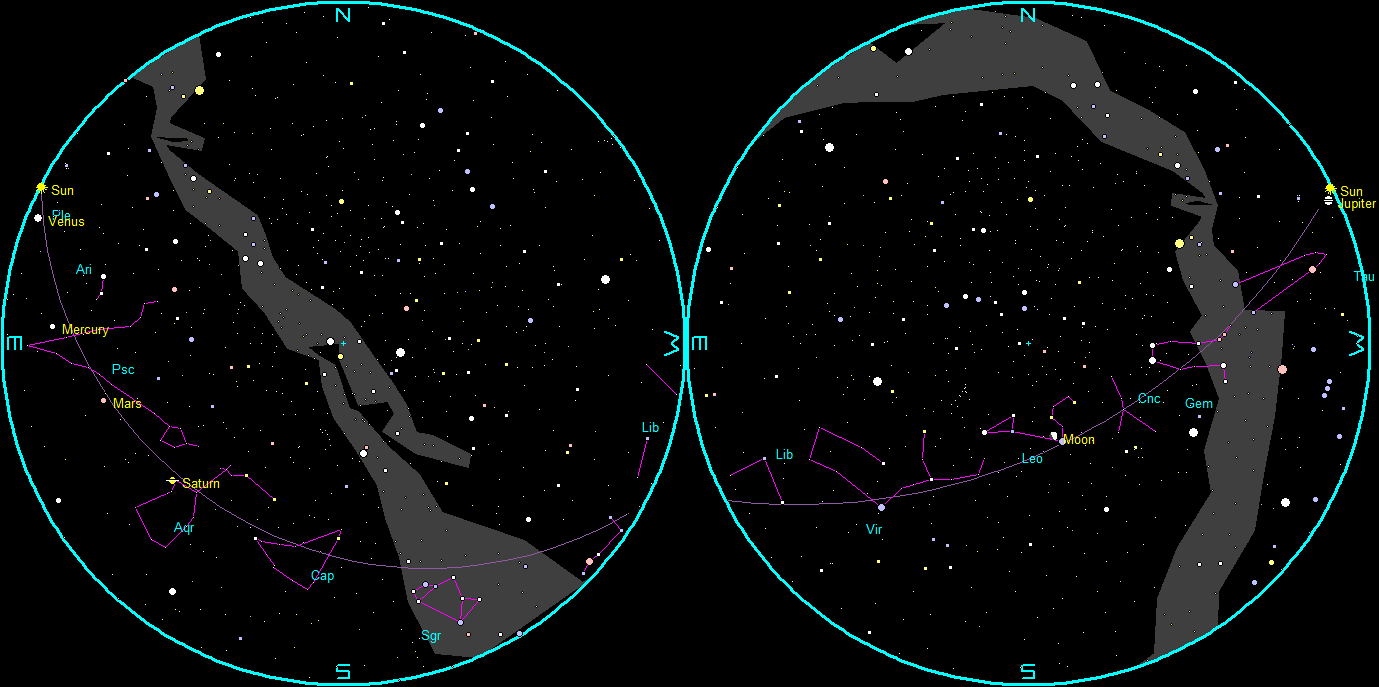
Let’s find out where the naked-eye planets have wandered off to this week, and see what planets are left. Jupiter now is too close to the direction of the Sun to be seen. It will move to be in conjunction with the Sun on Saturday and by late June may be visible in the morning sky in twilight. By 5:30 tomorrow morning, about 40 minutes before sunrise, Saturn will be low in the east-southeast and Mars will be lower still in the east. In telescopes, Saturn will look fairly different this year and next with its rings nearly edge on to us. They will open up a bit through October before closing again. We won’t see the rings go exactly edge on because Saturn will be too close to the Sun in the sky on March 23rd next year. After that the rings will open up again.
The astronomical event times given are for the Traverse City/Interlochen area of Michigan (EDT, UT–4 hours). They may be different for your location.
Addendum
Ephemeris: 05/08/2024 – Saturn comes tottering into the morning twilight
This is Ephemeris for Wednesday, May 8th. Today the Sun will be up for 14 hours and 34 minutes, setting at 8:56, and it will rise tomorrow at 6:21. The Moon, 1 day past new, will set at 10:12 this evening.
Let’s find out where the naked-eye planets have wandered off to this week, and see what planets are left. Jupiter now is too close to the direction of the Sun to be seen. It will move to be in conjunction with the Sun on the 18th of this month and by late June may be visible in the morning sky in twilight. By 5:30 tomorrow morning, about 40 minutes before sunrise, Saturn will be low in the east-southeast and Mars will be lower yet in the east. In telescopes, Saturn will look fairly different this year and next with its rings nearly edge on to us. They will open up a bit through October before closing again. We won’t see the rings go exactly edge on because Saturn will be too close to the Sun in the sky on March 23rd next year. After that the rings will open up again.
The astronomical event times given are for the Traverse City/Interlochen area of Michigan (EDT, UT–4 hours). They may be different for your location.
Addendum
You may wonder why I use the word tottering in title. The planet Saturn is named after the Roman god of old age, probably because it takes nearly 30 years to orbit the Sun. Even though it’s moving away from twilight faster than Mars is, it’s just the fact that the Sun and Mars are moving faster to the east than it is, leaving him in the dust, so to speak.
Ephemeris: 04/24/2024 – Where have the naked-eye planets wandered off to this week?
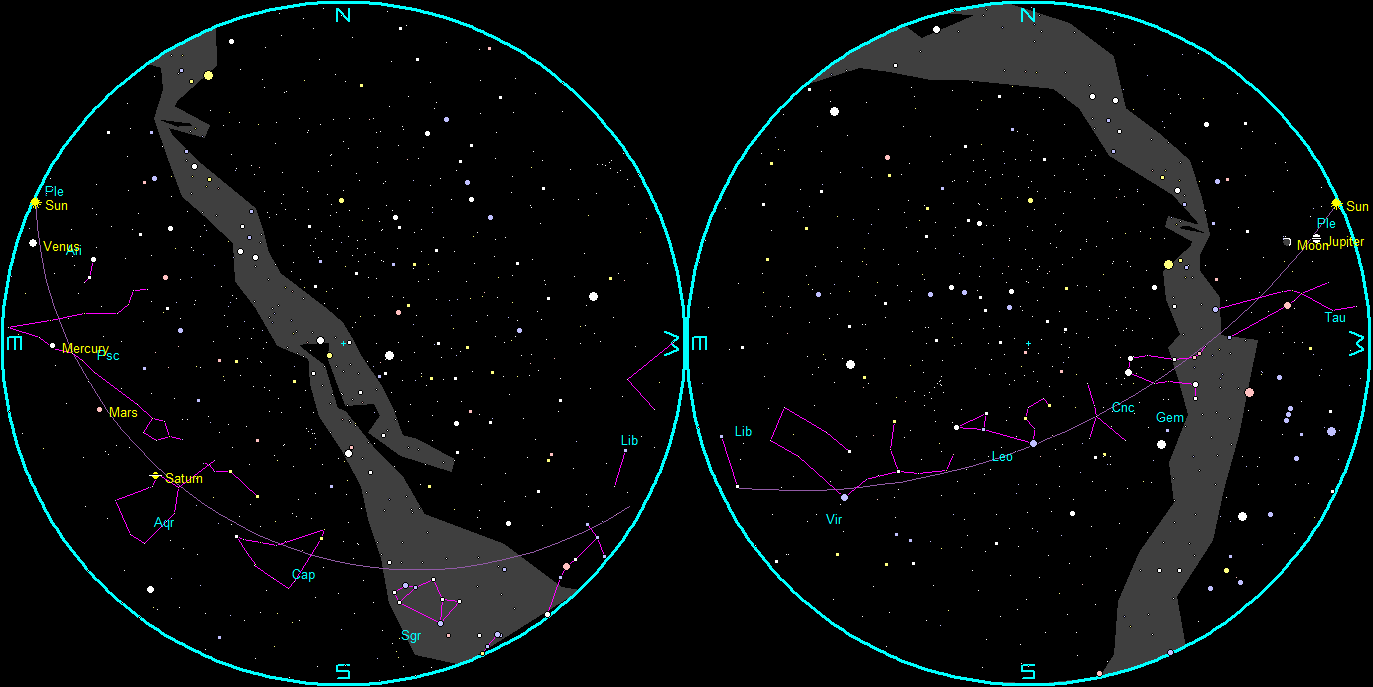
This is Bob Moler with Ephemeris for Wednesday, April 24th. Today the Sun will be up for 13 hours and 57 minutes, setting at 8:39, and it will rise tomorrow at 6:41. The Moon, 1 day past full, will rise at 9:49 this evening.
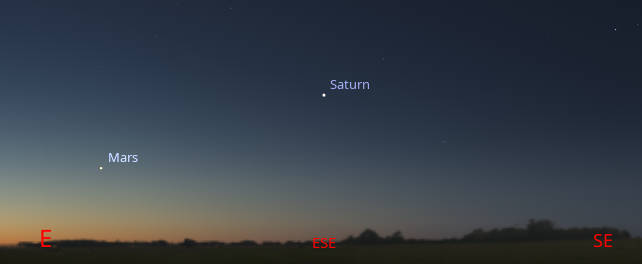
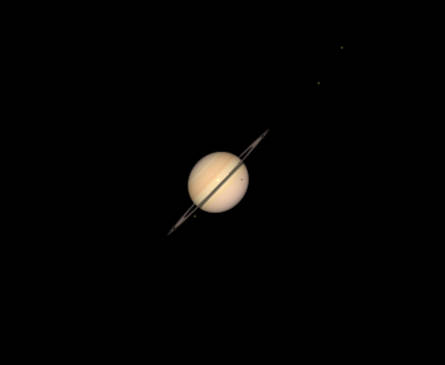
Let’s find out where the naked-eye planets have wandered off to this week, and see what planets are left. Jupiter, looking not-so bright in twilight is very low and in the west. It will set at 10:23 pm. I’m giving Jupiter another week of evening visibility. Comet 12P/Pons-Brooks now only visible to observers south of the equator. In the morning, Mars and Saturn will be close together in the east southeastern sky at 6 am. They will be fighting the bright morning twilight and low altitude then. Saturn will be difficult to see right now in the twilight. Mars will be harder to spot. Saturn will look fairly different this year and next with its rings nearly edge on to us. They will look more like a line through the planet.
The astronomical event times given are for the Traverse City/Interlochen area of Michigan (EDT, UT–4 hours). They may be different for your location.
Addendum
Ephemeris: 04/17/2024 – Where have all the planets gone?
This is Ephemeris for Wednesday, April 17th. Today the Sun will be up for 13 hours and 36 minutes, setting at 8:31, and it will rise tomorrow at 6:52. The Moon, 2 days past first quarter, will set at 5:04 tomorrow morning.
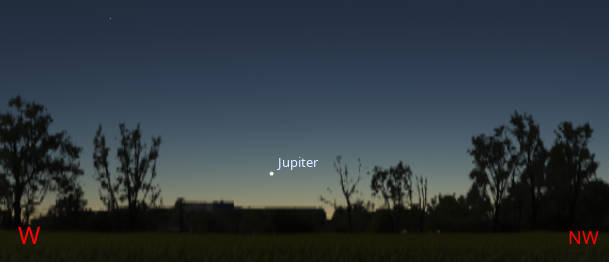
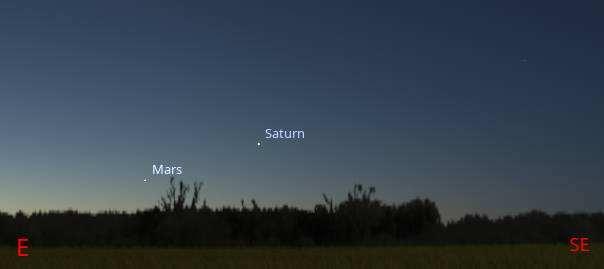
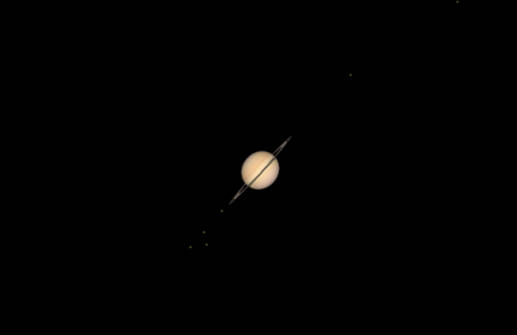
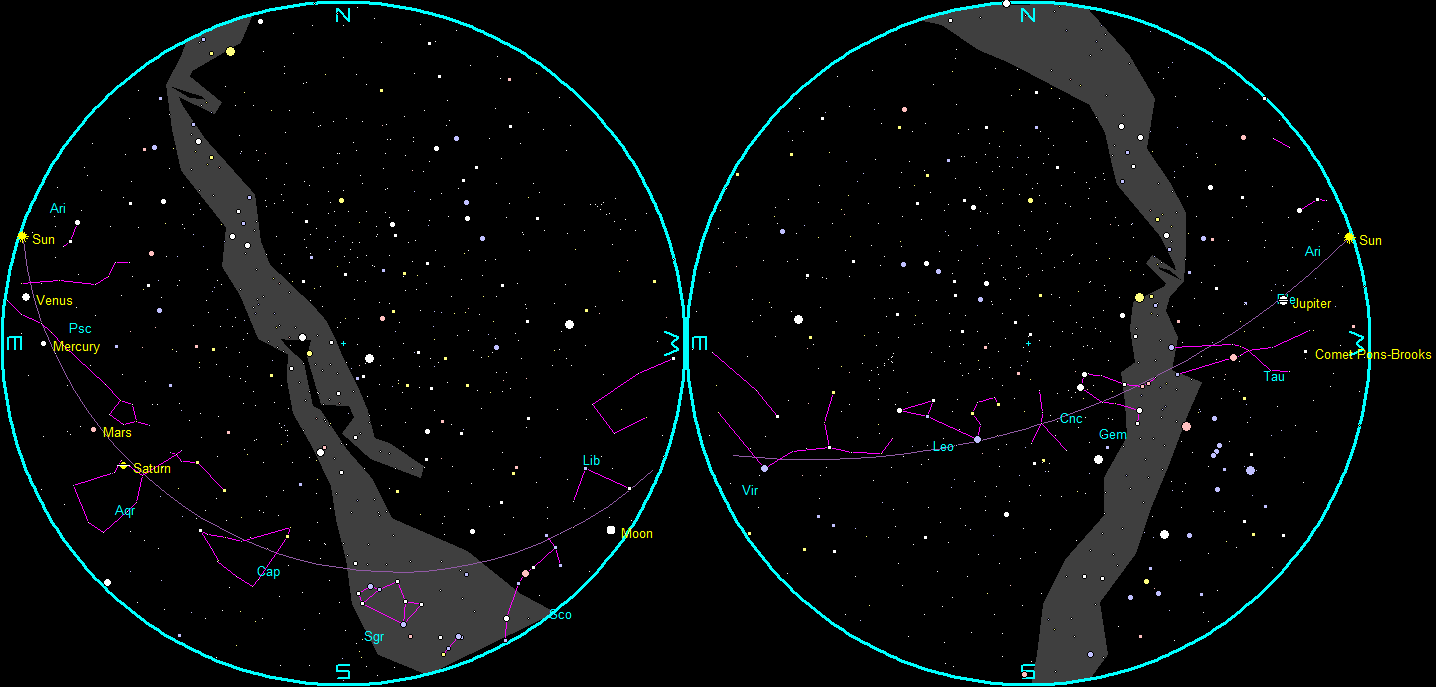
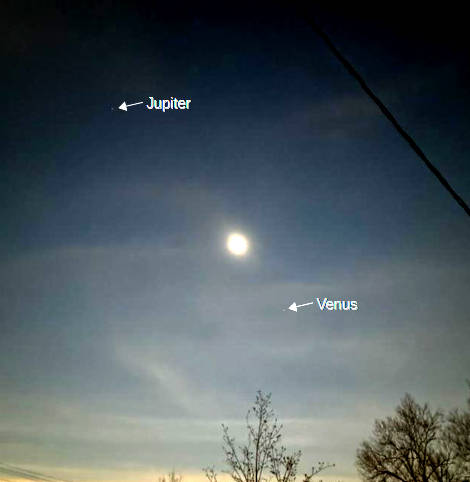
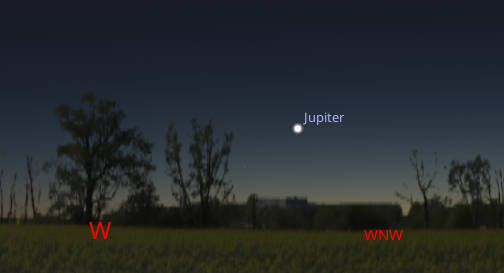
Let’s find out where the naked-eye planets have wandered off to this week, and see what planets are left. Bright Jupiter is very low and in the west. It will set at 10:23 pm. We are getting close to losing Jupiter in the evening sky. Comet 12P/Pons-Brooks is just below-left of it. Observers in the Southern Hemisphere might now get a chance to spot it, but I believe it’s too far gone for us. In the morning, Mars and Saturn will be very close together in the east southeastern sky at 6:30. They will be fighting the bright morning twilight and low altitude then. Saturn will be difficult to see right now in the twilight . It will look fairly different this year and next with its rings nearly edge on to us. They will look more like a line through the planet.
The astronomical event times given are for the Traverse City/Interlochen area of Michigan (EDT, UT–4 hours). They may be different for your location.
Addendum
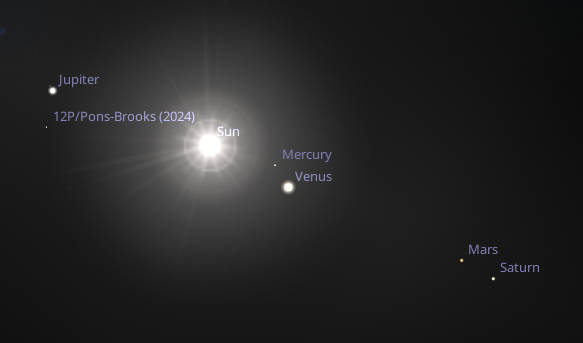
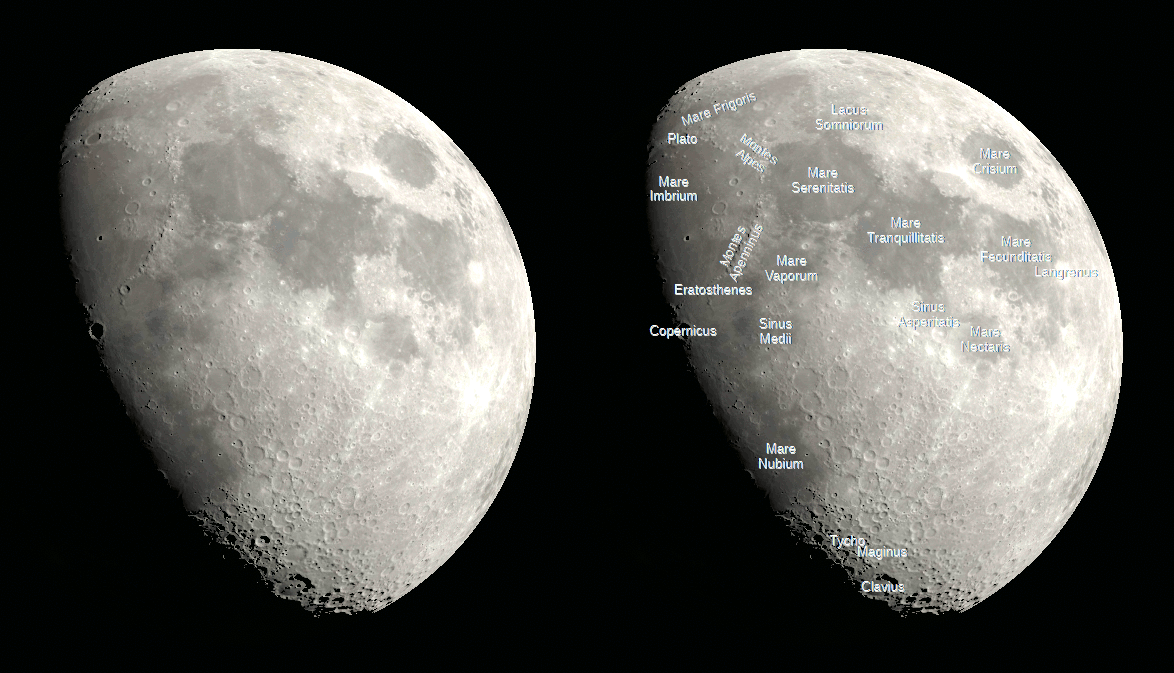
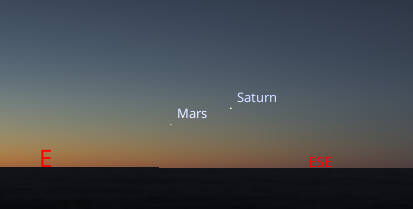
None of the planets are good telescopic objects now, due to their low position in the sky, and twilight.
Ephemeris: 04/10/2024 – Where have the naked-eye planets wandered off to?
This post was updated due to it being uploaded late, and without illustrations. This was due to my recovery from the mad dash eclipse trip Sunday through Tuesday. By the way it was glorious! I shall recount it soon in an Ephemeris Extra post.
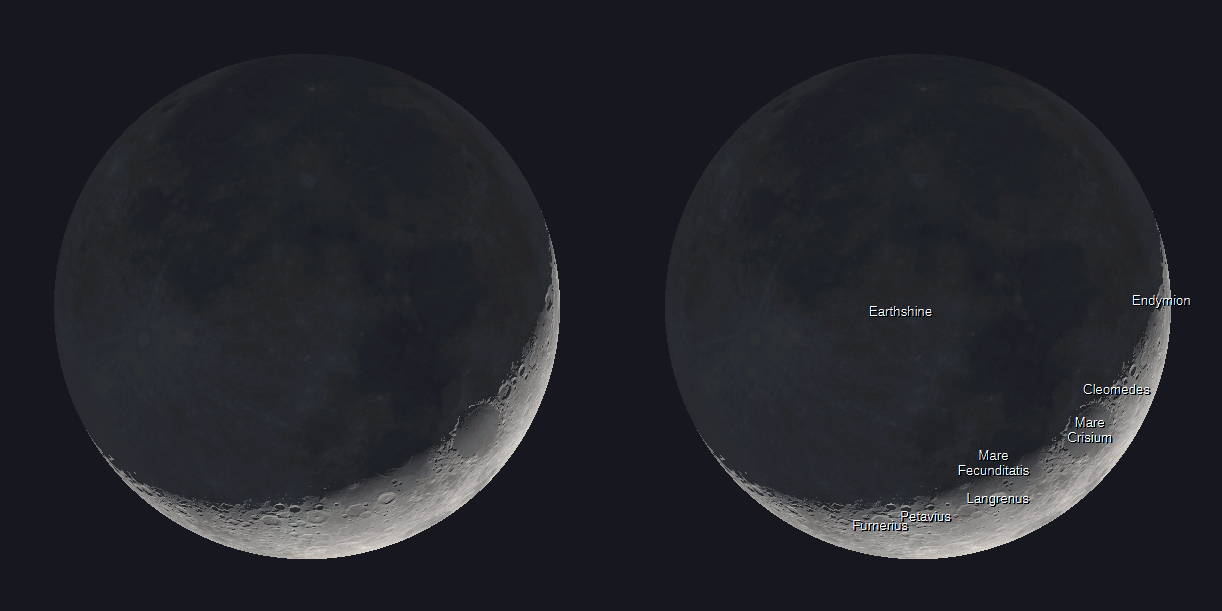
This is Ephemeris for Wednesday, April 10th. Today the Sun will be up for 13 hours and 16 minutes, setting at 8:22, and it will rise tomorrow at 7:04. The Moon, 2 days past new, will set at 11:21 this evening.
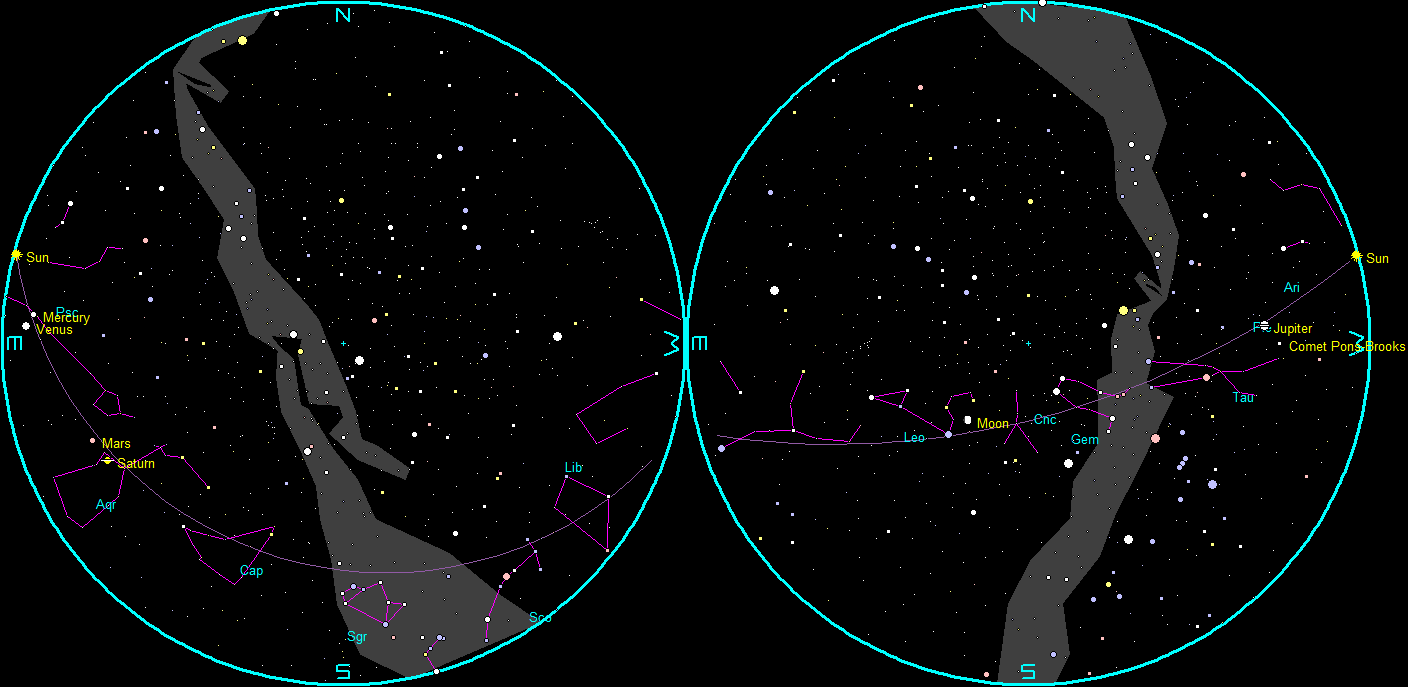
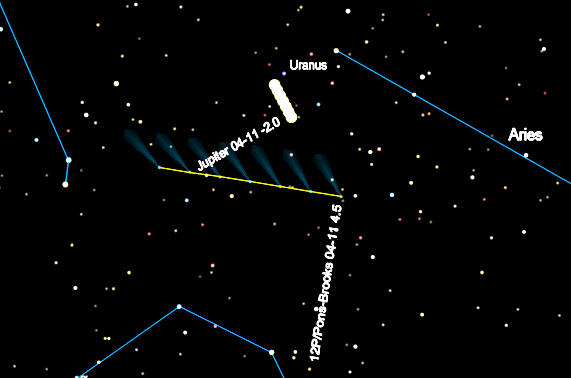
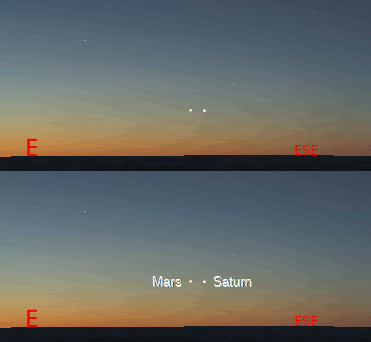
Let’s find out where the naked-eye planets have wandered off to this week, and see what planets are left. Bright Jupiter is low and in the west, and tonight only can be seen below the crescent Moon. It will set at 10:25 pm. We are getting close to losing Jupiter in the evening sky. Comet 12P/Pons-Brooks is just below-right of it. Though officially naked-eye brightness, one has to have very good eyes, binoculars or telescope to spot it. In my Wednesday blog posts at bobmoler.wordpress.com I have finder charts. In the morning Mars, and Saturn will be very close together in the east southeastern sky at 6:30. They will be fighting the bright morning twilight and low altitude then.
The astronomical event times given are for the Traverse City/Interlochen area of Michigan (EDT, UT–4 hours). They may be different for your location.
Addendum
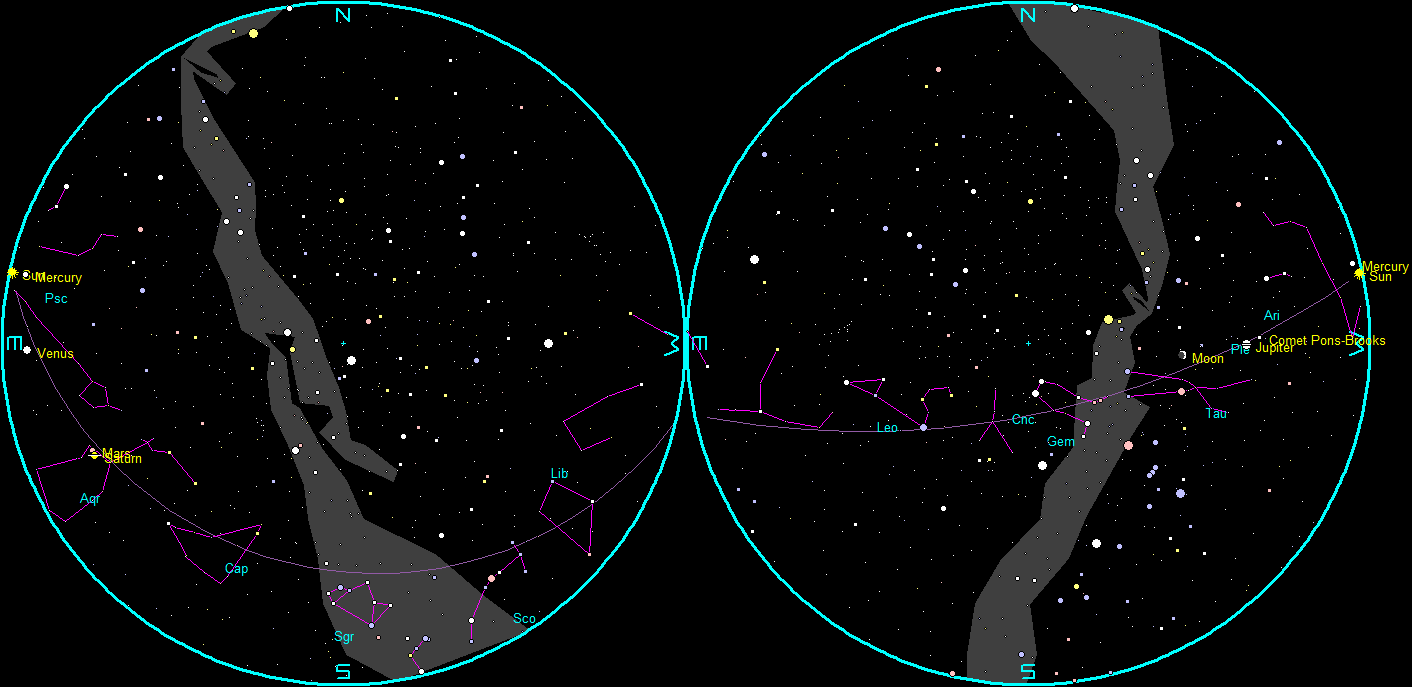
Ephemeris: 04/03/2024 – Where have the naked-eye planets wandered off to this week?
This is Ephemeris for Wednesday, April 3rd. Today the Sun will be up for 12 hours and 54 minutes, setting at 8:13, and it will rise tomorrow at 7:17. The Moon, 2 days past last quarter, will rise at 5:33 tomorrow morning.
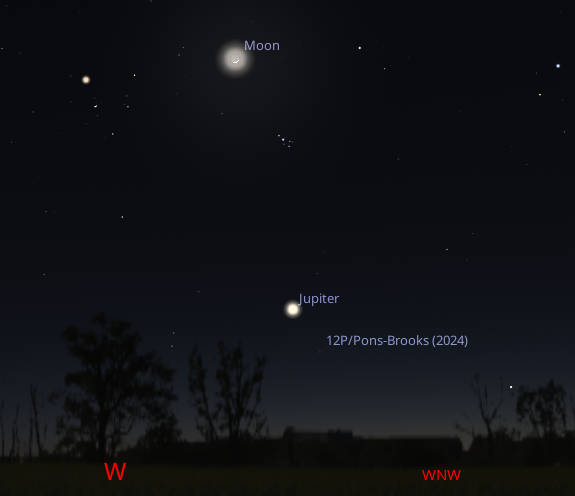
Let’s find out where the naked-eye planets have wandered off to this week, and see what planets are left. Mercury is now too close to the Sun to be spotted. Bright Jupiter is due west at 8:45 pm or a half hour after sunset. It will set at 11:05 pm. We are getting close to losing Jupiter in the evening sky. Comet 12P/Pons-Brooks is right of and a bit below Jupiter in the evening. Though officially naked-eye brightness, one has to have very good eyes, binoculars or telescope to spot it. In my Wednesday blog posts at bobmoler.wordpress.com I have finder charts. In the morning Mars, and especially Venus and Saturn may be impossible to spot, in the east-southeast in the bright twilight. Mars will rise at 6:10, and will be very low in the east-southeast at 6:45 am.
The astronomical event times given are for the Traverse City/Interlochen area of Michigan (EDT, UT–4 hours). They may be different for your location.
Addendum
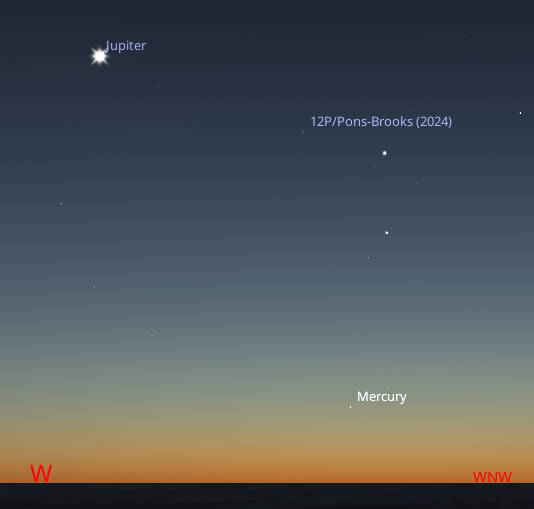
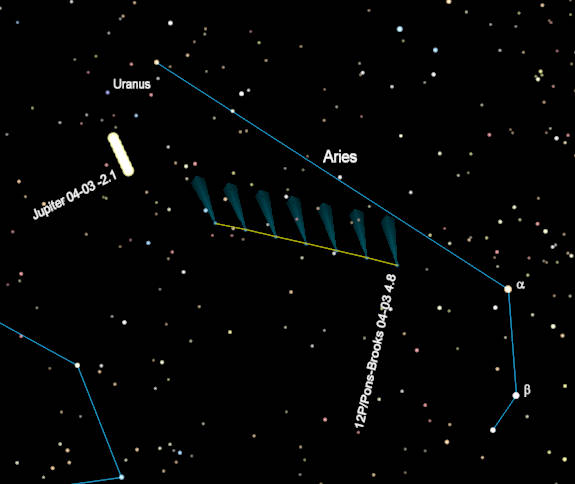
During the solar eclipse on the 8th, during totality, the comet will be located around the 2nd to the last position of its track. However, unless it is obviously noticeable, totality time is too short to use trying to find it. Enjoy the glory of the sun’s corona for the brief time you have.
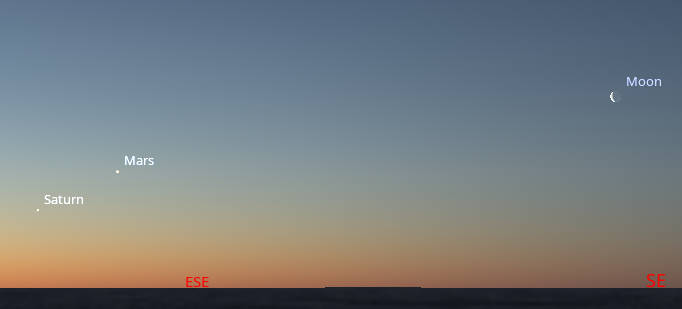
Ephemeris: 03/28/2024 Comet Pons-Brooks can be seen near Jupiter with binoculars
This is Ephemeris for Thursday, March 28th. Today the Sun will be up for 12 hours and 36 minutes, setting at 8:06, and it will rise tomorrow at 7:28. The Moon, 3 days past full, will rise at 11:59 this evening.
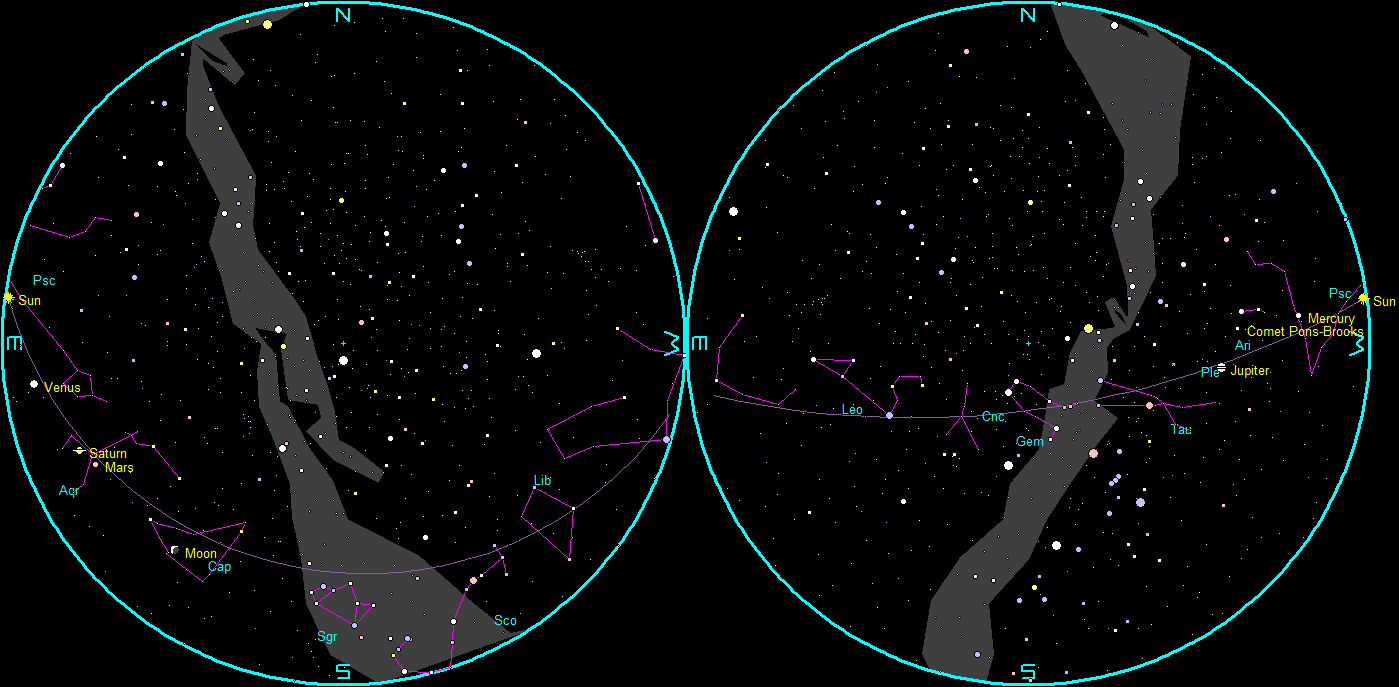
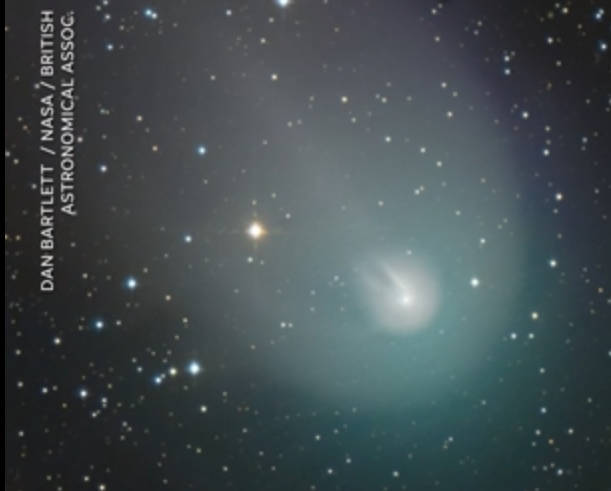
A dim naked eye comet is gracing our evening skies now. It’s called 12P/Pons Brooks. The 12P designation means it was the 12th periodic comet discovered. It was discovered in 1812 by French astronomer Jean-Louis Pons and rediscovered 71 years later on its return by William Brooks. Last July it had an outburst and gained about 100 times increase in brightness. It has held on to most of that. However, right now it’s 5th magnitude which makes it very difficult to spot even in binoculars. Comets always appear to be much dimmer than their magnitude suggests. It was last seen in 1954 and has a 71-year orbit of the Sun that takes it out to Neptune’s orbit. It currently appears below-right of Jupiter.
The astronomical event times given are for the Traverse City/Interlochen area of Michigan (EDT, UT–4 hours). They may be different for your location.
Addendum
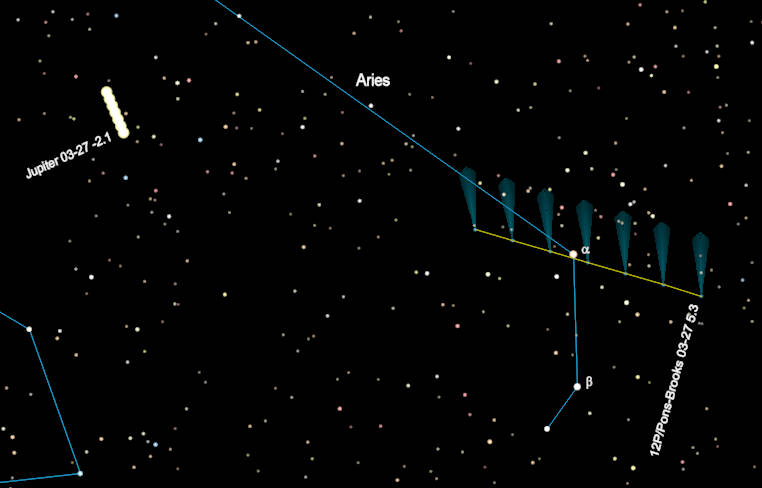
Ephemeris: 03/27/2024 – Let’s find out where the naked-eye planets have wandered off to this week
This is Ephemeris for Wednesday, March 27th. Today the Sun will be up for 12 hours and 33 minutes, setting at 8:04, and it will rise tomorrow at 7:30. The Moon, 2 days past full, will rise at 10:50 this evening.
Let’s find out where the naked-eye planets have wandered off to this week, and see what planets are left. Mercury is visible in the evening sky shortly after sunset appearing very low in the west. It will be visible for the next few days or so, slowly heading back toward the Sun since this past Sunday. Higher up in the sky is bright Jupiter in the west southwest. It will set at 11:25 pm. Jupiter will be visible in the evening for only about another month or so. In the morning Mars, and especially Venus and Saturn may be impossible to spot, in the east-southeast in the bright twilight. Mars will rise at 6:28, and will be very low in the east-southeast. Comet 12P/Pons-Brooks is below-right of Jupiter in the evening. I’ll have more about it tomorrow.
The astronomical event times given are for the Traverse City/Interlochen area of Michigan (EDT, UT–4 hours). They may be different for your location.
Addendum
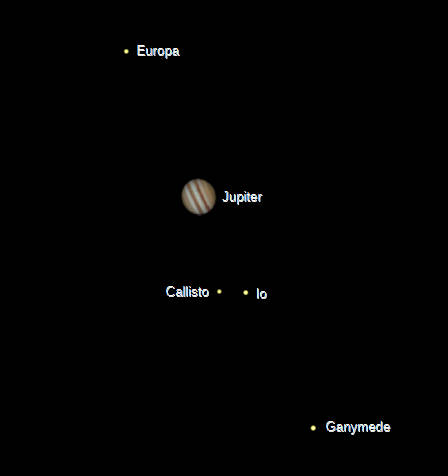
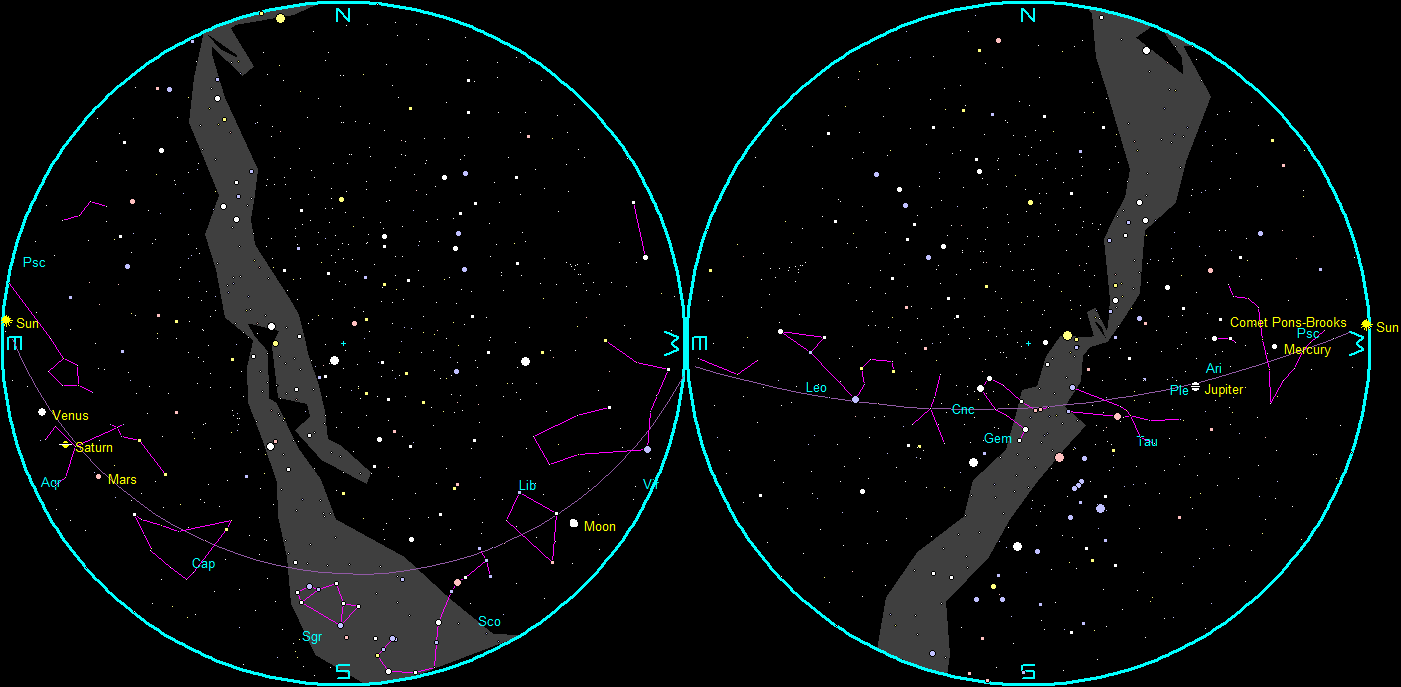
Ephemeris: 03/20/2024 – Let’s find out where the naked-eye planets have wandered off to this week
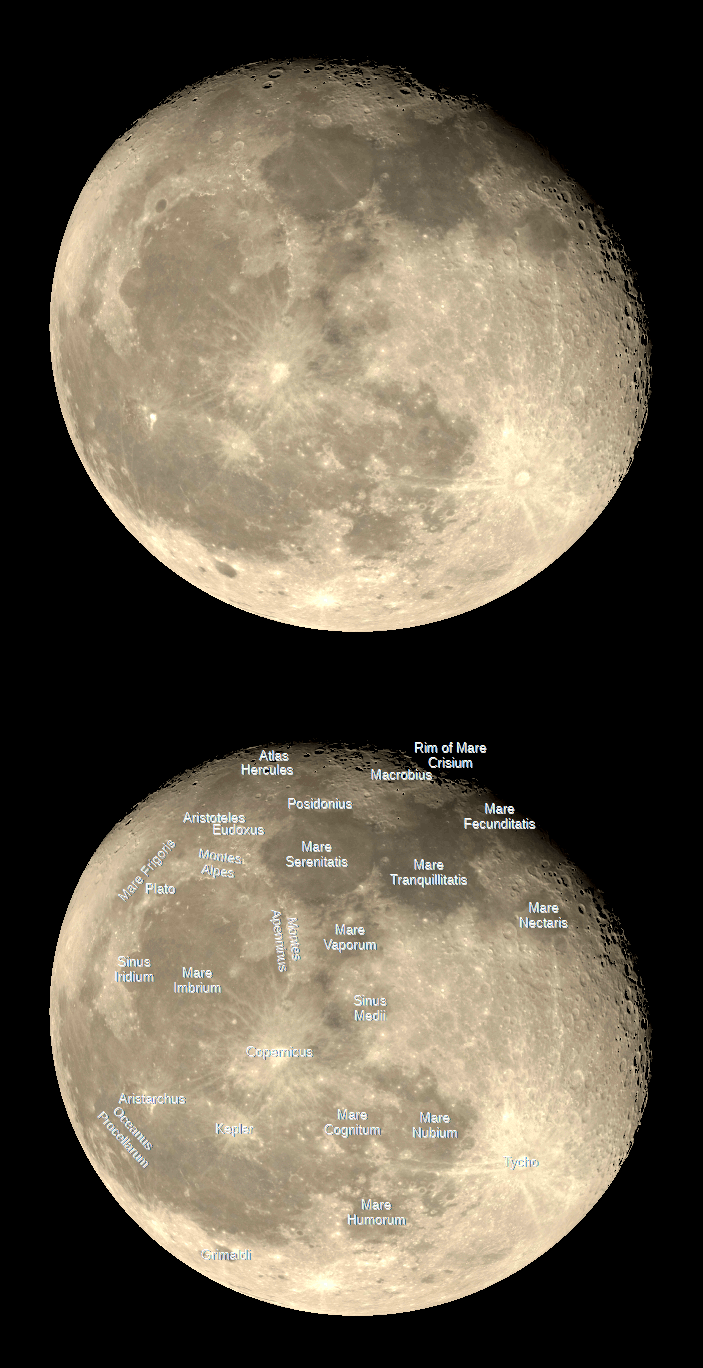
This is Ephemeris for Wednesday, March 20th. Today the Sun will be up for 12 hours and 11 minutes, setting at 7:56, and it will rise tomorrow at 7:43. The Moon, 3 days past first quarter, will set at 6:38 tomorrow morning.
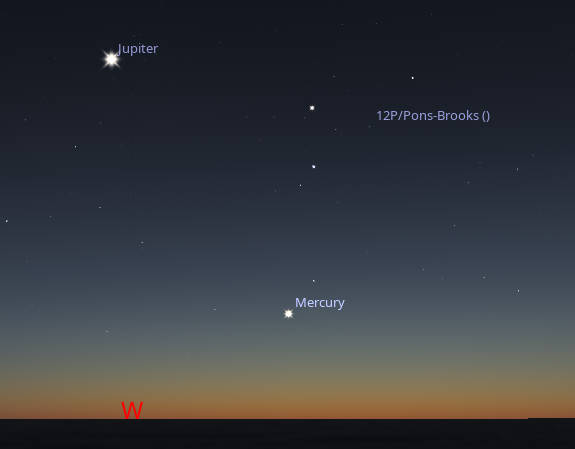
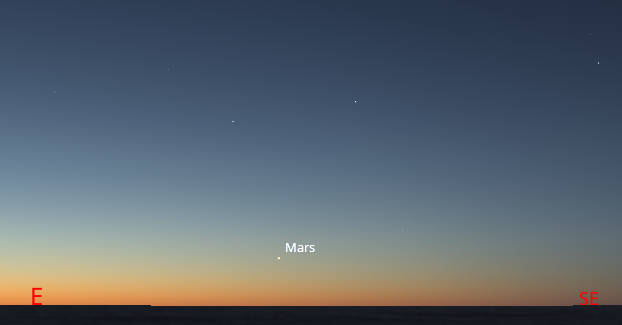
Let’s find out where the naked-eye planets have wandered off to this week, and see what planets are left. Mercury is visible in the evening sky shortly after sunset appearing very low in the west. It will be visible for the next week or so, moving away from the Sun, but getting dimmer, and starting back toward the Sun after Sunday. Higher up in the sky is bright Jupiter in the west southwest. It will set at 11:45 pm. Jupiter will be visible in the evening for only about another month or so. In the morning Mars, Venus and Saturn may be impossible to spot, in the east-southeast in the bright twilight. Mars will rise at 6:43 am, followed by Venus at 7:13, with Saturn right below it.
The astronomical event times given are for the Traverse City/Interlochen area of Michigan (EDT, UT–4 hours). They may be different for your location.
Addendum
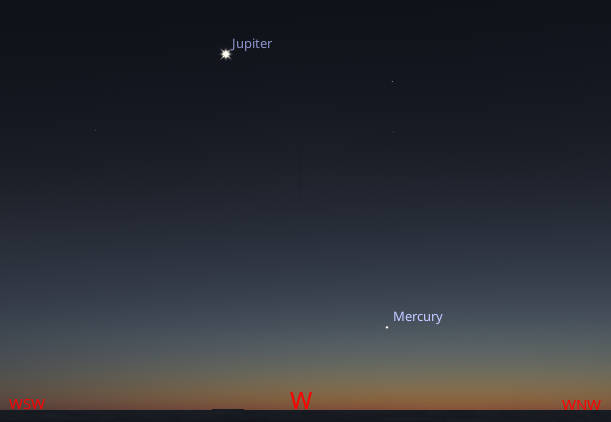
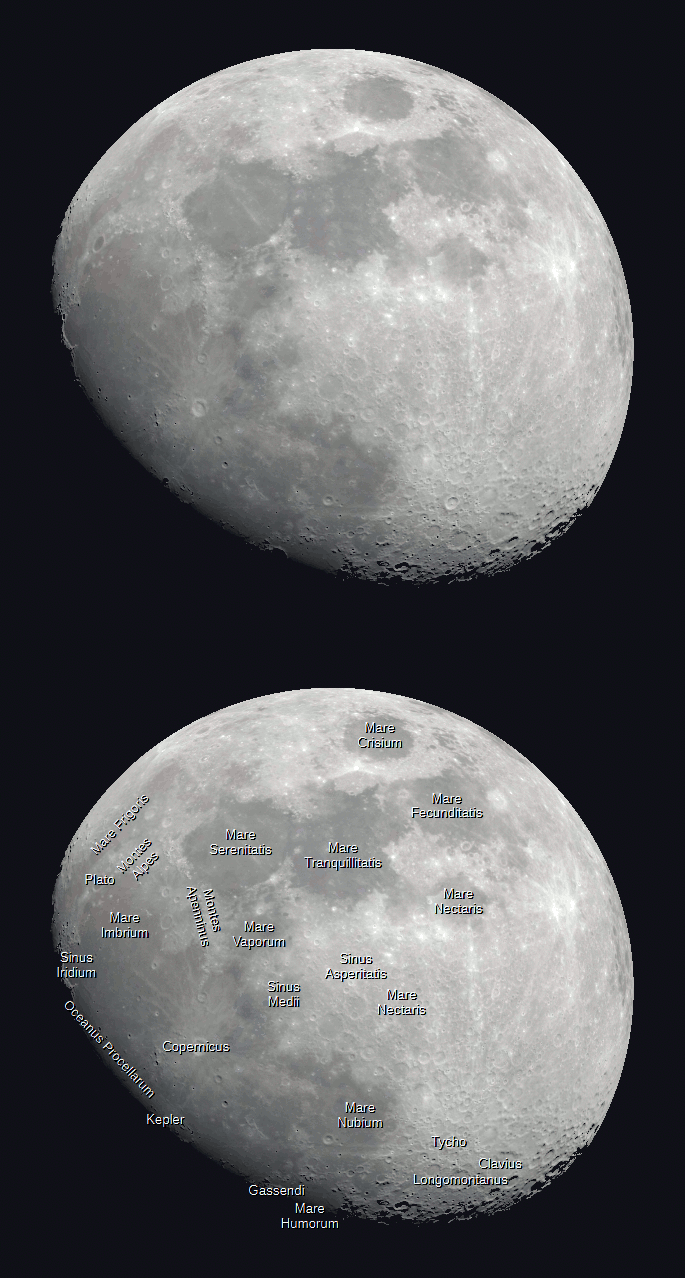
Ephemeris: 03/14/2024 – It’s Pi Day!
This is Ephemeris for Pi Day, Thursday, March 14th. Today the Sun will be up for 11 hours and 52 minutes, setting at 7:48, and it will rise tomorrow at 7:54. The Moon, 3 days before first quarter, will set at 1:47 tomorrow morning.
Yes, it’s Pi day that’s the Greek letter π for 3.14 approximating the ratio of the circle’s circumference to its diameter, which scientific and technical people celebrate by baking a pie P-I-E and carving the Greek letter π on the top.
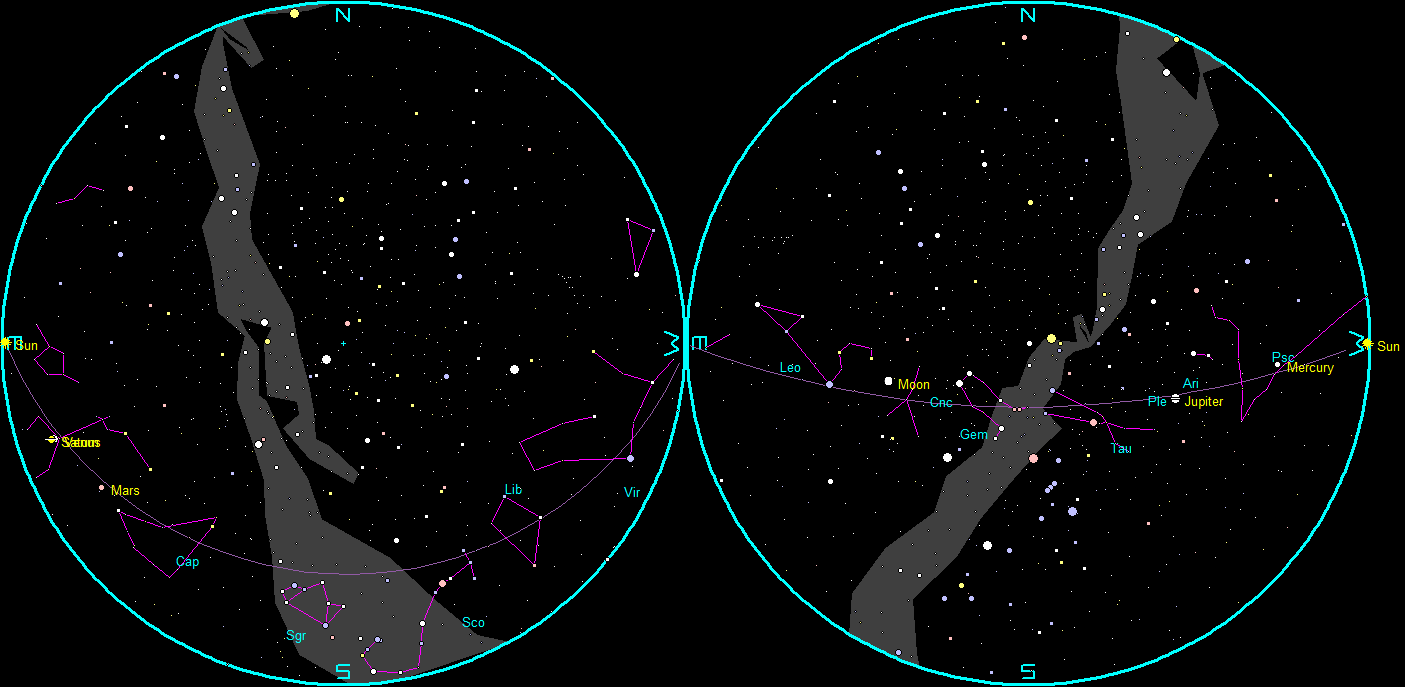
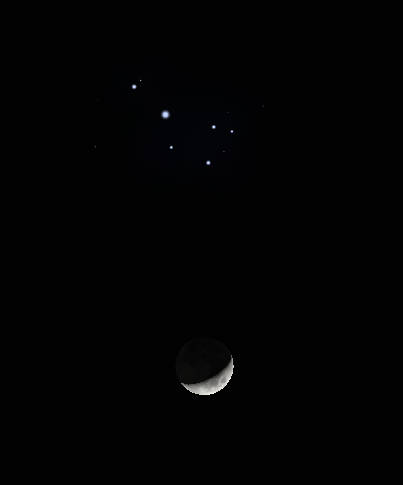
Tonight around 9 or 9:30 when it gets dark, is a good time to use the Moon to find the Pleiades, the Seven Sisters star cluster. The Pleiades will appear above the crescent Moon this evening, so it’s a good time to locate them if you haven’t already. We only have about another month viewing the Pleiades in the evening. And we have one more passage of the Moon by the Pleiades next month before they disappear from the evening sky.
The astronomical event times given are for the Traverse City/Interlochen area of Michigan (EDT, UT–4 hours). They may be different for your location.
Addendum

There’s another Pi day that some celebrate. A well-known approximation of pi is the fraction 22/7ths. Europeans and others write dates in day/month order, so July 22nd is also a Pi Day: 22/7.
 Bob Moler's Ephemeris Blog