Archive
Ephemeris: 05/28/2025 – Our weekly look at the whereabouts of the naked-eye planets
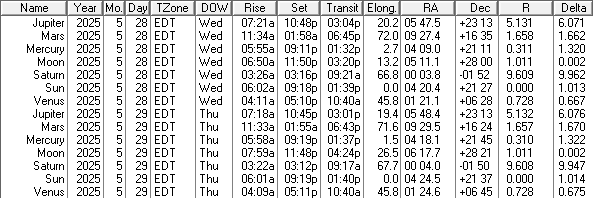
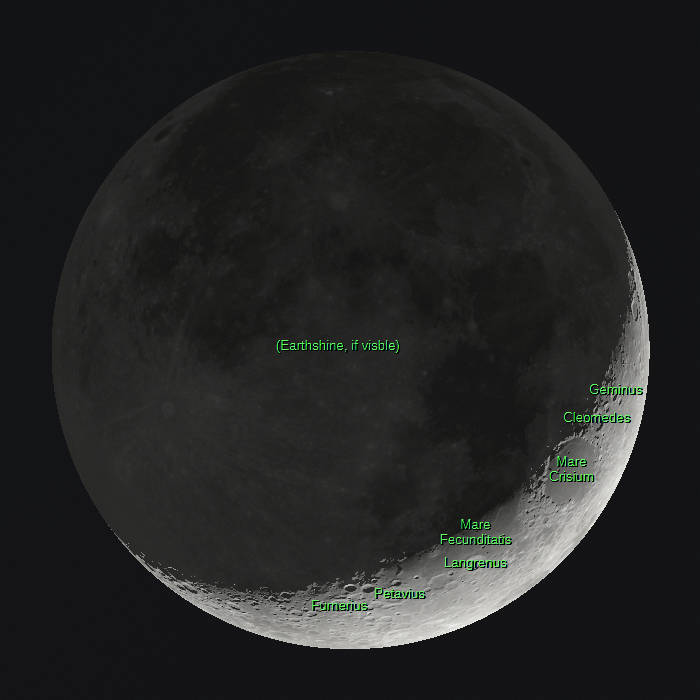
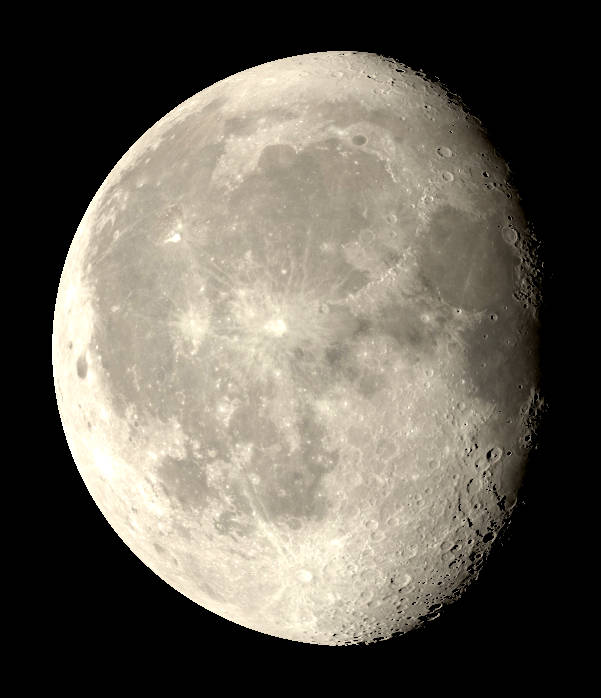
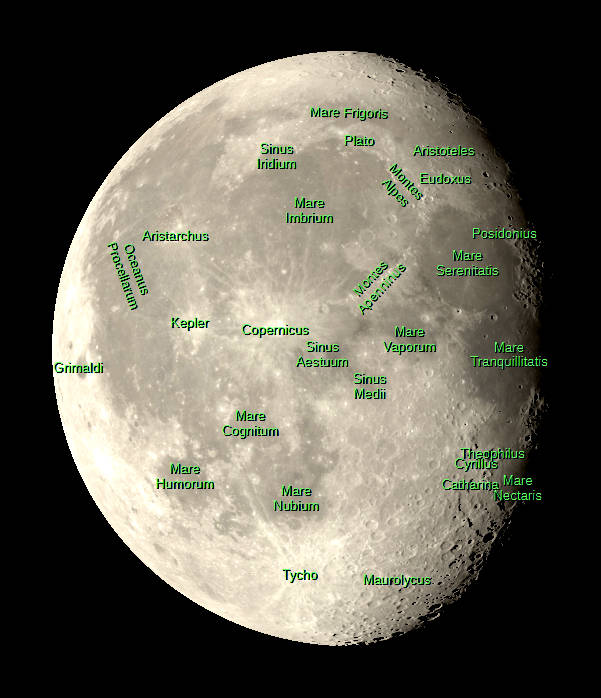
This is Ephemeris for Wednesday, May 28th. Today the Sun will be up for 15 hours and 15 minutes, setting at 9:18, and it will rise tomorrow at 6:01. The Moon, 2 days past new, will set at 11:50 this evening.
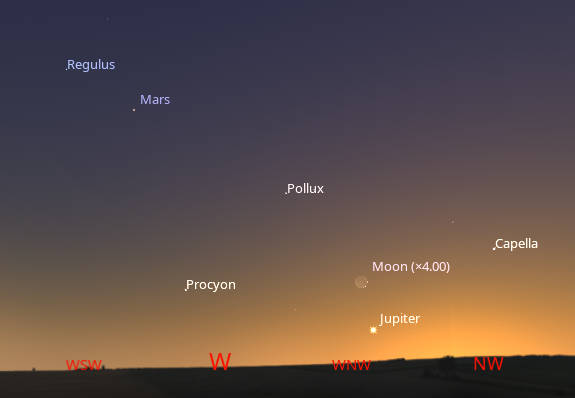
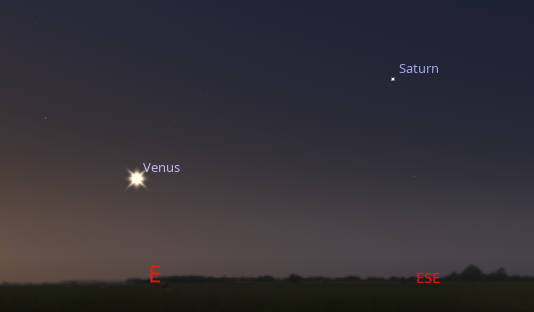
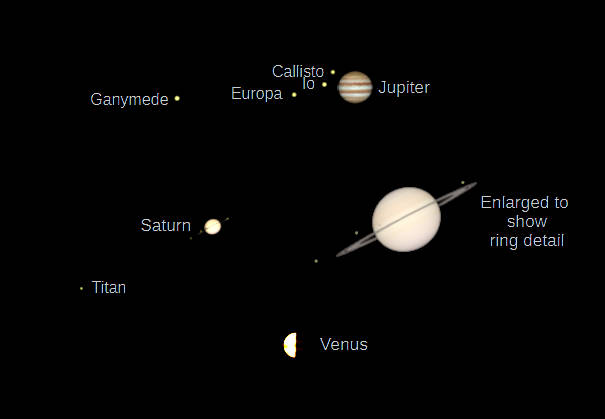
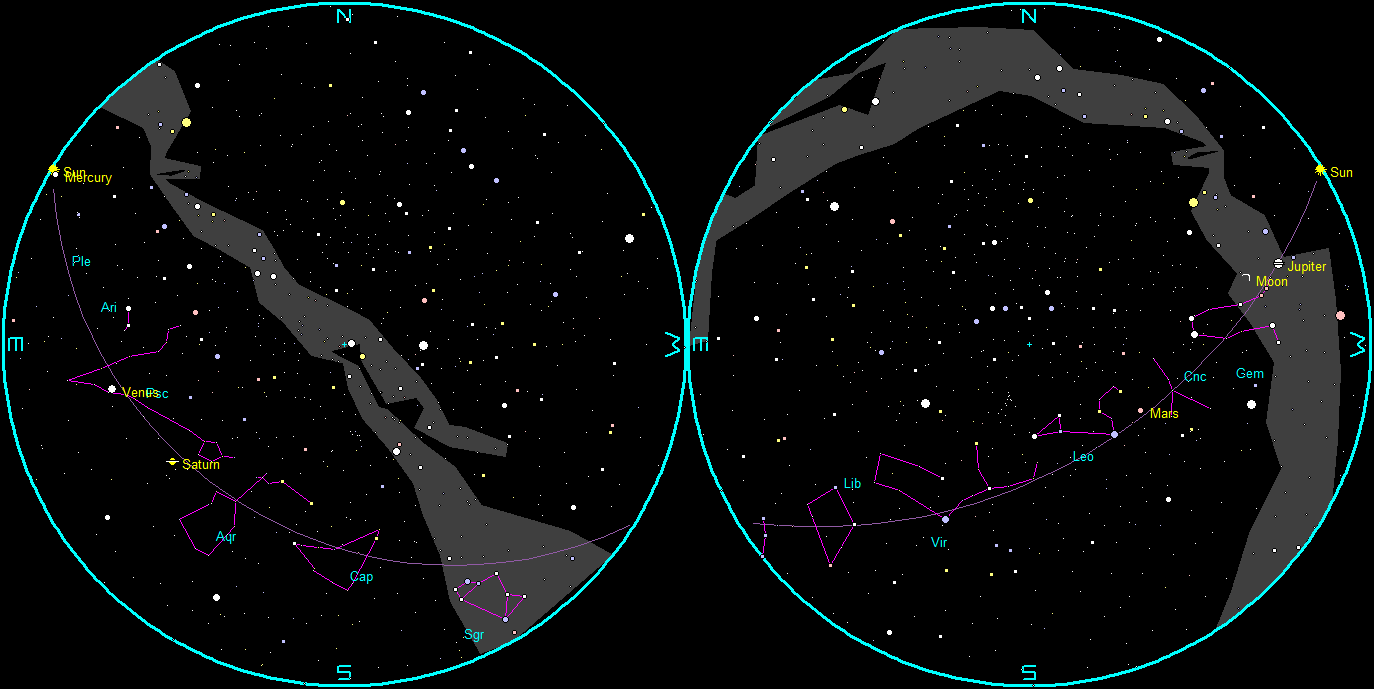
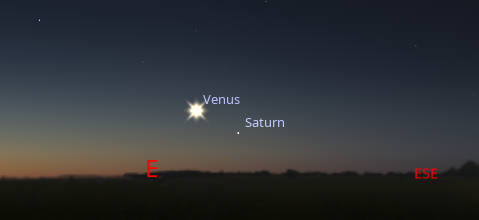
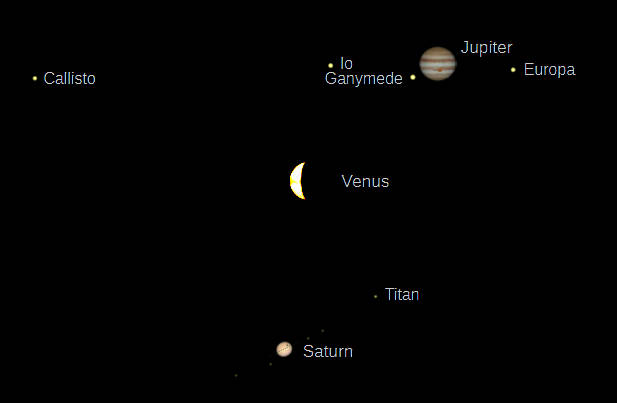
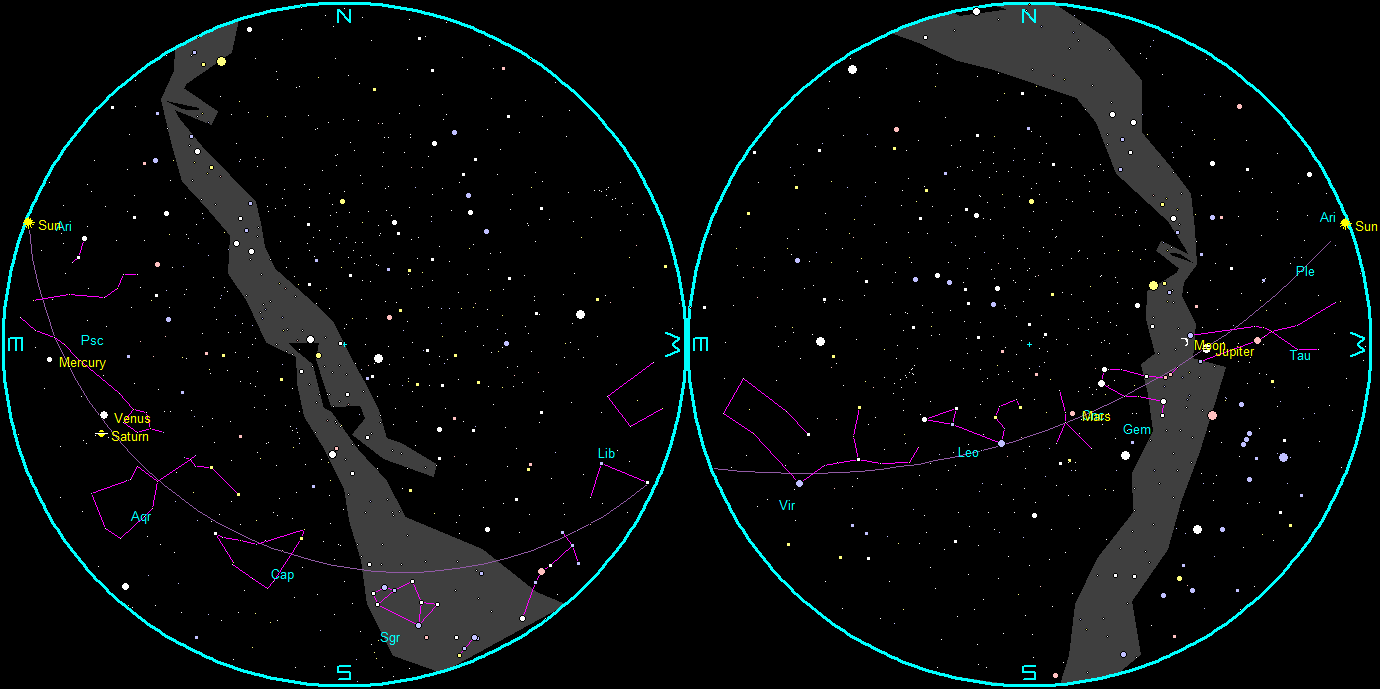
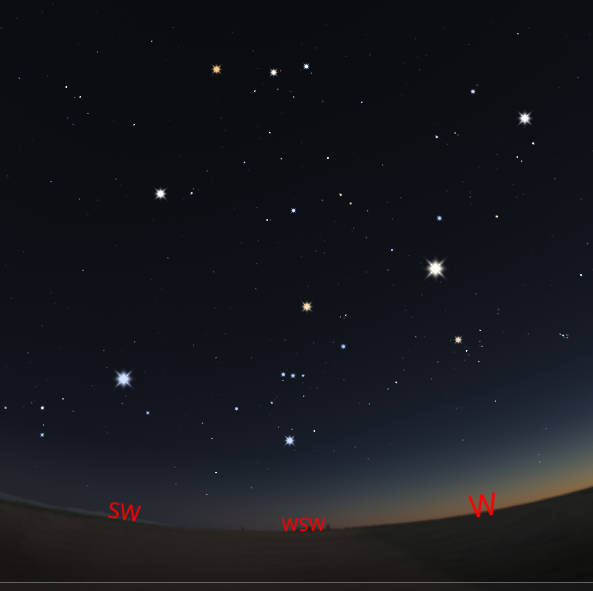
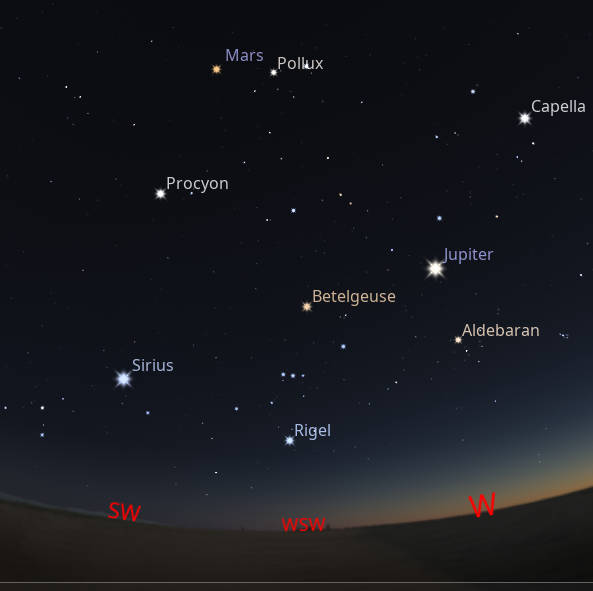
Let’s take our weekly look at the whereabouts of the naked-eye planets. At 10 PM this evening two naked eye planets will be out. Jupiter, is now low in the west-northwestern sky Underneath the waxing crescent Moon. The fading Mars, with its distinctive reddish hue, is in the west-southwest, at that time. It’s slowly approaching the bright star Regulus in Leo the lion, which it will pass on June 16th. By 5 AM Venus will be seen very low in the east, as the Morning Star, with Saturn to the right and a bit above it. Venus will require a low eastern horizon then. But it will rise and be visible until close to 5:45. For those with telescopes, Saturn’s rings are now opening up again, and will for the next 7 years.
The astronomical event times given in this blog are for the Traverse City/Interlochen area of Michigan (Lat 44.7° N, Long 85.7° W; EDT, UT – 4 hours) unless stated otherwise. Times will be different for other locations.
Addendum
Ephemeris: 05/21/2025 – Checking where the naked-eye planets are
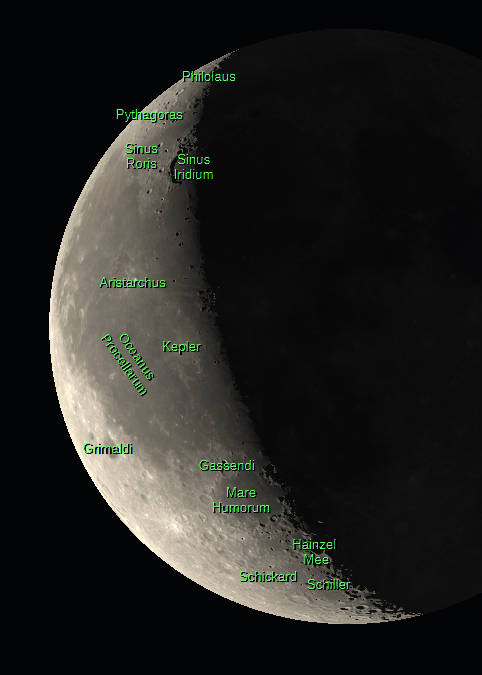
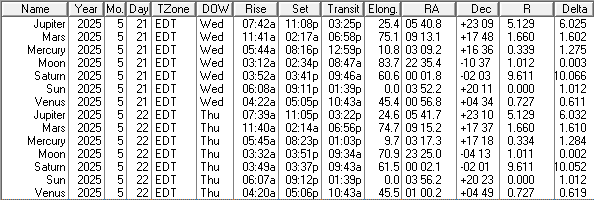
This is Bob Moler with Ephemeris for Wednesday, May 21st. Today the Sun will be up for 15 hours and 3 minutes, setting at 9:11, and it will rise tomorrow at 6:07. The Moon, 1 day past last quarter, will rise at 3:32 tomorrow morning.
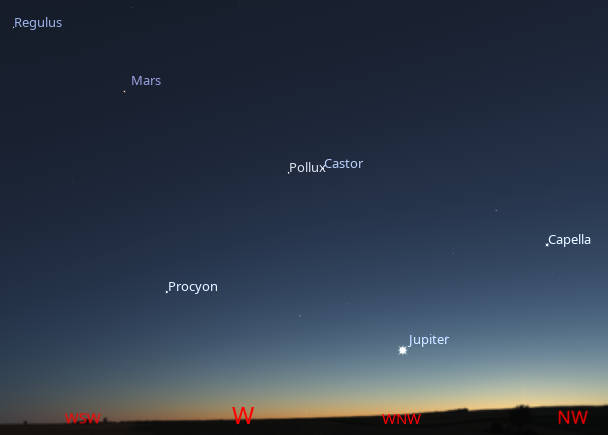
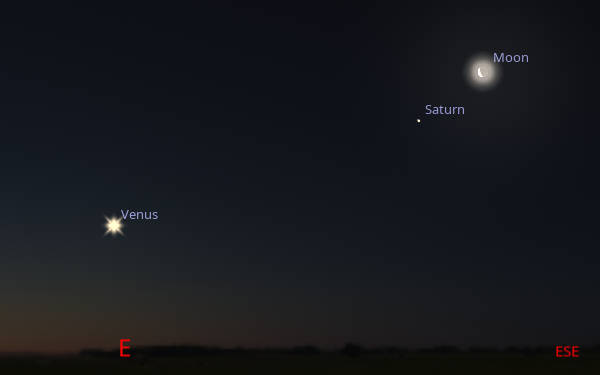
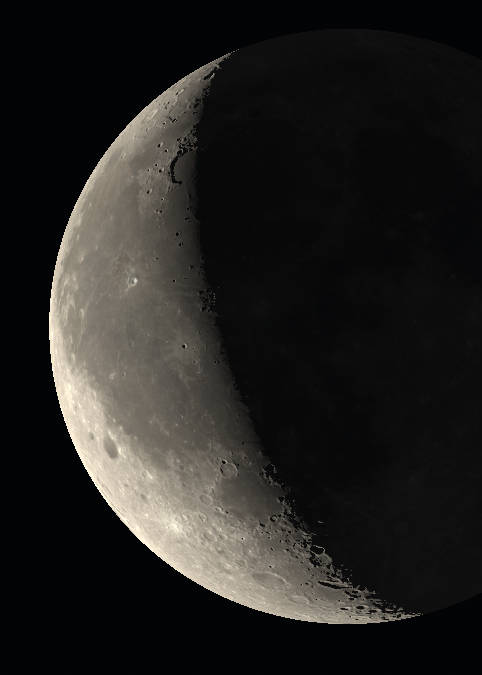
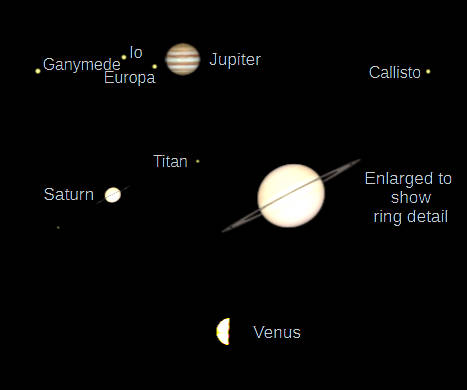
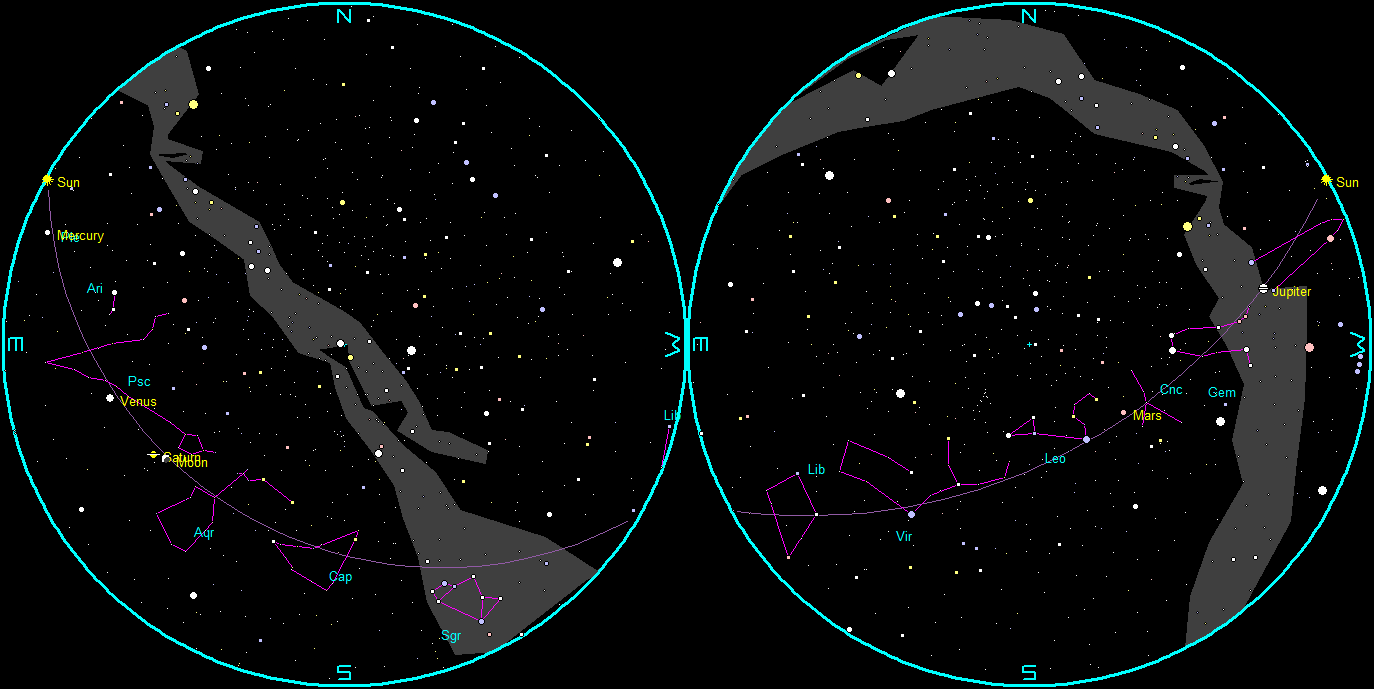
Let’s take our weekly look at the whereabouts of the naked-eye planets. At 10 PM this evening two naked eye planets will be out. Jupiter, is now low in the west-northwestern sky. The rapidly fading Mars, with its distinctive reddish hue, is in the west-southwest, at that time. Once it’s darker binoculars can be used to spot the Beehive Star Cluster to its lower right. By 5 AM Venus will be seen very low in the east, as the Morning Star, with Saturn and the waning crescent Moon in an upward line to the right and a bit above it. Venus will require a low eastern horizon then. But it will rise and be visible until close to 5:45 or later. For those with telescopes, Saturn’s rings are now opening up again, and will for the next 7 years.
The astronomical event times given in this blog are for the Traverse City/Interlochen area of Michigan (Lat 44.7° N, Long 85.7° W; EDT, UT – 4 hours) unless stated otherwise. Times will be different for other locations.
Addendum
Ephemeris: 05/14/2025 – Looking for the naked-eye planets
This is Bob Moler with Ephemeris for Wednesday, May 14th. Today the Sun will be up for 14 hours and 48 minutes, setting at 9:03, and it will rise tomorrow at 6:14. The Moon, 2 days past full, will rise at 11:41 this evening.
Let’s take our weekly look at the whereabouts of the naked-eye planets. At 10 PM this evening two of the five naked eye planets will be out. Jupiter, is now the brightest evening planet, our substitute evening star if you will. It will be in the low in the west-northwestern sky. The rapidly fading Mars, with its distinctive reddish hue, is in the west-southwest, less than a binocular field’s width east of the Beehive Star Cluster in Cancer the Crab. By 5 AM Venus will be seen very low in the east, as the Morning Star. It will require a low eastern horizon. It should be visible until close to 6 AM. Saturn is visible to the right and a bit above Venus. It will disappear much sooner than the much brighter Venus.
The astronomical event times given in this blog are for the Traverse City/Interlochen area of Michigan (Lat 44.7° N, Long 85.7° W; EDT, UT – 4 hours) unless stated otherwise. Event times will be different for other locations.
Addendum
Ephemeris: 05/07/2025 – Taking our weekly look at the whereabouts of the naked-eye planets
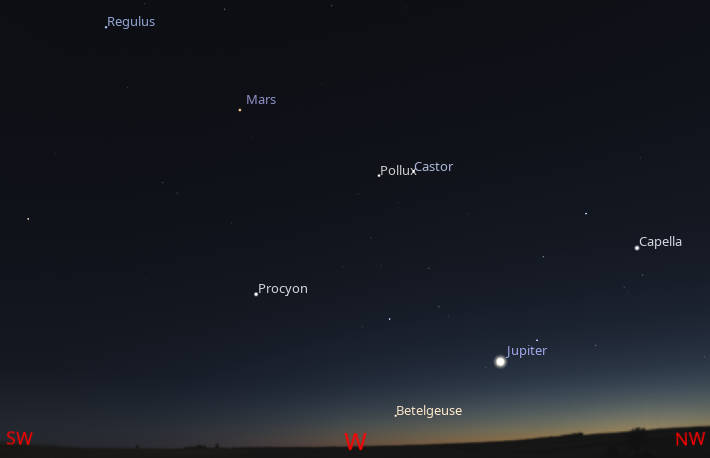
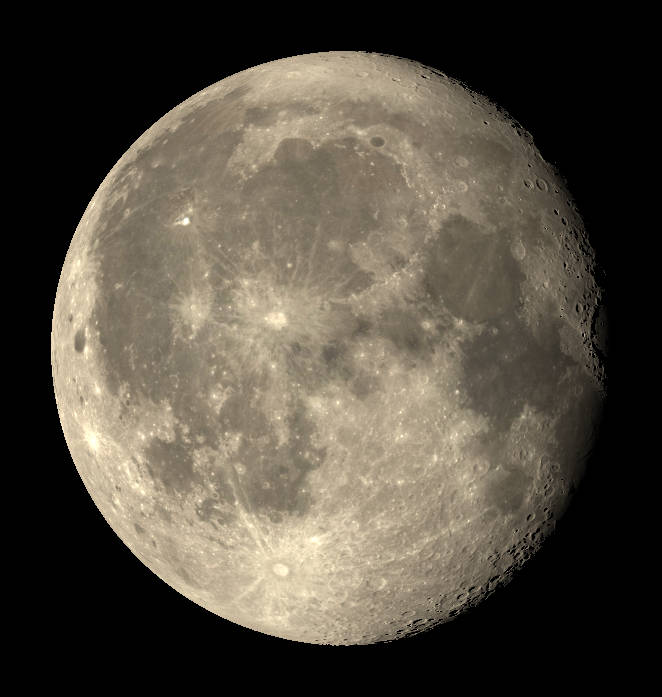
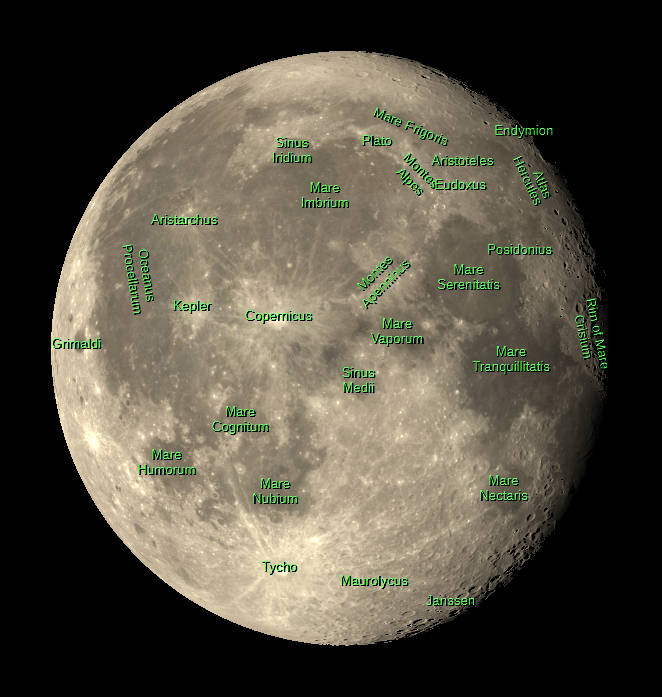
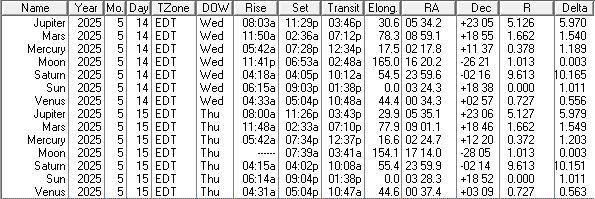
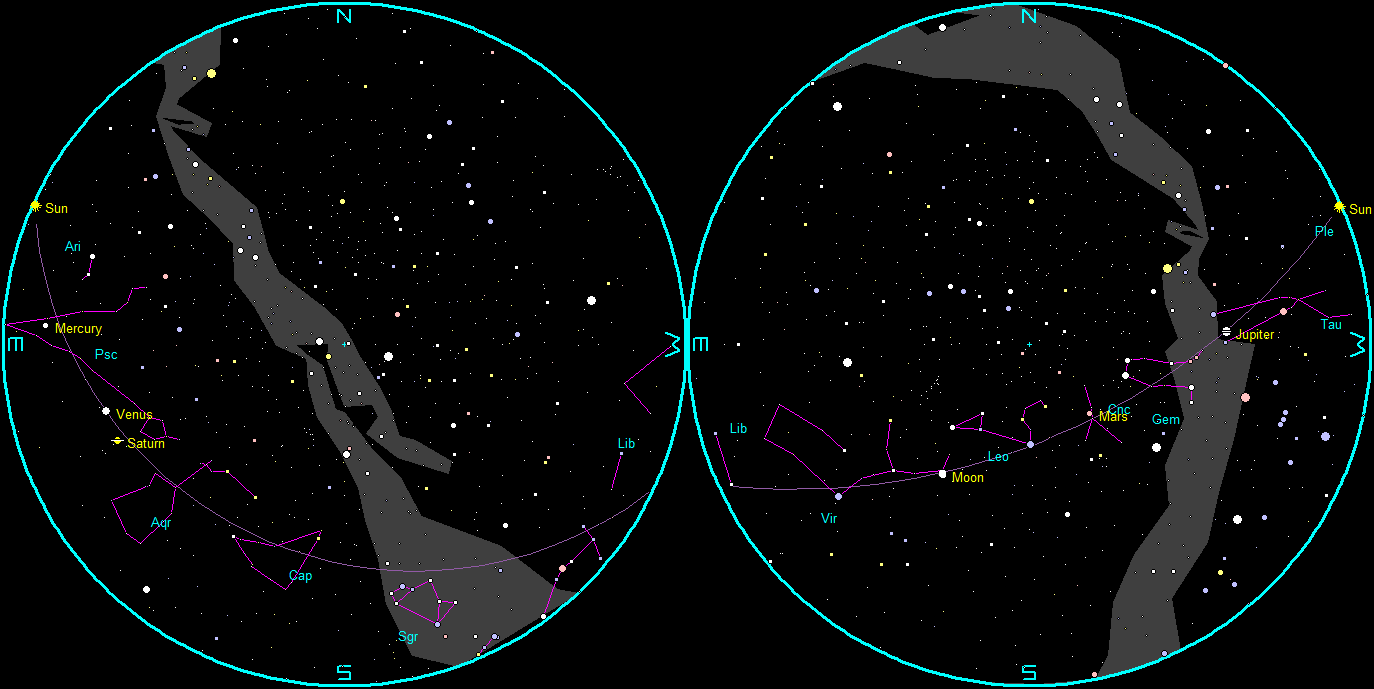
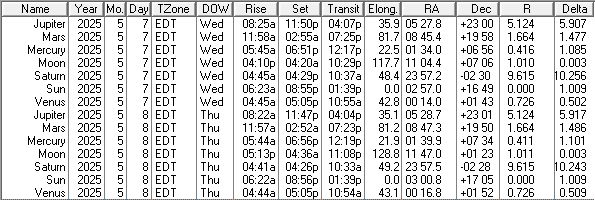
This is Ephemeris for Wednesday, May 7th. Today the Sun will be up for 14 hours and 31 minutes, setting at 8:55, and it will rise tomorrow at 6:22. The Moon, 3 days past first quarter, will set at 4:36 tomorrow morning.
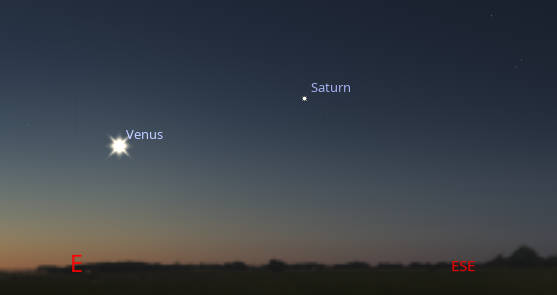
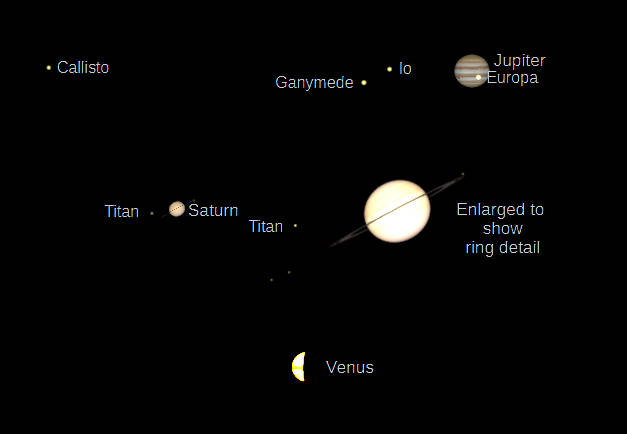
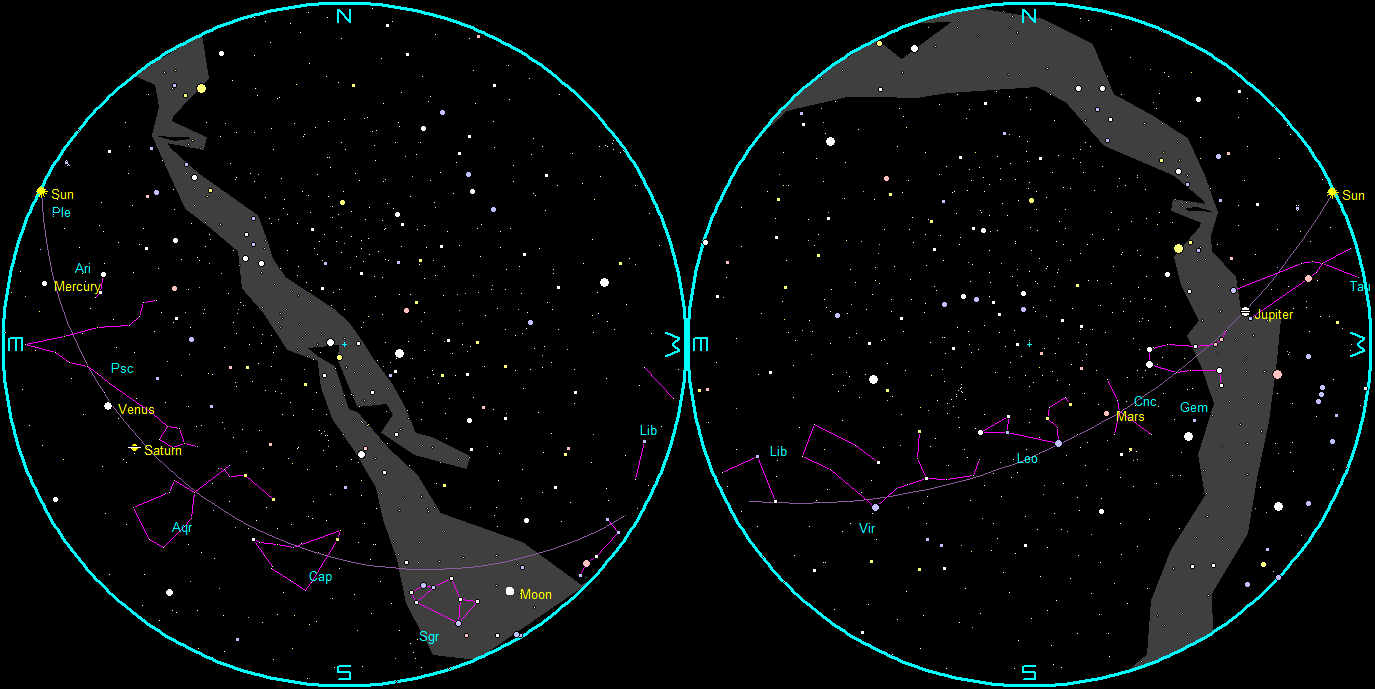
Let’s take our weekly look at the whereabouts of the naked-eye planets. At 10 PM this evening two of the five naked eye planets will be out. Jupiter, is now the brightest evening planet, our substitute evening star if you will. It will be in the low in the west-northwestern sky. The rapidly fading Mars, with its distinctive reddish hue, is in the west-southwest, moving away from the stars Castor and Pollux in Gemini to the lower right of it. By 5:30 AM Venus will be seen very low in the east, as the Morning Star. It will require a low eastern horizon. It should be visible until a bit after 6:30. Saturn is visible close and to its right and a bit above. It will disappear much sooner than Venus.
The astronomical event times given in this blog are for the Traverse City/Interlochen area of Michigan (Lat 44.7° N, Long 85.7° W; EDT, UT – 4 hours) unless stated otherwise. Times will be different for other locations.
Addendum
Ephemeris: 04/30/2025 – Let’s take our weekly look at the whereabouts of the naked-eye planets
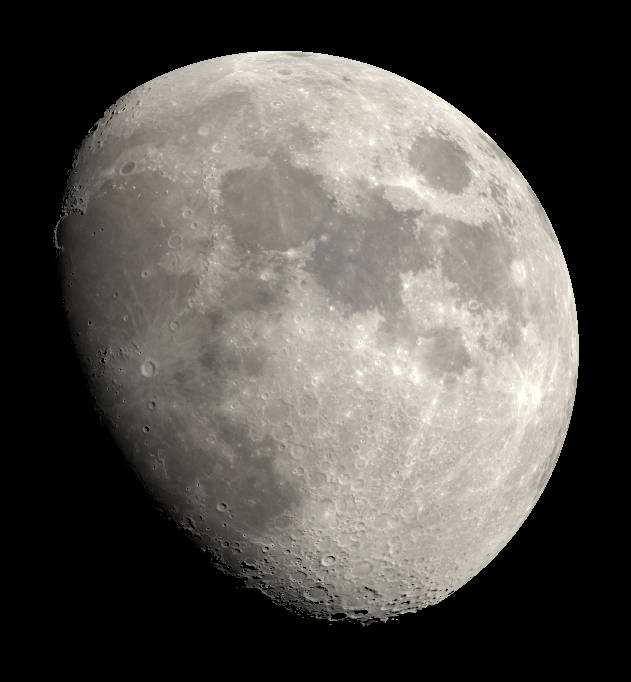
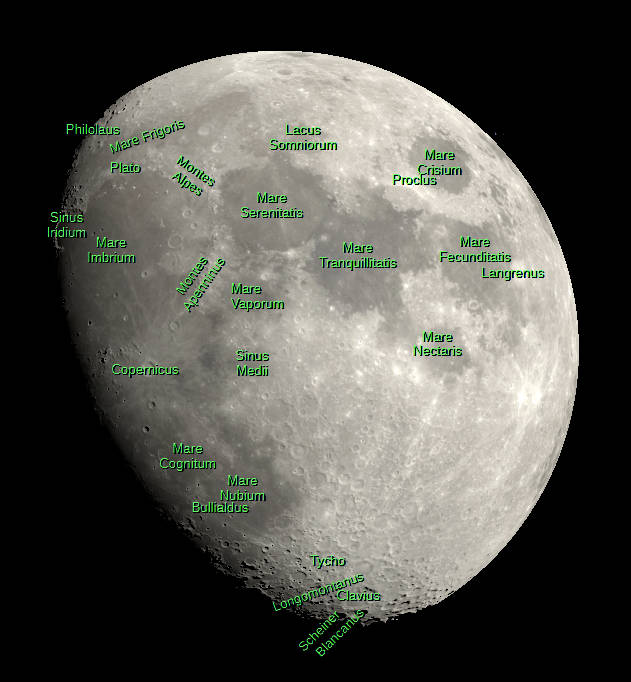
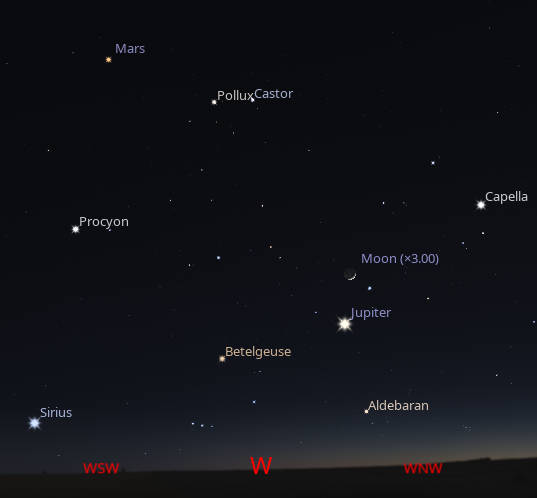
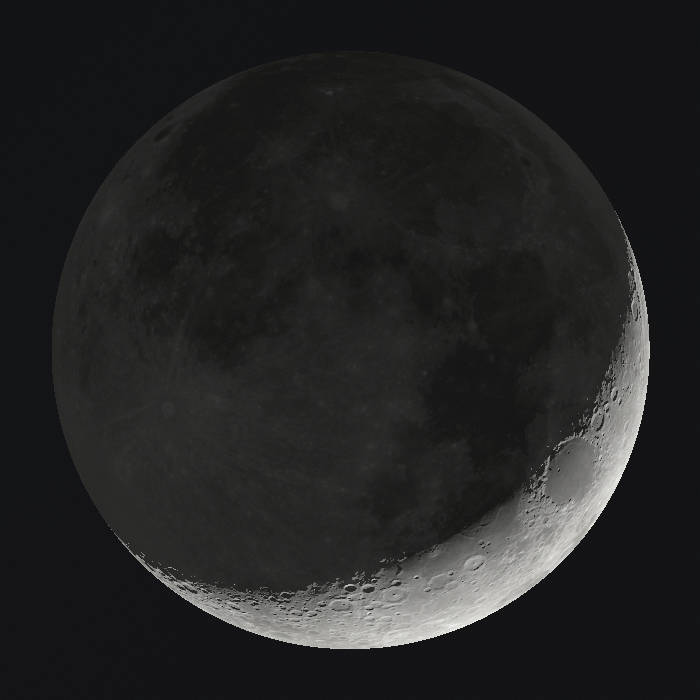
This is Bob Moler with Ephemeris for Wednesday, April 30th. Today the Sun will be up for 14 hours and 13 minutes, setting at 8:46, and it will rise tomorrow at 6:32. The Moon, 3 days past new, will set at 1:08 tomorrow morning.
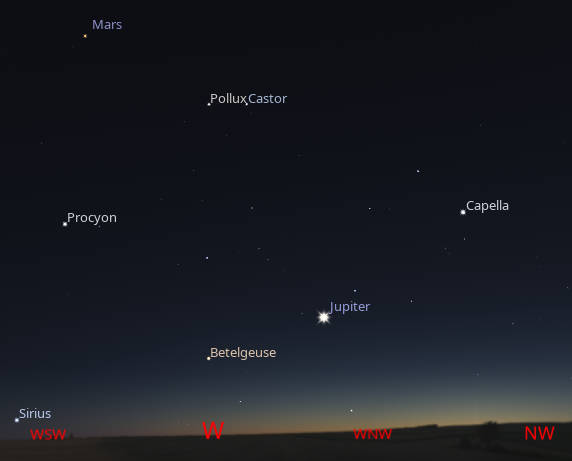
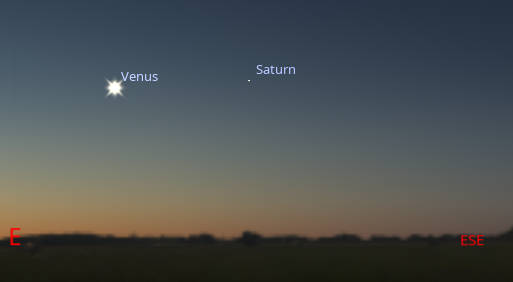
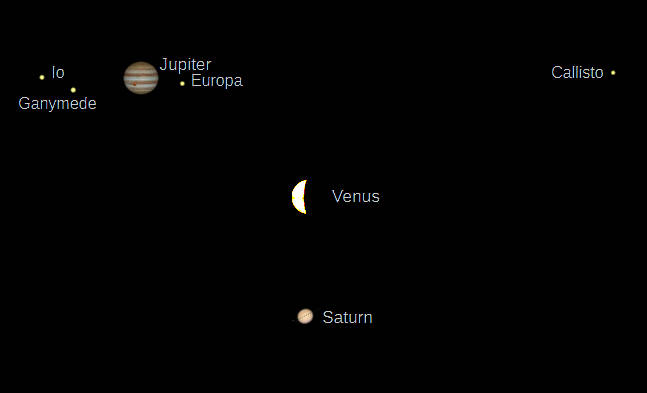
Let’s take our weekly look at the whereabouts of the naked-eye planets. At 9:30 PM this evening two of the five naked eye planets will be out. Jupiter, is now the brightest evening planet, our substitute evening star if you will. It will be in the western sky. Tonight it will be below the crescent Moon. To its lower left, the great constellation of Orion will be beginning to set. The rapidly fading Mars, with its distinctive reddish hue, is high in the southwest, with the stars Castor and Pollux in Gemini to the right of it. By 5:30 AM Venus will be seen very low in the east, as the Morning Star. It will require a low eastern horizon. It should be visible until a bit after 6:30. Saturn is visible close and to its lower right.
The astronomical event times given in this blog are for the Traverse City/Interlochen area of Michigan (Lat 44.7° N, Long 85.7° W; EDT, UT – 4 hours) unless stated otherwise. Times will be different for other locations.
Addendum
Ephemeris: 04/23/2025 – Taking our weekly look at where the naked eye planets have wandered off to
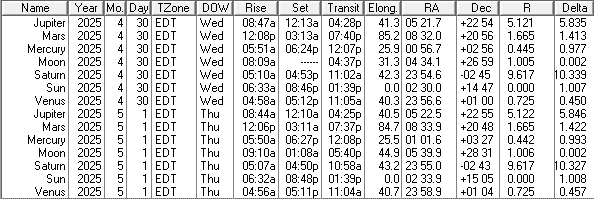
This is Ephemeris for Wednesday, April 23rd. Today the Sun will be up for 13 hours and 53 minutes, setting at 8:38, and it will rise tomorrow at 6:43. The Moon, 3 days past last quarter, will rise at 5:09 tomorrow morning.
Let’s take our weekly look at the whereabouts of the naked-eye planets. At 9:30 PM this evening two of the five naked eye planets will be out. Jupiter, is now the brighter evening planet, outshining all the stars, and being our substitute Evening Star, if you will. It will be in the west. Below it is the bright star Aldebaran. To its lower left, the great constellation of Orion. The rapidly fading Mars, with its distinctive reddish hue, is high in the southwest, with the stars Castor and Pollux in Gemini to the right and below it. By 5:30 AM Venus will be seen very low in the east, as the Morning Star. It will require a low eastern horizon to spot it at that hour. It should be visible until a bit after 6:30. Saturn should be visible in the morning by the end of the month.
The astronomical event times given are for the Traverse City/Interlochen area of Michigan (EDT, UT – 4 hours). Times will be different for other locations.
Addendum
Ephemeris: 04/16/2025 – Taking our weekly look at the naked-eye planets
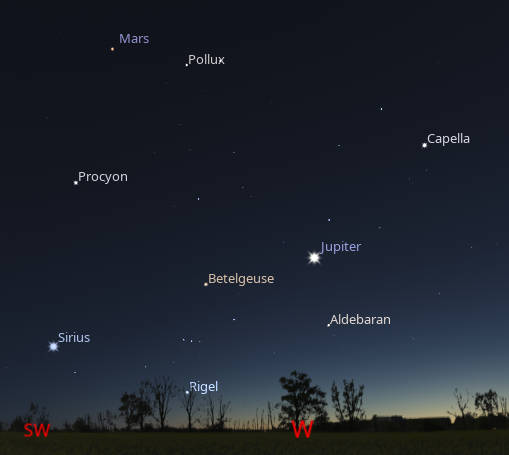
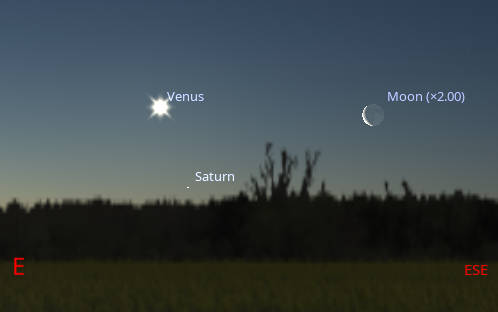
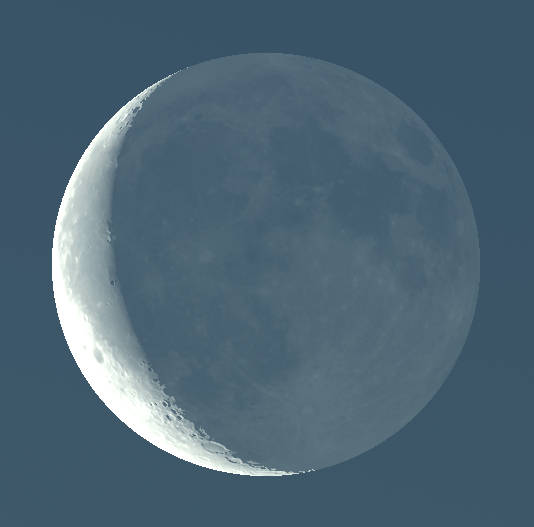
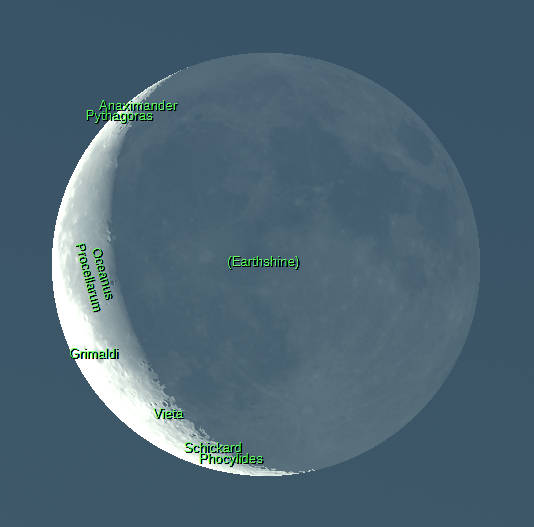
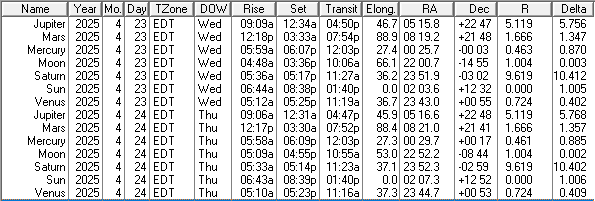
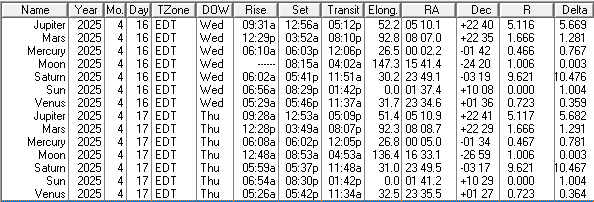
This is Ephemeris for Wednesday, April 16th. Today the Sun will be up for 13 hours and 33 minutes, setting at 8:29, and it will rise tomorrow at 6:54. The Moon, halfway from full to last quarter, will rise at 12:48 tomorrow morning.
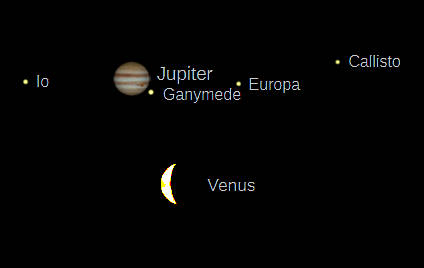
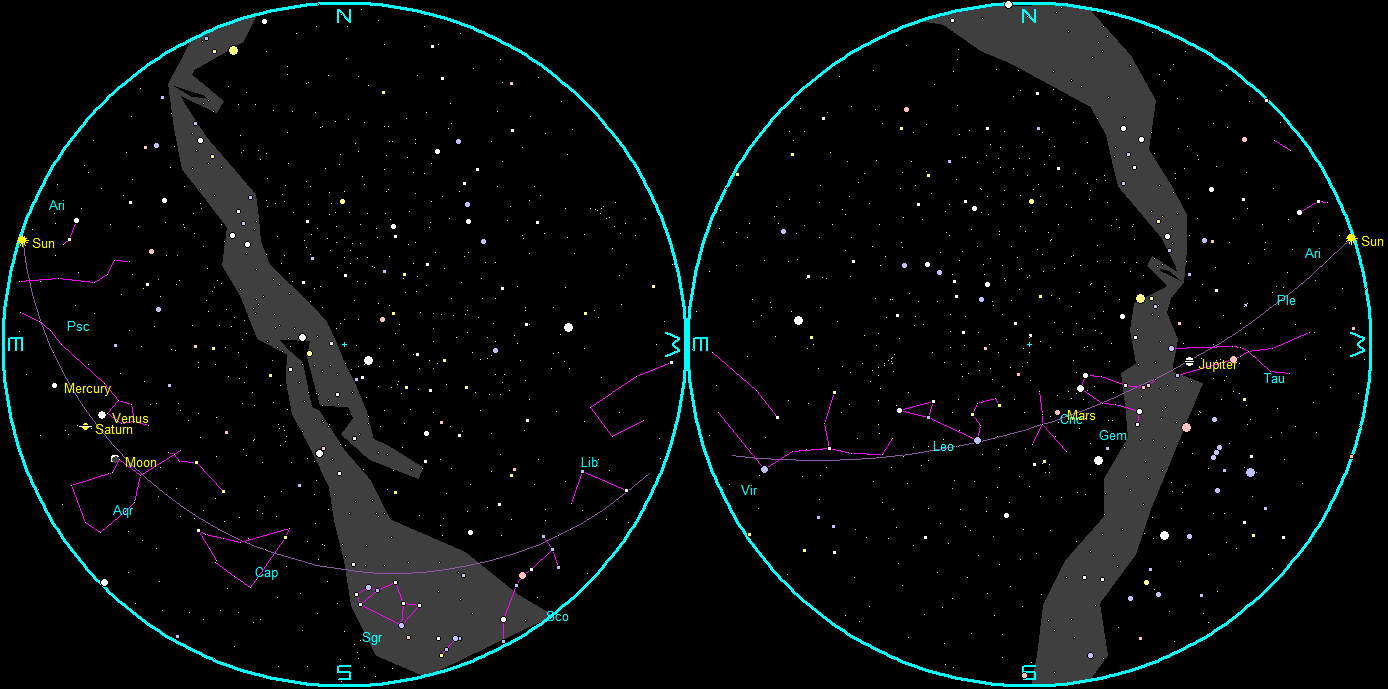
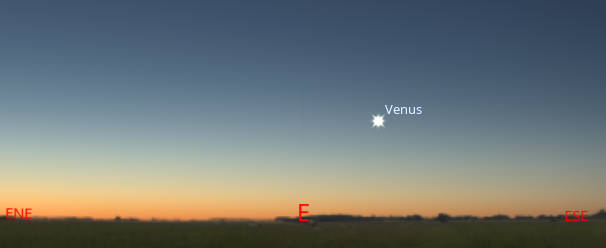
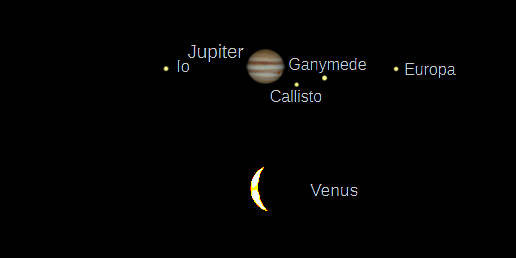
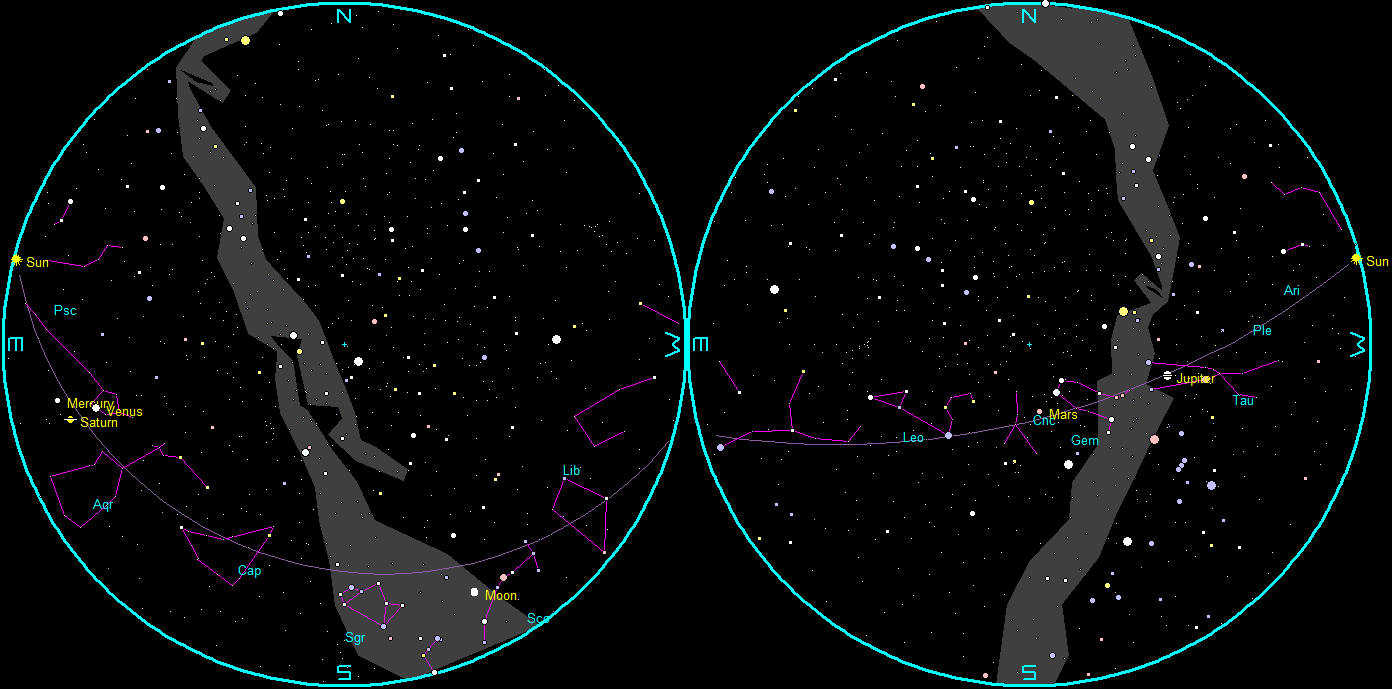
Let’s take our weekly look at the whereabouts of the naked-eye planets. At 9:30 PM this evening just two of the five naked eye planets will be out. Jupiter, now becomes the brightest evening planet, our substitute evening star if you will. It will be high in the west. Below it is the bright star Aldebaran. To its lower left, the great constellation of Orion. The rapidly fading Mars, with its distinctive reddish hue, is high in the south-southwest, with the stars Castor and Pollux in Gemini to the right of it. By 6 AM Venus will be seen very low in the east, as the Morning Star. It will require a low eastern horizon. It should be visible until a bit after 6:30. Saturn should be visible in the morning by the end of the month.
The astronomical event times given are for the Traverse City/Interlochen area of Michigan (EDT, UT – 4 hours). Times will be different for other locations.
Addendum
Ephemeris: 04/09/2025 – Taking our weekly look at the whereabouts of the naked-eye planets
This is Ephemeris for Wednesday, April 9th. Today the Sun will be up for 13 hours and 12 minutes, setting at 8:20, and it will rise tomorrow at 7:06. The Moon, 3 days before full, will set at 6:13 tomorrow morning.
Let’s take our weekly look at the whereabouts of the naked-eye planets. At 9 PM this evening just two of the five naked eye planets will be out. Jupiter, now becomes the brightest evening planet, our substitute evening star if you will. It will be high in the west at 9 PM. Below it is the bright star Aldebaran. To its lower left, the great constellation of Orion. The rapidly fading Mars, with its distinctive reddish hue, is high in the south-southwest, in line with the stars Castor and Pollux in Gemini above right of it. By 6 AM Venus will be seen very low in the east, as the Morning Star,. It will require a low eastern horizon. It should be visible until about 6:45. Saturn should be visible in the morning by the end of the month.
The astronomical event times given are for the Traverse City/Interlochen area of Michigan (EDT, UT – 4 hours). Times will be different for other locations.
Addendum
Ephemeris: 04/02/2025 – Let’s take our weekly look at the whereabouts of the naked-eye planets
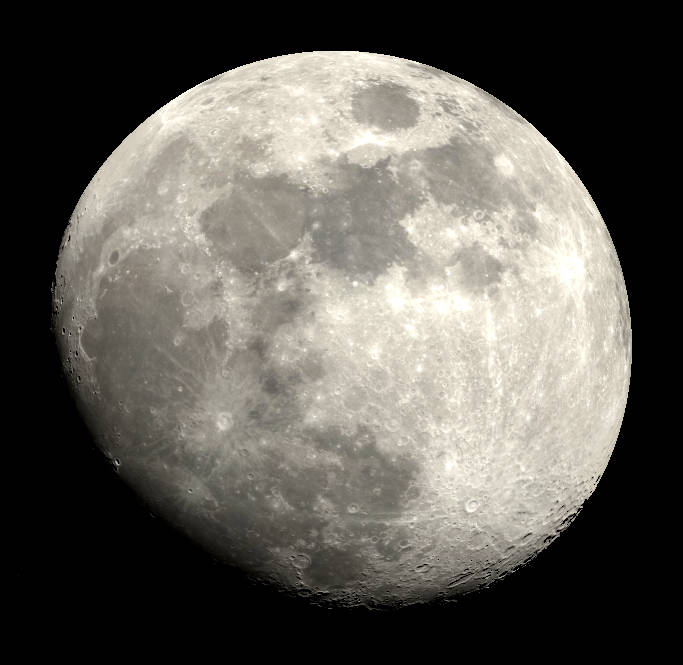
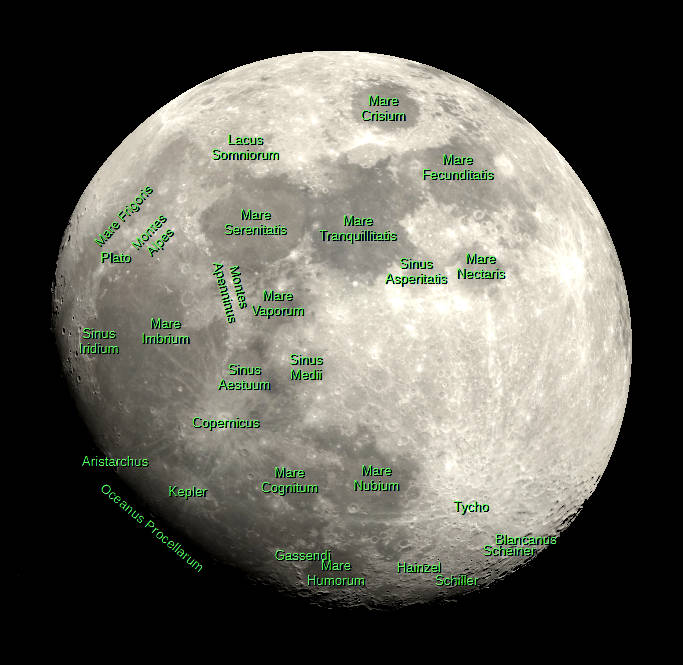
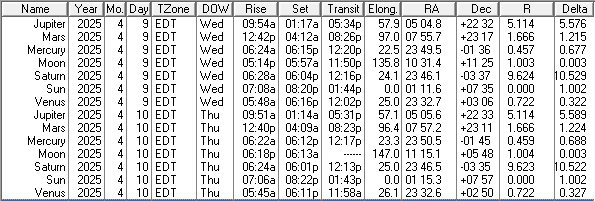
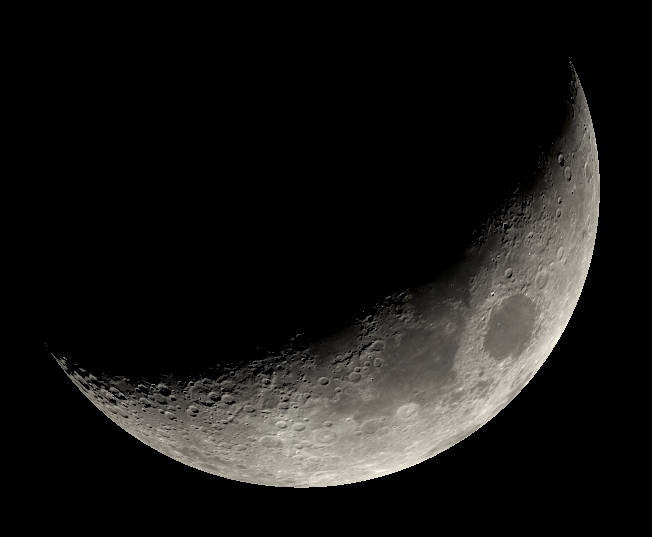
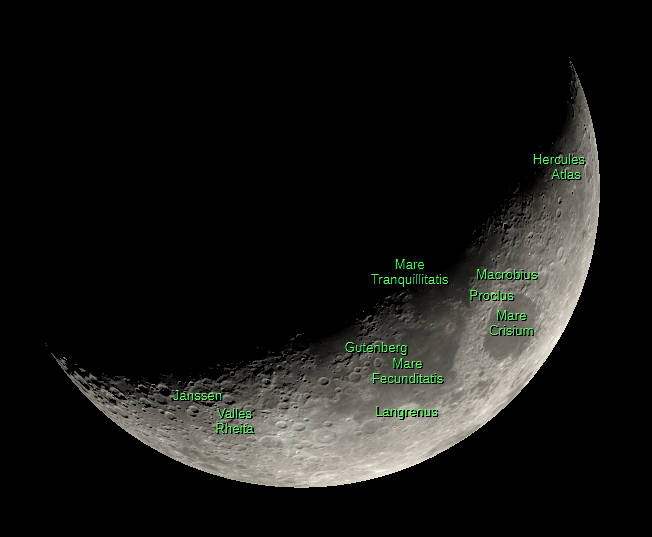
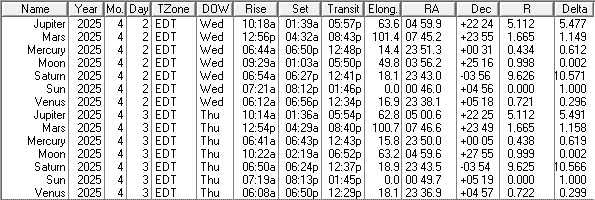
This is Bob Moler with Ephemeris for Wednesday, April 2nd. Today the Sun will be up for 12 hours and 50 minutes, setting at 8:12, and it will rise tomorrow at 7:19. The Moon, 2 days before first quarter, will set at 2:19 tomorrow morning.
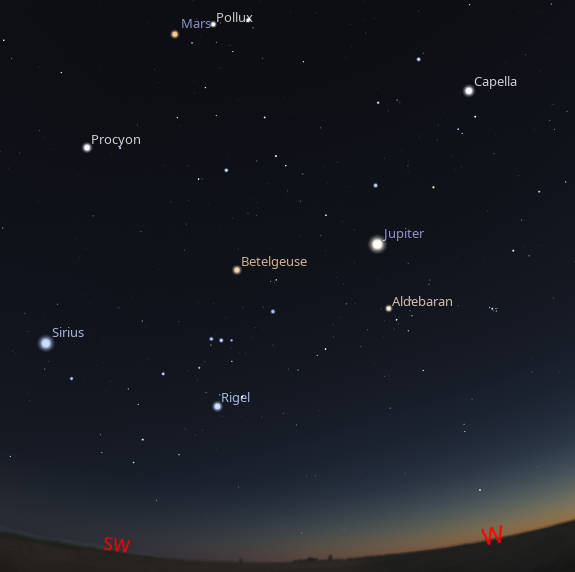
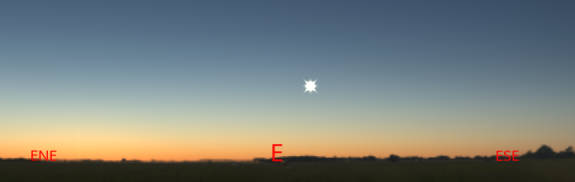
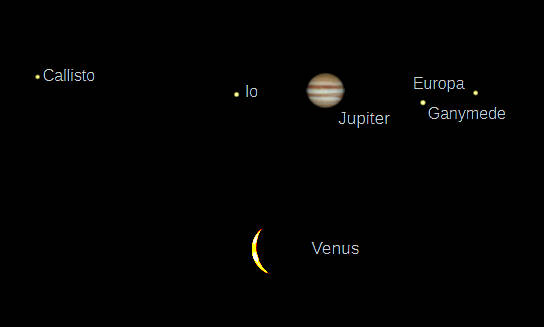
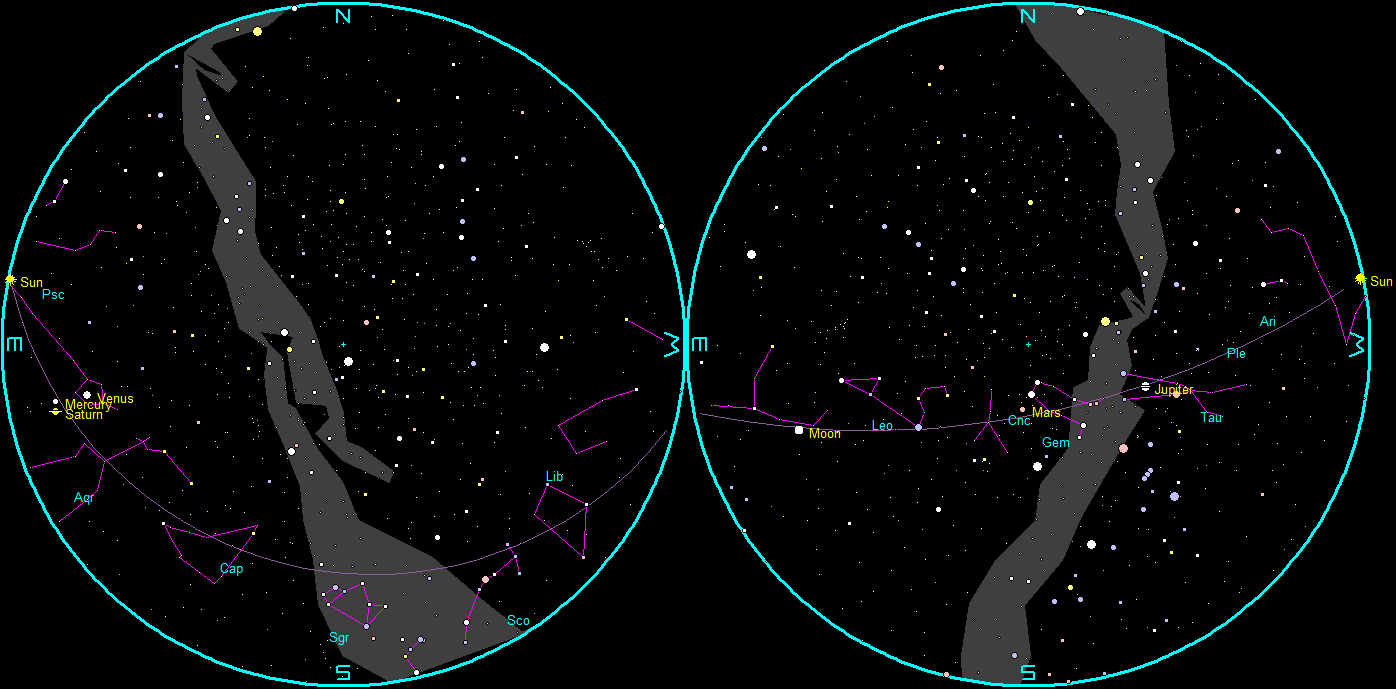
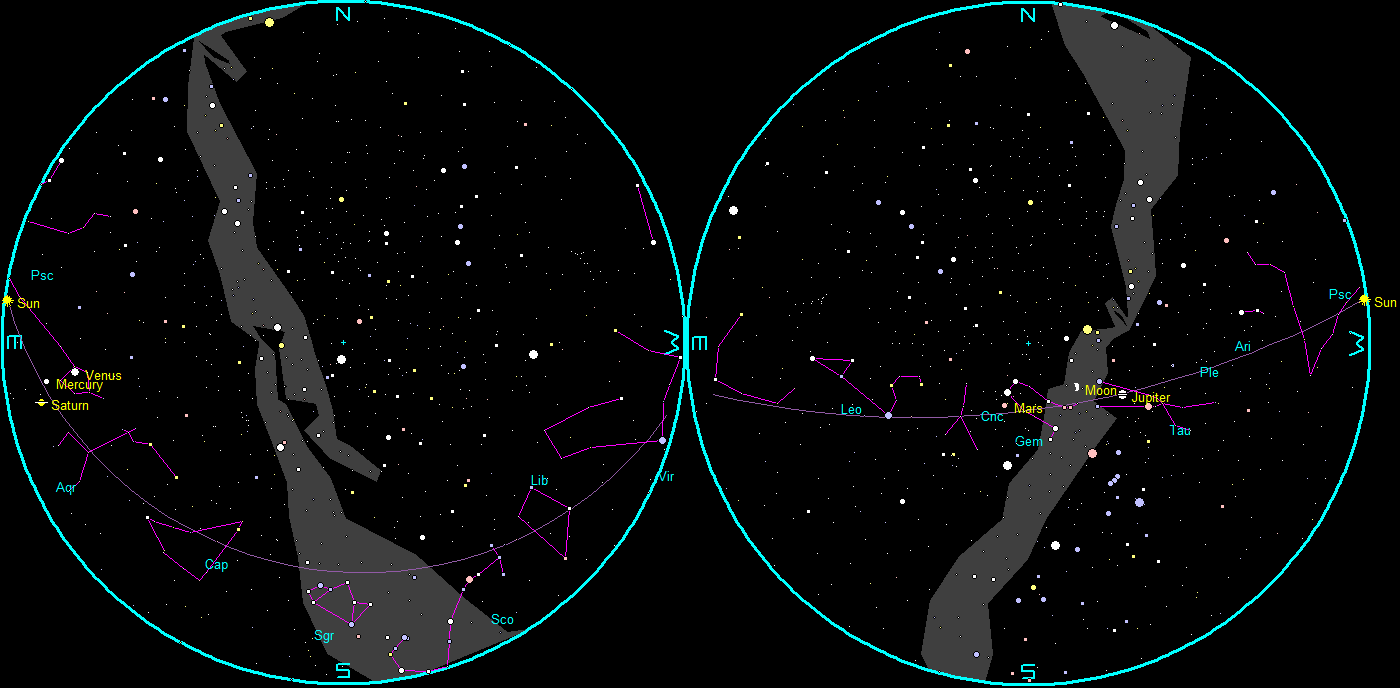
Let’s take our weekly look at the whereabouts of the naked-eye planets. At 9 PM this evening just two of the five naked eye planets will be out. Jupiter, now becomes the brightest evening planet, our substitute evening star if you will. It will be high in the west-southwest at 9 PM. Below it is the bright star Aldebaran and above it tonight will be the crescent Moon. To its lower left, the great constellation of Orion. The rapidly fading Mars, with its distinctive reddish hue, is high in the south, with the stars Castor and Pollux in Gemini above it. Venus may become visible in a few days low in the east starting as early as 6:30 AM. It will require a low eastern horizon, since it will be very low in the sky.
The astronomical event times given are for the Traverse City/Interlochen area of Michigan (EDT, UT – 4 hours). Times will be different for other locations.
Addendum

Ephemeris: 03/26/2025 – Where have all the naked-eye planets wandered off to?
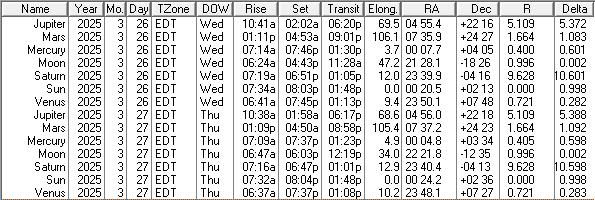
This is Bob Moler with Ephemeris for Wednesday, March 26th. Today the Sun will be up for 12 hours and 29 minutes, setting at 8:03, and it will rise tomorrow at 7:32. The Moon, 3 days before new, will rise at 6:47 tomorrow morning.
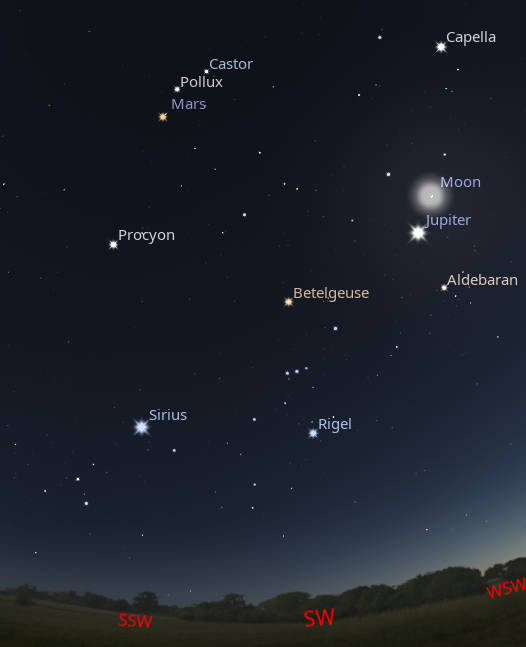
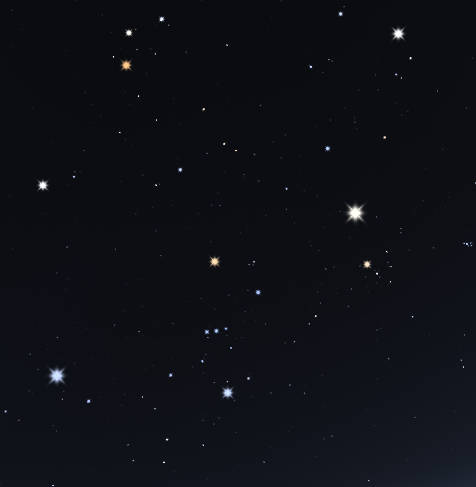
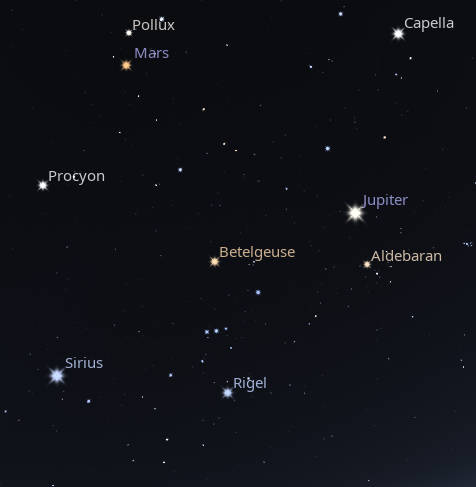
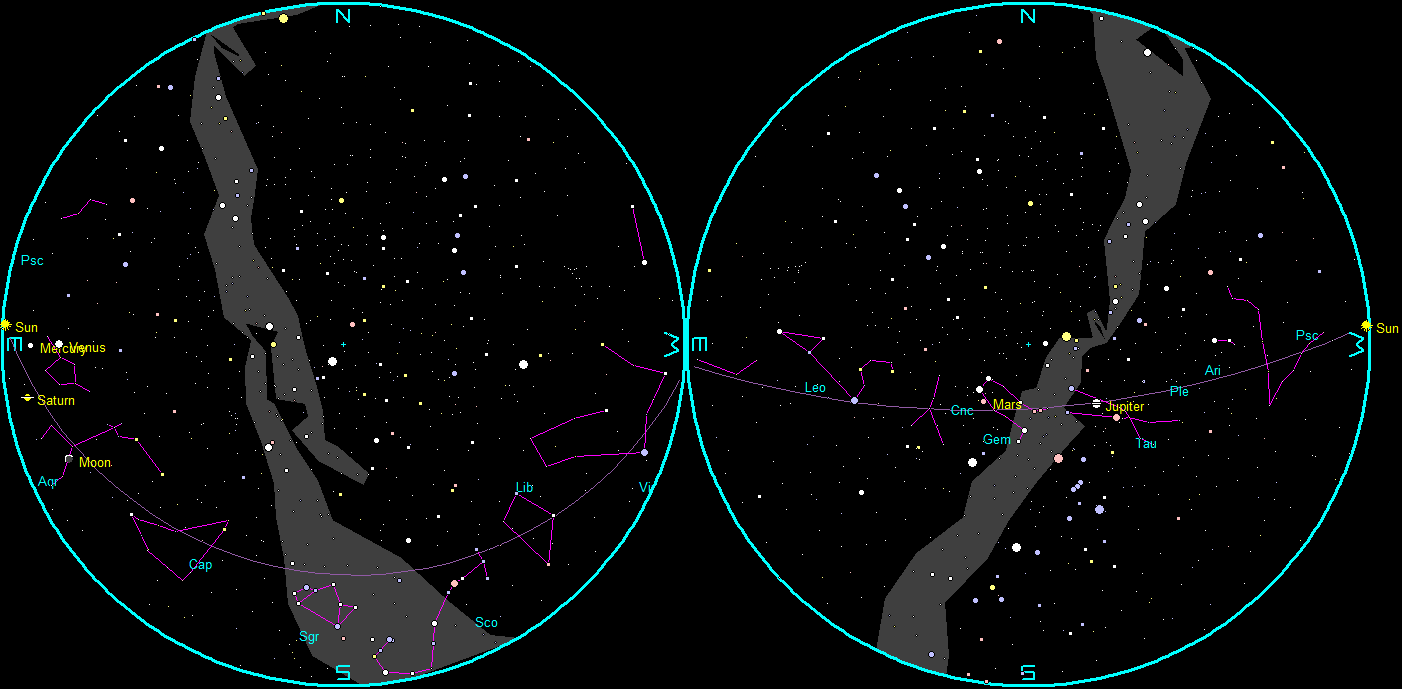
Let’s take our weekly look at the whereabouts of the naked-eye planets. At 9 PM this evening just two of the five naked eye planets will be out. Venus and Mercury have gone over to the dark… uh, morning side proceeded by Saturn, a month ago. Jupiter now becomes the brightest evening planet, our substitute evening star if you will. It will be high in the west-southwest at 9 PM. Below it is the bright star Aldebaran with the stars of the Hyades, the face of Taurus the bull, and farther to the right the star group the Pleiades or Seven Sisters. To its lower left, the great constellation of Orion. The rapidly fading Mars, with its distinctive reddish hue, is high in the south, with the stars Castor and Pollux in Gemini above it.
The astronomical event times given are for the Traverse City/Interlochen area of Michigan (EDT, UT – 4 hours). Times will be different for other locations.
Addendum

 Bob Moler's Ephemeris Blog