Archive
11/13/2013 – Ephemeris – Where are the bright planets and comets out this week?
Ephemeris for Wednesday, November 13th. The sun will rise at 7:36. It’ll be up for 9 hours and 39 minutes, setting at 5:16. The moon, 3 days past first quarter, will set at 4:26 tomorrow morning.
Let’s see where the bright planets are this week. Venus is brilliant in the west southwest after sunset. It will set at 7:49 p.m. The giant planet Jupiter will rise at 8:59 p.m. in the east northeast. It’s cruising against the stars of Gemini now. It will pass due south at 4:36 a.m. Mars will rise at 1:55 a.m. also in the east northeast. Reddish Mars is nearly two widths of a fist held at arm’s length below and left of the bright star Regulus in Leo now. Comet ISON is approaching the bright star Spica and will pass it Monday morning. ISON has been hanging around magnitude 8, about half as bright as current predictions, but probably visible in small telescopes. Comet ISON will rise about 4:16 a.m. and be visible until around 6:15 a.m.
Times are for the Traverse City/Interlochen area of Michigan. They may be different for your location.
Addendum
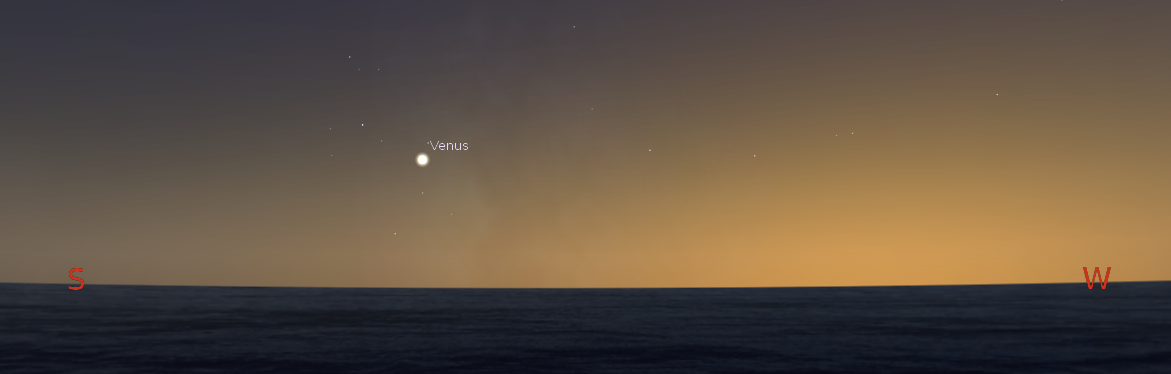
Venus low in the southwest at 6 p.m. on November 13, 2013. Created using Stellarium.
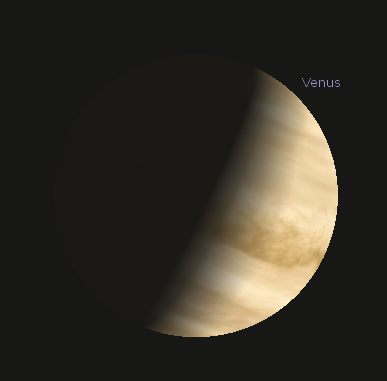
Venus through the telescope. (Note the bands are only visible in UV, not visible light). Created using Stellarium.
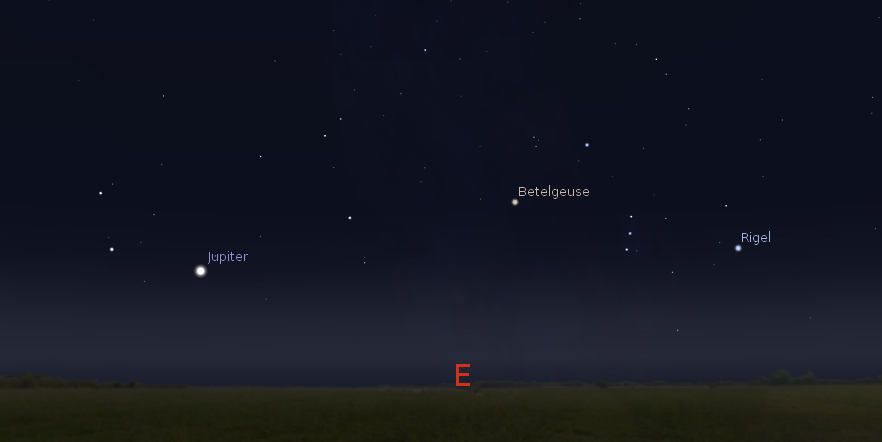
Jupiter rising at 10 p.m. with some of the winter stars. Created using Stellarium.
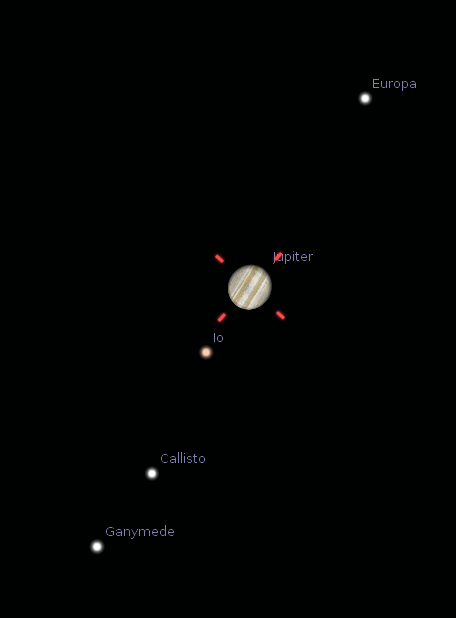
Telescopic Jupiter and its moons at 11 p.m. Created using Stellarium.
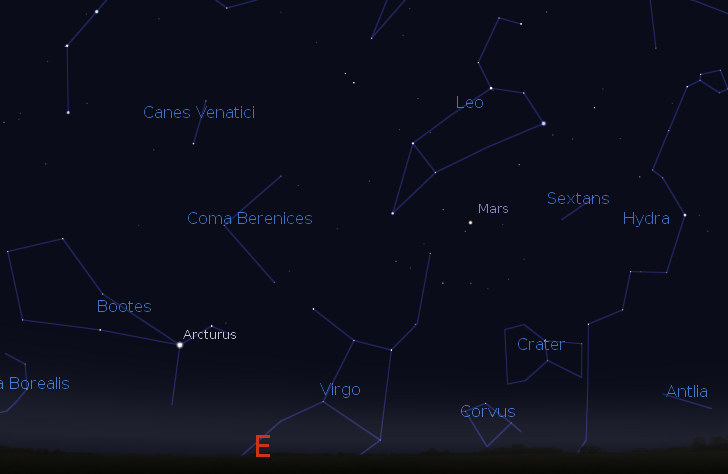
Mars and the spring constellations at 5:30 a.m. November 14, 2013. Created using Stellarium.
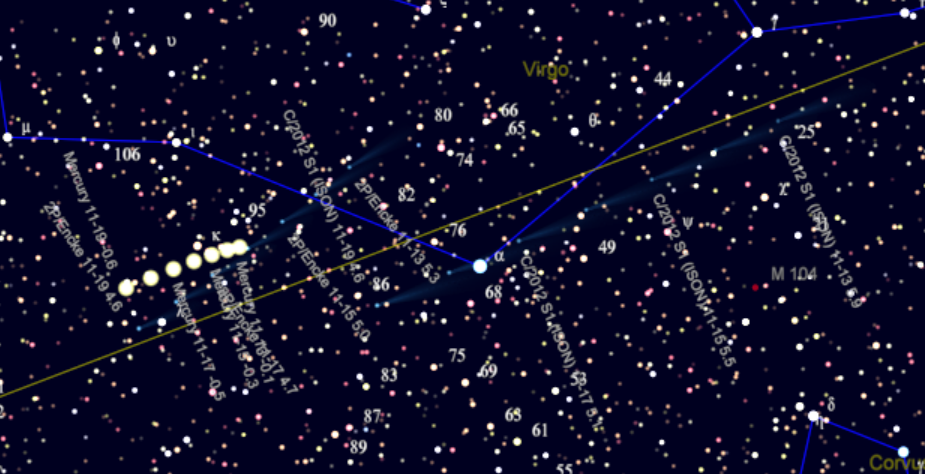
This is a busy chart with Comets ISON and Encke and Mercury for the period November 13th through 19th of November 2013 at 6 a.m. Created using Carts du Ciel.
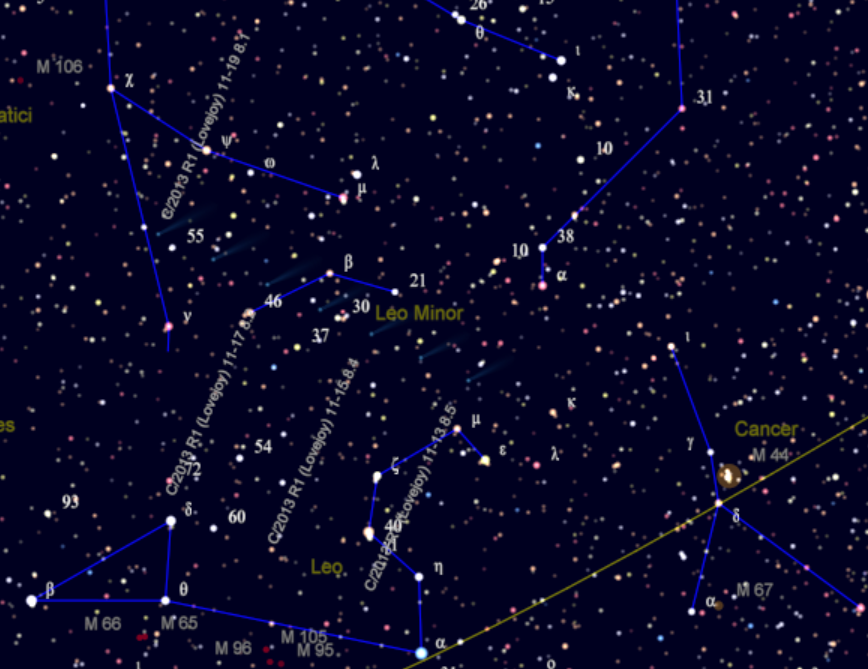
Comet Lovejoy and the constellation Leo for November 13th through 19th, 2013 at 6 a.m. Created using Cartes du Ciel.
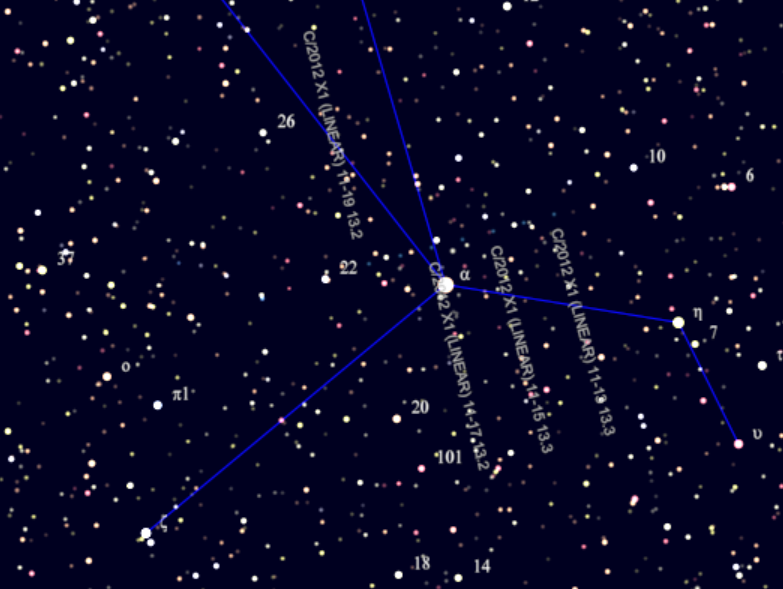
Comet LINEAR track for November 13th through 19th 2013. Created using Cartes du Ciel.
The following are the latest magnitudes (brightnesses) recorded for these comets:
Comet               Magnitude
C/2012 S1 (ISON)    8  (1 magnitude dimmer than predicted)
P2 (Encke)          8
C/2013 R1 (Lovejoy) 6  (2.5 magnitudes brighter than predicted)
C/2012 X1 (LINEAR)  8  (5 magnitudes* brighter than predicted)
* 5 magnitudes brighter = 100 times brighter!

Source is http://www.icq.eps.harvard.edu/CometMags.html.
Search page using the C/???? ?? instead of name.
Comets Lovejoy and LINEAR have multiple entries.
11/06/2013 – Ephemeris – Where’s the bright planets and comets this week?
Ephemeris for Wednesday, November 6th. The sun will rise at 7:27. It’ll be up for 9 hours and 57 minutes, setting at 5:24. The moon, 3 days past new, will set at 8:25 this evening.
Let’s check out the bright planets. Venus is brilliant in the west southwest after sunset. It will set at 7:46 p.m. The giant planet Jupiter will rise at 9:27 p.m. in the east northeast. It’s cruising against the stars of Gemini now. It will pass due south at 5:04 a.m. Mars will rise at 2:01 a.m. also in the east northeast. Reddish Mars is below and left of the slightly brighter star Regulus in Leo now. It’s in the east at 5 a.m. Comet ISON is nearly the distance below Mars that Mars is below Regulus and nearly in line with the two. My guesstimate for magnitude is about 8, about half as bright as current predictions, but probably visible in small telescopes. Comet ISON will rise about 3:30 a.m. and be visible before the sky begins to brighten around 6 a.m.
Times are for the Traverse City/Interlochen area of Michigan. They may be different for your location.
Addendum
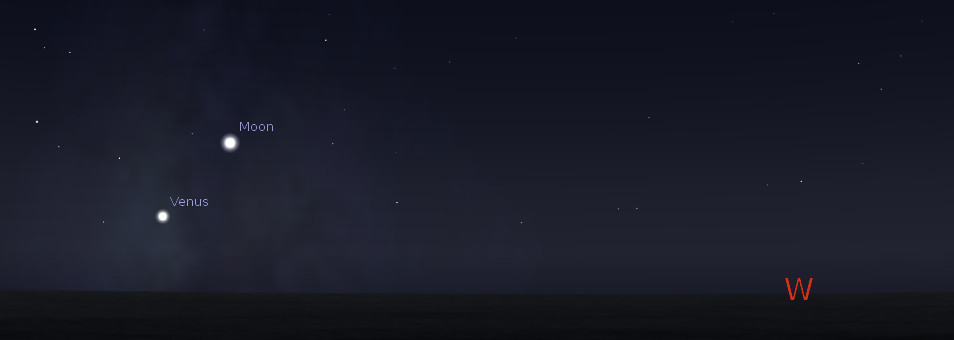
Venus and the Moon at 7 p.m. November 6, 2013. Created using Stellarium.
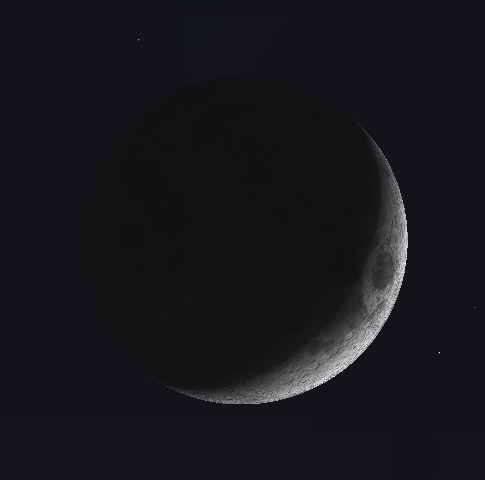
Closeup of the Moon at 7 p.m. November 6, 2013. Created using Stellarium.
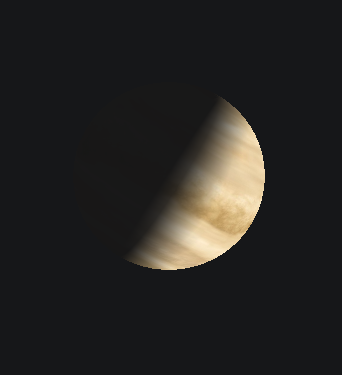
Telescopic view of Venus at 7 p.m. November 6, 2013. Created using Stellarium. The faint stripes are not seen in visible light.
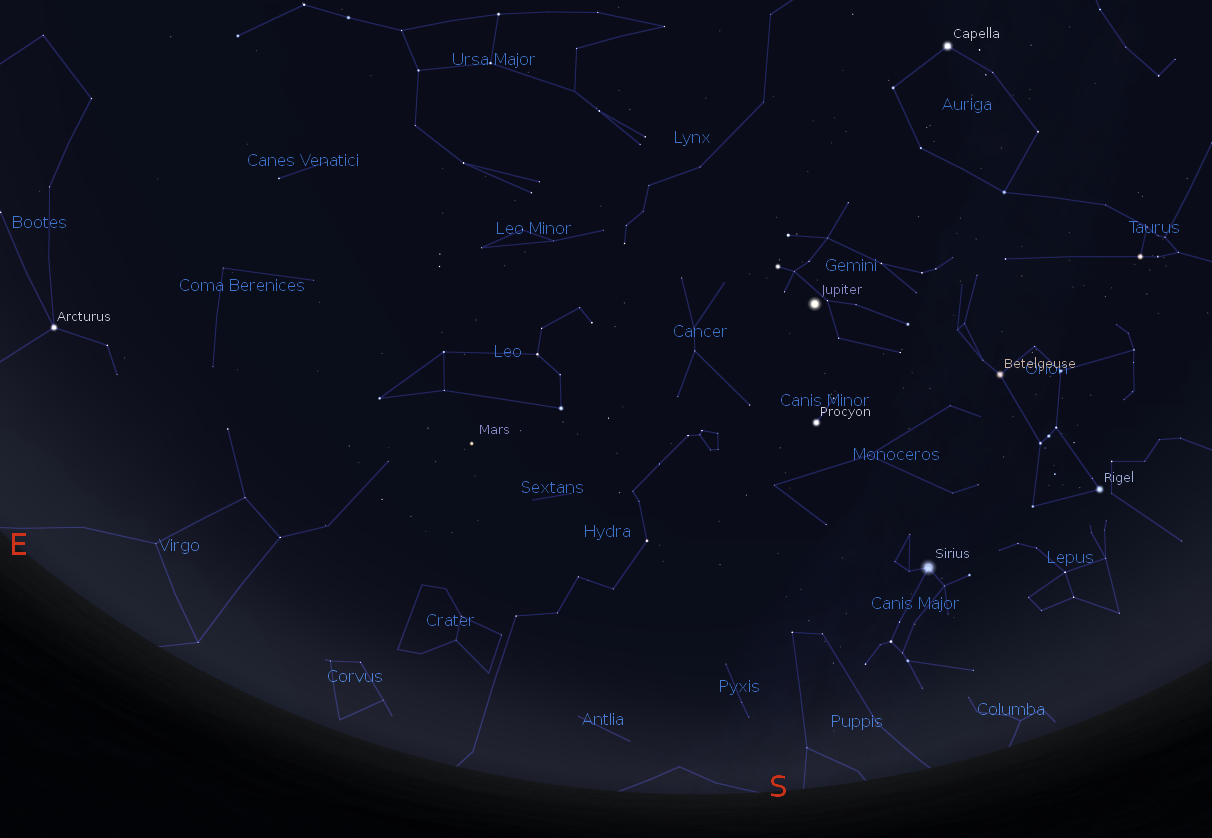
Jupiter and Mars with the winter and spring constellations at 6 a.m. November 7, 2013. Created using Stellarium.
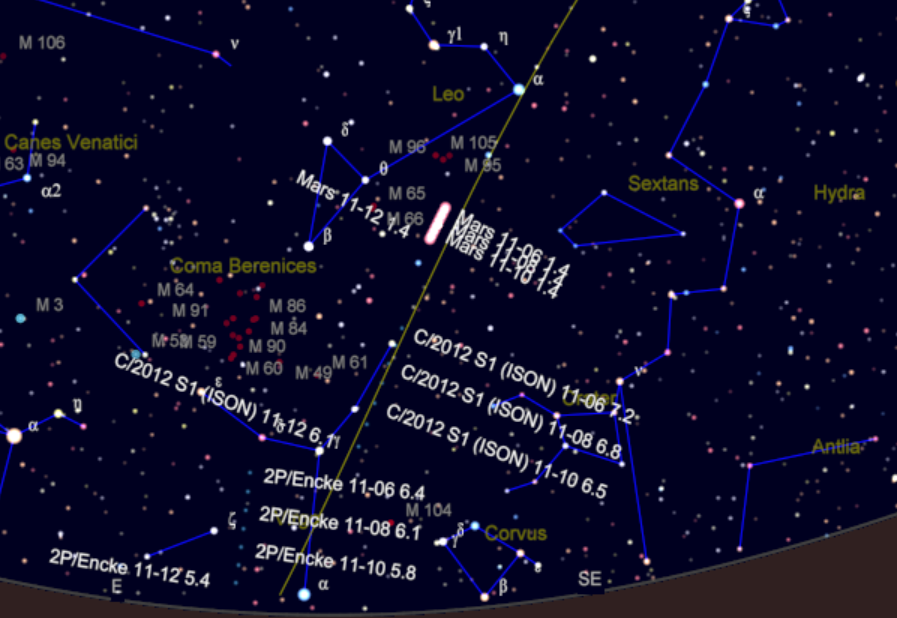
Comets ISON and Encke and Mars at 6 a.m. from November 5 to 12, 2013. Created with Cartes du Ciel.
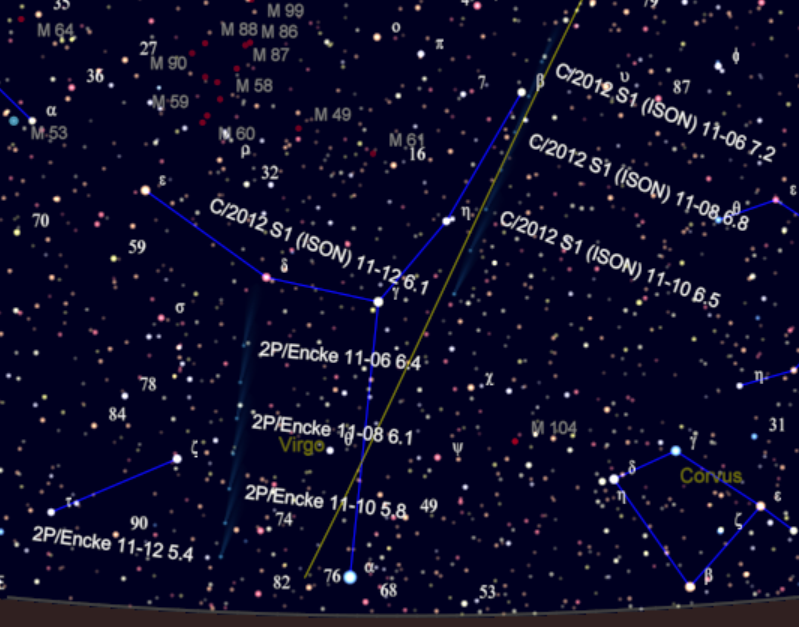
Closeup charts of comets ISON and Encke at 6 a.m. for November 6 through 12, 2013. Created using Cartes du Ciel.
10/30/2013 – Ephemeris – Where are the bright planets and Comet ISON now?
Ephemeris for Wednesday, October 30th. The sun will rise at 8:17. It’ll be up for 10 hours and 16 minutes, setting at 6:33. The moon, half way from last quarter to new, will rise at 5:01 tomorrow morning.
Let’s check out the bright planets. Venus is brilliant in the west southwest after sunset. Friday it will be at its greatest separation or elongation from the sun. Venus will set at 8:44 p.m. The giant planet Jupiter will rise at 10:55 p.m. in the east northeast. It’s cruising against the stars of Gemini now. It will pass due south at 6:31 a.m. Mars will rise at 3:08 a.m. also in the east northeast. Reddish Mars is below and left of the slightly brighter star Regulus in Leo now. It’s in the east at 6 a.m. Comet ISON is two-thirds the distance below Mars that Mars is below Regulus and nearly in line with the two. My guesstimate for magnitude is about 9, probably visible in telescopes. I haven’t seen it since earlier this month.
Times are for the Traverse City/Interlochen area of Michigan. They may be different for your location.
Addendum
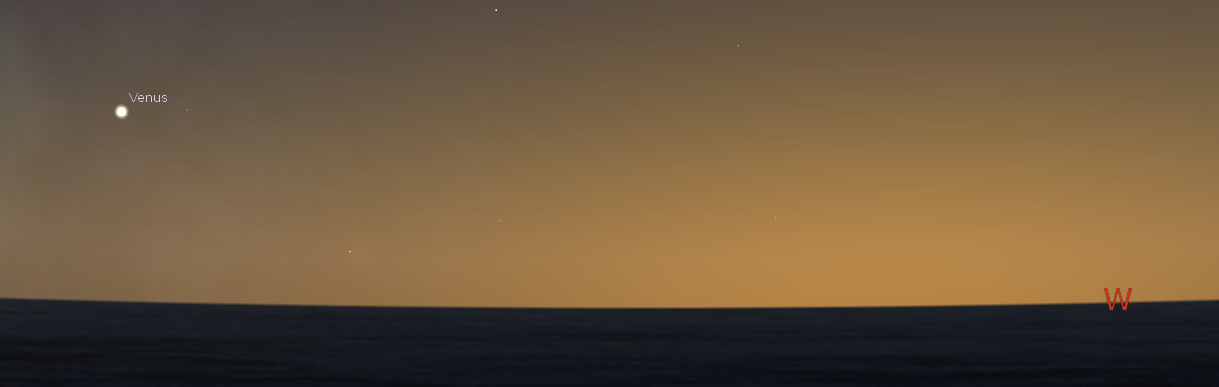
Venus in twilight at 7:15 p.m. on October 30, 2013. Created using Stellarium.
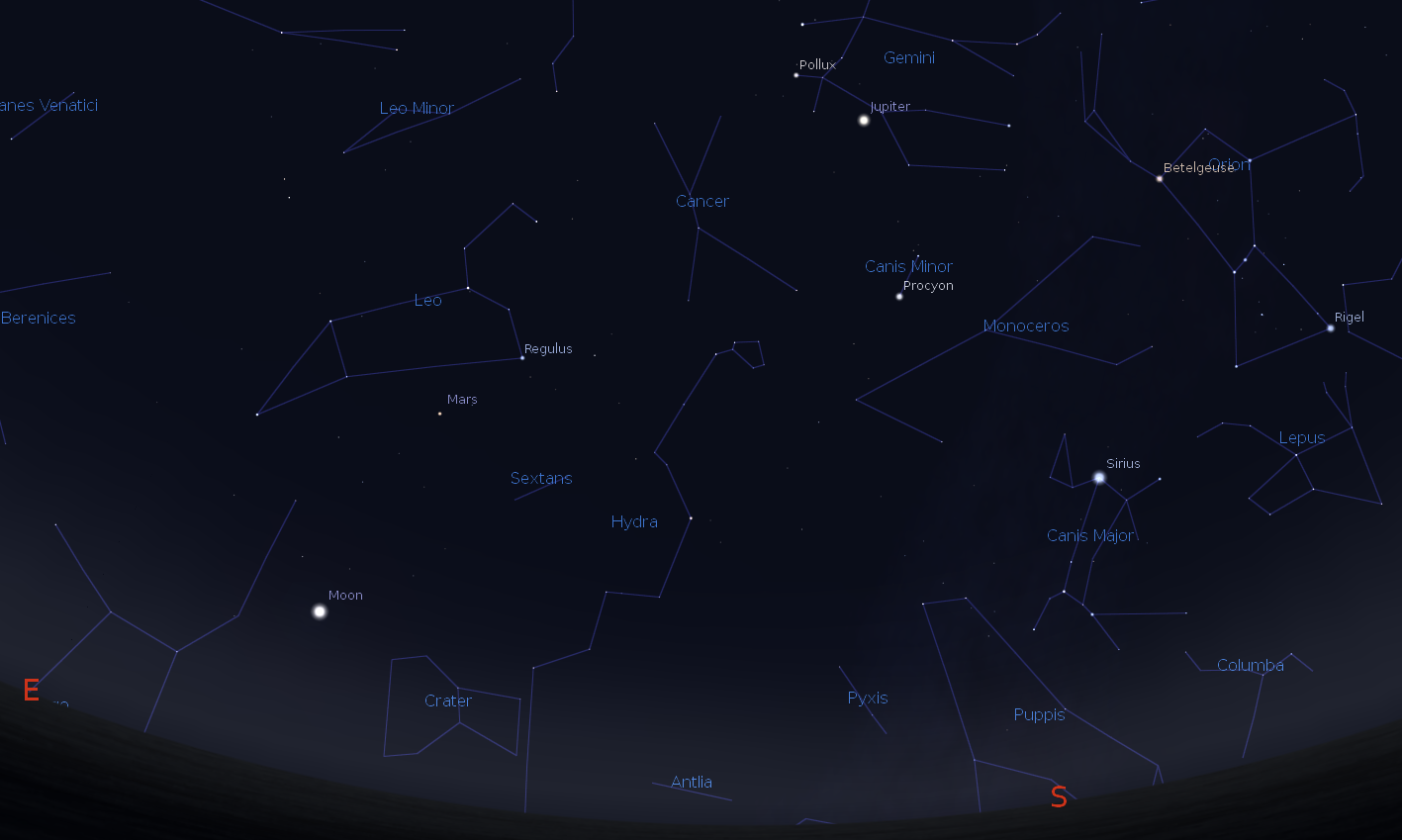
Jupiter and Mars at 6:30 a.m. October 31, 2013. Created using Stellarium.
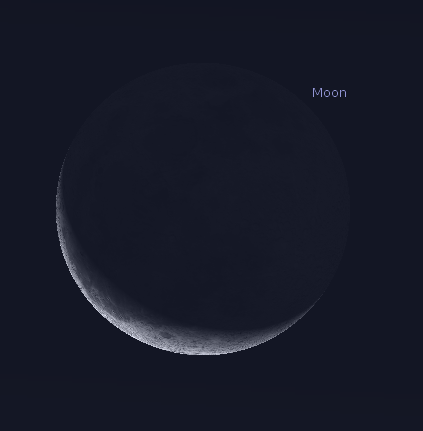
Closeup of the Moon at 6:30 a.m. on October 31, 2013. Created using Stellarium.
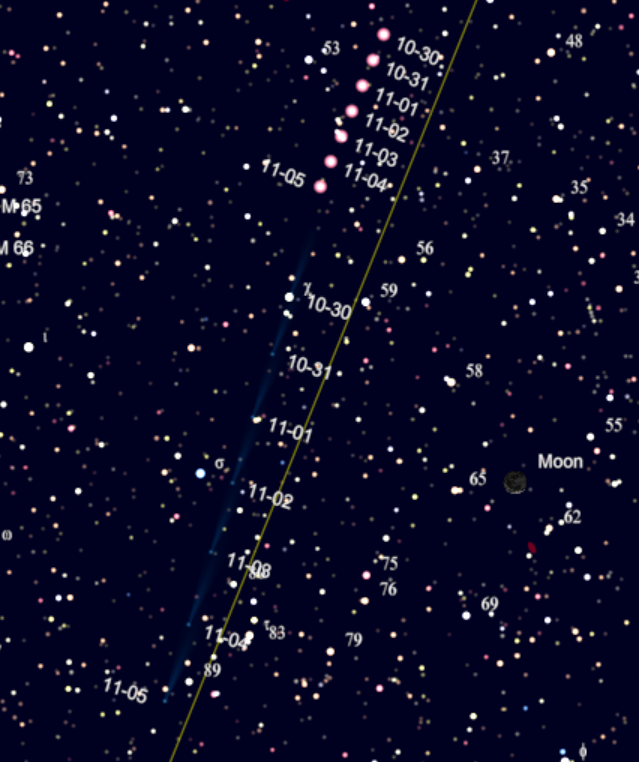
Comet ISON for October 30 to November 5, 2013. Created using Cartes du Ciel.
Click on the images to enlarge.
10/23/2013 – Ephemeris – Where are the bright planets and Comet ISON for this week?
Ephemeris for Wednesday, October 23rd. The sun will rise at 8:08. It’ll be up for 10 hours and 35 minutes, setting at 6:44. The moon, 3 days before last quarter, will rise at 10:08 this evening.
Time again to check out the bright planets. Venus is brilliant in the west southwest after sunset. It will set at 8:44 p.m. The next planetary action will have to wait till after 11 p.m. The giant planet Jupiter will rise at 11:21 p.m. in the east northeast. It’s cruising against the stars of Gemini now. It will pass due south at 6:57 a.m. Mars will rise at 3:14 a.m. also in the east northeast. Reddish Mars is below and left of the slightly brighter star Regulus in Leo now. It’s in the east at 6 a.m. Comet ISON is a bit less than half the distance below Mars that Mars is below Regulus and in line with the two. The bright moon will interfere with spotting it. My guesstimate for magnitude is about 9.5, probably visible in telescopes if the moon wasn’t out.
Times are for the Traverse City/Interlochen area of Michigan. They may be different for your location.
Addendum:
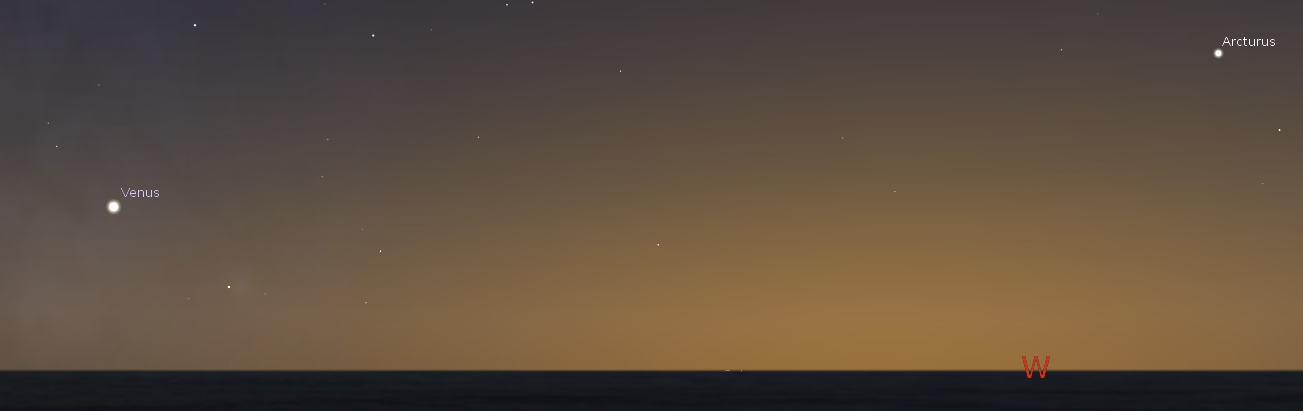
Venus low in the west southwest at 7:30 p.m. on October 23, 2013. Created using Stellarium
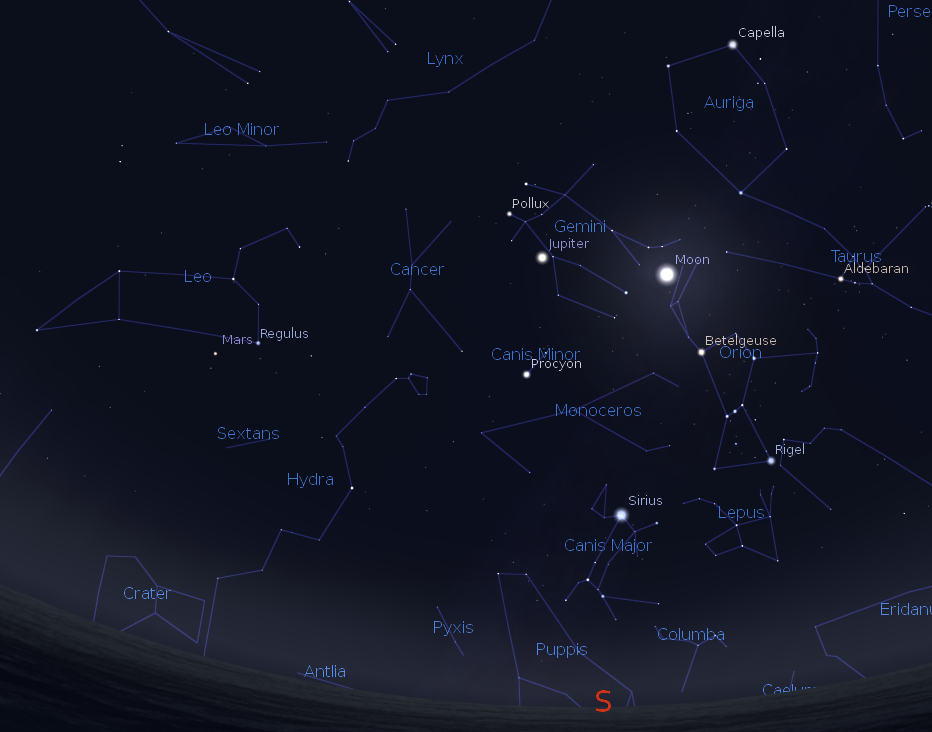
Jupiter, Mars and the Moon with the Winter and some spring constellations at 6:30 a.m. on October 24, 2013. Created using Stellarium.
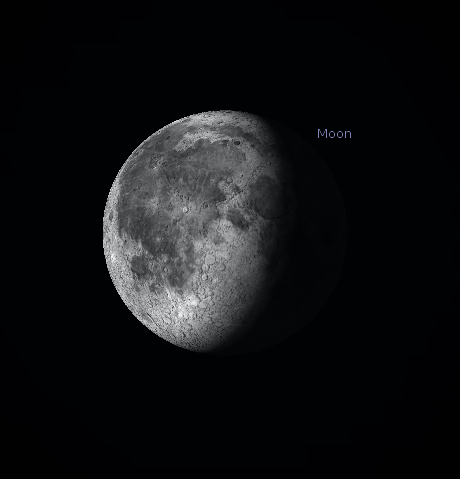
The moon’s phase the morning of October 24, 2013. Created using Stellarium.
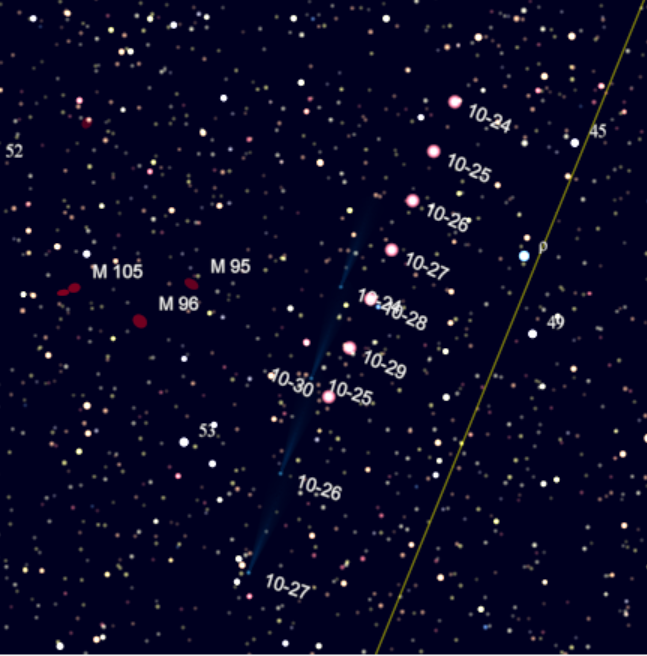
Mars and Comet ISON daily track from October 24th to the 30th, 2013. Be sure to match Mars dates with the comet dates. Created using Cartes du Ciel (Sky Charts).
10/16/2013 – Ephemeris – Where are the bright planets and Comet ISON this week
Ephemeris for Wednesday, October 16th. The sun will rise at 7:59. It’ll be up for 10 hours and 56 minutes, setting at 6:55. The moon, 2 days before full, will set at 6:30 tomorrow morning.
Time again to check out the bright planets. Venus is brilliant in the west southwest after sunset it will set at 8:46 p.m.. We are losing Saturn in the sun’s glare for a few months. The rest of the planetary action will be in the morning sky, though the giant planet Jupiter will rise before midnight at 11:47 a.m. in the east northeast. It’s cruising against the stars of Gemini now. By 6 a.m it will be high in the southeast, the brightest object in that direction. Mars will rise at 3:19 a.m. also in the east northeast. It’s near Leo’s brightest star Regulus at the bottom of the constellation’s backward question mark. It’s in the east at 6 a.m. Comet ISON is about two moon width’s to the upper left of Mars, but the bright moon will interfere with spotting it.
Times are for the Traverse City/Interlochen area of Michigan. They may be different for your location.
Addendum
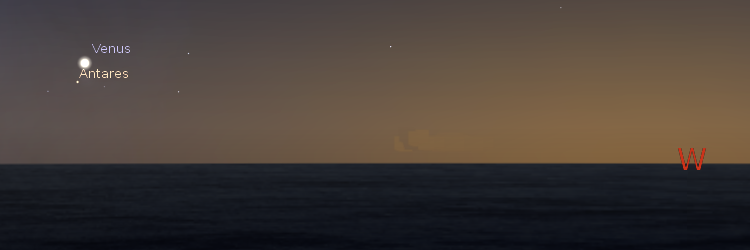
Venus low in the west southwest at 7:45 p.m. on October 16, 2013. Created using Stellarium.
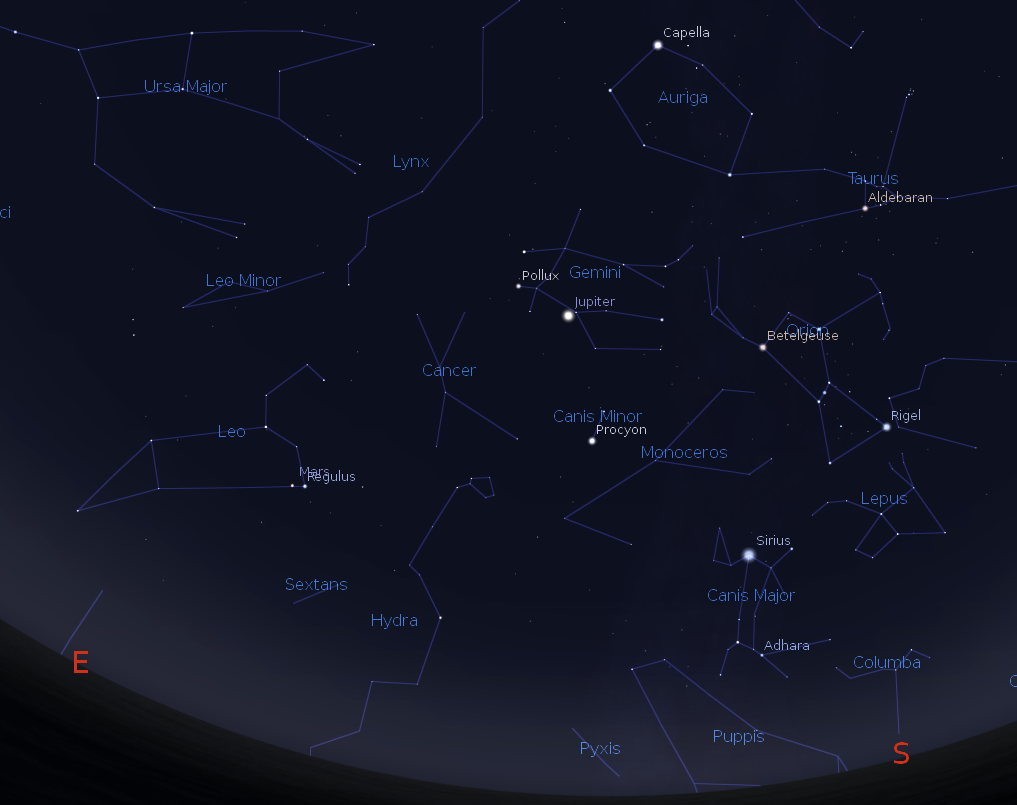
Jupiter and Mars with the winter stars and constellations at 6 a.m., October 17, 2013. Created using Stellarium.
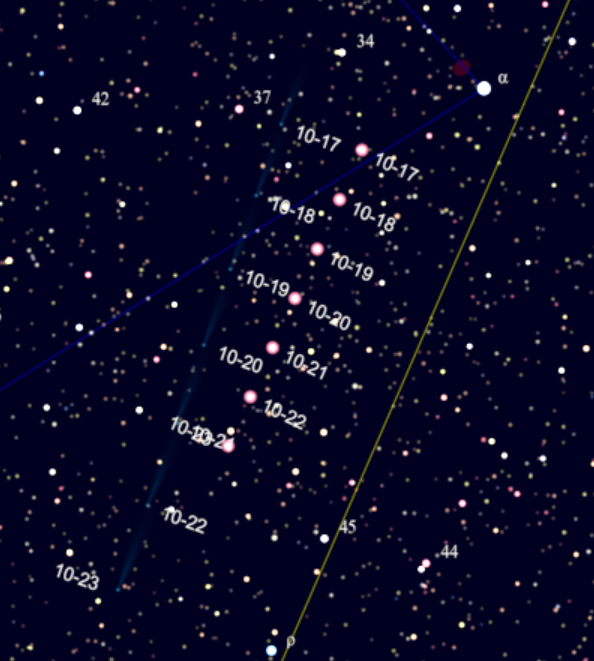
Mars and Comet ISON at 6 a.m. from October 17 to October 23, 2013. Star magnitude limit is 12. Created using Sky Charts (Cartes du Ciel)
10/15/2013 – Ephemeris – Correction to last Thursday’s Comet ISON program
Ephemeris for Tuesday, October 15th. The sun will rise at 7:58. It’ll be up for 10 hours and 59 minutes, setting at 6:57. The moon, 3 days before full, will set at 5:21 tomorrow morning.
Last week I went out to verify the statement that Comet ISON was visible in binoculars that I talked about last Thursday. That turned out to be incorrect. After two failed attempts last Tuesday and Wednesday mornings from my back yard. I had to find a darker location to out flank Traverse City and try to spot the comet with my 11 inch telescope. The comet turned out to be a faint smudge in the indicated spot. The sky wasn’t even dark in that direction, almost due east due to zodiacal light, visible on autumn mornings due to dust in the inner solar system. Zodiacal light is usually hard to spot until it becomes a nuisance. Advanced amateurs have indeed photographed it, tail and all, but visually the comet isn’t much at this stage.
Times are for the Traverse City/Interlochen area of Michigan. They may be different for your location.
Addendum
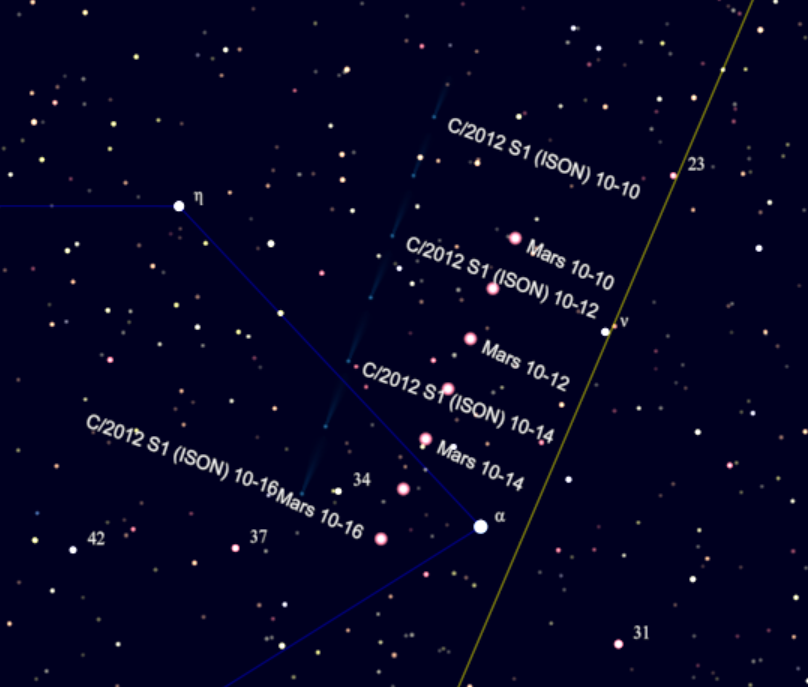
Comet ISON and Mars at 6 a.m. for 7 days starting October 10, 2013. Created using SkyCharts (Cartes du Ciel).
I’ll have a new weekly chart tomorrow. Mars and Comet ISON are sliding past Regulus now. See spaceweather.com for images of Comet ISON. By the end of this week the Moon’s light will interfere.
10/09/2013 – Ephemeris – The Bright planets and Comet ISON for this week
Ephemeris for Wednesday, October 9th. The sun will rise at 7:50. It’ll be up for 11 hours and 17 minutes, setting at 7:08. The moon, 2 days before first quarter, will set at 10:32 this evening.
Time again to check out the bright planets. Mercury has an unfavorable greatest elongation from the sun today. It’s too close to the horizon for all but the best observers to spot. Almost the same can be said of Saturn, right of and a bit below Venus tonight. Binoculars may be needed to it. Saturn will set at 8:15 while Venus will set at 8:50 p.m.. We are losing Saturn in the sun’s glare for a few months. The rest of the planetary action will be in the morning sky. The giant planet Jupiter will rise at 12:12 a.m. in the east northeast. It’s cruising against the stars of Gemini now. By 6 a.m it will be high in the southeast, the brightest object in that direction. Mars will rise at 3:25 a.m. also in the east northeast. It’s nearing Leo.
Times are for the Traverse City/Interlochen area of Michigan. They may be different for your location.
Addendum
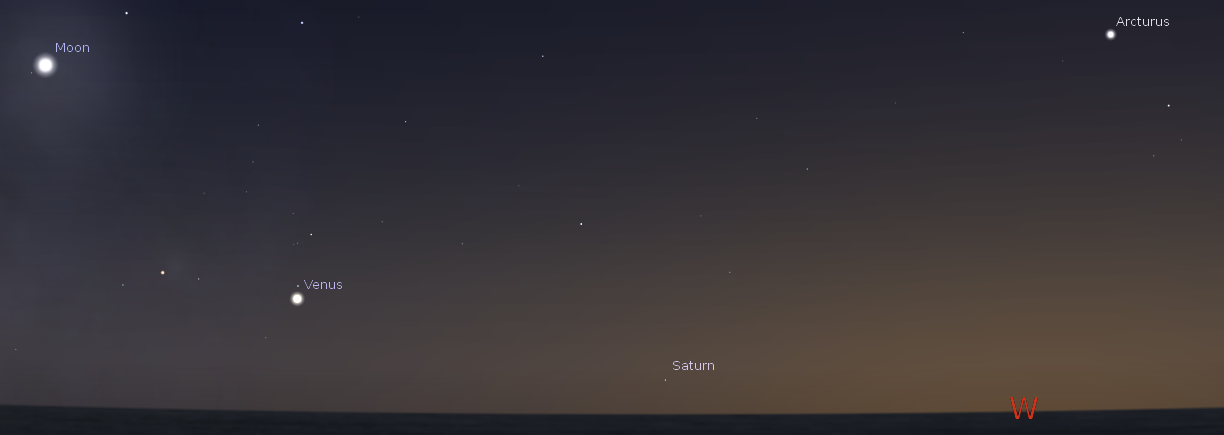
Venus, Saturn and the Moon in the west southwest at 8 p.m. October 9, 2013. Created using Stellarium.
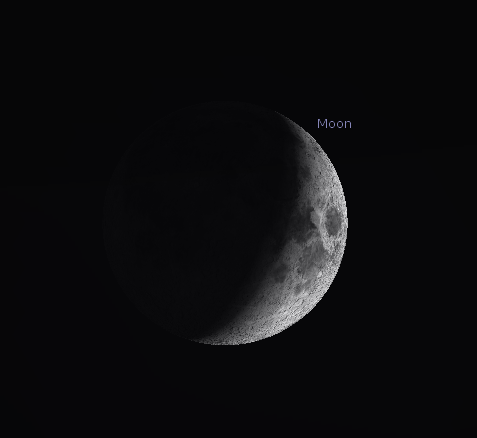
Closeup of the moon. Created using Stellarium.
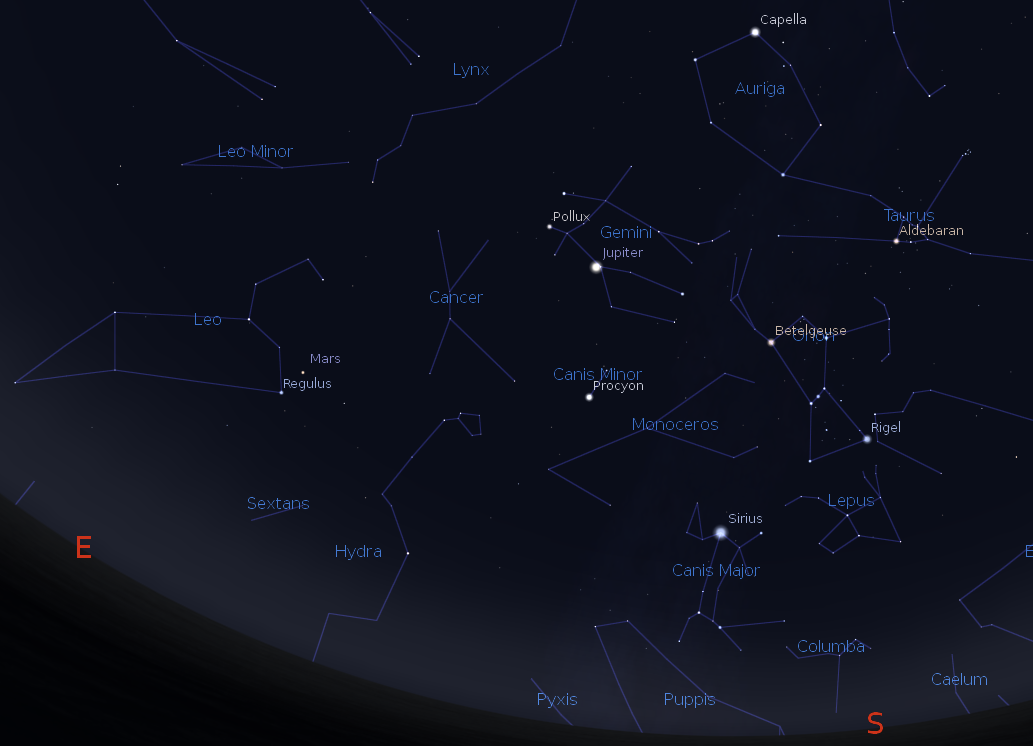
Jupiter and Mars with the winter stars and constellations at 6 a.m., October 10, 2013. Created using Stellarium.
Comet ISON and Mars at 6 a.m. for 7 days starting October 10, 2013. Created using SkyCharts (Cartes du Ciel).
Note that the comet is somewhat dimmer than predicted and barely visible in binoculars. The tail may not be visible except in photographs. I can’t really say since I haven’t seen it yet.
10/02/2013 – Ephemeris – Where are the bright planets and one dim comet?
Ephemeris for Wednesday, October 2nd. The sun will rise at 7:41. It’ll be up for 11 hours and 38 minutes, setting at 7:20. The moon, 2 days before new, will rise at 6:14 tomorrow morning.
Time again to check out the bright planets. Saturn and Venus will be at the same height above the west southwestern horizon. Dimmer Saturn will be to the right of Venus by one and a half widths of a fist held at arm’s length. Binoculars may be needed to Saturn. Saturn will set at 8:40, while Venus will set at 8:56 p.m.. We are losing Saturn in the sun’s glare for a few months. The rest of the planetary action will be in the morning sky. The giant planet Jupiter will rise at 12:36 a.m. in the east northeast. It’s cruising against the stars of Gemini this viewing season. By 6 a.m it will be high in the southeast, the brightest object in that direction. Mars will rise at 3:30 a.m. also in the east northeast. It’s in the east at 6 a.m.
Times are for the Traverse City/Interlochen area of Michigan. They may be different for your location.
Addendum
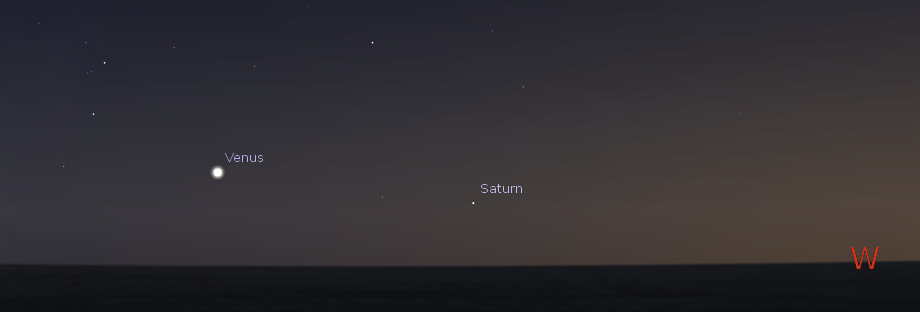
Venus and Saturn low on the west southwestern horizon along with Saturn at 8:15 p.m. on October 2, 2013. Created using Stellarium.
I was out at the Lanphier Observatory of the Leelanau School in Glen Arbor Michigan Monday evening about this time, to show Venus to the audience for Andrea Wulf’s talk about some of her book Chasing Venus. If the book is like her talk, it should be fabulous. It’s about the 18th century expeditions of many nation to view a pair of transits of Venus in order to determine the size of the solar system. Anyway the sky was like this with Venus setting over the low Sleeping Bear Dunes across Sleeping Bear Bay.
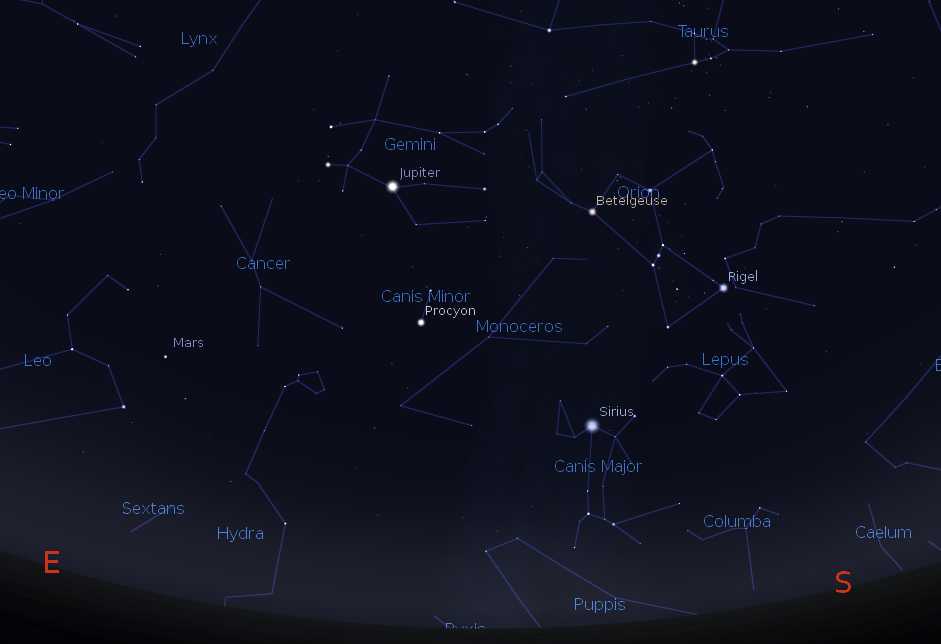
Jupiter, Mars with the winter stars and constellations at 6 a.m. on October 3, 2012. Created using Stellarium.
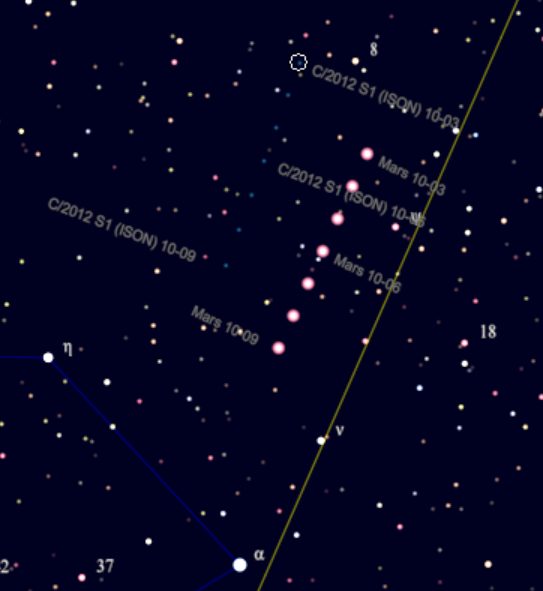
The tracks of Mars and Comet ISON at 6 a.m. from October 3 to 9, 2013. The comet may still be too faint to view in binoculars. Chart created using Cartes duCiel.
The yellow line is the ecliptic. The blue line is the constellations lines for Leo. Comet ISON positions are blue dots. It’s too far away for the software to show a tail.
09/25/2013 – Ephemeris – Where are the bright planets this week?
Ephemeris for Wednesday, September 25th. The sun will rise at 7:33. It’ll be up for 12 hours, setting at 7:33. The moon, 1 day before last quarter, will rise at 11:26 this evening.
Time again to check out the bright planets. Saturn and Venus will be at the same height above the west southwestern horizon. Dimmer Saturn will be to the right of Venus by nearly the width of a fist held at arm’s length. Binoculars may be needed to spot it. Venus will set at 9:04 p.m., while Saturn will set at 9:06. We will soon lose Saturn in the sun’s glare for a few months. The rest of the planetary action will be in the morning sky. The giant planet Jupiter will rise at 12:59 a.m. in the east northeast. It’s cruising against the stars of Gemini this viewing season. By 6 a.m it will be high in the east southeast, the brightest object in that direction. Mars will rise at 3:34 a.m. also in the east northeast. It’s in the east at 6 a.m.
Times are for the Traverse City/Interlochen area of Michigan. They may be different for your location.
Addendum
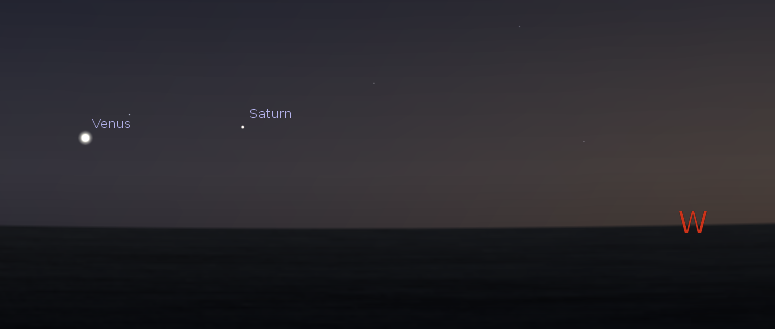
Venus and Saturn at 8:30 p.m. on September 25, 2013. Created using Stellarium.
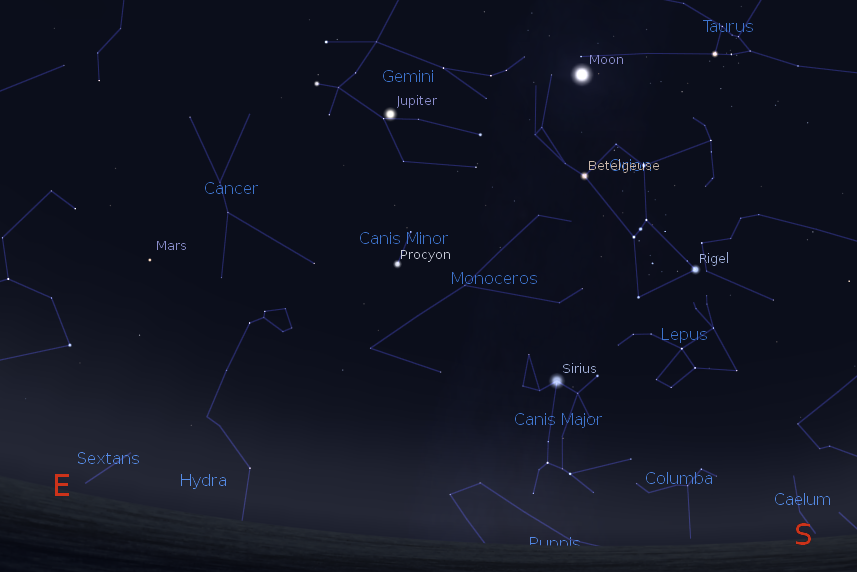
Jupiter and Mars against the winter constellations at 6 a.m., September 26, 2013. Created using Stellarium.
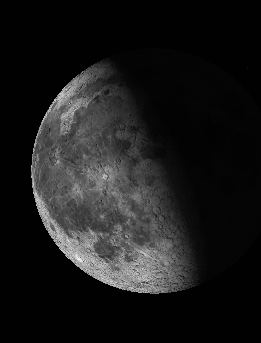
Detail of the Moon at 6 a,m. on September 26, 2013. Created using Stellarium.
09/18/2013 – Ephemeris – Saturn and Venus appear closest tonight and the rest of the bright planets
Ephemeris for Wednesday, September 18th. The sun will rise at 7:25. It’ll be up for 12 hours and 21 minutes, setting at 7:46. The moon, 1 day before full, will set at 7:38 tomorrow morning.
Time again to check out the bright planets. Saturn and Venus will be closest together tonight, low in the southwest after sunset. Dimmer Saturn will be on top. Binoculars may be needed to spot it. Venus will set at 9:13 p.m., while Saturn will set at 9:32. We will soon lose Saturn in the sun’s glare for a few months. The rest of the planetary action will be in the morning sky. The giant planet Jupiter will rise at 1:22 a.m. in the east northeast. It’s cruising against the stars of Gemini this viewing season. By 6 a.m it will be high in the east southeast, the brightest object in that direction. Mars will rise at 3:39 a.m. also in then east northeast. It is a bright reddish second magnitude star passing through Cancer now.
Times are for the Traverse City/Interlochen area of Michigan. They may be different for your location.
Addendum
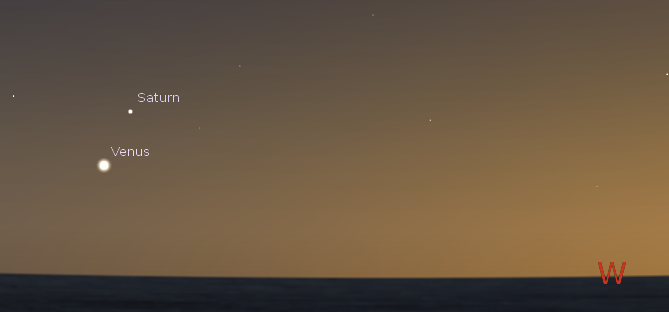
Venus and Saturn at 8:30 p.m. on September 18, 2013. Created using Stellarium.
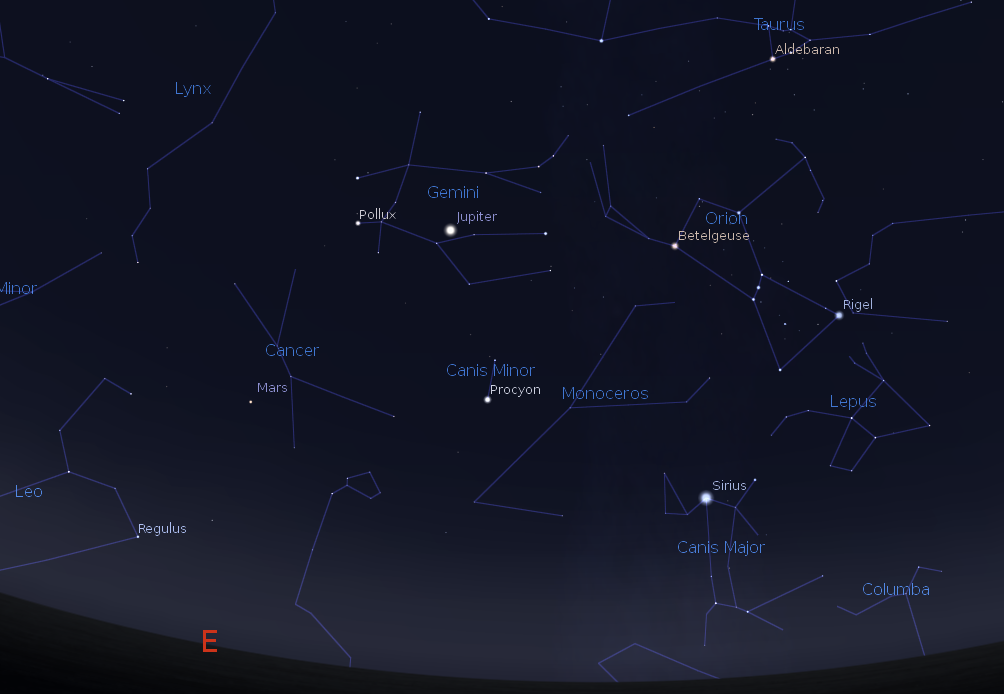
Jupiter and Mars against the constellations of Winter at 6 a.m. on September 18, 2013
 Bob Moler's Ephemeris Blog