Archive
09/11/2013 – Ephemeris – Where are all the bright planets this week?
Ephemeris for Wednesday, September 11th. The sun will rise at 7:16. It’ll be up for 12 hours and 43 minutes, setting at 8:00. The moon, 1 day before first quarter, will set at 11:39 this evening.
Lets see what bright planets are out this week. Venus is now brilliant low in the west southwestern sky in evening twilight. It will set at 9:24 p.m. Saturn is about 8 degrees above and to the left of Venus. That’s a bit less that the width of a fist held at arm’s length. It has a date with Venus on the 18th. Saturn will set at 9:58 p.m. After midnight Jupiter will rise at 1:45 a.m. in the east northeast. Jupiter is seen among the stars of Gemini this year. The red planet Mars will rise at 3:43 a.m. Currently it is moving rapidly eastward through Cancer. At about 6 a.m. Jupiter will be the brightest star-like object in the east, with Mars visible below and left by two and a half widths of your fist held at arm’s length.
Times are for the Traverse City/Interlochen area of Michigan. They may be different for your location.
Addendum
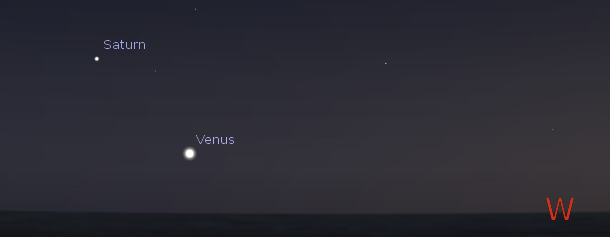
Saturn and Venus at 9 p.m. September 11, 2013. Created using Stellarium.
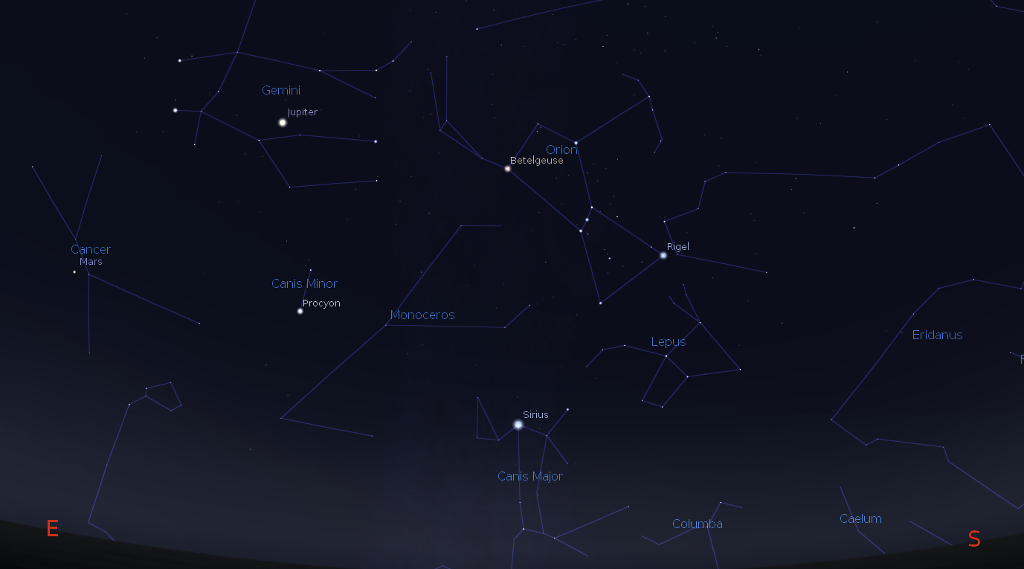
Jupiter and Mars with a preview of the winter constellations at 6 a.m. September 12, 2013. Created using Stellarium.
09/04/2013 – Ephemeris – Where are the bright planets this week?
Ephemeris for Wednesday, September 4th. The sun will rise at 7:08. It’ll be up for 13 hours and 4 minutes, setting at 8:13. The moon, 1 day before new, will rise at 7:23 tomorrow morning.
Lets check out the planets visible now. Venus is now brilliant low in the western sky in evening twilight. Tonight the bright blue star Spica will appear below and left of Venus, It may take binoculars to spot the much dimmer star in twilight. Venus will set at 9:35 p.m. Holding forth in the west southwest will be Saturn this evening. It has a date with Venus on the 18th. Saturn will set at 10:24 p.m. In the morning sky Jupiter will rise at 2:07 in the east northeast. Starting mid October it will rise before midnight. The red planet Mars will rise at 3:48 a.m. At about 6 a.m. Jupiter will be the brightest star-like object in the east, with Mars visible below and left by two widths of your fist held at arm’s length.
Times are for the Traverse City/Interlochen area of Michigan. They may be different for your location.
Addendum
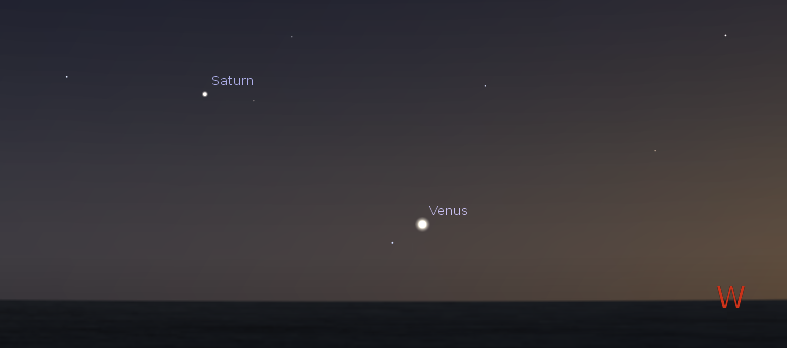
Venus and Saturn low in the west southwest at 9 p.m. on September 4, 2013. Created using Stellarium.
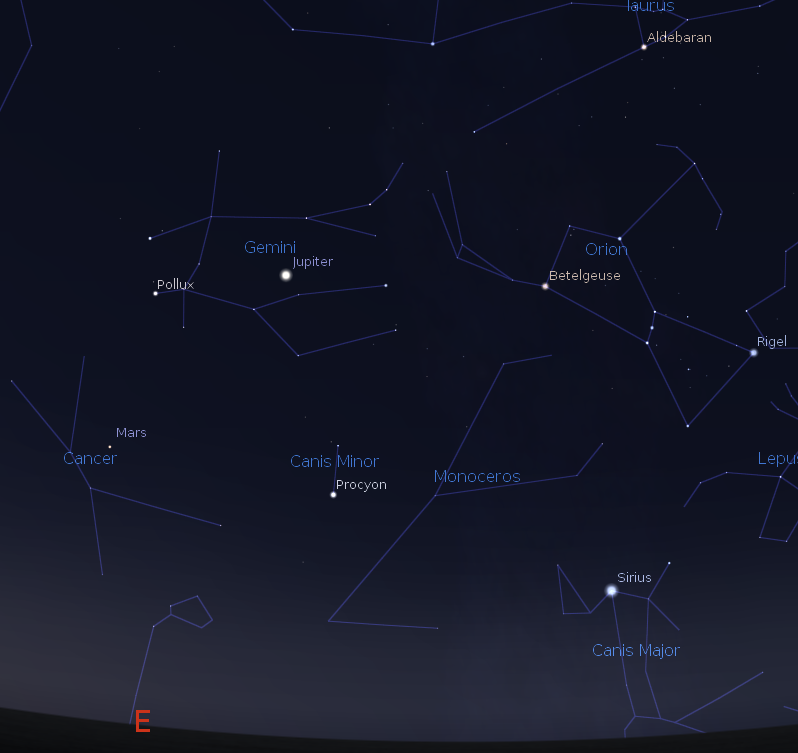
Jupiter, Mars and a preview of the winter constellations at 6n a.m. on September 5, 2013.
08/28/2013 – Ephemeris – Where are the bright planets this week?
Ephemeris for Wednesday, August 28th. The sun will rise at 7:00. It’ll be up for 13 hours and 25 minutes, setting at 8:25. The moon, at last quarter today, will rise at 12:45 tomorrow morning.
Lets check out the planets visible now. Venus is now brilliant low in the western sky in evening twilight, It will set at 9:47 p.m. Holding forth in the west southwest will be Saturn this evening, the brightest star-like object in the constellation Virgo appearing yellowish. Venus is gaining on it and will cross paths on September 18th. Saturn will set at 10:50 p.m. In the morning sky before twilight starts Jupiter will rise at 2:29 in the east northeast, with Mars rising later at 3:52. At about 5 a.m. Jupiter will be the brightest star-like object in the east northeast, with Mars barely visible below and left by a bit less than two widths of your fist held at arm’s length. Castor and Pollux of Gemini point down to it.
Times are for the Traverse City/Interlochen area of Michigan. They may be different for your location.
Addendum
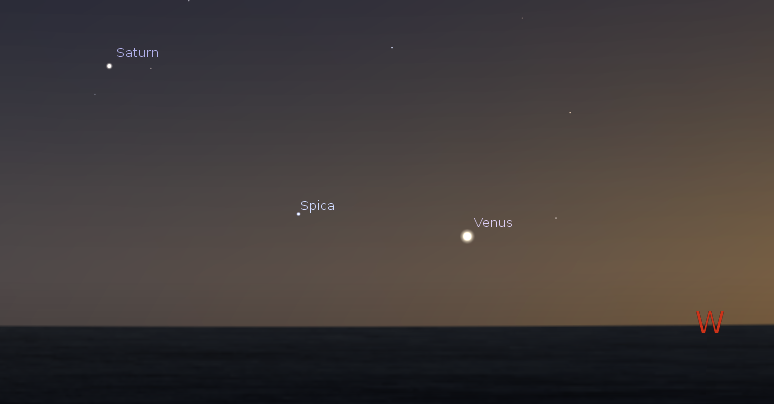
Venus and Saturn at 9:15 p.m. August 28, 2013. Created using Stellarium.
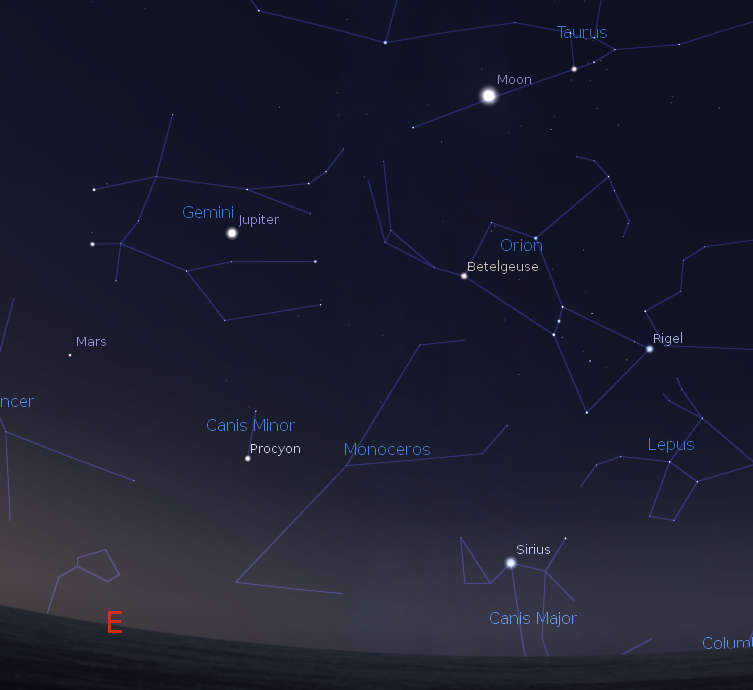
Jupiter, Mars and the Moon at 6 a.m. on August 29, 2013. Created using Stellarium.
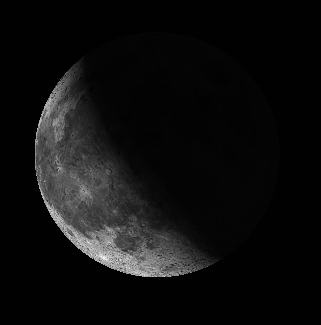
The actual phase of the Moon at 6 a.m. on August 29, 2013. Created using Stellarium.
08/21/2013 – Ephemeris – Where are the bright planets this week?
Ephemeris for Wednesday, August 21st. The sun rises at 6:52. It’ll be up for 13 hours and 45 minutes, setting at 8:37. The moon, 1 day past full, will rise at 8:40 this evening.
Lets check out the planets visible now. Venus is now brilliant low in the western sky in evening twilight, It will set at 9:59 p.m. Holding forth in the west southwest will be Saturn this evening, the brightest star-like object in the constellation Virgo appearing yellowish to the left and above the extremely blue-white star Spica. It will set at 11:17 p.m. In the morning sky before twilight starts Jupiter will rise at 2:50 in the east northeast, with Mars rising a bit more than an hour later at 3:56. At about 5 a.m. Jupiter will be the brightest star-like object in the east northeast, with Mars barely visible below and left by about one and a half the width of your fist held at arm’s length. Castor and Pollux of Gemini point down to it.
Times are for the Traverse City/Interlochen area of Michigan. They may be different for your location.
Addendum
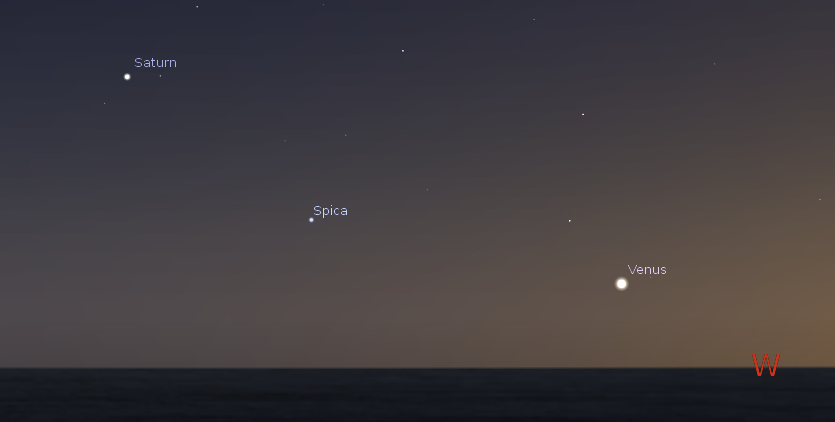
Venus and Saturn at 9:30 p.m. on August 21, 2013. Created using Stellarium.
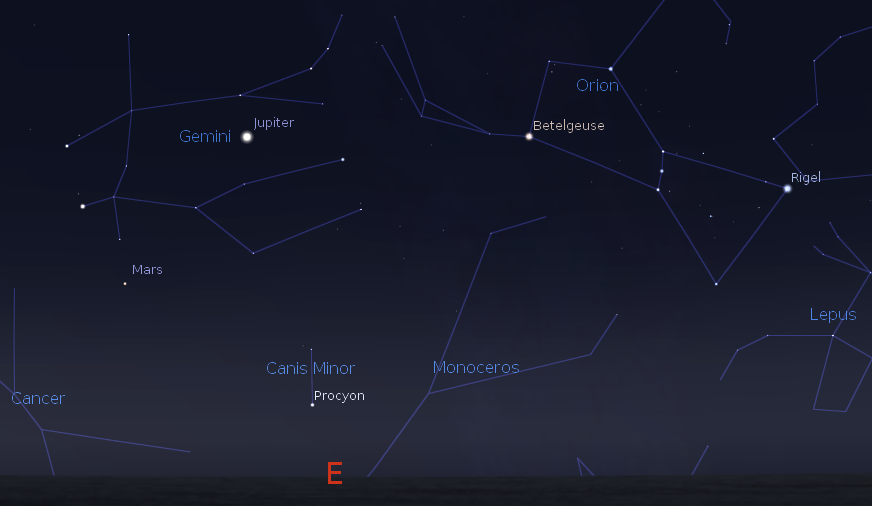
Jupiter and Mars with the rising winter constellations at 5:30 a.m. on August 22, 2013. Created using Stellarium.
08/07/2013 – Ephemeris – Where are the bright planets this week?
Ephemeris for Wednesday, August 7th. The sun rises at 6:36. It’ll be up for 14 hours and 23 minutes, setting at 8:59. The moon, 1 day past new, will set at 9:00 this evening.
Lets check out the planets visible now. Venus is now brilliant low in the western sky in evening twilight, It will set at 10:23 p.m. Holding forth in the southwest will be Saturn this evening, the brightest star-like object in the constellation Virgo appearing yellowish to the left of the extremely blue-white star Spica. It will set at 12:14 tomorrow morning. In the morning sky before sunrise Jupiter will rise at 3:33, with Mars rising shortly after at 4:06, which will appear below and left of Jupiter by four and a half degrees or half the width of your fist held at arm’s length. Mercury will rise at 5:12 a.m. tomorrow. It will nearly two widths of your fist below and left of Jupiter. For sharp-eyed observers we have 5 planets visible now.
Times are for the Traverse City/Interlochen area of Michigan. They may be different for your location.
Addendum
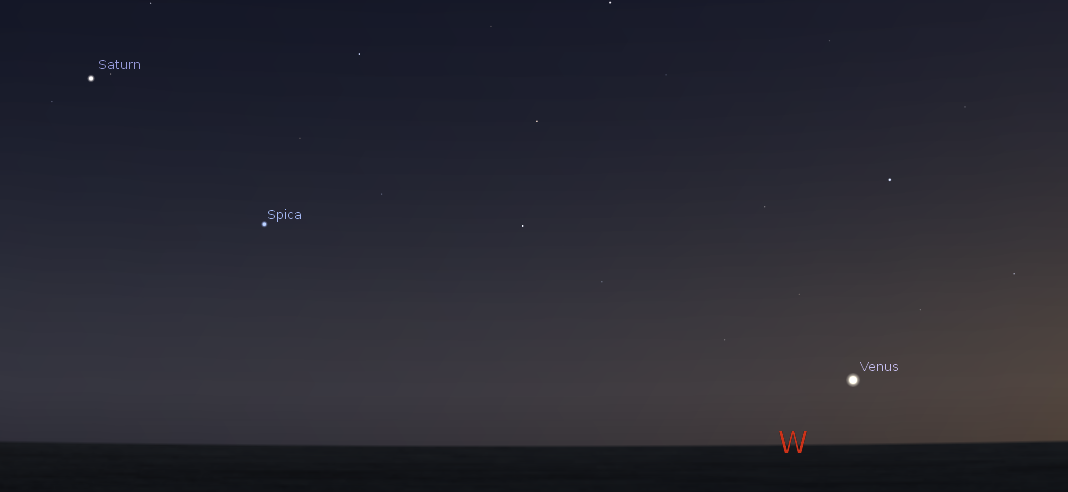
Venus and Saturn at 10 p.m. on August 7, 2013. Created using Stellarium.
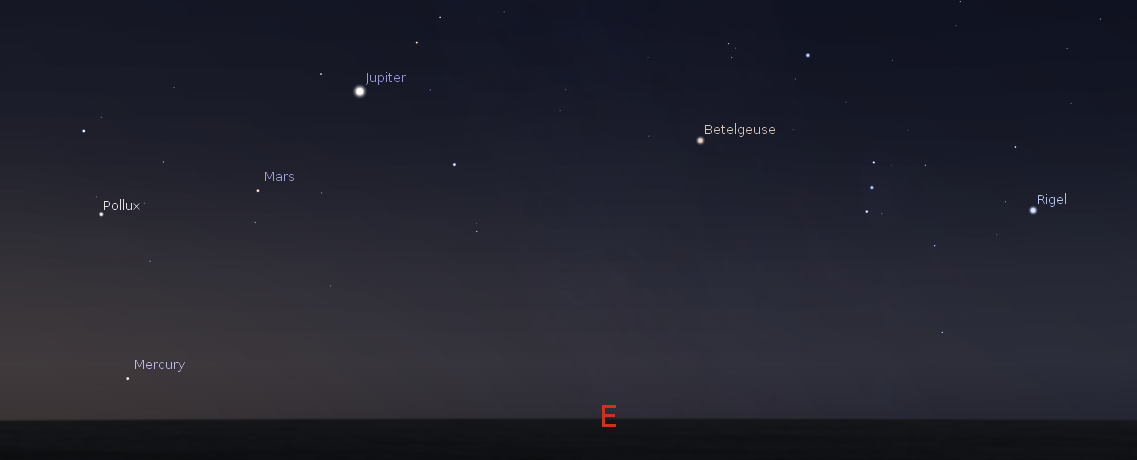
Morning planets and stars at 5:30 a.m. on August 8, 2013. Created using Stellarium.
07/31/2013 – Ephemeris – All 5 bright planets are visible now
Ephemeris for Wednesday, July 24th. The sun rises at 6:20. It’ll be up for 14 hours and 56 minutes, setting at 9:16. The moon, 2 days past full, will rise at 10:12 this evening.
Lets check out the planets visible now. Venus is now low in the west northwestern sky in evening twilight, Venus will set at 10:44 p.m. Holding forth in the southwest will be Saturn this evening, the brightest star-like object in the constellation Virgo appearing yellowish to the left of the extremely blue-white star Spica. Saturn is a wonderful sight in a telescope of 20 power or more. In telescopes Saturn’s large moon Titan can be easily seen. Saturn will set at 1:04 tomorrow morning. Jupiter and Mars will rise close together at 4:14 and 4:17 a.m. Respectively in the east northeast in morning twilight. The much dimmer Mars will appear to the lower left of the brighter Jupiter, and may take binoculars to locate.
Times are for the Traverse City/Interlochen area of Michigan. They may be different for your location.
Addendum
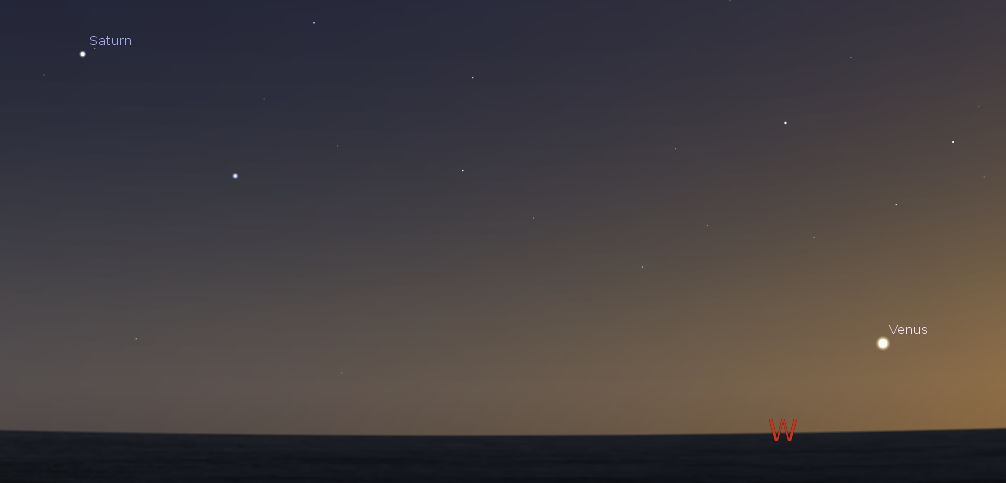
Venus and Saturn at 10 p.m. on July 31, 2013. Created using Stellarium
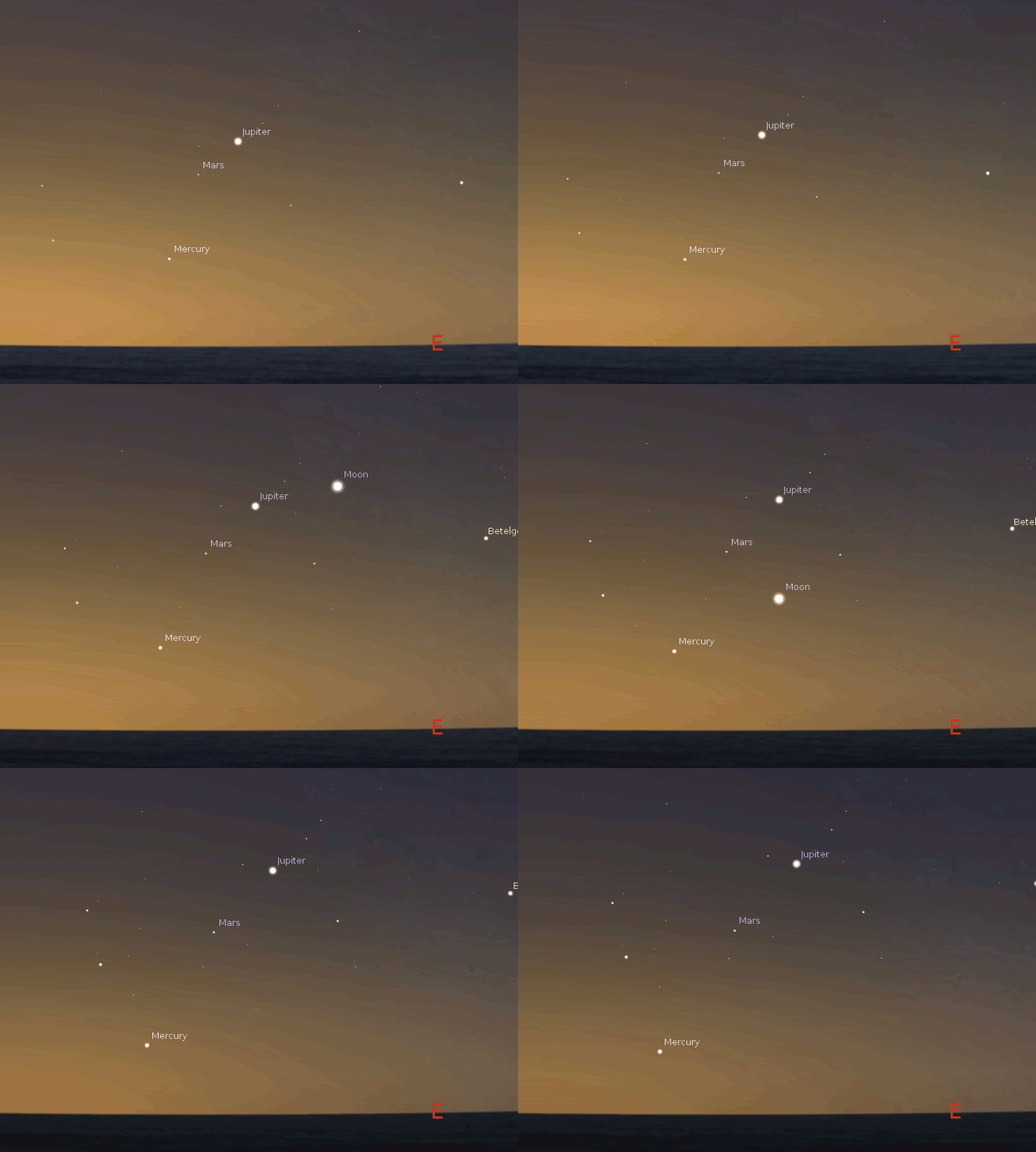
Animation of Mercury, Mars and Jupiter at one day intervals from July 31 to August 7, 2013 at 5:45 a.m. Created using Stellarium and the GIMP.
07/30/2013 – Ephemeris – Mercury appears in the morning
Ephemeris for Tuesday, July 30th. The sun rises at 6:27. It’ll be up for 14 hours and 43 minutes, setting at 9:10. The moon, 1 day past last quarter, will rise at 1:23 tomorrow morning.
Mercury is joining the morning planets Jupiter and Mars now. This morning is the time of its greatest elongation or separation from the sun of 20 degrees, but this planet will actually brighten as it starts its journey back around the sun. Mercury’s phase at greatest elongation is half illuminated. As it moves back around the sun the phase becomes fuller. To find Mercury it’s best to use binoculars. At around 5:30 look to the east northeast on a very low horizon. First locate Jupiter, the brightest and highest of the three. Then look below for reddish Mars. Once found, Mercury can be located by extending a line one and a half times further than Mars. These planets can be seen until 6 a.m. or a bit later.
Times are for the Traverse City/Interlochen area of Michigan. They may be different for your location.
Addendum
Animation of Mercury, Mars and Jupiter at one day intervals from July 31 to August 7, 2013 at 5:45 a.m. Created using Stellarium and the GIMP. Click to enlarge and animate.
07/24/2013 – Ephemeris – Where are the bright planets in the sky this week?
Ephemeris for Wednesday, July 24th. The sun rises at 6:20. It’ll be up for 14 hours and 56 minutes, setting at 9:16. The moon, 2 days past full, will rise at 10:12 this evening.
Lets check out the planets visible now. Venus is now low in the west northwestern sky in evening twilight, Venus will set at 10:44 p.m. Holding forth in the southwest will be Saturn this evening, the brightest star-like object in the constellation Virgo appearing yellowish to the left of the extremely blue-white star Spica. Saturn is a wonderful sight in a telescope of 20 power or more. In telescopes Saturn’s large moon Titan can be easily seen. Saturn will set at 1:04 tomorrow morning. Jupiter and Mars will rise close together at 4:14 and 4:17 a.m. Respectively in the east northeast in morning twilight. The much dimmer Mars will appear to the lower left of the brighter Jupiter, and may take binoculars to locate.
Times are for the Traverse City/Interlochen area of Michigan. They may be different for your location.
Addendum
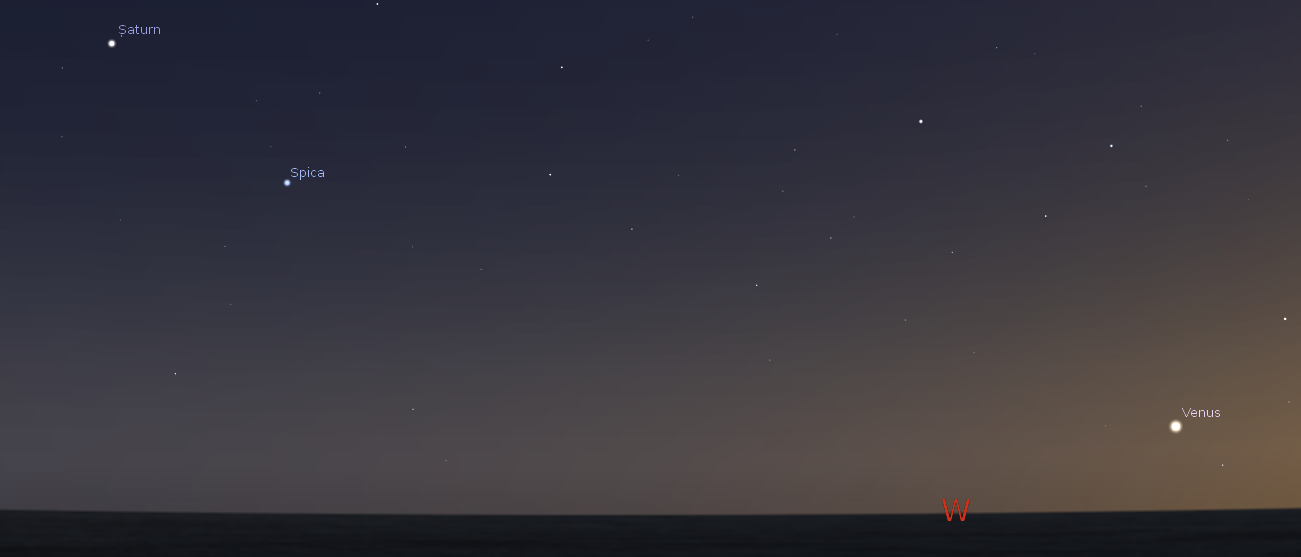
Venus and Saturn at 10:15 p.m. on July 24, 2013. Created using Stellarium. Click on Image to enlarge.
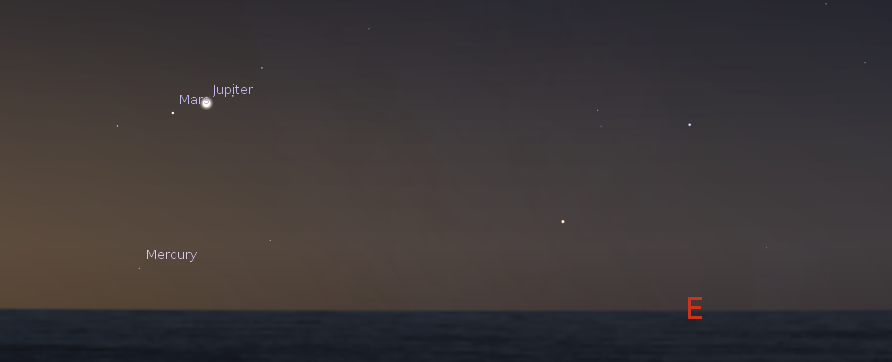
Jupiter, Mars and Mercury in morning twilight at 5:20 a.m. on July 25, 2013. I didn’t mention Mercury on the program because it’s very difficult to spot. Created using Stellarium.
07/17/2013 – Ephemeris – Where are the bright planets this week?
Ephemeris for Wednesday, July 17th. Today the sun will be up for 15 hours and 9 minutes, setting at 9:23. The moon, 2 days past first quarter, will set at 2:06 tomorrow morning. Tomorrow the sun will rise at 6:14.
Lets check out the planets visible now. Venus is now low in the west northwestern sky in evening twilight, Venus will set at 10:52 p.m. Holding forth in the southwest will be Saturn this evening, the brightest star-like object in the constellation Virgo appearing yellowish to the left of the extremely blue-white star Spica. Saturn is a wonderful sight in a telescope of 20 power or more. Saturn will set at 1:31 tomorrow morning. Mars and Jupiter will rise close together at 4:23 and 4:35 a.m. Respectively in the east northeast in morning twilight. The much dimmer Mars will appear about 4 moon diameters to the upper right of the brighter Jupiter, and may take binoculars to locate.
Times are for the Traverse City/Interlochen area of Michigan. They may be different for your location.
Addendum
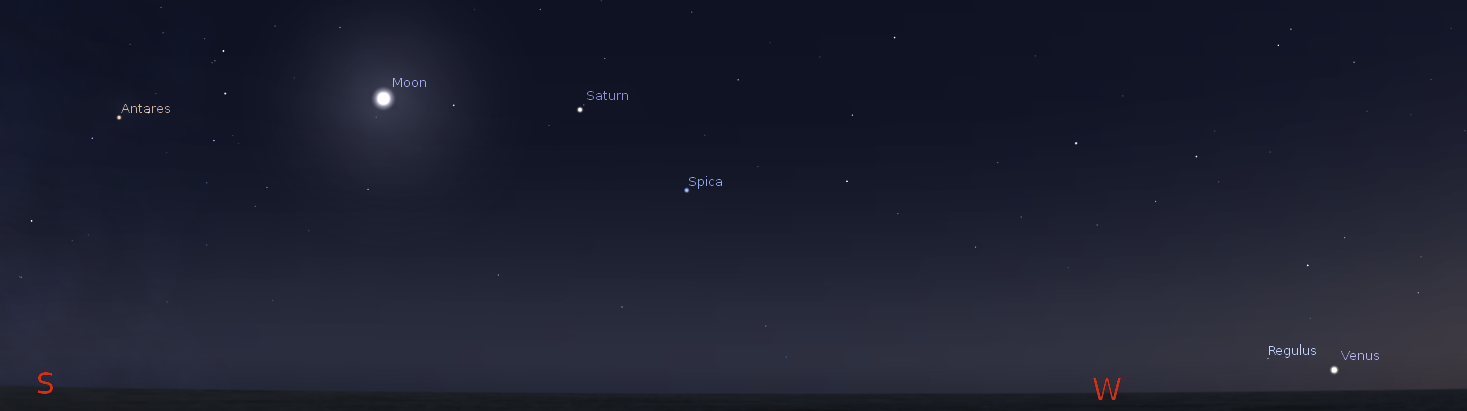
Venus, Saturn, Moon and stars at 10:40 on July 17, 2013. Created using Stellarium.
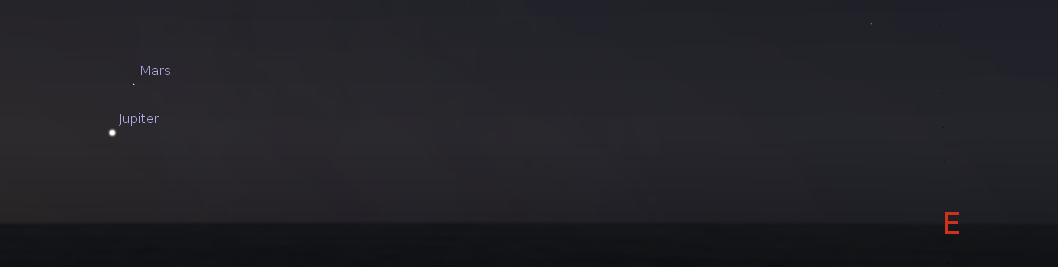
Jupiter and Mars at 5 a.m. on July 18, 2013. Created using Stellarium.
05/29/2013 – Ephemeris – Planetary breakup in the west while Saturn looks on
Ephemeris for Wednesday, May 29th. Today the sun will be up for 15 hours and 16 minutes, setting at 9:18. The moon, 2 days before last quarter, will rise at 1:10 tomorrow morning. Tomorrow the sun will rise at 6:01.
The early evening will be taken up with the slow breakup of the grouping of Jupiter, Venus and Mercury low in the west northwest at about 10 p.m. Mercury now is on top with Venus below with Jupiter below Venus. Jupiter will set at 10:48 with Venus following 9 minutes later. Mercury will set at 11 p.m. Hanging backing from this planetary grouping in the east southeast will be Saturn this evening, the brightest star-like object in the constellation Virgo appearing yellowish to the left of the extremely blue-white star Spica. Saturn will pass due south at 11:30 p.m., and will set at 4:48 tomorrow morning.
Times are for the Traverse City/Interlochen area of Michigan. They may be different for your location.
Addendum
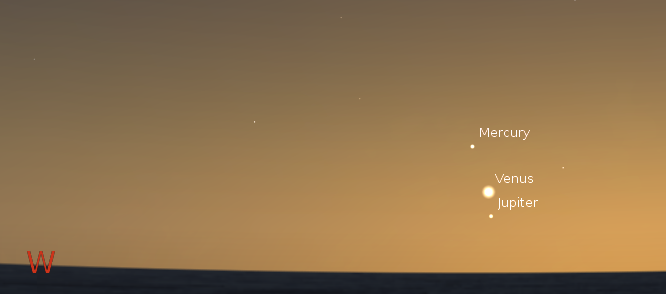
Mercury, Venus and Jupiter low in the west northwest at 10 p.m. on May 29, 2013. Created using Stellarium.
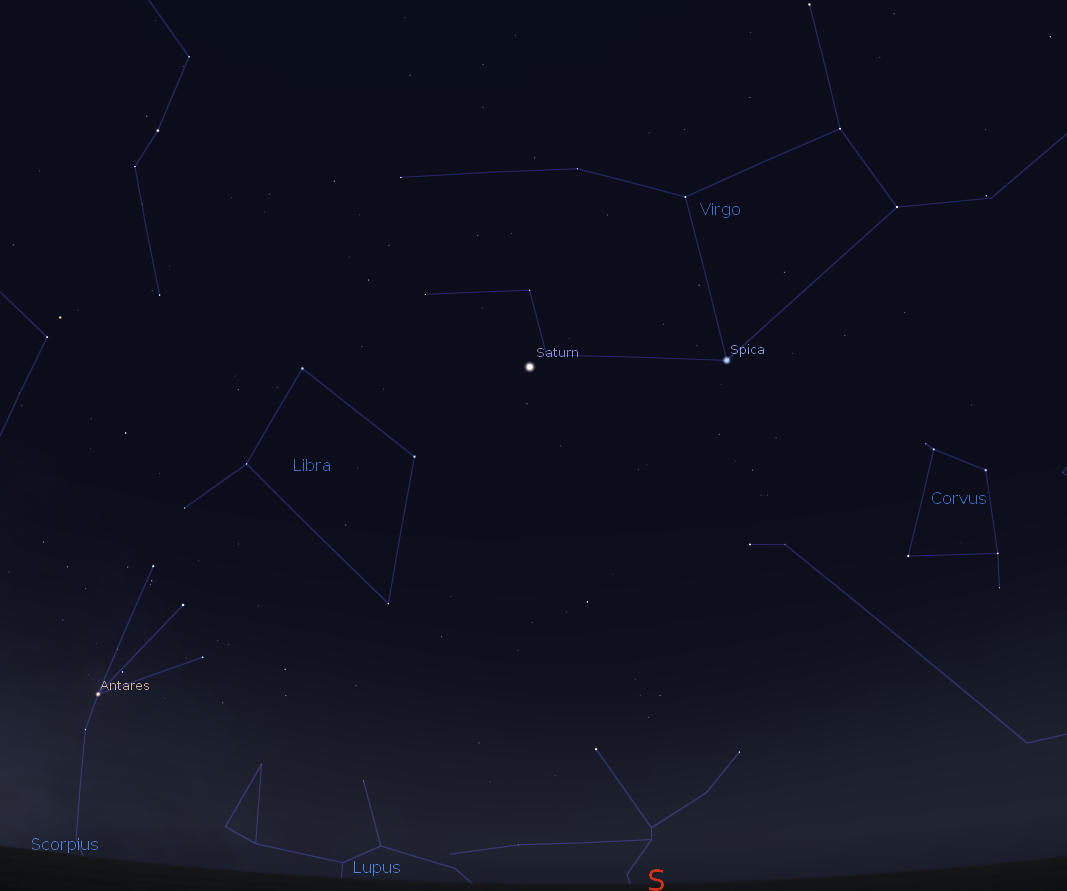
Saturn and the constellations of the south at 11 p.m. on May 29, 2013. Created using Stellarium.
 Bob Moler's Ephemeris Blog