Archive
02/29/2012 – Ephemeris – Where are the bright planets this week?
Ephemeris for Wednesday, February 29th, the leap day or intercalary day. The sun will rise at 7:20. It’ll be up for 11 hours and 8 minutes, setting at 6:29. The moon, at first quarter today, will set at 2:28 tomorrow morning.
Let’s see what’s happening with the bright planets for this week. Venus is brilliant in the western sky after sunset and will set at 10:23 in the west. Jupiter the second brightest planet after Venus is located high in the west as it gets dark and is seen against the stars of the constellation Aries. Venus is now approaching it. Jupiter will set at 11:21 p.m.. Mars is the up and coming planet. It will rise near sunset in the east and is in the constellation Leo the lion. It is 62.8 million miles away . It’s now as bright as most first magnitude stars. Mars will pass due south at 1:14 a.m. Saturn will rise at 10:29 p.m. just to the left of the bright star Spica in the east southeast.
* Times are for the Traverse City/Interlochen area of Michigan. They may be different for your location.
Addendum
Mars in approach. These photos of Mars from earlier posts by Scott Anttila shows Mars approaching, or rather being approached by the earth over the last two months.
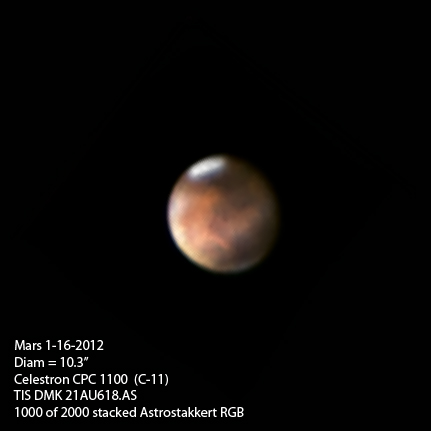
Mars 9 days ago. Photograph by Scott Anttila
Besides getting larger in approach, Mars is becoming more full. Also notice that the north polar cap is shrinking as northern summer proceeds.

Mars on February 6, 2012. Photograph by Scott Anttila
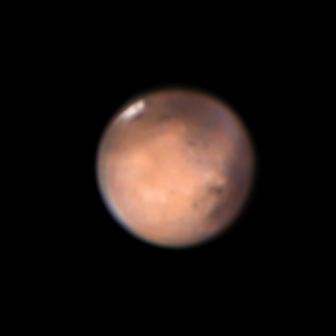
Mars on February 20, 2012 at 5:57 UT (12:57 a.m.). Photograph by Scott Anttila.
Mars will reach opposition from the sun on March 3rd, and will be closest to the earth on the 5th, at just a teensy bit closer than today at 62.6 million miles.
For more on the martian seasons check out this blog post with video by the Planetary Society’s Emily Lakdawalla.
02/24/2012 – Ephemeris – The moon will pass Venus and Jupiter this weekend
Friday, February 24th. The sun will rise at 7:29. It’ll be up for 10 hours and 53 minutes, setting at 6:22. The moon, 3 days past new, will set at 9:36 this evening.
This weekend we will be able to spot appearances of the moon passing two planets. Tomorrow night Venus will appear below the moon. It should be a spectacular sight with Jupiter nearby to the upper left. Then Sunday night the moon will have moved near Jupiter. This time Jupiter will appear to the left of the moon, their closest apparent approach being after they set Monday morning. Even though the moon will leave these planets, keep watching them. As Venus slowly approaches Jupiter. They will be their closest, called a conjunction on the Ides of March. That’s March 15th using our calendar. These two planet will still be with us for the next few months, with Mars and Saturn appearing later in the evening now.
* Times are for the Traverse City/Interlochen area of Michigan. They may be different for your location.
Addendum
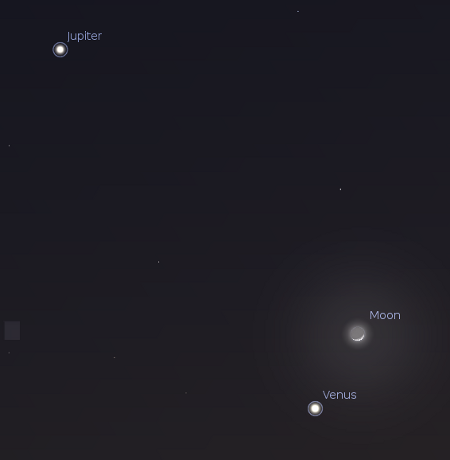
The moon will pass above Venus at 7 p.m. Saturday February 25, 2012. Created using Stellarium.
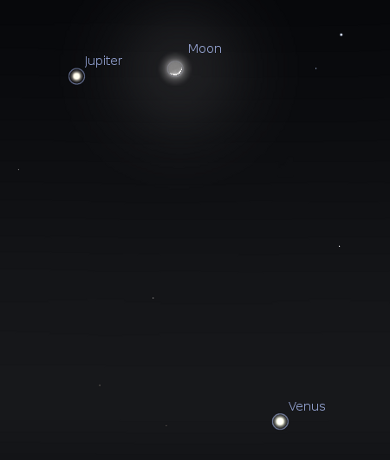
The moon will pass Jupiter, seen at 10 p.m. February 26, 2012. Created using Stellarium.
02/22/2012 – Ephemeris – Where are the bright planets this week?
Ephemeris for Ash Wednesday, Wednesday, February 22nd. The sun will rise at 7:32. It’ll be up for 10 hours and 47 minutes, setting at 6:20. The moon, 1 day past new, will set at 7:31 this evening.
Let’s see what’s happening with the bright planets for this week. Venus is brilliant in the western sky after sunset and will set at 10:08 in the west. Jupiter the second brightest planet after Venus is located high in the west as it gets dark and is seen against the stars of the constellation Aries. Venus is approaching it now. Jupiter will set at 11:39 p.m.. Mars is the up and coming planet. It will rise near sunset in the east and is below the hind end of the constellation Leo the lion. It is 64.0 million miles away and closing and is getting brighter. It’s now as bright as most first magnitude stars. Mars will pass due south at 1:52 a.m. Saturn will rise at 10:58 p.m. just to the left of the bright star Spica in the east southeast.
* Times are for the Traverse City/Interlochen area of Michigan. They may be different for your location.
Addendum
Mars on February 20, 2012 at 5:57 UT (12:57 a.m.). Photograph by Scott Anttila.
We are nor a couple of weeks from the opposition of Mars with the sun on March 3rd. (March is named for Mars, by the way.) It will be closest on March 5th at 62.6 million miles.
02/15/2012 – Ephemeris – Where are the bright planets this week?
Ephemeris for Wednesday, February 15th. The sun will rise at 7:43. It’ll be up for 10 hours and 27 minutes, setting at 6:10. The moon, 1 day past last quarter, will rise at 3:45 tomorrow morning.
Let’s see what’s happening with the bright planets for this week. Venus is brilliant in the southwestern sky after sunset and will set at 9:52 in the west. Jupiter is the second brightest planet after Venus. It’s located high in the southwest as it gets dark and is seen against the stars of the constellation Aries. And Venus is approaching it now. Jupiter will set at 12:03 a.m.. Mars is the up and coming planet. It will rise at 7:54 p.m in the east and is below the hind end of the constellation Leo the lion. It is 66.1 million miles away and closing and is getting brighter. It’s now as bright as most first magnitude stars. Mars will pass due south at 2:27 a.m. Saturn will rise at 11:26 p.m. just to the left of the bright star Spica in the east southeast.
* Times are for the Traverse City/Interlochen area of Michigan. They may be different for your location.
02/08/2011 – Ephemeris – Where are the bright planets?
Ephemeris for Wednesday, February 8th. The sun will rise at 7:53. It’ll be up for 10 hours and 7 minutes, setting at 6:00. The moon, 1 day past full, will rise at 7:24 this evening.
Let’s see what’s happening with the bright planets for this week. Venus is brilliant in the southwestern sky after sunset and will set at 9:35 in the west. Jupiter the second brightest planet after Venus. It’s located high in the southwest as it gets dark and is seen against the stars of the constellation Aries. It will set at 12:25 a.m.. Mars is the up and coming planet. It will rise at 8:31 p.m in the east and is below the hind end of the constellation Leo the lion. It is 69.2 million miles away and closing and is getting brighter. It’s now as bright as most first magnitude stars. Mars will pass due south at 3:01 a.m. Saturn will rise at 11:54 p.m. just to the left of the bright star Spica in the east southeast.
* Times are for the Traverse City/Interlochen area of Michigan. They may be different for your location.
Addendum
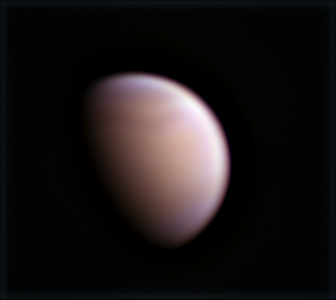
Venus by Scott Anttila. Taken Monday evening February 6, 2012
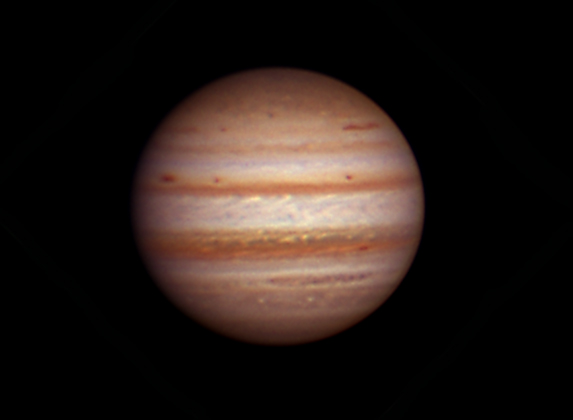
Jupiter by Scott Anttila. Taken Monday evening February 6, 2012
02/01/2012 – Ephemeris – Where are the bright planets this week?
Ephemeris for Wednesday, February 1st. The sun will rise at 8:01. It’ll be up for 9 hours and 48 minutes, setting at 5:50. The moon, 2 days past first quarter, will set at 3:46 tomorrow morning.
Let’s see what’s happening with the bright planets for this week. Venus is brilliant in the southwestern sky after sunset and will set at 9:19 in the west. Jupiter is the most prominent planet of the evening sky, once Venus sets. It’s located high in the southwest as it gets dark and is seen against the stars of the constellation Aries. It will set at 12:48 a.m.. Mars is the up and coming planet. It will rise at 9:05 p.m in the east and is below the hind end of the constellation Leo the lion. It is 73 million miles away and closing and is getting brighter. It’s now as bright as most first magnitude stars. Mars will pass due south at 3:33 a.m. Saturn will rise at 12:22 a.m. just to the left of the bright star Spica in the east southeast.
* Times, as always are for the Traverse City/Interlochen area of Michigan.
01/25/2012 – Ephemeris – Where are the planets this week?
Ephemeris for Wednesday, January 25th. The sun will rise at 8:08. It’ll be up for 9 hours and 31 minutes, setting at 5:40. The moon, 2 days past new, will set at 8:42 this evening.
It’s time again to take a look at the whereabouts of the bright planets. Venus is brilliant in the southwestern sky after sunset and will set at 9:01 in the west. Jupiter is the most prominent planet of the evening sky, once Venus sets. It’s located high in the south southeast as it gets dark and is seen against the stars of the constellation Aries. It will pass due south at 6:21 p.m. and it will set at 1:08 a.m.. Mars will rise at 9:36 p.m in the east northeast and is below the hind end of the constellation Leo the lion. It is 76.7 million miles away and closing and has been getting brighter. It’s now as bright as most first magnitude stars. Mars will pass due south at 4:02 a.m. Saturn will rise at 12:49 a.m. just to the left of the bright star Spica in the east southeast.
* Times, as always are for the Traverse City/Interlochen area of Michigan.
Addendum
Mars 9 days ago. Photograph by Scott Anttila
Another gorgeous shot of Mars by Scott Anttila. At the time Mars appeared 10.3 seconds of arc in diameter. By comparison the moon and sun appear about 1,800 seconds of arc in diameter. Note that Mars appears slightly gibbous in shape. It will appear full on March 3rd. when it will be in opposition from the sun. It will be closest to us on March 5th. at about 62.6 million miles. At that time it will have an apparent diameter of 13.9 seconds of arc.
01/18/2012 – Ephemeris – Where are the bright planets this week
Ephemeris for Wednesday, January 18th. The sun will rise at 8:14. It’ll be up for 9 hours and 17 minutes, setting at 5:31. The moon, 2 days past last quarter, will rise at 4:51 tomorrow morning.
It’s time again to take a look at the whereabouts of the bright planets. Venus is brilliant in the southwestern sky after sunset and will set at 8:44. Jupiter is the most prominent planet of the evening sky, once Venus sets. It’s located high in the south and is seen against the stars of the constellation Aries. It will pass due south at 6:49 p.m. It will set at 1:36 a.m. Mars will rise at 10:03 p.m in the east northeast and is below the hind end of the constellation Leo the lion. It is 82.4 million miles away and closing. Mars will pass due south at 4:29 a.m. Saturn will rise at 1:15 a.m. just to the left of the bright star Spica in the east southeast.
* Times, as always are for the Traverse City/Interlochen area of Michigan.
01/11/2012 – Ephemeris – Where are the planets tonight?
Wednesday, January 11th. The sun will rise at 8:17. It’ll be up for 9 hours and 5 minutes, setting at 5:22. The moon, 2 days past full, will rise at 8:29 this evening.
It’s time again to take a look at the whereabouts of the bright planets. Venus is brilliant in the southwestern sky after sunset and will set at 8:25. Jupiter is the most prominent planet of the evening sky, once Venus sets. It’s located high in the south and is seen against the stars of the constellation Aries. It will pass due south at 7:15 p.m. It will set at 2:00 a.m.. Jupiter is a great sight in a small telescope with its four moons which change position from night to night. Mars will rise at 10:27 p.m in the east northeast and is below the hind end of the constellation Leo the lion. It is 88 million miles away and closing. Mars will pass due south at 4:54 a.m. Saturn will rise at 1:41 a.m. just to the left of the bright star Spica in the east southeast.
* Times, as always are for the Traverse City/Interlochen area of Michigan.
Addendum
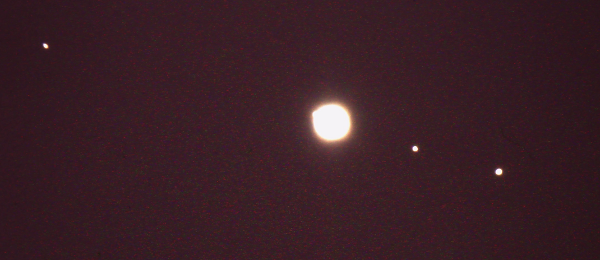
Overexposed Jupiter and its moons. My archival image.
The four Galilean satellites or moons of Jupiter are in order of distance from Jupiter Io, Europa, Ganymede and Callisto. They all orbit near Jupiter’s equator, and Jupiter itself has a very small axial tilt of about 3 degrees so the satellites seem to shuffle from one side to the other of Jupiter. The pattern is different night.
The programs Stellarium, Cartes du Ciel, and other sources including http://www.calsky.com can be used to determine the positions of the satellites. But there are clues by just looking at them.
- Io is closest to Jupiter and generally appears so. In the photograph above it appears as a bump on the left edge of Jupiter. It has a slight reddish tinge.
- Europa is dimmer than Io and also is usually close to Jupiter.
- Ganymede is easy. It’s the brightest.
- Callisto is usually found the farthest from Jupiter and is also the dimmest of the four.
Based on the photograph alone, which is undated, I’d guess that from left to right we have Callisto and Io to the left of Jupiter, Europa and Ganymede to the right.
Sometimes fewer than four satellites can be seen. They can hide in front of Jupiter, usually casting their shadow on the planet, behind Jupiter or in its shadow. Calsky will give you the times for your location.
Update
I located the date of the above image. It was taken the evening of March 17, 1989. A check with Cartes du Ciel (Sky Charts) confirm the satellite’s locations and order. Io was just ending a transit (passing in front ) of Jupiter.
01/06/2012 – Ephemeris – GTAS meeting and viewing night tonight
Friday, January 6th. The sun will rise at 8:19. It’ll be up for 8 hours and 58 minutes, setting at 5:17. The moon, 3 days before full, will set at 6:50 tomorrow morning.
The Grand Traverse Astronomical Society will have its first meeting of the year tonight at 8 p.m. at the Northwestern Michigan College’s Rogers Observatory. Following will be a public viewing night featuring the moon and Jupiter. This year the first viewing night of the month will come at the end of the society meeting at 9 o’clock. Come for both. The presentation for the meeting will be NMC Astronomy Club member Storm Strausheim and her topic will be those mysterious stellar cannibals – Black Holes. The observatory is located on Birmley Road between Keystone and Garfield roads. April through October this year there will be a second viewing night at the observatory later in the month.
* Times, as always are for the Traverse City/Interlochen area of Michigan.
 Bob Moler's Ephemeris Blog