Archive
06/24/2022 – Ephemeris – Finding the greatest celestial hero: Hercules
This is Ephemeris for Friday, June 24th. Today the Sun will be up for 15 hours and 34 minutes, setting at 9:32, and it will rise tomorrow at 5:58. The Moon, halfway from last quarter to new, will rise at 3:31 tomorrow morning.
Orion, the hard luck mythical Greek hunter, gets a splashy constellation in the winter sky, but the greatest hero of all, Hercules, gets a dim group of stars on the border between the spring and summer stars. At 11 p.m. Hercules is high in the southeast. It is located right of the bright star Vega, in the east. Hercules’ central feature is a keystone shaped box of stars, called, of course, the Keystone of Hercules tilted to the left, which represents the old boy’s shorts. From the top and left corner stars extend lines of stars that are his legs, from the bottom and right stars, the rest of his torso and arms extend. So in one final indignity, he’s upside down in our sky. For those with a telescope, Hercules contains the beautiful globular star cluster Messier 13.
The astronomical event times given are for the Traverse City/Interlochen area of Michigan (EDT, UT – 4 hours). They may be different for your location.
Addendum
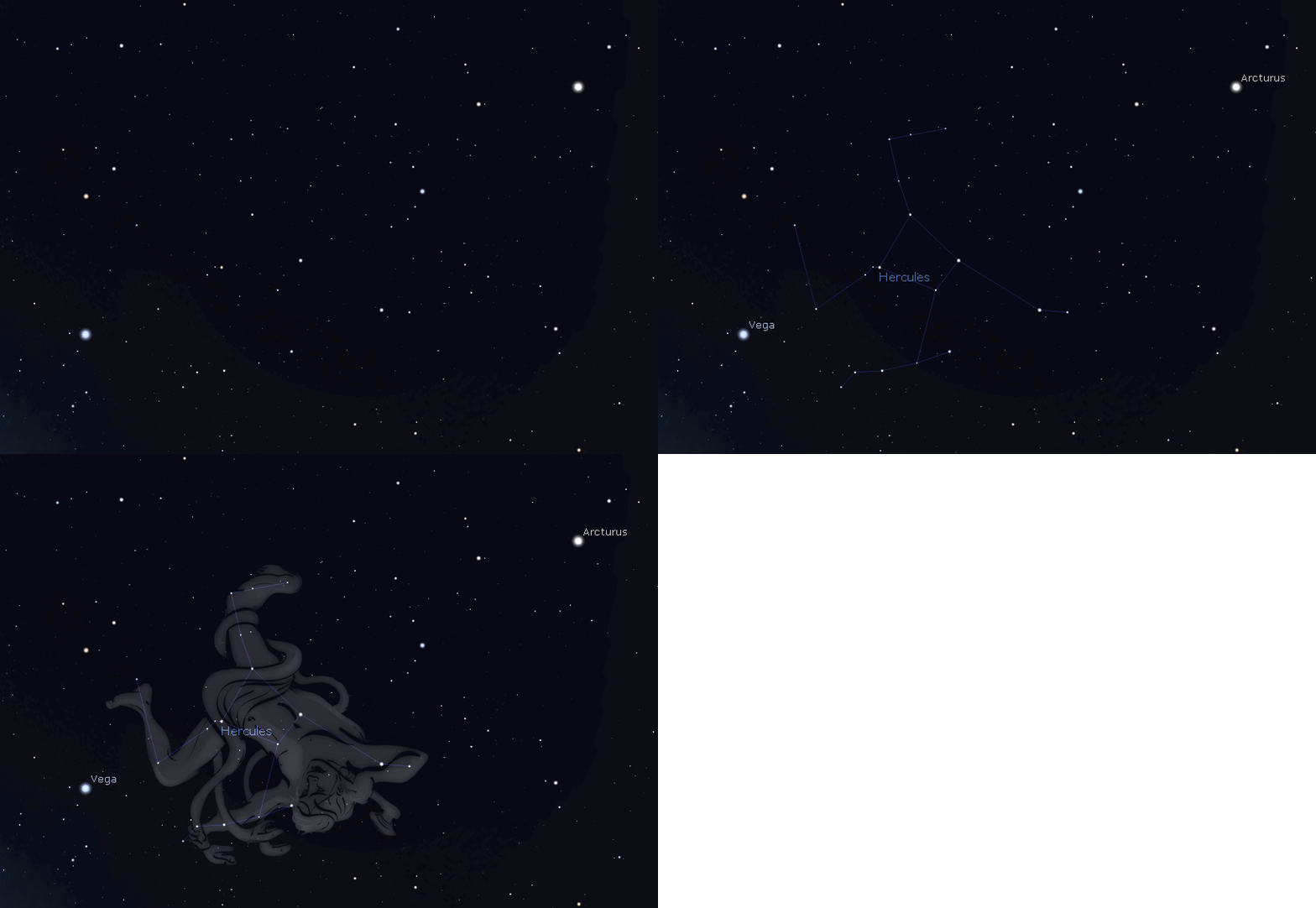
Hercules animation showing neighboring stars at 11 p.m. for mid-June. Click on image to enlarge. Created using Stellarium.
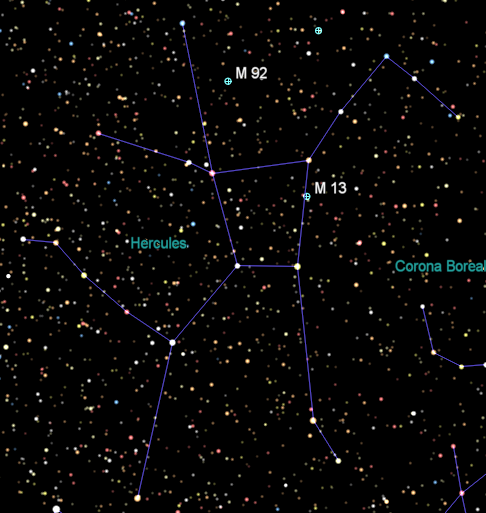
Hercules with all the stars visible in binoculars and its two globular star clusters: M13 and M92. M13 is almost bright enough to be spotted with the naked eye. It is easily visible in binoculars as a tiny fuzzy spot. It takes a telescope with an aperture of 6 – 8″ or 150 – 200 mm to begin to see some individual stars. M92 is dimmer and harder to resolve. Created using Cartes du Ciel (Sky Charts).
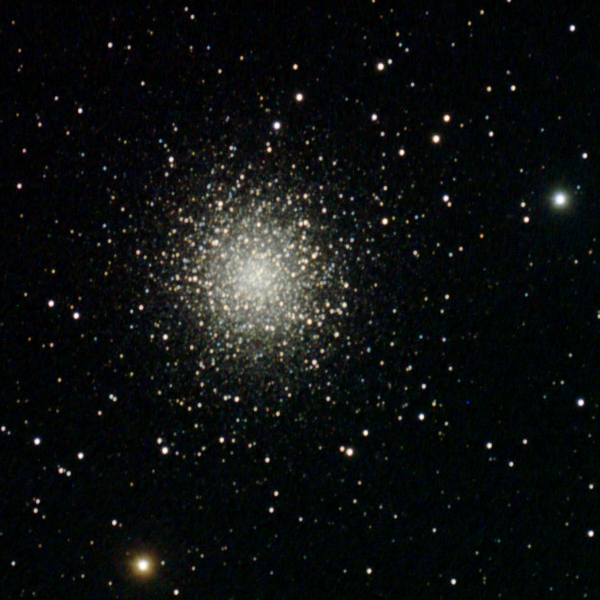
M 13, the Great Globular Star Cluster in Hercules. Credit: Scott Anttila.
06/18/2020 – Ephemeris – Finding the constellation Hercules
This is Ephemeris for Thursday, June 18th. Today the Sun will be up for 15 hours and 34 minutes, setting at 9:31, and it will rise tomorrow at 5:56. The Moon, 3 days before new, will rise at 4:48 tomorrow morning.
Orion, the hard luck mythological Greek hunter gets a splashy constellation in the winter sky, but the greatest hero of all, Hercules, gets a dim group of stars on the border between the spring and summer stars. At 11 p.m. Hercules is very high in the east-southeast. It is located above and right of the bright star, Vega in the east. Hercules’ central feature is a box shaped of star wider at the top than the bottom, called the Keystone, which represents the old boy’s shorts. From each top corner extend lines of stars that are his legs, from the bottom stars, the rest of his torso and arms extend. So in one final indignity he’s upside down in our sky. Some see him crouched down, club upraised holding the Hydra about to throttle it. For those with a telescope it contains the beautiful globular star cluster M13.
The event times given are for the Traverse City/Interlochen area of Michigan. They may be different for your location.
Addendum
Hercules animation showing neighboring stars at 11 p.m. for mid June, Click on image to enlarge. Created using Stellarium.
M13, the Great Globular Star Cluster in Hercules. Credit: Scott Anttila
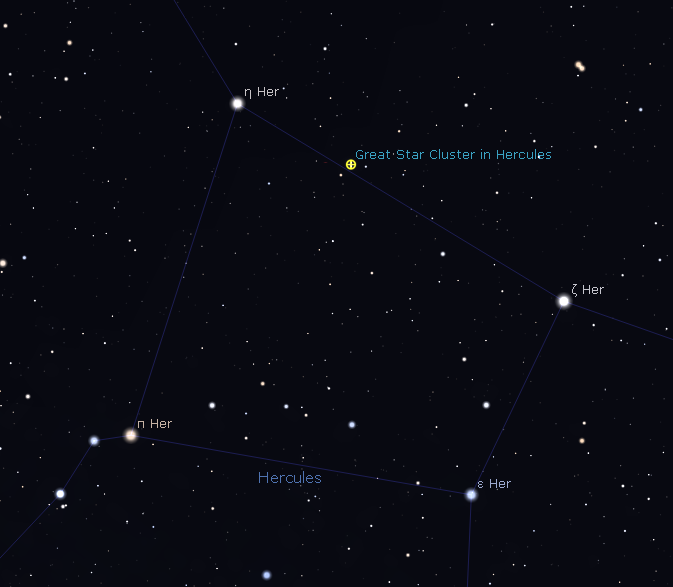
Stars and M13 (Great Star Cluster in Hercules) visible in binoculars in the Keystone of Hercules. Click in the image to enlarge. Created using Stellarium.
06/20/2019 – Ephemeris – Hercules wuz robbed!
Ephemeris for Thursday, June 20th. Today the Sun will be up for 15 hours and 34 minutes, setting at 9:31, and it will rise tomorrow at 5:57. The Moon, 3 days past full, will rise at 12:12 tomorrow morning.
Orion, the hard luck mythological Greek hunter gets a splashy constellation in the winter sky, but the greatest hero of all, Hercules, gets a dim group of stars on the border between the spring and summer stars. At 11 p.m. Hercules is high in the southeast. It is located above and right of the bright star, Vega in the east. Hercules’ central feature is a keystone shaped box of stars, called the Keystone, which represents the old boy’s shorts. From each top corner extend lines of stars that are his legs, from the bottom stars, the rest of his torso and arms extend. So in one final indignity he’s upside down in our sky. Some see him crouched down, club upraised holding the Hydra about to throttle it. For those with a telescope it contains the beautiful globular star cluster M13.
The times given are for the Traverse City/Interlochen area of Michigan. They may be different for your location.
Addendum
Hercules animation showing neighboring stars at 11 p.m. for mid June, Click on image to enlarge. Created using Stellarium and GIMP.
Stars and M13 (Great Star Cluster in Hercules) visible in binoculars in the Keystone of Hercules. Click in the image to enlarge. Created using Stellarium.
M13, the Great Globular Star Cluster in Hercules. It takes a telescope with an aperture (diameter) of 6 inches (150 mm) to begin the resolve the stars in it. Credit: Scott Anttila
06/14/2018 – Ephemeris – The mighty hero Hercules in the sky
Ephemeris for Flag Day, Thursday, June 14th. Today the Sun will be up for 15 hours and 33 minutes, setting at 9:29, and it will rise tomorrow at 5:56. The Moon, 1 day past new, will set at 10:27 this evening.
Orion, the hard luck Greek hunter gets a splashy constellation in the winter sky, but the greatest hero of all, Hercules, gets a dim group of stars on the border between the spring and summer stars. At 11 p.m. Hercules is high in the southeast. It is located above and right of the bright star, Vega in the east. Hercules’ central feature is a keystone shaped box of stars, called the Keystone, which represents the old boy’s shorts. From each top corner extend lines of stars that are his legs, from the bottom stars, the rest of his torso and arms extend. So in one final indignity he’s upside down in our sky. Some see him crouched down, club upraised holding the Hydra about to throttle it. For those with a telescope it contains the beautiful globular star cluster M13.
The times given are for the Traverse City/Interlochen area of Michigan. They may be different for your location.
Addendum
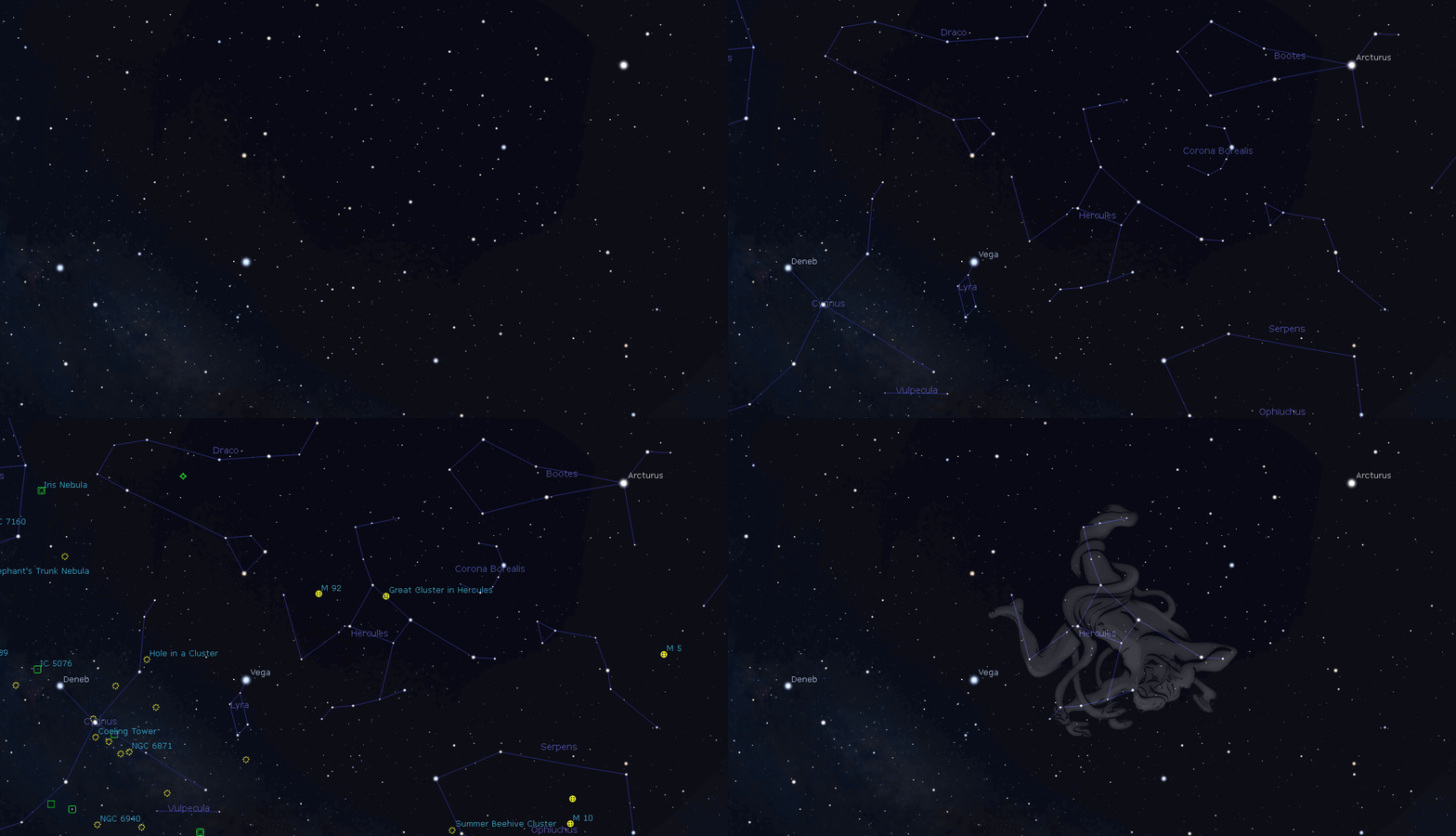
Hercules animation showing neighboring stars, constellation outlines, deep sky objects, and constellation art for Hercules. Created using Stellarium. Click on image to enlarge.
M13, the Great Globular Star Cluster in Hercules. Credit: Scott Anttila
07/05/2016 – Ephemeris – Poor Hercules
Ephemeris for Tuesday, July 5th. Today the Sun will be up for 15 hours and 26 minutes, setting at 9:30, and it will rise tomorrow at 6:04. The Moon, 1 day past new, will set at 10:17 this evening.
Orion, an obscure Greek hero gets a splashy constellation in the winter sky, but the greatest hero of all, Hercules, gets a dim group of stars on the border between the spring and summer stars. At 11 p.m. Hercules is high and nearly overhead. It’s located above and right of the bright star, Vega, high in the east. Hercules’ central feature is a keystone shaped box of stars, called the Keystone, which represents the old boy’s shorts. From each top corner extend lines of stars that are his legs, from the bottom stars, the rest of his torso and arms extend. So in one final indignity he’s upside down in our sky. Some see him crouched down, club upraised holding the multi-headed Hydra about to throttle it.
Times are for the Traverse City/Interlochen area of Michigan. They may be different for your location.
Addendum
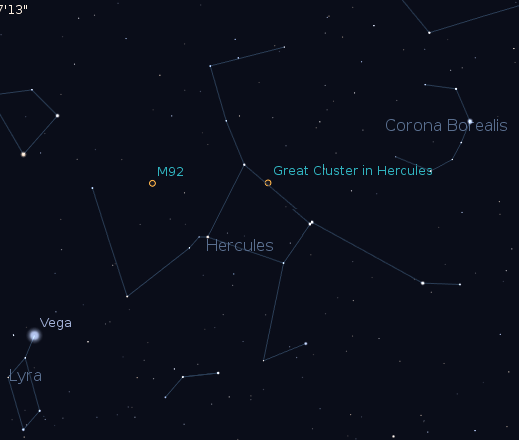
The constellation Hercules and his neighbors. Created with Stellarium.
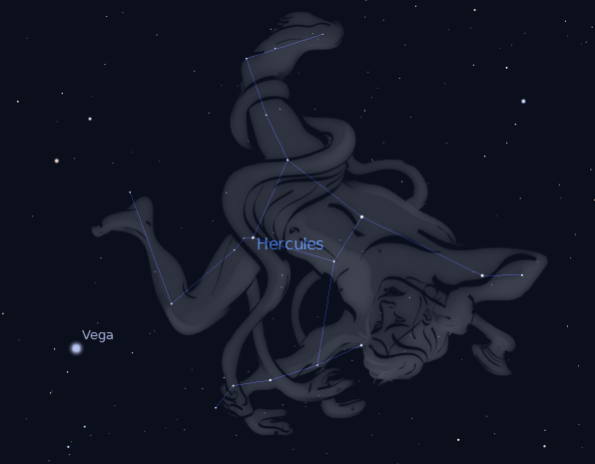
Hercules, visualized by Johan Meuris of the Stellarium development team.
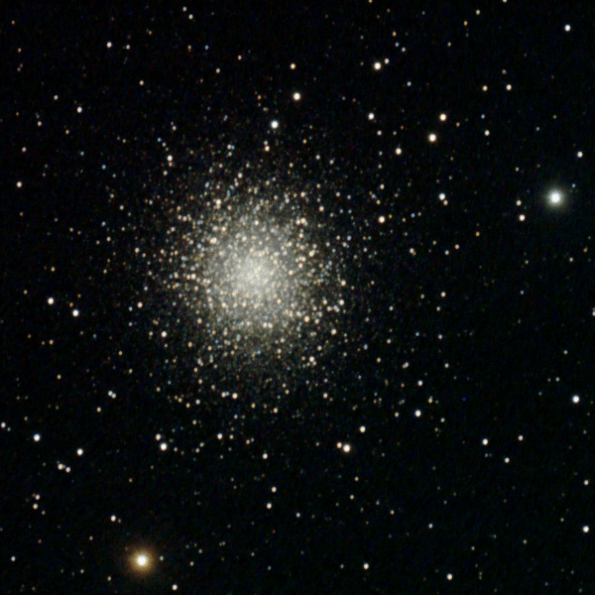
M13, the Great Globular Star Cluster in Hercules. Credit: Scott Anttila.
06/19/2014 – Ephemeris – The constellation Hercules
Ephemeris for Thursday, June 19th. Today the sun will be up for 15 hours and 33 minutes, setting at 9:30. The moon, at last quarter today, will rise at 1:50 tomorrow morning. Tomorrow the sun will rise at 5:57.
Orion, the hard luck Greek hunter gets a splashy constellation in the winter sky, but the greatest hero of all, Hercules, gets a dim group of stars on the border between the spring and summer stars. At 11 p.m. Hercules is high in the southeast. It is located above and right of the bright star, Vega in the east. Hercules’ central feature is a keystone shaped box of stars, called the Keystone, which represents the old boy’s shorts. From each top corner extend lines of stars that are his legs, from the bottom stars, the rest of his torso and arms extend. So in one final indignity he’s upside down in our sky. Some see him crouched down, club upraised holding the Hydra about to throttle it. [For those with a telescope it contains the beautiful globular star cluster M13.]
Times are for the Traverse City/Interlochen area of Michigan. They may be different for your location.
Addendum
The constellation Hercules and his neighbors. Created with Stellarium.
On Tuesday I mentioned that for the Anishinabek people around the Great Lakes, Corona Borealis is a Sweat Lodge. Incidentally the Pleiades, only seen in the sky at the same time as Corona Borealis on autumn evenings on opposite ends of the sky, are the seven stones of the Sweat Lodge ceremony. The stars of Hercules represents one poor fellow, who couldn’t stand the heat of the sweat lodge and is splayed on the snow near by.
M13, the Great Globular Star Cluster in Hercules. Credit: Scott Anttila
06/08/2012 – Ephemeris – The constellation of Hercules
Ephemeris for Friday, June 8th. Today the sun will be up for 15 hours and 28 minutes, setting at 9:26. The moon, 3 days before last quarter, will rise at 12:38 tomorrow morning. Tomorrow the sun will rise at 5:57.
High in the east is the dim and reasonably large constellation of Hercules. Here is the greatest of the Greek heroes, dim and upside down even, while the comparative nobody Orion gets a great constellation to his name in the winter. Anyway, Hercules can be spotted by the distinctive keystone shape of stars that mark the old boy’s kilt. Stars connected to the four corners show his body and limbs. Check a constellation book for where all the stars lead to. On the west side of the keystone can be spotted with binoculars a fuzzy star. Investigations with larger and larger telescopes will reveal a huge assembly of stars called a globular star cluster. There’s perhaps a million stars there. The finest in the northern heavens.
Times are for the Traverse City/Interlochen area of Michigan. They may be different for your location.
Addendum
The constellation Hercules and his neighbors. Created with Stellarium.
M92 is also a globular star cluster but more distant. The Great Globular Cluster in Hercules is also designated M13.
 Bob Moler's Ephemeris Blog