Archive
12/22/2021 – Ephemeris – Let’s search for the naked-eye planets for this week
This is Ephemeris for Wednesday, December 22nd. Today the Sun will be up for 8 hours and 48 minutes, setting at 5:05, and it will rise tomorrow at 8:18. The Moon, halfway from full to last quarter, will rise at 8:16 this evening.
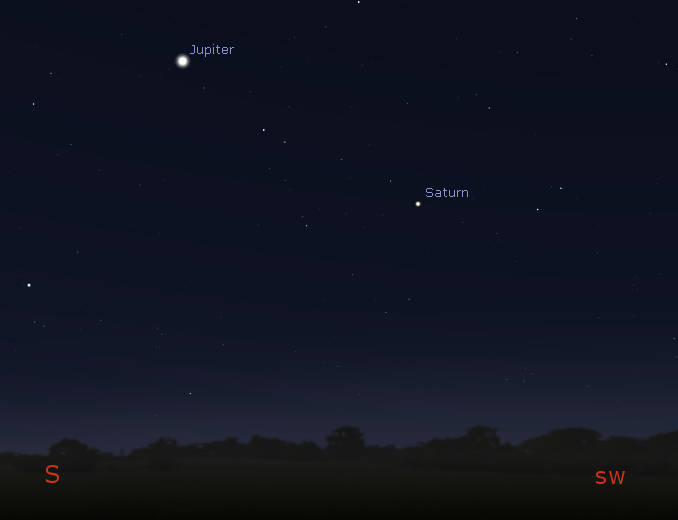
Let’s search for the naked-eye planets for this week. Venus will be visible in the southwestern evening twilight by 5:30 tonight. It’s a crescent in telescopes, and even binoculars now. It is moving closer to us, and now appears larger than Jupiter in telescopes. Venus will set at 7:06 pm, 21 minutes earlier than it set a week ago, which means that the Sun is catching up with it faster and faster. It has only 17 days left in the evening sky, It’s now pulling away from Jupiter and Saturn. By 5:45 pm, both Jupiter and Saturn should be able to be spotted in the southwestern sky. Saturn will be dimmer, and to its lower right, halfway between it and Venus. Saturn will set at 8:17 pm, with Jupiter following an hour and a half later at 9:51 pm.
The astronomical event times given are for the Traverse City/Interlochen area of Michigan (EST, UT – 5 hours). They may be different for your location.
Addendum
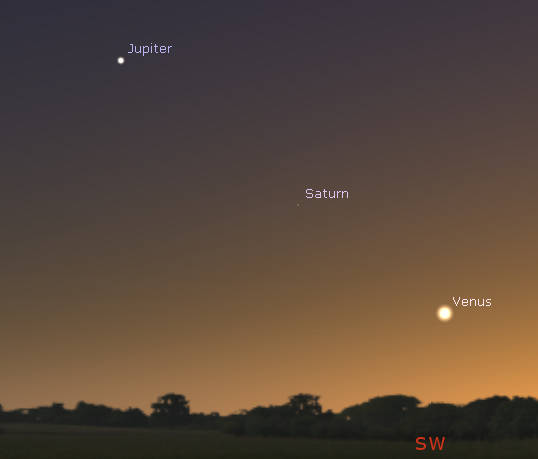
The evening planets, Venus, Saturn and Jupiter in the southwestern at 5:45 pm Tonight, December 22, 2021. Created using Stellarium.
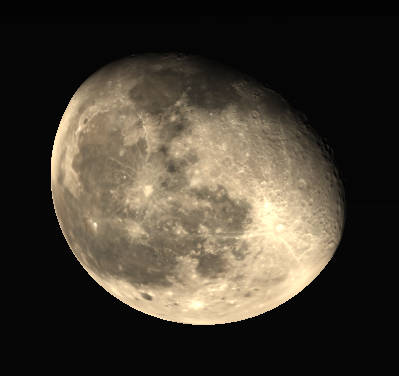
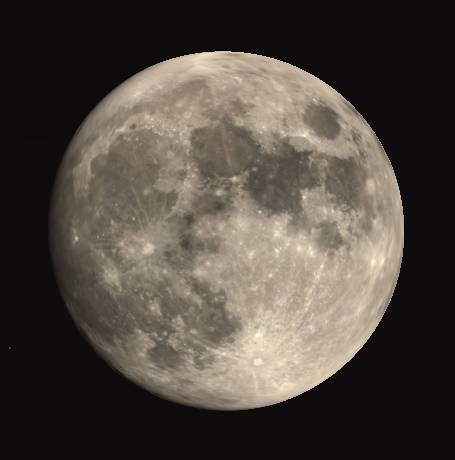
The Moon as it might appear in binoculars or small telescope low in the east northeast, tonight at 9 pm, December 22, 2021. Created using Stellarium.
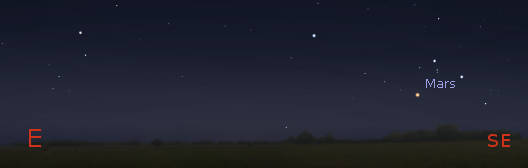
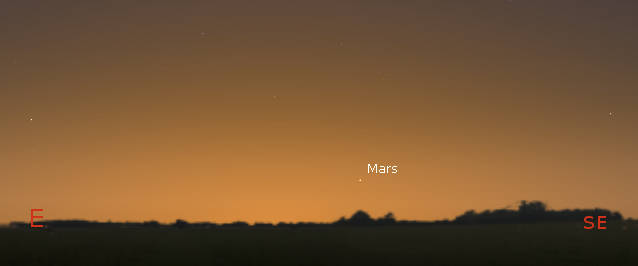
Mars, low in the southeast at 7 am tomorrow morning, December 22, 2021. Created using Stellarium.
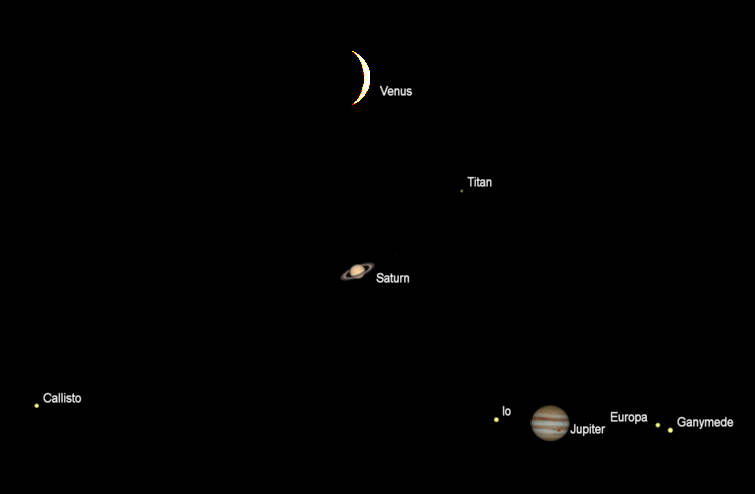
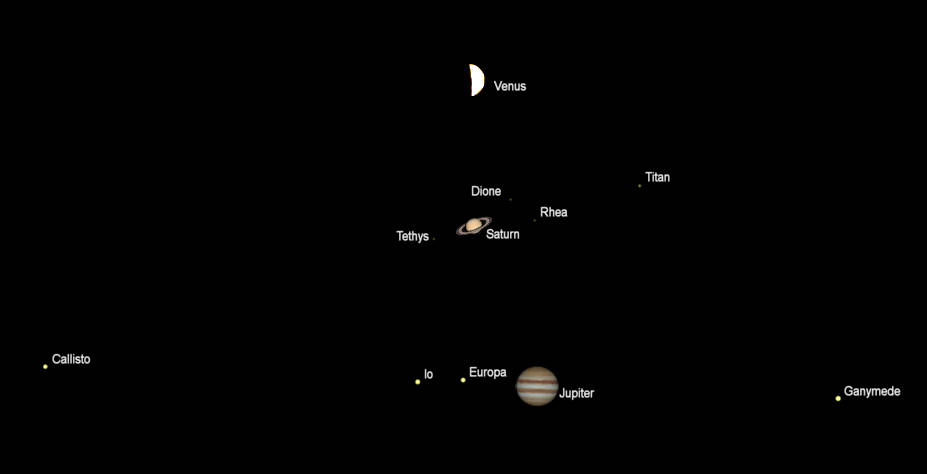
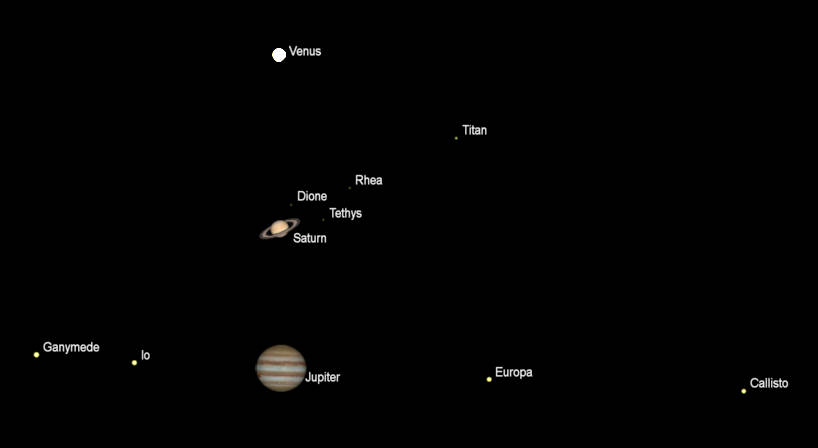
Telescopic views of the bright planets and their brighter moons (north up) as they would be seen in a small telescope, with the same magnification, this evening at 7 pm, December 22, 2021. Apparent diameters: Venus, 55.10″, 9.1% illuminated; Saturn 15.59″, its rings 36.32″; Jupiter, 36.16″. Mars is not shown, its apparent diameter is 3.93″. The ” symbol means seconds of arc (1/3600th of a degree.) Created using Cartes du Ciel (Sky Charts).
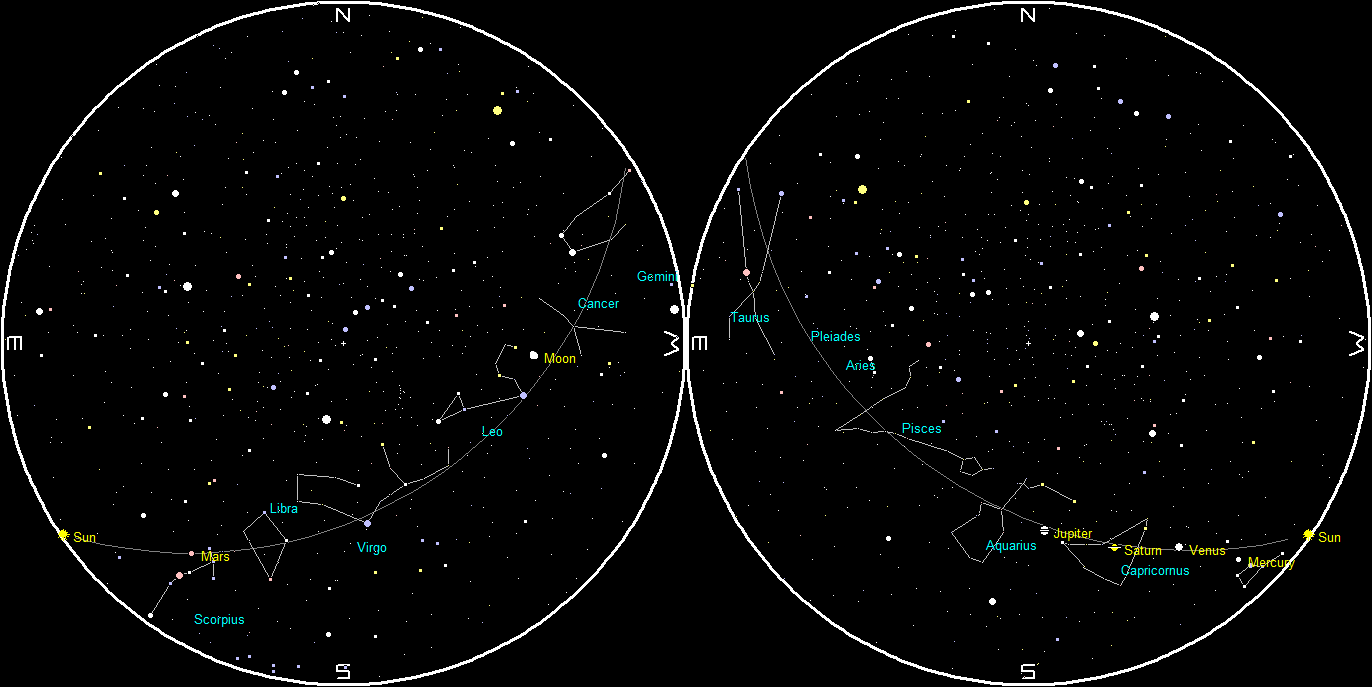
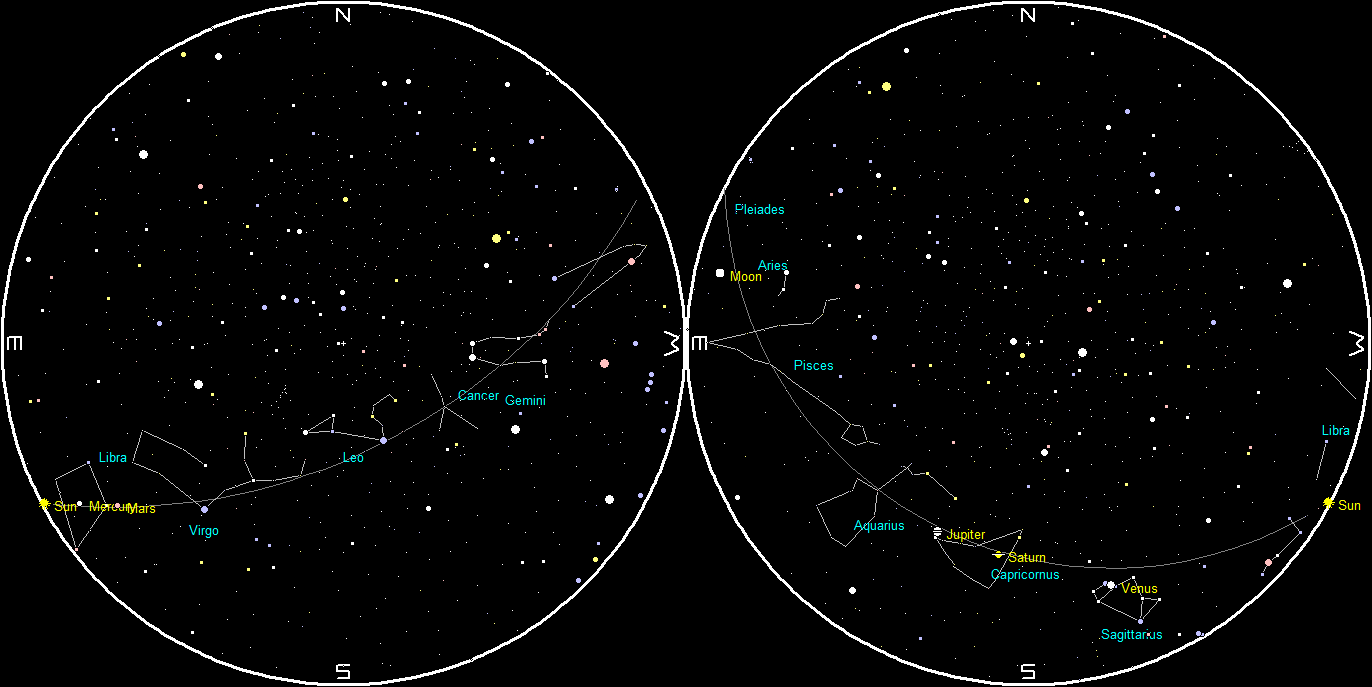
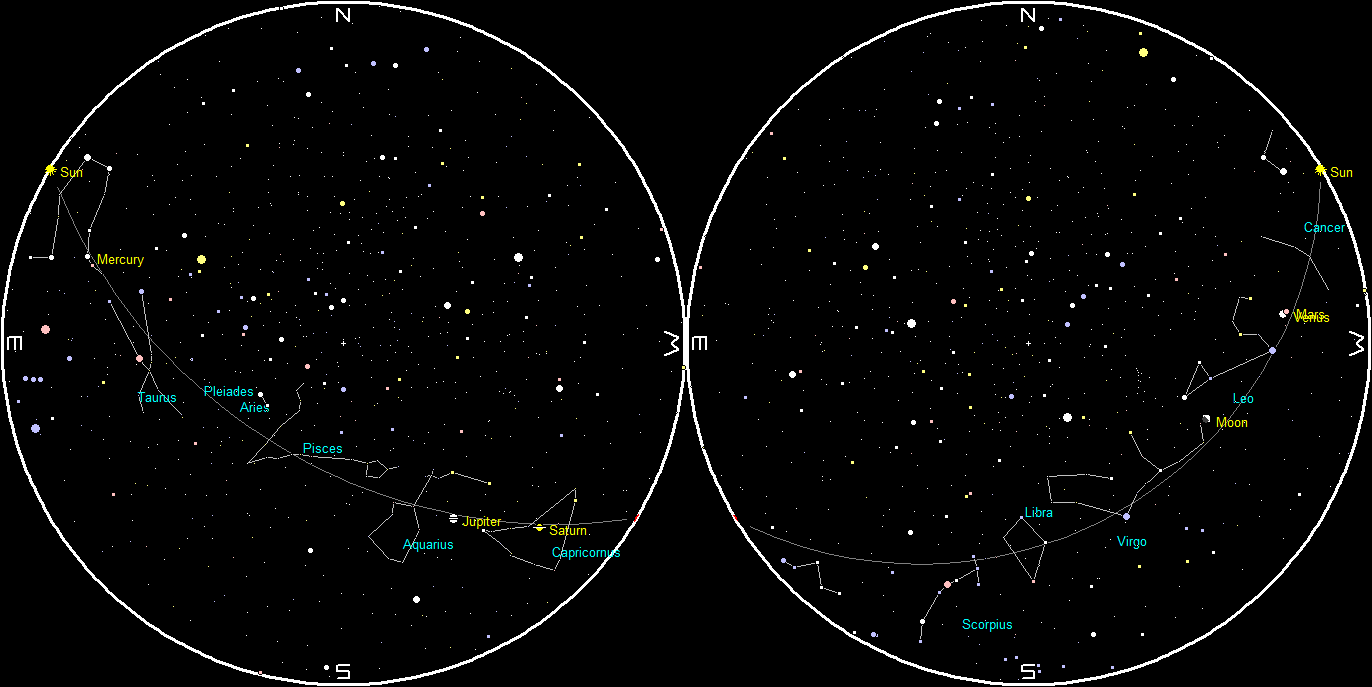
The naked-eye planets and the Moon at sunset and sunrise on a single night, starting with sunset on the right on December 22, 2021. The night ends on the left with sunrise on the 23rd. Click on the image to enlarge it. Created using my LookingUp program.
12/15/2021 – Ephemeris – Let’s search for the naked-eye planets for this week
This is Ephemeris for Wednesday, December 15th. Today the Sun will be up for 8 hours and 49 minutes, setting at 5:02, and it will rise tomorrow at 8:14. The Moon, 3 days before full, will set at 5:50 tomorrow morning.
Let’s search for the naked-eye planets for this week. Venus will be visible in the southwestern evening twilight by 5:30 tonight. It’s a crescent in telescopes, and even binoculars now. It is moving closer to us, and now appears larger than Jupiter in telescopes. Venus will set at 7:27 pm, 14 minutes earlier than it set a week ago, which means that the Sun is catching up with it faster and faster. It has only 24 days left in the evening sky, though it might be hard to spot by the end of the month. By 5:45 pm, both Jupiter and Saturn should be able to be spotted in the southwestern sky. Saturn will be dimmer, and to its lower right, halfway between it and Venus. Saturn will set at 8:41 pm, with Jupiter following an hour and a half later at 10:12 pm.
The astronomical event times given are for the Traverse City/Interlochen area of Michigan (EST, UT – 5 hours). They may be different for your location.
Addendum
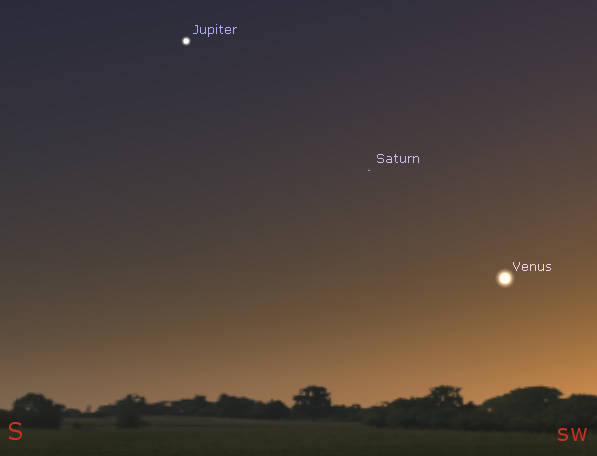
The evening planets, Venus, Saturn and Jupiter in the southwestern at 5:45 pm Tonight, December 15, 2021. Created using Stellarium.
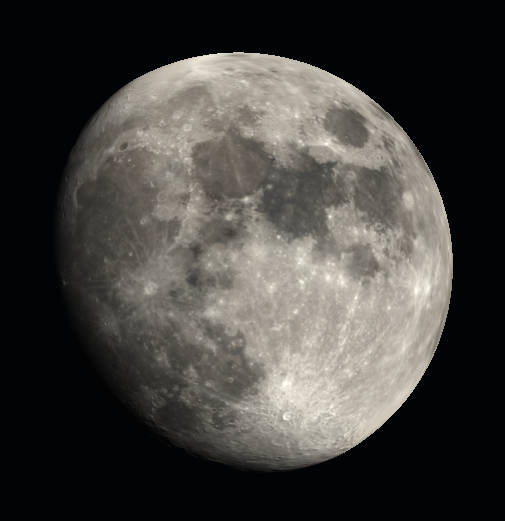
The waxing gibbous Moon, seen at 6 pm tonight, December 15, 2021. Created using Stellarium.
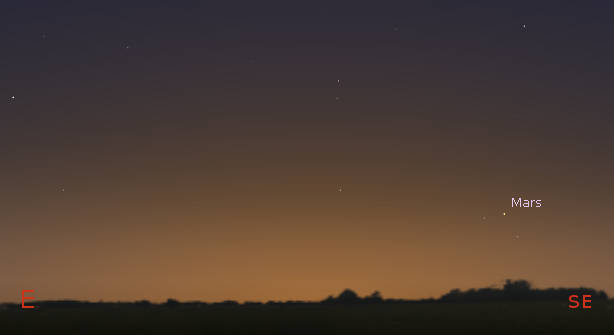
Mars, seen low in the southeast at 7:20 am tomorrow morning, December 16, 2021. Mars was not covered in the recorded program due to time constraints and the fact that Mars, still far away on the other side of the Sun, is only second magnitude and difficult to spot. It will rise at 6:25 am. Created using Stellarium.
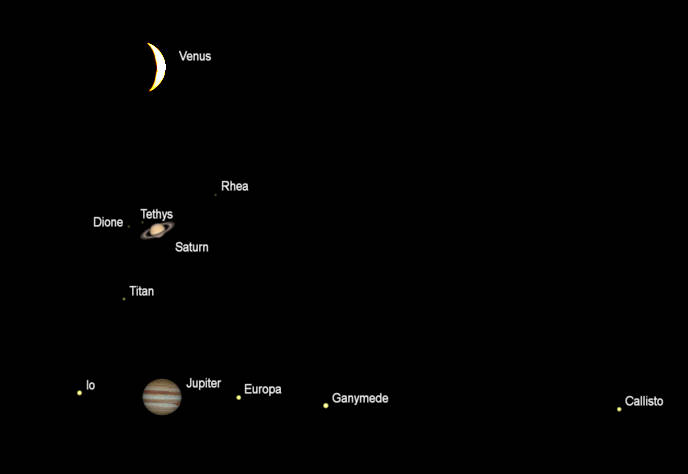
Telescopic views of the bright planets and their brighter moons (north up) as they would be seen in a small telescope, with the same magnification, this evening at 7 pm, December 15, 2021. Apparent diameters: Venus, 49.50″, 15.5% illuminated; Saturn 15.71″, its rings 36.59″; Jupiter, 36.80″. Mars is not shown, its apparent diameter is 3.87″. The ” symbol means seconds of arc (1/3600th of a degree.) Created using Cartes du Ciel (Sky Charts).
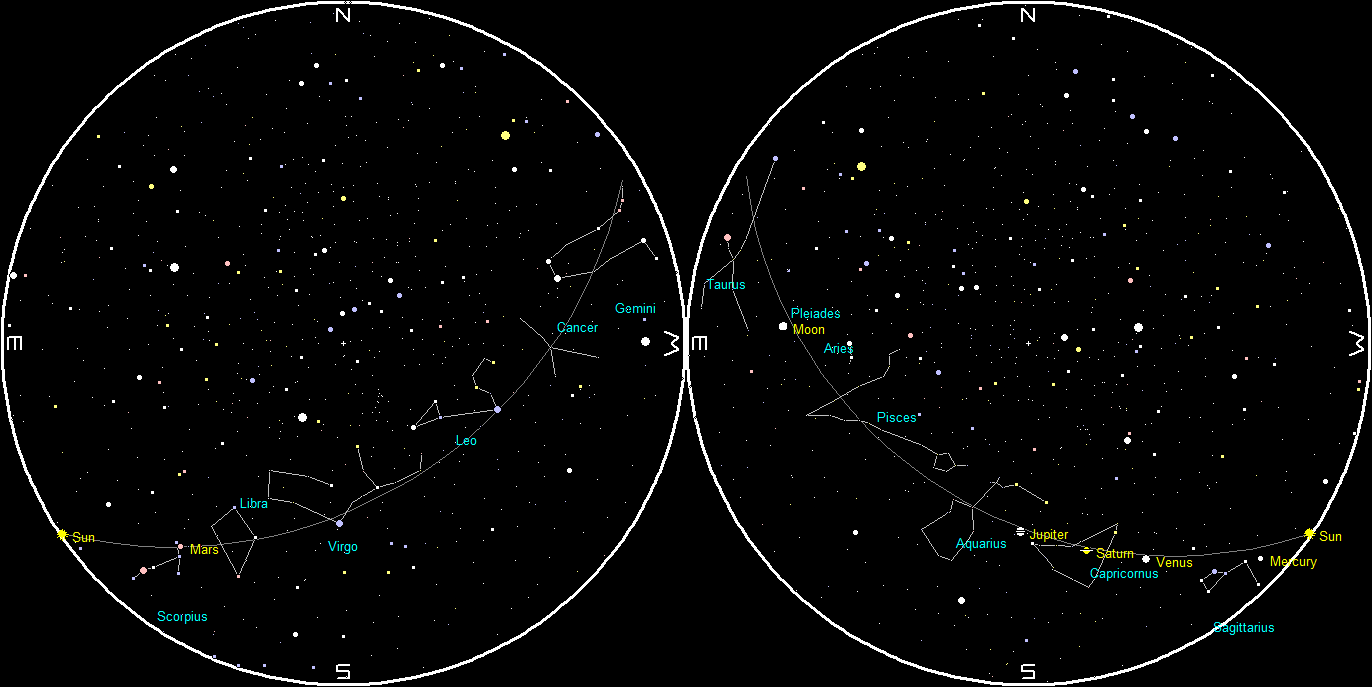
The naked-eye planets and the Moon at sunset and sunrise on a single night, starting with sunset on the right on December 15, 2021. The night ends on the left with sunrise on the 16th. Click on the image to enlarge it. Created using my LookingUp program.
12/08/2021 – Ephemeris – Let’s search for the naked-eye planets and a comet for this week
This is Ephemeris for Wednesday, December 8th. Today the Sun will be up for 8 hours and 54 minutes, setting at 5:02, and it will rise tomorrow at 8:08. The Moon, 2 days before first quarter, will set at 10:00 this evening.
Let’s search for the naked-eye planets for this week. Venus will be visible in the southwestern evening twilight by 5:30 tonight. It’s a crescent in telescopes. It is moving closer to us, and now appears larger than Jupiter in telescopes. Venus will set at 7:41 pm. By 5:45 pm, both Jupiter and Saturn should be able to be spotted in the southwestern sky. Saturn will be dimmer, and to its lower right, between it and Venus. It will set at 9:05 pm, with Jupiter following an hour and a half later at 10:34 pm. Comet Leonard can be spotted with binoculars about 19 degrees below and a bit left of the bright star Arcturus in the east from 6 to 7am tomorrow morning. 19 degrees is a bit less than two widths of a fist held at arm’s length. The comet will move lower each morning.
The astronomical event times given are for the Traverse City/Interlochen area of Michigan (EST, UT – 5 hours). They may be different for your location.
Addendum
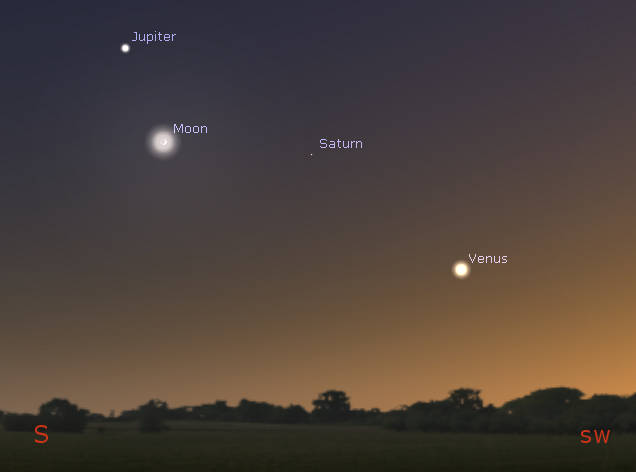
The evening planets Venus, Saturn, the Moon and Jupiter at 5:45 pm this evening, December 8, 2021. Created using Stellarium.
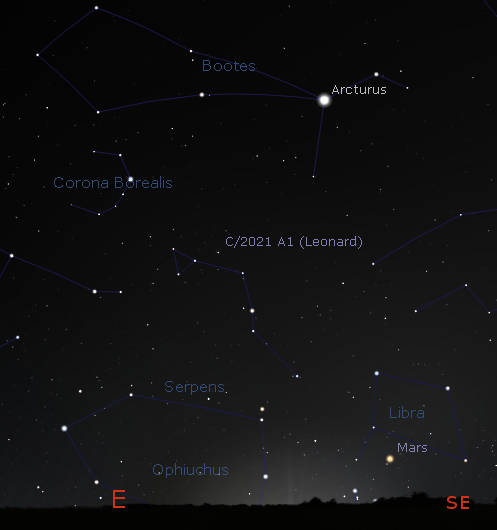
Comet Leonard and Mars at 7:15 am tomorrow morning, December 9, 2021. Though technically visible to the naked eye, binoculars will be needed for most of us. Mars is now visible low in the southeast at that time. Created using Stellarium.
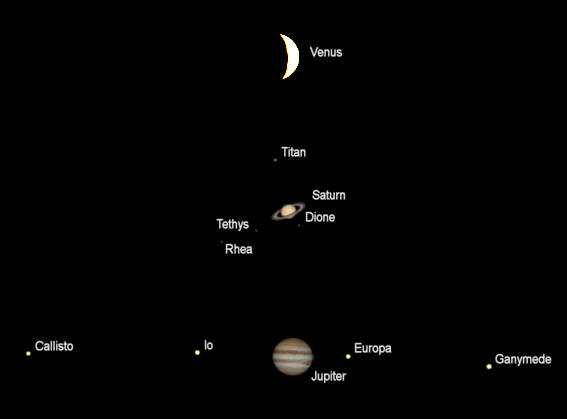
Telescopic views of the bright planets (north up) as they would be seen in a small telescope, with the same magnification, this evening at 6 pm, December 8, 2021. Apparent diameters: Venus, 44.08″, 21.5% illuminated; Saturn 15.84″, its rings 36.90″; Jupiter, 37.51″. Mars is not shown, its apparent diameter is 3.82″. The ” symbol means seconds of arc (1/3600th of a degree.) Created using Cartes du Ciel (Sky Charts).
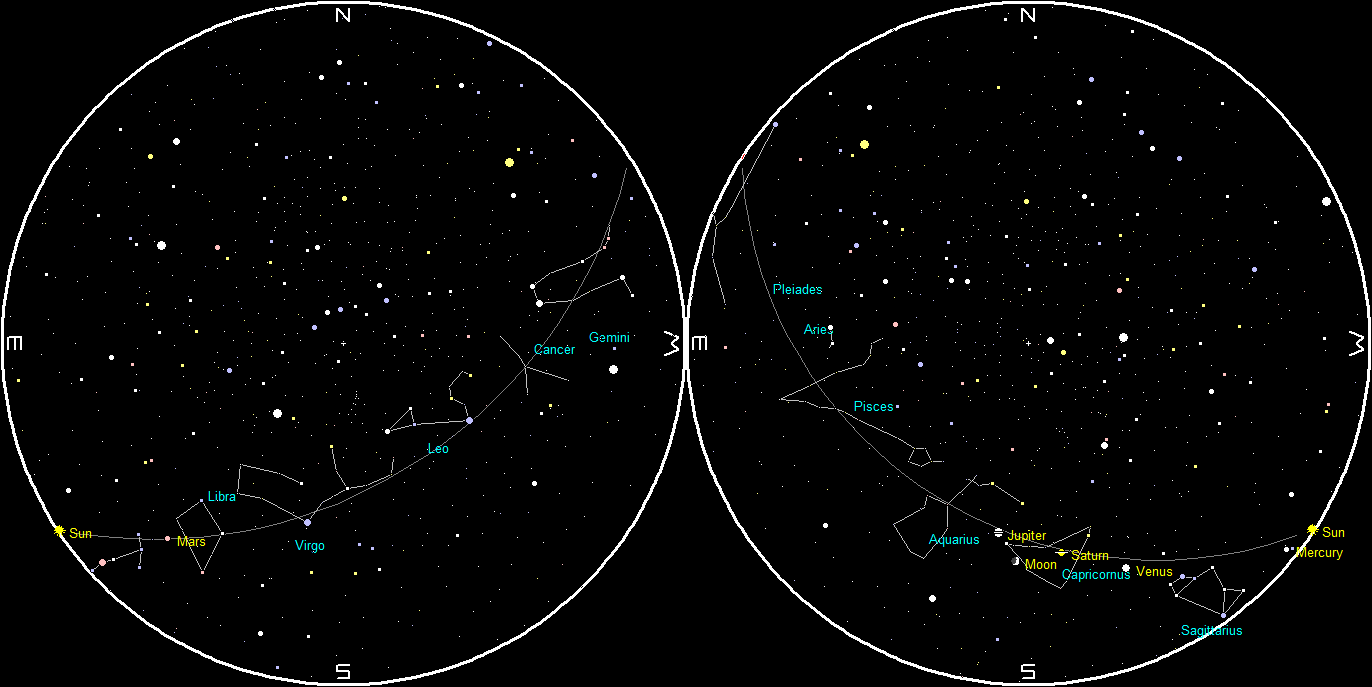
The naked-eye planets and the Moon at sunset and sunrise on a single night, starting with sunset on the right on December 8, 2021. The night ends on the left with sunrise on the 9th. Click on the image to enlarge it. Created using my LookingUp program.
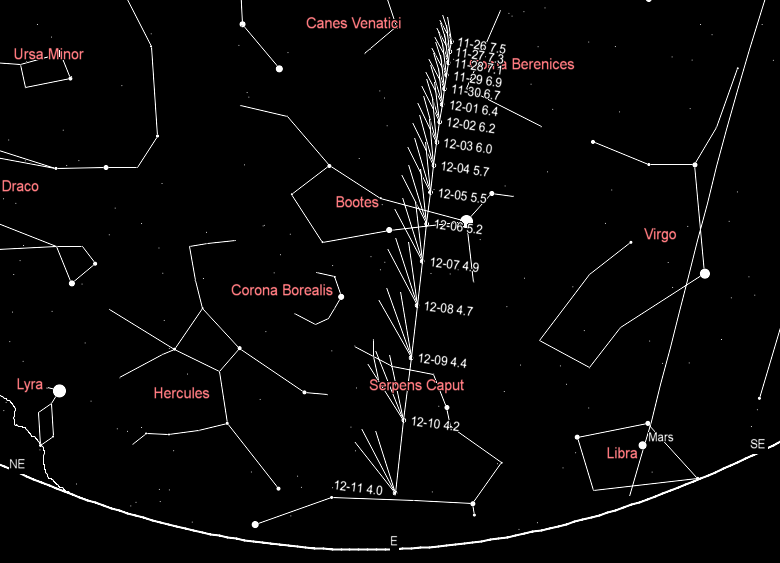
Comet Leonard’s positions at 6:30 am on the dates indicated. The labels are Month-Day Total Magnitude. The star’s position relative to the horizon and the position of Mars are for November 27th. The star field will be shifting to the upper right each morning at 6:30 from the November 27th date at 6:30. Comets always appear dimmer than their magnitude suggests because they are extended objects, not points like stars. Also, comet magnitudes can be unpredictable. Created using Cartes du Ciel (Sky Charts). I’ve reversed the colors from previous printings of this image. Reprinted from my article in the Stellar Sentinel, the newsletter for the Grand Traverse Astronomical Society.
11/17/2021 – Ephemeris – Let’s search for the naked-eye planets for this week
This is Ephemeris for Wednesday, November 17th. Today the Sun will be up for 9 hours and 29 minutes, setting at 5:12, and it will rise tomorrow at 7:44. The Moon, 2 days before full, will set at 6:54 tomorrow morning.
Let’s search for the naked-eye planets for this week. Venus will be visible in the southwestern evening twilight by 5:30 tonight. It’s a fat crescent in telescopes. Venus will set at 7:48 pm. By 5:45 pm, both Jupiter and Saturn should be able to be spotted in the southern sky. Saturn will be dimmer, and to its right. It will set first at 10:19 pm, with Jupiter following at 11:42 pm. Saturn’s rings are a beautiful sight in a telescope of even modest power, but the planet will appear tiny. Jupiter, however, is still quite large, and its four biggest moons are spread out and might all be glimpsed in binoculars. In the morning sky, Mars is starting to make its appearance, rising at 6:33. Binoculars might be able to pick it out low in the east-southeast until 7:15 am.
The astronomical event times given are for the Traverse City/Interlochen area of Michigan (EST, UT – 5 hours). They may be different for your location.
Addendum
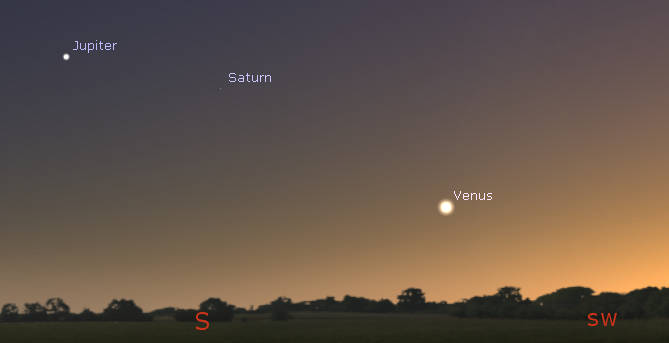
The evening planets Venus, Saturn and Jupiter at 5:45 pm this evening, November 17, 2021. Created using Stellarium.
The Moon in binoculars or small telescope as it might appear tonight, November 17, 2021. Created using Stellarium.
Mars in twilight, tomorrow morning at 7 am, November 18, 2021. Create using Stellarium.
Telescopic views of the bright planets (north up) as they would be seen in a small telescope, with the same magnification, this evening at 7 pm, November 17, 2021. Apparent diameters: Venus, 31.89″, 38.3% illuminated; Saturn 16.32″, its rings 38.01″; Jupiter, 39.95″. Mars in the morning is not shown, but is 3.70″ in diameter. The ” symbol means seconds of arc (1/3600th of a degree.) Click on the image to enlarge it. Created using Cartes du Ciel (Sky Charts).
In the image above, Jupiter’s moon Europa is shown. Actually, before 7:03 pm, it will be hidden in Jupiter’s shadow. Watching it appear is kind of cool. Eclipses of Jupiter’s moons happen all the time. The information for the satellite events is published in Sky and Telescope Magazine. Also tonight, farther to the west, farther out than Ganymede, is the star 45 Capricorni, about the same brightness as the Jovian moons, and nearly in line with them. Don’t mistake it for one of the moons, especially before Europa appears.
The naked-eye planets and the Moon at sunset and sunrise on a single night, starting with sunset on the right on November 17, 2021. The night ends on the left with sunrise on the 18th. Click on the image to enlarge it. Created using my LookingUp program.
09/22/2021 – Ephemeris – Autumn starts this afternoon and a look at the naked-eye planets
This is Bob Moler with Ephemeris for Wednesday, September 22nd. Today the Sun will be up for 12 hours and 9 minutes, setting at 7:39, and it will rise tomorrow at 7:31. The Moon, 2 days past full, will rise at 8:43 this evening.
Here on Earth, the season of fall will begin at 3:21 this afternoon. Let’s search for rest of the naked-eye planets for this week. Venus should be visible in the southwestern evening twilight by 8 o’clock tonight. It will set at 9:08 pm. By 8:15 pm, Jupiter and Saturn will be seen low in the southeastern sky. The brighter Jupiter will be easy to spot at that hour. Saturn will be dimmer, but a bit higher and to its right. They will be visible into the morning hours, with Saturn setting first at 2:55 am, with Jupiter following at 4:19. Saturn’s rings can be seen in a spotting scope of about 20 power magnification. Though at that power the rings won’t appear separated from the planet, so Saturn will look like an elliptical disk.
The astronomical event times given are for the Traverse City/Interlochen area of Michigan (EDT, UT-4 hours). They may be different for your location.
Addendum
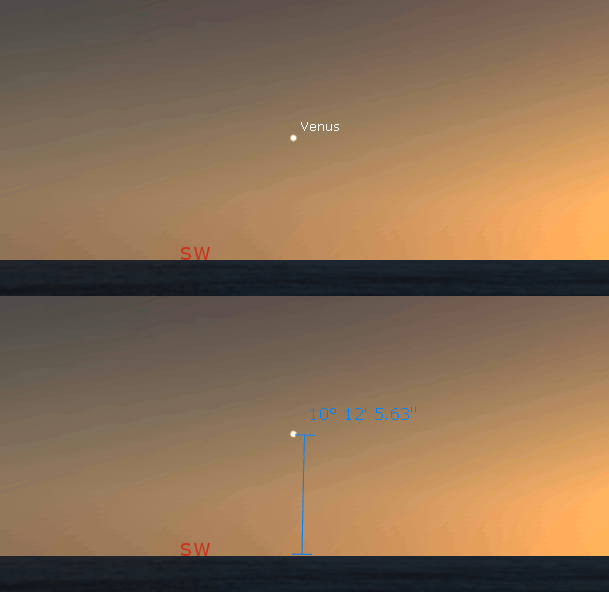
Venus in twilight at 8 pm, or about 20 minutes after sunset, tonight, September 22, 2021. An animation showing its altitude at that time of 10 degrees (about the width of your fist held at arm’s length). Created using Stellarium and GIMP.
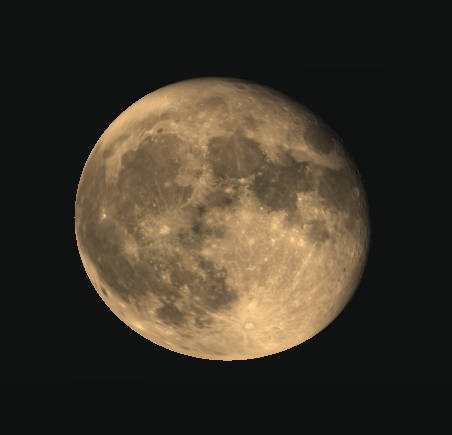
Waning gibbous Moon, about 15 minutes after rising as it might be visible in binoculars or small telescope. Created using Stellarium.
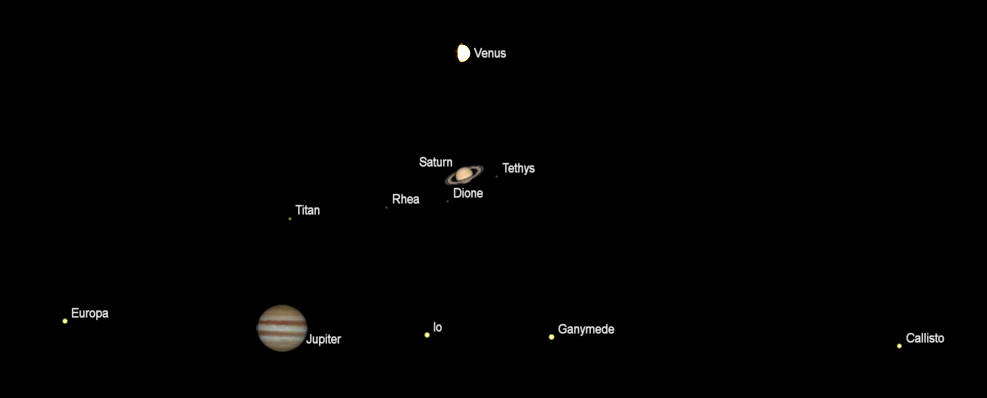
Telescopic views of the bright planets (north up) as they would be seen in a small telescope, with the same magnification, this evening. Venus at 8 pm, Jupiter and Saturn at 10 pm, September 22, 2021. Apparent diameters: Venus, 17.61″, and 65.3% illuminated; Saturn 17.86″, its rings 41.61″; Jupiter, 47.20″. The ” symbol means seconds of arc (1/3600th of a degree.) Click on the image to enlarge it. Created using Cartes du Ciel (Sky Charts).
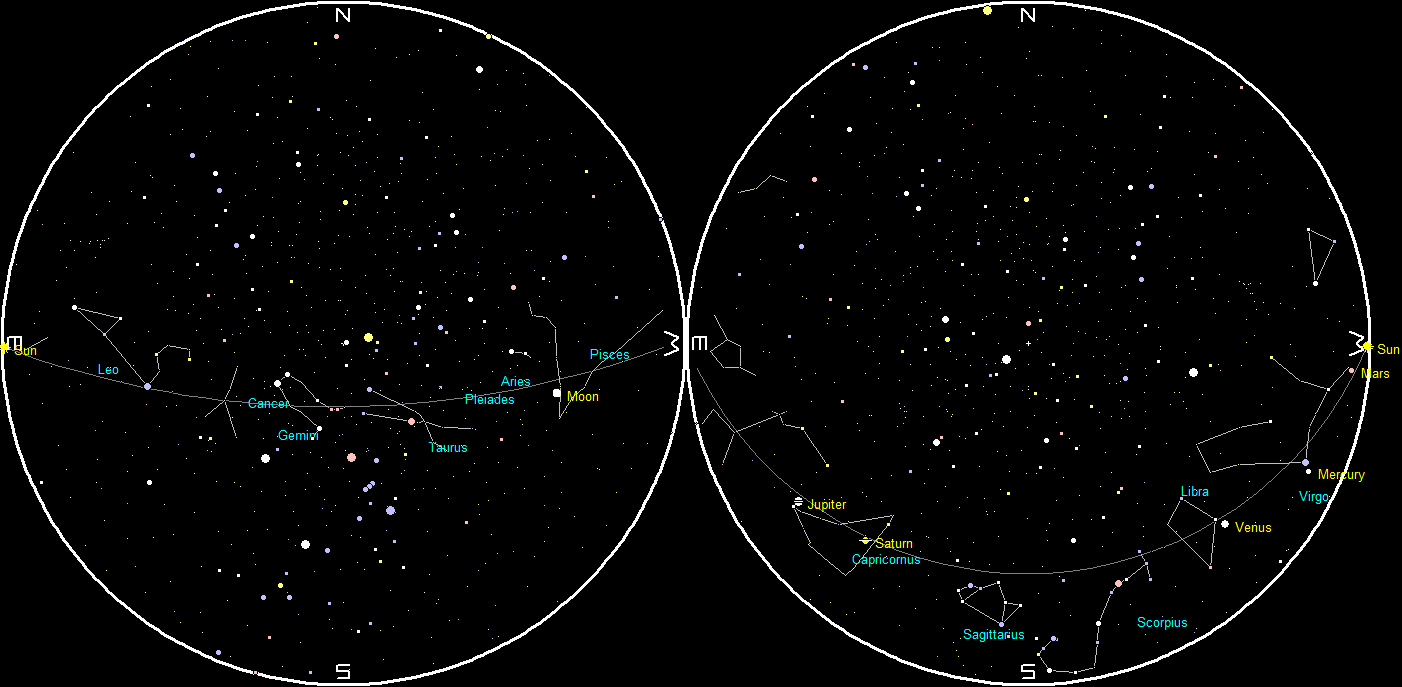
Planets and the Moon at sunset and sunrise of a single night, starting with sunset on the right on September 22, 2021. The night ends on the left with sunrise on the 23rd. Click on the image to enlarge it. Created using my LookingUp program.
08/18/2021 – Ephemeris – Let’s search for the naked-eye planets for this week
This is Bob Moler with Ephemeris for Wednesday, August 18th. Today the Sun will be up for 13 hours and 54 minutes, setting at 8:43, and it will rise tomorrow at 6:50. The Moon, 3 days past first quarter, will set at 3:02 tomorrow morning.
Let’s search for the naked-eye planets for this week. Venus should be visible in the western evening twilight by 9:15 tonight. It will set at 10:04 pm. By 9:30 pm, Jupiter and Saturn will be seen low in the southeastern sky. The brighter Jupiter will be easy to spot at that hour. Saturn will be dimmer, but a bit higher and to its right. Jupiter, just a day from opposition from the Sun, will be at its brightest and closest to us. It’s now 373 million miles (600 million km) from us. It won’t change much by tomorrow. Actually it’s a closer approach than average, so it’s brighter than at an average opposition and larger appearing than normal in telescopes. Jupiter and four of its largest moons always provide for a great show.
The astronomical event times given are for the Traverse City/Interlochen area of Michigan (EDT, UT – 4 hr). They may be different for your location.
Addendum
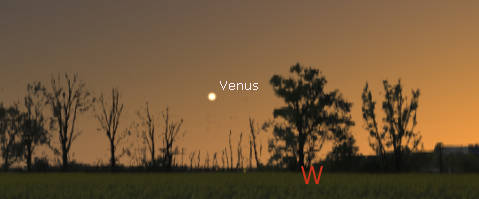
Venus low in the west, tonight at 9:15, about a half hour after sunset, August 18, 2021. Created using Stellarium.
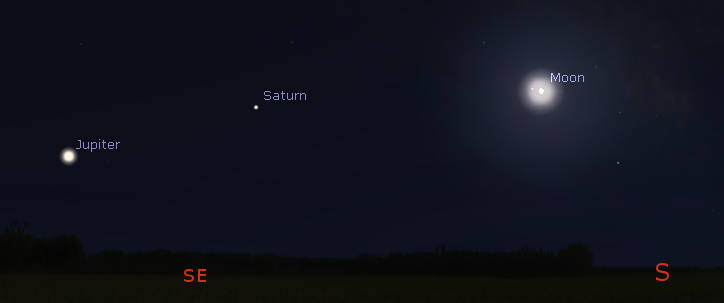
Jupiter, Saturn and the Moon at 10 pm, about an hour and a quarter after sunset tonight, August 18, 2021. Click on the image to enlarge it. Created using Stellarium.
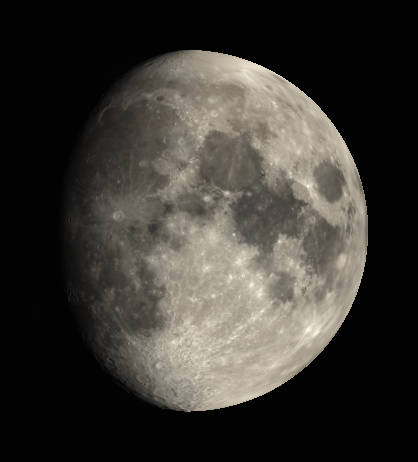
The waxing gibbous Moon as it might appear tonight in binoculars or a small telescope. Created using Stellarium.
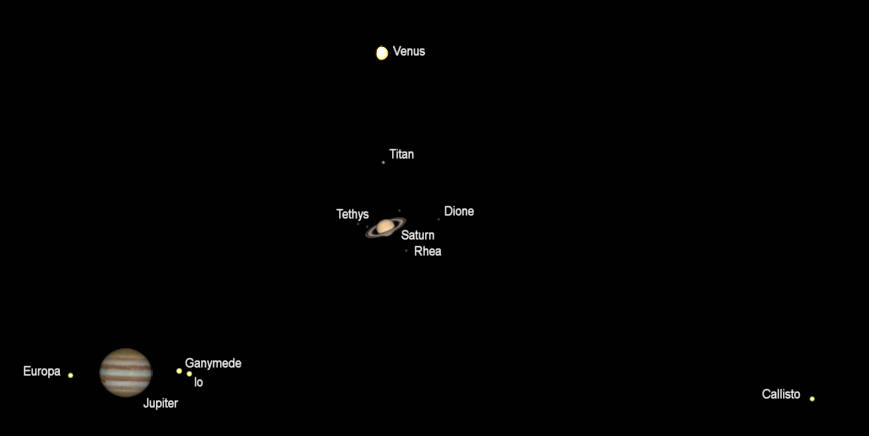
Telescopic view of the bright planets (north up) as they would be seen in a small telescope, with the same magnification, this evening. Venus at 10 pm, and the other two at 11 pm, August 18, 2021. Apparent diameters: Venus, 13.93″; Saturn 18.51″, its rings 43.13″; Jupiter, 49.12″. Jupiter’s moon have a cluster of events in the am hours. See below. The ” symbol means seconds of arc (1/3600th of a degree.) Click on the image to enlarge it. Created using Cartes du Ciel (Sky Charts).
Satellite  Event             EDT (UT-4)   UT
Europa     Shadow start      12:34 am     04:34
Europa	   Transit start     12:37 am     04:37
Io         Occultation start 12:37 am     04:37
Ganymede   Eclipse start     12:43 am     04:43
Io         Occultation end    2:55 am     06:55
Europa     Shadow end         3:25 am     07:25
Europa     Transit end        3:27 am     07:27
Ganymede   Occultation end    4:24 am     08:24

From 12:43 to 2:55 am, only Callisto of the four Galilean moons will be visible.
The above times were determined using Stellarium, and may be off by several minutes.
Shadow events are when a satellite’s shadow is cast onto the face of the planet
Transit events are when the satellite passes in front of the planet. The satellite is usually not visible
Eclipse events are when a satellite passes through the planet’s shadow
Occultation events are when the satellite passes behind the planet
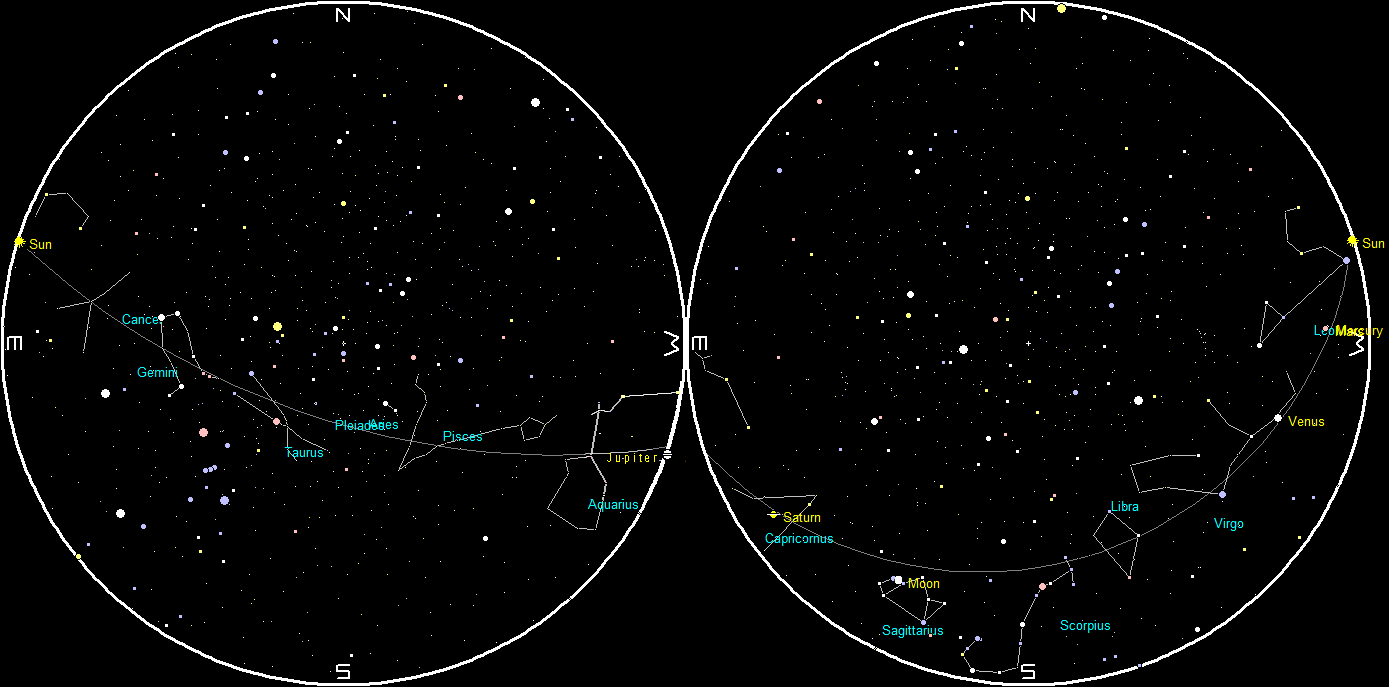
The naked-eye planets and the Moon are shown at sunset and sunrise of a single night, starting with sunset on the right on August 18, 2021. The night ends on the left with sunrise on the 19th. Mars and Mercury will be in conjunction in Leo that evening, so their labels overlap. Click on the image to enlarge. Created using my LookingUp program.
07/14/2021 – Ephemeris – It’s Wednesday, do you know where your naked-eye planets are?
This is Bob Moler with Ephemeris for Wednesday, July 14th. Today the Sun will be up for 15 hours and 15 minutes, setting at 9:26, and it will rise tomorrow at 6:11. The Moon, 3 days before first quarter, will set at 12:23 tomorrow morning.
Let’s search for the naked-eye planets for this week. Venus can be spotted low in the west-northwest twilight by 10 pm or a little after. It will set at 10:57 pm. Venus will be spending the rest of summer low in the western sky, and not be as conspicuous as it usually is as the Evening Star. Mars’ visibility is a real problem. It will be to the right and a bit below Venus in the evening, and will set at 10:52 pm. It’s much dimmer than Venus, so I doubt anyone at our northern latitude could spot it. Saturn and Jupiter, are seen starting very late in the evening and best in the morning sky. Saturn will rise at 10:18 pm. Brighter Jupiter will rise at 11:09 pm, both in the east-southeast. By 5 am, these two planets will be in the southern sky in the morning twilight.
The astronomical event times given are for the Traverse City/Interlochen area of Michigan (EDT, UT – 4 hr). They may be different for your location.
Addendum
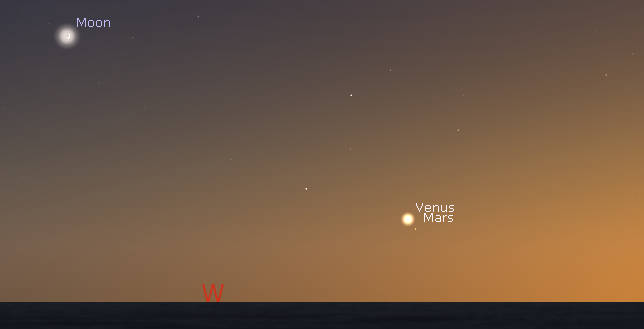
Venus, Mars and the Moon in evening twilight at 10:15 pm, about 50 minutes after sunset on July 14, 2021. Created using Stellarium.
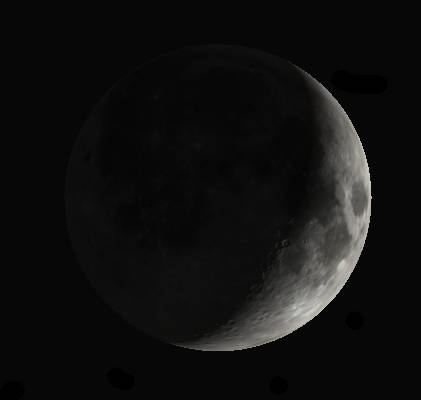
The Moon as it might appear in binoculars or small telescope this evening, July 14, 2021. Created using Stellarium.
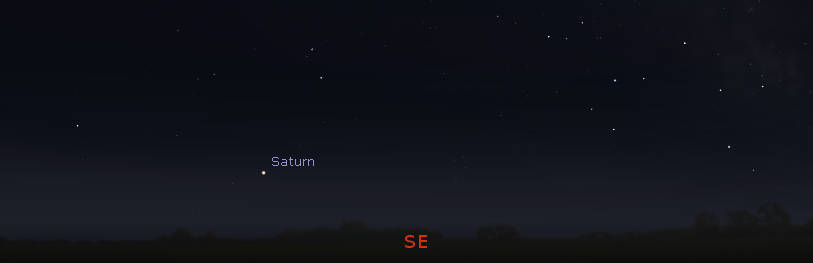
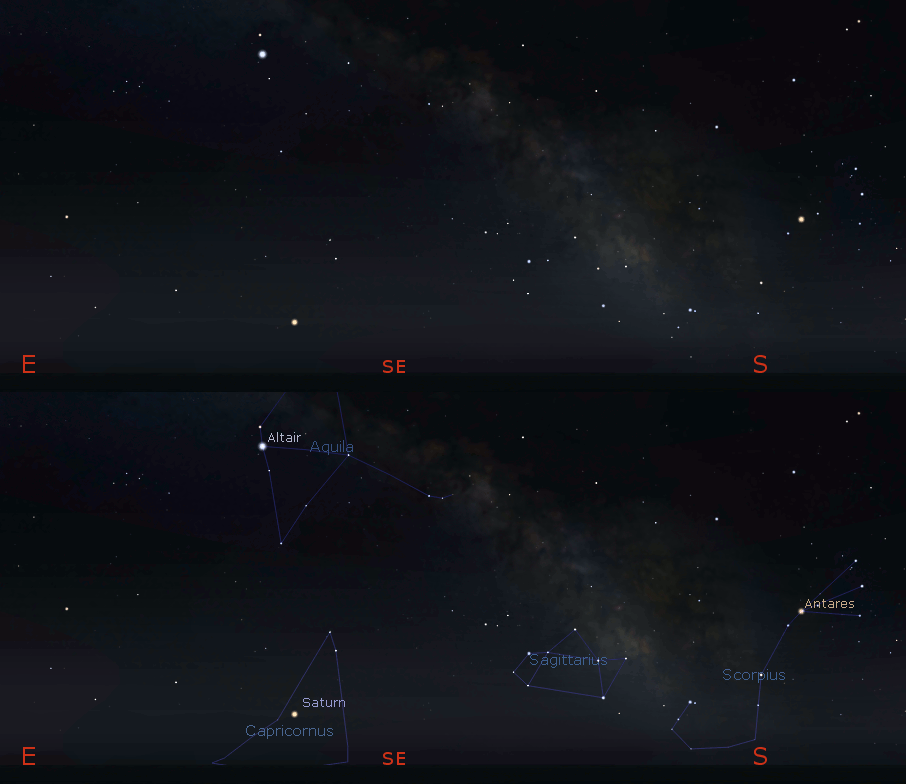
Saturn, rising in the southeast at 11 pm, about an hour and a half after sunset tonight, July 14, 2021. Astronomical twilight here has not yet ended. The Teapot asterism of Sagittarius is seen in the south-southeast. Scorpius’ tail, not shown, is scraping the horizon in the south. Saturn is in Capricornus, with two of its stars visible above it. Click on the image to enlarge it. Created using Stellarium.
Jupiter and Saturn at 5 am tomorrow morning. Click on the image to enlarge it. Created using Stellarium.
The planets as seen in a telescope (north up) with the same magnification for the night of July 14/15, 2021. Times of the display are: Venus, 10:30 pm; Saturn and Jupiter, 5 am. Apparent diameters: Venus, 11.77″; Saturn 18.50″, its rings 43.09″; Jupiter, 46.99″. Mars has an apparent diameter of only 3.75″ and is not represented. The ” symbol means seconds of arc (1/3600th of a degree.) Click on the image to enlarge it. Created using Cartes du Ciel (Sky Charts).
Planets and the Moon at sunset and sunrise of a single night, starting with sunset on the right on July 14, 2021. The night ends on the left with sunrise on the 15th. Click on the image to enlarge. Created using my LookingUp program.
07/07/2021 – Ephemeris – Let’s search for the naked-eye planets for this week
This is Ephemeris for Wednesday, July 7th. Today the Sun will be up for 15 hours and 24 minutes, setting at 9:30, and it will rise tomorrow at 6:05. The Moon, 2 days before new, will rise at 4:36 tomorrow morning.
Let’s search for the naked-eye planets for this week. Venus can be spotted low in the west-northwest twilight by 10 pm or a little after. It will set at 11:03 pm. Venus will be spending the rest of summer low in the western sky, and not be as conspicuous as it usually is as the Evening Star. Mars’ visibility is getting to be a real problem. It can be found to the left and a bit above Venus at 10:30 pm, and will set at 11:06 pm. Saturn and Jupiter, are seen best in the morning sky. Saturn will rise before midnight at 10:47 pm. It’s seen with the stars of Capricornus. Brighter Jupiter, to the left of Saturn, will rise at 11:34 pm. By 5 am, these two planets will be in the southern sky in the morning twilight.
The astronomical event times given are for the Traverse City/Interlochen area of Michigan (EDT, UT-4 hr). They may be different for your location.
Addendum
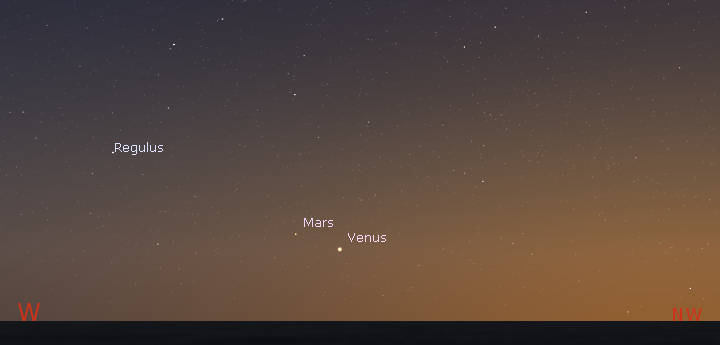
Venus and Mars in the evening twilight at 10:30 pm tonight, July 7, 2021. I’m not promising that Mars will be visible, since it’s now down to second magnitude. Created using Stellarium.
Saturn finder animation for 11:30 pm tonight, July 7, 2021. Click on the image to enlarge it. Created using Stellarium and GIMP.
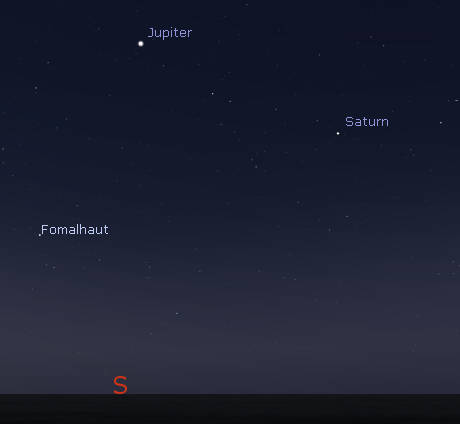
Jupiter and Saturn at 5 am tomorrow morning, July 8, 2021. Created using Stellarium.
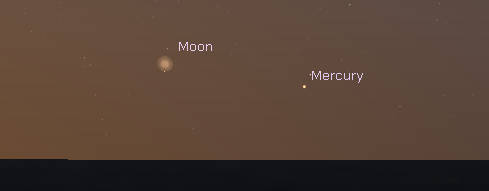
Mercury and the Moon at 5:15 am tomorrow morning, July 8, 2021. Created using Stellarium.
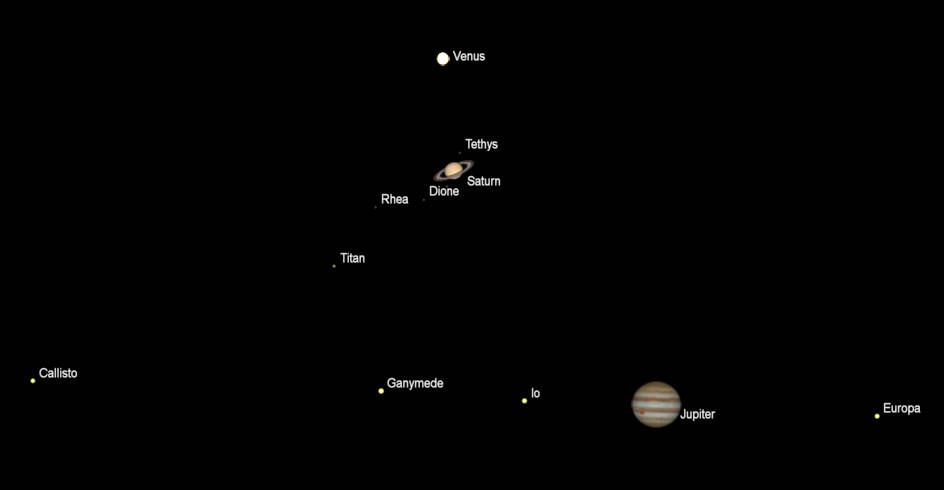
The planets as seen in a telescope (north up) with the same magnification for the night of July 7/8, 2021. Times of the display are: Venus, 10:30 pm; Saturn and Jupiter, 5 am. Apparent diameters: Venus, 11.46″; Saturn 18.41″, its rings 42.88″; Jupiter, 46.18″. Mars has an apparent diameter of only 3.80″, and Mercury of 7.32 and are not represented. The ” symbol means seconds of arc (1/3600th of a degree.) Click on the image to enlarge it. Created using Cartes du Ciel (Sky Charts).
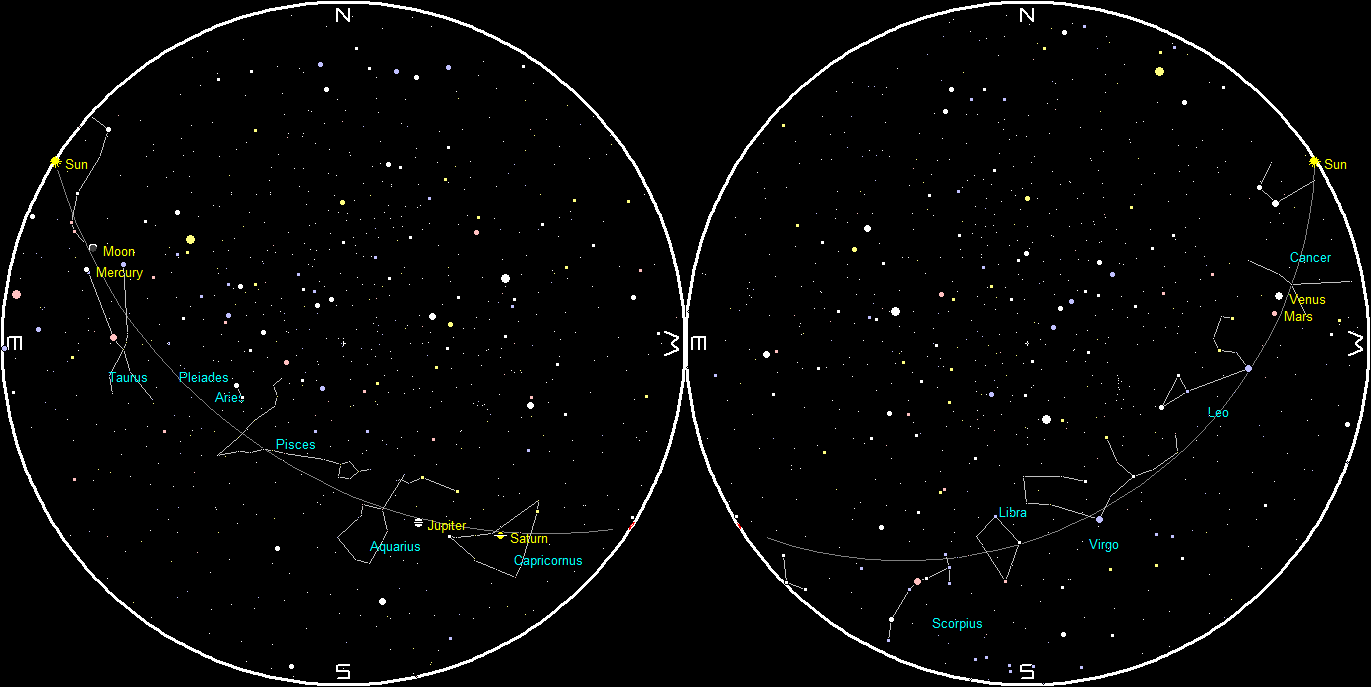
Planets and the Moon at sunset and sunrise of a single night, starting with sunset on the right on July 7, 2021. The night ends on the left with sunrise on the 8th. Click on the image to enlarge. Created using my LookingUp program.
06/30/2021 – Ephemeris – Let’s search for the naked-eye planets for this week
This is Ephemeris for Wednesday, June 30th. Today the Sun will be up for 15 hours and 31 minutes, setting at 9:32, and it will rise tomorrow at 6:01. The Moon, 1 day before last quarter, will rise at 1:35 tomorrow morning.
Let’s search for the naked-eye planets for this week. Venus can be spotted low in the west-northwest twilight by 10 pm or a little after. It will set at 11:06 pm. Venus will be spending the rest of summer low in the western sky for the rest of summer, and not be a conspicuous as it usually is. Mars can be found in the west-northwest at 11pm. It’s in Cancer and will set at 11:25 pm as it is slowly losing its race with the Sun. Saturn and Jupiter, are seen best in the morning sky. Saturn will rise before midnight at 11:15 pm. It’s seen with the stars of Capricornus. Brighter Jupiter, to the left of Saturn, will rise at 12:06 am. By 5 am, these two planets will be in the south in the morning twilight.
The astronomical event times given are for the Traverse City/Interlochen area of Michigan (EDT, UT-4). They may be different for your location.
Addendum
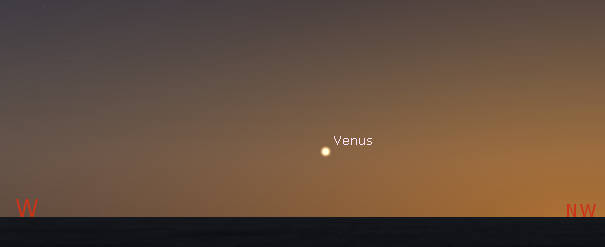
Venus in evening twilight at 10:30, about an hour after sunset. Mars is in the picture, but the twilight is overpowering it. Created using Stellarium.
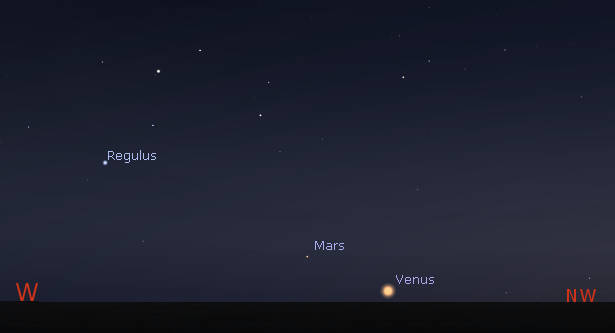
Mars with Venus setting at 11 pm, an hour and a half after sunset. Also, visible may be the bright star Regulus in the constellation of Leo the lion with the asterism of the Sickle or backwards question mark that delineate the head and mane of the beast. Created using Stellarium.
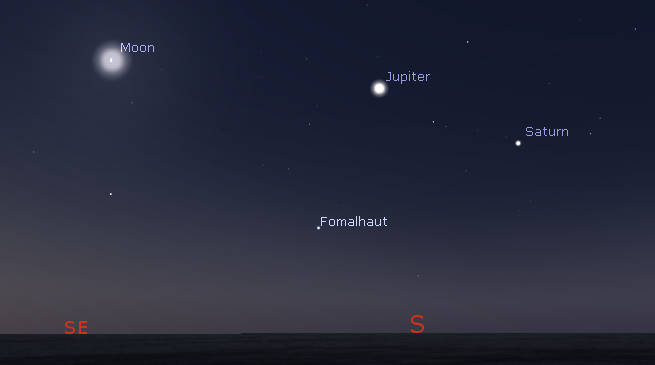
Saturn, Jupiter and the Moon in morning twilight of 5 am, about an hour before sunrise. Created using Stellarium.
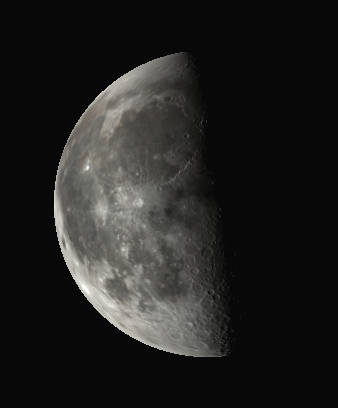
The Moon at last quarter as it might be seen in binoculars or small telescope at 5 am, July 1, 2021. Created using Stellarium.
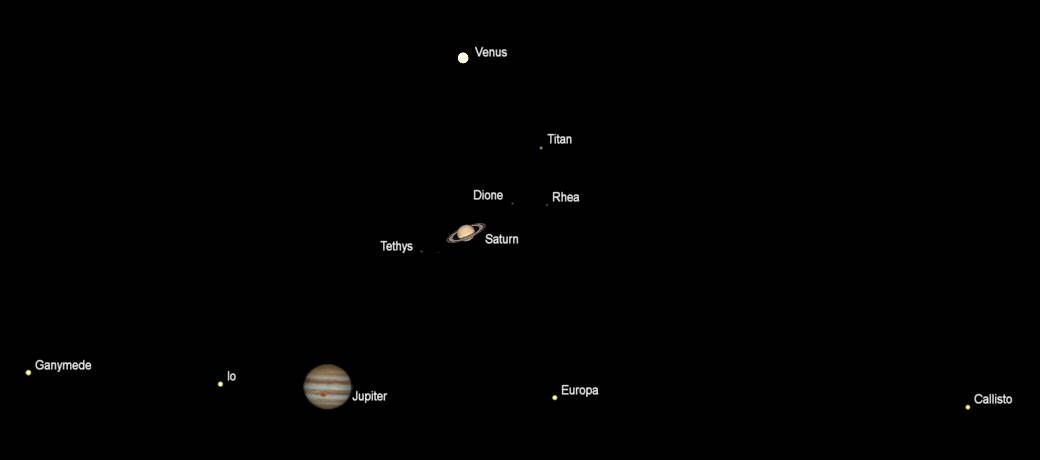
The planets as seen in a telescope (north up) with the same magnification for the night of June 30/July 1, 2021. Times of the display are: Venus, 10:30 pm; Saturn and Jupiter, 5 am. Apparent diameters: Venus, 11.19″; Saturn 18.29″, its rings 42.62″; Jupiter, 45.30″. Mars has an apparent diameter of only 3.86″ and is not represented. The ” symbol means seconds of arc (1/3600th of a degree.) Click on the image to enlarge it. Created using Cartes du Ciel (Sky Charts).
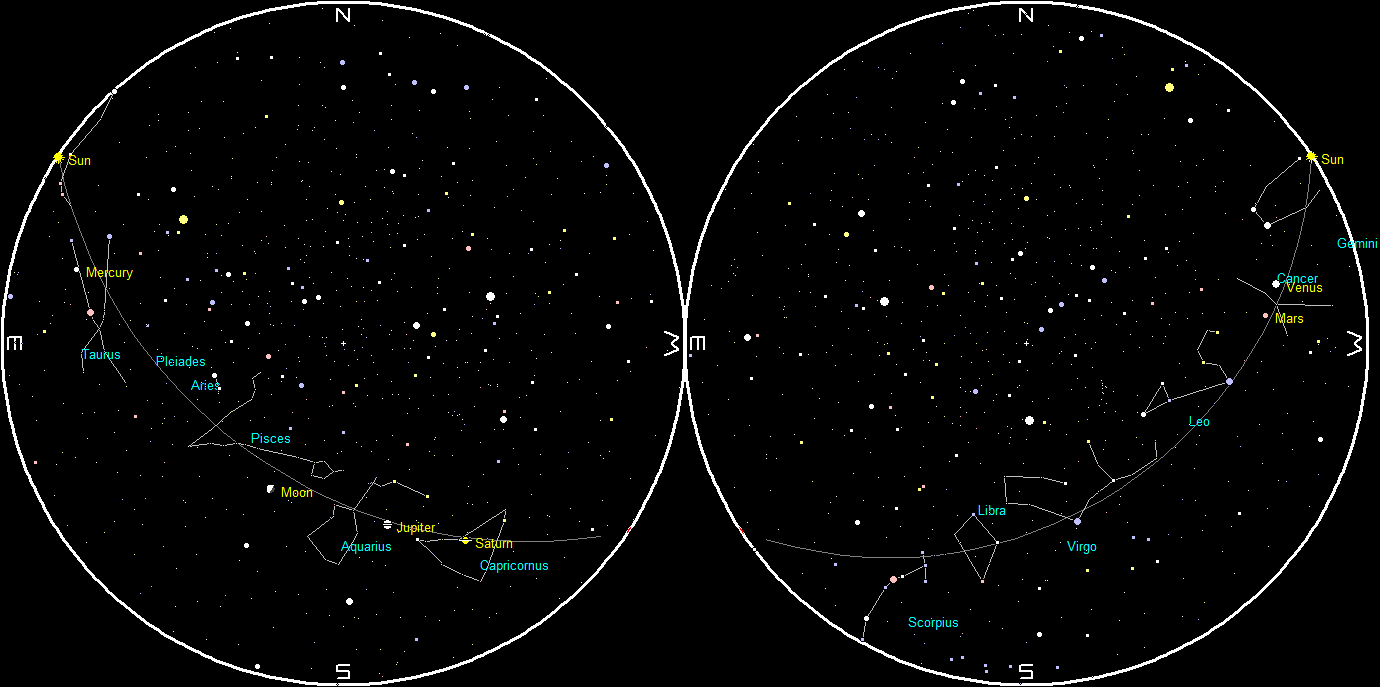
Planets and the Moon at sunset and sunrise of a single night, starting with sunset on the right on June 30, 2021. The night ends on the left with sunrise on the July 1st. Click on the image to enlarge. Created using my LookingUp program.
06/23/2021 – Ephemeris – Let’s search for the naked-eye planets for this week
This is Bob Moler with Ephemeris for Wednesday, June 23rd. Today the Sun will be up for 15 hours and 34 minutes, setting at 9:32, and it will rise tomorrow at 5:58. The Moon, 1 day before full, will set at 5:30 tomorrow morning.
Let’s search for the naked-eye planets for this week. Venus can be spotted low in the west-northwest twilight by 10 pm or a little after. Venus will set at 11:07 pm. Mars can be found in the west-northwest at 11pm, It’s in Cancer and is currently passing in front of the Beehive star cluster which can be spotted in a pair of binoculars. Mars will set at 11:38 pm as it is slowing losing its race with the Sun. Saturn and Jupiter, are in the morning sky. Saturn will actually rise before midnight at 11:44 pm. It’s seen with the stars of Capricornus. Brighter Jupiter, to the left of Saturn, will rise at 12:34 am. By 5 am, these two planets will be in the south and south-southeast in the morning twilight.
The astronomical event times given are for the Traverse City/Interlochen area of Michigan (EDT, UT-4). They may be different for your location.
Addendum
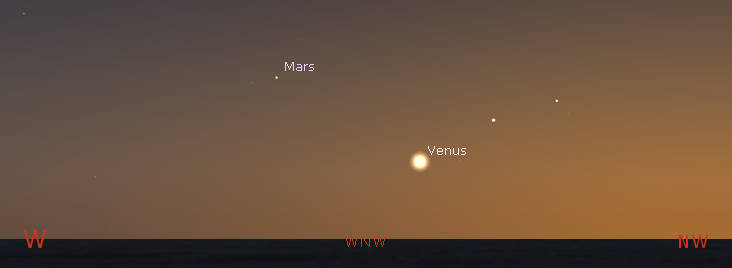
Venus and Mars in Evening twilight, seen at 10:30 pm, about an hour after sunset. Venus is about 5 1/2 degrees in altitude above a sea or lake horizon. Click on the image to enlarge. Created using Stellarium.
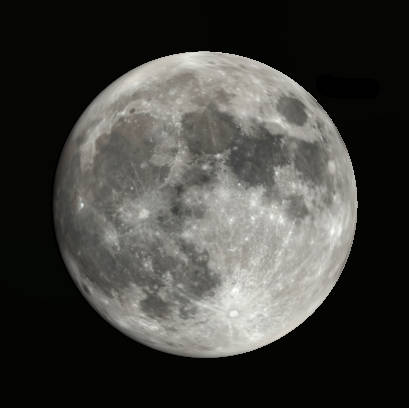
The Moon tonight at 10:30 pm, approximately 16 hours before actual full moon. Created using Stellarium.
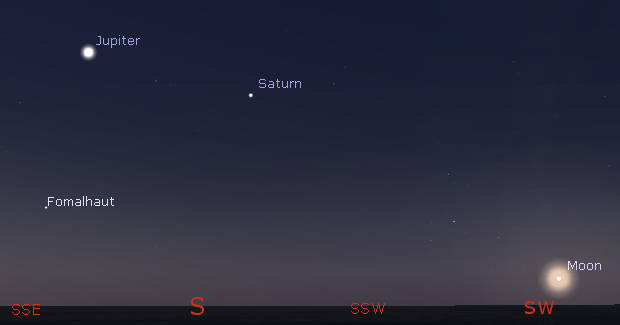
Jupiter, Saturn and the Moon tomorrow morning at 5 am, about an hour before sunrise. Click on the image to enlarge. Created using Stellarium.
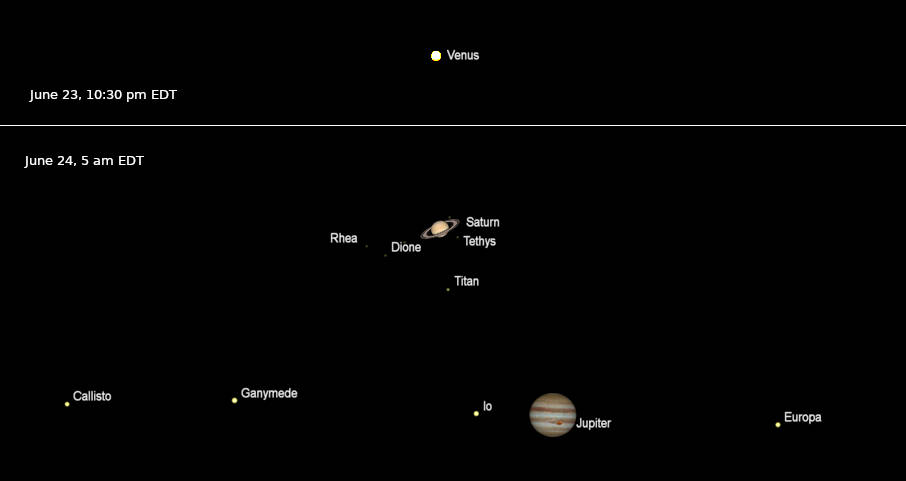
The planets as seen in a telescope (north up) with the same magnification for the night of June 23/24, 2021. Times of the display are: Venus, 10:30 pm; Saturn and Jupiter, 5 am. Apparent diameters: Venus, 10.94″; Saturn 18.16″, its rings 42.29″; Jupiter, 44.38″. Mars has an apparent diameter of only 3.91″ and is not represented. The ” symbol means seconds of arc (1/3600th of a degree.) Created using Cartes du Ciel (Sky Charts).
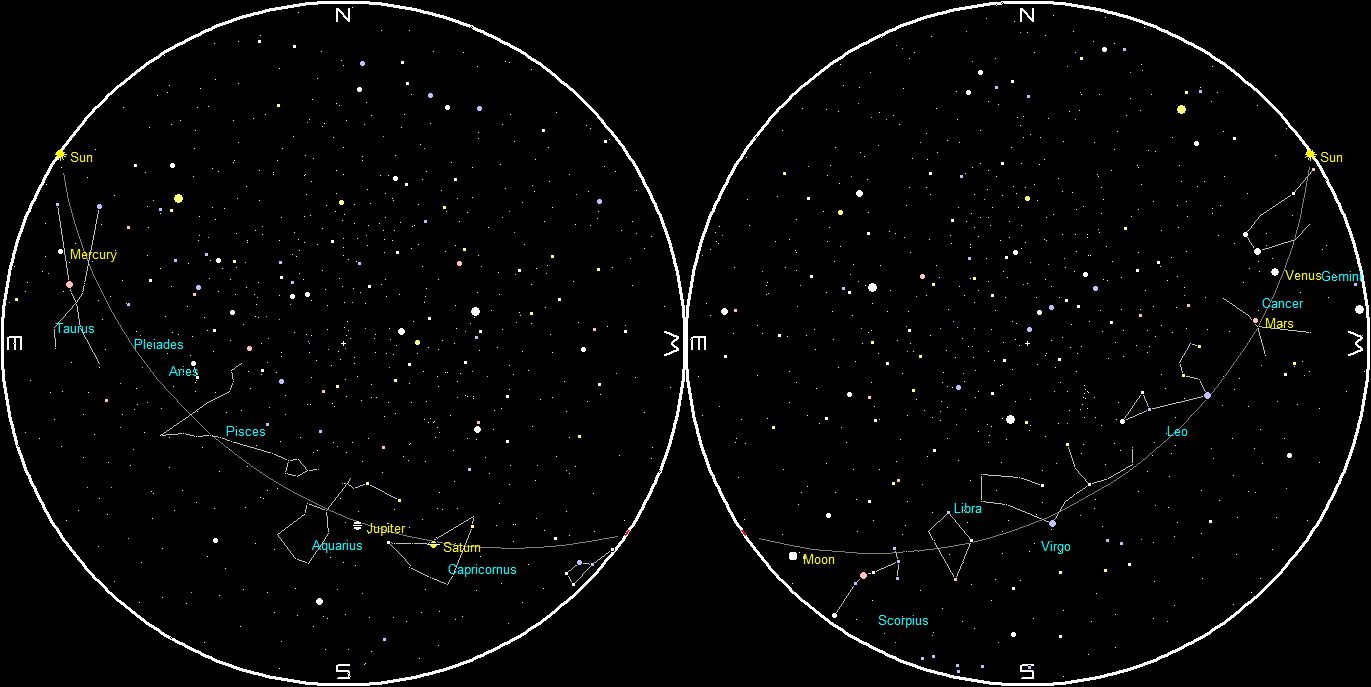
Planets and the Moon at sunset and sunrise of a single night, starting with sunset on the right on June 23, 2021. The night ends on the left with sunrise on the 24th. Click on the image to enlarge. Created using my LookingUp program.
 Bob Moler's Ephemeris Blog