Archive
09/19/2012 – Ephemeris – Where are the bright planets this week?
Ephemeris for Wednesday, September 19th. The sun will rise at 7:26. It’ll be up for 12 hours and 18 minutes, setting at 7:44. The moon, 3 days before first quarter, will set at 9:40 this evening.
Let’s see how many bright planets we can find this week. Mars and Saturn now set too close to the sun to be easily seen in the evening sky. Both are in the west southwestern sky and very low in twilight. Saturn sets at 9:02 p.m., while Mars sets at 9:33. The planetary action moves to later in the evening and the morning. Jupiter, will rise at 11:07 p.m. in the east northeast. It is located in the constellation of Taurus. The last bright planet of the night is the morning star Venus which will rise at 3:45 a.m. also in the east northeast. Venus is now moving through Cancer towards Leo. The planets Venus and Jupiter and the winter constellations are a great sight for early risers.
Times are for the Traverse City/Interlochen area of Michigan. They may be different for your location.
Addendum
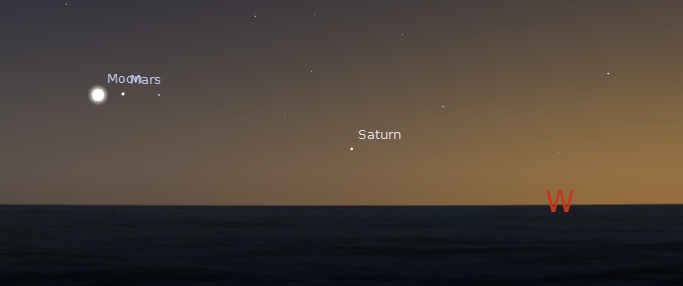
Mars, the moon and Saturn at 8:30 p.m. on September 19, 2012. Created using Stellarium.
Note that the sky will be brighter than this. The moon will be a thin crescent, and not at all bright. tell me if you can spot these guys.
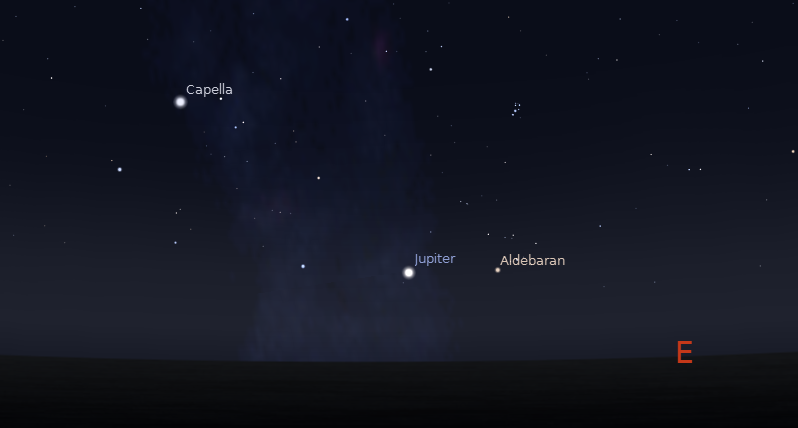
Jupiter, nearly an hour after rising – midnight September 20, 2012. Created using Stellarium.
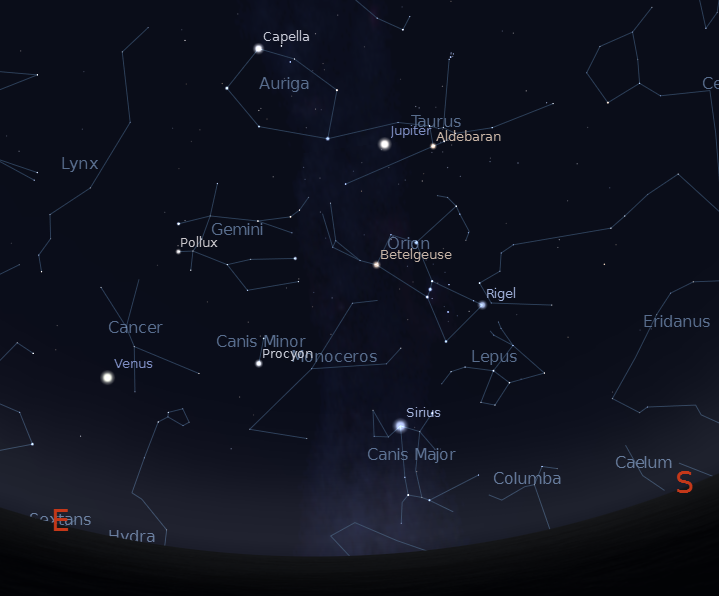
Jupiter and Venus among the star of winter at 6 a.m. on September 20, 2012. Created using Stellarium.
On a personal note
This would have been my mother’s 100th birthday. She passed away 34 years ago. It is she who first taught me the constellations.
09/12/2012 – Ephemeris – Where are the bright planets this week?
Ephemeris for Wednesday, September 12th. The sun will rise at 7:18. It’ll be up for 12 hours and 39 minutes, setting at 7:57. The moon, 3 days before new, will rise at 4:34 tomorrow morning.
Let’s see how many bright planets we can find this week. Mars, Saturn and the star Spica make an elongated triangle in the west southwest in twilight after sunset. Mars is on the left with Saturn on the upper right and Spica below. It may take binoculars to spot them. Spica will set first at 8:57 followed by Saturn at 9:28 and Mars at 9:51. It’s getting harder and harder to spot these guys each evening. The morning sky features the two brightest planets: Jupiter, will actually rise before midnight at which will rise at 11:29 p.m. in the east northeast and Venus, which will rise at 3:33 a.m. also in the east northeast. Jupiter is near the head of Taurus the bull, while Venus is in Cancer. The moon will be near it tomorrow morning, as it is this morning.
Times are for the Traverse City/Interlochen area of Michigan. They may be different for your location.
Addendum
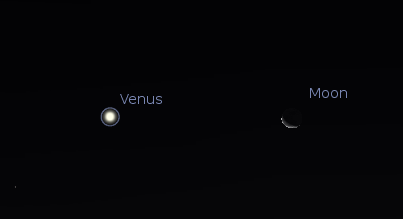
Venus and the moon on September 12, at 5:30 a.m. Created using Stellarium.
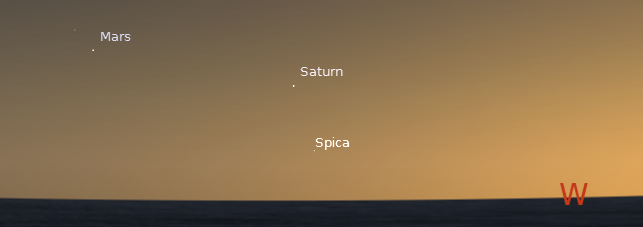
Planets Mars, Saturn and the star Spica in twilight at 8:30 p.m. on September 12, 2012. Created using Stellarium.
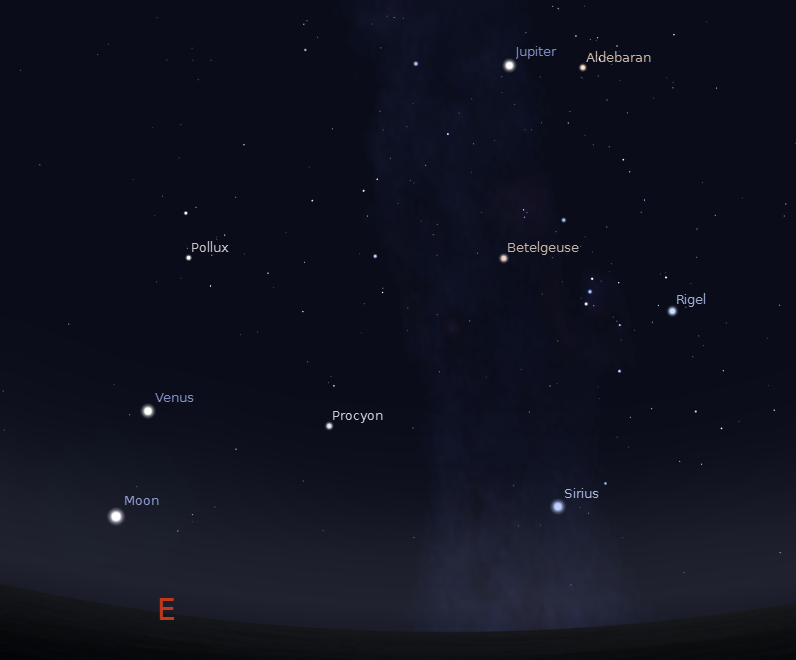
The planets Venus and Jupiter among the winter stars visible ay 5:30 a.m. September 13, 2012. Created using Stellarium.
09/05/2012 – Ephemeris – Where are the bright planets this week?
Ephemeris for Wednesday, September 5th. The sun will rise at 7:10. It’ll be up for 13 hours exactly, setting at 8:10. The moon, 3 days before last quarter, will rise at 10:24 this evening.
Let’s see how many bright planets we can find this week. Mars, Saturn and the star Spica make an elongated triangle in the west southwest in twilight after sunset. Mars is on the left with Saturn on the upper right and Spica below. Spica will set first at 9:24 followed by Saturn at 9:57 and Mars at 10:07. This will be about the last week you’ll see Saturn and Spica in the evening until next year.. The morning sky features the two brightest planets: Jupiter, which will rise at 11:54 p.m. in the east northeast and Venus, which will rise at 3:23 a.m. also in the east northeast. Jupiter is near the head of Taurus the bull, while Venus is moving between Gemini and Cancer.
Times are for the Traverse City/Interlochen area of Michigan. They may be different for your location.
Addendum
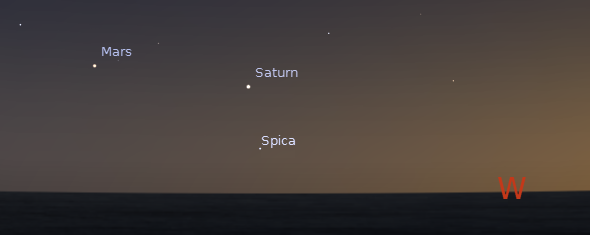
Mars, Saturn and the star Spica at 9 p.m. Created using Stellarium.
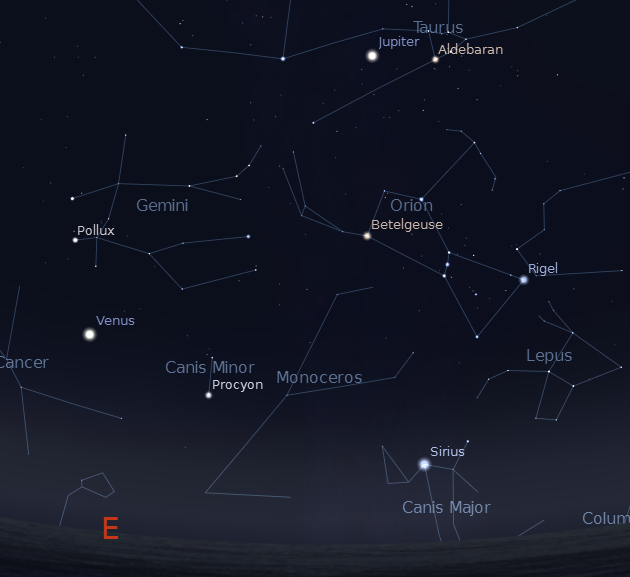
Jupiter, Venus and a preview of the stars and constellations of winter. Created using Stellarium.
08/29/2012 – Ephemeris – Where are the bright planets this week?
Ephemeris for Wednesday, August 29th. The sun will rise at 7:02. It’ll be up for 13 hours and 21 minutes, setting at 8:23. The moon, 2 days before full, will set at 6:04 tomorrow morning.
Let’s see what’s happening with the bright planets for this week. Mars Saturn and the star Spica make a bright but elongating triangle in the west southwest after sunset. Mars is on the upper left with Saturn on the upper right and Spica below. They are located in the constellation Virgo the virgin. Saturn will be setting in the west at 10:20 p.m, and Mars will set 3 minutes later. The morning sky features the two brightest planets: Jupiter, which will rise at 12:23 a.m. in the east northeast and Venus, which will rise at 3:16 also in the east northeast. Jupiter is near the head of Taurus the bull, while Venus is moving between Gemini and Cancer. Early morning is a good time to get a preview of winter stars.
Times are for the Traverse City/Interlochen area of Michigan. They may be different for your location.
Addendum
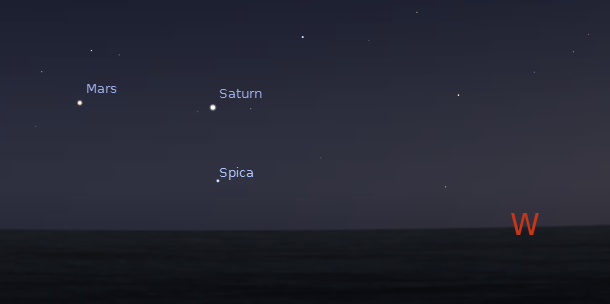
Mars, Saturn and Spica at 9:30 p.m. on August 29, 2012. Created using Stellarium.
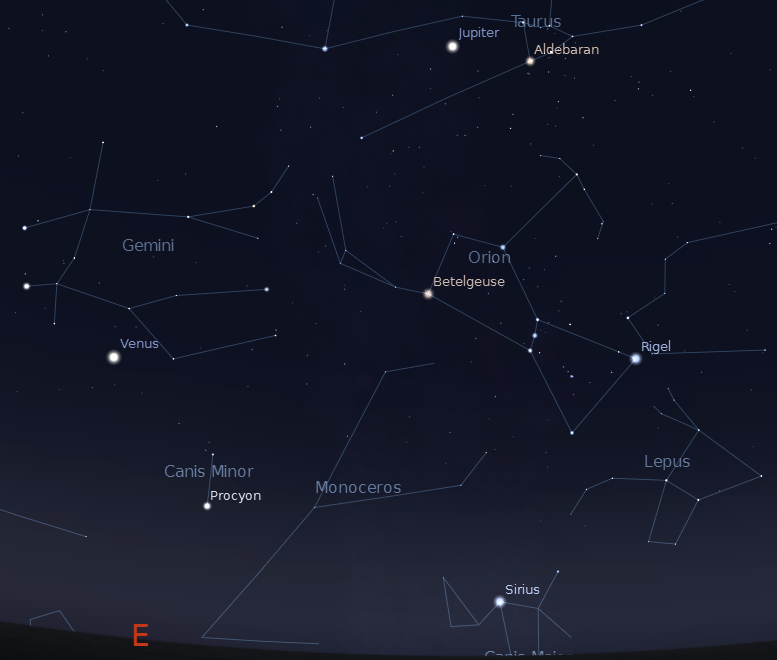
Jupiter, Venus and the stars of winter rising at 5:30 a.m. on August 30, 2012. Created using Stellarium.
08/22/2012 – Ephemeris – Where are the bright planets this week?
Ephemeris for Wednesday, August 22nd. The sun rises at 6:53. It’ll be up for 13 hours and 41 minutes, setting at 8:35. The moon, 2 days before first quarter, will set at 10:58 this evening. | Let’s see what’s happening with the bright planets for this week. Mars Saturn and the star Spica make a bright triangle in the west southwest after sunset. Mars is on the upper left with Saturn on the upper right and Spica below. They are located in the constellation Virgo the virgin. Mars will be setting in the west at 10:41 p.m, and Saturn will set at 11:46. The morning sky features the two brightest planets: Jupiter, which will rise at 12:47 a.m. in the east northeast and Venus, which will rise at 3:11 also in the east northeast. Venus’ rising times are now getting later after its greatest elongation last week. The bright star Aldebaran in Taurus the bull will appear just to the right and a bit below Jupiter tomorrow morning
Times are for the Traverse City/Interlochen area of Michigan. They may be different for your location.
Addendum
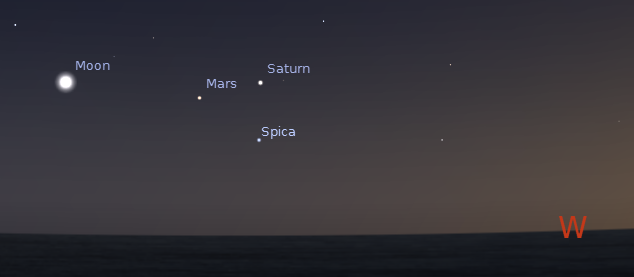
The planets and the moon low in the west southwest at 9:30 p.m. Created using Stellarium.
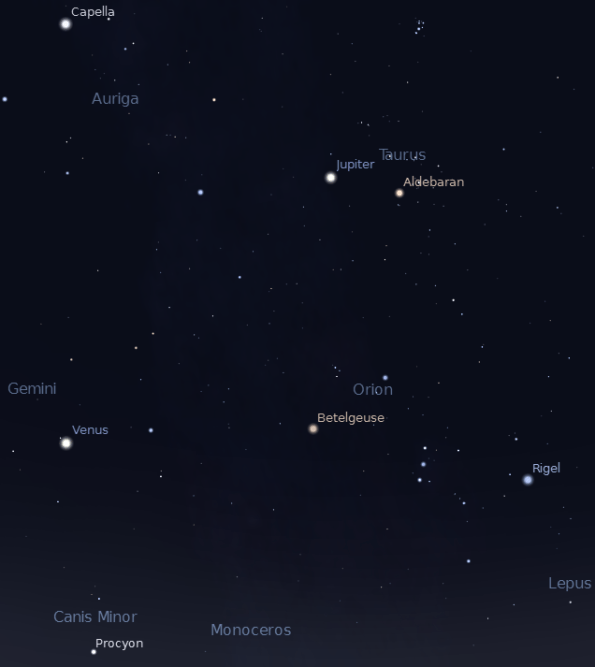
Venus, Jupiter and the winter stars at 5:30 a.m. on August 23rd. Created using Stellarium.
08/21/2012 – Ephemeris – The moon, the planets Mars, Saturn and the star Spica get together tonight
Ephemeris for Tuesday, August 21st. The sun rises at 6:52. It’ll be up for 13 hours and 44 minutes, setting at 8:37. The moon, 3 days before first quarter, will set at 10:21 this evening.
Tonight the moon will join the triangle of the planets Saturn, Mars and the star Spica. Mars is the dimmest of the three star-like objects and is nearly directly above the moon. Saturn is yellowish and to the upper right, while the star Spica is the bluest of the 21 brightest first magnitude stars. Mars gets its color from rust, good old iron oxide. Saturn has a yellowish tinge due partly to the color of its cloud tops. The color of the rings is much more white of ice. But since Saturn reflects the sun, some of that yellowness come from the sun itself. While the daylight sun appears white to us, our night vision shifts to the blue, so sunlike stars appear yellowish. This shift to the blue also enhances the color of a blue star like Spica.
Times are for the Traverse City/Interlochen area of Michigan. They may be different for your location.
Addendum
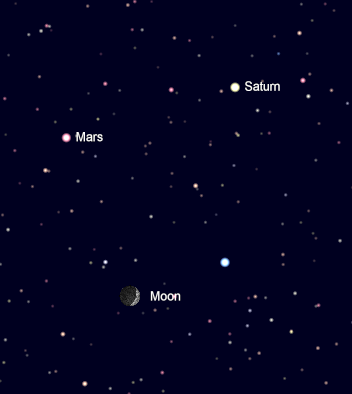
The moon and the planets Mars and Saturn plus the bright star Spica before 10 p.m. Created using Stellarium.
Spica is the unnamed star to the right of the moon.
08/15/2012 – Ephemeris – Where are the bright planets this week
Ephemeris for Wednesday, August 15th. The sun rises at 6:45. It’ll be up for 14 hours and 1 minute, setting at 8:47. The moon, 2 days before new, will rise at 5:45 tomorrow morning.
Let’s see what’s happening with the bright planets for this week. Mars Saturn and the star Spica make a bright skinny triangle in the west southwest after sunset. Mars is in the middle between Saturn on the top and Spica. They are located in the constellation Virgo the virgin. Mars will be setting in the west at 10:59 p.m. Saturn will set at 11:12. The triangle is going to fatten up over the next week as Mars heads eastward. The morning sky features the two brightest planets: Jupiter, which will rise at 1:12 a.m. in the east northeast and Venus, which will rise at 3:08 also in the east northeast. The bright star Aldebaran in Taurus the bull will appear just to the lower right of Jupiter tomorrow morning, but Venus will be at greatest elongation from the sun.
Times are for the Traverse City/Interlochen area of Michigan. They may be different for your location.
Addendum
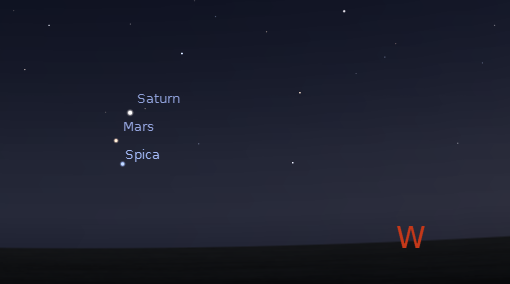
Looking west at 10 p.m. on August 15, 2012. Created using Stellarium.
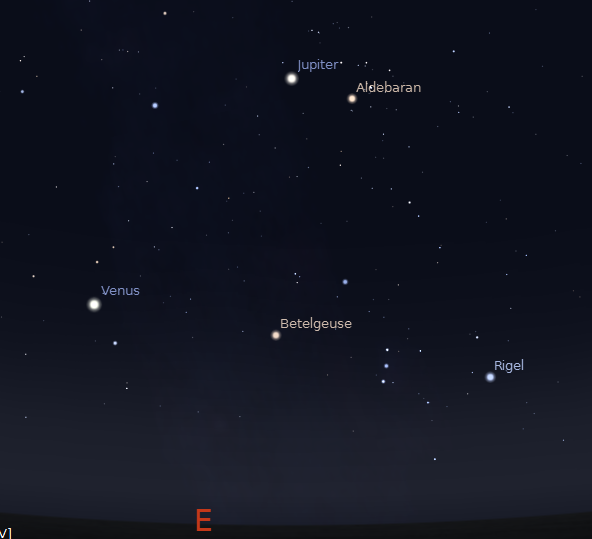
Looking east at 5 a.m. August 16, 2012. Created using Stellarium.
08/13/2012 – Ephemeris – Saturn, Mars and Spica line up
Ephemeris for Monday, August 13th. The sun rises at 6:43. It’ll be up for 14 hours and 7 minutes, setting at 8:50. The moon, half way from last quarter to new, will rise at 3:38 tomorrow morning.
This evening the triangle of the planets Mars and Saturn plus the star Spica has momentarily disappeared. They are, this evening only, practically in a straight line. Mars has moved to be between Saturn and Spica. The reason Mars moves so fast and Saturn has been hanging around Spica all year is that Mars is closer to the sun, so it moves faster. It takes a bit less than two or our years to orbit the sun. Saturn takes nearly 30 years to do the same. Saturn averages 9.5 times the earth’s distance from the sun. While Mars averages one and a half times the earth’s distance. Mars will hang on in the western sky for a few more months, getting dimmer as it moves around behind the sun. Saturn and Spica will soon be lost in twilight.
Times are for the Traverse City/Interlochen area of Michigan. They may be different for your location.
Addendum
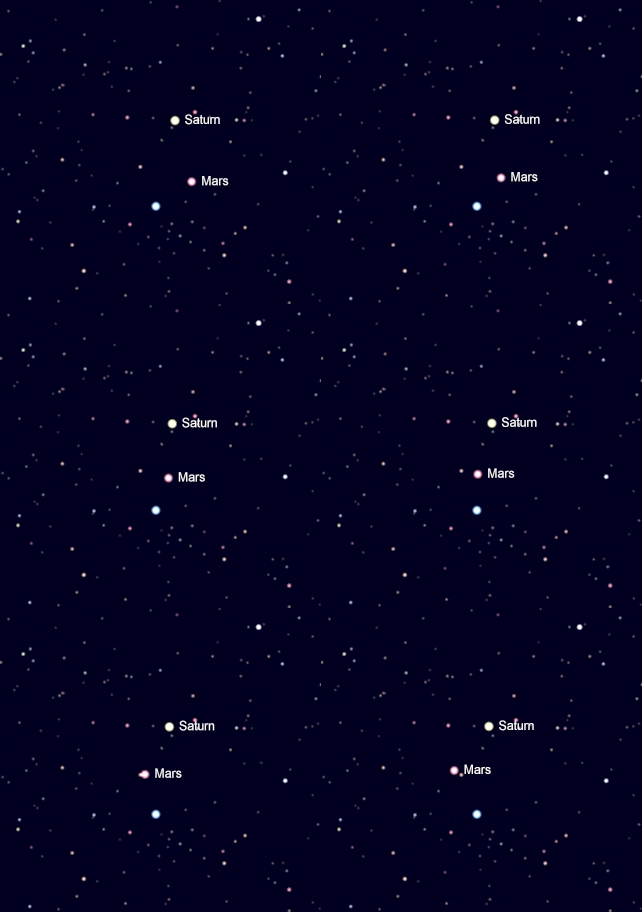
The trio of Mars, Saturn and the star Spica from August 11th through the 18th. Created using Cartes du Ciel (Sky Charts)
08/08/2012 – Ephemeris – Where are the bright planets this week?
Ephemeris for Wednesday, August 8th. The sun rises at 6:37. It’ll be up for 14 hours and 20 minutes, setting at 8:57. The moon, 1 day before last quarter, will rise at 11:50 this evening.
Let’s see what’s happening with the bright planets for this week. Mars Saturn and the star Spica make a bright triangle in the west southwest after sunset. Mars is on the lower right and Saturn is the topmost of the three. They are located in the constellation Virgo the virgin. Mars will be setting in the west at 11:17 p.m. Saturn will set at 11:39. Next Monday Mars will pass between Saturn and Spica. The morning sky features the two brightest planets: Jupiter, which will rise at 1:32 in the east northeast and Venus, which will rise at 3:09 also in the east northeast. The bright star Aldebaran in Taurus the bull will appear just to the lower right of Jupiter tomorrow morning, but Venus will have dropped farther below Jupiter, as it stays near the sun.
Times are for the Traverse City/Interlochen area of Michigan. They may be different for your location.
Addendum
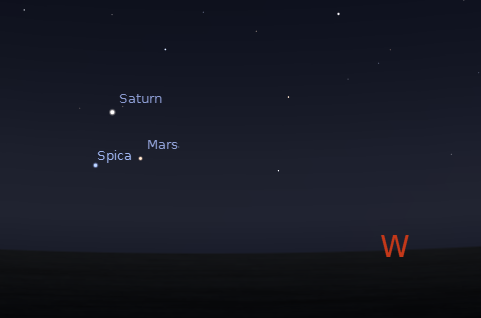
Looking west at 10:30 p.m. on August 8, 2012. Created using Stellarium.
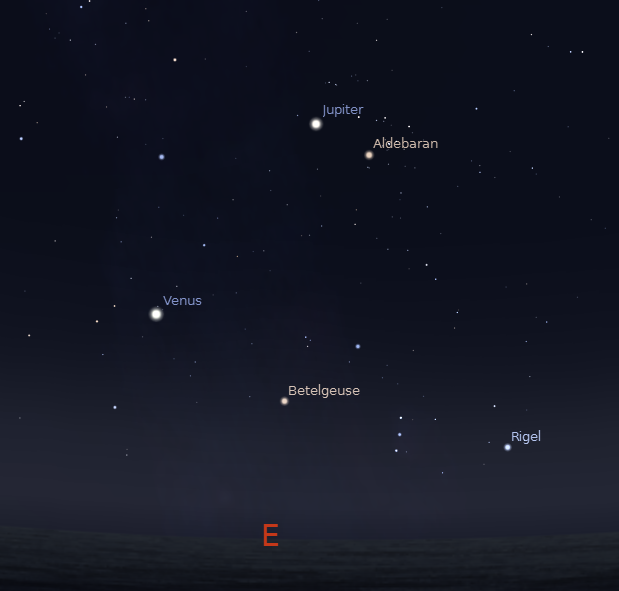
Looking eastward at 5 a.m. on August 9, 2012. Orion is also rising along with Jupiter and Venus. Created using Stellarium.
The trio of Mars, Saturn and the star Spica from August 11th through the 18th. Created using Cartes du Ciel (Sky Charts)
08/03/2012 – Ephemeris – Weekend events here and on Mars.
Ephemeris for Friday, August 3rd. The sun rises at 6:31. It’ll be up for 14 hours and 32 minutes, setting at 9:04. The moon, 2 days past full, will rise at 9:34 this evening.
The Northwestern Michigan College’s Rogers observatory will be open this evening starting at 9 p.m. For views of the heavens including the planet Saturn and the moon. There’s some bright deep sky objects also visible. Mars though up is a very tiny planet and is quite distant. What can’t be seen in a telescope will be visible shortly. Monday at 1:31 a.m. The Curiosity Mars Science Laboratory will land in Gale Crater. If the landing is successful the new rover will be bringing a new arsenal of scientific instruments to probe the martian past. From our vantage point on the earth Mars looks like a tiny yellowish orange disk. We will be back to two operational rovers joining the three operational satellites now orbiting Mars.
Times are for the Traverse City/Interlochen area of Michigan. They may be different for your location.
Addendum
Here’s a movie from the Jet Propulsion Laboratory (JPL) of Curiosity’s entry descent and landing called Seven Minutes of Terror: http://youtu.be/ISmWAyQxqqs
 Bob Moler's Ephemeris Blog