Archive
Ephemeris: 02/14/2024 – A Valentine’s Day look at the bright planets
This is Ephemeris for Valentine’s Day and Ash Wednesday, Wednesday, February 14th. Today the Sun will be up for 10 hours and 24 minutes, setting at 6:09, and it will rise tomorrow at 7:43. The Moon, 2 days before first quarter, will set at 12:31 tomorrow morning.
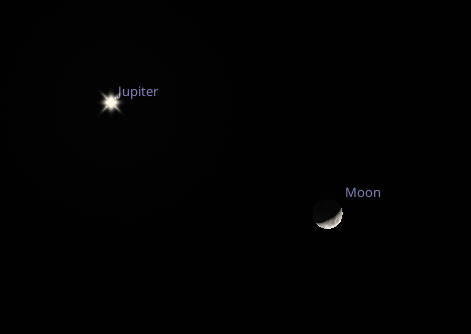
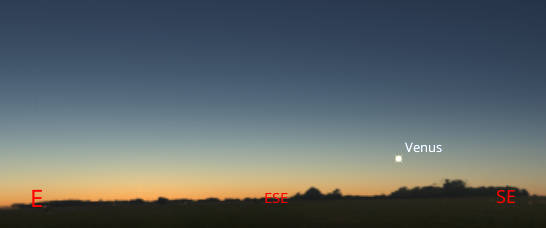
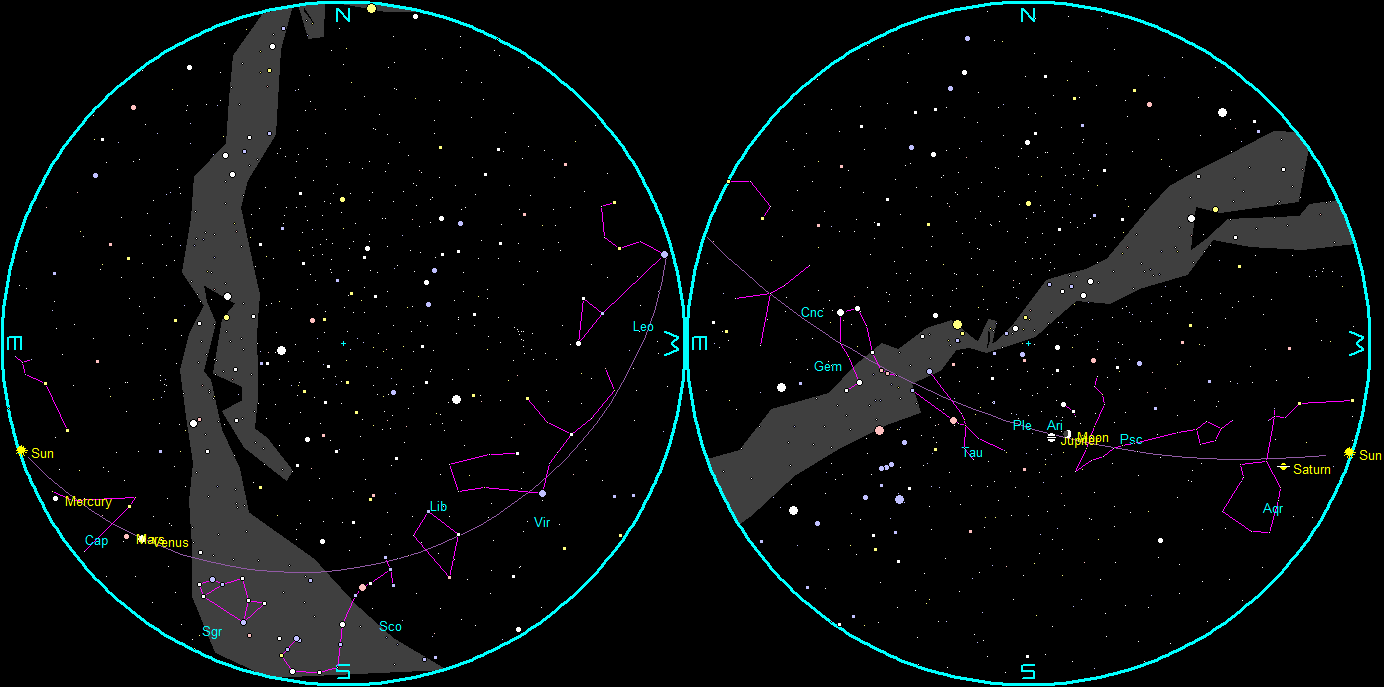
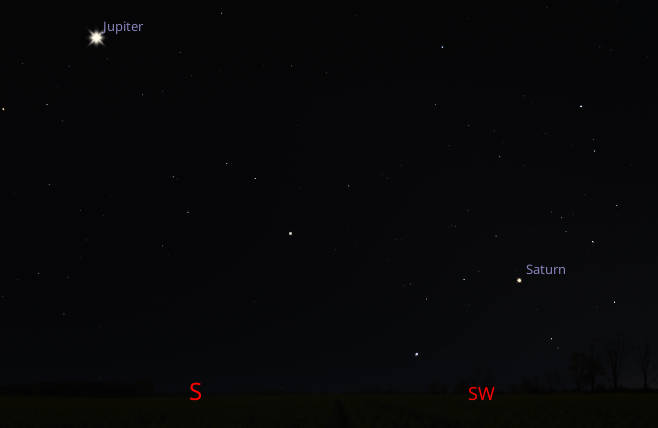
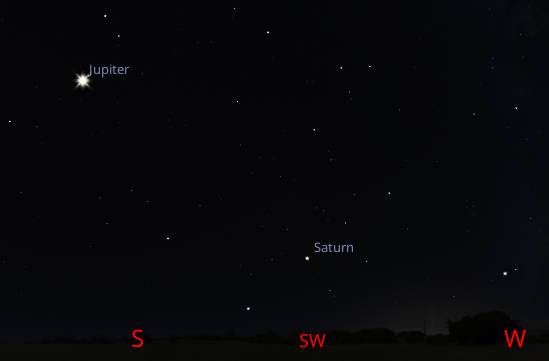
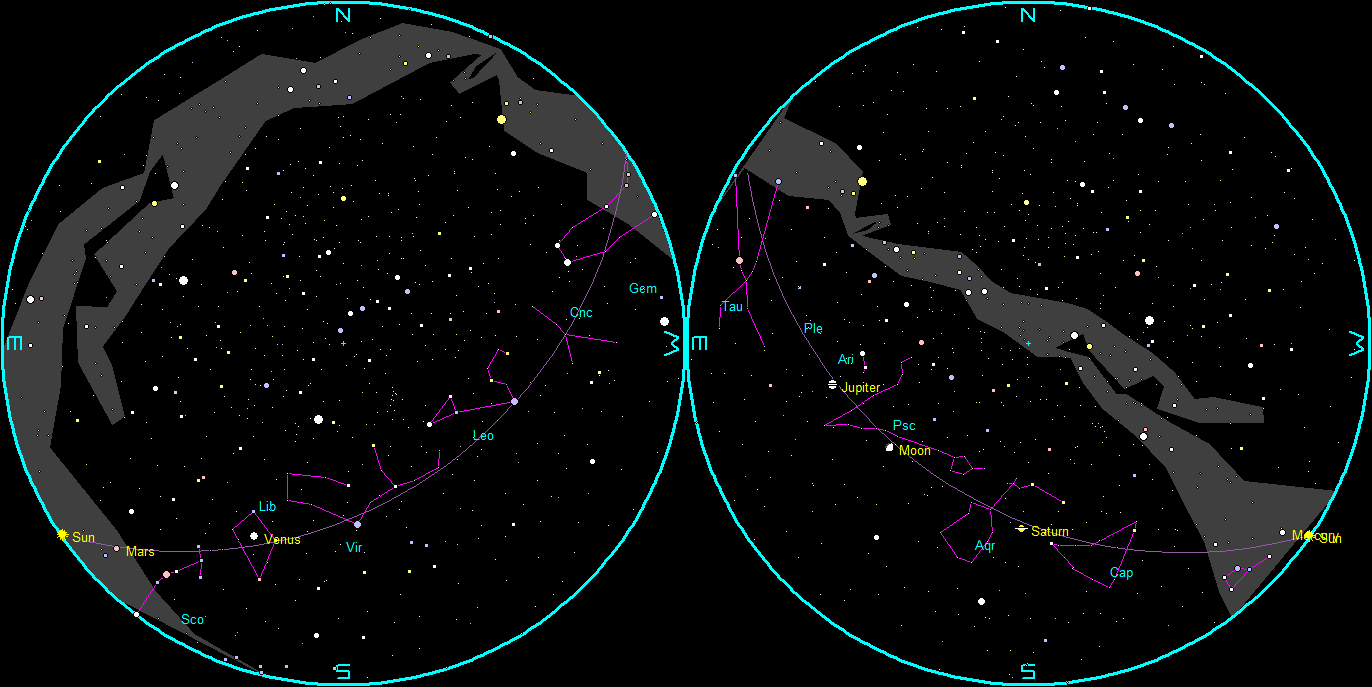
Let’s find out where the naked -eyed planets have wandered off to this week, and see what planets are left. Saturn, for all practical purposes, is gone, setting an hour after the sun. Jupiter will be in the southwest at 7:30 this evening, above and left to the crescent moon. It will move to the low west -northwest by midnight and will set at 12:30 am. Venus, the morning star, will rise into the east-southeast at 6:30 am, but its brilliance is diminished by the bright twilight and its low position in the sky. It will be very low in the southeast at seven am. Being Ash Wednesday, Easter is 46 days away. But Lent has 40 days. The six Sundays in Lent don’t count.
The astronomical event times given are for the Traverse City/Interlochen area of Michigan (EST, UT –5 hours). They may be different for your location.
Addendum
Ephemeris: 02/07/2024 – Where have the naked-eye planets wandered off to this week?
This is Ephemeris for Wednesday, February 7th. Today the Sun will be up for 10 hours and 4 minutes, setting at 5:59, and it will rise tomorrow at 7:53. The Moon, 2 days before new, will rise at 7:32 tomorrow morning.
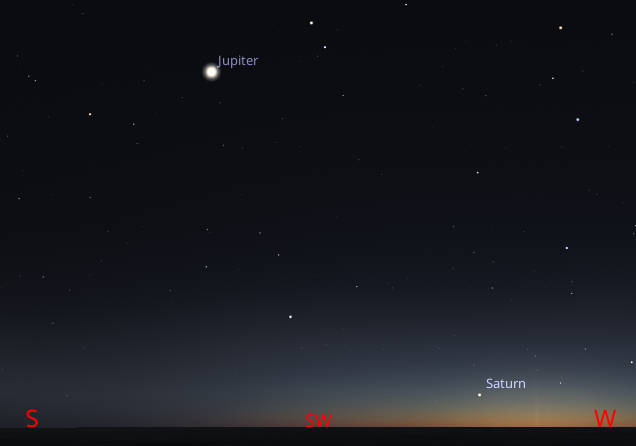
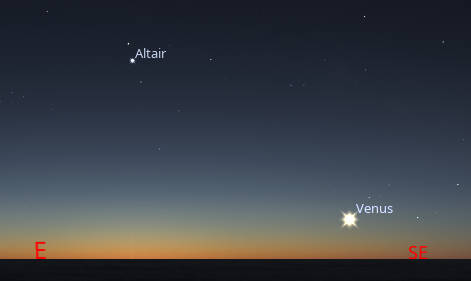
Let’s find out where the naked-eye planets have wandered off to this week. Three of those five planets are now visible. Saturn and Jupiter are the evening planets. Saturn is getting harder to spot very low in the west-southwest, nearly succumbing to evening twilight, setting at 7:32 pm. Jupiter will move from high in the south-southwest to low in the west by midnight, and will set in the west-northwest at 12:53 am. Venus, the morning star, will rise in the east-southeast at 6:25 am, but its brilliance is diminished by the bright twilight and its low altitude in the sky. As we advance through winter into spring Venus is going to be harder to spot before sunrise for two reasons, Venus is getting closer to the Sun, and it is appearing more to the right side of the Sun, than above it.
The astronomical event times given are for the Traverse City/Interlochen area of Michigan (EST, UT –5 hours). They may be different for your location.
Addendum
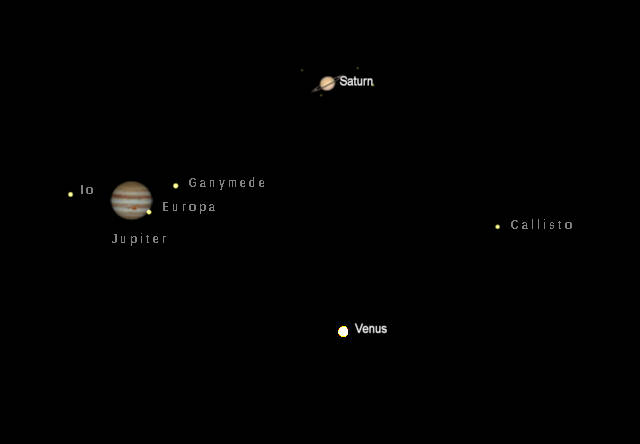
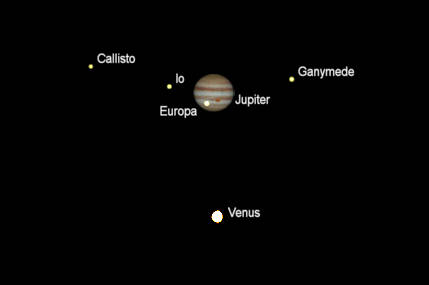
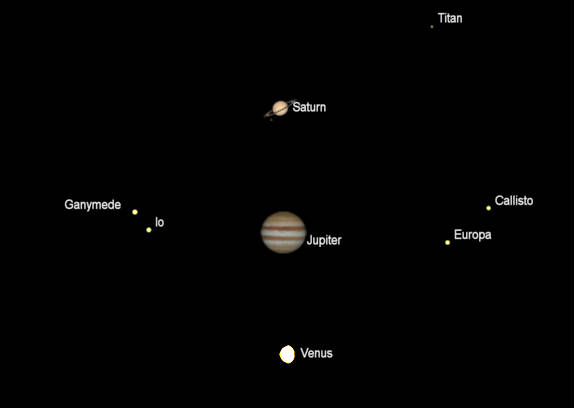
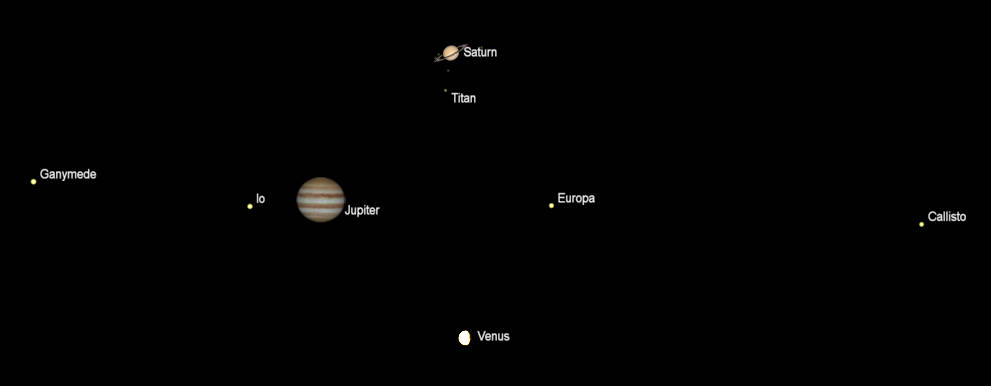
Jovian satellite interactions with Jupiter and its shadow visible for Michigan and longitudes around 85 degrees west:
- 7:03 pm Europa’s transit across the face of Jupiter ends.
- 7:18 pm Europa’s shadow begins to cross Jupiter’s face.
- 9:38 pm Europa’s shadow leaves Jupiter’s face.
- 9:42 pm Ganymede starts an occultation by Jupiter (hides behind it).
- 12:47 am Ganymede’s occultation ends.
Ephemeris: 01/31/2024 – Where have the naked-eye planets wandered* off to this week?
This is Ephemeris for Wednesday, January 31st. Today the Sun will be up for 9 hours and 46 minutes, setting at 5:49, and it will rise tomorrow at 8:02. The Moon, 2 days before last quarter, will rise at 11:56 this evening.
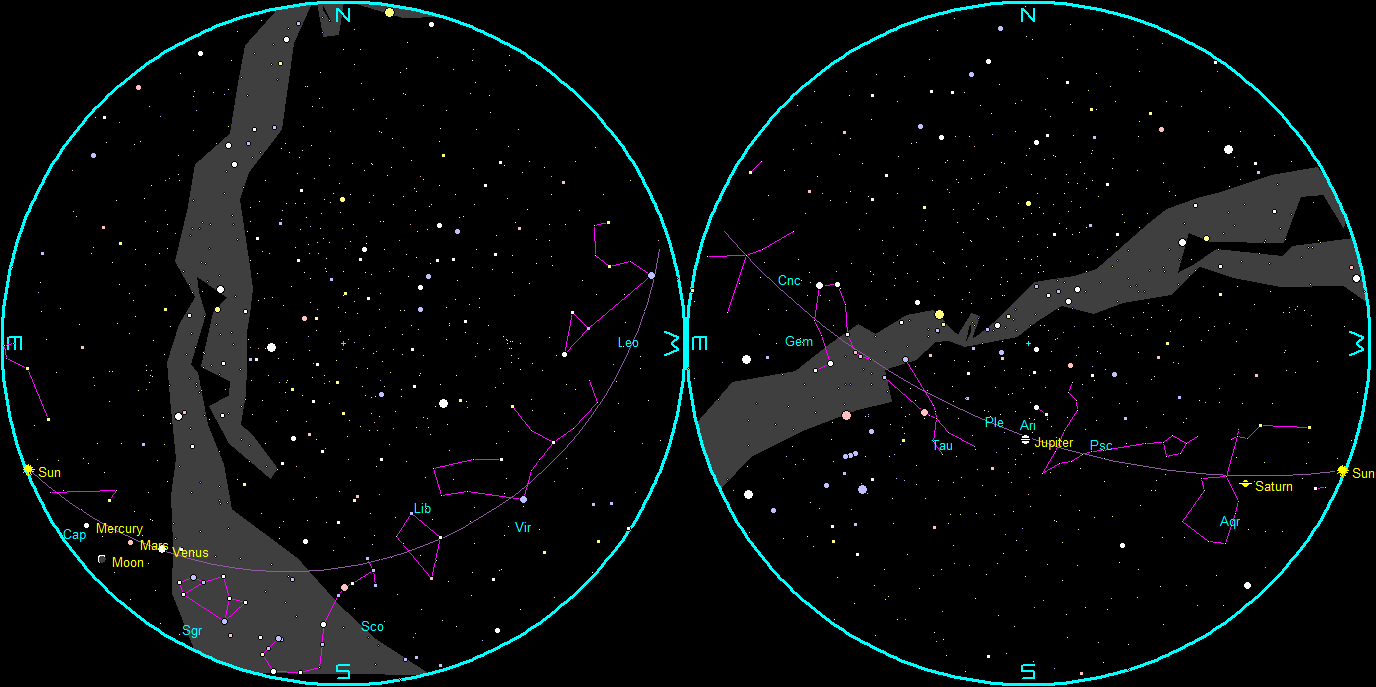
Let’s find out where the naked-eye planets have wandered off to this week. Three of those five planets are now visible. Saturn and Jupiter are the evening planets. Saturn is getting harder to spot low in the west-southwest, nearly succumbing to evening twilight, setting at 7:59 pm. Jupiter will move from high in the south to low in the west by midnight, and will set in the west-northwest at 1:20 am. Venus, the brilliant morning star, will rise in the east-southeast at 6:18 am, and be a brilliant beacon in the morning, shining in the southeast before the bright morning twilight claims it around 7:45 am. As we advance through winter into spring Venus is going to be harder to spot before sunrise.
The astronomical event times given are for the Traverse City/Interlochen area of Michigan (EST, UT –5 hours). They may be different for your location.
Addendum
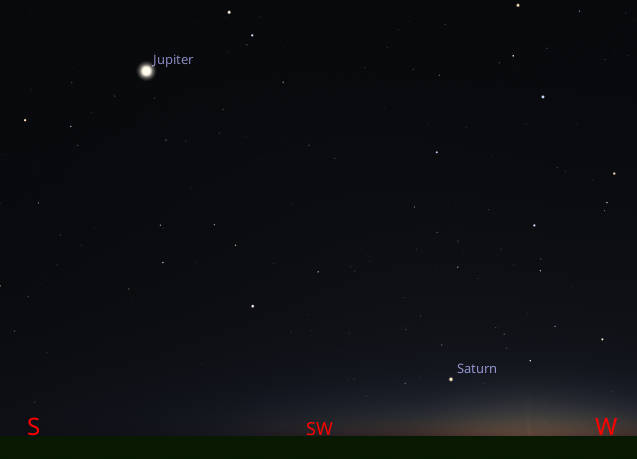
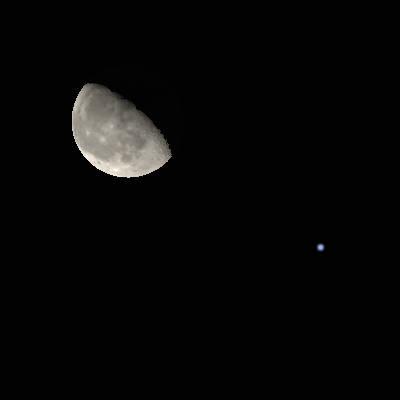
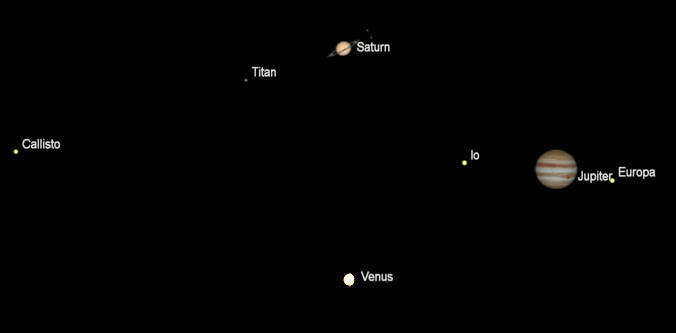
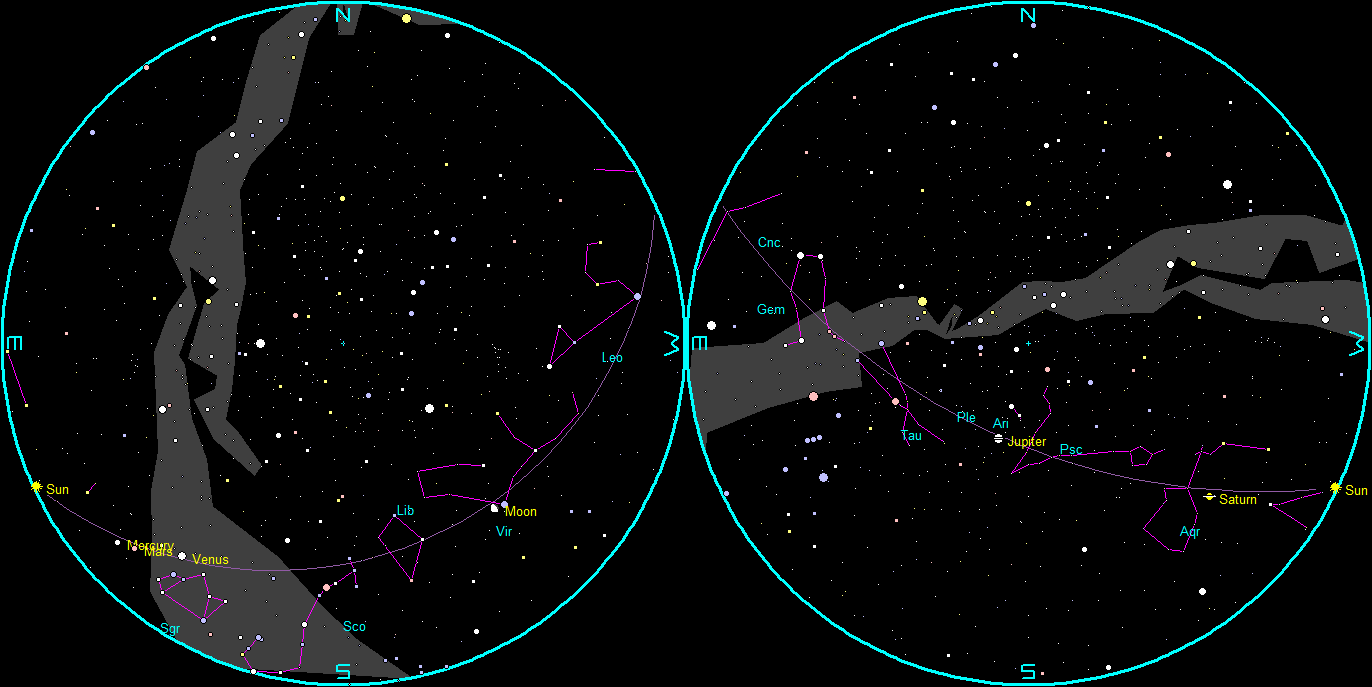
* The Greeks called the moving objects in the sky Planetes meaning Wanderers, from which we get the name Planet. In reality the planets do not wander, or move aimlessly, but move in orbits, discovered by Johannes Kepler, in accordance with the laws of gravitation discovered by Isaac Newton and Albert Einstein. The ancients considered the Sun and Moon planets, because they also moved against the “fixed” stars in the sky. This made seven, adding to the five naked eye planets we know today. These seven objects became the names of the days of the week in many countries. We have retained three of them: Sun’s day, Moon’s day, and Saturn’s day. The rest are named for Norse gods and a goddess.
Ephemeris: 01/24/2024 – Where have the planets wandered off to this week?
This is Ephemeris for Wednesday, January 24th. Today the Sun will be up for 9 hours and 29 minutes, setting at 5:39, and it will rise tomorrow at 8:09. The Moon, 1 day before full, will set at 8:36 tomorrow morning.
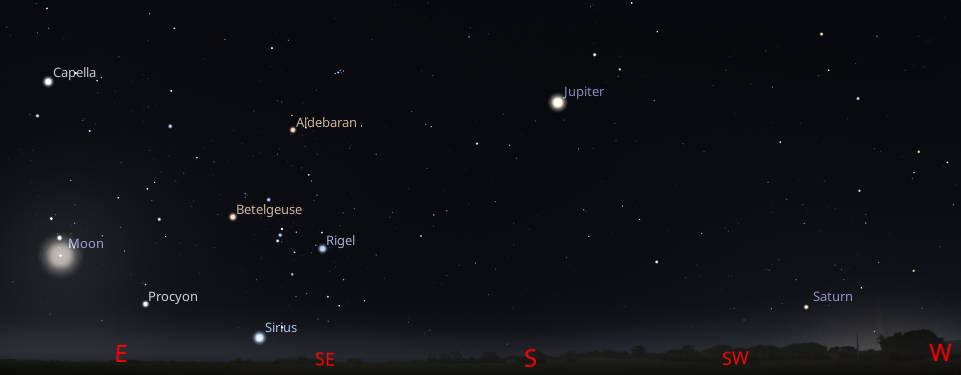
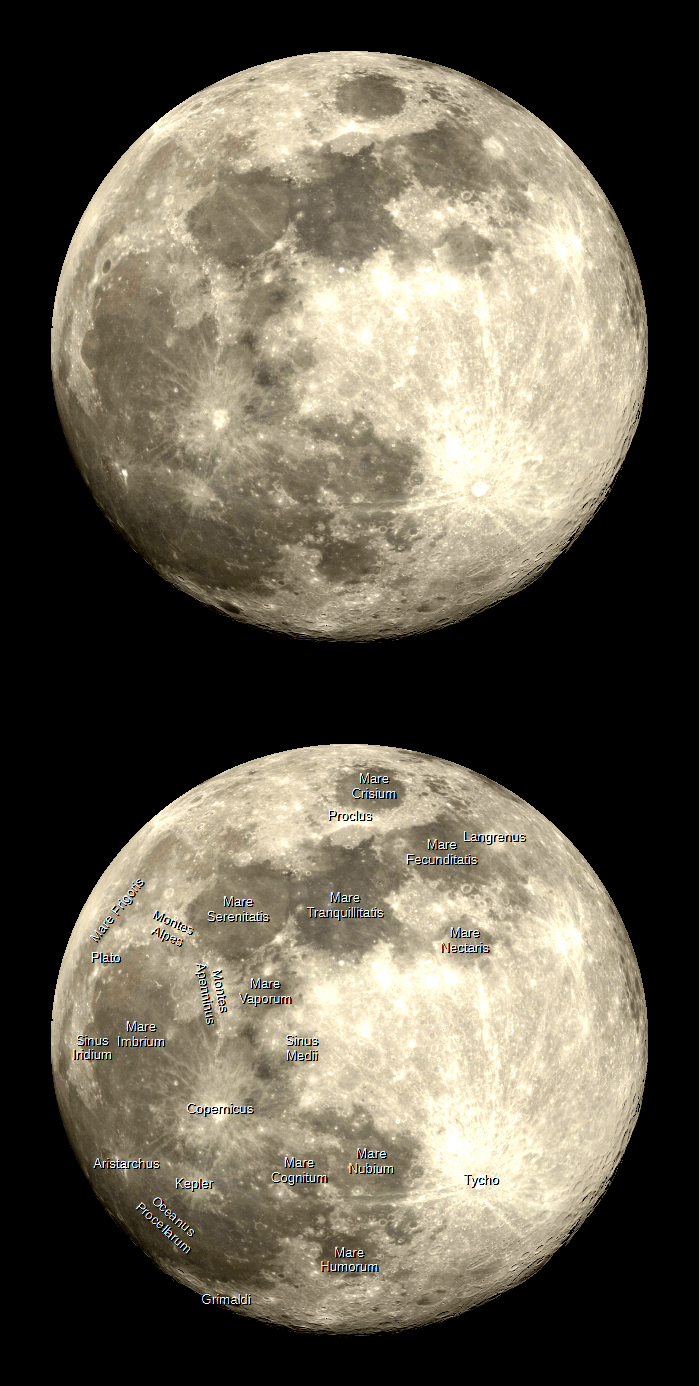
Let’s find out where the naked-eye planets have wandered off to this week. Three of those five planets are now easily visible. Saturn and Jupiter are the evening planets. Saturn is getting harder to spot low in the west-southwest, setting at 8:19 pm. Jupiter will move from high in the south to low in the west by midnight, and will set in the west-northwest at 1:40 am. Venus, the brilliant morning star, will rise in the east-southeast at 6:09 am, and be a brilliant beacon in the morning, shining in the southeast before the bright morning twilight claims it around 8 am. Mercury, which rises by 7:03 am might just be visible below and left of Venus by 7:30 am.
The astronomical event times given are for the Traverse City/Interlochen area of Michigan (EST, UT –5 hours). They may be different for your location.
Addendum

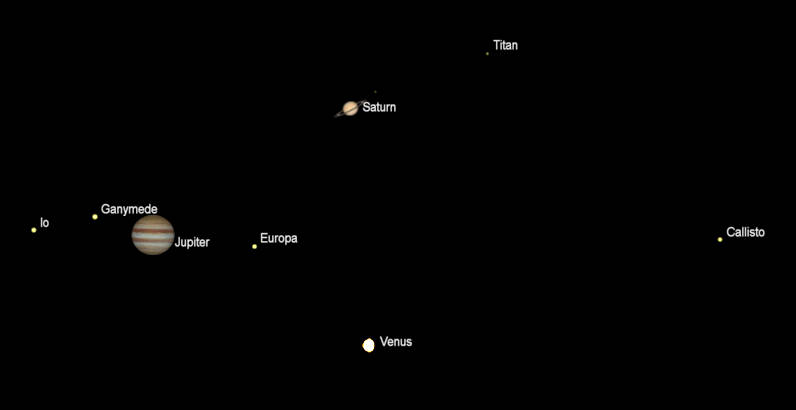
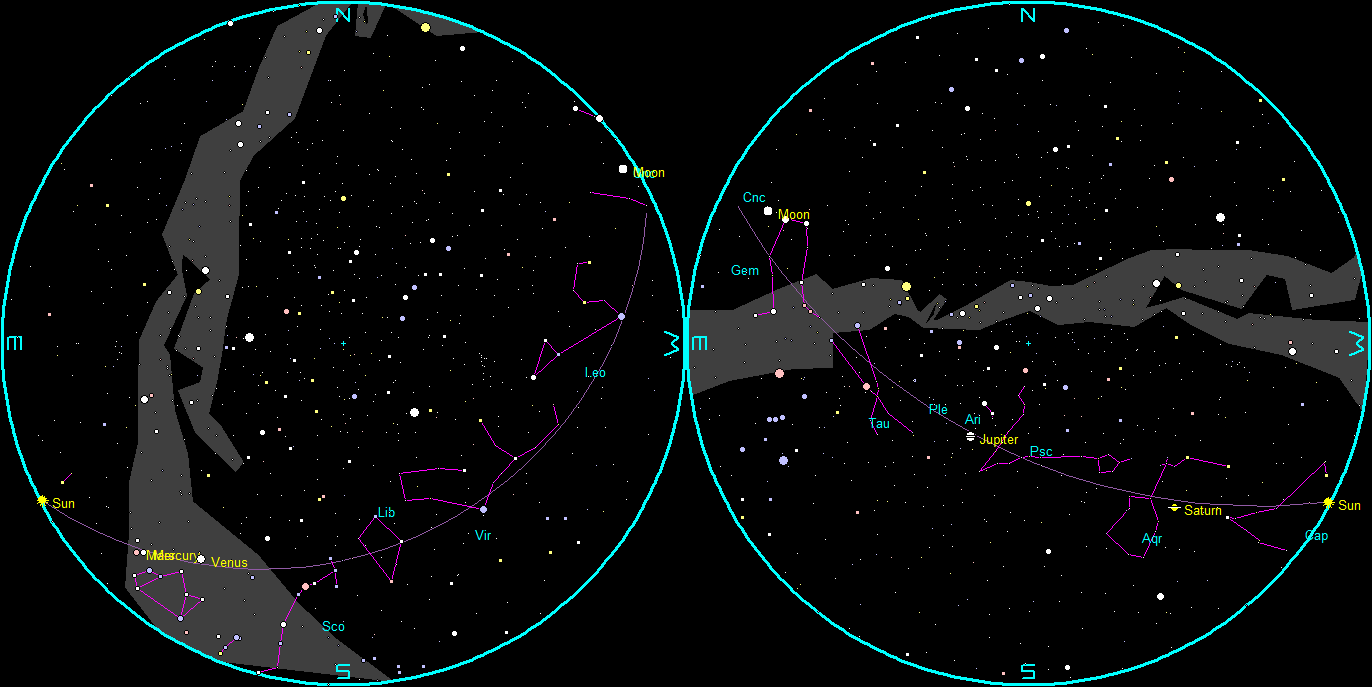
Ephemeris: 01/17/2024 – Where have the naked-eye planets wandered off to this week?
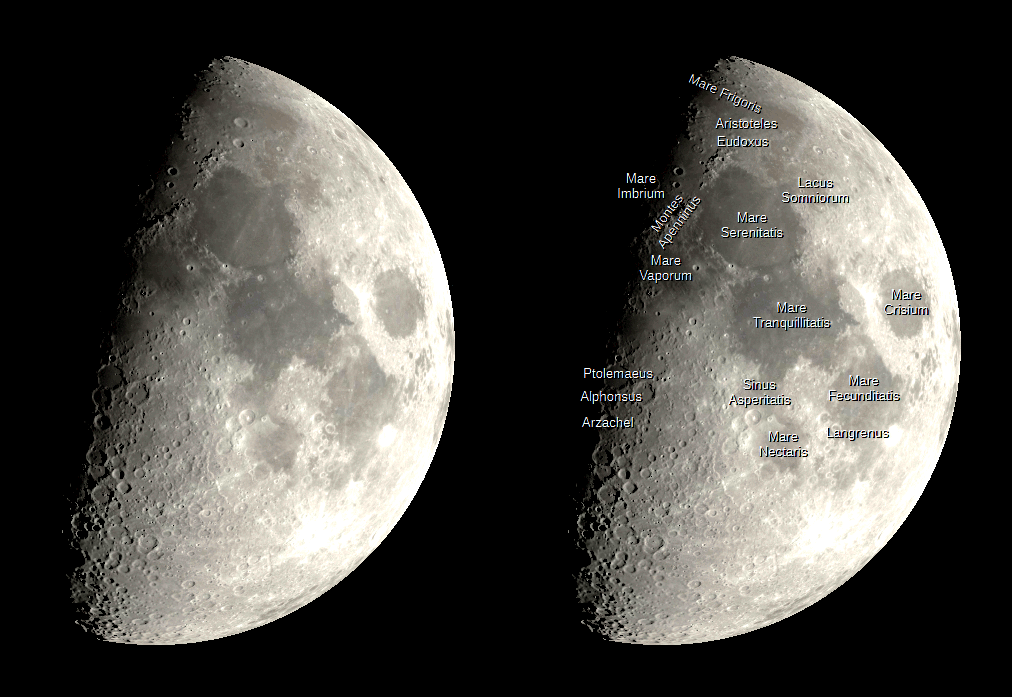
This is Ephemeris for Wednesday, January 17th. Today the Sun will be up for 9 hours and 14 minutes, setting at 5:30, and it will rise tomorrow at 8:15. The Moon, at first quarter today, will set at 1:28 tomorrow morning.
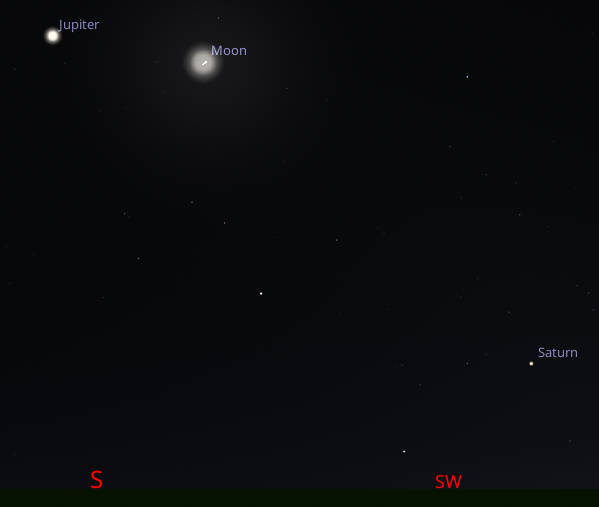
Let’s find out where the naked-eye planets have wandered off to this week. Four of those five planets are now visible. Saturn and Jupiter are the evening planets. Saturn can be seen moving from low in the southwest to setting in the west-southwest at 8:42 pm. Jupiter, left of the Moon tonight will move from high in the south to set in the west-northwest at 2:05 am. Venus, the brilliant morning star, will rise in the east-southeast at 5:58 am, and be a brilliant beacon in the morning, shining in the southeast before the bright morning twilight claims it around 8 am. Mercury will also be visible below and left of Venus, and should be visible by 7:30 am. Mars is below left of Mercury, but really is too dim to be seen.
The astronomical event times given are for the Traverse City/Interlochen area of Michigan (EST, UT –5 hours). They may be different for your location.
Addendum
Ephemeris: 01/12/2024 – Mercury is at greatest western elongation from the Sun today
This is Ephemeris for Friday, January 12th. Today the Sun will be up for 9 hours and 6 minutes, setting at 5:24, and it will rise tomorrow at 8:17. The Moon, 1 day past new, will set at 6:49 this evening.
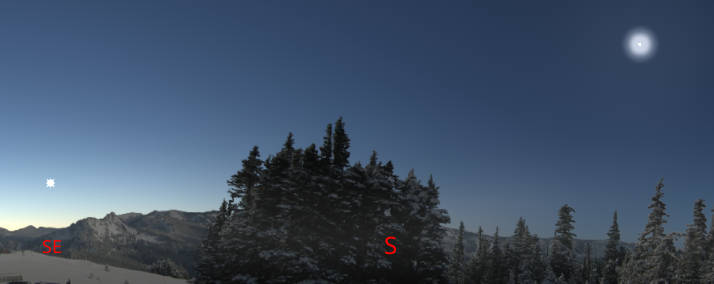
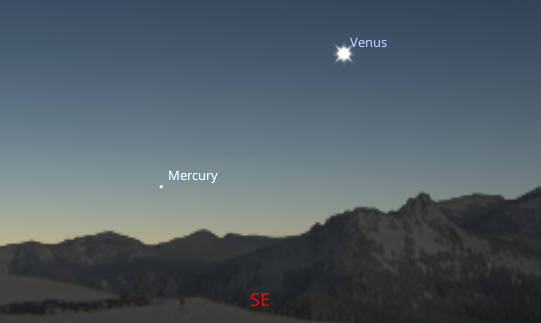
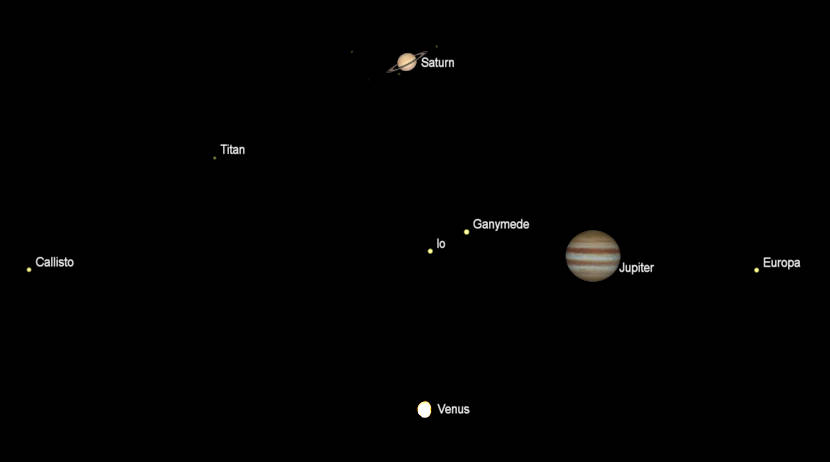
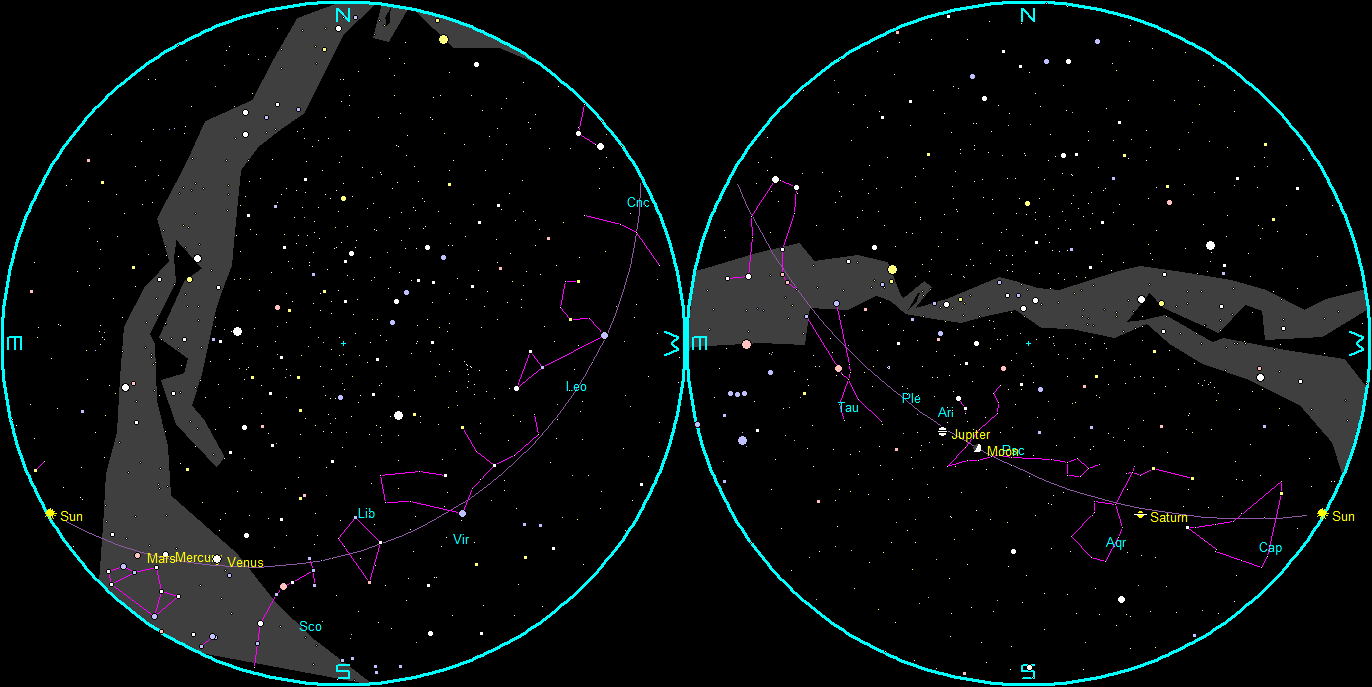
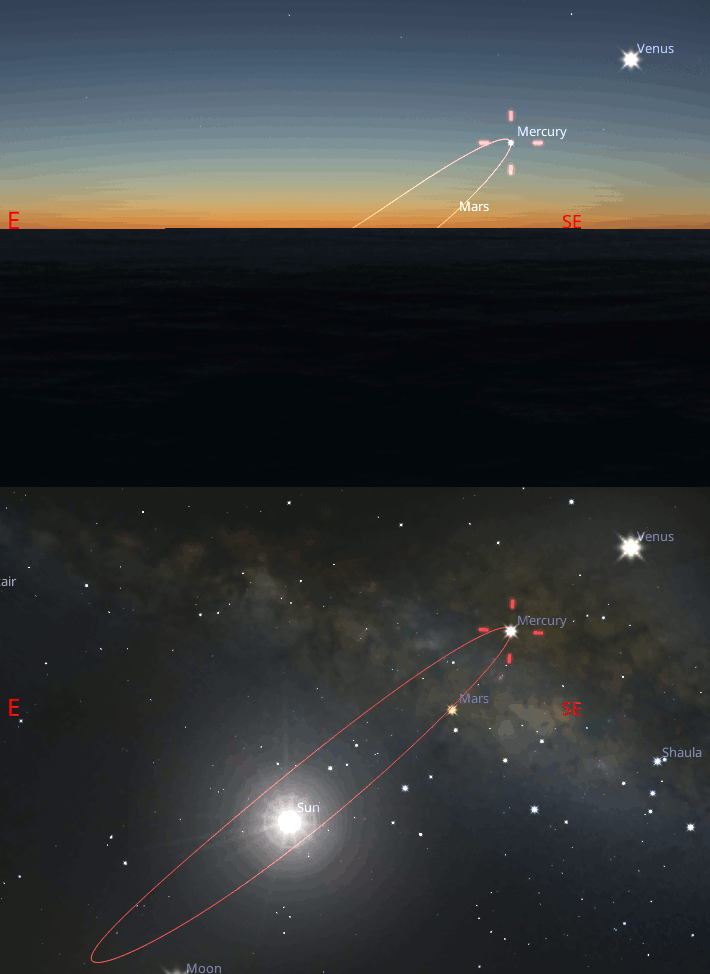
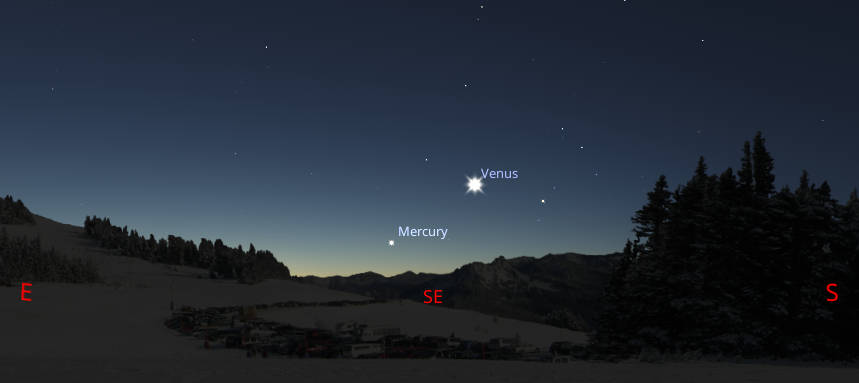
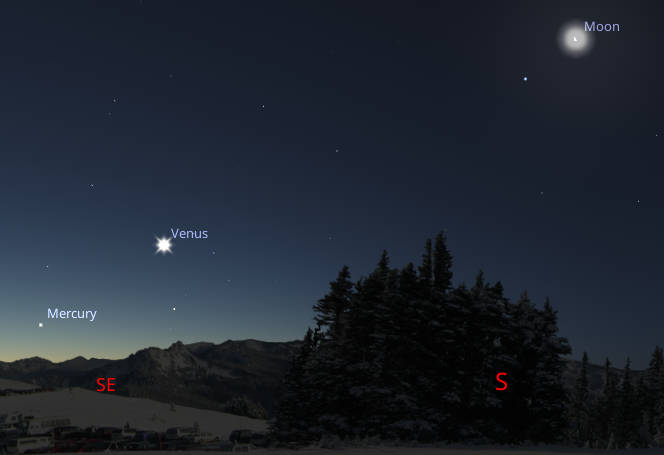
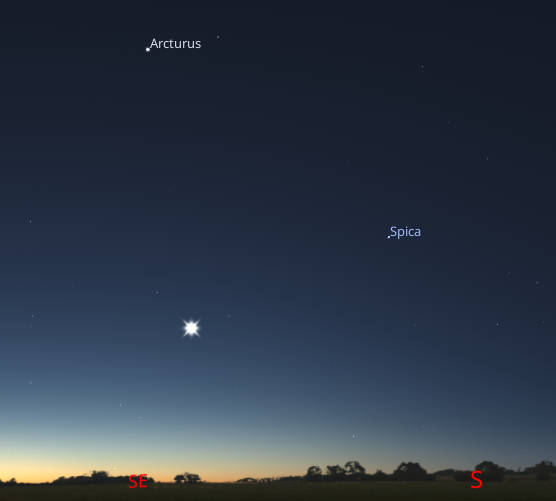
The planet Mercury is reaching its greatest western elongation or separation west of the Sun today at a 23.5 degrees angle, which is pretty good actually, although the angle above the horizon where we see Mercury at this point in the year is not the best. However, Venus can be used to spot Mercury because Mercury will be to the lower left of Venus. Binoculars are always helpful in spotting Mercury for the first time. From now until about a week from now Mercury will not move very much in relationship to Venus, but it will be getting somewhat brighter as its phase goes from half illuminated to more gibbous towards full. Early in the spring it will be seen in the evening sky, at a little bit better angle above the horizon, although it will be it will not be as far away from the Sun. Created using Stellarium and GIMP.
The astronomical event times given are for the Traverse City/Interlochen area of Michigan (EST, UT –5 hours). They may be different for your location.
Addendum
Ephemeris: 01/10/2024 – Where have the naked-eye planets wandered off to this week?
This is Ephemeris for Wednesday, January 10th. Today the Sun will be up for 9 hours and 2 minutes, setting at 5:21, and it will rise tomorrow at 8:18. The Moon, 1 day before new, will rise at 8:59 tomorrow morning.
Let’s find out where the naked-eye planets have wandered off to this week. Four of those five planets are now visible. Mars will rise too close to sunrise to be seen, however. Saturn and Jupiter are the evening planets. Saturn can be seen moving from low in the southwest to setting in the west-southwest at 9:06 pm. Jupiter will be moving from high in the south to the west by midnight and will set at 2:31 am. Venus, the brilliant morning star, will rise in the east-southeast at 5:44 am, and be a brilliant beacon in the morning, shining in the southeast before the bright morning twilight claims it around 8 am. Mercury will also be visible below and left of Venus, and should be visible by 7:30 am.
The astronomical event times given are for the Traverse City/Interlochen area of Michigan (EST, UT –5 hours). They may be different for your location.
Addendum
Ephemeris: 01/03/2024 – Where have the naked-eye planets wandered off to this week?
This is Ephemeris for Wednesday, January 3rd. The Sun will rise at 8:20. It’ll be up for 8 hours and 54 minutes, setting at 5:14. The Moon, at last quarter today, will rise at 1:04 tomorrow morning.
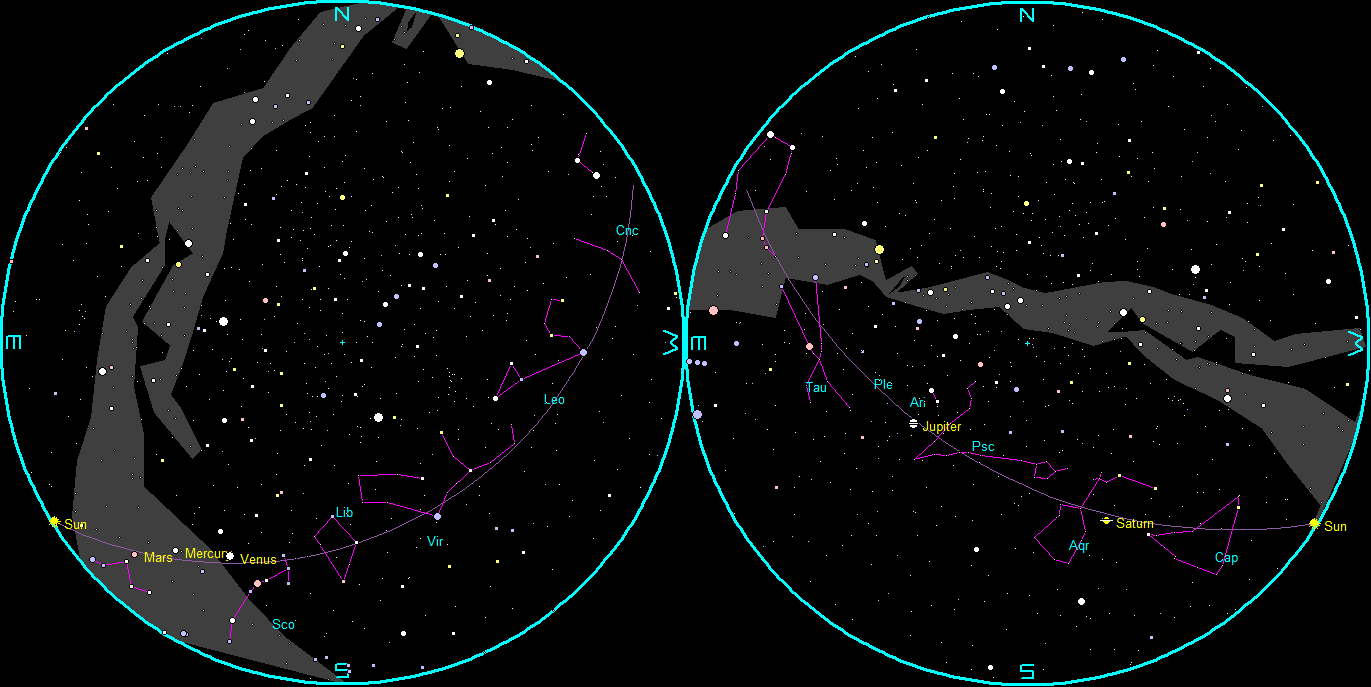
Let’s find out where the naked-eye planets have wandered off to this week. Four of those five planets are now visible. Mars rises too close to sunrise to be seen. Saturn and Jupiter are the only evening planets. Saturn can be seen moving from low in the southwest to setting in the west-southwest at 9:30 pm. Jupiter will be moving from the high in the south-southeast to the west-southwest, by midnight and will set at 2:57 am. The last quarter Moon will be in Virgo tomorrow morning. Venus, the brilliant morning star, will rise in the east-southeast at 5:29 am, and be a brilliant beacon in the morning, shining in the southeast before the bright morning twilight claims it around 8 am. Mercury may be glimpsed below and left of it.
The astronomical event times given are for the Traverse City/Interlochen area of Michigan (EST, UT –5 hours). They may be different for your location.
Addendum
Ephemeris: 12/27/2023 – Our last look at the naked-eye planets for 2023
This is Ephemeris for Wednesday, December 27th. Today the Sun will be up for 8 hours and 49 minutes, setting at 5:08, and it will rise tomorrow at 8:19. The Moon, 1 day past full, will rise at 5:30 this evening.
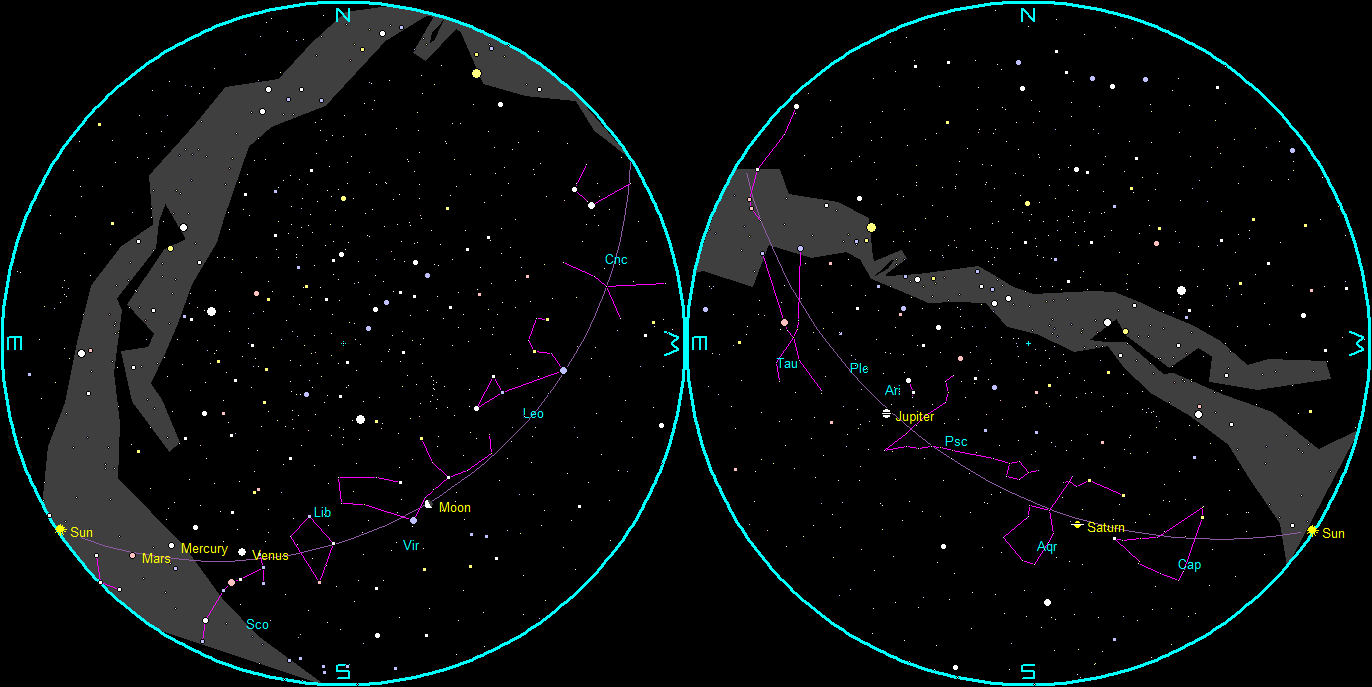
Let’s find out where the naked-eye planets have wandered off to this week. Three of those five planets are now visible. Mercury and Mars rise too close to sunrise to be seen. Saturn and Jupiter are the only evening planets. Saturn can be seen moving from low in the southwest to setting in the west-southwest at 9:54 pm. Jupiter will be moving from the high in the southeast to the west-southwest, by midnight and will set at 3:24 am. The Moon, the night after it being full, will be in Gemini tonight, not that any of its stars will be visible, making the sky bright. Venus, the brilliant morning star, will rise in the east-southeast at 4:56, am, and be a brilliant beacon in the morning, shining in the southeast by before the bright morning twilight claims it around 8 am.
The astronomical event times given are for the Traverse City/Interlochen area of Michigan (EST, UT –5 hours). They may be different for your location.
Addendum
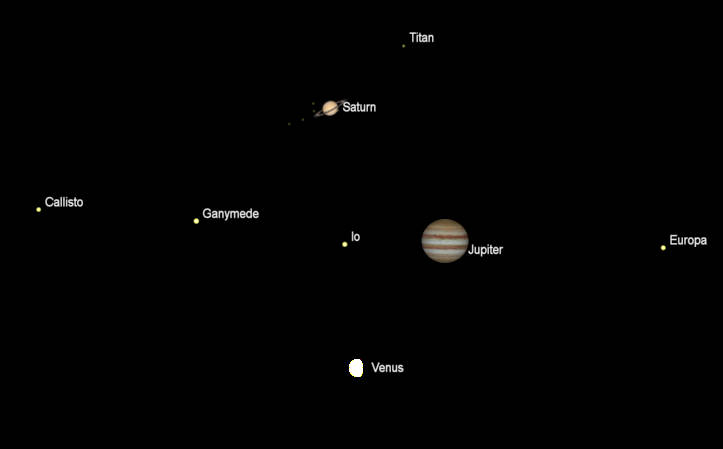
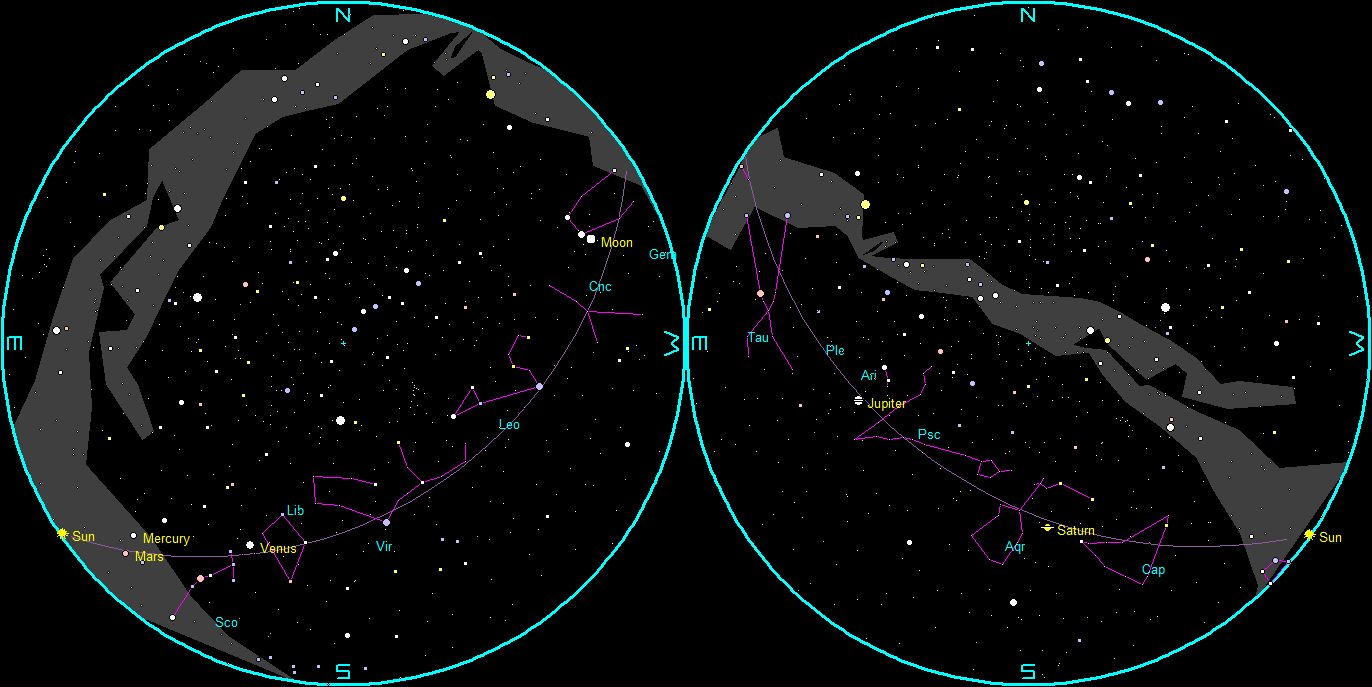
Ephemeris: 12/20/2023 – Where are the naked-eye planets this week?
This is Bob Moler with Ephemeris for Wednesday, December 20th. Today the Sun will be up for 8 hours and 48 minutes, setting at 5:04, and it will rise tomorrow at 8:16. The Moon, 1 day past first quarter, will set at 2:21 tomorrow morning.
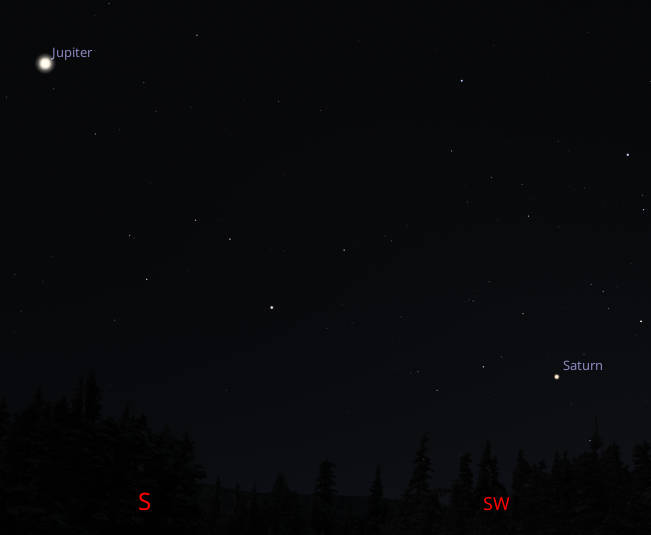
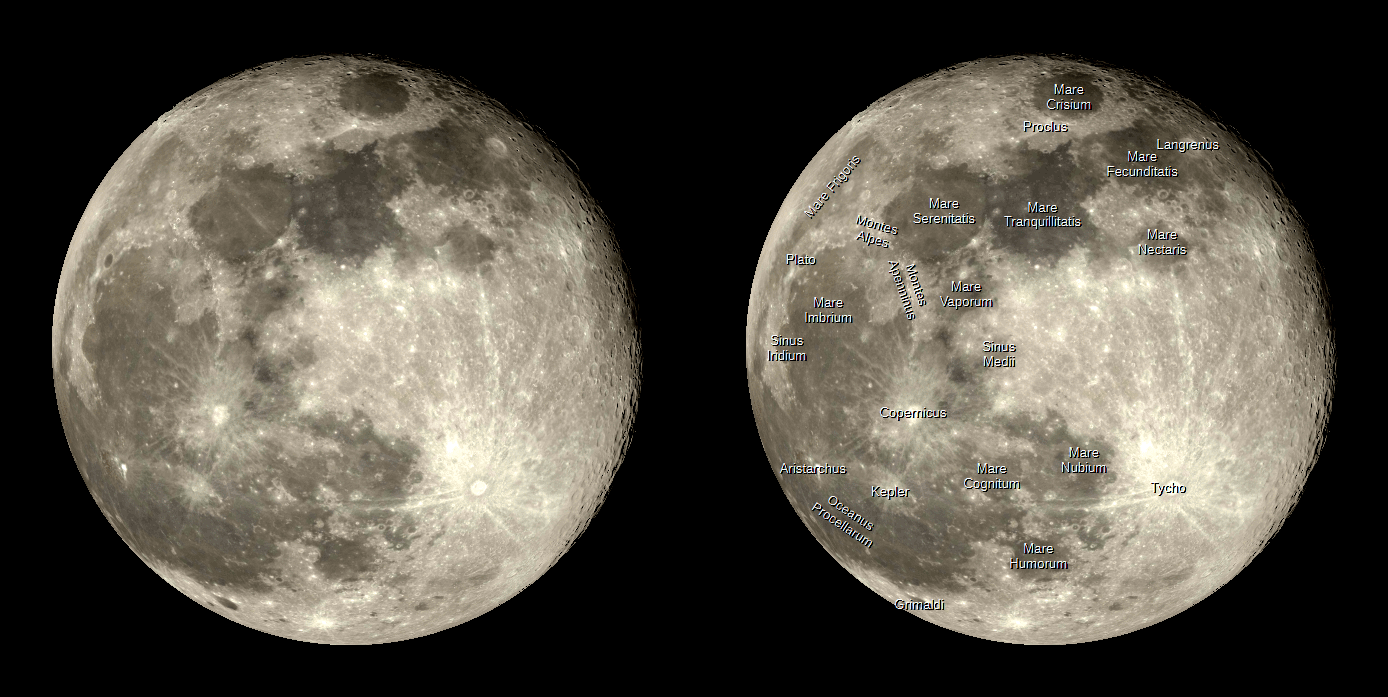
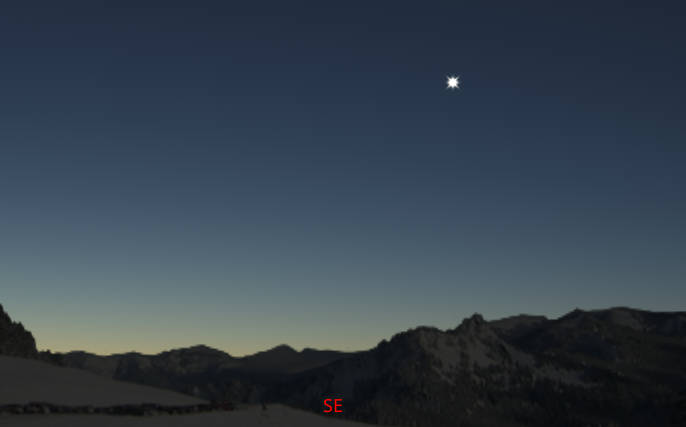
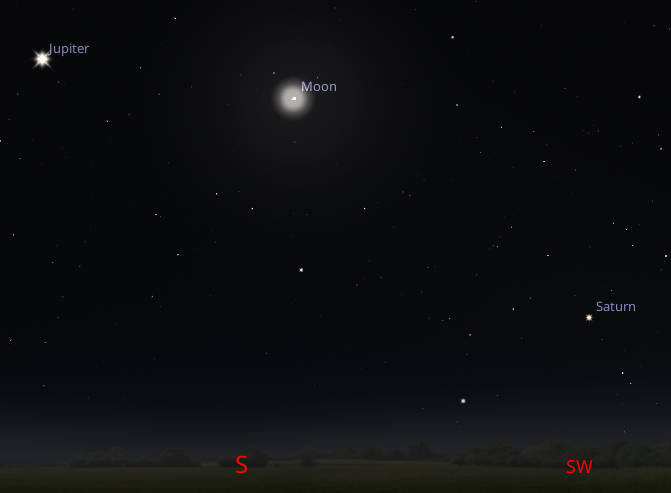
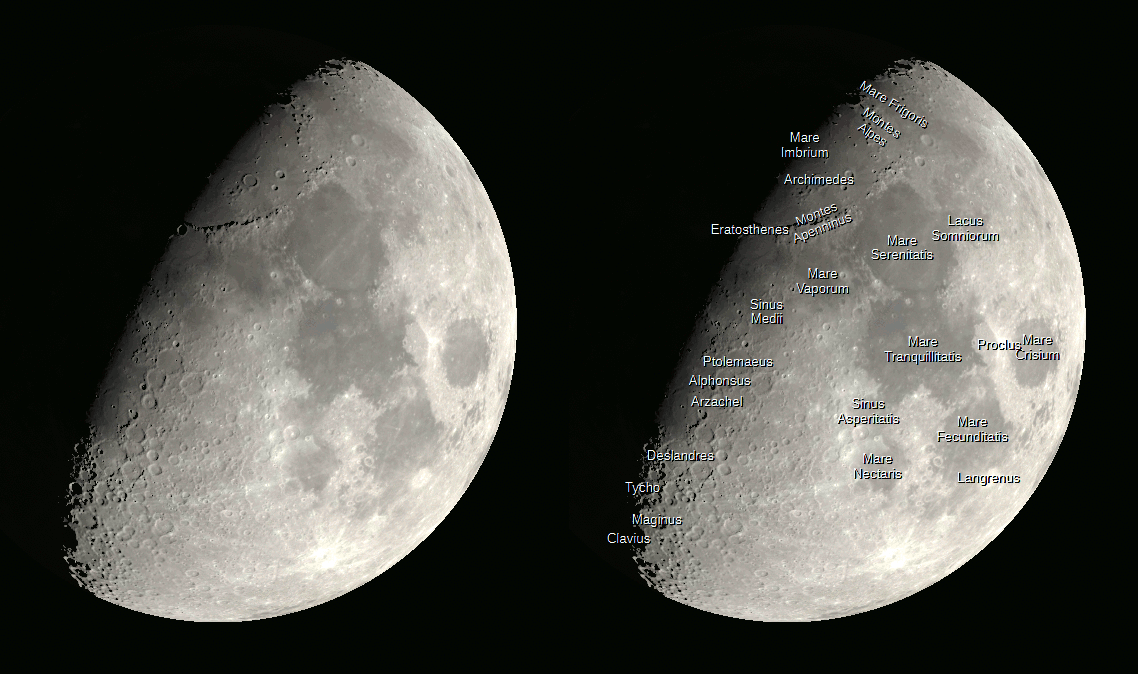
Let’s find out where the naked-eye planets have wandered off to this week. Three of those five planets are now visible, but Mercury sets too close to sunset to be seen. And Mars rises too close to sunrise. Saturn and Jupiter are the only evening planets visible. Saturn can be seen moving from low in the south-southwest to setting in the west-southwest at 10:19 pm. Jupiter will be moving from the high in the southeast to the west-southwest, and will be up most of the night until 3:53 am. The slightly waxing gibbous Moon will be seen to the right of Jupiter tonight. Venus, the brilliant morning star, will rise in the east-southeast at 4:56, am, and be a brilliant beacon in the morning, shining in the southeast by 7 am.
The astronomical event times given are for the Traverse City/Interlochen area of Michigan (EST, UT –5 hours). They may be different for your location.
Addendum
 Bob Moler's Ephemeris Blog