Archive
Ephemeris: 04/16/2025 – Taking our weekly look at the naked-eye planets
This is Ephemeris for Wednesday, April 16th. Today the Sun will be up for 13 hours and 33 minutes, setting at 8:29, and it will rise tomorrow at 6:54. The Moon, halfway from full to last quarter, will rise at 12:48 tomorrow morning.
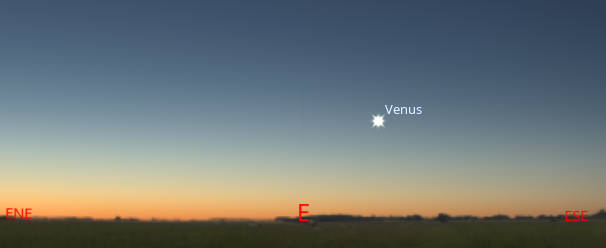
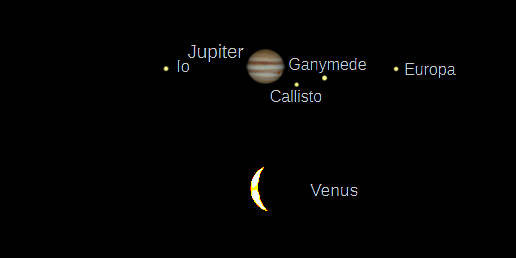
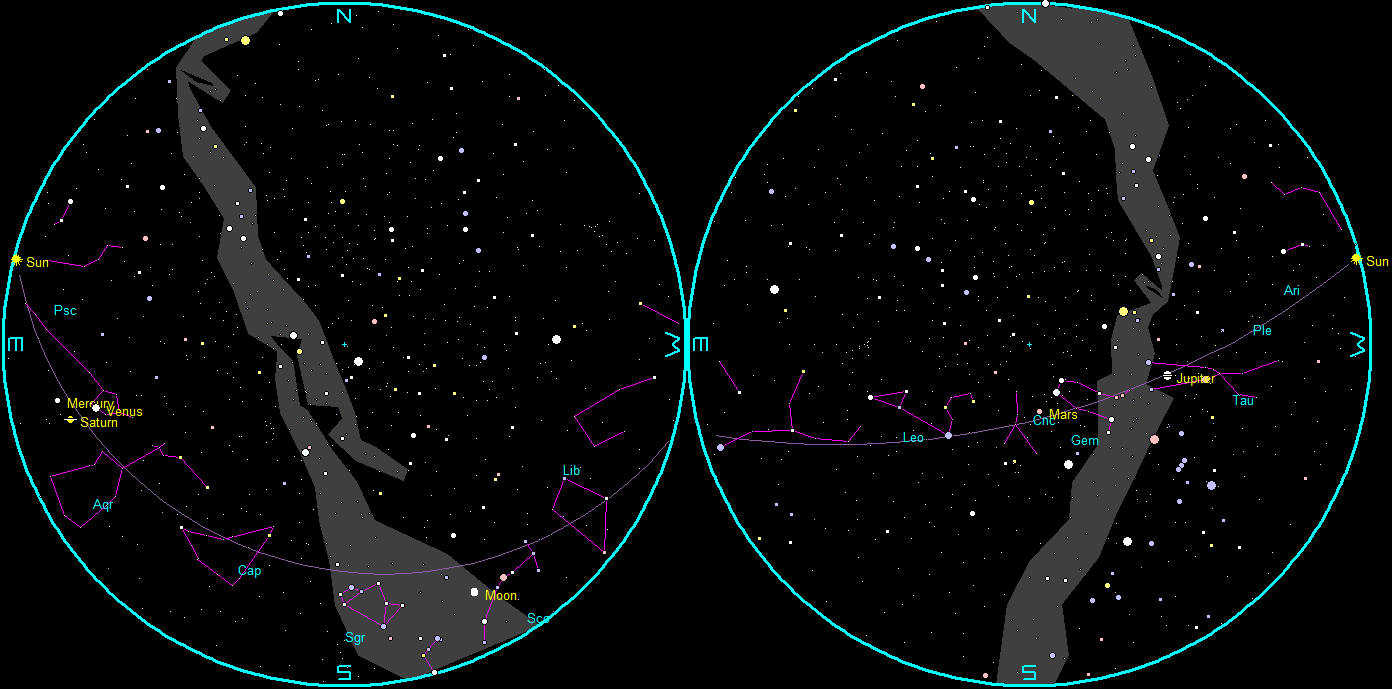
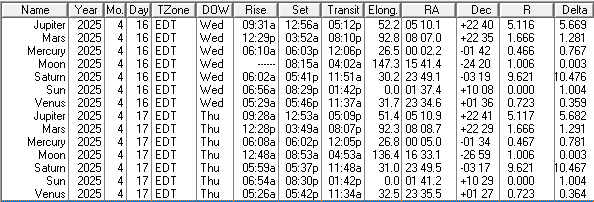
Let’s take our weekly look at the whereabouts of the naked-eye planets. At 9:30 PM this evening just two of the five naked eye planets will be out. Jupiter, now becomes the brightest evening planet, our substitute evening star if you will. It will be high in the west. Below it is the bright star Aldebaran. To its lower left, the great constellation of Orion. The rapidly fading Mars, with its distinctive reddish hue, is high in the south-southwest, with the stars Castor and Pollux in Gemini to the right of it. By 6 AM Venus will be seen very low in the east, as the Morning Star. It will require a low eastern horizon. It should be visible until a bit after 6:30. Saturn should be visible in the morning by the end of the month.
The astronomical event times given are for the Traverse City/Interlochen area of Michigan (EDT, UT – 4 hours). Times will be different for other locations.
Addendum
Ephemeris: 04/09/2025 – Taking our weekly look at the whereabouts of the naked-eye planets
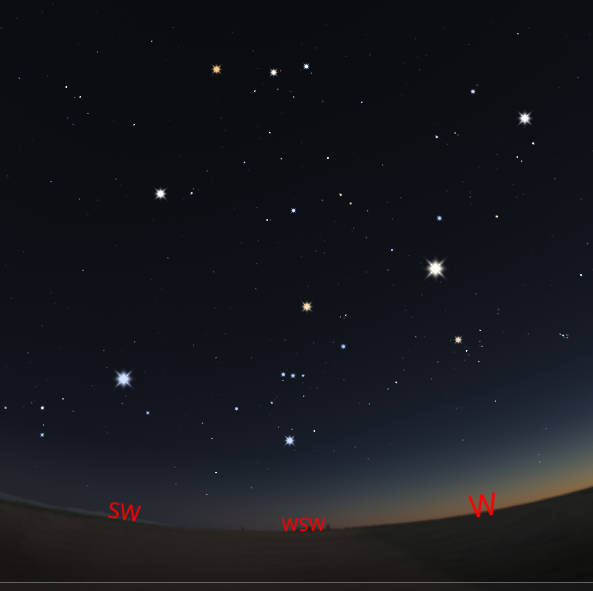
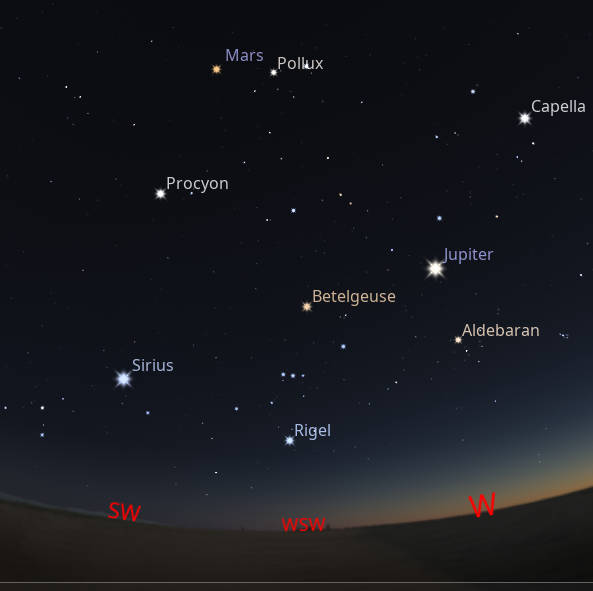
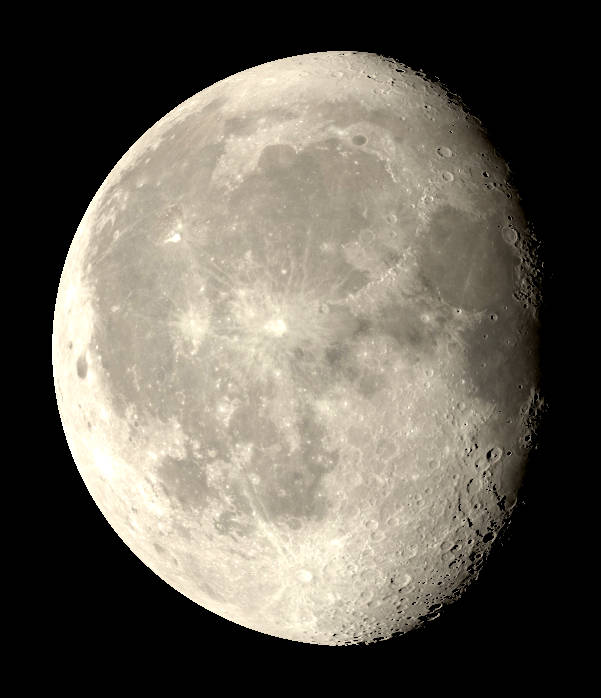
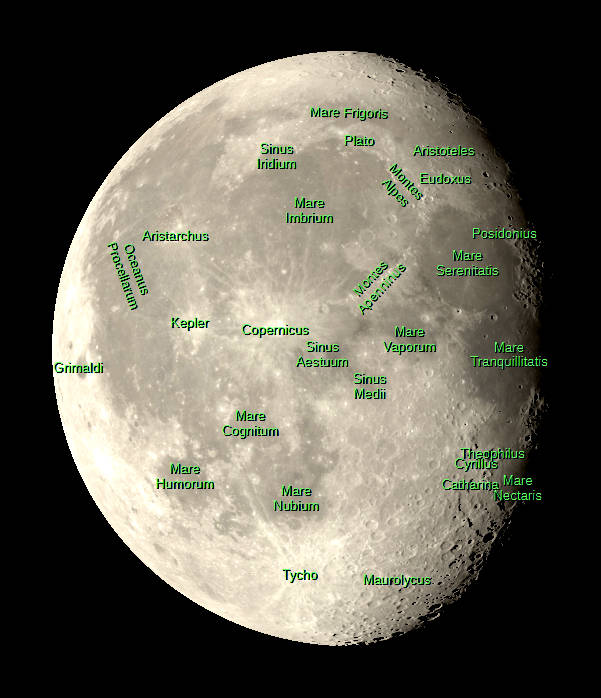
This is Ephemeris for Wednesday, April 9th. Today the Sun will be up for 13 hours and 12 minutes, setting at 8:20, and it will rise tomorrow at 7:06. The Moon, 3 days before full, will set at 6:13 tomorrow morning.
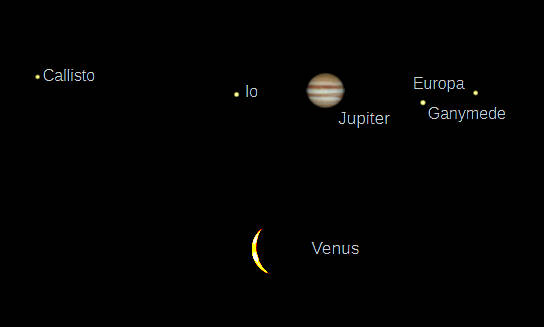
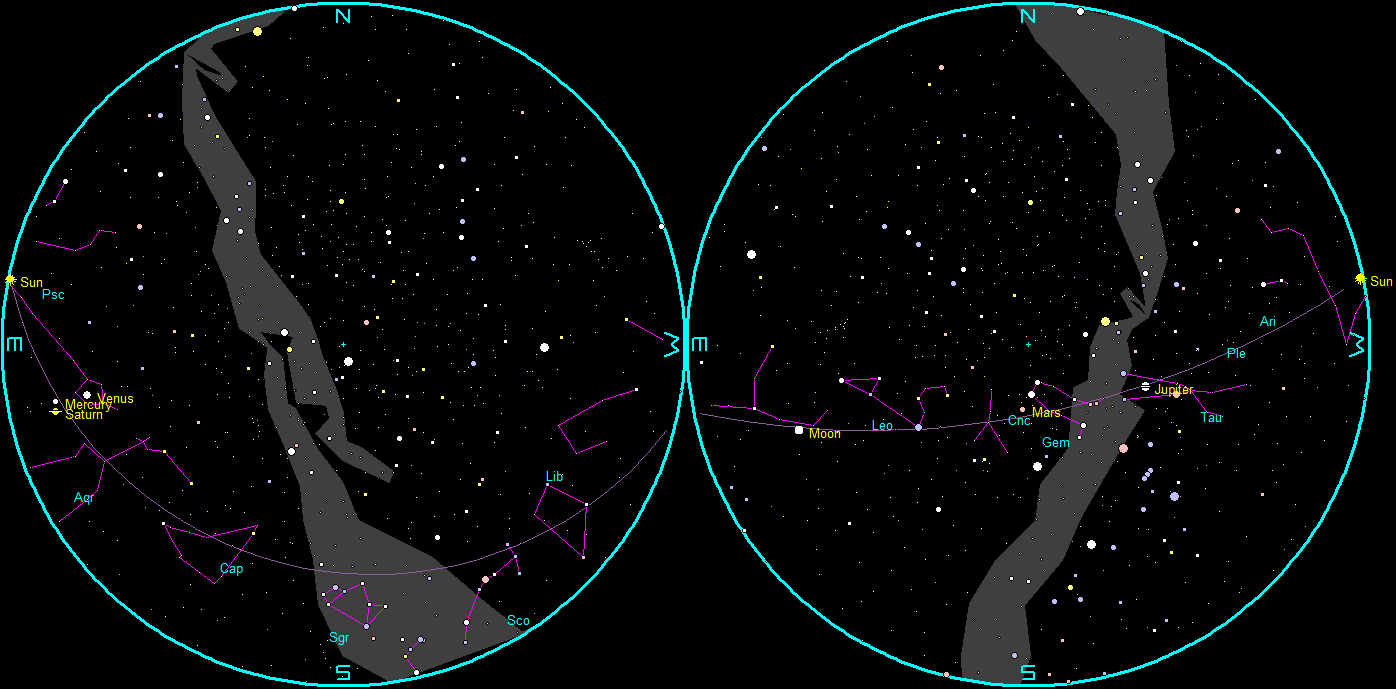
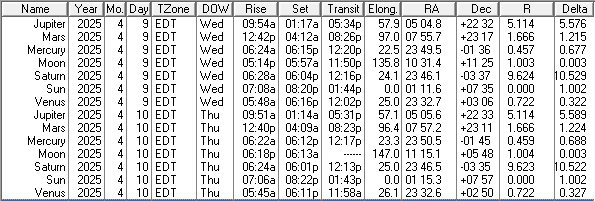
Let’s take our weekly look at the whereabouts of the naked-eye planets. At 9 PM this evening just two of the five naked eye planets will be out. Jupiter, now becomes the brightest evening planet, our substitute evening star if you will. It will be high in the west at 9 PM. Below it is the bright star Aldebaran. To its lower left, the great constellation of Orion. The rapidly fading Mars, with its distinctive reddish hue, is high in the south-southwest, in line with the stars Castor and Pollux in Gemini above right of it. By 6 AM Venus will be seen very low in the east, as the Morning Star,. It will require a low eastern horizon. It should be visible until about 6:45. Saturn should be visible in the morning by the end of the month.
The astronomical event times given are for the Traverse City/Interlochen area of Michigan (EDT, UT – 4 hours). Times will be different for other locations.
Addendum
Ephemeris: 04/02/2025 – Let’s take our weekly look at the whereabouts of the naked-eye planets
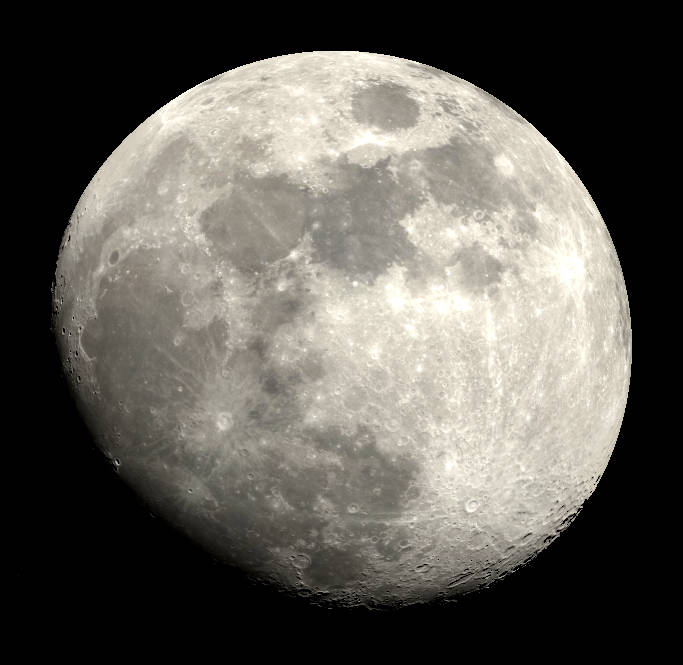
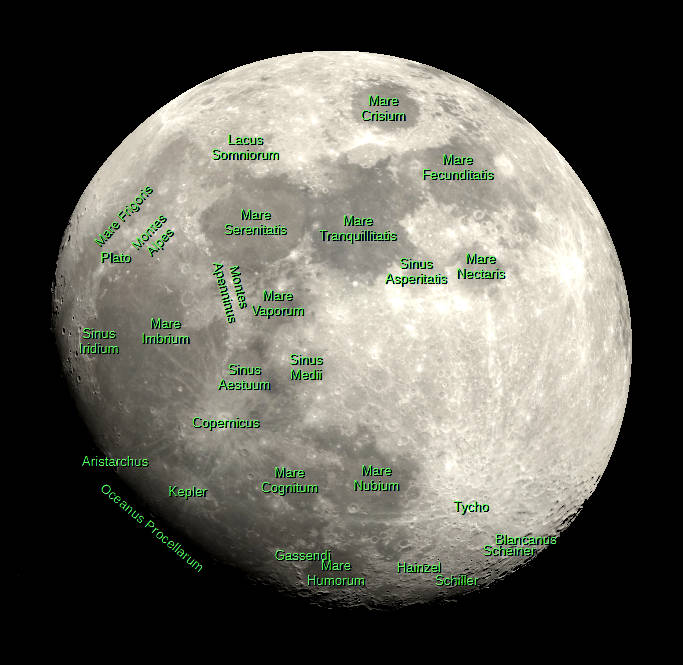
This is Bob Moler with Ephemeris for Wednesday, April 2nd. Today the Sun will be up for 12 hours and 50 minutes, setting at 8:12, and it will rise tomorrow at 7:19. The Moon, 2 days before first quarter, will set at 2:19 tomorrow morning.
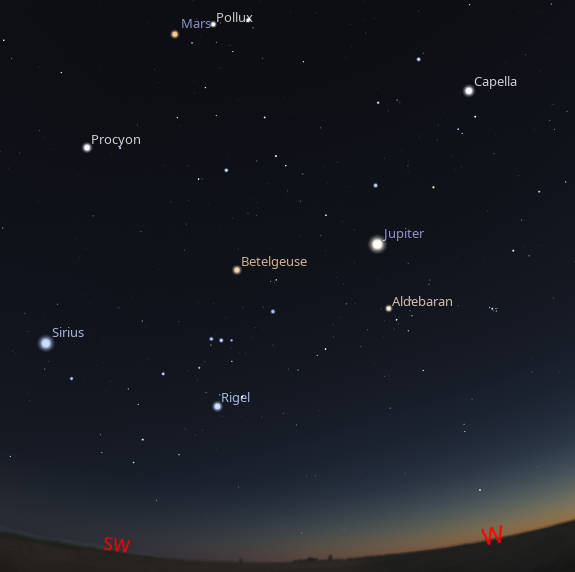
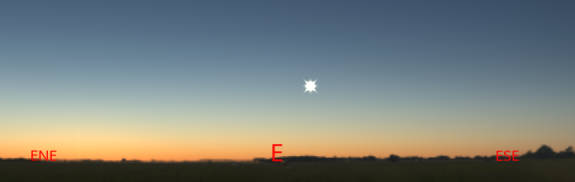
Let’s take our weekly look at the whereabouts of the naked-eye planets. At 9 PM this evening just two of the five naked eye planets will be out. Jupiter, now becomes the brightest evening planet, our substitute evening star if you will. It will be high in the west-southwest at 9 PM. Below it is the bright star Aldebaran and above it tonight will be the crescent Moon. To its lower left, the great constellation of Orion. The rapidly fading Mars, with its distinctive reddish hue, is high in the south, with the stars Castor and Pollux in Gemini above it. Venus may become visible in a few days low in the east starting as early as 6:30 AM. It will require a low eastern horizon, since it will be very low in the sky.
The astronomical event times given are for the Traverse City/Interlochen area of Michigan (EDT, UT – 4 hours). Times will be different for other locations.
Addendum

Ephemeris: 03/26/2025 – Where have all the naked-eye planets wandered off to?
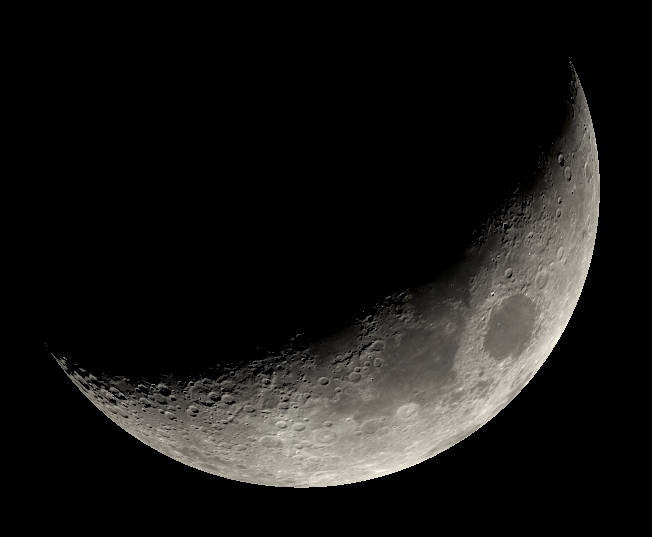
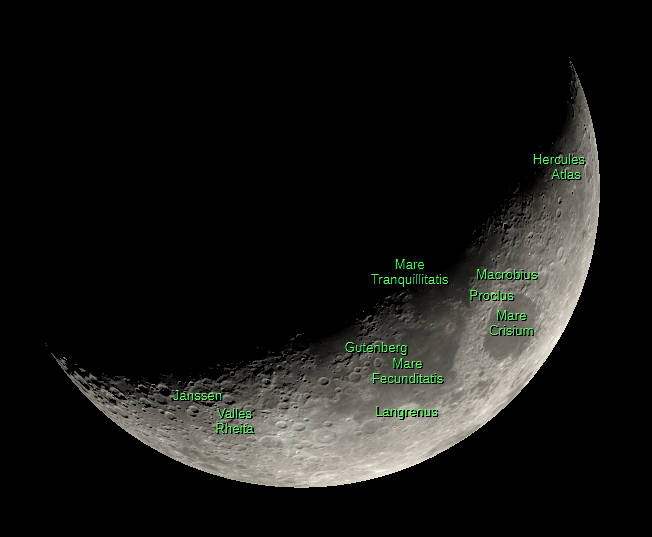
This is Bob Moler with Ephemeris for Wednesday, March 26th. Today the Sun will be up for 12 hours and 29 minutes, setting at 8:03, and it will rise tomorrow at 7:32. The Moon, 3 days before new, will rise at 6:47 tomorrow morning.
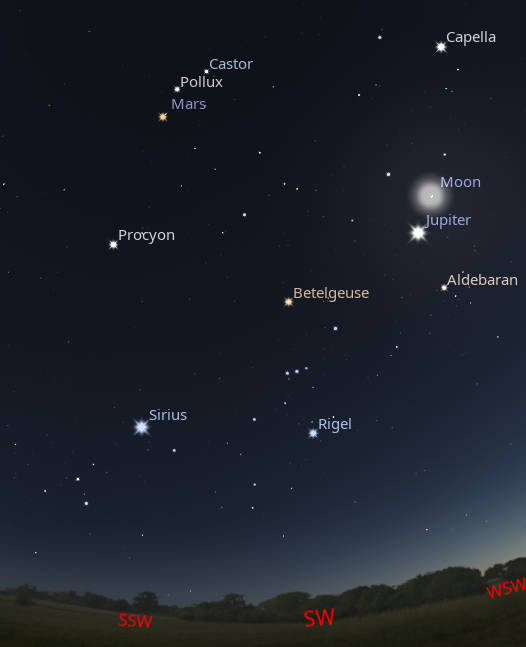
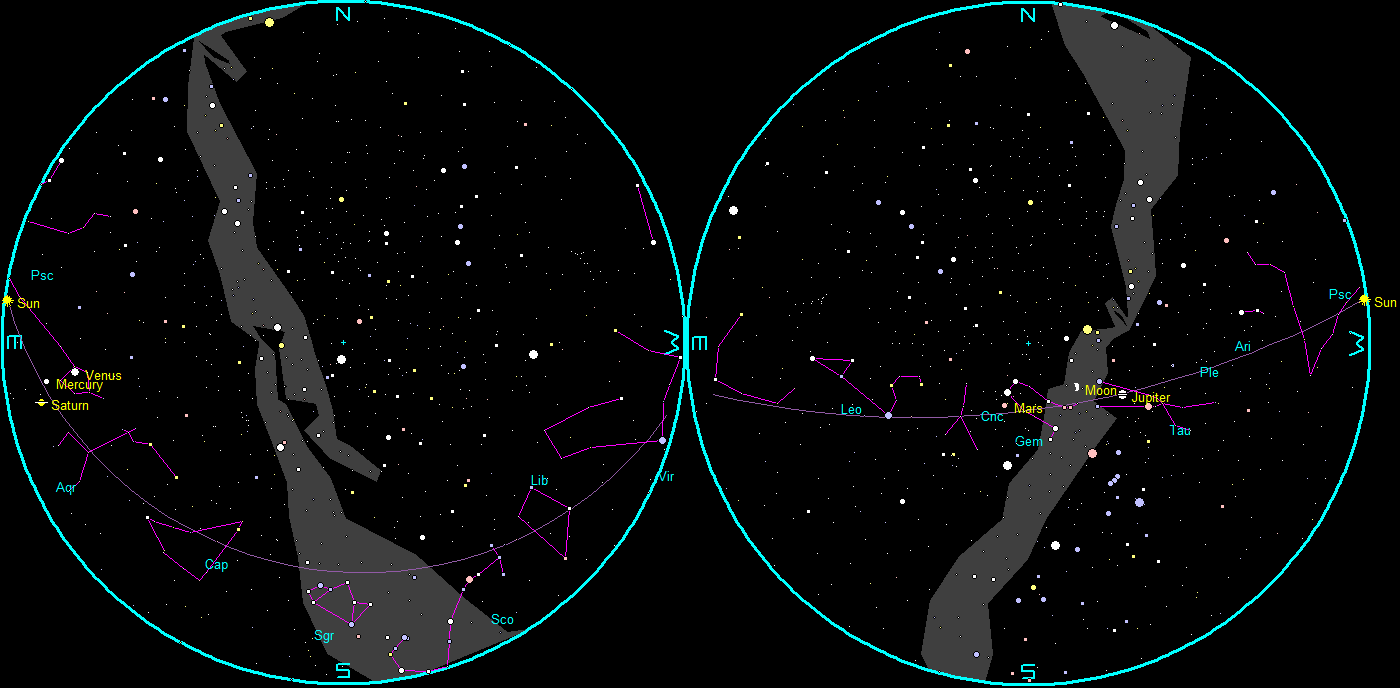
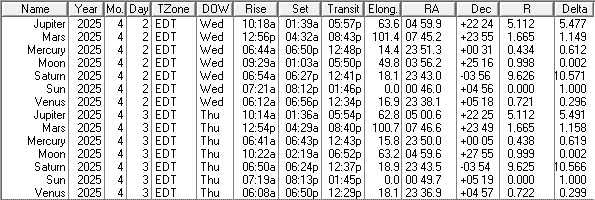
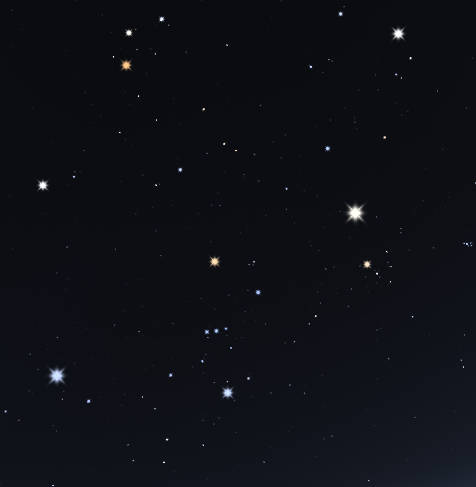
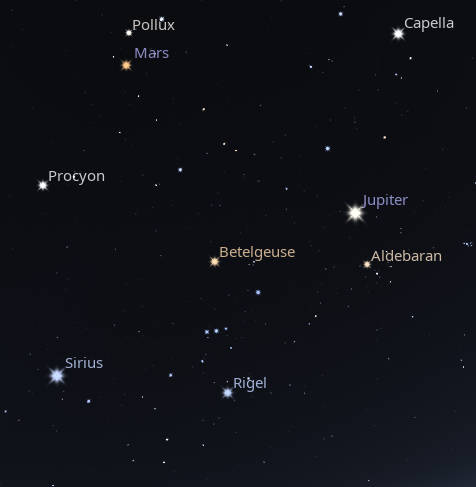
Let’s take our weekly look at the whereabouts of the naked-eye planets. At 9 PM this evening just two of the five naked eye planets will be out. Venus and Mercury have gone over to the dark… uh, morning side proceeded by Saturn, a month ago. Jupiter now becomes the brightest evening planet, our substitute evening star if you will. It will be high in the west-southwest at 9 PM. Below it is the bright star Aldebaran with the stars of the Hyades, the face of Taurus the bull, and farther to the right the star group the Pleiades or Seven Sisters. To its lower left, the great constellation of Orion. The rapidly fading Mars, with its distinctive reddish hue, is high in the south, with the stars Castor and Pollux in Gemini above it.
The astronomical event times given are for the Traverse City/Interlochen area of Michigan (EDT, UT – 4 hours). Times will be different for other locations.
Addendum

Ephemeris: 03/24/2025 – Mercury crosses over to the morning side
This is Ephemeris for Monday, March 24th. Today the Sun will be up for 12 hours and 22 minutes, setting at 8:00, and it will rise tomorrow at 7:36. The Moon, 2 days past last quarter, will rise at 5:58 tomorrow morning.
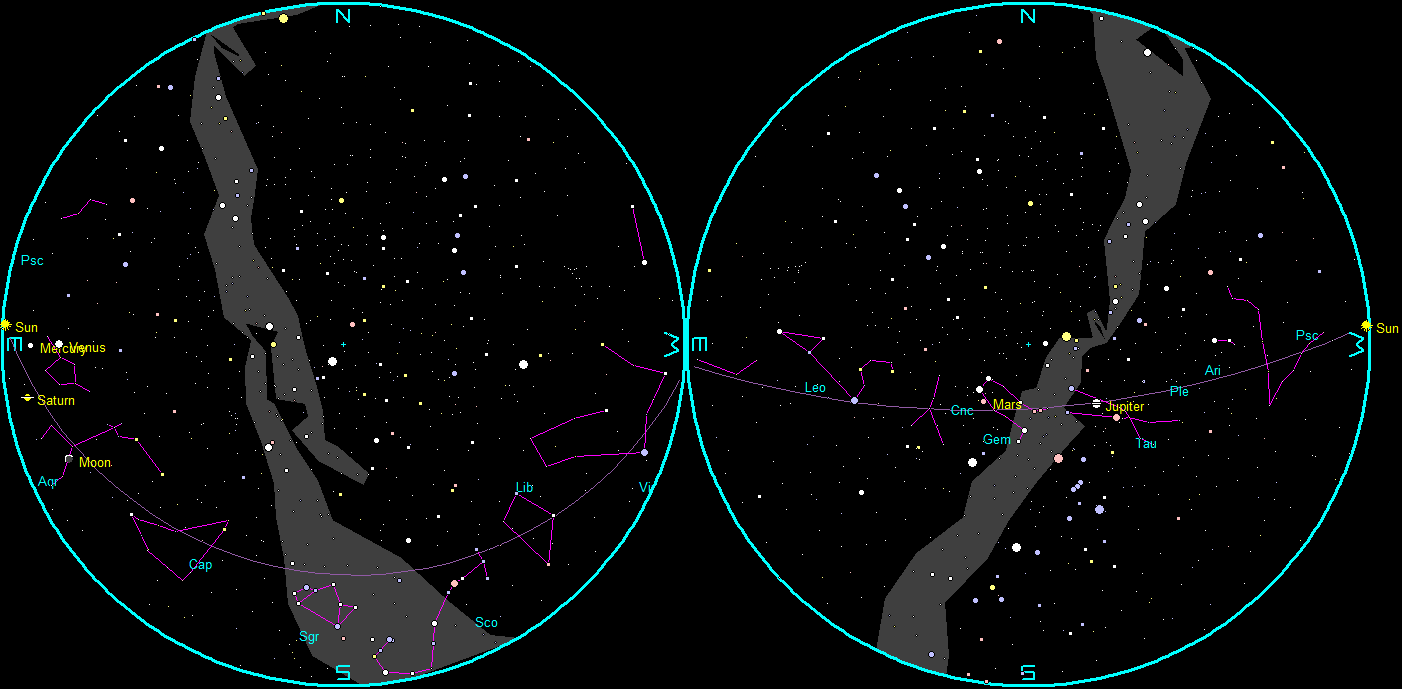
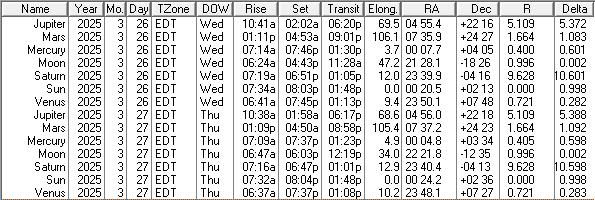
Today, Mercury is at inferior conjunction with the Sun, two days after Venus. Mercury of course, this is in the middle of its retrograde motion period, moving westward against the stars, and for astrologers Mercury in retrograde is a big deal. I consider astrology is to astronomy as tea-leaf reading is to botany, so I dismiss it. Every once in a while Mercury, when it passes inferior conjunction, crosses in front of the face of the Sun for us. These are called transits, and are fairly rare. The last time was in November 2019 and the next time will be in November 2032 which is seven years from now. Mercury will move into the morning sky, where its appearance will not be favorable for us in the Northern Hemisphere.
The astronomical event times given are for the Traverse City/Interlochen area of Michigan (EDT, UT – 4 hours). Times will be different for other locations.
Addendum
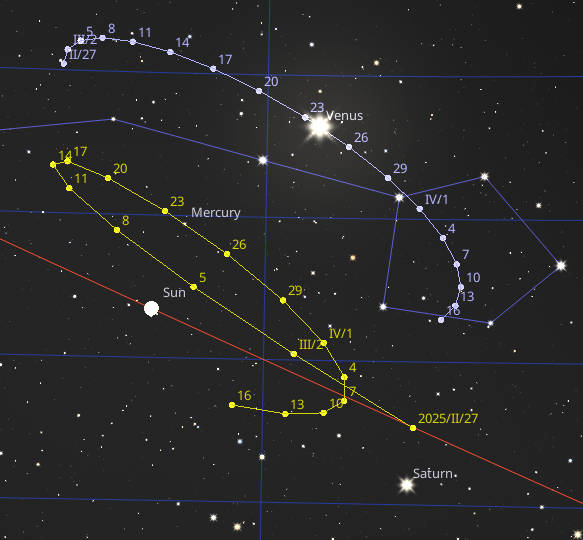
Retrograde loops are caused by looking at a moving planet from another moving planet, the Earth.
Ephemeris: 03/19/2025 – Suddenly there are only two planets visible in the evening
This is Ephemeris for Wednesday, March 19th. Today the Sun will be up for 12 hours and 7 minutes, setting at 7:54, and it will rise tomorrow at 7:45. The Moon, 3 days before last quarter, will rise at 1:53 tomorrow morning.
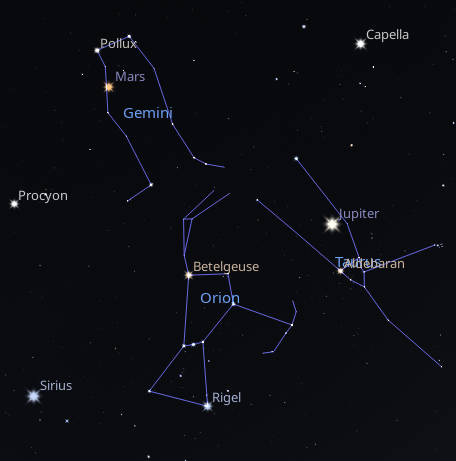
Let’s take our weekly look at the whereabouts of the naked-eye planets. At 9 PM this evening just two of the five naked eye planets will be out. Venus and Mercury are too close to the Sun in the twilight to be seen. Saturday and Monday Venus and then Mercury will pass between the Earth and the Sun to enter the morning sky. Jupiter, now becomes the brightest evening planet. It will be high in the southwest. Below it is the bright star Aldebaran with the stars of the Hyades, the face of Taurus the bull, and to the lower left, the great constellation of Orion, The rapidly fading Mars, with its distinctive reddish hue, is high in the south, with the stars Castor and Pollux in Gemini above it.
The astronomical event times given are for the Traverse City/Interlochen area of Michigan (EDT, UT – 4 hours). Times will be different for other locations.
Addendum
Ephemeris: 03/12/2025 – Last chance to see four naked-eye planets in the evening
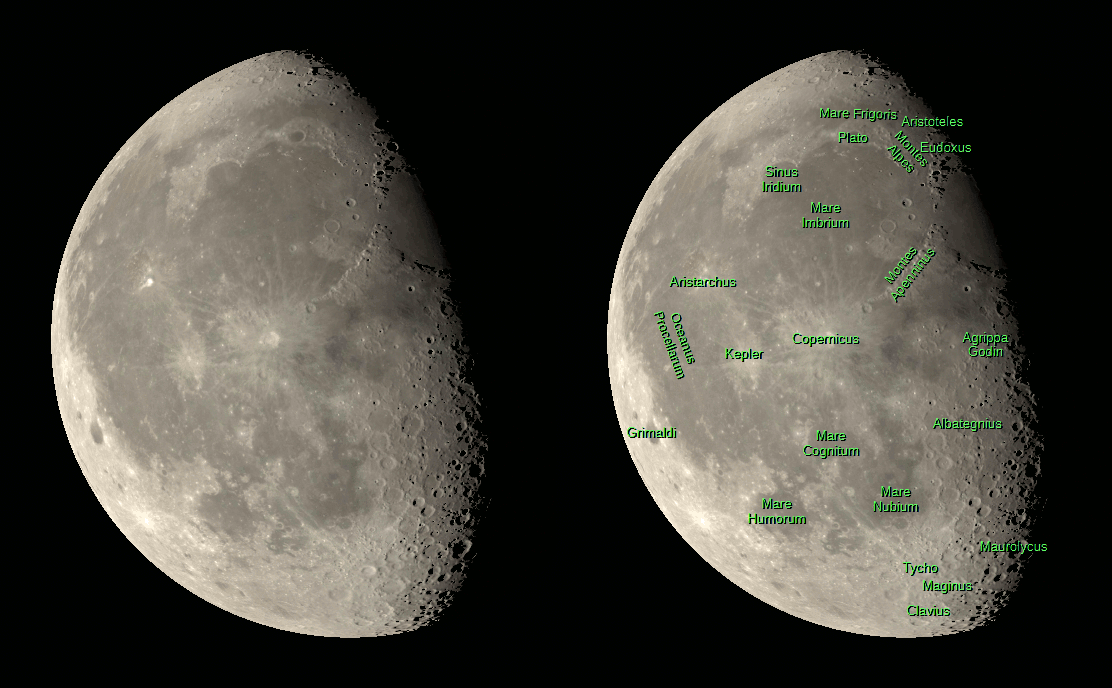
This is Ephemeris for Wednesday, March 12th. Today the Sun will be up for 11 hours and 45 minutes, setting at 7:45, and it will rise tomorrow at 7:58. The Moon, 2 days before full, will set at 7:49 tomorrow morning.
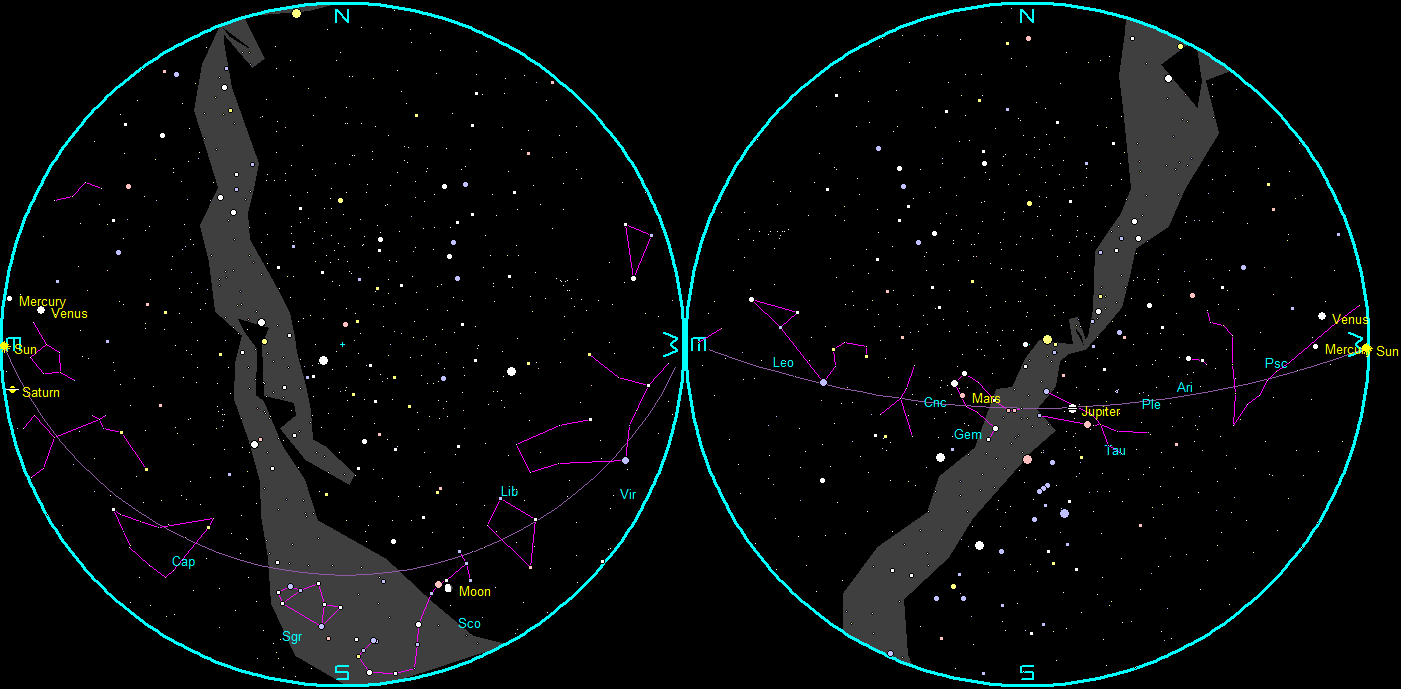
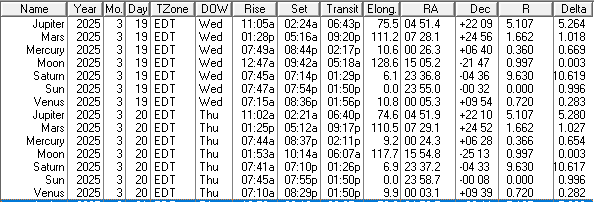
Let’s take our weekly look at the whereabouts of the naked-eye planets. At 8:30 PM this evening four of the five naked eye planets will be out. Starting from the West we have Venus the brightest of all. Left and a bit below is the much dimmer Mercury. Both will rapidly disappear in evening twilight in a less than a week. Venus will pass in conjunction with the Sun on March 22nd, Mercury will do the same two days later. Jupiter, the second-brightest planet will be high in the southwest. Mars, the third-brightest planet now, with its distinctive reddish hue, is high in the south-southeast, below and right of the stars Castor and Pollux in Gemini. By the end of the month only two planets, Mars and Jupiter will be left in the evening sky.
The astronomical event times given are for the Traverse City/Interlochen area of Michigan (EDT, UT – 4 hours). Times will be different for other locations.
Addendum
Ephemeris: 03/05/2025 – Taking our weekly look at the whereabouts of the naked-eye planets
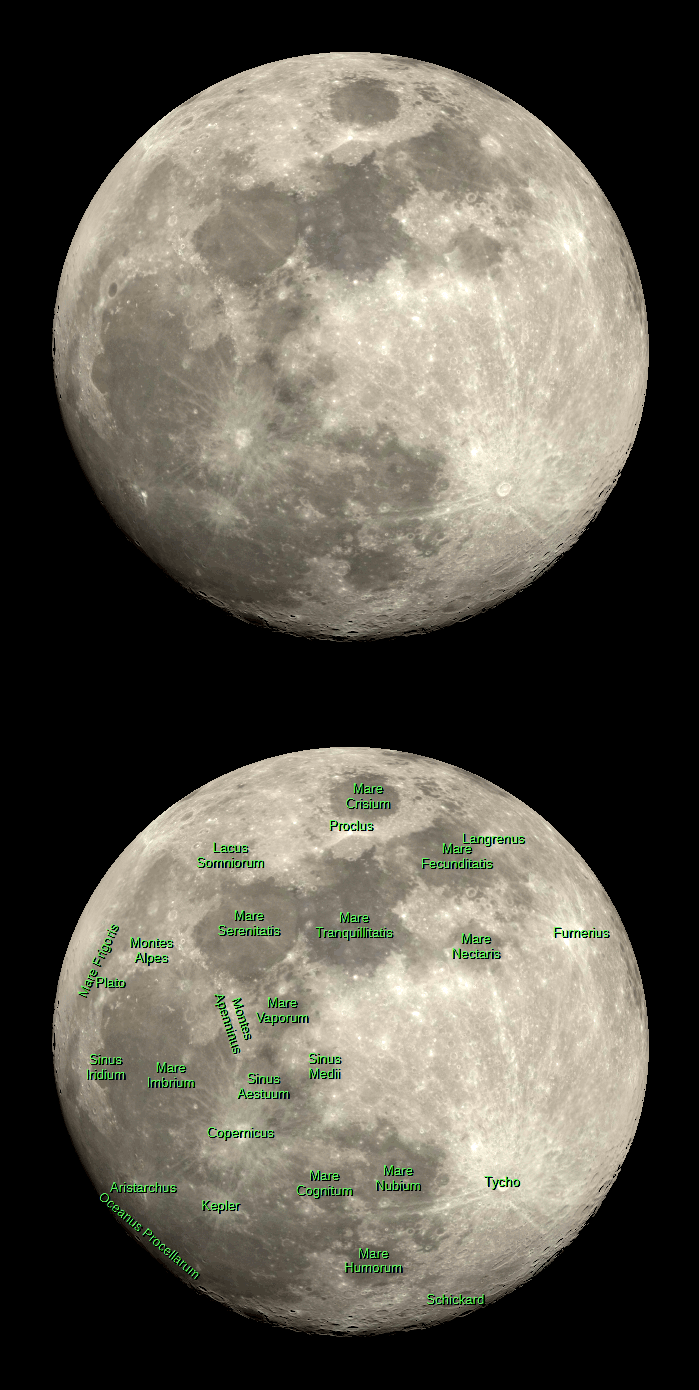
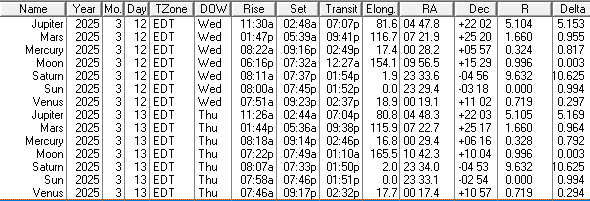
This is Ephemeris for Ash Wednesday, March 5th. Today the Sun will be up for 11 hours and 23 minutes, setting at 6:36, and it will rise tomorrow at 7:10. The Moon, 1 day before first quarter, will set at 2:21 tomorrow morning.
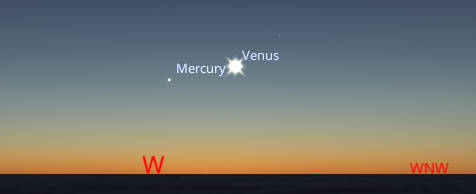
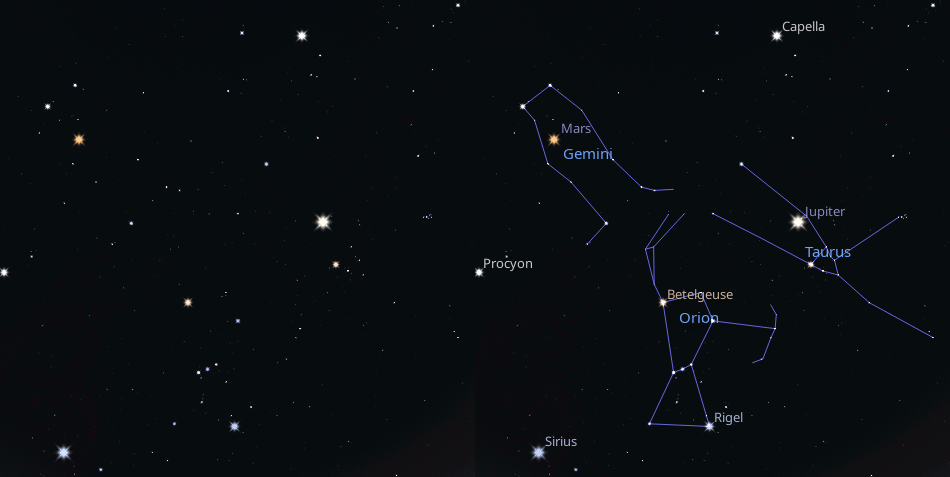
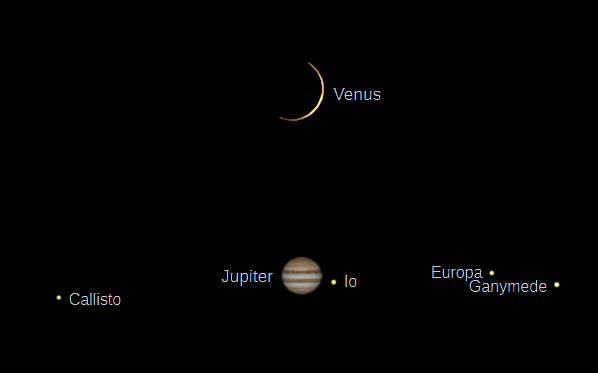
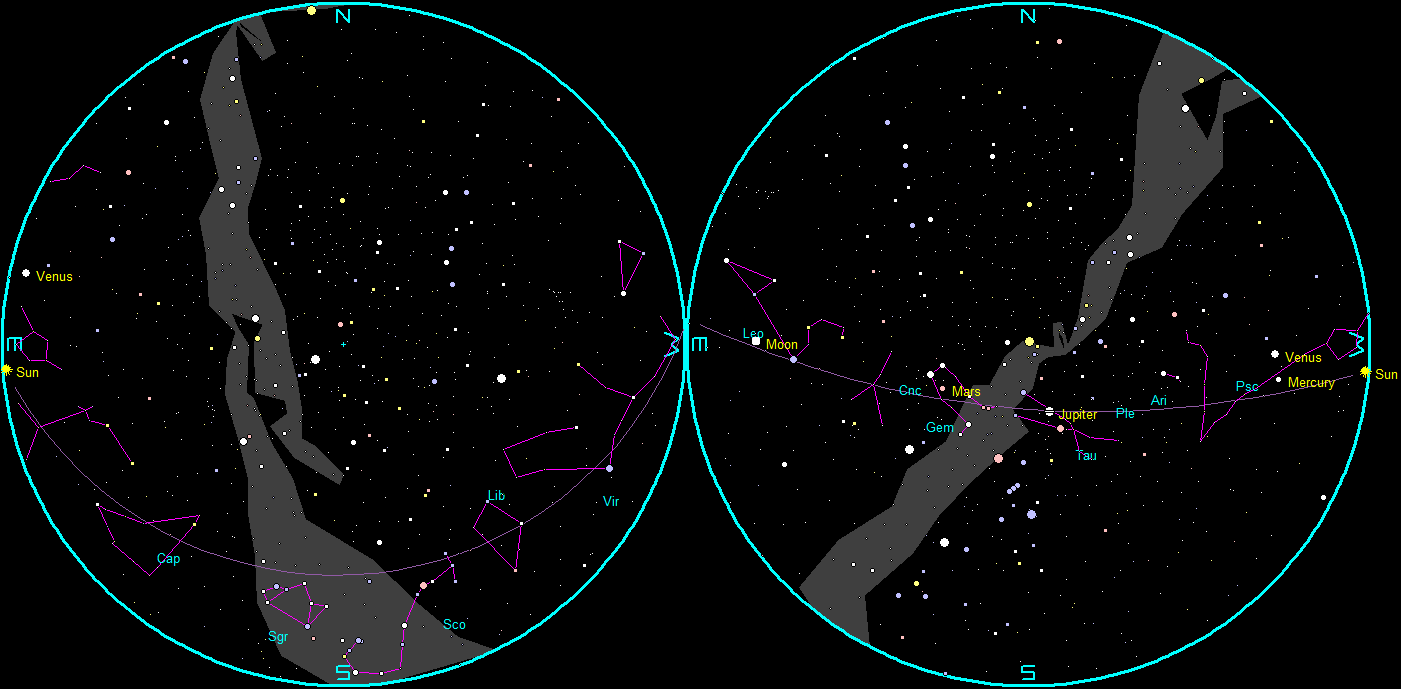
Let’s take our weekly look at the whereabouts of the naked-eye planets. At 7:10 PM this evening four of the five naked eye planets will be out. Starting from the West we have Venus the brightest of all. Below it at the 7 o’clock position and halfway to the horizon is the much dimmer Mercury, three days from its greatest separation from the Sun. Jupiter, the second-brightest planet will be high in the south-southwest below and right of the Moon tonight. The 4th planet out is Mars, the third-brightest planet now, with its distinctive reddish hue, west of the stars Castor and Pollux in Gemini, and in the southeast. By the end of the month both Venus and Mercury will be gone out of the evening sky, leaving only two, Mars and Jupiter.
The astronomical event times given are for the Traverse City/Interlochen area of Michigan (EST, UT – 5 hours). Times will be different for other locations.
Addendum
Ephemeris: 02/26/2025 – Where are the naked-eye planets this week?
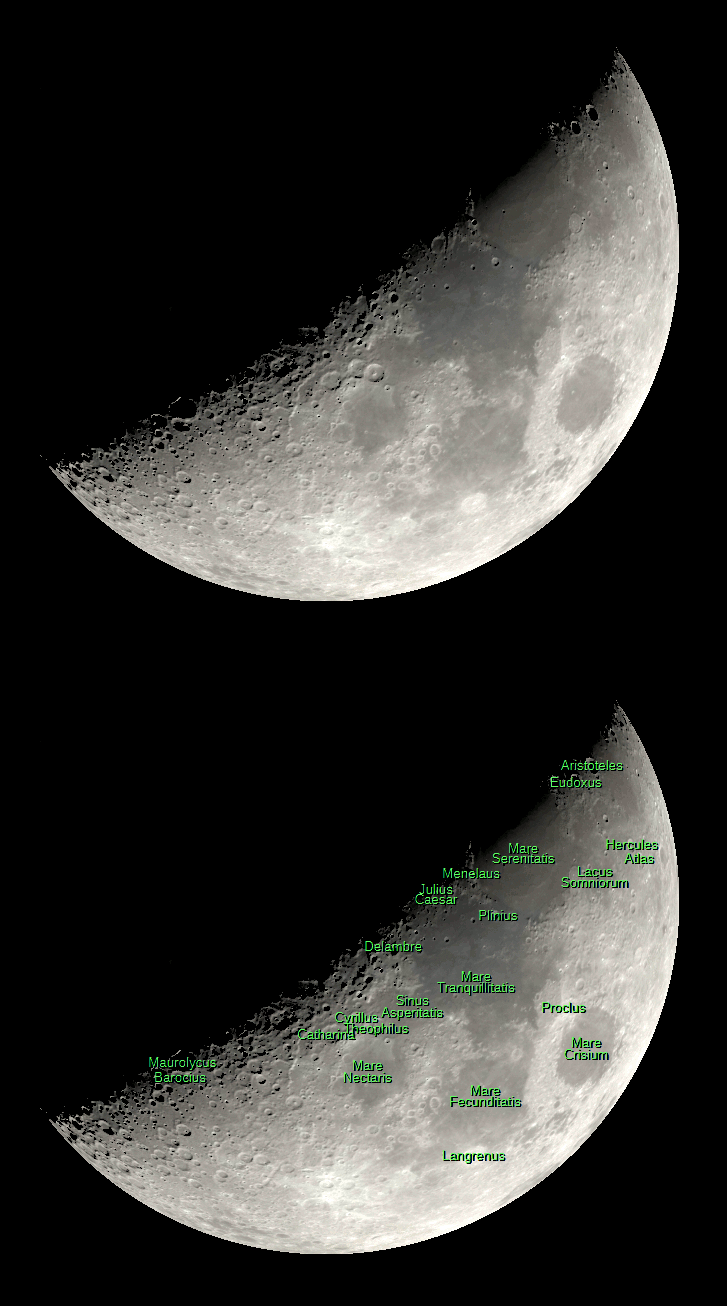
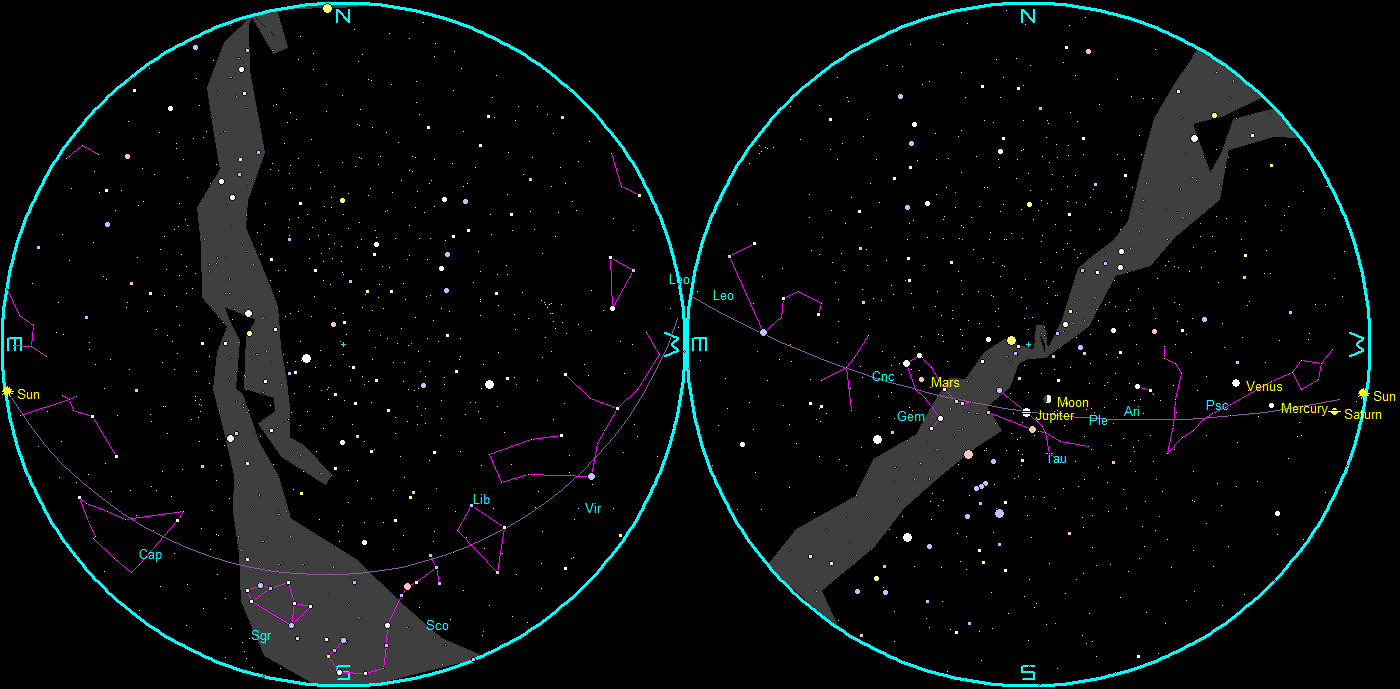
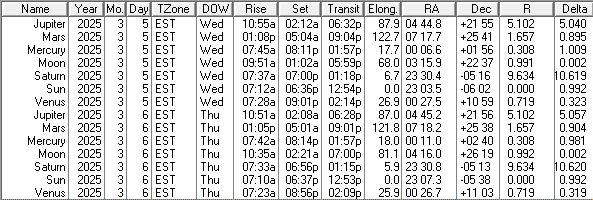
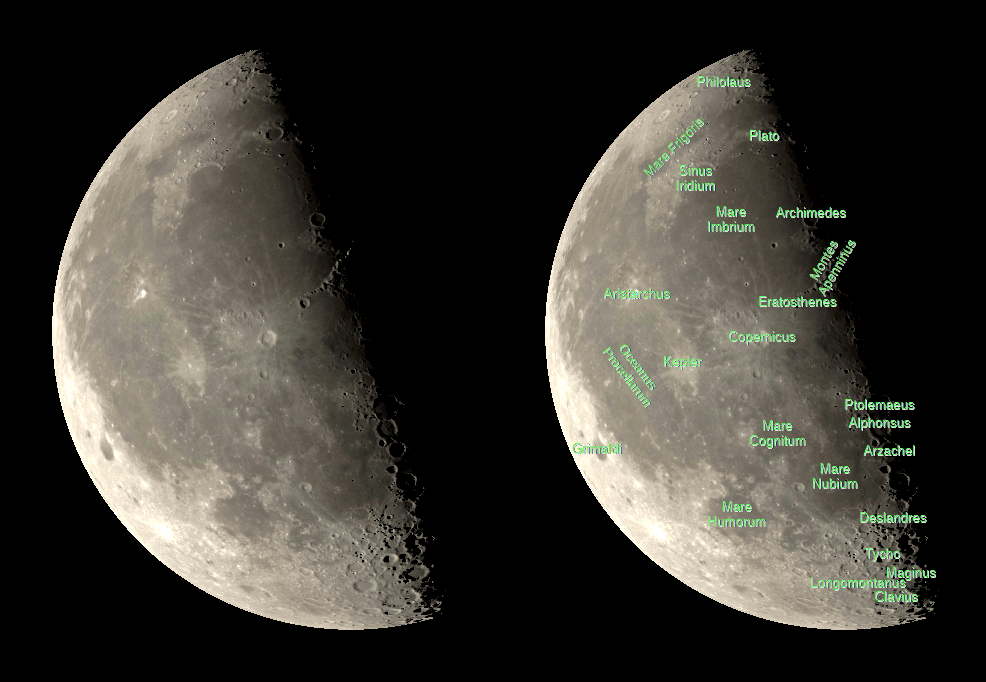
This is Ephemeris for Wednesday, February 26th. Today the Sun will be up for 11 hours and 2 minutes, setting at 6:26, and it will rise tomorrow at 7:23. The Moon, 1 day before new, will rise at 7:25 tomorrow morning.
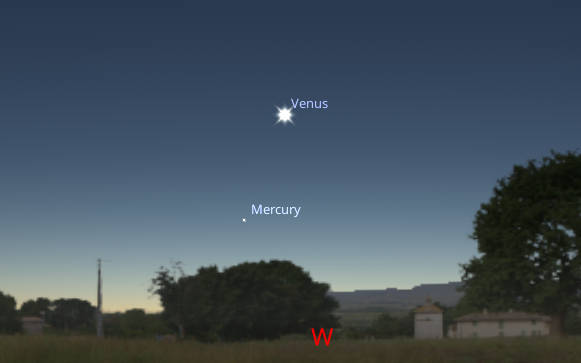
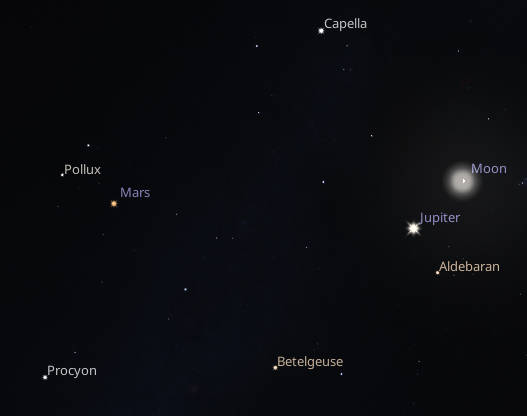
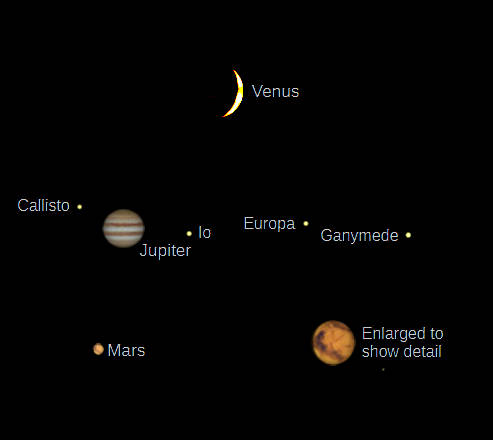
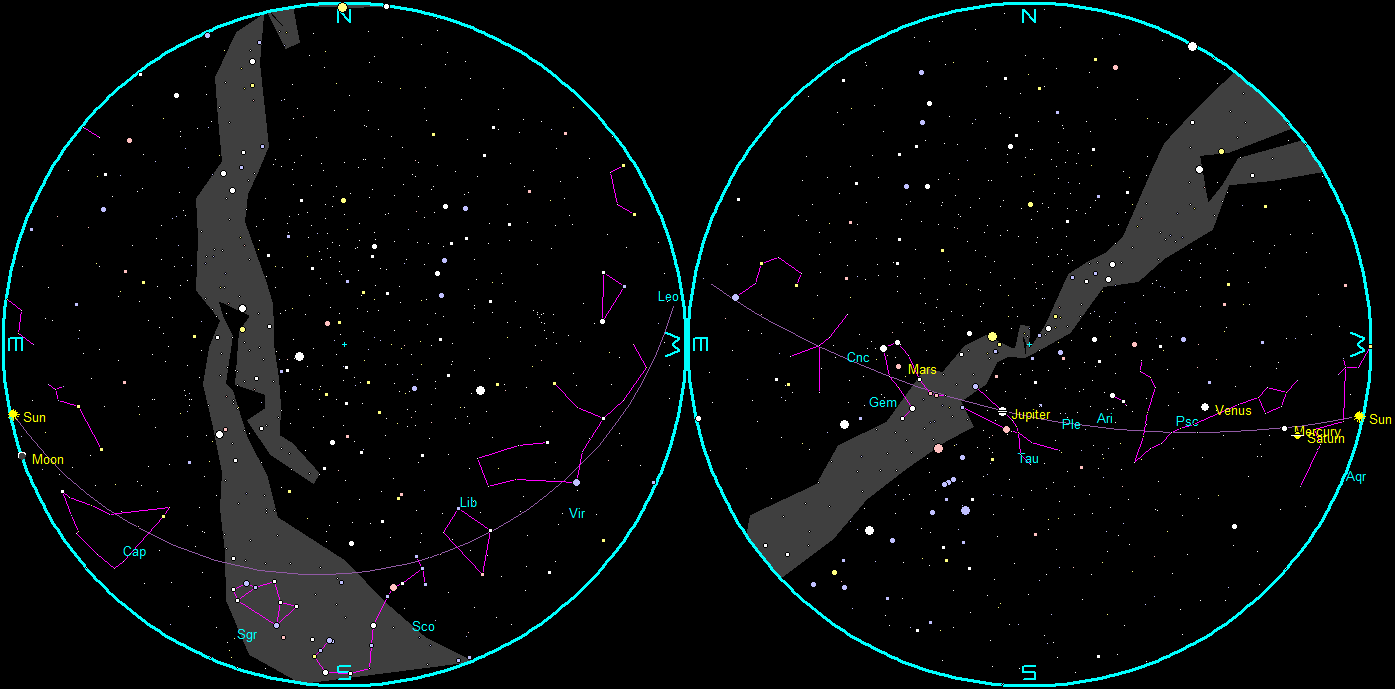
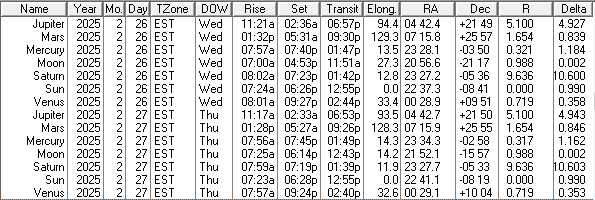
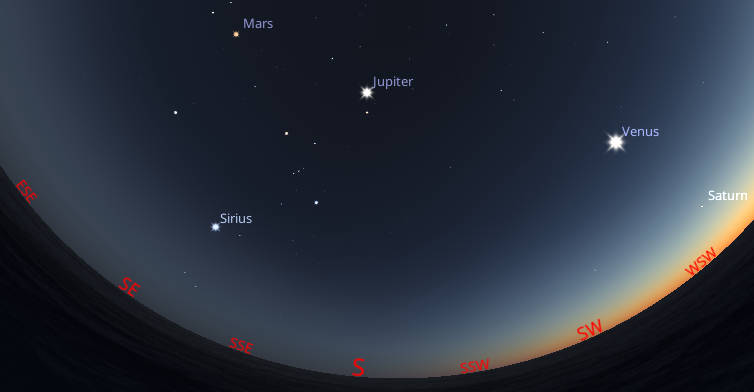
Let’s take our weekly look at the whereabouts of the naked-eye planets. At 7:15 PM this evening four of the five naked eye planets will be out. Starting from the west we have Venus the brightest of all. Far below it, near the horizon, will be the much dimmer Mercury, making its evening appearance, replacing Saturn. Jupiter, the second-brightest planet will be high in the south. It is slowly heading eastward now above the star Aldebaran. Farther below and left of it is the spectacular constellation of Orion the hunter. The 4th planet out is Mars, the third-brightest planet now, with its distinctive reddish hue in the east-southeast, to the right of the stars Castor and Pollux in Gemini.
The astronomical event times given are for the Traverse City/Interlochen area of Michigan (EST, UT – 5 hours). Times will be different for other locations.
Addendum
Ephemeris: 02/19/2025 – All the naked-eye planets are seen in the evening this week
Ephemeris: 02/19/2025 – Where have the naked-eye planets wandered off to this week?
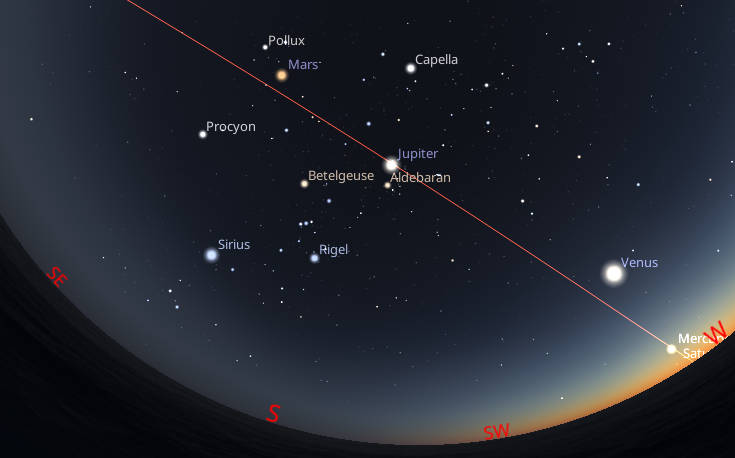
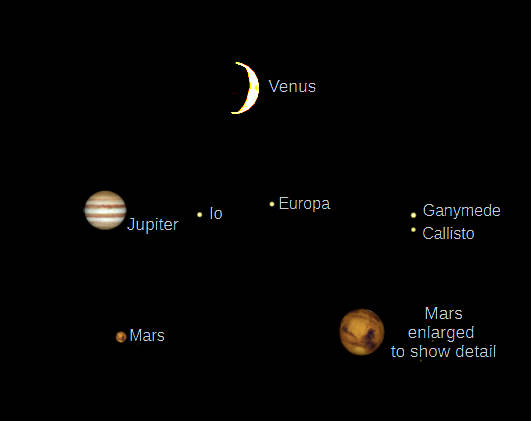
This is Ephemeris for Wednesday, February 19th. Today the Sun will be up for 10 hours and 40 minutes, setting at 6:17, and it will rise tomorrow at 7:34. The Moon, 1 day before last quarter, will rise at 1:59 tomorrow morning.
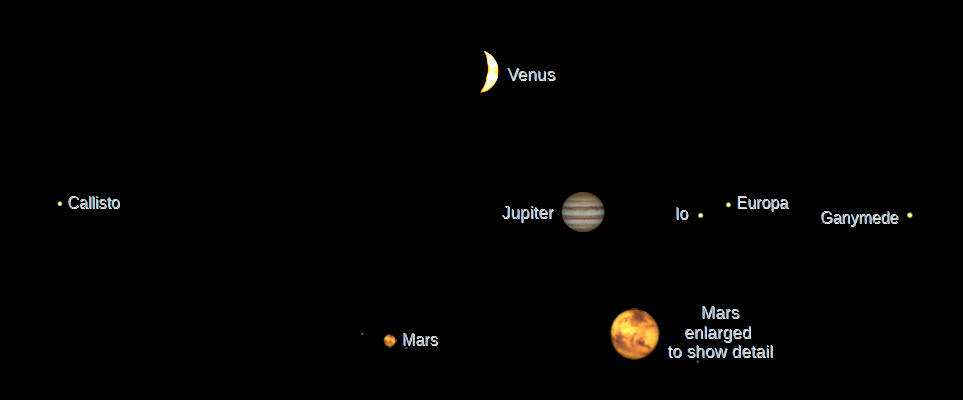
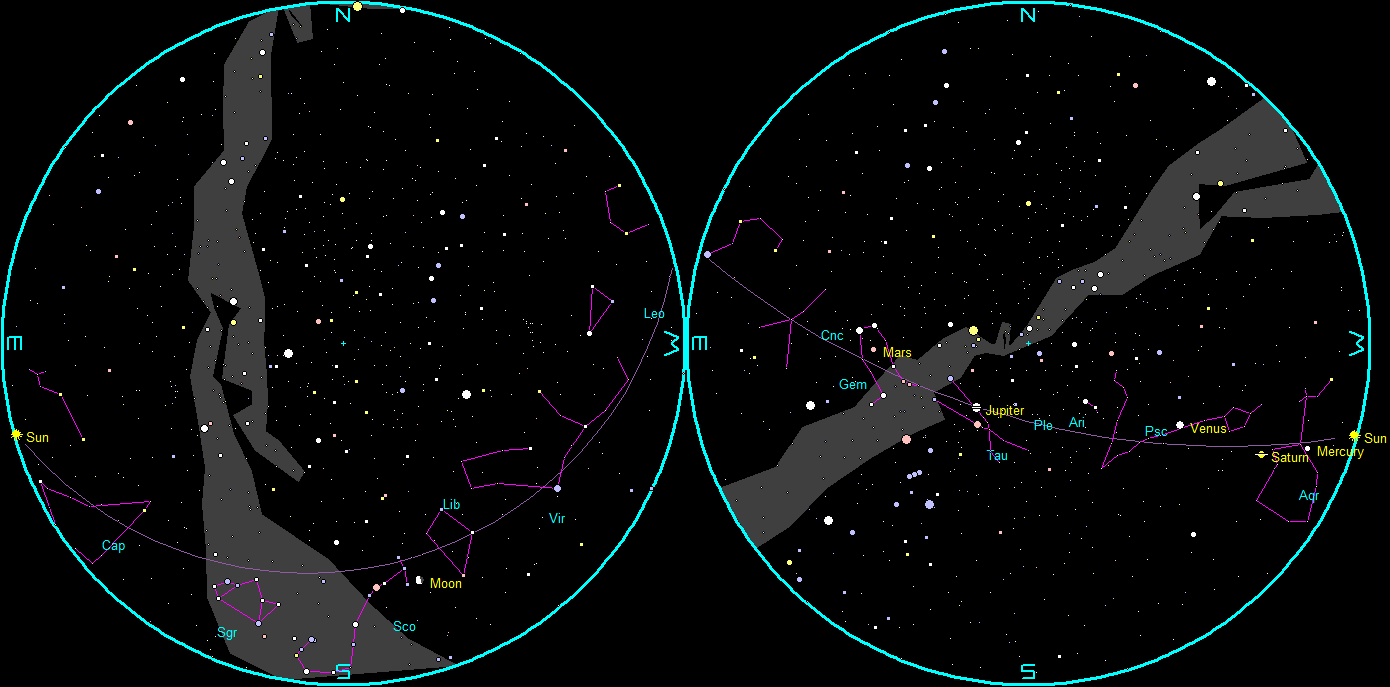
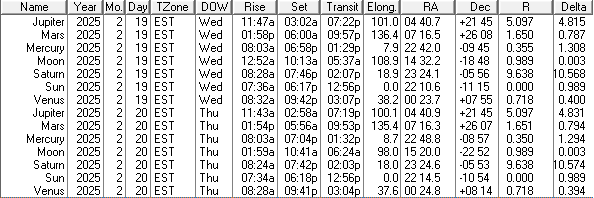
Let’s take our weekly look at the whereabouts of the naked-eye planets. At 7 PM this evening four of the five naked eye planets will be out. Starting from the West we have Venus the brightest of all in the west southwest. Far below it, near the horizon, will be the much dimmer Saturn, which we are about to lose, or may already have, to the evening twilight. Jupiter, the second-brightest planet will be high in the south. It has reversed course and is heading back eastward now. Farther below it is the spectacular constellation of Orion the hunter. The fourth planet out is Mars, the third-brightest planet now, with its distinctive reddish hue, west of the stars Castor and Pollux in Gemini, and in the east-southeast.
The astronomical event times given are for the Traverse City/Interlochen area of Michigan (EST, UT – 5 hours). Times will be different for other locations.
Addendum
 Bob Moler's Ephemeris Blog