Archive
05/01/2015 – Ephemeris – A talk about the Virgo Cluster of galaxies tonight and a star party
Ephemeris for Friday, May 1st. Today the Sun will be up for 14 hours and 14 minutes, setting at 8:47. The Moon, 2 days before full, will set at 5:55 tomorrow morning. Tomorrow the Sun will rise at 6:31.
Tonight yours truly will be presenting the program: The Galaxy Cluster Next Door, at this evening’s meeting of the Grand Traverse Astronomical Society at 8 p.m. at Northwestern Michigan College’s Rogers Observatory. Following at 9 p.m. will be a star party featuring the Moon and planets Venus, Jupiter and later, Saturn. As to the program: There is a patch of the spring sky in the constellation of Virgo the virgin, where we are looking out the thin side of our Milky Way galaxy where there is a huge group of over a thousand galaxies astronomers have dubbed the Virgo Cluster. Galaxy clusters are held together by the gravity of mysterious dark matter, but the clusters are expanding from all the other clusters.
Times are for the Traverse City/Interlochen area of Michigan. They may be different for your location.
Addendum
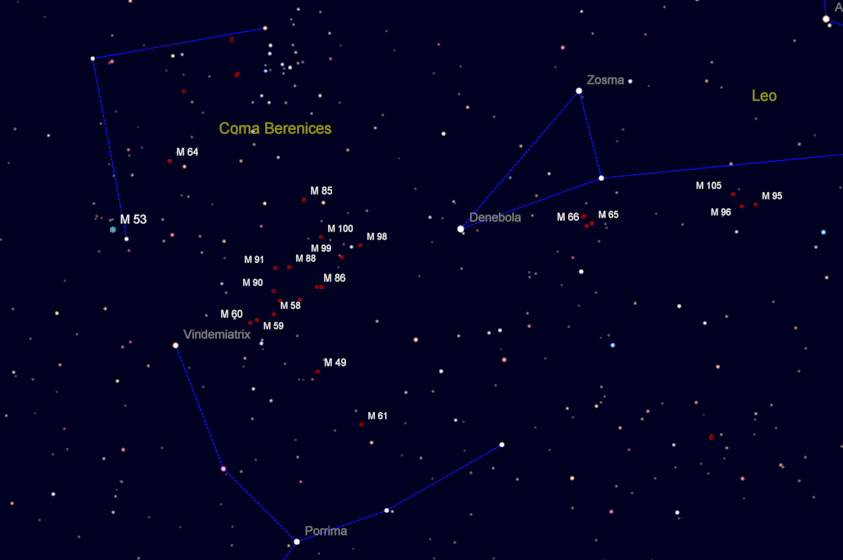
The Messier objects in the central part of the Virgo Cluster. Created with Cartes du Ciel (Sky Charts).
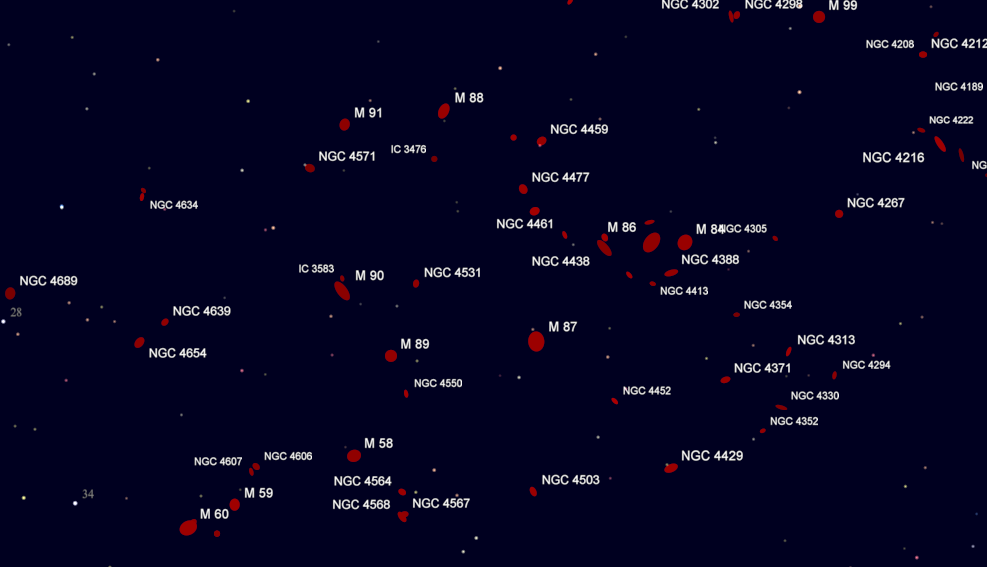
Some of the galaxies in the heart of the Virgo Cluster. Created with Cartes du Ciel (Sky Charts).
04/17/2015 – Ephemeris – First Sleeping Bear Dunes star party of the year
Ephemeris for Friday, April 17th. The Sun rises at 6:55. It’ll be up for 13 hours and 34 minutes, setting at 8:30. The Moon, 1 day before new, will rise at 6:55 tomorrow morning.
Tomorrow, that’s Saturday night the 18th, the Grand Traverse Astronomical Society will host the first of nine viewing opportunities at the Sleeping Bear Dunes National Lakeshore this year. This one will be held at Platte River Point north parking lot, at the end of Lake Michigan Road, off M22, weather permitting. Viewing begins around 9 p.m. with Brilliant Venus and then Jupiter. Later on as it gets dark, other wonders among the stars will be visible. For a complete schedule of viewing opportunities check the park’s website or gtastro.org. They will include viewing the sun on the afternoons of the May through August star parties. Plus there will be an all night Perseid Meteor watch at the Dune Climb the night of August 12th and 13th, and a lunar eclipse watch the evening of September 27th.
Times are for the Traverse City/Interlochen area of Michigan. They may be different for your location.
Addendum
Sleeping Bear Dunes National Lakeshore Star Parties and other Events
|
Day |
Date |
Venue |
Time |
Comments |
|---|---|---|---|---|
|
Saturday |
April 18 |
SBDNL – Platte River Point |
9 – 11 p.m. |
Venus, Jupiter |
|
Saturday |
May 23 |
SBDNL – Dune Climb |
4 – 6 p.m ☼ & 9 – 11 p.m. |
Venus, Jupiter, Moon |
|
Saturday |
June 20 |
SBDNL – Pierce Stocking Drive Stop #3 |
4 – 6 p.m ☼ & 9 – 11 p.m. |
Park at Picnic Mountain. Venus, Jupiter, Moon, Saturn |
|
Saturday |
July 25 |
SBDNL – Platte River Point |
4 – 6 p.m ☼ & 9 – 11 p.m. |
Venus, Jupiter, Moon, Saturn |
|
Saturday |
August 8 |
SBDNL – Thoreson Farm |
4 – 6 p.m ☼ & 9 – 11 p.m. |
Port Oneida Fair. Mercury, Jupiter early, Saturn, Dark, Summer Milky Way |
|
Wednesday |
August 12 |
SBDNL – Dune Climb |
9 p.m. – 5 a.m. |
All night Perseid meteor watch |
|
Saturday |
September 12 |
SBDNL – Dune Climb |
9 – 11 p.m. |
Saturn, Dark skies, Summer Milky Way |
|
Sunday |
September 27 |
SBDNL – Platte River Point |
9 p.m. – 12 m |
Total Lunar Eclipse |
|
Wednesday |
October 21 |
SBDNL – Pierce Stocking Drive Stop #3 |
8 – 10 p.m. |
SBDNL 45th anniversary star party, Moon, bright star clusters and nebulae |
Explanation Key
☼ – Sun viewing
Conditions:
Dark – Dark skies. Deep Sky Objects (DSOs: star clusters, nebulae and galaxies) visible depending on the season.
Twilight – Twilight lasts through out the viewing period. Some Deep Sky Objects may be visible near the end of the viewing period.
Objects other than planets:
Summer Milky Way – Many Deep Sky Objects are visible in our galaxy. The Milky Way is best seen on August and September evenings with the moon out of the sky. This also means dark skies.
Cancellation
The monthly star party events will be cancelled if the sky is not visible due to weather conditions. An official decision will be made by the Lakeshore, usually, one hour before the event. To find out whether an event has been cancelled please check our Facebook page, or Twitter feed, or call park rangers at 231-326-4700, ext. 5005, for a voice mail message with the decision.
02/06/2015 – Ephemeris – The GTAS will entertain the NMC Students in a Star Bowl Quiz tonight
Ephemeris for Friday, February 6th. The sun will rise at 7:56. It’ll be up for 10 hours and 2 minutes, setting at 5:58. The moon, 3 days past full, will rise at 8:55 this evening.
Tonight the Grand Traverse Astronomical Society will have for its meeting at 8 p.m. at Northwestern Michigan College’s Rogers Observatory its nearly annual Star Bowl contest with The Northwestern Michigan College astronomy students, and NMC Astronomy Club members facing the returning champions, the GTAS. This Jeopardy style game will be hosted by NMC Professor Jerry Dobek. Come and watch or even take part if you’d like. At 9 p.m. the society will host a star party at the observatory with the Moon and Jupiter as featured objects. Folks can still bring in their telescopes for help during this time. The observatory is located south of Traverse City on Birmley Road between Garfield and Keystone roads.
Times are for the Traverse City/Interlochen area of Michigan. They may be different for your location.
Addendum
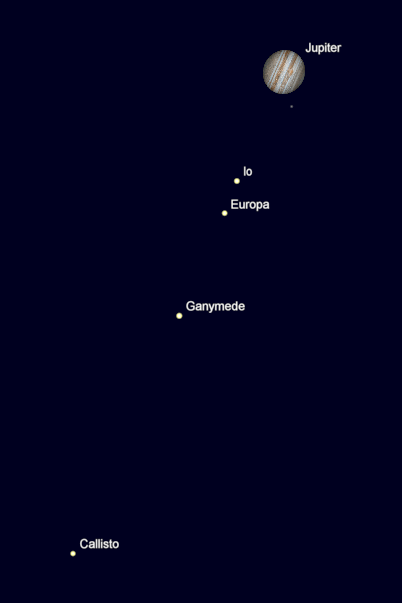
Jupiter through a telescope at 9 p.m. (EST), on February 6, 2015. The four Galilean moon will be stretched out on one side of Jupiter in order of their actual distances from the planet. Created using Cartes du Ceil (Sky Charts).
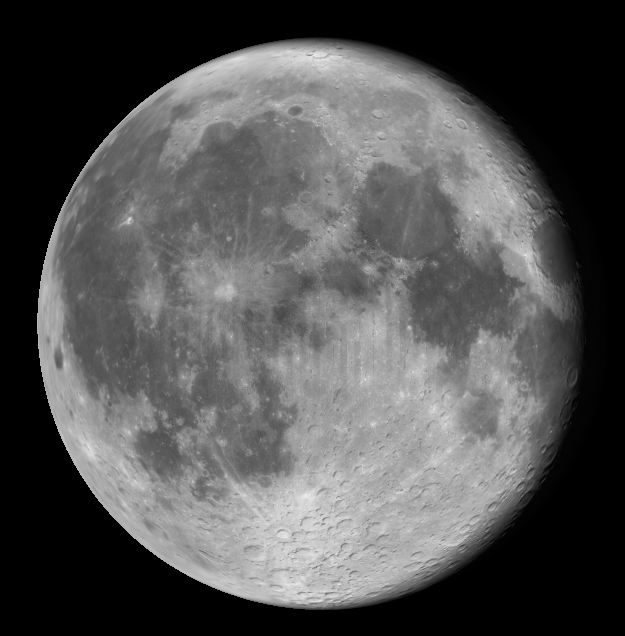
The Moon tonight (February 6, 2015). The Moon will rise shortly before the start of the Star Party. Created using Virtual Moon Atlas.
11/07/2014 – Ephemeris – GTAS meeting tonight and Star Party
Ephemeris for Friday, November 7th. The sun will rise at 7:28. It’ll be up for 9 hours and 55 minutes, setting at 5:23. The moon, 1 day past full, will rise at 6:15 this evening.
Tonight the Grand Traverse Astronomical Society will hold their monthly meeting at he Northwestern Michigan College’s Rogers Observatory at 8 p.m. featuring yours truly presenting the Hitchhikers Guide to the Solar System. I have found, what NASA and other space agencies have found, that once orbiting the Sun in the solar system. One can go anywhere in the solar system with a minimum of energy, if one has the time. We’ll start by looking at orbits about the Earth and how they can be changed. We’ll look at escape velocity and those seemingly strange Lagrangian points, plus stealing energy from the planets. At 9 p.m. there will be a star party featuring the Moon and some of the brighter deep sky objects. The observatory is located on Birmley road.
Times are for the Traverse City/Interlochen area of Michigan. They may be different for your location.
Addendum
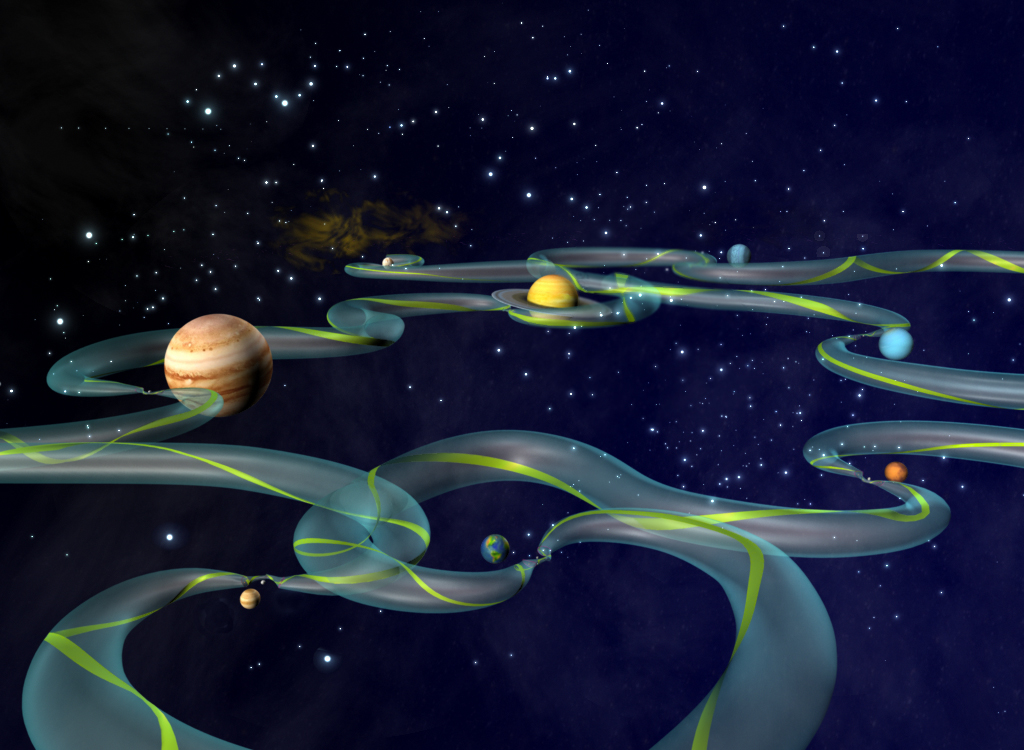
Artist’s concept of interplanetary superhighway or Interplanetary Transport Network. Credit: NASA/JPL.
10/21/2014 – Ephemeris – There’s a star party tonight at the Sleeping Bear Dunes National Lakeshore
Ephemeris for Tuesday, October 21st. The sun will rise at 8:05. It’ll be up for 10 hours and 42 minutes, setting at 6:47. The moon, 2 days before new, will rise at 6:44 tomorrow morning.
Tonight if it’s clear the Grand Traverse Astronomical Society will join the rangers at the Sleeping Bear Dunes National Lakeshore for their 44th anniversary celebration with a star party at Stop number 3, the Dunes Overlook on the Pierce Stocking Scenic Drive. The event will run from 8 to 10 p.m. featuring the wonders still visible among the northern summer stars along with those appearing in the autumn skies. To get a heads up on the status of the star party call 231-326-4700, extension. 5005, for a message after 4 p.m. The Orionid meteor shower is also at peak now with the meteors seeming to come from between the constellations Orion and Gemini. The Orionids are visible from 11 p.m. to 6:30 a.m. The Orionids will be visible in diminishing numbers through the first week in November.
Times are for the Traverse City/Interlochen area of Michigan. They may be different for your location.
Addendum
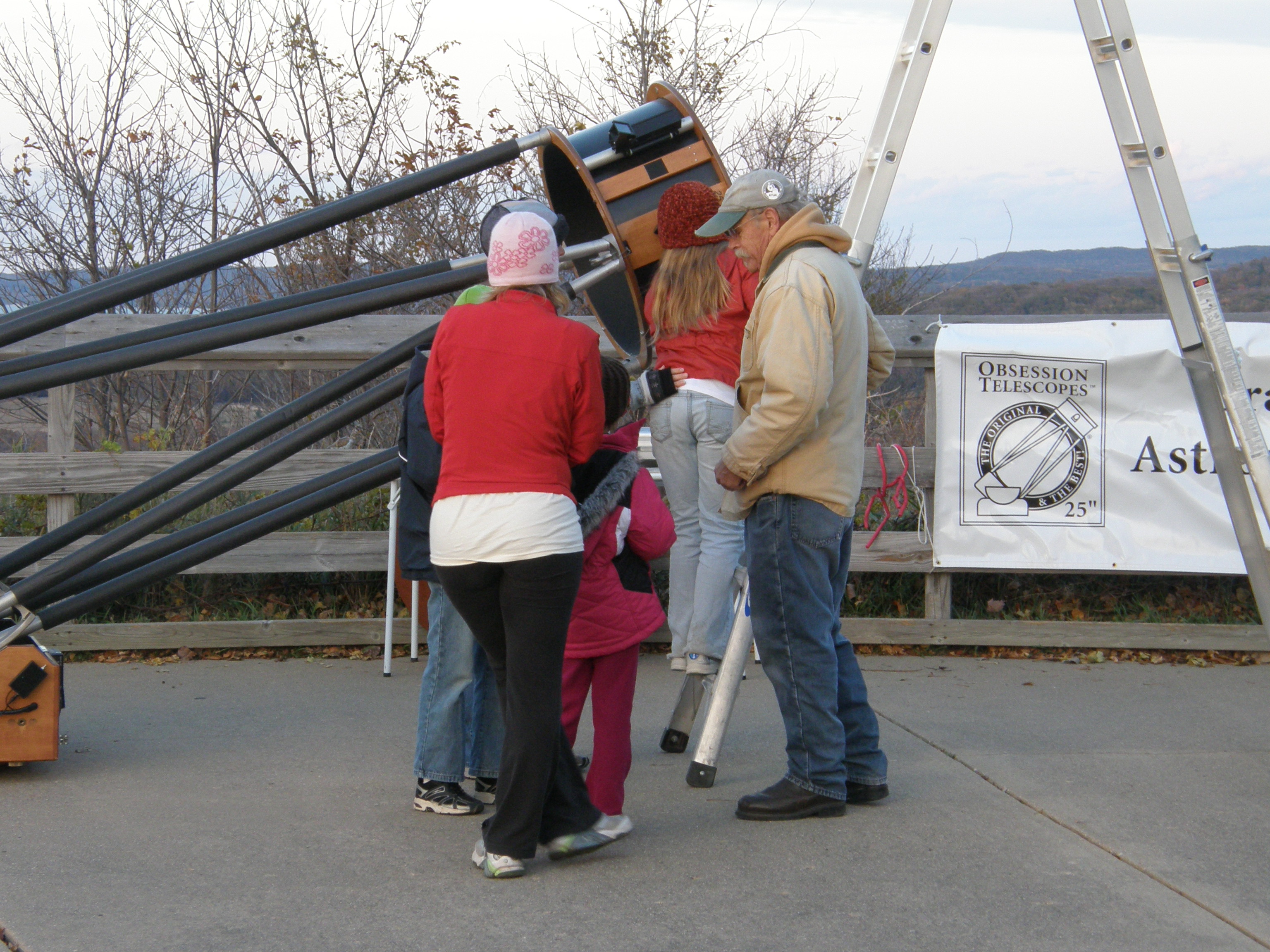
Views from the anniversary star party in 2010. Credit: Eileen Carlisle.
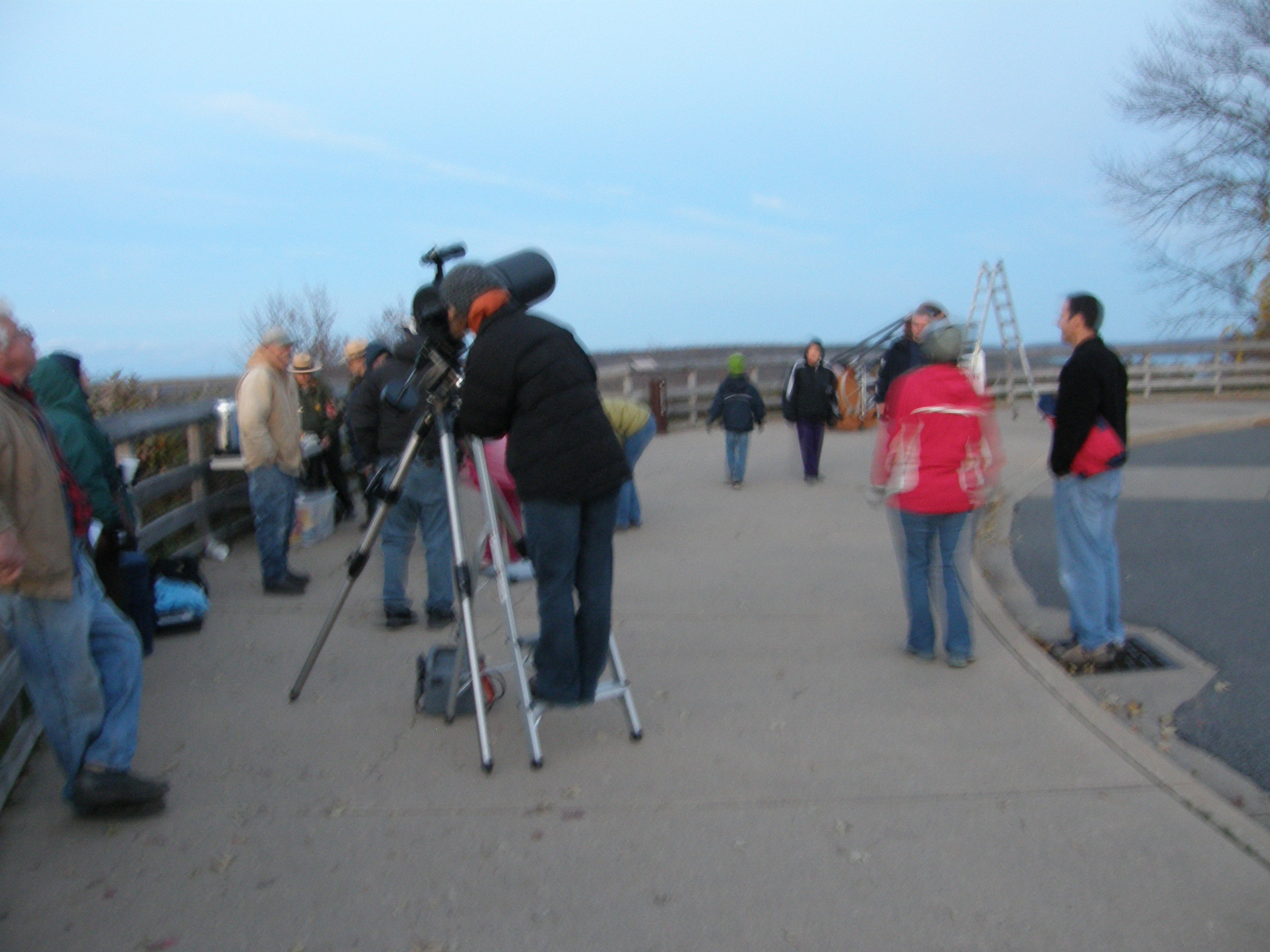
Views from the anniversary star party in 2010. Credit: Eileen Carlisle.
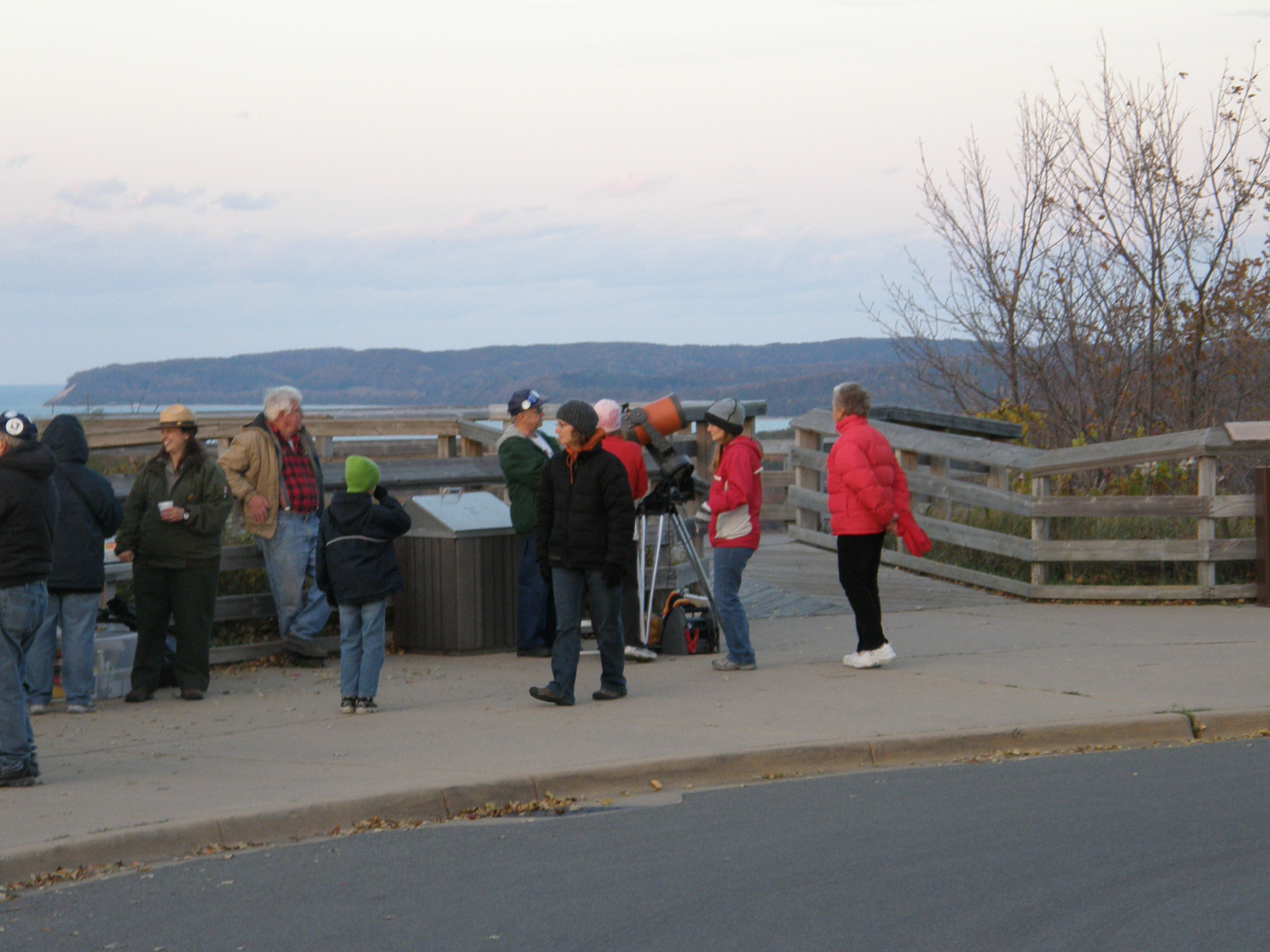
Views from the anniversary star party in 2010. Credit: Eileen Carlisle.
10/03/2014 – Ephemeris – Sundials and Fall Astronomy Day on tap tomorrow at the NMC Observatory
Ephemeris for Friday, October 3rd. The sun will rise at 7:42. It’ll be up for 11 hours and 36 minutes, setting at 7:19. The moon, 2 days past first quarter, will set at 3:01 tomorrow morning.
Tomorrow is Fall Astronomy Day. To celebrate the Grand Traverse Astronomical Society will move its first Friday of the month meeting and star party to Saturday the 4th. At 8 p.m local landscape architect and sundial expert Dean Connors will talk about, of course, sundials and the myriad of forms they take. Starting at 9 p.m. the star party portion of the night will begin with the moon as the featured celestial object. Members of the society will also provide information on this month’s two eclipses and how to observe a solar eclipse safely. The meeting and star party will be held at Northwestern Michigan College’s Rogers Observatory located south of Traverse City on Birmley Road. Between Garfield and Keystone roads.
Times are for the Traverse City/Interlochen area of Michigan. They may be different for your location.
09/12/2014 – Ephemeris – There’s a star party tomorrow night at the Sleeping Bear Dunes National Lakeshore
Ephemeris for Friday, September 12th. The sun will rise at 7:17. It’ll be up for 12 hours and 40 minutes, setting at 7:58. The moon, 3 days before last quarter, will rise at 10:08 this evening.
Tomorrow night will be the last of the Sleeping Bear Dunes National Lakeshore held on Saturday by the Grand Traverse Astronomical Society for the year. Never fear the GTAS has three more events planned in October: a lunar eclipse on the 8th, the Sleeping Bear Dunes National Lake Shore’s 44th anniversary star party on the 21st, and a partial solar eclipse at sunset on the 23rd. Saturday’s event will be held at the Dune Climb starting around 9 p.m., and the featured attractions will be the wonders of the summer Milky Way. These are star clusters and nebulae or clouds of gas, some expelled by dying stars and others where new stars are being born. The Dune observing events will be canceled if completely overcast or rain.
Times are for the Traverse City/Interlochen area of Michigan. They may be different for your location.
Addendum
The Grand Traverse Astronomical Society (GTAS) is available to host sun and star parties around the Grand Traverse Area. Below are photos from two recent visits to the Betsie Valley District Library in Thompsonville, MI. First an evening visit inauguration of their new library building, and a daytime visit for the youngster’s reading program. The photos courtesy of Librarian Michelle Guerra and her staff. Contact the society via email at info@gtastro.org.
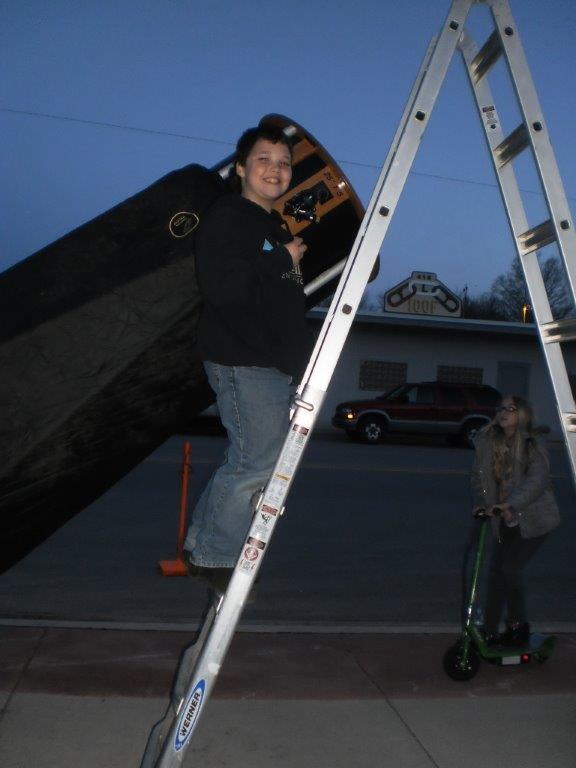
He just saw Jupiter through the GTAS 25″ telescope.
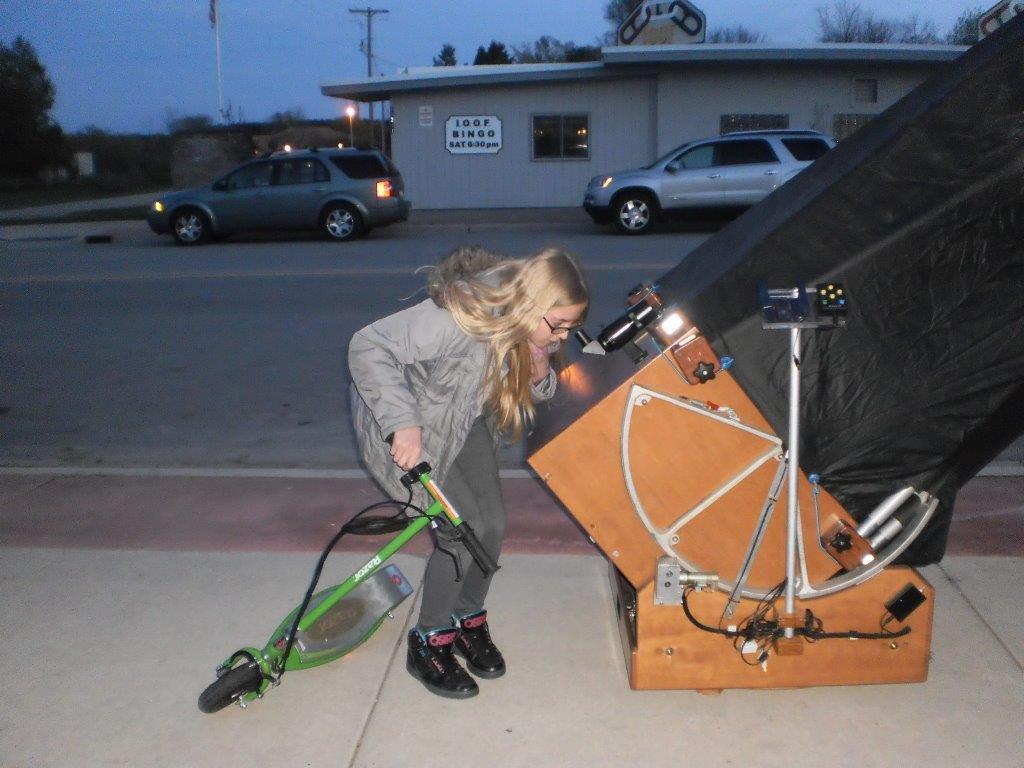
What’s in this telescope? (A really small Jupiter.)
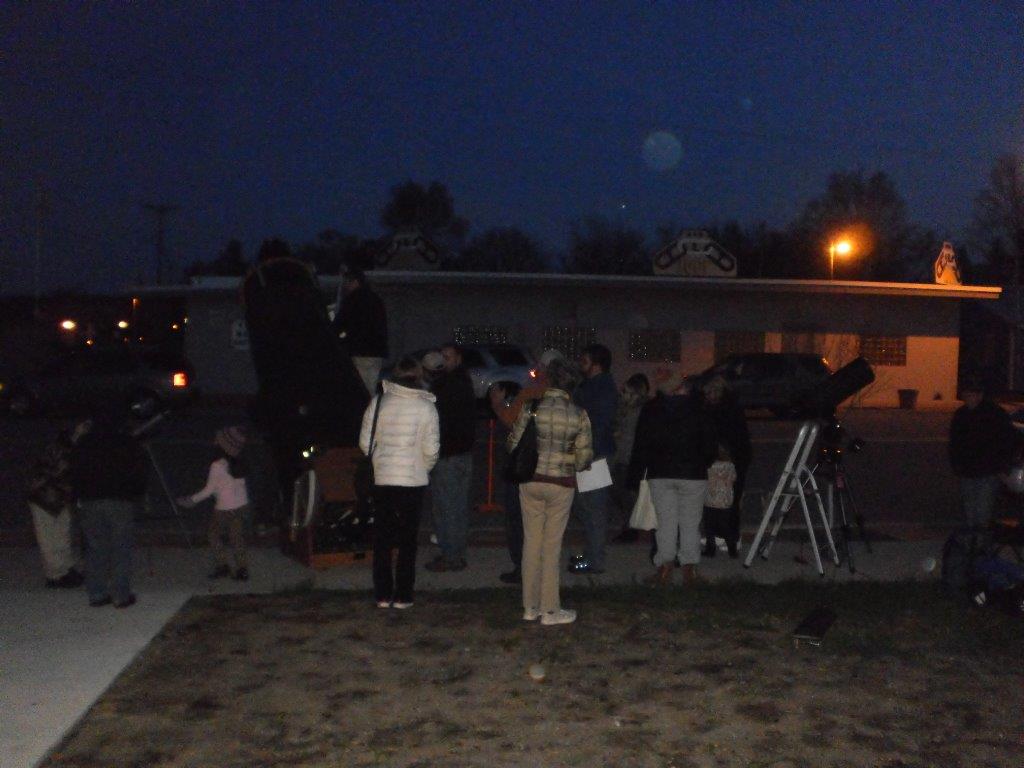
A crowd gathers to view Saturn and Jupiter.
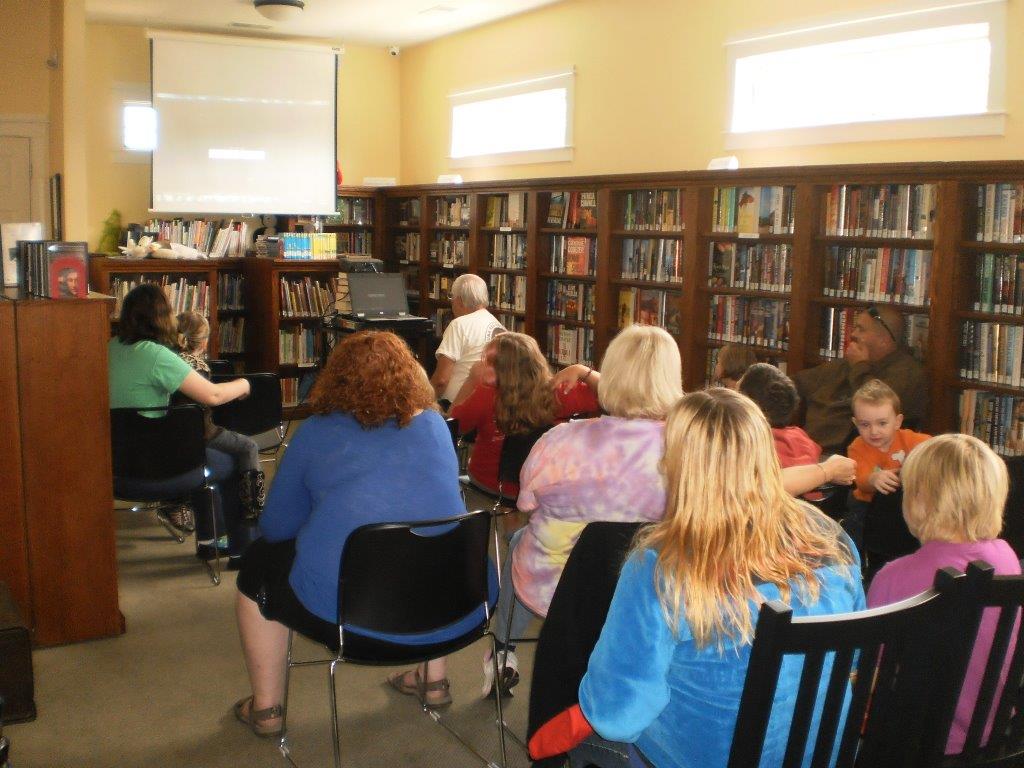
During both the evening and the daytime visits I take the folks through the sky using Stellarium pointing the constellations and telling their stories.
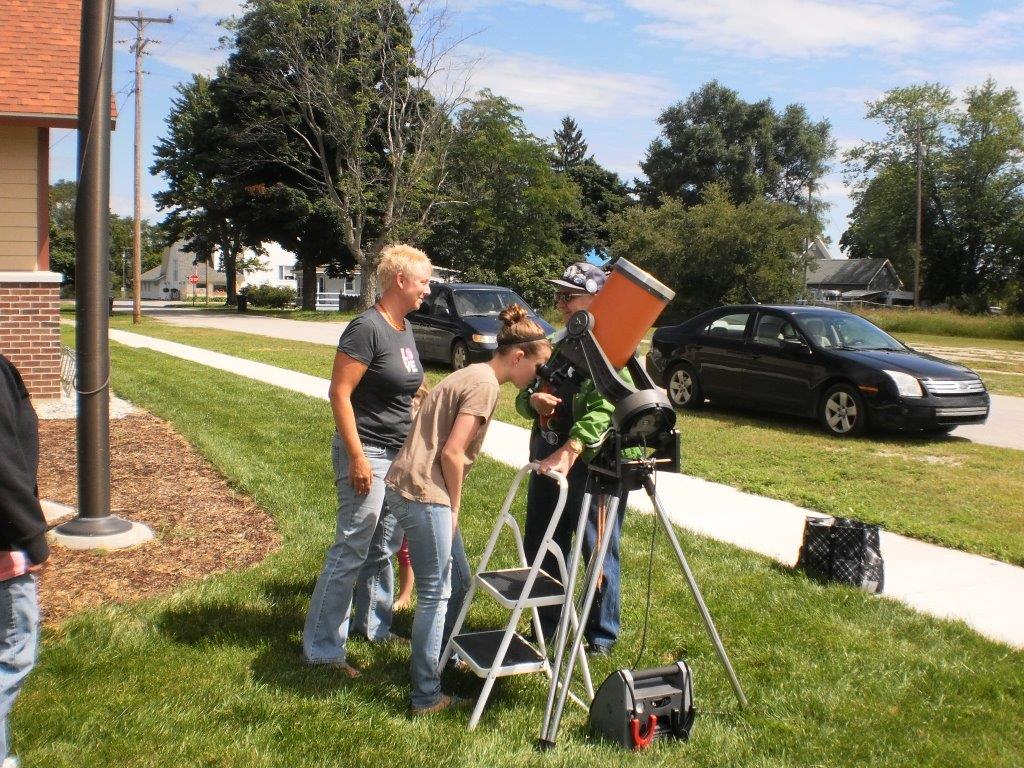
GTAS member Gary Carlisle shows the Sun through his telescope.
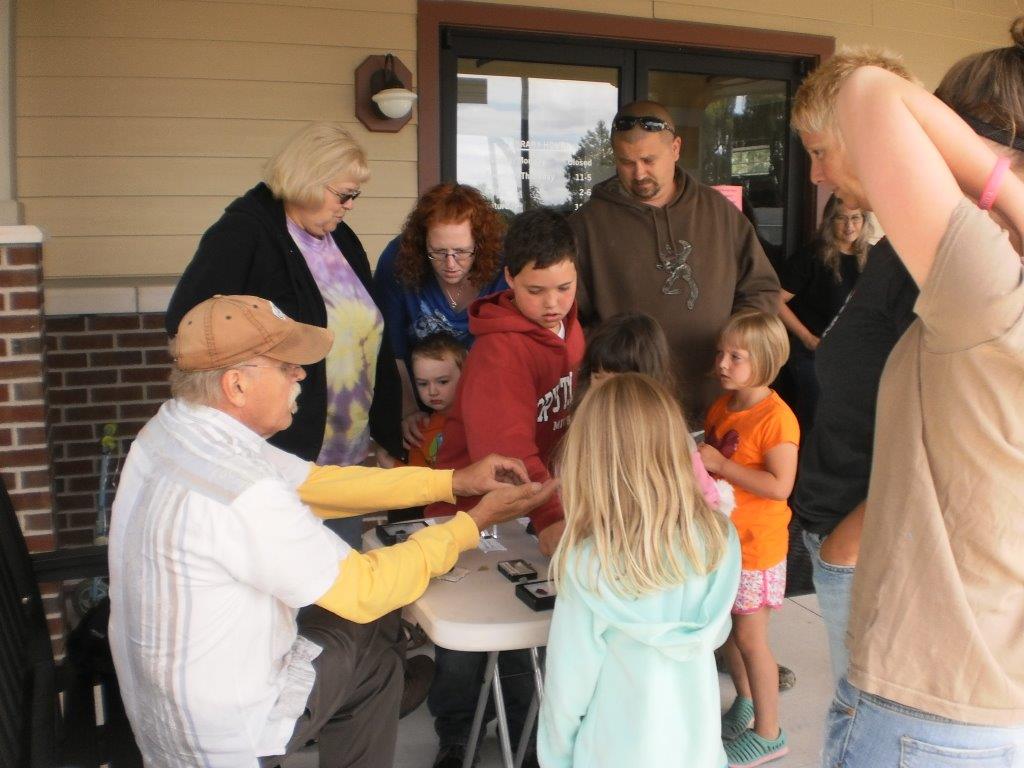
GTAS member Richard Kuschell shows his meteorite collection. Always a hit.
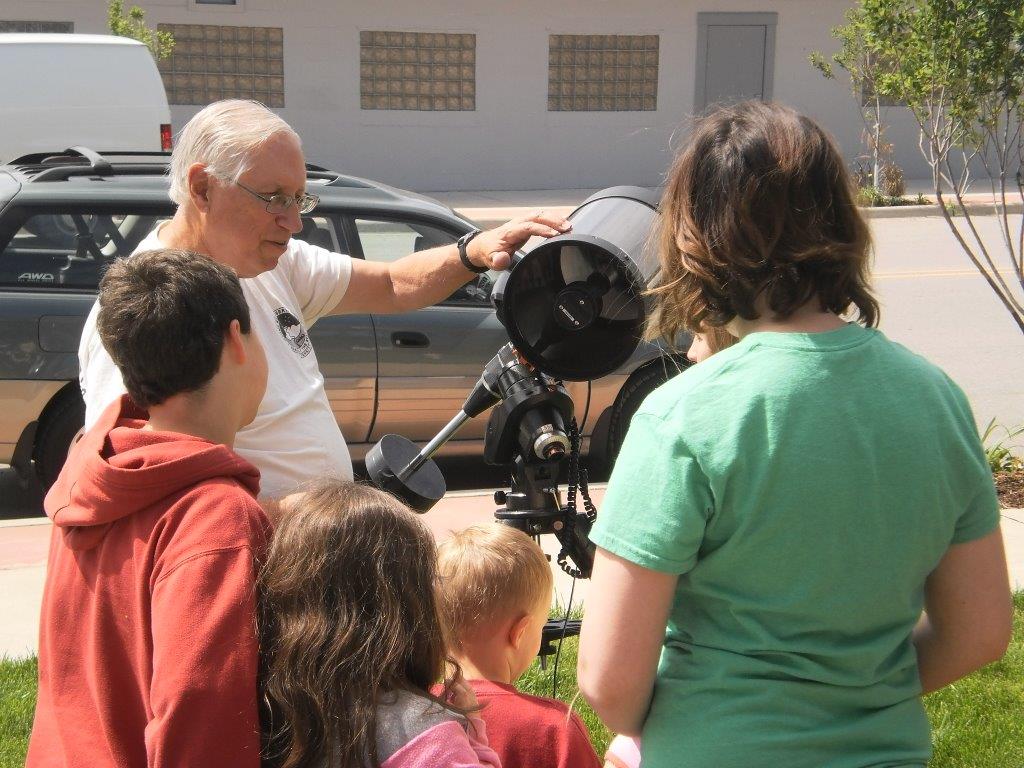
Here I am showing the kids how a telescope works.
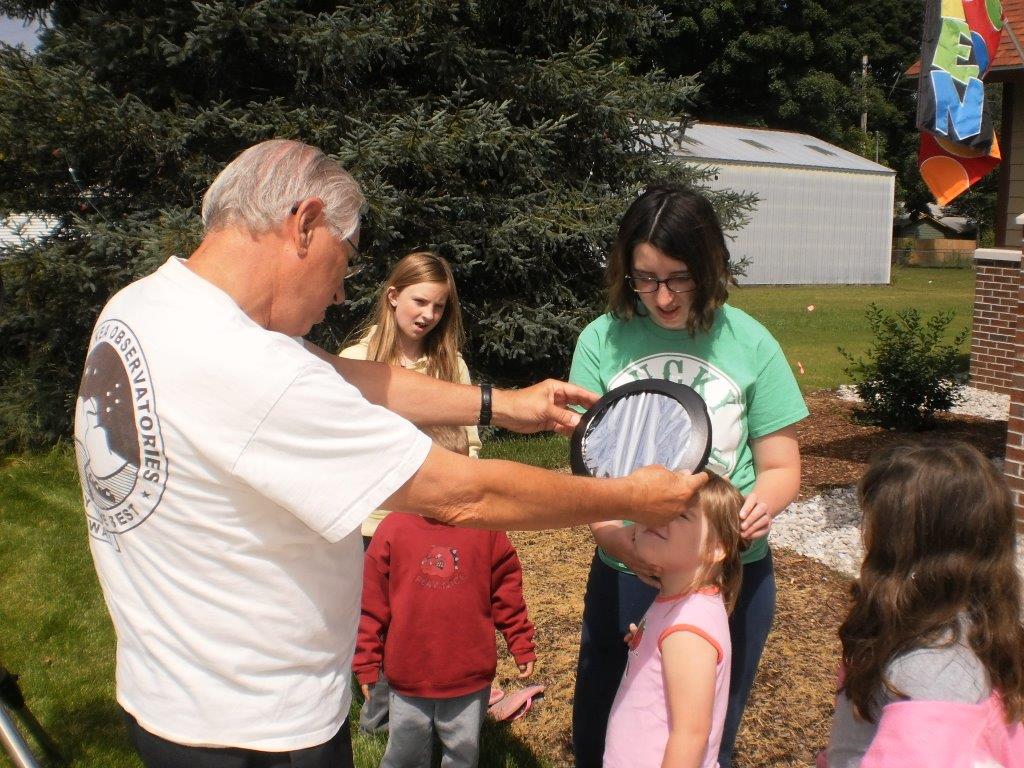
Using a telescope solar filter to show how small the sun looks.
09/05/2014 – Ephemeris – Supernovae and the Moon this weekend
Ephemeris for Friday, September 5th. The sun will rise at 7:09. It’ll be up for 13 hours and 2 minutes, setting at 8:11. The moon, half way from first quarter to full, will set at 4:07 tomorrow morning.
Tonight the Grand Traverse Astronomical Society will hold their monthly meeting at he Northwestern Michigan College’s Rogers Observatory at 8 p.m. featuring Dr. David Penney, who will talk about Supernovae, the brightest, at optical wavelengths anyway explosions in the universe. These will either completely destroy a star or leave a neutron star or black hole remnant. At 9 p.m. there will be a star party featuring the Moon, Saturn and Mars. The observatory is located on Birmley road. On Saturday the society will celebrate International Observe the Moon Night with telescopes set up on the 200 block of Front street in Traverse City. That event starts around 9 p.m., but only if it’s clear.
Times are for the Traverse City/Interlochen area of Michigan. They may be different for your location.
Addendum
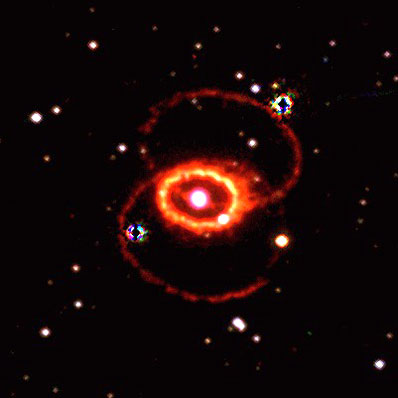
Remnant of SN1987A in the Large Magellanic Cloud, 160,000 light years away taken by the Hubble telescope’s WFPC2 camera on three occasions in 1994 and 1995. The outer rings are light echos of the explosions ionizing clouds ejected thousands of years before. Credit NASA.
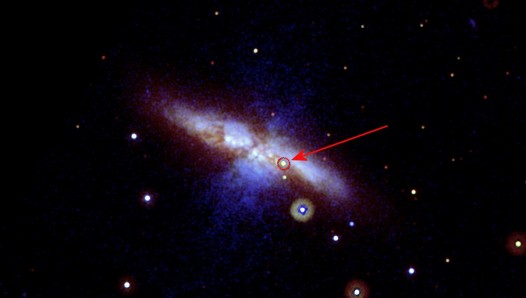
Supernova 2014J in nearby galaxy M82, 12 million light years away. Credit NASA/Swift/P. Brown, TAMU.
08/01/2014 – Ephemeris – There’s a star party tonight
Ephemeris for Friday, August 1st. The sun rises at 6:28. It’ll be up for 14 hours and 38 minutes, setting at 9:07. The moon, 2 days before first quarter, will set at 11:35 this evening.
Tonight the Grand Traverse Astronomical Society will host a star party at Northwestern Michigan College’s Rogers Observatory from 9 to 11 p.m. If it’s clear the planets Mars and Saturn and the Moon will be the featured attractions. Saturn’s rings are always a fabulous sight. Try to see the circular gap in the rings called Cassini division. Cassini is also the namesake of the spacecraft that has spent 10 years orbiting the planet. The moon Titan can also be easily seen. It’s a world larger than Mercury, has an atmosphere denser than the Earth’s and has lakes of liquid methane and ethane at its poles. Our Moon is two-thirds the diameter of Titan, and essentially airless, which allows us to see its features easily.
Times are for the Traverse City/Interlochen area of Michigan. They may be different for your location.
05/23/2014 – Ephemeris – Possible Meteor Storm overnight tonight
Ephemeris for Friday, May 23rd. Today the sun will be up for 15 hours and 5 minutes, setting at 9:12. The moon, 2 days past last quarter, will rise at 3:45 tomorrow morning. Tomorrow the sun will rise at 6:05.
If you want to see a possible meteor storm, go out tomorrow morning and find a dark location. The meteors will be seen all over the sky, but will seem to come from the north. The Grand Traverse Astronomical Society will be at Sleeping Bear Dunes National Lakeshore at the Dune Climb with telescopes starting at 10 p.m. tonight, weather permitting, to enjoy the other wonders of the sky while we wait for the meteor storm to start. Dress warmly, bring a blanket or lounge chair so you can comfortably look up. The first meteors may show by 1:40 a.m. but the peak activity is expected about 3 a.m., but that estimate may be off by an hour or more. Check bobmoler.wordpress.com for cloud and meteor status from noon through 4 a.m. if it’s clear. The latter part depends on getting a decent data signal. The dunes seem to be the end of the world as far as cell phone service goes. I might have to climb the dune to get a good signal.
Times are for the Traverse City/Interlochen area of Michigan. They may be different for your location.
Addendum
Remember these meteors should be visible from anywhere in the continental United States. Convert the times to your location. 3 a.m. EDT is 7 hours UT.
Start the evening tonight with a talk by Dr. Tyler Nordgren, astronomer, artist and dark sky advocate at the Sleeping Bear Dunes National Lakeshore Philip A. Hart Visitor Center in Empire at 7 p.m. Afterward he will be signing copies of his beautiful new poster See the Stars from Sleeping Bear Dunes National Lakeshore featuring the Great and Little Bear constellations and the bluffs of the Sleeping Bear Dunes and the Manitou Islands. After that, weather permitting see the sunset from many of the park’s locations, then, for the hardy, settle down for an all night vigil for the possible meteor storm with the Grand Traverse Astronomical Society at the Dune Climb. We’ll be viewing out the planets and the other wonders of the spring and summer skies as we wait for the meteors to appear.
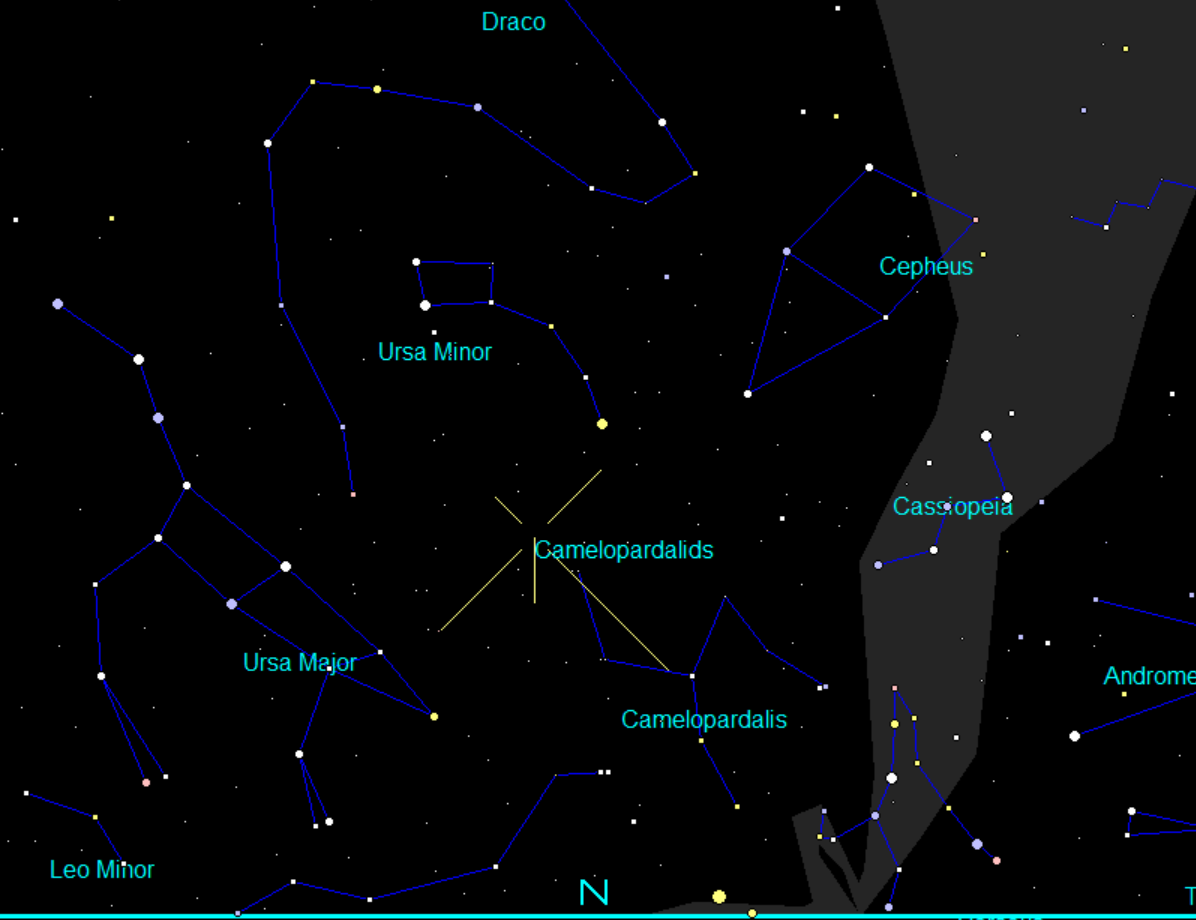
The expected radiant for the meteors of the May Camelopardalids, the meteors from the comet 209P/LINEAR at 3 a.m. on May 24, 2014. Credit: My LookingUp program.
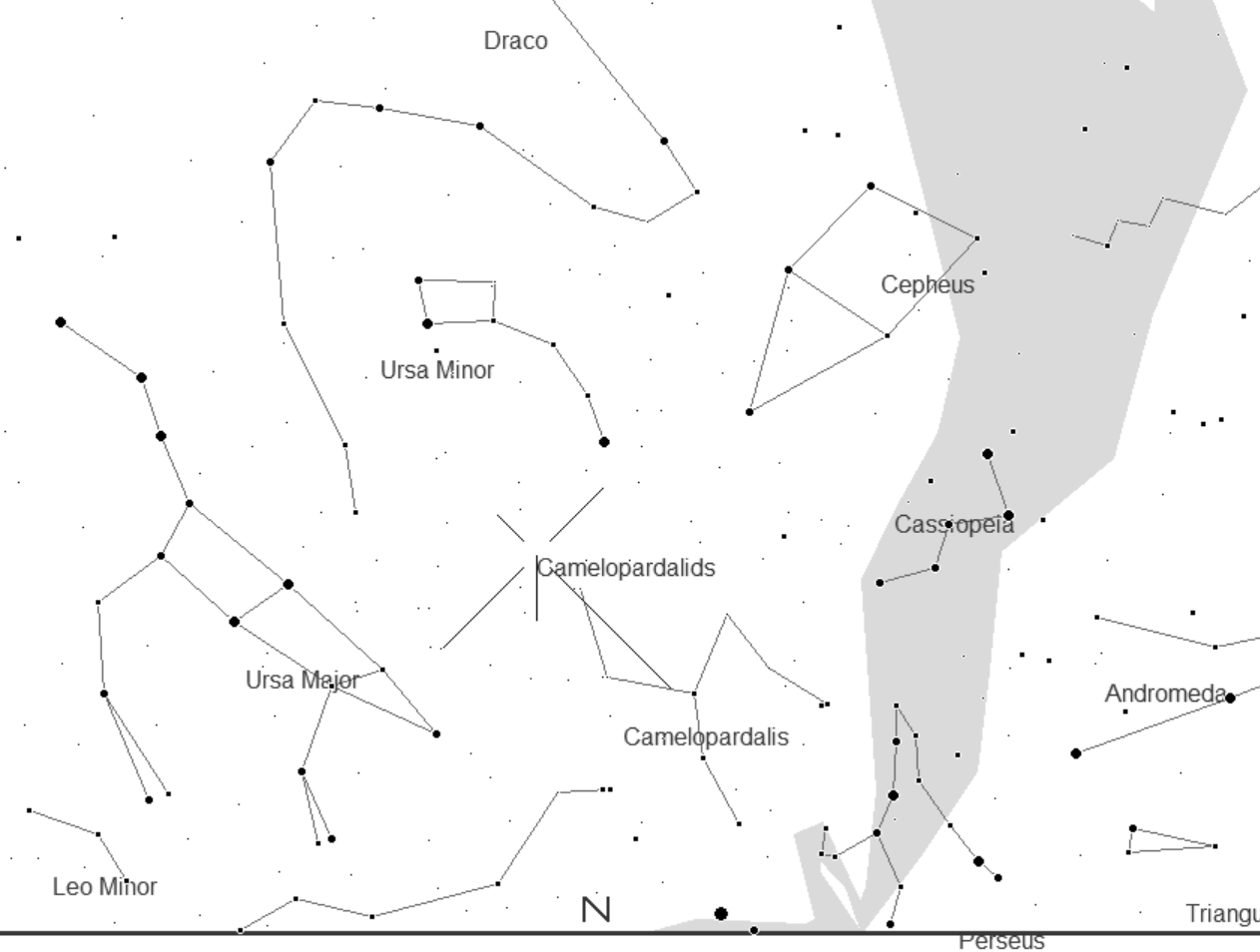
Same chart as above but black on white to save ink if you print it.
Here’s the culprit: Comet 209P/LINEAR

This May 17, 2014 image of Comet 209/LINEAR is the average of 5, 180-second exposures, taken remotely with the PlaneWave 17″+ Paramount ME+STL-6303E robotic unit of the Virtual Telescope Project. The telescope tracked the comet, so stars are trailing. This comet has the potential to generate an exceptional meteor shower (Camelopardalids) on May 24, 2014. Gianluca Masi / Virtual Telescope Project
Image and caption above from the Planetary Society blog from Bruce Betts: http://www.planetary.org/blogs/bruce-betts/20140522-one-night-only-a-new-meteor.html.
Want to find the comet?
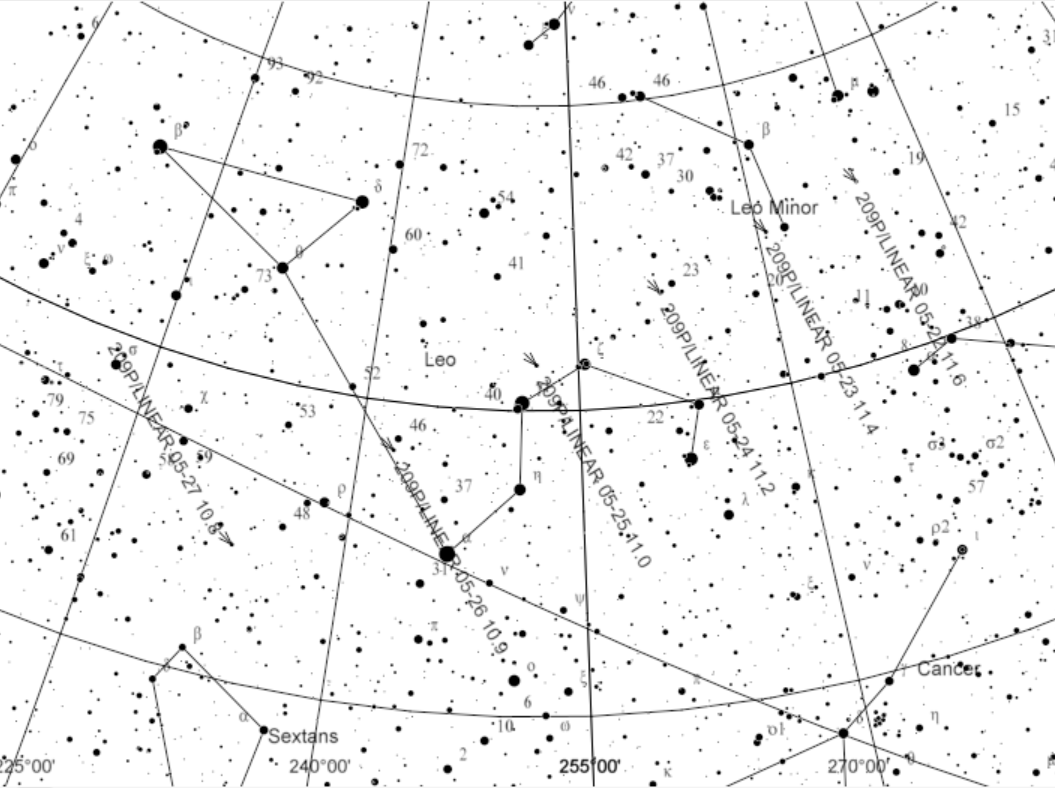
Finder chart for Comet 209P/LINEAR for 11 p.m. Note the dates are UT, 11 p.m. the 23rd is 3 a.m. UT on the 24th. Created using Cartes du Ciel (Sky Charts).
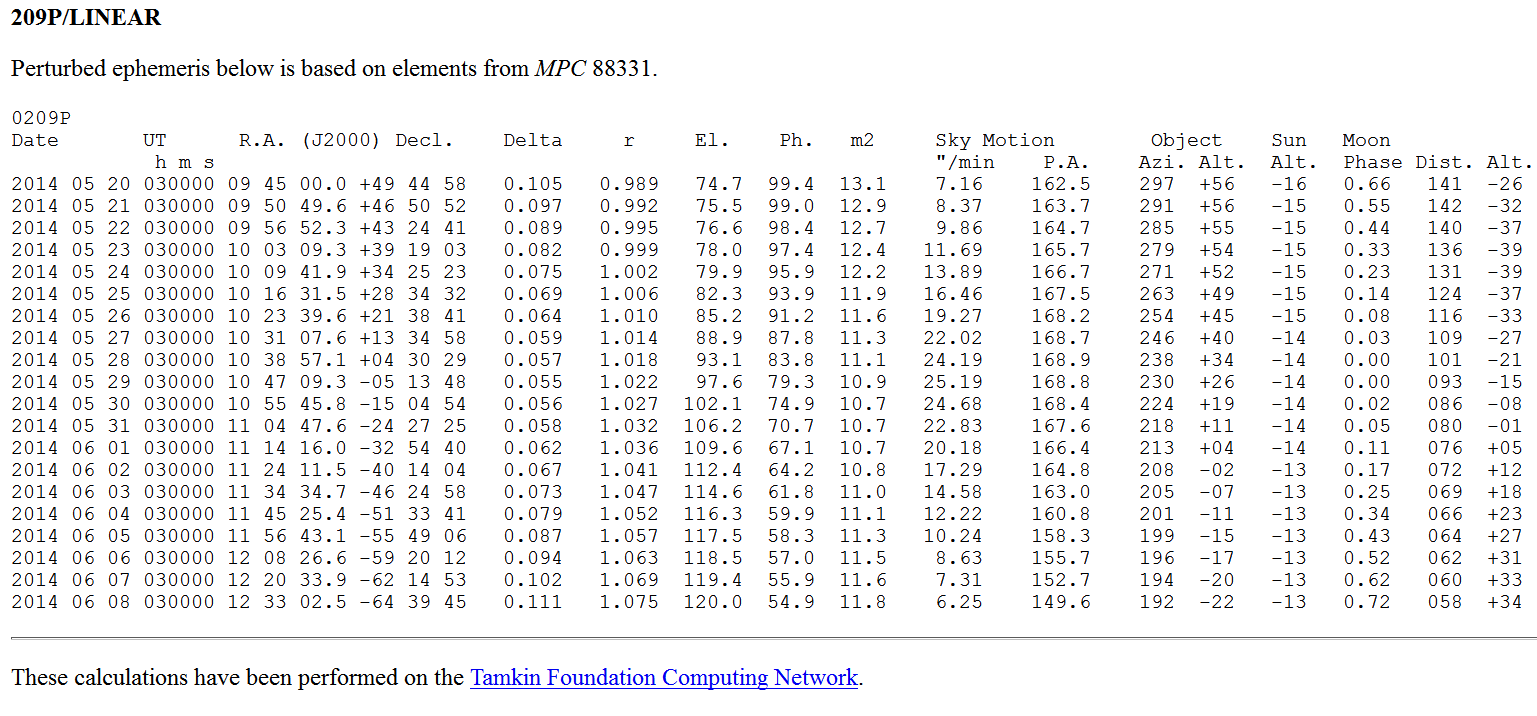
Ephemeris of positions for Comet 209P/LINEAR for May 20, 2014 to June 8, 2014 from the Minor Planet Center.
Got to http://www.minorplanetcenter.net/iau/MPEph/MPEph.html to print your own ephemeris for this or any comet. For purposes of this comet the comet name is: 209P/LINEAR.
All these images may be enlarged by clicking on them.
Note that:
Delta is the distance from Earth in Astronomical Units (AU)
r is the comet’s distance from the sun in AU.
El is the elongation in degrees from the sun
Ph. is the phase angle, not a big deal for comets.
m2 is the magnitude of the comet’s coma. Comets appear dimmer than their magnitude suggests.
 Bob Moler's Ephemeris Blog