Archive
Ephemeris: 03/31/2025 – Finding Leo, the celestial lion
This is Ephemeris for Monday, March 31st. Today the Sun will be up for 12 hours and 44 minutes, setting at 8:09, and it will rise tomorrow at 7:23. The Moon, 2 days past new, will set at 11:39 this evening.
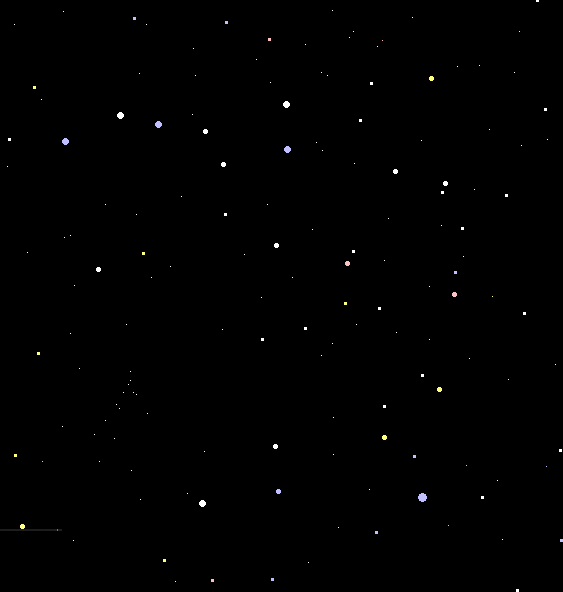
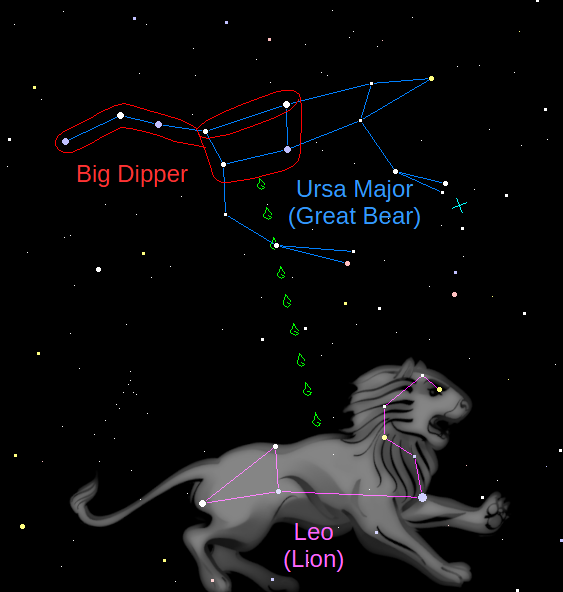
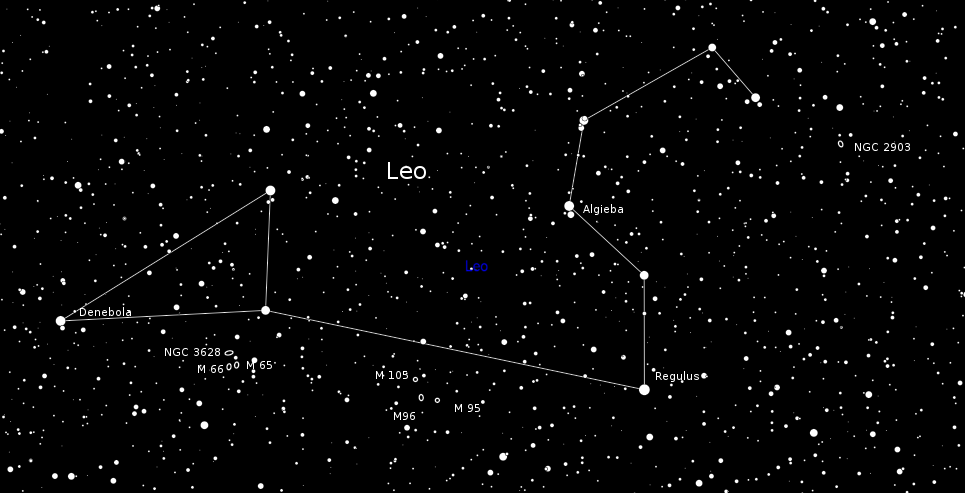
At 10 p.m. the spring constellation of Leo the lion will be high in the south-southeast. It can be found by locating the Big Dipper high in the northeast and imagining that a hole were drilled in the bowl to let the water leak out. It would drip on the back of this giant cat. The Lion is standing or lying facing westward. His head and mane are seen in the stars as a backwards question mark. This group of stars is also called the sickle. The bright star Regulus is at the bottom, the dot at the bottom of the question mark. A triangle of stars, to the left of Regulus, is the lion’s haunches. Leo contains some nice galaxies visible in moderate sized telescopes. The stars in Leo’s part of the sky are fewer than those in the winter sky.
The astronomical event times given are for the Traverse City/Interlochen area of Michigan (EDT, UT – 4 hours). Times will be different for other locations.
Addendum
Ephemeris: 02/17/2025 – Follow the Drinking Gourd
This is Ephemeris for President’s Day, Monday, February 17th. Today the Sun will be up for 10 hours and 35 minutes, setting at 6:14, and it will rise tomorrow at 7:38. The Moon, 3 days before last quarter, will rise at 11:47 this evening.
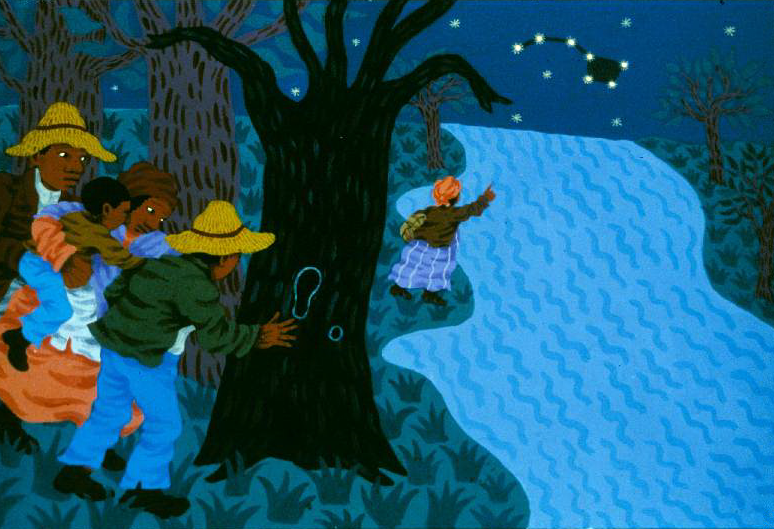
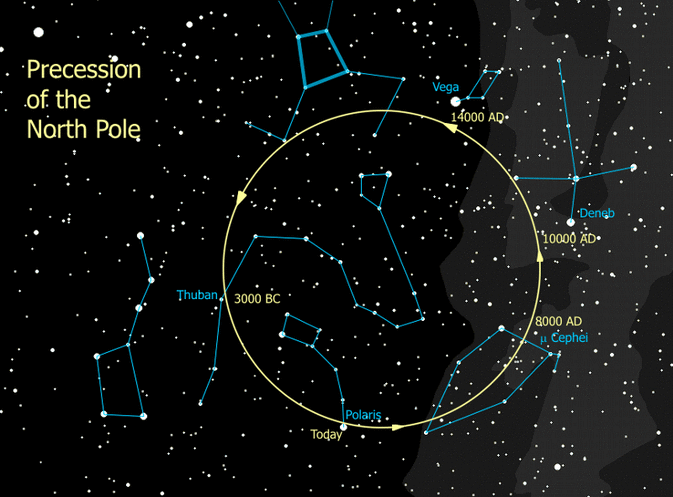
In the decades before the Civil War, runaway slaves would travel, often at night, northward from the slave states in the south to the northern free states and Canada over the metaphorical Underground Railroad following the Drinking Gourd, the Big Dipper as their compass. For millennia, the North Pole of the sky had been passing near the handle of the Big Dipper or Great Bear’s tail and now up to the star Polaris in the Little Dipper. As an amateur astronomer, who loves the dark, starlit skies, I’ve noticed that everyone is the same color in the dark! This year the Grand Traverse Astronomical Society will, once again, team with the Sleeping Bear Dunes for more Sun and star parties.
The astronomical event times given are for the Traverse City/Interlochen area of Michigan (EST, UT – 5 hours). Times will be different for other locations.
Addendum
Ephemeris: 06/04/2024 – Finding the Little Dipper
This is Ephemeris for Tuesday, June 4th. Today the Sun will be up for 15 hours and 25 minutes, setting at 9:24, and it will rise tomorrow at 5:58. The Moon, 2 days before new, will rise at 4:51 tomorrow morning.
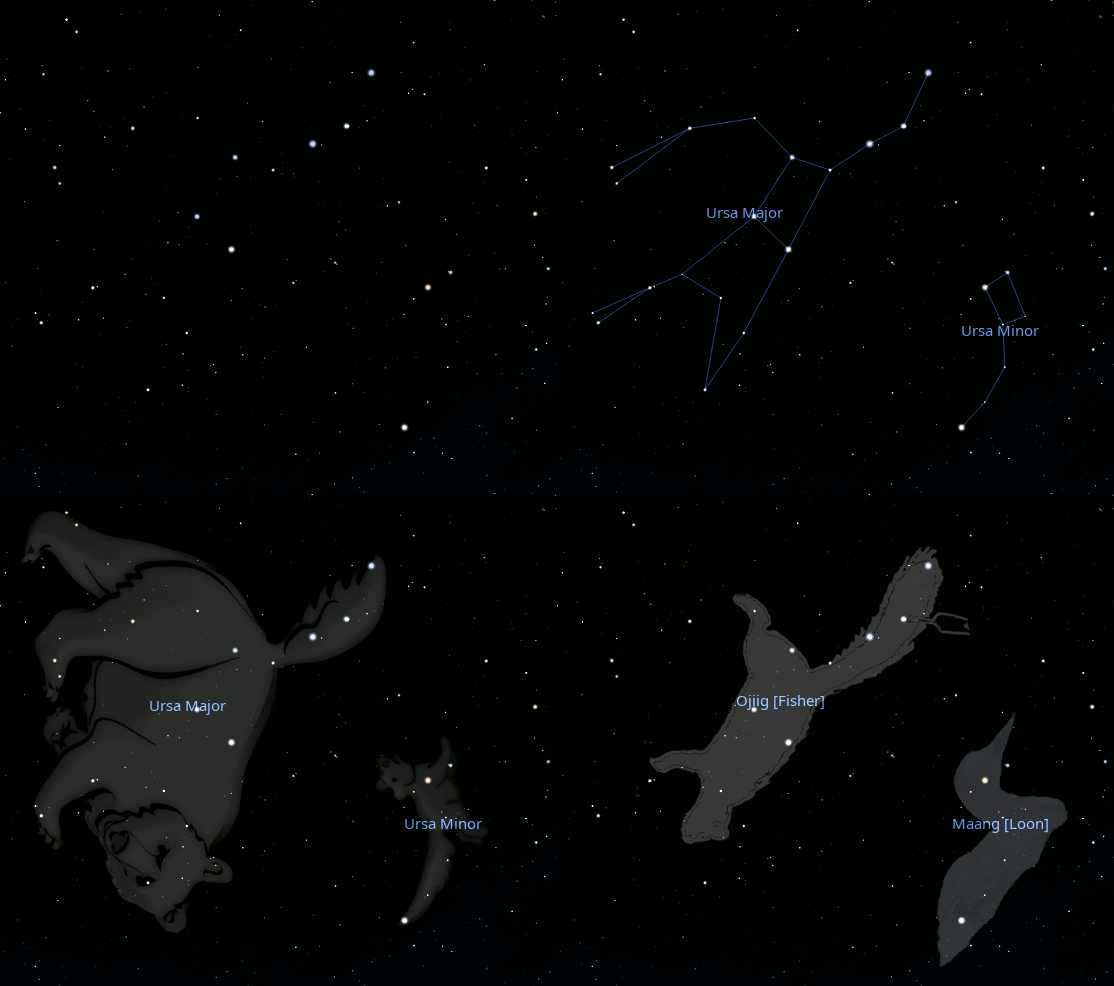
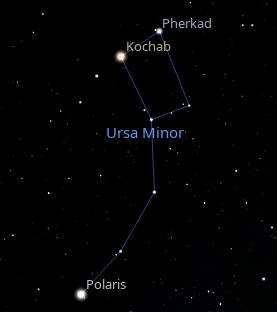
One of the constellations I don’t talk about much, except in passing is Ursa Minor, the Little Bear with an impossibly long tail. It is better known as the Little Dipper. As a dipper goes, its handle is bent the wrong way, like someone stepped on it. Anyway, this time of year in the evening, it’s standing on the tip of it’s handle, which is the North Star, Polaris. Polaris is pointed to by the front two stars of the Big Dipper. As dippers go they pour their contents into each other. The second and third-brightest stars of the Little Dipper are at the front of the bowl, and are Kochab and Pherkad, the Guard Stars, that is, Guardians of the Pole. To the Anishinaabe native peoples of our area the Little Dipper is Maang, the Loon.
The astronomical event times given are for the Traverse City/Interlochen area of Michigan (EDT, UT–4 hours). They may be different for your location.
Addendum
Ephemeris: 05/09/2024 – How the Great Bear got her long tail
This is Ephemeris for Thursday, May 9th. Today the Sun will be up for 14 hours and 37 minutes, setting at 8:58, and it will rise tomorrow at 6:19. The Moon, 2 days past new, will set at 11:30 this evening.
As we see the Great Bear, Ursa Major in the sky with the Big Dipper as its hind end and tail, it seems apparent that the bear is unusual, because bears don’t have long tails. The peoples of the old world, Greeks and others, had a story of how the bear got his long tail. The God Zeus was responsible for the predicament that caused a young lady to be turned into the bear and placed her in the sky out of harm. Some question how he did this. To throw her into the sky, he probably didn’t want to grab the end with the teeth, so he grabbed the bear’s stubby tail whirled the bear around his head and threw her up into the sky where we see her today. Of course the tail was stretched. Some Native Americans did see a bear here too. But the three stars of the dipper’s handle were 3 hunters following the bear.
The astronomical event times given are for the Traverse City/Interlochen area of Michigan (EDT, UT–4 hours). They may be different for your location.
Addendum
For the story of why the young lady, Callisto, was turned into a bear, check out this post of a week ago: https://bobmoler.wordpress.com/2024/05/02/…
Ephemeris: 05/02/2024 – All about the constellation of Boötes and Ursa Major
This is Ephemeris for Thursday, May 2nd. Today the Sun will be up for 14 hours and 19 minutes, setting at 8:49, and it will rise tomorrow at 6:29. The Moon, 1 day past last quarter, will rise at 4:27 tomorrow morning.
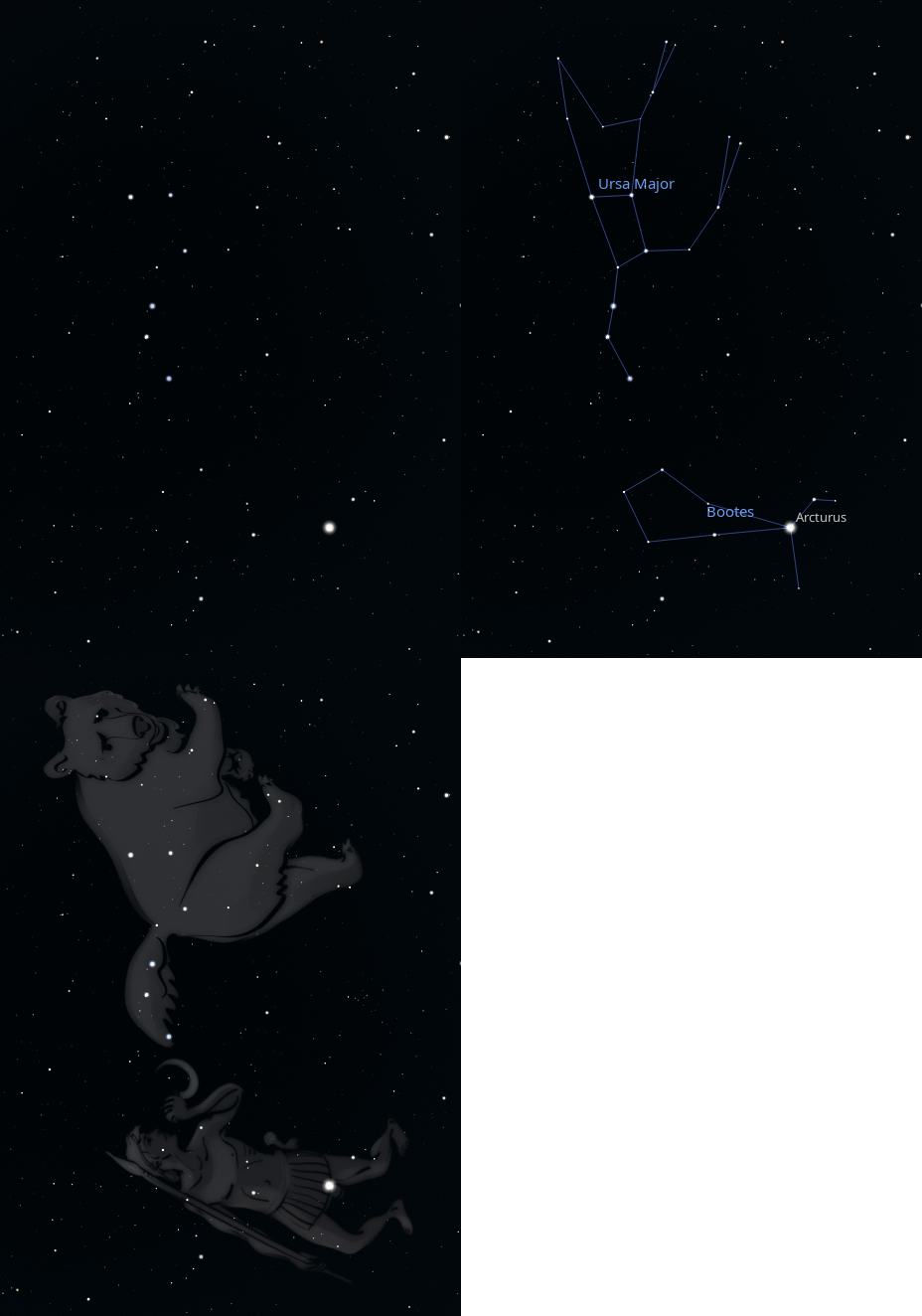
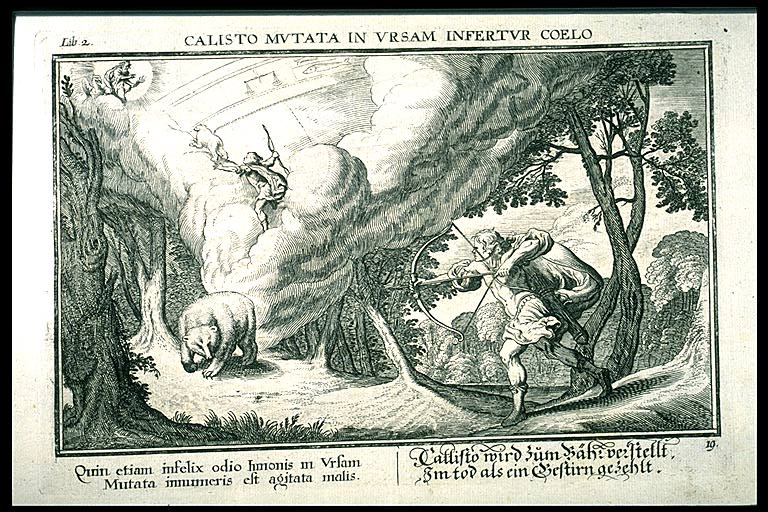
Seen in the east at 10:30 p.m. tonight is the kite shaped constellation of Boötes the herdsman. The bright star Arcturus is at the bottom of the kite to the right. It is pointed to by the arc of the handle of the Big Dipper, higher in the east. Boötes represents a young hunter named Arcas, son of Callisto, a beautiful young lady who had the misfortune of being loved by Zeus the chief of the Greek gods. Zeus’ wife Hera, found out about it, and since she couldn’t punish Zeus, turned the poor woman into a bear. Arcas, many years later, unaware of the events surrounding his mother’s disappearance was about to kill the bear when Zeus intervened and placed them both in the sky to save her, as Arcas still pursues her across the sky nightly.
The astronomical event times given are for the Traverse City/Interlochen area of Michigan (EDT, UT–4 hours). They may be different for your location.
Addendum
Ephemeris: 10/17/2023 – How the Fisher paints the trees with their fall colors
This is Ephemeris for Tuesday, October 17th. Today the Sun will be up for 10 hours and 54 minutes, setting at 6:55, and it will rise tomorrow at 8:01. The Moon, 3 days past new, will set at 8:12 this evening.
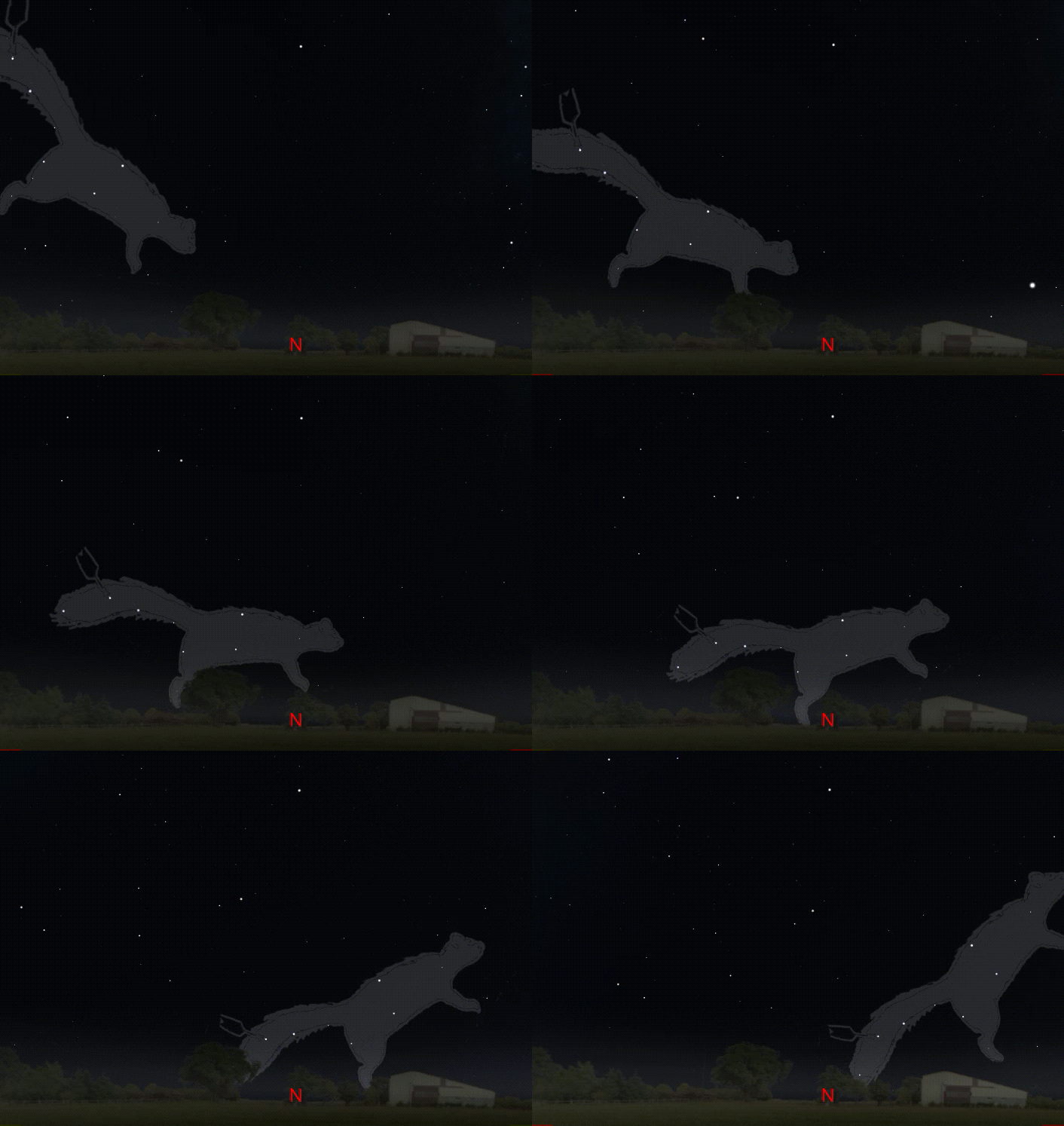
The tree leaves are beginning to turn to reds and yellows as we advance into autumn. The native Anishinaabek peoples, whose homeland we share, have a story about how that came to be. Of how a magical weasel-like creature called the Fisher or, in their native language, Ojiig, brought summer to the Earth from Skyland. For his trouble, he was shot with an arrow in his only vulnerable spot, his tail. As he fell to Earth Gichi Manitou, the Great Spirit, caught him and placed him in the sky where we see the Great Bear and the Big Dipper. Every late autumn night we see his tail, the handle of the dipper, slowly swooping down to the horizon where his bloody tail paints the trees with their autumn colors.
The astronomical event times given are for the Traverse City/Interlochen area of Michigan (EDT, UT – 4 hours). They may be different for your location.
Addendum
For my take on how the Fisher brought summer to the Earth, click here.
Extra: About last Saturday’s partial solar eclipse
Last Saturday I went to the Betsie Valley District Library in Thompsonville, MI for the partial solar eclipse that was visible from that location. Unfortunately, it was cloudy. It wasn’t solid clouds, so there probably was a chance at seeing something. What I did was to give an alternate program about the total solar eclipses I’ve traveled to since 1963, and a look at next April’s total solar eclipse. I was getting ready to finish up when I noticed that there were shadows outside. That meant that the Sun was out. We stopped there and went outside and got to witness at least the maximum part of the eclipse. We had about 15 minutes before the clouds came in again. So we were able to see at least part of this partial eclipse.
Ephemeris: 07/20/2023 – How Boötes and Ursa Major got into the sky
This is Ephemeris for Thursday, July 20th. Today the Sun will be up for 15 hours and 5 minutes, setting at 9:21, and it will rise tomorrow at 6:17. The Moon, 3 days past new, will set at 11:16 this evening.
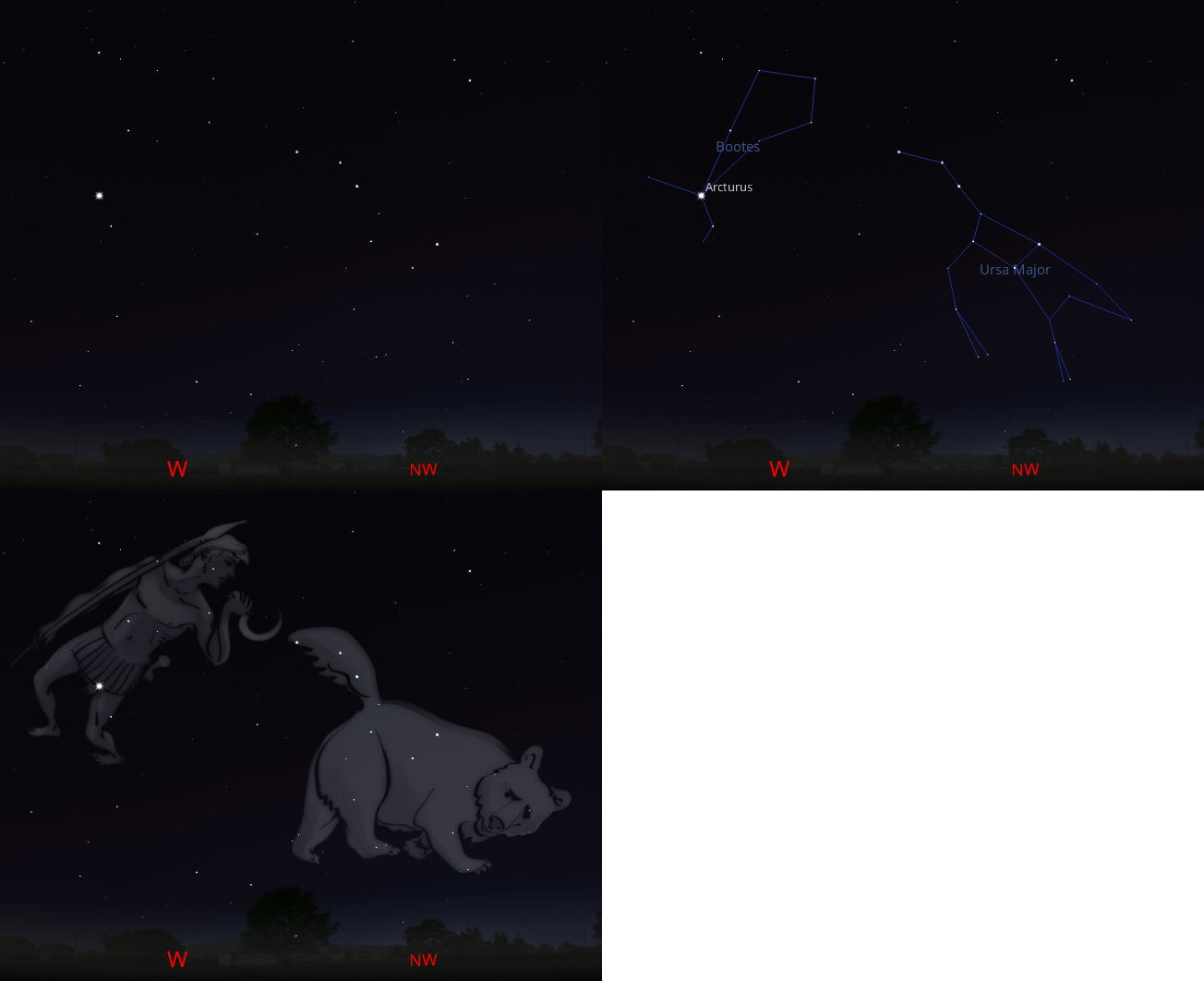
Seen in high in the west-southwest at 10:30 this evening is the kite shaped constellation of Boötes (pronounced Bo-o-tees) the herdsman. The bright star Arcturus is at the bottom of the kite. It is pointed to by the arc of the handle of the Big Dipper, part of Ursa Major, the Great Bear, over toward the northwest. Boötes represents a young hunter named Arcas, son of Callisto, a beautiful young lady who had the misfortune of being loved by Zeus, the chief of the Greek gods. Zeus’ wife, Hera, found out about it, and since she couldn’t punish Zeus, turned the poor woman into a bear. Arcas, many years later, unaware of the events surrounding his mother’s disappearance, was about to kill the bear when Jupiter intervened and placed them both in the sky to save her. Arcas still pursues her across the sky nightly.
The astronomical event times given are for the Traverse City/Interlochen area of Michigan (EDT, UT –4 hours). They may be different for your location.
Addendum
02/13/2023 – Ephemeris – Follow the Drinking Gourd
This is Bob Moler with Ephemeris for Monday, February 13th. Today the Sun will be up for 10 hours and 21 minutes, setting at 6:08, and it will rise tomorrow at 7:44. The Moon, at last quarter today, will rise at 2:51 tomorrow morning.
In the decades before the Civil War, runaway slaves would travel, often at night, northward from the slave states in the south to the northern free states and Canada over the metaphorical Underground Railroad following the Drinking Gourd, the Big Dipper as their compass. For millennia, the North Pole of the sky had been passing near the handle of the Big Dipper or bear’s tail. As an amateur astronomer, who loves the dark, starlit skies, I’ve noticed that everyone is the same color in the dark! This year the Grand Traverse Astronomical Society will, once again, team with the Sleeping Bear Dunes for more Sun and star parties.
The astronomical event times given are for the Traverse City/Interlochen area of Michigan (EST, UT –5 hours). They may be different for your location.
Addendum
“Follow the Drinking Gourd,” a show at the Virginia Living Museum’s Abbit Planetarium based on Jeanette Winter’s children’s book of the same name, tells the story of a slave family who used the stars to make their way north. Visitors can watch the free show Saturdays in February. (Courtesy of Virginia Living Museum) Via Daily Press, Newport News, VA.
04/28/2022 – Ephemeris – The story of Arcas and Callisto
This is Bob Moler with Ephemeris for Thursday, April 28th. Today the Sun will be up for 14 hours and 6 minutes, setting at 8:44, and it will rise tomorrow at 6:35. The Moon, 2 days before new, will rise at 6:16 tomorrow morning.
Appearing in the eastern sky at 10 p.m. tonight is the kite shaped constellation of Boötes the herdsman. The bright star Arcturus is at the bottom of the kite which is horizontal to the left, pointed to by the arc of the handle of the Big Dipper, higher in the east. The Big Dipper is the hind end of the constellation Ursa Major, the Great Bear. In one story, Boötes represents a young hunter named Arcas, son of Callisto, a beautiful young woman who had the misfortune of being loved by god Zeus. Zeus’ wife, Hera, found out about the affair, and since she couldn’t punish Zeus, turned the poor woman into a bear. Arcas, many years later, unaware of why his mother disappeared, was about to kill the bear when Zeus intervened and placed them both in the sky, where he continues to chase her across the sky nightly.
The astronomical event times given are for the Traverse City/Interlochen area of Michigan (EDT, UT – 4 hours). They may be different for your location.
Addendum
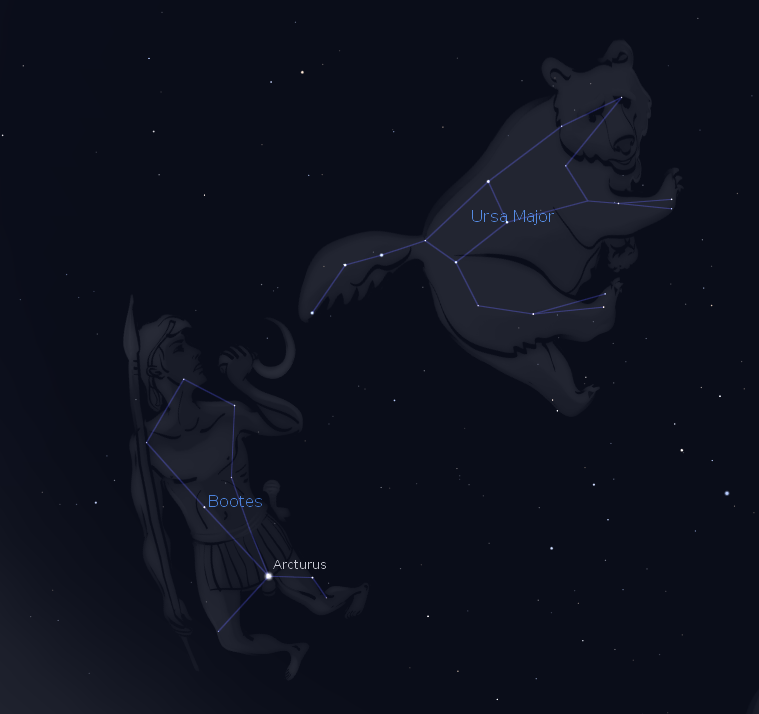
Boötes and Ursa Major aka Arcas chasing Callisto around the pole of the sky. Created using Stellarium.
Arcas about to slay the bear by the 17th century artist Baur. Source: University of Virginia Electronic Text Center
03/28/2022 – Ephemeris – Finding the Great Bear
This is Ephemeris for Monday, March 28th. Today the Sun will be up for 12 hours and 34 minutes, setting at 8:05, and it will rise tomorrow at 7:29. The Moon, 3 days past last quarter, will rise at 6:47 tomorrow morning.
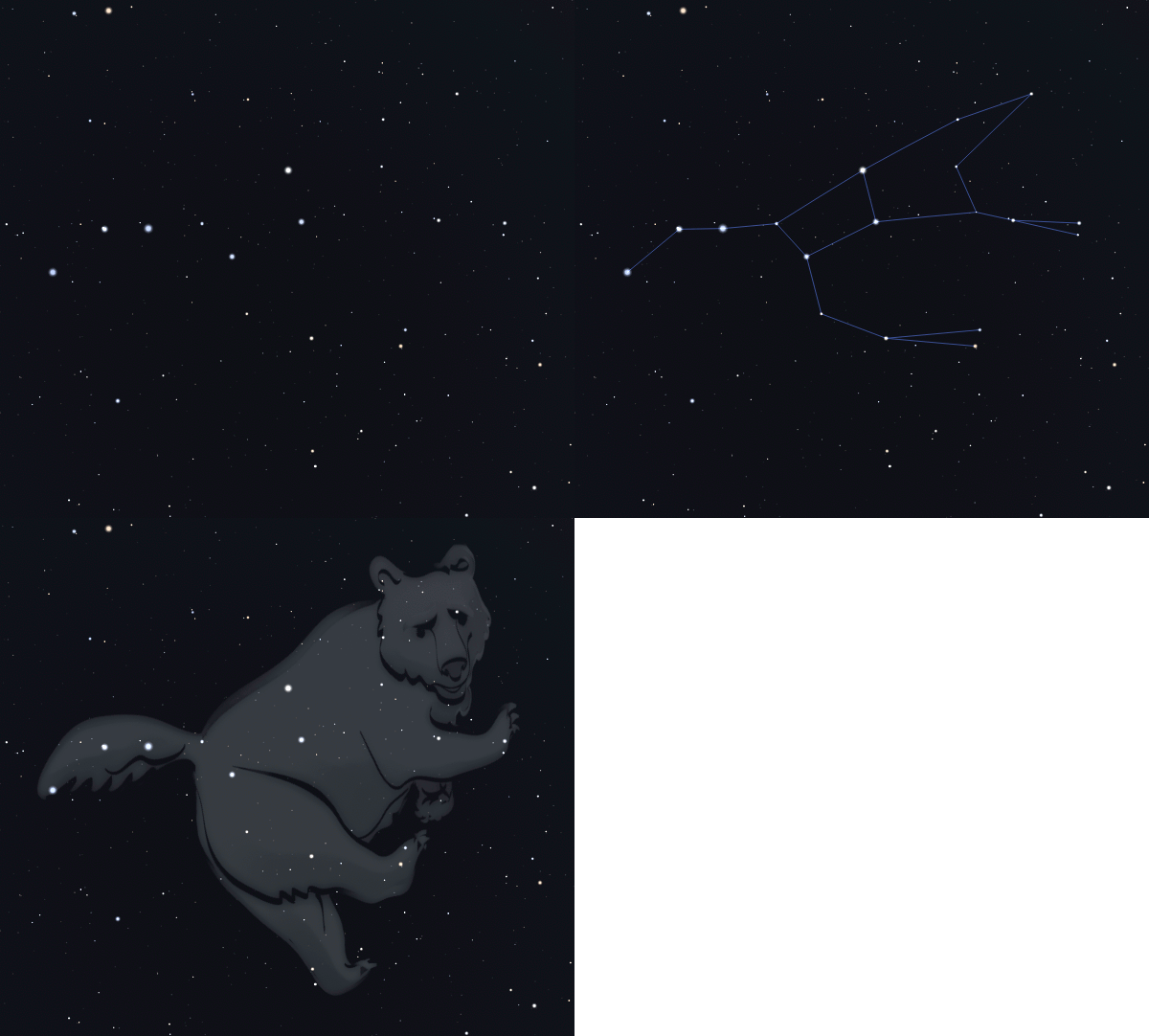
The Big Dipper is now reaching for the zenith in the northeast at 10 p.m. The seven bright stars are second to Orion in the west as the seven brightest stars in a constellation. If you looked up a list of constellations, you’d find that the Big Dipper isn’t there. Ursa Major or the Great Bear is the constellation of which the Big Dipper is a part. The seven bright stars of the dipper are the rump and long tail of this constellation. The rest of the bear, including his head and legs, are delineated by dimmer stars. An anatomical problem is its long tail, which was drawn in by the ancients of the old world. Their explanation was that a god had grabbed the bear’s stubby tail, whirled the bear around his head, and threw it into the sky, thus stretching its tail.
The astronomical event times given are for the Traverse City/Interlochen area of Michigan (EDT, UT – 4 hours). They may be different for your location.
Addendum
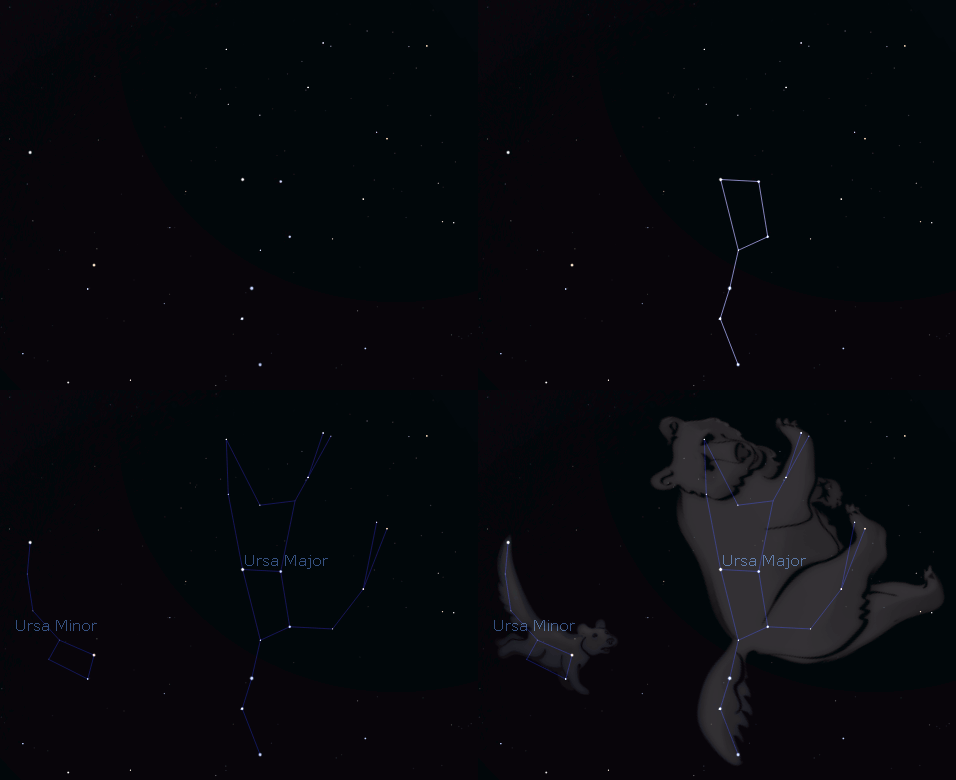
The Great Bear (Ursa Major) finder animation. It shows the stars only, then the Big Dipper, Then the lines of the constellations Ursa Major and Ursa Minor (Lesser Bear and Little Dipper) as a bonus, and finally the constellation artwork. The orientation is for about 9:30 pm on the latter days of March. We are looking high in the northeast. In Northern Michigan, the bear’s front paw is near the zenith at that time. Created using Stellarium and GIMP.
 Bob Moler's Ephemeris Blog