Archive
Ephemeris: 06/12/2026 – Finding the elusive Little Dipper
This is Ephemeris for Friday, June 12th. Today the Sun will be up for 15 hours and 32 minutes, setting at 9:28, and it will rise tomorrow at 5:56. The Moon, 2 days before new, will rise at 4:04 tomorrow morning.
One of the constellations I don’t talk about much, except in passing is Ursa Minor, the Little Bear with an impossibly long tail. It is better known as the Little Dipper. As a dipper goes, its handle is bent the wrong way, like someone stepped on it. Anyway, this time of year in the evening, it’s standing on the tip of it’s handle, which is the North Star, Polaris. Polaris is pointed to by the front two stars of the Big Dipper. As dippers go they pour their contents into each other. The second and third-brightest stars of the Little Dipper are at the front of the bowl, and are Kochab and Pherkad, the Guard Stars, that is, Guardians of the Pole. To the Anishinaabe native peoples of our area the Little Dipper is Maang, the Loon.
The astronomical event times given in this blog are for the Traverse City/Interlochen area of Michigan (Lat 44.7° N, Long 85.7° W; EDT, UT – 4 hours) unless stated otherwise. Times will be different for other locations.
Addendum

Ephemeris: 06/11/2026 – Finding the celestial dragon, Draco
This is Bob Moler with Ephemeris for Thursday, June 11th. Today the Sun will be up for 15 hours and 31 minutes, setting at 9:28, and it will rise tomorrow at 5:56. The Moon, halfway from last quarter to new, will rise at 3:28 tomorrow morning.
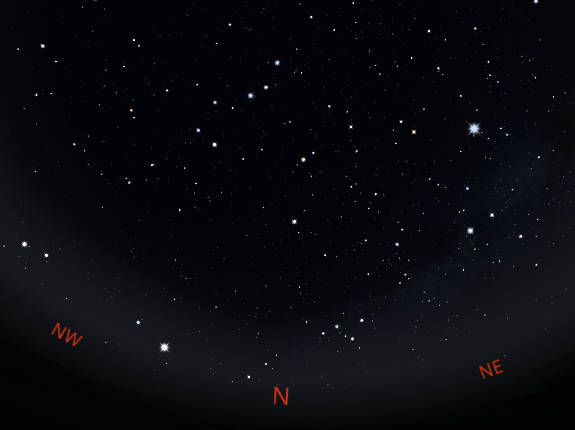
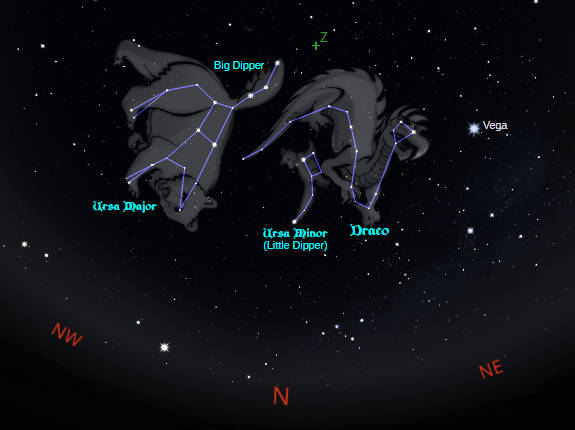
High in the northern sky at 11 p.m. lies the twisted constellation, of Draco the dragon. This dragon is more like the snakelike Chinese dragon than the dinosaur-like dragon of European legend. I find it better sneak up on its tail, to trace him out in the stars. Draco’s tail starts, or ends, between the bowl of the Big Dipper and the Little Dipper high in the north. The Dragon is seen in a line of stars that extends parallel to the handle of the Big Dipper before curving around the bowl of the Little Dipper then bends back down to the level of Polaris in the north-northeast before turning toward the east. The head of Draco is an odd box of stars near the bright star Vega, high in the east. Though not made up of very bright stars, Draco has an easy shape to trace.
The astronomical event times given in this blog are for the Traverse City/Interlochen area of Michigan (Lat 44.7° N, Long 85.7° W; EDT, UT – 4 hours) unless stated otherwise. Times will be different for other locations.
Addendum
Ephemeris: 06/10/2024 – Finding Draco the Dragon
This is Ephemeris for Monday, June 10th. Today the Sun will be up for 15 hours and 31 minutes, setting at 9:28, and it will rise tomorrow at 5:56. The Moon, halfway from new to first quarter, will set at 1:09 tomorrow morning.
High in the northern sky at 11 p.m. lies the twisted constellation, that of Draco the dragon. This dragon is more like the snakelike Chinese dragon than the dinosaur-like dragon of European legend. I find it better to start at the tail of Draco, to trace him out in the stars. Draco’s tail starts, or ends, between the bowl of the Big Dipper and the Little Dipper high in the north-northwest. The Dragon is seen in a line of stars that extends parallel to the handle of the Big Dipper before curving around the bowl of the Little Dipper then bends back down to the level of Polaris in the north-northeast before turning toward the east. The head of Draco is an odd box of stars near the bright star Vega, high in the east. Though not made up of very bright stars, Draco has an easy shape to trace.
The astronomical event times given are for the Traverse City/Interlochen area of Michigan (EDT, UT–4 hours). They may be different for your location.
Addendum
Ephemeris: 06/04/2024 – Finding the Little Dipper
This is Ephemeris for Tuesday, June 4th. Today the Sun will be up for 15 hours and 25 minutes, setting at 9:24, and it will rise tomorrow at 5:58. The Moon, 2 days before new, will rise at 4:51 tomorrow morning.
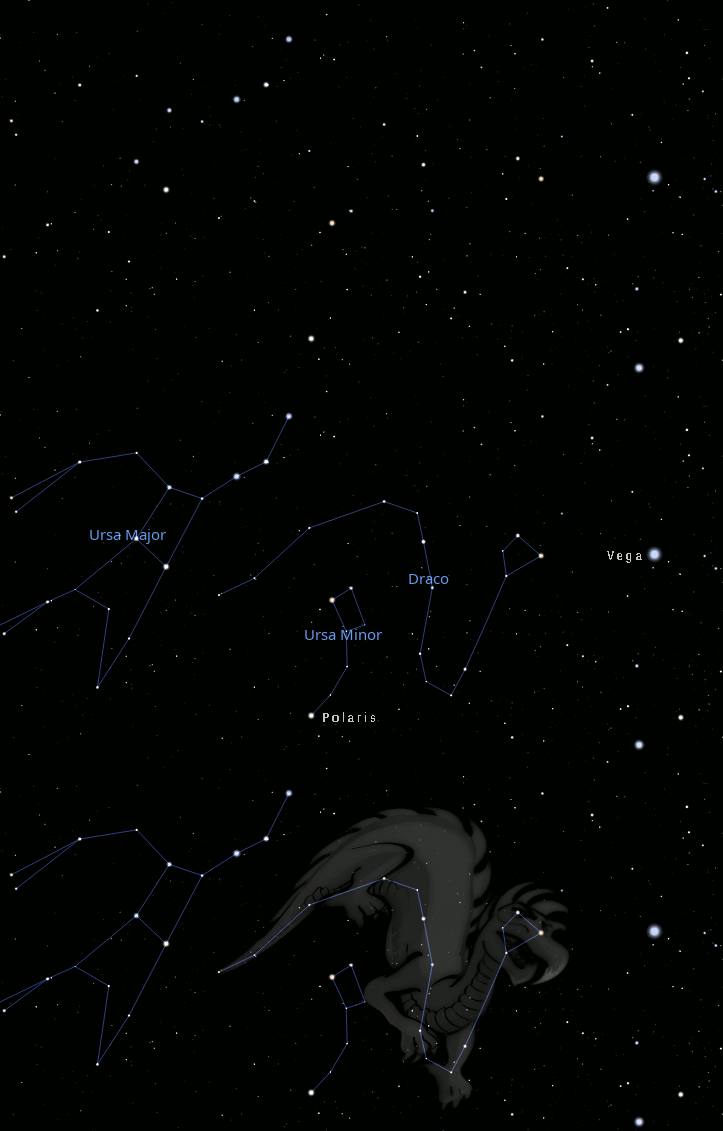
One of the constellations I don’t talk about much, except in passing is Ursa Minor, the Little Bear with an impossibly long tail. It is better known as the Little Dipper. As a dipper goes, its handle is bent the wrong way, like someone stepped on it. Anyway, this time of year in the evening, it’s standing on the tip of it’s handle, which is the North Star, Polaris. Polaris is pointed to by the front two stars of the Big Dipper. As dippers go they pour their contents into each other. The second and third-brightest stars of the Little Dipper are at the front of the bowl, and are Kochab and Pherkad, the Guard Stars, that is, Guardians of the Pole. To the Anishinaabe native peoples of our area the Little Dipper is Maang, the Loon.
The astronomical event times given are for the Traverse City/Interlochen area of Michigan (EDT, UT–4 hours). They may be different for your location.
Addendum
07/14/2023 – Ephemeris – Finding Polaris and why it’s important
This is Bob Moler with Ephemeris for Friday, July 14th. Today the Sun will be up for 15 hours and 16 minutes, setting at 9:26, and it will rise tomorrow at 6:11. The Moon, 3 days before new, will rise at 3:46 tomorrow morning.
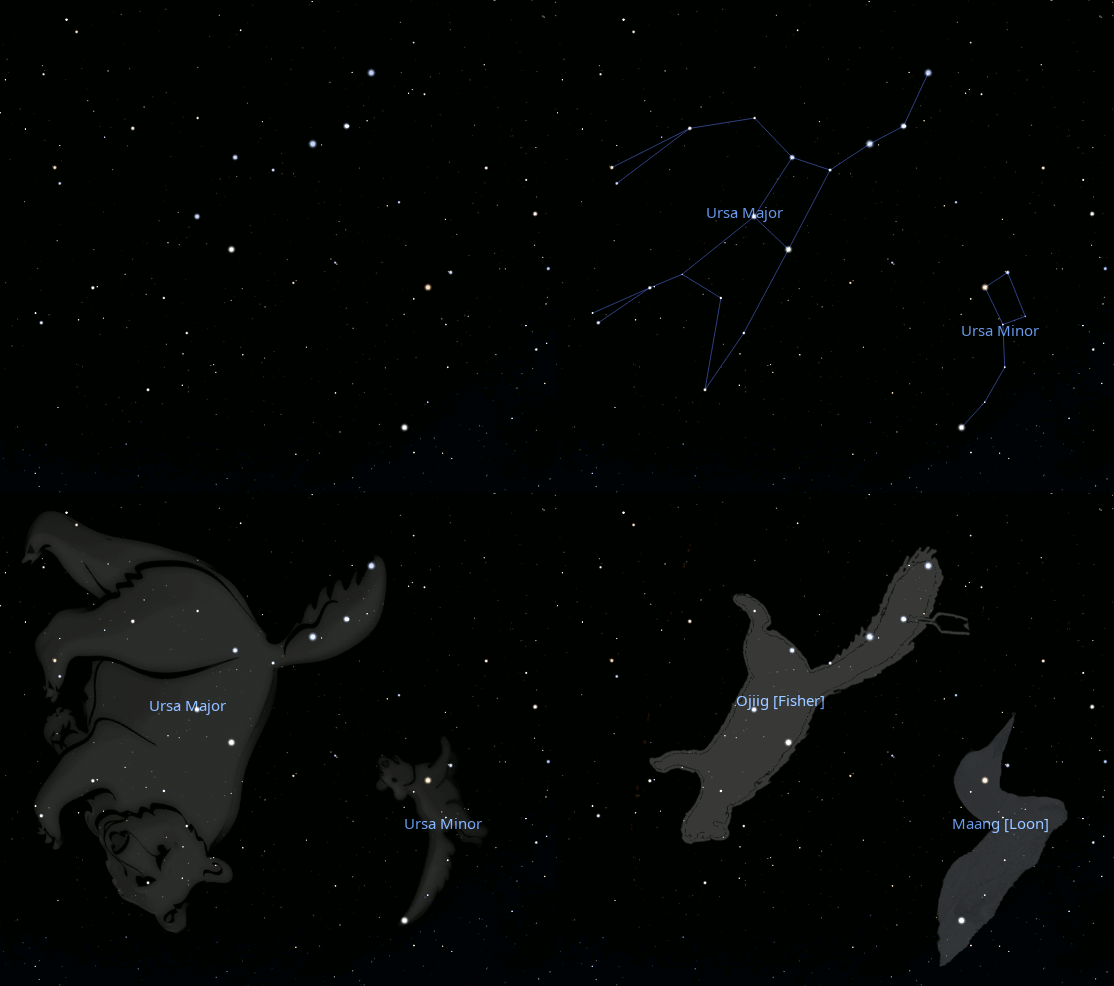
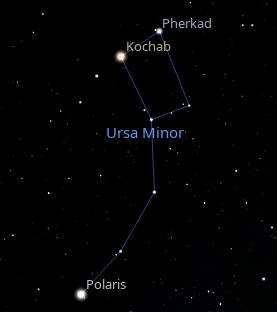
The most important star in the night sky, especially if you are lost, is Polaris, also called the North Star or Pole Star. Face Polaris and North is in front of you, East is to the right, west to the left and south will be behind you. To find Polaris, first find the Big Dipper. In the evening. This time of year, it’s hanging by its handle in the northwest, the direction that the sun set at. The two stars at the front of the bowl point to Polaris, which is to the right of it, now. Throughout the night, as the Earth rotates. Polaris will hold its position as all the other stars go around it in a counterclockwise direction. Polaris is at the end of the handle of the Little Dipper. That handle start’s vertically but curves to the left and is made of faint stars.
The astronomical event times given are for the Traverse City/Interlochen area of Michigan (EDT, UT –4 hours). They may be different for your location.
Addendum
07/08/2022 – Ephemeris – Polaris the North Star
This is Ephemeris for Friday, July 8th. Today the Sun will be up for 15 hours and 24 minutes, setting at 9:29, and it will rise tomorrow at 6:06. The Moon, 2 days past first quarter, will set at 2:17 tomorrow morning.
The bright star Polaris is a very important star. It is also known as the North Star and the Pole Star. Its unique position is nearly directly at the zenith at the Earth’s North Pole, making it a very important navigational star. It’s about 40 minutes of arc, or about one and a third Moon diameters away from the extension of the Earth’s axis into the sky. As a rule of thumb, its angular altitude above the northern horizon is approximately one’s latitude, and it stands about at the due north compass point. Polaris is found using the Big Dipper, using the two stars at the front of the dipper bowl to point to it. It’s located at the tip of the handle of the very dim Little Dipper which, this time of year in the evening, appears to be standing on its handle.
The astronomical event times given are for the Traverse City/Interlochen area of Michigan (EDT, UT – 4 hours). They may be different for your location.
Addendum

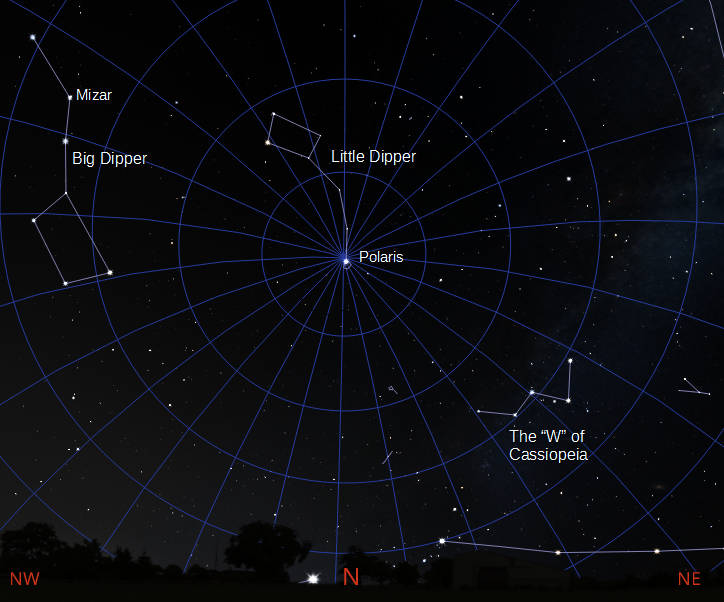
Polaris finder and location animation. Three frames: visual appearance in the sky, lines of the asterisms of the Big and Little Dippers, addition of the equatorial grid of celestial coordinates analogous to longitude and latitude on the Earth. The right ascension (like longitude) lines converge over the Earth’s North Pole, with Polaris close by. Created using Stellarium and GIMP.
The two stars at the front of the Big Dipper’s bowl, at the bottom of the dipper as it appears now in the evening, point to Polaris near the 11-hour right ascension line. Right ascension, though the same as earthly longitude, is measured in hours, rather than degrees. An hour equals 15 degrees, making 24 hours equal 360 degrees.
09/02/2021 – Ephemeris – Finding the Little Dipper
This is Bob Moler with Ephemeris for Thursday, September 2nd. Today the Sun will be up for 13 hours and 10 minutes, setting at 8:17, and it will rise tomorrow at 7:07. The Moon, 3 days past last quarter, will rise at 2:55 tomorrow morning.
10 p.m. is the best time now to spot the Little Dipper. It is difficult to spot, being much smaller and dimmer than the Big Dipper. However, it is the Big Dipper that points to it, by the two stars at the front of the bowl which point to the North Star, Polaris, the star that doesn’t appear to move. That star is the tip of the handle of the Little Dipper. The handle is seen as a curve of stars upward and to the left to a small box of stars that is its bowl. The two brighter stars at the front of the bowl are called the Guard Stars because in the past they were thought to be guardians of the pole. The Little Dipper is not an official constellation, but is Ursa Minor the lesser bear. To the Anishinaabe native peoples of this area, it represents Maang the loon.
The astronomical event times given are for the Traverse City/Interlochen area of Michigan (EDT, UT – 4 hr). They may be different for your location.
Addendum
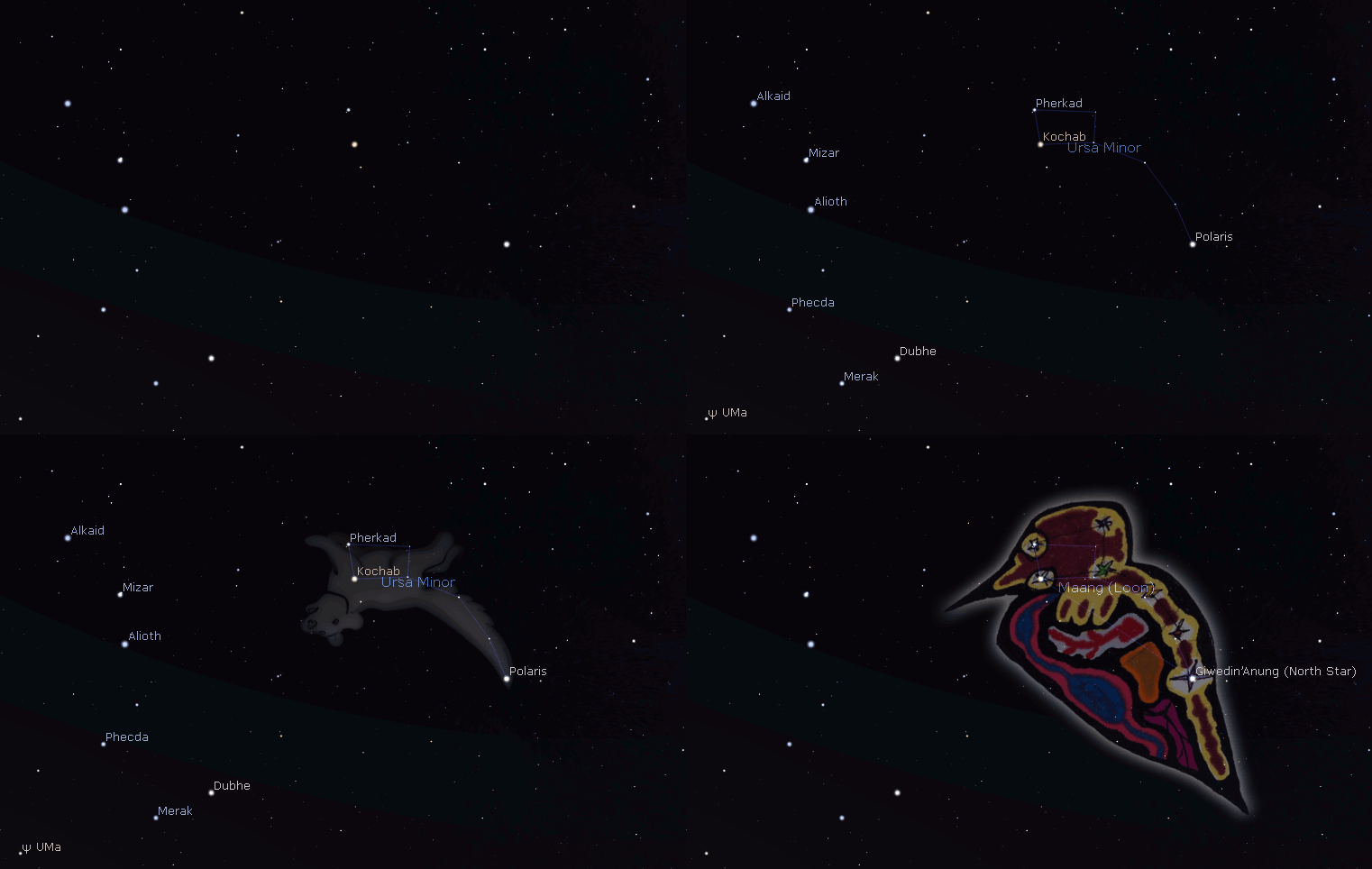
Little Dipper finder animation. The Little Dipper is also Ursa Major and the Loon. Polaris is the Pole Star and North Star. The Guard Stars are Kochab and Pherkad. Except for the named stars, the Little Dipper stars are quite faint and require moonless skies away from the city to spot. Created using Stellarium and GIMP.
06/07/2021 – Ephemeris – The Little Dipper, aka Ursa Minor
This is Ephemeris for Monday, June 7th. Today the Sun will be up for 15 hours and 28 minutes, setting at 9:26, and it will rise tomorrow at 5:57. The Moon, 3 days before new, will rise at 4:54 tomorrow morning.
One of the constellations I don’t talk about much, except in passing is Ursa Minor, the Little Bear, better known as the Little Dipper. As a dipper goes, its handle is bent the wrong way. Anyway, this time of year in the evening, it’s standing on the tip of it’s handle the North Star Polaris. Polaris is pointed to by the front two stars of the Big Dipper. As dippers go they pour their contents into each other. The second and third-brightest stars of the Little Dipper are at the front of the bowl, and are Kochab and Pherkad, the Guard Stars, that is Guardians of the Pole. To the Anishinaabe native peoples of our area the Little Dipper is Maang, the Loon.
The astronomical event times given are for the Traverse City/Interlochen area of Michigan. They may be different for your location.
Addendum

Little Dipper finder animation with bonus frame with Draco the dragon. Click on the image to enlarge. Created using Stellarium. Animation and star names added with GIMP.
07/30/2019 – Ephemeris – Finding the Little Dipper
Ephemeris for Tuesday, July 30th. Today the Sun will be up for 14 hours and 44 minutes, setting at 9:11, and it will rise tomorrow at 6:27. The Moon, 1 day before new, will rise at 5:37 tomorrow morning.
11 p.m. is the best time now to spot the Little Dipper. It is difficult to spot, being much smaller and dimmer than the Big Dipper. However it is the Big Dipper that points to it, by the two stars at the front of the bowl of the Big Dipper to point to the North Star, Polaris, the star that doesn’t appear to move. That is the tip of the handle of the Little Dipper. The handle is seen in a curve of the stars upwards and a bit to the left to a small box of stars that is its bowl. The two brighter stars at the front of the bowl are called the Guard Stars because they guard the pole. The Little Dipper is not an official constellation, but is Ursa Minor the lesser bear. To the Anishinaabe native peoples of this area it represents a loon.
The times given are for the Traverse City/Interlochen area of Michigan. They may be different for your location.
Addendum
Little Dipper finder animation. The Little Dipper is also Ursa Minor and the Loon. Polaris is the Pole Star and North Star. The Guard Stars are Kochab and Pherkad. Except for the named stars, the Little Dipper stars are quite faint and require moonless skies away from the city to spot. Chick on the image to enlarge. Created using Stellarium and GIMP.
The loon image constellation art is part of the latest versions of Stellarium. Ojibwe (Anishinaabe) constellation art by Annette S Lee and William Wilson from Ojibwe Sky Star Map Constellation Guide, by A. Lee, W Wilson, C Gawboy, J. Tibbetts. ISBN 978-0-615-98678-4.
08/28/2017 – Ephemeris – Polaris the North Star
Ephemeris for Monday, August 28th. The Sun will rise at 7:00. It’ll be up for 13 hours and 25 minutes, setting at 8:25. The Moon, 1 day before first quarter, will set at 12:19 tomorrow morning.
The bright star Polaris is a very important star. It is also known as the North Star and the Pole Star. Its unique position is nearly directly at the zenith at the Earth’s north pole, making it a very important navigational star. It’s about 40 minutes of arc, or about one and a third Moon diameters away from the extension of the Earth’s axis into the sky. As a rule of thumb, it’s angular altitude above the northern horizon is approximately one’s latitude, and it stands about at the due north compass point. Polaris is found using the Big Dipper, using the two stars at the front of the dipper bowl to point to it. It’s located at the tip of the handle of the very dim Little Dipper, which this time of year in the evening appears to standing on its handle.
The times given are for the Traverse City/Interlochen area of Michigan. They may be different for your location.
Addendum
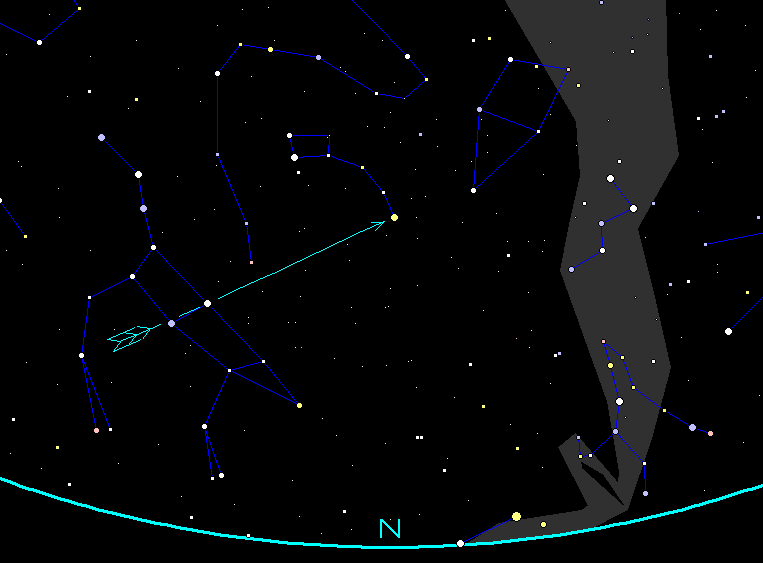
Polaris finder chart for 10 p.m., August 28th. Created using my LookingUp program
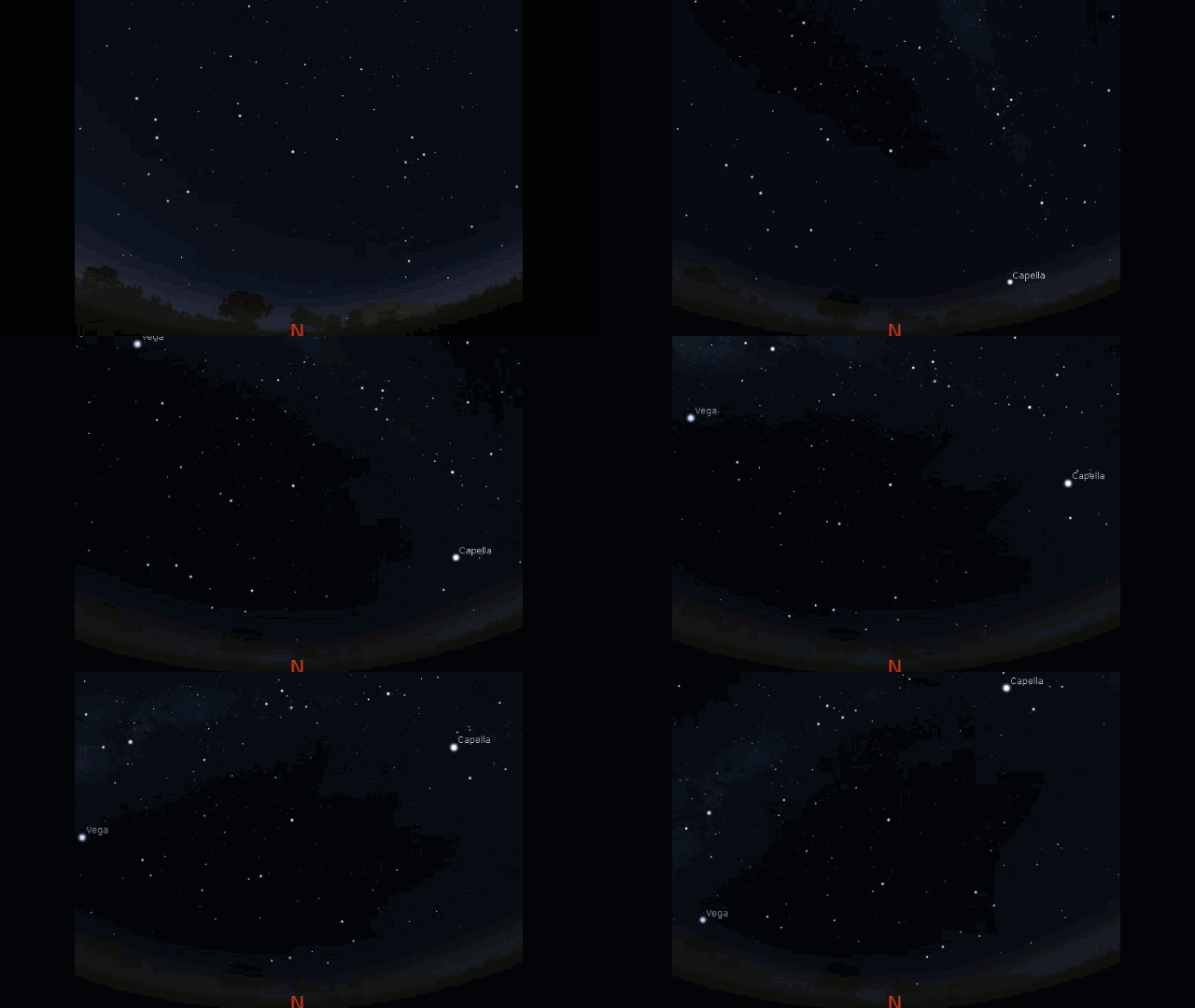
Animation of the rotation of the sky around Polaris on the night of August 28/29, 2017. Created using Stellarium and Filmora.
I’ve left the constellation lines off. The Big Dipper is seen easily as is Cassiopeia’s “W” opposite it around the stationary Polaris.

