Archive
06/06/2012 – Ephemeris – Where are the bright planets this week?
Ephemeris for Wednesday, June 6th. Today the sun will be up for 15 hours and 26 minutes, setting at 9:24. The moon, 2 days past full, will rise at 11:31 this evening. Tomorrow the sun will rise at 5:57.
Let’s see what’s happening with the bright planets for this week. Venus is now in the morning sky and very close to the sun, will be seen again in a few weeks. Mars is in the southwest in the evening in the constellation of Leo the lion with its unmistakable bright reddish color, though its fading as it retreats from us. It’s heading eastward toward Virgo. Mars will be setting in the west at 2:20 a.m. Saturn will be in the south above the bright star Spica now. It’s due south at 10:09 p.m. and will set at 3:45 a.m. Jupiter, now a morning planet will rise at 5:01 a.m. in the east northeast. Mercury is in the evening sky but too close to the sun to be seen, we should be able to spot it the last week of this month.
Times are for the Traverse City/Interlochen area of Michigan. They may be different for your location.
Addendum
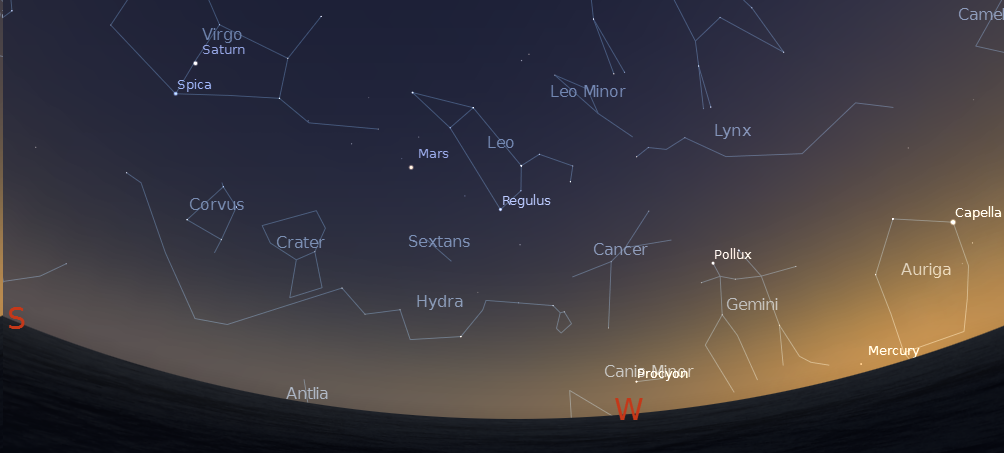
The planets at 10:15 in the evening. Check out Mercury near the horizon. Created using Stellarium.

5:15 a.m. at 6/7/2012. Morning sky and Jupiter. Created using Stellarium.
Grand Traverse Astronomical Society’s Transit of Venus Watch – What a Time!
This was a fantastic event at Traverse City’s Open Space on the bay front. The clouds that threatened all day parted and dissolved to reveal a perfect sky. Hundreds of people turned out. Here are some crowd shots I made with my Android phone, plus one of the transit.
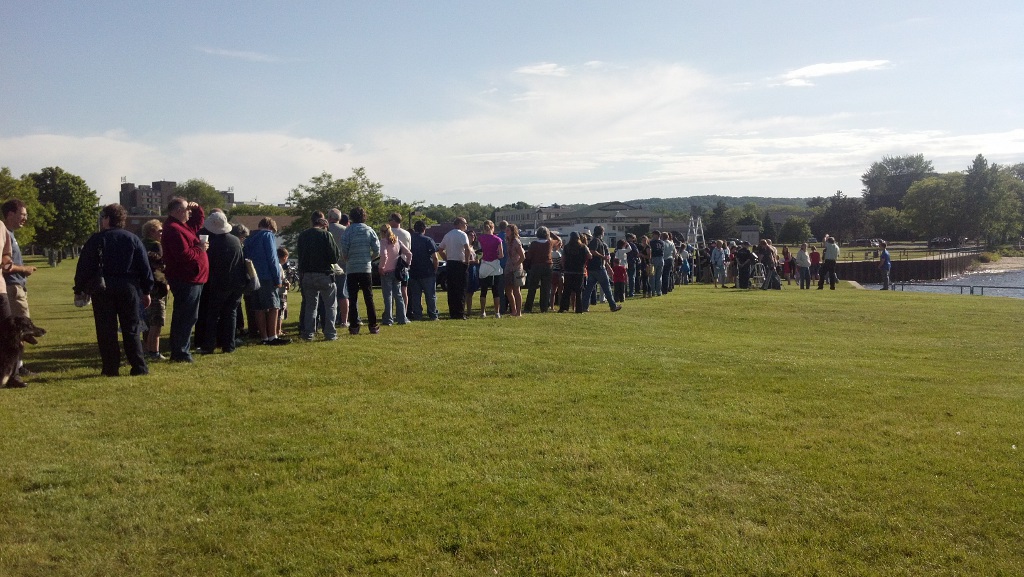
Most of a huge line to see the transit with the GTAS’ 25″ Dobsonian telescope.
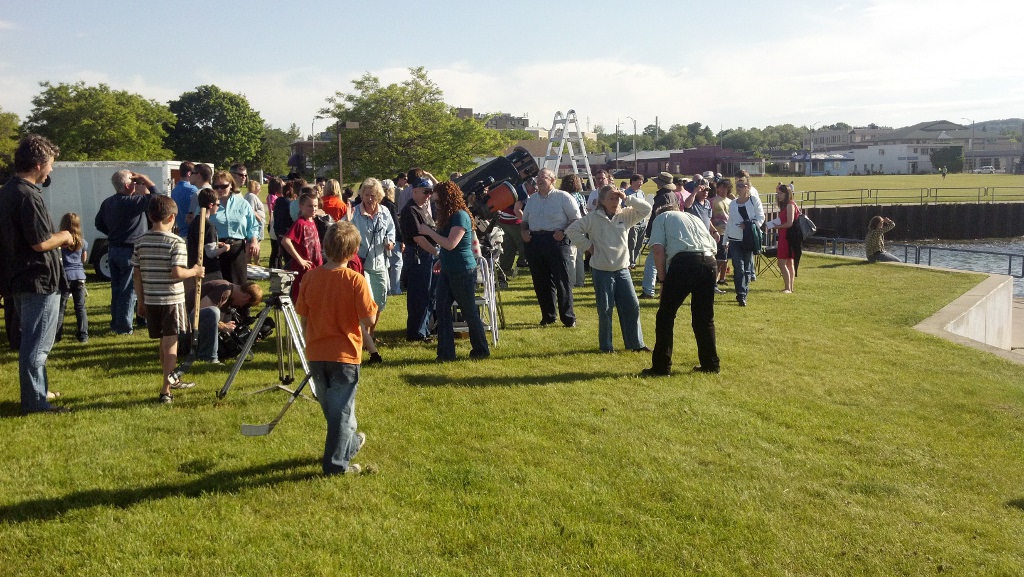
Transit Crowds near the telescopes.

More of the Transit Crowd an Bill Renis manning our Lunt Hydrogen Alpha Solar Telescope.

A look at the crowd and our GTAS Banner.
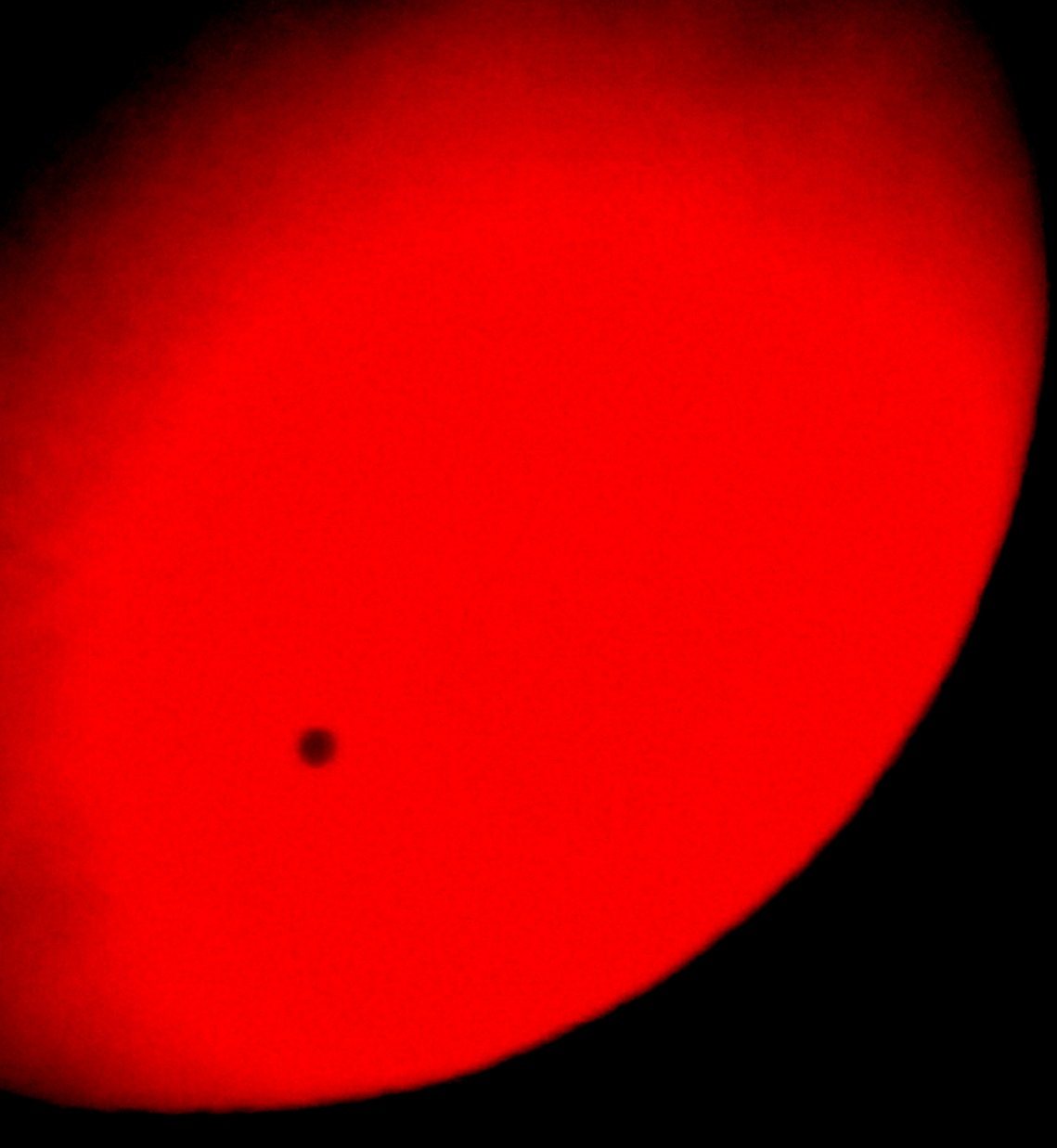
Venus against the sun taken at 8:49 p.m. through the Lunt solar telescope and a Droid Bionic phone.
Update (06/22/2012)
I received photographs from Gary and Eileen Carlisle and put them on the gtastro.org website. Here are theirs below. Eileen took the crowd shots, while Gary took the transit shot just before sunset as the crowds thinned. Gary’s crowd estimate was 500 folks.
More information: The transit started at 6:04 p.m. EDT. I spotted first contact through the Lunt. It took another minute or so to spot it in the white light telescopes. The Lunt showed the sun’s chromosphere that extends some 6,000 miles above the sun’s photosphere. The transit ended fro us as the sun set into the hills of Leelanau County across the west arm of Grand Traverse Bay.
The location we viewed from was the Open Space Park on the bay front in Traverse City, Michigan US. It is also used as the main venue of the National Cherry festival in early July and free outdoors screenings of movies at the Traverse City Film Festival in late July or early August.
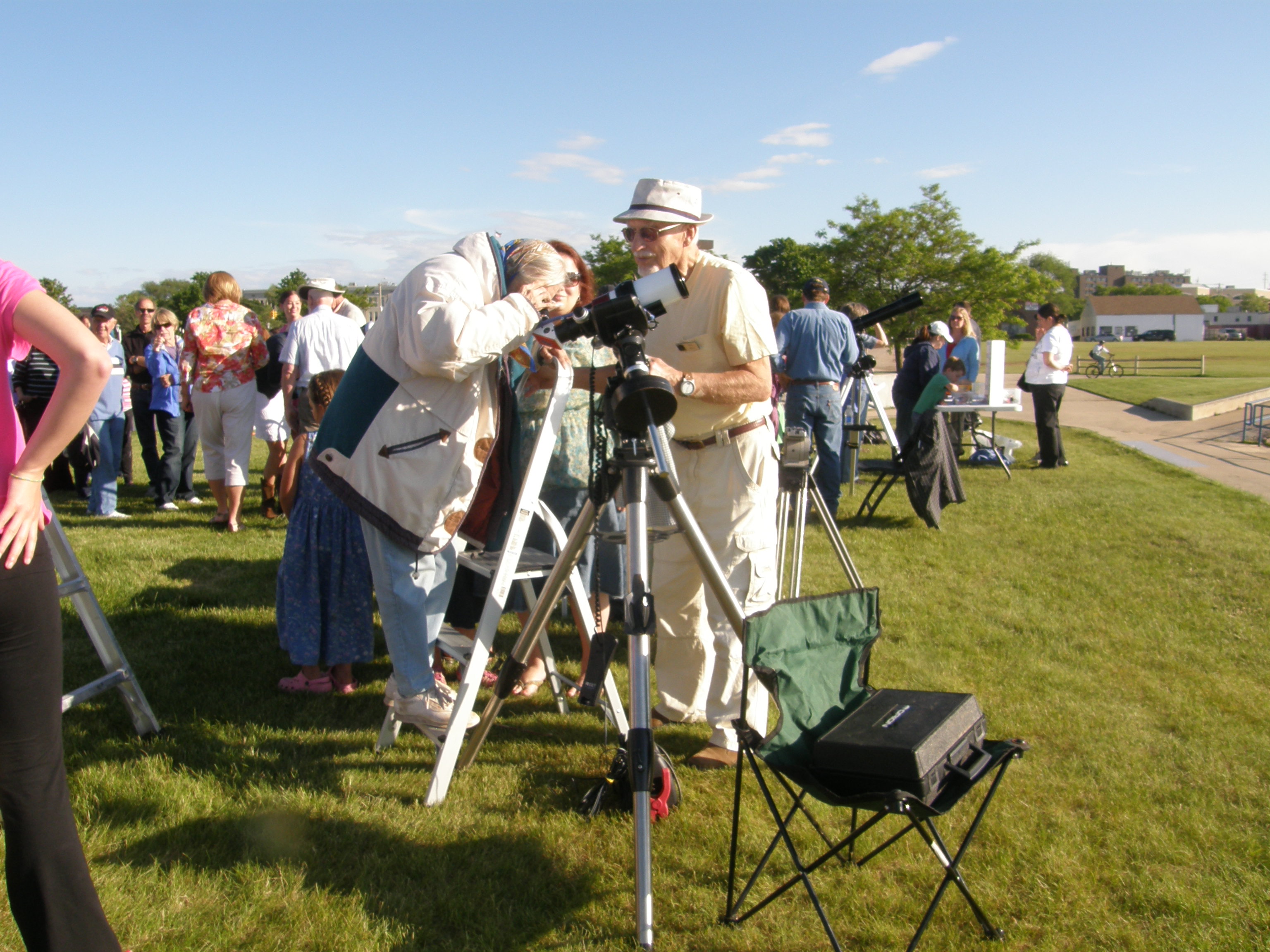
Bill Renis (yellow shirt, white hat and sunglasses) helping a person view the transit using the Lunt Solar Telescope. This was also the society’s 30th anniversary. Bill and I were the only two charter members attending.
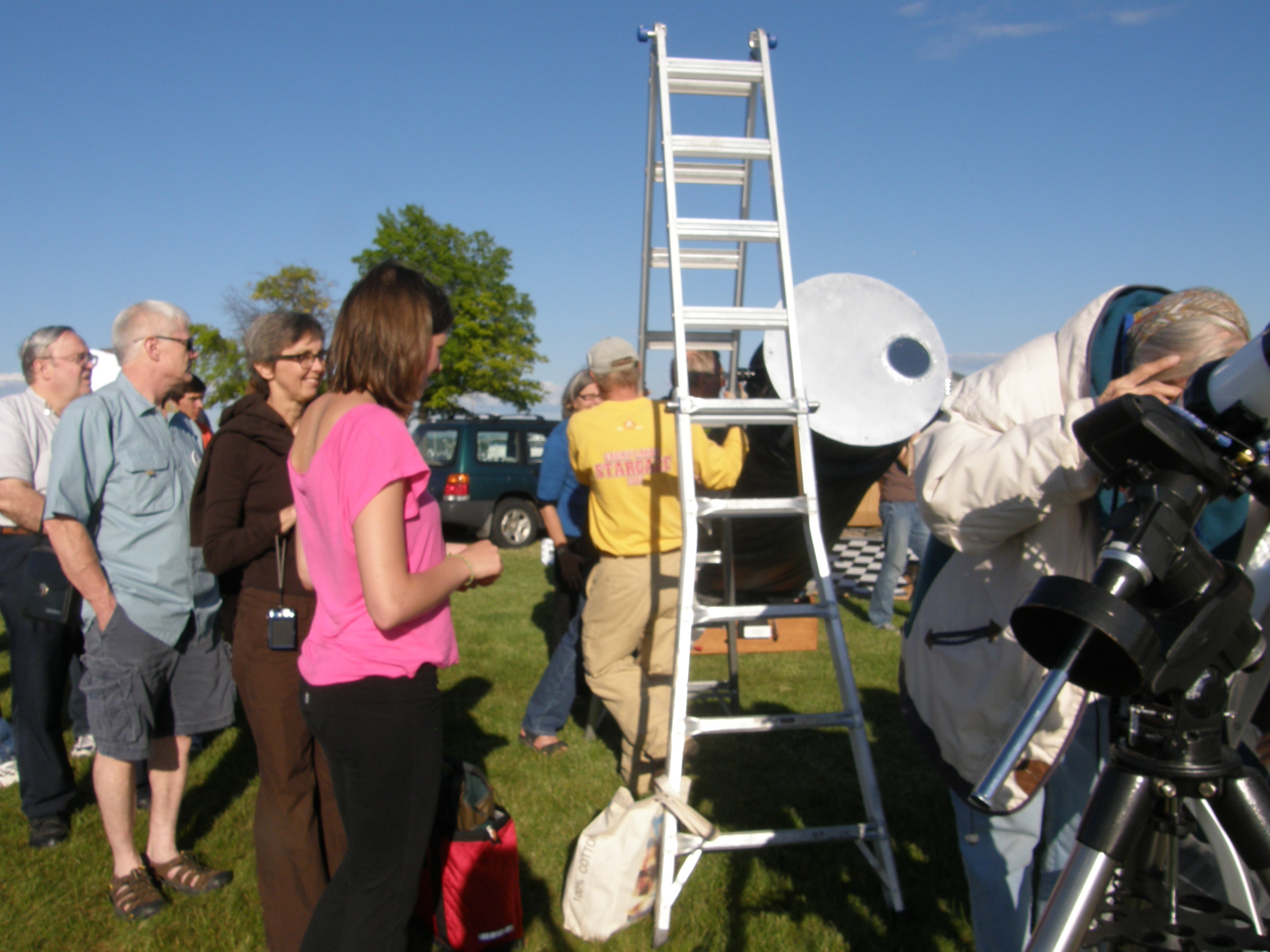
We brought out our Obsession 25″ telescope, stopped down to 8 inches with a solar filter. It gave excellent images. I saw second contact without the annoying teardrop effect.

Our “Meteorite Man” Joe Brooks brings out his meteorite collection for our events.
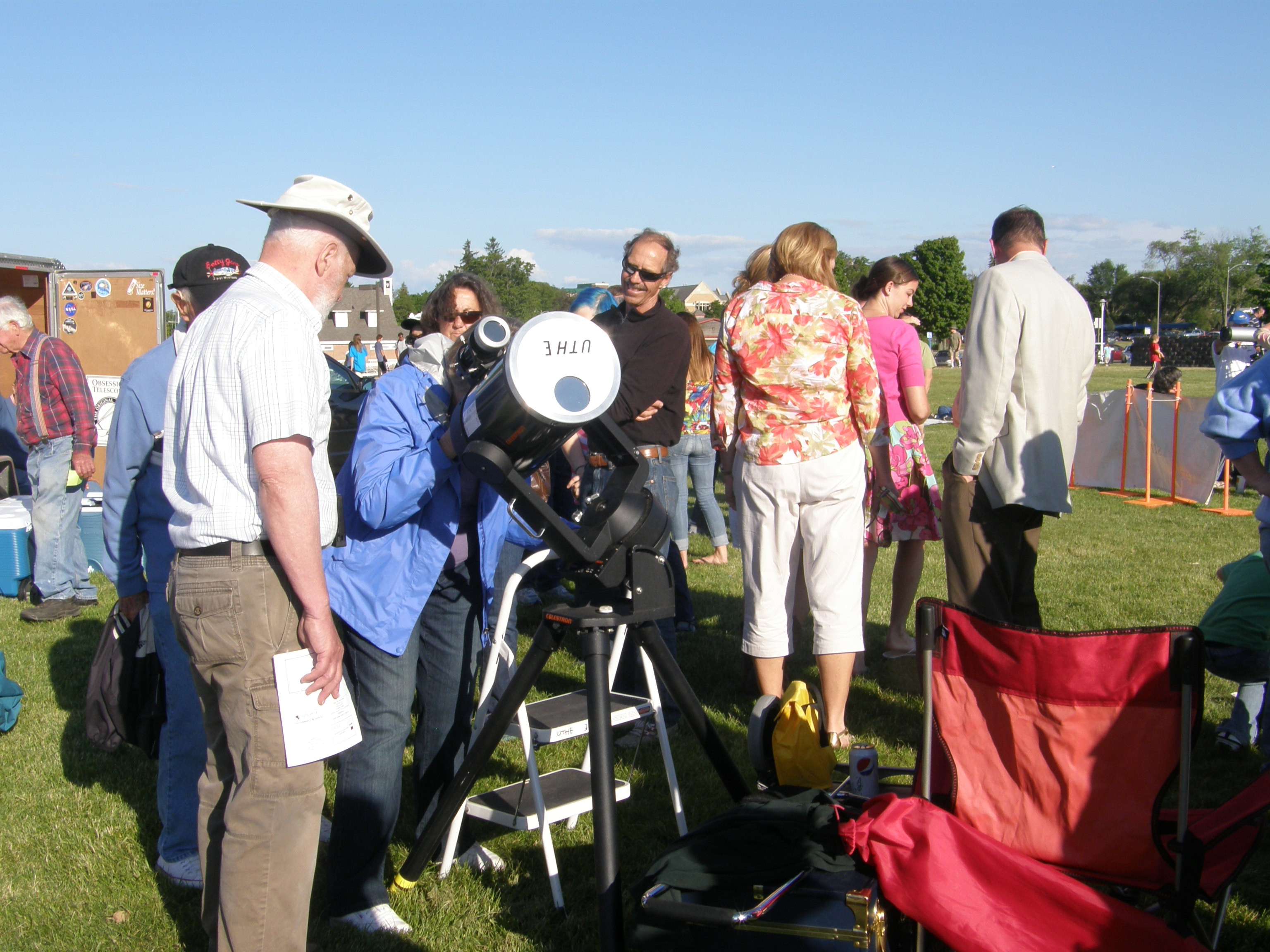
Member Ron Uthe brought his 8″ telescope to the event.
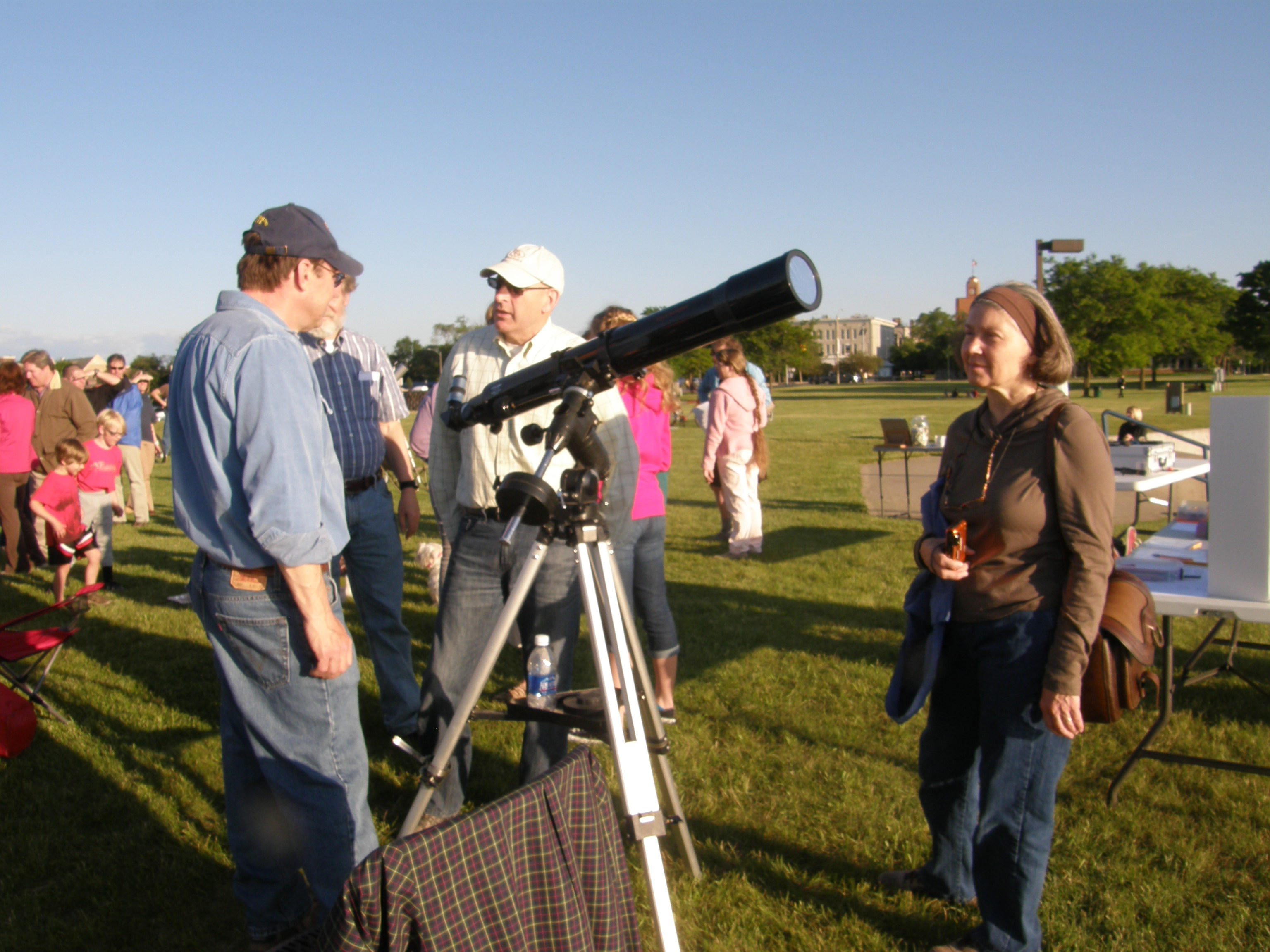
This is GTAS president Rich Kuschell’s 4″ refractor.

A little impromptu musical accompaniment.
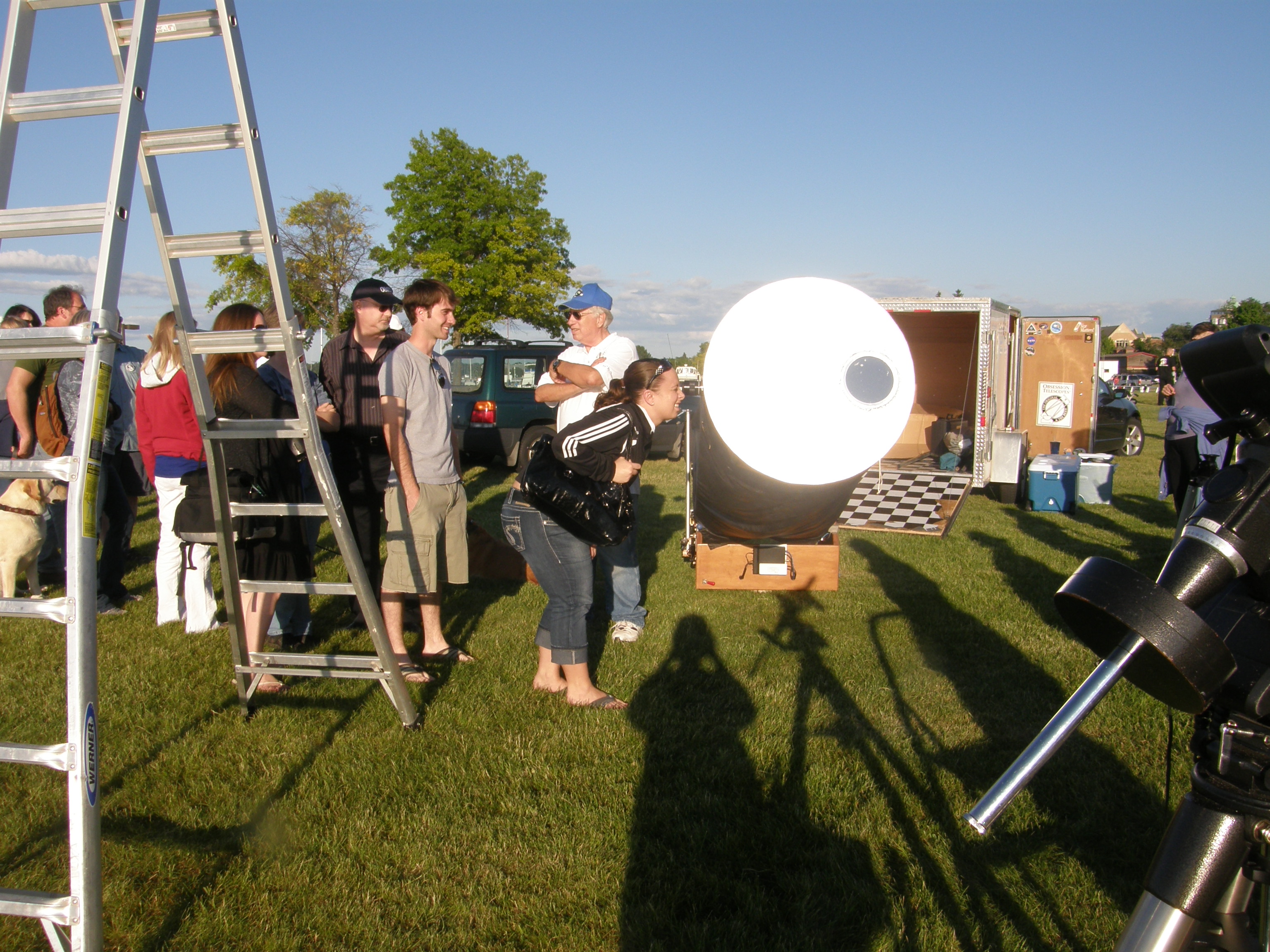
The sun’s getting low now. That’s me in the blue cap.
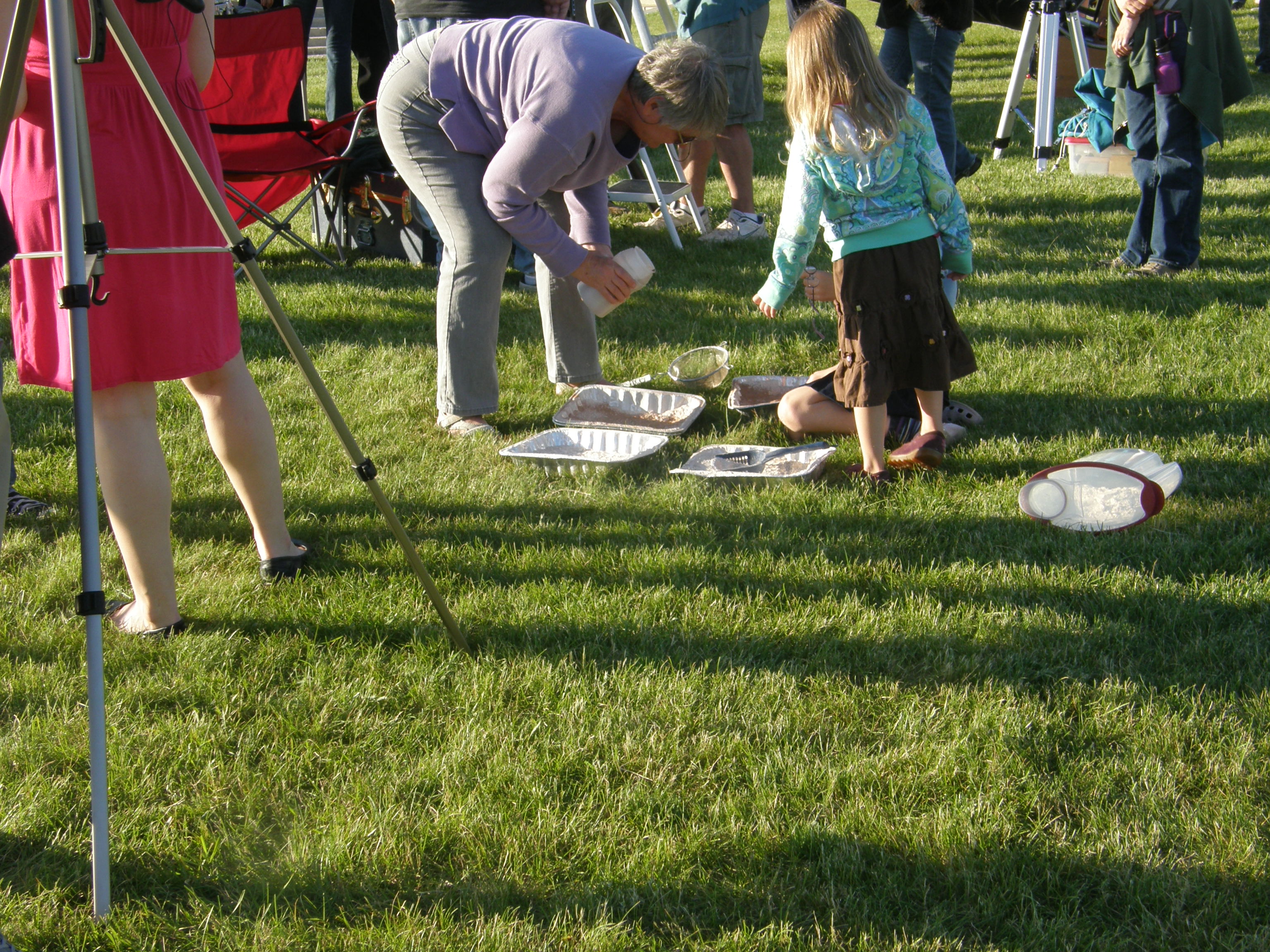
The small kids got a chance to create moon craters in pans of flour covered by chocolate drink powder.
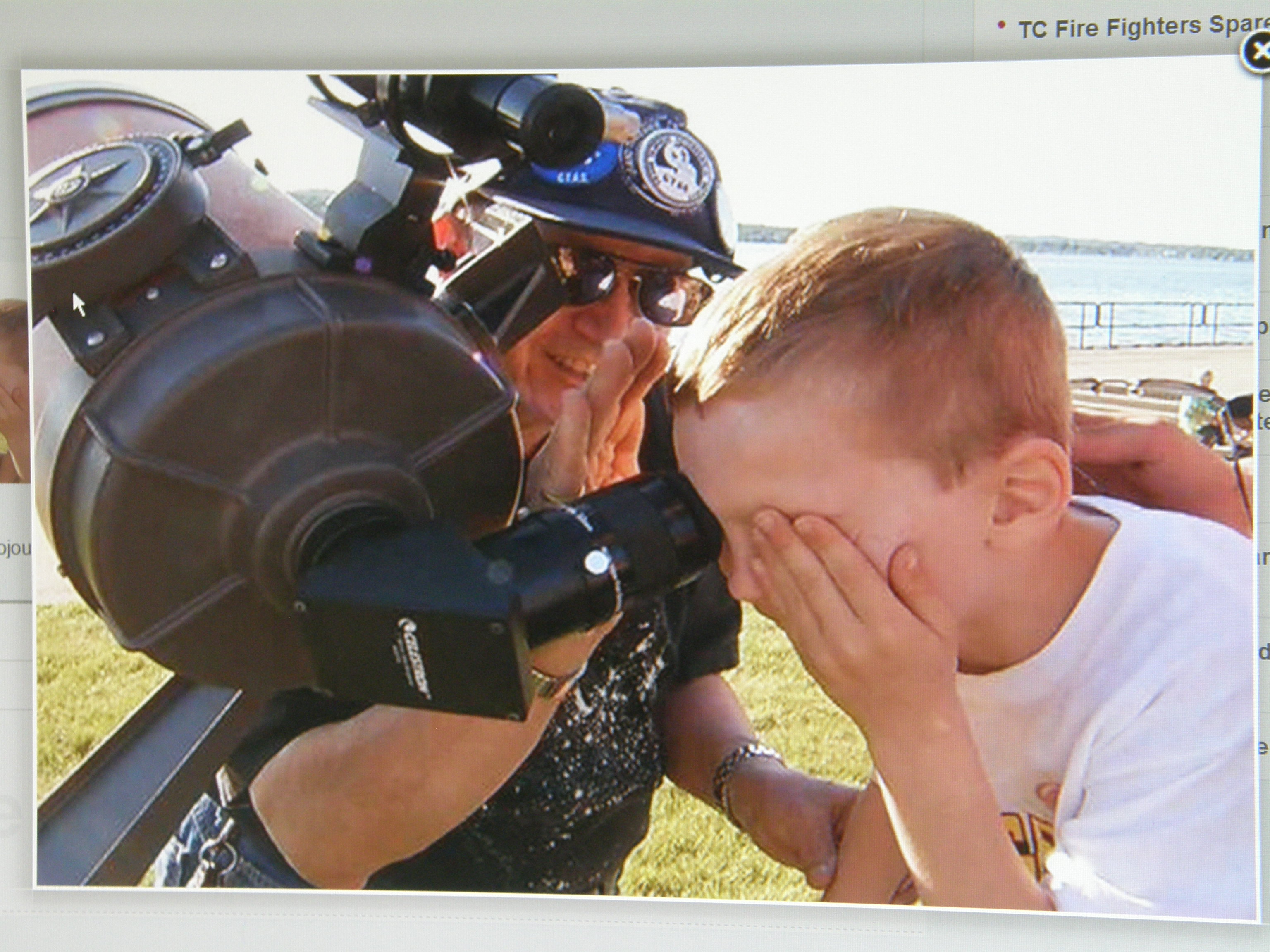
Gary Carlisle shielding the sun for a young man viewing through his 8″ telescope.
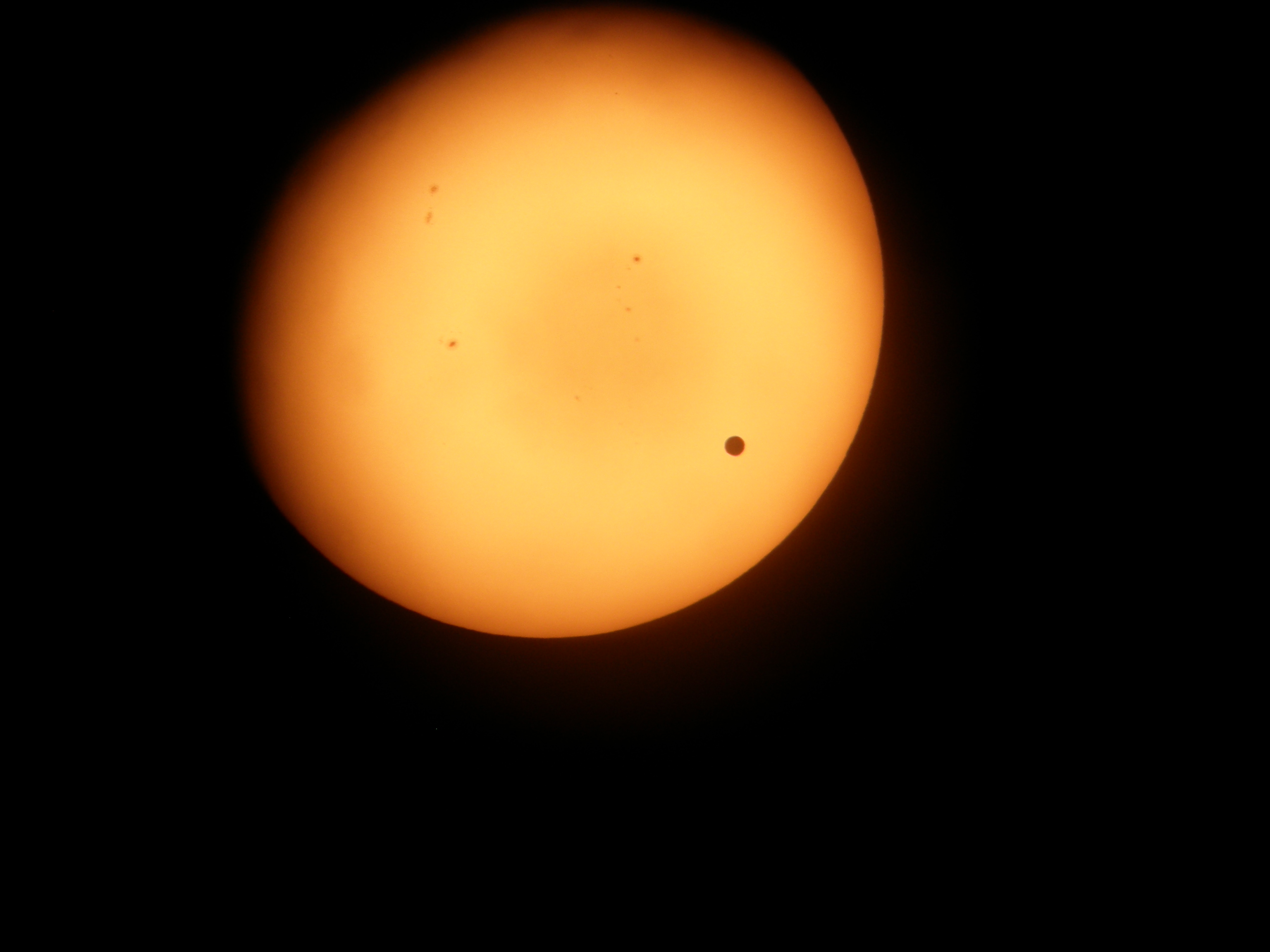
Gary’s photo of the transit.

